The role of radical prostatectomy in
the management of patients with high-grade
prostate cancer and/or locally advanced disease
†
Francisco Rodríguez-Covarrubias,*
Ricardo A. Castillejos-Molina,* Mariano Sotomayor,* Fernando Gabilondo,* Guillermo Feria-Bernal*
* Departamento de Urología, Instituto Nacional de Ciencias Médicas y Nutrición Salvador Zubirán. ARTÍCULO ORIGINAL
ABSTRACT
Objective. To analyze the outcome of patients with clinically localized prostate cancer (PCa) treated with radical prostatec-tomy (RP) in whom high-grade (HGPCa) and/or locally ad-vanced disease (LAPCa) was found at RP specimen and to evaluate the prognostic value of well-known factors in this sub-set of patients. Material and methods. Biochemical progre-ssion-free (bPFS) was determined with the Kaplan-Meier method. The effect of PSA, biopsy Gleason, clinical stage and number of adverse pathological factors was assessed with uni-variate and multiuni-variate analyses. Results. After RP, 87 men had HGPCa (20.7%) or LAPCa (56.3%), with 20 (23%) having both criteria. Mean PSA was 15.5 ± 14.0 ng/mL and mean follow-up 50.5 ± 42.6 months. The 5-year bPFS for men with PSA < 10 ng/mL and ≥ 10 ng/mL was 54.7% and 35.7%, res-pectively (p = 0.03). Regarding biopsy Gleason, the 5-year bPFS was 49% and 26% for patients with a score ≤ 7 and > 7, respectively (p = 0.002). In the multivariate model, the biopsy Gleason score remained independently associated with bioche-mical progression. Conclusions. HGPCa and/or LAPCa confer poor prognosis; however, RP appears to offer accepta-ble control, particularly when initial PSA is < 10 ng/mL and biopsy Gleason is 7 or less.
Key words. Radical prostatectomy. Locally-advanced pros-tate cancer. High-grade prospros-tate cancer.
El papel de la prostatectomía radical en el manejo de pacientes con cáncer de próstata de alto grado y/o enfermedad localmente avanzada
RESUMEN
Objetivo. Analizar la evolución de los pacientes con cáncer de próstata (CaP) clínicamente localizado tratados con prostatec-tomía radical (PR), en quienes se demostró CaP de alto grado (CaPAG) y/o enfermedad localmente avanzada (CaPLA) en el análisis patológico final y evaluar el valor pronóstico de los factores ya conocidos en este grupo de pacientes. Material y métodos. La supervivencia libre de progresión bioquímica (SLPB) se determinó con el método de Kaplan-Meier. El efecto del APE, Gleason de la biopsia, estadio clínico y el número de factores patológicos adversos fue evaluado mediante análisis univariado y multivariado. Resultados. 87 pacientes tuvier-on CaPAG (20.7%) o CaPLA (56.3%), incluyendo a 20 (23%) con ambos criterios. El promedio de APE fue 15.5±14.0 ng/ mL y de seguimiento 50.5 ± 42.6 meses. La SLPB a cinco años en pacientes con APE < 10 ng/mL y ≥ 10 ng/mL fue de 54.7% y 35.7%, respectivamente (p = 0.03). En pacientes con Gleason de la biopsia ≤ 7 y > 7 fue de 49% y 26%, respectiva-mente (p = 0.002). En el modelo multivariado, el Gleason de la biopsia se mantuvo como un factor de riesgo independiente de progresión bioquímica. Conclusión. El CaPAG y/o CaP-LA confiere un mal pronóstico; sin embargo la PR brinda un control adecuado, particularmente cuando el APE inicial es < 10 ng/mL y el Gleason de la biopsia es de 7 o menos.
Palabras clave. Prostatectomía radical. Cáncer de próstata localmente avanzado. Cáncer de próstata de alto grado.
INTRODUCTION
Poorly differentiated or high-grade prostate can-cer (HGPCa) is referred to as tumors with a
Glea-son score ranging from 8 to 10.1 Locally advanced
prostate cancer (LAPCa) comprises those tumors with extraprostatic extension (EPE), invasion to the apex, bladder neck or seminal vesicles but without
lymph node involvement or metastatic disease.1 The
management of these patients remains controversial and, historically, they have not been considered can-didates for surgical therapy. The arguments to spare these patients from surgery include the potential lack of benefit if the tumor is not completely excised, the fear of an increase in morbidity and the absence
of survival benefit.2 However, there is increasing
evidence suggesting that radical prostatectomy (RP) is an adequate alternative in the initial approach of
selected patients with HGPCa/LAPCa.2-6 Some
con-temporary series have shown that surgery is safe in this scenario and that complication rates are
compa-rable to that of localized disease treated surgically.2,7
Furthermore, the local control of the disease ap-pears to be similar to that obtained with the combi-nation of external radiation therapy (ERT) and
androgen deprivation therapy (ADT).8 Indeed,
ac-cording to the American Urological Association guideline for the management of Clinically
Locali-zed Prostate Cancer 2007 Update,9 “active
survei-llance, interstitial prostate brachytherapy, external beam radiotherapy, and surgery remain treatment options for the patient with high-risk disease due to the lack of evidence of superiority of one the-rapy over another”. This is an important issue, since one of the strongest predictors for the develo-pment of distant metastases in patients with
LAP-Ca is the ability to control the tumor locally.10 In
addition, RP provides acceptable local control in terms of preventing local morbidity secondary to regional progression and invasion of adjacent structures, such as bladder outlet obstruction,
ure-teral obstruction and gross hematuria.8 Moreover,
when combined with adjuvant therapy, the local control and overall survival after RP are compara-ble to that of organ-confined disease treated with
surgery alone.8
Our main objective was to evaluate the RP resul-ts as the first line therapeutic modality in men with clinically localized PCa in whom HGPCa and/or LAPCa was demonstrated on histopathological analysis. We also assessed the prognostic value of well-known preoperative factors of progression in these patients.
MATERIAL AND METHODS
We have previously reported our experience in the surgical management of patients with PCa and
adver-se pathological characteristics.11 In the present
stu-dy, we analyzed the outcome of men with clinically localized PCa in whom HGPCa and/or LAPCa was demonstrated at RP specimen from 1990 to 2008. To avoid selection bias patients with lymph node inva-sion were excluded from this analysis. Clinical and pathological stages were determined according to the
TNM 2002 system.12 In all cases an open RP with
bi-lateral standard pelvic lymph node dissection was performed. Postoperative follow-up consisted of serum prostate-specific antigen (PSA) determination and digital rectal examination (DRE) every 3 months for the first two years and annually thereafter. Bio-chemical progression (BP) was defined as a
postope-rative PSA determination of 0.4 ng/ml or higher,13-15
or the need to initiate either ERT or ADT. Additional (salvage) therapy was started when biochemical, lo-cal or systemic recurrence was demonstrated.
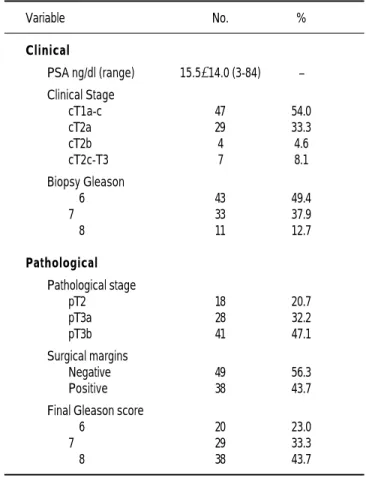
Table 1. Clinical and pathological characteristics of 87 patients with High-grade/Locally advanced prostate cancer treated with radical prosta-tectomy.
Variable No. %
Clinical
PSA ng/dl (range) 15.5±14.0 (3-84) –
Clinical Stage
cT1a-c 47 54.0
cT2a 29 33.3
cT2b 4 4.6
cT2c-T3 7 8.1
Biopsy Gleason
≤ 6 43 49.4
7 33 37.9
≥ 8 11 12.7
Pathological
Pathological stage
pT2 18 20.7
pT3a 28 32.2
pT3b 41 47.1
Surgical margins
Negative 49 56.3
Positive 38 43.7
Final Gleason score
≤ 6 20 23.0
7 29 33.3
Biochemical progression-free survival (bPFS) was determined with the Kaplan-Meier method and the comparison of the results was performed with the log-rank test. The prognostic role of preoperative PSA, clinical stage, biopsy Gleason and the number of adverse pathological factors discovered at RP spe-cimen (HGPCa or LAPCa isolated or together), was evaluated univariately. The combined influence of these factors was assessed by means of a multivaria-te Cox proportional hazards analysis. All results
were considered statistically significant with a p <
0.05. All tests were performed with the software Sta-tView (SAS Institute, Cary, NC, USA).
RESULTS
A total of 94 patients had HGPCa and/or LAPCa after RP. Of these, 7 with positive lymph nodes were excluded, leaving 87 cases eligible for analysis. Pa-tients and tumor characteristics are summarized in table 1. Mean age was 63.9 ± 7.1 years (range 45-75). Mean follow-up was 50.5±42.6 months (range 3-179). Palpable disease was detected on DRE in 46% of cases and 50.6% had a biopsy Gleason 7 or higher.
At RP specimen, 18 patients (20.7%) had a final
Gleason score ≥ 8 (HGPCa), 49 (56.3%) were in stage
pT3a-b (LAPCa) and 20 (23.0%) had both criteria. In all, 38 patients (43.7%) have experienced BP. The 5-year bPFS in the whole cohort was 43.8%. When stratified by initial PSA, it was 54.7% and 35.7% for those with an initial value < 10 ng/mL
and ≥ 10 ng/mL, respectively (p = 0.03). Regarding
biopsy Gleason, the 5-year bPFS was 49% and 26%
for patients with a score ≤ 7 and > 7, respectively (p
= 0.002, Figure 1).
We also analyzed survival according to the pre-sence of adverse features. The 5-year bPFS for men having LAPCa, HGPCa and both was 51.8%, 38.6% and 32%, respectively; however this difference was not statistically significant (p = 0.12).
Biopsy Gleason (p = 0.003) and the presence of both HGPCa and LAPCa simultaneously (p = 0.05) were associated with the likelihood of BP in the uni-variate analysis. The initial PSA showed a trend towards association with BP (p = 0.06). Clinical stage was not related to this risk (p = 0.54). In the multivariate Cox proportional hazards model the Biopsy Gleason score remained as the only inde-pendent prognostic factor associated with BP (OR
2.92, 95% CI [1.23-6.90], p= 0.01).
DISCUSSION
The management of high-risk prostate cancer is still a matter of debate and an optimal modality of therapy has not been yet defined. In the past, pa-tients with poorly differentiated or locally advanced disease have not been considered candidates for
sur-gical treatment.1 The potential absence of benefit if
the tumor is not completely excised, the fear of in-creasing morbidity and the lack of survival advanta-ge are some reasons to avoid suradvanta-gery in this
setting.2 Nevertheless, there is increasing evidence
suggesting that the combination of RP and adjuvant therapy, results in local control and overall survival comparable to that of organ-confined disease treated
with surgery alone.8 Recently, two large prospective
clinical trials investigated the role of adjuvant ERT in men with LAPCa treated with RP, showing that, despite increased toxicity, this strategy decreased
the risk of BP.16,17
In this study we evaluated the outcome of patients with clinically localized PCa in whom LAPCa, HGP-Ca or both (excluding those with lymph node inva-sion) was demonstrated at the RP specimen. Our findings suggest that surgery may offer an adequate control of the disease mainly in patients with a low biopsy Gleason score. Similar survival rates were de-monstrated by Lau and colleagues in a series of 407
patients with poorly differentiated PCa.18 These
au-thors found a 5- and 10-year cancer-specific survival of 93% and 85%, with a bPFS of 49% and 36%, res-pectively. In line with our findings, they suggested that an initial PSA < 10 ng/mL is a prognostic fac-tor for the identification of patients with high-grade disease who will potentially benefit of surgical
the-rapy. Serni and co-workers19 found better survival
rates, with a 5-year progression-free survival of Figure 1. Biochemical progression-free survival according to Biopsy
Gleason score.
Cumulative survival
1
0.8
0.6
0.4
0 2
0
≤ 7
> 7 p = 0.002
0 25 50 75 100 125 150 175 200
78.1% in patients with final Gleason score ≥ 8. They suggest that the favorable outcome is due, in part, to the low incidence of positive surgical margins; however it remains unclear whether this result could be a consequence of early ADT used in a sub-set of their patients with positive lymph nodes
(com-prising 38.7% of that series).19
In our cohort, 54% of men with aggressive tu-mors had non-palpable disease, an issue previously
addressed by Epstein et al.20 These authors
sugges-ted that the presence of small-volume high-grade tu-mors demonstrates that PCa could be potentially aggressive since early stages, without necessarily emerging from low-grade carcinoma.
Although our study had some limitations, inclu-ding its retrospective nature and the limited number of patients, our findings suggest that surgery is an adequate option in the initial management of patho-logically proven high-risk disease. In contrast, we consider that the strength of our investigation lies in the fact that all patients with positive lymph no-des were excluded, allowing the evaluation of a more homogenous population. Furthermore, all patients were managed uniformly, with all of them receiving salvage therapy until recurrence was demonstrated. This policy allowed us to perform a more accurate outcome assessment and, most of all, to evaluate the actual role or surgery in this subset of patients. Ne-vertheless, at present, we believe that RP should be performed as part of a combined strategy based on effective local therapy and systemic modalities. The low frequency of specimen Gleason 8-10 PCa makes a prospective evaluation difficult and multimodality strategies appear to be the best alternative in this
scenario.21-23 Moreover, the detection of HGPCa/
LAPCa when PSA levels are below 10ng/ml and,
particularly in those with a biopsy Gleason ≤ 7,
see-ms to be the best method to achieve acceptable out-comes after RP.
CONCLUSION
Despite the poor prognosis conferred by HGPCa and/or LAPCa, our findings suggest that RP offers an adequate control of the disease in selected pa-tients, particularly in those who preoperatively have an initial PSA < 10 ng/mL and a biopsy
Glea-son ≤ 7. However, at the moment, RP should be
viewed as the initial step in the setting of multidis-ciplinary treatment in men with clinically localized high-risk disease. Further studies are necessary to assess the role of multimodal therapy in this set-ting.
REFERENCES
1. Van Poppel H, Joniau S. An analysis of radical prostatectomy in advanced stage and high-grade prostate cancer. Eur Urol 2008; 53: 253-9.
2 . Gontero P, Marchioro G, Pisani R, Zaramella S, Sogni F, Koc-jancic E, et al. Is radical prostatectomy feasible in all cases of locally advanced non-bone metastatic prostate cancer? Results of a single-institution study. Eur Urol 2007; 51: 922-9. 3 . Berglund RK, Jones JS, Ulchaker JC, Fergany A, Gill I, Kaouk
J, et al. Radical prostatectomy as primary treatment modality for locally advanced prostate cancer: a prospective analysis.
Urology 2006; 67: 1253-6.
4 . Rodríguez-Covarrubias F, Larre S, De La Taille A, Abbou CC, Salomon L. The outcome of patients with pathological Gleason score ≥ 8 prostate cancer after radical prostatectomy. BJU Int 2008; 101: 305-7.
5 . Sciarra A, Gentile V, Voria G, Mariotti G, Seccareccia F, Pasto-re A, et al. Role of radical Pasto-retropubic prostatectomy in patients with locally advanced prostate cancer: the influence of Gleason score 8-10. Urol Int 2003; 70: 186-94.
6. Inman BA, DiMarco DS, Slezak JM, Sebo TJ, Kwon ED, Lei-bovich BC, et al. Outcomes of Gleason score 10 prostate carci-noma treated by radical prostatectomy. Urology 2006; 68: 604-8.
7 . Ward JF, Slezak JM, Blute ML, Bergstralh EJ, Zincke H. Radi-cal prostatectomy for cliniRadi-cally advanced (cT3) prostate cancer since the advent of prostate-specific antigen testing: 15-year outcome. BJU Int 2005; 95: 751-6.
8. Ward JF, Zincke H. Radical prostatectomy for the patient with locally advanced prostate cancer. Curr Urol Rep 2003; 4: 196-204.
9. Thompson I, Thrasher JB, Aus G, Burnett AL, Canby-Hagino ED, Cookson MS, et al. Guideline for the management of cli-nically localized prostate cancer: 2007 update. J Urol 2007; 177: 2106-31.
10. Coen JJ, Zietman AL, Thakral H, Shipley WU. Radical radia-tion for localized prostate cancer: local persistence of disease results in a late wave of metastases. J Clin Oncol 2002; 20: 3199-205.
11. Rodríguez-Covarrubias F, Castillejos R, Sotomayor M, Gabi-londo F, Feria G. The outcome of patients with prostate cancer and adverse pathological characteristics treated with radical prostatectomy. Eur Urol Suppl 2008; 7: 251.
12. Greene FL, Page DL, Fleaming ID, et al. American Joint Com-mittee on Cancer, Manual for staging cancer. New York, NY: Springer; 2002, p. 337.
13. Amling CL, Bergstralh EJ, Blute ML, Slezak JM, Zincke H. Defining prostate specific antigen progression after radical prostatectomy: what is the most appropriate cut point? J Urol 2001; 165: 1146-51.
14. Stephenson AJ, Kattan MW, Eastham JA, Dotan ZA, Bianco FJ Jr, Lilja H, et al. Defining biochemical recurrence of prostate cancer after radical prostatectomy: a proposal for a standardi-zed definition. J Clin Oncol 2006; 24: 3973-8.
15. Carroll P, Albertsen PC, Greene K, Babaian RJ, Ballentine Car-ter H, Gann PH, et al. Prostate specific antigen best practice sta-tement: 2009 update. Available at http://www.auanet.org/ content/guidelines-and-quality-care/clinical-guidelines/main-reports/psa09.pdf
16. Bolla M, van Poppel H, Collette L, van Cangh P, Vekemans K, Da Pozzo L, et al. Postoperative radiotherapy after radical prostatectomy: a randomised controlled trial (EORTC trial 22911). Lancet 2005; 366: 572-8.
ad-vanced prostate cancer: a randomized clinical trial. JAMA 2006; 296: 2329-35.
18. Lau WK, Bergstralh EJ, Blute ML, Slezak JM, Zincke H. Radi-cal prostatectomy for pathologiRadi-cal Gleason 8 or greater prosta-te cancer: influence of concomitant pathological variables. J
Urol 2002; 167: 117-22.
19. Serni S, Masieri L, Minervini A, Lapini A, Nesi G, Carini M. Cancer progression after anterograde radical prostatectomy for pathologic Gleason score 8 to 10 and influence of concomitant variables. Urology 2006; 67: 373-8.
20. Epstein JI, Carmichael MJ, Partin AW, Walsh PC. Small high grade adenocarcinoma of the prostate in radical prostatectomy specimens performed for non-palpable disease: pathogenetic and clinical implications. J Urol 1994; 151: 1587-92. 21. Do TM, Parker RG, Smith RB, Kagan AR. High-grade
carcino-ma of the prostate: a comparison of current local therapies.
Urology 2001; 57: 1121-6.
22. Boorjian SA, Karnes RJ, Rangel LJ, Bergstralh EJ, Frank I, Blute ML. Impact of prostate-specific antigen testing on the clinical and pathological outcomes after radical prostatectomy for Gleason 8-10 cancers. BJU Int 2008; 101: 299-304.
23. Katz MH, McKiernan JM. High-risk, clinically localized pros-tate cancer: is monotherapy adequate? Rev Urol 2007; 9(Su-ppl. 2): S19-S27.
Reimpresos:
Dr. Francisco Rodríguez-Covarrubias Departamento de Urología,
Instituto Nacional de Ciencias Médicas y Nutrición Salvador Zubirán
Vasco de Quiroga 15, Col. Sección XVI, Tlalpan 14080, México, D.F. Tel.: 5487-0900, Ext.: 2145 Fax: 5485-4380
E-mail: [email protected]