Predictors of adverse surgical outcome in
the management of malignant bowel obstruction
Heriberto Medina-Franco,* Miriam N. García-Álvarez,* Laura J. Ortiz-López,* Jorge Zerón-Medina Cuairán*
* From the Department of Surgery, Section of Surgical Oncology. Instituto Nacional de Ciencias Médicas y Nutrición Salvador Zubirán. ARTÍCULO ORIGINAL
ABSTRACT
Introduction. Malignant bowel obstruction (MBO) is a common problem in patients with advanced colorectal or ovarian cancer. The management of this group of patients is complex and controversial. Objective. To analyze the factors associated with morbidity and mortality in patients who underwent surgery for MBO in a tertiary referral center in Mexico City. Material and methods. Hospital records of pa-tients who underwent surgery for malignant bowel obstruction from January 1987 through December 2005 were retrospectively analyzed. Demographic data, clinical and surgical variables were recorded. Morbidity and mortality within 30-day of surgical procedure were registered. Factors associated with outcome were analyzed with the chi-square test. Survival cur-ves were constructed with the Kaplan-Meier method. Results. One-hundred and thirty patients were included. Primary neoplasm was the cause of bowel obstruction in 51 (39.2%) patients. Resection and anastomosis was performed in 45 pa-tients (34.6%); in 30 cases (23.1%) a palliative estoma was constructed. Hospital mortality rate was 10.8%, and major postoperative morbidity was 16.2%. Factors associated with a significant increase in surgical mortality were: advanced patient age 17.2% (p = 0.009), hipoalbuminemia 14.45% (p = 0.027) and surgery performed for neoplasms different from those of gastrointestinal origin 17.6% (p = 0.005). Surgical morbidity was significantly higher in patients with poor performance status 16.2% (p = 0.017), advanced age 18% (p = 0.04), and low albumin levels 13.5% (p = 0.03). Median survi-val for the entire cohort was nine months (95% CI 5-13). Actuarial one, three and five year survival were 38.4, 27.5 and 25.4%, respectively. The most significant predictor of survival was performance status. Conclusions. When surgical manage-ment of MBO is considered, a careful assessmanage-ment of the factors shown here to predict an adverse surgical outcome and poor prognosis is required.
Key words. Gastrointestinal cancer. Cancer of ovary. Intesti-nal malignant obstruction. Carcinomatosis. Surgical treat-ment.
Predictores evolución quirúrgica adversa de pacientes con obstrucción intestinal maligna.
RESUMEN
Introducción. La oclusión intestinal maligna es un problema
común, principalmente en pacientes con cánceres avanzados de ovario y colorrectal. El manejo de este grupo de pacientes es complejo y controversial. Objetivo. Analizar los factores asociados con mortalidad y morbilidad en los pacientes que fueron sometidos a cirugía para obstrucción intestinal maligna en un centro terciario de referencia en la Ciudad de México. Material y métodos. Se realizó un estudio retrospectivo analizando los expedientes de pacientes sometidos a cirugía con el diagnóstico de oclusión intestinal maligna de enero de 1987 a diciembre del 2005. Se registraron datos demográficos, clínicos y quirúrgicos, así como morbilidad y mortalidad dentro de los primeros 30 días después de la cirugía. Se analizaron los factores asociados con morbi-mortalidad mediante la prueba de T de Student. Las curvas de supervivencia se construyeron con el método de Kaplan y Meier.
Resultados. Se incluyeron 130 pacientes. Se encontró que una
neoplasia primaria era la causa de la obstrucción en 51 (39.2%) pacientes. Se realizó resección y anastomosis en 45 (34.6%) pa-cientes. En 30 casos (23.1%) se realizó un estoma paliativo. Se registró una mortalidad hospitalaria de 10.8%, y morbilidad postoperatoria mayor de 16.2%. Factores asociados significa-tivamente con mortalidad quirúrgica fueron: edad avanzada 17.2% (p = 0.009), hipoalbuminemia 14.45% (p = 0.027) y cirugía realiza-da por neoplasias de origen diferente al tracto gastrointestinal 17.6% (p = 0.005). La morbilidad quirúrgica fue más elevada en pacientes con mal estado general 16.2% (p = 0.017), edad avanzada 18% (p = 0.04%) y niveles bajos de albúmina sérica 13.5% (p = 0.03). La mediana de sobrevida para toda la cohorte fue de nueve meses (95% IC 5-13). La supervivencia actuarial a uno, tres y cinco años fue de 38.4, 27.5 y 25.4%, respectivamente. El factor predictivo de mortalidad más importante fue el estado general del paciente.
Conclusiones. Al considerar el manejo quirúrgico para pacientes con
oclusión intestinal maligna es importante realizar una evaluación cuidadosa de los factores que han demostrado estar asociados a un mal pronóstico.
Palabras clave. Cáncer gastrointestinal. Cáncer de ovario.
INTRODUCTION
Bowel obstruction represents a common surgical problem in cancer patients.1,2 Malignant bowel
obs-truction (MBO) is most often seen in patients with cancers of intra-abdominal or gynecological origin. The percentage of patients with advanced colorectal cancer who develop bowel obstruction ranges from 5 to 42% depending on the series. There is scarce ob-jective data to aid in the planning strategy for patients with bowel obstruction and cancer. Con-ventional policy is to perform surgery in patients with a reasonable performance status. Along with medical options, surgical options should be conside-red in all patients with bowel obstruction.3
Howe-ver, the role of surgical treatment in malignant bowel obstruction is still controversial because the significant mortality and morbidity rates associated with the surgical procedure in this group of pa-tients.4
The purpose of this study was to analyze the fac-tors associated with morbidity and mortality in pa-tients who underwent surgery for MBO.
MATERIAL AND METHODS
Hospital and surgical records of patients who un-derwent surgery for malignant bowel obstruction in a tertiary referral center in Mexico City from Janua-ry 1987 through December 2005 were retrospectively examined. The study group included patients who presented bowel obstruction due to the primary neoplasm, local recurrence or peritoneal carcinoma-tosis. Intestinal obstruction was diagnosed by his-tory, physical examination and radiologic studies. Diagnosis was confirmed by the presence of typical air fluid levels in distended bowel loops on plain ab-dominal radiogram and in some cases confirmed by tomography and/or barium studies. The malignant origin of bowel obstruction was determined at lapa-rotomy and confirmed by pathology reports.
Demographic, pathologic, clinical and surgical data were recorded. Poor performance status was defined as Karnofsky score ≤ 70; anemia as hemog-lobin levels < 12 g/dL and low albumin levels as those < 3 g/dL. Advanced patient age was conside-red as those ≥ 70 years old. Perioperative morbidity and mortality were defined as those occurred within 30-day of hospital admission or until hospital dis-charge. Factors associated with morbidity and mor-tality were analyzed with the Pearson chi-square test and Student’s t test. Overall survival curves were constructed with the Kaplan-Meier method and
Table 1. Site of primary neoplasm producing bowel obstruction.
Site of primary neoplasm Frequency %
Colon 50 38.5
Gastric 20 15.4
Carcinomatosis; unknown primary 12 9.2
Ovarian 11 8.5
Uterine 11 8.5
Pancreatic 9 6.9
Rectum 5 3.8
Small bowel 5 3.8
Sarcoma 3 2.3
Bladder 2 1.5
Kidney 1 0.8
Prostate 1 0.8
Total 130 100.0
compared with the log-rank test. Significance was considered at P < 0.05.
RESULTS
During the study period, 130 patients underwent surgical treatment for malignant bowel obstruction. All the patients were admitted to the emergency depar-tment and given appropriate medical treadepar-tment for at least 24 hrs before surgery was performed. Seventy-three patients (56.2%) were female with median age of 62.5 years (range 21-88 years). Primary neoplasm was the cause of bowel obstruction in 51 (39.2%) patients, whereas obstruction was due to recurrence or metas-tasis of primary cancer in 79 (60.8%) cases. Tumor lo-cations are summarized in table 1.
Table 4. Surgical complications according to the classification of Clavien.23
Grade Number
Grade I 3
Grade II 10
Grade III a 5
Grade III b 6
Grade IV a None
Grade IV b 1
Grade V 14
Table 2. Type of procedure performed per number of patients.
Surgery performed Number
Exploratory laparotomy 47 Resection and anastomosis 45 Construction of a stoma 30
Adhesiolysis 8
Total 130
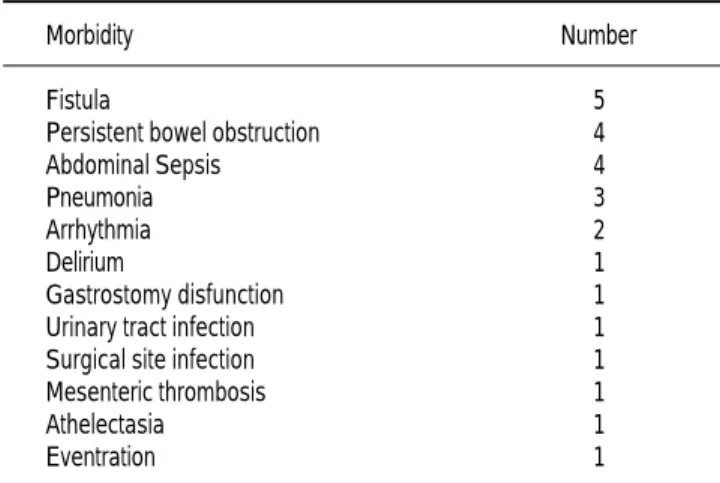
Table 3. Surgical morbidity of patients treated for MBO.
Morbidity Number
Fistula 5
Persistent bowel obstruction 4 Abdominal Sepsis 4
Pneumonia 3
Arrhythmia 2
Delirium 1
Gastrostomy disfunction 1 Urinary tract infection 1 Surgical site infection 1 Mesenteric thrombosis 1
Athelectasia 1
Eventration 1
primary gastrointestinal cancer (5.5%) compared with those with other type of neoplasm (23.1%) (p = 0.005).
Surgical morbidity rate was 16.2%. Main compli-cations are summarized in tables 3 and 4. Factors associated with morbidity were poor performance status (25.5% vs. 9.3% for Karnofsky > and > 70, respectively; p = 0.017); hypoalbuminemia (21.3% vs. 7.8% for albumin < and > 3 g/dL, respectively (p = 0.03) and advanced patient’s age (29.4% vs. 11.4%, for patients older or younger than 70 years old, respectively; p = 0.04). Gender and cancer type did not result in any statistically significant impact in surgical morbidity. Patients with any
complica-tion had significantly higher periopertaive mortality (71.4%), than those with no morbidity (9.5%) (p = 0.0001).
Median survival for the entire cohort was nine months (95% CI 5-13). Actuarial one, three and five year survival were 38.4, 27.5 and 25.4%, respective-ly. Older patients had significantly shorter survival (median five months; 95% CI 0-10) than younger pa-tients (median 11 months; 95% CI 8-14) (p = 0.013). Patients with low albumin levels had a significantly shorter survival (median three months; 95% CI 0-3) compared with those with normal serum albumin (median survival 18 months; 95% CI 4-32) (p = 0.014). However, the most significant factor asso-ciated with long-term survival was performance sta-tus: median survival times were 24 months (95% CI 4-44) for those with Karnofsky score > 70 vs. 2 months (95% CI 0-4), for those with performance status ≤ 70 (p = 0.00001). There was a trend for higher survival for patients with gastrointestinal cancers (median 14 months) compared with other primary sites (median five months), but this did not reach statistical significance (p = 0.07).
DISCUSSION
Bowel obstruction represents a common surgical emergency2 it is a frequent difficult problem for
sur-geons caring for cancer patients5 and continues to
be a serious cause of morbidity and mortality in this population. The timing and extent of surgical treat-ment is still a problem for surgeons. Current con-troversy concerns the benefits and possible harmful effects of surgery. The ultimate aim of surgery is to remove the neoplasm and thus relieve the obstruction. Unfortunately, definitive surgical treatment is only possible in a minority of patients. Many factors affect operability and outcomes of surgery in this group of patients.1 Surgical options can be
hel-pful in the setting of MBO as long as reasonable goals and realistic outcomes are clear.5
Malignant bowel obstruction can be a consequen-ce of primary neoplasms mainly from small or large bowel or due to tumor recurrence or metastatic di-sease, with dismal prognosis for this last group of patients. In the literature, the most common can-cers associated with MBO are ovarian (5.5-51%) and colorectal (10-28 %).6-8 In the present series there
In general, surgery should be considered in tho-se patients who do not respond to contho-servative ma-nagement after three to five days, but decision is complicated because of the high rate of benign cau-ses of bowel obstruction in patients with malignant neoplasms.10,11 In ovarian and other gynecologic
cancers adhesions represent only 6.1% of the cau-ses of bowel obstruction,6 and it has been reported
to be much higher in patients with colorectal can-cer, up to 48%.12 In our series, there were no cases
of adhesions as the cause of obstruction in patients with cancers different from those of colorectal ori-gin. It has been suggested that one-stage primary resection and anastomosis of the large bowel is a feasible option in cases of emergency surgery for cancers of colorectal origin whenever general sta-tus of the patient is not a contraindication.2 In the
present series, resection was performed in 45 (34.6%) patients. This higher resectability rates comparing with other reported in the literature, could be explained for the relatively larger number of primary colorectal neoplasms producing MBO presented in our series.7,8 Palliative surgery
(colos-tomy, iliostomy) was performed in 30 patients (23.1%). For patients with unresectable rectal or sig-moid cancer, colostomy is the treatment of choice, however, endoscopic treatment for malignant recto-sigmoid obstruction by endoluminal self-expanding metallic stents is currently a well-established proce-dure,13,14 but high costs make it a difficult option in
developing countries.
Not all patients are candidates for surgical pro-cedure, actually depending on the series, from 6.2% to 50% of those with MBO are not surgical candidates.15 The main reasons were tumor
exten-sion, multiple partial obstructions or non possible surgical correction. Some authors had proposed that patients who benefit less from a surgical in-tervention are:
1. Patients with gastrointestinal motility problems due to diffuse carcinomatosis.
2. Patients older than 70 years and caquexia. 3. Ascitis managed with multiple paracenthesis in
the presence of low albumin levels.
4. Previous abdominal or pelvic radiotherapy. 5. Intraabdominal palpable masses with hepatic
in-volvement.
6. Patients with several levels of obstruction.11
Even when those criteria could be taken as a gui-de, every single case must be individually evaluated by a surgical oncologist. Because we reviewed
surgi-cal records, we do not have the number of patients admitted with MBO who were not adequate surgical candidates. However, we tried to identify those fac-tors in surgical patients associated with morbidity and mortality, so they can help to guide the best op-tion between palliative medical management vs. sur-gical intervention. It has been reported a 30-day surgical mortality rate between 9%9 and 49%,16 and
the complications rate has been reported up to 80%.17 In our series the rates were 11 and 16%
res-pectively, which compares favorably with those re-ported in the literature. However, it must be taken into account we have a larger number of primary colorectal cancer patients who have a more favora-ble prognosis.
In the present study, hypoalbuminemia was one of the most important markers of surgical outco-me. Albumin levels have been associated with sur-gical outcome in the short term,18 as well as a
prognostic factor for survival in cancer patien-ts.19,20 Morbidity and in-hospital mortality rates
for this group of patients were 21.3% and 19.15% respectively. We found that advanced patient age was associated with a poor outcome in the short and the long-term. It has been described that emer-gency bowel operations have a poor outcome in the elderly. The nature and extent of disease, presence of coexisting cardiopulmonary comorbidities, late admission and presence of peritonitis significantly affect management and outcome of elderly patients with bowel emergencies.21
It is rather difficult to find a reasonable perfor-mance status for emergency surgical treatment for patients with advanced obstructing cancer.1 Several
authors have reported that patients’ general condi-tion could affect the surgical outcomes and operati-ve strategy.1,14 In our review, 55 (42.3%) of the
patients had a poor performance status (Karnofsky ≤ 70). Morbidity and in-hospital mortality rate for this group of patients were 25.5% and 16.4% respec-tively. Moreover, performance status was the most significant predictor of long term outcome too.
The origin of the primary tumor has been reported to have a considerable effect on surgical strategy and outcomes. Colorectal, ovarian and gastric carcinomas are the most common intra-abdominal neoplasms that lead to obstruction.1 Gallick, et al. reported
that intestinal obstruction caused by ovarian cancer had a better than average outcome.1 Woolfson, et
lowest operative mortality rate of 13% for colorectal carcinoma and 30% for gynecologic and pancreatico-biliary primary tumors which lead to obstruction.1
In our population, colorectal, retroperitoneal and ovarian cancers comprised the majority of the obs-tructing primary neoplasms. Obstructions caused by primary colorectal cancers have better outco-mes than those caused by other types of tumors;22
however this trend did not reach statistical signi-ficance, probably because of the small number of patients.
We acknowledge the limitations of our study. As an observational retrospective series the amount of information we can collect from the files is limited. We lack information regarding the type of obstruc-tion (partial or complete), when and if the patients were able to take adequate food by mouth, and about those patients who were lost for follow up. As a national referral center, our patients are more likely to have an advanced stage disease and to pre-sent an increased number of complications than tho-se treated in smaller centers, so the conclusions reach on this study could not be generalized for every center.
In summary, surgical management of patients with MBO requires careful assessment. The most important factors to consider are the site of origin of the neo-plasm and the general condition of the patient. These factors must be taken into account to determine if the patient is an adequate surgical candidate. According to our study, surgical candidates are patients younger than 70 years old, with no hypoalbuminemia and good performance status, however, every case should be considered individually.
REFERENCES
1. Kulah B, Ozmen MM, Ozer MV, Oruc MT, Coskun F. Outco-mes of emergency surgical treatment in malignant bowel obs-tructions. Hepatogastroenterology 2005; 52: 1122-7.
2. Krouse RS, McCahill LE, Easson AM, Dunn GP. When the sun can set on an unoperated bowel obstruction: manage-ment of malignant bowel obstruction. J Am Coll Surg 2002; 195: 117-28.
3 . Howie SB, Amigo PH, O’Kelly K, Fainsinger RL. Palliation of malignant bowel obstruction using a percutaneous cecostomy.
J Pain Symptom Manage 2004; 27: 282-5.
4 . Pothuri B, Meyer L, Gerardi M, Barakat RR, Chi DS. Reopera-tion for palliaReopera-tion of recurrent malignant bowel obstrucReopera-tion in ovarian carcinoma. Gynecol Oncol 2004; 95: 193-5.
5. Krouse RS. Surgical management of malignant bowel obstruc-tion. Surg Oncol Clin North Am 2004; 13: 479-90.
6 . Davis MP, Nouneh D. Modern management of cancer-re-lated intestinal obstruction. Curr Pain Hedache Rep 2001; 5: 257-64.
7. Clarke-Pearson DL, Chin NO, DeLong ER, Rice R, Creasman WT. Surgical Management of intestinal obstruction in ovarian
cancer. I: clinical features, postoperative complications and survival. Gynecol Oncol 1987; 26: 11-8.
8 . Rubin SC, Hoskins WJ, Benjamin I, Lewis JL. Palliative sur-gery for intestinal obstruction in advanced ovarian cancer.
Gy-necol Oncol 1989; 34: 16-9.
9 . Averbach AM, Sugarbaker PH. Recurrent intraabdominal can-cer with intestinal obstruction. Int Surg 1995; 80: 141-6. 10. Lau PW, Lorentz TG. Results of surgery for malignant bowel
obstruction in advanced, unresectable, recurrent, colorectal cancer. Dis Colon Rectum 1993; 36: 61-4.
11. Osteen RT, Guyton S, Steele G, Wilson RE. Malignant intestinal obstruction. Surgery 1980; 87: 611-15.
12. Spears H, Petrelli NJ, Herrera L, Mittleman A. Treatment of bowel obstruction after operation for colorectal carcinoma. Am
J Surg 1988; 155: 383-6.
1 3 . Fiori E, Lamazza A, De Cesare A, Bononi M, Volpino P, Schillaci A, et al. Palliative management of malignant rec-tosigmoidal obstruction. Colostomy vs. endoscopic sten-ting. A randomized prospective trial. Anticancer Res 2004; 24: 265-8.
14. Bhardwaj R, Parker MC. Palliative therapy of colorectal carci-noma: stent or surgery? Colorectal Dis 2003; 5: 518-21. 15. Ripamonti C. Management of bowel obstruction in advanced
cancer. Curr Opin Oncol 1994; 6: 351-7.
16. Aranha GV, Folk FA, Greenlee HB. Surgical palliation of small bowel obstruction due to metastatic carcinoma. Am Surg 1981; 47: 99-102.
17. Chan A, Woodruff RK. Intestinal obstruction in patients with widespread intra-abdominal malignancy. J Pain Symptom Man 1992; 7: 339-42.
18. Leite HP, Fisberg M, de Carvalho WB, de Camargo AC. Serum albumin and clinical outcome in pediatric cardiac surgery.
Nu-trition 2005; 21: 553-8.
19. Lien YC, Hsieh CC, Wu YC, et al. Preoperative serum albumin is a prognostic indicator for adenocarcinoma of the gastric car-dia. J Gastrointest Surg 2004; 8: 1041-8.
20. Medina-Franco H, Ramos-Gallardo G, Orozco H, Mercado-Diaz M. Prognostic factors in gallbladder cancer. Rev Invest
Clin 2005; 57: 662-5.
21. Kulah B, Gulgez B, Ozmen MM, Ozer MV, Coskun F. Emer-gency bowel surgery in the elderly. Turk J Gastroenterol 2003; 14: 189-93.
22. Helyer LK, Law CHL, Butler M, Last LD, Smith AJ, Wright FC. Surgery as a bridge to palliative chemotherapy in patients with malignant bowel obstruction from colorectal cancer. Ann
Surg Oncol 2007; 14: 1264-71.
23. Dindo D, Demartines N, Clavien PA. Classification of surgical complications: a new proposal with evaluation in a cohort of 6336 patients and results of a survey. Ann Surg 2004; 240: 205-13.
Correspondence and reprint request:
Heriberto Medina-Franco MD Department of Surgery.
Instituto Nacional de Ciencias Médicas y Nutrición Salvador Zubirán
Vasco de Quiroga 15, Tlalpan Col. Sección XVI,
14080, Mexico, D.F.
Phone and fax: 52-55-55739321. E-mail: [email protected]