Jordi Duran i Castells
TESI DOCTORAL
Facultat de Biologia
Universitat de Barcelona
Memòria per a optar al grau de Doctor per la Universitat de Barcelona
Presentada per:
JORDI DURAN I CASTELLS
Vist i plau del director: L’interessat,
Dr. Antonio Zorzano Olarte Jordi Duran i Castells
a
Llista d’abreviatures
aa aminoàcid
AD domini d’activació de la transcripció AF Activation Function
AR Receptor d’andrògens
BD Domini d’unió
BLAST Basic Local Aligment Search Tool BSA Albúmina sèrica bovina
CaMK II Calci-calmodulina cinasa II
CBP cAMP response element binding protein (CREB) binding protein cDNA DNA complementari
ChIP Immunoprecipitació de cromatina CK II Caseïna cinasa II
DBD Domini d’unió a DNA
DMEM Dubelcco's Modified Eagle's Medium DMSO Dimetilsulfòxid
DOR Diabetes and Obesity Regulated ECL Enhanced Chemioluminiscence ER Receptor d’estrògens
et al i col·laboradors
FACS Fluorescence Activated Cell Sorter FBS Sèrum Boví Fetal
GFP Green Fluorescent Protein GR Receptor de Glucocorticoides HAT Histona Acetil Transferasa HDAC Histona Desacetilasa
HRE Element de resposta a hormona
kDa KiloDalton
LBD Domini d’unió a lligand
LCoR Ligand-dependent nuclear receptor CoRepressor LXR Liver X Receptor
MR Receptor de Mineralocorticoides mRNA RNA missatger
MW Pes molecular
NAM Nicotinamida
NCoR Nuclear CoRepressor NES Senyal d’export nuclear
ng nanograms
NLS Senyal de localització nuclear
nM Nanomolar
NR Receptor nuclear
PCR Reacció en cadena de la polimerasa
PFA Paraformaldehid
PGC-1 Peroxisome proliferator-activated receptor-Ȗ coactivator-1 PKA Proteïna cinasa A
PML Promyelocytic leukaemia
Pol Polimerasa
PPAR Peroxisome Proliferating Activated Receptor PR Receptor de progesterona
RAR Receptor de l’àcid retinoic
REA Repressor of Estrogen Receptor Activity RIP140 Receptor Interacting Protein-140 RXR Retinoid X Receptor
siRNA Small interfering RNA
SMRT Silencing Mediator of Retinoic acid and Thyroid hormone receptor SNP Single Nucleotide Polymorfism
SRA Steroid Receptor Activator SRC-1 Steroid Receptor Coactivator-1 SUMO Small Ubiquitin-related modifier T3 triiodotironina (hormona tiroïdal) TBP TATA Binding Protein
TF Factor de transcripció TR Receptor d’hormones tiroïdals TXNIP Thioredoxin Interacting protein
UTR no traduïda
VDR Receptor de vitamina D
Jordi Duran i Castells
TESI DOCTORAL
Facultat de Biologia
Universitat de Barcelona
Memòria per a optar al grau de Doctor per la Universitat de Barcelona
Presentada per:
JORDI DURAN I CASTELLS
Vist i plau del director: L’interessat,
Dr. Antonio Zorzano Olarte Jordi Duran i Castells
r
A
Adachi, M., Takayanagi, R., Tomura, A., Imasaki, K., Kato, S., Goto, K., Yanase, T., Ikuyama, S., Nawata, H. (2000). Androgen-insensitivity syndrome as a possible coactivator disease. N Engl J Med 343, 856-862.
Ait-Si-Ali S., Ramirez S., Barre FX., Dkhissi F., Magnaghi-Jaulin L., Girault JA., Robin P., Knibiehler M., Pritchard LL., Ducommun B., Trouche D., Harel-Bellan A. (1998) Histone acetyltransferase activity of CBP is controlled by cycle-dependent kinases and oncoprotein E1A. Nature 396, 184-186.
Akimoto Y., Hart GW., Hirano H., Kawakami H. (2005) O-GlcNAc modification of nucleocytoplasmic proteins and diabetes. Med Mol Morphol. 2005 Jun;38(2):84-91.
Anzick SL., Kononen J., Walker RL., Azorsa DO., Tanner MM., Guan XY., Sauter G., Kallioniemi OP., Trent JM., Meltzer PS. (1997) AIB1, a steroid receptor coactivator amplified in breast and ovarian cancer. Science. 277(5328), 965-8.
Aranda, A., Pascual, A. (2001). Nuclear hormone receptors and gene expression. Physiol Rev 81, 1269-1304.
Argentaro A., Sim H., Kelly S., Preiss S., Clayton A., Jans DA., Harley VR. (2003) A SOX9 defect of calmodulin-dependent nuclear import in campomelic dysplasia/ autosomal sex reversal. J Biol Chem. 278(36), 33839-47.
Auboeuf D., Batsche E., Dutertre M., Muchardt C., O'malley BW. (2007) Coregulators: transducing signal from transcription to alternative splicing. Trends Endocrinol Metab. 18(3), 122-9.
B
Bach, D. Tesi Doctoral: Identificació d’un nou gen d’obesitat I d’altres amb expressió alterada en situacions de resistencia a la insulina. Departament de Bioquímica i Biologia Molecular. Facultat de Biología. Universitat de Barcelona (2001).
Baek SH., Rosenfeld MG. (2004) Nuclear receptor coregulators: their modification codes and regulatory mechanism by translocation. Biochem Biophys Res Commun. 319(3), 707-14.
Baek SH., Ohgi KA., Rose DW., Koo EH., Glass CK., Rosenfeld MG. (2002) Exchange of N-CoR corepressor and Tip60 coactivator complexes links gene expression by NF-kappa and beta-amyloid precursor protein. Cell 110, 55-67.
Ballabio E., Mariotti M., De Benedictis L., Maier JA. (2004) The dual role of endothelial differentiation-related factor-1 in the cytosol and nucleus: modulation by protein kinase A. Cell Mol Life Sci. 61(9), 1069-74.
Bassett JH., Harvey CB., Williams GR. (2003) Mechanisms of thyroid hormone receptor-specific nuclear and extra nuclear actions.Mol Cell Endocrinol. 213(1), 1-11.
Bayliss, R., Corbett, AH., Stewart, M. (2000). The molecular mechanism of transport of macromolecules through nuclear pore complexes. Traffic 1, 448-456.
Bennetts JS., Fowles LF., Butterfield NC., Berkman JL., Teasdale RD., Simpson F., Wicking C. (2006) Identification and analysis of novel genes expressed in the mouse embryonic facial primordia. Front Biosci. 11, 2631-46.
Bennetts JS., Rendtorff ND., Simpson F., Tranebjaerg L., Wicking C. (2007) The coding region of TP53INP2, a gene expressed in the developing nervous system, is not altered in a family with autosomal recessive non-progressive infantile ataxia on chromosome 20q11-q13. Dev. Dyn. 236 (3), 843-852.
Bentley D. (1999). Coupling RNA polymerase II transcription with pre-mRNA processing. Curr Opin Cell Biol 11, 347-351.
Blander G., Guarente L. (2004). The Sir2 family of protein deacetylases. Annu Rev Biochem 73, 417-435.
Blom N., Gammeltoft S., Brunak S. (1999) Sequence- and structure-based prediction of eukaryotic protein phosphorylation sites. Journal of Molecular Biology: 294(5): 1351-1362.
Blom N., Sicheritz-Ponten T., Gupta R., Gammeltoft S., Brunak S. (2004) Prediction of post-translational glycosylation and phosphorylation of proteins from the amino acid sequence. Proteomics. 4(6):1633-49.
Boeger H., Griesenbeck J., Strattan JS., Kornberg RD. (2003). Nucleosomes unfold completely at a transcriptionally active promoter. Mol Cell 11, 1587-1598.
Borden KL. (2002). Pondering the promyelocytic leukaemia protein (PML) puzzle: possible functions for PML nuclear bodies. Mol Cell Biol 22, 5259-5269.
Bordone L, Guarente L. (2005) Calorie restriction, SIRT1 and metabolism: understanding longevity. Nat Rev Mol Cell Biol. 6(4), 298-305.
Bowden DW., Sale M., Howard TD., Qadri A., Spray BJ., Rothschild CB., Akots G., Rich SS., Freedman BI. (1997). Linkage of genetic markers on human chromosomes 20 and 12 to NIDDM in Caucasian sib pairs with a history of diabetic nephropathy. Diabetes 46, 882-886.
Brameier M, Krings A, Maccallum RM. (2007) NucPred - Predicting Nuclear Localization of Proteins. Bioinformatics. 2007 May 1;23(9):1159-60.
Brooks CL., Gu W. (2003) Ubiquitination, phosphorylation and acetylation: the molecular basis for p53 regulation. Curr Opin Cell Biol. 15(2), 164-71.
Burghardt, H. Tesi Doctoral: Cerca de gens de susceptibilitat a la Diabetes de Tipus 2: DOR i AIB3. Departament de Bioquímica i BiologíaiMolecular. Facultat de Biología. Universitat de Barcelona (2001).
C
Calvo O., Manley JL. (2005) The transcriptional coactivator PC4/Sub1 has multiple functions in RNA polymerase II transcription. EMBO J. 24(5), 1009-20.
Ceballos E., Delgado MD., Gutierrez P., Richard C., Muller D., Eilers M., Ehinger M., Gullberg U., Leon J. (2000) c-Myc antagonizes the effect of p53 on apoptosis and p21/WAF1 transactivation in K562 leukemia cells. Oncogene. 19(18), 2194-204.
Cha BS., Ciaraldi TP., Carter L., Nikoulina SE., Mudaliar S., Mukherjee R. (2001). Peroxisome proliferator-activated receptor (PPAR) gamma and retinoid X receptor (RXR) agonists have complementary effects on glucose and lipid metabolism in
human skeletal muscle. Diabetologia, 44, 444–452.
Chan CK., Hübner S., Hu W., Jans DA. (1998) Mutual exclusivity of DNA binding and nuclear localization signal recognition by the yeast transcription factor GAL4: implications for nonviral DNA delivery. Gene Ther. 5(9), 1204-12.
Chawla S., Hardingham GE., Quinn DR., Bading H. (1998) CBP: a signal-regulated transcriptional coactivator controlled by nuclear calcium and CaM kinase IV. Science 281, 15051509.
Chen D., Ma H., Hong H., Koh SS., Huang SM., Schurter BT., Aswad DW., Stallcup MR. (1999) Regulation of transcription by a protein methyltransferase. Science. 284(5423), 2174-7.
Cheveraud JM., Routman EJ., Duarte FA., van Swinderen B., Cothran K., Perel C. (1996). Quantitative trait loci for murine growth. Genetics 142, 1305-1319.
Chiba H., Muramatsu M., Nomoto A., Kato H. (1994) Two human homologues of Saccharomyces cerevisiae SWI2/SNF2 and Drosophila brahma are transcriptional coactivators cooperating with the estrogen receptor and the retinoic acid receptor. Nucleic Acids Res. 22, 18151820.
Ciaraldi TP., Cha BS., Park KS., Carter L., Mudaliar SR., Henry RR. (2002) Free fatty acid metabolism in human skeletal muscle is regulated by PPARgamma and RXR agonists. Ann. NY. Acad. Sci. 967, 66-70.
Cokol M., Nair R., Rost B. (2000) Finding Nuclear localization signals . EMBO Reports 1: 411-415.
Coligan JE, Dunn BM., Ploegh HL, Speicher DW., Wingfield PT. (2001). Current Protocols in Protein Sciences.
Collingwood TN., Urnov FD., Wolffe AP. (1999). Nuclear receptors: coactivators, corepressors and chromatin remodeling in the control of transcription. J Mol Endocrinol 23, 255-275.
Comer FI., Hart GW. (1999) O-GlcNAc and the control of gene expression. Biochim Biophys Acta. 1473(1):161-71
Conaway RC., Brower CS., Conaway JW. (2002). Emerging roles of ubiquitin in transcription regulation. Science 296, 1254-1258.
Conaway RC., Sato S., Tomomori-Sato C., Yao T., Conaway JW. (2005) The mammalian Mediator complex and its role in transcriptional regulation. Trends Biochem Sci. 30(5):250-5.
D
Dash AB., Orrico FC., Ness, SA. (1996) The EVES motif mediates both intermolecular and intramolecular regulation of c-Myb. Genes Dev. 10, 1858-1869.
Day C. (2007) Metabolic syndrome, or What you will: definitions and epidemiology. Diab Vasc Dis Res. 4(1), 32-8.
De Bosscher K., Vanden Berghe W., Haegeman G. (2003) The interplay between the glucocorticoid receptor and nuclear factor-kappa or activator protein-1: molecular mechanisms for gene repression, Endocr Rev 24, 488-522.
Delage-Mourroux R., Martini PG., Choi I., Kraichely DM., Hoeksema J., Katzenellenbogen BS. (2000) Analysis of estrogen receptor interaction with a repressor of estrogen receptor activity (REA) and the regulation of estrogen receptor transcriptional activity by REA. J. Biol. Chem. 275, 3584835856.
Delmotte MH., Tahayato A., Formstecher P., Lefebvre P. (1999) Serine 157, a retinoic acid receptor alpha residue phosphorylated by protein kinase C in vitro, is involved in RXR-RARalpha heterodimerization and transcriptional activity. J. Biol. Chem. 274, 3822538231.
Dennis AP., O'Malley BW. (2005). Rush hour at the promoter: how the ubiquitin-proteasome pathway polices the traffic flow of nuclear receptor-dependent transcription. J Steroid Biochem Mol Biol 93, 139-151.
Dhananjayan SC., Ramamoorthy S., Khan OY., Ismail A., Sun J., Slingerland J., O'Malley BW., Nawaz Z. (2006) WW domain binding protein-2, an E6-associated protein interacting protein, acts as a coactivator of estrogen and progesterone receptors. Mol Endocrinol. 20(10), 2343-54.
di Bari MG., Ciuffini L., Mingardi M., Testi R., Soddu S., Barila D. (2006) c-Abl acetylation by histone acetyltransferases regulates its nuclear-cytoplasmic localization. EMBO Rep. 7(7), 727-33.
Dillon N., Festenstein R. (2002). Unravelling heterochromatin: competition between positive and negative factors regulates accessibility. Trends Genet 18, 252-258.
Dilworth FJ., Chambon P. (2001). Nuclear receptors coordinate the activities of chromatin remodeling complexes and coactivators to facilitate initiation of transcription. Oncogene 20, 3047-3054.
Dodds E., Dunckley MG., Naujoks K., Michaelis U., Dickson G. (1998) Lipofection of cultured mouse muscle cells: a direct comparison of Lipofectamine and DOSPER. Gene Ther. 5(4), 542-51.
Donaldson L.. Capone JP. (1992). Purification and characterization of the carboxyl-terminal transactivation domain of Vmw65 from herpes simplex virus type 1. J. Biol. Chem. 267, 1411-1414.
Dornan D., Shimizu H., Burch L., Smith AJ., Hupp TR. (2003) The proline repeat domain of p53 binds directly to the transcriptional coactivator p300 and allosterically controls DNA-dependent acetylation of p53. Mol Cell Biol. 23(23), 8846-61.
dos Santos RA., Giannocco G., Nunes MT. (2001) Thyroid hormone stimulates myoglobin expression in soleus and extensorum digitalis longus muscles of rats: Concomitant alterations in the activities of Krebs cycle oxidative enzymes, Thyroid 11, 545-550.
Dostie J., Ferraiuolo M., Pause A., Adam SA., Sonenberg N. (2000) A novel shuttling protein, 4E-T, mediates the nuclear import of the mRNA 5' cap-binding protein, eIF4E. EMBO J. 19(12), 3142-56.
Doucas V. (2000). The promyelocytic (PML) nuclear compartment and transcription control. Biochem Pharmacol 60, 1197-1201.
Doucas V., Tini M., Egan DA., Evans RM. (1999). Modulation of CREB binding protein function by the promyelocytic (PML) oncoprotein suggests a role for nuclear bodies in hormone signaling. Proc Natl Acad Sci U S A 96, 2627-2632.
Dressel U., Allen TL., Pippal JB., Rohde PR., Lau P., Muscat GE. (2003) The peroxisome proliferator-activated receptor beta/delta agonist, GW501516, regulates the expression of genes involved in lipid catabolism and energy uncoupling in skeletal muscle cells, Mol. Endocrinol. 17 , 2477-2493.
E
Eckardt NA. (2001) Transcription factors dial 14-3-3 for nuclear shuttle. Plant Cell. 13(11), 2385-9.
Eisenhaber B., Bork P., Eisenhaber F. (1999) Prediction of potential GPI-modification sites in proprotein sequences. JMB, 292 (3), 741-758.
Eisenhaber F., Eisenhaber B., Kubina W., Maurer-Stroh S., Neuberger G., Schneider G., Wildpaner M. (2003) Prediction of lipid posttranslational modifications and localization signals from protein sequences: big-PI, NMTand PTS1. Nucleic Acids Res. 31, 3631– 3634.
Emanuelsson O., Brunak S., von Heijne G., Nielsen H. (2007) Locating proteins in the cell using TargetP, SignalP, and related tools. Nature Protocols 2, 953-971.
Emanuelsson O., Elofsson A., von Heijne G., Cristobal S. (2003) In silico prediction of the peroxisomal proteome in fungi, plants and animals. J. Mol. Biol, 330:443-456.
F
Featherstone M. (2002) Coactivators in transcription initiation: here are your orders. Curr Opin Genet Dev. 12(2), 149-55.
Finck BN., Kelly DP. (2006) PGC-1 coactivators: inducible regulators of energy metabolism in health and disease. J Clin Invest. 116(3), 615-22.
Fulco M., Schiltz RL., Iezzi S., King MT., Zhao P., Kashiwaya Y., Hoffman E., Veech RL., Sartorelli V. (2003). Sir2 regulates skeletal muscle differentiation as a potential sensor of the redox state. Mol Cell 12, 51-62.
G
Gamble MJ., Freedman LP. (2002) A coactivator code for transcription. Trends Biochem Sci. 27(4):165-7.
Gavaravarapu S., Kamine J. (2000) TIP60 inhibits activation of CREB protein by protein kinase A. Biochem. Biophys. Res. Commun. 269 758-766.
Ge H., Zhao Y., Chait BT., Roeder RG. (1994) Phosphorylation negatively regulates the function of coactivator PC4. Proc Natl Acad Sci U S A. 91(26), 12691-5.
Germain P., Staels B., Dacquet C., Spedding M., Laudet V. (2006) Overview of Nomenclature of Nuclear Receptors Pharmacol Rev. 58(4), 685-704.
Glass CK., Rosenfeld MG. (2000) The coregulator exchange in transcriptional functions of nuclear receptors. Genes Dev. 14(2), 121-41.
Grozinger CM., Schreiber SL. (2000) Regulation of histone deacetylase 4 and 5 and transcriptional activity by 14-3-3-dependent cellular localization. Proc. Natl. Acad. Sci. U.S.A.97, 7835-7840.
Gu W., Roeder RG. (1997) Activation of p53 sequence-specific DNA binding by acetylation of the p53 C-terminal domain. Cell. 90(4):595-606.
Guarente L., Pica F. (2005) Calorie restriction and SIR2 genes - towards a mechanism. Mech Ageing Dev. 2005 Sep;126(9), 923-8.
Guda C., Subramaniam S. (2005) pTARGET: A new method for predicting protein subcellular localization in eukaryotes. Bioinformatics 21:3963-3969.
Gupta R., Brunak S. (2002) Prediction of glycosylation across the human proteome and the correlation to protein function. Pacific Symposium on Biocomputing, 7:310-322.
H
Hanover JA. (2001) Glycan-dependent signaling: O-linked N-acetylglucosamine. FASEB J. 15(11):1865-76.
Hawkins T., Luban S., Kihara D. (2006) Enhanced Automated Function Prediction Using Distantly Related Sequences and Contextual Association by PFP. Protein Science 15: 1550-6.
Henderson BR., Eleftheriou A. (2000) A comparison of the activity, sequence specificity, and CRM1-dependence of different nuclear export signals. Exp Cell Res. 256(1), 213-24.
Hermanson O., Glass CK, Rosenfeld MG. (2002) Nuclear receptor coregulators: multiple modes of modification. Trends Endocrinol Metab. 13(2), 55-60.
Hermanson O., Jepsen K., Rosenfeld MG. (2002) N-CoR controls differentiation of neural stem cells into astrocytes. Nature 419, 934-939.
Hermoso MA., Cidlowski JA. (2003) Putting the brake on inflammatory responses: the role of glucocorticoids, IUBMB Life 55, 497-504.
Hershko A., Ciechanover A. (1998). The ubiquitin system. Annu Rev Biochem 67, 425-479.
Hervy M., Hoffman L., Beckerle MC. (2006) From the membrane to the nucleus and back again: bifunctional focal adhesion proteins. Curr Opin Cell Biol. 18(5), 524-32.
Hevel JM., Stewart JA., Gross KL., Ayling JE. (2006) Can the DCoH isozyme compensate in patients with 4-hydroxy-tetrahydrobiopterin dehydratase/DCoH deficiency? Molecular Genetics and Metabolism 88(1), 38-46.
Hicks GR., Raikhel NV. (1995) Protein import into the nucleus: an integrated view. Ann. Rev. Cell Dev. Biol., 11, 155.
Hiroi Y., Kim HH., Ying H., Furuya F., Huang Z., Simoncini T., Noma K., Ueki K., Nguyen NH., Scanlan TS., Moskowitz MA., Cheng SY., Liao JK. (2006) Rapid nongenomic actions of thyroid hormone. Proc Natl Acad Sci U S A.103(38), 14104-9.
Hoeglund A., Doennes P., Blum T., Adolph HW., Kohlbacher O. (2006) MultiLoc: prediction of protein subcellular localization using N-terminal targeting sequences, sequence motifs, and amino acid composition Bioinformatics, 15;22(10):1158-65.
Hong SH., Privalsky ML. (2000) The SMRT corepressor is regulated by a MEK-1 kinase pathway: inhibition of corepressor function is associated with SMRT phosphorylation and nuclear export. Mol. Cell. Biol. 20, 6612-6625.
Horton P., Park KJ., Obayashi T., Nakai K., (2006) Protein Subcellular Localization Prediction with WoLF PSORT, Proceedings of the 4th Annual Asia Pacific Bioinformatics Conference APBC06, Taipei, Taiwan. 39-48.
Hu X., Lazar MA. (1999). The CoRNR motif controls the recruitment of corepressors by nuclear hormone receptors. Nature 402, 93-96.
Huang SM., Huang CJ., Wang WM., Kang JC., Hsu WC. (2004) The enhancement of nuclear receptor transcriptional activation by a mouse actin-binding protein, alpha actinin 2. J Mol Endocrinol. 32(2), 481-96.
Hulo N., Bairoch A., Bulliard V., Cerutti L., De Castro E., Langendijk-Genevaux PS., Pagni M., Sigrist CJ. (2006) The PROSITE database.Nucleic Acids Res. 34(Database issue):D227-30.
I
Iakoucheva LM., Radivojac P., Brown CJ., O'Connor TR., Sikes JG., Obradovic Z., Dunker AK. (2004) The importance of intrinsic disorder for protein phosphorylation. Nucleic Acids Res. 32(3), 1037-49.
Ito M., Roeder RG. (2001) The TRAP/SMCC/Mediator complex and thyroid hormone receptor function. Trends Endocrinol Metab. 12(3), 127-34.
Iwao K., Kawasaki H., Taira K., Yokoyama, KK. (1999) Ubiquitination of the transcriptional coactivator p300 during retinoic acid induced differentiation. Nucleic Acids Symp. Ser. 42, 207-208.
J
Jenkins AB., Campbell LV. (2004) The genetics and pathophysiology of diabetes mellitus type II. J Inherit Metab Dis. 27(3), 331-47.
Jensen LJ., Gupta R., Blom N., Devos D., Tamames J., Kesmir C., Nielsen H., Stærfeldt HH., Rapacki K., Workman C., Andersen CAF., Knudsen S., Krogh A., Valencia A., Brunak S. (2002) Ab initio prediction of human orphan protein function from post-translational modifications and localization features. J. Mol. Biol., 319:1257-1265.
Ji L., Malecki M., Warram JH., Yang Y., Rich SS., Krolewski AS. (1997). New susceptibility locus for NIDDM is localized to human chromosome 20q. Diabetes 46, 876-881.
Johnson JD., Zhang W., Rudnick A., Rutter WJ., German, MS. (1997) Transcriptional synergy between LIM-homeodomain proteins and basic helix-loop-helix proteins: the LIM2 domain determines specificity. Mol. Cell. Biol. 17, 3488-3496.
Jonas BA., Privalsky ML. (2004) SMRT and N-CoR corepressors are regulated by distinct kinase signaling pathways. J. Biol. Chem. 279, 54676-54686.
Jones PL., Shi YB. (2003) N-CoR-HDAC corepressor complexes: roles in transcriptional regulation by nuclear hormone receptors.Curr Top Microbiol Immunol. 274, 237-68.
Junn E., Han SH., Im JY., Yang Y., Cho E. W., Um HD., Kim DK., Lee KW., Han PL., Rhee SG., Choi I. (2000). Vitamin D3 up-regulated protein 1 mediates oxidative stress via suppressing the thioredoxin function. J Immunol 164, 6287-6295.
K
Kambach C., Mattaj IW. (1994) Nuclear transport of the U2 snRNP-specific U2B protein is mediated by both direct and indirect signalling mechanisms. J Cell Sci. 107 (7), 1807-16.
Kawaguchi Y., Ito A., Appella E., Yao TP. (2006) Charge modification at multiple C-terminal lysine residues regulates p53 oligomerization and its nucleus-cytoplasm trafficking. J Biol Chem. 281(3), 1394-400.
Klinge CM., Jernigan SC., Mattingly KA., Risinger KE., Zhang J. (2004) Estrogen response element-dependent regulation of transcriptional activation of estrogen receptors alpha and beta by coactivators and corepressors. J Mol Endocrinol. 33(2), 387-410.
Knutti D., Kaul A., Kralli A. (2000) A Tissue-Specific Coactivator of Steroid Receptors, Identified in a Functional Genetic Screen. Mol Cell Biol. 20(7), 2411-2422.
Ko L., Cardona GR., Chin WW. (2000). Thyroid hormone receptor-binding protein, an LXXLL motifcontaining protein, functions as a general coactivator. Proc Natl Acad Sci U S A 97, 6212-6217.
Kobayashi Y., Kitamoto T., Masuhiro Y., Watanabe M., Kase T., Metzger D., Yanagisawa J., Kato SJ. (2000) p300 mediates functional synergism between AF-1 and AF-2 of estrogen receptor alpha and beta by interacting directly with the N-terminal A/B domains.Biol Chem. 275(21), 15645-51.
Kojic S., Medeot E., Guccione E., Krmac H., Zara I., Martinelli V., Valle G., Faulkner G. (2004) The Ankrd2 protein, a link between the sarcomere and the nucleus in skeletal muscle. J Mol Biol. 339(2), 313-25.
Kopf E. Plassat JL., Vivat V., de Thé H., Chambon P., Rochette-Egly C. (2000) Dimerization with retinoid X receptors and phosphorylation modulate the retinoic acid-induced degradation of retinoic acid receptors alpha and gamma through the ubiquitin-proteasome pathway. J. Biol. Chem. 275, 3328033288.
Krauss, G. (2003) Biochemistry of Signal Transduction and Regulation.
Kucera T., Waltner-Law M., Scott DK., Prasad R., Granner DK. (2002) A point mutation of the AF2 transactivation domain of the glucocorticoid receptor disrupts its interaction with steroid receptor coactivator 1, J Biol Chem. 277(29), 26098-102.
Kumar BR., Swaminathan V., Banerjee S., Kundu TK. (2001) p300-mediated acetylation of human transcriptional coactivator PC4 is inhibited by phosphorylation. J Biol Chem. 276(20), 16804-9.
Kumar R., Wang RA., Barnes CJ. (2004). Coregulators and chromatin remodeling in transcriptional control. Mol Carcinog 41, 221-230.
Kutay U., Guttinger S. (2005). Leucine-rich nuclear export signals: born to be weak. Trends Cell Biol 15, 121-124.
L
la Cour T., Kiemer L., Mølgaard A., Gupta R., Skriver K., Brunak S. (2004) Analysis and prediction of leucine-rich nuclear export signals Protein Eng. Des. Sel., 17(6):527-36.
Lanz RB., McKenna NJ., Onate SA., Albrecht U., Wong J., Tsai SY., Tsai MJ., O'Malley BW. (1999) A steroid receptor coactivator, SRA, functions as an RNA and is present in an SRC-1 complex. Cell. 97(1), 17-27.
Laskey RA., Dingwall C. (1993). Nuclear shuttling: the default pathway for nuclear proteins? Cell 74, 585-586.
Lee JE., Kim K., Sacchettini JC., Smith CV., Safe S. (2005) DRIP150 coactivation of estrogen receptor alpha in ZR-75 breast cancer cells is independent of LXXLL motifs. J Biol Chem. 280(10), 8819-30.
Lefstin JA., Yamamoto KR. (1998). Allosteric effects of DNA on transcriptional regulators. Nature 392, 885-888.
Levine M, Tjian R. (2003) Transcription regulation and animal diversity. Nature. 424(6945), 147-51.
Li D., Kang Q., Wang D. (2007) CCPG, a Novel Constitutive Coactivator of PPAR that Promotes Adipogenesis. Mol Endocrinol. 2007 Jun 26.
Li XY., Green MR. (1996) Intramolecular inhibition of activating transcription factor-2 function by its DNA-binding domain. Genes Dev. 10, 517-527.
Linding R., Russell RB., Neduva V., Gibson TJ. (2003) GlobPlot: exploring protein sequences for globularity and disorder. Nucleic Acids Research, 13, 3701-3708.
Litterst CM., Pfitzner E. (2002) An LxxLL motif in the transactivation domain of STAT6 mediates recruitment of NCoA-1/SRC-1, J. Biol. Chem. 277, 36052-36060.
Liu Y., Cseresnyes Z., Randall WR., Schneider MF. (2001) Activity-dependent nuclear translocation and intranuclear distribution of NFATc in adult skeletal muscle fibers. J. Cell Biol. 155, 27-39.
Llorens F., Duarri A., Sarró E., Roher N., Plana M., Itarte E. (2006) The N-terminal domain of the human eIF2beta subunit and the CK2 phosphorylation sites are required for its function. Biochem J. 394(Pt 1):227-36.
Llorian M., Beullens M., Lesage B., Nicolaescu E., Beke L., Landuyt W., Ortiz JM., Bollen M. (2005) Nucleocytoplasmic shuttling of the splicing factor SIPP1. J Biol Chem. 280(46), 38862-9.
Loinder K., Soderstrom M. (2004). Functional analyses of an LXXLL motif in nuclear receptor corepressor (N-CoR). J Steroid Biochem Mol Biol 91, 191-196.
Lonard DM., O'Malley BW. (2005) Expanding functional diversity of the coactivators. Trends Biochem Sci. 30(3), 126-32.
Lonard DM., O'Malley BW. (2006) The expanding cosmos of nuclear receptor coactivators. Cell. 125(3), 411-4.
Losel R., Wehling M. (2003) Nongenomic actions of steroid hormones. Nature Rev. Mol. Cell Biol. 4, 46-56.
Loy CJ., Sim KS., Yong EL. (2003) Filamin-A fragment localizes to the nucleus to regulate androgen receptor and coactivator functions.Proc Natl Acad Sci U S A. 100(8), 4562-7.
Lu J., McKinsey TA., Zhang CL., Olson EN. (2000). Regulation of skeletal myogenesis by association of the MEF2 transcription factor with class II histone deacetylases. Mol Cell 6, 233-244.
Lu Z., Szafron D., Greiner R., Lu P., Wishart DS., Poulin B., Anvik J., Macdonell C., Eisner R. (2004) Predicting Subcellular Localization of Proteins using Machine-Learned Classifiers. Bioinformatics 20(4):547-556.
Luger K. (2003) Structure and dynamic behavior of nucleosomes. Curr Opin Genet Dev. 13(2), 127-35.
Lupas A., Van Dyke M., Stock, J. (1991) Predicting Coled Coils from Protein Sequences, Science 252:1162-1164.
M
Marmorstein R., Roth SY. (2001) Histone acetyltransferases: function, structure, and catalysis. Curr Opin Genet Dev. 11(2):155-61.
Martens JA., Winston F. (2003) Recent advances in understanding chromatin remodeling by Swi/Snf complexes. Curr Opin Genet Dev. 13(2), 136-42.
McInerney EM., Rose DW., Flynn SE., Westin S., Mullen TM., Krones A., Inostroza J., Torchia J., Nolte RT., Assa-Munt N., Milburn MV., Glass CK., Rosenfeld MG. (1998) Determinants of coactivator LXXLL motif specificity in nuclear receptor transcriptional activation. Genes Dev. 12(21), 3357-68.
McKenna NJ., Lanz RB., O’Malley BW. (1999) Nuclear Receptor Coregulators: Cellular and Molecular Biology. Endocrine Reviews 20 (3), 321-344.
McKenna NJ., O'Malley BW. (2002) Minireview: nuclear receptor coactivators - an update. Endocrinology. 143(7), 2461-5.
McKenna NJ., O'Malley BW. (2002) Combinatorial control of gene expression by nuclear receptors and coregulators. Cell. 108(4), 465-74.
McKenna, NJ., O'Malley, BW. (2000). From ligand to response: generating diversity in nuclear receptor coregulator function. J Steroid Biochem Mol Biol 74, 351-356.
McKinsey TA., Zhang CL., Lu J., Olson EN. (2000) Signal-dependent nuclear export of a histone deacetylase regulates muscle differentiation. Nature. 408(6808), 106-11.
McKinsey TA., Zhang CL., Olson EN. (2001) Identification of a signal-responsive nuclear export sequence in class II histone deacetylases. Mol Cell Biol. 21(18), 6312-21.
Minvielle-Sebastia L., Keller W. (1999) mRNA polyadenylation and its coupling to other RNA processing reactions and to transcription. Curr Opin Cell Biol. 11(3), 352-7.
Miyazato A., Sheleg S., Iha H., Li Y., Jeang K. (2005) Evidence for NF-B- and CBP-Independent Repression of p53's Transcriptional Activity by Human T-Cell Leukemia Virus Type 1 Tax in Mouse Embryo and Primary Human Fibroblasts. J Virol. 79(14), 9346-9350.
Monsalve M., Wu Z., Adelmant G., Puigserver P., Fan M., Spiegelman BM. (2000) Direct coupling of transcription and mRNA processing through the thermogenic coactivator PGC-1. Mol Cell. 6(2), 307-16.
Moreno H., Serrano AL., Santalucia T. (2003) Differential regulation of the muscle-specific GLUT4 enhancer in regenerating and adult skeletal muscle, J. Biol. Chem. 278, 40557-40564.
Moreno H., Tesi Doctoral: Regulación transcripcional del gen GLUT4. Departament de Bioquímica i Biología Molecular. Facultat de Biología. Universitat de Barcelona (2002).
Muratani M., Tansey WP. (2003). How the ubiquitin-proteasome system controls transcription. Nat Rev Mol Cell Biol 4, 192-201.
N
Nagy L., Schwabe JW. (2004). Mechanism of the nuclear receptor molecular switch. Trends Biochem Sci 29, 317-324.
Nakai K., Horton P. (1999) PSORT: a program for detecting sorting signals in proteins and predicting their subcellular localization.Trends Biochem Sci. 24(1):34-6.
Nawaz Z., O'Malley BW. (2004) Urban renewal in the nucleus, is protein turnover by proteasomes absolutely required for nuclear receptor-regulated transcription? Mol Endocrinol. 18(3), 493-9.
Nolte RT., Wisely GB., Westin S., Cobb JE., Lambert MH., Kurokawa R., Rosenfeld MG., Willson TM., Glass CK., Milburn MV. (1998) Ligand binding and co-activator assembly of the peroxisome proliferator-activated receptor-gamma. Nature. 395(6698), 137-43.
Nordberg J., Arner ES. (2001). Reactive oxygen species, antioxidants, and the mammalian thioredoxin system. Free Radic Biol Med 31, 1287-1312.
transforming-specific leukaemia gene (TEL) and functions as a transcriptional co-repressor. Biochem. J. 374, 165–173.
Norman RJ., Clark AM. (1998). Obesity and reproductive disorders: a review. Reprod Fertil Dev 10, 55-63.
Notredame C., Higgins D., Heringa J. (2000) T-Coffee: A novel method for multiple sequence alignments. Journal of Molecular Biology,Vol 302, pp205-217.
O
Oberste-Berghaus C., Zanger K., Hashimoto K., Cohen RN., Hollenberg AN., Wondisford FE. (2000). Thyroid hormone-independent interaction between the thyroid hormone receptor beta2 amino terminus and coactivators. J Biol Chem 275, 1787-1792.
Obsil T., Ghirlando R., Anderson DE., Hickman AB., Dyda F. (2003) Two 14-3-3 binding motifs are required for stable association of Forkhead transcription factor FOXO4 with 14-3-3 proteins and inhibition of DNA binding. Biochemistry 42, 15264-15272.
Okamura S., Arakawa H., Tanaka T., Nakanishi H., Ng CC., Taya Y., Monden M., Nakamura Y. (2001) p53DINP1, a p53-inducible gene, regulates p53-dependent apoptosis. Mol Cell. 8(1), 85-94.
Olefsky JM. (2001) Nuclear receptor minireview series. J Biol Chem. 276(40), 36863-4.
Orpinell M., Tesi Doctoral: Molecular mecanisms of DOR action. Departament de Bioquímica i Biología Molecular. Facultat de Biología. Universitat de Barcelona (2006).
Ohshiro K., Rayala SK., Kondo S., Gaur A., Vadlamudi RK., El-Naggar AK., Kumar R. (2007) Identifying the Estrogen Receptor Coactivator PELP1 in Autophagosomes. Cancer Res. 67(17): 8164-71.
Otaegui PJ., Ferre T., Pujol A., Riu E., Jimenez R., Bosch F. (2000) Expression of glucokinase in skeletal muscle: a new approach to counteract diabetic hyperglycemia. Hum. Gene Ther. 11, 1543-1552.
P
Pan F., Means AR., Liu JO. (2005) Calmodulin-dependent protein kinase IV regulates nuclear export of Cabin1 during T-cell activation.EMBO J. 24(12), 2104-13.
Park JJ., Irvine RA., Buchanan G., Koh SS., Park JM., Tilley WD., Stallcup MR., Press MF., Coetzee GA. (2001) Breast cancer susceptibility gene 1 (BRCAI) is a coactivator of the androgen receptor. Cancer Res. 60(21), 5946-9.
Peri S., Navarro JD., Amanchy R., Kristiansen TZ., Jonnalagadda CK., Surendranath V., Niranjan V., Muthusamy B., Gandhi TK., Gronborg M., Ibarrola N., Deshpande N., Shanker K., Shivashankar HN., Rashmi BP., Ramya MA., Zhao Z., Chandrika KN., Padma N., Harsha HC., Yatish AJ., Kavitha MP., Menezes M., Choudhury DR., Suresh S., Ghosh N., Saravana R., Chandran S., Krishna S., Joy M., Anand SK., Madavan V., Joseph A., Wong GW., Schiemann WP., Constantinescu SN., Huang L., Khosravi-Far R., Steen H., Tewari M., Ghaffari S., Blobe GC., Dang CV., Garcia JG., Pevsner J., Jensen ON., Roepstorff P., Deshpande KS., Chinnaiyan AM., Hamosh A., Chakravarti A., Pandey A. (2003) Development of human protein reference database as an initial platform for approaching systems biology in humans. Genome Research. 13:2363-2371.
Perissi, V., Aggarwal, A., Glass, C. K., Rose, D. W., Rosenfeld, M. G. (2004). A corepressor/coactivator exchange complex required for transcriptional activation by nuclear receptors and other regulated transcription factors. Cell 116, 511-526.
Perissi V., Rosenfeld MG. (2005) Controlling nuclear receptors: the circular logic of cofactor cycles. Nat Rev Mol Cell Biol. 6(7), 542-54.
Pierleoni A., Martelli PL., Fariselli P., Casadio R. (2006) BaCelLo: a Balanced subCellular Localization predictor. Bioinformatics, 22, e408-e416.
Pinna LA. (2002) Protein kinase CK2: a challenge to canons. J Cell Sci. 115(20), 3873-8.
Plevin MJ., Mills MM., Ikura M. (2005). The LxxLL motif: a multifunctional binding sequence in transcriptional regulation. Trends Biochem Sci 30, 66-69.
Powis G., Montfort WR. (2001). Properties and biological activities of thioredoxins. Annu Rev Biophys Biomol Struct 30, 421-455.
Prisant LM. (2004) Preventing type II diabetes mellitus. J Clin Pharmacol. 44(4), 406-13.
Puntervoll P., Linding R., Gemünd C., Chabanis-Davidson S., Mattingsdal M., Cameron S., Martin DM., Ausiello G., Brannetti B., Costantini A., Ferrè F., Maselli V., Via A., Cesareni G., Diella F., Superti-Furga G., Wyrwicz L., Ramu C., McGuigan C., Gudavalli R., Letunic I., Bork P., Rychlewski L., Küster B., Helmer-Citterich M., Hunter WN., Aasland R., Gibson TJ. (2003) ELM server: a new resource for investigating short functional sites in modular eukaryotic proteins. Nucleic Acids Res., 31: 3625-3630.
Q
Queiroz MS., Shao Y., Ismail-Beigi F. (2004) Effect of thyroid hormone on uncoupling protein-3 mRNA expression in rat heart and skeletal muscle, Thyroid 14, 177-185.
Qutob MS., Bhattacharjee RN., Pollari E., Yee SP., Torchia J. (2002) Microtubule-dependent subcellular redistribution of the transcriptional coactivator p/CIP. Mol Cell Biol. 22(18):6611-26.
R
Radhakrishnan I., Perez-Alvarado GC., Parker D., Dyson HJ., Montminy MR., Wright PE. (1997) Solution structure of the KIX domain of CBP bound to the transactivation domain of CREB: a model for activator:coactivator interactions. Cell. 91(6), 741-52.
Rechsteiner, M. (1990). PEST sequences are signals for rapid intracellular proteolysis. Semin Cell Biol 1, 433-440.
Rihs HP., Jans DA., Fan H., Peters R. (1991) The rate of nuclear cytoplasmic protein transport is determined by the casein kinase II site flanking the nuclear localization sequence of the SV40 T-antigen. EMBO J. 10(3), 633-9.
Rochette-Egly C., Oulad-Abdelghani M., Staub A., Pfister V., Scheuer I., Chambon P., Gaub MP. (1995) Phosphorylation of the retinoic acid receptor-alpha by protein kinase A. Mol. Endocrinol. 9, 860871.
Rodriguez-Vilarrupla A., Jaumot M., Abella N., Canela N., Brun S., Diaz C., Estanyol JM., Bachs O., Agell N. (2005) Binding of calmodulin to the carboxy-terminal region of p21 induces nuclear accumulation via inhibition of protein kinase C-mediated phosphorylation of Ser153. Mol Cell Biol. 2005 Aug;25(16):7364-74.
Roeder RG. (2005) Transcriptional regulation and the role of diverse coactivators in animal cells. FEBS Lett. 579(4):909-15.
Rogatsky I., Zarember KA., Yamamoto KR. (2001) Factor recruitment and TIF2/GRIP1 corepressor activity at a collagenase-3 response element that mediates regulation by phorbol esters and hormones. EMBO J. 20(21), 6071-83.
Rosenfeld MG., Lunyak VV., Glass CK. (2006) Sensors and signals: a coactivator/corepressor/epigenetic code for integrating signal-dependent programs of transcriptional response. Genes Dev. 20(11), 1405-28.
Rosenthal N., Kornhauser JM., Donoghue M., Rosen KM., Merlie JP. (1989). Myosin light chain enhacer activates muscle-specific, developmentally regulated gene expression in transgenic mice. Proc. Natl. Acad. Sci. U.S.A. 86, 7780-7784.
S
Salghetti SE., Caudy AA., Chenoweth JG., Tansey WP.. (2001) Regulation of transcriptional activation domain function by ubiquitin. Science. 293(5535), 1651-3.
Sarda D., Huey Chua D., Li K., Tang F., Krishnan A. (2005) pSLIP: SVM based Protein Subcellular Localization Prediction using Multiple Physicochemical Properties.. BMC Bioinformatics, 17;6:152.
Savkur RS., Burris TP. (2004). The coactivator LXXLL nuclear receptor recognition motif. J Pept Res 63, 207-212.
Schmidt-Zachmann MS., Dargemont C., Kuhn LC., Nigg EA. (1993). Nuclear export of proteins: the role of nuclear retention. Cell 74, 493-504.
Screaton RA., Conkright MD., Katoh Y., Best JL., Canettieri G., Jeffries S., Guzman E., Niessen S., Yates JR., Takemori H., Okamoto M., Montminy M. (2004) The CREB coactivator TORC2 functions as a calcium- and cAMP-sensitive coincidence detector. Cell. 119(1), 61-74.
Schulze PC., De Keulenaer, GW., Yoshioka J., Kassik KA., Lee RT. (2002). Vitamin D3-upregulated protein-1 (VDUP-1) regulates redox-dependent vascular smooth
muscle cell proliferation through interaction with thioredoxin.Circ Res 91, 689-695. Schulze PC., Yoshioka J., Takahashi T., He Z., King GL., Lee RT. (2004). Hyperglycemia promotes oxidative stress through inhibition of thioredoxin function by thioredoxin-interacting protein. J Biol Chem 279, 30369-30374.
Sharma D., Fondell JD. (2002). Ordered recruitment of histone acetyltransferases and the TRAP/Mediator complex to thyroid hormone-responsive promoters in vivo. Proc Natl Acad Sci U S A 99, 7934-7939.
Sharp PA. (2005) The discovery of split genes and RNA splicing. Trends Biochem Sci. 30(6), 279-81.
Silver PA., Keegan LP., Ptashne M. (1984) Amino terminus of the yeast GAL4 gene product is sufficient for nuclear localization. Proc Natl Acad Sci U S A. 81(19), 5951-5.
Smaldone S., Ramirez F. (2006) Multiple pathways regulate intracellular shuttling of MoKA, a co-activator of transcription factor KLF7. Nucleic Acids Res. 34(18), 5060-8.
Smith AG., Muscat GE. (2005) Skeletal muscle and nuclear hormone receptors: implications for cardiovascular and metabolic disease. Int J Biochem Cell Biol. 37(10), 2047-63.
Smith CL., O'Malley BW. (2004). Coregulator function: a key to understanding tissue specificity of selective receptor modulators. Endocr Rev 25, 45-71.
Sollerbrant K., Chinnadurai G., Svensson C. The CtBP binding domain in the adenovirus E1A protein controls CR1-dependent transactivation. Nucleic Acids Res. 24(13), 2578-84.
Spiegelman BM., Heinrich R. (2004) Biological control through regulated transcriptional coactivators. Cell. 119(2), 157-67.
Stocklin E., Wissler M., Gouilleux F., Groner B., (1996) Functional interactions between stat5 and the glucocorticoid receptor, Nature 383, 726-728.
Sutton-McDowall ML., Mitchell M., Cetica P., Dalvit G., Pantaleon M., Lane M., Gilchrist RB., Thompson JG. (2006) Glucosamine supplementation during in vitro maturation inhibits subsequent embryo development: possible role of the hexosamine pathway as a regulator of developmental competence. Biol Reprod. 74(5):881-8.
T
Takaesu G., Kishida S., Hiyama A., Yamaguchi K., Shibuya H., Irie K., Ninomiya-Tsuji J., Matsumoto K. (2000) TAB2, a novel adaptor protein, mediates activation of TAK1 MAPKKK by linking TAK1 to TRAF6 in the IL-1 signal transduction pathway. Mol. Cell 5, 649-658.
Taylor SI. (1999) Deconstructing type 2 diabetes. Cell 97, 9-12.
Terribilini M., Lee JH., Yan C., Jernigan RL., Honavar V., Dobbs D. (2006) Prediction of RNA-binding sites in proteins from amino acid sequence. RNA, 12:1450-1462.
Tomasini R., Samir AA., Carrier A., Isnardon D., Cecchinelli B., Soddu S., Malissen B., Dagorn JC., Iovanna JL., Dusetti NJ. (2003) TP53INP1s and homeodomain-interacting protein kinase-2 (HIPK2) are partners in regulating p53 activity. J Biol Chem. 278(39), 37722-9.
Tomasini R., Seux M., Nowak J., Bontemps C., Carrier A., Dagorn JC., Pebusque MJ., Iovanna JL., Dusetti NJ. (2005) TP53INP1 is a novel p73 target gene that induces cell cycle arrest and cell death by modulating p73 transcriptional activity. Oncogene. 24(55), 8093-104.
Torchia J., Rose DW., Inostroza J., Kamei Y., Westin S., Glass CK., Rosenfeld MG. (1997) The transcriptional co-activator p/CIP binds CBP and mediates nuclear-receptor function Nature 387, 677-684.
Tzivion G., Avruch J. (2002) 14-3-3 proteins: active cofactors in cellular regulation by serine/threonine phosphorylation. J Biol Chem. 277(5), 3061-4.
U
Uesugi M., Nyanguile O., Lu H., Levine AJ., Verdine GL. (1997) Induced a helix in the VP16 activation domain upon binding to a human TAF. Science, 277, 1310-1313.
V
Vega RB., Huss JM., Kelly DP. (2000) The Coactivator PGC-1 Cooperates with Peroxisome Proliferator-Activated Receptor in Transcriptional Control of Nuclear Genes Encoding Mitochondrial Fatty Acid Oxidation Enzymes. Molecular and Cellular Biology, 20(5), 1868-1876.
Verger A., Perdomo J., Crossley M. (2003). Modification with SUMO. A role in transcriptional regulation. EMBO Rep 4, 137-142.
Verma NK., Singh J., Dey CS. (2004) PPAR-{gamma}expression modulates insulin sensitivity in C2C12 skeletal muscle cells, Br J Pharmacol. 143(8), 1006-13.
von Mering C., Jensen LJ., Kuhn M., Chaffron S., Doerks T., Kruger B., Snel B., Bork P. (2007) STRING 7-recent developments in the integration and prediction of protein interactions. Nucleic Acids Res. 35(Database issue):D358-62.
W
Wang C., Chen L., Hou X., Li Z., Kabra N., Ma Y., Nemoto S., Finkel T., Gu W., Cress WD., Chen J. (2006) Interactions between E2F1 and SirT1 regulate apoptotic response to DNA damage. Nat Cell Biol. 8(9), 1025-31.
Wang Y., De Keulenaer GW., Lee RT. (2002). Vitamin D(3)-up-regulated protein-1 is a stress-responsive gene that regulates cardiomyocyte viability through interaction with thioredoxin. J Biol Chem 277, 26496-26500.
Wang Z., Rose DW., Hermanson O., Liu F., Herman T., Wu W., Szeto D., Gleiberman A., Krones A., Pratt K., Rosenfeld R., Glass CK., Rosenfeld MG. (2000) Regulation of somatic growth by the p160 coactivator p/CIP.Proc Natl Acad Sci U S A. 97(25), 13549-54.
Warnmark A., Treuter E., Wright AP., Gustafsson JA.. (2003)Activation functions 1 and 2 of nuclear receptors: molecular strategies for transcriptional activation. Mol Endocrinol. 17(10), 1901-9.
Watada H., Mirmira RG., Kalamaras J., German MS. (2000) Intramolecular control of transcriptional activity by the NK2-specific domain in NK-2 homeodomain proteins. PNAS 97;9443-9448.
Weis K. (2003). Regulating access to the genome: nucleocytoplasmic transport throughout the cell cycle. Cell 112, 441-451.
White JH., Fernandes I., Mader S., Yang XJ. (2004) Corepressor recruitment by agonist-bound nuclear receptors. Vitam. Horm. 68, 123143.
Wu J., Li Y., Dietz J., Lala DS. (2004) Repression of p65 transcriptional activation by the glucocorticoid receptor in the absence of receptor-coactivator interactions Mol. End. 18(1), 53-62.
Wu RC., Qin J , Hashimoto Y., Wong J., Xu J., Tsai SY., Tsai MJ., O’Malley BW. (2002) Regulation of SRC-3 (pCIP/ACTR/AIB-1/RAC-3/TRAM-1) Coactivator Activity by I{kappa}B Kinase Mol. Cell. Biol. 22, 3549-3561.
Wu Y., Chin WW., Wang Y., Burris TP. (2003) Ligand and coactivator identity determines the requirement of the charge clamp for coactivation of the peroxisome proliferator-activated receptor gamma. J Biol Chem. 278(10), 8637-44.
X
Xiao H., Chung J., Kao HY., Yang YC. (2003) TIP60 is a co-repressor for STAT3. J. Biol. Chem. 278, 11197-11204.
Xu J., Qiu Y., DeMayo FJ., Tsai SY., Tsai MJ., O'Malley BW. (1998). Partial hormone resistance in mice with disruption of the steroid receptor coactivator-1 (SRC-1) gene. Science 279, 1922-1925.
Y
Yanase T., Adachi M., Goto K., Takayanagi R., Nawata H. (2004). Coregulator-related diseases. Intern Med 43, 368-373.
Yu CS., Lin CJ., Hwang JK. (2004) Predicting subcellular localization of proteins for Gram-negative bacteria by support vector machines based on n-peptide compositions. Protein Science, 13:1402-1406.
Z
Zachara NE., Hart GW. (2004) O-GlcNAc a sensor of cellular state: the role of nucleocytoplasmic glycosylation in modulating cellular function in response to nutrition and stress. Biochim Biophys Acta. 1673(1-2):13-28.
Zhang Y., Zhang H., Liang J., Yu W., Shang Y. (2007) SIP, a novel ankyrin repeat containing protein, sequesters steroid receptor coactivators in the cytoplasm.EMBO J. 26(11), 2645-57.
Zhang J., Lazar MA. (2000). The mechanism of action of thyroid hormones. Annu Rev Physiol 62, 439-466.
Zhang CL, McKinsey TA, Olson EN. (2001) The transcriptional corepressor MITR is a signal-responsive inhibitor of myogenesis. Proc Natl Acad Sci U S A. 98(13):7354-9.
compartment. Identification of the p102 U5 small nuclear ribonucleoprotein particle-binding protein as a coactivator for the receptor, J. Biol. Chem. 277, 30031-30039.
Zhong S., Salomoni P., Pandolfi PP. (2000). The transcriptional role of PML and the nuclear body. Nat Cell Biol 2, E85-90.
Zhou D., Chen S. (2001) PNRC2 is a 16 kDa coactivator that interacts with nuclear receptors through an SH3-binding motif. Nucleic Acids Res. 29(19), 3939-48.
Zor T., De Guzman RN., Dyson HJ., Wright PE. (2004) Solution structure of the KIX domain of CBP bound to the transactivation domain of c-Myb, J. Mol. Biol. 337, 521-534.
Jordi Duran i Castells
TESI DOCTORAL
Facultat de Biologia
Universitat de Barcelona
Memòria per a optar al grau de Doctor per la Universitat de Barcelona
Presentada per:
JORDI DURAN I CASTELLS
Vist i plau del director: L’interessat,
Dr. Antonio Zorzano Olarte Jordi Duran i Castells
m
m
ma
a
at
t
te
e
er
r
ri
i
ia
a
al
l
ls
s
s
i
I. EINES INFORMÀTIQUES.
I.1 Bases de dades.
I.1.1 Bases de dades del NCBI (National center of biotechnology Information).
http://www.ncbi.nih.gov
Es tracta d’un recurs que comprèn des de bases de dades de literatura científica a bases de dades de seqüències de projectes de seqüenciació de tot el món, així com eines per l’anàlisi de seqüències i la gestió de dades.
I.1.2 Human Protein Reference Database.
http://www.hprd.org/
Aquesta base de dades conté informació relativa a seqüència, modificacions post-traduccionals, arquitectura de dominis, interaccions amb altres proteïnes i associació amb malalties per a cada proteïna del proteoma humà (Peri et al., 2003).
I.1.3 Uniprot.
http://www.expasy.org/sprot/
És una base de dades de seqüències de proteïnes que proporciona molta informació relativa a funció, estructura de dominis, modificacions post-traduccionals, variants, etc. D’altra banda també dóna accés a diverses eines d’anàlisi de seqüències.
I.1.4 STRING.
http://string.embl.de/
STRING és una base de dades d’interaccions conegudes entre proteïnes, tant interaccions físiques com funcionals. A més prediu possibles interaccions basant-se en el context genòmic, informació d’experiments de gran escala i informació present a la literatura (von Mering et al., 2007).
I.1.5 Bases de dades de receptors nuclears i coreguladors.
A la xarxa podem trobar també diverses bases de dades que contenen informació relativa als receptors nuclears i als coactivadors o corepressors. Entre aquestes podem trobar:
-Nuclear Receptor Database
(http://www.ens-lyon.fr/LBMC/laudet/nurebase/nurebase.html) -Nuclear Receptor Signaling Atlas (http://www.nursa.org)
I.1.6International Chemical Safety Cards (base de dades del Ministerio de Trabajo y Asuntos Sociales).
http://www.mtas.es/insht/ipcsnspn/nspnsyn.htm
Les International Chemical Safety Cards recopilen de forma clara la informació essencial d’higiene i seguretat de substàncies químiques i estan destinades a totes aquelles persones que hagin de treballar amb aquestes substàncies.
I.1.7Restriction Endonucleases (New England Biolabs).
Aquesta base de dades de l’empresa New England Biolabs conté una gran quantitat d’informació sobre un gran nombre d’enzims de restricció, com per exemple especificitat de tall, propietats de l’enzim, emmagatzemament...
http://www.neb.com/nebecomm/products/category1.asp
I.2 Anàlisi de seqüències.
I.2.1 Comparació i alineament.
I.2.1.1 BLAST (Basic Local Alignment Search Tool).
Permet la cerca de seqüències homòlogues en les bases de dades de seqüències de DNA o proteïna. El programa compara la seqüència problema amb totes les seqüències de la base de dades mostrant com a resultat aquelles seqüències amb un cert grau d’homologia. També es pot usar per comparar dues seqüències entre elles (“Pairwise Blast”).
http://www.ncbi.nih.gov/blast o http://www.ensembl.org/Multi/blastview
TCoffee.
Es tracta d’una col·lecció d’eines per generar, evaluar i manipular alineaments múltiples de DNA, seqüències i estructures (Notredame et al., 2000).
http://igs-server.cnrs-mrs.fr/Tcoffee/tcoffee_cgi/index.cgi
I.2.1.2ClustalW.
L’algoritme ‘clustalw’ permet obtenir el millor alineament entre múltiples seqüències de DNA o proteïna. Per tal de fer aquest anàlisi existeixen diferents llocs d’internet i programes. En aquesta tesi s’ha usat el programa ‘MegAlign’ del paquet de programes Lasergene, així com la següent web:
I.2.1.3 Alineament de seqüències de DNA amb el programa ‘Seqman’.
Aquest programa permet introduir les seqüències en diferents formats, entre ells el cromatograma que s’obté del seqüenciador. Això permet que es pugui veure el cromatograma quan hi ha algun conflicte en la seqüència. A més el programa permet filtrar les seqüències segons diversos paràmetres.
I.2.2 Predicció i cerca de patrons.
ScanProsite, MotifScan.
Aquestes eines permeten cercar en una seqüència proteica patrons o motius, com ara llocs de fosforilació, llocs catalítics o llocs d’unió de proteïnes (Hulo et al., 2006).
http://www.expasy.org/tools/scanprosite/ http://myhits.isb-sib.ch/cgi-bin/motif_scan
ELM.
ELM (en anglès Eukaryotic Linear Motif resource) és una eina per predir a proteïnes eucariotes llocs funcionals, és a dir, petits motius lineals que es poden associar a una funció molecular (Puntervoll et al., 2003).
http://elm.eu.org/#
NetPhos 2.0, NetPhosK 1.0 i PhosphoMotif Finder.
Aquestes eines serveixen per predir possibles llocs de fosforilació a la proteïna problema (Blom et al., 1999; Blom et al., 2004).
http://www.cbs.dtu.dk/services/NetPhos/ http://www.cbs.dtu.dk/services/NetPhosK/ http://www.hprd.org/PhosphoMotif_finder
SignalP 3.0 i TargetP 1.1.
Aquestes eines serveixen per predir en la seqüència de la proteïna la presència de pèptids senyal que dirigeixin la seva localització cel·lular (Emmanuelson et al., 2007).
http://www.cbs.dtu.dk/services/SignalP/ http://www.cbs.dtu.dk/services/TargetP/
PredictNLS i NucPred.
http://sbcweb.pdc.kth.se/cgi-bin/maccallr/nucpred/single.pl http://cubic.bioc.columbia.edu/predictNLS/
pSLIP, ESLpred, pTARGET, PA-SUB 2.5, CELLO, BaCelLo, LOCtree, PSort II, WoLF PSORT i MultiLoc.
Totes aquestes eines utilitzen la seqüència d’aminoàcids de la proteïna per predir la seva localització sub-cel·lular. Es basen en paràmetres com ara les propietats físico-químiques de la proteïna i la seva composició d’aminoàcids, així com la presència de patrons de dominis funcionals i la homologia amb altres proteïnes. Alguns prediuen a més altres característiques, com ara la possible capacitat d’unir-se al DNA en el cas de BaCelLo (Lu et al., 2004; Sarda et al., 2005; Guda et al., 2005; Yu et al., 2004; Pierloni et al., 2006; Nakai et al., 1999; Horton et al., 2006; Hoeglund et al., 2006).
http://pslip.bii.a-star.edu.sg/
http://www.imtech.res.in/raghava/eslpred/submit.html http://bioinformatics.albany.edu/~ptarget/
http://pasub.cs.ualberta.ca:8080/pa/Subcellular http://cello.life.nctu.edu.tw/
http://gpcr2.biocomp.unibo.it/bacello/index.htm http://cubic.bioc.columbia.edu/services/loctree/ http://psort.ims.u-tokyo.ac.jp/form2.html http://wolfpsort.org
http://www-bs.informatik.uni-tuebingen.de/Services/MultiLoc/
NetNES 1.1.
Analitza la presència a la proteïna de senyals de sortida del nucli (NES de l’anglès “Nuclear Exit Signal”) (la Cour et al., 2004).
http://www.cbs.dtu.dk/services/NetNES/
TMHMM Server v. 2.0.
Cerca la presència a la proteïna de possibles hèlixs transmembrana.
http://www.cbs.dtu.dk/services/TMHMM/
YinOYang 1.2.
Prediu la possible unió a la proteïna de la modificació post-traduccional O-ß-GlcNAc, és a dir, la unió de N-acetilglucosamina a residus de serina o treonina. També utilitza el programa NetPhos per determinar si el residu també pòt ser fosforilat, generant així un lloc “Ying Yang”, és a dir, que pot ser tant fosforilat com gluconoacetilat (Gupta et al, 2002).
SAPS.
SAPS (“Statistical Analysis of Protein Sequences) avalua estadísticament el contingut i la distribució dels diferents aminoàcids a la seqüència de la proteïna. D’aquesta manera es poden trobar regions de la proteïna amb una composició particular que poden suggerir una determinada funció o característica (Brendel et al., 1992).
http://www.isrec.isb-sib.ch/software/SAPS_form.html
GlobPlot 2 i DisEMBL.
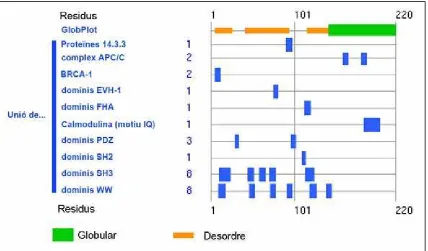
GlobPlot i DisEMBL mesuren la tendència de la proteïna analitzada generar una estructura ordenada (globular) o desordenada. Això pot ser útil a l’hora d’identificar dominis (linding et al., 2003).
http://globplot.embl.de/ http://dis.embl.de/
COILS.
COILS és un programa que calcula la probabilitat de que la seqüència problema adopti una estructura coiled-coil (Lupas et al., 1991).
http://www.ch.embnet.org/software/COILS_form.html
NMT.
Predicció de miristoïlació a glicines N-terminals. El programa també utilitza en la predicció les glicines internes de la proteïna ja que és possible que es donin fenòmens de proteòlisi que generin noves glicines N-terminals (Eisenhaber et al., 2003).
http://mendel.imp.ac.at/sat/myristate/SUPLpredictor.htm
big-PI.
Prediu la unió de GPI (glicosilfosfatidilinositol) a l’extrem C-terminal de la proteïna, que pot succeir a un trencament proteolític d’aquesta (Eisenhaber et al., 1999).
http://mendel.imp.ac.at/gpi/gpi_server.html
PeroxiP.
Prediu la possible localització a peroxisomes de la proteïna problema (Emmanuelson et al., 2003).
RNABindR.
Prediu la probabilitat de que la proteïna problema s’uneixi a l’RNA (Terriblini et al., 2006).
http://bindr.gdcb.iastate.edu/RNABindR/main.aspx?target=new
PFP.
PFP (Protein Function Prediction) prediu quina pot ser la funció de la proteïna a partir de la seva seqüència (Hawkins et al., 2006).
http://dragon.bio.purdue.edu/pfp/
ProtFun 2.2.
Aquest mètode utilitza diversos servidors de predicció de diferents característiques de la proteïna per obtenir informació sobre modificacions post-traduccionals, localització,etc, que són integrats en la predicció de la possible funció de la proteïna problema (Jensens et al., 2006).
http://www.cbs.dtu.dk/services/ProtFun-2.2/
I.3 Disseny d’encebadors.
Primer select: aquest programa del paquet de programes ‘Lasergene’ (DNAStar) genera i proposa primers sobre la seqüència proporcionada per l’usuari. Permet seleccionar diferents paràmetres per als encebadors (longitud, temperatura d’hibridació…) així com per la PCR (longitud del producte de la PCR, regió d’hibridació dels primers...). També emparella els primers forward i reverse generats per donar els parells de primers més compatibles.
http://www.dnastar.com
I.4 Gestió de vectors.
-entrant la seqüència completa del vector
-per clonació “in silico”: a partir de la seqüència d’altres vectors o d’altres seqüències (com ara d’amplificacions per PCR) s’indica la forma com es farà la clonació (enzims de restricció, fragment seleccionat) i el programa genera el vector que en resultarà.
El programa analitza la seqüència i mostra pautes obertes de lectura, llocs de tall per enzims de restricció, llocs d’hibridació de primers de la base de dades...
II. TÈCNIQUES GENERALS DE MANIPULACIÓ DEL DNA.
II.1 Consideracions generals.
La manipulació de DNA implica que s’ha de treballar en condicions en què s’eviti la contaminació per DNAses, que podrien degradar els vectors i sobretot els DNAs lineals utilitzats. Per aquest motiu s’ha de treballar amb material esterilitzat: s’autoclava durant 20 minuts de manera que s’inactiven les possibles DNAses. A més s’ha de treballar amb guants, ja que les mans són una font de contaminació amb DNAses. Els reactius usats han de ser de qualitat per a biologia molecular; l’aigua utilitzada en les solucions ha de ser de qualitat ultrapura (sistema miliQ de Millipore). Les solucions de DNA s’emmagatzemen a -20º C quan no estan sent utilitzades, i es conserven en gel mentre s’utilitzen per minimitzar-ne la degradació.
II.2 Bactèries competents.
Per poder mantenir i amplificar els plasmidis utilitzats aquests han estat transformats en bactèries competents. S’han utilitzat les soques de E. coli DH5 i XLBlue d’Stratagene. La manipulació de les bactèries s’ha de fer en un entorn estèril per evitar contaminacions amb altres bactèries. Així s’ha treballat amb material estèril i sempre a les proximitats d’un cremador Bunsen que proporciona una àrea estèril de treball.
En la preparació de les bactèries competents es tracten les cèl·lules amb una solució de
CaCl2, que altera la paret bacteriana facilitant l’entrada de DNA exogen. Les bactèries
competents utilitzades en aquesta tesi han estat generades per l’equip tècnic del laboratori.
II.2.1 Transformació.
La tècnica de transformació usada en aquesta tesi ha estat principalment la del “Heat-shock”. El protocol és el següent:
superior a 50 ng de DNA; en el cas de productes de lligació depèn dels casos, però normalment s’afegeix bona part de la reacció de lligació (fins a 20 μl). 2. Es manté el tub en gel 30 minuts. D’aquesta manera el DNA entra en contacte amb la paret bacteriana.
3. S’incuba a 42º C durant 90 segons. Aquest és el pas efectiu de la transformació.
4. S’afegeix 1 ml de medi LB i s’incuba a 37º C durant 1 hora amb agitació suau. Aquest pas permet que les bactèries es recuperin del heat-shock.
Composició del medi LB:
-Triptona a l’1%
-Extracte de llevat al 0,5% -NaCl al 0,5%
S’ajusta el pH a 7,5 i s’esterilitza amb autoclau.
5. Es centrifuga el tub a 4000 rcf durant 3 minuts. D’aquesta manera les bactèries es concentren a l’extrem del tub.
6. Treiem el sobrenedant per decantació i resuspenem el precipitat bacterià en el volum de medi LB que resta de la decantació (uns 100 μl).
7. Es sembra el cultiu en una placa amb medi LB i l’antibiòtic que permetrà la selecció de les bactèries transformades, ja que tan sols aquestes seran resistents a l’antibiòtic, característica que els dóna el vector transformat.
Els principals antibiòtics usats en aquesta tesi han estat Ampicil·lina i Kanamicina, a una concentració de 100 μg/ml.
8. S’incuba la placa en posició invertida a 37º C durant 12-18 hores, fins que apareguin les colònies.
II.2.2 Generació de glicerols.
Per mantenir el cultiu de bactèries transformades durant un llarg període de temps es poden generar glicerols. S’afegeix un 10% de glicerol al cultiu de bactèries i es congela ràpidament (amb nitrogen líquid o neu carbònica). El manteniment d’aquests glicerols es fa a -80º C o en nitrogen líquid. Per recuperar cultiu del glicerol s’obre el tub i es rasca la superfície del glicerol congelat amb una punta estèril. S’ha d’evitar que el glicerol es descongeli i treballar en condicions d’esterilitat. La punta es posa en medi LB amb el corresponent antibiòtic i es fa créixer de la mateixa forma que quan es pica una colònia.
II.3 Recuperació del DNA.
Per purificar els plasmidis a partir dels cultius bacterians s’han usat equips comercials diferents en funció de la quantitat de DNA que es volia obtenir. Per finalitats analítiques
s’han usat minipreps, amb les que es pot obtenir entre 10 i 30 μg de DNA; quan es volia
obtenir quantitats majors de DNA s’han usat maxipreps, amb les que es pot obtenir
entre 300 i 800 μg de DNA.
II.3.1 Minipreps i maxipreps.
En aquesta tesi s’ha utilitzat per a l’obtenció del DNA plasmídic equips comercials de la
casa Qiagen (Qiagen Plasmid Mini kit i Qiagen Plasmid Maxi kit). L’obtenció s’ha fet
seguints les intruccions del proveïdor; el protocol complet es pot trobar al web d’aquest (www.qiagen.com) però de forma resumida el mètode té els següents passos:
1. El precipitat de bactèries es resuspèn en la quantitat adequada (en funció de si es tracta de miniprep o maxiprep) de tampó de resuspensió en un tub eppendorf. 2. S’afegeix tampó de lisi i es mescla suaument per inversió del tub 4-6 vegades. Aquest pas s’ha de fer ràpidament ja que el tampó de lisi té un pH molt bàsic i es pot degradar el DNA.
3. Es neutralitza la solució afegint el tampó de neutralització i invertint 4-6 vegades. Apareix un precipitat blanquinós.
5. El sobrenedant és on ha quedat el DNA. Es passa aquest sobrenedant per una columna QIAprep adient, de manera que el DNA queda retingut a la columna. 6. Es renta la columna fent-hi passar tampó de neteja, que manté la interacció entre la resina de la columna i el DNA.
7. Es fa passar per la columna la quantitat d’aigua en la que es vol recuperar el DNA. De la quantitat d’aigua dependrà la concentració final de DNA de la solució (a més aigua, solució més diluïda) i la quantitat de DNA recuperada (a més aigua més recuperació) de manera que s’ha d’arribar a un compromís.
II.4 Digestió del DNA amb enzims de restricció.
La digestió del DNA, ja sigui per comprovar o per generar noves clonacions, s’ha portat a terme seguint les instruccions dels proveïdors i amb els reactius proporcionats per aquests amb els enzims. S’han tingut en compte les següents consideracions:
-la relació entre quantitat d’enzim i de DNA ha de ser com a mínim d’una unitat d’enzim per microgram de DNA. En general en aquesta tesi s’ha utilitzat relacions de 2-4 unitats d’enzim per microgram, per assegurar la digestió completa.
-el temps de digestió ha estat de com a mínim una hora a la temperatura òptima de l’enzim, indicada pel proveïdor.
-el volum total de reacció utilitzat ha estat sempre el menor possible, ja que en la majoria de casos la reacció s’ha de carregar després en un gel. En tot cas el volum ha de ser suficient com perquè la relació entre volum d’enzim i volum total no superi el 10%, ja que les solucions d’enzim tenen una alta concentració de glicerol per evitar que es congelin que podria interferir a la digestió.
Els enzims de restricció utilitzats en aquesta tesi han estat de les cases comercials Roche i New England Biolabs. La informació relativa a enzims de restricció d’aquests proveïdors es pot trobar als webs:
II.5 Electroforesi en gels d’agarosa.
Per separar els fragments de DNA obtinguts en una digestió o en una PCR es fa servir normalment l’electroforesi en gels d’agarosa (tot i que per a fragments de DNA molt petits, inferiors a 100 parells de bases, s’utilitzen gels d’acrilamida).
El DNA té una càrrega global negativa; en un camp elèctric la mobilitat dels fragments de DNA és inversament proporcional al logaritme del seu pes molecular. D’aquesta manera es poden separar els fragments del DNA en funció de la seva mida.
En la separació dels fragments influeix també la mida de porus del gel, la qual cosa ve determinada per la concentració d’agarosa utilitzada. En general en aquesta tesi s’han utilitzat gels de l’1% d’agarosa, que permeten la separació tant de bandes de diverses kilobases com de bandes de pocs centenars de bases. Aquesta concentració s’ha variat en els casos en que calia separar bandes molt petites (concentració d’agarosa més alta, fins al 3%) o molt grans (concentració més petita, fins al 0,5%). Al gel s’afegeix una solució de bromur d’etidi, un agent intercalant que serveix per marcar els àcids nucleics, ja que emet llum visible quan s’exposa a llum UV.
Les solucions utilitzades tenen la següent composició:
TAE 50X
-2 M Trizma base (Sigma) -1 M àcid bòric
-50 mM EDTA Es conserva a Tª ambient
solució de bromur d’etidi 400 μg/ml
tampó de càrrega 5X
-40 mM EDTA -0,1% SDS -30% Ficoll-400