9
i g ón C l a
Revista de Investigación Clínica / Vol. 64, Núm. 6 (Parte II) / Noviembre-Diciembre, 2012 / pp 609-614
Urinary arsenic levels and risk of
renal injury in a cross-sectional study in open population
María Ludivina Robles-Osorio,*
Iván N. Pérez-Maldonado,
‡Daniel Martín del Campo,
‡Diana Montero-Perea,
†Itzel Avilés-Romo,
†Elizabeth Sabath-Silva,
§Ernesto Sabath*
,||*Laboratorio de Endocrinología y Metabolismo, †Facultad de Medicina, Universidad Autónoma de Querétaro. ‡Laboratorio de Toxicología Ambiental, Facultad de Medicina, Universidad Autónoma de San Luis Potosí.
§Departamento de Fisiología y Biología Celular, Instituto de Investigaciones Biomédicas, Universidad Nacional Autónoma de México. ||Servicio de Nefrología, Hospital General de Querétaro.
ARTÍCULO ORIGINAL
ABSTRACT
Introduction. Arsenic (As) is one of the most ubiquitous elements in nature, and a prolonged exposure has been asso-ciated with an increase in the risk of cancer, diabetes mellitus, hypertension and cardiovascular disease. There are few stu-dies addressing the effects of As on albuminuria, tubular injury and biochemical variables as uric acid. Aim. To analy-ze the association between urinary As levels, albuminuria, and α1-microglobulin as marker of tubular injury. Material and methods. This is a cross-sectional, and comparative stu-dy done in 5 communities localized close to Queretaro City. Subjects with no antecedents of renal disease, diabetes, hyper-tension, or industrial exposure to As were included. A question-naire about risk factors for arsenic exposure was done, blood was taken for biochemical analysis and a spot urine sample was collected for albumin, α1-microglobulin, and As measure-ments. Results. A total of 90 adult persons were included with no antecedents of renal disease, diabetes or hyperten-sion; the mean age was 40.9 ± 12.9 years and the median for urinary As levels was 15 µg/gr Cr (range 0.56-89.2 µg/gr Cr), 10 (11.1%) persons had critical levels > 50 µg/gr Cr. Age more than 50 years old [OR 2.48 IC95 (0.9-6.6)] and place of resi-dence were the most important risk factors associated with higher levels of As. There was association between urinary As levels and α1-microglobulin urinary excretion (r2 = 0.07, p = 0.01) but not with albuminuria or other biochemical variables. Conclusions. This is the first study in Mexico to show an association between As and urinary excretion of α1-microglo-bulin as marker of early renal injury. We did not found asso-ciation with albuminuria or other serum biochemical variables. Arsenic may be considered as a risk factor for tubu-lar injury.
Niveles urinarios de arsénico y el riesgo de lesión renal en un estudio transversal en población abierta
RESUMEN
Introducción. El arsénico (As) es uno de los metales pesa-dos más abundantes en la naturaleza y la exposición prolon-gada a concentraciones elevadas de As se asocia con mayor riesgo de desarrollar cáncer, diabetes mellitus, hipertensión arterial y enfermedad cardiovascular. Hay pocos estudios acerca de la asociación de niveles de As y sus efectos en albu-minuria, daño tubular y otras variables de laboratorio como el ácido úrico. Objetivo. Analizar la asociación entre la con-centración urinaria de As con la albuminuria y excreción urinaria de α1-microglobulina como marcador temprano de daño tubular. Material y métodos. Estudio comparativo y transversal realizado en cinco comunidades cercanas a la ciudad de Querétaro (México). Los criterios de inclusión fue-ron personas sin antecedentes de enfermedad renal, hiper-tensión arterial, diabetes mellitus o exposición industrial al As. Se realizó un cuestionario acerca de factores de riesgo de exposición al As, mediciones antropométricas y de presión arterial, se tomó una muestra de sangre venosa, así como una muestra de orina al azar para el análisis de albúmina,
α1-microglobulina y As. Resultados. Se incluyeron 90 per-sonas sin antecedentes de enfermedad renal, diabetes o hi-pertensión arterial; la edad promedio de la población fue de 40.9 ± 12.9 años de edad y la mediana de la concentración urinaria de As fue de 15 μg/gr Cr (rango 0.56-89.2 μg/gr Cr), diez personas tuvieron niveles críticos > 50 μg/grCr. La edad mayor de 50 años [OR 2.48 IC95 (0.9-6.6)] y el lugar de resi-dencia fueron los factores de riesgo más importantes asocia-dos a concentraciones más elevadas de As. La excreción urinaria de As se encontró asociada a mayor excreción de α 1-microglobulina (r2 = 0.07) como marcador de daño tubular
INTRODUCTION
Arsenic is one of the most common heavy me-tals in nature; people are exposed through envi-ronmental, occupational, and rarely by medical sources (some treatments for leukemia and leish-maniasis contain As).1 In Mexico, exposure occurs mainly by drinking contaminated water and there are some areas, as La Laguna (Coahuila), that As contamination is cause of great concern. In Quere-taro City, drinking water comes from ground-water and recently from Zimapan, which has one of the highest As concentrations in Mexico.2 Concentrations of urinary As levels < 10 µg/gr Cr have no effects on health, but values > 50 µg/gr Cr are critical and poses a considerable risk for adverse health effects.
Chronic exposure usually is asymptomatic and health-related problems may manifest many years after the exposure occurred; however, some patients may present with skin lesions, peripheral neuropa-thy and anemia.3 Chronic exposure to even low levels is associated with a higher risk to develop cancer,2 diabetes mellitus,4arterial hypertension,5 and atheroesclerosis.6 In children, As affects mostly central nervous system with attention disorders.7
There are few reports about the effects of As on renal function, and animal studies have shown that As induce renal injury with decrease in glomerular filtration rate (GFR), low-weight proteinuria (LWP), albuminuria and increase in uric acid levels.8 In humans, Meliker, et al.,9 in one study done in Michigan (USA) reported a higher mortality related to renal diseases in areas with higher arse-nic concentration. Hsueh, et al.,10 in Taiwan showed an association (r2 = 0.04) between GFR and urinary As; however, limited information is available on the association of low exposure to As with albuminuria and other markers or renal injury.
In Mexico, this is the first report about urinary As levels and its association with albuminuria and α1-microglobulin excretion as marker of tubular in-jury and early renal dysfunction.
OBJECTIVE
The aim of this study was to know urinary As le-vels and its relationship with albuminuria, α 1-mi-croglobulin and other biochemical variables in healthy population without industrial or mining ex-posure to As.
MATERIAL AND METHODS
This is a cross-sectional and comparative study approved by the Bioethics Committee of the Univer-sity of Queretaro Medical School (FM-UAQ) and in-formed consent was obtained of each participant. The study was done in 5 communities (Santa Rosa Jaúregui, San José el Alto, Miranda, Santa Bárbara, and Lomas de Casablanca) (Table 1) located close to Queretaro City (Central Mexico) from March to April of 2010, and a probabilistic sampling proce-dure was used to recruit the population.
We included subjects with no antecedents of renal disease, diabetes, hypertension, industrial exposure to As, and aged > 18 years old. Pregnant women and people with current urinary tract infection were excluded.
A questionnaire was used to obtain information on demographic and socioeconomic aspects, family health history, personal medical history, and risk factors to As exposure. Anthropometric and blood pressure measurements were obtained after a 5 min
otros marcadores bioquímicos en suero. Conclusiones. Éste es el primer estudio en México en demostrar asociación entre los niveles de As y la excreción urinaria de α 1-microglobuli-na como marcador de daño re1-microglobuli-nal temprano. No encontramos asociación con albuminuria u otras variables bioquímicas. El As debe ser considerado como un factor de riesgo para el desarrollo de lesión renal temprana.
Palabras clave. Albuminuria. α1-microglobulina. Arséni-co. Insuficiencia renal crónica.
Key words. Albuminuria. α1-microglobulin. Arsenic. Chro-nic kidney disease.
1
Table 1.Table 1. Urinary arsenic concentrations in adult population of 5 commu- 1 nities in Queretaro (Central Mexico).
Community (n) Median As % As concentration > 50 μg/gr Cr
(μg/gr Cr) (n)
611
Robles-Osorio ML, et al. Urinary arsenic levels and risk of renal injury. Rev Invest Clin 2012; 64 (6) Parte II: 609-614 resting. During the same visit and after overnight
fasting, blood and first urine samples were obtained and the analytical measurements were done at the core laboratory of the FM-UAQ. Arsenic measure-ments were done at the Department of Environmen-tal Toxicology Laboratory (San Luis Potosi Medical School). Glucose, urea, creatinine and uric acid measurements were done by standard technique. GFR was calculated with the Modification Diet and Renal Disease (MDRD) formula.
Spot urine samples for albumin, α1-microglobulin and arsenic analysis were collected in arsenic-free containers, and stored frozen at -80 °C until their analysis. Albumin, α1-microglobulin, and As were creatinine adjusted. The α1-microglobulin determi-nations were done with the Alpco Immunoassays Kit ELISA33 according to the manufacturer instruc-tions. Albuminuria was considered abnormal with a ratio > 0.3 g/g and the α1-microglobulin with a ra-tio > 10 µg/g.
Urine samples were wet-digested for As quantifi-cation. The quantification of As was carried out with a Perkin-Elmer 3110 atomic absorption spec-trophotometer and then assayed by the hydride-evo-lution technique. For quality control an Iris Clinchek control test (lyophilized urine control level I and II; GmbH Labortechnik D80335 Munich/Ger-many) was used with an accuracy of 98%.
Statistical analysis
For descriptive statistics mean ± standard deviation, or percentages as appropriate were calcu-lated. Comparisons between groups for variables with normal distribution were done by t-student analysis, and for those with non-normal distribution
non-parametric statistics (Fisher test) was done. Multivariate analysis was performed to identify risk factors for high As levels. Linear correlation analy-sis with Pearson and coefficient of determination was used to determine correlation between continuo-us variables. For variables correlated with α 1-micro-globulin concentration multiple linear regression analysis was used. A p value < 0.05 was considered as statistically significant. The data were analyzed using the SPSS 16.0 program.
RESULTS
A total of 90 persons were included; the mean age was 40.9 ± 12.9 yrs and most of participants were females (77.8%), and the general characteristics of all participants are shown in table 2. The median for
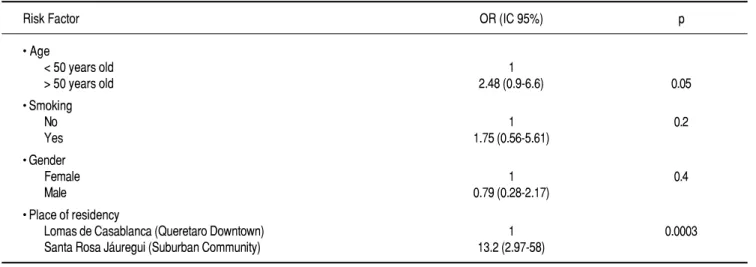
Table 3. Associated risk factors for As concentrations > 15 μg/gr Cr.
Risk Factor OR (IC 95%) p
• Age
< 50 years old 1
> 50 years old 2.48 (0.9-6.6) 0.05
• Smoking
No 1 0.2
Yes 1.75 (0.56-5.61)
• Gender
Female 1 0.4
Male 0.79 (0.28-2.17)
• Place of residency
Lomas de Casablanca (Queretaro Downtown) 1 0.0003 Santa Rosa Jáuregui (Suburban Community) 13.2 (2.97-58)
2
Table 2. Demographic, anthropometric and laboratory characteristics of the study sample.
n = 90
Age (years) 40.9 ± 12.9 Female (%) 77.8% Smoking (%) 16.6% SystolicBP (mmHg) 114.9 ± 16.3 DyastolicBP (mmHg) 75.4 ± 7.6 BMI (body mass index) 27.5 ± 4.9 GFR (ml/min) 83.4 ±16.5 GFR< 60 ml/min (%) 12.2
.
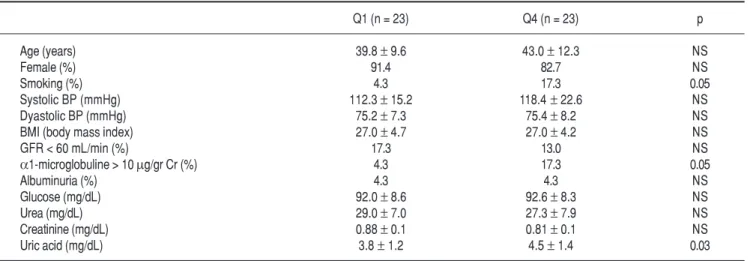
Table 5. Comparison of biochemical variables between arsenic levels percentile 25 and 75.
Q1 (n = 23) Q4 (n = 23) p
Age (years) 39.8 ± 9.6 43.0 ± 12.3 NS
Female (%) 91.4 82.7 NS
3 . 4 ) % ( g n ik o m
S 17.3 0.05
3 . 2 1 1 ) g H m m ( P B ci l o t s y
S ± 15.2 118.4 ± 22.6 NS
2 . 5 7 ) g H m m ( P B ci l o t s a y
D ± 7.3 75.4 ± 8.2 NS
0 . 7 2 ) x e d n i s s a m y d o b ( I M
B ± 4.7 27.0 ± 4.2 NS
GFR < 60 mL/min (%) 17.3 13.0 NS
α1-microglobuline > 10 µg/g rCr( %) 4.3 17.3 0.05 S N 3 . 4 3 . 4 ) % ( a ir u n i m u b l A
Glucose (mg/dL) 92.0 ± 8.6 92.6 ± 8.3 NS
Urea (mg/dL) 29.0 ± 7.0 27.3 ± 7.9 NS
Creatinine (mg/dL) 0.88 ± 0.1 0.81 ± 0.1 NS
Uric acid (mg/dL) 3.8 ± 1.2 4.5 ± 1.4 0.03
l 4
Table 4. Linear regression analysis of different variables associated with higher urinary excretion of α1-microglobuline.
Variable Standardized p coefficients beta
Arsenic -0.109 0.001
GFR -0.307 0.014
3 4 3 . 0 9 0 1 . 0 -e g A 9 4 3 . 0 1 0 1 . 0 I M B
SBP -0.046 0.704
Glucose 0.098 0.368
Uric acid 0.147 0.188
Dependent Variable: α1-microglobuline/creatinine ratio. GFR: glomerular fil-tration rate. BMI: body mass index. SBP: systolic blood pressure.
urinary As levels were of 15.0 µg/gr Cr (range 0.56-89.2 µg/Cr), and 10 (11.1%) persons had critical le-vels > 50 µg/gr Cr.
Conditions associated with an increase likelihood of higher levels of urinary As were age > 50 years old [OR 2.48 IC95 (0.9-6.6) p = 0.05], and place of residency [OR13.2 IC95 (2.97-58) p 0.003] being Santa Rosa Jaúregui the community with higher As levels (Table 3).
We performed a correlation analysis of urinary As levels with albuminuria, α1-microglobulin, and other laboratory variables and we found that arse-nic was significantly associated with α 1-microglobu-lin urinary excretion (Figure 1); in multivariate analysis As was the only factor associated with an increased urinary α1-microglobulin excretion (Table 4). There was no correlation of As concentration with albuminuria, and other biochemical variables.
We also compare Q1 vs. Q4 (Table 5) arsenic levels for α1-microglobulin excretion and those patients in percentile Q4 had higher α 1-microglobu-lin urinary excretion (3.2 ± 3.4 vs. 8.8 ± 6.2 µg/gr Cr p = 0.05). The α1-microglobulin levels were not affected by anthropometric measurements, albumi-nuria or blood pressure. Those patients in percentile Q4 also had significantly higher uric acid levels (3.8 ± 1.2 vs. 4.5 ± 1.5 mg/dL p = 0.03), however none of the participants refers a history of gout. Interestingly those patients with an abnormal
α1-microglobulin excretion had significantly higher As concentration (19.2 ± 19.8 vs. 30.2 ± 28.9 µg/gr Cr p = 0.04).
By the characteristics of the population selected we did not expect to find many patients with chronic kidney disease (CKD); however we found 11 (12.2%) persons with GFR < 60 mL/min. Comparing with individuals with normal GFR, those with GFR < 60 mL/min were older (49 ± 7 vs. 39.9 ± 13 years p = 0.01), and had higher levels of systolic .
gg . Figure 1.
Figure 1. Correlation between the urinary excretion of α1-microglobulin with urinary arsenic excretion.
α 1-microglobulin e 35 30 25 20 15 10 5 0
0 20 40 60 80 100
AsCr (µg/gr Cr)
613
Robles-Osorio ML, et al. Urinary arsenic levels and risk of renal injury. Rev Invest Clin 2012; 64 (6) Parte II: 609-614 blood pressure (121 ± 10 vs. 113.7 ± 12.7 mmHg
p = 0.007); however, the median As concentration was not different (13.6 vs. 16.2 µg/gr Cr p = NS) between the two groups.
DISCUSSION
This is the first report in Mexico about the effects of As and its correlation with early renal injury in persons with non-industrial exposure to As, also this is the first report of renal tubular injury in healthy Mexican population.
The glycoprotein α1-microglobulin has a low mo-lecular weight (26-31 kDA), is filtered through the glomeruli and completely reabsorbed in proximal tu-bule. Injury to tubular cells increases the urinary levels of this protein. This protein has been extensi-vely studied as a marker of tubular injury in many diseases as heavy metals nephropathy, hyperten-sion, diabetes mellitus and multiple myeloma so we do not consider that the results of this study change using other markers of tubular injury as NGAL or KIM-1, etc.11-13 Some studies have found that α 1-mi-croglobulin increases in very early stages of CKD even before creatinine or GFR decline.14,15
The effects of As on kidney are complex and not completely studied, although some studies done in animals have shown that mice with exposure to As develop glomerular sclerosis and tubular necrosis.16 Arsenic is absorbed in intestine, lung and skin and is widely distributed in the human body. Arsenics is filtered through the glomeruli and reabsorbed in the proximal segments of the nephron; As toxicity is re-lated to depletion of the glutathione stores and in-crease in free radicals.17-19 Urinary arsenic is a measure of total body burden.
The percentage of adult population with As con-centration in critical level above 50 µg/gr Cr was higher than expected, and more studies are neces-sary to detect the potential source of As in Quereta-ro; however, is likely that this problem is related to water because in Queretaro most of water used to drink is obtained from groundwater and recently from Zimapan which has one of the highest As con-centrations in the world. In a previous study done in children in Queretaro, Trejo-Acevedo, et al. found a mean urinary As concentration of 14.1 µg/gr Cr.20
High urinary As levels are associated with other health problems as hypertension, atherosclerosis, diabetes mellitus and carcinogenesis so the finding that persons with non-industrial exposure to As had higher levels than expected may be a risk factor to develop this morbidities.1,2
Another finding of this study was the high prevalence of individuals with GFR levels below 60 mL/min; this finding highlights the importance to search for other risk factors involved in the de-crease of GFR of this population. Also, is important to extend this study and include persons with chro-nic kidney disease to have a better idea of the effects of As on kidney function in our population. Other li-mitation of this study is the small sample size so the statistical significance should be interpreted with caution.
In conclusion, this study shows that urinary As levels are significantly correlated with α 1-microglo-bulin urinary excretion, and that in our population age and place of residency were the most important risk factors for higher urinary As concentrations. Further studies are warranted to dilucidate the role of arsenic in renal disease in Mexican population.
ACKNOWLEDGEMENTS
The authors acknowledge support from grant Fondos Mixtos del Estado de Querétaro (FOMIX-Consejo Nacional de Ciencia y Tecnología).
REFERENCES
1. ATSDR 2011. Toxicological Profile for Arsenic. Update. Atlanta, GA: Agency for Toxic Substances and Disease Registry. 2. Ongley LK, Sherman L, Armienta A, Concilio A, Ferguson-Salinas C. Arsenic in the soils of Zimapan, México. Environ-mental Pollution 2007; 145: 793-9.
3. Ratnaike RN. Acute and chronic arsenic toxicity. Postgrad Med J 2003; 79: 391-6.
4. Navas-Acien A, Silbergeld EK, Pastor-Barriuso R, Guallar E. Arsenic exposure and prevalence of type 2 diabetes in US adults. JAMA 2008; 300: 814-22.
5. Navas-Acien A, Sharrett AR, Silbergeld FK, Schwartz BS, Nachman KE, Burke TA, et al. Arsenic exposure and cardio-vascular disease: A systematic review of the epidemiologic evi-dence. Am J Epidemiol 2005; 162: 1037-49.
6. Wang CH, Jeng JS, Yip PK, Chen CL, Hsu LI, Hsueh YM, et al. Biological gradient between long-term arsenic exposure and carotid atherosclerosis. Circulation 2002; 105: 1805-09. 7. Rosado JL, Ronquillo D, Kordas K, Rojas O, Alatorre J, Lopez
P, et al. Arsenic Exposure and Cognitive Performance in Mexican Schoolchildren. Environ Health Perspect 2007; 115: 1371-5.
8. Jauge P, Del Razo LM. Uric acid levels in plasma and urine in rats chronically exposed to inorganic As (III) and As (V). Toxicol Lett 1985; 25: 31-5.
9. Meliker JR, Wahl RL, Cameron LL, Nriagu JO. Arsenic in drinking water and cerebrovascular disease, diabetes mellitus, and kidney disease in Michigan: A standardized mortality ratio analysis. Environ Health 2007; 6: 4-10.
11. Nordberg GF, Jin T, Hong F, Zhang A, Buchet JP, Bernard A. Biomarkers of cadmium and arsenic interactions. Toxicol Appl Pharmacol 2005; 206: 191-7.
12. Thomas LD, Hodgson S, Nieuwenhuijsen M, Jarup L. Early ki-dney damage in a population exposed to cadmium and other heavy metals. Environ Health Perspect 2009; 117: 181-4. 13. Parikh CR, Lu JC, Coca SG, Devarajan P. Tubular proteinuria
in acute kidney injury: A critical evaluation of current status and future promise. Ann Clin Biochem 2010; 47: 301-12. 1 4 . Nanayakkara S, Senevirathna ST, Karunaratne U,
Chandraji-th R, Harada KH, Hitomi T, et al. Evidence of tubular dama-ge in the very early stadama-ge of chronic kidney disease of uncertain etiology in the North Central Province of Sri Lanka: a cross-sectional study. Environ Health Prev Med 2011. In press.
15. Stefanovic V, Djukanovic L, Cukuranovic R, Bukvic D, Lezaic V, Maric I, et al. Beta 2-microglobulin and alpha1-microglo-bulin as markers of Balkan endemic nephropathy, a worldwide disease. Ren Fail 2011; 33: 176-83.
16. Liu J, Liu Y, Habeebu SM, Waalkes MP, Klaasen CD. Chronic combined exposure to cadmium and arsenic exacerbates ne-phrotoxicity, particularly in metalothionein-I/II null mice. Toxicology 2000; 147: 157-66.
17. Thomas D. Unraveling arsenic-glutathione connections. Toxi-col Sciences 2009; 107: 309-11.
18. Carbrey JM, Song L, Zhou Y, Yoshinaga M, Rojek A. Reduced arsenic clearance and increased toxicity in aquaglyceroporin-9-null mice. Proc Natl Acad Sci USA 2009; 106: 15956-60. 19. Sabath E, Robles-Osorio ML. Medio ambiente y riñón:
nefro-toxicidad por metales pesados. Nefrología 2012. En prensa. 20. Trejo-Acevedo A, Díaz-Barriga F, Carrizales L, Domínguez G,
Costilla R, Ize-Lema I, Yarto-Ramírez M, et al. Exposure asses-sment of persistent organic pollutans and metals in Mexican children. Chemosphere 2009; 74: 974-80.
Correspondence and reprint request:
Dr. Ernesto Sabath
Unidad Estatal de Hemodiálisis Fray Luis de León, Núm. 2990 Col. Centro Sur
76090, Querétaro. Qro. Tel.: 52 442 2 29 1778
Correo electrónico: [email protected]