Cost of the Cervical Cancer Screening Program
at the Mexican Social Security Institute
Víctor Granados-García, M Phil,(1) Yvonne N Flores, PhD,(2,3) Ruth Pérez, MA,(4) Samantha E Rudolph, BA,(2,5) Eduardo Lazcano-Ponce, DSc,(6) Jorge Salmerón MD, DSc.(2,6)
(1) Unidad de Investigación Epidemiológica y en Sistemas de Salud, Área de envejecimiento, Centro Médico Nacional Siglo XXI, Instituto Mexicano del Seguro Social. México DF, México.
(2) Unidad de Investigación Epidemiológica y en Servicios de Salud, Instituto Mexicano del Seguro Social. Cuernavaca, Morelos, México.
(3) Department of Health Policy and Management, Fielding School of Public Health and Jonsson Comprehensive Cancer Center. University of California. Los Angeles, California, USA.
(4) Coordinación Delegacional de Abastecimiento y Equipamiento, Delegación Morelos, Instituto Mexicano del Seguro Social. Cuernavaca, Morelos, México.
(5) UC Berkeley-UC San Francisco Joint Medical Program, University of California. Berkeley, California, USA. (6) Centro de Investigación en Salud Poblacional, Instituto Nacional de Salud Pública. Cuernavaca, México.
Received on: July 23, 2013 • Accepted on: July 16, 2014
Corresponding autor: Dra. Yvonne Flores. Unidad de Investigación Epidemiológica y en Servicios de Salud, Instituto Mexicano del Seguro Social. Blvd. Benito Juárez 31, col. Centro. 62000 Cuernavaca, Morelos, México.
E-mail: [email protected] Granados-García V, Flores YN, Pérez R,
Rudolph SE, Lazcano-Ponce E, Salmerón J. Cost of the Cervical Cancer Screening Program at the Mexican Social Security Institute. Salud Publica Mex 2014;56:502-510.
Abstract
Objective. To estimate the annual cost of the National Cervical Cancer Screening Program (CCSP) of the Mexican Institute of Social Security (IMSS). Materials and methods. This cost analysis examined regional coverage rates reported by IMSS. We estimated the number of cytology, colposcopy, biopsy and pathology evaluations, as well as the diagnostic test and treatment costs for cervical intraepithelial neoplasia grade II and III (CIN 2/3) and cervical cancer. Diagnostic test costs were estimated using a micro-costing technique. Sensitivity analyses were performed. Results. The cost to perform 2.7 million cytology tests was nearly 38 million dollars, which represents 26.1% of the total program cost (145.4 million). False negatives account for nearly 43% of the program costs. Conclusion. The low sensitivity of the cytology test generates high rates of false negatives, which results in high institutional costs from the treatment of undetected cervical cancer cases.
Key words: costs and cost analysis; cytology; screening; cervical cancer; Mexico
Granados-García V, Flores YN, Pérez R, Rudolph SE, Lazcano-Ponce E, Salmerón J. Costo del Programa de Detección Oportuna de
Cáncer Cervical en el Instituto Mexicano del Seguro Social. Salud Publica Mex 2014;56:502-510.
Resumen
Objetivo. Estimar el costo anual del Programa Nacional de Detección Oportuna de Cáncer Cervical en el Instituto Mexicano del Seguro Social (IMSS). Material y métodos. Este análisis de costos examinó las distintas coberturas por región reportadas por el IMSS. Se estimó el número de ci-tologías, colposcopías, biopsias y evaluaciones de patología y los costos de pruebas de diagnóstico y de tratamientos por neoplasia cervical intraepitelial de grado II y III (NIC 2/3) y cáncer cervical. Los costos de las pruebas de diagnóstico se estimaron utilizando una técnica de microcosteo. Se llevó a cabo un análisis de sensibilidad. Resultados. El costo de realizar 2.7 millones de citologías fue de 38 millones de dó-lares, lo que representa 26.1% del costo total del programa (145.4 millones). Los falsos negativos corresponden a casi 43% de los costos del programa. Conclusiones. La baja sensibilidad de la citología genera un alto número de falsos negativos que resultan en costos elevados para la institución por el tratamiento de estos casos no detectados.
F
or most countries around the world, including Mexico, cervical cytology, or the Papanicolaou (Pap) test, serves as the principal diagnostic tool for the detection of cervical cancer. The health and economic implications of this test have been analyzed for health care systems throughout Latin America.1-4 Although the Pap test has helped to significantly reduce the burden of disease from cervical cancer in a number of high-income countries, as suggested by strong epidemiologic data,5-7 high incidence rates and related deaths persist in many middle to low-income Latin American nations.8,9 In some cases, these findings may be explained by the socioeconomic disparities and high levels of marginal-ization throughout the region.10,11A cytology program has large infrastructural and resource requirements. On top of specialized training for technicians and pathologists, as well as managing appropriate follow-up and treatment, an effective quality assurance program is necessary. Since cervical cytology is largely a subjective test, both an internal and external quality control program is essential to assure the proper clinical performance of the test. Cytology is also labor intensive, adding to the resource requirements of such a program. For these reasons, public health programs have historically struggled to maintain effective cervical cancer control programs that employ the Pap test in settings with limited resources and competing priorities.12
Although numerous studies suggest that screening programs can reduce the rates of cervical cancer by 60 to 90%,13,14 cervical cancer remains the second leading cause of death for Mexican women due to cancer11 despite the fact that Mexico instituted a screening program in 1974. Overall, the number of cervical cancer related deaths in Mexico peaked in 1989 and have decreased since, settling at 9.2 deaths per 100 000 women in 2008.15
The cost of the Pap test and confirmatory tests (col-poscopy and biopsy) have been estimated in several eco-nomic evaluations of cervical cancer prevention programs in Mexico.2,16-18 However, these reports do not provide sufficient information to evaluate the methods used to identify, measure, and assign unitary costs to cytology testing as well as to other diagnostic procedures like col-poscopy and biopsy. Furthermore, estimates of the overall costs of the cervical cancer screening programs (CCSP) at the Instituto Mexicano del Seguro Social (IMSS) have not been reported. Data concerning the use of diagnostic tests for cervical cancer detection in Mexico indicate that a significant number of Pap tests are performed in Mexico each year, yet the health and economic impact of these tests on the health system, are unknown.
The aim of this study was to estimate the costs as-sociated with performing a Pap test, the accompanying confirmatory tests, and the total annual CCSP costs, from
the health care provider perspective. Our estimates also include the treatment costs for undetected cases of cancer. A secondary aim was to provide a detailed explanation of how these costs were estimated. IMSS is the largest provider of health services in Mexico and offers health insurance to workers in the formal sector of the economy and their families; approximately 47% of the Mexican population is insured by IMSS.19 A better understanding of the costs associated with the IMSSnational CCSP will be useful to policy and decision makers.
Materials and methods
We performed a cost analysis of the IMSS national CCSP taking into account that approximately 2.7 million Pap tests were performed in a population of 9.16 million women between the ages of 25 and 64, who were insured by IMSS in 2010.* The coverage rates of the IMSS CCSP in the north, center and south were also used to examine possible cost variations by region. The direct medical costs of the IMSS CCSP were calculated considering the following: a) screening costs, which include the costs to obtain the cervical sample and the laboratory costs to determine and report the cytology diagnosis; b) the costs to confirm a positive cytology test, which include the costs to perform a colposcopy exam and taking a biopsy if necessary, and the laboratory costs to determine a biopsy-confirmed diagnosis, c) the cost to treat cervical intraepithelial neoplasia (CIN) 2/3 or cervical cancer cases resulting from the true positive (TP) or false negative (FN) diagnoses.
Estimates of outcomes and costs were obtained using previously published information17,20,21 and from IMSS CCSP administrative sources* (table I). This analy-sis was conducted from the perspective of IMSS with a time horizon of one year, during which all the screening and follow-up activities were assumed to occur. Because the study’s timeframe is a single year, health outcomes and costs were not discounted. Estimates were calcu-lated assuming that each woman had only one Pap test and that 37.1% of the women who received a TP or false positive (FP) diagnosis were lost to follow-up, based on previous findings.21 Additionally, although screen-ing coverage rates varied by region, we used the same sensitivity, specificity, and cervical cancer prevalence to determine our cost and outcome estimates.20,21
Cost of diagnostic tests
A retrospective, observational study design was used to measure the goods and services used for each cost category and process. Micro-costing techniques, which included a time and motion (TAM) study, were em-ployed to identify the time, quantity, labor, and equip-ment costs associated with each of the cervical cancer diagnosis processes at IMSS.22 Data were obtained at the IMSS Hospital General Regional No. 1 in the state of Morelos during 2007. The following categories were used to determine the cytology, colposcopy, biopsy and pathology costs: a) staff or personnel costs; b) supply costs, which include medical supplies, treatment materi-als, etc.; c) capital costs; and d) overhead costs.
Staff costs were calculated by multiplying the amount of time spent on each task by each worker, by the hourly rate that each employee is paid to perform the task. Rates of pay were obtained from the Integrated System of Personnel Administration (Sistema Integral de Administración de Personal, or SIAP) of the IMSS Person-nel Department in Morelos.23 We assumed that 10% of the salary cost of the personnel involved in the CCSP can be attributed to administrative personnel. Supply costs were determined by multiplying the units or amounts of goods consumed, by the price paid to purchase each good. These prices were obtained from the IMSS purchasing catalog of items,24 which is issued by the institutional supply system, and market prices when necessary. The IMSS information system for acquisi-tions25 was used to determine the annual equipment and furniture costs, at a discount rate of 3%.22 The annual building costs, including the costs of land and construc-tion (as well as insurance costs) minus the depreciaconstruc-tion costs were also estimated. Land values were estimated using the District Catalog of Real Estate and Supplies for the General Directorate of Works and Real Estate As-sets for IMSS. Capital and overhead costs were obtained from the IMSS Office of Construction, Conservation, and Equipment, from the Morelos IMSS administrative offices.25 A discount rate of 3% over 50 years was used to annuitize capital expenditures.22 Fixed costs were al-located to the hospital services based on the percentage of space used in each area where CCSP activities take place. The average cost of the cytology, colposcopy, and biopsy procedures were estimated by dividing the total costs to perform each test by the number of procedures performed. The number of procedures was obtained from the monthly hospital productivity reports. All costs are reported in 2013 USD.
Cost to treat CIN 2/3 and cervical cancer cases
We also estimated the associated cost to treat women with precancerous lesions (CIN 2/3) or cervical cancer. To calculate the treatment costs of the IMSS CCSP, we estimated the number of CIN 2/3 and cervical cancer treatments and assigned them a cost based on previously published cancer treatment costs.17
Costs based on cytology test performance
The number of true positives (TP), false negatives (FN), false positives (FP) and true negatives (TN) and the associated costs of these outcomes were calculated. We used previously reported estimates of the sensitivity (40%) and specificity (97%) of the Pap test, the rate of TP and FP cases that are lost to follow-up at IMSS,20 as well as the reported prevalence of cervical cancer at IMSS (13 cases per 1 000 women)21 to estimate these outcomes (table I).
The number of TP was obtained by multiplying the prevalence rate of 0.013 times the total number of women screened (n= 2 705 436), to determine the num-ber of women with CIN 2/3 or cervical cancer in this population (n= 35 171). This number was then multi-plied by the reported sensitivity of the Pap test (0.40) to obtain the number of women who should be correctly identified as having disease (n= 14 068). The number of colposcopies and biopsies associated with TP were estimated assuming that 62.9% of women in this group returned for these follow-up procedures and treatment (n= 8 449) and 37.1% did not.20 Additionally, we assumed that among the total TP cases, 88% of women received a diagnosis of CIN 2/3 and 12% received a cervical cancer diagnosis, based on previously published findings. To estimate the costs of the TP cases, we determined the number of women diagnosed with CIN 2/3 or cervical cancer for each region. For example, of the 14 068 total TP cases that were identified, 1 688 (12%) were diagnosed with cervical cancer and 12 380 were found to have CIN 2/3 (88%) (figure 1). We then multiplied the number of CIN 2/3 and cervical cancer cases by their correspond-ing treatment costs, and then added the screencorrespond-ing costs (table I).
Table I
Parametervaluesforthebasecaseestimationsandsensitivityanalyses
Parameters Base case Range for sensitivity analysis Reference
Pap test performance, lost to follow-up rates and prevalence of cervical cancer
Sensitivity (%) 40.0 35-60
Lazcano-Ponce, 201020
Specificity (%) 97.0 96.5-97.5
Lost to follow-up (%) 37.1 11-42
Prevalence of cervical cancer (cases per 1 000 women 20-65) 13 cases 9.8-16.3 Salmerón, 200321
Coverage of IMSS CCSP %
Program coverage, North 29.91 20-40
IMSS USP-CPIS, 2010‡
Program coverage, Center 29.64 20-40
Program coverage, South 28.29 20-40
Program coverage, Total 29.53 20-40
Costs of tests and treatments*
Cytology 14.04 (11.24-16.85)
Estimated by authors
Colposcopy without biopsy 39.80 (31.84-47.76)
Colposcopy with biopsy 69.01 (55.21-82.81)
Total cost of pathology (biopsy) 26.27 (21.02-31.53)
CIN2/3 treatment 2 099 (1 679-2 519)
Insinga, 200717
Cervical cancer treatment 8 974 (7 180-10 769)
* Prices are in 2013 USD
‡ Unidad de Salud Pública. Coordinación de Programas Integrados en Salud (USP-CPIS 2010). Cobertura del programa tamizaje de cáncer cervico-uterino por estados. México: IMSS, 2011. Documento no publicado
or CIN 2/3. Again, we assumed 88% of women would have CIN 2/3 and 12% would have cervical cancer.21 We multiplied the estimated number of cases by their respec-tive treatment cost, and then added the total screening costs. The number of FP was estimated by subtracting the TN from the total number of women without disease (n= 2 670 265). To estimate the FP costs we assumed that 39% of women had a colposcopy with biopsy, as well as the corresponding pathology procedures and 24% had a colposcopy evaluation without a biopsy.21Additionally, we assumed that 62.9% of women in this group returned for these follow-up procedures and treatment (n= 50 388) and 37.1% (n= 29 640) did not.20 The number of TN was determined by subtracting the total number of cases (n= 35,171) from the total number of women screened (n= 2 705 436) and multiplying that number by the specificity of the cytology test (97%). The costs associated with a TN diagnosis were estimated by multiplying the total number of TN by the cost to perform a cytology test. Figure 1 provides a description of how the costs of the IMSS CCSP were estimated based on the number of TP, FN, FP and TN diagnoses.
Sensitivity analyses
Results
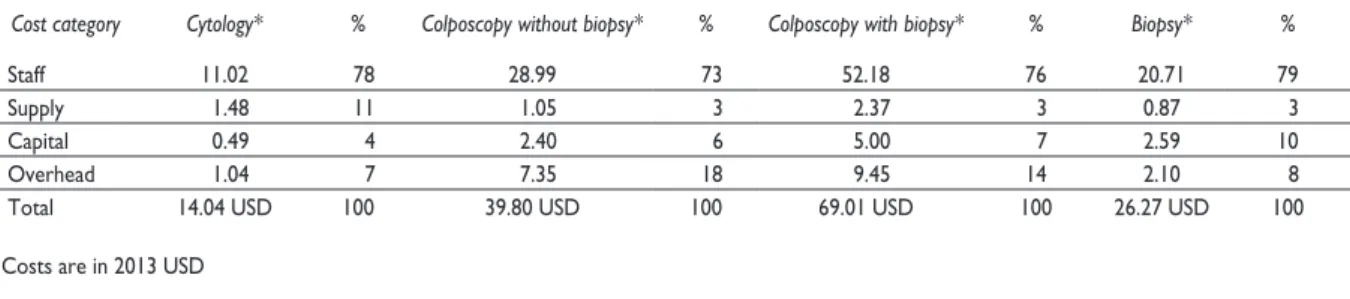
The cost of a single cytology test, colposcopy without biopsy, colposcopy with biopsy, and pathology were estimated to be 14.04, 39.80, 69.01 and 26.27 USD, respectively. Staff costs were found to be the most im-portant component for each of these four procedures, representing between 73-79% of the total cost of these diagnostic tests. The second most important contributor to the cost of these tests were supply costs for cytology (11%), overhead costs for colposcopy, and capital costs (10%) for pathology (table II). The total cost to perform approximately 2.7 million Pap tests was almost 38 mil-lion USD, which represents 26.1% of the total IMSS CCSP costs, estimated to be 145.4 million USD per year. We estimated that 99 248 confirmatory tests were performed with a cost of nearly 4.6 million USD, representing 3.1% of the total costs of the IMSS CCSP. The cost to treat the estimated 35 171 cases of CIN 2/3 or cervical cancer was 102.8 million USD, which accounts for the largest pro-portion (70.7%) of the costs of the program (table III).
The cost of the IMSS CCSP was also examined based on the resulting outcomes from the performance of the cytology test. The total cost to treat the 21 103 false negatives was nearly 62 million USD, which represents the largest proportion (42.6%) of the total program cost. The cost to diagnose and treat the 14 068 true positives was estimated to be 42.2 million USD (29% of the total program costs). The 2 590 157 women who were found to be true negatives cost 36.37 million USD, representing 25.1% of the total program costs, and finally the 80 108 women who received a false positive diagnosis and had unnecessary follow-up procedures cost a total of 4.85 million USD (3.3% of the total IMSS CCSP cost) (table III and figure 1).
Sensitivity analysis
The one-way sensitivity analysis shows the relationship between the number of TP, FP and FN, and the coverage rate of the IMSS CCSP. When we varied the program coverage between 20 and 40%, these outcomes ranged
figure i. Women, outcomes, treatmentsandassociatedcostsofthenational imss ccsP*
Cost 42 174 USD
Cost 61 999 USD
Cost 4 867 USD
Cost 36 366 USD Colposcopy & bipsies: 8 849
Lost to follow up: 5 219 CIN 22/3 cases: 12 380
CC cases: 1 688
CI 2/3 cases: 18 571 CC cases: 2 532
Colposcopy without biopsy: 19 226 Colposcopy with biopsy: 31 162
Lost to follow up: 29 720 TP 14 068
Prevalence 13 cases x 1000 Sensitivity Pap
follow up: 37.1%
FN 21 103
FP 80 108
Specificity colposcopy w/o
biopsy bost to follow up
TN 259 157 Total
Cytology 2 705 436 Women
9 161 033
National program coverage
29.53%
Total costs 145 398 USD
{
{
{
* Costs in thousands (2013 USD) IMSS: Mexican Institute of Social Security CIN: Cervical intraepithelial neoplasia CC: cervical cancer
Table II
ProPortionofeachcostcategoryforcytology, colPoscoPyandbioPsy
Cost category Cytology* % Colposcopy without biopsy* % Colposcopy with biopsy* % Biopsy* %
Staff 11.02 78 28.99 73 52.18 76 20.71 79
Supply 1.48 11 1.05 3 2.37 3 0.87 3
Capital 0.49 4 2.40 6 5.00 7 2.59 10
Overhead 1.04 7 7.35 18 9.45 14 2.10 8
Total 14.04 USD 100 39.80 USD 100 69.01 USD 100 26.27 USD 100
* Costs are in 2013 USD
Table III
numberofscreeningtests, treatmentsandassociatedcostsbyregion:
resultsofthecervicalcancer (cc) screeningProgram
Number of women screened and treated by region (2010 year)
Northern zone Central zone Southern zone Total
Women in the program 3 194 907 4 594 269 1 371 857 9 161 033
Pap tests performed 955 596 1 361 741 388 099 2 705 436
Colposcopy without biopsy 6 791 9 677 2 758 19 226
Colposcopy with biopsy 14 133 20 139 5 739 40 011
Pathology (biopsies) 14 133 20 139 5 739 40 011
CIN 2/3 10 933 15 578 4,440 30 951
Cervical Cancer 1 490 2 125 605 4 220
Total CIN 2/3 and CC cases treated 12 423 17 703 5 045 35 171
Performance of cytology test (In numbers of women)
True positives 4 969 7 081 2 018 14 068
False negatives 7 454 10 622 3 027 21 103
False positives 28 295 40 321 11 492 80 108
True negatives 914 878 1 303 717 371 562 2 590 157
Costs to screen and treat by region*
Northern zone Central zone Southern zone Total
Pap tests 13 416 568 19 118 843 5 448 910 37 984 321 (26.1%)
Colposcopy without biopsy 270 282 385 145 109 768 765 195 (0.5%)
Colposcopy with biopsy 975 318 1 389 792 396 048 2 761 158 (1.9%)
Total cost of pathology (biopsy) 371 274 529 050 150 764 1 051 088 (0.7%)
Treatment
CIN 2/3 22 948 367 32 698 222 9 319 560 64 966149 (44.7%)
Treatment cervical cancer 13 371 260 19 069 750 5 429 270 37 870 280 (26.1%)
Total costs 51 353 069 73 190 802 20 854 320 145 398 191 (100%)
Costs based on cytology test performance
True positives 14 895 041 21 230 563 6 048 775 42 174 379 (29%)
False negatives 21896 850 31 210 333 8 891 797 61 998 980 (42.6%)
False positives 1 716 291 2 445 718 697 018 4 859 027 (3.3%)
True negatives 12 844 887 18 304 187 5 216 730 36 365 804 (25.1%)
Total costs 51 353 069 73 190 801 20 854 320 145 398 190 (100%)
from -32 to 35%. As the program coverage increases, we observe a corresponding increase in the number of FN and TP results, and a substantial increase in the number of FP (data not shown). Improving the sensitivity of the cytology test from 40 to 60% would help reduce the number of FN diagnoses, which is especially important to consider if the IMSS CCSP coverage were to increase from 20 to 40%. When the coverage is 20%, a sensitivity increase from 40 to 60% reduces the number of FN by 13%. At a coverage of 40% and a sensitivity of 60% the number of FN is reduced by 38.5% (data not shown). This reduction in FN does not result in a corresponding decrease in costs, but rather a slight increase of 0.37% is obseved (from 196.79 to 197.51 million USD). This is because a higher Pap sensitivity also increases the number of TP cases and their treatment costs.
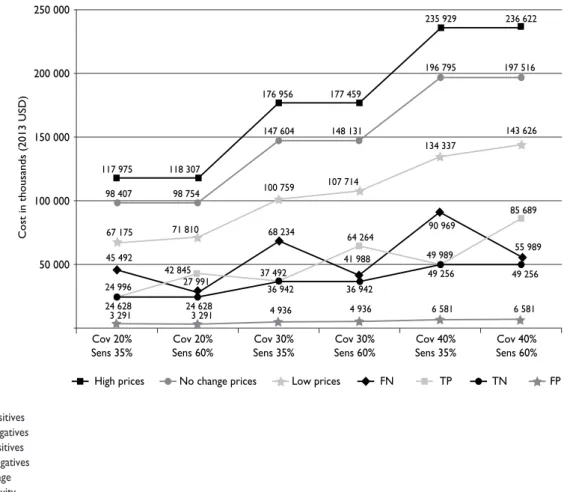
Figure 2 presents the results of a three-way sensi-tivity analysis that examined how varying the coverage rates (20, 30 and 40%), sensitivity (35 vs. 60%) and costs (low, no change, and high) affects the base case total
cost estimates. Our findings suggest that the scenario of high coverage (40%) and high sensitivity (60%) costs approximately 197.6 million and the scenario with high coverage (40%) and low sensitivity (35%) costs slightly less (196.7 million). FN make up the largest portion of total costs when the test sensitivity is low, and TP are the largest portion of total program costs, when the test sensitivity is high. If unitary costs are assumed to be low, total costs are reduced by 27.3% and if costs are high, total costs increase by 20 percent.
Discussion
We estimated the total annual cost of the IMSS CCSP, which currently relies on cervical cytology as its primary diagnostic tool. To determine the total cost of the program, we considered the costs to perform a cytology test, follow-up procedures such as colposcopy and biopsy, as well as treatment costs. We also determined the number of TP, FN, FP and TN and calculated the costs associated with
figure 2. threeWay-sensitivityanalysis. costsofdifferentscenariosofcoverage, sensitivityandchangeincosts (loW, nochangeandhigh)
TP: true positives FN: false negatives FP: false positives TN: true negatives Cov: coverage Sens: sensitivity
250 000
200 000
150 000
100 000
50 000
Cov 20%
Sens 35% Cov 20%Sens 60% Sens 35%Cov 30% Sens 60%Cov 30% Sens 35%Cov 40% Sens 60%Cov 40%
High prices No change prices Low prices FN TP TN FP
117 975
6 581 49 256
55 989 85 689 6 581
49 256 49 989 90 969 4 936
36 942 41 988 64 264 4 936
37 492 36 942 68 234 3 291
24 628 27 991 42 845 3 291
24 996 24 628 45 492
143 626 134 337
107 714 100 759
71 810 67 175
197 516 196 795
148 131 147 604
98 754 98 407
236 622 235 929
177 459 176 956
118 307
these outcomes. Our results indicate that the annual cost of the IMSS CCSP is approximately 145.4 million USD and that FN account for nearly 42.6% of the total pro-gram costs. We used the national coverage rate reported by the IMSS CCSP (29.53%) to estimate that 2.7 million Pap tests were performed in 2010, at a cost of nearly 38 million USD, which represents 26.1% of the total IMSS CCSP costs. The cost of the follow-up tests that were performed on women who received a TP diagnosis was estimated to be 4.9 million USD which is only 3.3%of the total program costs. As expected, we found that the high cost of treating women with CIN 2/3 or cervical cancer (102.8 million USD) is the greatest contributing factor to the cost of the IMSS CCSP (70.7%). The cost of cervical cancer-related diagnostic tests, consultations, hospitaliza-tions, and medicines reported by IMSS to the President and Congress was estimated at 53.60 million USD.27 This amount is higher than our estimate of 37.87 million USD, which is likely conservative since it is 27% less than the official amounts reported by IMSS.
One of the main goals of this study was to provide precise estimates of the outcomes and costs associated with cytology, colposcopy and biopsy testing, and how they contribute to the total costs of the IMSS CCSP. The main expenditures include staff wages, followed by supply, overhead and capital costs. However, when we examined the aggregated costs and economic effect of the program, we found that the largest expense of the program is incurred by the treatment of FN and TP. The two main parameters allowing for variation of total costs were the sensitivity of cytology and the coverage of the program. Increasing coverage while maintaining a sensitivity of 40% leads to a corresponding increase in program costs. Although increasing the sensitivity of cytology reduces the cost of FN, it does not change the overall costs of the program significantly, due to the added cost of treating TP cases.
The results of our three-way sensitivity analyses suggest that higher coverage rates increase program costs due to additional diagnostic tests and increased treatment costs for both TP and FN. When the sensitiv-ity of the cytology test is low, the FN cases represent the greatest proportion of program costs; but when the test sensitivity is high, the TP make up the largest por-tion of total program costs. These findings indicate that the performance of the IMSS CCSP could be improved without a significant cost increase.
The results of our study may be useful in deter-mining ways to improve the cost management in the diagnosis of cervical cancer, however, the present study has some limitations. One limitation is that we did not estimate the costs associated with the time in which staff are not performing tasks explicitly for the program,
i.e. “lost” time. We also did not estimate the total cost of the personnel involved in IMSS CCSP activities (not just the time they dedicate to program activities) based on different methods (such as number of personnel in a defined physical area or the step down method). This would have allowed us to determine the effect that the productivity of the IMSS CCSP staff has on the costs of the program. Another limitation of the study is that all information to determine costs was collected at one IMSS hospital. In order to investigate the effect of modifications of the costs of staff on total costs of the program we conducted a one way sensitivity analysis and found that the variation of total costs by varying staff costs by 20% appear to be not significant (4.7%). Further studies that collect information from different IMSS hospitals may help determine any possible dif-ferences in costs and cervical cancer prevalence. An additional limitation is the lack of information on the methodology used to determine treatment costs. This information was taken from a previous study and we do not know the methods used, and therefore cannot determine the quantity of goods and the individuals costs used for these estimations. We are, therefore uncertain as to how these costs are comparable to the costs of the diagnostic tests. As a result, we recom-mend additional studies to validate the treatment costs we used. Finally, one of our main assumptions is that cases are distributed in the same porportions (88% for CIN 2/3 and 12% for cervical cancer), whether they are TP or FN. However, additional studies are needed to determine if FN cases are more likely to be advanced and more expensive.
test-ing into the national CCSP to help reduce the burden of cervical cancer in Mexico.
Acknowledgements
We would like to thank Dr. Irma Fernandez from the Co-ordinación de Programas Integrados de Salud of IMSS, for providing the information regarding the national and regional coverage rates of the IMSS CCSP.
Declaration of conflict of interests. The authors declare that they have no conflicts of interest.
References
1. Almonte M, Murillo R, Sánchez GI, Jerónimo J, Salmerón J, Ferreccio C, et al. New paradigms and challenges in cervical cancer prevention and control in Latin America. Salud Publica Mex 2010;52(6):544-559. 2. Flores YN, Bishai DM, Lorincz A, Shah KV, Lazcano-Ponce E, Hernán-dez M, et al. HPV testing for cervical cancer screening appears more cost-effective than Papanicolaou cytology in Mexico. Cancer Causes Control 2011;22(2):261-272.
3. Ditzian LR, David-West G, Maza M, Hartmann B, Shirazian T, Cremer M. Cervical cancer screening in low- and middle-income countries. Mt Sinai J Med 2011;78(3):319-326.
4. Murillo R, Almonte M, Pereira A, Ferrer E, Gamboa OA, Jerónimo J, et al. Cervical cancer screening programs in Latin America and the Carib-bean. Vaccine 2008;26 suppl 11:L37-48.
5. Wang SS, Sherman ME, Hildesheim A, Lacey JV Jr, Devesa S. Cervical adenocarcinoma and squamous cell carcinoma incidence trends among white women and black women in the United States for 1976-2000. Cancer 2004;100(5):1035-1044.
6. Safaeian M, Solomon D, Castle PE. Cervical cancer prevention— cervical screening: science in evolution. Obstet Gynecol Clin North Am 2007;34(4):739-760.
7. Forouzanfar MH, Foreman KJ, Delossantos AM, Lozano R, Lopez AD, Murray CJ, et al. Breast and cervical cancer in 187 countries between 1980 and 2010: a systemic analysis. Lancet 2011;387:1461-1484. 8. Hernández-Peña P, Lazcano-Ponce EC, Alonso-de Ruiz P, Cruz-Valdez A, Meneses-González F, Hernández-Avila M. Análisis costo beneficio del programa de detección oportuna del cáncer cervicouterino. Salud Publica Mex 1997;39:379-387.
9. Lazcano-Ponce EC, Buiatti E, Nájera-Aguilar P, Alonso de Ruíz P, Hernández-Avila M. Evaluation model of the Mexican national program for early cervical cancer detection and proposals for a new approach. Cancer Causes Control 2001;9:1-11.
10. Chu KC, Miller BA, Springfield SA. Measures of racial/ethnic health disparities in cancer mortality rates and the influence of socioeconomic status. J Natl Med Assoc 2007;99(10)1092-1104.
11. Palacio-Mejía LS, Lazcano-Ponce E, Allen-Leigh B, Hernández-Avila M. Regional differences in breast and cervical cancer mortality in Mexico between 1979-2006. Salud Pub Mex 2009; 51(2):S208-S219.
12. Gakidou E, Nordhagen S, Obemeyer Z. Coverage of cervical cancer screening in 57 countries: low average levels and large inequalities. PLoS Med 2008;5:e132.
13. Sasieni P, Cuzick J, Farmery E. Accelerated decline in cervical cancer mortality in England and Wales. Lancet 1995;346(8989):1566-1567.
14. IARC Working Group on evaluation of cervical cancer screening pro-grammes. Screening for squamous cervical cancer: duration of low risk after negative results of cervical cytology and its implication for screening policies. Br Med J (Clin Res Ed) 1986;293(6548):659-664.
15. Ferlay J, Shin HR, Bray F, Forman D, Mathers C, Parkin DM. Estimates of worldwide burden of cancer in 2008: Globocan 2008. Int J Cancer 2010;127(12):2893-2917.
16. Reynales-Shigematsu LM, Rodrigues ER, Lazcano-Ponce E. Cost-effectiveness analysis of a quadrivalent human papilloma virus vaccine in Mexico. Arch Med Res 2009;40(6):503-513.
17. Insinga RP, Dasbach EJ, Elbasha EH, Puig A, Reynales-Shigematsu LM. Cost-effectiveness of quadrivalent human papillomavirus (HPV) vaccina-tion in Mexico: a transmission dynamic model-based evaluavaccina-tion. Vaccine 2007;26(1):128-139.
18. Gutiérrez-Delgado C, Báez-Mendoza C, González-Pier E, de la Rosa AP, Witlen R. Generalized cost-effectiveness of preventive interventions against cervical cancer in Mexican women: results of a Markov model from the public sector perspective. Salud Publica Mex 2008;50(2):107-118. 19. Informe al Ejecutivo Federal y al Congreso de la Unión sobre la situación financiera y los riesgos del IMSS 2011-2012. 2012. IMSS. México [consulted 2013 May]. Available at: http://www.imss.gob.mx/instituto/ informes/pages/index.htm
20. Lazcano-Ponce E, Lörincz AT, Salmerón J, Fernández I, Cruz A, Hernández P, et al. A pilot study of HPV DNA and cytology testing in 50,159 women in the routine Mexican Social Security Program. Cancer Causes Control 2010;21(10):1693-1700.
21. Salmerón J, Lazcano-Ponce E, Lorincz A, Hernández M, Hernández P, Leyva A, et al. Comparison of HPV-based assays with Papanicolaou smears for cervical cancer screening in Morelos State, Mexico. Cancer Causes Control 2003;14(6):505-512.
22. Drummond M, Stoddart GL, Torrance GW. Methods for economic evaluation of health care programs. Oxford: Oxford University Press, 1995. 23. Catálogo Delegacional de Recursos Humanos. Subdirección General de Recursos Humanos. México: Instituto Mexicano del Seguro Social, 2007. 24. Catálogo Delegacional de Consumibles. Emitido por la Coordinación de Abastecimiento y Equipamiento de la Delegación Morelos IMSS. México: Instituto Mexicano del Seguro Social 2006.
25. Catálogo Delegacional de Bienes Inmuebles. Subdirección General de Obras y Patrimonio Inmobiliario. México: Instituto Mexicano del Seguro Social 2007.
26. Instituto Mexicano del Seguro Social. Unitary costs by level of health care for 2013 to be used for fiscal purposes and tariffs for persons who are not insured by IMSS [consulted 2013 July]. Available at: http://www. portalfiscal.com.mx/pagina/principal/transferencias%20dof/varios/2013/ IMSS/Costos%20de%20atencion%20medica%202013.htm
27. Informe al Ejecutivo Federal y al Congreso de la Unión sobre la situación financiera y los riesgos del IMSS 2010-2011. 2011. IMSS. México [consulted 2013 May]. Available at: http://201.144.108.20/estadisticas/ financieras/Pages/InformeEjecutivo20102011.aspx
28. de Kok IM, van Rosmalen J, Dillner J, Arbyn M, Sasieni P, Iftner T, et al. Primary screening for human papillomavirus compared with cytology screening for cervical cancer in European settings: cost effectiveness analysis based on a Dutch microsimulation model. BMJ 2012;344:e670. 29. Kim JJ, Wright TC , Goldie SJ. Cost-effectiveness of Human Papil-lomavirus DNA Testing in the United Kingdom, The Netherlands, France, and Italy. J Natl Cancer Insti 2005; 97(12):888-895.