ii ALVARO JOSÉ ALTAMIRANO MONTOYA
VIÇOSA
MINAS GERAIS - BRAZIL 2015
LIFE STANDARDS AND INTERGENERATIONAL TRANSMISSION OF EARNINGS: A comparative analysis among different family arrangements in Nicaragua
v
ACKNOWLEDGMENTS
Agradezco al SUGMAD, por regalarme cada día una nueva oportunidad para renacer, por permitirme ser parte y parcela suya. Es SUYO cualquier resultado positivo de mis acciones. Que su benevolencia sea una luz para mis pasos.
Agradezco a mi madre, Balkiria, el mayor de mis maestros en esta vida. Sin sus sacrificios no podría celebrar ningún logro. Agradezco a mi hermano Ariel, fuente de inspiración y cariño por siempre. Agradezco a mi hermanita Maria Angélica, apasionada a la lectura desde temprano como su hermano mayor. Agradezco también la colaboración y tolerancia de Isabel durante tantos años de compañía en nuestro hogar.
Agradezco a mi nueva familia, Talitta y Bento, por cuidar con tanta preocupación y paciencia de mi bienestar. En una tierra lejana, en su cariño encuentro mi refugio y mi seguridad.
Agradezco la compañía y la tolerancia de todas mis amistades, con quienes pude conocer la fidelidad fraterna. Ellos y ellas me acompañan aún y por siempre en mi corazón.
Agradezco a mis profesores(as), de todos los niveles y nacionalidades, cuya motivación me permite culminar esta parte científica de mi vida. Son ellos(as) el andamiaje pretérito de mi curiosidad académica.
Con gran simpatía agradezco al pueblo brasileiro, que a través de CAPES financió mis estudios con tanta generosidad. Este pueblo, cuyo apoyo no se limita al ámbito financiero, me recibió desde el primer día con su sonrisa eterna y su refrescante hospitalidad.
Agradezco a todos mis colegas de la Universidad Centroamericana en Managua, así como a todos los profesionales nicaragüenses que construyen con su trabajo un futuro mejor.
Agradezco a mis compañeros de estudio en la Universidade Federal de Viçosa, con quienes compartí grandes oportunidades de crecimiento. Entre ellos, el apoyo y comprensión de Rosilane y Cynthia fueron pilares importantes en esta parte de mi vida.
Agradezco a mis profesoras del departamento de economía doméstica, con énfasis en las profesoras Karla y Dorinha, quienes me acompañaron desde el inicio, y me siguen apoyando y confiando en mí. Aloísia, Fátima, Haudrey son algunas de las personas del departamento que también contribuyeron con mi desarrollo académico en este proceso.
vi
BIOGRAPHY
vii
SUMMARY
I. RESEARCH TOPIC AND APPROACH: A PRESENTATION 1
1.1 The issue and justification 1
1.2 Objectives 4
1.3 Dissertation structure 4
1.4 General methodological information 4
1.4.1 Cross-sectional and panel data 4
1.4.2 Analysis’ universe and units 6
1.4.2 Statistical procedures 8
1.4.4 The changing nature of the ‘family’ concept 8
1.5 References 9
II. ARTICLE 1: BIPARENTAL AND SINGLE MOTHER FAMILIES IN NICARAGUA: A
HOUSEHOLD SURVEY COMPARISON 13
1. Abstract 13
2. Introduction 13
3. Review of empirical approaches 17
4. Methodology 21
5. Results and discussion 22
5.1 Socio-demographic characterization: a household comparative analysis 22 5.2 Labor market participation and equivalised household income 30
6. Conclusion 34
7. References 35
III. ARTICLE 2: NICARAGUA: MULTIDIMENSIONAL POVERTY ASSESSMENT
FOR SINGLE-MOTHER AND BIPARENTAL HOUSEHOLDS. 40
1. Abstract 40
2. Introduction 40
3. Literature review 42
3.1 A Latin-American precursor: The Basic Needs Approach 42
2.2 The Alkire-Foster Methodology 43
viii 4.1 Comparing multidimensional poverty between biparental and single-mother families
48
5. Conclusion 57
6. Appendix 58
7. References 61
IV. ARTICLE 3: INCOME INEQUALITY AND INTERGENERATIONAL ECONOMIC
MOBILITY ACROSS FAMILIES IN NICARAGUA 66
1. Abstract 66
2. Introduction 66
3. Methodology 69
3.1 Sample selection and income inequality background 71
4. Results and discussion 73
4.1 Intergenerational earnings elasticity estimates 73
4.2 Factors influencing economic mobility 76
4.2.1 The evolution of wage and years of schooling 76
4.2.2 Occupational characteristics 78
5. Conclusion 79
6. Appendix 80
7. References 81
ix
ABBREVIATIONS AND ACRONYMS
BNA Basic Needs Approach
CEDLAS Centro de Estudios Distributivos Laborales y Sociales
CIID Canadian Intergenerational Income Data
CEPAL Comisión Económica Para América Latina
CONEVAL National Council for the Evaluation of Social Policy
DHS Demographic and Health Survey
ECLAC Economic Commission for Latin America and the Caribbean
EMNV Encuesta Nacional de Hogares sobre Medición de Nivel de Vida
ENDESA Encuesta Nicaragüense de Demografía y Salud
ESAF Enhanced Structural Adjustment Facility
GSEP German Socio-Economic Panel
GDP Gross Domestic Product
HEI Household Equivalent Income
HDI Human Development Index
IEE Intergenerational Earnings Elasticity
IMF International Monetary Fund
INIDE Instituto Nacional de Información de Desarrollo
IV2SLS Instrumental Variables Two Stage Least Squares
MPI Multidimensional Poverty Index
OECD Organization for Economic Cooperation and Development
OPHI Oxford Poverty and Human Development Initiative
OLS Ordinary Least Squares
PPP Purchasing Power Parity
PRGF Poverty Reduction and Growth Facility
PSID Michigan Panel Study of Income Dynamics
SMH Single-Mother Households
UNCTAD United Nations Conference on Trade and Development
UNEP United Nations Environment Programme
x
TABLES
Table 1: Poverty incidence by sex and age groups………...19
Table 2: Poverty and extreme poverty gap………...20
Table 3: Single-mother and biparental household by marital status……….23
Table 4: Household heads’ educational levels……….……….25
Table 5: Reasons for children not being enrolled in school………..26
Table 6: Equivalised median household income..………...………..33
Table 7: Nicaragua’s national MPI indicators....………...………...47
Table 8: Contrasting MPI Components Among Households..………..51
Table 9: Regional MPI components………..………....54
Table 10: MPI for alternative weighting structures..………....56
Table 11: MPI components across households (original Global MPI)..………..…………...58
Table 12: Intergenerational earnings persistence…...……...………..74
Table 13: Earnings’ transition matrix………...………..75
Table 14: Wage and schooling statistics for working adults..………..…………....77
Table 15: Occupational categories by gender and family array.………..78
Table 16: Nonparametric equality-of-medians test for contrast of median wages….………..80
xi
FIGURES
Figure 1: Nicaragua, political-administrative division map. ... 7
Figure 2: Nicaragua, poverty and extreme poverty rates 1993-2009. ... 14
Figure 3: Household heads’ years of schooling distribution ... 24
Figure 4: Poverty incidence among household members, by area of residence. ... 28
Figure 5: TIP curves for household members, by head’s sex. ... 29
Figure 6: Multidimensional Poverty Index structure. ... 47
Figure 7: National raw deprivations by indicators. ... 50
Figure 8: Multidimensional Poverty Index percentage composition... 53
Figure 9: National censored deprivations by indicator. ... 55
Figure 10: National headcount ratio by percentages of k cutoff. ... 55
Figure 11: National MPI Map. ... 59
Figure 12: MPI Map for Single-mother Households ... 60
Figure 13: MPI Map for Male-headed Biparental Households. ... 60
Figure 14: MPI Map for Female-headed Biparental Households... 61
Figure 15: Income share of poorest and richest. ... 68
Figure 16: Lorenz curves of income distribution across family arrays and sample year. ... 72
Figure 17: Elasticity coefficients for family offsprings, by sex and age groups. ... 75
xii
ABSTRACT
MONTOYA, Alvaro José Altamirano, M.Sc., Universidade Federal de Viçosa, March, 2015.
Life standards and intergenerational transmission of earnings: a comparative analysis among different family arrangements in Nicaragua. Adviser: Karla Maria Damiano Teixeira.
xiii
RESUMO
MONTOYA, Alvaro José Altamirano, M.Sc., Universidade Federal de Viçosa, março de 2015.
Life standards and intergenerational transmission of earnings: a comparative analysis among different family arrangements in Nicaragua. Orientadora: Karla Maria Damiano Teixeira.
1
I. RESEARCH TOPIC AND APPROACH: A PRESENTATION
1.1 The issue and justification
Growing up in Nicaragua I noticed that, like my own, other mothers had to deal almost by themselves with child and house care. This phenomenon, I perceived, extended beyond my closest circle of social life. Nicaragua, being a poor country with important development constraints, is also the leading Latin-American country in early motherhood, associated with single parenthood.
Nicaraguan mainstream economic analysis focuses on the monetary and commercial stabilization strategies in a small and open economy, with fewer attention to microeconomic issues related to population subgroups bottlenecks. In this manner, an empirical comparison of economic dependence and inequality among different family arrangements arouse my curiosity and led to the deepening of the specific issue of the living conditions of single mother families. If the separation between sexuality and reproduction, with the drop in fertility was one of the main drivers of family dynamics in the twentieth century, the rupture between marriage and reproduction, with the weakening of the parent-child ties, will be one of the pillars that will shape family arrangements during the twenty-first century. It is assumed that these changes in the family relational space can determine the distribution of family responsibilities and the coordination of family solidarity networks, the patterns of gender relations and the living conditions and well-being of children, women and men along the course of their life (QUILODRÁN; CASTRO MARTÍN, 2009).
The father’s absence in the family setting is not an unusual phenomenon, being considered by some as a syndrome. Polaino-Lorente et al. (2003, p.62) refer to the absent father syndrome as “a set of emotional, cognitive, physical and spiritual deprivations that come upon children as a consequence of the vacuum that operates in paternal relations”.
It is important to note that only a small percentage of single-parent families are represented by the single father figure. Furthermore, as stated by Meves (2006), it is in most cases, an apparent single parenthood, because children are entrusted to the father’s companions, grandparents or other relatives.
2 Divorce or separation can contribute to a family crisis, with the potential to generate social vulnerability at the time of rupture, especially for children. However, as described by Rodenberg (2004), in some cases, such as those in which the woman flees domestic violence, the decision to lead the family alone can represent an overall improvement and not a setback.
Moreover, although the dissemination of contraceptive methods may have significantly reduced the number of single-mother families, there are also those established for reasons of spouse/partner’s abandonment or by the decision to raise their children on their own (ARONOVICH et al., 2009).
The most intuitive (simpler) economic assumption is that single-mother families would not only have a lower income, but also, by default, less professional contacts and therefore fewer opportunities to succeed in the labor market (NEWMAN; GRANOVETTER, 1996; CORRELL et al., 2007). It is expected for the magnitude of these asymmetric gender relations to be intensified in societies where nepotism and partisanship prevails over merit, as is often the case in Nicaragua1. One cannot fail to highlight the importance of a stable and predictable
income, especially for poor families. Because for instance, if parents realize that in the long run they cannot fund children’s education, the human capital investment decision would be avoided from the beginning (BANERJEE; DUFLO, 2007, 2012).
Similarly, it is worth mentioning that in the socio-cultural reproduction process, women’s daily life plays a key role, because they structure, organize, and produce family dynamics. As stated by Massi, (1992, p.123), “it is she who makes the link between the private sphere with the social, that is, with the largest family, friends, school, etc.”. Recognizing this fact, it is understood that single mothers, according to cultural norms, have to comply simultaneously with the dual function of workers in the labor market and in the domestic sphere with motherhood duties, as the care of home and children (BORDONAL; FORTUNA, 2011).
In a region where almost one third of pregnancies correspond to teenage women, Nicaragua leads early pregnancy (UNFPA, 2013), with potential risks of limiting poverty reduction strategies and nurturing income inequality.
The assumption of greater social risk in families headed by single women has support from international poverty studies. Based on more than 60 micro-level studies in Latin America,
3 Africa and Asia, Buvinic and Gupta (1997) concluded that in two thirds of cases, families headed by women were poorer than those headed by men.
In other studies, such as Steinberg (2001) McLanahan (2004), Rich et al. (2007) it was shown that, when compared with adolescents from families with both parents, children and adolescents in families headed by single mothers reported receiving less nutritional care and less help with school and domestic work, as well as fewer assistance to prepare its school curriculum.
A study involving data from 16 Latin American countries shows that being born from single teenage mothers significantly reduces the likelihood of children, particularly from poor families, to complete high school (ALDAZ-CARROLL; MORÁN, 2001). This situation increases the risk of intergenerational transmission of poverty in these countries, once high school completion is taken as the threshold at which poor children reach a reasonably high probability of escaping poverty in the course of their life (MORÁN et al., 2003).
On the other hand, there are authors that question the notion of female-headed households as “the poorest of the poor” and defend some of the consequences of the female administration of family resources (GONZÁLEZ DE LA ROCHA, 2002; CHANT, 2007, 2008; BRADSHAW; QUIRÓS, 2008; BRADSHAW, 2009).
According to Chant (2007), those assumptions are promoted by conservative social movements that do not recognize the legitimacy of different family arrangements, other than those socially accepted as standard, arguing that “female household heads are often highly proactive (and successful) in overcoming discrimination as women and as lone parents (through, for example, the manipulation of household membership and earning strategies)” (2007, p.5).
4
1.2 Objectives
There is a debate between the actual socioeconomic conditions and the transmission of poverty in single-mother households. In that context, our research objective was to develop a comparative analysis of the living conditions between single mother and biparental families in Nicaragua. Specifically, we aim to contrast the differences among several socioeconomic indicators, breakdown the dimensions of poverty, and understand the patterns of economic mobility in both families.
1.3 Dissertation structure
Our study was divided in three articles:
The first article took data from the most recent National Household Survey of Living Standard Measurement (EMNV 2009, for its acronym in Spanish) to compare different socioeconomic conditions among single-mother and biparental families;
The second article applied the Alkire-Foster (2011) multidimensional poverty methodology to breakdown poverty among those families, using Nicaragua’s National Demographic and Health Survey (ENDESA 2011/2012) for that purpose;
Article 3 used EMNV 2001, 2005 and 2009 to understand the patterns of intergenerational earnings mobility and occupational characteristics between both family groups.
1.4 General methodological information
This section presents the main methodological procedures applied in our research. We first describe the databases used on each article, to then expand on the general approach of our three articles. Later on, we present a brief description of the universe, units and categories of analysis. Finally, the last part of this section shows the study’s limits by explaining the changing nature of the family concept through time and space.
The research can be characterized as having an exploratory-descriptive nature, using cross-sectional data and panel data drawn from official (public) sources. We decided to work with cross-sectional databases to have national representation of the single-motherhood phenomenon, within a wider context of comparative poverty assessment.
1.4.1 Cross-sectional and panel data
5 with important financial and technical contributions from international institutions as the World Bank and the Inter-American Development Bank. The two primary sources of information used in this study come from the National Institute of Development Information (INIDE, for its acronym in Spanish), which are: the Living Standard Measurement Study (LSMS) and the Demographic and Health Survey (DHS).
According to INIDE, both LSMS and DHS allow to obtain representative estimates at national level, for urban-rural areas, and for Nicaragua’s seven macro regions2. To date, INIDE (former INEC) has developed five Living Standards Measurement Surveys corresponding to the years 1993, 1998, 2001, 2005 and 2009. As for Demographic and Health Surveys, the existing four correspond to the years 1998, 2001, 2006/07, and 2011/12. For all cross-sectional databases, extraction and analysis was developed with Stata® 12.
The first and third article employ Nicaragua’s Living Standards Household Survey (EMNV) as their major informational source. According to INIDE (2011), the main objectives of the EMNV surveys are to collect information on consumption and income aggregates, basic services and general living standards conditions, in order to construct poverty measures and study the evolution of poverty through time. It is important to recall that, for different reasons explained further, Article one uses Nicaragua’s 2009 EMNV, while Article 3 makes use of Nicaragua’s last three EMNV’s (2001, 2005, 2009).
EMNV 2001 was collected in 2001, from April 30st to August 22nd, summing up 22,810 people that integrated 4,191 households (INEC, 2003); Nicaragua’s estimated total population for 2001 was of 5.1 million people. The second EMNV used in our research was collected in 2005, between July 11th and October 25th, interviewing a total of 36,612 people, belonging to 6,882 households (INIDE, 2007). The last EMNV was collected in 2009, between September 1st and November 7th, and its database was published in 2011 by INIDE in its web page3. The EMNV 2009 database consists of 7,520 households (30,432 people interviewed), for a total national population of 5.7 million people in that year.
The second article uses Nicaragua’s 2011/2012 Demographic and Health Survey (ENDESA, for its Spanish acronym). According to INIDE, ENDESA’s main objective is to “advance the process of restitution of the right to [good] health of the Nicaraguan population,
2 Nicaragua’s seven geographic macro-regions consist of Managua, Urban Pacific, Rural Pacific, Urban Center, Rural Center, Urban Atlantic and Rural Atlantic.
6 by supporting institutions of government and other organizations for appropriate decision-making in the field of Demography and Reproductive Health” (INIDE, 2013, p.3).
ENDESA’s 2011/2012 sample size comprised 21,960 households in the urban and rural areas of 15 Departments and two Autonomous Regions. Built with the international DHS methodology, Nicaragua’s 2011/2012 ENDESA includes three questionnaires, one for basic services and housing conditions, other for women’s reproductive health, and a third for men’s reproductive health. The gathering of information was done in 12 months, with a first stage between June and December 2011, and a second stage between July and November 2012 (INIDE, 2013).
1.4.2 Analysis’ universe and units
The place of study is Nicaragua, the biggest and poorest country in Central America, with a current population that totals 6 million people (THE WORLD BANK, 2014). Classified by economic literature as a ‘small and open economy’, Nicaragua’s recent history is one of rapid political and economic changes.
7 Figure 1: Nicaragua, political-administrative division map.
Source: Instituto Nicaraguense de Estudios Territoriales (INETER, 2011).
The empirical analysis unit is the family (or household)4, as officially defined by each dataset. The number and structures of families varies with each database, but in overall terms, the sum of single-mother and biparental families account for roughly 2/3 of all Nicaraguan families.
Our classification of ‘single-mother’ is a mother, family head, which self-declared herself as being single, separated or divorced. For the first two articles, and to define more clearly the population under study, only those households with underage children were chosen5, as a proxy for economic dependence. In the final article, our samples include single-mother and biparental families with adult children only (restricted for offspring’s age to range from 18 to 45 years old).
4 For all samples there were no important differences between the number of ‘families’ and ‘households’. For that reason, both terms are used as synonyms.
8
1.4.2 Statistical procedures
In regard to methods, each article makes use of different analytical tools and sample sets, all aimed at contrasting the living conditions of single-mother and biparental families, and specifically explained within each article.
Article 1 can be classified as an exploratory data analysis using heterogeneous statistical instruments to assess socioeconomic indicators between different family groups. The main methodological tools used to validate the analytical results were, among others: parametric and non-parametric mean and median tests used to compare family schooling, poverty and income; percentile analysis to illustrate the distribution of schooling among families; equivalence scales to correctly contrast household income and poverty dominance exploration to identify the incidence, depth and inequality of poverty among family groups.
The second article’s methodology is more homogenous, as it uses Nicaragua’s 2011/2012 Demographic and Health Survey (ENDESA) to apply the Alkire-Foster (ALKIRE; FOSTER, 2007, 2011) Multidimensional Poverty Index. Within the Alkire-Foster methodology, we adopted the Global Multidimensional Poverty Index (MPI) developed by Alkire and Santos (2010, 2013), which has also been used in the UNDP’s Human Development Report since 2010. That international MPI structure was modified to correspond more closely to some of Nicaragua’s present structural problems.
Article three adopts the intergenerational earnings’ persistence framework introduced in Solon’s 1992 seminal paper, and takes into account improvements drawn from more recent empirical studies. Besides calculating the intergenerational earnings’ elasticity coefficient through an Instrumental Variables Two Stage Least Squares (IV2SLS) estimator, this article experiments with some other economic mobility tools. In order to obtain more dependable results, that relate to a long-run structural dynamic, article three pools data from the last three EMNV’s (2001, 2005 and 2009).
1.4.4 The changing nature of the ‘family’ concept
9 The “family” institution has contents that do not only vary over time, but also with space, existing a great diversity of family models in every society and in every culture. It is mainly due to these issues that there is no universal concept of family (and therefore of single-parent family) to incorporate or integrate the rich variety of relationships, content, structures, experiences and functions that characterize the family systems (RODRÍGUEZ SUMAZA; LUENGO RODRÍGUEZ, 2003).
In that sense, a first limitation of the study is the changing nature of single mother households. Therefore, it follows that not all single-mother (and biparental) families’ structures have inevitably a permanent character. It also means that any transversal analysis to examine the phenomenon of single-motherhood only allows capturing cases existing at the reference date, which brings forth the need to create longitudinal databases that allow for long-run studies. The second limitation is the use of the survey-reported family headship. As observed by Sudhanshu Handa (1994, p. 1535), “the survey-reported head may not accurately identify the main economic provider or decision maker of the household”. That limitation, however, cannot be surpassed with any official survey currently available for Nicaragua, and needs further qualitative research studying intra-household distribution of resources and responsibilities6. As
noted by Deere et al. (2012), that limitation could be overcome if household surveys included asset ownership and decision making information at the individual level, and not only for heads or for the household as a whole. The authors also recommend including single-mothers on comparative gender analysis focusing on female headship, because analysis including co-partnered households often ignores the possible co-ownership of assets between biparental partners (Diana Deere et al. 2012).
1.5 References
ALDAZ-CARROLL, E.; MORÁN, R. Escaping the Poverty Trap in Latin America: The Role of Family Factors. Cuadernos de Economia, v. 38, n. 114, p. 155–190, 2001.
ALKIRE, S.; FOSTER, J. Counting and multidimensional poverty measurement: Working papers, 7. Oxford: OPHI, 2007.
6 On this matter, it is useful to know the percentage of self-reported household heads that had a job, as a proxy for
10 ALKIRE, S.; FOSTER, J. Counting and multidimensional poverty measurement. Journal of Public Economics, v. 95, n. 7, p. 476–487, 2011.
ALKIRE, S.; SANTOS, M. E. Acute Multidimensional Poverty: A New Index for Developing Countries. United Nations development programme human development report office background paper 2010/11, 2010.
ALKIRE, S.; SANTOS, M. E. A Multidimensional Approach: Poverty Measurement & Beyond. Social Indicators Research, v. 112, p. 239–257, 2013.
ARONOVICH, D. et al. Análisis del mercado de anticonceptivos en nicaragua. Arlington, Va: USAID, 2009.
BANERJEE, A. V; DUFLO, E. The Economic Lives of the Poor. Journal of Economic Perspectives, v. 21, p. 141–167, 2007.
BANERJEE, A. V.; DUFLO, E. Poor Economics. New York: PublicAffairs, 2012.
BORDONAL, L. M.; FORTUNA, S. L. DE A. Empoderamiento: processos decisórios das mulheres chefes da família na perspectica de gênero (GT3, Ed.). II Simpósio Gênero e Políticas Públicas. Anais...Londrina: Universidade Estadual de Londrina, 2011.
BRADSHAW, S. An Unholy Trinity: The Church, the State, the Banks and the Challenges for Women Mobilising for Change in Nicaragua. IDS Bulletin, v. 39, n. 6, p. 67–74, 2009. BRADSHAW, S.; QUIRÓS, A. Women Beneficiaries or Women Bearing the Cost? A Gendered Analysis of the Red de Protección Social in Nicaragua. Development and Change, v. 39, n. 5, p. 823–844, 2008.
BUVINIC, M.; GUPTA, G. R. Female-Headed Households and Female-Maintained Families: Are They Worth Targeting to Reduce Poverty in Developing Countries? Economic Development and Cultural Change, v. 45, p. 259, 1997.
CHANT, S. Children In Female-Headed Households : Interrogating The Concept Of An “Inter- Generational Transmission Of Disadvantage” With Particular Reference To The Gambia, Philippines and Costa Rica. New Working Paper Series. London: London School of Economics (Gender Institute), 2007.
CHANT, S. The “Feminisation of Poverty” and the “Feminisation” of Anti-Poverty Programmes: Room for Revision? Journal of Development Studies, v. 44, n. 2, p. 165–197, 2008.
CORRELL, S. J.; BENARD, S.; PAIK, I. Getting a Job: Is There a Motherhood Penalty?
American Journal of Sociology, v. 112, n. 5, p. 1297–1339, 2007.
11 GONZÁLEZ DE LA ROCHA, M. The Urban Family and Poverty in Latin America. In: ABASSI, J.; LUTJENS, S. L. (Eds.). Rereading Women in Latin America and the Caribbean: The Political Economy of Gender. Lanham, Maryland: Rowman and Littlefield, 2002. p. 61–77.
HANDA, S. (1994). Gender, headship and intrahousehold resource allocation. World Development, 22(10), 1535–1547. doi:10.1016/0305-750X(94)90036-1
INEC. Encuesta de Hogares sobre Medición de Nivel de Vida, 2001 - Informe General.
Managua: Gobierno de Nicaragua, 2003.
INETER. Mapa de la División Política - Administrativa. Dirección General de Geodesia y Cartografía.Managua: Gobierno de Nicaragua, 2011.
INIDE. Encuesta Nicaraguense de Demografía y Salud 2011/2012 - Aspectos Metodológicos. Managua: Gobierno de Nicaragua, 2013.
INIDE. Encuesta de Hogares sobre Medición del Nivel de Vida 2009 - Principales Resultados. Managua: Gobierno de Nicaragua, 2011.
INIDE. Encuesta Nacional de Hogares sobre Medición del Nivel de Vida 2005 - Informe General. Managua: Gobierno de Nicaragua, 2007.
MASSI, M. Vida de Mulheres Cotidiano e Imaginário. 1. ed. Rio de Janeiro: Imago, 1992. MCLANAHAN, S. Diverging destinies: How children are faring under the second demographic transition. Demography, v. 41, n. 4, p. 607–627, 2004.
MEVES, C. Familia monoparental. In: Lexicon, Consejo Pontifico para la Familia. 2. ed. Madrid: Ediciones Palabra, 2006. p. 387–390.
MORÁN, R.; CASTAÑEDA, T.; ALDAZ-CARROLL, E. Family Background and Intergenerational Poverty in Latin America. In: Escaping the poverty trap: investing in children in Latin America. Ricardo Mo ed.Washington, D.C.: Inter-American Development Bank, 2003. p. 139.
NEWMAN, K.; GRANOVETTER, M. Getting a Job: A Study of Contacts and Careers.
Contemporary Sociology, v. 25, n. 3, p. 391, 1996.
POLAINO-LORENTE, A.; TRUFFINO, J. .; ARMENTIA, A. P. Fundamentos de Psicología de la Personalidad. Madrid: Ediciones Rialp, 2003.
QUILODRÁN, J.; CASTRO MARTÍN, T. Nuevas dinámicas familiares. Estudios demográficos y urbanos, v. 24, n. 2, p. 283–291, 2009.
12 RODENBERG, B. Gender and Poverty Reduction New Conceptual Approaches in International Development Cooperation: Reports and Working Papers. Bonn: German Development Institute, 2004.
RODRÍGUEZ SUMAZA, C.; LUENGO RODRÍGUEZ, T. Un análisis del concepto de familia monoparental a partir de una investigación sobre núcleos familiares monoparentales. Papers, Revista de Sociología, v. 69, p. 59–62, 2003.
STEINBERG, L. We know some things: Parent-adolescent relationships in retrospect and prospect. Journal of Research on Adolescence, v. 11, p. 1–19, 2001.
THE WORLD BANK. World Development Indicators. Available at: <http://data.worldbank.org/sites/default/files/wdi-2012-ebook.pdf>. Accesed on: march 28, 2015.
13
II. ARTICLE 1: BIPARENTAL AND SINGLE MOTHER FAMILIES IN
NICARAGUA: A HOUSEHOLD SURVEY COMPARISON 1. Abstract
There is a general notion that women are more socially vulnerable than men, with higher poverty rates and less labor market opportunities. That perception is frequently extended for households headed by women, with fear of higher intergenerational poverty transmission for those families. Our research aims to verify the vulnerability hypothesis through the comparison of the living conditions among single-mother and two-parent families in Nicaragua. This inquire can be classified as an exploratory data analysis using heterogeneous statistical instruments to assess socioeconomic indicators between Nicaragua’s most representative family groups. Using Nicaragua’s last Living Standards Household Study (LSMS-2009), our results show that households headed by single-mothers have similar socioeconomic conditions as families with both parents. On the other hand, there was a greater participation of men in the labor market, while women tend to work fewer hours. Based on gender stereotypes, domestic work is naturalized as feminine, restricting women’s performance in public life and in the working world, indicating the continuation of traditional family models as a burden upon Nicaraguan working women. When analyzing poverty under different optics, we found households headed by men to be consistently poorer than single-mother and biparental families headed by women. This fact can be explained as a cultural factor associated with secondary poverty in male-headed households, which has to do with men caring less for nutrition and schooling, while often maintaining more than one household or spending money on leisure for their own.
2. Introduction
In contrast with other societies, the single-mother status is not a new pattern in Latin America, but rather a traditional configuration that reflects historical continuity. According to Castro Martín et al. (2010), within-marriage paternity is no longer widely held in Latin America. The study conducted by these authors with vital birth statistics from 13 Latin American countries shows that, since 1970, the relative weight of births to single mothers doubled from 7.3% to 15%.
14 (contributing to around 7% of the total regional GDP in 2013), it stands as the second poorest Latin-American country, with 42.5% of its population living under the poverty line (Figure 2), according to the last national estimates (INIDE, 2011a).
Figure 2: Nicaragua, poverty and extreme poverty rates 1993-2009.
Source: EMNV (1993, 1998, 2001, 2005, 2009).
Nicaragua’s poor socioeconomic achievements are partially explained by its low educational achievements, scarce technological integration and lack of financial development (AVENDAÑO, 2008; DE FRANCO, 2011; PORTA; LAGUNA, 2013). Its economy also suffers from structural labor market problems (informality and underemployment), social security financial weaknesses, and high income inequality (ICEFI, 2012; MENDOZA TIJERINO; ALTAMIRANO MONTOYA, 2013).
It is worth noting that the social vulnerability of Nicaraguan families falls in an economic context of sudden and historical changes. The deepening of human poverty caused by the macroeconomic stabilization and structural adjustment process started in the late 1980s and early 1990s, causing a high concentration of wealth in the upper quintiles, with high levels of poverty that persist for decades (AVENDAÑO, 2008).
The Nicaraguan economist Néstor Avendaño (2008)summarizes these macroeconomic adjustment policies directed by the multilateral economic organizations led by the International Monetary Fund (IMF) in an eloquent fashion:
19,4
17,3
15,1 17,2 14,6
30,9 30,5 30,7 31,1 27,9 0 10 20 30 40 50 60
1993 1998 2001 2005 2009
P e rc e nt a ge s of tot a l popu la tion
Extreme poverty Poverty 50.3
47.8
45.8
48.3
15
The first program ‘Enhanced Structural Adjustment Facility 1994-1996’ (SRAE 1 or ESAF 1) did not contemplate effective measures to address the high social costs of the economic adjustment and structural reforms imposed by the IMF, because behind the ESAF 1 came the war tanks. Having no action to alleviate the situation of the poor to the effects of the economic adjustment, behind the ‘Enhanced Structural Adjustment Facility 1998-2001’ (SRAE 2 or ESAF 2), ambulances arrived with trials of protection nets for the vulnerable, or better said for the poor, which in 1998 constituted 47.9 percent of the total population. Similarly, behind the ‘Poverty Reduction and Growth Facility 2002-2005’ program (SCLP 1 or 1 PRGF), came the infantry, that is, the small business groups that concentrated national income and turned Nicaragua into one of the Latin American countries with greater inequality in income distribution (AVENDAÑO, 2008, p.23).
In addition to poverty, another explaining factor for the continued presence of single mothers in Nicaragua, as elsewhere in Latin America, is premature fecundity. The State of World Population 2013 (UNFPA, 2013) noted that Nicaragua is the Latin American country with the highest percentage of early pregnancy, as 28.1% of women between 20 and 24 years old reported having given birth before the age of 18, a percentage that is second only to sub-Saharan Africa’s poor countries. The report also indicates that Latin America and the Caribbean is the only region where births to girls under 15 years increased, and it is expected for those deliveries to increase slightly until 2030.
Another element that may influence the high presence of female lone parents is the agricultural base of the Nicaraguan economy. This produces a first migratory phenomenon during the months of the coffee and sugar harvest, when many people leave their families to work on farms and plantations, affecting directly their lives and family relationships. Additionally, a second, and demographically more recent migration flow (about 25 years old) happens as many Nicaraguan workers migrate to other countries in search of better paid jobs, especially to Costa Rica and the United States (BAUMEISTER, 2006; GONZÁLEZ, 2012).
Growing up in families without their biological parents is a common experience for Nicaraguan children. Data from the latest Demographic and Health Survey (DHS/ENDESA - 2011/2012) shows that only 71.4% of children (0-18 years old) lived with both biological parents7. Of the 28.6% who did not live with both parents at the time of interview, 17.2% had a living biological father and in 2.3% of the observations the father was deceased. Still, 8.8% of men declared married or with a stable partner stated having children that did not live with them.
16 The abandonment of responsibilities by men is a phenomenon inserted in a larger background of social discrimination against women. In Nicaragua, the power in gender relations is subject to a patriarchal culture that favors men, suppressing women’s freedoms both explicitly and tacitly. This view is shared by Merrill as he briefly explains the reality of Nicaraguan women:
Collectively, the lives of Nicaraguan women are shaped by traditional Hispanic values regarding appropriate sex roles and high fertility [...]. Although the Sandinista revolution8 drew thousands of women into public life, encouraged females to work
outside the home, spawned a national women's movement, and enshrined gender equality in the national constitution, it left largely intact the values, beliefs, and social customs that traditionally had regulated relations between the sexes (MERRILL, 1993, p.82).
On the other hand, according to the 2014 Global Gender Gap Report (HAUSMANN et al., 2014), Nicaragua reached sixth place as one of the best countries in the world in terms of gender equity, only behind Iceland, Finland, Norway, Denmark and Sweden. This news were received with astonishment and indignation by the Nicaraguan feminist movement, criticizing this gender gap index as being a simplistic checklist that cannot embody the actual process of women’s empowerment in Nicaragua. As one article expands: “The equivocal results of this report have to do with the quantitative logic, ahistorical view and market-centrism of the neoliberal thought of its authors, lacking a proper theoretical framework to focus gender inequality and the status of women” (MONTENEGRO, 2014).
To the leaders of the feminist movement, there are inconsistencies between government speech and State actions in favor of women. In an interview with Noticias Aliadas, Patricia Orozco, regional coordinator of the Confluencia Feminista Mesoamericana (Petateras) suggests that, in Nicaragua, the State and the Church exercise institutional violence against women (HERRERA, 2013). The feminist leader exemplifies this violence as follows:
Institutional violence, because abortion is penalized and the right of women to decide about their bodies and their lives is not recognized; institutional violence, because women do not have jobs and their only way out is to work in the textile industry, where many suffer sexual violence and are not allowed to organize (HERRERA, 2013, p. 2).
17 Regarding that matter, Nicaragua’s birth statistics reflect a general lack of sexual education, which accompanied by the prohibition of abortion, results in high fertility rates for younger women. Moreover, sexual and reproductive health materials were only introduced in the Ministry of Education’s curriculum in 2009, after years of opposition from Catholic leaders. According to UNFPA (2013), in Nicaragua only 18% of primary and secondary schools use the official sexual and reproductive education guide.
This political, economic and social scenario has caused single-motherhood to be a recurring phenomenon in Nicaragua. Faced with this context, we question the notion of women being poorer and disadvantaged in relation to men, and thus transmitting their conditions upon their children. The general aim of this article was to analyze, comparatively, the socioeconomic conditions of single-mother and two-parent families, using Nicaragua’s last national household survey. Our specific objectives were to contrast the levels of schooling, school attendance, income, labor market participation and poverty among family groups and its members.
3. Review of empirical approaches
Most studies on single-motherhood have been focused in the developed world, and only in recent decades studies have been conducted in Latin America. A first group of authors concentrates on the socioeconomic vulnerability and intergenerational transmission of poverty in female-headed households with dependent children (MCLANAHAN; BOOTH, 1989; GARFINKEL et al., 1998; MORÁN et al, 2003; MCLANAHAN, 2004; RICH et al., 2007; MCLANAHAN; BECK, 2010; NEPOMNYASCHY; GARFINKEL, 2010).
Other authors from this group study the impact of parents’ separation on child support, public policies that support children in “broken homes” and the legal apparatus associated with child support in families headed by women (BUVINIC; GUPTA, 1997; GARFINKEL et al., 1998; KALIL; RYAN, 2010; CASTRO MARTÍN et al., 2010; NEPOMNYASCHY; GARFINKEL, 2010).
18 Furthermore, poor families often need their children to work at an early age to compensate for insufficient levels of household income. Other studies also indicate that living in a single-mother family is a risk factor that translates into low educational attainments and poor health for children (JEYNES, 2002; KUENNING; DURYEA, 2006; ARENDS-KUENNING; MOYLAN, 2012).
The potential socio-economic difficulties faced by female lone parents are usually derived from their economic vulnerability and financial and educational fragility, which lead them to intense work days and make them face the challenge of reconciling paid work with the tasks of family life (VITALE, 2002).
A second group of authors is centered on the works of Chant (1985, 1997, 2007, 2008), which considers the phenomenon of lone motherhood within a broader context of gender discriminations. For this group, it is important to understand motherhood deeply, placed in the processes of feminist struggles, criticizing the studies that generalize the socioeconomic characterizations of families headed by women (ECLAC, 2004; BRADSHAW; QUIRÓS, 2008; BRADSHAW, 2009). Nonetheless, they admit the high prevalence of poverty within these family structures, as well as the lack of government actions in this line (BLUMBERG, 1988; CHANT, 2007, 2008; BRADSHAW, 2008, 2009).
Chant and Campling (1997) and Chant (1985, 2007) argue that the assumption that households headed by women are poor and tend to undermine children's well-being is misleading, because households headed by men also experience such vulnerabilities. Chant (2007, p. 29) argues that “female-headed households may have more earners (and earnings) than their male-headed counterparts because they make fuller use of household labour supply”. This happens because some men forbid their wives or daughters to work outside the house or neighborhood.
Another factor that can inhibit the notion of female-headed households as the poorest amongst the poor is the
empirical evidence from a variety of contexts [that] indicates that patterns of intra-household distribution may work more in favour of children in fe than male-headed households with positive effects on their nutritional intake, health care and education (CHANT, 2007, p.31).
19 women’s choices on household functionings prevails even in the face of international evidence that finds women poorer than men (Aldaz-Carroll and Morán 2001; Buvinic and Gupta 1997). Chant’s (2003) justification to this phenomenon is that women’s decision-making is more important than their relative inferiority over economic resources.
The empirical evidence for Nicaragua challenges the assumption of there being an over-representation of the female in the universe of the poor. In this respect, the incidence of poverty by gender and age groups shown in Table 1 notes the increased presence of men in the poor and extremely poor. The data also illustrates a more pronounced frequency of poverty and extreme poverty for the first three age groups, namely people 0-17 years old.
A more intuitive poverty indicator is the gap or depth of poverty, which measures the relative consumption deficit of the poor relative to the poverty line value —the necessary income for each poor unit, household or person to stop being poor or indigent— (FOSTER; GREER; THORBECKE, 1984).
According to the poverty and extreme poverty gap estimates produced by the Economic Commission for Latin America and the Caribbean (CEPAL, 2013), households headed by women are less poor than male-headed households, rejecting a priori the feminization of poverty in Nicaragua.
As shown in Table 2, to eliminate poverty and extreme poverty, families headed by men required more resources than those headed by women. While, in 2009, households headed by men required an additional income of 27.0% and 12.4% for the eradication of poverty and extreme poverty, respectively, the consumption deficit necessary for the elimination of those poverty levels in female-headed families was of 24.2% and 10.2%. However, in urban areas the
Age (years) Total Men Women Total Men Women Total Men Women
National 57.5 56.8 58.1 42.5 43.2 41.9 14.6 15.4 13.9
0 a 5 50.1 50.7 49.5 49.9 49.3 50.5 18.5 18.3 18.7
6 a 12 48.2 48.4 48.1 51.8 51.6 51.9 19.5 20.2 18.7
13 a 17 51.6 51.4 51.8 48.4 48.6 48.2 19.0 20.0 17.9
18 a 25 58.4 56.7 59.8 41.6 43.3 40.2 12.8 14.5 11.2
26 a 35 63.9 64.3 63.4 36.1 35.7 36.6 10.7 10.4 11.1
36 a 45 64.0 64.8 63.1 36.0 35.2 36.9 11.7 10.5 12.7
46 a 55 65.9 63.8 67.8 34.1 36.2 32.2 11.2 13.4 9.3
56 a 65 64.5 64.1 64.7 35.5 35.9 35.3 11.6 11.3 11.8
66 or more 66.3 62.6 69.3 33.7 37.4 30.7 9.7 12.2 7.7
Source: Adapted from INIDE (2011).
Non poor Poor Extreme poor
20 gap was slightly higher in women headed households, both for general (21.6%) and extreme poverty (7.5%).
Reviewing the poverty reduction strategies in Nicaragua, Bradshaw and Quirós (2008) and Bradshaw (2008) recognize the dangers of erroneously associating the feminization of poverty ipso facto to families headed by women, criticizing public policy that use women as means and do not value them as the ends of development. According to Bradshaw (2008):
Targeting resources at women means that men’s behaviour is implicitly recognized as problematic but is not addressed, while the personal deprivation suffered by women through their altruism is not problematized but explicitly reinforced as the social norm (BRADSHAW, 2008, p.195).
In the gender analysis of the ‘Red de Protección Social’, the first program of conditional cash transfers to the poor in Nicaragua, Bradshaw and Quirós (2008) suggest that this program did not take into account the opportunity costs —especially in the use of productive time— of female beneficiaries. Their recommendation is then to avoid poverty reduction policies in which women are invisible beings or seen only as a means to ensure the development of others.
Other authors explain how the anti-poverty policies that work with women reproduce the symbolic patterns of discrimination, representing women as inherently vulnerable beings, or as victims (ECLAC, 2004; MOLYNEUX, 2007). This discourse is limited, as it diverts the attention from the rights to the efficiencies of women as instruments of the State.
Thus, in the specific context of poverty reduction strategies it is necessary to consider the warning given by Bradshaw and Linneker (1996, p.22), by claiming that “Policies that aim
Area of residence
Extreme poverty Male heads Women heads Male heads Women heads Male heads Women heads
1993 24.6 23.4 15.5 19.8 33.6 32.5
1998 23.3 20.6 14.3 16.5 32.0 29.8
2001 19.7 17.9 12.5 14.1 27.8 27.8
2005 13.1 10.5 6.5 7.3 19.5 18.2
2009 12.4 10.2 7.3 7.5 17.6 16.4
Poverty Male heads Women heads Male heads Women heads Male heads Women heads
1993 42.3 41.1 33.0 38.8 51.4 46.8
1998 39.6 38.9 31.6 35.4 47.4 46.8
2001 37.3 36.3 30.6 33.0 44.9 45.1
2005 30.2 26.5 22.7 23.0 37.5 35.1
2009 27.0 24.2 21.1 21.6 33.0 30.2
Source: CEPALSTAT. Gender Indicators and Statistics.
Nicaragua - 2009, percentages.
Table 2 Poverty and extreme poverty gap coefficients, by family head's sex and area of residence.
21 to reduce poverty, not the gender inequalities at the basis of that poverty, may be seen as unlikely to succeed in improving even the economic position of women”. It is thus important to look critically at the feminization of poverty reduction policies, and to promote the inclusion of men as key actors of these strategies.
The debate presented in this section motivated our research, which aims to answer the following questions: What are the characteristics of single-mother families in Nicaragua? Do they have higher economic dependency rates than biparental families? Are their children deprived in schooling due to that economic burden? Are they poorer when compared to families with both parents? It is important to address these questions, as their answers can shed light to the distribution of resources and responsibilities within Nicaragua’s most typical family groups.
4. Methodology
This article was developed using a database provided by the National Institute of Development Information (INIDE, for its acronym in Spanish). Particularly, we used the Household Survey of Living Standard Measurement (EMNV, for its acronym in Spanish). The last EMNV was collected in 2009 and its database was published in 2011 by INIDE in its web page9.
The EMNV 2009 database consists of 7,520 households (30,432 people interviewed), which, according to INIDE (2011), allows to obtain representative estimates at national level, for urban-rural areas, and for Nicaragua’s seven macro regions. Nicaragua had a total population of 5.7 million inhabitants in 2009.
Our study can be classified as an exploratory data analysis using heterogeneous statistical instruments to assess socioeconomic indicators between Nicaragua’s most representative family groups. The main methodological tools used to validate the analytical results were, among others: parametric and non-parametric mean and median tests used to compare family schooling, poverty and income; percentile analysis to illustrate the distribution of schooling among families; equivalence scales to correctly contrast household income and poverty dominance exploration to identify the incidence, depth and inequality of poverty among family groups.
The results are divided in two main themes. First, section 5.1 presents the socio-demographic statistics that help contrast the following indicators among single-mother and
22 biparental households: family structure, schooling and school attendance, and the dominance of poverty. Section 5.2 first studies the families’ insertion and participation in the labor market, to then compare the differences in income between families.
5. Results and discussion
5.1 Socio-demographic characterization: a household comparative analysis
According to the EMNV database, in 2009, there were 1 million 211 thousand households in Nicaragua, of which 794,000 (65.6%) were headed by men and 416,000 (34.4%) by women. Of that total universe, 207,866 households were identified as being headed by single women10 (17.2% of Nicaraguan families in 2009) and 809,353 as having both parents, with the
remainder, 193,357 families, composed by single-male heads, widow(ers), and single, divorced or separated men.
To define more clearly the population under study, only those households with underage children were chosen11, as a proxy for economic dependence. Thus, the number of single-mother households is reduced to 106,756 (consisting of 481,340 people), while the number of two-parent families with dependent children is reduced to 587,847 (consisting of 3,105,389 people). It is worth mentioning that men headed 87.9% of two-parent households.
Table 3 illustrates both households, classifying them according to the marital status of the family head, showing how the predominant marital status for single mothers is that of “separate” and not that of “divorced” —the legitimate civil status that guarantees women’s rights—, confirming once again the single-mother syndrome as a contemporary problem in Nicaragua.
In fact, there is a gender disparity between the number of married/accompanied and separate family heads. On the national count, the proportion of family heads declared as “separate” is much higher for women (40.8%) than for men (4.7%), while the share of married/accompanied male heads (89.0%) exceeds that of female heads (24.7%). This could imply that a large part of families are headed by women as a result of conjugal disruption and not as a matter of women’s choice, while also suggesting that men are less often made responsible with direct family care when the couple separates.
10 Our classification of ‘single-mother’ is a mother, family head, which self-declared herself as being single, separated or divorced.
23 Excluding household heads —and their spouses in the case of biparental families— the average number of members per household was 3.5 for single-mother households and 3.3 for those with both parents. On the other hand, the average number of dependent children was slightly higher in two-parent households, with 2.4 children, whereas in single-mother families this average was 2.0, showing a similar economic dependency rate for both family types.
In two-parent households, the average age of the heads was 39.7 years, with a minimum of 17 and maximum of 97 years, the youngest 25% having 31 years or less and the oldest 75% having 47 years or more. In turn, single mothers had an average age of 39.6 years, with a minimum of 15 and maximum of 75 years, the youngest 25% having 33 years or less and the oldest 75% having 46 years or more.
In contrast, children in two-parent households presented an average age of 9.2 years, with the youngest 25% having 5 years or less. Single-mothers’ children had a higher average age of 10.6 years, with the youngest 25% having 7 years or less. This higher average age of children in single mother families suggests single mothers give birth at a younger age than biparental mothers.
One of the key challenges Nicaraguan public policy faces is the need to invest in human capital in order to improve the educational attainments of its population. Data from EMNV reveals that, in 2009, Nicaraguans had an average of six years of schooling. Still, the difference between areas of residence was expressive, once people who lived in rural areas had significantly lower schooling levels than those living in urban areas: four years versus seven years, respectively.
Data from EMNV also showed that with an average of 7.3 years of formal schooling, single mothers had higher educational achievements than chiefs in two-parent households, with an average of 5.8 years of schooling for male heads and 6.4 for female heads. For men, poor
No. of households % No. of households %
Stable union - - 296.294 50,4
Married - - 291.553 49,6
Separated 96.366 90,3 -
-Divorced 2.992 2,8 -
-Single 7.398 6,9 -
-Total 106.756 100,0 587.847 100,0
Source: Author’s tabulations from EMNV 2009, using survey weights.
Table 3 - Single-mother and biparental households (with children under 18) by marital status, Nicaragua - 2009
24 schooling in rural areas would be responsible for lowering average educational levels, as rural children traditionally function as a source of agricultural labor.
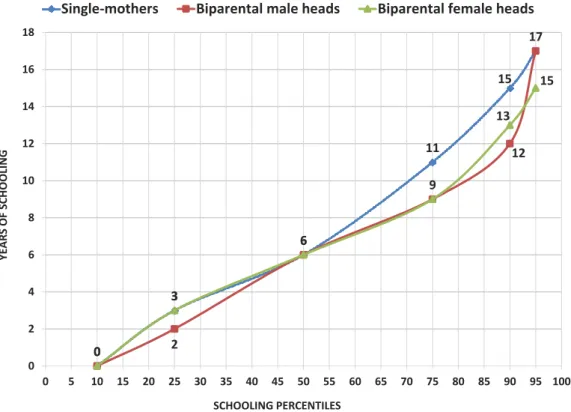
These figures suggest greater pressures for single mothers to educate themselves in view of the lower labor supply available in the absence of the partner. Figure 3 displays the educational levels of household heads by its percentiles of years of schooling.
Figure 3: Household heads’ years of schooling distribution.
Source: With data from EMNV (2009).
Single-mothers’ greater schooling was observed both for lower and higher educational levels. For example, although 25% of the most educated biparental heads had nine or more years of formal education, the same percentile of the most educated single mothers revealed a schooling of 11 years or more.
Another way to examine the educational attainment of household heads is classifying the years of schooling by instruction levels. This classification scheme has the advantage of reducing the bias caused by extreme levels of education, when education is measured in consecutive years of schooling.
According to Nicaragua’s General Law of Education (No. 582, Art. 12), the first educational subsystem is known as Basic Education, and covers preschool, primary and secondary education (first 11 years of schooling). The second subsystem comprises technical education and/or professional training, and the third covers undergraduate and graduate levels.
0 3 6 11 15 17 2 12 0 3 6 9 13 15 0 2 4 6 8 10 12 14 16 18
0 5 10 15 20 25 30 35 40 45 50 55 60 65 70 75 80 85 90 95 100
YE AR S OF S CHOOL ING SCHOOLING PERCENTILES
25 Table 4 shows the percentages of household heads according to its educational accomplishments.
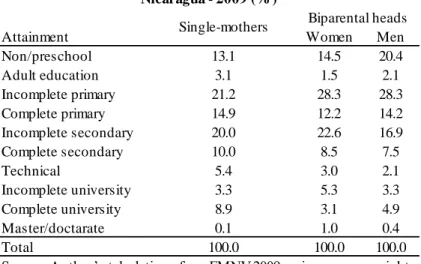
Table 4 confirms that women heads had more educational attainments than male heads. In this way, while 7.5% of male chiefs reported having completed their basic education studies (similar to high school education), the completion rate was of 10.0% for single mothers and 8.5% for female heads in biparental homes. These results are explained in part by the greater participation of men in premature labor activities, mostly in agricultural occupations in rural areas, as evidenced in the case of children, later in the article.
Furthermore, the data revealed that a similar percentage of single mothers (14.9%), male bosses (14.2%) and female heads (12.2%) completed primary education (first 6 years of schooling). Likewise, a higher percentage of single mothers had technical education (5.4%), compared to 3.0% and 2.1% for women and men heads in households with both parents.
According to Laguna and Porta (2013, p.27), Nicaraguan family heads need to have at least 7-10 years of schooling and 1-10 years of working experience in order to keep a family of two members out of poverty. For two-parent families, if both spouses work, that educational level would allow to uphold out of poverty a family of four. With that criteria, it can be stated that single mothers had better educational conditions to support their families and keep them above the poverty line.
In the case of children, we found slightly superior educational levels for those in single-mother households, with an average schooling of 4.9 years, with 4.4 years for sons and 5.3 for daughters. In contrast, children with both parents had an average schooling of 4.1 years, with 4.0 years for sons and 4.3 for daughters.
Attainment Women Men
Non/preschool 13.1 14.5 20.4
Adult education 3.1 1.5 2.1
Incomplete primary 21.2 28.3 28.3
Complete primary 14.9 12.2 14.2
Incomplete secondary 20.0 22.6 16.9
Complete secondary 10.0 8.5 7.5
Technical 5.4 3.0 2.1
Incomplete university 3.3 5.3 3.3
Complete university 8.9 3.1 4.9
Master/doctarate 0.1 1.0 0.4
Total 100.0 100.0 100.0
Source: Author’s tabulations from EMNV 2009, using survey weights. Biparental heads
Table 4 Household heads' educational levels Nicaragua - 2009 (% )
26 Once more, the educational gap between areas of residence is significant, because children in single-mother families showed an average schooling of 3.9 years in rural areas and 5.3 in urban areas. For children in biparental households, the average was 3.6 years in rural areas and 4.7 in the cities.
There were similar conditions for school-age children with regard to their enrollment and retention in the formal education system. Of the 161,112 children —older than seven and younger than 18— in single-mother households, 82.3% were enrolled in the school year, and of these, 97.4% were attending classes. In biparental households, of the total 864,445 children, 79.6% were enrolled, and 96.0% attended classes at the time of the interview. It is worth noting that the percentage of students enrolled —in both household arrays— was greater for daughters. For school-age children in both families, the three main reasons for not being enrolled in school were lack of money, lack of interest and occupation in rural work (Table 5). It is worth mentioning that for daughters in single-mother households, pregnancy was a more important reason for not being enrolled in school, when compared to daughters in biparental families (4.5% versus 2.2%).
Moreover, agricultural tasks were the second reason for single-mother sons not being in school, contributing to 30.7% of cases. As for male offspring with both parents, this was the third reason, totaling 21.9% of observations.
Men Women Men Women
Lack of money 35,0 41,3 28,9 24,9
Lack of interest 21,7 24,6 29,8 25,1
Agricultural labor 30,7 5,3 21,9 3,3
Distant school 0,4 0,6 6,4 17,4
Family problems 1,5 2,5 4,3 10,5
Disease/Chronic disability 7,9 11,7 4,7 4,3
Cares for children - 8,1 - 2,3
Pregnancy - 4,5 - 2,2
Household chores - 0,9 0,06 3,6
Lack of safety 1,9 - 1,4 2,4
Lack of teachers - - 1,5 1,2
Other 0,4 - 0,6 0,6
Ignored 0,5 - 0,2 0,8
Class not offered - 0,6 0,05 0,8
No vacancy - - 0,13 0,6
Source: Author’s tabulations from EMNV 2009, using survey weights.
Table 5 - Reasons for children (7 years and older) not being enrolled in school, by children's sex, Nicaragua - 2009
Children with both parents Single-mother children
%
27 In general, lack of money was the main cause for single-mothers’ children not to attend school, representing a weighted average of 37.6% of cases. For families with greater budget constraint, these figures suggest a reallocation of daughters’ time in childcare (8.1% of cases), and sons’ time in agricultural work. For children in of two-parent families the lack of financial resources explained, as an weighted average, 27.4% of school absences, the first reason being lack of interest, with 28.1% of cases.
It was of our interest to analyze the incidence and depth of poverty among the household arrangements under study. INIDE (2011) estimated the value of the general consumption poverty line in C$ 11,725.09 (equivalent to US$ 568.65) per person per year, or US$ 48.04 per person per month. For extreme poverty, the line was fixed at a value of US$ 334.79 per person per year, equivalent to US$ 27.90 per person per month.
Using the consumption poverty12 line estimated by INIDE, wives and male heads in two-parent households exhibited the highest levels of poverty and extreme poverty of all family groups. These wives and men heads presented a statistically equal poverty incidence rate, with 41.7% for wives and 41.4% for men heads. There was also no statistical difference between the incidence of poverty between husbands in two-parent homes (33.9%), single mothers (33.6%) and female heads in two-parent households (32.4%).
For extreme poverty, there was no evidence of statistical differences between any of the heads or spouses under review. Moreover, there was no evidence of statistical differences in extreme poverty rates between any of the heads or spouses under review. The percentage of extremely poor two-parent wives was 12.5%, with 12.4% for male heads in biparental households, 9.6% for single mothers, 9.1% for biparental husbands and 9.0% for two-parent female heads.
As for poverty levels in household members (Figure 4), data showed a slightly larger number of poor and extremely poor people in two-parent families, with statistically significant differences at the national level. Figure 4 also illustrates, for all household arrangements, the rural bias of poverty in Nicaragua, as the weighted average percentage of non-poor in urban areas was 70%, while in rural areas this percentage reduced to 34%.
28 Figure 4: Poverty incidence among household members, by area of residence.
Source: With data from EMNV (2009). *Single-mother households **Biparental households
The poverty gap for single mothers reveals a depth of poverty of 11.0%, and of extreme poverty of 2.2%. These percentages were statistically lower than the national average, but equal to the average of biparental heads. The depth of poverty and extreme poverty was higher for wives and biparental male heads, and lower for female heads and biparental husbands.
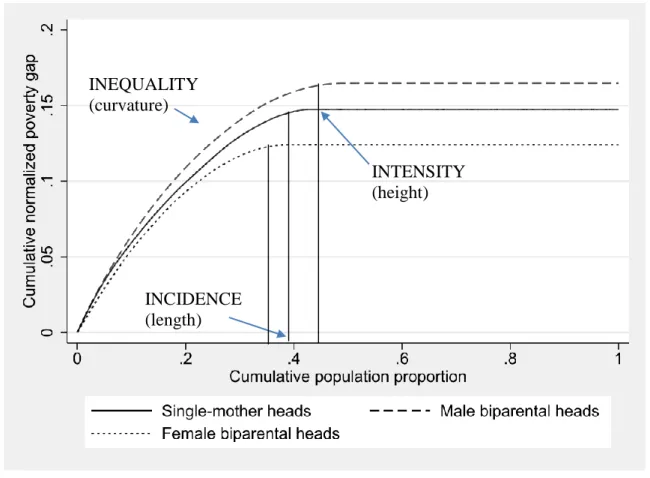
According to the poverty and extreme poverty gap calculations, it is interesting to note a greater depth of poverty in members of male-headed biparental households. While in 2009 people in two-parent households headed by men required an additional income of 16.5% and 4.6% for the eradication of poverty and extreme poverty, respectively, the consumption deficit necessary to eliminate these poverty levels in single-mother households was 14.8% and 3.3%. The lowest poverty gap was found in members of female-headed biparental households, with a consumption deficit of 12.4% and 2.3% for the poor and extreme poor respectively.
Figure 5, known as a TIP curve, for Three I’s of Poverty (JENKINS; LAMBERT, 1997; JENKINS, 2006), graphically summarizes the incidence, depth and inequality of poverty in members of single-mother, male-headed and female-headed biparental households. This graph
14.0% 7.5% 27.6% 15.9% 6.1% 25.8% 28.9% 23.9% 39.3% 29.9% 22.3% 37.7% 57.1% 68.7% 33.1% 54.2% 71.7% 36.4%
S M H * S M H - U r b a n S M H - R u r a l B H * * B H - U r b a n B H - R u r a l
P e rc e nt a ge s of the P a rtic ula r P opula tion