Fecha de aceptación:
HORIZONTAL COOPERATION ARCHITECTURE USED IN
DEVELOPMENT OF MOBILE APPLICATIONS: LOGISTICS
PROCESSES AT TEXTILE SECTOR CASE
ARQUITECTURA DE COOPERACIÓN HORIZONTAL EN
DESARROLLO DE APLICACIONES MÓVILES: PROCESOS
LOGÍSTICOS EN EL CASO DEL SECTOR TEXTIL
Daniela Alejandra Pacheco R. Néstor Fernando Álvarez.** Giovanny Mauricio Tarazona. ***
Abstract: The present article describes the design and prototyping processes carried
out to develop a mobile application using horizontal collaboration architecture for
e-commerce. Said application is meant to be used by SMEs in the textile sector in order
to facilitate transportation-related logistics by collecting information. Hence, costs are
reduced for the end customer by delivering goods via a unified logistics provider.
Key Words: costs, e-commerce, horizontal collaboration, logistical operator, logistics, SME.
BSc.Industrial engineering, Universidad Distrital Francisco José de Caldas, Colombia and active member of GICOGECOL research group. E-mail: [email protected]. ORCID: https://orcid.org/0000-0001-9729-8234
**M.Sc. Industrial engineering, Universidad Distrital Francisco José de Caldas, Colombia and active member of GICOGECOL research group. Current position: Globant, Colombia. E-mail: [email protected]. ORCID: https://orcid.org/0000-0002-8579-4297
Resumen: El presente artículo describe los procesos de diseño y creación de
prototipos llevados a cabo para desarrollar una aplicación móvil utilizando la
arquitectura de colaboración horizontal para el comercio electrónico. Dicha aplicación
está destinada a ser utilizada por las PYME en el sector textil con el fin de facilitar la
logística relacionada con el transporte mediante la recopilación de información. Por lo
tanto, los costos se reducen para el cliente final al entregar productos a través de un
proveedor de logística unificado.
Palabras clave: costos, comercio electrónico, colaboración horizontal, operador logístico,
logística, PYME.
1. Introduction
Currently, the electronic commerce has granted opportunities and advantages on a
commercial level since it diminishes communication, transportation and distribution costs. Hence, commercial alliances can be established between investors and partners with a “win
to win” mindset [1]. In the era of the Internet of Things (IoT), businesses are constantly
seeking to implement internet tools to facilitate to carry out processes involving supply,
inventory management, human resource control, sales and post-sale service. Thus, a better
experience is offered to the client and his loyalty is improved while keeping updated on
regulations and thoroughly complying with them [2].
The traditional commercial process lacks in data manipulation standards, which translates in
the need to recollect, identify and analyze important information at the moment of negotiation.
Fecha de aceptación:
customer interaction, Reduce inventories, Speed business processes, Better product
advertising, Greater access to global markets, Low investment risk. [3]
After stating the advantages of electronic commerce regarding traditional processes, different
problem areas faced by the textile sector are detailed as well as their relationship with
e-commerce processes.
Geographic, economic and social problems of e-commerce in Colombia
Colombia needs an improvement in the logistical network, in terms of distribution processes
to satisfy the national and international demand of native textile products. It is also important
to drive change in legislations to allow their optimal integration with the policies focused on
current economic models [4].
Another hardship in Colombia is the inadequate infrastructure in ports and airports, which
leads to an inability to mobilize a moderate merchandise flow. Hence, the state should commit
to attracting more private investment in port activities so that Cartagena can position itself as
one of the most important ports of Latin America and overcome such capacity-related gap [5].
Problems in the textile sector and their incursion in electronic commerce.
The Colombian textile sector is characterized by traditional inefficient production processes
and it has no technological innovation management methods to increase its competitiveness
processes are required to survive the market evolution [6]. Furthermore, Colombia faces a
deficiency in terms of regulations and policies aimed at the commercialization of textile products through an e-commerce platform. The latter “consists in the distribution, sale,
purchase, marketing and supply of information of products and services through the internet”
[7]. This leads to insecurity in potential customers regarding web-based commercial
transactions [8].
Considering the problem areas of the textile sector and the advantages of the electronic
commerce for the links of the production chain, a cooperative architecture of logistical
e-commerce operators is proposed which is fundamental in textile companies, especially SMEs.
Currently, said enterprises have no methodologies in place for the transportation of
merchandises [9]. Thus, there is a need to unify data referring to said process by developing
e-commerce platforms, which optimizes their costs and delivery times.
2. Background
The research discussed in the thesis “Modelling and simulation of a multinational focused in
logistical distribution” analyzes different logistical processes with the purpose of reduce them
at maximum level, thereby improving interoperability in military operations and optimizing
resources [10]. Another study from Tarazona, Diaz, Rojas and Pablo [11] approaches the
development of a model based on electronic commerce, whose purpose is to facilitate the
control and interaction of the electronic platform that carries out commercial and productive
transactions throughout the supply chain of the textile and clothing industry.
Fecha de aceptación:
credibility for customers. Thus, the speeds of merchandise delivery and logistical processes
are maximized and client needs are identified. The study from Carlos Danilo Diaz Rojas and
Pablo Vergara Gomez [11], e-commerce models were established for the interaction of the
links of the supply chain in the textile and clothing sectors in Bogotá.
The present research is carried out with the goal of developing a cooperative architecture
based on meta-models for e-commerce platforms, in terms of conditions, interaction
strategies and processes, so that SMEs in the textile sector of Bogotá can develop and ease
their logistical system in favor of e-commerce business model.
3. The textile sector in Colombia
The textile industry is one the most dynamic and important sectors in Colombian economy.
Currently, Colombia has approximately 450 textile companies and 10.000 clothing
manufacturers, most of which are catalogued as SMEs. 50% of them has between 20 and 60
sowing machines [13] [14] [15] [16]. This sector approximately employs 20% of the national
workforce, including more than 130.000 direct jobs and 200.000 indirect jobs, and represents
5% of total exportations.
Textile production in Bogotá is distributed as follows: 42% is located in Puente Aranda,
Engativá, Kennedy, Santafé and Los Mártires; where Puente Aranda and Fontibón amass
77% of large companies and 44% of medium-sized companies of the chain. Usme, Bosa, San
micro-businesses and small companies. In Bogotá, there 5958 clothing transformation
companies, which represent 42% of the supply chain of clothing and textile industries [17].
4. The logistics sector in Colombia
According to the international logistic performing index, Colombia takes the 97th spot with a
score of 2.64 (in a scale of 1 to 5). Colombia takes the 64th spot with a score of 2.87 [18] [19]
[20] as seen in Table 1.
One of the shortcomings of the country regarding logistical growth is related with its
infrastructure: “In order to face commercial agreements, it is paramount to guarantee the
movement of merchandises in the shortest time possible, with higher efficacy and cost reduction” [22].
Country Year LPI
Rank LPI
Score Customs2 Infrastructure3
International shipments4 Logistics competence5 Tracking & tracing6 Timeliness7
Algeria 2014 96 2.65 2.71 2.54 2.54 2.54 2.54 3.04
Colombia 2014 97 2.64 2.59 2.44 2.72 2.64 2.55 2.87
Burkina Faso 2014 98 2.64 2.50 2.35 2.63 2.63 2.49 3.21
Belarus 2014 99 2.64 2.50 2.55 2.74 2.46 2.51 3.05
Ghana 2014 100 2.63 2.22 2.67 2.73 2.37 2.90 2.86
Senegal 2014 101 2.62 2.61 2.30 3.03 2.53 2.65 2.53
Liberia 2014 102 2.62 2.57 2.57 2.57 2.86 2.57 2.57
Honduras 2014 103 2.61 2.70 2.24 2.79 2.47 2.61 2.79
Ethiopia 2014 104 2.59 2.42 2.17 2.50 2.62 2.67 3.17
Nepal 2014 105 2.59 2.31 2.26 2.64 2.50 2.72 3.06
Solomon Islands 2014 106 2.59 2.49 2.46 2.22 2.72 2.72 2.96
Table 1. Score of the Logistic Performance Index [21].
5. Horizontal collaboration
Horizontal collaboration focused on logistical processes is a useful tool when the distribution
Fecha de aceptación:
offers clients lower prices. Furthermore, competitiveness in the market is increased. The
savings in terms of costs using horizontal collaboration have significant impact in SMEs, since
these are based on economies of scale, which means more affordable fees with increased
bargaining power and usage of wider fleets as well as a better design of the shipment
logistics [23].
6. Legal framework
Legal framework of horizontal collaboration and e-commerce
In 1998, Law 79 of the Colombian Congress [24] established parameters for the collaboration
between companies in the country, including 162 articles, focused in the creation of
companies with legal representatives and registration. The law was modified by Act 2150 of
1995. In the same year, Law 454 of August was stated as a solidary economy, in which the
Fund of Warranties was consolidated for financial, savings and credit cooperatives [25].
In Colombia, Law 1266 of 2008 regulates the fundamental right to habeas data, stipulated in
Article 15 of the political constitution. This article is related with the protection of data
regarding financial, loaning, commercial information, among others [26].
In 1999, Law 527 was created to determine the bases of legal and evidentiary validity focused
in data management, by establishing specific requirements. The regulation focused in digital
certification entities, for the authorization, vigilance and control of activities within the purview
of the digital market [27].
7. Horizontal collaboration architecture based in e-commerce metamodels
General overview of the architecture
The horizontal collaboration architecture to be developed comprises: Establishment of the
semantics of the e-commerce process, Extraction of the taxonomy focused on electronic
commerce logistics, Establishment of the ontology based on the obtained semantics and
taxonomy, Extraction of a specific-domain language to manipulate data referring to logistical
processes, Transformation of said language into data that can be easily accessed by the end
user. Figure 1 shows the development of the previously described process:
Figure 1: Objects obtained in each process. Source: Author.
8. Description of common modules in e-commerce platforms
Opencart
Opencart is an online store developed under the GNU general public license and launched in
the year 2000. The store comprises two modules: the catalogue (Front-end) where clients
navigate to search and purchase products and a management tool (back-end) where the
administrator can establish different options related with the operation and identity of the store
[28]. The catalogue in the Opencart platform comprises: Inventory management, Image
Fecha de aceptación: Magento
It is an open source system of online stores that grants access to stores from mobile devices.
It gives to possibility to advance to commercial versions and increase expansion power
compared to other electronic stores. The paid version offers many functionalities such as the
capacity of scaling the system or develop apps for tablets and mobile devices [29]. The
catalogue for this platform offers the following services: Category management, Revisions
and assessments, Google content, and Search terms.
Prestashop
Prestashop was created in 2007 in France by Igor Schumberger and Bruno Lévêque. Its
purpose is to render e-commerce sales more accessible. It has a solid back-office, which can
manage components such as catalogues, order histories, shipping expenses and customers
[30]. The components of the Prestashop catalog are: Attributes and values, Image mapping,
Adjuncts, Labels, Characteristics, and Categories.
Comparative analysis of the platforms
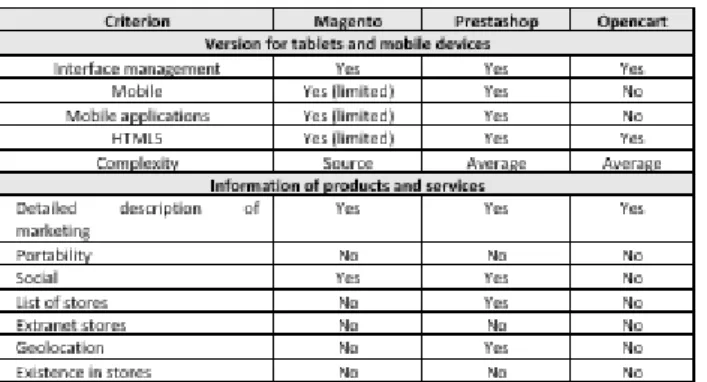
Table 2 shows some of the influential factors to perform a correct distinction between
Table 2. Comparative analysis between e-commerce platforms. Source: Giovanny Mauricio
Tarazona and author.
The platforms with more time on the market have an advantage over recent ones. In this
case, it is concluded that Opencart has more options available for management from mobile
devices. In terms of the information of products and stores, Prestashop is the leading
software since it has more detailed information on customers, products and stores.
9. Common taxonomy in e-commerce platforms
In order to build a domain taxonomy, it is necessary to have expert knowledge on the different
e-commerce platforms. In order to properly carry out the process, knowledge maps are
created seeking to define a common taxonomy based on the data obtained [31] [32].
In order to identify a common taxonomy, the information of the platforms must be classified
according to similar characteristics and data must be organized depending on hierarchy [33]
[34]. The relations between the attributes and the similarities of Prestashop, Opencart and
Magento must be recognized in all the logistical processes such as sales, products,
Fecha de aceptación:
A detailed description is carried out of the taxonomies of each platform to proceed with the
generation of the taxonomy common to all platforms.
Taxonomy for the catalogue
Table 3 exhibits the data corresponding to the catalogue category of the respective stores.
Table 3. Content of the catalogue in e-commerce platforms. Source: Author.
The taxonomy corresponding to the catalogue is comprised of category, image configuration,
inventory and list of products.
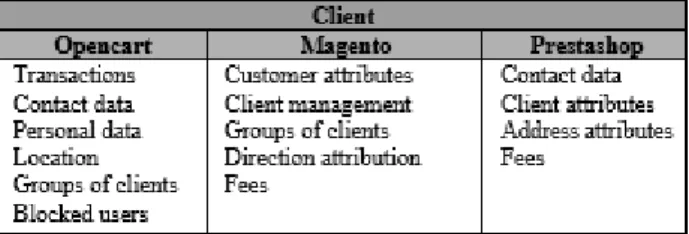
Taxonomy for clients
The customer data in the platforms is exposed in Table 4.
The taxonomy corresponding to customers is comprised of: companies, contact information,
personal information, location and news related with purchases made by clients and his
preferences.
Taxonomy for the product
The information corresponding to the product in the platforms refers to prices, description,
name, existing units and status. Table 5 exposes said information keeping in mind each
platform.
Table 5. Composition of products in e-commerce platforms. Source: Author.
In the identification of the product taxonomy, it was established that it comprises Categories,
subcategories, image configuration, inventory and list of products.
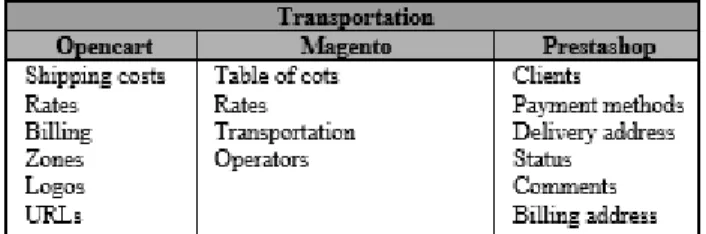
Taxonomy for transportation
The transportation data comprised in the analyzed platforms is detailed in Table 6.
Fecha de aceptación:
The taxonomy common for transportation is comprised of billing data, shipping expenses,
rates, shipping reports and payment reports.
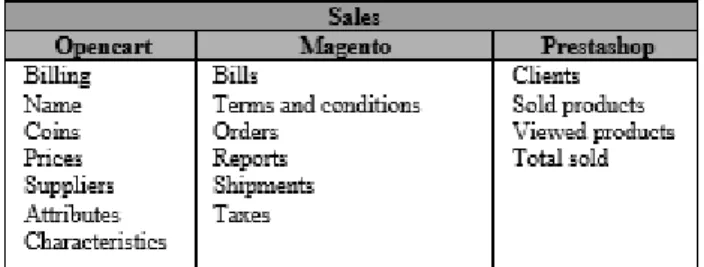
Taxonomy for sales
The data comprising sales in said platforms is listed in Table 7.
Table 7. Composition of sales in e-commerce platforms. Source: Author
Finally, the components of the taxonomy of sales are: information on the customer that
purchase a product, purchase mode, type of purchase, bought products and a report with the
taxes paid for the products sold. Based on the presentation of the e-commerce platforms, a
knowledge map (Figure 2) is created resulting from the identification process of the taxonomy
common to all platforms.
10. Semantics of logistical processes in e-commerce
To identify the semantics of the logistical elements in e-commerce, concepts were gathered
coming from knowledge maps of several platforms. A common taxonomy was established in
proposes a series of information filters, which are mentioned in this section to avoid data
redundancy.
Figure 2. Taxonomy map, needed for the generation of the ontology. Source: Author
The information filters are: Pertinence of the domain, Domain consensus, Lexicon of
cohesion, Structural pertinence, and Various.
Considering that the previous algorithm and the information obtained from the e-commerce platforms, a series of “data groups” is established: Classes, Object properties, Data
properties, Notes properties and Individuals.
11. Ontology for the semantic model of e-commerce
For the creation of the ontology, the methodology proposed by Noy & McGuiness [36] is the
official guide provided Protégé (Stanford Center for Biomedical Informatics Research, 2010),
Fecha de aceptación:
important terms for the ontology, Define the classes and their hierarchy, Define the properties
of the classes (slots), Define the facets of the slots (or data) and Create instances or
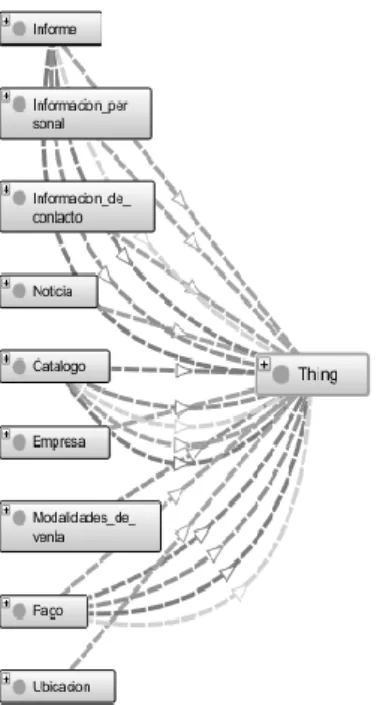
individuals. Figure 3 shows a fragment of the project ontology and a class created with the
developed ontology and its respective objects.
Figure 3. General overview of a class created with the obtained ontology with its respective
objects. Source: Author.
After creating the ontology, it is concluded that the studied e-commerce platforms use
different standards in their databases as well as user interfaces and programming languages
yet the main modules are similar. The main problem involves the technological
implementation carried out in each platform. Hence, the possible solution to facilitate the
creation of independent modules is the application of Model-Driven Engineering (MDE).
12. E-commerce meta-models
The meta-models come from the abstraction of the real world. In order to perform proper
modelling, an identification of the elements is required. Said identification creates an ontology
in which the concepts, languages and components are established, thereby setting the
of the real world, Object software, Model level: Domain of ontologies, Models, Meta-model
level: Concept description, Concept language and Meta meta-model level: Domain analysis,
Design of specifications. [37]
Based on a pre-established architecture, the specific e-commerce ontology can be created in
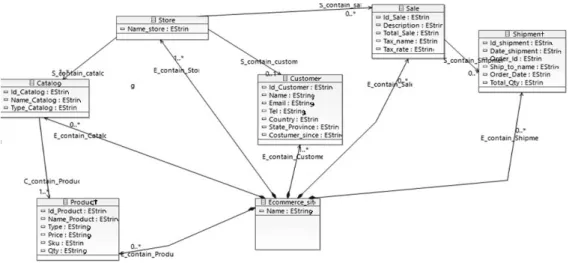
order to generate the correct meta-model. The Horicoop meta-model shown in Figure 4 was
developed in Eclipse, whose nomenclature sets some writing rules. The first vocal or
consonant must be written in capital letters, the other components of the word must be written
in lower case and the words are separated by using a connecting line depending on the data type. The string or numeric type must have an ‘E’ preceding them.
Figure 4. Base meta-model for Horicoop. Source: Author.
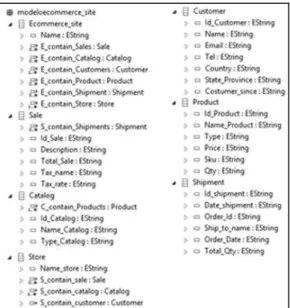
Figure 5 describes the “Ecore” base for the prototype and for the respective transformations
Fecha de aceptación:
Figure 5. Ecore of the meta-model of Horicoop. Source: Author.
13. DSL tool for e-commerce platforms, HORICOOP
To establish the DSL, Helios Eclipse was used, which includes the components Eclipse
Modeling Framework and the Graphical Modeling Framework. The EMF was used to define
and detail the meta-model for the Horicoop application. The Graphical Modeling Framework is
used to establish a process to transform the meta-model into a domain-specific language. “The GMF has a more natural disposition of these data in order to create personalized
interfaces depending on the definition of the business” [38].
In order to predict the solution to the real world problem, it is necessary to have certain levels
of abstraction. Hence, the behavior of the processes can be adequately transformed into a
model to subsequently give origin to a meta-model and finally develop a meta meta-model.
“Tooling Definition Model” and the “Mapping Model” are developed. The last step for the
creation of models using the GMF is called the “Genmodel Diagram editor” which is
comprised of the last three models. The “meta-model” and the “GMF” can generate XMI files
(XML Metadata Interchange) which are a specification for the exchange of diagrams. In the
case of this project, the Ecore Model of the EMF is used to generate the XML by transforming
the data corresponding to the electronic logistics of real world components into the data of a
meta-model.
The meta-model developed in this research project focuses on the data types with more
information traffic in the electronic logistics of the e-commerce platforms: Products, Sales,
Merchandise Transportation, Catalogues, and Clients.
14. Transformation BETWEEN MODELS
The transformation process between models converts an input model, described as a specific
origin meta-model, into another model described by a destination meta-model. The “Ecore”
(based on EMF) from Eclipse manages a transformation language between models called “ATL”. This model is the highest specification of the model pyramid (M3). The ATL is a
language that offers a series of standard development tools (syntax highlighting, depurator,
etc.) which has the purpose of facilitating the development of transformations between models. “The ‘ATL transformation’ process is comprised of rules that define over which
Fecha de aceptación:
15. HORICOOP meta-model
The creation process of GMF establishes a series of steps. The first one is the creation of the
Domain model, which copies the code obtained from the meta-model and uses transformation
patterns to generate the Java code which is used in subsequent parts of the process.
The construction of a GMF defines a specific order for the creation of the components coming
from the meta-model, detailed in Eclipse in these steps: Create a new GMF Project, Create a
new Graphical definition model, Create a new Tooling definition model, Create a new
Mapping definition model, Create a new Generator model, Check problems of the generator
model, and finally Generate the Java code.
The meta-model experiments data transformation processes with the help of the “ATL from
Eclipse EMF” which facilitates the creation of a specific model, following the steps given by
the GMF. Keeping in mind the creation process for the creation of the GMF, the artifacts
(store, sale, catalog, customer, product, and shipment) coming from the generation of the
meta-model were obtained as well as the prototype derived from the Horicoop project.
16. XML format delivered by the meta-model
After the data modelling with Horicoop, a file in XML format is obtained which is used as a
base for the mobile app visualized by the user. Horicoop transforms the data coming from the
can transversally visualize the SHIPMENT of the e-commerce platforms discussed in this
article. The data are altered through the ATL algorithm, being transformed from raw data of
each platform into an XML file that is then displayed in the mobile app in the form of a table.
The design and development of the Horicoop mobile app was carried out with the purpose of
facilitating and optimizing the logistical processes, especially in transportation times and costs
of the merchandises offered by the three e-commerce platforms Magento, Prestashop and
Opencart.
Conclusions
Horicoop is a mobile app that seeks to improve costs and delivery times allowing
organizations to become more competitive in the market and break frontiers through digital
tools that are adopted internationally and give more satisfaction to the customer with excellent
quality products at good prices.
Within the development of this research, it is necessary that the Ministry of ICTs promotes the
use of electronic commerce platforms so that the SMEs located in Bogotá can increase their
potential client base, widen their market segment and reduce costs and expenses related to
inadequate logistic design.
In the framework of collaborative commerce, the management and exchange of knowledge is
crucial both inside and outside of the company. It can improve the development of processes,
methodologies and tools and thereby mitigate or remove possible flaws and adapt to the
Fecha de aceptación:
Acknowledgement
This research product has been developed within the framework of the GICOECOL research
group, Electronic Commerce in Colombia, directed by Giovanny Mauricio Tarazona, at the
Universidad Francisco Jose de Caldas.
Referencias
[1] Molina Pablo. DEL KNOCK OUT AL WIN – WIN. Recovered el 21 de november de 2018. Available en: http://www.betlatam.com/del-knock-out-al-win-win/
[2] Ibrahim, O. A. (2015). Will Insta-Business be the Electronic Contemporary Bazaar ?: An Exploratory Analysis on Electronic Commerce in Kuwait. The_role_of_business_enviro, 1–6.
[3]Ventajas y desventajas del comercio electrónico. Recovered el 21 de november de 2018. Available en: https://www.actualidadecommerce.com/ventajas-y-desventajas-del-ecommerce-frente-al-comercio-tradicional/
[4] Morales, L., Bernal, J., & Vargas, M. (2015). Interoperability as a Service in Colombia, (December), 66–72
[5] Quiñones-Bolaños, E. E., Bustillo-Lecompte, C. F., & Mehrvar, M. (2016). A traffic noise model for road intersections in the city of Cartagena de Indias, Colombia. Transportation Research Part D: Transport and Environment, 47(Supplement C), 149– 161. http://doi.org/https://doi.org/10.1016/j.trd.2016.05.007
[6] Martínez, C. I. P., & Piña, W. H. A. (2016). Regional analysis across Colombian departments: a non-parametric study of energy use. Journal of Cleaner Production,
115(Supplement C), 130–138.
http://doi.org/https://doi.org/10.1016/j.jclepro.2015.12.019
[7] UPF Barcelona School of Management. ¿Qué es e-commerce o comercio electronico? Recovered el 21 de november de 2018. Available en: https://marketingdigital.bsm.upf.edu/e-commerce-comercio-electronico/
[8] Busom, I., & Vélez-Ospina, J. A. (2017). Innovation, Public Support, and Productivity in Colombia. A Cross-industry Comparison. World Development, 99(Supplement C), 75– 94. http://doi.org/https://doi.org/10.1016/j.worlddev.2017.07.005
[9] Perfil Logístico de Colombia – Sector textil y confecciones. Recovered el 21 de november
de 2018. Available en:
http://repository.urosario.edu.co/flexpaper/handle/10336/8983/1018441127-2014.pdf?sequence=7&isAllowed=y
[10] (Ghanmi, Campbell, & Gibbons, 2008)
M. Rocha, A; CalvoManzano, JA; Reis, LP; Cota (Ed.), SISTEMAS Y TECNOLOGIAS DE INFORMACION (7th Iberia, pp. 518–524). Madrid España: AISTI-ASSOC IBERICA SISTEMAS & TECNOLOGIAS INFORMACAO, RUA DAVID CORREIA DA SILVA, 407-50 TRAS, RIO TINTO, 4435-200, PORTUGAL. Retrieved from http://ieeexplore.ieee.org/xpls/abs_all.jsp?arnumber=6263171
[12] Jiang, Y., Zhang, Z., Wang, Z., & Sun, H. (2011). A Mechanism of Information for Collaborative, (2010038), 43–46.
[13] Chen, L. L. (1994). The welfare effects of bilateral free trade between the United States and Colombia in textiles and apparel. The North American Journal of Economics and Finance, 5(1), 39–54. http://doi.org/10.1016/1062-9408(94)90012-4
[14] Fields, D. A., Searle, K. A., & Kafai, Y. B. (2016). Deconstruction Kits for Learning: Students’ Collaborative Debugging of Electronic Textile Designs. In Proceedings of the 6th Annual Conference on Creativity and Fabrication in Education (pp. 82–85). New York, NY, USA: ACM. http://doi.org/10.1145/3003397.3003410
[15] Guo, X., Zheng, X., Ling, L., & Yang, C. (2014). Online coopetition between hotels and online travel agencies: From the perspective of cash back after stay. Tourism Management Perspectives, 12, 104–112. http://doi.org/10.1016/j.tmp.2014.09.005 [16] Urrea Camargo, J. (2010). El e-commerce como herramienta de internacionalización y
fomento de la industria colombiana artisana. Retrieved April 8, 2013, from http://hdl.handle.net/10654/4259
[17] Cámara de Comercio de Bogotá. (2005). Caracterización de las Cadenas Productivas de Manufactura y Servicios en Bogotá y Cundinamarca.
[18] de Souza, R., Goh, M., Lau, H.-C., Ng, W.-S., & Tan, P.-S. (2014). Collaborative Urban Logistics – Synchronizing the Last Mile a Singapore Research Perspective. Procedia -
Social and Behavioral Sciences, 125, 422–431.
http://doi.org/10.1016/j.sbspro.2014.01.1485
[19] Guajardo, M., & Rönnqvist, M. (2015). Operations research models for coalition structure in collaborative logistics. European Journal of Operational Research, 240(1), 147–159. http://doi.org/10.1016/j.ejor.2014.06.015
[20] Ronald, N., Yang, J., & Thompson, R. G. (2016). Exploring Co-Modality Using On-Demand Transport Systems. Transportation Research Procedia, 12(June 2015), 203– 212. http://doi.org/10.1016/j.trpro.2016.02.059
[21] IBRD. (2014). Global Rankings 2014 | Logistics Performance Index. Retrieved March 10, 2016, from http://lpi.worldbank.org/international/global
[22] Palhazi Cuervo, D., Vanovermeire, C., & Sörensen, K. (2016). Determining collaborative profits in coalitions formed by two partners with varying characteristics. Transportation Research Part C: Emerging Technologies. http://doi.org/10.1016/j.trc.2015.12.011 [23] Tumibay, G. M., Layug, F. T., Yap, D. S., & Sembrano, M. S. M. (2016). Increasing the
Value of Farm Products: Connecting Farmers and Consumers Through an E-commerce System. In Proceedings of the 18th Annual International Conference on Electronic Commerce: E-Commerce in Smart Connected World (p. 5:1--5:5). New York, NY, USA: ACM. http://doi.org/10.1145/2971603.2971608
[24] Ley número 79. Recovered el 21 de november de 2018. Available en:
http://leycooperativa.co/leycooperativa/index.php/tributaria/leyes/83-leyes-de-1988/563-ley-79-de-1988
[25] Ley 454 de 1998. Recovered el 21 de november de 2018. Available en: http://www.secretariasenado.gov.co/senado/basedoc/ley_0454_1998.html
Fecha de aceptación:
Digital Government Research Conference on Digital Government Research (pp. 86– 96). New York, NY, USA: ACM. http://doi.org/10.1145/2912160.2912164
[27] Kohlen, J., & Holotiuk, F. (2017). Consulting Firms Under the Influence of Digitalization: The Need for Greater Organizational Agility. In Proceedings of the 2017 ACM SIGMIS Conference on Computers and People Research (pp. 175–176). New York, NY, USA: ACM. http://doi.org/10.1145/3084381.3084421
[28] Opencart. (2017). OpenCart - Open Source Shopping Cart Solution. Retrieved April 20, 2016, from http://www.opencart.com/
[29] Magento. (2016). User Guide (Magento In). Retrieved from www.magento.com
[30] Prestashop. (2016). PrestaShop e-commerce gratis, open-source comercio electrónico software. Retrieved from http://www.prestashop.com/
[31] Treeratpituk, P., Khabsa, M., & Giles, C. L. (2015). Automatically Generating a Concept Hierarchy with Graphs. In Proceedings of the 15th ACM/IEEE-CS Joint Conference on Digital Libraries (pp. 265–266). New York, NY, USA: ACM. http://doi.org/10.1145/2756406.2756967
[32] Wang, P.-Y., & Yang, H.-C. (2012). Using collaborative filtering to support college students’ use of online forum for English learning. Computers & Education, 59(2), 628– 637. http://doi.org/10.1016/j.compedu.2012.02.007
[33] Cataldi, M., Torino, U., & Sapino, M. L. (2010). ANITA : A Narrative Interpretation of Taxonomies for Their Adaptation to Text Collections. Proceedings of the 2010 International Conference on Management of Data - SIGMOD ’10, 1781–1784.
[34] Ginat, D., & Menashe, E. (2015). SOLO Taxonomy for Assessing Novices’ Algorithmic Design. In Proceedings of the 46th ACM Technical Symposium on Computer Science
Education (pp. 452–457). New York, NY, USA: ACM.
http://doi.org/10.1145/2676723.2677311
[35] Dietz, E.-A., Vandic, D., & Frasincar, F. (2012). TaxoLearn: A Semantic Approach to Domain Taxonomy Learning. 2012 IEEE/WIC/ACM International Conferences on Web Intelligence and Intelligent Agent Technology, 58–65. http://doi.org/10.1109/WI-IAT.2012.129
[36] Noy, F. & McGuinness, D. (2001). Ontology Development 101: A Guide to Creating Your First Ontology. Stanford University, Stanford, CA
[37] Henderson-Sellers, B. (2011). Bridging metamodels and ontologies in software engineering. Journal of Systems and Software, 84(2), 301–313.
[38] Kahani, N., Bagherzadeh, M., Dingel, J., & Cordy, J. R. (2016). The Problems with Eclipse Modeling Tools: A Topic Analysis of Eclipse Forums. In Proceedings of the ACM/IEEE 19th International Conference on Model Driven Engineering Languages and
Systems (pp. 227–237). New York, NY, USA: ACM.
http://doi.org/10.1145/2976767.2976773
![Table 1. Score of the Logistic Performance Index [21].](https://thumb-us.123doks.com/thumbv2/123dok_es/7240362.341885/6.918.81.840.543.856/table-score-logistic-performance-index.webp)