Prevention of hepatocellular carcinoma:
a concise review of contemporary issues
Vincent Wai-Sun Wong,*,** Henry Lik-Yuen Chan*,**
* Department of Medicine and Therapeutics, The Chinese University of Hong Kong. ** Institute of Digestive Disease, The Chinese University of Hong Kong.
ABSTRACT
Hepatocellular carcinoma (HCC) is the fifth most common cancer and the second leading cause of cancer deaths in men. Due to differences in the prevalence of viral hepatitis, the incidence of HCC in low and middle income countries is much higher than that of high income countries. Strategies to limit the impact of HCC include primary prevention against new cases of viral hepatitis, secondary prevention of HCC in sus-ceptible individuals, and early HCC detection. Universal hepatitis B vaccination has resulted in dramatic re-duction in incident cases of chronic hepatitis B and HCC in children and adolescents, and the full effect is expected in the next 20 years. The key hurdle for universal vaccination is the cost and the accessibility in low and middle income countries. Randomized controlled trials and meta-analyses showed that successful treatment of chronic hepatitis B and C can reduce the risk of HCC and cirrhotic complications. HCC sur-veillance by regular ultrasound examination and alpha fetoprotein testing leads to early cancer detection and offers the opportunity for curative treatment. Since all these measures are costly and require manpower and infrastructure support, the implementation should rely on the liaison among healthcare providers and policymakers. The cost-effectiveness of various strategies should also be studied based on local situations.
Key words. Hepatitis B. Hepatitis C. Liver neoplasms. Antiviral agents. Hepatitis B vaccines.
Correspondence and reprint request: Henry Lik-Yuen Chan, M.D. Department of Medicine and Therapeutics, 9/F
Prince of Wales Hospital
30-32 Ngan Shing Street, Shatin, Hong Kong Tel.: +852 2632-3593
Fax: +852 2637-3852 E mail: [email protected]
Manuscript received: November 17, 2011. Manuscript accepted: December 05, 2011. INTRODUCTION
Hepatocellular carcinoma (HCC) is the fifth most common cancer and the second leading cause of
can-cer deaths in men worldwide.1 Due to geographical
differences in the underlying etiologies such as viral hepatitis and alcoholism, the global distribution of HCC is uneven. The incidence and mortality of HCC in low and middle income countries are much higher than those of high income countries. Since late stage HCC is almost uniformly lethal, the key to the con-trol of the disease includes prevention and early can-cer detection. This review focuses on the impact of vaccination programs and antiviral therapy in the
prevention of HCC, as well as the efficacy of HCC surveillance programs. The practical and financial implications of such programs in developing coun-tries are discussed.
EPIDEMIOLOGY OF HCC
According to GLOBOCAN, there were approxima-tely 748,300 new cases of primary liver cancers in
2008.1 695,900 people were estimated to die from
pri-mary liver cancers, indicating that most of the new cases would eventually die from the disease. HCC
ac-counts for 85 to 90% of all primary liver cancers.2
Among 748,300 new cases of primary liver can-cers in 2008, 626,700, or 84%, occurred in develo-ping countries. The incidence is highest in Eastern Asia (age-standardized incidence rates 35.5/100,000 in men, 12.7/100,000 in women). Other high-rate areas include:
• Southeast Asia (21.4/100,000 in men, 9.0/100,000 in women),
• Western Africa (16.6/100,000 in men, 8.0/100,000 in women), and
• Southern Africa (13.9/100,000 in men, 5.1/ 100,000 in women).
In contrast, the incidence is less than 10.0/ 100,000 in men and 5.0/100,000 in women in most parts of Europe and North America. Corresponding figures are 6.3/100,000 in men and 4.4/100,000 in women in Caribbean countries, and 5.3/100,000 in men and 3.9/100,000 in women in South America. Male preponderance is consistently observed among different countries, with male-to-female ratio bet-ween 2:1 and 4:1.
The trend of HCC also differs much across various countries (Figure 1). In some parts of America, the incidence has increased by more than 2-fold from
1970s to late 1990s.3,4 In Asia, the incidence is static
or decreasing in some areas like Korea, Singapore
and Hong Kong.5 The phenomenon is not completely
understood. In some Western countries, the increase can be partly explained by immigration from coun-tries with high prevalence of liver diseases. An alter-native explanation is that countries with rising incidence in HCC tend to have higher prevalence of hepatitis C virus (HCV) infection. Besides, the in-creasing incidence of obesity and diabetes may have contributed to HCC risk in some countries.
HEPATITIS B VIRUS AND HCC
It is estimated that over 350 million people are chronically infected with hepatitis B virus (HBV)
worldwide.6 Up to 25% of these patients would
even-tually die from liver disease. Globally, HBV
ac-counts for 30 and 53% of all cases of cirrhosis and
HCC, respectively.7 Among different liver diseases,
chronic hepatitis B is unique in that HCC may deve-lop in a liver with little or no fibrosis. This is becau-se HBV is directly carcinogenic, partly explained by the integration of HBV DNA into the human chro-mosomes and the action of HBx regulatory
pro-tein.8,9
Vaccination
The first HBV vaccine was developed from human serum and licensed by the Food and Drug
Adminis-tration of the United States in 1981.10 This was
subsequently replaced by the development of recombi-nant yeast (Saccharomyces cerevisiae) vaccine that
expresses HBsAg in 1984.11 The vaccination is given
in 3 doses as intramuscular injections. The first and second doses are given 1 to 2 months apart. The third booster dose is given 6 to 12 months later.
The response to vaccine declines with age. As the prevalence of HBV infection in most middle and low income countries is high, childhood im-munization, preferably since birth, should be re-commended. After completion of 3 doses of vaccine, 90% of healthy adults and over 95% of children would develop protective antibodies. In-fants of mothers with chronic hepatitis B derive further protection with the addition of hepatitis B immune globulin. Positive HBsAg is found in only 6% of infants who receive both hepatitis B immu-ne globulin and vacciimmu-ne, compared to 29% of those receiving immune globulin alone, 25% of those re-ceiving vaccination alone, and 88% of those
without prophylaxis.12
Figure 1. Incidence of HCC in Asia, USA and UK in (A) men and (B) women, 1976-2006 (per 100,000 population).4,5
60
50
40
30
20
10
0
1976 1978 1980 1982 1984 1986 1988 1990 1992 1994 1996 1998 2000 2002 2004 2006 China
Hong Kong Korea Singapore Taiwan USA UK Costa Rica Columbia
1976 1978 1980 1982 1984 1986 1988 1990 1992 1994 1996 1998 2000 2002 2004 2006
18
16
14
12
10
8
6
4
2
Although the antibody level against HBsAg tends to wane with time, this does not appear to be impor-tant clinically. In a 12-year follow-up study of Sene-galese infants, HBsAg carrier rate remained low
among vaccinated children.13 Further boosters at
school did not affect the protection rate. The stron-gest evidence comes from epidemiological studies that show no increase in HBsAg carrier rate in ado-lescents who have received vaccination years ago.14,15 This indicates that new HBV infection is
ex-ceedingly rare in vaccinated persons.
Alongside with a reduction in HBsAg carrier sta-te, the incidence of HCC in vaccinated persons has also declined. Based on experience in Taiwan, the annual incidence of HCC in children 6 to 14 years of age declined from 0.70 per 100,000 children between 1981 and 1986 to 0.57 between 1986 and 1990, and
to 0.36 between 1990 and 1994.16 A follow-up study
confirmed that the protection against HCC had
ex-tended to adolescents up to the age of 19 years.17
Be-cause of this cohort effect, the true impact on the population incidence of HCC would only be clear at least 20 years after the introduction of mass vacci-nation. When the vaccination cohort reaches adul-thood, the population incidence of HBV infection and HCC is expected to decrease dramatically.
According to a recent Asia-Pacific working party consensus statement, universal vaccination to HBV is the most important preventive strategy against
HBV-related HCC.18 However, this program is only
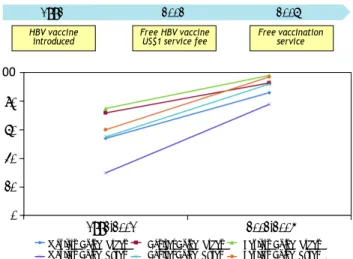
effective if infants are really receiving the vaccine (Figure 2). The experience from mainland China illustrates how public health policy influences the effectiveness of the vaccination program. When HBV immunization was introduced in 1992, the families
had to pay for the vaccine. The vaccine coverage at that time was only 30%, and particularly worse in
poor and rural areas.19 In 2002, the government
de-cided to support free HBV vaccine, but the families still need to pay around US$1 as service charge. It was not until June 2005, when the government wai-ved all vaccination-associated charges, the vaccina-tion coverage in children increased dramatically to 90%. As a result, the population prevalence of HBsAg has declined from 9.8% in 1992 to 7.2% in 2006. In children below the age of 5, the prevalence
has decreased from 9.7% in 1992 to 1.0% in 2006.20
Another challenge is the accessibility of vaccine in rural area. For example, the vaccine coverage in the poorer Western part of China is always lower than the Eastern part, even when the vaccination is
com-pletely free of charge.19 Another example is Vietnam,
where only 70% of the provinces have implemented vaccination into the expanded immunization
pro-gram in 2004.21
Antiviral therapy
High serum alanine aminotransferase and HBV DNA levels, persistently positive hepatitis B e anti-gen (HBeAg) and liver cirrhosis are associated with
disease progression and HCC development.22-24
Anti-viral therapy effectively controls these risk factors and is expected to improve clinical outcomes. The best evidence on the efficacy of oral antiviral drug
came from an Asian multicenter trial.25 Six hundred
and fifty-one patients with histology-proven advan-ced fibrosis or early cirrhosis were randomized to receive lamivudine (n = 436) or placebo (n = 215). At a median follow-up of 32 months, disease progre-ssion, defined by hepatic decompensation, HCC, spontaneous bacterial peritonitis, bleeding varices, or liver-related death, occurred in 7.8% in the lami-vudine group and 17.7% in the placebo group (p = 0.001). HCC occurred in 3.9% in the lamivudine group and 7.4% in the placebo group (p = 0.047). Unfortunately, the study was originally planned for 5 years but was prematurely terminated at around 3 years because of significant difference in the primary end point. This resulted in inadequate power to as-sess individual outcomes. For example, although the difference in HCC reached borderline statistical sig-nificance, the result was no longer significant if ca-ses of HCC occurring during the first year of study were excluded. Controversies also exist among pa-tients who have advanced liver cirrhosis. In two randomized, controlled trials (entecavir vs. adefovir and telbivudine vs. lamivudine, respectively), more
Figure 2. Coverage rate of HBV vaccine in infants in mainland China.
100
80
60
40
20
0
HBV vaccine Free HBV vaccine Free vaccination introduced US$1 service fee service
1992-2001 2002-2005 Western China (Urban) Central China (Urban) Eastern China (Urban) Western China (Rural) Central China (Rural) Eastern China (Rural)
a aa a
a aa a
a
aa a a a a
potent viral suppression among patients suffering from advanced liver cirrhosis (Child’s grade B or C) was not translated to a reduction of HCC or
impro-vement in survival.26,27
A meta-analysis of 12 studies (n = 2,742) showed that interferon reduced the risk of HCC by 34%
compared to no treatment or placebo.28 Similarly,
analysis of 5 studies (n = 2289) showed that lamivu-dine reduced the risk of HCC by 78%. Another meta-analysis of 11 studies showed that interferon was effective in reducing the risk of other cirrhotic
com-plications as well.29 Overall, patients with
histologi-cal and biochemihistologi-cal improvements with antiviral therapy are less likely to develop cirrhotic
complica-tions and HCC.30
The costs and reimbursement policy of antiviral drugs strongly shape prescription behavior. At pre-sent, many low and middle income countries (e.g. Indonesia, Philippines, Vietnam) have low reimbur-sement coverage. The cheapest drug lamivudine is often prescribed. This results in a large population of patients with antiviral drug resistance. In China, most patients are on lamivudine or adefovir due to the low drug cost. A large-scaled surveillance of drug resistance has shown that 43% of patients on lamivudine and 8% of patients on adefovir have
ge-notypic resistance to these drugs.31 Furthermore, a
significant number of patients are put on sequential antiviral therapy and multi-drug resistant HBV mu-tants have emerged. Hong Kong, Taiwan and Korea adopt partial reimbursement policy. Patients may have free antiviral drugs if they fulfill certain crite-ria. Owing to the financial situation of the health authority, these criteria are usually more stringent than the regional treatment guidelines. In a report from Hong Kong in 2008, 40% of patients who were indicated for treatment did not receive anti-viral the-rapy for financial reason, and 83% of the treated
pa-tients were purchasing their own medication.32 In
Taiwan, reimbursement is provided for a limited pe-riod of 1 year before 2009 and 3 years at present by the National Health Insurance Policy. After that, the patients have to pay for further treatment or stop treatment prematurely. This has led to high rate of disease relapse and clinical deterioration due
to premature cessation of antiviral treatment.33
Therefore, cost-effectiveness analysis on the use of antiviral therapy is very important in the imple-mentation of reimbursement policy. Entecavir and tenofovir are generally recommended as the first-line treatment in America and Europe due to their high antiviral potency and low risk of drug resistan-ce,34,35 and the benefit of tenofovir is also confirmed
by cost-effectiveness analysis in Europe.36 However,
the cost of drugs differs greatly in different geogra-phical regions. For example, entecavir and tenofovir are much more expensive than lamivudine and telbi-vudine in most middle and low income countries. A cost-effectiveness analysis across the Asia-Pacific re-gion has demonstrated that the use of telbivudine as the first line agent and tenofovir for suboptimal on-treatment responders and drug resistance might be the most cost-effective approach in terms of 2-year
HBV DNA suppression.37
HEPATITIS C VIRUS AND HCC
Chronic infection with HCV affects more than
170 million people worldwide.38 In Western world,
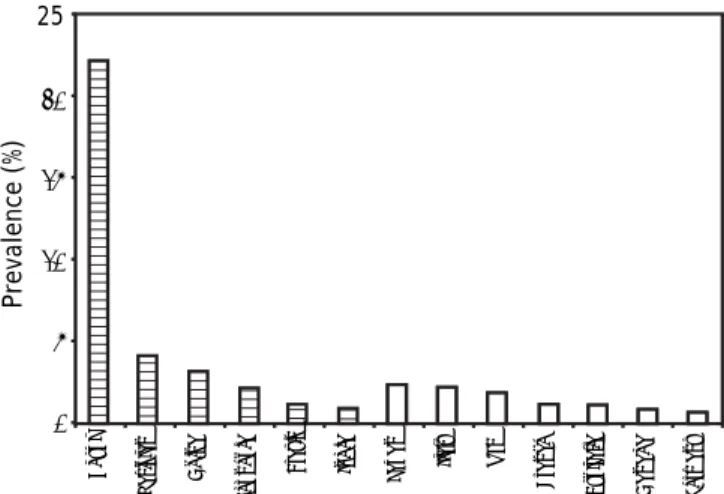
HCV is the leading cause of cirrhosis and HCC. Al-though the picture is overwhelmed by HBV in most developing countries, HCV infection is not
uncom-mon in some areas (Figure 3).39
At present, HCV vaccine is still under develop-ment. Among patients with chronic hepatitis C, the standard treatment is peginterferon-alpha and riba-virin. After a course of treatment, sustained virolo-gical response (SVR), i.e. undetectable HCV RNA 6 months post-treatment, is achieved in 50 to 60% of
cases.40 In a meta-analysis of 20 studies including 9
randomized controlled trials and 4,700 patients, an-tiviral therapy with interferon and/or ribavirin sig-nificantly reduces the risk of HCC development (risk
ratio 0.43; 95% confidence interval 0.33, 0.56).41 The
reduction in HCC, liver decompensation and cirrho-tic complications is primarily observed in patients
achieving SVR.42
HCV genotype is one of the most important fac-tors affecting the treatment response. In patients
Egypt
Pakistan China
Indonesia
Brazil India Japan Italy USA
France Australia Canada
Germany
25
20
15
10
5
0
Prevalence (%)
with genotypes 2 and 3 HCV infection, SVR can be achieved in 80 to 90% of treated patients. On the other hand, genotype 1 HCV infection is difficult to treat, with only 40 to 50% of patients responding to treatment. In Asia, the predominant genotype is
ge-notype 1.43 Genotype 2 HCV is also commonly found
in Taiwan and Japan, while genotype 6 HCV is com-mon in Hong Kong and Vietnam. Egypt is unique in having a very high population prevalence of HCV infection and that genotype 4 is the predominant genotype. Although current treatment guidelines recommend similar treatment for genotypes 1, 4, 5 and 6, small studies from Asia suggest that the treatment response for genotype 6 HCV is better
than that for genotype 1, with SVR in 70 to 80%.44,45
The response rate for genotype 4 is 50 to 60%.46
For years, it has been known that Africans with chronic hepatitis C respond less well to treatment than Caucasians, while studies from Asia
consisten-tly report the best results.47,48 There are a number
of hypotheses to explain the observation. For exam-ples, Asians were believed to have better drug adhe-rence, smaller body size and less insulin resistance. Recent genomic studies, however, revealed that ge-netic factor is actually the main reason underlying the difference. Three independent genome wide asso-ciation studies showed that gene polymorphism near
the IL2B gene, which encodes interferon-λ-3, is a
strong predictor of treatment response in patients
with chronic hepatitis C.49-51 Interestingly, the
favo-rable allele associated with high rate of SVR is found in over 90% of the Chinese population but less
than half in Africans.52,53
One main challenge to the current standard of care using peginterferon and ribavirin includes su-boptimal response rate among genotype 1 HCV in-fected patients. The situation is expected to be revolutionized by the introduction of direct acting antivirals. Phase 3 studies confirmed that the addi-tion of HCV protease inhibitors boceprevir or tela-previr significantly increases the rate of SVR and reduces virological relapse in both treatment-naïve and previously treated patients with genotype 1
HCV infection.54-57 Furthermore, interferon-free
re-gimens using combination of different directly
ac-ting antivirals are under active development.58 This
will open new treatment opportunities for patients not tolerating or with contraindications to
interfe-ron.59 However, these direct acting antiviral agents
will be very expensive and impose heavy financial burden to low and middle economic countries. More studies are required before recommendation can be made on the use of direct antiviral agents in these
regions, particularly among patients who has favo-rable IL28B genotype and early virological response to the standard peginterferon and ribavirin combi-nation therapy. In a recent cost-effectiveness analy-sis in America, telaprevir inclusive regime is not cost-effective as initial therapy as compared to stan-dard of care among patients with genotype 1 HCV
infection and the CC IL28B genotype.60
Three large randomized controlled trials (HALT-C, COPILOT and EPIC3) addressed the question of whether low dose maintenance peginterferon treat-ment may reduce the risk of HCC in chronic hepatitis C patients with advanced liver fibrosis or cirrhosis
who did not achieve SVR with standard therapy.61-63
None of the trials showed any difference in the inci-dence of HCC in treated and untreated patients up to 4 years of follow-up. On long-term follow-up up to a median of 6.1 years in the HALT-C trial, patients with baseline liver cirrhosis treated with peginterfe-ron had a delayed reduced incidence of HCC by approximately 50% as compared to the untreated
controls.64 In view of the side effects and costs of
ex-tended peginterferon treatment, more data on the efficacy and cost-effectiveness on will be needed before long-term maintenance peginterferon treat-ment can be recommended for non-responders and relapsers.
AFLATOXIN
Aflatoxin is another risk factor of HCC in humid countries favoring the growth of Aspergillus flavus and Aspergillus parasiticus. In those areas, elevated urinary aflatoxin B1 metabolites doubles the risk of
HCC.65 Aflatoxin induces the transversion G→T in
co-don 249 of the p53 tumor suppressor gene in human
hepatocytes.66 In human HCC tissues, the presence of
aflatoxin DNA adducts correlate with p53 mutations
and p16 methylation.67 It is possible to reduce
afla-toxin in food products by dry storage conditions.68
HCC SURVEILLANCE
The measures described in previous sections aim at preventing new HBV and HCV infection (primary prevention) and preventing HCC development in at risk individuals (secondary prevention). The aim of HCC surveillance programs is to identify early can-cers so that the patients may still undergo curative treatment and achieve complete remission.
The largest randomized controlled trial testing the efficacy of HCC screening was conducted in
rando-289
Prevention of hepatocellular carcinoma
.
, 2012; 11 (3): 284-293
Yuen, et al. 820 chronic hepatitis B 77 months 16 * sex (male =1, female = 0) + age + AUROC: 0.88 at 5 years, 2009.83 patients at a hospital clinic. 3 * HBV DNA (log copies/mL) + 0.89 at 10 years. At a cutoff
19 * core promoter mutations of 101 points, the sensitivity (mutant = 1, wild type = 0) + 30 * cirrhosis and specificity for HCC was (presence = 1; absence = 0). 84 and 76% at 5 years, and 88
and 79% at 10 years, respectively.
Wong, et al. 1,005 chronic hepatitis B 10 years Age (> 50 years = 3 points; ≤ 50 years = 0) + AUROC 0.76 at 5 years 2010.84 patients in an HCC albumin (≤ 35 g/L = 20 points; > 35 g/L = 0) + and 0.78 at 10 years.
surveillance project bilirubin (> 18 µmol/L = 1.5 points; At a cutoff of 5 points, the (training cohort); 424 patients ≤ 18 µmol/L = 0) + HBV DNA (> 6 log copies/mL sensitivity and specificity in a hospital clinic = 4 points; 4-6 log = 1 point; ≤ 4 log = 0) were 78 and 73% at 5 years, (validation cohort). + cirrhosis (yes = 15 points; no = 0) and 81 and 76% at 10 years,
respectively.
Yang, et al. Chronic hepatitis B patients 11.4 years Sex (male = 2 points; female = 0) + age (1 point AUROC 83% at 5 years 2010.85 from 7 Taiwan townships for every 5 years) + family history of HCC and 82% at 10 years.
randomly assigned to the (yes = 2 points; no = 0) + alcohol consumption derivation cohort (n = 2,435) (yes = 1 point; no = 0) +ALT (< 15 U/L = 0; and validation cohort 15-44 = 1 point; ≥ 45 = 3 points) + HBeAg (n = 1,218). (positive = 3 points; negative = 0).
(Alternative models incorporating HBV DNA and genotypes available).
Yang, et al. 3,584 non-cirrhotic patients 12.0 years A 17-point score comprising of 5 variables: AUROC 78% at 5 years 2011.86 from Taiwan (development (development sex, age, ALT, HBeAg and HBV DNA. and 81% at 10 years.
cohort) and 1,505 patients in 2 cohort); 6.3, 9.4 Hong Kong and 1 South and 7.0 years Korea centers (3 validation (validation cohort). cohorts).
mized patients with chronic hepatitis to HCC scree-ning (n = 9,373) or no screescree-ning (n = 9,443). Pa-tients in the screening group had alpha fetoprotein testing and ultrasound examination every 6 months. More resectable HCC were identified in the scree-ning group. Besides, among patients with HCC, 5-year survival rate was 46% in the screening group and 0% in the control group.
In real life clinical practice, the majority of HCC patients cannot undergo curative treatment because of advanced tumor staging and poor liver
function.70 However, HCC identified by regular
surveillance are typically smaller and fewer in
number.71-73 As a result, more patients can
under-go surgery or local ablative therapy, and achieve better survival.
Ultrasound examination and alpha fetoprotein
testing are labor-intensive and costly.74 Most
deve-loping countries cannot afford indiscriminate sur-veillance of all patients with chronic liver diseases. Studies have showed that HCC surveillance would be more cost-effective if the screening tests are sen-sitive in detecting small HCCs, the incidence of HCC is high, and curative treatments are
availa-ble.75 Therefore, the surveillance program should
focus on patients at high risk of HCC development and be supported by effective referral and provision of treatment. For example, all patients who have liver cirrhosis, which is the most important risk factor for HCC, should undergo regular HCC sur-veillance unless the candidate has decompensated disease and is not suitable for liver
transplanta-tion.76 As liver biopsy may not be feasible or
accep-table to all patients for the diagnosis of early liver cirrhosis, non-invasive measure of liver fibrosis such as transient elastography may be useful in
this setting.77-79
In chronic hepatitis B, a number of clinical, bio-chemical and virological factors have been shown to be associated with HCC risk in addition to liver cirr-hosis. Long-term epidemiological studies have esta-blished the role of positive HBeAg, high HBV DNA
and viral genotypes in HCC development.24,80 In a
study of 3,653 chronic hepatitis B patients in Taiwan (REVEAL study), the incidence of HCC was 108 per 100,000 person-years for an HBV DNA level of < 300 copies/mL and 1,152 per 100,000 person-years for an HBV DNA level of 1 million copies/mL
or above at a mean follow-up of 11.4 years.23
Geno-type C HBV, particularly subgenoGeno-type Ce (prevalent in East Asia such as Korea, Japan and Northern part of China), is associated with a higher risk of
HCC than genotype B HBV.24,81,82 Incorporating
di-fferent risk factors, investigators have derived and validated various combined prediction scores for
HCC development83-86 (Table 1). There is increasing
evidence that the level of HBsAg can reflect the host
immune control of the HBV.87 In an a post-hoc
analysis of the REVEAL study, the level of serum HBsAg can further stratify the risk of HCC among
patients who have HBV DNA < 10,000 copies/mL.88
CONCLUSIONS
The development of HBV vaccine and antiviral therapy against HBV and HBV has revolutioni-zed the management of chronic viral hepatitis and resulted in dramatic improvements in clini-cal outcomes. Together with general preventive measures, the number of patients affected by vi-ral hepatitis and cirrhotic complications is expec-ted to decline. HCC surveillance further allows detection of early cancers and provision of cura-tive therapy. In the near future, the key is to en-sure availability and affordability of these measures to people in low and middle income countries (Figure 4).
Figure 4. Model for the control of HCC at the population level.
Safe sex
Prevent needle sharing
Antiviral therapy for HBV and
HCV
Safe food storage to prevent aflatoxin
Early curative treatment of
HCC HBV
vaccination
Treatment of acute hepatitis C
Antiviral therapy for HBV and HCV
Avoid excessive alcohol
Regular HCC surveillance by ultrasound and/
or alpha fetoprotein
Perinatal hepatitis B immunoglobulin
Primary prevention (Prevention of viral
hepatitis)
Secondary prevention (Prevention of HCC in susceptible patients)
COMPETING INTERESTS
Vincent Wong has served as an advisory commit-tee member for Roche, Novartis, Gilead and Otsuka. He has also served as a speaker for Bristol-Meyers-Squibb, Roche, Novartis, Abbott Diagnostics and Echosens. Henry Chan is a consultant for Abbott, Bristol Myer Squibb, Gilead, Merck, Novartis and Roche, and has received honorarium for lecture for Abbott, Bristol Myer Squibb, Echosens, Gilead, Glaxo-Smith-Kline, Merck, Novartis and Roche.
ABBREVIATIONS
• HBeAg: hepatitis B e antigen.:
• HbsAg: hepatitis B surface antigen.s g
• HBV: hepatitis B virus.
• HCC: hepatocellular carcinoma. • HCV: hepatitis C virus.
• SVR: sustained virological response.VR
REFERENCES
1. Jemal A, Bray F, Center MM, Ferlay J, Ward E, Forman D. Global cancer statistics. CA Cancer J Clin 2011; 61: 69-90.
2. El-Serag HB, Rudolph KL. Hepatocellular carcinoma: epide-miology and molecular carcinogenesis. Gastroenterology 2007; 132: 2557-76.
3. El-Serag HB, Davila JA, Petersen NJ, McGlynn KA. The con-tinuing increase in the incidence of hepatocellular
carci-noma in the United States: an update. Ann Intern Med
2003; 139: 817-23.
4. McGlynn KA, Tsao L, Hsing AW, Devesa SS, Fraumeni JF Jr. International trends and patterns of primary liver cancer. Int J Cancer 2001; 94: 290-6.
5. Yuen MF, Hou JL, Chutaputti A. Hepatocellular carcinoma in the Asia pacific region. J Gastroenterol Hepatol 2009; 24: 346-53.
6. Lavanchy D. Hepatitis B virus epidemiology, disease bur-den, treatment, and current and emerging prevention and control measures. J Viral Hepat 2004; 11: 97-107. 7. Perz JF, Armstrong GL, Farrington LA, Hutin YJ, Bell BP.
The contributions of hepatitis B virus and hepatitis C vi-rus infections to cirrhosis and primary liver cancer world-wide. J Hepatol 2006; 45: 529-38.
8. Neuveut C, Wei Y, Buendia MA. Mechanisms of HBV-related hepatocarcinogenesis. J Hepatol 2010; 52: 594-604. 9. Chan HL, Sung JJ. Hepatocellular carcinoma and hepatitis
B virus. Semin Liver Dis 2006; 26: 153-61.
10. Szmuness W, Stevens CE, Harley EJ, Zang EA, Oleszko WR, William DC, Sadovsky R, et al. Hepatitis B vaccine: de-monstration of efficacy in a controlled clinical trial in a high-risk population in the United States. N Engl J Med 1980; 303: 833-41.
11. McAleer WJ, Buynak EB, Maigetter RZ, Wampler DE, Miller WJ, Hilleman MR. Human hepatitis B vaccine from recombi-nant yeast. Nature 1984; 307: 178-80.
12. Beasley RP, Hwang LY, Lee GC, Lan CC, Roan CH, Huang FY, Chen CL. Prevention of perinatally transmitted hepati-tis B virus infections with hepatihepati-tis B virus infections with
hepatitis B immune globulin and hepatitis B vaccine. Lan-cet 1983; 2: 1099-102.
13. Coursaget P, Leboulleux D, Soumare M, le Cann P, Yvonnet B, Chiron JP, Coll-Seck AM, et al. Twelve-year follow-up study of hepatitis B immunization of Senegalese infants. J Hepatol 1994; 21: 250-4.
14. Ni YH, Chang MH, Huang LM, Chen HL, Hsu HY, Chiu TY, Tsai KS, et al. Hepatitis B virus infection in children and adoles-cents in a hyperendemic area: 15 years after mass hepatitis B vaccination. Ann Intern Med 2001; 135: 796-800.
15. Lin YC, Chang MH, Ni YH, Hsu HY, Chen DS. Long-term im-munogenicity and efficacy of universal hepatitis B virus vaccination in Taiwan. J Infect Dis 2003; 187: 134-8. 16. Chang MH, Chen CJ, Lai MS, Hsu HM, Wu TC, Kong MS,
Liang DC, et al. Universal hepatitis B vaccination in Taiwan and the incidence of hepatocellular carcinoma in children. Taiwan Childhood Hepatoma Study Group. N Engl J Med 1997; 336: 1855-9.
17. Chang MH, You SL, Chen CJ, Liu CJ, Lee CM, Lin SM, Chu HC, et al. Decreased incidence of hepatocellular carcino-ma in hepatitis B vaccinees: a 20-year follow-up study. J Natl Cancer Inst 2009; 101: 1348-55.
18. Prevention of hepatocellular carcinoma in the Asia-Pacific region: consensus statements. J Gastroenterol Hepatol 2011; 25: 657-63.
19. Liang X, Bi S, Yang W, Wang L, Cui G, Cui F, Zhang Y, et al. Evaluation of the impact of hepatitis B vaccination among children born during 1992-2005 in China. J Infect Dis 2009; 200: 39-47.
20. Liang X, Bi S, Yang W, Wang L, Cui G, Cui F, Zhang Y, et al. Epidemiological serosurvey of hepatitis B in China—de-clining HBV prevalence due to hepatitis B vaccination. Va-ccine 2009; 27: 6550-7.
21. Mohamed R, Desmond P, Suh DJ, Amarapurkar D, Gane E, Guangbi Y, Hou JL, et al. Practical difficulties in the mana-gement of hepatitis B in the Asia-Pacific region. J Gas-troenterol Hepatol 2004; 19: 958-69.
22. Yang HI, Lu SN, Liaw YF, You SL, Sun CA, Wang LY, Hsiao CK, et al. Hepatitis B e antigen and the risk of hepatoce-llular carcinoma. N Engl J Med 2002; 347: 168-74.
23. Chen CJ, Yang HI, Su J, Jen CL, You SL, Lu SN, Huang GT, et al. Risk of hepatocellular carcinoma across a biological gradient of serum hepatitis B virus DNA level. JAMA 2006; 295: 65-73.
24. Chan HL, Tse CH, Mo F, Koh J, Wong VW, Wong GL, Lam Chan S, et al. High viral load and hepatitis B virus subgeno-type ce are associated with increased risk of hepatocellu-lar carcinoma. J Clin Oncol 2008; 26: 177-82.
25. Liaw YF, Sung JJ, Chow WC, Farrell G, Lee CZ, Yuen H, Tanwandee T, et al. Lamivudine for patients with chronic
hepatitis B and advanced liver disease. N Engl J Med
2004; 351: 1521-31.
26. Liaw YF, Raptopoulou-Gigi M, Cheinquer H, Sarin SK, Tanwandee T, Leung N, Peng CY, et al. Efficacy and safety of entecavir versus adefovir in chronic hepatitis B pa-tients with hepatic decompensation: a randomized, open-label study. Hepatology 2011; 54: 91-100.
27. Gane E, Chan HL, Choudhuri G, Suh DJ, Chutaputti A, Safadi R, Tanwandee T, et al. Treatment of decompensa-ted HBV-cirrhosis: results from 2-years randomized trial
with telbivudine or lamivudine. J Hepatol 2010; 52
(Suppl. 1): S4.
29. Wong GL, Yiu KK, Wong VW, Tsoi KK, Chan HL. Meta-analysis: reduction in hepatic events following interferon-alfa therapy of chronic hepatitis B. Aliment Pharmacol Ther 2010; 32: 1059-68.
30. Wong VW, Wong GL, Chim AM, Choi PC, Chan AW, Tsang SW, Hui AY, et al. Surrogate end points and long-term out-come in patients with chronic hepatitis B. Clin Gastroen-terol Hepatol 2009; 7: 1113-20.
31. Liu Y, Wang C, Zhong Y, Li X, Dai J, Ren X, Xu Z, et al. Ge-notypic resistance profile of hepatitis B virus (HBV) in a large cohort of nucleos(t)ide analogue-experienced Chine-se patients with chronic HBV infection. J Viral Hepat 2011; 18: e29-e39.
32. Chan HL. Antiviral therapy for chronic hepatitis B: cha-llenges in Hong Kong. J Hepatol 2009; 51: 1088-90. 33. Huang YH, Wu JC, Chang TT, Sheen IJ, Lee PC, Huo TI, Su
CW, et al. Analysis of clinical, biochemical and viral fac-tors associated with early relapse after lamivudine treat-ment for hepatitis B e antigen-negative chronic hepatitis B patients in Taiwan. J Viral Hepat 2003; 10: 277-84. 34. Lok AS, McMahon BJ. Chronic hepatitis B: update 2009.
Hepatology 2009; 50: 661-2.
35. European Association For The Study Of The Liver. EASL Cli-nical Practice Guidelines: management of chronic hepati-tis B. J Hepatol 2009; 50: 227-42.
36. Buti M, Brosa M, Casado MA, Rueda M, Esteban R. Modeling the cost-effectiveness of different oral antiviral therapies in patients with chronic hepatitis B. J Hepatol 2009; 51: 640-6.
37. Lui YY, Tsoi KK, Wong VW, Kao JH, Hou JL, Teo EK, Moha-med R, et al. Cost-effectiveness analysis of roadmap mo-dels in chronic hepatitis B using tenofovir as the rescue therapy. Antivir Ther 2010; 15: 145-55.
38. Global surveillance and control of hepatitis C. Report of a WHO Consultation organized in collaboration with the Vi-ral Hepatitis Prevention Board, Antwerp, Belgium. J Viral Hepat 1999; 6: 35-47.
39. Shepard CW, Finelli L, Alter MJ. Global epidemiology of he-patitis C virus infection. Lancet Infect Dis 2005: 5: 558-67. 40. Rosen HR. Clinical practice. Chronic hepatitis C infection.
N Engl J Med 2011; 364: 2429-38.
41. Singal AK, Singh A, Jaganmohan S, Guturu P, Mummadi R, Kuo YF, Sood GK. Antiviral therapy reduces risk of hepato-cellular carcinoma in patients with hepatitis C virus-rela-ted cirrhosis. Clin Gastroenterol Hepatol 2010; 8: 192-9. 42. Singal AG, Volk ML, Jensen D, Di Bisceglie AM, Schoenfeld
PS. A sustained viral response is associated with reduced liver-related morbidity and mortality in patients with he-patitis C virus. Clin Gastroenterol Hepatol 2010; 8: 280-8, 288-e1.
43. McOmish F, Yap PL, Dow BC, Follett EA, Seed C, Keller AJ, Cobain TJ, et al. Geographical distribution of hepatitis C virus genotypes in blood donors: an international collabo-rative survey. J Clin Microbiol 1994; 32: 884-92.
44. Fung J, Lai CL, Hung I, Young J, Cheng C, Wong D, Yuen MF. Chronic hepatitis C virus genotype 6 infection: res-ponse to pegylated interferon and ribavirin. J Infect Dis 2008; 198: 808-12.
45. Lam KD, Trinh HN, Do ST, Nguyen TT, Garcia RT, Nguyen T, Phan QQ, et al. Randomized controlled trial of pegyla-ted interferon-alfa 2a and ribavirin in treatment-naive chronic hepatitis C genotype 6. Hepatology 2010: 52: 1573-80.
46. Kamal SM, El Kamary SS, Shardell MD, Hashem M, Ahmed IN, Muhammadi M, Sayed K, et al. Pegylated interferon alpha-2b plus ribavirin in patients with genotype 4 chronic
hepa-titis C: The role of rapid and early virologic response. He-patology 2007; 46: 1732-40.
47. Reddy KR, Hoofnagle JH, Tong MJ, Lee WM, Pockros P, Heathcote EJ, Albert D, et al. Racial differences in respon-ses to therapy with interferon in chronic hepatitis C. Consensus Interferon Study Group. Hepatology 1999; 30: 787-93.
48. Chan HL, Ren H, Chow WC, Wee T. Randomized trial of in-terferon beta-1a with or without ribavirin in Asian pa-tients with chronic hepatitis C. Hepatology 2007; 46: 315-23.
49. Ge D, Fellay J, Thompson AJ, Simon JS, Shianna KV, Urban TJ, Heinzen EL, et al. Genetic variation in IL28B predicts hepatitis C treatment-induced viral clearance. Nature 2009; 461: 399-401.
50. Suppiah V, Moldovan M, Ahlenstiel G, Berg T, Weltman M, Abate ML, Bassendine M, et al. IL28B is associated with response to chronic hepatitis C interferon-alpha and riba-virin therapy. Nat Genet 2009; 41: 1100-4.
51. Tanaka Y, Nishida N, Sugiyama M, Kurosaki M, Matsuura K, Sakamoto N, Nakagawa M, et al. Genome-wide association of IL28B with response to pegylated interferon-alpha and ribavirin therapy for chronic hepatitis C. Nat Genet 2009; 41: 1105-9.
52. Thomas DL, Thio CL, Martin MP, Qi Y, Ge D, O’Huigin C, Kidd J, et al. Genetic variation in IL28B and sponta-neous clearance of hepatitis C virus. Nature 2009; 461: 798-801.
53. Yu ML, Huang CF, Huang JF, Chang NC, Yang JF, Lin ZY, Chen SC, et al. Role of interleukin-28B polymorphisms in the treatment of hepatitis C virus genotype 2 infection in Asian patients. Hepatology 2011; 53: 7-13.
54. Poordad F, McCone J Jr., Bacon BR, Bruno S, Manns MP, Sulkowski MS, Jacobson IM, et al. Boceprevir for untrea-ted chronic HCV genotype 1 infection. N Engl J Med 2011; 364: 1195-206.
55. Bacon BR, Gordon SC, Lawitz E, Marcellin P, Vierling JM, Zeuzem S, Poordad F, et al. Boceprevir for previously treated chronic HCV genotype 1 infection. N Engl J Med 2011; 364: 1207-17.
56. Jacobson IM, McHutchison JG, Dusheiko G, Di Bisceglie AM, Reddy KR, Bzowej NH, Marcellin P, et al. Telaprevir for previously untreated chronic hepatitis C virus infection. N Engl J Med 2011; 364: 2405-16.
57. Zeuzem S, Andreone P, Pol S, Lawitz E, Diago M, Roberts S, Focaccia R, et al. Telaprevir for retreatment of HCV in-fection. N Engl J Med 2011; 364: 2417-28.
58. Gane EJ, Roberts SK, Stedman CA, Angus PW, Ritchie B, Elston R, Ipe D, et al. Oral combination therapy with a nu-cleoside polymerase inhibitor (RG7128) and danoprevir for chronic hepatitis C genotype 1 infection (INFORM-1): a randomised, double-blind, placebo-controlled, dose-escala-tion trial. Lancet 2010; 376: 1467-75.
59. Yan KK, Wong GL, Wong VW, Chan HL. Rate and factors affecting treatment uptake of patients with chronic he-patitis C in a tertiary referral hospital. Dig Dis Sci 2010; 55: 3541-7.
60. Gellad ZF, Naggie S, Reed SD, Clark PJ, Thompson AJ, Schul-man KA, Muir AJ. The cost-effectiveness of a telaprevir-in-clusive regimen as initial therapy for genotype 1 hepatitis C infection in individuals with the CC IL-28B polymor-phism. Hepatology 2011; 54 (Suppl. 1): 417A-418A. 61. Di Bisceglie AM, Shiffman ML, Everson GT, Lindsay KL,
62. Bruix J, Poynard T, Colombo M, Schiff E, Burak K, Hea-thcote EJ, Berg T, et al. Maintenance therapy with pegin-terferon alfa-2b does not prevent hepatocellular carcinoma in cirrhotic patients with chronic hepatitis C. Gastroenterology 2011; 140: 1990-9.
63. Afdhal NH, Levine R, Brown RS Jr., Freilich B, O’Brien M, Brass CA. Colchicine versus peg-interferon alfa 2b long term therapy: Results of the 4 year Copilot trial. J Hepatol 2008; 48 (Suppl. 2): S4.
64. Lok AS, Everhart JE, Wright EC, Di Bisceglie AM, Kim HY, Sterling RK, Everson GT, et al. Maintenance peginterferon therapy and other factors associated with hepatocellular carcinoma in patients with advanced hepatitis C. Gas-troenterology 2011; 140: 840-9; quiz e12.
65. Ross RK, Yuan JM, Yu MC, Wogan GN, Qian GS, Tu JT, Groopman JD, et al. Urinary aflatoxin biomarkers and risk of hepatocellular carcinoma. Lancet 1992; 339: 943-6. 66. Aguilar F, Hussain SP, Cerutti P. Aflatoxin B1 induces the
transversion of G→T in codon 249 of the p53 tumor su-ppressor gene in human hepatocytes. Proc Natl Acad Sci USA 1993; 90: 8586-90.
67. Zhang YJ, Rossner P Jr., Chen Y, Agrawal M, Wang Q, Wang L, Ahsan H, et al. Aflatoxin B1 and polycyclic aroma-tic hydrocarbon adducts, p53 mutations and p16 methyla-tion in liver tissue and plasma of hepatocellular carcinoma patients. Int J Cancer 2006; 119: 985-91.
68. Omer RE, Kuijsten A, Kadaru AM, Kok FJ, Idris MO, El Khidir IM, van ‘t Veer P. Population-attributable risk of dietary aflatoxins and hepatitis B virus infection with respect to hepatocellular carcinoma. Nutr Cancer 2004; 48: 15-21. 69. Zhang BH, Yang BH, Tang ZY. Randomized controlled trial
of screening for hepatocellular carcinoma. J Cancer Res Clin Oncol 2004; 130: 417-22.
70. Limquiaco JL, Wong GL, Wong VW, Lai PB, Chan HL. Eva-luation of model for end stage liver disease (MELD)-based systems as prognostic index for hepatocellular carcinoma. J Gastroenterol Hepatol 2009; 24: 63-9.
71. Tanaka H, Nouso K, Kobashi H, Kobayashi Y, Nakamura S, Miyake Y, Ohnishi H, et al. Surveillance of hepatocellular carcinoma in patients with hepatitis C virus infection may improve patient survival. Liver Int 2006; 26: 543-51. 72. Wong GL, Wong VW, Tan GM, Ip KI, Lai WK, Li YW, Mak
MS, et al. Surveillance programme for hepatocellular carci-noma improves the survival of patients with chronic viral hepatitis. Liver Int 2008; 28: 79-87.
73. Tong MJ, Sun HE, Hsien C, Lu DS. Surveillance for hepato-cellular carcinoma improves survival in Asian-American pa-tients with hepatitis B: results from a community-based clinic. Dig Dis Sci 2010; 55: 826-35.
74. Bolondi L, Sofia S, Siringo S, Gaiani S, Casali A, Zironi G, Piscaglia F, et al. Surveillance programme of cirrhotic pa-tients for early diagnosis and treatment of hepatocellular carcinoma: a cost effectiveness analysis. Gut 2001; 48: 251-9.
75. Nouso K, Tanaka H, Uematsu S, Shiraga K, Okamoto R, Onishi H, Nakamura S, et al. Cost-effectiveness of the
sur-veillance program of hepatocellular carcinoma depends on
the medical circumstances. J Gastroenterol Hepatol
2008; 23: 437-44.
76. Amarapurkar D, Han KH, Chan HL, Ueno Y. Application of surveillance programs for hepatocellular carcinoma in the Asia-Pacific Region. J Gastroenterol Hepatol 2009; 24: 955-61.
77. Wong VW, Chan HL. Transient elastography. J Gastroen-terol Hepatol 2010; 25: 1726-31.
78. Chan HL, Wong GL, Choi PC, Chan AW, Chim AM, Yiu KK, Chan FK, et al. Alanine aminotransferase-based algorithms of liver stiffness measurement by transient elastography (Fibroscan) for liver fibrosis in chronic hepatitis B. J Viral Hepat 2009; 16: 36-44.
79. Wong VW, Vergniol J, Wong GL, Foucher J, Chan HL, Le Bail B, Choi PC, et al. Diagnosis of fibrosis and cirrhosis using liver stiffness measurement in nonalcoholic fatty li-ver disease. Hepatology 2010; 51: 454-62.
80. Chan HL, Hui AY, Wong ML, Tse AM, Hung LC, Wong VW, Sung JJ. Genotype C hepatitis B virus infection is associa-ted with an increased risk of hepatocellular carcinoma. Gut 2004; 53: 1494-8.
81. Chan HL. JGH Foundation emerging leadership lecture. Sig-nificance of hepatitis B virus genotypes and mutations in the development of hepatocellular carcinoma in Asia. J Gastroenterol Hepatol 2011; 26: 8-12.
82. Chan HL, Tsui SK, Tse CH, Ng EY, Au TC, Yuen L, Bartholo-meusz A, et al. Epidemiological and virological characte-ristics of 2 subgroups of hepatitis B virus genotype C. J Infect Dis 2005; 191: 2022-32.
83. Yuen MF, Tanaka Y, Fong DY, Fung J, Wong DK, Yuen JC, But DY, et al. Independent risk factors and predictive score for the development of hepatocellular carcinoma in chronic hepatitis B. J Hepatol 2009; 50: 80-8.
84. Wong VW, Chan SL, Mo F, Chan TC, Loong HH, Wong GL, Lui YY, et al. Clinical scoring system to predict hepatoce-llular carcinoma in chronic hepatitis B carriers. J Clin On-col 2010; 28: 1660-5.
85. Yang HI, Sherman M, Su J, Chen PJ, Liaw YF, Iloeje UH, Chen CJ. Nomograms for risk of hepatocellular carcinoma in patients with chronic hepatitis B virus infection. J Clin Oncol 2010; 28: 2437-44.
86. Yang HI, Yuen MF, Chan HL, Han KH, Chen PJ, Kim DY, Ahn SH, et al. Risk estimation for hepatocellular carci-noma in chronic hepatitis B (REACH-B): development and validation of a predictive score. Lancet Oncol 2011; 12: 568-74.
87. Chan HL, Thompson A, Martinot-Peignoux M, Piratvisuth T, Cornberg M, Brunetto MR, Tillmann HL, et al. Hepatitis B surface antigen quantification: Why and how to use it in 2011-A core group report. J Hepatol 2011; 55: 1121-31. 88. Chen CJ, Lee MH, Liu J, Batrla-Utermann R, Jen CL, Iloeje