Predictors and impacts of
hospital readmissions following liver transplantation
Maria Yataco, Alissa Cowell, Waseem David, Andrew P. Keaveny, C. Burcin Taner, Tushar Patel
Department of Transplant, Mayo Clinic, Jacksonville, FL, USA.
A B S T R A C T A B S T R A C T A B S T R A C T A B S T R A C T A B S T R A C T
While liver transplantation is the definitive therapy for end stage liver disease, it remains a major procedure, with many potential com-plications. Hospital readmissions after the initial hospitalization for liver transplantation can be associated with adverse outcomes, in-creased cost, and resource utilization. Our aim was to define the incidence and reasons for hospital readmission after liver transplant and the impact of readmissions on patient outcomes. We retrospectively analyzed 30- and 90-day readmission rates and indications in patients who underwent liver transplant at a large-volume transplant center over a 3-year period. Four hundred seventy-nine adult patients underwent their first liver transplant during the study period. The 30-day readmission rate was 29.6%. Recipient and donor age, etiology of liver disease, biological Model for End-Stage Liver Disease score, and cold ischemia time were similar between pa-tients who were readmitted within 30 days and those who were not readmitted. Readmissions occurred in 25% of papa-tients who were hospitalized prior to liver transplant compared to 30% who were admitted for liver transplant. The most common indications for readmission were infection, severe abdominal pain, and biliary complications. Early discharge from hospital (fewer than 7 days after liver transplant), was not associated with readmission; however, a prolonged hospital stay after liver transplant was associated with an increased risk of readmission (p = 0.04). In conclusion, patients who undergo liver transplant have a high rate of readmission. In our cohort, readmissions were unrelated to pre-existing recipient or donor factors, but were associated with a longer hospital stay af-ter liver transplant.
Key words. Key words.Key words. Key words.
Key words. Readmission. Outcomes. Complications. Liver transplantation.
May-June, Vol. 15 No. 3, 2016: 356-362
INTRODUCTION
Liver transplantation (LT) is a life-saving treatment for patients with end-stage liver disease (ESLD). In the Unit-ed States, over 6,000 LT are performUnit-ed annually, with an overall annual cost estimated at a quarter of a million USD per patient for the first year after LT, costing Medicare over 370 million USD in the first year after transplant.1
Patients with ESLD often require intensive medical and surgical care before and after LT. While the published data is scarce, readmissions to hospital after initial transplant hospitalization is relatively common.2 Recent legislature
in the United States has placed a particular focus on re-admission rates in hospitalized patients: provisions in the
Affordable Care Act have established the “Hospital Readmis-sions Reduction Program”, requiring the Centers for
Medicare and Medicaid Services to reduce payments to hospitals with excess readmissions.
Understanding the reasons for hospital readmission and development of strategies to predict and prevent readmis-sions may help in improving the quality of care delivered and potentially reduce the overall cost of care. One strate-gy is to identify the incidence and risk factors, with the goal of developing clinically applicable algorithms that could help predict which LT recipients are likely to be readmitted. Prior studies have reported predictive factors for readmission in patients with ESLD.3-5 These studies,
in part, contributed to practice modifications that have re-duced readmissions in this subset of patients.6,7 In
con-trast, there is limited published information and a relative lack of knowledge regarding reliable prediction or preven-tion of readmissions post-LT. In the previous studies,
The Official Journal of the Mexican Association of Hepatology, the Latin-American Association for Study of the Liver and
the Canadian Association for the Study of the Liver
Manuscript received: Manuscript received: Manuscript received: Manuscript received:
Manuscript received: May 27, 2015. Manuscript accepted:Manuscript accepted:Manuscript accepted:Manuscript accepted:Manuscript accepted: July 10, 2015.
pre-existing medical or social conditions, such as portal vein thrombosis, hospitalization within 90 days prior to LT, chronic HCV infection, hypoalbuminemia, elevated creatinine, postoperative complications, and education level were found to be risk factors.2,8 However, the
con-tribution and relative impact of practice-based factors, such as the use of marginal donor allografts, intra-opera-tive transfusion requirements, or so-called fast-tracking protocols, remain unknown.9 The aims of this study were
to examine incidence and reasons for hospital readmission in LT recipients and the association between readmis-sions and patient outcomes, and to identify potential pre-dictors of readmissions at a high-volume single center.
MATERIAL AND METHODS
Approval for this study was obtained from the Mayo Clinic Institutional Review Board. Patients who under-went LT at Mayo Clinic in Florida were identified by ret-rospective analysis of the LT database. All patients who underwent primary LT between January 1, 2009 and De-cember 31, 2011 were included in the study. Post-trans-plant care, including immunosuppressive therapy and infectious disease prophylaxis, were managed following a standard protocol. Following discharge after transplant hospitalization, patients were followed at least twice a week as an outpatient for the first 3 weeks and then weekly thereafter, as deemed necessary. All hospital readmissions were documented in the electronic medical record (EMR). We also separately examined re-admission rates in patients who received simultaneous liver and kidney transplantation (SLKT), patients who had been hospital-ized prior to LT, and patients who received donation after cardiac death (DCD) allografts.
Demographic and clinical information were obtained from the transplant database and EMR. Data collected in-cluded recipient age, gender, race, and biological Model for End-Stage Liver Disease (MELD) score at LT. The length of hospital and ICU stay before and after LT were recorded. Information on donor age, gender, race, type of liver allograft (brain-dead, DCD, split, or pediatric allo-graft), cold ischemia time (CIT) and warm ischemia time (WIT) of the liver allograft, and donor risk index (DRI) were obtained.
Information regarding hospital readmissions was ex-tracted from EMR. For the 30-day readmission analyses, we excluded patients who were still in the hospital at day 30 post-LT and those patients who died during LT hospitaliza-tion. For the 90-day readmission analyses, we also excluded patients who were still in the hospital at day 90 post-LT and those patients who died during LT hospitalization.
All LT were performed utilizing the piggyback tech-nique without portacaval shunt, caval clamping, or
veno-venous by-pass. All liver allografts were reperfused with portal flow followed by arterial flow. Duct-to-duct biliary reconstruction with placement of a transcystic biliary tube was used except in recipients with primary sclerosing cholangitis or when another approach was deemed neces-sary by the surgeon. Post-transplant management was per-formed by a dedicated group of experienced physicians, advanced practitioner, and nurses using protocol-driven care for immediate postoperative management, ICU ad-mission, immunosuppression, medication teaching, and discharge coordination.
Statistical analysis
Continuous variables were summarized using means and standard deviations, or medians and ranges. Categori-cal variables were summarized using frequencies and per-centages. Baseline donor and recipient characteristics were compared between patients who had readmissions and those that did not. For each variable, odds ratios, p val-ues, and 95% confidence intervals were calculated. The
t-test was used to compare continuous variables between those patients who were readmitted and those who were not. A value of p < 0.05 was considered statistically signifi-cant. Cox proportional hazard model was used to calculate hazard risk. Kaplan-Meier curves with a log-rank test were used for survival analysis. JMP Pro 9.0 and SPSS 17.0 soft-ware (SPSS, Inc., Chicago, IL) were used for the analysis.
RESULTS
Study population and readmissions
During the 3-year study period, 496 patients underwent LT at our program. We excluded 17 patients undergoing re-transplantation. From the 479 patients who underwent primary LT, 30 patients were still in the hospital by day 30 post-LT, and four patients died during the initial LT hos-pitalization. Median MELD score in patients who stayed in the hospital for over 30 days post LT was 29 (range: 13-44). When MELD score of patients who stayed > 30 days post LT was compare with patients who were discharge < 30 days post LT (median 18; range: 6-43), there was a sig-nificant difference between these groups (p < 0.0001).
A total of 445 patients were included in our 30-day re-admission analysis and 478 patients were included in our 90-day readmission analysis. The 30-day and 90-day re-admission rates were 29.6 and 42%, respectively. Because the 30-day readmission rate is increasingly being used in literature as a quality metric, we chose this cut-off time for most of our analyses.2
Figure 1. Figure 1. Figure 1. Figure 1.
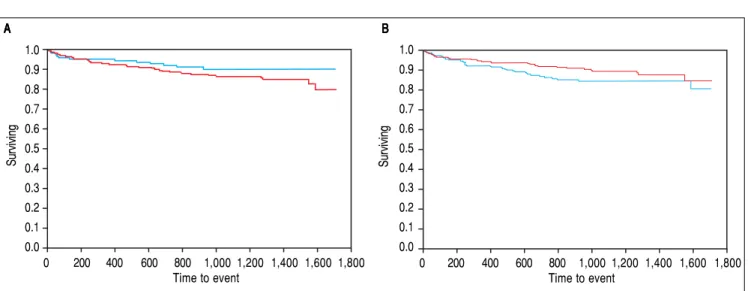
Figure 1. Survival after LT in patients with readmission to hospital. A.A.A.A.A. Patients with re-admissions within 30 days of LT are represented by the blue (upper) line, whereas patients without readmissions are represented by the red (lower) curve. The horizontal axis represents days after LT, whereas the vertical axis represents the surviving fraction. B.B.B.B. Patients with re-admissions within 90 days of LT are represented by the blue (upper) line, whereas patients withoutB. readmissions are represented by the red (lower) curve. The horizontal axis represents days after LT, whereas the vertical axis represents the surviving fraction.
0 200 400 600 800 1,000 1,200 1,400 1,600 1,800 Time to event
A A A A
A BBBBB
Surviving
1.0 0.9 0.8 0.7 0.6 0.5 0.4 0.3 0.2 0.1 0.0
1.0 0.9 0.8 0.7 0.6 0.5 0.4 0.3 0.2 0.1 0.0
0 200 400 600 800 1,000 1,200 1,400 1,600 1,800 Time to event
Surviving
cryptogenic cirrhosis (15%), and non-alcoholic steatohep-atitis (11%). One-hundred and fifteen (26%) patients un-derwent LT with secondary diagnosis of hepatocellular cancer. The median age of recipients was 58 years (range: 20- 74). The median biological MELD score at time of LT was 18 (range: 6-43). The median CIT and WIT were 6.1 hours (range: 3-12.4) and 31 min (range: 12-75), respec-tively.
The median time from dismissal after LT hospitaliza-tion to readmission was 8 days (range 1-24). The most fre-quent indication for readmission to the hospital was infection (fever > 100.5 F°, bacteremia, peritonitis, wound infection non responsive to outpatient treatment or associated with septicemia) followed by severe
abdom-inal pain and biliary complications. Biliary leak and peri-tonitis were diagnosed in several patients who were ad-mitted with abdominal pain. Table 1 shows the indications for readmission in post-LT patients. All recipients except one were readmitted to our institution.
Post-transplant hospital course
The median duration of initial hospital stay after LT in the study group was 7 days (range: 4- 30). Postoperatively, 248 patients (56%) were transferred to the ICU while 197 patients (44%) were fast-tracked to the surgical ward with-out being admitted to the ICU. Readmission to the hospi-tal within 30 days occurred in 27% of the patients who were fast-tracked to the surgical ward compared with 32% of the patients who were admitted to the ICU (p = 0.25).
Recipients who had initial LT hospitalization of 7 days or fewer had a 30-day readmission rate of 24%, while re-cipients who had initial hospitalization of more than 7 days had a 30-day readmission rate of 33% (p = 0.04).
Outcomes of readmission
Three recipients who were readmitted within 30 days post-LT died during the readmission hospitalization; two patients died due to bleeding, and one patient died due to a cardiovascular event.
In order to evaluate the relationship between readmis-sions after LT and subsequent outcomes, we examined pa-tient survival at 1-year. There was no significant difference in 1-year patient survival rate between the recipients who had at least one readmission either within 30 days or with-Table 1. Indication for readmission within 30 days after liver
transplantation.
Indication for hospital admission n = 132
Infection
Fever (> 100.5 F) 37 (28%)
Bacteremia 10 (8%)
Wound infection 6 (5%)
Peritonitis/ intraabdominal infection 9 (7%)
Intraabdominal bleed 4 (3%)
Bile leak 11 (8%)
Altered mental status 10 (8%)
Rejection 4 (3%)
Renal failure 8 (6%)
Cardiovascular complication 5 (4%)
Fluid retention / Anasarca 7 (6%)
Severe abdominal pain 11 (8%)
in 90 days, compared to those who did not require any re-admission (Figure 1).
Predictors of readmission
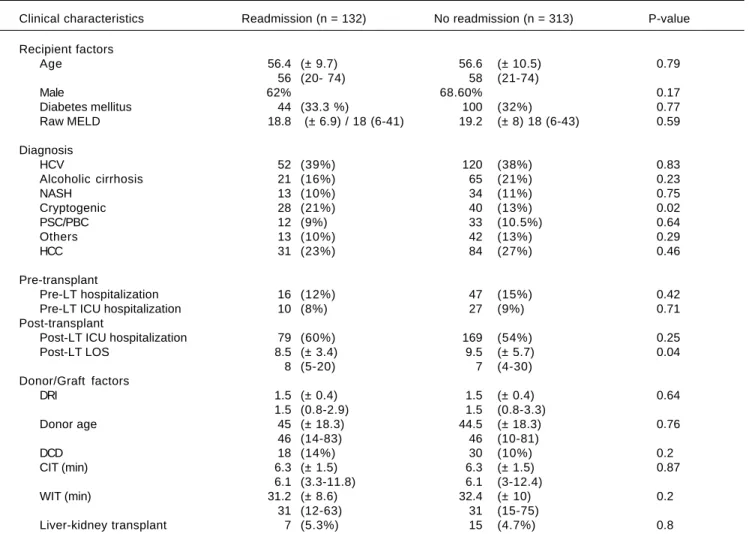
In order to identify potential predictors of 30-day re-admission, we analyzed several donor and recipient factors (Table 2). Patients with cryptogenic cirrhosis appeared to have an increased risk for readmission compared to other etiologies of ESLD; however, this difference did not reach statistical significance (p = 0.09).
Biological MELD score at the time of LT, recipient age, recipient gender, CIT, WIT, DRI and DCD graft status were similar between the recipients who were re-admitted and those who were not rere-admitted (Table 2). Pre-LT hospitalization and pre-LT ICU stay were not
Table 2. Ptransplant recipient characteristics, donor variables, and post-transplant recipient characteristics in patients who re-quired readmission within 30 days and patient who did not rere-quired readmission.
Clinical characteristics Readmission (n = 132) No readmission (n = 313) P-value
Recipient factors
Age 56.4 (± 9.7) 56.6 (± 10.5) 0.79
56 (20- 74) 58 (21-74)
Male 62% 68.60% 0.17
Diabetes mellitus 44 (33.3 %) 100 (32%) 0.77
Raw MELD 18.8 (± 6.9) / 18 (6-41) 19.2 (± 8) 18 (6-43) 0.59
Diagnosis
HCV 52 (39%) 120 (38%) 0.83
Alcoholic cirrhosis 21 (16%) 65 (21%) 0.23
NASH 13 (10%) 34 (11%) 0.75
Cryptogenic 28 (21%) 40 (13%) 0.02
PSC/PBC 12 (9%) 33 (10.5%) 0.64
Others 13 (10%) 42 (13%) 0.29
HCC 31 (23%) 84 (27%) 0.46
Pre-transplant
Pre-LT hospitalization 16 (12%) 47 (15%) 0.42
Pre-LT ICU hospitalization 10 (8%) 27 (9%) 0.71
Post-transplant
Post-LT ICU hospitalization 79 (60%) 169 (54%) 0.25
Post-LT LOS 8.5 (± 3.4) 9.5 (± 5.7) 0.04
8 (5-20) 7 (4-30)
Donor/Graft factors
DRI 1.5 (± 0.4) 1.5 (± 0.4) 0.64
1.5 (0.8-2.9) 1.5 (0.8-3.3)
Donor age 45 (± 18.3) 44.5 (± 18.3) 0.76
46 (14-83) 46 (10-81)
DCD 18 (14%) 30 (10%) 0.2
CIT (min) 6.3 (± 1.5) 6.3 (± 1.5) 0.87
6.1 (3.3-11.8) 6.1 (3-12.4)
WIT (min) 31.2 (± 8.6) 32.4 (± 10) 0.2
31 (12-63) 31 (15-75)
Liver-kidney transplant 7 (5.3%) 15 (4.7%) 0.8
Mean (± SD). Median (max-min). MELD: Model of End-Stage Liver Disease. HCV: hepatitis C virus. NASH: non-alcoholic steatohepatitis. PSC/PBC: primary sclerosing cholangitis/primary biliary cirrhosis. HCC: hepatocellular carcinoma. LT: liver transplantation. ICU: Intensive Care Unit. DRI: donor risk index. LOS: length of stay. DCD: donation after cardiac death. CIT: cold ischemia time. WIT: warm ischemia time.
Table 3. Factors associated with 30-day hospital readmission.
Clinical Univariate analysis Multivariate analysis
characteristics (P value) (P value)
Raw MELD 0.59 0.85
Pre-LT hospitalization 0.42 0.41
Pre-LT LOS 0.77 0.28
Pre-LT ICU 0.71 0.97
Post-LT ICU 0.25 0.06
Post-LT LOS 0.04 0.02
DCD 0.2 0.17
CIT 0.87 0.64
WIT 0.2 0.19
Cryptogenic cirrhosis 0.02 0.09
Alcoholic cirrhosis 0.23 0.38
associated with a higher readmission rate. In recipients with prolonged hospital stay post-LT, readmission was more common within 30 days (p = 0.04). Table 3 illus-trates single and multivariable analyses for factors associat-ed with 30-day hospital readmission.
In a separate analysis, we compared LT alone recipients and SLKT recipients; readmissions within 30-days oc-curred in 125 of the 423 patients (29.5%) who received an LT alone and in 7 of 22 patients (31.8%) who received SLKT. The median post-transplant hospital stay for the LT alone group was 7 days (range: 4-30), whereas the median post-transplant hospital stay for the SLKT group was 10 days (range: 5 20).
A total of 48 patients received liver allografts from DCD donors. There was a trend toward a higher rate of 30-day hospital readmission in the recipients of DCD al-lografts compared to that of recipients of donation after brain death allografts (38 vs. 29%); however, this difference did not reach statistical significance (p = 0.2).
Impact of pre-transplant hospitalization
Of the 445 patients in our study group who underwent primary LT, 382 were outpatient at the time they were called for LT, whereas 63 were already hospitalized at the time of LT. Of the 63 patients who had previously been hospitalized, 16 patients (25%) were readmitted within 30 days, compared with 116 patients (30%) of the 382 who had not been previously hospitalized. This difference was not statistically significant (P = 0.42).
DISCUSSION
Given the paucity of data on readmissions after LT, this report provides a systematic analysis of readmissions in consecutive patients from a large-volume LT center.2,8
Like in other medical conditions, hospital readmission data may be used as a measure of quality of health care in patients receiving a LT.10 In addition to resource
utiliza-tion and healthcare expenditures, readmissions can affect a health care service’s patient referral pattern in the medi-um- to long-term. Therefore, it is critical to understand the reasons for readmissions in every medical and surgical practice. Understanding these reasons may allow identifi-cation of preventable causes that can then lead to improve-ments in overall patient care and satisfaction and a decrease in resource utilization. To the best of our knowl-edge, there have been only a few reports in the scientific literature looking into reasons for readmissions after liver transplantation.2
In the MELD era, due to the complexity of patients and the increase in resource utilization, the cost of LT has sig-nificantly increased.11,12 Reimbursement from private
health insurances is established by contractual agreements with case rates for different stages of transplant care.13
Un-fortunately, these rates do not necessarily reflect the in-creased costs of LT.11,14 In addition, transplant centers are
forced to limit costs by developing efficient practice path-ways. Reducing readmission rates offers an opportunity to reduce costs associated with LT. Thus, strategies to avoid unnecessary readmissions are warranted, and mandate careful examination of potential risk factors and determi-nants of readmission, along with their impact on out-comes and resource utilization.
Due to the complexity of LT patients, it is expected to have a high readmission rate after LT.2,8 Even though the
criteria for hospital readmission vary per institution, the threshold for readmission in this group of patients is low due to their recent surgery and immunosuppressive state.
In order to understand the risk factors and impact of our clinical practice model, which emphasizes early dis-charge from hospital, we analyzed the relationship be-tween length of stay of the initial hospitalization and subsequent readmission. There was an increased frequen-cy of readmissions at 30 days in the recipients who had a longer hospital stay after LT compared to the recipients who were discharged earlier (p = 0.04). Recipients with a complex surgical, medical or psychosocial complication post-LT may require a longer hospital stay and an in-creased risk for readmission. Their condition at the time of LT, as measured by the biological MELD score, was not associated with readmission. Buchanan, et al., also found that MELD score was not a significant predictor of readmission following LT.15 On the other hand, the
30-day readmission analysis did not include patients who remained in the hospital for longer than 30 days and who had higher MELD scores at the time of transplant. Prior studies had showed the association between a high-er MELD score with highhigh-er costs and resource utiliza-tion11,15 and the need for further institutional care upon
discharge.2
Certain factors, including, but not limited to, overall functional status of a recipient, previous significant en-cephalopathy, and sarcopenia, are not captured by the MELD score and should be the focus of future studies about length of hospitalization and readmission rates.16
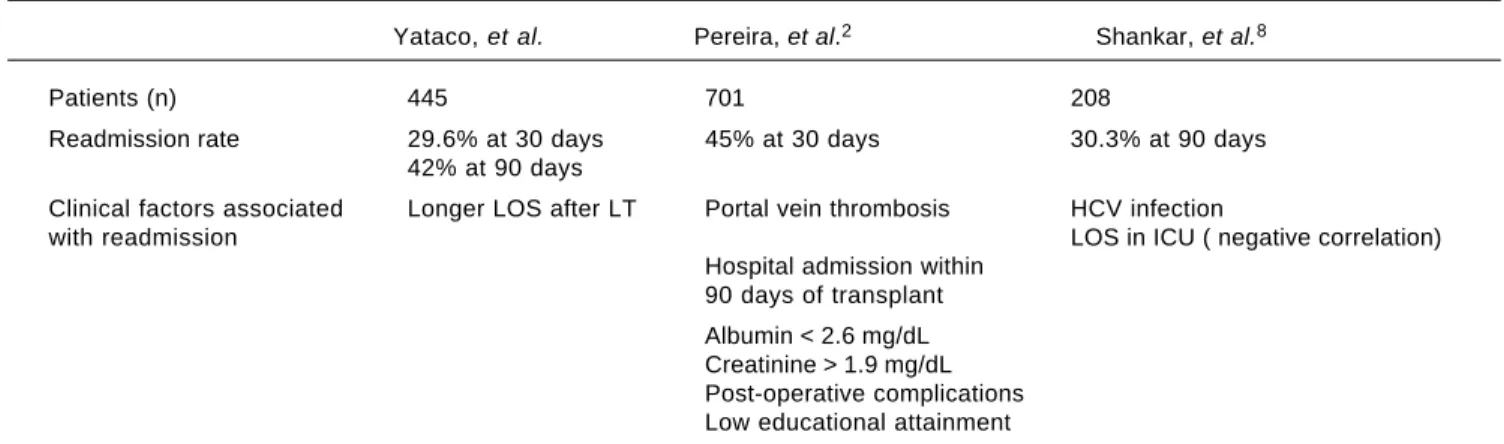
Table 4. Readmission rates and clinical factors.
Yataco, et al. Pereira, et al.2 Shankar, et al.8
Patients (n) 445 701 208
Readmission rate 29.6% at 30 days 45% at 30 days 30.3% at 90 days
42% at 90 days
Clinical factors associated Longer LOS after LT Portal vein thrombosis HCV infection
with readmission LOS in ICU ( negative correlation)
Hospital admission within 90 days of transplant
Albumin < 2.6 mg/dL Creatinine > 1.9 mg/dL Post-operative complications Low educational attainment
HCV: hepatitis C virus. ICU: Intensive Care Unit. LOS: length of stay. LT: liver transplant.
Readmissions after transplantation have been previously shown to be associated with pre-existing portal vein throm-bosis, hypoalbuminemia, or renal dysfunction.2 However,
these data have been retrospectively obtained over an extended period of time during which perioperative care and post-transplant management have evolved. In contrast, the current study draws from a single practice that utilizes consistent, protocol-driven care with a dedicated and experienced team involved in peri- and post-transplant management, providing the ability to examine the impact of any future practice modi-fications to further reduce readmission rates.
The main limitation of this study is its retrospective na-ture. Furthermore, this was a single-center experience, and other LT programs may have higher or lower rates of re-admission as reported in previous studies (Table 4).2,8 This
variability could be partially attributed to differences in MELD score and inpatient hospital status at the time LT.
While the validity of the use of readmission rates as a metric of quality of care may be unrelated to the quality of care during the transplant admission, transplant programs must have quality initiatives in order to decrease readmis-sion rates. Recognizing LT recipients who may be at risk for readmission may provide opportunities for reduced costs by deferring early discharge. As this study shows, preexisting recipient or donor factors do not adequately enable prediction of LT recipients who may require re-admission. Thus, continuation of a strategy to emphasize early discharge accompanied by close follow-up and re-admission for any emerging issues continues to be our current practice. Identification of additional potential fac-tors not currently captured in databases should be the fu-ture focus to better predict and prevent readmissions.
CONCLUSION
In conclusion, patients who undergo LT have a high rate of readmission. This high readmission rate may be
due to the complexity of LT patients and the low thresh-old for readmission in LT centers. In our cohort, re-admissions were unrelated to pre-existing recipient or donor factors, but were associated with a longer hospital stay after liver transplant. Further studies are needed to evaluate possible strategies to decrease readmission rates and reduce cost.
FINANCIAL SUPPORT
None.
CONFLICT OF INTEREST
The authors declare no conflicts of interest.
ABBREVIATIONS
• CIT: cold ischemia time.
• DCD: donation after cardiac death. • DRI: donor risk index.
• EMR: electronic medical record. • ESLD: end-stage liver disease. • LT: liver transplantation.
• MELD: Model for End-Stage Liver Disease.
• SLKT: simultaneous liver and kidney transplantation. • WIT: warm ischemia time.
ACKNOWLEDGEMENT
None.
REFERENCES
2. Pereira AA, Bhattacharya R, Carithers R, Reyes J, Perkins J. Clinical factors predicting readmission after orthotopic liver transplantation. Liver Transpl 2012; 18: 1037-45.
3. Berman K, Tandra S, Forssell K, Vuppalanchi R, Burton JR, Jr., Nguyen J, Mullis D, et al. Incidence and predictors of 30-day readmission among patients hospitalized for advanced liver disease. Clin Gastroenterol Hepatol 2011; 9: 254-9. 4. Ganesh S, Rogal SS, Yadav D, Humar A, Behari J. Risk
fac-tors for frequent readmissions and barriers to transplanta-tion in patients with cirrhosis. PLoS One 2013; 8: e55140. 5. Volk ML, Tocco RS, Bazick J, Rakoski MO, Lok AS. Hospital
readmissions among patients with decompensated cirrhosis. Am J Gastroenterol 2012; 107: 247-52.
6. Desai AP, Satoskar R, Appannagari A, Reddy KG, Te HS, Reau N, Meltzer DO, et al. Co-Management Between Hospi-talist and Hepatologist Improves the Quality of Care of Inpa-tients With Chronic Liver Disease. J Clin Gastroenterol 2013.
7. Morando F, Maresio G, Piano S, Fasolato S, Cavallin M, Ro-mano A, Rosi S, et al. How to improve care in outpatients with cirrhosis and ascites: a new model of care coordina-tion by consultant hepatologists. J Hepatol 2013; 59: 257-64. 8. Shankar N, Marotta P, Wall W, Albasheer M, Hernandez-Ale-jandro R, Chandok N. Defining readmission risk factors for liver transplantation recipients. Gastroenterol Hepatol (NY) 2011; 7: 585-90.
9. Taner CB, Willingham DL, Bulatao IG, Shine TS, Peiris P, Torp KD, Canabal J, et al. Is a mandatory intensive care unit stay needed after liver transplantation? Feasibility of fast-tracking
to the surgical ward after liver transplantation. Liver Transpl 2012; 18: 361-9.
10. Axon RN, Williams MV. Hospital readmission as an accounta-bility measure. JAMA 2011; 305: 504-5.
11. Axelrod DA, Koffron AJ, Baker T, Al-Saden P, Dixler I, McN-att G, Sumner S, et al. The economic impact of MELD on liver transplant centers. Am J Transplant 2005; 5: 2297-301. 12. Washburn WK, Pollock BH, Nichols L, Speeg KV, Halff G.
Im-pact of recipient MELD score on resource utilization. Am J Transplant 2006; 6: 2449-54.
13. Abecassis MM. Financial outcomes in transplantation—a provider’s perspective. Am J Transplant 2006; 6: 1257-63. 14. Abecassis M. Making dollars and sense out of liver
trans-plantation. Liver Transpl 2009; 15: 1159-61.
15. Buchanan P, Dzebisashvili N, Lentine KL, Axelrod DA, Schnitzler MA, Salvalaggio PR. Liver transplantation cost in the model for end-stage liver disease era: looking beyond the transplant admission. Liver Transpl 2009; 15: 1270-7. 16. Englesbe MJ, Patel SP, He K, Lynch RJ, Schaubel DE,
Har-baugh C, Holcombe SA, et al. Sarcopenia and mortality after liver transplantation. J Am Coll Surg 2010; 211: 271-8.
Correspondence and reprint request:
Tushar Patel, MBChB, AGAF
Mayo Clinic, 4500 San Pablo Road, Jacksonville, Florida 32224. USA.