ORIGINAL PAPER
Cognitive Control and Criminogenic Cognitions in South
Asian Gamblers
Shameem Fatima1 · Muhammad Jamil2 · Alfredo Ardila3
© Springer Science+Business Media, LLC, part of Springer Nature 2018
Abstract
It has been suggested that criminogenic thinking is likely to be a correlate of gambling. The primary aim of the current study was to assess whether gamblers and non-gamblers dif-fer on measures of cognitive control and criminogenic cognitions. The secondary aim was to assess the association between cognitive control and criminogenic cognitions amongst gamblers and non-gamblers. The sample included 159 male participants (78 gamblers and 81 non-gamblers) with an age range from 15 to 25 years (M = 20.07, SD = 2.77), recruited from different snooker clubs in Lahore, Pakistan. Participants were individually admin-istered color word interference test (CWIT) taken from Delis Kaplan executive function system, Lie Bet Questionnaire, and Criminogenic Cognition Scale in order to assess cog-nitive control, gambling, and criminogenic thinking patterns respectively. Raw scores of completion time and number of errors on four conditions of CWIT were taken as the meas-ures of cognitive control. Results from repeated measure ANOVA indicated that gamblers committed significantly more errors on cognitive control measure and scored significantly higher on two criminogenic cognition subscales including notion of entitlement and insen-sitivity to the impact of crime. Furthermore, age and education were also found to be sig-nificant covariates of specific criminogenic cognitions and cognitive control respectively. Results from correlational analyses showed that error measure, but not the time measure, of cognitive control was significantly and positively correlated with short term orientation, notion of entitlement, negative attitude toward authority, and insensitivity to the impact of crime. Implications of the findings are suggested along with future directions.
Keywords Cognitive control · Criminogenic cognitions · Gambling · Age · Education
* Shameem Fatima
[email protected] Muhammad Jamil [email protected]
1 Department of Humanities, COMSATS University Islamabad, Lahore Campus, MA Jinnah
Building, Defence Road, Off Raiwind Road, Lahore, Pakistan
2 University of the Punjab, Lahore, Pakistan
Introduction
In literature, neuropsychological factors and cognitive distortions are described to be the most consistent correlates of violent, criminal, and gambling behavior among a vari-ety of samples taken from correctional, forensic, and psychiatric settings (e.g., Goudri-aan et al. 2014; Lipsey et al. 2001; Raine 2002a, b). Several theories, including social information processing theory, and research support that cognitive distortions are pre-dictors of delinquent, violent, criminal, and gambling behaviors (e.g.,Crick and Dodge
1994; Larden et al. 2006; Lipsey et al. 2001; MacLaren et al. 2015). Cognitive distor-tions are defined as incorrect or biased percepdistor-tions and interpretadistor-tions of the situadistor-tions or the events (Barriga et al. 2001) that can take on many forms including self-serving thinking, misinterpretation of social cues, deficient moral reasoning, minimization, or misattribution of blame.
Recently, research from criminological and psychological fields has suggested that criminogenic thinking, a specific form of cognitive distortions, is likely to be a correlate of gambling, crime, and recidivism (e.g., Tangney et al. 2012). On the other hand, despite its rapidly expanding influence in the field of criminology and psychology, neuropsychology has been comparatively absent in the literature in relation to criminal thinking patterns.
Cognitive Control in Gamblers
Decreased cognitive control is described to be a critical feature of pathological gambling (American Psychiatric Association 2013). Instead of considering cognitive control a uni-tary process, it can be conceptualized as comprising several cognitive sub-processes such as response inhibition (the ability to inhibit a well-developed or automatic response in favor of a novel response), conflict monitoring (the ability to ignore irrelevant, interfering stimuli during information processing), and cognitive flexibility (to switch from one strategy to another in the context of new contingencies), all of which are said to play crucial roles in gambling (e.g., Gläscher et al. 2012; Goudriaan et al. 2006).
Furthermore, inhibition and conflict monitoring play critical roles in goal-oriented behaviors (Nigg 2000). Problems in inhibition and conflict monitoring are reported to be significantly associated with difficulties in controlling gambling behaviors (e.g., Goudriaan et al. 2006). Additionally, pathological gamblers have been found showing impaired per-formance on tasks assessing reward based cognitive inflexibilities (Boog et al. 2014). Adult gambling studies also report impaired performance on tasks related to inhibition, time esti-mation, planning, conflict monitoring, and cognitive flexibility in pathological gamblers as compared to non-gamblers (e.g., Goudriaan et al. 2006; Potenza 2014).
clinical, and incarcerated settings with no study available on community residing at risk gamblers from South Asian region.
Moreover, review studies suggest studying interaction of cognitive control with subjec-tive factors in predicting gambling behavior (e.g., Goschke and Bolte 2014; Potenza 2014). Available data shows that cognitive control, though appears in primary form in early years of life, however, keeps on refining all the way through adolescence and may be till early adulthood (e.g., Luna et al. 2010). Also, low levels of education are reported to be related with poor performance on the Stroop color word test (e.g., Van der Elst et al. 2006). There-fore, the first objective of the study was to assess cognitive control and its interaction with age and education among community residing adolescent and early adult gamblers and non-gamblers.
Criminogenic Cognitions in Gamblers
Crime rates are relatively high among gamblers as compared to non-gambling populations as found in many studies carried across different cultures s (e.g., Abbott et al. 2005; Turner et al. 2009). Moreover, literature reports that gambling is linked with different crimes including fraud, stealing, robbery, violence, breaking laws etc. (e.g., Blaszczynski et al.
1989), however, it is generally reported that compared to non-problem gamblers, severe problem gamblers are significantly more likely to commit income producing offences and property related crimes, such as theft and robbery.
Findings from criminological and social psychological literature highlight criminogenic thinking patterns to be the correlate of unlawful and antisocial activities. Despite the care-ful literature review, the researchers could not find any study assessing criminogenic think-ing patterns among gamblers. However, some related literature does indicate specific forms of cognitive distortions amongst gamblers including short term orientation (Hodgins and Engel 2002), insensitivity to consequences (Ciccarelli et al. 2016), sense of entitlement (Blanca et al. 2017), and impulsivity or disinhibition (Alessi and Petry 2003). Therefore, based on empirical evidence for identification of specific cognitive distortions among blers, the study aims at assessing the specific criminogenic cognition styles among gam-blers and non-gamgam-blers and how they co vary with subjective factors (Objective 1B). Fur-thermore, the current study focuses on age and education as covariates of criminogenic cognitions. Earlier literature reports a moderate negative correlation between age and crim-inogenic cognitions i.e., in accordance with the ‘age crime curve’, the possibility to commit a crime decreases with the increasing age from adolescence to adulthood (Tangney et al.
2012). Moreover, previous studies describe age and education to be the negative correlates of criminogenic cognitions (e.g., Mandracchia and Morgan 2012; Tangney et al. 2012). Individuals with higher educational levels are able to develop more logical and mature cog-nitive schemas which help achieve goals more successfully (Gomez-Perez and Ostrosky-Solis 2006).
Cognitive Control and Criminogenic Cognitions
criminal behavior, the literature in relation to criminal thinking patterns has been limited. Although the literature on this specific area is scarce, it seems reasonable to assume that specific neuropsychological factor such as cognitive control can predict specific forms of cognitive distortions such as rationalization and justification, short term orientation, dis-placement of responsibility, insensitivity to the consequences that may in turn contribute to violent, offending, and criminal behavior. As a component of executive functions, cogni-tive control performs the key job of inhibiting aggressive, violent, and criminal behavior, and promoting adjustment ability. Cognitive inflexibility can lead to crime because it may impair the ability to seek alternate explanations of the problem situation and to anticipate potential outcomes of the deviant behavior (Ostrosky and Ardila 2017).
Moreover, no published studies are readily available that address cognitive control in relation to criminogenic thinking patterns, thus, related literature was examined. Related literature indicates that reduced prefrontal gray matter, reduced prefrontal functioning, and resulting deficits of inhibition, cognitive flexibility, and the ability to predict future con-sequences are found among psychopathic and antisocial individuals (Mahmut et al. 2008; Raine et al. 2000; Yang and Raine 2009) and among reactive offenders (Broomhall 2005). Tangney et al. (2012) have found a positive link between ratings on criminogenic cognition subscales and self-reported aggression, tendency to show violent behavior, antisocial per-sonality disorder, and psychopathy.
Theories such as social learning theory and Bandura’s model of moral disengagement (Bandura 1999) propose that moral reasoning, learned through socialization process, is translated into humane conduct through self-regulatory mechanisms that are embedded in moral standards. The moral self is thus entrenched in a broader self-concept comprising self-organizing, self-reflective, and self-regulatory mechanisms.
From the studies mentioned above, it is clear that both the cognitive control (conflict monitoring, cognitive flexibility, and inhibition) and the criminogenic cognitions are inde-pendently associated with offending or antisocial behavior. According to these findings we can propose that there might be a negative correlation between cognitive control and criminogenic cognitions, that is, the lower levels of cognitive control are proposed to be associated with the higher levels of criminogenic cognitions or vice versa. Considering this significant lapse in literature, the current study provides a potential avenue to assess the link between cognitive control and criminogenic cognitions.
The Current Study
It is established that pathological gamblers show deficits on measures of neuropsychologi-cal functioning including cognitive control. Therefore, to prevent gambling, it would be important to assess factors associated with gambling among at risk gamblers given the data showing increasing rates of gambling in upcoming years (e.g., Delfabbro et al. 2016). Hence, the study aims at assessing differences in cognitive control among a normative sample of at risk gamblers and non-gamblers from a South Asian region (Hypothesis 1A). Evidence from rare but diverse studies pinpoint the presence of some forms of cognitive distortions among gamblers. But none of the earlier studies tried to assess criminogenic thinking patterns among gamblers compared to non-gamblers. Therefore, the study hypoth-esizes that gamblers would score higher on specific criminogenic cognition subscales as compared to non-gamblers (hypothesis 2B). A second aim of this study was to assess the association between cognitive control and specific criminogenic cognitions among gam-blers and non-gamgam-blers (Hypothesis 2). For this purpose, the current study assesses five specific forms of criminogenic cognitions: short term orientation, notion of entitlement, failure to accept responsibility, negative attitude toward authority, and insensitivity to the impact of crime.
Method
Sample
The sample was recruited from different snooker1 clubs of Lahore (a cosmopolitan and the second biggest city of Pakistan and the fifth biggest city of South Asia with about 10 million inhabitants from diverse backgrounds). Inclusion criteria for participants were as follows: habitual snooker players, males, in age range between 15 and 25 years, and those who could read and write. Exclusion criteria included a history of brain injury, any per-sonal or family history of neuropsychological disorder.
On the whole, 235 participants were contacted from 10 snooker clubs, but the data could not be obtained from all participants due to various reasons: either participants did not meet inclusion criteria, did not volunteer for research, or did not complete all study measures. The final sample included 159 participants in age range from 15 to 25 years (M age = 20.07, SD = 2.77). Out of total 159 participants, 78 reported themselves to be gam-blers and 81 reported non-gamgam-blers on the Lie Bet scale. Demographic characteristics of the sample are presented in Table 1.
1 Snooker is a type of billiard which originated among British Army officers in India during nineteenth
Study Measures
The Demographic Sheet
A demographic sheet was formulated to collect demographic information including age, education, marital status, perceived socioeconomic status, smoking, alcohol and drug use, and crime history etc.
DKEFS Color‑Word Interference Test (Delis et al. 2001)
DKEFS color word interference test assesses cognitive control in 4 conditions. First two conditions assess basic cognitive functions in visual, perceptual, and linguistic domains. Conditions 3 and 4 assess higher executive functions of cognitive control by assessing inhi-bition, conflict monitoring, and cognitive switching. Completion time and number of errors on each condition were taken as two response measures of cognitive control. Combined completion time and combined number of errors on condition 1 and 2 were considered as two measures of basic cognitive functions; and combined completion time and combined number of errors on conditions 3 and 4 were taken as two measures of executive cognitive control. Composite completion time and composite number of errors on all four condi-tions were taken as two measures of cognitive control after taken into account underlying basic cognitive abilities. Less completion time (in seconds) and the fewer number of errors indicated the better cognitive control. Psychometric properties of the scale have been estab-lished (Delis et al. 2001).
Criminogenic Cognitions Scale (Tangney et al. 2012)
The scale, consisting of 25 items, assesses the levels of criminal thinking patterns of the subject. Items on the scale are rated on a 4-point response format, ranging from 1(strongly disagree) to 4 (strongly agree). The scale assesses 5 aspects of criminogenic cognitions namely: short-term orientation, notions of entitlement, failure to accept responsibility, Table 1 Demographic characteristics of the sample
Bold values are means and standard deviations; regular values are frequencies
Variables Gamblers (n = 78) Non gamblers (n = 81) Full sample (n = 159) Mean (SD)/f Mean (SD)/f Mean (SD)/f
Age 19.96 (2.83) 20.16 (2.70) 20.07 (2.77)
Education 11.01 (2.92) 11.38 (2.79) 11.20 (2.88) Socio-economic status Low = 2 Low = 1 Low = 3
Middle = 71 Middle = 73 Middle = 144 High = 5 High = 8 High = 13 Marital status Married = 6 Married = 8 Married = 14
negative attitude towards authority, and insensitivity to the impact of crime. Scores on items related to each subscale are added to form a composite score for each subscale, with a higher score representing a higher level of criminogenic thinking relevant to each particu-lar domain. Psychometric properties of the scale have been reported to be good (Tangney et al. 2012).
The current study used the Urdu version of the scale (Jamil and Fatima 2018). Coef-ficients of internal consistency for five domains as reported in the current study were good (from .57 to .80).
Lie/Bet Questionnaire (Johnson et al. 1997)
Based on DSM-IV’s diagnostic criteria of gambling behavior, this scale assesses gam-bling behavior using two items: (1) Have you ever had to lie to people important to you about how much you gambled?; and (2) Have you ever felt the need to bet more and more money? Items are scored either ‘yes’ or ‘no’. The response of ‘yes’ to any one or both items indicates the tendency of gambling; while ‘no’ response on both items indicates no ten-dency of gambling behavior. The internal consistency of this two-item scale as found in the current study was essential and ultimately, useful to the study (.69).
Procedure
After obtaining approval from the Departmental Research Review Committee, COMSATS University, Lahore, the researchers approached owners/managers of different snooker clubs who were briefed about the study. Finally, participants were contacted and informed about the study and their potential to participate as well as their freedom to withdraw at any time, if they opted to do so. They were assured of confidentiality of their responses and requested to provide genuine responses. Data collection was completed in two phases: in one phase, they were administered the lie-bet and the criminogenic cognitions scales, and in the other phase, they were assessed on 4 conditions of DKEFS CWIT. The order of scales was coun-terbalanced across subjects to balance any effect due to order. Generally, the participants reported that although the 3rd and 4th conditions of CWIT were difficult, they overall enjoyed their participation. The participants were cordially thanked for their cooperation and interest in the study.
Data Analysis Strategy
Considering that the DKEFS color word interference test was developed and normed on a different culture, and evidently, different cultural norms are not applicable to Pakistani population, the raw scores (completion time and number of errors) on this test were used in data analyses. Combined raw scores for underlying basic cognitive abilities (condition 1 and 2), and for executive ability of cognitive control (condition 3 and 4) were calculated for each completion time and error measures separately. Combined raw scores for all four conditions were also calculated as a measure of cognitive control after taking into account underlying basic cognitive abilities.
examine within subject differences across two levels of cognitive control (basic cognitive ability and executive cognitive control) and between group differences in cognitive control across gamblers and non-gamblers, using age and education as covariates of cognitive trol (hypothesis 1A). Second, the same approach to repeated measure ANOVA was con-ducted to assess within subject differences across five criminogenic cognition domains and between group differences in criminogenic cognitions across gamblers and non gambles, using age and education as covariates of criminogenic cognitions (hypothesis 1B). Finally, Pearson correlation coefficients were calculated to assess relationship between cognitive control measures and criminogenic cognitions (hypothesis 2).
Results
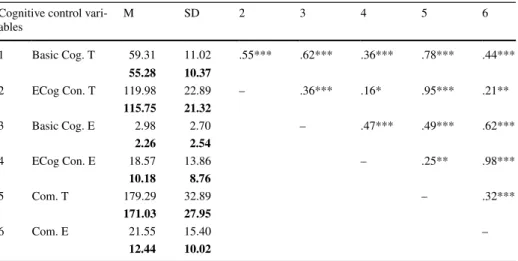
Table 2 presents descriptive statistics for completion time and error measures of cognitive control. Inter scale correlation between all cognitive control measures is significant indicat-ing that all measures are representindicat-ing the same underlyindicat-ing construct of cognitive control.
Table 3 presents descriptive statistics and reliability coefficients of criminogenic cogni-tion subscales. Reliability coefficients for criminogenic cognicogni-tion subscales are fairly good supporting the internal consistency of the measures. Correlations of subscale scores with a composite score were good and statistically significant. Inter scale correlations were from moderate to low (.44–.11). The pattern of correlations suggests commonality but also ver-satility of domains in assessing a variety of criminogenic cognitions.
Table 2 Descriptive statistics and inter scale correlation between cognitive control measures
Bold values are descriptive statistics of non-gamblers and unbold values are descriptive statistics of gam-blers; inter-scale correlation is shown for whole sample
Basic Cog. T basic cognitive ability (combined time on condition 1 and 2); ECogCon. T executive cogni-tive control (combined time on condition 3 and 4); Basic Cog. E basic cognitive ability (combined number of errors on condition 1 and 2); ECogCon. E executive cognitive control (combined number of errors on condition 3 and 4); Com. T composite time on 4 conditions; Com. E composite number of errors on four conditions
*p < .05, **p < .005, **p < .001 Cognitive control
vari-ables M SD 2 3 4 5 6
1 Basic Cog. T 59.31 11.02 .55*** .62*** .36*** .78*** .44*** 55.28 10.37
2 ECog Con. T 119.98 22.89 – .36*** .16* .95*** .21** 115.75 21.32
3 Basic Cog. E 2.98 2.70 – .47*** .49*** .62*** 2.26 2.54
4 ECog Con. E 18.57 13.86 – .25** .98***
10.18 8.76
5 Com. T 179.29 32.89 – .32***
171.03 27.95
6 Com. E 21.55 15.40 –
Differences in Cognitive Control Amongst Gamblers and Non‑gamblers Using Age and Education as Covariates
Completion Time
Completion time raw scores were analyzed using a 2 × 2 way ANOVA with cognitive con-trol (2 levels: basic cognitive ability and executive cognitive concon-trol) as a within subject factor and gambling (2 levels: gamblers and non gamblers) as a between subject factor. Age and education as continuous variables were co varied in the analyses. After meeting the sphericity assumption from a non-significant Chi Square value, the main effect of cognitive control conditions was significant [F (1, 157) = 15.83, p < .001, η = .09], with greater com-pletion time in executive cognitive control (M = 118.22, SE = 1.72) than in basic cognitive ability condition (M = 57.80, SE = .80).
The main effect of gamblers [F (1, 157) = .21, p > .05] was not significant indicating no significant difference in mean completion time amongst gamblers and non-gamblers. Education, but not the age, was a significant covariate [F (1, 157) = 10.48, p < .005, η = .06] with low educated participants taking more completion time as compared to highly edu-cated participants. Results showed no significant interaction of gambling, age, or education with completion time.
Number of Errors
A repeated measure 2 × 2 way ANOVA was calculated to assess with in subject dif-ferences in number of errors made at two levels of cognitive control (basic cognitive Table 3 Descriptive statistics and inter scale correlations between criminogenic cognition subscales
Bold values are descriptive statistics of non-gamblers and unbold values are descriptive statistics of gam-blers; inter-scale correlation is shown for whole sample
STO short term orientation; NOE notions of entitlement; FAR failure to accept responsibility; NATA nega-tive attitude toward authority; IIC insensitivity to impact of crime; CCCom criminogenic cognitions com-posite
*p < .05, **p < .005, **p < .001
Variables M SD α STO NOE FAR NATA IIC CCCom STO 11.90 2.61 .67 – .23** .20* .19* .38** .62***
12.07 2.76
NOE 13.27 2.24 .68 – .27** .11 .46** .63***
12.49 2.16
FAR 11.67 2.36 .70 – .19* .29** .65***
11.27 2.57
NATA 13.23 2.37 .69 – .12 .24**
13.51 2.43
IIC 12.35 2.39 .64 – .71***
11.41 2.32
CC Com 62.02 6.84 .79 –
abilities and executive cognitive control) and between group differences in gambling (2 levels: gamblers and non gamblers). Age and education as continuous variables were co-varied in the analyses. After meeting sphericity assumption from non-significant Chi Square value, the main effect of within subject conditions was significant for num-ber of errors [F (1, 156) = 23.96, p < .001, η = .13], with greater numnum-ber of errors in executive cognitive control condition (M = 13.92, SE = .87) than in basic cognitive ability condition (M = 2.52, SE = .20).
The between subject effect of gamblers [F (1, 156) = 9.56, p < .005, η = .06] was significant, with higher mean error score committed by gamblers (M = 9.83, SE = .72) than by non-gamblers (M = 6.62, SE = .70). Additionally, education alone was a signif-icant covariate of accuracy measure of cognitive control [F (1, 156) = 13.43, p < .001, η = .08], with highly educated participants committing fewer errors than low educated participants. Furthermore, results showed significant interaction of gambling [F (1, 156) = 10.57, p < .005, η = .06] and education [F (1, 156) = 7.62, p < .01, η = .05] with cognitive control conditions. Descriptive statistics showed that gamblers committed more errors in executive cognitive control condition (M = 16.94, SE = 1.29) compared to non-gamblers (M = 10.91, SE = 1.26).
Differences in Criminogenic Cognitions Amongst Gamblers and Non‑gamblers Using Age and Education as Covariates
A repeated measure 5 × 2 way ANOVA was conducted to examine individual differ-ences across 5 levels of criminogenic cognitions (short-term orientation, notions of entitlement, failure to accept responsibility, negative attitude toward authority and insensitivity to impact of crime) and between group differences in gambling (2 lev-els: gamblers andnon gamblers) using age and education as covariates. After consider-ing the sphericity of the data, the main effect of criminogenic cognitions was signifi-cant [F (4, 155) = 5.06, p < .01, η = .03], with higher scores on short term orientation (M = 12.15, SD = .19), notions of entitlement (M = 12.87, SD = .16), and negative atti-tude toward authority (M = 13.40, SD = .17) subscales than on failure to accept respon-sibility (M = 11.40, SD = .19) and insensitivity to the impact of crime (M = 11.79, SD = .18) subscales.
Analysis of between group differences revealed no significant main effect of gam-bling [F (1, 155) = 1.25, p > .05]. However, results showed a significant interaction of gambling with criminogenic cognition subscales [F (4, 155) = 2.42, p < .05, η = .02] with gamblers scoring significantly higher on notion of entitlement (M = 13.36, SD = 2.16) and insensitivity to the impact of crime (M = 12.26, SD = 2.33) as compared to non-gamblers (M = 12.38, SD = 2.08 and M = 11.33, SD = 2.28 respectively).
Association Between Cognitive Control and Criminogenic Cognitions
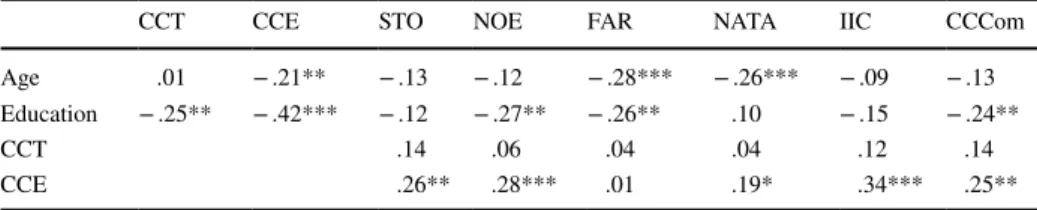
Pearson correlation coefficients were calculated between cognitive control measures and criminogenic cognition subscales (see Table 4). Notably, when separate correlation coef-ficients were calculated for gamblers and non-gamblers, the pattern of correlations was same as for the whole sample; only weak correlations became insignificant due to reduced sample size. Therefore, correlation coefficients were calculated for the whole sample. The results showed that the error measure of cognitive control was significantly correlated with four criminogenic cognition subscales including short-term orientation (r = .26, p < .005), notions of entitlement (r = .28, p < .001), insensitivity to impact of crime (r = .34, p < .001), negative attitude toward authority (r = .19, p < .05) and with a composite CCS score (r = .25, p < .005) indicating poor cognitive control is related to higher criminogenic think-ing in these domains. However, time measure of cognitive control was not significantly correlated with any of the criminogenic cognition subscales.
Discussion
Cognitive Control Differences Between Gamblers and Non‑gamblers Using Age and Education as Covariates
The results from the error measure of cognitive control indicated that gamblers showed significantly poor cognitive control compared to non-gamblers. The current findings are consistent with many previous studies including neuroimaging studies, which indicate poor cognitive control and impaired functioning in prefrontal cortex areas controlling cognitive control among Western samples of pathological gamblers compared to non-gamblers (e.g., Potenza 2014). However, no significant differences were observed on the time measure of cognitive control. Two reasons may explain the null result for the time measure: first, may be because of their inability to wait longer to complete the task and due to their short term orientation, gamblers tried to complete the task quickly, and in their effort to quickly achieve the goal of task completion they made more errors compared to non-gamblers. Second, the current study uses a sample of community residing at risk gamblers who were regular players of snooker instead of any psychiatric, clinical, or incarcerated sample of pathological gamblers.
Table 4 Correlations of age, education, and cognitive control with criminogenic cognition subscales
CCT composite cognitive control time measure; CCE composite cognitive control error measure; STO short term orientation; NOE notions of entitlement; FAR failure to accept responsibility; NATA negative attitude toward authority; IIC insensitivity to impact of crime; CCCom criminogenic cognitions composite *p < .05, **p < .005, **p < .001
CCT CCE STO NOE FAR NATA IIC CCCom
Age .01 − .21** − .13 − .12 − .28*** − .26*** − .09 − .13 Education − .25** − .42*** − .12 − .27** − .26** .10 − .15 − .24**
CCT .14 .06 .04 .04 .12 .14
Additionally, the results indicated that highly educated participants including gamblers and non-gamblers showed significantly better performance speed and made fewer errors, ultimately resulting in better cognitive control as compared to low educated participants. Also, highly educated participants compared to low educated participants made signifi-cantly fewer errors on executive control condition than on basic cognitive ability condition (evident from significant interaction between education and error conditions). Although, the finding is consistent with the earlier literature (e.g., Gomez-Perez and Ostrosky-Solis
2006), yet, significant in many ways: (1) with more number of years of formal schooling, the subjects may become more test oriented leading to better performance, (2) basic cogni-tive abilities required to complete the task are fundamental linguistic skills which are also likely to be improved with education, and (3) with more education the individual learns many ways to improve specific cognitive control abilities including inhibition, cognitive switching, conflict monitoring etc. (e.g., Hackman et al. 2015).
It is important to note that age was not a significant covariate of both measures of cognitive control in the current sample of South Asian late adolescents and early adults. This adds to the existing knowledge on age related improvement in performance speed on CWIT based on another South Asian sample of early till late adolescents (Fatima et al.
2016) that the concerned ability may continue maturing throughout adolescence but attains its maturity during late adolescence and remains stable during early adulthood. In future, longitudinal research is needed to delineate the age related trajectories in cognitive control from early adolescence till adulthood among South Asians.
Differences in Criminogenic Cognitions Amongst Gamblers and Non‑gamblers Using Age and Education as Covariates
Results from repeated measure ANOVA showed that gamblers scored significantly higher on two domains of criminogenic cognitions including notion of entitlement and insensitiv-ity to the impact of crime. Theoretical reviews and correlational studies from previous lit-erature across a variety of cultural context have documented that crimes rates are relatively higher among pathological samples of gamblers as compared to non-gamblers (e.g., Abbott et al. 2005; Turner et al. 2009). The significant finding of insensitivity and desire for power and privilege among gamblers is supported from the previous literature (e.g., Ciccarelli et al. 2016; Blanca et al. 2017).
A notable finding was that education was a significant covariate of criminogenic cogni-tions with low educated participants scoring higher on criminogenic cognicogni-tions. This find-ing is in agreement with earlier studies (Mandracchia and Morgan 2012; Tangney et al.
Association Between Cognitive Control and Criminogenic Cognitions
A second objective of the study was to assess the association of cognitive control with criminogenic cognitive patterns. The results indicated that participants who made more errors on cognitive control measure also scored higher on short term orientation, notion of entitlement, negative attitude toward authority, and insensitivity to the impact of their crime. Although literature on the neurocognitive correlates of criminogenic thinking is not available, however, earlier literature on neurocognitive correlates of psychopathic, unemo-tional, and deviant behavior and personality traits do support this finding (e.g., Moffitt
1990; Raine 2002a, b). Furthermore, this finding extends the scope of Bandura’s theoreti-cal frameworks of social cognitive theory and moral disengagement theory in that cogni-tive control serves as a self-regulatory moral cognicogni-tive mechanism that is learned through socialization process and protects us from cognitive distortions and criminal thinking patterns.
Unfortunately, despite the compelling evidence from previous literature, the researchers could not assess the role of criminogenic cognitions in criminal behaviors because only 20% of the current sample reported that they had been involved in some criminal behav-ior. Several reasons may explain this response pattern: (1) the self-report bias and social desirability effect, (2) asking a criminal behavior from community residing gamblers might had been somewhat threatening, (3) community residing sample of regular snooker play-ers might not had been involved in serious crimes or offences worth mentioning, or (4) although many community residing individuals involve in unlawful acts such as breaking the signal, using phone while driving, violating women rights in domestic setting, however, common individuals do not consider these unlawful acts as crimes. The current study pro-vides a potential avenue for future research to assess the direct and indirect associations between cognitive control, criminogenic cognitions, and criminal behavior.
Limitations
generalization of our results to players of other games. Furthermore, due to time restric-tions, testing was limited and only one executive function test was administered. Finally, it is important to emphasize that some of the measurement tools were developed in other cultures and may not necessarily apply to Pakistani populations.
Implications
The current findings have significant implications for gambling control. This study high-lights the importance of cognitive restructuring and improving the neurocognitive skill of cognitive control to make thinking patterns of at risk adolescents and early adults more flexible and better adapted. Additionally, having found that low educated participants showed poor performance on cognitive control measures and scored higher on crimino-genic cognition measures, treatment and intervention protocols should also incorporate education as part of prevention and intervention strategies. The co-occurrence of low edu-cation and poor cognitive control increases the probability of gambling and criminogenic cognition. It can be conjectured that increasing education will increase cognitive control and decrease the probability of criminogenic cognition.
Compliance with Ethical Standards
Conflict of interest Dr. Shameem Fatima, Muhammad Jamil and Dr. Alfredo Ardila declares that they have no conflict of interest.
Ethical Approval All procedures performed in the study involving human participants were in accordance with the ethical standards of the institutional and national research committees and with the 1964 Helsinki declaration and its later amendments or comparable ethical standards.
Informed Consent Informed consent was obtained from all individual participants included in the study.
References
Abbott, M. W., McKenna, B. G., & Giles, L. C. (2005). Gambling and problem gambling among recently sentenced male prisoners in four New Zealand prisons. Journal of Gambling Studies,21, 537–558. https ://doi.org/10.1007/s1089 9-005-5562-6.
Alessi, S. M., & Petry, N. M. (2003). Pathological gambling severity is associated with impulsivity in a delay discounting procedure. Behavioral Processes,64(3), 345–354. https ://doi.org/10.1016/s0376 -6357(03)00150 -5.
American Psychiatric Association. (2013). Diagnostic and statistical manual of mental disorders (5th ed.). Washinton, DC: American Psychiatric Association.
Bandura, A. (1999). Moral disengagement in the perpetration of inhumanities. Personality and Social Psy-chology Review,3(3), 193–209. https ://doi.org/10.1207/s1532 7957p spr03 03_3.
Barriga, A. Q., Gibbs, J. C., Potter, G. B., & Liau, A. K. (2001). How I Think (HIT) questionnaire manual. Champaign, IL: Research Press.
Blakemore, S. J., & Choudhury, S. (2006). Development of the adolescent brain: Implications for executive function and social cognition. Journal of Child Psychology and Psychiatry,47(3–4), 296–312. Blanca, D., Coletti, L. M., & Russell-Roberts, J. (2017). Women and compulsive gambling: Caught between
frustration and revenge. In H. Bowden-Jones & F. Prever (Eds.), Gambling disorders in women: An international female perspective on treatment and research (pp. 63–71). New York: Taylor and Francis.
Boog, M., Hoppener, P., Wetering, B. J., Goudriaan, A. E., Boog, M. C., & Franken, I. H. A. (2014). Cognitive inflexibility in gamblers is primarily present in reward-related decision making. Fron-tiers in Human Neuroscience,8, 569. https ://doi.org/10.3389/fnhum .2014.00569 .
Boyer, M., & Dickerson, M. (2003). Attentional bias and addictive behaviour: Automatic-ity in a gambling-specific modified Stroop task. Addiction, 98, 61–70. https ://doi.org/10.104 6/j.1360-0443.2003.00219 .x.
Broomhall, L. (2005). Acquired sociopathy: A neuropsychological study of executive dysfunction in violent offenders. Psychiatry, Psychology, and Law, 12, 367–387. https ://doi.org/10.1375/ pplt.12.2.367.
Ciccarelli, M., Malinconico, R., Griffiths, M. D., Nigro, G., & Cosenza, M. (2016). Reward preferences of pathological gamblers under conditions of uncertainty: An experimental study. Journal of Gam-bling Studies,32, 1175–1184. https ://doi.org/10.1007/s1089 9-016-9593-y.
Crick, N. R., & Dodge, K. A. (1994). A review and reformulation of social information-processing mechanisms in children’s social adjustment. Psychological Bulletin,115, 74–101.
de Ruiter, M. B., Oosterlaan, J., Veltman, D. J., Van Den Brink, W., & Goudriaan, A. E. (2012). Similar hyporesponsiveness of the dorsomedial prefrontal cortex in problem gamblers and heavy smok-ers during an inhibitory control task. Drug and Alcohol Dependence, 121, 81–89. https ://doi. org/10.1016/j.druga lcdep .2011.08.010.
Delfabbro, P., King, D. L., & Derevensky, J. L. (2016). Adolescent gambling and problem gambling: Prevalence, current issues and concerns. Current Addiction Reports, 3, 268–274. https ://doi. org/10.1007/s4042 9-016-0105-z.
Delis, D. E., Kaplan, E., & Kramer, J. H. (2001). Delis Kaplan executive function system. New York: The Psychological Corporation.
Fatima, S., Sheikh, H., & Ardila, A. (2016). Association of parent-child relationships and executive functioning in South Asian adolescents. Neuropsychology,30(1), 65–74. https ://doi.org/10.1037/ neu00 00216 .
Gläscher, J., Adolphs, R., Damasio, H., Bechara, A., Rudrauf, D., & Tranel, D. (2012). Lesion map-ping of cognitive control and value-based decision making in the prefrontal cortex. Proceedings of the National Academy of Sciences of the United States of America,109, 14681–14686. https ://doi. org/10.1073/pnas.12066 08109 .
Gomez-Perez, E., & Ostrosky-Solis, F. (2006). Attention and memory evaluation across the life span: Heterogeneous effects of age and education. Journal of Clinical and Experimental Neuropsychol-ogy,28(4), 477–494.
Gonzalez, R., Mandracchia, J. T., Nicholson, B., & Dahlen, E. (2014). Exploring parenting as a predictor of criminogenic thinking in college students. International Journal of Offender Therapy and Com-parative Criminology,58(9), 1081–1100. https ://doi.org/10.1177/03066 24x13 48752 3.
Goschke, T., & Bolte, A. (2014). Emotional modulation of control dilemmas: The role of positive affect, reward, and dopamine in cognitive stability and flexibility. Neuropsychologia,62, 403–423. https :// doi.org/10.1016/j.neuro psych ologi a.2014.07.015.
Goudriaan, A. E., Oosterlaan, J., de Beurs, E., & van den Brink, W. (2006). Neurocognitive functions in pathological gambling: A comparison with alcohol dependence, Tourette syndrome and normal controls. Addiction,101, 534–547. https ://doi.org/10.1111/j.1360-0443.2006.01380 .x.
Goudriaan, A. E., Yücel, M., & van Holst, R. J. (2014). Getting a grip on problem gambling: What can neuroscience tell us? Frontiers in Behavioral Neuroscience,8, 141. https ://doi.org/10.3389/fnbeh .2014.00141 .
Hackman, D. A., Gallop, R., Evans, G. W., & Farah, M. J. (2015). Socioeconomic status andexecutive function: Developmental trajectories and mediation. Developmental Science,18(5), 686–702. https ://doi.org/10.1111/desc.12246 .
Hodgins, D. C., & Engel, A. (2002). Future time perspective in pathological gamblers. The Journal of Nervous and Mental Disease,190(11), 775–780. https ://doi.org/10.1097/00005 053-20021 1000-00008 .
Jamil, M., & Fatima, S. (2018). Translation and validation of Criminogenic Cognition Scale into urdu language. Pakistan Journal of Criminology, 10(3).
Johnson, E. E., Hamer, R., Nora, R. M., Tan, B., Eisenstein, N., & Engelhart, C. (1997). The Lie/Bet Questionnaire for screening pathological gamblers. Psychological Reports,80(1), 83–88.
Larden, M., Melin, L., Holst, U., & Langstrom, N. (2006). Moral judgement, cognitive distortions and empathy in incarcerated delinquent and community control adolescents. Psychology, Crime & Law, 12, 453–462.
Luna, B., Padmanabhan, A., & O’Hearn, K. (2010). What has fMRI told us about the development of cogni-tive control through adolescence? Brain and Cognition,72, 101–113. https ://doi.org/10.1016/j.bandc .2009.08.005.
MacLaren, V., Ellery, M., & Knoll, K. (2015). Personality, gambling motives, and cognitive distortions in electronic gambling machine players. Personality and Individual Differences,73, 24–28. https ://doi. org/10.1016/j.paid.2014.09.019.
Mahmut, M. K., Homewood, J., & Stevenson, R. J. (2008). The characteristics of non-criminals with high psychopathy traits: Are they similar to criminal psychopaths? Journal of Research in Personality,42,
679–692.
Mandracchia, J. T., & Morgan, R. D. (2012). Predicting offenders’ criminogenic cognitions with status vari-ables. Criminal Justice and Behavior,39(1), 5–25. https ://doi.org/10.1177/00938 54811 42545 3. Moffitt, T. E. (1990). The neuropsychology of juvenile delinquency: A critical review. Crime and Justice,
12, 99–160.
Nigg, J. T. (2000). On inhibition/disinhibition in developmental psychopathology: Views from cognitive and personality psychology and a working inhibition taxonomy. Psychological Bulletin,126, 220–246. https ://doi.org/10.1037/0033-2909.126.2.220.
Ostrosky, F., & Ardila, A. (2017). Neuropsychology of criminal behavior. New York: Routledge.
Potenza, M. N. (2014). The neural bases of cognitive processes in gambling disorder. Trends in Cognitive Sciences,18, 429–438. https ://doi.org/10.1016/j.tics.2014.03.007.
Raine, A. (2002a). Annotation: The role of prefrontal deficits, low autonomic arousal, and early health fac-tors in the development of antisocial and aggressive behavior. Journal of Child Psychology and Psy-chiatry,43, 417–434.
Raine, A. (2002b). Biosocial studies of antisocial and violent behavior in children and adults: A review.
Journal of Abnormal Child Psychology,30, 311–326.
Raine, A., Lencz, T., Bihrle, S., LaCasse, L., & Colletti, P. (2000). Reduced prefrontal gray matter volume and reduced autonomic activity in antisocial personality disorder. Archives of General Psychiatry,57,
119–127.
Ridderinkhof, K. R., Van Den Wildenberg, W. P. M., Segalowitz, S. J., & Carter, C. S. (2004). Neurocogni-tive mechanisms of cogniNeurocogni-tive control: The role of prefrontal cortex in action selection, response inhibi-tion, performance monitoring, and reward-based learning. Brain and Cognition,56, 129–140. https :// doi.org/10.1016/j.bandc .2004.09.016.
Tanabe, J., Thompson, L., Claus, E., Dalwani, M., Hutchison, K., & Banich, M. T. (2007). Prefrontal cor-tex activity is reduced in gambling and nongambling substance users during decision-making. Human Brain Mapping,28, 1276–1286. https ://doi.org/10.1002/hbm.20344 .
Tangney, J. P., Stuewig, J., Furukawa, E., Kopelovich, S., Meyer, P. J., & Cosby, B. (2012). Reliability, validity, and predictive utility of the 25-item Criminogenic Cognitions Scale (CCS). Criminal Justice and Behavior,39(10), 1340–1360.
Turner, N. E., Preston, D. L., Saunders, C., McAvoy, S., & Jain, U. (2009). The relationship of problem gambling to criminal behavior in a sample of Canadian male federal offenders. Journal of Gambling Studies,25(2), 153–169. https ://doi.org/10.1007/s1089 9-009-9124-1.
Van der Elst, W., Van Boxtel, M. P., Van Breukelen, G. J., & Jolles, J. (2006). The Stroop color-word test: Influence of age, sex, and education; and normative data for a large sample across the adult age range.
Assessment,13, 62–79. https ://doi.org/10.1177/10731 91105 28342 7.