
Cognitive enhancement by means of TMS and video game training: synergistic effects
392
0
0
Texto completo
(2)
(3) Abstract. Abstract Non-invasive brain stimulation techniques have represented a substantial step forward in the advancement of cognitive neuroscience, especially due to their ability to establish causal links between cognition and the underlying neural substrate of the brain. Among these techniques, transcranial magnetic stimulation (TMS) allows us to modulate the level of cortical excitability of the region underlying the stimulation target with a very high spatial resolution, effectively having an impact on the associated cognitive functions, allowing performance changes that can result in cognitive improvement. However, these changes are often transitory, and there is a need to develop optimized protocols that can potentiate and extend the duration of the stimulation effects so they can be applied in the clinical setting. Among the cognitive functions that could be enhanced, executive functions are the ones that are more likely to have a visible effect on overall cognition and a greater impact in everyday life. These functions are responsible for the most complex levels of reasoning in human beings, are tightly linked with the rest of the cognitive functions, and are closely related to the concept of general intelligence. The dorsolateral prefrontal cortex (DLPFC) is one of the main brain regions associated with executive functioning, effectively being a central processing hub for these functions, which is also anatomically and functionally interconnected with a wide range of cortical and subcortical structures. Due to these reasons, and backed by the existing literature in this field, the DLPFC was chosen as the target for the non-invasive stimulation in order to achieve cognitive improvement. The effectiveness of TMS in achieving cognitive changes is potentiated when used in conjunction with a cognitive training emphasizing the targeted cognitive function. The characteristics of the cognitive training are key for achieving the desired near and far-transfer effects. The integration of different cognitive components, the levels of engagement and motivation, and the amount of exposure to the task are factors that must be taken into account to maximize transfer effects. Video games have regained notorious attention in this scientific field, and possesses all the appropriate features to be used for this purpose. They are widespread, they integrate several cognitive processes at once with variable difficulty adjustments, they possess elements that motivate users to spend more time playing, and they are often used for extended periods of time over a person’s lifetime, enough to have a real impact on cognition. The joint use of TMS and video game training is expected to create synergistic effects on cognitive performance, enhancing cognitive functions related to the stimulation site and the contexts exposed during video game play.. 3.
(4) Cognitive enhancement by means of TMS and video game training: Synergistic effects This thesis provides an in-depth analysis on the topics of cognitive enhancement through TMS, the neural correlates of video games, and cognitive enhancement as a result of video game training (by placing an emphasis on executive functioning) through exhaustive literature reviews. These three pillars have the aim of finding out the best parameters for maximizing the positive impact of TMS and video game training on cognition and the generalization of these effects. For the experimental stage, an intermittent theta-burst transcranial magnetic stimulation (iTBS) over the right DLPFC has been employed. This protocol was chosen for its capacity of inducing effects comparable to long-term potentiation. Ten stimulation sessions, administered during a two-week period, were performed with the purpose of potentiating the effect of video game training, in combination with a video game training in a 3D platform game with strategy elements that relies extensively on the DLPFC. Four experimental groups were composed by combining the administration of active and sham iTBS stimulation, and the high and low previous video game experience of the participants. Cognitive performance was assessed through a comprehensive neuropsychological battery at three different time points: at the baseline, at the end of the training period, and at a follow-up assessment two weeks after the end of the training. The results indicated that the effects of the non-invasive brain stimulation on cognitive enhancement in conjunction with the video game training were less notorious and consistent than expected. However, the previous video game experience was found to be determinant for both the baseline performance and for the skill acquisition rate in a series of cognitive domains, particularly processing speed, visuospatial skill, cognitive inhibition and working memory. The reasons behind those changes or the lack thereof have been discussed comprehensively. These findings provide important implications for the use of cognitive enhancement programs through non-invasive stimulation techniques and for the use of new technologies, such as video games, as coadjutant interventions. Since the cumulative effects of iTBS have barely been tested before in this context, it is not clear whether the low impact on cognition was caused by an inefficient excitation of the cerebral cortex, a sub-optimal choice of the stimulation target or for other unexpected and unexplored reasons. On the other hand, the use of video games has a visible and widespread effect on cognition, both as a result of lifetime video game experience or through shorter video game training programs. Due to their intrinsic characteristics, video games can be successfully used as a tool to study cognition in situations where the use of simpler tasks would be less efficient.. 4.
(5) Acknowledgements. Acknowledgements Without the support and help of all those who have been involved, this project would not have been a reality. This is why I would like to dedicate this page to all those who, at one time or another, have contributed to make it possible. Foremost, I would like to express my gratitude to my thesis advisors Dr. Elena Muñoz Marrón and Dr. Diego Redolar Ripoll of the Universitat Oberta de Catalunya (UOC), for their patient guidance, encouragement, and useful critiques of this research work. They have been one of the main pillars during the development of this work and could not have succeed without them. I am also very grateful and would specially like to thank all my colleagues at the university that contributed this work throughout the doctorate. Especially to Raquel, as her advice and recommendations helped me in many occasions. To Cristina, for her invaluable contribution in reviewing the theoretical framework of the thesis. Also to Isabel, Joan Miquel, Núria, and Quim for their contributions during the initial stages of this project, and to Cecilia, Jesica and Andrea for their personal involvement and support throughout the experimental stages of the doctorate. I cannot ignore the importance of all the other people who have been involved in this project, with a special mention to all those volunteers who participated in the study. I must not forget about all the fellow doctorate candidates from UOC’s Doctorate School, Aida, Amir, Arun, Lara, Monica, Negar, Pilar, Ronak, Victor.... for their mutual support during the initial stages of the doctorate degree. My grateful thanks are also extended to the UOC as a whole, first of all for the financial help for carrying out this project, but also for the learning opportunities that were offered during the degree, and its helpful staff that offered guidance when it was needed. Finally, I must express my very profound gratitude to my parents, Victoria and Miquel, and to my girlfriend, Marina, for providing me with unfailing support and continuous encouragement throughout my years of study and through the process of researching and writing this thesis. This accomplishment would not have been possible without them. Thank you.. Marc Palaus. 5.
(6)
(7) Table of contents. Table of contents. Abstract ......................................................................................................................................... 3 Acknowledgements ......................................................................................................................... 5 Table of contents ........................................................................................................................... 7 1.. Foreword ...............................................................................................................................11. 2.. Theoretical Framework and Empirical Evidence..................................................................13 2.1. Executive Functions .....................................................................................................15. 2.1.1. What are executive functions?..................................................................................15. 2.1.2. Taxonomy of executive functions .............................................................................17. 2.1.2.1. Establishing and modifying rules ......................................................................18. 2.1.2.2. Contextual control ............................................................................................ 32. 2.1.2.3. Working memory .............................................................................................. 34. 2.1.3. The neuroanatomy of executive functions ................................................................46. 2.1.3.1. Anatomy of frontal lobes ..................................................................................46. 2.1.3.2. Functional neuroanatomy of executive functions and working memory .......... 63. 2.2. Cognitive Enhancement and Brain Correlates of Video Gaming .................................69. 2.2.1. Brain correlates of video gaming ..............................................................................71. 2.2.2. Video game training programs for cognitive enhancement ..................................... 113. 2.2.2.1. Method description ......................................................................................... 115. 2.2.2.2. Practical applications of video games on cognition ........................................ 131. 2.3. Non-Invasive Brain Stimulation Techniques and Cognitive Enhancement ................ 135. 2.3.1. Method description: Non-invasive brain stimulation .............................................. 135. 2.3.1.1. Transcranial electrical stimulation (tES) ....................................................... 135. 2.3.1.2. Transcranial magnetic stimulation (TMS) ..................................................... 136. 2.3.2. Applications ............................................................................................................ 150. 2.3.2.1. TMS as a research tool ................................................................................... 150. 2.3.2.2. TMS as a therapeutic tool .............................................................................. 150 7.
(8) Cognitive enhancement by means of TMS and video game training: Synergistic effects 2.3.2.3 3.. Experimental work ............................................................................................................. 161 3.1. Objectives and hypothesis .......................................................................................... 161. 3.1.1. Objectives ............................................................................................................... 161. 3.1.2. Hypotheses .............................................................................................................. 162. 3.2. Methods ...................................................................................................................... 163. 3.2.1. Participants ............................................................................................................ 163. 3.2.2. Experimental design ............................................................................................... 163. 3.2.3. Materials ................................................................................................................. 165. 3.2.4. Procedure ................................................................................................................ 165. 3.2.4.1. Enrollment ...................................................................................................... 168. 3.2.4.2. Pre-assessment ................................................................................................ 169. 3.2.4.3. Training period ............................................................................................... 178. 3.2.4.4. Post-assessment .............................................................................................. 185. 3.2.5. Data analysis .......................................................................................................... 188. 3.2.5.1. Variables ......................................................................................................... 188. 3.2.5.2. Statistical analysis .......................................................................................... 189. 3.3. 8. TMS for cognitive enhancement ..................................................................... 152. Results ........................................................................................................................ 191. 3.3.1. Summary................................................................................................................. 192. 3.3.2. Demographic data ................................................................................................... 195. 3.3.3. Subjective experience during VG play .................................................................... 197. 3.3.4. Effects of the TMS stimulation .............................................................................. 201. 3.3.4.1. Video game-related variables .......................................................................... 201. 3.3.4.2. Reaction times ................................................................................................ 202. 3.3.4.3. Digit Span ....................................................................................................... 204. 3.3.4.4. Raven’s Progressive Matrices ......................................................................... 206. 3.3.4.5. Five-Point Test (5PT) .................................................................................... 207. 3.3.4.6. N-Back ............................................................................................................ 208. 3.3.4.7. Mental Rotation ............................................................................................. 210. 3.3.4.8. Stop-Switching task ........................................................................................ 214. 3.3.4.9. Matchstick task .............................................................................................. 218. 3.3.5. Logistic regression of personal variables ................................................................ 222. 3.3.6. Effects of the video game experience ...................................................................... 224.
(9) Table of contents 3.3.6.1. Video game-related variables .......................................................................... 224. 3.3.6.2. Reaction times ................................................................................................ 225. 3.3.6.3. Digit Span ....................................................................................................... 227. 3.3.6.4. Raven’s Progressive Matrices ......................................................................... 228. 3.3.6.5. Five-Point Test (5PT) .................................................................................... 229. 3.3.6.6. N-back............................................................................................................. 230. 3.3.6.7. Mental Rotation ............................................................................................. 232. 3.3.6.8. Stop-Switching task ........................................................................................ 233. 3.3.6.9. Matchstick task .............................................................................................. 236. 3.3.7. Combined effects of the TMS stimulation and previous video game experience .... 238. 3.3.7.1. Video game-related variables .......................................................................... 238. 3.3.7.2. Reaction times ................................................................................................ 239. 3.3.7.3. Digit Span ....................................................................................................... 241. 3.3.7.4. Raven’s Progressive Matrices ......................................................................... 242. 3.3.7.5. Five-Point Test (5PT) .................................................................................... 243. 3.3.7.6. N-back............................................................................................................. 244. 3.3.7.7. Mental Rotation ............................................................................................. 246. 3.3.7.8. Stop-Switching task ........................................................................................ 248. 3.3.7.9. Matchstick task .............................................................................................. 251. 3.4. Discussion ................................................................................................................... 253. 3.4.1. Near-transfer effects ................................................................................................ 253. 3.4.2. Far-transfer effects .................................................................................................. 255. 3.4.2.1. Processing speed ............................................................................................. 255. 3.4.2.2. Attention ........................................................................................................ 257. 3.4.2.3. Visuospatial skills ........................................................................................... 260. 3.4.2.4. Executive functions ......................................................................................... 262. 3.4.2.5. General intelligence......................................................................................... 267. 3.4.3. Gender differences .................................................................................................. 269. 3.4.4. Limitations.............................................................................................................. 271. 3.5. Final conclusions and future research ......................................................................... 277. 4.. References ........................................................................................................................... 281. 5.. Glossary of acronyms .......................................................................................................... 311. 6.. List of tables ....................................................................................................................... 313. 9.
(10) Cognitive enhancement by means of TMS and video game training: Synergistic effects 7.. List of figures ...................................................................................................................... 317. 8.. Annex ................................................................................................................................. 321 8.1. MRI exclusion criteria ................................................................................................ 321. 8.2. TMS exclusion criteria ................................................................................................ 323. 8.3. Informed consent form ................................................................................................ 325. 8.4. Dependent variables ................................................................................................... 331. 8.5. Pre-Post screening assessment .................................................................................... 335. 8.6. Demographic data....................................................................................................... 339. 8.7. Descriptive statistics ................................................................................................... 341. 8.7.1. By TMS group ........................................................................................................ 341. 8.7.2. By previous video game experience ........................................................................ 347. 8.7.3. By TMS x Previous video game experience ........................................................... 353. 8.8. Parametric Adjustment .............................................................................................. 363. 8.8.1. Summary................................................................................................................. 363. 8.8.2. By TMS Group ....................................................................................................... 365. 8.8.2.1. Normality ........................................................................................................ 365. 8.8.2.2. Homoscedasticity ............................................................................................ 368. 8.8.2.3. Sphericity ........................................................................................................ 370. 8.8.3. 8.8.3.1. Normality ........................................................................................................ 370. 8.8.3.2. Homoscedasticity ............................................................................................ 374. 8.8.3.3. Sphericity ........................................................................................................ 376. 8.8.4. 10. By previous video game experience ........................................................................ 370. By TMS x Previous video game experience ........................................................... 376. 8.8.4.1. Normality ........................................................................................................ 376. 8.8.4.2. Homoscedasticity ............................................................................................ 383. 8.8.4.3. Sphericity ........................................................................................................ 385. 8.9. Baseline Differences .................................................................................................... 386. 8.10. Results Summary ........................................................................................................ 387.
(11) Foreword. 1. Foreword In the field of cognitive neuroscience, we are moving forward, gradually, to deepen the understanding of the inner functioning of our brain. The development of new research techniques is essential because, often, the technology and tools available limit the knowledge that can be attained at a given moment. In this sense, the development of non-invasive brain stimulation techniques, together with neuroimaging techniques, has been a great impulse to the progress of this discipline. On the other hand, there is a tendency to apply neuroscientific knowledge to describe the neural effects of everyday actions, and going further beyond, to explore the impact that these actions can have over our cognition. This is the case of one of the central topics of this dissertation: the effects of video gaming on the brain. In this thesis, the effects of the use of transcranial magnetic stimulation (TMS), one of the main non-invasive stimulation techniques, have been explored for inducing long-lasting cognitive improvements. When finding the optimum parameters for modulating cortical excitability, the intermittent theta burst stimulation protocol (iTBS) has been chosen due to its promising capacity of achieving long-lasting effects on the cortical activity. In addition, based on scientific evidence of the effects of video game play on brain activity and structure, as well as its potential for cognitive improvement, a video game that had proven effects over the cerebral cortex was chosen as part of the study. Therefore, an intervention was designed with the aim of achieving plastic changes in the brain by combining iTBS stimulation and video game training that will contribute to amplify the effects of the brain stimulation. The concurrent use of the two techniques is expected to create a synergistic effect, acting in conjunction over the same brain region, mutually potentiating the effects of the two already effective separate interventions. Executive functions received a preeminent role in this dissertation. These functions, that allow us to regulate our thoughts and behaviors, were the primary object of study. Their implication on our capacity to adapt to the world that surrounds us and their close link to general intelligence makes them especially interesting when studying human cognition and behavior. Achieving improvements in executive functions is out best bet to effectively obtain meaningful changes that affect our everyday life. The potential impact on cognition that would suppose an improvement in executive capacities was a determinant factor for choosing both the brain stimulation site and the video game used during the training period. The chosen target for stimulation was the dorsolateral prefrontal cortex 11.
(12) Cognitive enhancement by means of TMS and video game training: Synergistic effects (DLPFC), one of the main regions involved in the regulation of executive functions, but also an important cerebral hub responsible for interconnecting many structures in the brain. However, executive functions are not the only relevant cognitive process that have been studied in this work. This research aims to offer a broader scope, studying a comprehensive selection of cognitive skills, so a wide-spectrum neuropsychological battery has been employed for this purpose, covering the cognitive functions that have been likely affected by the video game play and the TMS. Thereby, two issues that are currently trending in the world of neuroscience have been dealt with in depth: the use of non-invasive stimulation techniques for cognitive enhancement in healthy people, and the effects of the use of video games in the brain. The dissertation that you have in your hands corresponds to the doctoral project carried out during the 2014-2018 period at the cognitive neuroscience laboratory (Cognitive NeuroLab) of the Universitat Oberta de Catalunya, under the supervision of Dr. Elena Muñoz-Marrón and Dr. Diego Redolar-Ripoll. I hope you enjoy your reading. Marc Palaus Gallego Barcelona, 23. 12. th. May 2018.
(13) Theoretical Framework and Empirical Evidence. 2. Theoretical Framework and Empirical Evidence This section is devoted to explaining in depth all the theoretical bases on which this dissertation is based, with the aim of providing all the required background that leads to, and justifies, the research questions and the subsequent experimental stages used in this project, described in section 3. The first part begins with an explanation of the main group of cognitive functions on which this work is focused: the executive functions. After explaining the definition and the origins of the concept, a detailed taxonomy of how these functions are structured and how can they be measured is provided. Finally, the structural and functional correspondences of the main brain regions responsible for these functions, where the prefrontal lobes have a critical role, are described. The second part is dedicated to the neuroscience of video gaming, including how video games can be used for the improvement of cognitive performance, an exhaustive review of the underlying neural correlates of video gaming, exploring its structural and functional effects, and, finally, a literature review of the video game training programs and their effects on cognition. The third and last part is focused on non-invasive brain stimulation, particularly transcranial magnetic stimulation (TMS). Within this sub-section, the technique as well as its effects on the cerebral cortex are described thoroughly, and finishes with its possible applications, with an emphasis on cognitive enhancement in healthy individuals, and providing a state-of-the-art revision on its application on executive functioning. Together, these three sections provide the entire theoretical basis needed for the development of the experimental stage of this project, featuring the components of cognitive enhancement, video gaming, and non-invasive brain stimulation.. 13.
(14)
(15) Theoretical Framework and Empirical Evidence. 2.1 Executive Functions 2.1.1. What are executive functions?. When we talk about executive functions, we are referring to a complex ensemble of cognitive processes that work together with the aim of directing other abilities and behaviors towards a desired goal. As the name suggests, executive functions play an executive role in cognition, as they modulate the action of other cognitive processes, but are not limited to this aspect. They are also responsible for integrating all the sensory information that reaches the brain and use that information for programming or inhibiting suitable motor actions while acting largely in an unconscious manner. Executive functions give us cognitive flexibility, allowing us to bypass automatic thoughts and behavior in order to think and act in original and creative ways. Otherwise, our behavior would be entirely guided by responses to environmental and endogenous stimuli and we would be unable to prioritize and suppress thoughts, make plans for future actions and foresee the consequences of those actions. Executive processes have often been compared to the role of an orchestra conductor that is responsible for managing, directing and coordinating the various members of the ensemble. Despite all of them being individually skillful musicians, they are unlikely to produce a harmonious sound by themselves without the intervention of someone in charge. The conductor is responsible for selecting which piece is to be played, deciding the moment they start playing together, controlling the timings, modulating the pace and volume of each section and determining the emphasis of every instrument in each part, to ensure that the final result is harmonious and has an optimal performance (Brown, 2006). The role of executive functions (the orchestra conductor) over more basic cognitive components (individual musicians) is not far from this analogy. Overall, executive functions arguably represent the highest-order cognitive components and are responsible for the most complex behaviors, such as the capacity for reasoning, abstraction and carrying out complex sequences of planned actions, all of them being factors that are directly correlated with our concept of intelligence. Although these functions are also found in a diverse range of animal species, particularly in higher-order vertebrates, it is in humans where they are most developed, showing a qualitative leap in their potential regarding the rest of the animal kingdom. There is a tight relationship between these executive processes and the prefrontal lobe, to the extent that the term frontal functions is sometimes used as a synonym. Nevertheless, this is an oversimplification since the extent of these functions surpasses the limits of the frontal lobe while at the same time this lobe also devotes extensive regions to other purposes such as motor functioning, reward, emotional processing, social cognition and language production. The study of executive functions as a research topic is relatively recent. It was not until the 1970s that the specific concept of executive functions was first defined (S. Goldstein, Naglieri, Princiotta, & Otero, 2014). However, we can find directly related concepts in the literature as far back as the 1840s, starting with the Phineas Gage case study. This case describes a railroad worker that, as a result of an accident, was pierced with a large iron rod through his frontal lobe, altering his personality and becoming more disinhibited and hyperactive (Ratiu, Talos, Haker, Lieberman, & 15.
(16) Cognitive enhancement by means of TMS and video game training: Synergistic effects Everett, 2004). This event served as a starting point for neuroscientists to deepen in the role of the frontal lobe. During the 1950s, the first differences between automatic and controlled behavior linked with the prefrontal cortex were studied (Broadbent, 1954). This led to the further development of new theoretical models, primarily based on the management of attentional resources, such as the concept of selective attention, closely related to executive functions (Shiffrin & Schneider, 1977), while in 1975, Michael Posner (1975) coined the term cognitive control, as a more complex system that guided attention. In parallel, Baddeley developed his model of working memory (Alan D. Baddeley & Hitch, 1974), including a central executive component, related to the manipulation of short-term memory. Similarly, the model by Norman and Shallice (1986; 1981) suggested that attention was regulated by a supervisory system. It was around that time that consensus seemed to indicate that all these processes were located in prefrontal regions. The first time the term executive was used when referring to these processes was in 1973 (Pribram, 1973). Since that moment, a myriad of theoretical frameworks flooded the literature and there was little consensus regarding what were the fundamental components, subdivisions and hierarchy of the executive functions, and whether those components were independent or constituted a unitary phenomenon. While the classification of executive functions has not been completely consolidated, we are slowly reaching a consensus on their key aspects. One of the most accepted categorizations includes the concepts of shifting, updating, and inhibition, while wider conceptualizations including aspects like cognitive flexibility, control over behavioral initiation, planning and organization, self-monitoring, and decision-making seem to be well accepted by the scientific community (for more details see Miyake et al., 2000). Whereas the terms executive functions and cognitive control are essentially interchangeable, the former seems to be more restricted to its core concepts while the latter seems to take on a more abstract nuance that allows more degrees of freedom in its conceptualization. Among all the competing models, we considered the classification suggested by Purves (2012) due to its integrative nature. In this section, we will introduce the anatomy of the frontal lobes, their connectivity and the functional implications of each region in executive-like processes. On a cognitive level, a detailed taxonomy of the executive functions will be elaborated, with an emphasis on the neuroanatomical correlates for each function and studies that provide evidence for every situation.. 16.
(17) Theoretical Framework and Empirical Evidence 2.1.2. Taxonomy of executive functions. It is difficult to get a consensus on the classification of executive functions since they are a series of very diverse processes whose hierarchy and the sub-processes they encompass are still not fully understood. However, the key aspect is that all those behaviors are necessary to modify actions that otherwise would be made automatically, allowing to supervise, monitor and flexibly modulate the activity of other cognitive processes, directing them to the achievement of objectives. Contrarily, we would act only by reflexes, in a stereotyped manner and guided by environmental stimuli. A possible classification, proposed by Purves (2012), is based on the principle that many definitions of executive functions are centered on the concepts of rules and control. The rules that guide the human behavior, characterized by being abstract and flexible, apply to wide range of contexts that we can identify perceptually and constrain the range of possible actions. In this case, control processes refer to the ability to engage and disengage a particular set of rules depending on the appropriate context. Based on each context and its pertinent associated behaviors, the effective use of rules can be further subdivided into several components. Rules have to be initiated to match stimuli to actions based on current goals, but they also have to be inhibited when they are no longer appropriate, and that not only applies to specific actions but also to information processing and social situations. Sometimes a rule is no longer suitable and has to be transitioned to a more convenient one and, in that case, we talk about shifting (also known as task switching). Finally, sometimes two or more rules have to be integrated in order to form higher-order contingencies for behavior, in which we call relating (see Figure 1).. Figure 1. Taxonomy of executive functions, according to Purves et al. (2012). The three main components of this model include functions related to the creation and modification of behavioral rules, monitoring of contextual information and the maintenance and manipulation of short-term information through the working memory.. In order to guide the engagement of other executive functions, the brain requires a control component. Rules need to be updated more or less quickly depending on the changes in the 17.
(18) Cognitive enhancement by means of TMS and video game training: Synergistic effects environment and resources must be spent to monitor the success of behavioral actions and resolve conflicts between actions that might be taken. Therefore, the efficient allocation of these cognitive resources is decisive. Working memory is another of the key aspects of executive functions and is one of the topics that has sparked more interest in the literature since the advent of the study of the prefrontal cortex. Essentially, it consists of the temporary maintenance and manipulation of information (including rules) that is no longer available to our senses, in order to successfully achieve short-term goals. This information can either be from a distant past, retrieved from the long-term memory, or can be something that has been recently experienced in the environment and held in the short-term memory. Together, the three divisions proposed in this model, establishment, and modification of rules, contextual control, and working memory, provide a comprehensive categorization of the entire hierarchy of executive functions. 2.1.2.1. Establishing and modifying rules. The first of the three main components involving executive functions deals with the capacity of initiating and inhibiting thoughts and behaviors. When we think about goal-oriented behavior, the first and most basic feature is being able to begin and maintain a new action towards the completion of a goal, which by definition is not driven by external stimuli or by internal predispositions. It is one of the most important aspects of executive functioning since, otherwise, our behavior would be completely instinctive, guided exclusively by the characteristics of the environment, our own physiological needs, and the expectation of a reward through conditioned responses. Additionally, in order to successfully execute an action aimed at the completion of an objective, inappropriate or distracting information needs to be suppressed, either coming from endogenous or exogenous sources. Our behavior must act accordingly, also suppressing impulsive responses during certain situations that may trigger us to behave in a particular way. Goal-driven behaviors are not something we can simply activate or deactivate, but they rather enter in direct competition with the automatic behaviors that were just described. By default, habits are a powerful source of automatic behavior that are generally adaptive to the environment and require less brain processing power, so we must consciously make an effort if we intend to override them; it is only through the capacity of inhibition that we can keep these automatic behaviors at bay. This capacity for inhibition can also be applied in an interpersonal context, allowing humans to interact with each other appropriately and not just seeking our best interest. This is done by following a series of social norms that help us do what is suitable and needed for each occasion, preventing bad interactions in social contexts with the final objective of achieving long-term goals. In practice, initiation and inhibition work as complementary functions of executive control. In both cases, executive functions regulate the relative strength of different cognitive or behavioral rules in order to direct and change behavior effectively. In the literature, this complementarity has been reflected in the fact that most sources choose to study them as a unique construct, usually placing more focus in the inhibition aspect, in which several subcomponents have been identified (Purves et al., 2012). 18.
(19) Theoretical Framework and Empirical Evidence Initiating new rules The initiating component of executive functions is important for responding promptly to changes in the world around us, resulting in adaptive context-specific behaviors, and contributing to motivation. Initiation of targeted behavior has been mostly studied in clinical contexts featuring lateral prefrontal lesions in humans, but these findings are also backed by studies in non-human primates, like in the classical prefrontal studies by Bianchi (1920). Damage in prefrontal regions often features a lack of spontaneity regarding motor movements, complex actions, and mental plans. Patients with lesions in the lateral prefrontal cortex (PFC) may have preserved verbal and motor abilities, but show personality changes characterized by a lack of proactivity in actions and thoughts, even to the point of disregarding current social relationships. Moreover, these patients do not appear to be concerned about their sudden personality changes or their recent lack of interest in the world around them, even when it implies situations that should cause severe emotional distress, such as the loss of a loved one. The specific impairments associated with the lesion depend on the affected regions; when lateral regions are affected but ventral areas are spared, motor behavior tend to be the most affected aspect, causing apathy, social withdrawal and lack of initiative, where patients only respond to direct commands. From a lower-level perspective, electrophysiological studies shed some light on how abstract rules might be encoded and initiated in the brain. Evidence shows that, in an experiment in monkeys where several rules are enforced, they are maintained and initiated by different populations of prefrontal neurons, located where our central dorsolateral prefrontal cortex (DLPFC) would be, and are activated accordingly when the situation requires one rule of another, prior to the actual response. These results show that the neural activity reflected the abstraction of rules and principles other than the mere presence of stimuli or activity derived from responding to the items (J D Wallis, Anderson, & Miller, 2001). Examining the issue from the perspective of a whole neural system, motivation for initiating behavior in the presence of an expected reward seems to be a product of a neural network in which the mesolimbic and mesocortical dopaminergic systems constitute a fundamental core, also involving the DLPFC, the ventral tegmental area (VTA), and the nucleus accumbens (nAcc). According to functional magnetic resonance imaging (fMRI) data, the DLPFC was the entry point for reward-related information to this system, and activation in the VTA and the nAcc were directly signaled by this region. Therefore, anticipation for reward was enough to show activity in the DLPFC, whereas activity in the VTA and nAcc was only indirectly linked to reward, determining that the prefrontal region is key for integrating the representation of reward before actually engaging other areas involved in this function and initiating the motivated behavior (Ballard et al., 2011). When rules are complex enough to involve a sequence of actions, individual populations of prefrontal neurons may be responsible for encoding specific steps of that complex rule. Therefore, the DLPFC seems to be the region in charge of selecting the appropriate action in response to a stimulus. Particularly, the anterior middle frontal gyrus, corresponding to Brodmann area 46, seems to be the region most implicated in initiating and shifting behavior, also 19.
(20) Cognitive enhancement by means of TMS and video game training: Synergistic effects coactivating posterior parietal regions. On the other hand, the inferior frontal junction, at the intersection of the inferior frontal sulcus with the inferior precentral sulcus, has an important role in mapping a sensory stimuli to the preparation of the task-specific behavior (Derrfuss, Brass, Neumann, & Von Cramon, 2005). The basal ganglia are another region that contributes to specific functions within cognitive control, specifically the creation of new rules for behavior. They form a series of loops between the PFC and the basal ganglia that, apart from contributing to motor control, also partake in cognitive and emotional aspects. Particularly, it seems that their interaction with the prefrontal cortex helps to map specific stimulus to particular responses. Finally, the parietal cortex also has a supporting role in the creation of behavioral rules, particularly those linked to the generation of actions, and representing task-reward associations (Wisniewski, Reverberi, Momennejad, Kahnt, & Haynes, 2015). The region alongside the lateral intraparietal area helps to code the expected value of multiple potential behaviors actions and shows activation when a set of possible actions is actively maintained in the case they might be required in a given context (C. J. Burke & Tobler, 2011). Inhibiting inappropriate rules On the same dimension as the initiation of behavior, we find inhibition, acting as its complementary process.. With inhibition, we refer to the ability of selecting the desired. information or behavior by suppressing attention to unimportant or distracting elements from the environment or our internal mental activity that might interfere with our immediate goals. This is done in order to control our own attention, behavior, and thoughts, despite internal predispositions and external temptations, so we can take the most appropriate and rational action. Just like the rest of the executive functions, inhibition is effortful and must be consciously and continuously made in order to avoid being lured by stimuli and be driven by automatic behavior. The study of inhibition from the perspective of executive functions has allowed detecting three main modalities of inhibitory processes. On one hand, we must make a distinction between behavioral inhibition and inhibition of information that interferes with other mental processes, closely related to the management of attentional resources. On the other hand, a component that will be further explained in its corresponding section, inhibition also has a role in suppressing irrelevant information from the working memory. However, when we talk about cognitive inhibition, which is volitional/effortful, we do not include automatic inhibition processes such as those observed during attentional blink or negative priming tasks. It is likely that inhibitory control of attention and behavior share common neural substrates, although the two appear to be dissociable to some extent. Factor analysis showed that both modalities of inhibition correlate strongly and can be considered a sole factor (Friedman & Miyake, 2004). Moreover, it is likely that the neural circuits responsible for inhibiting and stopping an action and those for inhibiting an action and shifting to another one are different. Lesion studies have observed that frontal damage leads to perseveration errors. While that does not seem to affect the learning of new rules, it affects the inhibition of previously learned rules, and the perseveration behavior continues even after receiving negative feedback. 20.
(21) Theoretical Framework and Empirical Evidence The development of inhibition matches the general trend found in other executive functions. Inhibition performance is much lower in young children (4 to 9 years old) than in adults, measured both in accuracy and in processing speed. That difference in performance is not only observed quantitatively since it also shows some different patterns of response. There are some unique features of inhibition in children compared to adults. In a pure inhibition task, the hearts and flowers task, where trials could be congruent (responding at the same side of the stimulus) or incongruent (responding at the opposite side), children were slower and less accurate in a block composed by congruent stimuli than on a block composed by incongruent stimuli. This difference slowly fades as children age, as their brain matures during adolescence (Luna, 2009; Luna, Garver, Urban, Lazar, & Sweeney, 2004), and it is not shown at all in adults, where they are equally fast and accurate in the two blocks (Davidson, Amso, Anderson, & Diamond, 2006). It is important to note that the working memory requirements for the two blocks are the same, as just two rules are held in memory in order to complete the task. The order of presentation of each block did not affect these results, barring the possibility that a worse performance could be due to the need to inhibit the rule from the previous block (Wright & Diamond, 2014). However, when the number of rules that have to be actively maintained increases, it is harder for adults to keep up with the increasing working memory demands compared to children. Moreover, adults were more likely to trade response speed in order to produce more accurate responses, while children showed their impulsiveness by maintaining steady response times at the cost of the accuracy (Davidson et al., 2006). The early development of inhibitory control is a good predictor of outcomes throughout life, correlating with a wide range of indicators of health and wealth. Children that display better inhibition skills, such as being more persistent and less easily distracted, were associated with lower school dropout rates in adolescence, lower obesity and hypertension rates, lower prevalence of substance abuse, less criminal offenses and greater overall life satisfaction, even after controlling for socio-economic factors and overall intelligence (Moffitt et al., 2011). Inhibitory control tends to decline in healthy older adults as part of the normal aging process. This is shown in a lower capacity in suppressing interfering visual and auditory stimuli, while the capacity of processing expected stimuli (stimuli which are relevant to a task) seems to better resist the aging process (Gazzaley, Cooney, Rissman, & D’Esposito, 2005). This effect is visible even when the specific properties of the stimuli, like when it is going to appear, are known beforehand (Zanto, Hennigan, Ostberg, Clapp, & Gazzaley, 2010). These top-down suppression impairments in older adults have been correlated with an array of neuroimaging techniques to changes in the prefrontal function (electroencephalography (EEG) and fMRI) and have been replicated in a younger sample using non-invasive brain stimulation techniques (TMS) (Gazzaley & D’Esposito, 2007). Inhibitory control of attention (Interfering information) When we are preventing irrelevant or unnecessary information from entering our attentional system in order not to lose our focus in another action in which we are currently engaged, we are referring to the cognitive aspect of inhibition. These distracting elements can be exogenous, if they usually constitute visual or auditory elements from the external environment, or can originate. 21.
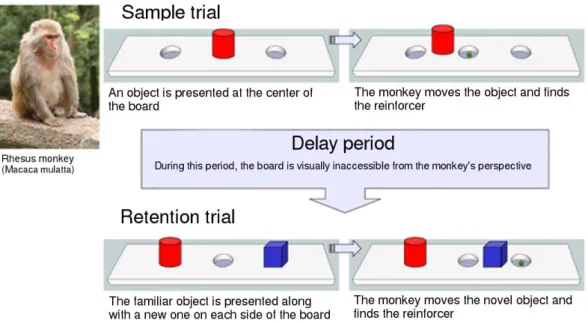
(22) Cognitive enhancement by means of TMS and video game training: Synergistic effects internally (endogenous), such as unwanted thoughts and memories of previously acquired information. Exogenous stimuli may possess a series of features that make them salient over the rest of the information available in our surroundings, such as bright colors, movement, loud noises, etc. constituting bottom-up stimuli that easily capture our attention. In any case, this interfering information has to be filtered if it is not necessary for our current goal. The kind of attentional control needed to block these distractors has received many names: executive attention, endogenous attention, goal-driven attention, selective attention, top-down attention, etc. The cocktail party effect is a good example of suppression of exogenous distractors: if we need to hear somebody in a noisy environment, we have to make the effort of ignoring all the irrelevant but prevalent noises in order to focus on a single conversation in the middle of the party. Likewise, voluntarily following or searching a visual stimulus in an area densely packed with other visually salient elements also requires the use of cognitive inhibition. For example, when we are searching for some specific object, ignoring the rest of the non-matching objects, or when we are driving and we are only paying attention to the road and the surrounding elements, ignoring other stimuli that may catch our eye, but are irrelevant and may distract us from the main task, affecting our safety. Similarly, endogenous stimuli, composed by mental representations of reality already stored in our short or long-term memory, can also interfere with our ability to carry out mental tasks. Unwanted thoughts and memories from previous activities have to be actively suppressed to carry out a task effectively. For instance, when reading a text in a foreign language sometimes it is necessary to inhibit the meaning of similar-sounding words to those in our native language since that would complicate our understanding of a text. In neuropsychology, cognitive or attentional inhibition is assessed using tasks that feature one primary objective and the participant must filter all kinds of interfering information in order not to decrease the performance. Cognitive inhibition is tightly related to working memory, compared to other forms of inhibition, and both show a strong correlation. This is why it is not always easy to assess one aspect without measuring the other. Cognitive inhibition deficits appear when the lateral PFC is damaged. Patients with lesions in the DLPFC display problems filtering irrelevant information in a delayed match-to-sample task (see Figure 2) with distractors between the sample and the matching stimuli, but if the task did not include distracting info, being a pure working memory task, they showed normal working memory performance. There is some evidence, as measured by the auditory match-to-sample task that attentional networks already modulate sensory regions to avoid task-irrelevant interferences (Purves et al., 2012).. 22.
(23) Theoretical Framework and Empirical Evidence. Figure 2. Procedure followed in each trial of the match-to-sample task. After a sample is presented, a distractor appears after a fixed delay. A second delay appears before either a matching or a non-matching sample appears. Adapted from: (Nieder, 2016). Apart from the role of the lateral PFC in cognitive inhibition, which shows increased activation when actively suppressing information since it is an action that requires effort, the hippocampal formation reduces its activation during that suppression. Inhibiting actions The other main form of inhibition is behavioral inhibition. This form of inhibition is used when we want to consciously stop a planned action that has already been initiated, or prevent the realization of an action that would have been initiated according to external stimuli or internal predispositions. Although it can be understood as the complementary of behavioral initiation, it probably does not share the same neural substrate. In this case, an action has already been planned and sent to the motor system, and stopping that action involves more than just deactivating the planned action; inhibition requires an effortful and conscious action to suppress the planned response. One of the main problems with inhibition is the intrinsic difficulty in obtaining measures without involving other cognitive and motor processes. The horse-race model of inhibition is an approach that tries to explain and measure this cognitive phenomenon. It describes the ability to inhibit a response as a competition between the tendency to respond a stimulus and the volitional inhibition of that response. Measured in the order of milliseconds, the process that finishes first will be the one that will be shown behaviorally. As a general rule, if the inhibition order is given close enough (temporally) to the respond order, the action will be inhibited, and the changes of inhibiting that action are lower the more temporally spaced is the inhibition order presented. This pattern can easily be represented in the form of a distribution curve. The horse-race model is used to estimate the precise timing of cognitive inhibition in the stopsignal reaction time (SSRT) paradigm. In this task, a go trial is always displayed and the subject must respond as fast as possible, measuring the reaction time in milliseconds. In some of the trials, a stop signal (in any modality, usually visual or auditory) will be presented soon after, indicating the subject to suppress the previous go response. Since the probability of inhibiting will be given by the temporal separation between the two stimuli, the precise temporal appearance of the stop signal can be manipulated and the time required to process an inhibition and suppress the response can be calculated. This is usually done using a staircase design where the temporal spacing. 23.
(24) Cognitive enhancement by means of TMS and video game training: Synergistic effects between the two stimuli is dynamically altered to achieve the optimum correct timing separating the changes of inhibiting and responding.. Figure 3. Graphic representation of a trial in the stop-signal task, showing the response distribution histogram as a function of time. The “A” point represents the appearance of the “Go” signal, the beginning of the trial. After a variable and very brief moment of time (shorter than the participant’s response time), a stop signal “B” may appear. If “B” (Stop) is presented early enough, the inhibition process will be able to counteract the “A” (Go) response. If “B” (Stop) is presented too late, the inhibition process will be unable to finish in time to stop the response. The SSRT is, therefore, the time between the presentation of the Stop signal (“B”) and the temporal moment where the response is inhibited successfully the 50% of the time. Source: (K. L. Evans & Hampson, 2015). From a neural perspective (Eagle et al., 2008), inhibition process in the SSRT task presents a high involvement of the prefrontal cortex in animal models. Particularly, only lesions in the orbitofrontal cortex seemed to slow down the performance in the SSRT task, although it did not hinder the reaction times in go trials. Lesions on the subthalamic nucleus speeded up the latencies in go trials, although reduced accuracy in all-Stop trials, concluding that the stopping impairment in independent from the SSRT itself. The team of Aron et al. (2003) were among the first to consistently link the stop-signal inhibition to the prefrontal lobe in human patients, finding alterations as a result of a lesion on the right inferior frontal gyrus (IFG), but not in the left IFG, in an area connecting the pars triangularis and the pars opercularis, that showed activation in stop trials, regardless of the accuracy, but in the presence of go trials, activation is absent. Bari et al. (2011), also studying the neural substrate of inhibition in rats, found that dorsomedial regions were important for inhibiting already initiated responses. This capacity seems to be mediated by noradrenergic and dopaminergic neurotransmission. Interfering with noradrenergic pathways impaired the stopping ability, while dopaminergic impairments only caused slower go responses. They conclude that both orbitofrontal and dorsal prelimbic cortices mediate on the effects of atomoxetine, a selective noradrenaline reuptake inhibitor. Neuropsychological tasks dealing with cognitive inhibition are commonly used in research and the clinical practice (See Table 1), either alone or as part of a wider neuropsychological assessment when evaluating executive performance. The Stroop task (Stroop, 1935) is one of the most popular, 24.
(25) Theoretical Framework and Empirical Evidence as it measures the level of interference that a word representing a color painted in a non-matching color produces when the color is read all loud. While this is the classical and most common format of the task, the Stroop paradigm can be applied to other sensory modalities and contexts. For instance, it can be presented in auditory format (Roberts & Hall, 2008), spatial (similar to the Simon effect) (Hilbert, Nakagawa, Bindl, & Bühner, 2014), numerical (Cohen Kadosh, Gevers, & Notebaert, 2011) or even in combination with other emotional tasks (Kappes & Bermeitinger, 2016), to discern the implication and interaction of both cognitive processes. Assessment of inhibitory control Task Reference Stroop task (Stroop, 1935) Simon task (Simon & Wolf, 1963) Flanker task (Eriksen & Eriksen, 1974) Antisaccade task (Hallett, 1978) Delay-of-gratification task (Mischel & Grusec, 1967) Go/no-go task (M. G. Becker, Isaac, & Hynd, 1987) Stop-signal task (Lappin & Eriksen, 1966) Table 1: Common tasks used to assess inhibitory control.. Overall, a task that compares congruent and incongruent stimuli can be considered a Stroop paradigm. In any condition, there will be a facilitating element (usually presented simultaneously, but not necessarily) which will either facilitate or interfere with the main stimuli, and the accuracy and processing speed of each trial is measured. Often, neutral stimuli, not having any facilitating characteristic (such as plain text), are used as a baseline measurement. In the classical paradigm, the facilitating/interfering element is presented simultaneously (usually as a property of the stimuli e.g. color of the text), but paradigms first showing the facilitating/interfering stimuli which will affect how a later stimulus will be processed are common. Similar to behavioral inhibition, the inhibition of interfering or distracting information has been theorized to work as a race model in which the stimulus that is processed faster (either the interfering information or the inhibition action) is the one which prevails. Both relevant and irrelevant information are processed in parallel. Several theoretical models have been hypothesized to explain the competition between the stimuli, the most common being the Automaticity theory, which postulates that one of the two overlapping stimuli is more automatic than the other (in the classical task, reading is more automatic than recognizing the color of a text), due to habit or to intrinsic characteristics. Both stimuli require a certain amount of attentional resources, but in this case, resources must be purposely allocated to ignore (inhibit) the more automatic features of the stimuli, therefore requiring more cognitive resources than just processing the neutral or congruent stimuli. Reading does not need controlled attention (it is automatic), but uses attentional resources dedicated to processing the color of the word, hindering the overall performance. An alternative explanation, the Parallel distributed processing, states that different pathways are responsible for the different types of information, and some of these pathways are stronger than others, but not faster. Therefore, the strength of each pathway, when more than one is activated simultaneously, determines the level of automaticity of a task, and the source of interference is the use of the weaker path (in this case, color naming) instead of the stronger one (word reading).. 25.
(26) Cognitive enhancement by means of TMS and video game training: Synergistic effects When examined from a neural perspective, neuroimaging techniques show the implication of two main regions, the anterior cingulate cortex (ACC) and the DLPFC. It seems that the ACC is responsible for allocating attentional resources and dealing with error detection, selecting the appropriate response, showing more or less implication depending on the degree of response conflict and response expectancy (Mead et al., 2002). The DLPFC, in this case, seems to be recruited when the interference or conflict appears in order to use top-down mechanisms, the most purely executive aspect of this paradigm, to resolve this conflict. Moreover, the DLFPC would mediate how other regions (mainly posterior areas, like the posterior parietal cortex (PPC)) to favor the most relevant criteria for resolving the conflict (M. Botvinick, 2004; M M Botvinick, Braver, Barch, Carter, & Cohen, 2001; Grandjean et al., 2012). When different modalities of the Stroop paradigm are compared, different subregions of the DLPFC show activation. For instance, when comparing a color-word task with a spatial-word task, a dorsal-ventral dissociation was observed: the color-word task elicited greater activation in inferior frontal regions (BA44) and DLPFC (BA46) than the spatial-word task, which displayed greater activation in areas 8 and 9 of the left middle frontal gyrus (lMFG). Similar dissociations are found in the ACC and posterior areas for the different modalities of the task (Banich et al., 2000). The Flanker task, a paradigm that also uses congruent and incongruent trials, also seems to share a lot of features with the Stroop task, featuring similar neuroanatomic implications, mainly the ACC and the DLPFC. In this task, the participant must attend a centrally presented stimulus while ignoring the stimuli surrounding it, which may be congruent or incongruent, slowing down the response time in the incongruent trials, as they require more executive processing power. Another variation of these paradigms is the antisaccade task, focusing on visual attention, which consists in inhibiting our natural impulse to look towards salient stimuli. In this task, the participant is told to look away from a stimulus presented on a screen normally in two preset left/right locations. Contrary to other inhibition tasks, the use of eye movements is mediated by a series of regions (frontal eye fields (FEF), supplementary motor area (SMA), thalamus, and putamen) that play a key role regarding the intention of reflexive eye movements, and the involvement of the DLPFC is limited compared to other inhibition tasks, but nevertheless still important (Pierrot-Deseilligny, Rivaud, Gaymard, & Agid, 1991). The oddball and go/no-go are a pair of complementary tasks which also implicate the use of cognitive inhibition. Just like the stop-signal task, the go/no-go is another classic paradigm to study inhibition in which some of the trials (no-go) the participant must withhold the impulse to respond when a specific stimulus is displayed, contrary to the go trials, that constitute the majority of items of the task, which require a fast motor response right after the appearance of the cue. Apart from measuring the level of accuracy, using the go/no-go allows us to obtain a purer value of inhibition reaction times: it can be obtained by subtracting response times in a two-choice paradigm with response times in a go/no-go paradigm. However, some authors argue that the two tasks are not measuring the same effect (Gomez, Ratcliff, & Perea, 2007). The mechanism of this task is related to the one found in the oddball paradigm, in which a series of repetitive stimuli (often with different latencies) is interrupted by a novel or deviant stimuli. The participant’s reaction to that stimuli is recorded, usually using functional neuroimaging techniques, without needing to produce a motor response and therefore only requiring sensory and 26.
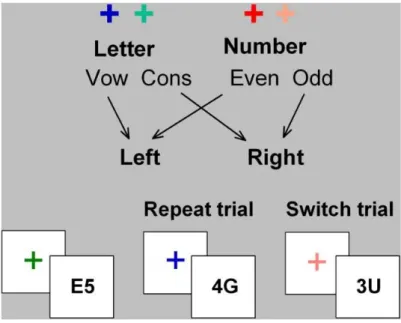
(27) Theoretical Framework and Empirical Evidence cognitive abilities to process the stimuli. However, due to the lack of measurable correct/wrong trials, the oddball task is not a valid paradigm for measuring inhibiting abilities. Compared to tasks which require a response for each trial regardless of the inhibition condition (two-choice tasks like Stroop, Flanker or Simon tasks), the Go/No-go (and possibly the stopsignal task) provide a better signal-to-noise ratio (Gordon & Caramazza, 1982). It is generally assumed that these two tasks are analogous and measure the same phenomenon, but comparing the results of the two tasks show that the reality is more complex, possibly because in the go/nogo paradigm the stimulus used for stop trials can be associated with the inhibition response and partly automated effect which is not present in the stop-signal task (Verbruggen & Logan, 2008). In the Go/no-go task, the areas which are more implicated are the pre-supplementary motor area (pre-SMA) and the left fusiform gyrus, and when more complex versions of the Go/no-go were used, the right DLPFC and the inferior parietal circuit were recruited, likely as a result of the increasing cognitive demands (that is, a higher use of working memory) (Simmonds, Pekar, & Mostofsky, 2008). To sum up, there is a variety of methods to measure the capacity of inhibition, although it still needs to be determined if the distinction between inhibition of attention and inhibition of action, and within the different modalities of inhibition of action, are valid when we attempt to observe their neural correlates, since the neural basis for both modalities largely overlap (Diamond, 2014). Shifting among rules (task switching) Cognitive flexibility, task switching or set shifting is another of the core executive function, and its correct functioning relies on processes linked to inhibition and working memory. In order to engage in a new task or just keep up switch what is happening in the environment, we must inhibit the current mental representation and redirect our focus of attention to the new set of information, loading it in our working memory and acting appropriately. Cognitive flexibility not only applies to changing to a new task set: on a broader sense, it allows us to acquire new perspectives when trying to solve a problem (what is often called “thinking outside the box”) when the traditional approaches do not work anymore. It is the opposite of mental rigidity. We use shifting in our everyday tasks every time we need to adjust our behavior based on the demands or priorities of our current situation, or a new opportunity unexpectedly arises and we suddenly have to consider it in order to obtain the best possible outcome. A lack of mental flexibility might cause a person to insist on a non-optimal approach to a problem and not consider alternative solutions. Although the concepts of cognitive flexibility, set shifting and task switching might not be technically equivalent, they greatly overlap and their distinction would be equivalent to that between cognitive control and executive functions, where “cognitive flexibility” would represent a broader term and task switching/set shifting a more low-level approach to the same mental phenomenon. The most common method to assess these functions is by using task switching/set shifting tasks which use a paradigm based on the exposition to two concurrent tasks where only one of them is actively performed based on the presence of a specific cue. For instance, tasks could be as simple as recognizing vowels from consonants, distinguishing one color from another, identifying odd and even numbers, recognizing shapes in figures, or locating the relative position of a stimulus on the 27.
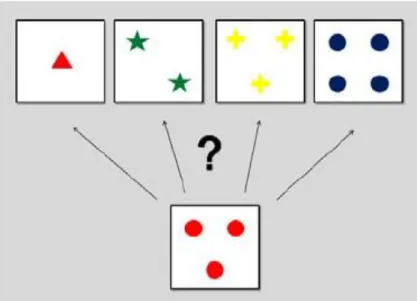
(28) Cognitive enhancement by means of TMS and video game training: Synergistic effects screen. Often, these features are bivalent (see Figure 4) so that a stimulus displays features of the two tasks (e.g. a green and odd number), and are arranged so what would be the correct response for one, would be an incorrect answer if following the other task. After a cue before every trial tells the participant which task they must engage, they are expected to respond as fast as possible, and the reaction times, as well as the accuracy, are recorded to assess as indicators for performance.. Figure 4. Example of a set-shifting task using bivalent stimuli. In this case, the color of the cue (+) indicates whether the participant must pay attention to the letter or the number that will follow shortly. Adapted from: (Whitson et al., 2014). Under this paradigm, it is assumed that if the current task is different from the one in the previous trial, an extra effort will be made in order to cancel (inhibit) the mental representation of the previous task and load the rules for the upcoming task, so longer reaction times are expected (reflecting the processing of these steps) compared to trials where the same task appears consecutively. The difference between the two types of trials (different task minus same task) can act as an indicator of the switching costs. However, that is only valid if we assume that the rules for each task are loaded to the working memory each time a different cue appears, but it is possible that both rules are loaded in parallel and be present in the working memory during the whole administration of the switching task, and the differences in reaction time between consecutive and non-consecutive trials might only account for the selection of the appropriate task. In this case, comparing the performance of a task switching paradigm with a simple or choice-reaction time task, featuring the same kind of stimuli would yield more valid results. A widely used task and probably the oldest neuropsychological test used to assess set shifting is the Wisconsin Card Sorting Test (WCST) (see Figure 5). In this task, that can be applied in computerized or traditional formats, a deck of cards containing figures varying in color, number and shape are presented to the participant in random order, with the instruction to determine which is the relevant variable for classifying a card, while the criteria change every few cards, and the participant must realize that fact in order to correct the responses according to the new criteria. The number of tries before the participant corrects his criteria and starts responding 28.
(29) Theoretical Framework and Empirical Evidence correctly are counted. However, this task does not provide a value of the latency derived from processing the choice, so it is more frequently used in neuropsychological assessment rather than in neuroscience research.. Figure 5. Example trial of the Wisconsin Card Sorting Test (WCST). The participant must choose one card according to one unknown rule (color, shape or number), that changes every several trials. Adapted from: (Youmans, Figueroa, & Kramarova, 2011). One of the reasons humans have trouble “letting go” from the last rule that worked to successfully accomplish a task has been termed “attentional inertia”, which is the tendency to continue to focus attention on what had previously been relevant (Chatham, Yerys, & Munakata, 2012; Kirkham, Cruess, & Diamond, 2003; Kloo & Perner, 2005). Just like any other executive function, task shifting develops with age, with children displaying much more “attentional inertia” compared to adults, getting stuck in a particular way of thinking, fixated on a certain characteristic of an object and being unable to switch to other stimuli or elements of the environment. Neurally, this is displayed as DLPFC activation every time a prepotent tendency is inhibited (Wendelken, Munakata, Baym, Souza, & Bunge, 2012). Development of cognitive flexibility Different components of task switching develop at different points along childhood and early adulthood. Perhaps the easiest task that a children as young as 2.5 years old can successfully accomplish (Brooks, Hanauer, Padowska, & Rosman, 2003; Perner & Lang, 2002) is a within dimension switching (also known as reversal task or intradimensional shifting) which consists in training responses to stimulus associated with a particular key mapping and then, in the second half of eh test, reversing the associated keys for each stimulus. The ability to change were you respond is the earliest developed aspect and precedes the development of the capacity to direct one’s attentional focus to other stimuli. Children are able to complete the Dimensional Change Card Sort Test (DCCS) (see Figure 6) when they reach the age of 4.5-5, and from even a younger age (3-3.5) if colors are used as the main discrimination criteria (Diamond, 2005; Kloo & Perner, 2005).. 29.
Figure
+7


Documento similar