The rabbit in continental Europe
P. M. Rogers, C. P. Arthur, and R. C. Soriguer
3.1 Palaeontology and history Lagomorphs have Iived on the continents of Europe,
Asia, and North America since the late Eocene or early Oligocene. Members of both families of lago-morphs have occupied the Iberian Peninsula during that time. The family Ochotonidae, once represented by some 15 species in 5 genera, became extinct in Europe (with the exception of Ochofooa pusilla in eastern Russia) at the end of the Pliocene. The Lepor-idae have been reduced from 7 species in 4 genera to the surviving 3 species in two genera, Lepus and
Orycfvlagus.
The late Neogene and Quaternary periods saw many profound ecological changes in Iberia. Late Miocene beds (5-7 million years ago) at Salobrena in the southern Spanish province of Granada have made an important contribution to our understand-ing of those changes. The deposits reveal a fauna which included many forms of direct African origin-giraffes, antelopes, hyaena, and various murids--lying together with Asiatic forms. The data are too sparse to calculate the rate of faunal change, although it seems certain that the African pre-Pleis-tocene immigrants must have bridged across Gibral-tar or the AIboran sea. One European form, Prolagus, must also have made use of that bridge, but in the opposite direction, to colonize North Africa (Table 3.1).
There was a great increase, in both number and kind, of leporids at the end of the Neogene and during the Quaternary, which was probably related to the development of extensive grasslands, the cool-ing of the climate, and the arrival of Asiatic immi-grants.
3.1.1 The origin of Oryctolagus
the earliest known specimen of Oryctolagus comes from Salobrena. The remains are sparse (one solitary tooth!) and do not permit identification to species (Lopez Martinez 1977b). But they show that Orycto-lagus originated well before the PIeistocene.
There are three plausible hypotheses to explain the ancestry of Orycfolagus. The first is that it is derived from the Asiatic Trischizolagus, but this is difficult to accept as the two genera co-existed during the Upper Miocene of Salobrena (Granada). The second, which suggests an African origin, and the third, an indigenous origin from Aiilepus, seem more likely; but the available evidence does not really favour any of the three hypotheses.
In western Europe, Lepus co-existed with Orycto-lagus, although not constantly. Oryctolagus can survive in any environment, but only as long as the soil is suitable to dig and hide in. Lepus is more widely adaptable, able to live in forest clearings, alpine meadows, or prairie, whatever the soil. Such wide ecological plasticity makes it difficult to deduce much about the habitats available at the time. In Central Europe, Lepus co-existed with Hypvlagus and with Ochofona.
3.1.2 Species of Oryctolagus in the last 2.5 million years
The rabbit in continental Europe 23
Table 3.1 Occurrence of Prolagus sansaniensis in western Palearctic deposits
Country Miocene (lower) Miocene ( middle) Miocene (upper) Pleistocene Spain France Germany Morocco Portugal Turkey Hungary Greece X X X X X X X X X X X X X X X X X X X
O. lacosti, already known from France (Lopez Mar-tinez et al. 1976) and described the oldest known dis-covery of O. cuniculus on the Iberian peninsula, more than half a million years old.
Oryctolagus lacosti, known from Cataluna (Vil-laniense and Bihariense), had a large body size (between that of Lepus and O. laynensis), similar to O. laynensis in Italy and France. Cranial and dental characteristics mark it as an Oryctolagus, although in body size and in the morphology of the premolars (P3) it had similarities with Lepus.
Oryctolagus laynensis appeared in Andalucia, Castilla, and Cataluna in the late Miocene, and is apparently a direct ancestor of present day rabbits. It has also been found in the Pliocene either as a `descendent' of Trisclrizolagus, also known from the upper Miocene in Murcia, or as an African immi-grant. It is the oldest known Oryctolagus, with cranial and dental characteristics typical of that genus. Its skeleton appeared to be modified for jumping, but it also had the robust muscular inser-tions, particularly on the humerus and ulna, com-mon in burrowing animals (Donard 1982).
Oryctolagus cuniculus first appeared in Andalucia, in mid-Pleistocene deposits in Cullar Baza, Granada, co-existing with Lepus. It has also been found in the province of Malaga, and in southern France (de Lumley-Woodyear 1969, 1971; Chaline 1976; Lopez-Martinez 197713; Pages 1980). Dental peculiarities suggest that both O. cuniculus and O. Iacosti are descended from a common ancestor, O. laynensis.
A plot of tooth lengths from Quaternary remains
in the Iberian peninsula shows that the earliest species of Oryctolagus, although smaller than Lepus, were larger than the later O. cuniculus (O. lacosti then O. laynensis; Fig. 3.1a). Over the last 13 000 years the sizes of various osteological variables have also tended to decrease in O. cuniculus (Fig. 3.1b); which was a smaller rabbit than either of the other species, perhaps because it always coexisted with Lepus. The rabbit from Cu]Iar Baza (Granada) was similar to O. cuniculus today.
This is consistent with Donard's (]982) research on the recent history of the rabbit in France. From bones in numerous caves she was able to show that from 300 000 years (Mindel glaciation) to 15 000 years ago ( Magdalenian epoch) local populations of rabbits showed substantial variation in body size,following changes in climate. Four geological sub-species are thus defined: O. c. lunelleusis, a rabbit of moderate size and temperate climate, dating from 300 to 200 000 years ago; O. c. grenalensis, a large rabbit of very dif-ferent climates, dating from 150 to 70 000 years ago; and O. c. li uxleyi, a small rabbit of hot climates some 40 000 years old, still living on the Canary Islands ( where it was introduced long ago, or was possibly there before people) and Madeira; and O. c. cunculus.
3.1.3 Geographical variation in contemporary
Oryctolagus cuniculus in Europe
The rabbit in continental Europe 25
present range, from north to south (Table 3.2). The rabbits of North and Central Europe are much larger than their relatives in Mediterranean Europe and North Africa. Even within France or the Iberian peninsula, there is a clear north-south gradient in body size.
Several hypotheses have been suggested to explain this pattern. One associates selection of body size with various ecological influences (climate, predation etc.). The rabbit apparently conforms to one such hypothesis, Bergmann's law, which pre-dicts larger body size in higher latitudes. Soriguer (1981a, 1983b) has shown that rabbit populations which differ in body size also differ in other respects. The Mediterranean Iberian rabbit grows faster, and as we note later, has smaller litters, breeds younger and dies sooner than its bigger cousins. The final result in terms of the rate of increase 'r' is the same, however, albeit through different strategies. Another explanation suggests the influence of human activities (introductions, 'improvements'
etc.) and domestication.
A third possibility is that the northern and south-ern rabbits represent different evolutionary lines. At the time of the glaciation of Mi.ndel (50 000 BC),
U. cuniculus had a fairly restricted range. Studies of the systematics of rabbit parasites, principally fleas, suggest that there were then two relict populations of rabbits: one in Spain, where the rabbit was par-ticularly abundant near Gibraltar, and the second in the south of France (Beaucournu 1980a, 1980b). Indeed while 5pilapsyllus cuniculi, the most common flea on rabbits, is present throughout the rabbits' range, three other fleas, Xenopsylla cunicularis, Caenopsylla lactaevn, and Ddontopsyllus guirosi, are present only in France and Spain (including Morocco for Xenopsylla). The morphological differences are clearest between French and Spanish individuals of two of these species of flea, suggesting prolonged separation between the two relict rabbit populations (Beaucournu 1980a).
Studies of mitochondrial DNA and different immunoglobulin alleles support this hypothesis (van der Loo et al. 1991; Biju-Duval et a!. 1991). In general there is high polymorphism in southern Spain, decreasing towards the north. Phylogenetic relation-ships between the rabbit's mtDNA types suggest that the separation of the two relict populations could have begun even before the Mindel glaciation.
Domestic rabbits appear most similar to northern wild rabbits, and least similar to those of Andalucia (Richardson et al. 1980; Biju-Duval et a!. 1991; Van der Loo et a!. 1991; Van der Loo and Arthur in preparation), This suggests that the foundation stock for domestication came from only one (northern) population. It is interesting to note that the mtDNA of French rabbits is more closely related to that of rabbits in the north of Spain than the south. Almost all the alleles of domestic rabbits are present in the wild genotypes. Rabbit populations could have suf-fered genetic impoverishment the further they have moved from their ancestral home.
Today's wild rabbits still retain traces of their diverse historical origins. Genetic characters distin-guish at least three separate rabbit populations in Europe: one in south, central, and west Spain and Portugal, a central one in northern Spain and south-ern France, and a northsouth-ern one which includes rab-bits in Belgium, England, Scotland, Wales, and northern France. Rabbits in the last group are genetically similar to those now in Australia and New Zealand (Richardson et al. 1980).
3.1.4 History of Oryctulaguscuniculus in Europe
Donard's (1982) studies showed no rabbits in all deposits of the Holocene (10 000 years ago) and earlier, north of the Loire. No rabbit bones have been found in all the excavations undertaken in the departements (administrative divisions of France) of Cote d'Or, Eure-et-Loire, the north of Charente, in Seine-et-Marne, Essonne, Yonne, Seine-Maritime and Haute-Savoie, whereas the hare (Lepus) is relat-ively well represented. In contrast, rabbit bones have been found in Charente Maritime, a deposit in the south of Charente, in Gironde, Haute Garonne,
Her-ault, Bouches-du-Rhone, Ain, Dordogne, Correze and Ardeche (Fig. 3.2).
Table 3.2 North-south variation in contemporary rabbit weights (g)
Country dcpartement (France only)
Sex Whole
weight ( mean)
Sample size
Maximum weight
Reference
Sweden F 1670 521 72000 Andersson eta!. (1979)
M 7670 521 72000
Holland F 1500 >1700 W allage- Drees
M 1530 (pers. comm.)
France' N Nord F 1710 45 72000 Arthur and Guenezan
(sand dune) M 1725 25 72000 (unpublished)
W Morbihanh` F
1450 47 Arthur (unpublished)
(heathland) M 1415 56
Vendee 1 1450 24 1830 Arthur and Aubineau
(bocage`) M 1350 16 1760 (unpublished)
Deux-Sevres F 1355 17 72000 Arthur and Aubineau
(bocage) M 1370 22 1980 (unpublished)
Centre Loiret" F 1385 29 Arthur and Guenezau
(bocage) M 1360 23 - unpublished
CW Yvelines F 1415 67 1830 Arthur and Guenezau
(farmland) M 1355 84 1780 (unpublished)
Yvellnes F 1500 100 1930 Arthur (unpublished)
(parkland) M 1510 83 1860
Essonne F 1360 51 1830 Arthur and AngibauIt
(woodland) M 1405 63 1760 (unpublished)
E Haute-Saones` F 1350 37 Arthur (unpublished)
(pasture) M 1360 28
CE Saone-et-Loire" F 1373 28 Arthur (unpublished)
(pasture) M 1345 31
SW Landes F 1360 115 1750 Arthur and Avignon
(fallow/pasture) M 1430 90 1650 (unpublished)
Landes F 1555 15 72000 Launay (pers. comm.)
(farmland) M 1355 8 >2000
Haute-Garonne`` F 1730 9 >2000 Launay (pers. comm.)
(farmland) M 1630 9 72000
Dordogne F 1345 33 1640 Arthur and Garcia
(bocage) M 1310 28 1610 (unpublished)
SE Hautes-Alpes` F 1290 12 1370 Arthur and Reudet
(bocage) M 1295 18 1450 (unpublished)
Bouches-du-Rhone F 1245 41 1580 Arthur and Gaudin
(pasture) M 1210 28 1510 (unpublished)
Bouches-du-Rhone F 1250 22 Vandewalle {pers. comm.)
(fallow) M 1235 19
Bouches-du-Rhon' F 1354 101 Rogers (1979)
The rabbit in continental Europe 27
Table 3.2 (cont.)
Country departement (France only)
Sex Whole
weight ( mean)
Sample size
Maximum weight
Reference
France SE
Herault' F 1230 10 1510 Arthur and Tarts
(garrigue/culti v.) M 1250 10 1430 (unpublished)
Corse F 1235 12 1430 Arthur and Roux
(maquis) M 1320 14 1490 (unpublished)
Vaucluse F 1300 45 1590 Arthur and Gaudin
(fallow) M 1340 65 1541) (unpublished)
Portugal F 1017 18 Lopez Ribeiro (1981)
M 1023 11
Spain NE 1190 4 Soriguer (unpublished)
NE 1158 71 Manosa and Real
(unpublished)
N 1224 97 Ceballos (unpublished)
N 1274 113 CebaIlos (unpublished)
NW 934 6 Soriguer (unpublished)
SE 1043 28 Marquez (unpublished)
S I011 1044 - Soriguer (unpublished)
S 910 16 1050 Soriguer (unpublished)
SW 1092 521 Soriguer (1980c, 1981a)
SW 923 78 Soriguer (unpublished)
Morocco 1039 Soriguer (unpublished)
All data except Rogers (1979) are from adult rabbits (>9 months) collected by ferreting in January-February.
Data collected by the Service technique of the Federation Departemettale des Chasseurs.
' Data collected during the hunting season {September/October) from adult rabbits (>9 months). e Includes domestic x wild crosses.
Data collected in all seasons by night shooting; January-February mean weights were 1237 g (QC, n - 22) and 1282 g {dd, n = 28). ` A landscape of small fields (pasture or crop) surrounded by hedgerows on mounds.
By Roman times rabbits had become a problem in Spain. In the Balearic Islands they caused so much damage that the colonists asked the Emperor Augus-tus to send a Roman legion to clear the land of them, or to allocate them land elsewhere (according to Strabo, 58BCtoAD20). Pliny the Elder, in his Natural History, tells of the ramparts of Tarragone being undermined by rabbit warrens, and recommended even then using ferrets against them. The rabbit was already used as the symbol of Spain by the poet Catullus, and imprinted on the reverse of some coins
by the Emperor Hadrian. The Romans modified the range of the wild rabbit by introducing it to many countries, including to Italy and Corsica from France (Bodson 1978; Zeuner 1963), and to North Africa from Spain (C. Louzis personal communication).
references to rabbits kept by monks and sometimes by peasants, or by the feudal gentry in enclosures of varying extent and degree of security, sometimes made of stone. Rabbits were often sold in markets, as shown in the bookConejenade Toledo (the Rabbitries of Toledo) of the twelfth century. Trade sometimes spread far afield; there are records of the sale of rab-bits between the abbeys of Corvey (Germany) and Solignac (France) in 1148, and the despatch of 60(X) rabbit pelts from Castile to Devon in 1221 (Delort 1984). However, there is scarcely a mention of rab-bits living free in the wild.
Nevertheless the monarchy in France always attempted to restrict 'warren rights', by forbidding the creation of new warrens or the enlargement of old ones, or the re-establishment of old boundaries (there are examples of such rules in the ordonnances of Jean le Bon in 1356 and of Charles VI in 1413). In
the seventeenth century Colbert (prime minister to King Louis XIV) ordered the destruction of rabbits in all the royal forests, and undertook to compensate for rabbit damage where the royal servants were unsuccessful in their task. The French Revolution abrogated Colbert's ordonnance, and annulled the exclusive right of the gentry to control warrens, but the rabbit in France nevertheless remained enclosed and controlled. Not until the Second Empire, in 1862, did Napoleon II] declare rabbits to be game, and order that they be allowed to range freely in the forest of Compiegne.
The rabbit in continental Europe
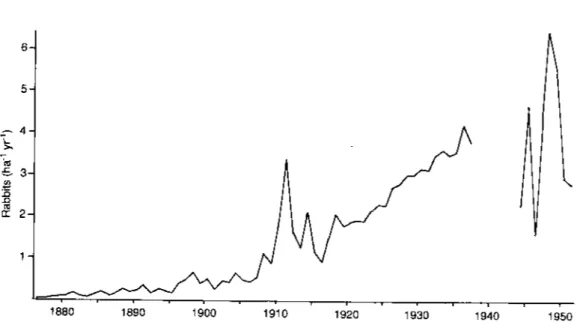
Fig. 3.3 Number of rabbits shot annually per hectare on a private hunt of 720 ha in I. uiret, France, 1677-1953 (after Ciban 1956).
29
sold in the markets of Paris rose from 177 000 to nearly 2 million (Gayot 1865). From then on, the extension of the natural range of the rabbit con-tinued progressively. In Sologne, there were so few
rabbits in 1880 that it was judged a waste of effort to fence nurseries for reforestation programmes: in 7930, hunters took more than 10 rabbits/hectare in a season from the same area.
At the start of the twentieth century the introduc-tion of winter cereals and the rotaintroduc-tion of crops, com-bined with the massive destruction of all predators (aerial or terrestrial) by gamekeepers, greatly favoured population increases in rabbits. Some gamekeepers even provided food for game (and especially for rabbits) in winter-apples, beetroot, and fodder. Rabbits quickly reached the very high densities recorded from 1920 to 1930 (Fig. 3.3). Bags of over 10 rabbits/hectare were common in northern departements of France from then until 1950-2. In Mediterranean France bags were between 1 and 2 rabbits/hectare (Giban I956).
Damage to farm crops due to the excessive abund-ance of rabbits did not generally cause concern in the north of France, but it was nevertheless the reason that, on 14 June 1952, Dr Delille introduced the myxoma virus on Maillebois, his estate in the departement of Eure-et-Loire. Because of previous failures to introduce the virus in other countries, and
because he did not know the mechanism of trans-mission, Dr Delille assumed that any disease would be confined to his 300 ha walled enclosure. But the resultof hisexperiment was a little more spectacular than he expected: by summer 7952 the disease had reached 9 departements. By the end of 1953 the whole of France was affected (Fig. 3.4), and isolated cases of myxomatosis were reported from Spain, Belgium, Holland, Germany, and England (Joubert et al. 7972).
For hunters, the rabbit population crash in France was catastrophic. In 1953-4 bags were 15 per cent of those before 1952; in 1954-5, 2 per cent, and in 1953-6 about 7 per rent. Some 90 to 98 per cent of the
French rabbit population was killed by myxomatosis between 1953 and 1955. The pressure of public out-rage was enormous, and legal proceedings were started against Dr Delille. He was convicted of illegally spreading an animal disease in September 1954, but received only a nominal penalty-a one franc fine. On the other hand, in 1956 the Syndicat National des Forestiers Francais presented him with a medal 'in recognition of services rendered to agri-culture and sylviagri-culture'l In fact the estimated increase in agricultural and sylvicultural production at that time was in the order of 1000 million francs (using 1992 values for the franc; Siriez 1957).
effects of the myxoma virus, trying to establish 'cordons sanitaires' around affected areas, and even,in 1956, importing Australian rabbits reputed to be resistant to the virus. All their efforts failed. Nevertheless, 1956 saw the start of a small increase in bag size. The first attenuated strains of the virus were found in 1955 (Jacotot eta1. 1936), and they
spread gradually until in 1968 more than half the strains isolated from wild rabbits were much attenu-ated, grade I]IB-]V (Fenner and Ratcliffe 1%5). That proportion seems to have been more or less main-tained until 1977-8 (Joubert 1979). Over the last four or five years, however, there has been an increase in the more virulent strains.
3.2 Present distribution and regional variations in numbers The rabbit is now found over most of western
Europe, excluding most of Austria, Italy, and Swit-zerland, and around the coasts of the western Medi-terranean Sea (Fig. 2.2). Its eastern range extends as far as the Crimea. It is also found on the Balearic Islands, Corsica, Sardinia, Sicily, and Crete.
Wild rabbits were introduced in southern Ukraine at the end of the nineteenth century. About 80 years later their range was increased extensively by further introductions to shoots in the Ukraine, Maldavia, and the Pre-Caucasus. In 1979 experiments began on establishing rabbits in Uzbekistan, and later in Lithuania. At each site, 2000-3000 animals were
released. Irrigation development in Central Asia provided opportunities for wild rabbits to become Iocally abundant in desert zones (Skulyatvev 1987).
The rabbit in continental Europe
Table 3.3 Density and size of rabbit warrens in various French landscapes
Region Landscape Area sampled
(ha)
Warrens per ha
Entrances per warren
Reference
Camargue woodland 60 2.6 8.6 Pages (1980)
Camargue salt-marsh 450 1.4 2.8 Rogers (1979)
Midi vines 40 1.5* 3.0 Pages (1980)
Midi garriguet 25 0.2 1.3 Pages (1980)
Brittany heath 400 2.0 1.0 Chapuis (1979)
Sologne wood/cultivated 283 0.7** 3.0 Servan (1972)
Ile-de-France cultivated 200 0.4** 2.2 Panaget (1983)
wood/cultivated 85 1.3** 2.1 Arthur and Guenezan
(unpublished)
parkland 250 2.5 24.0 Arthur and Guenezan
(unpublished)
Vaucluse fallow/woodland 38 2.6 15.0 Arthur and Guenezan
(unpublished)
t Shrub-covered calcarious land.
* Warrens mostly in the brush beneath the vines. ** Warrens mostly in woods and hedges.
much woodland and, in the north-east of France, harsh winters. In contrast, they have high popula-tion densities in Brittany, Vendee, along the Rhone valley, and the Mediterranean coast, where there are smaller fields, more uncultivated land (heathland, garrigue-shrub-covered calcarious land) and many hedgerows. Rabbits are also abundant in
Nord-Pas-de-Calais, Sologne, and around the cities of Paris and Lyon, where they are encouraged by many private hunts. The pattern of distribution has remained fairly consistent over the years, although abundance has varied.
As might be expected, landscape also determines the distribution and size of warrens. In most of France the density of warrens is less than 1.5 per hectare, each with a maximum of 3 entrances, but may reach 2.5 or more warrens per hectare, some with over 20 entrances (Table 3.3).
Since the introduction of myxomatosis in France four national surveys have been made to monitor rabbit abundance (Giban 1956; ONC 1976; Arthur et al. 1980; Arthur and Guenezan 1986). Although the survey methods used differed (survey of some private hunts from 1920 to 1956, survey of game-keepers in 1977, sample survey of hunters in 1974 and 1983), the general trend is clear enough.
After the population crash in 1952, hunters' bags remained small until 1956; then they slowly increased, more rapidly after 1970. In 1977, more than 15 million rabbits (about a quarter of the pre-myxomatosis figure) were shot. Thereafter data are li mited, but only 6.5 million were shot in 1983-a real reduction in total population since 1977 of around 55 per cent. But counting only the area of grassland, cultivated land, hedgerow and woodland edge, the number shot per 100 hectares per year was 36.4 in 1974 and 37.6 in 1977, dropping to 24.4 in 1983; a real reduction of about 35 per cent. However, the pattern of decline varied in different regions of the country (see below).
Variations in abundance of rabbits have been observed since at least 1880, long before the advent of myxomatosis (Middleton 1934; Giban 1956; Tapper 1985). The explanations offered then were usually coccidiosis or climate; also, natural cycles may be inherent in the population dynamics of rabbits. Part of the reason for the rise and fall in the 1970s and 1980s might be that the years 1970-8 were, in France at least, climatically favourable for the
Fig. 3.6 Changes in numbers of rabbits shot in (a) Austria, (b) Germany, and (c) England from 1961 to 1984 (after Tapper 1985 and data from the agricultural ministries of Austria and Germany).
The rabbit in continental Europe
Fig. 3.7 Distribution ofwarrens (sizeofdot is proportional to numberofactive entrances). Favourable (bottom) and un-favourable sites (top) are in Donana National Park, southern Spain (after Soriguer and Rogers 1981).
The variation in bag size in other European countries (West Germany, Austria, Britain) mirrors this picture; they also report an increase from 1970, peaking towards 1977 or 1978, then a decrease until 1983, varying somewhat from one country to another (Fig. 3.6).
If the numbers shot per unit area decrease more than the total for the area in question, it implies that there has been a real decrease in abundance asso-ciated with a decrease in habitat. Habitat loss has been significant in some areas of France; for example, between 1974 and 1983 many hedges in Brittany were destroyed, while in Normandy grass-land increased; in Nord-Pas-de-Calais and Alsace, field size and monoculture of maize or beetroot increased, combined with the destruction of hedges; woodland increased in the Massif Central, Burgundy and Franche-Comte, and so did urbanization in Ile-de-France. In the south-west and north-east there was an increase in garrigue, decrease in the area of vineyards and orchards, and increase in built-up areas which must have decreased the availability of favourable habitat. Those changes were all generally unfavourable to rabbits, and were reflected in bag records.
In northern France and in the Massif Central both bag size and the numbers shot per unit area decreased by 60 per cent from 1974-83. In contrast, in the south-west and north-east the total bag decreased by 42 per cent from 1974-83 but the number shot per 100 ha decreased by only 33 per cent. Our conclusion is that there has been a general decline in the northern populations, less marked in
unhunted reserves; the southern populations, though fluctuating annually, have been maintained over a decade.
Data from Spain are less detailed-no compar-able surveys have been made. It is clear, however, that rabbits have long since been widespread over almost the whole peninsula. In 1956-8 their range covered all of Spain except the north coastal provinces (Munoz-Goyanes 1960). We have no data from Portugal for those years. A 1988 survey showed much the same picture, showing in addition that rabbits were distributed throughout Portugal. Limited data from hunters in Cordoba Province indicate a marked increase in abundance from the early 1960s to the early 1980s, rising to a plateau towards the end of the decade. More recently numbers declined markedly, a consequence of the combined effects of myxomatosis and viral haemorrhagic disease (see Sections 3.6 and 3.7 below).
On a smaller scale, the local distribution of rabbits in relation to landscape demonstrates their terrain requirements. Detailed surveys in southern Spain, in areas both favourable and unfavourable for rabbits, showed that they thrive best where sand ridges suitable for warren building interdigitate with or abut moist feeding grounds (Rogers and Myers 1979; Fig. 3.7). Similarly in the Camargue, southern France, warrens are associated with levees and other high ground adjacent to lower, moister areas producing vegetation suitable for feeding. Such a juxtaposition favours a high local population density of rabbits (Rogers 1981).
3.3 Status as a game species and as a pest
Between 6 and 13 million rabbits are shot each year in France by almost two million licensed hunters, and an unknown though probably similar number in Spain by 1.5 million licensed hunters. In stark contrast to Australia and New Zealand, the status of rabbits in much of Europe is that of game rather than vermin. In Spain the rabbit is the most important game species; in France it constitutes 40 per cent of the total bag of small plains species, coming second only to thrushes and blackbirds.
The hunting season in Spain is generally from October to mid-January, varying a little between
The rabbit in continental Europe 35
In_France, rabbits are usually hunted with small dogs of the Fauve de Bretagne, beagle, or teckel breeds, or with ferrets. Gas or other poisons, how-ever, are prohibited even where the rabbit has been declared a pest. In Spain, traps and snares are allowed in addition to shooting, but under official control in order to avoid killing predators. Traps are also allowed where rabbits are raised and released for hunting stock. The use of ferrets will be illegal in Andalucia after the 1992 season.
Hunters in France go to considerable effort and expense to ensure that there are adequate numbers of rabbits for shooting. Surveys by the Office National de la Chasse (ONC) show that up to half-- ahalf--mili'
iOn rabbits are released each year for hunting, at a cost of 30 to 45 million francs. More than half are captive-bred, of which 40 per cent are sold as pure wild-type and 10 per cent as wild-domestic crosses. In addition, many hunting groups have, in the last decade or so, built artificial warrens with tree stumps, stones, and branches, or have raised areas of earth or sand in which rabbits may build their own warrens protected from predators or flooding.
In Spain the rabbit has never been considered a pest in the,way it is in France where, in spite of its status as game, itis still the greatest pest after wild boar. By1952 damage to agriculture and sylviculture in France had reached the estimated 1000 million francs (1992 values, Siriez 1957), although the level has much reduced since, and 88 of France's 90 departements had declared the rabbit a pest. Only two years later, in 1954, rabbits had been so much reduced by myxomatosis that only 54 considered it a pest throughout the departement, and 21 in certain parts of the departement: 15 departements considered the rabbit only as game. By1985 only 45 considered the rabbit a pest throughout the departement (Fig. 3.8).
Where the rabbit has been declared a pest trans-location of wild rabbits, or raising wild-type rabbits or wild-domestic crosses for restocking, is forbidden. Even so, wild rabbits were restocked in over 70 departements (illegally in 25 of them) and raised for restocking, either as pure wild-types or as crosses, in about 50 departements (again illegally in 5 of them). The law allows rabbits to be raised in departements where they are a pest as long as they are not released in those departements, a condition which is not
always fulfilled.
Fig. 3.8 Number of French departements in which the
rabbit was declared a pest, 1952-85 (Arthur unpublished).
A 1977 survey by the ONC showed that in those departements having rabbits, they were present, on average, in two out of three communes (the smallest administrative sub-division within a departement). Of those with rabbits, only a quarter suffered any damage, mainly in the west of the country, mostly minor, seriously affecting only 7 per cent of cereal crops, and 2 per cent of woodland. Of those com-munes suffering damage to arable crops, 35 per cent take some form of protective measure, usually repel-lents; 77 per cent of communes protect plantations, usually with wire netting. The total cost of the damage in 1977 was 30 million francs (1992 values).
farmers and hunters in France (and many farmers are also hunters) is reduced by payment of com-pensation through insurance policies taken out by the hunting groups. In 1977, 5 per cent of hunting groups made such payments, usually after amicable negotiation between hunter and farmer. Neverthe-less each year some cases go before a tribunal which, after expert opinion, defines the extent of damage and rules on the fault of management by the hunters. In 1985 there were50such cases, claiming damages totalling 2 to3million francs; but in half the cases no payment was awarded, because it was judged that there had been no error of management or unusual damage. It is important to note here that in France it is generally expected that wildlife will feed on agri-cultural crops to some degree; only when the damage is excessive are there grounds for complaint. Whatever the cries of despair from farmers, par-ticularly in the north of France, the rabbit is con-sidered the primary game species by hunters of both north and south. The dramatic reduction in popula-tions caused by myxomatosis led to increased
hunt-ing pressure on other game, for example hares, partridges, and pheasants, which do not have the ecological plasticity of the rabbit. Their populations too declined rapidly. To compensate, hunters in France, and likewise in Spain, made numerous releases of alternative game species each year; they
also attempted to introduce new species, for example Sylvilagus floridanusand bobwhite quail, but without success.
Elsewhere in Europe (for example Belgium, Ger-many, Italy, Spain) hunters reacted similarly to myxomatosis. At least three applications to make legal introductions of Sylvilagus in Spain have been denied; the Spanish Ministry of Fisheries and Food ( MAPA) prohibited introduction of Sylvilagus in 1982. European rabbit populations certainly do recover from epizootics, and with increasing success as time goes on, but in Mediterranean France and Spain the lack of native rabbits has been lamented as much by the hunters (who were sometimes the same farmers who complained of damage!) as by conser-vationists, albeit for different reasons.
3.4 Rabbit-plant ecology
The diets of rabbits in various parts of Europe have been studied by microscopic analysis of stomach contents or faecal pellets, by chemical analysis both of food eaten and of plants available, by selective exclosures, and by direct observation. The results show considerable differences between sites and, perhaps more significantly, between seasons. There is, nevertheless, a clear general trend showing that rabbits eat mostly grasses and forbs when available, preferring the former, although not always (Table 3.4).
In the Camargue, a deltaic, saline habitat, the diet of rabbits is unlike that documented at other sites studied, except Czechoslovakia and parts of Brittany, in that dicots are the most important items, particu-larly in summer. Of grasses, only Bromus is fre-quently eaten. The choice of food is also restricted-eight species of plants may account for 86 per cent of the diet throughout the year(Rogers 1979). The staples of winter areAtriplex, Halimione, and Arthrocnemum spp. In spring the diet is more diverse, reflecting a greater choice available; the win-ter items are supplemented by Trifolium, Medicago,
and Melilotus spp., which may account for 40 per cent of the diet. Bromus iseaten most often towards the end of spring, andAgropyron pungens mainly in summer. Rabbits often cut long stems and other parts of plants, apparently without any intention of eating them (Arthur and Rogers, unpublished observations), although Soriguer has observed them doing it to reach flowers and fruits.
The rabbit in continental Europe 37
Table 3.4 Analysis of faecal pellets and stomach contents of rabbits in Europe
Country Sample Typeb Number of
Graminae Dicots Shrubs Reference
size' species per cent per cent per cent
Holland - F 18 (11) 58.0 23.5 18.6 Wallage-Drees (1989)
Czechoslovakia 20 F 43 43.9 41.3 14.8 Homolska (1985)
England 20 F 20 (4) 80.7 19.3 0 Bhadresa (1977)
UK - F 20 (<14) 80.0 <15.0 0 Williams et al. (1974)
N France I 20 F 15.8 74.7 8.1 Chapuis (1979)
N France II 20 F 86.2 3.9 6.5 Chapuis (1979)
S France 80 S 33 (9) 15.7 42.8 41.5 Rogers (1979)
S Spain 130 F 14 (5) 66.7 29.6 1.4 Soriguer (1988)
'Number of pellets or stomachs.
F = faecal pellet analysis, S = stomach contents analysis.
Rabbits living in scrubland with few forbs and grasses turn to eating woody plants (Table 3.5), selecting different parts of each, often the upper few millimetres. For example, rabbits eat the soft fleshy new stems of Stauracanthus genistoides, and 'prune' Halimium halimifolium and Juniperus phoenicea when eating their seed and fruits. Similar behaviour can be observed in rabbits feeding on Corema album, and (in Brittany) on gorse( Ulex spp.).
In northern France, variation in diet reflects differ-ent landscapes and climates. Those rabbits living on the edge of substantial forests in the Ile-de-France (the region around Paris) eat mainly grasses (includ-ing cultivated varieties, for example maize, wheat) from spring to late summer, turning to bramble (Rubus spp.) and the bark of trees in winter. There is a greater variety of food plants available in spring, as in southern Europe (Chapuis 1979). In contrast, rab-bits living in small wooded plots or hedgerows in cultivated landscapes eat grasses all year round. Again, the cultivated grasses predominate when available: rye, wheat, maize, and particularly barley. As the cereals mature wild grasses replace them in the diet, which are in turn replaced by dicots (bramble, ivy, rape) when grasses are unavailable (Chapuis 1979; Panaget 1983). In the more heathland landscapes of Brittany, rabbits also eat grasses ( Holcus, Festuca, and Agrostis spp.) when available, but turn to gorse( Ulex europaeus)and heathers( Cal-luna vulgaris and Erica spp.) in winter, and their young buds in spring. Gorse may account for 50 per
cent of the diet of some rabbits at times; bryophytes are also taken (Chapuis 1979).
The quality of food varies considerably over the year, which has important implications for breeding (see below). Different parts of plants also vary in food value, and rabbits are capable of detecting those differences and selecting the best parts. For example, the ratio of protein to fibre is two or three times higher in the diet than in the standing vegetation (Fig. 3.9; Rogers 1979). Seasonal changes in diet accompany, as might be expected, changes in the nutritive value of plants, and of particular parts of plants. Stomach analysis shows the food of Camargue rabbits in spring to be high in protein (19 to 20 per cent) and low in fibre (c.25 per cent). At the end of spring (in May or June, according to the year) the proportion of protein drops quickly to 12-13 per cent, and fibre rises to over 30 per cent, reflecting a change in the quality of food available. It obliges the rabbits to eat more, and coincides with a reduction in the physical condition of adults (Fig. 3.10; Rogers 1979; Vandewalle 1986).
The choice of plants eaten in the Camargue also depends largely on the balance between salt and water in the available standing crops. For example, the reason that rabbits eat apparently unappetizing grasses in summer (dry Bromus, Agropyron) may be that Atriplex and Halimione contain too much salt (Rogers 1979).
Table 3.5 I mpact (consumption + pruning etc) of rabbits on woody vegetation in Donana National Park, southern Spain
Location Date Plant
density stem ha-'
Plant volume m3ha-'
Impact Species %
Totals 'old' new'
Porquera-Fraile Oct 1982 11665 8729 25.0 0.0 0.1 Halimium halimifolium 0.1 Sabinar-Ojillo Oct 1992 22835 8539 81.0 3.5 0.4 Stauracanthus genistoides 12.5 Juniperus phoenicea 4.5
Rancho Manuela Oct 1982 33200 16885 55.5 0.5 0.4 S. genistoides 17.5
G. triacanthos 17.5
Cistus salvifolius 0.9 Rosmarinus officinalis 0.4
H. halimifolium 0.2
Phillyrea angustifolia 0.4 Sabinar-Cota-32 Jan 1983 46098 11147 41.5 1.7 1.3 Lavandula stoechas 17.5
C. salvifolius 7.6
H. commutatum 3.5
C. libanotis 2.4
J. phoenicea 1.9
R. officinalis 0.8
Dunas-Cota-32 Jan 1983 4933 2870 19.3 2.4 3.4 Scrophularia frutescens 17.5
Total impact of rabbit + others on all parts of plants. '' I mpact of rabbits on old parts of the plant.
I mpact of rabbits on new growth (<1 year old). Source: Soriguer (19816).
various exclosure experiments that confirmed this expectation, for example by Bassett 1978; Bassett and Rogers 1979; Soriguer 1981b, 1983a, 1988, must have seemed redundant to many farmers! In early sum-mer in 1976 and 1977 in Donana National Park rabbits accounted for only 15 to 26 per cent of the total forage offtake (70 per cent) by large herbivores (Soriguer 1983a; Soriguer and Herrera 1984), and slightly more in June 1983. In low Mediterranean mountain areas (western Sierra Morena) rabbits con-sumed 33 per cent of the standing crop (Soriguer 1981a). In Mediterranean France (Camargue) com-parable figures vary from 1 to 27 per cent (Bassett and Rogers 1979). Of four significant herbivores on one Camargue study area, rabbits were second only to horses as consumers of primary production (Table 3.6), ahead of both coypu and grasshoppers (Duncan 1992).
Herbivores may also cause changes in floristic composition. Results from exclosure experiments to determine how much rabbits do so have not been clear cut, largely because it is difficult to assess the effect of herbivore activity on natural succession. In the Camargue the most common winter foods of rabbits ( Halimione, Torilis, Limonium) increased when rabbits were excluded, but few other changes could be attributed directly to the effects of grazing. Much the same conclusion applies in southern Spain (Soriguer unpublished data).
The rabbit in continental Europe 39
Fig. 3.9 Relationship between season and crude protein/crude fibre ratios in standing vegetation and rabbits' stomach contents (Rogers 1979).
Table 3.6 Estimated off take of herbaceous plants by the main herbivores on a 335 ha Camargue
study area (S. France)
Table 3.7 Reproductive parts of plants found in faecal pellets of rabbits in Spain, illustrating their role in seed dispersal
Species Year Number Dry matter
off take (t. day
-')
Species Part of plant
Corema album
Cistussalvifolius
complete fruit capsules with seeds
Coypu 1977-78 50 0.017 Halimium halimifolium
-ditto-Grasshoppers 1977 0.020 Lavandula stoechas flowers and seed
Horses 1976 26 0.356 Armeria gaditana flowers and fruits
1977 35 0.466 Asphodelus aestivus
-ditto-Rabbits 1976 838 0.087 Juniperus phoenicea buds, fruit and seed
1977 670 0.067 Rosmarinusofficinalis old flowers and seed
1983 3450 0.352 Olea europea
Pistacia lentiscus
whole ripe fruit ripe fruit
Data from various sources in Duncan (1992). P. terebinthus
Retamasphaerocarpa Juncus bufonius Trifolium spp.
-ditto-seed
dittoditto -list the seeds of 16 species found in the faecal pellets Asparagus aphyllus fruit and seed of rabbits in Spain. All were checked and found to
germinate normally. Phillyrea augustifolia ditto
-Source: Soriguer (1981b).
3.5 Population ecology
The population ecology of the rabbit is not very well-known in many countries of Europe. We have used European data when they are available, but have otherwise largely relied on data from Spain and France. Those from Spain are from Andalucia, the main study areas being of evergreen-oak forest (highland) and olive forest and scrub (lowland). Much of the French data comes from three areas where many studies have been done: in the north, Ile-de-France, the area around Paris, the landscape is predominantly agricultural, but with extensive woodland, and the climate temperate; in the south the Vaucluse is an upland area with a Mediterranean climate; and southernmost is the Camargue, a flat, saline, deltaic area on the Mediterranean coast.
3.5.1 Reproduction
Just as there is a latitudinal gradient in rabbit weights, so there are clear trends in the length and ti ming of the reproductive season (Table 3.8). The
larger rabbits of northern France and Sweden start breeding later and continue longer (180 days or more) than the smaller rabbits of the south of France (96 days); in Mediterranean areas the season starts earlier still, but its end is very variable.
Seasonal patterns of reproduction in males are clear throughout Europe, with latitudinal trends. Indices of testicular activity, for example size and position of testes, tend to start rising slightly earlier in the south of Spain (Fig. 3.11) than in the south of France (Fig. 3.12), with variations from year to year, but clearer is a tendency to later decline in testicular indices in the north of France than in the south (April-May) (Fig. 3.13).
Male rabbits can reach sexual maturity at 6 months of age in France, although 8-9 months is the average (Rogers 1979; Arthur 1980); in Sierra Morena (southern Spain), Soriguer (1981a) reports 4-5 months.
The rabbit in continental Europe
Table 3.8 Reproductive season of rabbits for various places in Europe
Locality First pregnancies Last pregnancies Length of
season (days)
Month Week Month Week
Spain SW November 1 May 3 210
S1 (dry) January 1 March 1 90
S2 (irrigated) October 2 June 2 210
Portugal S September 3 April 4 240
Spain N December 2 August 1 270
France S (Camargue) January 2 May 1 96
C (Vaucluse) January 2 June 1 142
N (Paris) February 1 July 3 192
Holland March 2 July 3 150
Sweden March 3 August 2 180
Source: Andersson et at. (1979); Arthur (1980); Arthur and Gaudin (unpublished); Lopez Ribeiro (1981); Soriguer (1981a); Vandewalle (1989); Wallage-Drees (1983).
Fig. 3.11 Changes in testis weights of rabbits from 3 plots in southern Spain from 1980 to 1982 (Soriguer unpublished). (-- (-- (--) Plot 1, irrigated throughout all years. ( (-- -) Plot 2, seasonal rainfall only in 1980, irrigated throughout thereaf-ter. ( ) Plot 3, no irrigation, seasonal rain only.
41
in the south of France, from early January to the end of May; and in southern Spain from December or earlier, to March assuming a dry spring, sometimes later, except on irrigated plots or in exceptional years. The proportion of females that are gravid tends to rise throughout the season, as do other indices of fertility in females (ovary weight, numbers of corpora lutea, in utero litter size); 95 per cent of
births in the Camargue were recorded between the 6th and 22nd week of the year (Table 3.9; Rogers 1979; Vandewalle in preparation).
Fig. 3.12 Indices of male fertility in rabbits at La Tour du Valat, southern France, 1975-77 (after Rogers 1979).
though they have more opportunity to do so in the south. However, the contribution made by first-year females to recruitment is questionable, given that they are less fecund than adults, and that they must give birth late in the season when the quality of food is poorer (Rogers 1979).
In general, litter sizes are smaller in the south of Europe than in the north; this may, in turn, be associated with the smaller body size of rabbits in the south (Soriguer 1981a, 1983b). Average litters are around 3or 4 in the south of Spain. In the south of France, they average about 5 versus4.5 in the north (Tables 3.10; 3.11), but the season is shorter and the average female produces only 10 to 13 young per year in the south of France versus about 17 in Ile-de-France.
Whilst the reproductive cycles of both males and females appear to be fundamentally linked to photo-period, geographical patterns of reproduction sug-gest that changes in temperature and rainfall can modify both the beginning and the end of the repro-ductive season. For example, at the beginning of the
reproductive season, low temperatures affect both male fertility (Figs. 3.11-3.13) and the weight of the uterus (Fig. 3.14). Conversely, ambient summer temperatures in the Mediterranean are close to the upper limits for spermatogenesis in other lago-morphs (Terroine and Trautmann 1937; Hart et al. 1965). In the Camargue, reproduction may start late if the previous winter was unusually wet and cold (Vandewalle personal communication), and stop early in a dry summer. In Ile-de-France, drought reduces pregnancy and lactation rates, whereas in the south of France, early autumn rain stimulates new vegetative growth and a second reproductive season. The difference in reproductive seasons on irrigated and unirrigated plots near Cadiz (southern Spain), shown in Table 3.8, is consistent with the effect of rainfall elsewhere.
pre-The rabbit in continental Europe 43
Fig. 3.13 Changes in rabbit testis weights (mean ± standard deviation) in (a) the Camargue and, (b) near Paris (after Arthur 1980 and Vandewalle 1989).
dicted from a combination of climate, food availabil-ity, and food qualavailabil-ity, although the effect of each may vary between sexes (Table 3.12). Male reproduction is influenced mainly by climatic factors, particularly radiation and temperature, which accounted for 65
to 79 per cent of the variance. Mineral elements in food accounted for only some 5-10 per cent of the variation in males, and the organic components were not relevant. For females, climate was also import-ant, but less so than the quality (organic and inorganic fractions) of food.
In summary, therefore, the rabbit's reproductive activity in Europe is governed by climate within a framework of photoperiod, particularly winter con-ditions in the north, and summer concon-ditions in the
south. Food quantity and quality, also influenced by climate, have a lesser role, albeit an important one, influencing mainly the length of the breeding season. The rabbit's reproductive cycle fits the broad seasonal pattern of the Mediterranean climate. But Mediterranean weather is unpredictable; our
experi-ence is that exceptional years seem to be normal! The rabbit is well placed to take advantage of them as they arise.
3.5.2 Survival and mortality
Survival and mortality again show distinct regional differences. The survival rate of the young rabbits in southern Spain is much lower than in France. Con-versely, amongst adults the average survival rates are much higher in Spain. At the three sites within France survival rates are similar (Table 3.13).
In Ile-de-France there are two important periods of adult mortality, May-July (15-20 per cent per month) and September-October (20 per cent). From January to April, adult mortality is almost nil (Fig. 3.15). For all ages combined, monthly mortality in the 11e-de-France samples ranged from a high of 34 per cent from May to July, dropping to an average of
Table 3.9 Proportion of female rabbits pregnant each month across Europe
Month Spain Portugal France Holland Sweden
SW S1 S2a N S S N NW S
January 0.36 0.60 0.29 0.20 0.11 '0.0 0.0 0.0 0.0
February 0.55 0.33 0.67 0.78 0.22 0.05 0.28 0.0 0.0
March 0.69 0.33 0.22 1.00 0.75 0.65 0.77 0.12 0.20
April 0.65 0.0 0.0 0.86 0.67 0.68 0.57 0.12 0.71
May 0.38 0.0 0.0 0.67 0.0 0.61 0.80 0.36 0.59
June 0.0 0.0 0.10 0.25 0.0 0.21 0.65 0.07 0.68
July 0.0 0.0 0.0 0.67 0.0 0.0 0.65 0.01 0.56
August 0.0 0.0 0.0 0.27 0.0 0.0 0.44 0.0 0.13
September 0.0 0.0 0.0 0.0 0.11 0.0 0.32 0.0 0.0
October 0.0 0.0 0.14 0.0 0.31 0.0 0.07 0.0 0.0
November 0.30 0.0 0.29 0.0 0.20 0.0 0.0 0.0 0.0
December 0.36 0.0 0.05 0.05 0.67 0.0 0.01 0.0 0.0
Mean 0.28 0.10 0.15 0.40 0.25 0.18 0.38 0.06 0.24
° Irrigated plot. Sources:
France S-Camargue: Rogers (1979). Vandewalle (in preparation). France N-Ile-de-France: Arthur (1980 and unpublished data). Holland: Wallage-Drees (1983). Data are frequency of births. Portugal: Lopez Ribeiro (1981).
Spain (north): Ceballos (unpublished).
(south): Soriguer (1981a, 19836); Soriguer and Myers (1986). Sweden: Andersson et al.(1979).
Table 3.10 Some mean annual reproductive parameters of wild rabbits in France and Spain
Camargue Vaucluse Paris region Andalucia
% pregnant 64 ± 6 58 ± 18 64 ± 9
Length of reproductive
season (days) 94 ± 30 142 ± 31 174 ± 10 90-150
Date of first conception 2 2 5
(week number) (1-7) (1-6) (1-8)
No. of pregnancies
per female 2.0 2.7 3.4
No. of embryos
per female 4.9 ± 0.4 5.0 4.4-0.3 3.7
No. of live births
per female per year 9.8 ± 3.0 13.1 ± 4.2 17.4 ± 2.7
The rabbit in continental Europe
Table 3.11 Litter sizes of rabbits in Europe and the Mediterranean
Location Mean litter size Source
Spain
NW Andalucia 3.21 Soriguer (1981a)
SW Andalucia 3.88 Delibes and Calderon (1979)
Navarra (N. Spain) 4.11 Ceballos (in prep.)
France
Camargue 5.20 Rogers (1979)
4.89 Vandewalle (in press)
Vaucluse 5.00 Arthur and Gaudin (unpublished)
Ile-de-France 4.40 Arthur (unpublished)
Holland 5.00 Wallage-Drees (1989)
Sweden (S) 4.70 Andersson et al. (1979)
Great Britain
Wales 4.36 Stephens (1952)
Caernarvonshire (1941) 4.89 Brambell (1944)
Caernarvonshire (1942) 5.64 Brambell (1944)
Morocco 3.7 Soriguer (unpublished)
Fig. 3.14 Relationship between uterus weight and ambient temperature in rabbits near Paris, 1977-79. Source: Arthur
(unpublished).
Table 3.12 Canonical correlation coefficient (CCR) and probability (in parentheses) for reproductive correlates of rabbits in southern Spain
Canonical variables CCR-males CCR-females
A Climate + food availability 0.87 (<10-4) 0.84 (<10')
B Organic fraction 0.65 (0.06) 0.75 (0.03)
C Inorganic fraction 0.71 (0.002) 0.82 (0.001)
A+B+C 0.98 (0.003) 0.99 (<10')
Source: Soriguer and Myers (1986).
Table 3.13 Survival rates (%) of wild rabbits in France and Spain
Age (months) Spain France
South Camargue Vaucluse Paris region
0-3a
16 32 34 25
4b-8 63 58 52 26/49'
adult 85 58 42 52/58'
3.7 months for the Spanish data. 3.8 months for the Spanish data.
26 and 52 in years with hunting, 49 and 58 in years without hunting.
Source: Arthur (1980), Soriguer (1981, 1983a) and unpublished data from C. P. Arthur, J. C. Gaudin, and P. Vandewalle.
the Camargue, monthly mortality (all ages) also peaks in April and July. During periods of reproduc-tion it reaches 20-30 per cent; in autumn and winter it falls to 5-10 per cent (Rogers 1979). We have few data available on causes of mortality in Europe. Pos-sibilities include hunting, predation, myxomatosis, other diseases, flooding, and injuries, for example from farm machinery.
Survival rates of rabbits over 4-months-old in the three French populations were fairly similar (averag-ing 42-58 per cent) when they were not hunted-that is, in the Camargue and the Vaucluse all the time, and in the Ile-de-France in some years. But in the years with hunting in Ile-de-France, the mortal-ity of 4-8-month-old rabbits was markedly higher, although the adults were little affected.
Arthur collected dead rabbits whenever he found them throughout a four-year study in Ile-de-France.
Excluding over 1000 rabbits that were shot, for the other 419 rabbits collected, the most frequent causes of death were predators or myxomatosis (Table 3.14), followed by injuries and various diseases (pasteurella, staphylococcus, coccidia, pseudotuber-culosis). Agricultural operations (especially mowing and harvesting) were an important hazard for younger rabbits. The importance of predation and myxomatosis was confirmed by radio-tagging rab-bits from the same population in non-hunting years (Table 3.15).
The rabbit in continental Europe 47
Fig. 3.15 Monthly mortality rates
near Paris (a) of rabbits (>4 months) with radio tags, using Trent and Rongstat's (1974) method, 1984-86 years pooled (Arthur unpublished), (b) of marked adult (>9 months) rabbits, 1980-81 (Arthur
unpublished), (c) of rabbits known to be alive (all ages >1 month), 1979-80 (Arthur unpublished).
1987). Mortality from myxomatosis may be 10-50 per cent, according to year and season, and evidently influences more immediate causes of death.
In the Camargue, most mortality is due to a com-bination of predation and myxomatosis (Rogers 1979). Myxomatosis facilitates predation, since the proportion of rabbits in the diet of foxes rises to 70 per cent during myxomatosis epizootics, or during flooding (Reynolds 1979). As rabbits can recover from severe myxomatosis that must affect their susceptibility to predation, the two must to some degree be additive. Over three years myxomatosis was responsible for 13-25 per cent of total mortality
annually (Vandewalle 1986; Arthur 1988), while in the Vaucluse it varied from 10 to 50 per cent over three years (Arthur and Gaudin in press).
Table 3.14 Causes of death of rabbits found dead in Ile-de-France, in four body-weight classes
<300g 300-1000 g Immature/
sub-adult
Adult (>9months)
n % n % n % n %
Predation 33 34.3 19 22.1 31 29.8 55 41.7
Myxomatosis 0 - 26 30.2 48 46.2 38 28.8
Road kill 19 19.8 11 12.8 7 6.7 7 5.3
Injuries/disease 0 - 15 17.4 11 10.6 20 15.1
Agricultural
machinery 8 8.33 7 8.1 5 4.8 2 1.5
Unknown 27 28 8 9.3 2 1.9 10 7.6
Total 87 86 104 132
Source: Arthur (1950).
Table 3.15 Causes of death of radio-tagged rabbits in the Paris region during a three-year study
Myxomatosis Other disease
Predation Road kill Miscellaneous Number tagged
Juveniles (<1000 g) 5 5 6 4 3 45
Adults and sub-adults
(>1000 g) 12 5 9 2 4 92
Source: C. P. Arthur-unpublished data.
The rabbitincontinental Europe 49
Table 3.16 Number of predator species in various parts of the rabbit's range worldwide
Class Australia New
Zealand
UK France Spain
Mammals 3 3 10 10 17
Birds 14 1 7' 13 19
Reptiles 6 0 0 7 4
Totals 23 4 17 30 40
Source: Soriguer (1981a), Soriguer and Rogers (1981) except Australia (Myers et al., Chapter 5) and UK (Thomp-son, Chapter 4).
3.6 Myxomatosis (see also Chapter 7) 3.6.1 Incidence
The rapid spread of myxomatosis throughout Europe, starting from Dr Delille's estate near Paris in June 1952, has been well-documented, but substan-tial study of the disease in wild rabbits in continental Europe did not begin until 20 or so years later. Up to the 1970s we have data only from domestic rabbits. In France, the number of domestic rabbits with the disease climbed to a peak in 1955, and in 1960 stabil-ized at around 100 000 cases a year (Fig. 3.17). A clear seasonal pattern became established, in which incidence ranged from a maximum in August-Sep-tember to virtually zero from December to May-June (winter to early summer), although spring epizootic were not unknown (Fig. 3.18; Joubert et al. 1972).
Data on myxomatosis in wild rabbits are now avail-able from different parts of France (Tavail-able 3.17), including the Camargue, the Vaucluse, and the Ile-de-France. In the Camargue, epizootics recur regularly every summer, and in the Vaucluse, every autumn. In Ile-de-France, however, myxomatosis may break out at any time. In the Isere, near Lyon, the timing of epizootics is also variable, although it is usually in late spring or early summer (Fig. 3.19; Gilot and Joubert 1980). In the north, epizootics last about 3 months, often longer than in the Camargue and significantly longer than in the Vaucluse (2 months).
In southern Spain, July to September/October used to be the usual period for epizootics, but since 1977 they have been most frequent in winter-spring, lasting 6 months in 1976 and 10 months in 1977,
although some years are without the disease al-together (Soriguer 1980a, 1981a). More recently the highest mortality has been from July to October (Soriguer 1981a; Soriguer and Rogers 1981). The mean interval between successive epi-zootics is the same (9-10 months) in the three regions for which we have data, but is most vari-able in the north, where it may be anything from 4 to 24 months.
Estimated mortality, calculated from the ratio of acute to total cases including recoveries, varies from 39 to 61 per cent with little difference between years. The highest mortality is in summer epizootics (43 per cent over 6 months), lower in autumn (13 per cent over 2.3 months), and lowest in winter epizootics (6 per cent in 4.5 months). There is, nevertheless, great variability in mortality rates between areas, and again the most variable region is Ile-de-France. In both the Camargue and the Vaucluse, total losses per epizootic are similar, 32 and 36 per cent respectively. The short autumn epizootics in the Vaucluse seem to be especially intense, affecting some 83 per cent of the juveniles and sub-adults but total losses are few. Many young rabbits there exhibit high levels of resistance to myxoma virus in the laboratory (no deaths out of 11 young rabbits tested in the Vaucluse compared with 5 deaths out of 7 young rabbits tested in Ile-de-France; Arthur, Gaudin and Guenezan, unpublished data).
Fig. 3.17 Numbers of domestic rabbits with myxomatosis in France,
1953-56 (after Joubert et al. 1972).
The rabbit in continental Europe
Table 3.17 Characteristics of myxomatosis epizootics in three sites in France
Vaucluse n=3
Camargue n=5
Paris region n=9
1. Duration (months) 2.2 ± 0.6 3 ± 1 3.1 ± 1.9
2. Interval between two
epizootics (months) 9.8 ± 0.4 9.7 ± 0.6 9.4 ± 6.5
3. Proportion of animals
affected (% cumulative) 83 ± 29' 59.9 ± 27' 41 ± 31
4. Estimated mortality (%) 39 ± 10 61 ± 10 54 ± 13
5. Population losses (%) 32 ± 8b 36 ± 11" 22 ± 20
6. No. of epizootics in
spring 0 0 3
summer 0 5
4
autumn 3 0
winter 0 0 2
Only juveniles, immatures and sub-adults were affected.
hLosses were from the young of the year only.
3. = proportion of infected animals, summed monthly. 4. = proportion of animals with acute and severe clinical sign. n = number of epizootics observed.
Source: Paris-Arthur (1988); Camargue-Rogers (1979), Vandewalle (1986) Vaucluse-Arthur and Gaudin (in press).
51
the proportion of juvenile rabbits found with clinical signs is low because, we suspect, they succumb to the disease quickly, often before showing any exter-nal sign; the proportion of juveniles with antibodies (13 per cent) is about half of that in adults (Soriguer and Lopez, in press). In the Camargue and the Vaucluse few juveniles are diseased, whereas in Ile-de-France juveniles represent 19 per cent of affected animals. In the north, 33 per cent of adults captured showed clinical symptoms, whereas in the Camargue and the Vaucluse almost no adults are affected.
3.6.2 Epidemiology
Many of the different regional characteristics of the disease reflect variation in transmission routes and in the immunological status of the populations. The relationship between rabbits and myxomatosis has also changed over the years.
In France and Spain, as elsewhere, there are two known vectors, fleas and mosquitoes. Their relative
importance and specific roles vary from one region to another. Rabbits in Spain support at least 22 genera of ectoparasites, versus 8 in Australia, all but one of which are also recorded from Spain (Table 3.19).
Table 3.18 Percentage of rabbits captured (numbers in parentheses) having clinical sign of myxomatosis during epizootics in France (years pooled) and Spain
Vaucluse Camargue Ile-de-France Spain
1976 1977
Juveniles (<500 g) 1.8 (648) 1.9 (321) 19.1 (833) 0.0 (130) 9.6 (52) I mmatures and sub-adults 47.7 (235) 62.8 (137) 35.4 (768) 8.2 (49) 38.9 (36)
Adults 0.0 (83) 6.0 (73) 32.8 (481) 4.0 (228) 17.6 (131)
The rabbit in continental Europe 53
Table 3.19 Genera of ectoparasites found on rabbits in Spain and Australia
Spain Australia
Amblyoma Bdellonypsus
Boophilus Cheyletiella
Caenopsylla Echidnophaga
Cheyletiella Haemadipsus
Chorioptes Haemaphysalis
Ctenocephalides Listrophorus
Dermacentor Spilopsyllus
Desmodex Xenopsylla
Haemadipsus Haemaphysalis Hyaloma Ixodes Linguatula Listrophorus Notoedes Odon topsyllus Pulex Psoroptes Rhipicephalus
Sarcoptes Spilopsyllus Xenopsylla
Source: Soriguer (1980b).
bite rabbits, from May until September, and the maximum number of bites per rabbit per day is 12 in July (Vandewalle 1981).
The abundance of fleas, at least on French rab-bits, varies inversely with that of mosquitoes. In both the Camargue and Vaucluse the average num-ber of fleas per rabbit (adults and sub-adults) is greatest from March to April (Camargue, 20-30 fleas per rabbit; Vaucluse, 40-60 fleas per rabbit), and is virtually zero during the season of epizootics. In Ile-de-France rabbits carry the most fleas, 60 to 120 per rabbit, from February to May. In summer the num-ber is still 10 to 20 (Launay 1980; Fig. 3.20).
The virus is present on the mouth-parts of fleas throughout the year in all three areas studied in France. That is, while fleas are proven carriers
Fig. 3.20 Monthly numbers of fleas on rabbits in France. (a) Camargue (Vandewalle unpublished), (b) Vaucluse (Arthur and Gaudin unpublished), (c) Paris (Launay and Arthur unpublished).
Fig. 3.21 Proportion of juvenile and adult rabbits with myxoma antibodies, Camargue, southern France, 1984-7 (after Vandewalle, unpublished).
any clinical sign of disease is puzzling, and raises important questions about, among other things, the immunological status of the rabbit population.
In the Camargue there is a clear seasonal cycle in the proportion of rabbits with antibodies (Vande-walle 1986). All adult rabbits have antibodies after an epizootic (usually in late August or early September) (see also Chapter 7).They all continue to carry anti-bodies until January-February, when the proportion gradually decreases to 20-30per cent in April-May, just before the start of the next epizootic. A variable proportion (0 to 25 per cent) of juveniles carry anti-bodies until the age of 2 months, but during an epizootic the proportion of juveniles climbs quickly to reach 100 per cent by the end of August (Fig. 3.21). Thereafter they follow the adult pattern.
In the Vaucluse all adults have antibodies from October to June, after which the proportion de-creases to about 50 per cent in August. From Sep-tember, stimulated by the appearance of a new epizootic, the proportion climbs back to towards 100 per cent. Again, some 10 to 50per cent of young rab-bits carry antibodies until the age of 2 months. By June-July usually less than 10 per cent of young still have them, but the proportion rises to 50-60 per cent by the end of October, and 90-100 per cent in Janu-ary (Fig. 3.22;Arthur and Gaudin, in press).
Results from Spain confirm this pattern. After an outbreak over90per cent of rabbits carry antibodies,
declining to 50 per cent five months later. Mortality particularly affects juveniles and sub-adults, because 40 per cent of young rabbits (up to 800 g) do not carry antibodies (Soriguer1980a, 1981a).
In the Ile-de-France, there are two different cycli-cal patterns. When there is no autumn or winter epizootic, the 50 to 60 per cent of adults which have detectable antibodies in May declines to 10-20 per cent by January-February. During the summer, 15-20 per cent of young (up to 2months) have maternal antibodies, but in August-September they lose their antibodies, and from October-November, when the young of the previous season make up three-quar-ters of the total population, the proportion with detectable antibodies stays at zero until the onset of the next epizootic. After a new epizootic, the propor-tion of surviving rabbits carrying antibodies increases rapidly the following spring, according to the intensity of the outbreak, to stabilize by August at 60-70 per cent. About 30-40 per cent of the young of the year have antibodies.
The rabbit in continental Europe 55
Fig. 3.22 Changes in the proportion of juvenile and adult rabbits with myxoma antibodies, Vaucluse, south-central France, 1985-7 (after Arthur and Gaudin inpress).
3.7 Viral haemorrhagic disease Viral haemorrhagic disease (VHD) was first
de-scribed in domestic rabbits in China. The cause was a small (28-33 nm diameter) round icosahedral virus, without envelope. The nucleic acid is single-strand RNA (Liu et al. 1984). The virus could agglutinate erythrocytes in the blood of sheep, poultry and humans (type 'O'). The incubation period for the dis-ease was 48-72 hours, with death from several hours to one or two days later. The typical symptoms was epistaxis, although often no clinical sign was
observed. Characteristic pathological changes included punctate haemorrhage in the respiratory and digestive systems, the spleen, cardiac muscles, and occasionally the kidneys. A rabbit tissue vaccine of virus inactivated with 0.4 per cent formaldehyde was developed with satisfactory results; later modifi-cations improved its efficiency (Arguello 1989; Pages 1988).