Cancer risk and hormonal changes in
night shift workers
Kyriaki Papantoniou
TESI DOCTORAL UPF / 2014
DIRECTOR
Prof. Manolis Kogevinas
Centre for Research in Environmental Epidemiology (CREAL), Barcelona, Spain
TUTOR
Dr. Josep Maria Antó
Centre for Research in Environmental Epidemiology (CREAL), Barcelona, Spain
iii
ACKNOWLEDGEMENTS
This work was funded by the Spanish Research Institute Carlos III (ISCIII, PFIS 2009, FI09/00385) and was carried out in the Centre for Research in Environmental Epidemiology (CREAL) in Barcelona. The Phd experience was a bit more than just obtaining another title. It was a career turn from medicine to epidemiology, a jump from Greece to Spain and a new start from scratch including a lot of personal growth together with the scientific development. On my way I found people that showed me the way that I would like to acknowledge.
First of all, I would like to express my gratitude to my thesis supervisor, Manolis Kogevinas for his guidance, support, trust, enthusiasm, curiosity, friendship and hospitality.
I would like to thank Debra Skene and Benita Middleton from the Chronobiology group, Surrey University in the UK where I spent three and a half months doing my melatonin radioimmunoassays, for their inspiring influence on my work and for being great teachers. I would also like to thank Lloyd, Sophie, Maria-Angeles, and the rest of people I met in Surrey.
iv
Thanks to Mark Nieuwenhuijsen for his positive influence being a main cheering-up person in daily life, but also for introducing me to the centre and arguing that staying in Barcelona for a while doing some environmental epidemiology was good fun and wiser than going back to Greece, and that is more or less how I started working at CREAL in the first place.
Very special thanks to my friends-sisters-colleaugues Anna Schembari, Magda Bosch, Eileen Pernot, Marina Vafeiadi, and Nadia Espejo for appearing and staying in my life over the last five years, representing women-researchers that I admire and myself want to look like when I grow up.
Thanks to Sala C mates for all the good moments and apologies for the not so good ones. I will miss the proximity we felt, the discussions on science and life, but also the jokes, the late afternoon breaks and all sorts of moments we shared, co-existing in such a small space for so long.
I would like to say thanks to all nice people and colleagues in CREAL for their support, the stimulating corridor and kitchen discussions, the bathroom attempts to maintain 5 minute conversations in Catalan, the volleyball matches, the mountain excursions, the bitacora after-office drinks, and for all the fun we had together. Special thanks to (ma)Mar Ferrer for being always close, warm and helpful.
v they were in English, and sending positive feelings and good advice at difficult moments.
To my dearest husband Maximiliano Sicala thank you for the love and support, for being my biggest fan, for listening to my first oral presentation rehearsals and even making comments, for waiting me to have late dinners, for understanding when I worked on weekends, for playing on the guitar or bass “Alfonsina y el Mar” and other anxiolytic songs, and for thinking that I had published in the best cancer journal!
Kyriaki Papantoniou
vii
ABSTRACT
Introduction: Recent human and animal data indicate that night shift work might increase the risk for cancer. Epidemiologic evidence is limited and has mostly focused on breast cancer while underlying mechanisms are still poorly understood. Furthermore chronotype an individual characteristic that describes the preference for activity in the morning or evening has not been taken into account in most previous research.
Aims: The main aim of this thesis was to evaluate the association between night shift work and breast and prostate cancer risk in a population based multi-case-control study in Spain (MCC-Spain). An additional aim was to study possible underlying mechanisms including the disruption of the daily production of melatonin and sex hormones.
Methods: Night shift work exposure was assessed with the use of lifetime occupational history for all MCC-Spain study participants, including detailed questions on night-shift schedules for each job held. We evaluated permanent and rotating night work as risk factors for different clinical types of prostate and breast cancer, taking into account individual chronotype. In a biomarker based study we compared daily rhythms of production of 6-sulfatoxymelatonin, the main metabolite of melatonin, and 16 sex hormones and metabolites in urine, between night and day workers of both sexes.
viii
15 years in permanent night shift and those who were exposed before their first full term pregnancy. Night shift workers had significantly lower 6-sulfatoxymelatonin levels and higher androgens and progestagens, while smaller differences were observed for estrogens. The peak time of 6-sulfatoxymelatonin and androgen production occurred later in night workers, compared to day workers.
ix
RESUMEN
Introducción: Evidencia reciente en humanos y animales indica que el trabajo nocturno puede aumentar el riesgo de cáncer. La evidencia epidemiológica está limitada, sobre todo se ha enfocado en el cáncer de mama y los mecanismos involucrados no se han estudiado lo suficiente. Además, el cronotipo, una caracteristica individual que describe la preferencia por actividad a la mañana o la tarde, no se ha tenido en cuenta en los estudios previos.
Objetivos: El objetivo principal de esta tesis fue evaluar la asociación entre el trabajo nocturno y el cáncer de mama y próstata en un estudio poblacional de casos y controles en España (MCC-Spain). Un objetivo adicional fue estudiar posibles mecanismos como la disrupción de la producción de la melatonina y las hormonas sexuales.
Métodos: La exposición al trabajo nocturno se evaluó a través de la historia laboral de los participantes del estudio MCC-Spain, utilizando información detallada sobre los horarios de trabajo. Se evaluó el trabajo nocturno de modo permanente y rotativo como factor de riesgo para distintos tipos clínicos de cáncer de prostata y mama, teniendo en cuenta el cronotipo. En un estudio de biomarcadores se comparó el ritmo de la producción de la 6-sulfatoxymelatonina, el metabolito principal de la melatonina y de 16 metabolitos de hormonas sexuales en orina, entre trabajadores de día y de noche de ambos sexos.
x
significativas. El riesgo resultó mayor para mujeres con exposiciones más largas y para las mujeres que trabajaron de noche antes de tener su primer hijo. Los trabajadores de turno de noche tenían niveles de melatonina más bajos y niveles de andrógenos y progestágenos más altos que los trabajadores de turno de día, mientras diferencias mas pequeñas se detectaron en los niveles de estrogenos. La hora del pico de la produccion de la 6-sulfatoxymelatonina y de los androgenos era mas tarde en los trabajadores nocturnos que en los que trabajaban de dia.
xi
PREFACE
Night shift work is one of the most prevalent occupational exposures, in numerous employment sectors, such as health, restaurants, transportations, communications and industry. It is predicted that night shift work will become even more frequent in the future as we move into a 24-h society. Exposure to night shift work results in alteration of sleep-wake cycles and desynchronization of human biological rhythms from the light–dark cycles, that has been associated with adverse health outcomes including cancer.
This thesis aims to assess the association between night shift work and breast and prostate cancer risk within a Spanish population-based case-control study and mechanisms using biomarkers of exposure in a cross-sectional study in Spain. The novelty of this study lies in the use of individual information on occupational history with detailed shift information that permitted a refined night shift work exposure assessment and the use of biomarkers of circadian disruption to assess possible underlying hormone related biological mechanisms of the described associations.
xiii
CONTENTS
ACKNOWLEDGMENTS iii
ABSTRACT vii
RESUMEN ix
PREFACE xi
1 INTRODUCTION 1
1.1 Cancer epidemiology 1
1.1.1 Breast cancer 1
1.1.2 Prostate cancer 4
1.1.3 Breast and prostate cancer: similarities 6
1.2 Shift work 8
1.2.1 Definitions of shift work 8
1.2.2 Prevalence of shift work 8
1.2.3 Shift work patterns 8
1.3 Carcinogenicity of night shift work 11
1.3.1 Night shift work and breast cancer 11
1.3.2 Night shift work and prostate cancer 14
1.3.3 Limitations of epidemiological studies 16
1.4 Mechanisms 19
1.4.1 Circadian disruption 19
1.4.2 Hormonal changes 24
1.4.2.1 Melatonin 24
1.4.2.2 Sex hormones 29
1.4.3 Sleep disruption 31
xiv
3 OBJECTIVES 35
4 METHODS 37
4.1 The MCC-Spain study 37
4.2 The circadian biomarkers study 40
5 RESULTS 45
5.1 Paper I: Night shift work, chronotype and prostate cancer risk in the MCC-Spain case-control study
47
5.2 Paper II: Breast cancer risk and night shift work in a case-control study in a Spanish population: the MCC-Spain study
85
5.3 Paper III: Circadian Variation of Melatonin, Light Exposure, and Diurnal Preference in Day and Night Shift Workers
119
5.4 Paper IV: Increased sex hormone production in male and female night shift workers
135
5.5 Commentary: Shift work and breast cancer: do we need more evidence and what should this be?
177
6 DISCUSSION 181
6.1 Contribution to the current knowledge 181
6.1.1 Night shift work and cancer risk 181
6.1.2 Exposure assessment for night shift work 185
6.1.3 Mechanisms: hormonal changes 187
6.2 Methodological issues: strengths and limitations 191
6.2.1 Study design 191
6.2.2 Statistical power 191
6.2.3 Confounders and effect modifiers 192
6.2.4 Bias and generalizability of results 195
xv
6.4 Future research 199
7 CONCLUSIONS 203
ANNEX 205
1
1. INTRODUCTION
1.1 Cancer Epidemiology
1.1.1 Breast cancer
Breast cancer is the most frequent tumor and the number one cause of cancer death in women worldwide (Ferlay et al., 2010; Ferlay et al., 2013). There is four to five-fold variations in rates worldwide, with the highest rates observed in Europe and North America and the lowest in Asia. Migrant studies show that women that move from low to high risk countries eventually adopt the rates of the host countries, indicating that international differences in breast cancer incidence are partly explained by environmental, occupational and lifestyle factors.
Figure 1.1.1 Breast cancer incidence among females (Globocan 2012)
2
increase in incidence of breast cancer (Adami et al., 1998; Hankinson, 2008).
3 women while it is positively associated to postmenopausal breast cancer (Adami et al., 1998; Weiderpass et al., 2004).
4
The idea that early life exposures might have an impact on future disease risk in childhood and adulthood is old,and it may also apply for breast cancer (Russo & Russo, 2011). In utero exposures might affect future breast cancer risk by alterations in normal breast development (Potischman & Troisi, 1999; Trichopoulos, 1990). Childhood, adolescence, early adulthood and pregnancy also play an important role in the breast development and hormonal balance (Hamilton & Mack, 2003). During these periods female breast tissue might be particularly vulnerable to environmental and occupational exposures.
1.1.2 Prostate cancer
Prostate cancer is the most common cancer in males with an increasing incidence worldwide (Ferlay et al., 2010; Ferlay et al., 2013; Siegel et al., 2013). The etiology of this tumor remains largely unknown and the only well-known risk factors include age, race, family history of prostate cancer and country of residence (Lorelei A Mucci, 2008). Hereditary factors explain 30-40% of prostate cancer risk and numerous genes associated with prostate cancer have been identified (Eeles et al., 2013). Therefore, no intervention strategy exists that could reduce the incidence of
prostate cancer
.
Physical inactivity, smoking, sleep deprivation, vitamin D deficiency due to low sun exposure, and diet related factors, such as high meat and alcohol and low vegetableconsumption and insulin-like growth factor-I (IGF-I)
concentrations, are possible modifiable risk factors for prostate cancer, for which evidence is inconclusive (Lorelei A Mucci, 2008).
5
Figure 1.1.2 Prostate cancer incidence among males (Globocan 2012)
6
In utero exposure to sex hormones has been hypothesized to relate with adult cancer risk. Anogenital distance (AGD) is the distance from the anus to the genitalia, and is currently being used as a measure of fetal androgen exposure. AGD tracks through life and is a highly reliable anthropometric measurement (Papadopoulou et al., 2013). Findings of recent studies have linked AGD length and reproductive parameters in adulthood. Decreased AGD was found among prostate cancer patients compared to population controls in the MCC-Spain study (Castano-Vinyals et al., 2012).
1.1.3 Breast and prostate cancer: similarities
Breast and prostate cancer are the two most common tumors in men and women combined, accounting for over one fourth of all incident malignancies in the western countries (Figure 1.1.3.1). The etiology of both these tumors is complex and remains rather enigmatic for epidemiologists and clinicians (Hankinson, 2008; Lorelei A Mucci, 2008). Despite the extensive research on the identification of risk factors associated with their incidence only part of the risk has been explained so far. They both have a strong heritable component compared to other cancers. They also both depend on sexual hormones for their development. Finally they both show substantial geographical variation and increasing incidence in developing countries indicating that environmental, occupational and lifestyle factors are important for their etiology.
7 duration and diminished exposure to daily sunlight (vitamin D which possibly protects against these cancers) (Stevens et al., 2013). Night shift work is one of the most common occupational exposures in the developed countries and night shift workers represent subjects with extreme exposure to light at night and disruption of their sleep-wake patterns and daily biological rhythms (Arendt, 2010; Costa, 2010).
[image:23.499.99.365.251.627.2]8
1.2 Shift work
1.2.1 Definitions of shift work
The International Labour Organization defines shift work as “a method of organization of working time in which workers succeed one another at the workplace so that the establishment can operate longer than the hours of work of individual workers” (International Labour organization, 1990). In the scientific literature the term “shift work” has been widely used and includes any work that takes place outside the standard daylight hours (7/8 a.m. to 5/6 pm).
1.2.2 Prevalence of shift work
Shift work is one of the most frequent occupational exposures in the industrialized part of the world with 20-30% of the population engaged in some kind of unusual working hours. This number is expected to increase according to predictions of a progressive move towards a 24/7 society (Parent-Thirion A., 2012).
1.2.3 Shift work patterns
9
10
Different shift systems are used depending on the occupational sector (Sallinen & Kecklund, 2010). Industry is usually arranged in 3-shift systems, using fixed start and stop times and rotation of different speeds. In the transport sector, schedules are often irregular concerning the number of consecutive shifts, the duration of the shift and start and stop times. In the health care-sector both permanent and rotating shift schedules are operated. In the service sector split shifts and permanent night shifts are used while in the leisure sector shifts cover mostly the late afternoon and night hours .
11
1.3 Carcinogenicity of shift work
In 2007 the International Agency for Research on Cancer (IARC) of
the World Health Organization (WHO) evaluated the
carcinogenicity of shift-work (IARC, 2010; Straif et al., 2007). They concluded that “shift-work that involves circadian disruption is probably carcinogenic to humans” (Group 2A). This evaluation was primarily based on “sufficient evidence in experimental animals for the carcinogenicity of light during the daily dark period”. Also an increasing number of epidemiological studies in the last years suggest a possible association between the disruption of normal circadian rhythm and risk for developing cancer. Most of these studies have focused on female night-shift workers and showed a positive association between night work and breast cancer risk. Although breast cancer is the cancer most commonly studied tumor, recently a few studies have considered the effect of night-shift work on other types of endocrine cancer, such as prostate, and endometrial cancer (Viswanathan et al., 2007) and some reports have shown data on a wide range of tumor localizations, including colorectal cancer (Kolstad, 2008; Parent et al., 2012; Wang et al., 2011). In continuation the evidence for the association between night shift work and the two tumors evaluated in this thesis, breast and prostate cancer, will be described.
1.3.1 Night shift work and breast cancer risk
12
In a nationwide population-based case-control study, in Denmark including 7035 female cases between 30 and 54 year-old an increased risk of breast cancer associated with shift-work was reported (Hansen, 2001). The OR for breast cancer among women who had ever worked at night at least half a year and at least 5 years prior to diagnosis was 1.5 (95% 1.2-1.7), adjusted for reproductive history and socioeconomic status. Exposure to artificial light during night and night-shift was studied in a case-control study of breast cancer in Seattle, USA, including 813 cases and 793 controls, all aged 20-74 years, frequently matched according to 5-year age groups (Davis et al., 2001). In this study night work exposure was defined as at least one graveyard (beginning work after 7p.m. and ending before 9a.m.) shift per week in the 10 years before diagnosis. The estimated relative risk for breast cancer after ever working graveyard shift was 1.6 (95% CI: 1.0-2.5). The above results were, to a certain extent, confirmed in two large prospective studies including nurses participating in the Nurse’s Health Study, engaged in rotating night shifts (Schernhammer et al., 2006b; Schernhammer et al., 2001). In a nested case-control study performed within a cohort of Norwegian nurses an association between duration of night work and breast cancer risk was found (p=0.01), with a RR for working 30 or more years of night shift was 2.21 (95%CL, 1.10-4.45) (Lie et al., 2006). Elevated breast cancer risk (OR=4,3; 95%IC 0,7-26) after adjusting for duration of employment was also seen among postmenopausal >50 years old radio and telegraph operators exposed to shift work in a case-control study in Norway (Tynes et al., 1996). Evidence from the GENICA case-control study in Germany, assessing shift work information for 857 breast cancer cases and 892 controls, enrolled between 2000 and 2004, showed that long-term work was associated with a modestly but not significantly increased risk, while having ever worked was not (Pesch et al., 2010).
13 night shift versus none) (O'Leary et al., 2006). However in this study 35.7% of cases and 36.9% of controls reported any “evening or overnight shift work”, proportions which were considered as remarkably high. Furthermore night-workers in this study tended to be younger and more frequently premenopausal compared to other studies. Schwartzbaum et al. also found no increase in risk in female breast cancer in a retrospective register based ecologic cohort study (Schwartzbaum et al., 2007). However this study included a rather small proportion of women working night shifts and the four most common occupations that fell into the shift work classification were rather unusual (crane and hoist operators, delivery women in paper and paper products manufacturing, printing and publishing industries, midwives).
Since the IARC classification, there have been more epidemiological studies, with refined exposure assessments and on a variety of occupations in different populations. These more recent studies include both case-control and cohort studies and have mostly supported an association between night shift work and breast cancer (Fritschi et al., 2013; Grundy et al., 2013; Hansen & Lassen, 2012; Hansen & Stevens, 2012; Knutsson et al., 2013; Lie et al., 2011; Menegaux et al., 2013), but also reported on the no association (Pronk et al., 2010). A few reports from existing studies have also been published analyzing night shift work with respect to different clinical subtypes of breast cancer and particularly evaluating risk by estrogen and progestagen receptor status (Lie et al., 2013; Rabstein et al., 2013).
14
that the epidemiologic evidence is overall weak or insufficient (Ijaz et al., 2013; Kamdar et al., 2013) whereas the other two supported the hypothesis (Jia et al., 2013; Wang et al., 2013) . Jia et al. estimated an overall relative risk of 1.20 (1.08–1.33), and from the ‘higher-quality’ studies a risk of 1.40 (1.13–1.73). Even though inconclusive between them, all reviews highlighted the methodological limitations of the existing studies and the heterogeneity between studies in methods including basic definitions of exposure.
Finally, it also interesting that a higher incidence of male breast cancer was also observed in occupations characterized by shift work and night work in a 45 year follow up of cancer incidence data by occupational category in the Nordic countries, while the hypothesis was not confirmed in women (Pukkala et al., 2009).
1.3.2 Night shift work and prostate cancer risk
Most epidemiological studies have focused on female breast cancer and evidence on other tumor sites is scarce. A potential effect of night shift work, light at night and sleep disruption on prostate cancer incidence has been recently suggested and evidence critically reviewed (Sigurdardottir et al., 2012).
15 were at an increased but non-significant risk (RR 1.79, 95% CI 0.57, 5.68) (Kubo et al., 2012). In a case-control study in Canada an increased risk for prostate cancer was found among full-time rotating shift workers (1.19, 95% CI 100, 1.42), although estimates were only adjusted for age and family history of prostate cancer (Conlon et al., 2007). In a recent multi-case control study fixed night shift work was associated with prostate cancer independent of duration or timing of epxosure (2.77; 95% CI 1.96, 3.92) (Parent et al., 2012).
Not all studies have showed evidence of an association between shift work and prostate cancer. In a swedish cohort study there was no increase of prostate cancer risk among shift workers, compared to the general population, however the exposure assessment was rather crude, based on job-title and comparisons of industries with more than 40% of shift workers with occupations vs less than 30% of shift work, therefore exposure misclassification was very likely (Schwartzbaum et al., 2007). Furthermore shift work did not have to include night work. In a large porspective study in the USA no association was found between rotating or fixed night shift work and fatal prostate cancer, however relevant exposure information, such as duration and frequency were missinng (Gapstur et al., 2014) . Finally, in an industry based cohort study in Germany shift work was not associated with prostate cancer through record linkage with the cancer registry (HR 0.93, 95% CI 0.71–1.21), after adjustment for age, smoking status, job level, and employment duration (Yong et al., 2014).
16
Finally, an ecological study evaluated light at night levels provided by satellites with respect to cancer risk using age-standarized incidence rates of prostate, lung and colon cancer, among men residing in 164 countries. They showed that only prostate cancer was significantly correlated with light at night levels provided by satellites at the country level (Kloog et al., 2009).
1.3.3 Limitations of epidemiological studies
18
19
1.4 Mechanisms
There have been several biological plausible mechanisms to explain the association between night shift work and cancer (Figure 1.4.1). It is suggested that subjects working at night-shifts are exposed to artificial light at night (LAN) and experience a suppression of the normal melatonin production, a possible increase in sex hormones, an alteration of sleep patterns and deregulation of circadian genes, changes that may be involved in cancer-related pathways. In continuation some of the main mechanisms will be described.
1.4.1 Circadian disruption
Circadian rhythms
21
Light at night
The invention of electrical lighting over 100 years ago, and its increasing use, has led to a progressive light pollution (Figure 1.4.1.2), shortening of the dark period and sleep and an increase in non-day activities. Almost everybody is exposed to light at night and its possible effects on the circadian system, sleep-wake cycles and diet patterns. Current human activities (use of bright screens, mobile phone and TV) during late evening, night and early morning are in contrast to the millions of years of evolutionary experience of days with bright light exposure and activities from about dawn to dusk followed by dark nights with sleep and rest. Therefore it has been suggested that the increasing use of electric light over the biological night might have porfound effects on the organization of their circadian system.
Circadian disruption
22
Figure 1.4.1.1 Circadian rhythms over 24 hours (Credit:Wikipedia)
23 There is increasing evidence for an association between circadian disruption and genetic driving machinery of cancer (Savvidis & Koutsilieris, 2012). Circadian genes are responsible for maintaining the 24-h circadian rhythms but also for a variety of cancer-related pathways including regulation of sex hormone levels (Stevens, 2005; Zhu et al., 2005) . The core circadian genetic loop at present is thought to consist of 10 genes, also known as “clock genes”, yet controlling about 10% of the whole genome (Takahashi et al., 2008). Evidence suggests that there are interconnections between circadian gene function and cell-cycle regulation (Hunt & Sassone-Corsi, 2007). Loss of cell-cyle control is a key event in the carcinogenic process that may lead to a transformed cell and the initiation of a later diagnosed cancer. There is plenty of experimental evidence describing how circadian disruption links to cancer risk through alteration of clock genes and the desynchronization of the master from peripheral clocks (Haus & Smolensky, 2013; Storch et al., 2002; Zhu et al., 2005; Zhu et al., 2009) . Chronic disruption of clock gene expression that leads to cell cycle deregulation could increase DNA damage replication errors and resulting mutations (Sancar et al., 2010).
24
1.4.2 Hormonal changes
1.4.2.1 Melatonin
The “melatonin hypothesis”
One of the first proposed and most cited mechanism for the association between night shift work and cancer risk is the so called “melatonin hypothesis” (Stevens, 1987). According to this hypothesis, night shift workers experience light-induced suppression of their normal melatonin production which may in turn increase cancer risk. Although human experimental evidence support the suppression of melatonin after light exposure (Bojkowski et al., 1987; Lewy et al., 1980; Zeitzer et al., 2000), observational studies among night shift workers has not been as consistent. Some but not all field studies have showed lower melatonin levels related to night shift work, and only a few used objective light measurements (Borugian et al., 2005; Burch et al., 2005; Davis et al., 2012; Dumont et al., 2012; Grundy et al., 2009; Grundy et al., 2011; Hansen et al., 2006; Langley et al., 2013; Peplonska et al., 2012; Schernhammer et al., 2006a; Schernhammer et al., 2004; Yamauchi, 2004). Furthermore the majority of the existing studies used a single or a few urine samples for melatonin assessment. This made the interpretation of the observed differences difficult, due to possible confounding by circadian stage. In most studies, only absolute melatonin levels were assessed and not peak time of production, representing a major gap in existing literature. In continuation the physiology of melatonin, its use as a biomarker of circadian disruption in epidemiologic studies and the evidence for its oncostatic role are described.
Physiology of melatonin
26
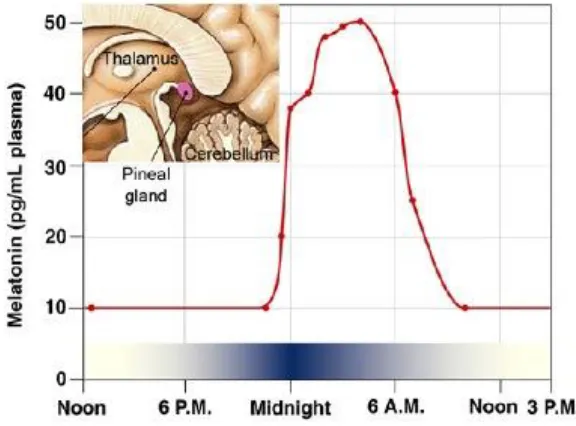
Figure 1.4.2.1 Normal pineal melatonin production over 24 hours
27
Melatonin: a biomarker of circadian disruption
Melatonin is considered the best biomarker of circadian regulation and dysregulation (Mirick & Davis, 2008). An advantage of the melatonin rhythm compared to other markers such as cortisol, core body temperature and heart rate is that it is more robust in the presence of external influences, such as food intake, or stress. Plasma melatonin has a short half-life and is rapidly metabolized in the liver. Hourly plasma melatonin measurements would perfectly capture its rhythm. However this is only possible in controlled settings (sleep labs). The measurement of the primary metabolite of melatonin, 6-sulfatoxymelatonin (aMT6s) excreted in urine allows on a non-invasive monitoring of the pineal function and circadian phase (Arendt et al., 1985). Urinary aMT6s excretion is a good indicator of plasma melatonin secretion (Cook et al., 2000). Repeated aMT6s urine measurements are an adequate tool in epidemiological studies for studying circadian disruption in shift workers.
Melatonin and cancer
An overwhelming amount of research has taken place on the cancer-protective role of melatonin. In humans, lower levels of melatonin have been found in breast cancer patients compared to controls, in three out of five prospective nested case-control studies, supporting partly the hypothesis on an inverse association between melatonin levels and breast cancer risk. Some inconsistencies have been attributed to study limitations related to melatonin sampling procedures and timing. (Schernhammer et al., 2010; Schernhammer et al., 2008; Schernhammer & Hankinson, 2005; Schernhammer & Hankinson, 2009; Travis et al., 2004). A recent study found that lower levels of melatonin were associated with an increased risk for advanced prostate cancer risk in men (Sigurdardottir et al., 2014).
28
29
1.4.2.2 Sex hormones
The circadian timing system is closely related to the endocrine system. A functional master clock located in the suprachiasmatic nuclei (SCN) of the hypothalamus is necessary for rhythmic steroid synthesis and excretion (Karatsoreos & Silver, 2007; Ota et al., 2012). It has been hypothesized that exposure to light at wrong times, such as experienced during night shift work, can disrupt normal melatonin synthesis which in turn may increase estrogen production (Stevens, 1987). Although melatonin has potential anti-estrogenic effects (Alvarez-Garcia et al., 2013; Cos et al., 2005; Srinivasan et al., 2008), an inverse association between endogenous melatonin and estrogens has not yet been confirmed in humans (Graham et al., 2001; Langley et al., 2012; Nagata et al., 2008; Schernhammer et al., 2006a). Some observational studies reported higher plasma estrogen levels related to long-term exposure to night shift work in women (Nagata et al., 2008; Schernhammer et al., 2004), while others found no changes in estrogens, androgens and progestagen levels after night shift work. A small number of sex hormones have been evaluated, mostly estrogens, while disruption of androgens and progestagens or their metabolites has not been sufficiently evaluated.
The possible effect of night shift work on estrogen, androgen and progestagen synthesis and metabolism (Figure 1.4.2.3) is largely under investigated, especially in men. Possible disruption of sex hormones due to night shift work and circadian disruption might explain in part the increased risk of breast and prostate cancer
30
F
igu
re
1.4.
2.3
S
im
pli
fie
d ove
rvie
w of
st
eroid s
y
n
thesis and me
tabolis
m (
C
re
dit
:Your
Hor
mones.
co
31
1.4.3 Sleep disruption
33
2. RATIONALE
Recent experimental evidence suggests that night shift work and increasing use of electrical light at night might be associated with increased risk for cancer. Most of the human evidence has focused on female breast cancer and evidence on other tumors, such as prostate cancer is scarce. Epidemiological studies evaluating night shift work and breast cancer have shown some inconsistency in results but also shift work definitions, and often lacked important exposure information such as duration or intensity of night shift work. More studies evaluating this hypothesis are thus needed, with detailed shift work information. Furthermore chronotype is an individual characteristic that describes circadian phase and correlates with the personal preference for activity in the morning or evening. It has been suggested that chronotype relates to shift work adaptation and possibly modifies the association between night shift work and cancer. This is a new hypothesis that has been largely understudied and might help identify susceptible population groups.
34
35
3. OBJECTIVES
The main objective of this thesis was to evaluate the association between night shift work and breast and prostate cancer risk and identify possible underlying mechanisms for this association. To address this main aim the following specific objectives were developed:
To evaluate if permanent and rotating night shift work was associated to prostate cancer risk in men in the MCC-Spain study, taking into account individual chronoytpe and disease severity (Paper I).
To evaluate the association between permanent and rotating night shift work and breast cancer risk in women in the MCC-Spain case-control study (Paper II).
To evaluate changes in the 24-h melatonin rhythm in male and female night shift workers compared to day workers (Paper III).
To evaluate changes in the 24-h rhythm of sex steroid hormones and metabolites in current night and day workers and evaluate the possible interrelation between melatonin and sex hormones (Paper IV).
37
4. METHODS
This chapter provides an overview of the methods used in the two studies that this thesis was based on. The study design, study population, inclusion criteria and other materials is described for both studies. A more specific and detailed description of the studies can be also found in the papers included in the next chapter.
4.1 The Multi-Case-Control (MCC)-Spain study
Study design
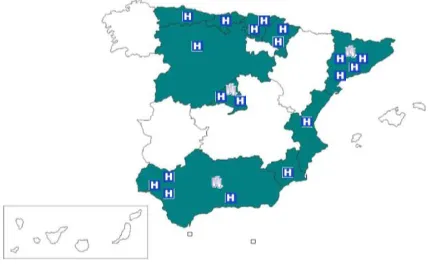
[image:53.499.125.339.410.542.2]The MCC-Spain study is a population based multi-case control study in Spain, evaluating environmental and genetic factors associated with frequent tumors (breast, prostate, colorectal, gastric, chronic lymphocytic leukemia) in men and women. In total 20 hospitals in 11 autonomic communities (Asturias, Barcelona, Cantabria, Granada, Guipuzcoa, Huelva, Leon, Madrid, Murcia, Navarra, Valencia) in Spain (Figure 4.1).
Figure 4.1 Participating centers and hospitals in the MCC-Spain study highlighted in green.
Study population
38
controls were selected for all tumors randomly from the rosters of General Practitioners at the Primary Health Centers (PHC). They were contacted on behalf of their doctor and invited to participate to the study. Both cases and controls had to be living in the catchment area of the hospitals for at least 6 months prior to diagnosis or interview. Controls were frequency matched by sex, age and recruitment centre. Subjects incapable to participate in the interview due to communication difficulties or excess impairment of physical ability were excluded.
We included 1708 breast cancer cases, 1778 female controls, 1095 prostate cancer cases and 1338 male controls with shift work information. Response rates were on average 72% among cases and 53%, ranging from 30-77% among centers, among controls with valid telephone numbers in the PHC rosters.
Data collection
Information was collected through personal interviews with the participants performed by trained personnel. Data was collected on socio-demographic factors, lifestyle habits, residential and occupational history, reproduction, drug use, personal and family medical history. Diet habits were assessed using a self-administered food-frequency questionnaire.
Night shift work was assessed through lifetime occupational history. Specific questions were included on shift type (day, night, rotating), shift schedule (start time, end time), hours of work, night shifts worked/month, year of beginning and end of each job. A common night shift work definition was used and permanent and rotating schedules were assessed separetely.
39 corrected for oversleep. We categorized chronotype using 7 (extremely morning, moderately morning, slightly morning, neither, slightly evening, moderately evening, definetely evening) , 5 (extreme/moderately morning, slightly morning, neither, slightly evening, moderately/extremely evening) and 3 categories (morning, neither, evening) in the statistical analysis.
Statistical analysis
40
4.2 The circadian biomarkers study
Study population
This was a cross-sectional study including permanent night and day workers of both sexes in four companies (2 hospitals, car industry and a train company) recruited from March to June 2011 in Barcelona and surroundings. Subjects were not eligible for participation if they had personal cancer history, were taking oral contraceptives or hormonal therapy or had been pregnant 6 months prior to the study. 75 night and 42 day workers of both sexes, aged 22-64 years were recruited in the study.
Data collection
We collected information on sociodemographics, lifestyle habits, night shift history, sleep habits, physical activity, smoking, alcohol and caffeine consumption, reproduction, health symptoms and medication through a personal interview. Occupation information included start and stop times, number of shifts per week, main tasks and activities and years worked at night. Diurnal preference was assessed using the Morningness-Eveningness Questionaire (Horne & Ostberg, 1976).
Hormone measurements
41 urine (red line) correlate very well with plasma (black) and saliva (blue) concentrations (Figure 4.2.1).
Figure 4.2.1 Agreement between urine 6-sulfatoxymelatonin (red line) and plasma (black line) and saliva (blue line) melatonin
Concentrations of steroid hormones and metabolites including estrogens, progestagens, androgens and corisol (Figure 4.2.2) were measured in a total of 899 urine samples, using gas chromatography and mass spectrometry (GC-MS). Analyses were performed by the Bioanalysis Research Group at IMIM, in Barcelona, Spain.
Figure 4.2.2 List of steroid hormones and metabolites measured in the study
3 Estrogens 10 Androgens 3 Cortisol
estradiol testosterone 11β-OH-androsterone cortisol estone epitestosterone 4-androstenedione cortisone estriol
DHEA 6α-OH-androstenedione
5β-tetrahydro cortisol
3 Progestagens androsterone 3α,5α-androstanediol pregnanediol etiocholanolone 3α,5β-androstanediol pregnanetriol
16-androstenol
Creatinine levels were determined in all urine samples by the same
laboratory using the manual picric acid, sodium hydroxide
[image:57.499.83.415.448.562.2]42
for dilution variability and duration between consecutive samples. All hormone concentrations are expressed in ng/mg creatinine.
Light exposure measurements
Personal light measurements
[image:58.499.151.342.364.465.2]Participants wore a light intensity data logger (HOBOware, Onset Computer Corporation) that continuously (every 12 or 15 seconds) recorded their ambient light exposure over an approximate 24 hour period, simultaneously with the urine collections. The logger was relatively small in size (5.8 x 3.3 x 2.3 cm) and light in weight (18 g) and was carried at the shoulder level (Figure 4.2.3). This position was used to obtain measurements that would approximate the amount of light reaching the retina.
Figure 4.2.3 HOBO data logger used for personal light monitoring placed at the shoulder level.
Ambient light measurements
Ambient light measurements were also performed using a radiometer DELTA OHM, model HD24402 including both intensity (lux) and irradiance (W/m2) measurements in collaboration with the labour department of the local
43
Statistical analysis
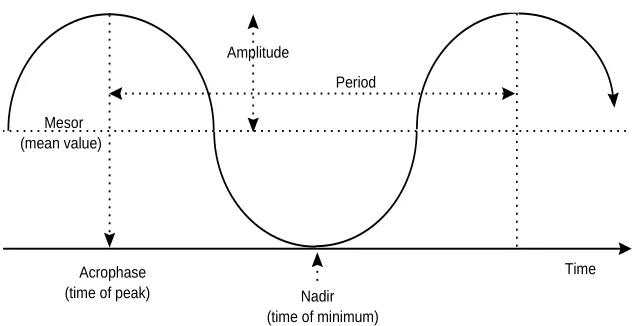
Individual cosinor analysis was used to evaluate the rhythm of 6-sulfatoxymelatonin, individual and sex hormone metabolites and total estrogen, progestagen and androgen production. Cosinor analysis is a curve fitting procedure used in the analysis of rhythms with a cyclic nature and an approximate 24-h period (Mikulich et al., 2003). Metabolites´s acrophase (peak time), mesor (24-h mean) were derived for each subject (Figure 4.2.4) and compared between night and day workers. Cosinor is the only rhythm analysis method in common use which gives a value for all these features.
Figure 4.2.4 Cosinor curve and derived cosine parameters: mesor (24-h mean), amplitude (maximum-mean), and acrophase (peak time).
Mesor (mean value)
Nadir (time of minimum)
Acrophase (time of peak)
Time Amplitude
[image:59.499.84.400.309.472.2]45
5. RESULTS
5.1 Paper I:
Night shift work, chronotype and prostate cancer risk in the MCC-Spain case-control study5.2 Paper II:
Breast cancer risk and night shift work in a case-control study in a Spanish population: the MCC-Spain study.5.3 Paper III:
Circadian variation of melatonin, light exposure and diurnal preference in day and night shift workers of both sexes5.4 Paper IV:
Increased sex hormone production in male and female night shift workers47
5.2 Paper I
Night shift work, chronotype and prostate cancer risk
in the MCC-Spain case-control study
Kyriaki Papantoniou, Gemma Castaño-Vinyals, Ana Espinosa, Nuria Aragonés, Beatriz Pérez-Gómez, Javier Burgos, Inés Gómez-Acebo, Javier Llorca, Rosana Peiró, Jose Juan Jimenez-Moleón, Francisco Arredondo, Adonina Tardón, Marina Pollan, Manolis Kogevinas
Papantoniou K, Castaño-Vinyals G, Espinosa A, Aragonés N, Pérez-Gómez B, Burgos J, Gómez-Acebo I, Llorca J, Peiró R, Jimenez-Moleón JJ,
Arredondo F, Tardón A, Pollan M, Kogevinas M. Night shift work,
85
5.1 Paper II
Breast cancer risk and night shift work in a
case-control study in a Spanish population: the MCC-Spain
study.
Kyriaki Papantoniou, Gemma Castaño-Vinyals, Ana Espinosa, Nuria Aragonés, Beatriz Pérez-Gómez, Eva Ardanaz, Jone M Altzibar, Vicente Martin Sanchez, Inés Gómez-Acebo, Javier Llorca, David Muñoz, Adonina Tardón, Rosana Peiró, Rafael Marcos-Gragera, Marina Pollan, ManolisKogevinas
119
5.3 Paper III
Circadian Variation of Melatonin, Light Exposure,
and Diurnal Preference in Day and Night Shift
Workers
Kyriaki Papantoniou, Oscar J. Pozo, Ana Espinosa, Josep Marcos, Gemma Castaño-Vinyals, Xavier Basagaña, Ferran Calduch Ribas, Mirabent Joan, Jordi Martín, Gemma Carenys, Celia Reyes Martín, Benita Middleton, Debra J. Skene and Manolis Kogevinas
Published: Cancer Epidemiol Biomarkers Prev; 23(7) July 2014
Full text:
Papantoniou K, Pozo OJ, Espinosa A, Marcos J, Castaño-Vinyals G, Basagaña X, Ribas FC, Mirabent J, Martín J, Carenys G, Martín CR,
Middleton B, Skene DJ, Kogevinas M. Circadian variation of melatonin,
light exposure, and diurnal preference in day and night shift workers of
both sexes. Cancer Epidemiol Biomarkers Prev. 2014 Jul;23(7):1176-86.
135
5.3 Paper IV
Increased sex hormone production in male and female
night shift workers
Kyriaki Papantoniou, Oscar J. Pozo, Ana Espinosa, Josep Marcos, Gemma Castaño-Vinyals, Xavier Basagaña, Elena Juanola Pagès, Joan Mirabent, Jordi Martín, Patricia Such Faro Amparo, Gascó Aparici, Benita Middleton, Debra J. Skene and Manolis Kogevinas
Papantoniou K, Pozo OJ, Espinosa A, Marcos J, Castaño-Vinyals G, Basagaña X, Juanola Pagès E, Mirabent J, Martín J, Such Faro P, Gascó Aparici A, Middleton B, Skene DJ, Kogevinas M. Increased and mistimed sex hormone
production in night shift workers. Cancer Epidemiol Biomarkers Prev. 2015
177
5.5 Commentary
Shift work and breast cancer: do we need more
evidence and what should this be?
Kyriaki Papantoniou and Manolis Kogevinas
Published:Occup Environ Med. 2013 Dec;70(12):825-6.
181
6. DISCUSSION
This chapter is complementary to the discussion of the papers and aims to broader discuss and interpret the main findings of this thesis in the context of the existing literature providing perspectives on future research.
6.1 Contribution to the current knowledge
When the IARC evaluated the carcinogenicity of shift work epidemiologic studies were limited in number, though findings seemed fairly consistent, at least for breast cancer risk (IARC, 2010; Straif et al., 2007) (Monograph 2007, Megdal 2005). However new studies published after the IARC Monograph provide a more complex picture of the association between night shift and breast cancer and underline the need for better exposure assessment and extensive evaluation of confounders and effect modifiers.
6.1.1 Night shift work and cancer risk
182
durations of exposure. However this was mostly true for the permanent night shift schedules. Rotating night shift work was associated with breast cancer risk also after short exposures (<5 years). These findings are partly in line with some studies that showed increased risks after prolonged periods of exposure when focusing on a single type of occupation, for example nurses. We did not find significant differences between the permanent and rotating night shift schedules in terms of breast and prostate cancer risks, although we found an indication of a differential pattern of cumulative risk between the two shift schedules. This might partly explain the lack of dose-response association in other studies, where a variety of occupations was evaluated and the type of night shift work was unknown.
183 Furthermore our results support the hypothesis that night work plays a role in breast cancer, particularly in women who started working at night before first full-term pregnancy, a period where mammary gland cells are incompletely differentiated and possibly more susceptible to circadian disruption effects (Paper II). One previous study observed results similar to ours (Menegaux et al., 2013). Although measuring environmental exposures during critical periods of breast development in a woman’s life is a key issue for identifying exposures that may lead to breast cancer (Russo & Russo, 2008), the role of night work during these critical exposure windows has not been specifically investigated in epidemiological studies.
184
185
6.1.2 Exposure assessment for night shift work
One of the main limitations of the existing literature is the crude exposure assessment in some studies and the inconsistent definitions for night shift work (Bonde et al., 2012; Ijaz et al., 2013; Jia et al., 2013). The lack of uniformity in definition of shift work is a crucial issue for the interpretation and comparison of the results of this thesis with previous studies. Some studies focused on rotating shifts, others on graveyard shifts (beginning work after 7p.m. and ending before 9a.m.) and others on night shift. Each study has defined night shift as work that takes place entirely or partly from as early as 18:00 in the afternoon up to as late as 09:00 in the morning. In the MCC-Spain study night shift work assessment was based on the exact time schedules (from 00:00 to 06:00), and the % spent in each shift. A common definition was applied for the night period, and subjects were subsequently reclassified so as to fit the predefined categories. However a self-reported shift evaluation of each job (day, night or rotating) was also available. Analysis was also performed using the self-reported classification and results were slightly different, however not in a given direction, indicating non-differential exposure misclassification. The inconsistencies in definitions of night shift work observed in epidemiological studies were also reflected in subjects’ evaluations of jobs, e.g. classifying jobs with start time at 03:00 o´clock as a day job. Therefore, self-reports for night shift work might not be as reliable for use in future studies.
186
187
6.1.3 Mechanisms: hormonal changes
In evaluating causality of an association it is important to examine biologic plausibility of the associations and describing and understanding underlying mechanisms. The protective role of the hormone melatonin as an oncostatic agent has been long discussed (Blask et al., 2005; Mediavilla et al., 2010). However, the disruption of melatonin after night shift work has not been consistently reported in field studies with real-life night shift workers . On the other hand disruption of sex steroids hormones, possibly mediated in part by melatonin disruption, might be involved in carcinogenic processes for endocrine related tumors, such as breast and prostate cancer.
188
gonadotropin levels (LH and FSH) have been reported among permanent night workers (Davis et al., 2012). There is some evidence that light might dysrupt sex steroid hormone production through an increase of LH and FSH, although more evidence is needed (Kripke et al., 2010).
189 production daily levels may not change, but the protective effect of melatonin might be lost. The consequences of a mistimed sex hormone production on the mammary and prostate gland, have not been studied yet. In this study, we also evaluated chronotype and found a higher supression of melatonin among night shift workers with a morning preference (Paper III). This might be explained by the fact that morning types take longer to phase shift their melatonin rhythms, therefore may experience a larger melatonin suppression after light at night exposure. On the other hand evening types might maintain 24-h melatonin levels but melatonin production might take place at the wrong chronobiological time and the protective-effects of melatonin might be lost.
190
191
6.2 Methodological issues: strengths and limitations
6.2.1 Study design
The use of data from the multi case-control study (MCC)-Spain study was one of the main strengths of this thesis. The case-control design was appropriate for the evaluation of cancer that is a disease with a long induction period. Furthermore this study design allows multiple collection of information related to exposure (night shift work) and other occupational and environmental factors retrospectively with a fair amount of details. Case-control studies have some limitations that will discussed in continuation including controls’ selection bias, exposure misclassification and recall bias. For the biomarkers’ study we used the cross-sectional design or semi-experimental and on the basis of the exposure we included subjects employed in night shift work and day workers from the same work environments as controls. In both case-control and cross-sectional studies temporality is an issue since measurement of exposure and outcome occurs at the same point in time. For cancer the induction period is long and might last for 10 or more years and therefore the lag-time needs to be taken into account in this type of analyses (Hankinson, 2008; Lorelei A Mucci, 2008).
6.2.2 Statistical power
192
initially expected (1095 prostate cancer, 1708 breast cancer cases and 3116 population controls). However the magnitude of the effects were generally smaller than the one assumed in our initial power calculations and many of the estimates we reported were not statistically significant. The percentage of night shift workers was also rather low, in the MCC Spain stduy particularly among women. Therefore although the MCC-spain is large in size, numbers in stratified analysis were small and therefore risk estimates less precise. That might also explain why we found no evidence of effect modification by most of the hypothesized factors (Paper I: age of diagnosis, BMI, education, smoking; Paper II: menopausal status, parity, chronotype: Paper III: chronotype, menopausal status). Other case-control studies with similar exposure assessment and number of recruited subjects also did not find statistically significant or borderline significant associations and limited power has been suggested as a possible explanation (Fritschi et al., 2013; Grundy et al., 2013; Menegaux et al., 2013; Pesch et al., 2010). A pooled analysis of published studies with similar protocols, as discussed in Paper V, might be a useful approach, to overcome power problems.
6.2.3 Confounders and effect modifiers
193 smoking. On the other hand, a number of studies have adjusted for a large number of variables without justifying their selection. In case-control studies case-controlling for variables that are unrelated to the outcome may result to overadjustment bias. We selected confounders using Direct Acyclic Graphs (DAGs) in combination with classical statistical criteria (change-in-estimate) (Evans et al., 2012; Weng et al., 2009). DAGs provide a visual picture of the known and suspected associations between exposure, measured and unmeasured covariates and outcome. DAGs help identify possible sources of confounding and therefore provide an important tool in the building of etiologic models for epidemiological studies. Although the use of DAGs is becoming common in epidemiologic studies, their use in previous research on the night shift work cancer association has been limited and only a systematic review, has made use of this tool (Ijaz et al., 2013). It has been hypothesized that lifestyle and sociodemographic characteristics may vary considerably between day and night workers and confound the results significantly. It is unknown, however, whether subjects with a less healthy lifestyle (smoking habits, diet, coffee consumption, sleep problems) are selected into night shift work or if night shift workers adopt a different lifestyle because of their working schedule. In our data, the two groups (night shift workers vs day workers) did not differ on most variables like age, body mass index (BMI) and parity and in most analysis adjusted models did not provide very different estimates than the unadjusted ones. We also performed multiple imputations in order to retrieve missing information for all possible confounders. Still we did not find much evidence for strong confounding although we examined awide range of potentially confounding factors in both studies (MCC-Spain study and Biomarkers study). However adjustment for confounding is important, and analysis on confounders, mediators and effect modifiers needs to be carefully done in future studies.
194
195
6.2.4 Bias and generalizability of results
This analysis has limitations inherent to all case-control study designs (Paper I and II). Interview based case-control studies like the present are normally prone to information bias. The retrospective estimations of exposures based on self reported occupational history may lead to exposure misclassification. However, differential recall between cases and controls for night shift work is unlikely, since the night work-cancer association has not still been discussed in spanish media. Interviewer bias was minimised as interviews were done by well trained personnel. Main analyses were also performed stratifying by interviewer and results were unchanged. Selection bias might occur if exposed controls are more likely to be selected than non-exposed individuals and vice-versa. In the MCC-Spain study control subjects engaged to night shift work may less frequently have answered the phone calls due to daytime sleep compared to day workers. To avoid this bias, phone calls were scheduled and performed in different times during the day. We also repeated analysis excluding current workers and results remained unchanged.
196
197
6.3 Public health implications
The public health consequences of the evaluations included in this thesis are important, since shift work is a very common occupational exposure with about 20% of the workforce in Europe doing some non-normal work schedule. The current prediction is that night shift work will become even more common in the future. Furthermore it is unlikely that the exposures (e.g. LAN) and activities that are leading to de-synchronisation of the biological clock will disappear in the future. As such it is important to develop prevention programs accounting for individual susceptibility and strategies to mitigate the potential risks, that can apply both for night shift workers as well as to the general public.
Shift work planning is important, although no shift work that involves night work is optimal. However coping strategies, including sleep assistance, light exposure regulation and chronobiology education might help night shift workers and their families. Night shift work before a first full-term pregnancy in a womans´s life needs to be avoided, especially for long durations. Long-term night shift work should be disencouranged for all workers and more intesive medical follow-ups might be needed in these workers. Finally individual characteristics, such as chronotype or diurnal preference might be useful in selection processes for night shift work.
198
from internal desynchronosis. Unfortunately, we currently do not know whether external desynchronosis or internal desynchronosis is the more harmful. Animal models are needed to tease out which of the two most adversely affects longevity. Until that model is available, decisions must rest upon the appropriateness of the task being performed (monotonous repetitive tasks are unlikely to fare well under rapid rotation) and the personal preferences of the workers involved.
There is currently an open discussion on whether night shift work should be included in national lists of occupational hazards that associate to cancer risk, for compensation purposes. Already in Denmark, it has been possible since 2007 to be compensated for breast cancer after long term (>20 years) night work. Although this is an open discussion more evidence and better understanding of the biologic mechanisms is probably needed before night shift work can be generally accepted as a human carcinogen. Actually, IARC has indicated that a re-evaluation of night shift work as a human carcinogen will be planned in the next five years (ref straif Lancet Oncology 2014).
199
6.4 Future research
This is a huge and quickly developing area of research including both epidemiological and experimental research. Clearly there is a need for multidisciplinary approaches and international cooperation. In this text I concentrate therefore on priorities for future research within the areas of research developed in CREAL.
We definitely need more studies on other tumor sites, such as prostate and colorectal cancer, to confirm the existing evidence on possible associations. A pooled analysis of all breast cancer studies is needed, applying common definitions for exposure, if this is feasible. We also need more studies that carefully evaluate different patterns of shift work, especially rotating shift work, with respect to cancer risk. Shift work rotation characteristics such as the speed and the direction of rotation, as well as the number of consecutive nights of work and days off may define groups of subjects with higher risk. In the MCC-Spain study this will be possible as detailed information on rotating shift schedules was collected in a follow up of all breast and prostate cancer cases and controls. The possible effect modification by chronotype, needs to be further explored through observational and experimental data. Chronotype need to also be evaluated with respect to cancer risk, as an independent risk factor. The influence of night shift-work and sleep patterns on survival of cancer has not yet been reported, though decreased longevity has been observed in experimental animals. We will follow-up patients of breast, prostate and colon cancer concerning death comparing non-day shift-workers with day-workers and take into account extent of disease at diagnosis.