Dirección para correspondencia: María Constanza Lozano Toxicology Research Group, Pharmacy Department, Science Faculty, Universidad Nacional de Colombia, Bogotá Colombia Fax 0 57 1 3165060
E-mail:[email protected]
Fecha de recepción: 01/03/13 Fecha de aprobación: 27/08/13
POISONOUS PLANTS FOR CATTLE IN COLOMBIA:
RESEARCH PERSPECTIVES
Lozano MC
1, Diaz GJ
21 Toxicology Research Group, Pharmacy Department, Science Faculty. 2 Animal Health
Department, Veterinary Medicine Faculty, Universidad Nacional de Colombia. Bogotá. Colombia.
ABSTRACT: Even though Colombian cattle-farming makes an important contribution to the national economy it also has great potential for growth; however, this activity is carried out in areas where animals may become naturally exposed to poisonous plants, affecting their health and production. It is recognised that some plants may damage the livestock sector in countries placing an important emphasis on cattle-rearing. Such problem has received scarce attention from academic research in Colombia, and the efforts made to do so date from the 1930s, 1940s, 1970s and 1980s without having had continuity. Many of the studies done in Colombia have been orientated towards establishing nitrate and cyanogenic glycoside content, ignoring other toxic metabolites. Likewise, certain vegetal species which can cause poisoning have not been fully studied, thereby hampering their management and treatment. It is thus important that studies are carried out in greater depth in Colombia concerning poisonous plants affecting livestock. A methodology is thus proposed which includes a search for initial information about suspicious plants, reproducing such poisoning experimentally (selecting the animal species, route, presentation and administration time, and evaluating effects) and searching for the chemical responsible for causing the poisoning. All these aspects are dealt with in the present review.
Key words: cattle, poisonous plant, animal experimentation, phytochemistry
PLANTAS TÓXICAS PARA LOS BOVINOS EN COLOMBIA:
PERSPECTIVAS DE INVESTIGACIÓN
RESUMEN: Además de un gran potencial de crecimiento, la ganadería bovina colombiana tiene un importante aporte a la economía nacional. Esta actividad se desarrolla en áreas donde los animales pueden exponerse naturalmente a plantas tóxicas, afectando su salud y producción. En países con una importante vocación ganadera se reconocen las plantas que pueden menoscabar el sector pecuario. En Colombia, escasamente ha sido estudiada esta problemática y los esfuerzos por hacerlo datan de las décadas de 1930, 1940, 1970 y 1980, sin que haya habido continuidad en los mismos. Muchos de los estudios realizados en el país han estado orientados a establecer el contenido de nitratos y glucósidos cianogénicos, ignorando otros metabolitos tóxicos. Así mismo, existen intoxicaciones por ciertas especies de
vegetales que no han sido plenamente estudiadas, diicultando su manejo y tratamiento. Es
importante que en el país se investigue con mayor profundidad sobre las plantas tóxicas de interés pecuario y para ello se propone una metodología que incluye selección de la planta sospechosa, reproducción experimental de la intoxicación (elección de la especie animal, vía, presentación y tiempo de administración y evaluación de efectos) y búsqueda de principios responsables de causar la intoxicación; estos aspectos se abordan en la presente revisión.
INTRODUCTION
Colombia has an important cattle raising tradition, having almost 25 million head of cattle which thus places it amongst the irst 9 coun -tries having the greatest bovine production (1). The production systems, however, are mainly large-scale, having extensive areas given over to grazing. It has been calculated that 20 % of the area earmarked for cattle-raising is covered in weeds and stubble as its only vegetation (2), thereby introducing a very high probability that any animals grazing there will consume poison-ous plants.
Most plant toxins are secondary metabo-lites since they are not essential for their growth or reproduction. Such substances represent a survival mechanism for poisonous plants since they are able to produce adverse physiological reactions in their predators and thus reduce the fact that they could become consumed (3).
Many factors predispose these plants to be eaten by cattle; some of them would be the use of ields covered in weeds, animals having nutri -tional deiciencies, including hunger, the arrival of new individuals which are “ignorant” of the place’s particular poisonous plants, overgrazing leading to hardly appetizing forage and also ex-posing poisonous seeds present in the soil, some poisonous plants’ high palatability and/or an alteration in poisonous plants’ metabolism lead-ing to the accumulation of some toxins caused by fertilising pastureland, treatment with herbicides or a change in climatic conditions (3,4).
The problem of animals being poisoned by plants has been studied in many countries and it could be stated that, in spite of some plants being able to adapt to different ecosystems, this varies depending on the each region’s physiographic characteristics. Several bibliographic sources have thus described plant species which are poisonous for livestock, each being particular to a different country (5, 6), however such studies have been scarce in Colombia.
Research into plants which are demon-strably poisonous for cattle represents an urgent need in Colombia, bearing in mind that Colom-bia is the second country in the world regarding biodiversity (7), that the cattle-raising popula-tion is considerable and that it has large-scale production systems. The present paper was thus aimed at proposing a research strategy regarding poisonous plants in this tropical country.
BACKGROUND
Economic losses arising from poisoning by plants in the livestock sector are widely scru-tinised in countries having recognised cattle-raising production. In Brazil that has the second greatest number of cattle herds; it has been calculated that 800,000 to 1,120,000 cattle die
from this cause annually (0.5 % to 0.7 % of bovine mortality) (8, 9). Data from1976 estimated that mortality in cattle caused by this type of lora was around 0.5% annually in Colombia (10). Torres (1983) calculated that economic losses rose to U$ 160,000 annually, their real value currently re-maining unknown (11). Other factors which could lead to losses caused by poisoning with plants (in addition to mortality) would be reduced weight gain, reduced reproductive eficiency, expenses incurred in treating poisoned animals, restricted grazing and loss of usable forage due to direct competition with such plants (12).
Another impact produced by poisonous plants is related to toxins’ effect on animal sub-products. The cattle’s internal organs/intestines could be coniscated due to changes in their co -louring or to them giving off disagreeable odours; such cases could be presented after consuming Buchonsia pseudonitida (13) which produces a pinkish colouring in tissue, or Petiveria alliacea which produces a bad smell in affected animals’ meat (11). There is also the possibility that such toxins could be excreted in milk and thus become consumed by humans. Phytotoxins having these characteristics would be pyrrolizidine alkaloids present in plants from the genera Senecio and Crotalaria causing hepatotoxicity, piperidine alkaloids present in Conium spp., Nicotiana spp. and others causing neurotoxicity, selenium stored by accumulator plants (Astragalus spp., Oonopsis spp., Aster spp., etc.) which could cause multisystemic alterations (13) and ptaquilosides from ferns from the genus Pteridium which are considered to be carcinogenic (15).
The few studies published in Colombia to date, related to plants which are poisonous for cattle, resulted from work done by professors from the Universidad Nacional during the 1930s and 1940s and later on by functionaries from ICA (Instituto Colombiano Agropecuario) during the 1970s and 1980s; it described differ types of toxicosis, such as “cattle fall syndrome”, photo-sensitivity, myopathy, bovine vesical haematuria, bovine chromatosis, selenosis, gastrointestinal disease and abortions (11,16, 17). The botanical species causing much of this poisoning have not been fully identiied and, in many cases, poison -ous ingredients and the clinical-pathological pictures originating them are not known in detail.
reports and observation, many plants indicated as being suspicious could already have been de-scribed as poisonous species and, in such case, once taxonomic determination has been made by specialists, the scientiic literature is relevant for obtaining more information.
EXPERIMENTALLY REPRODUCING
THE POISONING
Biological assays using sensitive species have to be performed to conirm that a suspicious plant is responsible for poisoning (9). Part of the scientiic literature related to toxicological tests in animals is orientated towards evaluating the risk that plants used in therapeutic preparations or for nutritional ends could be causing poisoning in human beings (23, 24). In this case, interest in evaluating vegetal specie’s toxic potential is framed within safety studies which are carried out on laboratory animals and the results are extrapolated (not always correctly) to human beings. Experimental poisoning should ideally be done in the same animal species or in closely-related species when studying poisonous plants of interest regarding livestock (9).
EXPERIMENTAL ANIMAL
Many studies have been carried out using small ruminants (goats and sheep) either because they are the species in which poisoning has ini-tially been described or because an attempt is being made to extrapolate the results to cattle. For example, Medeiros et al., (2009) conirmed that the plant Centratherum brachylepsis was the causal agent of a disease related to anorexia, ruminal indigestion, facial oedema, keratinocyte vacuolisation and vesicle formation in the rumi-nal epithelium of cattle and goats from the state of Paraíba in northern Brazil when they were fed it; similar signs and lesions were obtained in sheep and goats (22). Another example would be Ipomoea carnea, a plant containing indolizidine alkaloid (swainsonine), causing the cellular ac-cumulation of oligosaccharides by inhibiting the α-mannosidase enzyme, leading to neuronal vacuolisation and the presentation of neurologi-cal disorders (25). Cattle and caprines are the most commonly affected species and the disease has been successfully reproduced in the latter species (26).
Some cases have been reported in which the totality of lesions could not be reproduced, in spite of the species involved in natural and experimental presentation of a particular disease being ruminants. The cardiotoxic plant Nerium oleander is especially poisonous for sheep; car-diac glycosides from the cardenolides group are its main active ingredient. Barbosa et al., (2008) has mainly been based on research carried out
in other countries which has not born in mind the Colombia’s natural regions’ physiographical conditions inluencing plants’ toxin production.
POISONOUS PLANT RESEARCH
METH-ODOLOGY
Research into poisonous plants of inter-est regarding livinter-estock must involve different aspects ranging from suspecting that disease is being caused by vegetal species to recognising the chemical ingredients responsible for the toxicosis. The research methodology adopted in this critical review of plants of interest regarding livestock has involved the following aspects: a search for initial information: toxic suspicion, experimen-tal reproduction of the poisoning (selecting the animal species, route, presentation and vegetal material administration time, evaluating the poisonous effects) and the search for the active ingredients responsible for causing the poisoning. Each aspect is briely described below.
SEARCHING FOR THE INITIAL
INFOR-MATION: SUSPICIOUS PLANTS
When trying to clarify the cause of a dis-ease in which the possible aetiological agent is a plant then the speciic region’s botanical species must be surveyed (9). One way of doing this is to use ethnobotany which studies human groups’ interaction with plants where popular knowledge about vegetal species which could alter human beings and animals’ health represents a valuable source of information (19). Another way to initi-ate the study of suspicious plants is by studying cases of mass poisoning in livestock species of interest where a systematic report of the case has been made and recognising the plants which might be responsible for such event by observa-tion (20, 21, 22).
managed to reproduce the clinical picture in goats, characterised by apathy, colic, vocalisa-tion, dyspnoea and ruminal distension; however, they did not report any pathological lesions in the liver and brain (i.e. such events happening in sheep) (27). Even though occurring less frequent -ly, experimental studies have also been carried out on cattle where young animals of around one year old are preferred (28, 30).
Laboratory animals may be of interest when studying poisonous plants, whether for support when isolating active ingredients or as an auxil-iary resource in recognising some plants whose poisonous effects could become presented in dif-ferent species (31). For example, hepatotoxicosis caused by Helianotherpium circinatum (a plant containing pyrrolizidine alkaloids) has been re-produced in rats (32). However, these animals have not been a good model for reproducing the alpha-mannosidosis caused by the swainsonine present in I. carnea (33), whilst the guinea pig has been a suitable model for such toxicosis (34). Likewise, the poisoning caused by Baccha-ris coridifolia has been successfully reproduced in mice; this plant accumulates macrocyclic trichothecenes (35). Rabbits have been used in biological tests to conirm reports of poisoning by different plants (14, 36).
As plants’ toxins can become metabolised and their poisonous effects can become modiied in animals’ digestive tracts (especially in polygas-tric animals), then the ideal scenario consists of experimenting with the particular species impli-cated in cases of poisoning. If the affected species is bovine then cattle must be used for conducting experiments or, failing that, small ruminants. However, using more easily handled, cheaper, laboratory species, allowing more individuals to be used, could provide relevant information about the effect of a poison and, on speciic occasions, could represent a useful model for studying poisonous plants of interest regarding livestock. Such studies must be accompanied by preliminary phytochemical studies and selective chemical investigations tending to identify the active compound implicated in cases of poisoning.
VEGETAL MATERIAL’S CONSUMPTION
ROUTE, PRESENTATION AND
ADMIN-ISTRATION TIME
As the ideal course in experimentation is reproducing the natural conditions of poisoning, then recently collected fresh vegetal material must be orally administered (31), either by vol-untary consumption, mixing the plant in the food or via orogastric probe. However, some authors have used dried, inely ground up plants which they have dissolved in water (37) or mixed with the animals’ food (38). Vegetal material extracts
obtained by using different solvents have also been used (39). Brazilian researchers have re-ported that I. carnea is very palatable for goats, meaning that the vegetal material collected for experimentation must be voluntarily consumed by the caprines (26, 40). Another way to ensure that animals voluntarily consume a plant of inter-est is by leading the animals to pastures already infested with it (28).
Some authors have reported success in reproducing poisoning by placing small amounts of the fresh plant in the mouths of sheep and goats (20, 22). Some studies in ruminants have proved successful by mixing the vegetal mate-rial (fresh or dried) with the animals’ food ration (29, 41). However, a more precise dose could be achieved by administering dried and ground up plant, suspended in water, via an orogastric probe (42, 43).
When the poisonous ingredient has be-come known and the necessary methodology for determining it is available, then the plant ad-ministered to the animals could be analysed for determining toxin content and thus calculate the dose to be used in experiments. Such is the case of studies carried out with hypericin, the main poisonous compound in Hypericum perforatum (43), monocrotaline present in Crotalaria retusa (44) and with cyanogenic glycosides present in Prunus virginiana (45).
The dried plant could be supplied mixed in food (32, 34), in watery or oily suspension via probe (35, 36) or in alcoholic extract in studies involving laboratory animals (33, 46). Likewise, extracts and fractions from the plant of interest are habitually administered to small rodents in the search for active compounds (47).
Drying the plant for biological assays (in some cases) could make poisonous compounds lose their toxic activity. It has been shown that the toxicity of Baccharis coridifolia, containing macrocyclic trichothecenes, becomes reduced by half if the plant has been dried (35). Other poisonous molecules such as cyanogenic glyco-sides are very volatile, thus making it necessary to supply the fresh plant or, failing that, keeping it refrigerated from when it has been collected to when it is administered (37).
Toxicosis can become rapidly reproduced, such as the case of the cardiotoxic cardenolides present in Nerium oleander, where a single dose of vegetal material has led to the signs appearing even during the irst hour after being admin -istered (27, 42). The poisoning could become rapidly reproduced with plants like Plumbago scandens, Mascagnia rigida and Palicourea corymbifera, given that they are responsible for causing sudden death (20, 27, 46); of these three plants, the metabolite responsible for the poisonous effect is only known for the last one (monoluoroacetic acid) (31).
The factors inluencing toxicity must be born in mind for biological tests to be successful, such as the administration route, the presenta-tion and the time spent exposed to the plant. It is important that maximum experimental conditions are ensured, as similar to naturally occurring ones as possible.
EVALUATING POISONOUS EFFECTS
Animals must be clinically evaluated during the time spent during an experimental process. Clinical exams are performed more frequently once the symptoms have appeared. Paraclinical tests regarding haematology and blood chemistry provide important information about toxicosis. Likewise, some diagnostic aids could contribute towards a disease being char-acterised with greater precision, for example, electrocardiograms when experimenting with cardiac glycoside-rich plants (27). It is worth mentioning that experimenting with small rumi-nants or rabbits could provide better information than doing so with laboratory rodents because of the animal’s size.An animal’s weight must be monitored before, during and on inishing an experimental process as large variations in weight could indi-cate physiological alterations. The weight of the organs, regarding body weight (relative weight), particularly in laboratory animals, also provides relevant information about poisoning (48).
Macroscopic and microscope pathology is a tool allowing affected systems to be deined with greater precision and also ascertain character-istic lesions contributing towards a diagnosis of spontaneous poisoning. Using histochemical techniques is useful in cases of toxicosis related to some plants causing structural cellular al-terations as happens with those accumulating swainsonine (i.e. I. carnea and Sida carpinifolia) thereby leading to the formation of cellular car-bohydrate deposits made visible by reacting with speciic lectins (34). Some intracellular lesions may also be characterised by using an electron microscope (29, 40).
THE SEARCH FOR ACTIVE
INGREDI-ENTS RESPONSIBLE FOR CAUSING
POISONING
Research groups focusing on poisonous plants of interest regarding livestock have not traditionally elucidated the actual substances responsible for poisoning. In many cases, the researchers’ inal goal has been concerned with trying to reproduce particular types of poisoning in experimental animals and characterise the main pathological lesions, possibly due to the complexity represented by isolating, purifying and identifying as yet unknown chemical com-pounds and/or the absence of interdisciplinary work with experts in the ield of chemistry who could thus make a great contribution to such work.
Characterising the active ingredients pres-ent in plants could be useful for relating toxins’ mechanisms of action to suggesting possible treatment. Likewise, this could provide relevant information leading to synthesising useful mol-ecules. In fact, many drugs have been prepared from toxins isolated from plants; such is the case of taxol, an alkaloid derived from the plant Taxus baccata causing sudden death in cattle; it is currently being used as an antitumor drug (25). Chemotaxonomy (the discipline classifying plants regarding the structure of their chemical constituents) represents a means by which the poisonous metabolites present in a botanical species from a particular family may be deduced (49). A series of processes, including extraction, puriication and structural analysis, must be per -formed when chemically characterising a plant.
Adding solvents to dry pulverised vegetal material leads to different components being ex-tracted from a plant, according to solvent polarity. The initial preparation of ethanol extracts means that they can be used for evaluating activity in laboratory animals. Using simple techniques, including colorimetry and thin-layer chromatog-raphy with developers, extracts may be evaluated for determining the presence of certain groups of compounds (terpenes, phenols, alkaloids, carde-nolides and lavonoids) (50).
molecule cannot be puriied by the above, then hybrid techniques combining separation and detection could be used for isolating a compound of interest which could then become structurally elucidated. Liquid or gas chromatography cou -pled to mass spectrometry is the technique which provides the best information from amongst the aforementioned techniques (49).
Investigating plants of interest for livestock is an integral process which must include study-ing these species’ active components. Identifystudy-ing the responsible molecules and also submitting them to activity studies could contribute towards the search for useful compounds for humanity.
STRATEGIES FOR APPROACHING
KNOWLEDGE REGARDING
POISON-OUS PLANTS
Given the large amount of plants which are poisonous for animals, it is necessary to group them to facilitate their study. The most usual ways of classifying them are according to
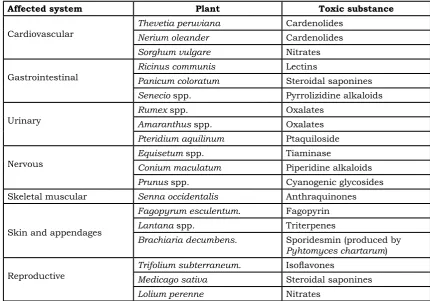
geo-graphical region (e.g. poisonous plants from the state of Texas), the infected animals’ pathological clinical picture (plants causing acute mortality, plants causing photosensitivity), the affected sys-tems (cardiotoxic plants, hepatotoxic plants), the botanical families (Poaceaes, Apocynaceaes) and the predominant poisonous compound (nitrate-accumulating plants, cyanogenic glycoside-ac-cumulating ones, etc.). Table 1 lists some of the poisonous plants present in Colombia grouped according to their chemical classiication as well as indicating the main effects produced by each of them (3). Table 2 lists the main poisonous plants present in Colombia, classiied according to the affected system (3).
RESEARCH PERSPECTIVES
REGARD-ING POISONOUS PLANTS IN
COLOM-BIA
[image:6.595.58.523.392.787.2]Colombia is the second country in the world having the greatest diversity of lora as well as great cattle-raising potential this being mainly
Table 1. Examples of plants which are poisonous for animals present in Colombia, classiied accor -ding to their main chemical compounds
Chemical Group
Toxic Substance
Plant Effect
Alcohols and acids
Monoluoroacetic
acid
Palicourea spp. Neurotoxic
Cicutoxin Cicuta maculata. Neurotoxic. Calcium insoluble
oxalates
Philodendron spp., Monstera
spp., Caladium spp.
Irritation of the oral cavity.
Soluble oxalates Rumex sp., Chenopodium
sp., Rheum sp.
Hypocalcemia, nephrotoxic.
Alkaloids
Diterpenes Aconitum spp. Neuromuscular. Indolizidine Ipomoea carnea, Sida
rhom-bifolia.
Neurotoxic, infertility.
Piperidine Conium maculatum Neurotoxic Piridine Nicotiana tabacum. Neurotoxic.
Prrolizidine Senecio spp, Crotalaria spp. Hepatotoxic, photosensitivity Quinolizidine Lupinus spp. Teratogenic, myotoxic,
neuro-toxic
Tropane Datura spp. Anticholinergic
Glycosides
Cardiac Nerium oleander, Digitalis purpurea.
Cardiotoxic
Cyianogenic Prunus sp., Sorghum sp.,
Trifolium repens.
Respiratory, nervous.
Phytoestrogen Medicago sativa Infertility
Ptaquiloside Pteridium aquilinum, Enzootic hematuria, Aplastic anemia.
Proteins and
aminoacides
Lectins Momordica charantia, Rici-nus communis.
Gastrointestinal.
Thiaminase Pteridium aquilinum, Equise-tum spp.
carried out on natural pastures which man has scarcely interfered with; large-scale production systems are used thereby representing a high risk of poisoning by the plants eaten by the cattle. Colombia does not have a system for recording possible cases of animals becoming poisoned by plants, making this phenomenon practically un-known to such an extent that nitrates and cyano-genic glycosides are usually considered as being exclusively responsible for poisoning by plants. There are very few publications about poisonous plants in Colombia, most existing ones having been published in non-scientiic journals and practically none in internationally indexed jour-nals, thereby creating a large conceptual vacuum concerning material related to this problem.
Research into poisonous plants of interest regarding livestock in Colombia must consider different aspects involving compiling an inventory by natural regions regarding plants which have been empirically recognised as being poisonous in each area, identifying poisonous plants by performing suitably designed toxicological stud-ies, carrying out phytochemical studies leading to recognising the main metabolites responsible for toxicity and estimating the economic losses generated by poisonous plants for cattle-raising, bearing in mind the morbidity, mortality and costs incurred in prevention and treatment.
CONCLUSIONS
Cattle-raising potential, exploitation sys-tem characteristics and the great biodiversity of lora in Colombia are factors which, added to the emergent investigation being developed to date regarding plants which are poisonous for animals, justify suitable exploration of this problem. A methodology must be designed for correctly researching this ield which has been based on identifying suspicious plants until the responsible active ingredients have been eluci-dated, characterising the clinical, paraclinical and pathologic picture in species which habitu-ally become affected. Studying plants which are poisonous for animals could make exploitation systems more productive, thereby endeavouring to ensure a lower economic impact or contribut-ing towards knowledge about this subject con-cerning public health.
ACKNOWLEDGEMENTS
The authors would like to thank COL-CIENCIAS for inancing the research (project No. 1101-452-21116) which led to this review article.
BIBLIOGRAPHY
[image:7.595.82.513.91.392.2]1. FAO Food and Agriculture Organization of the United Nations. Statistical developmental series 12, Rome (Italia), 2010
Table 2. Examples of plants which are poisonous for animals present in Colombia, classiied accor -ding to the affected system
Affected system Plant Toxic substance
Cardiovascular
Thevetia peruviana Cardenolides
Nerium oleander Cardenolides
Sorghum vulgare Nitrates
Gastrointestinal
Ricinus communis Lectins
Panicum coloratum Steroidal saponines
Senecio spp. Pyrrolizidine alkaloids
Urinary
Rumex spp. Oxalates
Amaranthus spp. Oxalates
Pteridium aquilinum Ptaquiloside
Nervous
Equisetum spp. Tiaminase
Conium maculatum Piperidine alkaloids
Prunus spp. Cyanogenic glycosides Skeletal muscular Senna occidentalis Anthraquinones
Skin and appendages
Fagopyrum esculentum. Fagopyrin
Lantana spp. Triterpenes
Brachiaria decumbens. Sporidesmin (produced by
Pyhtomyces chartarum)
Reproductive
Trifolium subterraneum. Isolavones
Medicago sativa Steroidal saponines
2. MADR Ministerio de Agricultura y Desarrollo Rural y CCI Corporación Colombia Internacional. Oferta ag-ropecuaria, ENA, cifras 2006, Bogotá (Colombia), 2006
3. Diaz GJ. Plantas tóxicas de importancia en salud y producción animal. Ed. Universidad Nacional de Colombia. Bogotá (Colombia), 2010
4. Diaz GJ, Lozano MC. Introducción a la toxicología veterinaria. Ed. Unibiblos Universidad Nacional de Colombia. Bogotá (Colombia), 2006
5. Youngken B, Blohm H. Poisonous plants of Ven-ezuela. Harvard University Press. Cambridge (United Kingdom), 1962
6. Burrows GE, Tyrl RJ. Handbook of toxic plants of North America. Blackwell publishing. Iowa (USA), 2006
7. Romero M, Cabrera E, Ortiz N. Informe sobre el estado de la biodiversidad en Colombia 2006-2007. Instituto de Investigación Alexander von Humboldt. Bogotá (Colombia), 2008
8. Riet-Correa F, Medeiros RM. Intoxicações por plan-tas em ruminantes no Brasil e no Uruguai: importância
econômica, controle e riscos para a saúde pública. Pesq
Vet Bras 2001; 21 (1):38-42
9. Tokarnia CH, Dobereiner J, Vargas P. 2002. Poison-ous plants affecting livestock in Brazil. Toxicon 2002; 40(12):1635-1660
10. Peña NE, Villamil LC, Parra D, Lobo CA. Las en-fermedades de los animales en Colombia. Situación por regiones naturales. Ministerio de Agricultura ICA. Bogotá (Colombia) 1980
11. Torres JE. Intoxicación de Bovinos por Plantas. ICA informa 1983; 17 (1):6-16
12. Nielsen D. Economic impact of poisonus plants on the rangeland livestock industry. J Anim Sci 1988; 66(9):2330-2333
13. Torres JE, Echeverry R, Mejía B, Peña N. Cromato-sis de los bovinos o vaca morada en Colombia (I parte). Carta ganadera 1983; 20 (1): 23-30
14. Panter KE, James LF. Natural plant toxicants in milk: a review. J Anim Sci 1990; 68 (3): 892-904
15. Alonso-Amelot ME, Avendaño M. Human Carcino-genesis and Bracken Fern: A Review of the Evidence. Curr Med Chem 2002; 9(6):675-686
16. Mora CR. Contribución al estudio de las plantas tóxicas en medicina veterinaria. Revista de Medicina Veterinaria 1943; 83 (1):5-38
17. Perez-Arbeláez. Plantas venenosas de Colombia. Revista de Medicina Veterinaria 1931; 23 (1):18
18. Vargas OM, Quiñónez LM, Parra JL.Plantas tóxicas para los bovinos en la vega del río Arauca. Manual de asistencia técnica No. 03. CORPOICA – PRONATTA. Villavicencio (Colombia), 1998
19. Al-Qura’n, S. Ethnobotanical survey of folk toxic plants in southern part of Jordan. Toxicon 2005; 46 (2):119-129
20. Medeiros RM, Barbosa RC, Lima EF, Simões SV, Riet-Correa F. Intoxication of goats by Plumbago scan-dens in Northeastern Brazil. Vet Hum Toxicol 2001; 43 (3):167-169
21. Santos J, Riet-Correa F, Dantas AF, Barros SS, Molyneux RJ, Medeiros RM, da Silva DM, de Oliveira OF. Toxic hepatopathy in sheep associated with the ingestion of the legume Tephrosia cinerea. J Vet Diagn Invest 2007; 19(6):690-694
22. Medeiros RM, Yassaki JK, de Araujo JA, Dantas AF, Riet-Correa F. Poisoning by Centratherum brachylepis
in ruminants.Toxicon 2009; 54 (1):77-79
23. Kumar RS, Gupta M, Mazumdar UK, Rajeshwar Y, Kumar TS, Gomathi P, Roy R. Effects of metha-nol extracts of Caesalpinia bonducella and Bauhinia racemosa on hematology and hepatorenal function in mice. J Toxicol Sci 2009; 30(4): 265-74
24. Babayi HM, Udeme JJ, Abalaka JA, Okogun JI, Salawu OA, Akumka DD, Zarma SS, Adzu BB, Ab-dulmumuni SS, Ibrahime K, Elisha BB, Zakariys SS,
Inyang US. Effect of oral administration of aqueous
whole extract of Cassytha iliformis on haematograms and plasma biochemical parameters in rats. J Med Toxicol 2007; 3(4):146-151
25. Molyneux RJ, Lee ST, Gardner DR, Panter KE, James LF. 2007. Phytochemicals: the good, the bad and the ugly? Phytochemistry 2007; 68 (22-24):2973-2985
26. Schumaher-Henrique B, Górniak SL, Dagli ML, Spinosa HS. The clinical, biochemical, haematological and pathological effects of long-term administration of Ipomoea carnea to growing goats. Vet Res Commun 2008; 27(4): 311-319
27. Barbosa RR, Fontenele-Neto JD, Soto-Blanco B. Toxicity in goats caused by oleander (Nerium oleander). Res Vet Sci 2008; 85 (2):279-81
28. Collazo L, Riet-Correa F. Experimental intoxica-tion of sheep and cattle with Wedelia glauca. Vet Hum Toxicol 1996; 38(3): 200-203
29. Tabosa IM, Riet-Correa F, Barros SS, Summers BA, Simões SV, Medeiros RM, Nobre VM. Neurohistologic and ultrastructural lesions in cattle experimentally intoxicated with the plant Prosopis julilora. Vet Pathol 2006; 43(5):695-701
30. Woods WL, Lisle WG, Mark LA, Woods DM, Fili-genzi MS, Puschner B. Evaluation of the toxicity of
Adonis aestivalis in calves. J Vet Diagn Invest 2007; 19(5): 581-585
31. Tokarnia CH, Dobereiner J, Vargas P. Plantas tóxicas do Brasil. Ed. Helianthus. Rio de Janeiro (Brazil), 2000
32. Eröksüz H, Eröksüz Y, Ozer H, Ceribasi AO, Tosun F, Tamer U, Kizilay CA. Toxicity of dietary Heliotropium circinatum to rats. Veterinary and Human Toxicology 2003; 45(4): 198-201
33. Hueza IM, Guerra JL, Haraguchi M, Naoki A, Górniak SL. The role of alkaloids in Ipomoea carnea
toxicosis: a study in rats. Exp Toxicol Pathol 2005; 57(1): 53-58
34. Cholich LA, Gimeno EJ, Teibler PG, Jorge NL, Acosta de Pérez OC. The guinea pig as an animal model for Ipomoea carnea induced alpha-mannosidosis. Toxi-con 2009; 54(3): 276-282
Baccharis coridifolia: an experimental model. Vet Hum-Toxicol 2003; 45(1): 42-44
36. Medeiros RM, Neto SA, Barbosa RC, Lima EF, Riet-Correa F. Sudden bovine death from Mascagnia rigida in northeastern Brazil. Vet Hum Toxicol 2002; 44(5): 286-288
37. Soto-Blanco B, Górniak SL. Toxic effects of pro-longed administration of leaves of cassava (Manihot esculenta Crantz) to goats. Exp Toxicol Pathol 2010; 62 (4): 361-366
38. Anjos BL, Nobre VM, Dantas AF, Medeiros RM, Oliveira TS, Molyneux RJ, Riet-Correa F. Poisoning of sheep by seeds of Crotalaria retusa: acquired resistance
by continuous administration of low doses. Toxicon 2010; 55 (1):28-30
39. Hueza IM, Dagli ML, Górniak SL, Paulino CA. Toxic effects of prenatal Ipomoea carnea administration to rats. Vet HumToxicol 2003; 45(1): 298-302
40. Armién AG, Tokarnia CH, Peixoto PV, Frese K. Spontaneous and experimental glycoprotein storage disease of goats induced by Ipomoea carnea subsp is -tulosa (Convolvulaceae). Vet Pathol 2007; 44(2):170-84.
41. Soto-BlancoB, Fontenele-Neto JD, Silva DM, Reis PF, Nóbrega JE. Acute cattle intoxication from Nerium oleander pods. Trop Anim Health Prod 2006; 38(6): 451-454.
42. Adam SE, Al-Yahya MA, Al-Farhan AH. Toxicity of Nerium oleander and Rhazya stricta in Najdi sheep: hematologic and clinicopathologic alterations. Am J Chin Med 2002; 30(2-3):255-262
43. Bourke CA.The effect of shade, shearing and wool type in the protection of Merino sheep from Hypericum perforatum (St John’s wort) poisoning. Aust Vet J 2003; 81(8):494-498.
44. Nobre VM, Dantas AF, Riet-Correa F, Barbosa RR, Filho JM, Tabosa IM, Vasconcelos JS. Acute intoxi-cation by Crotalaria retusa in sheep. Toxicon 2005; 45(3):347-352
45. Soto-Blanco B, Stegelmeier BL, Pister JA, Gardner
DR, Panter KE. Comparative effects of prolonged ad-ministration of cyanide, thiocyanate and chokecherry (Prunus virginiana) to goats. J Appl Toxicol 28(3): 356-363
46. Ribeiro de Assis JC, Suffredini IB, Moreno PR, Young MC, Varella AD, Younes RN, Bernardi MM. Analysis of the toxic potential of Palicourea corymbifera
(Müll. Arg.) Standl. in laboratory animals. Res Vet Sci 2006; 80(2): 209-217
47. Hueza IM, Guerra JL, Haraguchi M, Naoki A, Górniak SL. The role of alkaloids in Ipomoea carnea
toxicosis: a study in rats. Exp Toxicol Pathol 2005; 57 (1):53-58
48. Beck BD, Slayton TM, Calabrese E, Baldwin L, Rudel R. The use of toxicology in the regulatory pro-cess. In: Hayes W. (editor). Principles and methods of toxicology. 4th ed. Taylor and Francis Press.
Philadel-phia (USA), 2001
49. Hostettmann K, Gupta M, Martson A, Ferreira E. Manual de Estrategias para el Aislamiento de Produc-tos Naturales Bioactivos / Handbook Of Strategies for
The Isolation Of Bioactive Natural Products. Cyted- Convenio Andres Bello. Bogotá (Colombia), 2008
50. Sanabria A. Análisis fitoquímico preliminar: