Learning for All
Investing in People’s Knowledge and Skills
to Promote Development
World Bank Group
Learning for All:
Investing in People’s Knowledge and Skills
to Promote Development
World Bank Group
Education Strategy 2020
Executive Summary
CONFERENCE EDITION
©2011 The International Bank for Reconstruction and Development / The World Bank 1818 H Street NW
Washington DC 20433 Telephone: 202-473-1000 Internet: www.worldbank.org
This volume is a product of the staff of the International Bank for Reconstruction and Development / The World Bank. The findings, interpretations, and conclusions expressed in this volume do not necessarily reflect the views of the Executive Directors of The World Bank or the governments they represent.
The World Bank does not guarantee the accuracy of the data included in this work. The boundaries, colors, denominations, and other information shown on any map in this work do not imply any judgment on the part of The World Bank concerning the legal status of any territory or the endorsement or acceptance of such boundaries.
Rights and Permissions
The International Bank for Reconstruction and Development / The World Bank encour-ages dissemination of its work and permits reproduction of the work in part or in full with source attribution.
Design by: Gimga Media Group
1027 33rd Street, NW, Suite 140, Washington DC, 20007 Telephone: 202.338.5985
Internet: www.gimgagroup.com Cover image: Catalina Maria Guaqueta
E-mail: [email protected]
Used with permission. ©2011 Catalina Maria Guaqueta.
Learning for All
Investing in People’s Knowledge and Skills
to Promote Development
TABLE OF CONTENTS
Foreword ... v
Acknowledgements ... vi
Abbreviations ... ix
Executive Summary ... 1
Why a New Strategy? ... 1
Objective: Learning for All, Beyond Schooling ... 3
System Reform, Beyond Inputs ... 5
Building the Knowledge Base ... 6
From Strategy to Action ... 8
PART I - Rationale ... 11
Education’s Role in Development ... 11
Recent Developments: More Schooling, Little Learning ... 14
Why a New Education Strategy? ... 19
PART II - The World Bank Group’s New Education Strategy ... 25
Goal and Framework for the New Strategy: Learning for All ... 25
Redefining “Education System” Beyond Formal Schooling ... 29
Priorities of the New Education Strategy ... 31
Applying the System Approach ... 42
PART III - Lessons from Previous World Bank Group Work in Education ..45
Past World Bank Group Strategies ... 45
A Brief History of World Bank Group Finance for Education ... 46
Past Performance of the Education Portfolio ... 50
Contributions to the Education Knowledge Base ... 52
PART IV - Implementation Levers for the New Strategy ... 60
Knowledge Generation and Exchange ... 60
Technical and Financial Support ... 64
Strategic Partnerships ... 70
Performance, Outcomes, and Impacts ... 73
Annex 1: External Consultation Meetings ... 79
Annex 2: Multisectoral Approaches: Linkages Between Education Strategy 2020 and Other World Bank Group Strategies ... 80
Annex 3: Education Strategies of Multilateral and Bilateral Agencies ... 84
Annex 4: Strategy Indicators with Measures, Baselines, and Targets ... 86
Background Notes ... 88
References ... 89
FOREWORD
We are living through a period of extraordinary change. The stunning rise of the middle-income countries, led by China, India, and Brazil, has intensified the desire of many nations to increase their competitiveness by building more highly skilled workforces. Technological advances are changing job profiles and skills, while offering possibilities for accelerated learning. Persistently high levels of unemployment, especially among youth, have highlighted the failure of education systems to prepare young people with the right skills for the job market and have fueled calls for greater opportunity and accountability.
Expanding and improving education are key to adapting to change and confront-ing these challenges. Simply put, investments in quality education lead to more rapid and sustainable economic growth and development. Educated individu-als are more employable, able to earn higher wages, cope better with economic shocks, and raise healthier children. But although developing countries have made great strides over the past decade toward the Millennium Development Goals of universal primary education and gender equity, an abundance of evidence shows that many children and youth in developing countries leave school without having learned much at all.
This is why our Education Strategy 2020 sets the goal of achieving Learning for All. Learning for All means ensuring that all children and youth—not just the
most privileged or the smartest—can not only go to school, but also acquire the knowledge and skills that they need to lead healthy, productive lives and secure meaningful employment. The three pillars of our strategy are: Invest early.
Invest smartly. Invest for all. To learn more, read on.
This strategy reflects the best insights and knowledge of what works in education, gleaned from our worldwide consultations with governments, teachers, students, parents, civil society, and development partners in over 100 countries. We are grateful to all of the participants who came together to shape this strategy with their energy, ideas, and experiences. In a real sense, this is their strategy. We look forward to working with them to achieve Learning for All.
Tamar Manuelyan Atinc
ACKNOWLEDGEMENTS
The World Bank Group Education Strategy 2020 was prepared by a team led by Elizabeth M. King (Director, Education) and composed of members of the Education Sector Board, including Svava Bjarnason, Amit Dar, Mourad Ez-zine, Deon Filmer, Robin Horn, Chingboon Lee, Peter Materu, Mamta Murthi, Alberto Rodriguez, Christopher J. Thomas, Eduardo Velez Bustillo; Martha Ain-sworth, Luis Benveniste, Barbara Bruns, Ernesto P. Cuadra, Kurt Larsen, Reema Nayar, Halsey Rogers, Pia Helene Schneider, James A. Stevens, Emiliana Vegas, Adam Wagstaff, and Michel J. Welmond.
A core team of staff supported the preparation of the strategy: Felipe Barrera-Osorio, Halsey Rogers, Christel Vermeersch, Juliana Guaqueta, Oni Lusk-Stover, Jessica P. Venema, Vy T. Nguyen, Hilary Spencer, Carolyn Reynolds, Genoveva Torres, and Nawsheen Elaheebocus.
The team is grateful for the enthusiastic support and guidance provided by Mahmoud Mohieldin (Managing Director, The World Bank) and Tamar Manuelyan Atinc (Vice President, Human Development Network). The strategy team also benefited from the comments and suggestions of the Executive Direc-tors of the World Bank, especially those who are members of the Committee on Development Effectiveness (CODE), and from Bank senior management across regions and sectors. Special thanks are extended to Anna Brandt and Giovanni Majnoni, Chairs of CODE.
Throughout the development of the strategy, the team benefited from the generous contributions by many more staff. We are particularly grateful to those who served on the working groups on Low-Income Countries (LICs), Middle-Income Countries (MICs), and Fragile States, with a special thanks to those who led the groups: Sofia Shakil, Ines Kudo, and Dina Abu Ghaida, respectively.
Julia Liberman; Vy Nguyen; Tara O’Connell; Agustina Paglayan; Harry Patrinos; Emilio Porta; Aleksandra Posarac; Maria Jose Ramirez; Jamil Salmi; the Science, Technology and Innovation (STI) Group; the Skills and Technical and Voca-tional Education (TVET) and Training Community of Practice Group; Jee-Peng Tan; Emiliana Vegas; Christel Vermeersch; and the World Bank Thematic Group on Tertiary Education (COREHEG).
Veronica Grigera, Jung-Hwan Choi, Christine Elizabeth Horansky, Jessica D. Lee, and Tuya Dorjgotov provided dedicated and competent support during the strategy process and for many consultation events, and also guided the publica-tion of the video, posters, and other materials on the Strategy.
We are indebted to the communications teams in various World Bank Group offices. In Western Europe we wish to thank Rachel Winter-Jones, Jakob Kop-perud, Guggi Laryea, Rachel Taylor, Maria Cristina Mejia, Auriane Mortreuil, and Cristina Otaño. In Washington we appreciate the efforts and enthusiasm of John Garrison, Phillip Jeremy Hay, Melanie Mayhew, Dorota Kowalska, and Ida Mori. In Europe and Central Asia we are grateful to Victor Neagu, Inga Paichadze, Ivelina Todorova Taushanova, and Vesna Kostic; in Africa to Kavita P. Watsa and Keziah Muthoni Muthembwa; and in South Asia to Benjamin S. Crow. In New York, we would like to thank Dominique Bichara and Nejma Cheikh.
World Bank consultations would not have been possible without the support of World Bank Group Country Directors and World Bank Group field staff in over 115 countries. We would like to acknowledge HD staff who coordinated consultations in multiple countries, including Leopold Remi Sarr, Atou Seck, Shobhana Sosale, Plamen Nikolov Danchev, Bojana Naceva, Ala Pinzari, Nino Kutateladze, Ivana Aleksic, Jeffrey Waite, and many others listed on the educa-tion strategy website (www.worldbank.org/educaeduca-tionstrategy2020).
ABBREVIATIONS
ADB Asian Development Bank
AFD Alliance Française de Développement
AfDB African Development Bank Group
AUSAID Australian Agency for International Development
BNPP Bank Netherlands Partnership Program
BRICs Brazil, Russia, India, and China
CCT conditional cash transfer
CSO civil society organization
CODE Committee on Development and Effectiveness, Board of Direc-tors, World Bank
DFID Department for International Development, United Kingdom
EC European Commission
ECD early childhood development
EMIS education management information system
ESS2020 World Bank Education Sector Strategy 2020
FAS Foundation-Assisted Schools Program, Pakistan
FTI Education for All Fast Track Initiative
GDP gross domestic product
IADB Inter-American Development Bank
ICT information and communication technology
ICR Implementation Completion Report, World Bank
IDA International Development Association
IEG Independent Evaluation Group, World Bank
IFC International Finance Corporation
ILO International Labour Organization
KEF Korean Education Fund
MDG Millennium Development Goal
LLECE Latin American Laboratory for Assessment of the Quality of Education
NZAID New Zealand Aid
ODA overseas development assistance
OECD Organisation for Economic Co-operation and Development
P4R Program for Results (World Bank lending instrument)
PAD Project Appraisal Document, World Bank
PCD Partnership for Child Development
PFED Partnership for Education Development
PIRLS Progress in International Reading Literacy Survey
PISA Programme for International Student Assessment
PPP public-private partnership
READ Russia Education Aid for Development
SABER System Assessment and Benchmarking for Education Results, World Bank
SACMEQ Southern and Eastern Africa Consortium for Monitoring Educa-tional Quality
TIMSS Trends in International Mathematics and Science Study
UIS UNESCO Institute of Statistics
UNDP United Nations Development Programme
UNESCO United Nations Educational, Scientific, and Cultural Organization
UNICEF United Nations Children’s Fund
USAID United States Agency for International Development
WDR World Development Report
EXECUTIVE SUMMARY
Education is fundamental to development and growth. Access to education,
which is a basic human right enshrined in the Universal Declaration of Human Rights and the United Nations Convention on the Rights of the Child, is also a strategic development investment. The human mind makes possible all other development achievements, from health advances and agricultural innovation to infrastructure construction and private sector growth. For developing coun-tries to reap these benefits fully—both by learning from the stock of global ideas and through innovation—they need to unleash the potential of the human mind. And there is no better tool for doing so than education.
The Education Sector Strategy 2020 lays out the World Bank Group’s agenda for achieving “Learning for All” in the developing world over the next decade.
The overarching goal is not just schooling, but learning. Getting millions more children into school has been a great achievement. The World Bank Group is committed to building on this progress and stepping up its support to help all countries achieve Education for All (EFA) and the education Millennium Development Goals (MDGs). The driver of development will, however, ultimately be what individuals learn, both in and out of school, from preschool through the labor market. The Bank’s new 10-year strategy seeks to achieve this broader “Learning for All” objective by promoting country-level reforms of education systems and building a global knowledge base powerful enough to guide those reforms.
Why A New Strategy?
The Bank Group has made substantial contributions to educational develop-ment around the world over the past 49 years.Since launching a project to build
secondary schools in Tunisia in 1962, the Bank has invested $69 billion globally in education via more than 1,500 projects. The Bank’s financial support for educa-tion has risen over the decade since the MDGs were established, surging to more than $5 billion in 2010. Since 2001, when the International Finance Corporation (IFC) started to focus on the education sector, it has invested $500 million in 46 private education projects.
This period has seen great educational advances, particularly in enrolling children in school and keeping them there, and in improving gender equal-ity. Compared to a decade ago, far fewer children in developing countries are
now out of school, thanks to more effective education and development policies and sustained national investments. The number of out-of-school children of primary school age fell from 106 million in 1999 to 68 million in 2008. Even in the poorest countries, average enrollment rates at the primary level have surged above 80 percent and completion rates, above 60 percent. And between 1991 and 2007, the ratio of girls to boys in primary and secondary education in the developing world improved from 84 to 96 percent, with even larger gains in the Middle East and North Africa and in South Asia. Governments, civil society organizations (CSOs), communities, and private enterprises have contributed to this progress by building more schools and classrooms and recruiting teachers at unprecedented levels. The World Bank Group has supported these efforts— not only with financing and technical assistance, but also with ideas.
But that success has bred new challenges at a time when conditions in the world have changed. With tens of millions of children still out of school and
substantial gender gaps remaining, efforts to achieve the education MDGs must continue. Gains in access have also turned attention to the challenge of improv-ing the quality of education and acceleratimprov-ing learnimprov-ing. In addition, the global environment for education is changing. One set of changes is demographic: lower fertility rates are shifting population profiles from the very young popula-tions typical of many low-income countries to “youth bulges” more typical of middle-income countries, increasingly concentrated in urban areas. At the same time, the stunning rise of new middle-income countries has intensified the desire of many nations to increase their competitiveness by building more skilled and agile workforces. Another set of changes is technological: incred-ible advances in information and communications technology (ICT) and other technologies are changing job profiles and skills demanded by labor markets, while also offering possibilities for accelerated learning and improved manage-ment of education systems.
These developments call for a new World Bank Group education strategy for the next decade. To be sure, the Bank Group has not stood still since it adopted
its last strategy in 2000. It has moved closer to client countries by decentralizing its operations, with 40 percent of staff now in country offices. It has improved its results measurement and orientation, and also invested in better evaluation
of program impacts, with the education sector helping to lead the way. It has also innovated financially through greater use of sectorwide financing, pooled funding, performance-based instruments, and other approaches. And it recog-nized the growing role of the private sector in education by creating a health and education department at IFC. This new education strategy aims to build on these changes by setting out a new objective, together with strategic direc-tions and instruments for implementing them. This education strategy supports and implements key Bank Group priorities—targeting the poor and vulner-able, creating opportunities for growth, promoting global collective action, and strengthening governance—laid out in its recent post-crisis directions strategy.
Objective: Learning For All, Beyond Schooling
The new strategy focuses on learning for a simple reason: growth, develop-ment, and poverty reduction depend on the knowledge and skills that people acquire, not the number of years that they sit in a classroom. At the individual
level, while a diploma may open doors to employment, it is a worker’s skills that determine his or her productivity and ability to adapt to new technologies and opportunities. Knowledge and skills also contribute to an individual’s ability to have a healthy and educated family and engage in civic life. At the societal level, recent research shows that the level of skills in a workforce—as measured by per-formance on international student assessments such as the Programme for Inter-national Student Assessment (PISA) and the Trends in InterInter-national Mathematics and Science Study (TIMSS)—predicts economic growth rates far better than do average schooling levels. For example, an increase of one standard deviation in student reading and math scores (roughly equivalent to improving a country’s performance ranking from the median to the top 15 percent) is associated with a very large increase of 2 percentage points in annual GDP per capita growth.
Learning levels that have been measured in many developing countries are alarmingly low, especially among disadvantaged populations. Of course, even
Despite the impressive performance of Shanghai-China in the recently released PISA 2009 results, the scores of almost every other low- and middle-income country or region were in the bottom half of results, with many lagging far behind the OECD average.
Learning needs to be encouraged early and continuously, both within and outside of the formal schooling system. The emerging science of brain
develop-ment shows that to develop properly, a child’s growing brain needs nurturing long before formal schooling starts at age 6 or 7. Investments in prenatal health and early childhood development programs that include education and health are es-sential to realize this potential. In the primary years, quality teaching is critical for giving students the foundational literacy and numeracy on which lifelong learning depends. Adolescence is another fertile period for learning, but also a time when many students leave school to marry (especially in the case of girls) or to work full-time. Second-chance and nonformal learning opportunities are thus essential to ensure that all youth can acquire skills for the labor market.
The Learning for All strategy promotes the equity goals that underlie the education MDGs. In adopting the objective of learning for all, the new strategy
elevates the education MDGs by linking them to the universally shared objec-tive of accelerating learning. Major challenges of access remain for disadvan-taged populations (especially girls and women) at the primary, secondary, and tertiary levels, with demand for the latter two levels of education having grown sharply as primary completion has increased. Without confronting these chal-lenges, it will be impossible to achieve the objective of learning for all. Children and youth cannot develop the skills and values that they need without the foundational education provided by schools. Indeed, the latest (2009) PISA results reinforce the lesson that the countries that are most successful overall in promoting learning are those with the narrowest gaps in learning achievement among students.
The bottom line of the Bank Group’s education strategy is: Invest early. Invest smartly. Invest for all. First, foundational skills acquired early in childhood
make possible a lifetime of learning; hence the traditional view of education as starting in primary school takes up the challenge too late. Second, getting value for the education dollar requires smart investments—that is, investments that have proven to contribute to learning. Quality needs to be the focus of educa-tion investments, with learning gains as a key metric of quality. Third, learning for all means ensuring that all students, not just the most privileged or gifted,
acquire the knowledge and skills that they need. This goal will require lowering the barriers that keep girls, people with disabilities, and ethnolinguistic minori-ties from attaining as much education as other population groups.
To achieve learning for all, the World Bank Group will channel its efforts in education in two strategic directions: reforming education systems at the country level and building a high-quality knowledge base for education reforms at the global level.
System Reform, Beyond Inputs
At the country level, the Bank Group will focus on supporting reforms of education systems. The term “education system” typically refers to the public
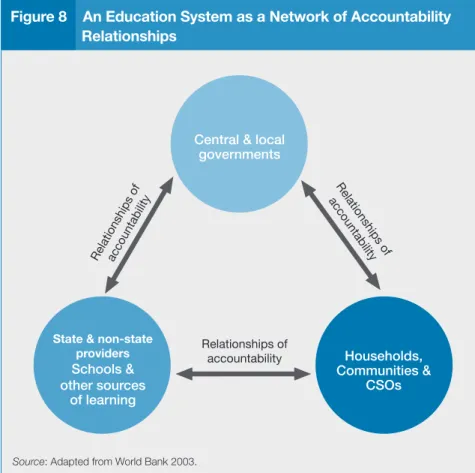
schools, universities, and training programs that provide education services. In this strategy, “education system” includes the full range of learning opportuni-ties available in a country, whether they are provided or financed by the public or private sector (including religious, nonprofit, and for-profit organizations). It includes formal and nonformal programs, plus the full range of beneficia-ries of and stakeholders in these programs—teachers, trainers, administrators, employees, students and their families, and employers. It also includes the rules, policies, and accountability mechanisms that bind an education system together, as well as the resources and financing mechanisms that sustain it. This more inclusive concept of the education system allows the Bank Group and its partner countries to seize opportunities and address barriers that lie outside the bounds of the system as it is traditionally defined.
Improving education systems means moving beyond simply providing in-puts. There is no question that providing adequate levels of schooling inputs—
whether these are school buildings, trained teachers, or textbooks—is crucial to a nation’s educational progress. Indeed, the increase in inputs in recent years has made it possible to enroll millions more children in school; this effort must continue wherever levels of inputs remain inadequate. But improving systems also requires ensuring that inputs are used more effectively to accelerate learning. While past strategies have recognized this goal, the new strategy gives it more emphasis, setting it in a context of education system assessment and reform.
The education system approach of the new strategy focuses on increasing accountability and results as a complement to providing inputs.
Strengthen-ing education systems means alignStrengthen-ing their governance, management of schools
and teachers, financing rules, and incentive mechanisms with the goal of learn-ing for all. This entails reformlearn-ing relationships of accountability among the various actors and participants in an education system so that these relation-ships are clear, consistent with functions, measured, monitored, and supported. It also means establishing a clear feedback cycle between financing (including international aid) and results. Because failures of governance and accountability typically have their severest effects on schools serving disadvantaged groups, this system approach promotes educational equity as well as efficiency.
Operationally, the Bank will increasingly focus its financial and technical aid on system reforms that promote learning outcomes. To achieve this, the Bank
will focus on helping partner countries build the national capacity to govern and manage education systems, implement quality and equity standards, measure system performance against national education goals, and support evidence-based policy making and innovations. While this agenda sounds challenging, the system approach does not require reforming all policy domains at once. Detailed system analysis and investment in knowledge and data will allow the Bank and policymakers to “analyze globally and act locally”—that is, to assess the quality and effectiveness of multiple policy domains, but focus action on the areas where improvements can have the highest payoff in terms of schooling and learning outcomes. Internally, the Bank Group will work to improve project outcomes by strengthening the results framework for projects, improving portfolio monitor-ing, and selecting the right operational instruments.
Building The Knowledge Base
At the regional and global level, the Bank will help develop a high-quality knowledge base on education reform. Analytical work, practical evidence, and
The Bank is developing new knowledge approaches to help guide education reform. New tools for system assessment and benchmarking (“system tools”)
will provide detailed analysis of country capacities in a wide array of education policy domains, from early childhood development (ECD), student assessment, and teacher policy to equity and inclusion, tertiary education, and skills devel-opment, among others. In each policy domain, the system tools will analyze the “missing middle” of intermediate outcomes, illuminating the part of the results chain that lies between inputs and learning outcomes. This vital information will allow policymakers and civil society organizations to make better-informed decisions about education reforms and interventions by determining where the results chain is breaking down. And by benchmarking progress against inter-national best practices, the tool will highlight areas of strength and weakness as well as identify successful reformers whose experience can inform education policy and practices in other countries.
Better knowledge of the strengths and weaknesses of particular education systems will enable the Bank Group to respond more effectively to the needs of its partner countries. Countries at different levels of educational
develop-ment face different challenges, and priorities for assistance and knowledge sharing should vary accordingly. The new strategy therefore supplements the Bank Group’s usual regional groupings with developmental groupings based on whether a country is middle-income, low-income, or fragile, and sets out dis-tinct priorities for each of these groups. For example, in middle-income coun-tries, where a higher proportion of available jobs is likely to require higher-level skills, one priority is to improve quality assurance and financing for tertiary education and for workforce development. In many low-income countries and fragile states, striving to reach the MDGs remains a key priority.
Careful analysis of each country’s level of educational development, in ad-dition to its overall development, allows for sharper and more operationally useful differentiation. Some countries achieve much higher levels of
education-al performance, in terms of system operation as well as outcomes, than would be expected based on their incomes. Detailed and internationally comparable information about education systems helps identify these strong performers in specific areas—such as teacher professional development, student assessment, or university accreditation—while also flagging weaknesses in other areas. In addition to helping the Bank Group prioritize its assistance, this system infor-mation will facilitate more effective South-South learning, by enabling countries facing specific educational challenges to learn from the stronger performers.
From Strategy To Action
To implement the new strategy, the World Bank Group will focus on three ar-eas: knowledge generation and exchange, technical and financial support, and strategic partnerships (see figure 1). To generate knowledge about education
reforms and interventions, the Bank will provide: system assessment and bench-marking tools, along with data, to assess the capacity of an education system to improve learning outcomes; assessments of student learning and achievement
that cover the basic competencies of reading and numeracy, as well as other skills, including critical thinking, problem solving, and team skills; and impact evaluations and other analytical work that can inform policies and interventions, together with knowledge exchange and debate that facilitate learning across part-ner countries and organizations.
Knowledge generation and exchange is an essential tool for increasing the effectiveness of all spending in a country’s education sector, not just financ-ing from the Bank Group. The Bank will use this knowledge to guide technical
and financial support for countries, including: technical and operational support for system strengthening, prioritized according to its expected contribution
Bank’s mission in education
Strategic directions to achieve results
Implementation levers
Learning for all
Strengthen education systems
Knowledge
- System assessment and benchmarking tools
- Learning assessments - Impact evaluations & analytical work
Technical & financial support - Technical support for system strengthening - Results-oriented financing - Multisectoral approach
Strategic partnerships UN agencies, donor community, private sector, civil society organizations Build a high-quality
knowledge base
to strengthening a country’s education system and advancing learning goals;
results-oriented financing; and a multisectoral approach to educational develop-ment that provides the right incentives, tools, and skills for staff to work across all sectors that influence education outcomes. Improving education outcomes depends heavily on links with the health and social protection sectors: these sectors influence whether students are healthy enough to learn well, whether the system offers families a strong enough safety net to protect education in times of crisis, and whether schooling reflects adequately the demand for skills in the labor market. Within the Bank Group, the World Bank and IFC will work to-gether to improve knowledge about the private sector’s role in education and to help countries create policy environments and regulatory structures that align the private sector’s efforts with national education goals. Finally, the Bank will implement this strategy through strategic partnerships at both the international and country levels to improve education systems. It remains committed to supporting and strengthening the global partnership EFA Fast Track Initiative, which aims to help low-income countries achieve the education MDGs.
To measure the success of the strategy, the Bank Group will use a number of performance, outcome, and impact indicators. Given that accountability is a
major emphasis of the system approach to education, the Bank is committed to tracking the effectiveness of its own strategy. The indicators (see table 1) that it will use include: performance indicators for areas over which the Bank has direct control; outcome indicators for areas in which progress requires the efforts of both partner countries and the Bank; and impact indicators, which will monitor progress toward the ultimate goals of the education strategy.
Achieving Learning for All will be challenging, but it is the right agenda for the next decade. While countries can achieve rapid changes in enrollment rates from
one school year to the next, it is much harder to make significant gains in learning outcomes. Learning gains typically require structural and behavioral shifts made possible by institutional changes, which the new strategy will support. It is not enough to get the technical details right; reforms also require navigating the twin challenges of constraints on a nation’s implementation capacity and its political economy. Reforms require buy-in from a large group of stakeholders, with teach-ers playing a special role. Progress on the outcome and impact indicators listed in table 1 will therefore hinge on countries instituting real reforms and having the political will to follow through. The Bank Group’s assistance will need to take these constraints into account, with support tailored to country circumstances and realistic targets set for learning outcomes. Yet all this effort will be worth it: when children and young people learn, lives improve and nations prosper.
Table 1 | Performance, Outcome, and Impact Indicators for the 2020 Education Strategy
Note: a. The World Bank is developing education system tools under the System Assessment and Benchmarking for Education Results (SABER) Program. One system tool, “Teacher Policies Around the World,” has been launched as a prototype, together with the publication of the strategy. Other system tools to be launched during the first year of the strategy include “Student Assessment,” “Early Childhood Development,” and “Workforce Development.” The online SABER database will be maintained by the World Bank on its externally accessible Education Web site.
b. Assessment application conducted on a regular basis and in a sustainable manner.
c. Beginning in 2010, the Bank will commit US$750 million to those countries furthest from the education MDGs with an emphasis on countries in Sub-Saharan Africa. The World Bank will work closely with development partners, in particular through the Fast Track Initiative, to scale up results-based financing and to support innovative interventions in these countries. Lessons from some countries indicate that demand-side interventions such as girls’ scholarships, conditional cash transfer programs, and school grants can successfully address obstacles to school enrollment and attendance for disadvantaged populations, as well as in lagging areas. The Bank also commits to making the lessons from these innovations more widely accessible so they can inform future policies and investments.
Performance Indicators
Changes in Bank Group actions to support countries
1. Knowledge development to strengthen country education systems
a) Number of education system tools developed and launched a
b) % of Bank knowledge products that use system tools in the analysis c) % of knowledge products that use
learning outcomes in analyses of basic education
2. Organizational development to strengthen country education systems
a) % of Education Sector staff who have completed a competency program on the education system approach and tools and on Monitor-ing & Evaluation (M&E) methods 3. Technical and financial support to strengthen country education systems
a) % of education projects or programs that have learning- or skills-related key performance indicators (KPI) b) % of education projects or
pro-grams that use education system tools in their design and/or their M&E approach
c) % of education projects or pro-grams that have a satisfactory M&E in their design and implementation d) % of countries furthest from
reaching the education Millennium Development Goals (MDGs) that have received increased support (lending and non-lending) from the Bank Group
e) % of education projects or
programs that finance outputs/
outcomes
Outcome Indicators
Changes in policy and programs of countries receiving Bank Group support
1. % of (i) middle-income countries, (ii) low-income countries, (iii) fragile or conflict-affected states, (iv) Fast Track Initiative (FTI)-endorsed countries that have applied system tools and have collected and used system data 2. % of countries that have applied
learning or skills (national or interna-tional) assessments b
3. % of countries whose systems have improved in at least one policy domain as measured by the system assessment tools
4. % of countries furthest from reaching the education Millennium Development Goals (MDGs) that have taken new steps since 2010 to addressing the obstacles to attain-ing those goals
Impact Indicators
Ultimate goals monitored in countries receiving Bank Group support
1. % of countries (or beneficiaries
in countries) with increases in measured learning or skills since 2010 (or since the earliest available baseline)
2. % of countries that have reduced schooling or learning gaps for disad-vantaged populations (e.g., income groups, gender, ethnolinguistic groups, disability) since 2010 c
3. % of countries furthest from reach-ing the education MDG in 2010 that progressed towards their attainment since 2010
RATIONALE
P A R T
I
Education’s Role in Development
People are the real wealth of nations (UNDP 2010) and education enables them to live healthier, happier, and more productive lives. There is broad agreement, backed by research findings, that education enhances people’s ability to make in-formed decisions, be better parents, sustain a livelihood, adopt new technologies, cope with shocks, and be responsible citizens and effective stewards of the natural environment. Given that global economic growth remains sluggish despite signs of recovery from the recent economic crisis, the shortage of the “right” skills in the workforce has taken on a new urgency across the world (World Bank 2010b). Global unemployment, estimated at 205 million (or 6.6 percent of the working population) in 2009, is at an all-time high (ILO 2011). Young people, who are par-ticularly vulnerable to layoffs, have the hardest time finding new jobs, with their unemployment rate nearly three times that of adults.
Box 1. Education “Crowds In” Investments for Growth
The Commission on Growth and Development brought together 19 world leaders (mostly from developing countries), together with academic luminar-ies, to review the evidence on the factors that facilitate economic growth.
The commission noted in 2008, “No country has sustained rapid growth
without also keeping up impressive rates of public investment—in infrastruc-ture, education, and health. Far from crowding out private investment, this spending crowds it in. It paves the way for new industries to emerge and
raises the return to any private venture that benefits from healthy, educated
workers, passable roads, and reliable electricity. […] Perhaps the best pro-tections a government can provide are education—which makes it easier to pick up new skills—and a strong rate of job creation, which makes it easy to
find new employment.”
The Universal Declaration of Human Rights (1948) and the United Nations Convention on the Rights of the Child (1989) recognize a child’s right to an education—a worldwide acknowledgment that depriving a child of the oppor-tunity to basic skills is tantamount to depriving that child of the chance to have a satisfying life.1 Through the actions described in this strategy, the World Bank
Group commits to removing barriers to access to quality education so that the right to education may be upheld for all children and youth.
Education improves the quality of people’s lives in ways that transcend benefits to the individual and the family by contributing to economic prosperity and re-ducing poverty and deprivation. Countries with low levels of education remain in a trap of technological stagnation, low growth, and low demand for educa-tion (see box 1). Research assessing the link between the quantity of educaeduca-tion (in terms of enrollment or average years of schooling) and economic growth has been encouraging but somewhat mixed,2 perhaps because ultimately what
matters for growth is not the years that students spend in school, but what they learn. By measuring education levels based on what students have learned, one influential study estimates that an increase of one standard deviation in student scores on international assessments of literacy and mathematics is associated with a 2 percent increase in annual GDP per capita growth (Hanushek and Woessmann 2008).
At the micro level, education yields its greatest benefits in countries undergoing rapid technological and economic change because it can give workers the ability to continue acquiring skills throughout life, as well as the capacity to adapt to new technology. In India farmers who have higher-level skills are better able to process codified and complex information and thus benefit from a program that uses mobile phones to communicate and receive up-to-date market, pro-duction, transport, and meteorological data (Mittal and Tripathi 2009). During India’s green revolution in the mid-1960s, farmers with more schooling in states that experienced greater technical change earned profits 40 percent higher than those earned by farmers with less schooling. In China, Ghana, and Pakistan, productivity returns to schooling have been estimated to be higher in nonfarm activities, where rapid technological change often takes place, than in farm ac-tivities.3 Today, India’s economy is predicted to continue growing at more than
8 percent annually in the coming years, further increasing the demand for skills and worker flexibility as technological change marches on.
The development benefits of education extend well beyond work productivity and growth to include better health, reduced fertility, an enhanced ability to adopt new technologies and/or cope with economic shocks, more civic participation, and even more environmentally friendly behavior. A few such benefits include:
• Healthier children. Other things being equal, more educated parents have healthier children, even after controlling for household income. Educa-tion increases knowledge of the benefits of vaccinaEduca-tion and strategies for avoiding the transmission of infectious diseases. It is estimated that of the 8.2 million fewer deaths of children younger than 5 years between 1970 and 2009, one-half can be attributed to more education among women of reproductive age (Gakidou et al. 2010).
• Better coping with economic shocks. Households with more education cope better with economic shocks than less educated households, since they tend to have more resources and knowledge about how to cope with income fluctuations. Such households are also more able to exploit new economic opportunities. In Indonesia and Argentina, for example, more educated households fared better than less educated households during these countries’ respective macroeconomic crises (see Frankenberg, Smith, and Thomas 2003 and Corbacho, Garcia-Escribano, and Inchauste 2007).
• Adapting to environmental change. Comparing countries with similar in-come and weather conditions, those countries with better-educated female populations are more capable of coping with extreme weather events than countries with low levels of female education (Blankespoor et al. 2010).
underinvestment in education, so “public spending on education is justified on the grounds of efficiency and equality of opportunity. It corrects the failure of the market to allocate enough resources to education, and it also widens access to education beyond those who can pay for it upfront.” Managed correctly, public intervention to promote education creates opportunities for gains in growth, productivity, employment, and poverty reduction. And for the devel-opment community, investing in education is a key item on the agenda as the world continues to recover from crisis, as discussed in the Bank Group’s “New World, New World Bank Group: Post-Crisis Directions” strategy paper (World Bank 2010b).
Recent Developments: More Schooling, Little Learning
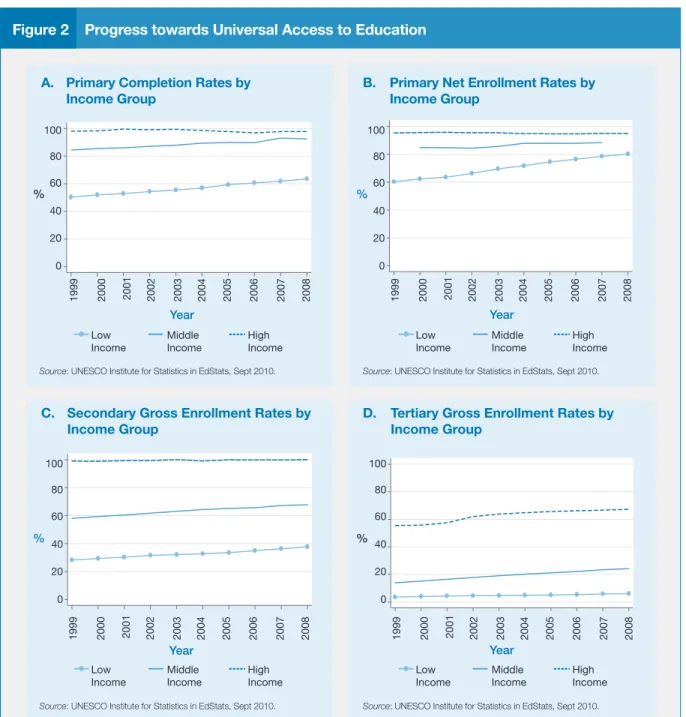
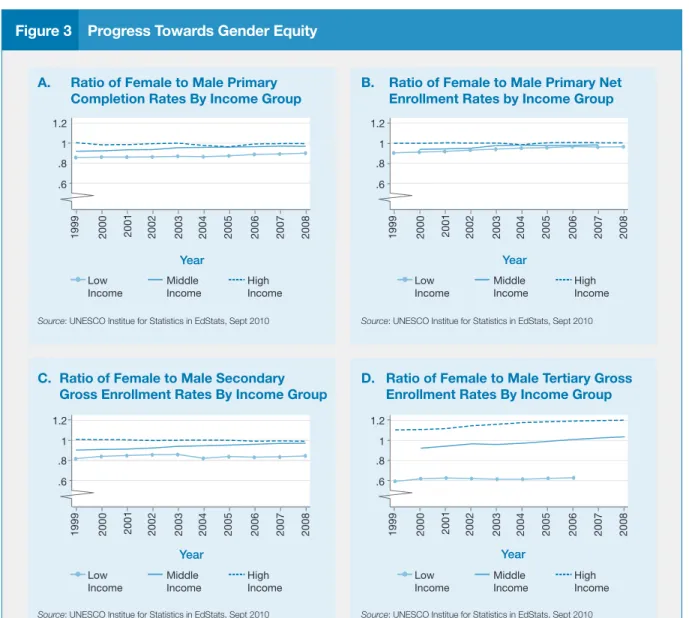
Compared with two decades ago, more young people are entering school, completing the primary level, and pursuing secondary education. Thanks to a combination of effective policies and sustained national investments in educa-tion, far fewer children in developing countries are out of school. Governments, civil society organizations (CSOs), communities, and private enterprises have built new schools and classrooms and recruited teachers at unprecedented lev-els. Even in low-income countries, average enrollment rates in primary educa-tion have surged upwards of 80 percent, and primary compleeduca-tion rates, above 60 percent (see figure 2). Moreover, because more schools are available in rural areas in these countries, the poorest children—as well as girls who were kept out of school because there were no schools close to home (see figure 3)—have also benefited. Between 1991 and 2008, the ratio of girls to boys in primary and sec-ondary education in the developing world improved from 84 to 96 percent, with even larger gains in the Middle East and North Africa region and the South Asia region. However, low-income countries as a group are still far from reaching the education Millennium Development Goals (MDGs): universal primary educa-tion as measured by enrollment and primary compleeduca-tion rates, and gender equality in primary and secondary education. Three-fourths of the countries that are the furthest from meeting the MDG on primary completion rates are in Sub-Saharan Africa; the corresponding percentage for gender equality is 45 percent.4 In these countries, it may take targeted efforts on top of broad reforms
to address the specific reasons why children and youth are out of school.
A. Primary Completion Rates by
Income Group B. Primary Net Enrollment Rates by Income Group
C. Secondary Gross Enrollment Rates by
Income Group D. Tertiary Gross Enrollment Rates by Income Group Source: UNESCO Institute for Statistics in EdStats, Sept 2010. Source: UNESCO Institute for Statistics in EdStats, Sept 2010.
Source: UNESCO Institute for Statistics in EdStats, Sept 2010.
Source: UNESCO Institute for Statistics in EdStats, Sept 2010. Source: UNESCO Institute for Statistics in EdStats, Sept 2010. High
Income Middle
Income Low
Income
High Income Middle
Income Low
Income
High Income Middle
Income Low
Income
High Income Middle
Income Low
Income
Year Year
Year Year
Figure 2 Progress towards Universal Access to Education
% %
As primary enrollment rates have climbed, pressure has mounted to expand the capacity of secondary and tertiary education institutions. Spurred by the rise of new economic stars such as Brazil, Russia, India, and China (the BRICs), devel-oping countries—including low-income countries—are more keenly aware that secondary and tertiary education are critical to developing a skilled, productive, and flexible labor force and creating and applying ideas and technologies that contribute to economic growth (Rodriguez 2008; COREHEG 2010).
Source: UNESCO Institue for Statistics in EdStats, Sept 2010 Source: UNESCO Institue for Statistics in EdStats, Sept 2010
A. Ratio of Female to Male Primary Completion Rates By Income Group
C. Ratio of Female to Male Secondary
Gross Enrollment Rates By Income Group D. Ratio of Female to Male Tertiary Gross Enrollment Rates By Income Group B. Ratio of Female to Male Primary Net
Enrollment Rates by Income Group
Source: UNESCO Institue for Statistics in EdStats, Sept 2010 Source: UNESCO Institue for Statistics in EdStats, Sept 2010 Year
High Income Middle
Income Low
Income
High Income Middle
Income Low
Income
High Income Middle
Income Low
Income
High Income Middle
Income Low
Income
Year
Year Year
Income poverty remains a pervasive barrier to school attendance and learning, particularly for girls and minority groups. Schooling levels by income group indicate that children from the poorest families who enter school drop out early, although at varying rates across countries (see figure 4).5 In some countries,
such as Pakistan and Tanzania, the impact of income poverty on education levels is visible right from the start of primary school. In Indonesia, income poverty does not seem to deter school-age children from entering primary school, but it does make them more likely to drop out and less likely to receive a secondary education. Research has shown that school enrollment is more sensi-tive to the price of schooling for low-income households, so eliminating fees or giving a scholarship to children will produce a larger proportional increase in the schooling of children from poorer families (Orazem and King 2008).
Educational progress lags even more among children and youth who face multiple sources of disadvantage: gender, place of residence, disability, or ethnolinguistic background.6 Research suggests that the demand for
school-ing in rural areas responds most to changes in income and the proximity of available schools. In places where girls receive less schooling than boys (such as Pakistan, Afghanistan, Morocco, and the rural areas of many other countries), girls’ schooling seems more responsive to shifts in income and prices than boys’ schooling. Demand-side interventions, such as the abolition of school fees and targeted scholarships, cash transfers for poor families, and vouchers that enable poor students to attend private educational institutions have been especially advantageous for raising girls’ educational enrollment in rural areas. Together, these measures have resulted in notable increases in girls’ enrollment rates at the primary and secondary levels, as in Cambodia, where scholarships conditioned on attendance raised the school participation of recipients by 20 to 33 percent-age points (Filmer and Schady 2008).
For too many students, however, more schooling has not resulted in more knowledge and skills. The results of substantial resources spent on education have thus been disappointing in terms of learning outcomes. Youth are leaving school and entering the workforce without the knowledge, skills, or competen-cies necessary to adapt to a competitive and increasingly globalized economy. As a result, to find employment they may need remedial, second-chance, and job training programs.
Several studies illustrate the seriousness of the learning challenge. In India, 47 percent of children in grade 5 cannot read a second-grade text, suggesting that close to half of schoolchildren are not attaining even a basic level of literacy after five years of school (ASER 2010). In Peru only half of grade 2 students could read at all (Crouch 2006). Math results are no better: Only 37 percent of fifth-grade students tested in India can do simple division. In Pakistan, only half of third-grade students tested could answer very basic multiplication ques-tions (Das, Pandey, and Zajonc 2006). Education systems in many countries are therefore facing the simultaneous challenges of providing basic education to hard-to-reach or disadvantaged groups, expanding post-basic education to meet greater demand for employable skills, providing second-chance learning opportunities to those who are out of school, and ensuring that the education provided at all levels yields better learning outcomes.
The results from regional and international student assessments, such as the Trends in International Mathematics and Science Study (TIMSS), the Programme for International Student Assessment (PISA), and the Southern and Eastern Af-rica Consortium for Monitoring Educational Quality (SACMEQ) tests, illustrate the wide gulf in international test scores of students from different income levels,
Poorest Quintile 2 Quintile 3 Quintile 4 Richest
Source: Authors’ calculations based on national demographic and health survey data. Grade
A. Pakistan 2006-07 Grade Survival Profile, ages 15-19
Grade
B. Tanzania 2007-08 Grade Survival Profile, ages 15-19
C. Indonesia 2007-08 Grade Survival Profile, ages 15-19
Grade 0
0.2 0.4 0.6 0.8 1
1 2 3 4 5 6 7 8 9 0
0.2 0.4 0.6 0.8 1
1 2 3 4 5 6 7 8 9 0
0.2 0.4 0.6 0.8 1
1 2 3 4 5 6 7 8 9
Pr
oportion
Pr
oportion
Pr
oportion
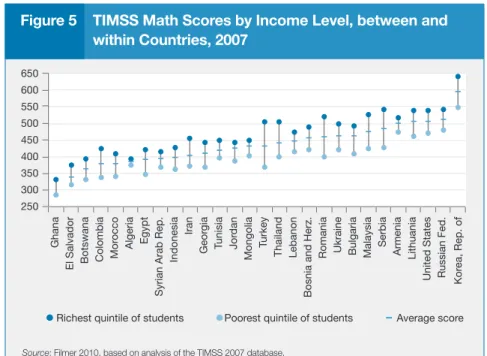
both between and within countries. For example, Turkey’s average score on TIMSS is about 1.5 standard deviations below that of Lithuania and the United States (see figure 5). At the same time, the math scores of students from the rich-est 20 percent of families in Turkey are 1.5 standard deviations higher than those of students from the poorest 20 percent of families. Closing the gap in achieve-ment between the poorest and richest students would put Turkey in a far better position relative to higher-performing countries. The most recent PISA report, based on the 2009 assessment, reinforces this message about attention to equality, emphasizing that “the best-performing school systems [in Canada, Finland, Japan, Korea, and the partner economies Hong Kong SAR-China, and Shanghai-China] manage to provide high-quality education to all students,” rather than only to students from privileged groups (OECD 2010b, 9).
Why a New Education Strategy?
The world and the development context have changed since 2000, when the last World Bank Group education strategy was launched—and so has the World Bank Group (henceforth referred to as the “Bank”). External and internal changes call for a rethinking of the Bank’s education strategy. Economic, demo-graphic, and technological changes are redefining the development challenge
Source: Filmer 2010, based on analysis of the TIMSS 2007 database.
Richest quintile of students Poorest quintile of students Average score 250
300 350 400 450 500 550 600 650
Ghana
El Salvador Botswana Colombia Mor
occo
Algeria Egypt
Syrian Arab Rep.
Indonesia
Iran
Geor
gia
Tunisia Jor
dan
Mongolia Turkey Thailand Lebanon
Bosnia and Herz.
Romania Ukraine Bulgaria Malaysia Serbia Armenia Lithuania
United States Russian Fed. Kor
ea, Rep. of
Figure 5 TIMSS Math Scores by Income Level, between and
for all countries. Education systems must adapt to those changes so that they can produce the skilled, agile workforces and informed citizens needed in this environ-ment. The new strategy lays out strategic directions, priorities for investment, technical support, and policy assistance for the Bank’s work in education over the next decade, within the context of global shifts and internal Bank changes.
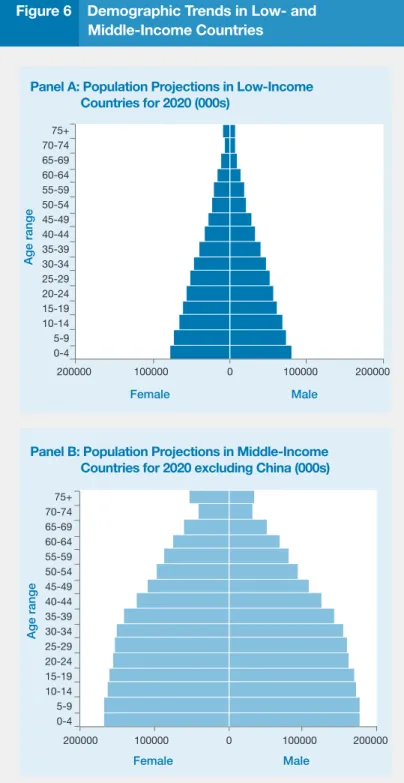
A country’s demographic landscape shapes the potential demand for educa-tion. Because their fertility rates remain high, low-income countries continue to have very young populations; on average, more than 40 percent of their popula-tions will be under 15 years old in 2020 (see figure 6). An estimated 3.1 billion young people worldwide are between the ages of 0 and 24 years, of which 90 percent live in the developing world. Moreover, fertility is not declining as rap-idly as expected in some poor countries (UN 2011). These countries must pro-vide their young people adequate basic education while upgrading the quality of that education. Success in getting more children through basic education, moreover, creates demand for educa-tion at secondary and tertiary levels. In contrast, sharp declines in fertility rates in middle-income countries have reduced the pressure to expand primary educa-tion facilities, leaving more resources for quality improvement and the expansion of post-primary education. The propor-tion of 15–24-year-olds in the
popula-200000 100000 0 100000 200000
0-4 5-9 10-14 15-19 20-24 25-29 30-34 35-39 40-44 45-49 50-54 55-59 60-64 65-69 70-74 75+ Female Age range Age range Male
200000 100000 0 100000 200000
Female Male
Source: World Bank, Health Nutrition and Population Statistics, Population Projection Tables by Country and Group, 2010–2050 (http://go.worldbank.org/KZHE1CQFA0).
Note: China is excluded from Panel B; including China would make the “youth bulge” even clearer.
Panel A: Population Projections in Low-Income Countries for 2020 (000s)
Panel B: Population Projections in Middle-Income Countries for 2020 excluding China (000s)
0-4 5-9 10-14 15-19 20-24 25-29 30-34 35-39 40-44 45-49 50-54 55-59 60-64 65-69 70-74 75+
tions of middle-income countries is also higher than ever before. If these youth are equipped with appropriate skills and know-how when they enter the work-force, the “youth bulge” (see figure 6) could translate into remarkable economic dividends for these countries.
Urbanization is another global shift that has consequences for education: the rising urban share of the population of the developing world presents both op-portunities for and challenges to the education sector. Educated migrants seek places where many other workers have similar skills because educated workers gain from proximity to others. Education can take advantage of the economies of scale presented by urbanization, with opportunities for less costly expansion of services. The challenge will be not only to expand access, but also to increase learning outcomes and education’s relevance to the urban labor market, while reducing rural-urban gaps (World Bank 2009i).
The emergence of new middle-income countries has intensified the desire of developing nations to become more competitive by building more highly skilled, agile workforces.7 Although the world as a whole is emerging from the
global financial crisis at a modest rate, the economies of China and India are projected to grow at close to 10 percent in 2011, and that of Brazil, 4.1 percent. Even the regional economy of Sub-Saharan Africa is projected to grow by 5.5 percent in 2011. Indeed, according to the International Monetary Fund (2010), output growth in emerging and developing economies is expected to be 6.4 percent in 2011—more than twice the projected output growth of rich econo-mies.8 Many of these countries initially took advantage of relatively good fiscal
The technological landscape also shapes potential demand for education. New information technologies have transformed—and continue to transform—how people live and communicate, how enterprises do business, the kind of jobs that are available, and the skills that are in greater or lesser demand.10 The growth
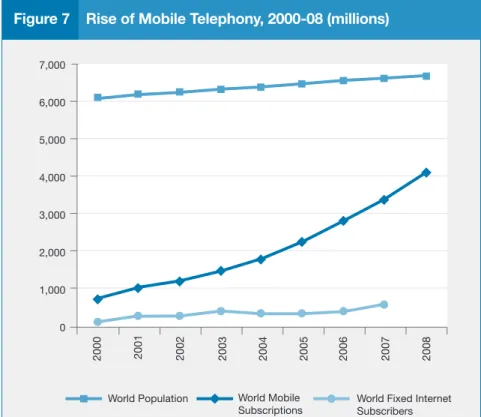
of mobile phone subscribers has outpaced global population growth (see figure 7). Mobile telephony has been adopted even in the rural areas of poor countries and its use for accessing market information and banking services is growing. Similarly, the number of Internet users—most of them young people—grew by an estimated quarter of a billion people between 2000 and 2005 (OECD 2010a). These technological changes can improve the quality of service delivery, but research and field experience indicate that the new technology must be accom-panied by profound changes in pedagogical methods. The ability of education systems to develop “new economy skills” can help countries become more competitive (see box 2). This implies changing the way educators are trained, increasing the supply of qualified educators, and improving the relevance of education curricula.
Sources: World Development Indicators Database; Development Data Platform of the World Bank Development Data Group.
7,000
6,000
5,000
4,000
3,000
2,000
1,000
0
World Mobile Subscriptions
The sources of international aid have grown and become more diverse in recent years, adding to the reasons why donors should harmonize and align their programs at the country level. Guidelines for how donors should work together were elaborated by the Paris Declaration of 2005 and the Accra Plan of Action of 2008. In 2002, the Bank played a pivotal role in forming the Education for All Fast Track Initiative (EFA FTI),11 a global partnership that aims to help
low-income countries achieve the education MDGs. Since 2004, the initiative has provided financial support to over 40 countries. The Bank, which continues to supervise most of the grants of the partnership, is working with FTI partners to implement reforms recommended by an external evaluation of FTI (Cambridge Education, Mokoro, and Oxford Policy Management 2010). This new education strategy provides an opportunity to improve the Bank’s contributions to this global partnership.
Box 2. Technological Change, Skills, and Education in Brazil
The rise of new technologies and their rapid diffusion have been altering the mix of jobs and skills demanded in the workplace. The introduction of com-puters in the workplace in the United States, for example, has decreased the demand for skills in routine and manual tasks, while sharply increasing the
demand for “new economy” skills—analytical and interpersonal skills for deal -ing with nonroutine circumstances. Can education systems adjust fast enough to help students meet these changes in the labor market?
Recent technological changes are also affecting developing economies, per-haps especially the fast-growing ones. In Brazil, the skill structure of the labor force since the early 1980s shows a decline in manual skills and an increase in routine cognitive skills. In particular, high-income groups show an evolution in their skills mix similar to that of high-income groups in the United States.
As of yet, there has been no rapid increase in “new economy skills,” but more
highly educated individuals have increased their new economy skills faster than individuals with less education. Even though the speed at which an economy adapts to technological change depends on a variety of factors, this evidence reinforces the perception that more educated individuals will adapt faster to change, and by doing so, contribute to technological catch-up.
Sources: Levy and Murnane 2004; Luque and Moreno forthcoming; Bruns, Evans, and Luque 2010.
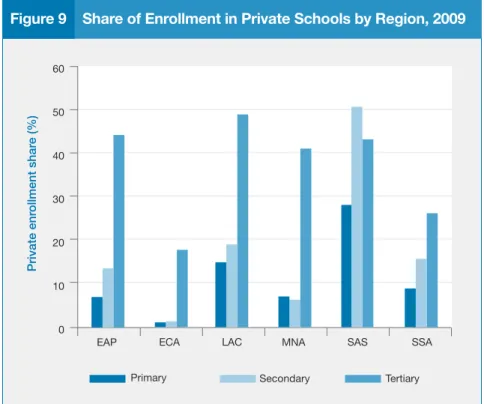
Inside the World Bank the operating environment has also undergone notable reforms in the past decade. These changes were designed in part to give the Bank a better structure for responding to changes in global economic and polit-ical conditions and the global aid environment, and in part to accommodate the shifting nature of its policy dialogue with client countries. First, the Bank has raised the share of its staff who are located in country offices, both through the relocation of international staff and increased recruitment of local staff. About one-half of education staff (and an even greater percentage in East and South Asia) are located in field offices. Second, the Bank’s operational instruments have increased, partly in response to greater demand for, and interest in, lending instruments that incorporate performance-based approaches, together with sectorwide financing (in the form of direct budget support), parallel financing, pooled funding, programmatic lending in support of medium-term develop-ment goals, and approaches that provide greater flexibility with reduced trans-action costs. A number of middle-income countries, notably in Eastern Europe, are also using reimbursable technical assistance in order to tap the Bank’s technical expertise in highly specific areas. A third internal change has resulted from the rapid growth of private-sector provision of education services, sparked by the limited ability of many governments to meet growing demand for educa-tion. To help support the private sector’s ability to deliver quality education, in 2001 the International Finance Corporation (IFC) set up a department focused on financing private education providers, and in 2004 it made the education sector one of its strategic pillars.
Goal and Framework for the New Strategy: Learning for All
The state of education and the expectation of leaders, citizens, and students of national education systems—that education can be an engine of economic prog-ress and a chance for people to transform and improve their lives—all point to the immense challenges that these systems face. For its part, the World Bank commits to supporting educational development with a focus on learning for all.
The new strategy focuses on learning for a simple reason: growth, development, and poverty reduction depend on the knowledge and skills that people acquire, not just the number of years that they sit in a classroom. At the individual level, while a diploma may open doors to employment, it is a worker’s skills that deter-mine his or her productivity and ability to adapt to new technologies and oppor-tunities. Knowledge and skills, including those that are learned in the classroom, help improve a person’s ability to have a healthy and educated family and engage in civic life. And as noted above, at the societal level, recent research shows that the level of skills in a workforce—as measured by performance on international student assessments such as PISA and TIMSS—predicts economic growth rates far better than do average schooling levels (Hanushek and Woessmann 2008).
The “for all” part of the strategy’s goal is crucial. Major access challenges remain for disadvantaged populations at all education levels; indeed, children and youth cannot develop the skills and values that they need without the foundational education provided by schools. But when an education system fails to deliver learning, the failure is most severe for poor and disadvantaged children and young people. Learning gaps are most obvious when those children and youth do not enroll in school at all, but they also happen more insidiously, when disadvantaged students attend school but learn little because the schools they attend are of such poor quality. The learning for all strategy thus promotes the equity goals that underlie the education MDGs; in fact, it elevates the MDGs by linking them to the universally shared objective of learning.
The new education strategy is built on the premise that people learn through-out life. However, the period between birth and young adulthood is especially critical because the ability to learn that is developed during this period provides a foundation for lifelong learning (see box 3). The extent to which children and young people learn during these years depends on their ability to learn, the
learn-THE WORLD BANK GROUP’S
NEW EDUCATION STRATEGY
P A R T
II
ing opportunities available to them and the quality of those opportunities. Several key findings inform the new strategy:
• Early malnutrition, disease, abuse, and neglect impair a child’s physical and cognitive development, with long-term consequences for that child’s capacity to learn. The educational effects of severe deprivation at the beginning of life can be difficult—and costly—to overcome. Investments in the nutritional and health status of very young children and the quality of their interaction with parents and caregivers determine the readiness of children to learn.
• Learning outcomes have typically been measured in terms of reading and numeracy skills, but the knowledge and competencies that help people live healthy, productive, and satisfying lives are much broader.12 In other words,
education is not only about reading, writing, and arithmetic (the “3Rs”). So-cial, communication, teamwork, critical thinking, and problem-solving skills are invaluable for people to function well at home, in their communities, and at work. Specific technical or vocational skills related to an occupation are also important for success in the labor market.
• Learning is not only about schooling. Programs that address hunger, malnu-trition, and disease among schoolchildren significantly improve their aca-demic performance, a reason why school-based feeding and health programs can be valuable in times of drought, economic crisis, and natural disaster (Bundy and O’Connell 2010). Indeed, learning is not simply the business of education agencies; it should also involve social welfare and/or social protec-tion and health agencies in the design and implementaprotec-tion of policies across sectors that ensure young children have the foundational skills to succeed in school. Box 3 overlays these interventions in a life-cycle view of learning.
• Youth who drop out of school early are vulnerable to unemployment, pov-erty, teen marriage, pregnancy, and delinquency. In addition to preventing young people from dropping out of school, alternative (“second-chance” or “catch-up”) learning opportunities that take into account the reasons why they are not in school are needed. These reasons usually include income pov-erty, gender, disability, family catastrophes, social conflict and wars, as well as perceived low market returns to education. The challenge is to give these young people appropriate opportunities to consolidate their basic knowledge and competencies, and then equip them with technical or vocational skills that promote employment and entrepreneurship (World Bank 2011).
• While most governments consider basic education part of their mandate, learning opportunities—from preschool to universities and training pro-grams—are not provided only by governments. The role of the nonstate, or private, sector is discussed in the next section.