
Entrepreneurial and innovative behavior in spanish smes: essays on profitability, growth and export intensity.
174
0
0
Texto completo
(2) II.
(3) ENTREPRENEURIAL AND INNOVATIVE BEHAVIOR IN SPANISH SMEs: ESSAYS ON PROFITABILITY, GROWTH AND EXPORT INTENSITY.. Submitted to the Department of Business Economics in partial fulfillment of the requirements for the degree of Doctor of Philosophy – Ph D. by the Universitat Autònoma de Barcelona.. ____________. ____________. Izaias Martins Author. Dr. Alex Rialp Supervisor. Barcelona, December 2012. III.
(4) IV.
(5) Dedicated to my family. V.
(6) VI.
(7) TABLE OF CONTENTS TABLE OF CONTENTS. VII. LIST OF TABLES. XI. LIST OF FIGURES. XIII. ACKNOWLEDGEMENTS. XV. ABSTRACT. 3. RESUMEN. 5. RESUMO. 7. CHAPTER I. 9. INTRODUCTION OF THE DISSERTATION. 9. 1. Entrepreneurship as Entrepreneurial Behavior. 9. 2. Problem Statement. 11. 2.1. Entrepreneurial and Innovative Behavior in SMEs and their Contribution to Performance. 11. 2.2. The importance and relevance of entrepreneurial SMEs for contemporary societies. 12. 2.3. The importance of innovation and internationalization for contemporary societies. 13. 3. Objective of the Dissertation and Research Questions. 15. CHAPTER II. 19. MAIN THEORIES AND CONSTRUCTS USED. 19. 1. Resource-Based View. 19. 1.1. SME and the Knowledge-based view of the firm. 20. 2. Contingency Theory. 22. 2.1. Contingency relationships. between corporate entrepreneurship and. performance. 23. 2.2. The role of environmental hostility. 25. 3. Absorptive Capability and Organizational Learning Theory. 27. 4. Social Network in Organizational Contexts. 32. 5. Entrepreneurial Orientation. 35. 6. Innovativeness. 39. VII.
(8) CHAPTER III. 43. ESSAY 1 – ENTREPRENEURIAL ORIENTATION, ENVIRONMENTAL HOSTILITY AND SME PROFITABILITY: A CONTINGENCY APPROACH. 43. 1. Introduction. 43. 2. Theoretical Framework, Previous Research and Hypotheses. 46. 2.1. Entrepreneurial orientation as a resource. 46. 2.2. The moderating role of environmental hostility: a contingency approach. 49. 3. Research Design. 51. 3.1. Sample and data collection. 51. 3.2. Techniques for controlling Common Method Biases. 54. 3.3. Variables. 55. 4. Analysis and Results. 59. 5. Discussion and Conclusions. 64. CHAPTER IV. 67. ESSAY 2 – THE EFFECTIVENESS OF ENTREPRENEURIAL ORIENTATION AND NETWORK RESOURCES IN TERMS OF SMEs GROWTH. 67. 1. Introduction. 67. 2. Theoretical Framework, Previous Research and Hypotheses. 70. 2.1. Firm networks and EO development. 70. 2.2. EO and firm growth. 72. 2.3. Firm networks and growth: direct and indirect causal effects. 75. 2.4. Size as a moderator term. 79. 3. Research Design. 81. 3.1. Sample and data collection. 81. 3.2. Variables. 83. 4. Analysis and Results. 85. 5. Discussion and Conclusions. 89. VIII.
(9) CHAPTER V. 93. ESSAY 3 – INNOVATIVENESS AND EXPORT IN SMALL FIRMS: EXAMINING THEIR MUTUAL EFFECTS. 93. 1. Introduction. 93. 2. Theoretical Framework, Previous Research and Hypotheses. 95. 2.1. Innovative capability as a resource: from innovativeness to foreign markets. 95. 2.2. Learning-by-exporting: from export activities toward innovativeness. 99. 3. Research Design. 100. 3.1. Database. 100. 3.2. Variables. 102. 4. Analysis and Results. 106. 4.1. The choice of specification. 106. 4.2. Export intensity. 107. 4.3. Innovativeness. 113. 5. Discussion and Conclusions. 116. CHAPTER VI. 119. CONCLUSIONS, CONTRIBUTIONS AND IMPLICATIONS OF THE DISSERTATION. 119. 1. Summary of the Dissertation. 119. 2. Contributions of the Dissertation. 120. 3. Implications of the Dissertation. 123. 3.1. Implications for the literature. 123. 3.2. Implications to management. 124. 3.3. Implications to public policy-makers. 125. 4. Limitations and Future Research Lines. 128. 4.1. Essay One. 128. 4.2. Essay Two. 129. 4.3. Essay Three. 130. REFERENCES. 133. APPENDIX. 157. IX.
(10) X.
(11) LIST OF TABLES Table 1. Dissertation approach. 17. Table 2. Key variables exploring the CE-performance relationship in a contingent approach. 24. Table 3. Environment – main definitions. 27. Table 4. Absorptive capability (ACAP) and organizational learning (OLER): a brief of main studies. 30. Table 5. Social network in CE: key reasons. 34. Table 6. Entrepreneurial Orientation – what we need to know to understand the concept. 37. Table 7. Industrial classification of samples selected and returned. 54. Table 8. Scale reliability. 56. Table 9. Measuring profitability. 57. Table 10. FCF measurement. 58. Table 11. Summary of statistics and correlation coefficients for key variables. 60. Table 12. Results of regression analyses. 63. Table 13. Scale reliability. 84. Table 14. Hypotheses estimates. 88. Table 15. Multigroup analysis: small and medium-sized firms. 89. Table 16. Firm characteristics. 101. Table 17. Questions capturing innovativeness. 104. Table 18. Summary statistics and correlation for key variables: Ordinal regression 2007 and 2008. 108. Table 19. Summary statistics and correlation for key variables: Logit regression 2007 and 2008. 109. Table 20. Ordinal logistic regression to export intensity: a cross-sectional analysis for the years 2007 and 2008. 112. Table 21. Logit regression to innovativeness: a cross-sectional analysis for the years 2007 and 2008. 115. Table 22. Summary of the contributions through hypotheses. 122. Table 23. Summary of the implications in different ways. 127. XI.
(12) XII.
(13) LIST OF FIGURES Figure 1. EO and environmental hostility: impact on firm profitability. 51. Figure 2. Proposed model and relationship between firm networks, EO and growth. 79. Figure 3. The moderating role of size. 80. Figure 4. Proposed model to SEM. 87. XIII.
(14) XIV.
(15) ACKNOWLEDGEMENTS From the moment I decided to embark on this project, my dissertation has always been a priority. However, there are several contingencies in a person’s life and I could not have finished it without the invaluable support of several people. In this group of supporters there are professors, fellow doctoral classmates, academic staff, friends, and, of course, my family. To this special group, I would like to give special thanks. Firstly, my appreciation to Dr. Alex Rialp for his unconditional support and his valuable contribution to my training as a researcher. Alex, thanks for accepting to lead this work when it was still only a project. I would like to give a heartfelt, special thanks to all professors of the Business Economics Department of the Universitat Autònoma de Barcelona. I am especially grateful to Dr. Josep Rialp for his methodological contribution by using certain techniques of analysis, specifically with structural equation modeling. I would also like to thank Dr. Yancy Vaillant for his contribution with the GEM database. My gratitude is also extended to Dr. Joaquin Vergés and Dr. Diego Prior; I will always remember their classes of Public Enterprise and Doctoral Seminar, respectively. In addition, I would like to thank all administrative staff of the Universitat Autònoma de Barcelona, in particular the professionals of the Business Economics Department. A special recognition goes to the program Personal Investigador en Formación – PIF for the support received through social funds, which allowed this research. Next, I would like to give a special thanks to Dr. Vitor Corado Simões, of the Universidade Técnica de Lisboa, where I carried out a visit and received full attention, good structure, and valuable contributions to my research. Thank you Dr. Corado!. XV.
(16) I cannot finish expressing my gratitude without mentioning a select group of people whom I met in this academic journey. In this way, I would like to thank my staunch supporters Rocio Del Pilar and Felipe Uribe. Thanks friends, your friendship and support have been a treasure for me! Another staunch supporter, whom I must mention is Ricardo Borges. My old friend, you showed me the way to Barcelona. Thank you for your encouragement, support and most of all our discussions. In addition, these acknowledgements would not be complete if I did not mention other friends I have known or who have somehow participated in my path in these years of being a Ph D. student. Special thanks to Yanina, Matias, Veronica, Any, Pedro, Felipe Moraes, Renan, Laura, Gabriel, Jeroen, Yoly, Clemens and Carlos. I extend my thanks to my friends of the Catalan course and, of course, all friends of the Consulate of Grêmio in Barcelona. Last, but certainly not least, I must acknowledge with deep thanks my family. My wonderful parents, Manoel de Jesus and Maria de Lourdes, who taught me about discipline, persistence, courage to assume risk, and especially about how to be independent. Still about my parents, I would like to thank them for the most important thing they gave me, my sisters and brother. As the youngest, I have always learned from them. Vera, Mari, Marlei, Sandra and Samuel I love you very much!. XVI.
(17) ENTREPRENEURIAL AND INNOVATIVE BEHAVIOR IN SPANISH SMEs: ESSAYS ON PROFITABILITY, GROWTH AND EXPORT INTENSITY..
(18) 2.
(19) ABSTRACT In this doctoral dissertation, we address three research essays attempting to respond to different research questions: (1) What effect does entrepreneurial orientation have on SME profitability? Does the linkage between entrepreneurial orientation and profitability depend on environmental hostility? (2) Is networking the missing link in entrepreneurial orientation? Network usage and entrepreneurial orientation, what effects do they have on SME growth? and (3) What effect does innovativeness have on small business export? Does export propensity enhance the ability to innovate? Accordingly, we draw on various theoretical perspectives to develop hypotheses that propose entrepreneurial orientation, environmental hostility, firm networks, innovativeness and business performance. Several research techniques have been used to test these relationships, such as lineal regression, structural equation modeling, ordinal regression, logistic regression, etc. Findings confirm most of the proposed relationships. Lastly, implications and future research lines are discussed.. 3.
(20) 4.
(21) RESUMEN En esta tesis doctoral, presentamos tres estudios empíricos que tratan de responder a diferentes preguntas de investigación: (1) ¿Qué efecto tiene la orientación emprendedora sobre la rentabilidad financiera de las PYMEs? ¿La relación entre la orientación emprendedora y la rentabilidad financiera depende de la hostilidad del entorno operativo? (2) ¿Podría la utilización de las redes fortalecer la orientación emprendedora? ¿Qué efectos tienen el uso de la redes y la orientación emprendedora sobre el crecimiento de la PYMEs? y ¿Qué efecto tiene la capacidad de innovación sobre la propensión y la intensidad exportadora de la pequeña empresa? ¿La propensión a exportar impulsa la capacidad innovadora de la pequeña empresa? En consecuencia, nos basamos en diferentes perspectivas teóricas para desarrollar las hipótesis propuestas. Además, utilizamos varias técnicas de investigación para poner en prueba dichas hipótesis, tales como: regresión lineal, modelo de ecuaciones estructurales, regresión ordinal, regresión logística, etc. Los resultados confirman la mayoría de las relaciones propuestas. Finalmente, discutimos las implicaciones de nuestros hallazgos y proponemos futuras líneas de investigación.. 5.
(22) 6.
(23) RESUMO Nesta tese de doutorado abordamos três estudos independentes com o objetivo de responder às diferentes questões de investigação: (1) Qual o efeito da orientação empreendedora sobre a rentabilidade da PME? A relação entre orientação empreendedora e rentabilidade depende do grau de hostilidade do entorno? (2) A utilização das redes seria mais um elo para alcançar a orientação empreendedora? Que efeitos tem o uso das redes e a orientação empreendedora sobre o crescimento da PME? (3) Que efeito exerce a inovação sobre a propensão a exportar? A propensão a exportar aumenta a capacidade de inovação? Em consequência, adotamos várias perspectivas teóricas para desenvolver as hipóteses propostas neste estudo. Do mesmo modo, várias técnicas de investigação foram utilizadas para testar as relações propostas, tais como: regressão linear, modelos de equações estruturais, regressão ordinal, regressão logística, etc. Nossos resultados confirmam a maioria das relações propostas. Finalmente, discutimos as possíveis implicações desses resultados e propomos futuras linhas de investigação.. 7.
(24) 8.
(25) CHAPTER I. INTRODUCTION OF THE DISSERTATION 1. Entrepreneurship as Entrepreneurial Behavior This dissertation is the result of a research effort that focuses on subjects related to a major driver of economic growth: entrepreneurship. It is widely acknowledged that entrepreneurship is one of the most important forces that shape the changes in the economic landscape (Reynolds et al., 2005), moreover, entrepreneurship contributes to economic performance by introducing innovation, enhancing rivalry and creating competition (Wong et al., 2005). Hence, the important contribution of entrepreneurship to national growth has been documented by several authors in the literature (Levenburg and Schwartz, 2008; Tang et al., 2008; Uhlaner and Thurik, 2007; Urban, 2008). But what is entrepreneurship? There is no single definition of entrepreneurship. According to Chow (2006), most often entrepreneurship is interpreted as business ownership or self-employment, but that is not an accurate definition. Furthermore, entrepreneurship often appears under different denominations, which explains why it is defined in different ways (Cuervo et al., 2007). However, there seems to be a consensus that the essence of entrepreneurship is the willingness to pursue opportunity. Thus, “entrepreneurship is a process by which individuals- either on their own or inside organizations- pursue opportunities” (Stevenson and Jarillo, 1990 p. 23). Opportunity is defined as a future situation according to desires and goals of individuals or organizations. In turn, entrepreneurial opportunities differ from the larger set of all opportunities for “profit, particularly opportunities to enhance the efficiency of existing goods, services, raw materials, and organizing methods” (Shane and Venkataraman, 2000 p. 220) 9.
(26) Entrepreneurship can be seen as “entrepreneurial function”, which involves more than the creation of a new business. Entrepreneurship implies the pursuit of opportunity, evaluation, and exploitation of opportunities and the set of individuals who discover, evaluate, and exploit them (Shane and Venkataraman, 2000 p. 218). In brief, in a firmlevel perspective these opportunities are not specifically related to business creation but rather through new products, services and process, new strategic behaviors and new market opportunities. Thus, entrepreneurial opportunities come in a variety of forms: opportunities in a product markets (Venkataraman, 1997), opportunities in factor markets, as in the case of the discovery of new things – innovation (Schumpeter, 1934). But, what about our research? Where is it located? As noted above, we can identify that two streams of research have denominated the entrepreneurship literature. The first has largely focused on the individual entrepreneur as the unit of analysis, especially on identifying the traits which distinguished successful entrepreneurs from less successful ones (Gartner, 1989). In contrast, the second stream of research tends to view entrepreneurial activities as a firm-level phenomenon (Covin and Slevin, 1991), labeled Corporate Entrepreneurship – CE (Zahra and Covin, 1995). “An individual’s psychological profile does not make a person an entrepreneur. Rather, we know entrepreneurs through their actions or behavior” (Covin and Slevin, 1991 p. 8). Therefore, as stressed by Yeoh and Jeong (1995), the fact that organizational level is a better predictor of entrepreneurial effectiveness suggests that organizations can and should be viewed as entrepreneurial entities. Our research is inserted in a CE context, precisely. The entrepreneurial behavior of small and medium-sized enterprises (SMEs) and its influence on the performance of them is the main topic in this dissertation. By entrepreneurial behavior we must understand. the. behavior. that. combines 10. innovation. in. product. or. process.
(27) (innovativeness), the risk-taking propensity by the CEO, and evidence of proactiveness (Miller and Friesen, 1982; Miller, 1983; Covin and Slevin, 1989). 2. Problem Statement 2.1. Entrepreneurial and Innovative Behavior in SMEs and their Contribution to Performance The study of organizational strategy is a recurrent theme examined by academics, and “depending on the strategic orientation adopted, the firm may emphasize more o less aspects such as technological position, innovation, organization design, etc.” (AragónSánchez and Sánchez-Marín, 2005 p. 288). Companies are very diverse when it comes to their strategic entrepreneurial orientation; namely, they can range from very entrepreneurial to very conservative (Miller and Friesen, 1982; Covin and Slevin, 1989). In this vein, a central concept emerges in the domain of corporate entrepreneurship, which receives a substantial amount of theoretical and empirical attention, Entrepreneurial Orientation (EO). EO refers to the strategy-making process that provides organizations with a basis for entrepreneurial decisions and actions (Lumpkin and Dess, 1996; Wiklund and Shepherd, 2005). Drawing on prior strategy-making process and entrepreneurship research, measurement scales of EO have been developed and widely used, and their relationships with other variables have been examined. According to Richard et al. (2009), it is a major firmlevel construct in strategic management and entrepreneurship studies (p. 1078). Although the theoretical foundation of the relationship between EO and performance has rarely been explicated (Wiklund and Shepherd, 2011), it is clear that the majority of research on the topic implicitly assumes that EO somehow provides an advantage to firms. Nonetheless, some empirical, as well as conceptual, arguments suggest that EO is 11.
(28) not equally suitable in all environments (e.g., Covin and Slevin, 1989; Robertson and Chetty, 2000; Wiklund and Shepherd, 2005). That is, in an uncertain environment where an atmosphere of high risk predominates, fewer opportunities, and with tremendous competitiveness, an entrepreneurial behavior is specially recommended. Over the last few years, the business environment, in Spain and elsewhere, has grown increasingly hostile and it can certainly be argued that the external environment may have a strong impact on SME viability and growth. In this sense, an entrepreneurial behavior has become an increasingly important survival condition (Bouchard and Basso, 2011). Moreover, the importance of proper alignment of the strategy with the environment means that both entrepreneurial and conservative companies must develop characteristics that enable them to cope with their environments (Yamada and Eshima, 2009; Yeoh and Jeong, 1995). 2.2. The importance and relevance of entrepreneurial SMEs for contemporary societies As already stressed, there are many evidences that entrepreneurship is of great value for economic growth, productivity, innovation and employment. In this sense, many countries members and partners of the Organization for Economic Co-operation and Development - OECD have made entrepreneurial activities an explicit policy priority. According to OECD report (2009), entrepreneurship has gained additional attention in the current economic crisis, as it is widely viewed as a key aspect of economic dynamism. It is acknowledged that economic crises are historically times of industrial renew, or creative destruction. It is also during crisis when less efficient firms fail while more efficient ones emerge and expand. With regard to the use of SME samples, we decided to work with small and mediumsized companies, considering the important and irreplaceable role of these companies. 12.
(29) within the economy of a country, sometimes facing particular difficulties. Precisely, in Spain about 99% of the companies could be classified as SMEs 1. According to the Directorio Central de Empresas published by the Instituto Nacional de Estadística – INE, in 2009 there were 3,283,495 companies with between 0 and 249 employees. Over the decade (1999-2009), there was a cumulative increase of 26.7% of these companies in the Spanish context, however, in 2009 this growth was affected by the crisis, representing a reduction of 2.7% of all SMEs in just one year. Precisely, over the last three years the SMEs environment, in Spain and elsewhere, has grown increasingly turbulent and it can certainly be argued that probably few SMEs operate in a benign environment. Nonetheless, is especially important to highlight that SMEs are closely related to the creation of new products and process techniques. “In some countries SMEs are responsible for a significant part of innovations that are new to the market or new to the world” (OECD, 2009 p. 38). 2.3. The importance of innovation and internationalization for contemporary societies As globalization reshapes the international economic landscape and technological change creates greater uncertainty in the world economy, entrepreneurship is believed to offer ways to help to meet new economic, social and environmental challenges. In this sense, successful entrepreneurship both in SMEs and in large firms depends heavily on innovation and R&D. According to OECD report – Science, Technology and Industry Scoreboard (2009), R&D intensity has increased in all OECD countries with the gradual shift to a knowledge-based economy. Knowledge creation and diffusion are broader than R&D since a large and growing share of innovations is not necessarily 1. SMEs - According to the European Union recommendation, in effect from January, 2005: Companies which employ between 10 and 249 employees and whose annual turnover does not exceed €50 million or whose annual balance sheet does not exceed €43 million, are considered SMEs. The full text of the recommendation is in C(2003)1422:Commission Recommendation of 6th May 2003, concerning the definition of small and medium-sized firms. Official Journal of the European Union No L124 of 25/05/2003 P. 0036-0040.. 13.
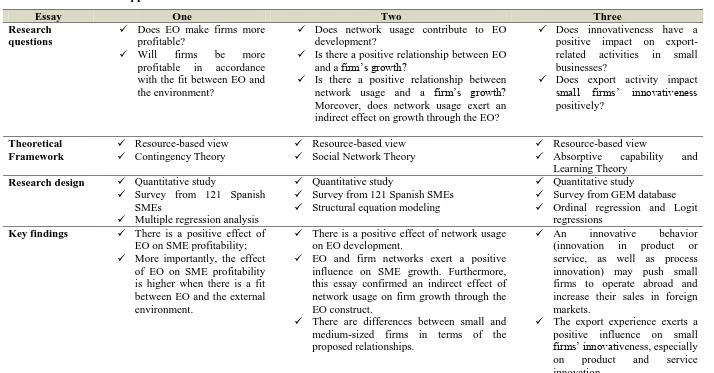
(30) linked to R&D and/or technology. By innovating in products, processes, marketing and organizational forms, firms seize entrepreneurial opportunities. Entrepreneurial opportunities are likely to be larger when firms develop innovations that are new to the market or new to the world. Regarding to innovativeness, it is acknowledged that of the three dimensions that integrate the EO construct, innovativeness is the one that meets with the greatest degree of consensus regarding its positive relationship with firm performance (Casillas and Moreno, 2010; Rauch et al., 2009). The innovativeness dimension reflects the tendency to engage in and support new ideas generation, novelty, experimentation and creative processes (Lumpkin and Dess, 1996). Innovative firms, through the creation and introduction of new products and technologies, develop a market niche with new products/services, differentiate themselves and/or substitute incumbents with better quality, cheaper price or other means that customers value (Richard et al., 2009; Wiklund and Shepherd, 2005). Furthermore, innovativeness increases the likelihood that a firm will realize first-mover advantages and capitalize on emerging market opportunities (Wiklund, 1999). Unsurprisingly, it has received special attention, and remains as a topic with substantial conceptual and empirical attention (e.g., Auh and Menguc, 2004; Hult et al., 2004; Tajeddini, et al., 2006), representing, thus, a subject used consistently in the academic literature. In circumstance of uncertainty and constantly competition both locally and internationally it seems essential to identify the strategic posture which may reflect firms’ strengths and that probably influence their performance (Ramíres-Alesón and Espitia-Escuer, 2001). Thus, linking entrepreneurial and innovative concepts with SME performance, this dissertation attempts to shed light on some issues that are still unexploited, as well as to strengthen the existing literature. Therefore, it is very 14.
(31) important to provide a holistic view of the effect of the entrepreneurial and innovative behavior on the performance in SMEs. 3. Objective of the Dissertation and Research Questions Once that the distinctive features of this dissertation have been described, the main objectives of this investigation are presented: -. To measure the effects of the fit between EO and external environment2 on firm profitability.. -. To evaluate the impact of the use of SME networking on EO development and to measure the effects of the use of these intangible resources (network usage and EO) on firm growth.. -. To evaluate how innovativeness drives the international expansion of the SMEs, and to measure the mutual effect between innovativeness and export activity.. Several specific objectives in the form of research questions stem from the general objectives. Thus, the specific objectives are presented in Table 1, as well as the theoretical framework, research methodology, and key findings. The structure of this doctoral dissertation is organized as follows: in the next section, some key concepts and theoretical frameworks are reviewed. Then, consistent with the objectives of the dissertation, it is divided into three different empirical chapters (essays). The primary focus of this dissertation is to provide empirical evidence on firm financial performance using a variety of firm profitability measures, such as ROA, ROS and FCF. In the second essay, this study shows evidence on firm growth, providing 2. For the purpose of this study, it was decided to operationalize the external environment according to its level of hostility, both international and domestic, consistent with the specifications of Yeoh and Jeong (1995). This environment-framing method has regularly been used in the past, with researchers making the distinction between hostile and benign environments (e.g., Covin and Slevin, 1989; Miller and Friesen, 1983; Robertson and Chetty, 2000).. 15.
(32) empirical evidence on the relationship between network usage, EO and SME growth. In the third essay, our efforts are focused on the topic of innovativeness as a driving force of international expansion, as well as the mutual effects of export propensity on a firm’s innovation. In each empirical essay the research gap, literature review and hypotheses, research design, followed by a presentation of the research findings, results, discussion and conclusions are presented. Finally, the dissertation presents a chapter with the study’s contributions, implications, limitations and possible future research directions identified in the global conclusion section.. 16.
(33) Table 1. Dissertation approach Essay Research questions. One Does EO make firms more profitable? Will firms be more profitable in accordance with the fit between EO and the environment?. Two Does network usage contribute to EO development? Is there a positive relationship between EO and a firm’s growth? Is there a positive relationship between network usage and a firm’s growth? Moreover, does network usage exert an indirect effect on growth through the EO?. Three Does innovativeness have a positive impact on exportrelated activities in small businesses? Does export activity impact small firms’ innovativeness positively?. Theoretical Framework. Resource-based view Contingency Theory. Resource-based view Social Network Theory. Research design. Quantitative study Survey from 121 Spanish SMEs Multiple regression analysis There is a positive effect of EO on SME profitability; More importantly, the effect of EO on SME profitability is higher when there is a fit between EO and the external environment.. Quantitative study Survey from 121 Spanish SMEs Structural equation modeling. Resource-based view Absorptive capability and Learning Theory Quantitative study Survey from GEM database Ordinal regression and Logit regressions An innovative behavior (innovation in product or service, as well as process innovation) may push small firms to operate abroad and increase their sales in foreign markets. The export experience exerts a positive influence on small firms’ innovativeness, especially on product and service innovation.. Key findings. There is a positive effect of network usage on EO development. EO and firm networks exert a positive influence on SME growth. Furthermore, this essay confirmed an indirect effect of network usage on firm growth through the EO construct. There are differences between small and medium-sized firms in terms of the proposed relationships.. Source: Self-elaborated. 17.
(34) 18.
(35) CHAPTER II. MAIN THEORIES AND CONSTRUCTS USED 1. Resource-Based View The Resource-based view (RBV) has as its main antecedent the seminal study by Penrose (1959), who pointed out a concept of firm growth based on the set of its resources. However, the RBV approach was further developed in the 1980s and 1990s (e.g., Barney, 1991; Grant, 1991; Wernerfelt, 1984, 1995). The central idea in this approach suggests that the best way to understand a firm is by considering it as a collection of productive resources specific to each organization, which allows it to compete successfully against other firms (Penrose, 1959). “The units of analysis in this theory are the resources and capabilities possessed by companies, as well as their differences and the importance that it has for their results” (Rialp, 2003 p. 191). Hence, the capacity of firms to generate sustainable competitive advantages depends on their particular set of resources. According to Barney (1991), the resources that generate competitive advantages must fulfill four conditions: they must be valuable, scarce, inimitable and non-substitutable. These resources and capabilities can be viewed as bundles of tangible and intangible assets, including a firm’s skills, its organizational processes and routines and the information and knowledge it controls (Barney, 1991; Barney et al., 2001). The tangible resources are considered as those which are fixed within the firm and usually they have a relative, fixed capacity through time (Wernerfelt, 1984). Regarding tangible resources, it may present some disadvantages such as relative transparency and being very easy to copy (Grant, 1991). On the other hand, intangible resources form a. 19.
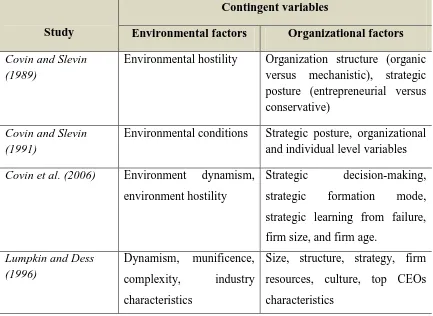
(36) particular set of resources more difficult to copy, thus, they can generate important competitive advantages for the firm (Delgado-Gómez et al., 2004). The Resource-based view of the firm has made important contribution in different areas of management studies, such as: human resource management, economics and finance, marketing, international business and corporate entrepreneurship. In the field of entrepreneurship, Alvarez and Busenitz (2001) present RBV through the entrepreneurial process of cognition, discovery, understanding market opportunities, and coordinated knowledge. Namely, they examined the role of entrepreneurial resources within RBV, suggesting how these resources might be unique to entrepreneurship. Entrepreneurial opportunities exist primarily because different agents have different beliefs about the relative value of resources when they are converted from inputs into outputs (Schumpeter, 1934; Shane and Venkataraman, 2000). The approach adopted by Alvarez and Busenitz (2001) emphasizes that entrepreneurs are heterogeneous and integrates the role of the entrepreneurs with other important resources. The importance of the nature of cognitive factors for human capital, recognizing that not all managers possess the requisite combination or level of skills to generate profits. In summary, “entrepreneurial opportunities emerge when certain individuals have insights into the value of resources that others do not” (Barney et al., 2001 p. 628). 1.1.SME and the knowledge-based view of the firm As stated by Grant’s (1991) resource categories, and highlighted by Gassmann and Keupp (2007), SMEs suffer from structural phenomenon labeled “liability of smallness” and cannot be presumed to be well endowed with tangible assets. In this sense, the crucial resources of an SME are essentially intangible, such as knowledge (Chetty and. 20.
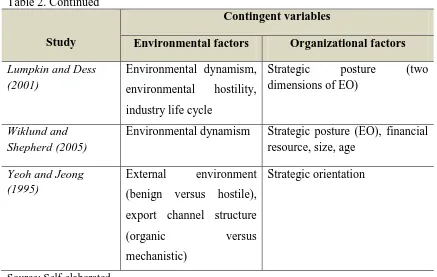
(37) Wilson, 2003), social ties and external networks (Anand and Khanna, 2000; Keupp and Gassmann, 2009), managerial behavior (Aragón-Sánchez and Sánchez-Marín, 2007), entrepreneurial orientation (Ripollés and Blesa, 2006), among others. Given that SMEs present a particular way to generate competitive advantage, and they do it from their experimental knowledge (Gassmann and Keupp, 2007), we understand relevant to connect the Knowledge-based view (KBV) into this review. The resourcebased view perceives the firm as a unique bundle of idiosyncratic resources and capabilities (tangibles and intangibles). In turn, the KBV (Grant, 1996b) has emerged from the RBV by focusing on intangible resources, rather than on tangible assets. “To the extent that it focuses upon knowledge as the most strategically important of the firm’s resources, it is an outgrowth of the resource-based view” (Grant, 1996b p. 110). Fundamental to a KBV of the firm is the assumption that the critical input is knowledge. Knowledge can be transferred across domestic and foreign markets. Moreover, in dynamic (sometimes hostile) environments in which many SMEs operate, it can be used to identify entrepreneurial opportunities, to develop creative or novel internal solutions or external offerings. The analysis of organizational knowledge offers insight into the linkage between organizational capability and competitive advantage. According to Grant (1996a) organizational capability is seen as the outcome of knowledge integration. Thus, if small and medium firms can generate competitive advantage mainly from their intangible resources, we believe that KBV as part of the RBV seems especially suitable as a conceptual support for our analysis of SMEs.. 21.
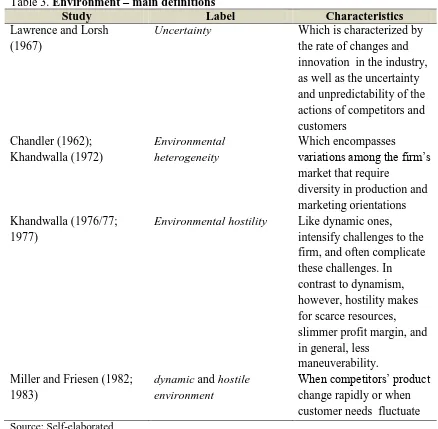
(38) 2. Contingency Theory The Contingency Theory emerges in the 1960s and comes from isolated empirical research, conducted with the aim of verifying the models of effective organizational structures and management decisions (Lawrence and Lorsch, 1967). From this comes a new company concept, which conforms to the changing environment through the identification of variables that produce the greatest impact, where the structure and function (Mintzberg, 1984) depend on the adaptation and interaction with the environment. Namely, this approach is based upon the idea that organizations must adapt their structures, internal processes and behaviors to the contingencies they face (Fernández, 1999). This framework stresses that the firm’s structure or strategy varies depending on its contextual situation (Chandler, 1962). In its most rudimentary form, this theory argues that organizations adapt their structures to be maintained in accordance with their contexts and thus have better performance (Donaldson, 2001). Thus, the performance of a company should not be measured in terms of one organizational attribute, but rather as results from the interplay of attributes such as strategy, structure, management style, etc, within a given environment, which can be more or less hostile and uncertain (Khandwalla, 1972). In summary, the central idea in the contingency perspective suggests that there is no single way to organize, and there is no strategy that can be applied to any firm (Galbraith, 1973). Namely, finding the best interaction between the key elements in the context of each organization leads to high performance (Garengo and Bititci, 2007; Hardgrave et al., 1999; Randolph et al., 1991).. 22.
(39) The Contingency Theory is an important tool to analyze organizations from different targets. As stated by Sousa and Voss (2008), in recent years there has been a growing consensus in the field of organization study about the advantage of drawing insights from major theories like the contingency approach. This trend is linked to the confirmation that many problems in economic and management fields have an interdisciplinary nature (Buhman et al., 2005). 2.1. Contingency relationships between corporate entrepreneurship and performance It is not difficult to find the relationship between CE and contingent perspective models. Entrepreneurship scholars have developed numerous typologies to describe alternate perspective of entrepreneurship. These classification systems typically depict differences in entrepreneurship as the result of various combinations of individuals, organizational or environmental factors that influence how and why entrepreneurship occurs as it does (Lumpkin and Dess, 1996 p. 135). Moreover, there is a consensus that the discovery and exploitation of entrepreneurial opportunities results from prior knowledge about markets and customers combined with the prior information on external problems (Shane and Venkataraman, 2000; Venkataraman, 1997). At the firm-level, numerous entrepreneurship researchers have emphasized the importance of viewing the entrepreneurial behavior-performance relationship in a contingency framework (Covin and Slevin, 1991; Lumpkin and Dess, 2001; Wiklund and Shepherd, 2005). Factors such as environmental variables (Khandwalla, 1977; Miller and Friesen, 1983) or the structural and managerial characteristics (Mintzberg, 1984) of an existing firm, influence how an entrepreneurial orientation will be configured to achieve high performance. As stated by Lumpkin and Dess (1996), the entrepreneurship literature, in referring to the causes of entrepreneurship, often mentions factors such as managerial styles, social or motivational factors, and 23.
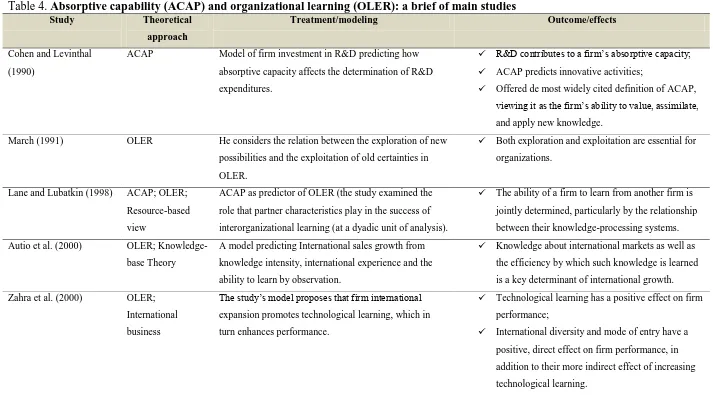
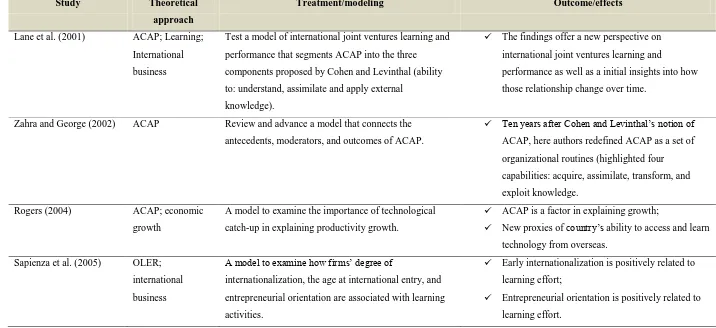
(40) environmental factors. These may be important corollaries to an entrepreneurial orientation that help explain a firm’s performance. For instance, in their model of entrepreneurship as firm behavior, Covin and Slevin (1991) discussed the relationship of strategy, structure, and environment to the EO dimensions of innovativeness, proactiveness and risk-taking propensity. Especially the environment has long been considered one of the critical contingencies in organizations theory and strategic management. Consequently, it is always highlighted as a critical contingency or contextual factor in the EO-performance relationship. Table 2 shows some examples of contingent variables used in seminal studies concerning environmental and organizational factors to explain the relationship between firm-level entrepreneurship and performance. Table 2. Key variables exploring the CE-performance relationship in a contingent approach Contingent variables Study. Environmental factors. Organizational factors. Covin and Slevin (1989). Environmental hostility. Organization structure (organic versus mechanistic), strategic posture (entrepreneurial versus conservative). Covin and Slevin (1991). Environmental conditions. Strategic posture, organizational and individual level variables. Covin et al. (2006). Environment. dynamism, Strategic. environment hostility. strategic. decision-making, formation. mode,. strategic learning from failure, firm size, and firm age. Lumpkin and Dess (1996). Dynamism,. munificence, Size, structure, strategy, firm. complexity,. industry resources, culture, top CEOs. characteristics. characteristics. 24.
(41) Table 2. Continued Contingent variables Study Lumpkin and Dess (2001). Environmental factors. Organizational factors. Environmental dynamism, Strategic posture environmental hostility, dimensions of EO). (two. industry life cycle Wiklund and Shepherd (2005). Environmental dynamism. Yeoh and Jeong (1995). External (benign. Strategic posture (EO), financial resource, size, age. environment Strategic orientation versus. hostile),. export channel structure (organic. versus. mechanistic) Source: Self-elaborated. 2.2. The role of environmental hostility The relevance of the threatening environmental context in several dimensions of organizational structure (Lawrence and Lorsch, 1967) has been the starting-point for the recognition of the importance of external forces in unpredictable environments (See Table 3). Currently, it is acknowledged that external environmental factors may have a strong impact on an organization’s performance in different ways. For example, economic influences as well as policy and regulatory conditions are commonly acknowledged as determinant of SME creation, viability and growth (Cooper, 1979; Covin and Slevin, 1989; Boskin, 1984), or, even, other environment dimensions such as dynamism, often called uncertainty (Miller and Friesen, 1983), level of industry stagnation, and environmental hostility (Khandwalla, 1977) also affect SME performance (Miller and Toulouse, 1986) and SME internationalization (Torkkeli et al., 2012).. 25.
(42) In this doctoral dissertation one of the topics addressed is precisely environmental hostility. Environmental hostility represents the degree of threat to the firm posed by the multifacetedness, vigor and intensity of the competition. According to Miller and Friesen (1983), hostile environments, like dynamic ones, intensify challenges to the firm, and often complicate these challenges. However, Miller and Friesen’s study also pointed out that, in contrast to dynamism, hostility makes for scarcer resources, slimmer profit margins, and, in general, less mobility. Consistent with a contingency approach, Khandwalla (1972) stressed that business performance should not be measured only in terms of organizational attributes (structure, management style, etc.), but rather results from the fit of these dimensions within a specific environment characterized by some degree of hostility and uncertainty. Thus, the classification that would be frequently used in the literature stresses two different scenarios, hostile and benign environments. Hostile environments are described by Khandwalla (1976/77; 1977) as stressful, very risky, with few opportunities. In this sense, Covin and Slevin (1989) added that a hostile environment is characterized by intense competition, overwhelming business climate and relative lack of opportunity for exploitation. Conversely, a non-hostile or benign environment is one that has none of the characteristics above, but, instead, provides investment opportunities and has a favorable climate for business (Covin and Slevin, 1989; Khandwalla, 1977).. 26.
(43) Table 3. Environment – main definitions Study Label Lawrence and Lorsh Uncertainty (1967). Chandler (1962); Khandwalla (1972). Environmental heterogeneity. Khandwalla (1976/77; 1977). Environmental hostility. Miller and Friesen (1982; 1983). dynamic and hostile environment. Characteristics Which is characterized by the rate of changes and innovation in the industry, as well as the uncertainty and unpredictability of the actions of competitors and customers Which encompasses variations among the firm’s market that require diversity in production and marketing orientations Like dynamic ones, intensify challenges to the firm, and often complicate these challenges. In contrast to dynamism, however, hostility makes for scarce resources, slimmer profit margin, and in general, less maneuverability. When competitors’ product change rapidly or when customer needs fluctuate. Source: Self-elaborated. 3. Absorptive Capability and Organizational Learning Theory Absorptive capability and organizational learning have been used in diverse and significant organizational phenomena. The importance of these approaches has been noted across the fields of strategic management (Lane and Lubatkin, 1998; March, 1991), organizational economics (Rogers, 2004), international business (Eriksson et al., 1997; Lane et al., 2001; Zahra et al., 2005), and so on. Moreover, we observed that most empirical studies show significant relationships between absorptive capability and organizational learning, and firm outcomes that pertain to creating a competitive 27.
(44) advantage. Table 4 provides a useful example and summarizes representative studies using absorptive capabilities and organizational learning approaches in different fields of organizational management. The Learning Theory, in essence, suggests that an organization learns when its routines, systems, and policies assimilate activities and experiences (Grant, 1996). In this vein, Sapienza et al. (2005) pointed out that the greater a firm’s attention to developing new knowledge and exploiting existing knowledge, the greater its learning is. This point of view is consistent with previous theory, which holds that the amount of information learned and the ability to apply the new external knowledge depend upon the intensity of effort in its absorption (Cohen and Levinthal, 1990). It is acknowledged that competition is increasingly knowledge-based, as firms strive to learn and to develop capabilities faster than does the competition (Prahalad and Hamel, 1990; Teece et al., 1997). Based on Cohen and Levinthal’s (1990) definition, “absorptive capacity is the ability to recognize external information, assimilate this information, and apply it to commercial ends (p. 128). In a firm-level perspective, the absorptive capacity depends on the absorptive capacities of its members. Indeed, Alvarez and Busenitz (2001) suggested that an entrepreneur’s expanding knowledge base and absorptive capacity becomes an entrepreneurial firm’s competitive advantage. However, absorptive capacity refers not only to the acquisition of information by a firm or its employees but also to the organization’s ability to exploit it. In summary, Zahra and George (2002) highlighted four distinct but complementary capabilities that compose a firm’s absorptive capability: “acquisition, assimilation, transformation, and exploitation” (p. 189). Thus, according to this approach, the firm’s. 28.
(45) absorptive capacity, allied to the ability to recognize and exploit external knowledge, might determine how successful the firm will be in obtaining entrepreneurial advantages. In the international entrepreneurship context, the firm’s effort to learn from its foreign presence, “international learning effort” (Sapienza et al., 2005), extends, and highlights the idea of an absorptive-based view and learning theory as a framework for theory and hypotheses regarding international business. Consistent with Johanson and Vahlne (1991), firms may learn directly from foreign-market experience and indirectly via observation of foreign companies or even from interactions with foreign partners. Thus, by entering international markets, firms acquire knowledge that can be used to build additional advantages. For instance, firms competing in international markets “draw from multiple knowledge bases in their research and development, manufacturing and marketing operation to learn new skills that augment current capabilities” (Zahra et al., 2000 p. 926).. 29.
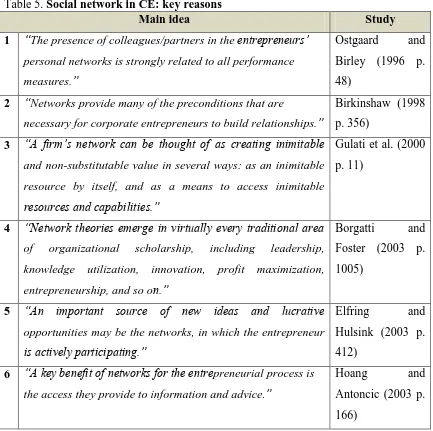
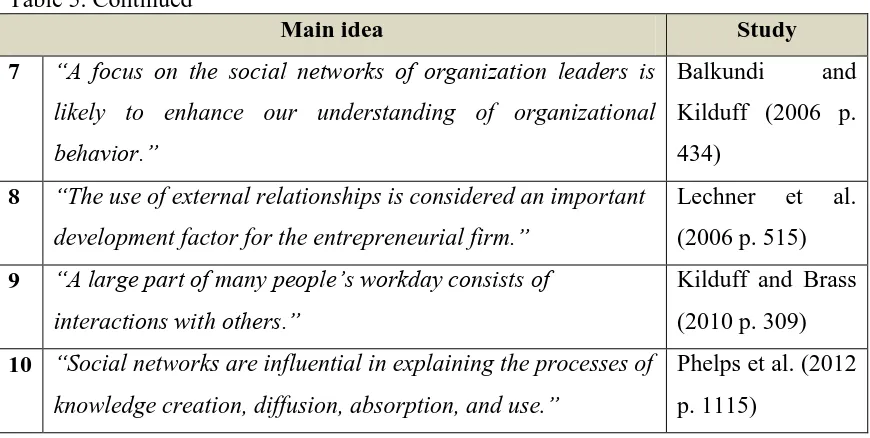
(46) Table 4. Absorptive capability (ACAP) and organizational learning (OLER): a brief of main studies Study. Theoretical. Treatment/modeling. Outcome/effects. approach Cohen and Levinthal. ACAP. (1990). Model of firm investment in R&D predicting how. . R&D contributes to a firm’s absorptive capacity;. absorptive capacity affects the determination of R&D. . ACAP predicts innovative activities;. expenditures.. . Offered de most widely cited definition of ACAP, viewing it as the firm’s ability to value, assimilate, and apply new knowledge.. March (1991). OLER. He considers the relation between the exploration of new. . possibilities and the exploitation of old certainties in. Both exploration and exploitation are essential for organizations.. OLER. Lane and Lubatkin (1998). Autio et al. (2000). Zahra et al. (2000). . ACAP; OLER;. ACAP as predictor of OLER (the study examined the. Resource-based. role that partner characteristics play in the success of. jointly determined, particularly by the relationship. view. interorganizational learning (at a dyadic unit of analysis).. between their knowledge-processing systems.. OLER; Knowledge-. A model predicting International sales growth from. base Theory. knowledge intensity, international experience and the. the efficiency by which such knowledge is learned. ability to learn by observation.. is a key determinant of international growth.. OLER;. The study’s model proposes that firm international. International. expansion promotes technological learning, which in. business. turn enhances performance.. . . The ability of a firm to learn from another firm is. Knowledge about international markets as well as. Technological learning has a positive effect on firm performance;. . International diversity and mode of entry have a positive, direct effect on firm performance, in addition to their more indirect effect of increasing technological learning.. 30.
(47) Table 4. Continued Study. Theoretical. Treatment/modeling. Outcome/effects. approach Lane et al. (2001). . ACAP; Learning;. Test a model of international joint ventures learning and. The findings offer a new perspective on. International. performance that segments ACAP into the three. international joint ventures learning and. business. components proposed by Cohen and Levinthal (ability. performance as well as a initial insights into how. to: understand, assimilate and apply external. those relationship change over time.. knowledge). Zahra and George (2002). ACAP. Review and advance a model that connects the. . antecedents, moderators, and outcomes of ACAP.. Ten years after Cohen and Levinthal’s notion of ACAP, here authors redefined ACAP as a set of organizational routines (highlighted four capabilities: acquire, assimilate, transform, and exploit knowledge.. Rogers (2004). ACAP; economic. A model to examine the importance of technological. . ACAP is a factor in explaining growth;. growth. catch-up in explaining productivity growth.. . New proxies of country’s ability to access and learn technology from overseas.. Sapienza et al. (2005). OLER;. A model to examine how firms’ degree of. international. internationalization, the age at international entry, and. business. entrepreneurial orientation are associated with learning activities.. . Early internationalization is positively related to learning effort;. . Entrepreneurial orientation is positively related to learning effort.. Source: Self-elaborated. 31.
(48) 4. Social Network in Organizational Contexts Approximately 30 years ago, an important new area of research within the organizational context emerged. The starting point of the study of social networks was drawn on a broader revitalization of the field of economic sociology (Hoang and Antoncic, 2003). Several scholars began to question the widely held view that entrepreneurs, as economic actors, were isolated and that the entrepreneurial process was distinct from other social phenomena. Instead, entrepreneurs were seen as intimately tied, through their social relationships, to a broader network of actors. Thus begins the task of researchers to examine the causes and consequences of embeddedness (Granovetter, 1985) in the entrepreneurial process. In this sense, a new concept, where firms are embedded in networks of social, professional, and exchange relationships with other individuals and organizations (Granovetter, 1985; Gulati et al., 2000), replaces the idea of firms as autonomous entities and highlights networks as vital when it comes to gaining access to opportunities, collecting the resources needed to build a new firm and obtain legitimacy (Birley, 1985; Johannisson, 1987; Johannisson et al., 1994), for their survival and growth (Gulati, 1998; Hite and Hesterly, 2001), or even for early and rapid internationalization (Chetty and Holm, 2000; Chetty and Wilson, 2003; Gassmann and Keupp, 2007). The entrepreneur is embedded in a social network that plays a critical role in the entrepreneurial process (Aldrich and Zimmer, 1986). In this sense, Brass (1992) defines social networks as a set of actors (individuals or organizations) and a set of linkages between them. Networks have a major role, and in recent years studies focusing on networks and relations in and between individuals, groups and organizations have increased (e.g., Balkundi and Kilduf, 2006; Gassmann and Keupp, 2007; Hoang and Antoncic, 2003; Jack, 2010; Jack et al., 2010; Lechner and Dowling, 2003). Thus, the 32.
(49) value of networks is recognized as an integral part of the explanation of business success. According to Elfring and Hulsink (2003 p. 409): “a network is one of the most powerful assets that anybody can possess: it provides access to power, information, knowledge and capital as well as other networks.” The volume of network research in management has increased radically in recent years, and networking is increasingly recognized as a major theme in entrepreneurship (Jack et al., 2010). “The boom in network research is part of a general shift, beginning in the second half of the 20th century, away from individualist, essentialist and atomistic explanations toward more relational, contextual and systemic understandings” (Borgatti and Foster, 2003 p. 991). Management research regularly considers networks and their effects on a wide range of organizational phenomena. Scholars employing the network perspective have generated a considerable body of organizational research exploring how networks of individuals, groups or firms relate to organizational outcomes. Social network research in organizational contexts highlights topics such as social capital, embeddedness, organizational networks, board interlocks, joint ventures and inter-firm alliances (see Borgatti and Foster, 2003; Carpenter et al., 2012, for reviews). The trend towards network represents a major opportunity for the corporate entrepreneurship movement (Ripollés and Blesa, 2006). Network organizations provide many of the preconditions that are necessary for corporate entrepreneurs to thrive: a license to build relationships laterally, horizontally and with external parties, as a means of getting things done; a reasonable level of discretion to pursue an idea before having to justify it; and a greater openness in head office to new ideas (Birkinshaw, 1998 p. 356). In summary, over the past three decades, scholars have devoted considerable attention to examining the antecedents and implications of networks in organizational contexts 33.
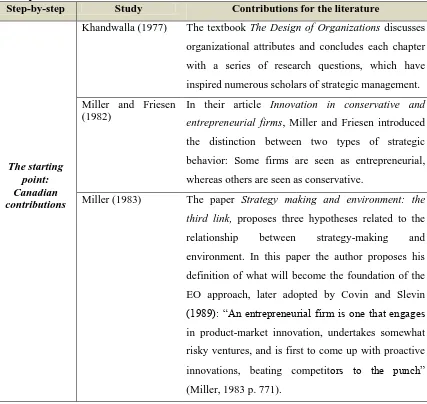
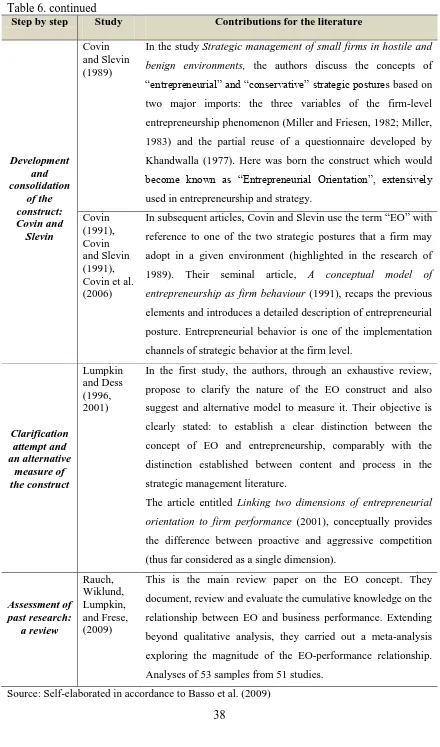
(50) (Kilduff and Brass, 2010). Specific ties reflect the interaction and interdependence that connect different actors. Namely, ties such as friendship, kinship, knowledge exchange, and so on (Phelps et al., 2012; Carpenter et al., 2012). Consistent with the arguments provided by network research in organizational contexts we can state that the field of organizational behavior moves away from an exclusive focus on individuals to consider people in organizations in terms of their embeddedness in social networks. Table 5 shows ten key reasons (arranged chronologically) why it is important to consider the social network from the corporate entrepreneurship perspective. Table 5. Social network in CE: key reasons Main idea 1. 2. Study. “The presence of colleagues/partners in the entrepreneurs’. Ostgaard. personal networks is strongly related to all performance. Birley (1996 p.. measures.”. 48). “Networks provide many of the preconditions that are. Birkinshaw (1998. and. necessary for corporate entrepreneurs to build relationships.” p. 356) 3. “A firm’s network can be thought of as creating inimitable Gulati et al. (2000 and non-substitutable value in several ways: as an inimitable p. 11) resource by itself, and as a means to access inimitable resources and capabilities.”. 4. “Network theories emerge in virtually every traditional area Borgatti of. organizational. knowledge. scholarship,. utilization,. innovation,. including profit. and. leadership, Foster (2003 p. maximization, 1005). entrepreneurship, and so on.” 5. “An. important. source. of. new. ideas. and. lucrative Elfring. and. opportunities may be the networks, in which the entrepreneur Hulsink (2003 p.. 6. is actively participating.”. 412). “A key benefit of networks for the entrepreneurial process is. Hoang. the access they provide to information and advice.”. Antoncic (2003 p. 166). 34. and.
(51) Table 5. Continued Main idea 7. Study. “A focus on the social networks of organization leaders is Balkundi. and. likely to enhance our understanding of organizational Kilduff (2006 p.. 8. 9. behavior.”. 434). “The use of external relationships is considered an important. Lechner. development factor for the entrepreneurial firm.”. (2006 p. 515). “A large part of many people’s workday consists of. Kilduff and Brass. interactions with others.”. (2010 p. 309). 10 “Social networks are influential in explaining the processes of knowledge creation, diffusion, absorption, and use.”. et. al.. Phelps et al. (2012 p. 1115). Source: Self-elaborated. 5. Entrepreneurial Orientation EO is usually recognized as part of strategic orientation (Grawe et al., 2009; Nazdrol et al., 2011). Strategic orientation is defined by Gatingnon and Xuereb (1997) as the strategic directions which are put into practice by a firm to produce continuous superior performance. Moreover, it has been argued that strategic orientation is synonymous with the term “competitive strategy” (Morgan and Strong, 1998), and previous studies had identified several aspects of strategic orientation such as entrepreneurial orientation, market orientation, and customer orientation, among others (Nazdrol et al., 2011 p. 714). As noted above, in this dissertation we have focused on EO. EO refers to the strategy-making processes that provide organizations with a basis for entrepreneurial decisions and actions (Lumpkin and Dess, 1996; Wiklund and Shepherd, 2005). Drawing on prior strategy-making processes and entrepreneurship research, measurement scales of EO have been developed and widely used, and their relationship with performance variables have been examined (for a holistic and synthetic view of this topic, we suggest Rauch et al., 2009).. 35.
(52) The conceptualization and dimensions of EO have been discussed in the literature, and the classical dimension originated from the study of Miller and Friesen (1982; 1983), but subsequent studies have underlined the importance of studying organizational factors, such as firm resources, organizational structure, and top management team characteristics to refine the literature on EO and our understanding of the EOperformance relationship (e.g., Covin and Slevin, 1989, 1991; Lumpkin and Dess, 1996). These authors claim that the firm’s entrepreneurial behavior is measured by the innovation in product or process (innovativeness), the evidence of proactiveness, and risk-taking propensity of the firm’s CEO. Innovativeness refers to a firm’s tendency to support new ideas and to foster creative processes that are aimed at developing new ideas. Proactiveness indicates a firm’s tendency to take initiatives by anticipating and pursuing new business opportunities. Proactive firms act on future needs actively seeking new opportunities and furthermore they are often pioneer firms that first to enter the new markets (Nazdrol et al., 2009). Risk-taking reflects a firm’s willingness to commit more resources to projects in which the expected returns are uncertain. Hence, risk-taking is the tendency to engage in high-risk project and managerial preferences for bold versus cautions actions in order to achieve the objective (Miller, 1983). Although, risk has various meanings, depending on the context in which it is applied (Lumpkin and Dess, 1996). The concept of entrepreneurial orientation receives substantial conceptual and empirical attention and represents one of the areas of entrepreneurship research, where a cumulative body of knowledge is developing (Basso et al., 2009; Rauch et al., 2009), as illustrated by several papers published in numerous scientific journals (e.g., Entrepreneurship: Theory and Practice, Strategic Management Journal, Academy of Management Journal, Journal of Management Studies, etc). 36.
(53) Based on a close analysis of the seminal literature, we present an evaluation of the development of the construct. Table 6 summarizes step-by-step the description of the entrepreneurial orientation concept. Table 6. Entrepreneurial Orientation – what we need to know to understand the concept Step-by-step. Study Khandwalla (1977). Contributions for the literature The textbook The Design of Organizations discusses organizational attributes and concludes each chapter with a series of research questions, which have inspired numerous scholars of strategic management.. Miller and Friesen In their article Innovation in conservative and (1982) entrepreneurial firms, Miller and Friesen introduced the distinction between two types of strategic The starting point: Canadian contributions. behavior: Some firms are seen as entrepreneurial, whereas others are seen as conservative. Miller (1983). The paper Strategy making and environment: the third link, proposes three hypotheses related to the relationship. between. strategy-making. and. environment. In this paper the author proposes his definition of what will become the foundation of the EO approach, later adopted by Covin and Slevin (1989): “An entrepreneurial firm is one that engages in product-market innovation, undertakes somewhat risky ventures, and is first to come up with proactive innovations, beating competitors to the punch” (Miller, 1983 p. 771).. 37.
(54) Table 6. continued Step by step. Study. Contributions for the literature. Covin and Slevin (1989). In the study Strategic management of small firms in hostile and benign environments, the authors discuss the concepts of “entrepreneurial” and “conservative” strategic postures based on two major imports: the three variables of the firm-level entrepreneurship phenomenon (Miller and Friesen, 1982; Miller, 1983) and the partial reuse of a questionnaire developed by. Development and consolidation of the construct: Covin and Slevin. Khandwalla (1977). Here was born the construct which would become known as “Entrepreneurial Orientation”, extensively used in entrepreneurship and strategy. Covin (1991), Covin and Slevin (1991), Covin et al. (2006). In subsequent articles, Covin and Slevin use the term “EO” with reference to one of the two strategic postures that a firm may adopt in a given environment (highlighted in the research of 1989).. Their. seminal. article,. A. conceptual. model. of. entrepreneurship as firm behaviour (1991), recaps the previous elements and introduces a detailed description of entrepreneurial posture. Entrepreneurial behavior is one of the implementation channels of strategic behavior at the firm level.. Lumpkin and Dess (1996, 2001). In the first study, the authors, through an exhaustive review, propose to clarify the nature of the EO construct and also suggest and alternative model to measure it. Their objective is clearly stated: to establish a clear distinction between the. Clarification attempt and an alternative measure of the construct. concept of EO and entrepreneurship, comparably with the distinction established between content and process in the strategic management literature. The article entitled Linking two dimensions of entrepreneurial orientation to firm performance (2001), conceptually provides the difference between proactive and aggressive competition (thus far considered as a single dimension).. Assessment of past research: a review. Rauch, Wiklund, Lumpkin, and Frese, (2009). This is the main review paper on the EO concept. They document, review and evaluate the cumulative knowledge on the relationship between EO and business performance. Extending beyond qualitative analysis, they carried out a meta-analysis exploring the magnitude of the EO-performance relationship. Analyses of 53 samples from 51 studies.. Source: Self-elaborated in accordance to Basso et al. (2009). 38.
(55) 6. Innovativeness Innovativeness relates to the firm’s capacity to engage in innovation, that is, the introduction of new products or services, processes, or ideas in the firm’s context. There is a growing recognition in strategic management and marketing literature that the capacity to innovate is among the most important factors that impact on business performance (e.g., Akman and Yilmaz, 2008; Alegre et al., 2009; Hult et al., 2004). But innovativeness as a key component in the success of firms had received attention long before. For instance, for Schumpeter (1934), organizational innovativeness is highlighted as an important factor for aggregate economic growth and performance over time. In fact, Schumpeter (1934) was among the first to emphasize the role of innovativeness in the entrepreneurial process. Then, in Schumpeter (1942), the author stressed an economic process of “creative destruction”, by which wealth was created when existing market structures were disrupted by the introduction of new goods or services that shifted resources away from existing firms and caused new firms to grow. Furthermore, in one of his most-cited texts, Drucker (1954) links innovativeness and market orientation, stating that “there is only one valid definition of business purpose: to create a customer…It is the customer who determines what the business is…Because it is its purpose to create a customer…Any business enterprise has two-and only twobasic functions: marketing and innovation” (p. 37). Innovation is generally regarded as an important research topic because innovation provides the basis for the survival and success of the firm into the future (Hult et al., 2004). Nonetheless, the concept “innovativeness” (as opposed to a single innovation) has some advantages (Tajeddini et al., 2006). But, what is the difference between innovation and innovativeness?. 39.
(56) Although a certain degree of overlap between those concepts may exist (Damanpour, 1991), it is possible to point out some distinctions. Moreover, while the concept of innovation is widely dealt with in research, the definition of innovativeness is rarely discussed (Tajeddini et al., 2006). It happens, perhaps because while the definition of innovation is less problematic for research that examines a single innovation, such as product or service (where the objective is simply to demonstrate that the phenomenon being studied is an innovation), it becomes more problematic when examining the concept of innovativeness because it is concerned with the full range of innovations developed (Emsley, 2005). Thus, in order to understand innovativeness, it is necessary to discuss the concept of innovation first. Innovation is conceived as encompassing the generation, development, and implementation of new ideas or behaviors. An innovation can be a new product or service, a new process, a new structure or administrative system, or a new plan or program pertaining to organizational members (Damanpour, 1991). Hence, innovation is an idea, practice or object that is perceived as being new by an individual or other unit of adoption (Rogers, 1995). Regarding innovativeness, it examines the whole range of innovations developed (Emsley, 2005; Tajeddini, 2006). That is, organizational innovativeness is more accurately represented when multiple, rather than single, innovations are considered (Damanpour, 1991). Innovativeness gives a more complete reflection of the number of innovations adopted in a given time-period. This concept refers to the poise of business to develop creative or novel internal solutions or external offerings (Lumpkin et al., 2006). In summary, innovativeness is the predisposition to engage in creativity through the introduction of new products or services as well as technological leadership via R&D in new processes (Rauch et al., 2009). 40.
(57) In this dissertation, the concept of innovativeness appears initially in essays 1 and 2 as part of EO construct and it was measured using a set of three questions (see Appendix 2). Then, in essay 3, we used the GEM adult population survey. The innovativeness construct is part of the GEM-available information and its dimensions refer to the poise of an organization to develop creative or novel internal solutions or external offerings (See Reynolds et al., 2005). Despite two different approaches to a single concept (in the same dissertation), the core of the measure in both own-designed questionnaire and GEM survey is the same. In our questionnaire this concept is captured rather well via: the tendency to engage in and support new ideas generation, novelty, experimentation and creative processes. Equally, in GEM survey the questions concerning innovativeness indicate the degrees of effort by the firm in an attempt for potential customers to consider their products or services new and unfamiliar and the technologies or procedures required by these products or services becoming generally available recently, as well as strategic innovation and market relationship. In summary, innovativeness in both set of measures is the predisposition to engage in creativity through the introduction of new products or services as well as technological leadership via R&D in new processes.. 41.
(58) 42.
(59) CHAPTER III ESSAY ONE – ENTREPRENEURIAL ORIENTATION, ENVIRONMENTAL HOSTILITY AND SME PROFITABILITY: A CONTINGENCY APPROACH Abstract This essay investigates the effect of the entrepreneurial orientation (EO) on SME profitability. The essay also proposes a contingency model to explore the moderating effects of environmental hostility on the relationship between EO and profitability. The study was conducted using a sample of 121 manufacturing SMEs in Spain. Results confirm the direct positive influence of EO on a firm’s profitability. More importantly, the impact of EO on SME profitability is higher when there is a fit between EO and the external environment. 1. Introduction It is well-known that there is a large body of literature regarding aspects of firm performance, however, concerning the findings, this literature provides diverse and often conflicting empirical results. Equally important, the strategy dimensions are recognized as important tools with great impact on firm performance (Aragón-Sánchez and Sánchez-Marín, 2005). In this sense, EO has emerged as a major construct within the strategic management and entrepreneurship literature over the years (Basso et al., 2009; Rauch et al., 2009). EO is a strategic construct whose conceptual domain includes certain firm-level resources and management-related preferences. EO is revealed through an organization’s exhibition of innovativeness, proactiveness, and risk-taking (Covin et al., 2006).. 43.
(60) Several authors, when referring to the firm’s strategic posture, do it by using a Resource-based view (RBV) framework, presenting resources and capabilities as essential to gaining sustained competitive advantages (Barney, 1991; Porter, 1985; Wernerfelt, 1984). Consequently, these useful and valuable possessions, combined with other resources, are more likely to generate higher performance for the company (Tecce et al., 1997). Thus, this theoretical approach has become one of the most widely used frameworks in the management literature (e.g., Alvarez and Busenitz, 2001; Ferreira and Azevedo, 2008; Teece, 2007). Regarding the EO-performance relationship, several authors proposed and documented a positive relationship between them (e.g., Covin and Slevin, 1991; Lumpkin and Dess, 2001; Wiklund, 1999; Wiklund and Shepherd, 2005). Nonetheless, there are some studies that confirmed its purposes only partially (e.g., Lumpkin, et al., 2006; Madsen, 2007). Furthermore, some empirical, as well as conceptual, arguments suggest that EO is not equally suitable in all environments (Covin and Slevin, 1989; Robertson and Chetty, 2000; Wiklund and Shepherd, 2011). Namely, the magnitude of the relationship between EO and firm performance is contingent upon the external environment as well as upon internal organizational processes (Tang et al., 2008). Thus, the magnitude of the relationship seems to vary across studies. As stressed by Rauch et al. (2009), while some studies have found that businesses that adopt a strong EO perform much better than do firms that do not adopt an EO, other studies reported lower correlations between EO and performance or were even unable to find a significant relationship. Hence, besides the numerous studies, we can state that the discussion about this relationship is still open. In this way, this chapter attempts to fill the research gap in line with suggestions of previous studies, such as: (1) by using potential moderator variables (Rauch et al., 44.
(61) 2009), (2) by testing the EO-performance relationship using objective measures of performance (Blesa and Ripollés, 2005; Chow, 2006) and (3) by considering measures from the financial reporting (Chow, 2006; Ferreira and Azevedo, 2008; Madsen, 2007). In regard to measures of financial performance, both subjective (Covin, 1991; Covin and Slevin, 1989; Madsen, 2007; Tang et al., 2007; Wiklund, 1999) and objective measures (Richard et al., 2009; Zahra and Covin, 1995) have been studied, stating that there are many reasons for the increasing interest in understanding the phenomenon of profitability from an entrepreneurial perspective. However, some ambiguity still exists regarding the financial impact of EO (Richard et al., 2009). Thus, the main objective of this empirical essay is to measure the effects of EO on SME profitability, as well as to explore the moderating effects of the environmental hostility in this relationship. To achieve our aim, we propose a complete analysis of the relationship between EO and SME profitability by using financial information over a three-year period. To test the proposed hypotheses a sample of Spanish manufacturing SMEs was used. Our findings support the belief that firms, in general, may gain an advantage through an entrepreneurial behavior. Equally important, the EO-environment fit may play an essential role in the firm’s ability to improve its profitability. Section 2 presents the conceptual framework, which was determinant to formulate the hypotheses, and reviews the related literature on EO-performance relationship. Section 3 describes the research methods. Analysis and results are presented in Section 4. Finally, in Section 5 the conclusions are presented and discussed.. 45.
Figure
+7
Documento similar
Key findings from Chapter 2, 3, 4, 5 contributes to the literature in last mile delivery for food supply chain by (i) reflecting the state of the art on the topic, and identifying
T HE IMPACT OF RESEARCH ON DEVELOPMENT POLICY AND PRACTICE : T HIS MUCH WE KNOW.. A LITERATURE REVIEW AND THE IMPLICATIONS
The possibility to identify potential high job growth entrepreneurs through their motivations, innovative behavior, export orientation, and the moderating effect of
This research makes a number of contributions to the strategic management literature by empirically exploring DC and MO and how these affect firm performance in the case of sole
This paper contributes to the literature by investigating differences between experienced and inexperienced bettors, and how experience is related to risk taking following gains
In this study, based on the literature and in silico results, we focus on analyzing the levels of miRNA targeting ACE2, TMPRSS2, and RAB14, all associated with viral entry
We extend the ‘black box’ picture of public management and the ‘balanced view’ of HRM literature to explore, in the public context, the impact of structural
Two cases are considered, the one for which the symplectic form on the torus is of integer cohomology class n (section 4.1), where full modular invariance is obtained only when the
