SECOND GRADE STUDENTS’ ENGLISH SPEAKING SKILLS IN COMMUNICATIVE
LANGUAGE TEACHING LESSONS
AUTHOR
CLAUDIA ADRIANA CASTAÑO ZAPATA
A RESEARCH PROJECT DEGREE WORK SUBMITTED IN FULFILLMENT OF THE
REQUIREMENTS FOR THE DEGREE OF LICENCIADO EN LENGUA EXTRANJERA INGLÉS
BOGOTA D.C COLOMBIA
Acceptance Note
Juror 1 ___________________________
__________________________________
__________________________________
__________________________________
__________________________________
Juror 2 ____________________________
__________________________________
__________________________________
__________________________________
Dedication
Table of contents
Statement of the Problem... 11
Main Research Question ... 12
General Research Objective ... 13
Chapter Two: Literature Review ... 13
Chapter 3: Research Design ... 31
Type of Study ... 31
The Teacher-Researcher’s Role ... 35
Context and Participants ... 36
Chapter 4: Instructional Design ... 39
Acknowledgements
I am thankful for the suggestions and support that I have received My gratitude and appreciation to my friend Teacher and Magister Diana Herrera who has provided me guidance and also wish to thank to my teacher Mauricio Buitrago, Sandra Rodriguez and Martha Bonilla who shared the knowledge and have given me advice and encouraged me to continue my studies with their example and experience.
“A nadie le faltan fuerzas; lo que a muchísimos les falta es voluntad”
Victor Hugo
This quote was my inspiration to go ahead with my dream and see that things are not impossible that anything is possible because there is a God who helps us achieve our goals and to continue looking after what I want to achieve in my life.
Abstract
This research study was carried out with students of second grade at the Mount Vernon school in Bogota Colombia. The main objective was to describe second grade students‟ English speaking skills performance during the implementation of lessons based on communicative language teaching.
This study was based on principles of action research design and it used video recordings, students‟ interviews, and teacher‟s journals to collect data, as well as lessons to inform students‟ speaking skills by providing input activities that encourage their self- confidence and the ability to communicate using speaking skills. The purpose of this paper is to describe the pedagogical implementation that was implemented, and present the results and conclusions that were reached after analyzing the collected data.
The data analysis indicate that students of second grade show, that the implementation of lessons plan allowed them use the speaking skills during the intervention in the English classes and the qualitative analysis support this view by showing that students felt more confidence towards the learning process
Introduction
The purpose of this research project was to describe second grade students‟ English speaking skills during the implementation of lessons based on Communicative Language Teaching (CLT) in Mount Vernon school. A pedagogical intervention was made to support this research project. The pedagogical proposal was based on the theory of communicative language teaching supported by Lynch (1996) and Brown (2007) who considered that listening and reading are useful sources of experience, but active practice in speaking and writing in the target language is essential for the student´s learning progress.
Considering the main objective of this study, the focus of the pedagogical intervention was to create strategies and implement lesson plans that allowed the development of functional language ability through learners‟ participation in communicative events. This was done knowing that clearly the focus of the CLT was to develop a lesson plan according to the students‟ needs, recognizing that speaking is a difficult skill for most learners and it requires extensive practice.
Students and teacher needed to be aware of the foreign language contexts they were involved in, so I aimed at helping students in the language acquisition. Keeping in mind that it was necessary to know how students conceived language in this grade, it was necessary to implement a meaningful communicative language teaching,having in mind linguistic aspects related to speaking skills.
Chapter 1 shows the statement of the problem that presents where the research problem comes from based on the needs analysis results.
Chapter 3 explains the research design and supports the research question and objectives as well as the type of research, instruments for data collection and criteria to analyze data.
Chapter 4 describes the instructional design, the pedagogical implementation, and the support for the methodological decisions I made.
Chapter 5 describes the findings after the data was analysed in order describe second grade students‟ English speaking skills during the implementation of lessons based on communicative language teaching.
Chapter 6 presents the conclusions of the research project and the pedagogical implications.
Rationale
Communicative language teaching (CLT hereafter) is a topic that has been highly discussed and researched on the language education field. However, one of the most important approaches on history, still has many things to say about particular contexts, users, and contents. Taking that into account, I decided to research on this particular topic because this was a contribution to the Mount Vernon school second grade students, language teachers and curriculum.
Regarding the school‟s institutional directions for the language curriculum, CLT is considered as the basis of the methodological decisions teachers make at school. As a result, this project‟s results could contribute as an account of the impact that approach has been having on the current classroom practices. Thus, positive elements, as well as things to improve about that approach could be detected after this project, giving the school a space for discussing about the ways in which curricular dispositions have been happening in the reality. Furthermore, the observations I made about my students could give the school an important insight about the way in which the bilingual objectives they have are actually being developed by teachers and students.
Finally, this research project was designed in order to improve in a way or another the English class, giving students the chance to get engaged into different activities that were focused on the speaking skills, which seemed to be one of their biggest issues. For that reason, this project is expected on contributing on the use of the language through real life events to express ideas and opinions. Also, having in mind that the activities intended to have an impact on students‟ confidence when
Statement of the Problem
This project started by recognizing the students´ needs and interests regarding English speaking skills, looking forward to impact the educational community, helping students follow the institutional objectives proposed in the institutional philosophy expressed in PEI, in compliance with the school curriculum where bilingualism processes take the four communicative skills into account.
The context in which the study was carried out was in the bilingual school called Mount Vernon. I have been working there for three years as an English teacher. Based on my observations during classes I found that students showed some problems when speaking in the English language. As a result of my experience and observations, I, decided to apply a short interview to some of my second grade students to see if my observations were correct. I concluded that these shortfalls might have been due to students‟ lack of basic vocabulary, pronunciation issues, and accuracy on certain grammar structures. Apart from that, I noticed that there were some internal factors such as shyness and self-confidence that might have also been affecting students‟ oral performance when speaking in English. Based on those observations, I also reflected on my own process as a foreign language learner, and I concluded that I had had self-confidence issues when speaking in the language. Due to this, I was not able to communicate accurately many times, and I related this personal problem with my students as well.
had observed: students showed high levels of shyness and insecurity when speaking, as well as vocabulary lack and mistakes with grammar structures. However, I also found that all the students liked the English class and language, which shows important motivations levels on them.
On the other hand, I took into account the institutional curricular policies in order to make my decisions on what to research about. Regarding the school‟s methodological guidelines, the English language curriculum is based on the Communicative language teaching approach and is focused on literacy, specifically, reading skills. However, the school is also interested in starting to devote more time to the oral skill during classes, which led to me to decide to focus on the speaking skill. I also thought that if the context of this study was a bilingual school, then, it was important to have a focus on the oral skill. In fact, according to Krashen (1990), second languages should be learnt or acquired like the mother tongue, in other words, first, we learn to speak through listening, then, we learn to read and write.
Thinking about previous research carried out in this school, I did not find anything that addressed the Communicative language teaching or the English curriculum guidelines in the language classroom. For this reason, I wanted just to observe what happened on students speaking skills development in order to have a starting point for future teacher-researchers who want to explore or analyse how to improve the speaking skill through this methodological tool in the future.
Taking into account the previous information, I possess the following research question:
Main Research Question
General Research Objective
To describe second grade students‟ English speaking skills performance during the implementation of lessons based on communicative language teaching.
Chapter Two: Literature Review
The purpose of this chapter is to support theoretically the underlying constructs of this research project in order to gain more understanding on the essence of this study. Taking into account this research project which focused on looking at the English speaking skills in second grade students when implementing communicative language teaching lessons, the two concepts that this chapters discusses are communicative language teaching and speaking skills.
Communicative Language Teaching
Communicative language teaching (CLT hereafter), also denominated as Communicative Approach, is an approach generally used with a learner-centered focus giving the opportunity to the student to use the oral skills in real-like situations. This is an approach to the teaching of second and foreign languages that emphasizes interaction as both, the means and the ultimate goal of learning a language. The way CLT is being defined here, was the theoretical referent this research project assumed when talking about this approach.
Historically, CLT was a response to the Audio-Lingual Method (ALM), and as an extension or development of the Notional-Functional Syllabus (Brown, 2007). As a result, The CLT emerged due to two important aspects: firstly, in order to consider the significance of the sociolinguistic aspect of the language, and secondly, to take into account the needs of the learners based on the functional system of the target language.
linguistic competence enables speakers to produce grammatically correct sentences. From this point, various authors examined the concept of communicative competence (Hymes, 1972; Savignon, 1972; Canale & Swain, 1980; Canale, 1983; Bachman, 1990) which can be conceptualized as the set of knowledge that allow a speaker to do an effective use of the language according to the context.
In the case of Canale and Swain (1980), they described some dimensions of the communicative competence:
● Grammatical competence: this competence contains four dimensions of the language system: vocabulary, morphological, syntactic, semantic, phonetic and orthographic knowledge.
● Discourse competence: refers to the interpretation of individual message elements in terms of their interconnectedness and how meaning is represented in relationship to the entire discourse or text. ● Strategic competence: it refers to the coping strategies that participants use to initiate, terminate,
maintain, repair and redirect communication. Verbal and non-verbal communication take part of this competence.
Now that the definition of CLT has been delineated along with part of its origins, let‟s describe some of its characteristics and principles.
Characteristics and principles of CLT. CLT is generally regarded as an approach to language
research (Richards and Rodgers, 2001). As such, CLT reflects a specific language, learning and teaching model or paradigm (Celce-Murcia, 2001). Thus, it is based on the theory that the primary function of language use is communication and its primary goal is for learners to develop the communicative competence, or simply put, communicative ability. In other words, its goal is to make use of real-life situations that necessitate communication.
340). According to the principles of CLT students do not learn the structure only or grammar structure, but they better learn a set of competences that allow them to communicate expressing ideas in real situations (Murcia, 1995).
CLT has become popular and widespread in second and foreign language teaching (Brown, 1994). Contrary to the teacher-centered approach, in which teachers are regarded as knowledge-givers and learners as receivers, CLT reflects a more social relationship between the teacher and the learner. In agreement with Brown, this learner-centered approach gives students a greater sense of “ownership” of their learning and enhances their motivation to learn English.
Based in Brown (2007), CLT has some characteristics that need to be taken into account when using it for the teaching of languages:
1. The language has several components such as grammatical, discursive, functional, sociolinguistic and strategic which need to be equally addressed when teaching a language from the CLT approach.
2. There is a relationship between form and function of the language, which means that not only the linguistic competence components are important to be taught, but also the functions of the language. The CLT proposes to have a balance between focus and forms.
3. Fluency and accuracy are both important for CLT. Fluency is a commonly used notion in foreign language teaching, frequently contrasted with accuracy, especially in this approach. Sometimes, accuracy needs to be sacrificed in the name of fluency, since students need to feel confident when communicating. However, some other times, the correct way is also important in order to avoid possible misunderstandings.
to use the language, productively and receptively in unrehearsed contexts outside the classroom” (p. 46).
5. CLT promotes on students consciousness about their own learning styles, their strengths and weaknesses as language learners. It allows them to develop strategies for language production and comprehension.
6. The role of the teacher in CLT approach is a facilitator and guide. In accordance with Richards (2006) “the role of the teacher in the language classroom is that of a facilitator, who creates a classroom climate conducive to language learning and provides opportunities for students to use and practice the language and to reflect on language use and language learning” (p. 23).
7. As a result of the teachers‟ roles, the students in the CLT approach are active participants. As frequently misunderstood, CLT is not a method per se. That is to say, it is not a method in the sense that content, a syllabus, and teaching routines are clearly identified (Richards and Rodgers, 2001). In this manner, CLT has left its doors open for a great variety of methods and techniques taking into account that there is no single text, authority or model that is universally accepted as authoritative (Richards and Rodgers 2001). By and large, it uses materials and utilizes methods that are appropriate to a given context of learning. Accordingly, the methodologies that follow those CLT principles, should also keep in mind that the learning activities they choose, also need to be communicative. Following, there are some communicative activities proposed by CLT.
Some communicative activities proposed by CLT. Based in the theory of CLT, Richards
(2006) proposes some communicative activities that can be used within the classroom. All these activities intend to activate and develop communicative skills focused on the use of the target language. The characteristics of those activities are the following:
communicative contexts. Here, communication strategies are decisive to help students develop good fluency levels what example of the fluency task is the role play and dialogues where students have to improvise the use of the target language. With respect to the accuracy, the use of the target language is emphasized on the understanding and the correct use of the language when communicating. Some examples of these activities are established dialogues in which students repeat for pronunciation accuracy or intonation.
● Richards, makes a distinction among different types of practice during a CLT classroom. First, a mechanical practice which means students using the language without necessarily understanding the message. It refers to developing activities focused on particular grammar topics through repetition and drilling. Second, a meaningful practice means that students have the opportunity to choose and use the language in specific communicative situations set up by the teacher. Finally, the communicative practice implies students‟ participation in real communicative contexts where the use of the language is not totally predictable. When using CLT, a possibility to organize the lessons is going from mechanical to communicative practice activities with students, so they will have the opportunity to use the language not only in a controlled way, but also in a free one.
● When the objective is to guide students to obtain information from others, there are gap-filling activities that use linguistic and communicative resources in the classroom. For these activities students use grammar, vocabulary and communicative strategies to complete the tasks.
● The use of the target language in CLT can be done with other types of activities such as puzzles, games, interviews, opinion-sharing activities, information-transfer and reasoning-gap activities.
promote not only the increasing in the use of the target language, but also motivational levels might expand.
For the current study, the concept of CLT is an important one, due to the school where the research took place uses CLT as the methodological approach in their language curriculum. As a result, the decision of planning communicative lessons for this implementation, relied on that curricular decision. During the construction of such lessons, some of the principles mentioned above were taken into account. Furthermore, when the lessons were being taught by me, I paid attention to the characteristics this approach mentions need to be taken into account when implementing CLT in the language classroom. As part of the didactical possibilities CLT offers, presentation, practice and production is one of them, which I decided to use for my pedagogical implementation in this study. In the following paragraphs, the definition and characteristics of this didactical tool are presented.
Presentation, Practice and Production.
The presentation, practice and production (PPP, hereafter) is a three-phase sequence that became a didactical tool or method to materialize the CLT principles. According to Harmer (1996), the PPP is a widely used procedure in teaching simple language at lower levels. Furthermore, many modern course books contain examples of PPP lessons structures which have retained elements of structural-situation methodology.
production is for students to use the knowledge they acquired in different communicative contexts. This final stage aims at increasing fluency in linguistic use through autonomous and more creative activities (Apriliani, 2013; Richards, 2006).
This didactical possibility was contemplated in mid-20th century by the structural method and its structure was something to fulfil this objective. However, PPP has been criticized by the lexical approach and the Task-Based Language (TBL). In spite of this, it would seem unjust not to recognize at least a certain degree of efficiency of this model since many students have learnt and are still learning through this possibility. It is necessary to mention that PPP is not a method or an approach, this means that many teachers take this as a pedagogical strategy to teach language items which seem to be more appropriate for adult language instruction contexts, although it can also be useful for younger contexts. Regarding that, due to the specific characteristics and the development of the children participants of this research project, the teacher-researcher decided to use the three stages.
It is necessary to take into account that there are authors who have negative criticisms against PPP, which have emerged from the foreign language literature. Commonly, the critics appear on material developers and teachers who favour focus-on-meaning approaches. The negative critical analysis show two different aspects: the use of structures and discrete items. As stated by Lewis (1996), PPP is not a good option because it only promotes the learning of linguistic components and this is not the essence of the communicative approach.
Taking into account that many learners have had the opportunity to learn the target language through the PPP (Swam, 2005), I decided to use this didactical possibility for this project, because it resulted beneficial to organize the class in sequential steps. The above, due to the ages of the
participants in which the learning process should be as clear and structured as possible.
The PPP as a didactical proposal, considers the inclusion of all the language skills and sub-skills during the three stages. The pedagogical implementation I proposed for this study, intended to include all of them, focusing mostly on the speaking skills in order to describe students‟ oral production in CLT lessons. Let‟s take a look at this skill‟s definition and characteristics.
Speaking Skill
To carry out this research project, besides understanding the meaning of CLT, the following paragraphs present the meaning of speaking skills, their importance and their impact and features on the English language teaching context.
Adopting this view, Eckard & Kearny (1981) and Byme (1998) define speaking as a two–way process involving a true communication of ideas, information or feelings which presupposes communicative processes between a speaker and a listener.
Clark and Clark (1991) said that speaking is a fundamental instrument: in fact, speakers talk in order to have some outcome on their listener; thus, learner‟s speaking skill in conversation is an essential aspect in teaching speaking, it would come vitally in language teaching success. Therefore, if the language functions as a system for expressing meaning as Nunan (1991) states, the success in speaking is measured through the ability to carry out a conversation in the target language.
In the opinion of Ladouse (as cited in Nunan, 1991) speaking is described as the ability to express oneself in a situation, or the activity to report acts or situations in precise words or the ability to express a sequence of ideas fluently. To speak with someone is to have a relationship and this relation produces communication.
As stated by Widiastuti (as cited in Syakur, 1987), there are at least five components in the speaking skill:
1. Comprehension 2. Grammar 3. Vocabulary 4. Pronunciation 5. Fluency
which shows fluency as a component of the speaking skill that can be defined as the ability to speak naturally. To support the previous ideas, Brown & Kondo (2006) talk about connected speech, which they define as an “analysis of the continuous chains in normal spoken language and conversation as compared with the typical linguistic analysis of individual phonemes analyzed in isolation” (p. 284).
When defining speaking, the term conversation appears. Although these two terms are interrelated, they point to different purposes. While speaking is the ability to express opinions or ideas to a particular matter individually or with another speaker, conversation is the act of exchanging information between two or more people (Nolasco & Arthur, 1987). About this matter, those authors mention that being able to speak reasonably correct and even fluent English is one thing, but being able to engage in an on-going, interactive, mentally satisfying conversation is another. In addition, Bygate (1987) gives the idea about speaking as a skill, and he makes a basic distinction between the knowledge base that enables learners to talk on the one hand, and the skills that are actually involved when they are engaged in an interaction on the other. Moreover, Arthur (1987) mentions that the main purpose of conversation is the exchange of information among people, this also includes leading students to develop the ability to initiate and sustain conversation whenever it occurs.
Having in mind the aforementioned, the arising question is about what the speaking skill means in the context of teaching and learning a language. The following paragraphs address that topic.
Teaching speaking skills in a foreign language learning context. Developing speaking skills
is of vital importance in EFL/ESL programs. In the words of Rivers (1981), speaking is used twice as much as reading and writing in our communication. In truth, authors such as Nunan (1999) and Burkart & Sheppard (2004) argue that success in learning a language is measured in terms of the ability to carry out a conversation in the target language.
approach to speaking” (p. 32). The bottom-up approach to speaking signifies that the teacher first present to the learners the smallest units of language, for example, individual sounds of the words; and then, passes to work with students biggest part of the discourse such as sentences, paragraphs and entire texts. Whereas, the top-down approach implies the opposite process: starting from the biggest parts of the discourse to the smallest ones.
Complementing the previous idea, Richards (2008) points that bottom-up processing refers to the use of incoming input as the basis for understanding the message. Comprehension begins with the received data that is analyzed as successive levels of organization- sounds, words, clauses, sentences, texts- until meaning is arrived at, then, comprehension is viewed as a process of decoding. By contrast, top down refers to the use of background knowledge in understanding the meaning of a message. While, “bottom-up processing goes from language to meaning, top-down processing goes from
meaning to language” (p. 4). For the pedagogical implementation carried out on this study, the majority of the lessons addressed the bottom-up approach.
Apart from the didactical techniques teachers use for teaching speaking skills in a language classroom, there are some other factors that play a role in the learning process of students. In regards to this, Brown (2004) displays some factors that belong to the personality of students when interacting in a classroom:
1. The affective factor which deals with emotions or feelings. The matter here is how students feel, respond, believe and value themselves and others.
2. The self-esteem factor which in some way deals with how capable students feel for an activity but directly linked to student‟s self-confidence, knowledge of themselves and belief in their own capabilities.
4. The risk-taking factor which is the willingness the students have to guess and to take the risk of being wrong.
People get used to think that learning a foreign language is an easy process. However, it is necessary to keep in mind that it is better and faster if it starts from the moment children can use at least speaking and listening skills in their own mother tongues. Within the parameters of the principles for teaching speaking skills, along with some of the CLT features, it is relevant to take into account the following aspects according to Brown (2006):
1. Focus on both fluency and accuracy, depending on your objective: this one is focus on interaction, meaning and fluency.
2. Provide intrinsically motivating techniques: the first aspect to take into account is according to Brown (2006) try at all times to appeal to students‟ ultimate goal and interests, to their need for knowledge for status for achieving competence and autonomy, and for “being all that they can be.” 3. Encourage the use of authentic language in meaningful contexts.
4. Provide appropriate feedback and correction.
5. Capitalize on the natural link between speaking and listening.
At this point, the speaking skill and its role into the teaching and learning of a language has been discussed. Now, the micro-speaking skills characteristics are presented below, taking into account some of the activities included in the pedagogical implementations were designed having those skills as a starting point.
Micro speaking skills. Considering that this research is about looking at the English speaking
development of some activities in these lessons plan which allowed to apply different situations where the speech of language appears naturally with something meaningful.
Cameron (2001) proposes breaking with the pattern of four macro skills, based on the fact that young learners between five and seven years old are able to develop two main oral abilities: vocabulary and discourse: the first one understood as lexical acquisition, the appropriation of meaning, and the formation of meaning webs, and the second conceptualized as efficiency in interaction. In first-graders‟ language development, these two oral abilities prevail over the other language functions, and teachers must take into account basic principles to improve foreign language learning:
1. Children cannot learn if they do not understand; the words and activities themselves must make sense to children. Children under eight years old do not ask for further explanations; they proceed as though they understand and continue doing the activity, but there is not true learning.
2. Teachers must consider children‟s cognitive ages, using strategies to reinforce the foreign language learning; most of the time, repetition is necessary.
3. During the time that young learners cannot understand grammar rules, language acquisition takes place through games and activities based on their ages.
4. To develop discourse skills, it is imperative that the children participate and interact to use the language, and the first stage is to give children the tools to interact and develop them until they are pragmatically and sociolinguistically competent.
5. Children learn through experiences, and thus classroom activities are an opportunity for language acquisition in a meaningful context.
teachers must focus on vocabulary acquisition and its use in discursive performances. As Nunan (1990) states, “we should encourage learners to take part in discourse, and through discourse, help them to master sentences” (p. 32).
On the other hand, it is necessary to clarify that spoken English is created “on the fly” as a conversations unfolds. Short term memory cannot process and then retain whole dialogues at the beginning of an utterance (Collins and Hollo, 2000; McCarthy, 1998; Cameron, 2001; Bygate, 1998). Thus, this indicates that spoken English commonly reduces grammatical structures arranged into casual “chunks” or utterances, it shows children are still creating thematic structures through language in their knowledge.
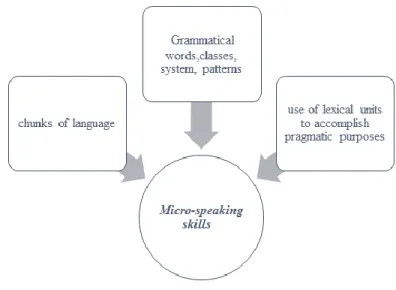
With regard to the above, the micro-speaking skills are key features of the target language that allow to see how these are used spontaneously. The micro-speaking skills are focused on the form and functions of language. The following are the features that the micro-speaking skills related to the language form have:
● Ability to use the language system, grammar rules and lexical units. Grammar and vocabulary range.
● Capacity of pronouncing correctly English words and phrases. Fluency and accuracy, pronunciation.
Next, the characteristics for the micro-speaking skills related to the functional use of spoken language are:
● Ability to express ideas using spoken language and different types of oral production. Pragmatics and types of spoken language.
Based on the previous information, Brown (2007) and Cameron (2001) propose the following micro-speaking skills in which they present some of those oral abilities learners develop while they are advancing in the communicative competence learning. According to the authors, those micro-speaking skills are:
● Produce chunk of language of different lengths
● Orally produce differences among the English phonemes and allophonic variants. ● Produce reduced forms of words and phrases.
● Use an adequate number of lexical units (words) in order to accomplish pragmatic purposes.
● Produce fluent speech at different rates of delivery.
● Monitor oral production and use various strategies devices-pauses, fillers, self- correction, backtracking-to enhance the clarity of the message.
● Use grammatical words classes (nouns, verbs, etc.), system (e.g., tense, agreement, pluralization), word order, patterns, rules and elliptical forms.
● Produce speech in natural constituents-in appropriate phrases, pauses groups, breath, and sentences.
● Express a particular meaning in different grammatical forms (Brown, 2007, p. 328). In the opinion of the authors such as Brown (2007) and Duraiswamy (2014) chunks are multi-words fragments that can be practiced in communication to carry out the meaning that is perceived easily by both sides.
their speaking skill. Particularly, for this project, the internal and external factors Brown (2004) mentioned that may have an impact on the production process of learners, as well as the micro-speaking skills features considered by the same author, were taken as part of the elements I took into account when implementing my pedagogical proposal with second graders.
State of the Art
Here, different research studies addressing the use of CLT in language classrooms, speaking skills in the classroom and the use of activities to promote speaking in primary students are presented.
First, a classroom action research carried out in Indonesia by Efrizal (2012), wanted to observe the improvement of the speaking skill when using the communicative language teaching approach. In order to collect the data, the researcher applied tests to 25 students at the end of the four cycles he proposed during the implementation. After analysing those tests quantitatively, the author found that students improved their speaking skill levels after each cycle. The findings also showed him that those students were highly motivated after the CLT implementation, and the dynamics of the classes allowed them to be more self-confident when expressing their ideas using the target language.
participants‟ opinions, the researcher found that students felt CLT had helped them improve their speaking skills, as well as being more motivated towards the classes. Regarding the teachers‟ opinions, the study showed that most of them actually used that approach into their classes, and they felt the focus on meaning rather than on form give learners‟ higher possibilities to enhance their oral production in the English language.
The following study was carried out in China (Hui, 2011) and applied the action research technique to conduct a research to improve the students‟ speaking ability through Content Based Instruction (CBI). This research consisted of two cycles in which four moments nurtured each cycle: planning, action, observation and reflection. The population of this research were second grade students. This mixed type of study collected data through pre-test, post-test, observations, questionnaires and interviews. After analysing the data, the author found that CBI was effective in improving students‟ speaking ability and level, since students could answer the teacher‟s questions, and communicate fluently with their friends using correct grammatical forms with good pronunciation. The author also mentioned that the environment during the classes was excellent and the students seemed to enjoy more their classes.
All the previous studies have in common the elements of the speaking skill or the oral production and the communicative environment as the objects of study. In this context, all of them agreed that providing a communicative classroom context to students can definitely enhance their communicative competence, in this specific case, the speaking skills level. Also, the inclusion of those environments definitely improves students‟ attitude, motivation and emotions towards their learning and the language per se. However, there is an interesting element in the studies that examined if the CLT helped students improved their speaking skills level, they used a quantitative approach to analyze the data. This characteristic was another reason for me to carry out this research project, because it was worthy describing second grade students‟ speaking skills when using CLT lessons from a qualitative point of view.
Chapter 3: Research Design
This chapter presents information on the procedures and actions related to the type of study, data collection instruments and the criteria to analyze the data gathered, which permitted to achieve the purpose of the current research.
Type of Study
Taking into account that the objective and research question proposed in this study are oriented towards looking at the English speaking skills in second grade students when implementing
communicative language teaching lessons, the appropriate methodology to carry this project out was action research.
The action research is used in the educational settings when one teacher-researcher after observing the school context, decides to implement and action plan in order to solve problems and account changes in the classroom. According to Lingard et. al. (2008) and Whitehead et. al. (2003), this methodology implies practitioners to carry out systematic self-questioning in order to become their practices better. This process allows the practitioner to build up the context and the procedures that are part of that environment. As a researcher, the observation, interpretation, and analysis of data collected will help to understand all the insights of the results obtained. According to Ferrance (2000), typically, action research is undertaken in a school setting. It is a reflective process that includes inquiry and discussion as components of the research process.
participants and its particular social and institutional context is largely lost when textual data is quantified.
In the noticing process, data are collected through interviews or video-recordings, and then, transcribed. During the analysing data process, data are highlighted and categorized according to the purpose of the research. Under the paradigm of qualitative research, an action research design was adopted to the educational context, as it helped in using different teaching strategies and to develop action plans cycles in the form of lessons to improve and change the situation and to promote the professional growth. As Norton (2009) agrees, “action research is implying a form of self-reflective enquiry understanding by participants in social situations in order to improve the rationality and justice of their own practice, their understanding of these practices, and the situation in which the practices are carried out” (p. 1).
In addition, action research also called teacher-research or teacher as researchers, is a methodology designed to develop and improve teaching and learning. The essence of action research is teachers solving everyday problems in school to improve both student learning and teacher effectiveness (Mills & Butroyd, 2014).
The first step in any research study is deciding exactly what to study. Hence, Ferrance (2000) suggests that “teachers often have several questions they wish to investigate; however, it is important to limit the question to one that is meaningful and doable in the confines of their daily work” (p. 10). Specifically, for this study, the researcher recognized the needs of the population, as well as their interests through a needs analysis interview, which allowed her to limit her focus on the study towards students English speaking skills.
1. Identify a topic or issue to study: the topic or issue should be important to the teacher, the team of teachers or the school that is undertaking the study. The topic to study in this research project is second grade students‟ English speaking skills performance when implementing communicative language teaching lessons. This topic was important for me because it meant the opportunity to support the languages curricular proposal of the school which is based on the communicative language teaching.
2. Carry out an action plan: the purpose of action research is to impact teachers, actions, activities, beliefs and effects which means that action research is directed towards both understanding and improving practice. In the case of this project, I planned six lessons in which she used the communicative language teaching in order to promote the English speaking skills on students. 3. Collect data: Bogdan & Bilken, (2003) state that “any information that can help you answer
your question is data. By data analysis we mean the process of systematically searching and arranging the interview transcript, field notes and other materials that you accumulate to enable you to come up with findings” (p.147). The best data are the one directly related to the topic or issue, because they provide pertinent answers to the intended research. Particularly, on this study, after analyzing the theory, the researcher designed interviews to find out the students English speaking skills level, which gave her the starting point for proposing a pedagogical intervention that allowed her to examine the speaking skills performance occurred during classes. Those classes were video recorded and the teacher-researcher observations of the students‟ process during the classes were recorded in journals. Finally, another interview was designed in order to get students‟ opinions on the pedagogical intervention and see the students‟ English speaking skills performance as well.
needs to be taken” (p. 9). Therefore, the interpretation of data follows a descriptive approach and qualitative analysis that implies some standards. According to Bogdan & Biklen, (1998) the data interpretation refers to “developing ideas about your findings and relate them to the literature and to broader concerns and concepts” (p. 148). For the current research project, the approach used to analyse the data was content analysis that will be addressed later in this chapter.
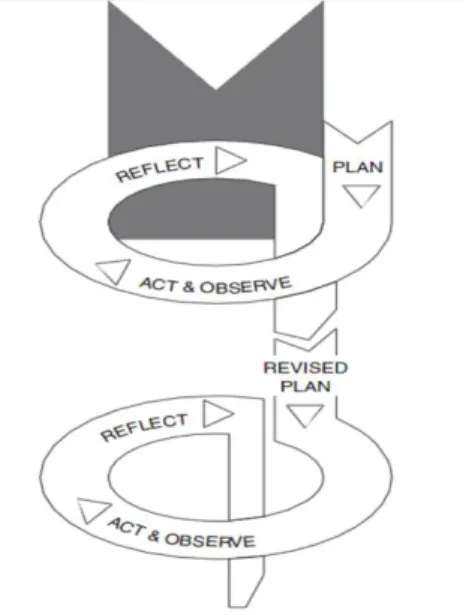
Varied views of action research have over the years shown a common perspective in which a cycle is essential for the process. For example, Lewin (2007) describes action research as a three-step spiral process of (1) planning that involves reconnaissance; (2) taking action; and (3) fact-finding about the results of the action process. Likewise, Kemmis and McTaggart (1988) present action research as a spiral process occurring through a dynamic and complementary process which consists in four essential moments of planning, action and reflection that are repeated after results are shown through the data. The following figure shows how this cycle happens in an action research process.
Figure 1. Cycle of action research. This figure presents the relation between the cycle in an action
In the specific case of this research project, the phases shown in that figure happened in the following way:
1. Plan: After observing second grade students during their English classes and interviewing them to see their English level, I planned a first lesson addressing speaking skills from the CLT approach which was the skill in which learners showed more difficulties.
2. Act and observe: I applied that lesson and observed that my students experienced some issues related to reading comprehension.
3. Reflect: After reflecting on this situation, I decided to include some reading comprehension activities along with the speaking ones. This reflection made the initial focus of lessons to be changed.
4. Revised plan: Other five lesson plans were prepared by me focusing on speaking skills and some reading comprehension activities, for instance summarizing, inferencing and finding the main idea, important facts, and supporting details.
5. Act and observe: I implemented those five plans while collected some data through video recordings and journals.
6. Reflect: I analysed the data collected and reflected on the impact of the pedagogical implementation. This process made me come up with some conclusions.
The Teacher-Researcher’s Role
When teachers do research, they go through an intentional and systematic inquiry with the goal of gaining insights into teaching and learning practices, becoming more reflective practitioners, effecting changes in the classroom or school, and improving the lives of children (Cochran-Smith & Lytle, 1999).
construct meaning through genuine linguistic interaction with other students and with the teacher” (p.43). In line with the author, a teacher as facilitator helps students to recognize their learning strategies and enhances automaticity in them.
Taking the previous information into account, the role of the teacher in this research project was to focus on understanding, reflecting and planning based on students‟ needs.
The Students’ Role
According to Brown (2001) students in a CLT class are active participants in their own learning process. Learner-centered, cooperative, collaborative learning is emphasized, but not at the expense of appropriate teacher centered activity. In this case, although students did not propose the intervention, the activities included there intended to make second grade students more active when using the English language.
Context and Participants
This study was developed with students of second grade from Mount Vernon School which is a private bilingual school located in the north of Bogota city, it has almost 210 students from preschool to 11th grade. English classes are held seven hours per week in elementary grade and four hours in six and 11th grade. These participants are aged between eight (8) and nine (9). At this point, they are expected to manage some basic speaking skills in English that allow them to express ideas in different situations inside the classroom. The number of students is sixteen (16), three (3) girls and thirteen (13) boys.
The process students usually go through in the school starts from preschool and it is expected that they can graduate with a C1 English level. Taking into account the emphasis of the institution's educational project (PEI), where one of its principles is:
permita comunicarse oralmente usando el inglés través de actividades que le favorezcan su participación oral tales como el curso de inmersión.
In that way, this conception of the school connects the theory of the CLT which was implemented in this research project and so, observe the speaking skills performance in second grade students.
Instruments
I used three different instruments in order to collect the data: oral interviews, teacher‟s journals and class video recordings.
Firstly, two oral semi-structured interviews were applied in order to observe the level, and the knowledge that students had in the English language (See appendixes 1 and 2). The first interview was part of the needs analysis. It had eight open questions and it was carried out in an informal atmosphere which allowed the researcher to have more flexibility and freedom during the interaction. The second interview was applied at the end of the intervention and it had the purpose to know the students perception on the intervention and see the way they used the language to communicate their ideas. According to Griffee (2005), Kvale (1996), Tuckman (1999), and West (1994), interviews are usually one-to-one and face-to-face meetings in which the data is gathered by asking questions to the participants.
Chapter 4: Instructional Design
Keeping in mind the research objective aims at describing second grade students‟ English speaking skills during the implementation of lessons based on communicative language teaching, the pedagogical intervention was decisive because it allowed the researcher to observe the student´s English speaking skills when learning and using the language during the class sessions.
The pedagogical implementation needed to fulfill the curricular requirements of the school that lie on bilingualism, as well as on a strong literacy component mostly included in Spanish and English subjects. Taking that into account, the English language curricular proposal uses the CLT as part of its methodological principles, in which the syllabus aims at developing, among other things, the four communicative skills on students. Having this in mind, this pedagogical intervention responded to those school‟s principles in order to help the institution to keep constructing their status as a bilingual school.
Table 1
Summary of the research process
Phase Date Objectives Collection
instrument Pre July 9th To get permission from the school‟s
principal and parents to the project.
Letters (see appendix 10)
July 31st To know the current level of speaking of the participants.
Interview. (video recording) August 10th To identify the needs of students and select
possible class activities for speaking skill based on a literacy component.
Teacher‟s journal
While August 12th Lesson 1: to answer comprehension questions based on a reading. To retell a story using the vocabulary learnt during the class.
video recording & teacher‟s journal
August 13th lesson 2: to sequence the order of events based on pictures
video recording
August 14th Lesson 3: To tell the end of a story told by the teacher based on some pictures.
video recording
August 17th Lesson 4: To ask and answer questions to other people about what they like to do in their lives.
Teacher‟s journal
August 18th Lesson 5: To summarize orally story and relate it to the students‟ school reality.
video recording & teacher‟s journal August 19th Lesson 6: To create a story based on
character shown by the teacher.
video recording
Post September 10th
To know the final progress in participants speaking skills and their insights about the intervention made in class.
Last interview, video recording
November 24 to april 5th
As table 1 shows, the research process was divided in three main stages. The first stage was made for planning intervention, getting permissions, and making a diagnosis on students speaking skills level through an interview. During the second stage, the lesson plans were applied and video recordings and teacher‟s journals were used in order to collect data. Finally, the last stage, called post stage, was for applying and video recording an additional interview that allowed me to see the student‟s perceptions on the classes and to see the actual use of the speaking skills by students.
Intervention
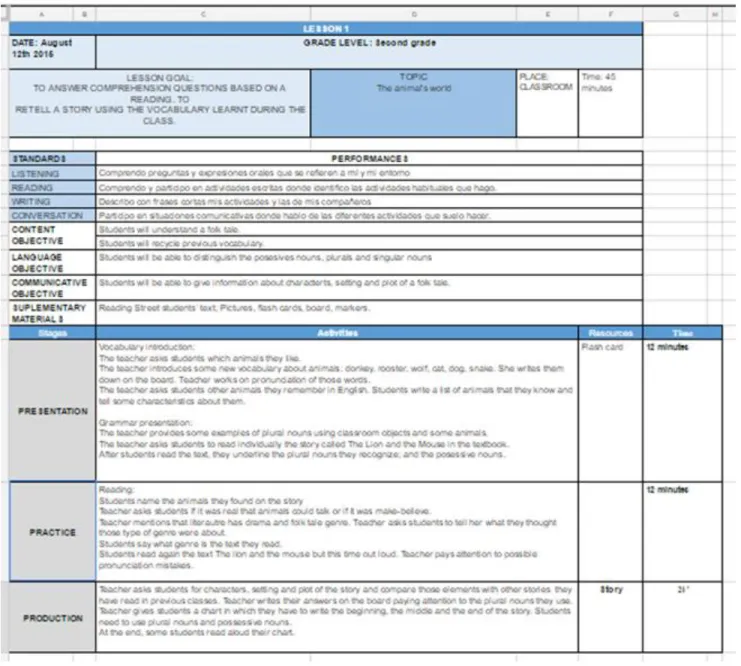
Taking into account that the Mount Vernon School has an important literacy component in the English syllabus and courses material, I decided to have as a starting point for my lesson planning, some of the readings included in the English book for second graders. Thus, the first lesson planned by me, intended to have students answer comprehension questions about an animals‟ story included in the course book, and then, using the learnt vocabulary, students could retell that same story. During that session, I found that students had some issues when understanding the text provided by the textbook. These findings, lead me to include in my following lesson planning some reading comprehension aspects such as sequencing and describing that allowed the students to communicate their ideas based on a text (see figure 2).
Having in mind that CLT was the methodological approach that underlined this project‟s pedagogical intervention, the activities included in every single lesson plan, responded to some of the characteristics Brown (2007) proposes for this approach. First, several language components were taken into consideration in the activities. For example, in lesson one, pronunciation revision and reading comprehension were addressed. Second, the relation between form and function of the language was carried out during the production moment where students were asked to incorporate the grammar information they studied with me in their final production products. Third, taking into account that for CLT there is a guiding role of the teacher and an active one from students, although the activities proposed in the lesson plans were all prepared by me, they were all intended to have students as active participants during the sessions. That‟s why, lots of questions were constantly asked to students during the classes.
expressions (how much does, how do you say, etc.), grammatical words classes (nouns, verbs, etc.) and conversation strategies for managing turn- taking in conversation (Brown, 2007).
This intervention ended up with the interview applied to the participants in which I observed the speaking skills students had, and I collected information on second graders perceptions on the intervention (see appendix 2).
During the presentation that was the first step, I started the class providing the vocabulary that had a relation with the story such as: net, free, proud, hunter. Then, we read from the book the assigned story (page 340 from the textbook Reading Street, Scott Foresman). After, I introduced some new vocabulary about animals: donkey, rooster, wolf, cat, dog, and snake. I wrote the list of the animals down
on the board, and my students talked about some characteristics they knew about the animals. I worked on
pronunciation of those words, they identified the animals that they mentioned and told which of the
animals they liked and why.
During the second step, called practice, the students read page 340 aloud as a group and they answered if could be real that animals talked or not, telling the reasons why they thought that. Also, in this step, students had to recognize what kind of genre the text had, if the reading was a fable, a legend, myth or story.
During production, that is the third and the last step, students had the opportunity to demonstrate the understanding about the story. They compared the characters, settings and plots in traditional and contemporary folk tales that they read in previous class. Questions such as: was lion wrong about mouse? And how does Mouse help lion? were used to give them the opportunity to use the target language. Finally, the students wrote in a chart the beginning, the middle and the end of the story, and then, they shared their written ideas with the class using the plural and possessive nouns we had studied previously, as well as the vocabulary used in the presentation stage.
and using pronunciation and intonation of the new words learned correctly. Besides, during the last part of the class, the students had to incorporate the vocabulary and grammar point studied in the two previous stages of the lesson plan in order to communicate their understanding about the different moments of the story read in class.
Chapter 5: Data Analysis
In this chapter, the procedures and the process of data analysis are explained. Besides, the findings shown by the data collected through the interviews, video recording and teacher‟s journals are presented through the categories of analysis.
Data Management Procedures
As it was mentioned in the previous chapter of research design, three instruments were used to collect the data: semi-structured interviews, video recordings and teacher‟s journals, in which the first two instruments have their corresponding transcriptions (see appendices 1 to 9).
Firstly, teacher journals were written after classes based on the researcher observations, as well as on the video recordings, which allowed me to reflect about what happened during the sessions. The benefit of the journals was to make required changes on the researcher‟s lesson plans, for instance, to increase the ability to speak, reading comprehension skills and create a good environment in the classes. Hence, those journals allowed me to write about the opinions and impressions I had based on what students did during the sessions.
Secondly, there was an oral interview applied at the beginning of the research process in order to identify the English level of students. This allowed me to see which could be the biggest difficulties students had when using the language and their attitude towards communicating in the foreign language.
In order to analyze the pieces of data shown in those instruments, the teacher-researcher decided to use content analysis as the approach that allowed her to make sense and conclusions form the data collected through the pedagogical implementation.
Based on the opinion of Marilyn (1983), the qualitative content analysis looks at different types of data collected and analyses transcripts of interviews, discourses, protocols of observations, video tapes, and documents, among others. Here, the main idea is to develop categories that are formulated in respect to the theory and material used step by step and in the results obtained in each analysis made. In like manner, Zoltán (2007) states that “content analysis has recently become closely associated with qualitative research…the qualitative categories used in content analysis are not predetermined but are inductively formed from the data analyzed” (p. 245). In other words, the researcher reads the data and extracts what the data says about the phenomenon under investigation, which in this case is related to English speaking skills in CLT lessons. Thus, this type of analysis starts by coding the information, then looking for patterns, interpreting those patterns to end up on grouping them into categories. Similarly, Foss & Waters (2006) point that in order to analyze the data, the first step is to code the data, then, themes appear from the data to create categories, and end up with writing up the analysis.
Having the previous information in mind, the process followed by the teacher-researcher to analyze her data was the following:
useful when writing the analysis chapter. After that, I focused my attention on the patterns, and started to establish relations among them, which allowed me to group the patterns again, in order to find four subcategories that described second grade students‟ English speaking skills during the implementation of lessons based on CLT. Finally, looking at those subcategories, I organized them into two final categories. In the following chart, the categories and subcategories that emerged from the data are shown
Table 2
Categories and subcategories emerged from the data.
Research question: What does the implementation of Communicative Language Teaching lessons
inform about the English speaking skills in second grade students at Mount Vernon school?
Research objective: To describe second grade students‟ English speaking skills during the
implementation of lessons based on Communicative Language Teaching
CATEGORIES SUBCATEGORIES
Students‟ response to CLT strategies Enhanced oral skills
Content situated in context
Students ‘oral production
Presence of Micro-speaking skills to support student´s oral production
L1 interference
Influential factors on students´ oral production
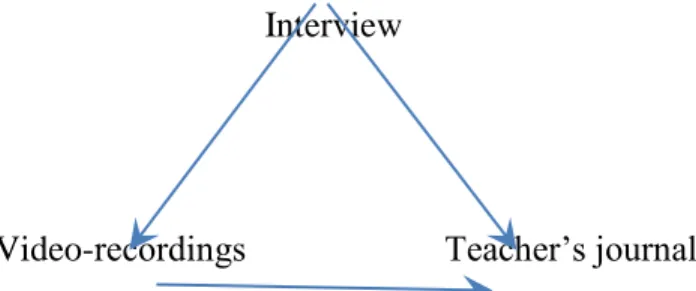
The triangulation of data occurs when multiple theories, materials or methods are used to better support the analysis. In line with Kimchi, et. al., (1991) the triangulation in research has been defined as the combination of two or more theories, data sources methods or investigators in the study of a single phenomenon.
Taking into account that data source triangulation uses evidences from different types of data sources, the process for this research was the following:
Interview
Video-recordings Teacher‟s journal
Figure 3. Triangulation process for the data analysis of this research project.
Analysis of Categories
First category: Students’ response to CLT strategies. This category is related to how
children attempted to use their sometimes limited knowledge of the English language in order to express themselves in the target language. During the lessons stages, I was constantly asking students questions about the information I presented or the texts we read in class. This strategy is used by teachers in the classroom with diverse purposes, for instance, to motivate them to be more involved in the class, to develop critical thinking skills, to stimulate students to be autonomous, to guide them through cognitive process, among others (Cotton, 1988). In this particular case, I used this strategy with the purpose of helping my students go through the comprehension when reading the texts included in the lessons, as well as guiding them to incorporate the studied information into their communicative tasks. Thus, when looking at the students‟ speaking skills, I noticed that they used mainly two strategies in order to respond to the questions and to CLT strategies.
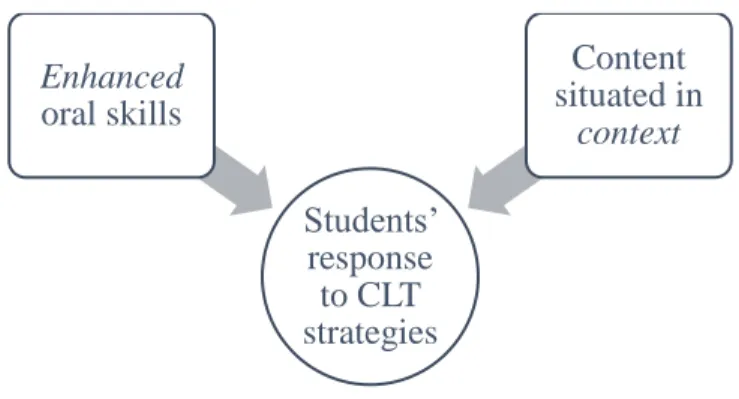
Figure 4. Subcategories supporting the first category about Students‟ response to CLT
strategies used by students and the teacher.
Enhanced oral skills. While students answered the questions asked by me during classes or participate orally in any activity, I could observe they used some of the micro-speaking skills proposed by Brown (2007) as a strategy to communicate their ideas and thoughts. Particularly, the data showed me that second graders mostly used the following micro-speaking skills:
Students‟ response to CLT strategies
Enhanced
oral skills
Content situated in
Figure 5. Patterns supporting the subcategory of micro-speaking skills.
Chunks of language of different length. Taking into account that chunks of language are
multi-words fragments that can be practiced in communication to carry out the meaning that is perceived easily by both sides, second graders used some chunks of language during the implementation. For example, during lesson one, in which the teacher asked students if they knew the genre of the text they were reading, one student answered:
“Student 3: a story is very little a fable is a kind /kin/”
The previous fragment is used by the student to explain what a fable means through the comparison between a story and a fable, and then, through the expression „it is a kind‟ which allowed this student to classify the genre of the text.
In the same lesson, the teacher asked students about the importance of a fable and they answered the following:
“Teacher: what happened in the fable? Student 2: it‟s important
Teacher: it‟s important why?
Teacher: teaching
Student 3: teaches lesson”
Student 1 intervention shows the use of the expression „what do you say‟, which correctly written is „how do you say‟ in the target language in order to ask for the correct word in English, so the students could finish the idea of the importance of a fable. Also, it is evident the way in which student conjugates the verb “teach” according to the sentence construction he was doing. This final strategy showed the knowledge that student had on the grammar structure for verb conjugation.
Furthermore, during the last interview, in which the teacher asked different questions about the English classes from the implementation, the use of another word fragment was made by one student with the intention of understanding one question the teacher asked. For that purpose, the student asked for the question to be repeated, adding the polite expression „excuse me‟:
“Teacher: What things do you like from our lessons? Student 1: what is the question? (...) Excuse me?”
Grammatical word, classes (nouns, verbs, etc.), systems (e.g., tense, agreement, pluralization),
patterns, rules and elliptical forms. The knowledge and accurate use of linguistic forms such as
During lesson five, in which I and my students were reading a text about a scientist and the class objective was to summarize a story orally and relate it to the school‟s reality, the following interaction taken from a video recording was given:
“Teacher: what do you think when you listen the word scientist? What do you think about it if you listen the word scientist? What do you think?
Student 4: I think that Alberto make experiments and and they, mmm they use materials to to work like a scientist.”
Here, after going through the process of five lessons, this student showed an acceptable use of the grammar structure when trying to explain what he understood by the word scientist. It is evident that this student placed the subjects, verbs and objects in the correct way the English grammar requires it. Also, the student was able to use the infinitive „to work‟ in a correct way to complement the sentence. Finally, the use of the expression „I think‟ manifests that the student tried to introduce his idea using a fixed structure.
Likewise, during lessons three and six, in which the objective was to tell a story based on images, two students used grammatical constructions that showed their awareness on grammatical elements such as the use of past tense, definite articles, prepositions, possessive pronouns and conjunctions.
“Student 5: Once upon a time a boy and a girl and the name of the boy are Lalo and the name of the girl is Tala and they Lalo and Tala”