1
FIRST STEPS TOWARDS CHANGE: AN APPROACH TO ENGLISH ASSESSMENT PURPOSES, TYPES OF ASSESSMENT AND WASHBACK IN THE BACHELOR OF ARTS IN MODERN LANGUAGES AT PONTIFICIA UNIVERSIDAD JAVERIANA
CÉSAR DANIEL BARRAGÁN MALDONADO
BÁRBARA LIZETH CONDE GÁFARO
PONTIFICIA UNIVERSIDAD JAVERIANA FACULTAD DE COMUNICACIÓN Y LENGUAJE BACHELOR OF ARTS IN MODERN LANGUAGES
2
FIRST STEPS TOWARDS CHANGE: AN APPROACH TO ENGLISH ASSESSMENT PURPOSES, TYPES OF ASSESSMENT AND WASHBACK IN THE BACHELOR OF
ARTS IN MODERN LANGUAGES AT PONTIFICIA UNIVERSIDAD JAVERIANA
CÉSAR DANIEL BARRAGÁN MALDONADO
BÁRBARA LIZETH CONDE GÁFARO
Research Study to obtain a Bachelor degree on Modern Languages
Advisor: Deyanira Sindy Moya
PONTIFICIA UNIVERSIDAD JAVERIANA FACULTAD DE COMUNICACIÓN Y LENGUAJE BACHELOR OF ARTS IN MODERN LANGUAGES
3 ABSTRACT
This research study aims at inquiring what are the assessment purposes language teachers have and the possible washback these purposes imply for the English Department at Pontificia Universidad Javeriana. This study is intended to identify and describe when assessment is carried out; how language teachers assess and what they assess according to their purposes. Finally, it intends to contrast these purposes with the students’ responses. The researchers draw on relevant literature to develop a theoretical framework which includes Assessment, Assessment purposes (assessment of learning, assessment for learning and assessment as learning), and washback (impact, feedback and responses). It also draws on data collected through semi-structured interviews addressed to English teachers and students from the Bachelor of Arts in Modern Languages; non-participant classroom observations and elicitation techniques based on metaphors and images related to assessment. Findings indicate that formal assessment and informal assessment are the most common techniques used by teachers at the Bachelor. Likewise, the aforementioned techniques are related to the assessment purposes of learning and assessment purposes for learning. In addition to this, the assessment moments and the topics assessed are related to established practice. As a final point, washback in learning and washback in teaching are associated with students’ responses, students’ results and the negative or positive impact that are reflected during the assessment process.
4
TABLE OF CONTENTS
1. INTRODUCTION………....………...7
2. STATEMENT OF THE PROBLEM……….10
a. RESEARCH QUESTION………...15
b. OBJECTIVES………....15
i. General Objective…………...………...….….…...15
ii. Specific Objectives………...….15
c. RATIONALE…...………..…....16
d. BACKGROUND………...18
3. THEORETICAL FRAMEWORK………...26
a. Assessment………..……..……….28
b. Assessment Purposes………..…….………....………...36
c. Washback………...………40
4. METHODOLOGICAL FRAMEWORK………...………48
a. Participants……….49
b. Data collection and gathering tools………....53
i. Semi-structured interviews………....………...…..…...…….……..…….53
ii. Non-participant observations……….54
iii. Elicitation techniques………...………..55
c. Institutional framework……….….58
d. Ethical considerations………...….…………...….58
5. RESULTS………...….…..….…….………..60
6. ANALYSIS………65
a. Types of assessment………...65
i. Formal Assessment………65
ii. Informal Assessment………..70
b. Assessment Purposes……….73
i. Assessment of learning………..73
ii. Assessment for learning……….………77
iii. Assessment as learning………..………80
5
i. Washback in learning……….………83
ii. Washback in teaching………85
d. Situational/Effectiveness, Emotional Response & Students’ responses ………...……….………86
7. CONCLUSIONS, LIMITATIONS AND REASONS FOR CHANGE………....91
a. Conclusions………91
b. Limitations……….94
c. Future steps………...…….94
8. REFERENCES………..96
APPNDIXES
6
LIST OF TABLES
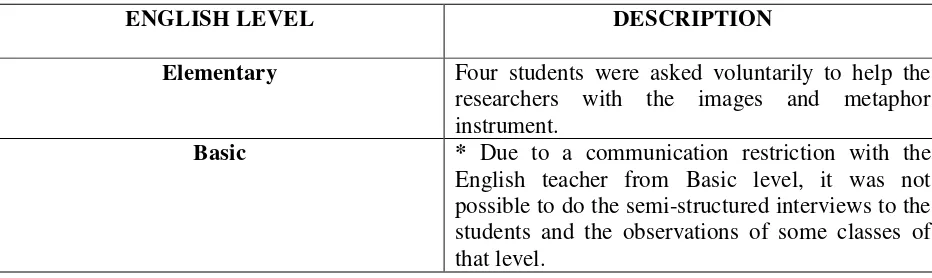
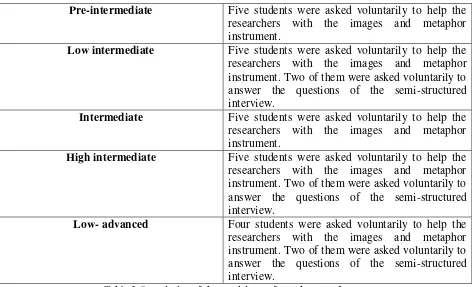
Table 1. Description of the participants from the first group...…...50
Table 2. Description of the participants from the first group………51
Table 3. Description of the participants from the second group………...51
Table 4. Description of the participants from the second group………...52
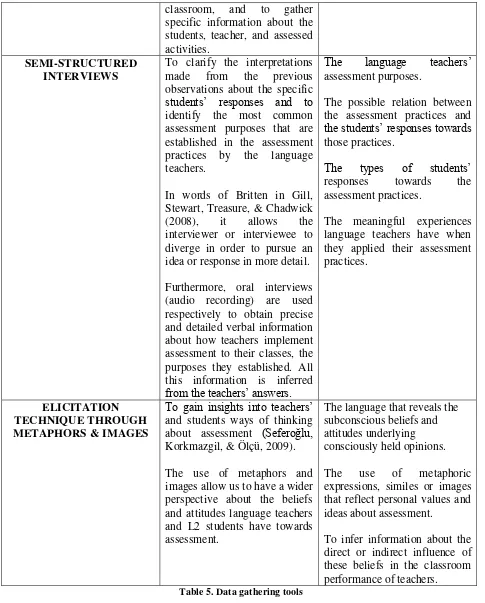
Table 5. Data gathering tools………56
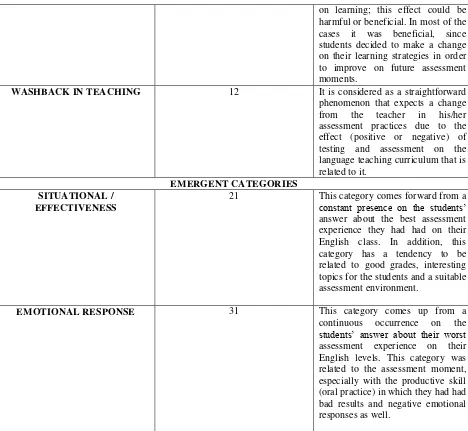
Table 6. Frequency of Appearance of Codes in the Non-Participant Observations and the Semi-Structured Interviews Addressed to English Teachers and L2 Students………...61
Table 7. Teachers’ and Students’ Assessment Perception Reflected on their Drawings and Metaphors………..64
Table 8. Words Related to Assessment According to the Students’ Answers………..64
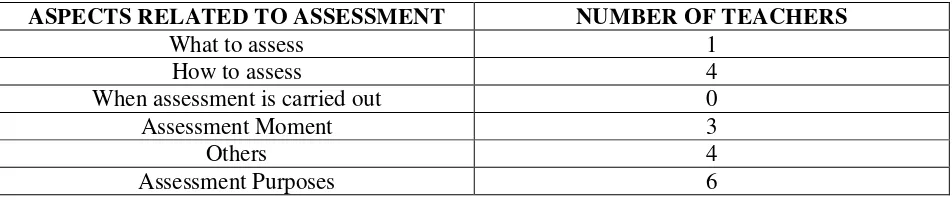
Table 9. Aspects Related to Assessment According to the Teachers’ Answers………...64
LIST OF GRAPHS Graph 1. Types of Assessment Resulting Sub-Families………...……60
Graph 2. Assessment Purposes Resulting Sub-Families………...60
Graph 3. Washback Resulting Sub-Families………61
Graph 4. Formal category and its corresponding links and sub-families……….66
Graph 5. Informal category and its corresponding links and sub-families…………...………70
Graph 6. Assessment of learning and its corresponding links and sub-families………...……..74
Graph 7. Assessment for learning and its corresponding links and sub-families………...…….78
7
1. INTRODUCTION
This research study presents an identification and description of assessment purposes language teachers have and the possible kind of Washback these might have on the students’ responses in the English Department at Pontificia Universidad Javeriana.
The idea to carry out this study came up from our personal experience related to assessment because we consider that there is a problem in terms of how students and language teachers perceive the assessing practices, this problematic was reflected on three interviews addressed to language teachers, L2 students and students from the seminar ‘Pedagogía y Didáctica 3’and it is presented on the ‘Statement of the problem’. In addition, some of the aspects related to assessment also called our attention since this topic as a whole is regarded as a relevant, but also controversial component that makes part of the second language acquisition process. For that reason, the purpose of this study is to identify and describe the assessment purposes language teachers have and the way washback affects teaching and learning practices in the English Department at the major.
The data collection was done through three different instruments that allowed us to have a closer perspective about the way assessment is carried out at different English levels; also we could see how language teachers and L2 students perceive assessment. Through the use of semi-structured interviews addressed to nine language teachers and ten students; as well as non-participant classroom observations were undertaken at different moments in which formal and informal assessment were seen. Furthermore, elicitation techniques (images & metaphors) were addressed to nine teachers and thirty three students from different English levels. Postliminary, the data gathered was codified through the use of the software Atlas.ti, in order to analyze and interpret the qualitative data gathered. This software is a helpful tool that segments data into meaning units (concepts, categories and themes) labeled according to the researchers and their study. With the aim of presenting the whole process done in this research study, we now introduce the five chapters that compose this study.
8
between teachers’ beliefs and their practice and finally, how the established practices also affect the way assessment is carried out. The aforementioned lead us to define our research question and our objectives where the identification and description of the assessment purposes language teachers have and the how these might have an effect on the students’ responses is the main goal. The importance of this research study is presented in the rationale and connected with the background studies of Cheng, Rogers and Hu (2004); Díaz Larenas, Alarcón Hernández & Ortiz Navarrete (2012); López Mendoza and Bernal Arandia (2009); Muñoz, Palacio and Escobar (2011); Niño Ardila and Molano Calderón (2013) and Castro Acosta (2009). These background studies present an international, national and local perspective about the problematic of assessment.
In the second chapter, the theoretical framework is presented together with the main concepts related to the language assessment aspect. The concepts of Assessment, Assessment Purposes and Washback are the axis of this research study. Related to Assessment authors that help us conceptualize this concept are Brown & Abeywickrama (2010) and Chapelle & Brindley (2002). Authors such as Earl & Katz (2006) present the basic concepts related to Assessment Purposes. Finally, Hughes (2003) and Pan (2009) clarify the concept of Washback. In the third chapter, we present the methodological framework that include the participants (nine English teachers and thirty three L2 students), the data gathering tools (semi-structured interviews, non-participant classroom observations and elicitation techniques), the institutional framework and the ethical considerations that are taken into account in our research study.
In the fourth chapter, we present the corresponding analysis of the data gathered taken from the different instruments. The categories previously presented on the theoretical framework and two new categories (situational/effectiveness & emotional response) that emerged during this analysis process are used as a starting point for the analysis. Lastly, in the fifth chapter, we picture some conclusions taken from the results and the analysis and that answer our research questions following the objectives established. We also present the limitations of this study and some questions that might lead our readers to a reflection about assessment.
9
teaching and learning practices at the English Department in the Bachelor of Arts in Modern Languages, being as we consider the first steps towards change in the assessment field.
10
2. STATEMENT OF THE PROBLEM
According to Lopéz Mendoza & Bernal Arandia (2009), classroom assessment is an integral part of the language learning process and a powerful informed decision-making tool. Classroom assessment seeks to reveal students’ critical-thinking and evaluation skills by asking them to complete open-ended tasks that often take more than one class period to complete. Based on our academic training, we are aware that for a long time the way of assessing a second language has its basis on the traditional paper based tests. In that sense, these types of test do not lead to the development of a critical thinking; therefore, it does not reflect the real L2 knowledge of the students.
Language testing in Colombia is based on the educational and linguistic policies established by the CEF (Common European Framework), which aims at the elaboration of language syllabuses, curriculum guidelines, examinations, textbooks, etc. across Europe. The CEF becomes the means for educational administrators, course designers, teachers, teacher trainers, examining bodies, etc., to reflect on their current practice. This Framework also defines levels of proficiency which allow learners’ progress to be measured at each stage of learning and on a life -long basis (Council of Europe, 2012).
These policies were incorporated in Colombia in 2004 by the Ministry of Education (MEN) in its “National Bilingual Program 2004-2019”, which strengthens the communicative competence in English in the entire education system and incorporates the use of new technologies for learning a second language. This program now is called “Proyecto de Fortalecimiento al Desarrollo de Competencias en Lenguas Extranjeras” that endeavors to train citizens for communication purposes according to the international standards, so they can be part of the universal communication processes, the global economy and the cultural opening (Ministerio de Educación, 2013).
11
recognized by the ‘Ministerio de Educación’ and the ‘Consejo Nacional de Acreditación’ as one of best programs in Colombia due to its high standards in language teaching education (Pontificia Universidad Javeriana, 2009).
Furthermore, there are other educational policies stated in the curriculum of the Bachelor of Arts in Modern Languages at Pontificia Universidad Javeriana related to assessment. In this case, assessment in L2 will be divided into formative and summative assessment. Formative assessment requires feedback which indicates the existence of a ‘gap’ between the actual levels of the work being assessed and the required standard. Moreover, summative assessment is a judgment which encapsulates all the evidence up to a given point (Taras, 2005).
In formative assessment are included: portfolios, self-assessment, quizzes, group work and participation of the students. In addition, in this type of assessment, the criteria, the aspects to be evaluated, as well as the percentages assigned to each of the previous aspects will be established by mutual agreement between the participants of the learning process: the teachers and the students. In terms of summative assessment, students will receive an oral and a written feedback about their performance (Pontificia Universidad Javeriana, 2004).
In general, the pedagogical practices including assessment that are present in the L2 classroom are determined by the language teachers’ beliefs and the students’ perceptions. There is evidence that teachers' beliefs on teaching and learning exert an influence on the way they teach and assess learning, and on what students learn. Therefore, it is central that overt attention is devoted to the perceptions teachers have and how they influence teaching and learning (Muñoz, Palacio, & Escobar, 2011).
In terms of students’ perception as stated by Cuesta (2000), the perceptions arise before the actions and allow the individual to 'gain experience', an experience that will impact on future perceptions. Also, the author states that once you have learned from the experience, thinking and reflection provide the space to identify and interpret new perceptual contents allowing the development of more complex perceptual processes. In that sense, the perceptions about assessment are different one from another since the students’ experiences are different.
12
Pontificia Universidad Javeriana, in which 14 students (from second to eighth semester), 13 students from the course of Pedagogía y Didáctica III and 7 language teachers were polled.
The majority of polled students (64%), who were from second to eighth semester consider that assessment is an essential element of language learning because in the first place, it allows measuring the knowledge acquired by the students throughout the course. Secondly, this helps L2 students to develop the ability of self-assessment and in that sense the students improve their academic performance based on the identification of their own weaknesses. Nevertheless, some students (36%) agreed that assessment does not enhance their learning process because it does not show completely the students’ knowledge about the L2 leading to produce a negative impact on the students’ self- esteem. Based on this, there is some tension between the expected role of assessment in the L2 learning process and its perception given by the L2 students.
This support the idea of Pan (2009) who has found as a problematic fact that language assessment tests have an impact on the students, this impact could be either positive or negative due to the important role these tests play in the language learning process. This impact is called ‘Washback’ defined by Alderson & Wall (in Lopéz Mendoza & Bernal Arandia, 2009) as the effects that tests have on teaching and learning.
Moreover, the issue about the impact of assessment practices on the students could be connected to the language assessment in Colombia. In the research study conducted by López, Pacheco and Peralta, it is stated that based on Saber 11 English exam the language assessment in the schools of our country is centered on skills such as grammar, reading and vocabulary while the other skills speaking, listening and writing are not being assessed (López, Pacheco, & Peralta, 2011). The previous issue is reflected on the English courses at Javeriana University. The survey results revealed that 37% of the polled students pointed out that language courses emphasize on the grammatical and lexical aspects rather than on other skills and for that reason, vocabulary and grammar are their strong points at the time to be assessed.
13
could be stated that there is a problematic perception since assessment of the language learning process involve a deeper and a more committed process instead of focusing the attention on specific elements or skills of the second language (Ahumada, 2001).
In relation with the types of test, there is also a conflict between the students’ perceptions about the traditional paper-pencil test and the alternative ways of assessing such as videos, essays, and presentations, among others. Some of the polled students (64%) took a different test from the traditional paper-pencil tests and agreed on the fact that it was a positive, productive and less stressful experience because they did not feel in any moment the pressure that they usually feel when they take a test. The students claimed that this experience also allowed them to easily demonstrate a better performance in the language skills in which they were being assessed. The previous results show that the L2 students’ feelings, the teachers’ beliefs and the conditions of test taking affect the results students might obtain on their tests (Díaz Larenas, Alarcón Hernández, & Ortiz Navarrete, 2012). These students also stated that they feel more comfortable, relaxed and free of tensions because they have more time to take the exam and also have a great variety of tools that allow them to achieve better results.
Another issue concerns the relation between the students’ needs and the assessment process. All of the polled students (13) who took the course of ‘Pedagogía y Didáctica III’1 considered that the traditional paper based test focuses more on attaining the class objectives and the curriculum goals rather than considering the different learning styles of the students, which implies the use of diverse strategies to assess. This supports the idea of Rodríguez Ochoa (2007) and Melgarejo (2010) who considered as a problematic issue the fact that traditional assessment practices do not lead to the development of a student-centered process.
However, 8 out of 13 polled students (62%) indicated that not only the students’ needs are relevant in the assessment process, but also the objectives, contents of the course, and teachers’ needs. The previous statement could be explained by the fact that some teachers might have to fulfill the linguistic and educational policies established in the curriculum of the institution they
1
14
work for. Nevertheless, the authors mentioned above argue that tests decisions are based on a holistic process that involves the analysis and recollection of students’ interest and needs in order to achieve the assessment goals.
All the polled teachers considered that assessment practices have an impact on their students. On one hand, it could be seen as a positive impact when feedback of the test allows the students to have more autonomy and be more aware of their learning process. On the other hand, it could be negative when tests are seen as an imposition. In that sense, students reflect a lack of commitment, since they do not find test meaningful for their future. In the same line of thought Pan (2009) and Díaz Larenas, Alarcón Hernández, & Ortiz Navarrete (2012) agree on the problematic fact that assessment practices such as language assessment tests have an impact on students’ tests results; therefore, that will be reflected on the students’ language learning process.
In addition, for most of the polled teachers (71%) assessment is a helpful tool that could improve their students’ learning process and could help them to make an evaluation about the methodology they use in their L2 classes. Nonetheless, it is possible that students’ needs are underestimated in the assessment process due to the fact that language teachers may have to follow a program established by the institution. In addition, teachers might take test decisions based on his/her beliefs about assessment and sometimes it means that students are not necessarily included in these decisions; hence, students do not feel as part of this process.
15 a. RESEARCH QUESTION
Taking all into account; this research study aims to inquire what assessment purposes
language teachers have and what is the possible Washback these purposes imply for the Bachelor
of Modern Languages in the English Department at Pontificia Universidad Javeriana?
b. OBJECTIVES
i. General Objective
To find out what are the purposes language teachers have towards assessment and the possible kind of washback these might have on the students’
responses.
ii. Specific Objectives
To identify and describe when assessment is carried out according to the teachers’ purposes.
To identify and describe how language teachers assess according to their purposes.
To identify and describe what language teachers assess on their classes according to their purposes.
16
c. RATIONALE
This research study came up from the academic assessment experience that we have had as L2 students in the BA of Modern Languages. Issues such as assessment practices, test taking conditions, type of tests and test impact were very appealing for us throughout our training process as future language teachers. Likewise, our research study emerged due to the interest to contribute to the development and improvement of the English Department at Pontificia Unversidad Javeriana. We expect to accomplish that through the identification and analysis of the assessment purposes language teachers have and of the washback these imply in the teaching and learning practices of the English Department.
Assessment as part of the teaching and learning process involves not only language teachers, but also L2 students. Therefore, this study will benefit positively these two agents since the findings of our analysis will allow them to understand based on the assessment purposes how assessment is designed, when it is carried out and what is actually assessed in the English department of the major. Equally, our research study presents a reliable background together with relevant theoretical concepts that help them to be aware of the existence of gaps between what is established in the English Department and what happens in the regular English classrooms.
The analysis and results of this research study may influence future decisions concerning the selection criteria for implementing strategies and assessment practices in the English classroom. Hence, this research study could be taken into consideration in the curriculum of the major, which is evaluated and updated periodically in accordance with the trends and needs of today's world, so that it reflects criteria of flexibility, students’ autonomy and interdisciplinary approach in the field of language learning(Pontificia Universidad Javeriana, 2014).
17
18
d. BACKGROUND
In order to accomplish this research study, it is important to have a closer view about the way in which assessment, beliefs, purposes and responses have been regarded by several research studies. Next are referenced some of these studies from a global to a local perspective taking into consideration the way the researchers carry out their own studies (methodology, objectives, instruments, results, population, and possible unsolved questions).
From an international perspective, the research study we found is related to the purposes, methods, and procedures of assessment. The research study was conducted by Liying Cheng (Queen’s University) & Todd Rogers and Huiqin Hu (University of Alberta). It is entitled <<ESL=EFL instructors’ classroom assessment practices: purposes, methods, and procedures>> (2004). This study reports a comparative survey conducted in English Second Language =English Foreign Language contexts represented by Canadian ESL, Hong Kong ESL=EFL, and Chinese EFL. The population used was 267 ESL or EFL instructors. Related to the methodological framework, the researchers used three different instruments as follows: a survey questionnaire, three samples that represented, respectively, three ESL=EFL instructional settings: an English-dominant setting, a bilingual (English and Cantonese) setting, and a Mandarin-dominant settings. In each of these locations, ESL=EFL instructors were sent a questionnaire and a self-addressed envelope. Finally, descriptive analyses were used to summarize the bio-demographic information provided by the instructors.
19
evaluation information to their central administration and others provided assessment and evaluation information to an outside funding agency.
In terms of methods, findings show that the assessment methods for reading, writing, and speaking-listening could be categorized into: instructor-made assessment methods; student-conducted assessment methods and standardized testing in reading, writing, and speaking-listening. It is important to clarify that the instructor-made assessment methods in the research study are those assessment methods designed and administered by instructors, whereas student-conducted assessment methods are those that directly involve students’ participation in the assessment process (Cheng, Rogers, & Hu, 2004). Finally, the procedures instructors used to assess and evaluate the students were divided on the source of assessment items and tasks, the time students spent on assessment and evaluation and the methods for providing feedback and reporting (that according to the findings could be given either during the course or as a final report). This study presents the assessment purposes that tend to be overlooked. Furthermore, this study presents one of the main concepts of our research study, which are assessment purposes. Likewise, these assessment purposes are divided in three categories (student centered-instructional-administrative). This division enlightens us to have a relevant organization for the assessment purposes we identify and describe along our research study.
In the same line of thought, we would like to argue that teachers’ beliefs have an important role related to assessment and assessment decisions. For that reason, a research study from an international perspective is <<The English Teacher: His Beliefs about English Language Assessment at Primary, Secondary and Tertiary Levels>>. This research study was conducted by Claudio Díaz Larenas, Paola Alarcón Hernández & Mabel Ortiz Navarrete (2012). This study aims at identifying beliefs about English language assessment stating that the learning and teaching evaluation at primary, secondary and tertiary levels is based on the traditional process of assessing students by final tests and written tests. The population used was a group of thirty Chilean teachers from primary, secondary and tertiary levels. In methodological terms, this research is a multiple case study that uses as instruments a semi-structured interview, autobiographical diaries and a Likert questionnaire2, whose data were interpreted through a
2
20
software called ‘Atlas.ti’ that analyzed the semantic content of the informants' beliefs about assessment.
According to the authors’ findings, there is a speech characterized by the ‘teaching ideals’, this means the teacher reflects on their speech the ‘must be’ of the assessment process. According to Brown (2004) (in Díaz Larenas, Alarcón Hernández, & Ortiz Navarrete, 2012) these are called ‘cognitive tensions’. In addition, the researchers found that the teachers’ statements reflect an absence of an authentic assessment, which main goal is to measure the performance of the students on communicative tasks. According to Scrivener (2005) (in Díaz Larenas, Alarcón Hernández, & Ortiz Navarrete, 2012) some examples of authentic assessment are portfolios, essays, autobiographic diaries, among others.
Finally, according to the authors the data provided by the teachers of the three educational levels (primary, secondary and tertiary) reflected a rather interesting fact about how English learning assessment was carried out. Both primary and secondary teachers display linguistic and pedagogical beliefs that pointed mainly to a fragmented language evaluation system, teachers assess vocabulary, grammar and pronunciation through the use of written tests. Nevertheless, Díaz Larenas, Alarcón Hernández, & Ortiz Navarrete (2012) stated that when querying teachers about their beliefs, it is possible to find that they tend to move away from their performance in the classroom. In many cases there are tensions between their discourse and their classroom performance.
This research study is valuable because it presents an approximation to the L2 assessment phenomena from a qualitative perspective. This study allows other studies to be carried out where a comparison between the teachers’ discourse and their pedagogical action can be done. It will contribute to determine the level of consistency and inconsistency between what teachers claim to do when they evaluate and what they actually do when they designed and implemented an evaluation tool.
21
More Teacher Education and Teacher Training in Language Assessment>> was conducted in 2009 by two Colombian language professors: Alexis A. López Mendoza and Ricardo Bernal Arandia. They inquired about the Colombian English language teachers’ perceptions about classroom assessment and also about the way Colombian English teachers use language assessment in the classroom. Methodologically speaking, the researchers used an online qualitative survey addressed to eighty-two English teachers in order to get the participants’ perspectives, experiences and concerns about language assessment. The curricula from 27 undergraduate programs and seven graduate programs aimed at training English language teachers in Colombia was also used in order to obtain information about the number of language assessment courses offered in Colombian institutions.
As a result, the researchers found that the perspective of teachers who have had formal training in language assessment differ from the ones who have not had a formal training. While teachers with training tend to view assessment as a powerful tool to guide the students’ learning process, teachers with no training in language assessment tend to view it as a means to give a grade or to make judgments about the students. With regard to the university programs, the findings show that there are very few private and public universities with education programs that offer courses on language assessment or assessment in general. Finally, in terms of using language assessment in the classroom the researchers found that there is a tendency to use traditional assessment instead of alternative assessment.
The aforementioned leads to the following conclusions: 1) Classroom assessment in English teaching in Colombia tends to be more summative than formative. 2) There is a need to have an adequate training in language assessment, which should be offered through language assessment courses by the universities. 3) Having a proper education and training of teachers will help change teachers’ perceptions about language assessment. “If teachers have a positive view of assessment, they will be able to select or design appropriate assessment procedures for their context and students that will allow the assessments to provide useful information” (Lopéz Mendoza & Bernal Arandia, 2009)
22
Escobar in 2011. In general, the study aimed to examine not only teachers’ perceptions about assessment, but also their beliefs and practices about the assessment systems used at a language center of a private university in Medellin, Colombia.
In terms of methodology, sixty two teachers (30 females and 32 males) who work in the Language Center’s adult English program participated in this research study. Moreover, the researchers used surveys, interviews, and a written report of experiences in order to explore teachers’ belief about oral and writing assessment practices. Both the process of data collection and data analysis were based on Brown’s four major conceptions of assessment purposes (Muñoz, Palacio, & Escobar, 2011).
The findings indicated that the Language Center teachers believe that assessment improves teaching and learning, and that the LC assessment tools are trustworthy, reliable, accurate and well accepted by students. According to the researchers, there is a tendency to relate assessment to summative purposes. However, the percentages of teachers who agreed with the summative approach are lower than the percentages of teachers who viewed assessment as a tool to be used for formative purposes. Based on the previous results, it could be said that there is a discrepancy between what teachers say they do and what they believe; therefore, the researchers conclude suggesting that there is a need for reflection, self-assessment and more guidance on formative assessment practices.
Taking both the international and local perspective into account, we could see in general terms that assessment is a complex aspect for teachers since some of them have an image about assessment and its role in the L2 learning process that differs from what they do in the classroom. In order to get a closer perspective about this problematic in our context we want to introduce some research studies that had been carried out at PUJ.
23
This study aimed at determining how students and teachers set evaluation practices that are conducted in the French courses of the Bachelor. This qualitative research study made use of semi-structured interviews, non- participatory observations, and computer software called ‘Atlas Ti’ was used in order to obtain and analyze the data and the results. A total of 5 language teachers and 12 L2 students participated in this study.
The researchers found that students and teachers set evaluation practices of the French courses based on two concepts: The types of assessment and the Washback (that could be either positive or negative). Likewise, findings showed that both language teachers and L2 students mainly set the evaluation practices based on the grade. The interesting fact here is how the grade, that belongs to the summative assessment, is the most convincing form to set the evaluation practices, but at the same time it has a negative Washback on the students. So, it could be said that the way students set the summative assessment is related to a negative Washback on the students’ learning process.
Once again the researchers of this study agree with the authors of the two previous research studies about the importance of having a suitable training in the assessment field since it is transcendental for a language teacher to get to know how a learning process should be assessed. This assessment training also enables teachers to become aware of the principles of validity and reliability in the designing of tests.
It is also important to have a perspective about what the previous work that had been done in the English Department was. For that reason following the same university context, there is another research study called <<Percepciones de la comunidad de la licenciatura en lenguas modernas de la pontificia universidad Javeriana respecto a los exámenes TOEFL, IELTS Y CAE durante el periodo 2005-2008>> carried out by the ex alumni Francisco Castro Acosta during the years 2008-2009. This study aimed to explore and describe the perceptions of some of the members of the educational community of the Bachelor of Arts in Modern Languages at Javeriana University about the TOEFL, IELTS and CAE exams required as a graduation condition of the major since 2005.
24
were conducted and addressed to a specific group (five language teacher, fifteen L2 students, and thirteen ex alumni) in order to gather information about the perceptions that each group has about the three English international tests. After designing the instruments, the researcher made a pilot testing of those in order to modify and make clear some survey questions. Additionally, the surveys addressed to language teachers and ex alumni were conducted by an online platform.
As a result of the data analysis, the researcher found that although the three groups have different perceptions about the three English international tests, the entire surveyed population think that the preparation for each test have an influence on the results. Likewise, taking these tests makes the students feel anxious and under pressure due to the possible consequences that may result in failing the tests such as postponing the graduation ceremony and paying another English international test. This leads students to study the format of the test in order to potentiate their skills and recognize their deficiencies and limitations.
Furthermore, teachers believe that test results have an impact on the academic and professional performance of students since these tests determine the students’ English proficiency levels. The above said demonstrates a clear existence of the washback phenomena in the English classes created by the consequences of test-taking and achieving the required result. However, it was not possible to determine the type of washback on the use of standardized tests in the English courses due to the type of research that was conducted.
Taking the previous research studies into account, we would like to clarify the main aspects these research studies left us related to the frequent methodology researchers carried out, the conclusions that the researchers obtained through their research studies, the population used. And finally, some aspects of these research studies that were not covered and the information gaps such as students’ perceptions and beliefs about assessment and the small number of participants.
25
Additionally, most of the researchers found out that there is a contradiction between what the teachers’ belief about assessment and what they actually do in their classroom assessment. In other words, the teachers’ beliefs about assessment differ from their practices. However, some of the findings of these studies agree on the fact that the more knowledge and training teacher have in the assessment field, the better they perceive and understand the assessment process. For that reason, most of the researchers promote through their research studies a significant and appropriate training in the field of assessment for the language teachers and the L2 students.
26
3. THEORETICAL FRAMEWORK
This section introduces the basic concepts that allow us to develop and accomplish the objectives
of our research study that aims at inquiring what are the assessment purposes language teachers
have and what is the possible washback these purposes imply at the English Department in the
Bachelor of Arts in Modern Languages. There are three main categories that weave the most
important concepts of this research study. The first category is assessment; the second category
is assessment purposes and the third one is washback. In each one of the corresponding
categories, there is an introduction supported by different authors.
Before introducing these categories, it is necessary to state that the discipline that underlines our
research study is Applied Linguistic, which is a broad and exciting interdisciplinary field of
study that focuses on language in use, connecting our knowledge about languages with an
understanding of how they are used in the real world. The field of Applied linguistics works in
diverse research areas including second-language acquisition (SLA), teaching English as a
second or other language (TESOL), workplace communication, language planning and policy,
and language identity and gender to name just a few. Many applied linguists also work in related
fields such as education, psychology, sociology, and anthropology (Pennycook, 2010).
According to the Longman Dictionary of Applied Linguistics, it is defined as “the study of
second and foreign language learning and teaching and the study of language and linguistics in
relation to practical problems, such as lexicography, translation, speech pathology, etc.”.
(Pennycook, 2010, p. 2) Having this in mind, Applied Linguistics is an area of work that deals
with a wide range of issues related to the language use in professional settings, that is why
27
On the field of Applied Linguistic there are different domains, but the one that is most important
for this research study is Language Testing. We acknowledge that Critical Language Testing
implies the need to develop critical strategies to examine the uses and consequences of test.
(Pennycook, 2010, p. 13) For that reason, the analysis of data of our research study is based on a
critical perspective; this implies a continuous reflection between thought and action, establishing
micro and macro connections and gaining a deeper understanding of specific phenomena.
(Pennycook in Sanchez, 2007, p. 100) It is important to clarify that before considering the impact
that language tests have, it is necessary to understand that tests make part of a broader category
that is assessment.
After presenting a brief examination of the Applied Linguistic term, we proceed to develop the
concept of assessment in order to understand what types of assessment are there, whether if it is
formal or informal; formative or summative. These previous types of assessment lead us to
observe how teachers link their assessment purposes with the most common assessment
practices. In addition, other concepts related to assessment are taken into account such as
self-assessment, peer self-assessment, test and portfolios. Later, we mention the most representative types
of purposes that are presented in the assessment process.
Finally, we extend the concept of washback based on different authors such as Arthur Hughes,
Linda Taylor and Alan Davies that present important characteristics about Washback and the impact it has on students. Lastly, this concept is connected with the students’ responses based on
28 a. Assessment
Assessment is the first theoretical category that embraces some of the main concepts for this
research study. Therefore, different authors are mentioned in order to clarify the specific
concepts and consequently establish a theoretical support that is used throughout this research
work.
According to Chapelle & Brindley (2002), “assessment refers to the act of collecting information
and making judgments about the language learner knowledge of a language and the ability to use
it”(p.267). Many people use the term in a broader sense to include both formal measurement
tools, which produce quantifiable scores and other types of qualitative assessment, such as
observation journals and portfolios.
Another perspective of assessment is the one stated by McNamara (in Derakhshan, Rezaei, &
Alemi, 2011) who defines it as “any deliberate, sustained and explicit reflection by teachers (and
by learners) on the qualities of a learner’s work can be thought of as a kind of assessment”
(p.177). The author further demonstrates that whereas most performance assessment procedures
require such reflection as a key component, it should not be confined to those contexts in which
formal reports or whole-class comparisons (class tests) are involved. Instead, teachers and
learners can engage in systematic reflection on the characteristics of an individual performance
as an aid to the formulation of learning goals in a variety of contexts.
Furthermore, Brown & Hudson (in Derakhshan, Rezaei, & Alemi, 2011) claim that “credibility,
auditability, multiple tasks, rater training, clear criteria, and triangulation of any decision-making
procedures along with varied sources of data are important ways to improve the reliability and
29
assessment should be considered as the gathering and use of information from a systematic
collection process that is undertaken for the purpose of improving learning and development
(Palomba & Banta, 1999).
Additionally, Brown &Abeywickrama (2010) claim that “assessment is an integral part of the
teaching-learning cycle; this means in an interactive, communicative curriculum, assessment is
almost constant” (p.16). The authors state the following principles:
Periodic assessments, both formal and informal, can increase motivation by serving as milestones
of student progress. Appropriate assessments aid in the reinforcement and retention of
information. Assessments can confirm areas of strength and pinpoint areas needing further work.
Assessment can provide a sense of periodic closure to modules within a curriculum. Assessment
can promote student autonomy by encouraging student’s self-evaluation of their progress. Assessment can spur learners to set goals for themselves and finally, assessment can aid in
evaluating teaching effectiveness. (p.16)
In the same line of thought, McKay (2006) claims that assessment encourages and motivates
learners. Teachers and assessors of young learners have found ways to structure assessment
procedures to encourage children by showing them what they have learned and to give positive
feedback, motivating them to succeed. The author also claims that assessment should both promote and monitor children’s ability to enter into the new discourses relevant to the language
they are studying, whether they are predominantly the discourses of social communication for
present and future encounters with native speakers, and/or the discourses of the classroom and of
the content areas they are learning.
Effective assessment benefits both teachers and students. It gives educators feedback in the
30
students should be optimally placed. And also, “effective assessment gives students knowledge
of their own progress, giving them feedback on what they have done well or perhaps
misunderstood and from time to time providing some ‘creative tension’ to motivate them to
study harder”. (McKay, 2006, p. 16) Something important that the author adds is that assessment
is not always effective and it can play a subversive role in the lives of children. The effect of
assessment may be positive or negative, depending on a number of factors, ranging from the way
the assessment procedure or test is constructed, to the way it is used.
After regarding assessment as a general process, it is appropriate to introduce the concept of
Assessment in L2 due to the fact that we are students of a major that focuses on the second
language acquisition, second language learning and second language teaching. Assessment in L2
could be defined as an informal way to do a continuous follow up of the students’ process, whose main purpose is to analyze and take decisions about the teachers’ practice, the assessment
practices as well as reinforce the topic of the class. “Assessment is an essential element that
makes part of the teaching and learning process, which should be an ongoing instrument of the
L2 classroom”. (Hancock in Niño Ardila & Molano Calderón, 2013, p. 35)
Having that in mind, the types of assessment could be classified depending on the purpose or the
function itself. In the case of informal assessment, “it is used unplanned comments and responses
that go hand in hand with coaching and other impromptu feedback, so the students become aware
of their classroom performance. Teachers tend to use phrases such as “Nice job” or “Well done”
in order to reflect how informal assessment is carried out”. (Brown & Abeywickrama, 2010, p.
5) On the other hand, systematic, planned, sampling techniques constructed to give teacher and
student an appraisal of student achievement are implemented in the category of formal
31
According to the curriculum of the major, the assessment process is based on two main axis in
terms of its objectives, which are formative and summative assessment (Pontificia Universidad
Javeriana, 2004). Formative assessment is often done at the beginning or during a program, thus
providing the opportunity for immediate evidence for student learning in a particular course or at
a particular point in a program. Basically, formative assessment is the gathering of data on
student learning during an instructional encounter. This helps the instructor to identify concepts or skills that students are not learning well, and to take steps to improve students’ learning while
the course is still in progress. According to Taras (2005), it is the addition of the judgment made
of the learning process plus the feedback on the performance evidenced in summative
assessment.
The purpose of formative assessment is to improve the quality of student learning and should not
be evaluative or involve grading students. The use of formative assessment in the L2 classes can lead to curricular modifications when specific courses have not met the students’ learning
outcomes. In addition, it provides important program information when multiple sections of a
course are taught because it enables programs to examine if the learning goals and objectives are
met in all sections of the course. It also can improve instructional quality by engaging the faculty
in the design and practice of the course goals and objectives and the course impact on the
program (Angelo & Cross, 1993).
In contrast, summative assessment also called program assessment is comprehensive in nature
and it provides accountability and it is used to check the level of learning at the end of the
program. For example, if upon completion of a program students will have the knowledge to
pass an accreditation test, taking the test would be summative in nature since it is based on the
32
of the learning that takes place in a program. Thus, the program would conduct summative
assessment at the end to ensure students have met its goals and objectives (Bardes & Denton,
2001).
In essence, Taras (2005) complements the idea of the aforementioned authors about summative
assessment by stating that it is the gathering of data on student learning at the conclusion of a
course, as a basis for judging student knowledge and skills. It helps the instructor to plan for the
next offering of the course. All in all, “it is a judgment which condenses all the evidence up to a
given point of the learning process reflected on quantifiable scores”. (Taras, 2005, p. 468)
To sum up, formative assessment is the assessment that takes place during teaching to make
adjustments to the teaching process, and summative assessment is the assessment at the end of a
unit or term to convey student progress (Cheng, Rogers, & Hu, 2004). As the curriculum of the
major states, the assessment process should not be focused only on giving grades but rather on a
fair discussion between the quantitative assessments together with the formative feedback. This
is not only for the students, but also for the teacher who might evaluate his/her own performance
based on this discussion (Pontificia Universidad Javeriana, 2004). However, the teacher is no
longer the only agent who can contribute to this holistic assessment process, the students can also
make part of the tests decisions leading them to get a deeper involvement in their learning
process.
This type of participation centered on students can be reflected on some of the alternatives
assessment practices such as portfolio and peer-assessment that encourage the development of autonomous’ students. As a result, the assessment might be regarded as a meaningful reflection
33
According to the curriculum of the major in the established mid-terms for the summative
assessment, the four language skills (speaking, reading, listening and writing) and the
grammatical and vocabulary component are assessed. Besides, the corresponding oral or written
feedback should be given to the students. In terms of formative assessment, “the assessment
practices vary according to the purpose for which assessment information is required. One
purpose is conventionally made between ´proficiency assessment´, which is concerned with
measuring a person’s general ability. And ´achievement assessment´, which focuses on
determining what the student has learned as part of a specific program of instruction, usually for
assigning marks”. (Chapelle & Brindley, 2002, p. 267)
In terms of assessment practices, the curriculum of the major establishes self-assessment,
portfolios and test. (Pontificia Universidad Javeriana, 2004). We find some of these types of
assessment practices along our data gathering process and in that sense we discover the
assessment purposes teachers have.
It is important to define what self-assessment is and why it is important for the research study. “Self-assessment plays a central role in student monitoring of progress in a language program. It
refers to the student’s evaluation of his or her own performance at various points in a course. An
advantage of self-assessment is that student awareness of outcomes and progress is
enhanced”.(Coombe & Hubley, 2009, p. 45)
In the same direction, Chapelle & Brindley (2002) point out that “self-assessment involves
learners in making judgments of their language ability and/or their achievement of learning goals
34
in language programs such as: self-corrected tests and exercises, rating scales, learner progress
grids, standardized questionnaires and self-assessment test batteries.
Moreover, Rodríguez Ochoa (2007) states that self-assessment practices focus more on
evaluating how students develop their learning process, and how they modify the results they
might obtain. In addition, Ekbatani (in Chapelle & Brindley, 2002) claims that “self-assessment
is an integral part of learner-centered approaches to instruction which aim to encourage the
active participation of the learner in each stage of the teaching or learning process, including
assessment”(p. 282). Both Rodríguez Ochoa (2007) and Ekbatani agree on the fact that
self-assessment practices lead to the development of a student-centered process.
Although Rodríguez Ochoa (2007) considers self-assessment practices is an empowering tool in
the teaching and EFL learning processes. Cram (in Chapelle & Brindley, 2002) states that “the
ability to carry out self-assessment cannot be taken for granted and that it is important to provide
learners with adequate training in the use of self-assessment techniques” (p. 282).
Self-assessment is a relevant term for this research study since it is stated in the curriculum that
teacher and student should discuss about the students’ performance after the corresponding
self-assessment moment in order to come to an agreement about the students’ grade (Pontificia
Universidad Javeriana, 2004). For that reason, we also aim at identifying and describing the way
self-assessment is carried out on the English Department at the major.
Another assessment practice that is important to clarify is the portfolio. It is understood as a “collection assembled by both teacher and student of representative samples of on-going work
over a period time; the best portfolios are more than a scrapbook or ´folder of all my papers´;
35
2009, p. 45) This kind of alternative assessment helps learners to be aware of their learning goals
and strategies and also to become autonomous and independent learners.
A portfolio is considered as a tool where the students’ learning process is reflected along with a
continuous feedback provided by the teacher. Teacher will not correct nor grade this portfolio, but it is recommended to keep a register of all the students’ feedback in order to reflect upon the
L2 learning process (Pontificia Universidad Javeriana, 2004). This term is relevant for the
research work due to the fact that as an arranged assessment practice on the curriculum, it is
supposed to be reflected on the English courses.
The last assessment practice established in the curriculum of the major is test. The concept of test
is not only a familiar one, but also a significant one for this research study in view of the fact that
tests are one of the most frequent assessment practice implemented by language teachers. Test
and alternative assessment practices have an impact on the students; their responses are the
consequences of different aspects such as the L2 learning strategies, previous errors, context, and
feelings among others.
“Test is the method of measuring the skill, knowledge or competence of a person in a given
domain. Tests are prepared administrative procedures that occur at identifiable times in a
curriculum. When learners take a test, they know that their performance is being measured and
evaluated, so they integrate all their faculties to offer peak performance”.(Brown &
Abeywickrama, 2010, p. 3) In the same line of thought, Bachman (2000) states that “tests are
measuring instruments designed for a specific sample of an individual's behavior through explicit
36
justify the frequent use of tests on the L2 classroom and the possible Washback it might have on
students.
Although the next practice is not presented in the curriculum, it is important to clarify the
concept of peer assessment as stated by Liu & Careless (2006):
It is often interpreted as referring to marking, grading, measuring or ranking. As a consequence,
peer assessment is regarded mainly as students giving marks or grades to each other. However,
peer involvement can be more than the teacher sharing with students the responsibility of grading.
A reliable assessment depends on knowing what one is trying to assess and by what means one
comes to an accurate judgment. (p.280)
Finally, it is also important to define peer feedback as a communication process through which
learners enter into dialogues related to performance and standards. While “‘peer assessment’ is
defined as students grading the work or performance of their peers using relevant criteria (it
denotes grading), peer-feedback involves rich and detailed comments”. (Falchikov in Liu &
Careless, 2006, p. 280) Although peer assessment is not set up on the curriculum of the major,
(See curriculum of the major specifically chapter 3 Prácticas pedagógicas; section k las
evaluaciones académicas; subsection 2 Lenguas extranjeras), it might be used by L2 teachers in
their English courses at the major.
b. Assessment Purposes
We extend the concept of assessment purposes in order to reach the objectives of our research
study. This concept is one of the bases of our analysis; therefore, it is important to acknowledge
the different assessment purposes that lead us to identify and describe when, what and how
37
number of assessment purposes in language programs as follows: “Assessment for curriculum”
(providing diagnostic information and motivating learners); “Assessment for communication”
(informing certification and selection) and “Assessment for accountability” (publicly
demonstrating achievement of outcomes)” (p. 267).
However, the previous classification is not the only one accepted in the field of language
assessment. There are also three well know assessment purposes identified in the Rethinking
Classroom Assessment with Purpose in Mind document written and developed by Dr. Lorna Earl
and Dr. Steven Katz. The assessment purposes that should be taking into consideration as an
integral part of a regular assessment process are the following: 1) assessment for learning 2)
assessment of learning 3) assessment as learning. (Earl & Katz, 2006)
In the first instance, assessment for learning is designed to give teachers information to modify
and differentiate teaching and learning activities. This information that language teachers obtain
is useful to determine how, when, and whether the students apply what they learn in the different
assessment tasks. Basically, teachers use assessment as a research tool to find out about what
their students know, can do, and strengthens or weaknesses they might have. For that reason, “it
is important that teachers collect a wide variety of information about the learning process of their
students. In such manner, "that information becomes the basis not only for setting what they need
to do next in order to enhance the student learning, but also for providing descriptive feedback
for students and deciding on groupings, instructional strategies, and resources”. (Earl & Katz,
2006, p. 29)
In terms of assessment of learning, it has been the traditional focus of classroom assessment. It is
38
curriculum outcomes, and, occasionally, to show how they are placed in relation to others. In
brief, it is summative in nature due to the fact that the purpose itself searches for measuring, certifying, and reporting the level of students’ learning, so that reasonable decisions can be made
about students. Furthermore, Earl & Katz (2006) states that effective assessment of learning
requires that teachers provide:
Clear descriptions of the intended learning; processes that make it possible for students to
demonstrate their competence and skill; a range of alternative mechanisms for assessing the same
outcomes; public and defensible reference points for making judgments; transparent approaches
to interpretation; descriptions of the assessment process and strategies for recourse in the event of
disagreement about the decisions. (p.55)
Last but not least, assessment as learning is based on research about how learning happens, and it
is characterized by students reflecting on their own learning and making adjustments so that they
achieve deeper understanding. This type of purpose emphasizes on the idea of assessment as a metacognition process for students. This process of “thinking about thinking” plays an important
role in learning a language because it helps students to be aware of their own language learning
behaviors and progress, as well as, self-monitoring, self-reflection, and self-adjustment (Leaver,
Ehrman, & Shektman, 2005). Taking this into account, we could notice how important
metacognition is in the assessment process regarding the purpose of assessment as learning. In
that sense, we could say that assessment as learning and metacognition work along and that
could be reflected when students monitor and analyze their own learning to make adjustments to
their understanding. Having all this in mind, we might remark that one of the purposes of the
assessment process is that students monitor and track what they are doing, so they can remember
39
In essence, it is said that assessment not only is an instrument to take decisions about the teaching and learning process, but also it is a tool that help to improve students’ learning and
language teaching. Hence, it is required that language teachers make sure to take into
consideration at least one of the three predominant assessment purposes in their assessment
practices in order to accomplish this type of objectives. As a general rule, “it is purpose that
dictates how assessment is constructed and used”. (Earl & Katz, 2006, p. 14)
Assessment for learning, assessment as learning, and assessment of learning are different, but
interrelated purposes. Each of these purposes requires a different role for teachers, different
designing and different planning. Due to the fact teachers are mainly the ones who decide how to
assess, what to assess, and when to assess. Therefore, it is necessary that teachers get to know
these three assessment purposes, establish a balance among them. And also recognize which of
the purposes are implemented and the reason why they are selecting that purpose in their
assessment classroom.
To sum up, the term of assessment purposes constitutes one of the bases of our research study.
For the reason, our main objective aims at inquiring and identifying them. Likewise, this concept
is a fundamental part of our analysis since we use the concepts of assessment of learning,
assessment for learning and assessment as learning proposed by Earl & Katz (2006) as a way to
organize the data we gather from the semi-structured interviews and the observations.
Additionally, these purposes might give us an idea of how teachers plan their course, how
teachers design and apply the assessment practices, and last but not least, how teachers regard