oa
Veterinaria
México
Publicación Digital de la Facultad de Medicina Veterinaria y ZootecniaOA
/
16 1
Vol. 4 No. 3 July-September 2017 Original Research
http://veterinariamexico.unam.mx/
Received: 2016-06-26 Accepted: 2017-02-23 Published: 2017-06-XX Additional information and declarations
can be found on page 13
Copyright 2017 Heliot Zarza et al.
open access
Distributed under Creative Commons CC-BY 4.0
Abstract
Climate change may modify the spatial distribution of reservoirs hosting emerging and reemerging zoonotic pathogens, and forecasting these chang-es is chang-essential for developing prevention and adaptation strategichang-es. The most important reservoir of bovine paralytic rabies in tropical countries, is the vam-pire bat (Desmodus rotundus). In Mexico, the cattle industry loses more than $2.6 million US dollar, annually to this infectious disease. Therefore, we predicted the change in the distribution of D. rotundus due to future climate change scenarios, and examined the likely effect that the change in its distribution will have on paralytic rabies infections in Mexico. We used the correlative maximum entropy based model algorithm to predict the potential distribution of D. rotundus. Consistent with the literature, our results showed that temperature was the variable most highly associated with the current distribution of vampire bats. The highest concentration of bovine rabies was in Central and Southeastern Mexico, regions that also have high cattle pop-ulation densities. Furthermore, our climatic envelope models predicted that by 2050–2070, D. rotundus will lose 20 % of its current distribution while the northern and central regions of Mexico will become suitable habitats for D. rotundus. Together, our study provides an advanced notice of the likely change in spatial patterns of D. rotundus and bovine paralytic rabies, and presents an important tool for strengthening the National Epidemiological Surveillance System and Monitoring programmes, useful for establishing ho-listic, long-term strategies to control this disease in Mexico.
Keywords: vampire bat, rabies, maximum entropy model, livestock, climate change.
Geographic distribution
of Desmodus rotundus in Mexico
under current and future climate
change scenarios: Implications
for bovine paralytic rabies infection
Heliot Zarza1,4*
0000-0003-2127-0811
Enrique Martínez-Meyer2
0000-0003-1184-9264
Gerardo Suzán3
0000-0003-2508-6376
Gerardo Ceballos1
0000-0001-8374-2656
1 Instituto de Ecología, Universidad Nacional
Autónoma de México, México, CDMX, 04510.
2 Departamento de Zoología, Instituto de Biología,
Universidad Nacional Autónoma de México, México, CDMX, 04510. Current address: Centro del Cambio Global y la Sustentabilidad en el Sureste, AC, México, Villahermosa, 86080.
3 Facultad de Medicina Veterinaria y Zootecnia,
Universidad Nacional Autónoma de México, Ciudad Universitaria, México, CDMX, 04510.
4 Present/permanent address: Departamento de
Ciencias Ambientales, CBS, Universidad Autónoma Metropolitana Unidad Lerma, Lerma de Villada, Edo. de México, México, 52005.
*Corresponding author:
Tel: (728)282-2785 ext. 2100 Email address: [email protected]
DOI: http://dx.doi.org/10.21753/vmoa.4.2.390
Introduction
Rabies is a major viral zoonosis that affects mammals, including humans, and is globally distributed with a few notable exceptions. The rabies virus, transmitted in the saliva of sick animals by direct contact through deep bites or scratches, may be fatal once the infected individual develops clinical signs.1 Rabies is caused by
the Rabies lyssavirus virus (RABV), one of the 11 identified virus species of the
genus Lyssavirus (family Rhabdoviridae). It is widely distributed throughout the world, and is the only one reported in America.2 To date, nine antigenic variants of this genotype have been reported in Mexico.3,4 Rabies is maintained in two epide-miological cycles, urban and sylvatic. In the urban rabies cycle, dogs are the main reservoir host, whereas wild mammals (i.e., carnivores and bats) are reservoirs of the sylvatic cycle.5
Globally, approximately 55 000 people die annually from rabies, and most victims are children in underserved rural areas of Africa and Asia.6 In temperate environments, the primary reservoirs maintaining rabies are carnivores and insec-tivorous bats.7 However in tropical environments, the vampire bat (Desmodus
rotundus) is the primary reservoir responsible for its transmission.4,8 In the last
decade transmission of rabies by bats has become a significant public health threat in some parts of the world.6,9,10 In Mexico, the transmission of rabies between carnivore species and bats does not appear to be a frequent occurrence,2 but this assessment may be biased towards vampire bats because of the economic impact to the livestock industry.11,12 Annual losses to rabies in the livestock industry are estimated at more than $23,000,000.00 US dollars (NOM-067-ZOO-2007)11 and effective management requires epidemiological surveillance and weekly notifica-tions to the National Epidemiological Surveillance System (SIVE) and the National Service of Agro- Alimentary Health, Safety and Quality (Senasica). In 2012, the national campaign against bovine paralytic rabies assisted 1 112 bovine farms that reported bat attacks, with 360 confirmed rabies cases in cattle.13
http://veterinariamexico.unam.mx 3/ 16 Climate change on bovine paralytic rabies in Mexico
DOI: http://dx.doi.org/10.21753/vmoa.4.3.390 Vol. 4 No. 3 July-September 2017 Original Research
disease occurrence. Thus, modelling species distribution in changing scenarios is becoming a major tool for conservation biology and for public health.
The ability to predict species distribution based on presence records may allow predicting the presence and absence of species in areas not previously sampled.20,21 If such predictions prove to be robust, it is possible to predict the response of species to the effects of global climate change. The ecological niche models (ENMs) have been used to predict the geographic range of species based on the relationship between environmental variables (e.g., biotic and abiotic vari-ables) and the presence data of species.22 ENMs are founded on the classical concept of “niche” in ecology.23 This concept is based on two previous niche con-cepts; the first approach is based on environmental conditions such as tempera-ture, precipitation, soil, etc., for which biological interactions such as competition are not relevant.24
This approach is widely used to understand coarse-scale ecological and geo-graphic properties of species,21 instead the second approach considers that bio-logical interactions such as competition, determine the geographic distribution of species.25
The latter approach is used to understand the fine-scale ecological and biolog-ical relationships between species.21
The objective of this study was to understand the current geographic distribu-tion of D. rotundus under climate change scenarios in Mexico. We developed niche models to identify the current and future distribution patterns of D. rotundus, and compilated a database of bovine paralytic rabies cases to identify the areas of high-est risk for bovine rabies, and to facilitate the development of preventive strategies in the country.
Material and methods
Study area
The study area comprises the entire territory of Mexico, between 14° N and 32° N, 86° W and 118° W. Mexico shares land borders with the US (to the north) and Guatemala and Belize (to the south). The total area of Mexico is approximately 1 900 000 km2 and is characterized by a great diversity of landscapes and climates.
Approximately 85 % of the country (except the Yucatán Peninsula and the coastal plains of the east and northwest) is formed by mountain ranges, plateaus and numerous valleys.
Desmodus rotundus
occurrence data
To generate the present potential distribution map for D. rotundus, the study area was delimited using the known distribution of the species in Mexico.
degrees), height above sea level and source of information. We used only records from 1980 to 2013, avoiding old and imprecise data.
Bovine paralytic rabies and population data
We used animal health weekly reports from the National Agro-Alimentary Health, Safety and Quality Service (Senasica),27 to develop a database of cases of bovine paralytic rabies from 2007 to 2015. We also used information about the national pastoral range-livestock population from the Agricultural, Livestock and Forestry Census 2007.28 This data will be used to identify areas with more cattle and potential riesk areas. The information in both data sources was provided at the municipal level.
Environmental data
For this study, a total of 20 environmental variables were considered including 19 bioclimatic variables from temperature that reflect seasonal and annual trends of temperature and precipitation (Table 1). These variables were obtained from the WorldClim database 29 for the 1950-2000 period. We used data for elevation above sea level, obtained from the Digital Elevation Model generated by the Na-tional Institute of Statistics, Geography and Informatics30; and used ArcGIS 10.2 31 to perform spatial analyses at a resolution of 30 arc-seconds (~ 1km2).
We used two Global Circulation Models (GCMs) to determine the likely distri-bution patterns of D. rotundus in Mexico for the decades of 2050 (average 2041– 2060) and 2070 (average 2061–2080) at a spatial resolution of 30 seconds: Geophysical Fluid Dynamics Laboratory Model, version 3 (GFDL-CM3) and Had-ley Centre Global Environment Model-ES version 2 (HadGEM2).29 These climate change predictive models were proposed in the Fifth Assessment Report of the Intergovernmental Panel on Climate Change (IPCC) and the Coupled Model Inter-comparison Project, Phase 5.32 Both GCMs considered two greenhouse gas con-centration trajectories or Representative Concon-centration Pathways (RCP); 4.5 and 8.5. The former assumes annual emissions will decline near the year 2050 and a conservative increase in population growth, while the latter assumes CO2 and methane emissions will continue to rise throughout the twenty-first century and a rapid increase in the human population.32
Ecological niche model
http://veterinariamexico.unam.mx 5/ 16 Climate change on bovine paralytic rabies in Mexico
DOI: http://dx.doi.org/10.21753/vmoa.4.3.390 Vol. 4 No. 3 July-September 2017 Original Research
with different random partitions (bootstrap method). To test the performance of the model and its discriminatory capacity, we used the AUCtest (area under the ROC curve based on the testing data), where values close to one show a good prediction and values close to 0.5 indicate that the model behaves randomly.33,38 It is
import-ant to note that although some studies have identified the limitations of the AUCtest as a performance measure of models,39,40 this test is often used as a single thresh-old-independent measure for model performance and is a highly effective measure of the performance of ordinal score models.36,41 The statistical significance of the model was evaluated using a binomial test which determines whethe the mod-els are better than randomly obtained modmod-els.33,38 Likewise, a Jackknife test was conducted to measure and determine which of these implemented variables were the most important for the presence of the species.33 Subsequently, we generated models of current and future distribution based on the probability threshold that minimizes the error of omission (≤ 10 % training and validation) and the fraction of the predicted area to avoid overprediction.20,38,42 We used a multivariate en-vironmental similarity surface (MESS) to assess the level of similarity of the envi-ronmental conditions of the predicted areas between the two GCMs employed.36 The results allowed us to distinguish areas of model extrapolation from those with similar environmental conditions at any site in the world.
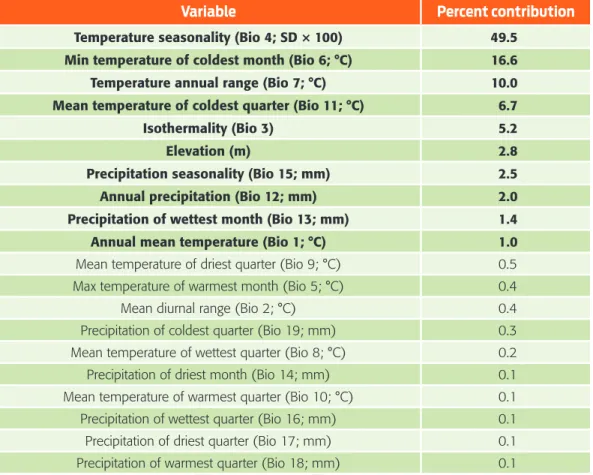
Table 1. Contributions of environmental variables used in the model of Desmodus rotundus in Mexico.
Variable Percent contribution
Temperature seasonality (Bio 4; SD × 100) 49.5
Min temperature of coldest month (Bio 6; °C) 16.6
Temperature annual range (Bio 7; °C) 10.0
Mean temperature of coldest quarter (Bio 11; °C) 6.7
Isothermality (Bio 3) 5.2
Elevation (m) 2.8
Precipitation seasonality (Bio 15; mm) 2.5
Annual precipitation (Bio 12; mm) 2.0
Precipitation of wettest month (Bio 13; mm) 1.4
Annual mean temperature (Bio 1; °C) 1.0
Mean temperature of driest quarter (Bio 9; °C) 0.5 Max temperature of warmest month (Bio 5; °C) 0.4 Mean diurnal range (Bio 2; °C) 0.4 Precipitation of coldest quarter (Bio 19; mm) 0.3 Mean temperature of wettest quarter (Bio 8; °C) 0.2 Precipitation of driest month (Bio 14; mm) 0.1 Mean temperature of warmest quarter (Bio 10; °C) 0.1 Precipitation of wettest quarter (Bio 16; mm) 0.1 Precipitation of driest quarter (Bio 17; mm) 0.1 Precipitation of warmest quarter (Bio 18; mm) 0.1 Note: Bold font indicates variables that contribute ≥ 1 % to the model.
An additional component in developing niche models is the mobility area (M). This area is frequently much larger than the actual distribution of the species in question.43 Therefore, the predictions represent hypotheses about conditions that are similar to those where the species has been observed. These conditions are likely to be among the existing fundamental niche and the niche occupied by the species.20 Because Desmodus rotundus has a wide dispersal capacity and infor-mation about the natural history is available, we considered the entire country of Mexico as our M in the models. Currently the species is not present in the northern states of Mexico such as Baja California, Sonora, Chihuahua and Coahuila.13,15 However, these areas represent a potential opportunity to be colonized, if they present suitable environmental conditions in the future.
Areas at risk of bovine paralytic rabies
Predicted areas were identified as high risk due to probability estimates of the potential occurrence of D. rotundus in the study area. We superimposed maps of current and future D. rotundus distributions with database records of bovine para-lytic rabies from Senasica27 to identify municipalities with potential risk of disease. We then input the layer of estimated number of free-ranging cattle from the Agri-cultural, Livestock and Forestry Census 2007,28 in each area to assess the potential extent of cattle susceptibility to the disease.
Results and discussion
Bovine paralytic rabies distribution
Bovine paralytic rabies remains a threat for livestock production in Latin America and Mexico where the vampire bat, Desmodus rotundus, is the main vector.4,11 From 2007 to 2015, 119 389 cases of bovine paralytic rabies were reported, of which 1 872 were confirmed, distributed in 477 municipalities in 25 Mexican states. States with the highest number of confirmed cases were Veracruz (342 confirmed cases, 25 923 reports), San Luis Potosi (211 confirmed cases, 2 624 reports), Yucatán (190 confirmed cases, 15 783 reports), Tabasco (181 confirmed cases, 16 132 reports), and Chiapas (127 confirmed cases, 13 181 reports). States with the lowest number of reported cases were the State of Mexico, Guanajuato and Baja California Sur. Municipalities with the greatest number of positive cases of bovine paralytic rabies in the same period were: Tierra Blanca (75) and Papantla (61) in Veracruz, Huimanguillo in Tabasco, Mapastepec (60) in Chiapas, and Can-delaria (60) in Campeche.
http://veterinariamexico.unam.mx 7/ 16 Climate change on bovine paralytic rabies in Mexico
DOI: http://dx.doi.org/10.21753/vmoa.4.3.390 Vol. 4 No. 3 July-September 2017 Original Research
figure1
350
200 250 300
150
100
50
0
Numbers of po
sitiv
e c
as
es
2007 2008 2009 2010 2011 2012 2013 2014 2105 Years
Figure 1. Annual number of cases of bovine paralytic rabies in Mexico, 2007–2015.
250
200
150
100
50
0
Numbers of po
sitiv
e c
as
es
Jan Feb Mar Apr May Jun Jul Aug Sep Oct Nov Dec Month
Figure 2. Number of monthly cases of bovine paralytic rabies in Mexico, 2007–2015.
within pastoral range-livestock production systems, to identify potential bovine par-alytic rabies risk areas.12
Current distribution of
Desmodus rotundus
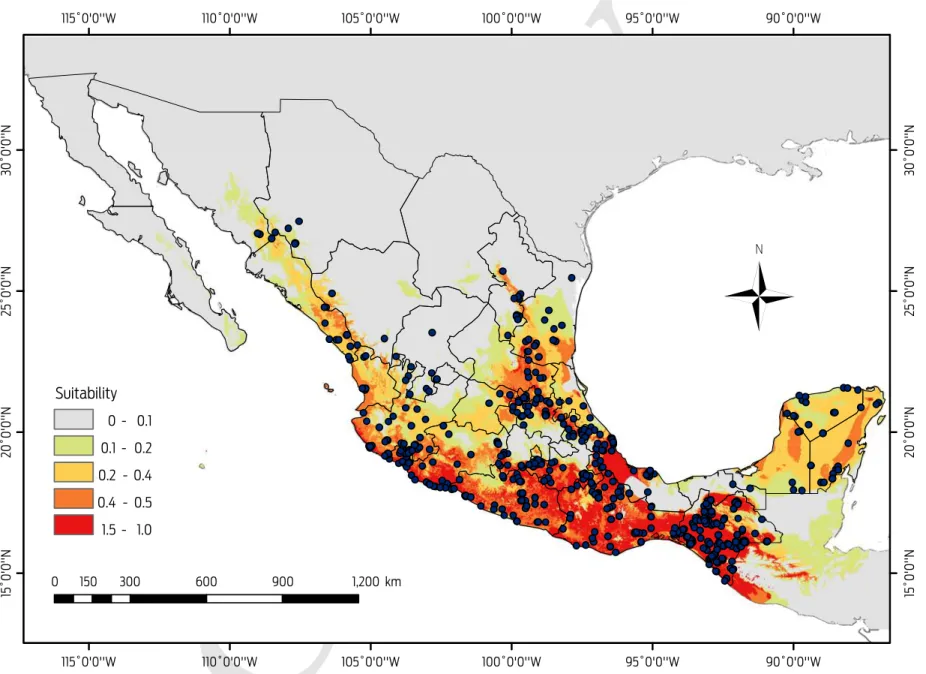
The current potential distribution of D. rotundus we generated from the 649 con-firmed records for the period 1980–2013, performed well and had good adjust-ment (AUCtest value of 0.95 ± 0.029) and a low rate of omission (P < 0.0002). The most important variables associated with the presence of D. rotundus (table 1) were temperature seasonality (49.5 %), followed by minimum temperature of coldest month (16.6 %) and annual temperature range (10 %). The areas identi-fied with a greater likelihood of the presence of D. rotundus maintain a temperature difference of less than 4 °C between the colder and warmer quarters, and both vari-ables had low values, indicating low variation in temperature throughout the year. Model prediction results for the current scenario indicate habitat suitability for
Desmodus rotundus covers an area of 834 965 km2 (Figure 3), and the areas with
the most appropriate conditions (probability > 0.49) are located along the coastal areas: The Pacific coast, from southern Sonora to the southwestern corner of the country, and the Gulf of Mexico coast, from central Tamaulipas to the Isthmus of Tehuantepec, Chiapas and the Yucatán Peninsula (Figure 3). Areas with a high probability of suitable conditions were primarily in the states of San Luis Potosi and Veracruz and in the southeastern region of the country. There were areas in the northern regions of the country, such as the states of Tamaulipas, Sonora and Sinaloa, in which D. rotundus are present in tropical and subtropical environments with warm temperatures that do not fluctuate more than 2 °C annually. However, the transformation of natural environments to grasslands for the development of the cattle industry, and the micro-climatic changes fostered by these disturbances have favoured the expansion of D. rotundus into other regions.12,15,44
Future distribution of
D. rotundus
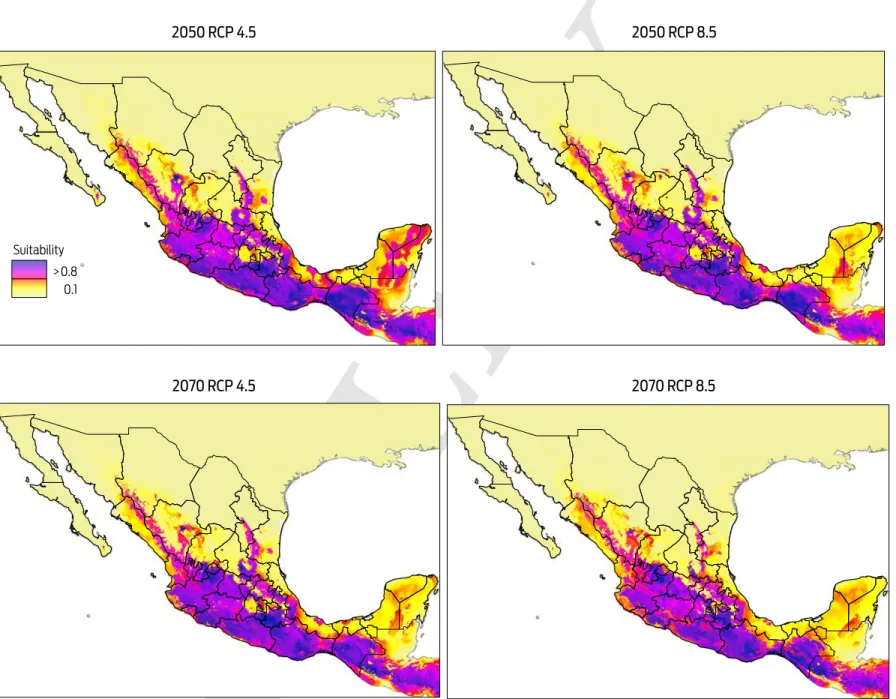
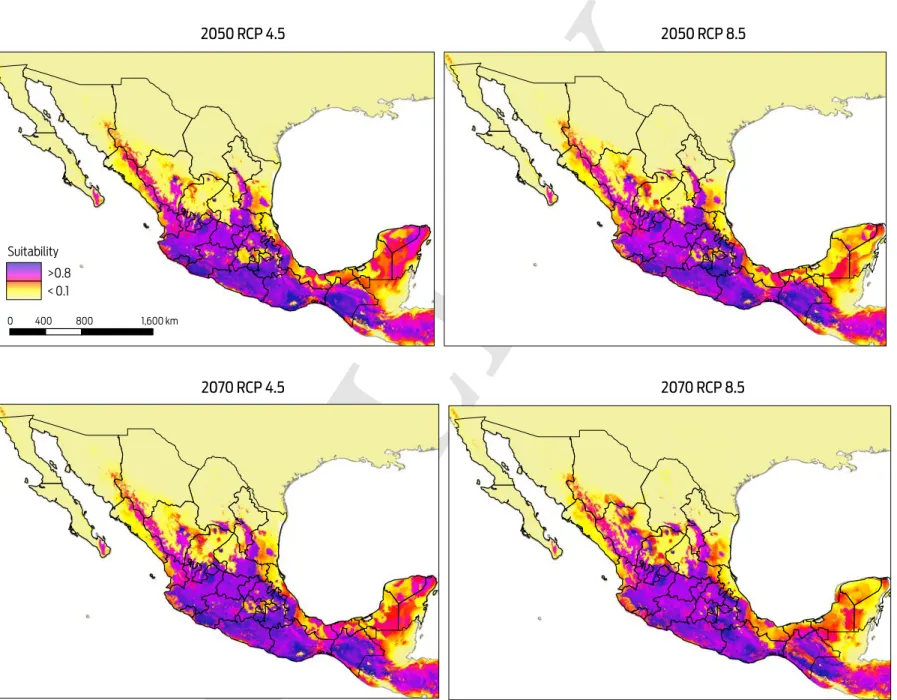
Predicted risk maps for the 2050 and 2070 climate scenarios show a reduction in potential distribution of Desmodus rotundus as previously identified in the current scenario. The best predictive model of D. rotundus distribution under each of the two GCMs, GFDL-CM3 and HadGEM2, had AUCtest values of 0.97 ± 0.02, indicat-ing a high predictive power for both models. Under a conservative scenario of RCP 4.5, the distribution models under both GCMs show a marked reduction of total area compared to the current values: a reduction of 20 % (170 317 km2) for the decade of 2050 and 28 % (233 989 km2) for the decade of 2070 (Figures 4, 5). A similar pattern was observed when the more development-intensive RCP 8.5 scenario was used: a reduction of 27 % (229 486 km2) for the decade of 2050 and 34 % (283 471 km2) for the decade of 2070 (Figures 4, 5). Comparison of the species distribution models revealed that with respect to the current geography, GFDL-CM3 GCM predicted reductions of 15 % and 33 % for both periods of time, whereas HadGEM2 predicted a reduction of 9 % and 12 % for 2050 and 2070, respectively.
Original Research
http://www.revistas.unam.mx/index.php/Veterinaria-Mexico 9/
16 Climate change on bovine paralytic rabies in Mexico
DOI: http://dx.doi.org/10.21753/vmoa.4.3.390 Vol. 4 No. 3 July-September 2017
figure3
Suitability 0 - 0.1 0.1 - 0.2 0.2 - 0.4 0.4 - 0.5 1.5 - 1.0
0 150 300 600 900 1,200
N
km
115˚0'0''W 110˚0'0''W 105˚0'0''W 100˚0'0''W 95˚0'0''W 90˚0'0''W
115˚0'0''W 110˚0'0''W 105˚0'0''W 100˚0'0''W 95˚0'0''W 90˚0'0''W
15˚0'0''N
20˚0'0''N
25˚0'0''N
30˚0'0''N
15˚0'0''N
20˚0'0''N
25˚0'0''N
30˚0'0''N
2
figure4
Suitability
gfdl85_70
Value
High : 0.761604
Low : 3.0457e-005
0
400
800
1,600
km
> 0.8 0.1
2050 RCP 4.5 2050 RCP 8.5
2070 RCP 4.5 2070 RCP 8.5
Suitability
Original Research
http://www.revistas.unam.mx/index.php/Veterinaria-Mexico 11/
16 Climate change on bovine paralytic rabies in Mexico
DOI: http://dx.doi.org/10.21753/vmoa.4.3.390 Vol. 4 No. 3 July-September 2017
hadgem85_70
Value
High : 0.754737
Low : 2.53529e-005
0
400
800
1,600
km
> 0.8 < 0.1
2050 RCP 4.5 2050 RCP 8.5
2070 RCP 4.5 2070 RCP 8.5
Suitability
0 400 800 1,600 km
Figure 5. Modelled suitability for future distribution of Desmodus rotundus according to Global Climate Model HadGEM2 for two time periods (2050 and 2070), and two Representative Concentration Pathways (RCP 4.5 and 8.5). Left-hand column shows suitability values, with blue indicating more suitable conditions.
areas where D. rotundus is currently absent, including central Mexico, Coahuila, Baja California, western Sonora, and northern Chihuahua. Under all IPCC climate change scenarios analyzed, D. rotundus expanded its range into the northwest of the country, occupying new areas in the states of Sonora, Sinaloa, Zacatecas, Aguascalientes, and Guanajuato, the northeast regions of Mexico in the states of Coahuila, Nuevo León and San Luis Potosi, and the Central Mexican Plateau, prin-cipally the states of Mexico, Puebla and Hidalgo.8,12 In contrast, the reduction in distribution occurred primarily in the southeastern portion of the country, notably in the Gulf Coastal Plain in southern Veracruz, Tabasco, southwestern Campeche, and the Yucatán Peninsula (Figures 4, 5).
It is important to note that while there may be some shift in the geographic patterns of the distribution of D. rotundus under future climate change scenarios, these changes are not significant on a nation-wide scale, and the species will con-tinue to be located primarily in tropical and subtropical regions of the country.12,15 However, an increase in the suitable area for other vectors of the rabies disease and other biotic factors driving the dynamics of the disease, such as shelter and food availability and biological corridors, may contribute to an increased risk of the disease.15,44,45
Our results indicate significant changes in the pattern of distribution and in-cidence of bovine paralytic rabies in Mexico. The highest risk for bovine paralytic rabies occurs in the dry season (April and May). This pattern is consistent with reports of a spike in the number of rabies cases in Brazil, Colombia and Costa Rica during the dry season.46,47 We identified temperature as a principal determinant in the distribution of D. rotundus; it affects the spread of the rabies disease among tropical and semi-tropical environments and, the likelihood of its spread into more temperate areas that may experience increased temperature. We estimate that more than 600 000 head of cattle in Mexico could be exposed to bovine paralytic rabies virus by 2050–2070, according to the current number of free-ranging cat-tle from the Agricultural, Livestock and Forestry Census 2007.28 Nevertheless, an increase of suitable areas for other vectors of the rabies disease and other biotic factors driving the dynamics of the disease, such as shelter and food availability and biological corridors, may contribute to the increased risk of the disease.8,44,48 This number is likely an underestimation because the cattle population is likely to exceed the values reported by the 2007 census that were used in the model and because of the ongoing and projected conversion of natural ecosystems to grazing land to accommodate livestock production.
Conclusions
http://veterinariamexico.unam.mx 13/ 16 Climate change on bovine paralytic rabies in Mexico
DOI: http://dx.doi.org/10.21753/vmoa.4.3.390 Vol. 4 No. 3 July-September 2017 Original Research
habitat overlap is a serious threat to the industry because of the likely increased incidence of bovine paralytic rabies. It is necessary to identify strategies, such as strengthening the National Epidemiological Surveillance System and monitoring programmes, to effectively maximize resources to address this challenge. These programmes will also benefit community health by reducing the probability of hu-man rabies infections spread through vampire bat bites.
Funding
H. Zarza was supported during his Ph.D. studies by a fellowship (103123) from the Consejo Nacional de Ciencia y Tecnología (Mexico).
Acknowledgements
This paper constitutes a partial fulfilment towards Heliot Zarza’s doctoral degree in the “Programa de Doctorado en Ciencias Biológicas, Universidad Nacional Autóno-ma de México”. We would like to thank José F. González-Maya and Andrés Arias-Al-zate for support, review and insightful comments about the manuscript. Finally, we are indebted to Ronald Bjorkland for his support in reviewing and editing the manuscript.
Conflicts of interest
The authors declare they have no conflict of interest.
Author contributions
Heliot Zarza: designed the research, conducted the experiments, analysed the data, and wrote the manuscript.
Gerardo Suzán: designed the research, analysed the data, and revised the manuscript. Enrique Martínez-Meyer: designed the research and analysed the data.
Gerardo Ceballos: designed the research, analysed the data, and edited the manuscript.
References
1. Acha P, Szyfres B. Zoonosis y enfermedades transmisibles comunes al hombre y a los animales: clamidiosis, rickettsiosis y virosis. 3rd ed. Lima (PE):
Organi-zación Panemerica de la Salud; 2003.
2. Johnson N, Vos A, Freuling C, Tordo N, Fooks AR, Muller T. Human rabies due to lyssavirus infection of bat origin. Vet Microbiol. 2010;142(3-4):151-9. doi: 10.1016/j.vetmic.2010.02.001.
3. Velasco-Villa A, Orciari LA, Juarez-Islas V, Gomez-Sierra M, Padilla-Medina I, Fliss-er A, et al. Molecular divFliss-ersity of rabies viruses associated with bats in Mexico and other countries of the Americas. J Clin Microbiol. 2006;44(5):1697-710. doi: 10.1128/JCM.44.5.1697-1710.2006.
4. Constantine DG. Bat rabies and other lyssavirus infections. Reston VA (US): U. S. Geological Survey; 2009.
5. Heymann DL. El control de las enfermedades transmisibles. 18th ed. Washing-ton DC (USA): Organización Panemericana de la Salud; 2005.
7. Belotto A, Leanes LF, Schneider MC, Tamayo H, Correa E. Overview of rabies in the Americas. Virus Res. 2005;111(1):5-12. doi: 10.1016/j.virusres.2005.03.006. 8. Lee DN, Papes M, Van den Bussche RA. Present and potential future distribution
of common vampire bats in the Americas and the associated risk to cattle. PLoS One. 2012;7(8):e42466. doi: 10.1371/journal.pone.0042466.
9. Schneider MC, Romijn PC, Uieda W, Tamayo H, da Silva DF, Belotto A, et al. Rabies transmitted by vampire bats to humans. Rev Panam Salud Pública. 2009;25(3):260-9. doi: 10.1590/S1020-49892009000300010.
10. Organización Panamericana de la Salud / Organización Mundial de Salud. Vig-ilancia epidemiológica de la rabia en las Américas. Rio de Janeiro (BR)2004. 11. Anderson A, Shwiff S, Gebhardt K, Ramirez AJ, Shwiff S, Kohler D, et al. Econom-ic evaluation of vampire bat (Desmodus rotundus) rabies prevention in MexEconom-ico. Transbound Emerg Dis. 2012;61(2):140-6. doi: 10.1111/tbed.12007.
12. Bárcenas-Reyes I, Loza-Rubio E, Zendejas-Martínez H, Luna-Soria H, Cantó-Alarcón GJ, Milián-Suazo F. Comportamiento epidemiológico de la rabia paralíti-ca bovina en la región central de México, 2001–2013. Rev Panam Salud Publica. 2015;38(5).
13. Servicio Nacional de Sanidad Inocuidad y Calidad Agroalimentaria. Cam-paña Nacional para la prevención y control de la rabia en bovinos y espe-cies ganaderas. Mexico.2016 [Available from: https://www.gob.mx/senasica/ acciones-y-programas/campana-nacional-para-la-prevencion-y-control-de-la-ra-bia-en-bovinos-y-especies-ganaderas].
14. Greenhall AM, Joermann G, Schmidt U. Desmodus rotundus. Mammalian Spe-cies. 1983;202:1-6.
15. Barquez R, Pérez S, Miller B, Díaz M. Desmodus rotundus: IUCN: International Union for Conservation of Nature; 2012 [Available from: www.iucn.org]. 16. Greenhall AM, Schmidt U. Natural history of vampire bats. Florida: CRC Press,
Inc.; 1988.
17. Ávila-Flores R, Medellín RA. Ecological, taxonomic, and physiological correlates of cave use by mexican bats. J Mammal. 2004;85:675-87
18. Villa-R B. Los murciélagos de México. Mexico City (MX): Universidad Nacional Autónoma de México; 1966.
19. George DB, Webb CT, Farnsworth ML, O’Shea TJ, Bowen RA, Smith DL, et al. Host and viral ecology determine bat rabies seasonality and maintenance. Proc Natl Acad Sci U S A. 2011;108(25):10208-13. doi: 10.1073/pnas.1010875108. 20. Peterson AT, Soberón J, Pearson RG, Anderson RP, Martínez-Meyer E, Nakamura
M, et al. Ecological niches and geographic distributions. Princeton, New Jersey (US): Princeton University Press; 2011.
21. Soberon J. Grinnellian and Eltonian niches and geographic distributions of spe-cies. Ecol Lett. 2007;10(12):1115-23. doi: 10.1111/j.1461-0248.2007.01107.x. 22. Guisan A, Tingley R, Baumgartner JB, Naujokaitis-Lewis I, Sutcliffe PR, Tulloch
AI, et al. Predicting species distributions for conservation decisions. Ecol Lett. 2013;16(12):1424-35. doi: 10.1111/ele.12189.
23. Hutchinson GE. An introduction to population ecology. New Haven (US): Yale University Press; 1978. p. 271.
24. Grinnell J. The niche-relationships of the California Thrasher. The Auk. 1917;34:427-33.
http://veterinariamexico.unam.mx 15/ 16 Climate change on bovine paralytic rabies in Mexico
DOI: http://dx.doi.org/10.21753/vmoa.4.3.390 Vol. 4 No. 3 July-September 2017 Original Research
26. GBIF Occurrence Download [Internet]. 2017 [cited 19 May]. Available from:
http://www.gbif.org/.
27. México: Informes semanales sobre enfermedades y plagas de re-porte obligatorio inmediato. [Internet]. 2016 [cited 8 February 2015]. Available from: http://www.gob.mx/senasica/acciones-y-programas/ sistema-nacional-de-vigilancia-epidemiologica-sive.
28. Censo agropecuario 2007. VIII Censo agrícola, ganadero y forestal [Internet]. 2009. Available from: http://www.inegi.org.mx/est/contenidos/proyectos/ Agro/ca2007/Resultados_Agricola/default.aspx.
29. Hijmans RJ, Cameron SE, Parra JL, Jones PG, Jarvis A. Very high resolution inter-polated climate surfaces for global land areas. Int J Climatol. 2005;25(15):1965-78. doi: 10.1002/joc.1276.
30. Instituto Nacional de Estadística y Geografía. Modelo Digital de Elevación. Mexico (MX).2009 [Available from: http://www.inegi.org.mx/geo/contenidos/ datosrelieve/continental/].
31. Environmental Systems Research Institute. ArcGIS. 9.3 ed. California2009. 32. Pachauri RK, Meyer LA. Climate change 2014: Synthesis report. Contribution
of working groups I, II and III to the fifth assessment report of the Intergovern-mental Panel on Climate Change. Geneva (CH): IntergovernIntergovern-mental Panel on Climate Change; 2014.
33. Phillips SJ, Anderson RP, Schapire RE. Maximum entropy modeling of species geographic distributions. Ecol Modell. 2006;190(3-4):231-59. doi: 10.1016/j. ecolmodel.2005.03.026.
34. Phillips SJ, Dudík M. Modeling of species distributions with Maxent: new ex-tensions and a comprehensive evaluation. Ecography. 2008;31:161-75. doi: 10.1111/j.2007.0906-7590.05203.x.
35. Elith J, Graham CH, Anderson RP, Dudík M, Ferrier S, Guisan A, et al. Nov-el methods improve prediction of species’ distributions from occurrence data. Ecography. 2006;29:129-51.
36. Elith J, Phillips SJ, Hastie T, Dudík M, Chee YE, Yates CJ. A statistical expla-nation of MaxEnt for ecologists. Divers Distrib. 2011;17(1):43-57. doi: 10.1111/j.1472-4642.2010.00725.x.
37. Santika T. Assessing the effect of prevalence on the predictive performance of species distribution models using simulated data. Glob Ecol Biogeogr. 2011;20(1):181-92. doi: 10.1111/j.1466-8238.2010.00581.x.
38. Muscarella R, Galante PJ, Soley-Guardia M, Boria RA, Kass JM, Uriarte M, et al. ENMeval: An R package for conducting spatially independent evaluations and estimating optimal model complexity forMaxentecological niche models. Methods Ecol Evol. 2014;5(11):1198-205. doi: 10.1111/2041-210x.12261. 39. Lobo JM, Jiménez-Valverde A, Real R. AUC: a misleading measure of the perfor-mance of predictive distribution models. Glob Ecol Biogeogr. 2007;17:145-51. 40. Lobo JM, Tognelli MF. Exploring the effects of quantity and location of pseu-do-absences and sampling biases on the performance of distribution mod-els with limited point occurrence data. J Nat Conserv. 2011;19(1):1-7. doi: 10.1016/j.jnc.2010.03.002.
42. Jiménez-Valverde A, Lobo JM. Threshold criteria for conversion of probability of species presence to either–or presence–absence. Acta Oecol. 2007;31(3):361-9. doi: 10.1016/j.actao.2007.02.001.
43. Barve N, Barve V, Jiménez-Valverde A, Lira-Noriega A, Maher SP, Peterson AT, et al. The crucial role of the accessible area in ecological niche modeling and spe-cies distribution modeling. Ecol Modell. 2011;222(11):1810-9. doi: 10.1016/j. ecolmodel.2011.02.011.
44. de Andrade FA, Gomes MN, Uieda W, Begot AL, Ramos Ode S, Fernandes ME. Geographical analysis for detecting high-risk areas for bovine/human ra-bies transmitted by the common hematophagous bat in the amazon region, Brazil. PLoS One. 2016;11(7):e0157332. doi: 10.1371/journal.pone.0157332. 45. de Thoisy B, Bourhy H, Delaval M, Pontier D, Dacheux L, Darcissac E, et al. Bio-ecological drivers of rabies virus circulation in a neotropical bat community. PLoS Negl Trop Dis. 2016;10(1):e0004378. doi: 10.1371/journal.pntd.0004378. 46. Delpietro HA, Marchevsky N, Simonetti E. Relative population densities and
predation of the common vampire bat (Desmodus rotundus) in natural and cattle-raising areas in north-east Argentina. Prev Vet Med. 1992;14:13-20. 47. Moya MI, Pacheco LF, Aguirre LF. Relación de los ataques de Desmodus rotun-dus con el manejo del ganado caprino y algunas características del hábitat en la prepuna de Bolivia. Mastozool Neotrop. 2015;22:73-84.