Evolution of hepatitis B virus during
long-term therapy in patients with chronic hepatitis B
(
¨
)
Elisabete Arrese,* Miren Basaras,* Sonia Blanco,** Pablo Ruiz,** Ramón Cisterna*,***
* Department of Immunology, Microbiology and Parasitology, Medicine and Odontology Faculty, University of Basque Country (UPV/EHU), Sarriena Auzoa, 48940 Leioa-Bizkaia, Spain. ** Digestive Service, Basurto Hospital, 18 Montevideo etorbidea, 48013, Bilbao, Bizkaia, Spain.
*** Microbiology and Infection Control Service. Basurto Hospital, 18 Montevideo etorbidea, 48013, Bilbao, Bizkaia, Spain.
ABSTRACT
Background. Long-term lamivudine (LAM), adefovir (ADV) and entecavir (ETV) treatment induce the emer-gence of drug-resistant hepatitis B virus (HBV) in patients with chronic hepatitis B infection. Aim. To eva-luate the LAM, ADV and ETV resistance mutations detected in our patient group. Materials and methods.
Twenty patients who had received at least two years of treatment with nucleoside/tide analogues were enrolled in this study. Patients with detectable HBV DNA were analyzed in order to detect resistance mu-tations and in this group of patients treatment was change. Results. Three patients developed LAM resis-tance mutations (2 presented rtM204I and one rtL180M+rtM204V/I) and one patient showed rtN236T ADV resistance mutation. During ADV and LAM treatment, one patient developed ADV plus LAM resistance mu-tations (rtI163V+rtL180M+rtA181V+rtN236T), in this case, HBV strains harbouring polymerase mumu-tations did not develop LAM associated rtM204V/I primary mutation. In addition, ETV resistance mutations (rtL180M+rtT184A+rtS202G+rtM204V) were detected in one patient. Conclusions. These findings suggest that monotherapy resulted in a limited virological response and combination strategies including potent antiviral agents should be recommended for patients with resistant mutations.
Key words. ETV. LAM. ADV. Mutations. Resistance.
INTRODUCTION
Chronic hepatitis B virus (HBV) infection leads to long-term sequel such as chronic liver disease, ci-rrhosis and hepatocellular carcinoma.1,2 The goals
of therapy in patients with chronic HBV are sustai-ned in DNA suppression, normalization of serum aminotransferase levels, and improvement in liver necroinflammation. In recent years, treatment of chronic HBV has been improved, with the
availabili-ty of nucleoside/tide analogues, such as lamivudine (LAM), adefovir (ADV), telbivudine (TBV), entecavir (ETV) and tenofovir (TDF).3,4 Nucleoside/tide
analo-gues target the HBV reverse transcriptase, thus in-hibiting viral replication and leading to virologic, biochemical and histological improvement in most patients.5,6
However, prolonged therapy with nucleoside/tide analogues often results in the selection of mutations in the target gene, which confer drug-resistance and treatment failure.7 To detect drug-resistance
muta-tions the direct sequencing of the viral pol gene is the most useful method, which allows the identification of all substitutions, including novel, primary and se-condary or compensatory mutations. Thus, early de-tection of antiviral resistant mutants is of clinical importance for choosing new treatment strategies.8
The present study evaluated the antiviral efficacy and emergence of resistance in patients with chronic hepatitis B who showed evidence of resistance du-ring prolonged therapy with nucleoside/tide analo-gues and underwent to changing treatment.
( ¨) Supported by University of Basque Country (EHU06/13).
Correspondence and reprint request: Dr. Elisabete Arrese
Professor of Pharmacy
Department of Immunology, Microbiology and Parasitology, Pharmacy Faculty University of Basque Country (UPV/EHU)
Unibertsitateko Ibilbidea, 7 01006 Vitoria-Gasteiz, Spain
Tel.: +34 94501-3911. Fax +34 94501-3014 E-mail: [email protected]
MATERIALS AND METHODS
Samples from twenty patients with chronic hepa-titis B, undergoing treatment with nucleoside/tide analogues for at least two years, were analyzed. Pa-tients proceeded from Basurto Hospital in Basque Country, North of Spain. For therapy monitoring purposes, samples were tested for genotype, HBV DNA levels and HBV drug-resistance.
Serum HBV DNA was extracted by QIAamp DNA Blood Mini Kit (Qiagen, Hilden, Germany) and HBV genotype was determined by commercially INNO-LiPA HBV Genotyping assay (Innogenetics N.V., Ghent, Belgium).
HBV DNA extraction and real-time PCR quantifi-cation from serum was determined by the fully auto-matic system COBAS Ampli-Prep-COBAS TaqMan (Roche Diagnostics, Germany). Virologic breakthrough was defined as a confirmed rise in HBV DNA levels, and confirmed HBV DNA rises were those in which the next treatment visit also had rice in HBV DNA levels from the nadir.
The sequencing of the HBV pol gene was perfor-med on plasma samples as follows. Extracted HBV DNA was amplified with AmpliTaq Gold™ DNA po-lymerase enzyme (Applied Biosystems) using the fo-llowing primer pairs:9
• 5’-GGATGTGTCTGCGGCGTTT-3’. • 5’-ACCCCATCTCTTTGTTTTGTTAGG-3’.
PCR conditions were:
• One cycle at 94 oC for 10 min.
• 40 cycles (94 oC, 30 s; 55 oC, 30 s; 72 oC, 40 s).
• A final cycle at 72 oC for 10 min).
The PCR product of 486-bp was visible after aga-rose gel electrophoresis and was purified (Qiagen “QIAquick® PCR Purification kit”) prior to cycle sequencing with a BigDye terminator v.3.1 kit (Applied Biosystems) and an automated sequencer (ABI-3100). Sequencer software (BLAST) was used to align the sequences to determine changes that emerged during therapy. The sequences were also compared to those in database genomes from Gen Bank reference sequences.
RESULTS
Viral genotype was determined showing the pre-sence of genotype D in eleven (55%) patients, geno-type A in seven (35%) patients, genogeno-type C in one
(5%) case, and one patient presented two genotypes A + F (5%).
Among the 20 patients in treatment with nu-cleoside/tide analogues, HBV DNA was not detected (< 1.08 log copies/mL) in 13 patients (53%) after prolonged therapy. Seven patients (35%) had a de-tectable level of HBV DNA, six patients showed ge-notype D and one gege-notype A, and samples from these patients were sequenced. With the direct se-quencing, six patients showed mutations in the HBV polymerase gene, while one carried wild type se-quence (Table 1).
In addition to the primary mutations known to confer resistance to LAM, ADV and ETV, emerging HBV reverse transcriptase (RT) substitutions, ab-sent from an assembled database of wild type HBV, were found in patients with evidence of resistance.
Patient 1 was previously treated with LAM for eight months, developed LAM resistance (rtM204V+rtL180M) despite good compliance. ADV monotherapy was started, and the viral load drop-ped rapidly with restoration of YMDD wild type. After 21 months of ADV therapy, ADV resistance (rtA181V+rtN236T) resulted in viral breakthrough. ADV was replaced by ETV resulting in a significant drop in viral load, but after 11 months of therapy, resistance mutations (rtM204V+rtL180M+ rtT184A+rtS202G) resulted in viral breakthrough.
Patient 4, after 17 month of ADV therapy, ADV resistance (rtN236T) resulted in viral breakthrough. LAM was added to ADV, however, after 29 months of therapy resistance mutations to both ADV and LAM (rtI163V+rtL180M+rtA181V+rtN236T) deve-loped with hepatitis B flare-up. In this patient, HBV strains harbouring polymerase mutations did not develop LAM associated rtM204V/I primary muta-tion.
Table 1. Virological data for the seven patients with positive viral load samples in whom resistance-related variations were detected by direct sequencing.
Patient Genotype HBeAg Baseline HBV Antiviral Treatment Mutation by direct sequencing anti-HBe HBV DNA treatment duration RT substitution**
DNA level1 level* (month)
1 D HBeAg > 5.3 > 5.3 LAM 8 L180M + M204V HBeAg 4.34 ADV 21 A181V + N236T HBeAg 6.47 ETV 11 L180M + T184A + S202G + M204V
2 D anti-HBe 4.98 4.1 LAM 10 L180M + M204V/I anti-HBe < 1.08 LAM+ADV 3
anti-HBe < 1.08 45
3 A anti-HBe > 5.3 3.39 LAM 21 I187L + A200V + M204I anti-HBe < 1.08 LAM+ADV 3
anti-HBe < 1.08 30
4 D anti-HBe > 5.3 4.84 ADV 17 N236T anti-HBe < 1.08 ADV+LAM 2
anti-HBe 2.39 29 I163V + L180M + A181V + N236T
5 D anti-HBe 5.3 1.48 ADV 36 A181V + Q215S anti-HBe < 1.08 ADV+LAM 3
anti-HBe < 1.08 28
6 D anti-HBe 5.32 2.6 LAM 18 M204I + Q215S anti-HBe < 1.08 LAM+ADV 3
anti-HBe < 1.08 18
7 D HBeAg 8.74 2.61 ADV 46 Wild type anti-HBe
*log copies/mL. **Known resistance mutations are in bold.
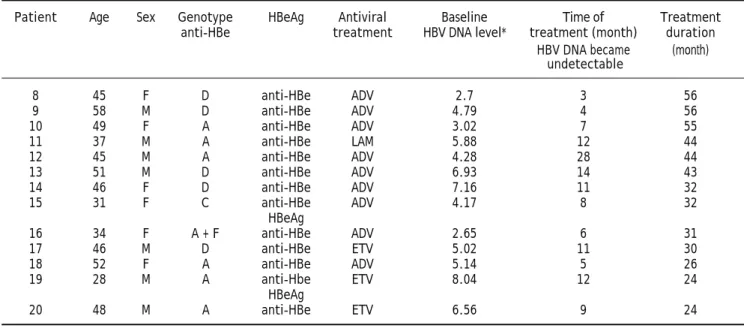
Table 2. Characteristics of patients with undetectable HBV DNA serum samples (< 1.08 log copies/mL).
Patient Age Sex Genotype HBeAg Antiviral Baseline Time of Treatment anti-HBe treatment HBV DNA level* treatment (month) duration
HBV DNA became (month)
undetectable
8 45 F D anti-HBe ADV 2.7 3 56
9 58 M D anti-HBe ADV 4.79 4 56
10 49 F A anti-HBe ADV 3.02 7 55
11 37 M A anti-HBe LAM 5.88 12 44
12 45 M A anti-HBe ADV 4.28 28 44
13 51 M D anti-HBe ADV 6.93 14 43
14 46 F D anti-HBe ADV 7.16 11 32
15 31 F C anti-HBe ADV 4.17 8 32
HBeAg
16 34 F A + F anti-HBe ADV 2.65 6 31
17 46 M D anti-HBe ETV 5.02 11 30
18 52 F A anti-HBe ADV 5.14 5 26
19 28 M A anti-Hbe ETV 8.04 12 24
HBeAg
20 48 M A anti-HBe ETV 6.56 9 24
patient presented undetectable viral load (< 1.08 co-pies/mL). Patient 5 presented mutations conferring resistance to ADV (rtA181V+rtQ215S), after of 36 months of ADV monotherapy treatment. LAM was added and after 28 months of ADV plus LAM combi-nation therapy patient remained viremic undetecta-ble. Patient 6 had received LAM for 18 months before viral breakthrough occurred, at this time, re-sistant mutations to LAM (rtM204I+rtQ215S) were detected. LAM was continued and ADV was added. Serum HBV DNA levels decreased and 18 months af-ter therapy, this patient had undetectable serum HBV DNA (< 1.08 copies/mL).
The only patient (patient 7) who did not clear HBV DNA after 46 months of therapy presented wild type strain of HBV confirmed by direct sequence. Serum HBV DNA levels from this patient with per-sistent viremia continued to decline progressively.
The characteristics of the study population with undetectable viral load are shown in table 2. Serum HBV DNA became undetectable in 13 patients after a long-term (24 to 56 months) monotherapy treat-ment (nine with ADV, three with ETV and one with LAM). Among these 13 patients, five showed genoty-pe D, six genotygenoty-pe A, one genotygenoty-pe C and another one A+F.
DISCUSSION
Nucleoside/tide analogues have revolutionized the treatment of chronic HBV infection because sustai-ned suppression of HBV replication and a remission of liver disease. However, long-term therapy is asso-ciated with selection of HBV polymerase mutants and emergence of resistance.10-12
Many published data showed that the appearance of resistance mutations may precede the increase in viral load and could be a prognostic marker of viral breakthrough.13,14 Therefore, all patients receiving
nucleoside/tide analogues therapy for HBV should be closely monitored for virology response and breakthrough during treatment to maximize the success of early therapeutic changes in failed pa-tients. Serum HBV DNA should be tested prior to treatment and then every 3 months during treat-ment.15 In this context, the direct sequencing
me-thod, which is able to detect HBV pol mutations, would allow the identification of patients who deve-lop genotypic resistance early during their treat-ment, enabling early intervention and prevention of treatment failure.
To date, insufficient information on the molecular epidemiology of HBV in Basque Country was
availa-ble and only few HBV were analyzed from patients with chronic hepatitis B in this country. This study showed the main prevalence of HBV genotype D (55%) followed by genotype A (35%). Genotype C de-tected as minority genotype was found exclusively among a Chinese immigrant and in our study one Colombian patient showed A+F genotypes. These findings are in accordance to the geographical dis-tribution of genotypes D and A in Europe, especially in the western part of Europe.16,17 In conclusion, the
most common HBV genotypes in Basque Country are D and A, in addition, this study reveals the cir-culating of exotic HBV genotypes C and F in Basque Country.
In contrast with other authors, LAM drug-resis-tance isolates were observed among 50% of HBV ge-notype A and 100% of HBV gege-notype D after one year therapy.16,18 In our study, two patients with
ge-notype D developed mutations conferring resistance to ADV before two years of therapy. In contrast, re were four patients with genotype D and ADV the-rapy with undetectable viral load after two years of treatment.
Combination therapy of LAM plus ADV has been shown to be associated with lower rates of virologic breakthrough compared to LAM or ADV monothe-rapy, but resistance was not completely preven-ted.15,19 In this study, we demonstrated that among
patients with LAM plus ADV therapy resistant HBV conferring resistance to both antiviral agents could be detected.
As it is described, LAM resistance patients with ADV monotherapy or ADV plus LAM suppress viral replication during the first year of treatment.20 We
found that combination therapy with ADV plus LAM can maintain virological remission for at least two years in patients with LAM resistance. In con-trast, in one LAM resistance patient who had been treated with ADV monotherapy, mutation confe-rring resistance to ADV appeared before two years of treatment. As recent study reported,21 our study
shows that adding ADV to LAM is more effective than switching to monotherapy in patients with re-sistant mutations. In addition, ADV plus LAM com-bination is well tolerated and prevents the emergence of resistance, although not entirely. The-refore, it represents the treatment of choice in nu-cleoside/tide analogue resistant patients.22
The different preceding nucleoside/tide analogues treatment strategies, depends on the level of HBV DNA at the time of treatment modification.23,24 In
LAM resistant patients with HBV DNA > 106-108
undetecta-ble levels by adding ADV is low.13 In our case we
detected mutations conferring resistance at early stage, so they presented low viral loads at the res-cue therapy. In contrast, in patient 1 with LAM re-sistance mutations, the treatment was switched to ADV monotherapy, resistance to ADV emerged be-fore 21 months of therapy, in this case baseline HBV DNA level was high and it is possible that the higher viral load attenuated the effectiveness of ADV.
Previous reports described the primary drug-resis-tant mutations cause an amino acid substitution in the polymerase that result in reduced susceptibility to nucleoside/tide analogues while secondary compen-satory mutations cause amino acid substitutions that restore the polymerase activity. As described, prima-ry LAM resistance associated changes occur at codon 204 and result in amino acid changes rtM204V/I/S. The most common compensatory mutation associated with LAM resistance, rtL180M restores replication fitness of HBV polymerase that harbours the rtM204V/I/S mutation.15,25,26 Since LAM is effective
against ADV resistant HBV mutants, we introduced LAM therapy in two patients. One of these patients showed a significant decrease in HBV DNA levels; however, the other patient whose baseline HBV DNA was higher, did not respond and developed rtI163V+rtL180M+rtA181V+rtN236T mutations which confer resistance to ADV and developed secon-dary mutation to LAM. The rtL180M mutation alone does not confer resistance to LAM.25 In this case
by direct sequencing, we did not detect the presen-ce of rtM204V/I/S resistanpresen-ce mutation. It is supposed that rtL180M is compensatory or secondary muta-tion, but in our case the presence was previous to rtM204V/I/S.
In patients with primary ADV resistance muta-tion, isolates of HBV with the rtN236T change are susceptible to LAM while isolates with rtA181T/V changes have decreased susceptibility to LAM.15 By
contrast, in our study group of patients with previous ADV resistant mutations LAM was added and a patient (Patient 4) who had rtN236T mutation developed earlier resistant mutation to LAM, than patient (Patient 5) who had rtA181V resistant mu-tation.
Moreover, the results indicate that direct sequen-cing is suitable for the detection of mutations at the very early signs of treatment failure and in addition this method is suitable for the identification of drug-resistance mutations, as well as those that are no-vel, and require further investigations to determine their significance.
The rtQ215S mutation has been widely described as a secondary mutation for ADV and LAM27,28 but other
study reveals that rtQ215S substitutions in the poly-merase frequently occur in chronic hepatitis B pa-tients, even without exogenous selection pressures.29
We found that the genotype D associated rtQ215S is present in two patients one in LAM failed patient and the other with ADV resistance, in both patients rtQ215S mutation was an additional mutation to a primary mutation. However, further investigations need to evaluate if the combination with primary resis-tances impacts the replication capacity or drug suscep-tibility of these viral strains.30,31 One limitation of this
study is the unavailability of prior treatment samples, thus we cannot totally exclude that some amino-acid variants analyzed might have been already present be-fore the beginning of treatment.
Sequential antiviral therapy leads to selection of resistant HBV and evolution of mutations may se-lect for mutants with increased replication or maxi-mal viral resistance. In this study, LAM resistant HBV mutation was no detected in patient 1 by di-rect sequence analysis 21 months after LAM was stopped. Nevertheless, LAM resistant mutations re-merged within 11 months after introduction of ETV. Persistence of LAM resistant mutations in patients who are switched to ETV is worrisome because re-sistance to ETV is greatly enhanced in the presence of LAM resistant mutations.20 Our finding raises
concerns about the long-term efficacy of ETV in pa-tients with LAM resistant HBV. It has been de-monstrated that the baseline presence of rtM204V+rtL180M favours the appearance of muta-tions associated with ETV resistance at position 184 and 202,32-35 this is consistent with our study.
The recent introduction of more efficacious drugs, together with a better understanding of the activi-ties of drug combinations, suggests that, in future, the careful design of combination strategies should lead to improved outcomes, particularly with respect to long-term viral suppression and consequent mini-mization of drug-resistance.
CONCLUSION
REFERENCES
1. Iloeje UH, Yang HI, Su J, Jen CL, You SL, Chen CJ. Risk evaluation of viral load elevation and associated liver disease/cancer-in HBV (the REVEAL-HBV) study group. Predicting cirrhosis risk based on the level of circula-ting hepatitis B virus load. Gastroenterology 2006; 130: 678-86.
2. Rizzetto M, Ciancio A. Chronic HBV-related liver disease. Mol Aspects Med 2008; 29: 72-84.
3. Marcellin P, Chang TT, Lim SG, Tong MJ, Sievert W, Shiff-man ML, Jeffers L, et al. Adefovir dipivoxil for the treat-ment of hepatitis B e antigen-positive chronic hepatitis B. N Engl J Med 2003; 348: 808-16.
4. Lai CL, Lao J, Van Vlierberghe H, Anderson FH, Thomas N, Dehertogh D. Entecavir is superior to lamivudine in redu-cing hepatitis B virus DNA in patients with chronic hepati-tis B infection. Gastroenterology 2002; 123: 1831-8. 5. Wang F, Wang H, Shen H, Meng C, Weng X, Zhang W.
Evo-lution of hepatitis B virus polymerase mutations in a pa-tient with HBeAg-positive chronic hepatitis B virus treated with sequential monotherapy and add-on nucleosi-de/nucleotide analogues. Clin Ther 2009; 31: 360-6. 6. Lai CL. Therapeutic advances in chronic hepatitis B. J
Gastroenterol Hepatol 2004; 19: S5-S9.
7. Pawlotsky JM, Dusheiko G, Hatzakis A, Lau D, Lau G, Liang TJ, Locarnini S, et al. Virologic monitoring of hepatitis B virus therapy in clinical trials and practice: recommenda-tions for a standardized approach. Gastroenterology 2008; 134: 405-15.
8. Vincenti D, Solmone M, Garbuglia AR, Iacomi F, Capobian-chi MR. A sensitive direct sequencing assay based on nes-ted PCR for the detection of HBV polymerase and surface glycoprotein mutations. J Virol Methods 2009; 159: 53-7. 9. Arrese E, Basaras M, Blanco S, Ruiz P, Cisterna R.
Monito-ring of therapy in patients with chronic hepatitis B virus. Eur J Gastroenterol Hepatol 2010; 22: 736-40.
10. Bottecchia M, Souto FJ, O KM, Amendola M, Brandão CE, Niel C, Gomes SA. Hepatitis B virus genotypes and resis-tance mutations in patients under long term lamivudine therapy: characterization of genotype G in Brasil. BMC Microbiol 2008; 22: 8-11.
11. Papatheodoridis GV, Dimou E, Dimakopoulos K, Manolako-poulos S, Rapti I, Kitis G, Tzourmakliotis D, et al. Outcome of hepatitis B e antigen-negative chronic hepatitis B on long-term nucleos(t)ide analog therapy starting with lami-vudine. Hepatology 2005; 42: 121-9.
12. Locarnini S, Mason WS. Cellular and virological mechanisms of HBV drug resistance. J Hepatol 2006; 44: 422-31. 13. Lampertico P, Viganó M, Manenti E, Iavarone M, Lunghi G,
Colombo M. Adefovir rapidly suppresses hepatitis B in HBe-Ag-negative patients developing genotypic resistance to lamivudine. Hepatology 2005; 42: 1414-9.
14. Osiowy C, Villeneuve JP, Heathcote EJ, Giles E, Borlang J. Detection of rtN236T and rtA181V/T mutations associa-ted with resistance to adefovir dipivoxil in samples from patients with chronic hepatitis B virus infection by the INNO-LiPA HBV DR line probe assay (version 2). J Clin Mi-crobiol 2006; 44: 1994-7.
15. Lok AS, Zoulim F, Locarnini S, Bartholomeusz A, Ghany MG, Pawlotsky JM, Liaw YF, et al. Antiviral drug-resis-tant HBV: standardization of nomenclature and assays and recommendations for management. Hepatology 2007; 46: 254-65.
16. Pourkarim MR, Amini-Bavil-Olyaee S, Verbeeck J, Lemey P, Zeller M, Rahman M, Maes P, et al. Molecular evolutionary
analysis and mutational pattern of full-length genomes of hepatitis B virus isolated from Belgian patients with diffe-rent clinical manifestations. J Med Virol 2010; 82: 379-89. 17. Echevarría JM, Avellón A. Hepatitis B virus genetic
diversi-ty. J Med Virol 2006; 78: 36-42.
18. Zöllner B, Petersen J, Schröter M, Laufs R, Schoder V, Feucht HH. 20-fold increase in risk of lamivudine resis-tance in hepatitis B virus subtype adw. Lancet 2001; 24: 934-5.
19. Jiang L, Jiang LS, Cheng NS, Yan LN. Current prophylac-tic strategies against hepatitis B virus recurrence after liver transplantation. World J Gastroenterol 2009; 15: 2489-99.
20. Yim HJ, Hussain M, Liu Y, Wong SN, Fung SK, Lok AS. Evolu-tion of multi-drug resistant hepatitis B virus during se-quential therapy. Hepatology 2006; 44: 703-12.
21. Vassiliadis TG, Giouleme O, Koumerkeridis G, Koumaras H, Tziomalos K, Patsiaoura K, Grammatikos N, et al. Adefovir plus lamivudine are more effective than adefovir alone in lamivudine-resistant HBeAg-chronic hepatitis B patients: a 4-year study. J Gastroenterol Hepatol 2010; 25: 54-60. 22. Yatsuji H, Suzuki F, Sezaki H, Akuta N, Suzuki Y,
Kawamu-ra Y, Hosaka T, et al. Low risk of adefovir resistance in la-mivudine-resistant chronic hepatitis B patients treated with adefovir plus lamivudine combination therapy: two-year follow-up. J Hepatol 2008; 48: 923-31.
23. van Bömmel F, de Man RA, Wedemeyer H, Deterding K, Pe-tersen J, Buggisch P, Erhardt A, et al. Long-term efficacy of tenofovir monotherapy for hepatitis B virus-monoinfec-ted patients after failure of nucleoside/nucleotide analo-gues. Hepatology 2010; 51: 73-80.
24. Wu S, Fukai K, Imazeki F, Arai M, Kanda T, Yonemitsu Y, Yokosuka O. Initial virological response and viral mutation with adefovir dipivoxil added to ongoing lamivudine thera-py in lamivudine-resistant chronic hepatitis B. Dig Dis Sci 2011; 56: 1207-14.
25. Libbrecht E, Doutreloigne J, Van De Velde H, Yuen MF, Lai CL, Shapiro F, Sablon E. Evolution of primary and compen-satory lamivudine resistance mutations in chronic hepati-tis B virus-infected patients during long-term lamivudine treatment, assessed by a line probe assay. J Clin Micro-biol 2007; 45: 3935-41.
26. Cha CK, Kwon HC, Cheong JY, Cho SW, Hong SP, Kim SO, Yoo WD. Association of lamivudine-resistant mutational patterns with the antiviral effect of adefovir in patients with chronic hepatitis B. J Med Virol 2009; 81: 417-24. 27. Ghany M, Liang TJ. Drug targets and molecular
mechanis-ms of drug resistance in chronic hepatitis B. Gastroente-rology 2007; 132: 1574-85.
28. Bartholomeusz A, Locarnini SA. Antiviral drug resistance: clinical consequences and molecular aspects. Semin Liver Dis 2006; 26: 162-70.
29. Amini-Bavil-Olyaee S, Herbers U, Mohebbi SR, Sabahi F, Zali MR, Luedde T, Trautwein C, et al. Prevalence, viral repli-cation efficiency and antiviral drug susceptibility of rtQ215 polymerase mutations within the hepatitis B virus genome. J Hepatol 2009; 51: 647-54.
30. Svicher V, Gori C, Trignetti M, Visca M, Micheli V, Bernas-sola M, Salpini R, et al. The profile of mutational clusters associated with lamivudine resistance can be constrained by HBV genotypes. J Hepatol 2009; 50: 461-70.
32. Tenney DJ, Rose RE, Baldick CJ, Levine SM, Pokornowski KA, Walsh AW, Fang J, et al. Two-year assessment of ente-cavir resistance in Lamivudine-refractory hepatitis B vi-rus patients reveals different clinical outcomes depending on the resistance substitutions present. Antimicrob Agents Chemother 2007; 51: 902-11.
33. Baldick CJ, Tenney DJ, Mazzucco CE, Eggers BJ, Rose RE, Pokornowski KA, Yu CF, et al. Comprehensive evaluation of hepatitis B virus reverse transcriptase substitutions associa-ted with entecavir resistance. Hepatology 2008; 47: 1473-82.
34. Tenney DJ, Rose RE, Baldick CJ, Pokornowski KA, Eggers BJ, Fang J, Wichroski MJ, et al. Long-term monitoring shows hepatitis B virus resistance to entecavir in nu-cleoside-naïve patients is rare through 5 years of thera-py. Hepatology 2009; 49: 1503-14.