UNIVERSIDAD DE VALLADOLID
ESCUELA DE INGENIERIAS INDUSTRIALES
Grado en Ingeniería Química
Integration of Microalgae in a Wastewater
Treatment Plant
Autor:
Rodríguez Herrero, Ana Elena
Tutor:
D. Ficara, Elena
Proff. of Environmental engineering,
Politecnico di Milano
Agradecimientos
En primer lugar quiero agradecer a mi tutora, Elena Ficara su buena acogida su total involucración con la realización de este proyecto. Gracias a su tiempo, consejos y correcciones he podido llevar a cabo este trabajo satisfactoriamente. Asimismo quiero agradecer a todas las personas que ha hecho posible la realización de este trabajo.
A mis padres, por haberme apoyado siempre y haberme dado fuerzas en los malos y en los buenos momentos, sin su apoyo esto habría sido imposible.
Gracias a quien tengo la inmensa suerte de poder llamar amigos, a Jesús y a Cristina, por su tiempo, su paciencia y estar siempre a mi lado.
A la gran familia que tengo.
A mi abuela gracias por tu amor incondicional, tu paciencia, tu cariño, tus consejos, por tu apoyo, por creer en mí, por protegerme, por tu infinita bondad, por tu risa, por enseñarme el compromiso absoluto por lo que uno hace. Por ser mi ejemplo.
Abstract
The aim of this study is evaluated the employment of a digestate of a conventional wastewater treatment plant us the only source of nutrient in the cultivation of microalgae culture of Scenedesmus and Chlorella in an open pond photobioreactor.
Firstly it was studied batch operation mode to understand the behavior of the culture.
After that the reactor started to operate in continuous. The percentage of ammonium removal was 97 %.
The percentage of that ammonium which was destined to microalgae growth was 58.1 %.
22 % of this NH4 was stripped to the atmosphere.
Table of contents
Abstract ...
1. Introduction ... 1
2. Literature review ... 3
2.1 Microalgae: metabolism and factors of influence ... 3
2.1.1 Metabolism ... 3
2.1.2 Factors of influence ... 4
2.2 Integration of Microalgae in wastewater treatment plants ... 8
2.2.1 Growth of microalgae on digestate ... 8
2.2.3 Integration of microalgae in the secondary treatment ... 21
2.3 Heavy metals in urban wastewater. ... 24
2.4 Microalgae harvesting... 26
2.4.1 Thickening (concentration) ... 27
2.4.1.1Coagulation /flocculation ... 27
2.4.1.2 Gravity sedimentation ... 30
2.4.1.3 Flotation ... 32
2.4.1.4 Electrical methods ... 35
2.4.2 Dewatering ... 36
2.4.2.1 Filtration ... 36
2.4.2.2 Centrifugation ... 38
2.4.2.3 New technologies... 39
3. Materials and methods ... 42
3.1 Reactors and equipment ... 42
3.2 Analytical methods ... 43
3.3 Biomass harvesting and solid/liquid separation tests ... 43
3.4 Operation Condition ... 44
3.4.2 Continuous operation mode ... 48
3.5 Harvesting of microalgae ... 49
4. Results and discussion ... 50
4.1 Batch operation ... 50
4.2 Continuous operation ... 58
4.3 Harvesting microalgae ... 67
5. Conclusions ... 68
6. Bibliographic references ... 69
Annex I ... 74
Annex II ... 76
1
1. Introduction
Large amounts of water used for agricultural, municipal and industrial purposes results issues due to the large volumes of wastewater generated. This poorly treated wastewater contains excessive nutrients, such as nitrogen and phosphorus, may cause eutrophication of the receiving waters and negatively impact on its aesthetic, biological, recreational and economic values. (Cai et al. 2013).
A major requirement in wastewater treatment is the removal of nutrients and toxic metals to acceptable limits prior to discharge and reuse.
Urban wastewater (UWW) treatment plants in current use have been designed and operated solely for the purpose of meeting the mandatory discharge regulations to protect receiving waters and public health. While this treatment plants have generally performed well in terms of wastewater organic solids removal (BOD removal), the removal of nutrients and disinfection are highly inconsistent and therefore unlikely to meet more stringent regulations starting to be applied to discharge consents ( Craggs et al. 2014).
Technologies deployed in these wastewater treatment plants consume significant electrical energy and dissipate valuable carbon- and nutrient-content of the wastewater into the environment (Henkanatte-Gedera et al. 2015). The progressive application of European Directives is limiting the discharge of total nitrogen to 15 mg N/L and phosphorous to 2 mg P/L (Council Directive 91/271/EEC) and urging industrial sectors to follow Integrated Pollution Prevention and Control practices (Council Directive 96/61/EC) by integrating Best Available Techniques (BAT) in both production and wastewater treatment lines. (Velasquez-Orta et al. 2014).
However in the lasts years the treatment of livestock effluents is receiving an increasing attention in Europe
Microalgae are able to combined wastewater treatment with biofuel production, however increased microalgal productivity and nutrient removal together with reduced capital costs are needed before it can be commercially viable (Shuterland et al. 2015).
Early studies demonstrated that the application of micro-algae systems for the treatment of livestock effluents offers the possibility of in-situ oxygen production via photosynthesis and nutrients removal, thus reducing the number of treatment steps (Garrett and Allen, 1976; Fallowfield and Garrett 1985).
Algal-bacterial consortia are able to establish a cycle of O2 production and usage
2
assimilation due to micro-algae‟s utilization of nitrogen for protein formation and phosphorous for nucleic acid and phospholipids synthesis.
CO2 assimilation by micro-algae contributes to a higher nutrients uptake, which
improves nutrients removal by assimilation when compared to mechanically aerated bacterial systems. (Gonzalez Fernandez et al. 2008). In addition, pH can mediate an enhanced removal of ammonium and phosphorous. Indeed, photosynthesis provokes a raise in pH which triggers phosphorous precipitation and, in open systems, ammonia stripping (Garrett and Allen, 1976). Consequently, the number of necessary treatment steps can be reduced to only two, a primary step for the removal of larger particles and a second step combining both secondary and tertiary treatment steps.
Microalgae have been proven to be efficient in removing nutrients like nitrogen and phosphorous and use these nutrients to produced biomass (Sturm et al. 2011; Zhou et al. 2012).
3
2. Literature review
2.1 Microalgae: metabolism and factors of influence
2.1.1 Metabolism
The main objective of the implementation of microalgae in the wastewater treatment is the nutrient removal through biomass growth, which is subsequently transformed into methane, source of electric power.
Microalgae are able to photosynthetically convert carbon dioxide into potential biofuel feedstocks. Besides light, microalgae need nutrients (mainly N and P) and CO2 to grow.
Microalgae, unlike other oil crops, are able to grow extremely fast and can double their biomass within a period of 24 h. Microalgae grow throughout the year, regardless of the season and land fertility, condition that eliminates the need of herbicides and pesticides, for that reasons microalgae can be harvested continuously on insignificant land.
Microalgae require less water and they are flexible to the type and quality of it so they can grow without problem in domestic wastewater, where nutrients are contained in excess.
Also they have higher photosynthetic efficiency and superior efficacy in nutrient uptake.
And additional advantage is the possibility of obtaining subproducts like proteins, biopolymers or biogas, among other options, from residual biomass of microalgae once lipids have been extracted.
It is noteworthy that the most important competitive advantage of biodiesel from microalgae consists of lipid yields per unit area considerably higher than those obtained with oil plants.
The oil content and profile of lipid composition of microalgae can be controlled as a function of culture conditions, mainly by limiting nutrients.
Wastewater treatment with microalgae can be coupled to recycling of CO2
released on industrial emissions.
4
2.1.2 Factors of influence
By manipulating temperature and chemical composition of the culture medium, it is possible to increase the production of lipids.
One study showed that N deficiency increased the lipid content of a culture of
Chlorella by 63% (Illman et al. 2000).
P limitation also appears to stimulate lipid accumulation, found by Rhee (1978). The lipid content was higher when P was unavailable. However, most studies have found that N deficiency produces a higher percentage of lipid than P deficiency (Illman et al. 2000, Mandal and Mallick 2009, Feng et al. 2012). With respect to temperature, one study determined that raising the temperature from 30°C to 42°C increased the lipid content of the bluegreen alga Spirulina maxima
(Paoletti et al. 1980).
The following conditions are the principal factors which influences on microalgae growth.
Light
Light intensity is one of the main parameters to be considered in microalgae culture (Contreras-Flores et al. 2003).
In the absence of nutrient limitation, photosynthesis increases when increasing light intensity until the maximum specific growth rate for each species when the light saturation point is reached (Park et al. 2011a).
After that point, photoinhibition point is reached, with harmful results for the cell implying loss of photosynthetic efficiency and crop productivity.
In that case an outdoor cultivation is studied photoinhibition in the main hours of the day due to the high light intensity can be an issue (Martinez 2008).
5
Figure 1 - The growth curves of Scenedesmus sp (a) and the specific growth rate of
Scenedesmus sp. (b) under different light intensity
It can be observed when light intensity increases, microalgae growth is higher.
Temperature
Algal production increases proportionally with the temperature until achieving the optimum temperature for each species. Above this temperature photorespiration increases reducing overall productivity.
The optimal temperature is different among the species of microalgae, but in general it is about 28 ºC and 35 ºC (Park et al. 2011a). For Clhorella Vulgaris and
Scenedesmus the optimal temperature is 30 ºC, at which growth of 0.704 and 0.673 d-1 respectively is obtained. (Devgaswami et all. 2006).
For Schenedesmus culture at 35 ºC the cells results broken (Martínez et al.)
6
temperature change, for example, exposure at a high temperature of algal strain adapted to 10 ºC resulted in a 50% reduction in chlorophyll in just 15 h (Harris, 1978).
Temperature can also alter the water ionic equilibrium, pH, and gas (oxygen and CO2) solubility.
Nutrients
Nitrogen is the most important nutrient for microalgae (behind carbon) and is incorporated as ammonium (NH4+) or nitrate (NO3-). It is also critical for
regulating the lipid content of microalgae.
Goldman et al. have identified nitrogen as a growth-limiting nutrient in wastewaters and coastal marine waters through continuous culture algal assays.
Typically, microalgae have lipid content about 20%, but when the nitrogen becomes the limiting factor for growth, the accumulation of lipid levels increased over 40 %. (ATS ingeniería 2013)
However, using nitrogen limitation to stimulate lipid accumulation in algal cells often reduces the production of algae, suggesting that high productivity can be mutually exclusive. (ATS ingeniería 2013)
The principal processes followed by nitrogen in microalgae cultures are:
nitrification/denitrification
(1)
(2)
Stripping where the ammonia contained in the liquid of the reactor pass to the air.
(3)
The rest of the nitrogen present in the digestate is employed to biomass growth.
This is an important aspect of microalgae-based wastewater treatment and although many works concluded that microalgae, in batch operation mode, are able to reduce almost 100% of nitrogen in wastewater. Martinez et. Al. 2000 studied an ammonium removal in a Scenedesmus culture of 100%.
For continuous operation, in a Chorella vulgaris culture, this percentage is a little fewer: 98 %. (Ledda et al. 2015).
As for nitrogen content in ammonium form, note that ammonium is toxic for microalgae cells, then excess of its concentration can reduce the performance of the cultures.
7
Phosphorus is critical in many cellular processes such as the formation of nucleic acids and energy transfer. Although the phosphorus content of microalgae is less than 1 %, its deficiency in the culture medium is one of the major constraints to growth. (Martinez et al. 2010).
In culture media usually incorporated as HPO42- or HPO4- .
The highest percentage of phosphorus removal which is possible to reach in a Schenedesmus culture is 98%, (Martinez et. al. 2000). With C. Vulgaris this value is 94 % (Yujie and Zhanget al- 2011), in continuous operation.
Martinez et al. 2010 have studied a Schenedesmus sp culture; for the temperatures studied stirring was not necessary to provide the highest percentage of P elimination (%Pmax), but did reduce the time needed to reach that percentage
(tmax).
It was found that it was not possible to simultaneously remove all nitrogen and phosphorus from the wastewater, because of the N:P ratio in the wastewater (Boelee et a.2012).
The optimal N:P ratio for a Scenedesmus culture is 12.9 (Martinez et. Al. 2000) The optimal N:P ratio for Chlorella vulgaris is 8 (Kapson et al.2000), but other author Raddfield affirms that this parameter is 16.
Previous studies have shown that microalgal biofilms systems can achieve good removal of N and P from wastewater.
Always the removal efficiency of nutrient achieved higher level during the growth phase, due to the higher cell density and vigorous growth (Yujie and Zhanget al- 2011).
Dissolved oxygen
The intense photosynthesis performed during the day in cropping systems can increase levels of dissolved oxygen > 200 % of saturation.
It is believed that a high saturation could affect the productivity of algae, but it is not yet demonstrated.
In 2001 Molina et al. determined that 200 % saturation there is a 17% reduction in productivity, while 300 % saturation reduces by the 25%
Pond water pH and CO2 availability
The pH of the pond water affects many of the bio-chemical processes associated with algal growth and metabolism, including the bio-availability of CO2 for
photosynthesis and the availability and uptake of nutrient ions. Pond water pH is in turn a function of algal productivity, algal/bacterial respiration, the alkalinity and ionic composition of the culture medium, autotrophic and heterotrophic microbial activity (eg. nitrification and denitrification) and the efficiency of the CO2 addition system (ATS ingeniería 2013).
8
Moreover, the equilibrium shift to free ammonia at high pH can significantly inhibit algae growth. (magrama.es)
For the algae species Chlorella and Scenedesmus the optimal pH it is between 9 and 11 (Devwasgami et al. 2011). This is according to (Kong et al., 2010) who affirms that the optimal pH of many freshwater algae is about 8 A pH above or below 8 decreases productivity,
Referring to CO2 concentration, the optimal for Chlorella is 1191 ppm, and for
Scenedesmus it is 714 ppm (Devwaswami et al. 2011).
2.2 Integration of Microalgae in wastewater treatment plants
Wastewater treatment by microalgae, known as the algal wastewater treatment, was proposed by Oswald and Golueke (1960) through an implementation study for the treatment of domestic wastewater using open ponds in California in the mid 1950's.
Algal wastewater treatment is regarded to have economic and environmental potentials for producing useful biomass while abating organic nutrients (Nurdogan and Oswald, 1995) and contamination sources in wastewaters (Pittman et al., 2011; Samorı` et al., 2013).
These advantages have enabled the open algal wastewater treatment to be easily incorporated into the advanced wastewater treatment process for nitrogen and phosphorus removals without additionalcarbon sources.
2.2.1 Growth of microalgae on digestate
Anaerobic digestion (AD) is a mature technology which uses microorganisms to decompose organic waste and produce biogas.
Most of the digestate, the effluent after AD, is separated by a dewatering system into liquid and solid fractions.
Centrate, the liquid fraction of digestate, has relatively lower carbon levels because microbial activity during the digestion converts the carbon to methane. The nitrogen in cetrate is mainly in form of ammonium. Dilution of centrate is usually needed before feeding to algae in order to avoid the potential inhibition of algal growth due to high ammonium concentration and turbidity.
9
also other major nutrients as phosphorous, calcium and potassium, among others, thus it represents a complete culture medium for microalgae. Because the nitrogen content of centrate usually exceeds that required for microalgae production, it is necessary to dilute the centrate with water to prepare an adequate culture medium. (Uggetti et al. 2013). Moreover, as the nitrogen is in the ammonium form, the dilution of centrate is often mandatory: this is due to the fact that, although microalgae assimilate ammonium more easily than nitrate, as its uptake is thermodynamically more favorable.
A key factor in the successful development of this process is the N and P concentration, in addition to the N/P ratio into the centrate. This ratio should be closed to the optimum nitrogen-to-phosphorus stoichiometry characterizing phytoplankton cells (Ledda et al. 2015).
The feasibility of the system is limited by the tolerance of selected microalga to ammonium as the nitrogen source and by the biomass productivity achievable into the photobioreactor.
The utilization of closed tubular photobioreactors allows obtaining higher biomass productivities and at the same time removing more nitrogen from the culture medium, thus achieving higher nitrogen depuration rates. However, including on these conditions a fraction of nitrogen is lost to the atmosphere to stripping phenomena, caused by mixing and aeration, and favored by alkaline pH values of the culture medium and to the increase of non-ionized ammonia concentration (Ledda et al. 2015). This point is crucial as the loss of ammonia to the atmosphere is not environmentally acceptable as it may promote environmental problems such as the formation of particulate matter (PM), water acidification and eutrophication processes
It is known that the most biomass is produced at the beginning of the experiment. The explication to this phenomenon can be found in the pH, ammonia and nitrite patterns.
For the highest initial TSS concentrations pH is higher in the first days and then rapidly decreased to values near 7. (Uggetti et al. 2013).
10
Bibliographic experiments
Uggetti et al. 2013
Effluent origin: Liquid phase of an anaerobic digester effluent from a wastewater treatment plant.
Pretreatment Effluent: No
Algae specie: Mixed cultured dominated by Scenedesmus sp
Scale: small-scale Operation mode: Batch Light: 80 -90 Initial conditions:
= Experiment 1 50 ; experiment 2 185 ; experiment 3 260
sample 1 0.2 ; sample 2 0.6 ; sample 3 0.8 ; sample 4 1.5 ;sample 5 1.6
The initial growth rate it is observed at the end of the exponential phase, in all experiments it is between 0.4; 0.6; 0.8; 1.3; 1.6; 1.8
Results:
11 Figure 2 - TSS concentrations along the time, in different
ammonium concentrations, in a Scenedesmus culture
Clonclusion: Digestate may be an effective substrate for microalgal growth.
Marcihac et al. (2015)
Effluent origin: diluted anaerobic digester and minerals effluent from a wastewater treatment plant.
Pretreatment Effluent: Dilution
12
Operation mode: Batch Light: 240
T = 25 ºC
pH = 6.95 – 7.05 Dilution 1/10 Initial conditions:
= 190 9 4 cases study
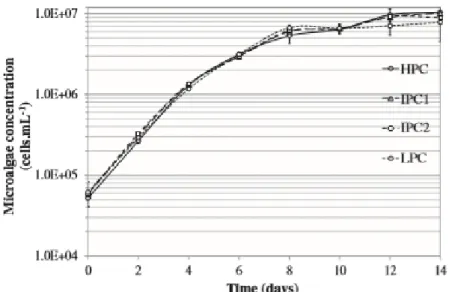
N/P = 3 HPC N/P = 9 HPC1 N/P = 26 HPC2 N/P = 76 LPC Results:
Final microalgal concentration .
13
Nutrients behavior
Figure 4 - Phosphorous and nitrogen distribution at the end of the Marcihac et al. (2015) experiment.
Conclusion: The phosphorous concentration in batch experiments was found to have no impact on microalgal growth which kept on growing even after P was depleted. This observation increased the phosphorous storage capacity of microalgae.
Nitrogen removal was not much affected by phosphorous concentration either, whereas phosphorous removal increased with rising P concentration. Also it is seen that Chlorella is more P-limited than Scenedesmus. Nitrification was limited by phosphorous, the final NOxbeing then dependent on initial P.
Prandini et al. 2015
Effluent origin: diluted anaerobic digester and minerals effluent from a wastewater treatment plant.
Pretreatment Effluent: Dilution Algae specie: Scenedesmus sp.
Scale: small-scale Operation mode: Batch T = 25 ºC
pH = 7.9
Light: 148.5 Biomass initial 70 Initial conditions: 2 cases study
14
Results:
Microalgal growth
Fig. 5 CO2, CH4, H2S and microalgae biomass concentration profiles in the mixotrophic (A) and autotrophic (B) photobioreactors over time. Arrows indicates biogas reinjections. Dashed line shows the microalgae biomass model data fit. Bars depict standard deviation from the mean (n=2).
N-NH2+
removal
NH2+/microalgae
r2
Biogas Autotrophic 21.2 ± 1.2 0.14 ± 0.01 0.99 ± 0.01 Mixotrophic 14.1 ± 1.2 0.15 ± 0.03 0.98 ± 0.01
Air Autotrophic 12.9 ± 2.0 0.16 ± 0.02 0.96 ± 0.01 Mixotrophic 11.5 ± 1.3 0.19 ± 0.07 0.96 ± 0.04
Table 1. Ammonia removal rates by microalgal cultivated in the presence and abence of biogas under different photoperiods. Different lettes indicates statistically significant
differences (n = 2, ANOVA, p<0.05)
15
Microalgal growth rates are higher in Autotrophic conditions than in Mixotrophic conditions: 141.8 ± 3.5 > 89.4
Nutrients behavior Free ammonia
Mixotrophic + biogas = 18.1 ± 3.3 Autotrophic + biogas = 2.2 ± 0.9 Mixotriphic + air = 36.7 ± 8 Auttotrophic + air = 34 ± 17.6
Conclusions: Increased microalgae yields were obtained under autotrophic conditions and biogas. N removal rate was significantly faster in the presence of biogas and autotrophic conditions. Biogas buffered pH and minimized N volatilization. The commercial applicability of purified biogas is critically dependent on system capacity to remove O2 as well to minimize CH4 losses.
Ledda et al. 2015
Effluent origin: Liquid phase of a biogas plan equipped with a full-sale digestate treatment unit.
Pretreatment Effluent: 3 cases study:
DIG: Digestate, effluent of th biogass plant, without pretreatment CLF: Centrifugated liquid fraction
ULF: Ultrafiltered liquid fraction Algae specie: Chlorella sp.
Scale: small-scale
Operation mode: Semi-continious T = 25 ºC
pH = DIG 7.97 ± 0.13; CLF 8.06 ± 0.08; ULF 8.61 ± 0.12 Initial total solids =
Light: 150 Biomass initial 70 Initial conditions:
Total solids = DIG 39 ± 2; CLF 12 ± 1; ULF 9.5 ± 0.5
= DIG 60± 0.61; CLF 124.03 ± 0.68; ULF 124.00 ± 0.80 COD = DIG 1099.07 ± 6.83; CLF 1092.00 ± 11.49; ULF 2.44 ± 1.05
16
P = DIG 18.11 ± 0.06; CLF 3.26 ± 0.6; ULF 181 ± 13 N:P = DIG 3; CLF 38; ULF 51
N0 = 124
Results:
Microalgal growth
Figure 6 - Chlorella sp growth on 3 study cases: digestate (DIG), centrifuge liquid fraction (CLF) and ultrafiltration liquid fraction
(ULF).
Maximum growth:
DIG 0.39 ± 0.03; CLF 0.52 ± 0.05; ULF 0.65 ± 0.03
= DIG 2.85± 0.05; CLF 2.84 ± 0.1; ULF 124 ± 0.80 Reduction (%)DIG 95; CLF 98; ULF 98
P = DIG 2.72 ± 0.63; CLF 0.08 ± 0.02; ULF 0.02 ± 0.01 Reduction (%)DIG 85; CLF 97; ULF 99
COD = DIG 296.75 ± 8.2; CLF 349.44 ± 8.2; ULF 71 ± 4 Reduction (%)DIG 73; CLF 68; ULF 61
17
One notable disadvantage of the process was the large amount of nitrogen released to the atmosphere during the experiments; in fact only 30 % of the removed nitrogen could be fixed into the microalgal biomass.
Indeed, all of these studies demonstrate that microalgae can grow in anaerobic digestate by attainting the same growth rate as in wastewater. However, microalgal concentration may inhibit growth rate by reducing the light availability. Also the concentration of bacteria and protozoa normally is high, for that reason the digestate has to be centrifuged or filtrated. Moreover, as a certain ammonia inhibition was observed, its concentration should be monitored and eventually reduced by digestate dilution.
It can be concluded in view of all experiments that the utilization of digestate as carbon and nutrients source can enhance microalgal growth reducing costs and environmental impacts.
This effluent may be diluted to avoid problems with ammonia inhibition.
2.2.2 Growth of microalgae on secondary effluents
Secondary effluent of domestic wastewater treatment plants contains low levels of nitrogen and phosphorus, but enough to growth microalgae. These inorganic nutrients need to be removed, and they are suitable and cost-effective for microalgal. By this way the eutrophication risk of the secondary effluent is decreased.
The nutrient composition in an effluent from an aeration tank of municipal WWTPs is generally stable and less-toxic for other organisms compared with an influent.
In the effluent that passed through an aeration tank in the conventional WWTP, the predominant forms of nitrogen are usually ammonia and nitrate. Both of them are easily utilized by microalgal cells, nitrate in greater amount, and nitrate is usually utilized after in vivo transformation to nitrite or ammonia by microalgae through an assimilation process (Perez-Garcia et al., 2011).
In this kind of water bacteria and protozoa are observed also, which may exert a negative impact on the growth of microalgae. To reduce the effect, filtration or UV-radiation are applied on the effluent water as pre-treatment methods. Of all the pretreatment options tested in the following experiments, the filtration resulted in the highest biomass and lipid productivity.
18
contained some amount of suspended solid, which can cause a problem of light utilization in photosynthesis. (Cho et al. 2010).
The highest efficiencies in T-N and T-P removal were achieved from the culture with the effluent water filtered. (Cho et al. 2010).
But this way is not very cost-effective; the best option is growth microalgae without any pretreatment in the secondary effluent.
Indeed secondary effluent can be used as a source of nutrients to cultivate microalgae.
Bibliographic experiments Cho et al. 2010
Effluent origin: Effluent after secondary treatment (aereation tank) at the Su-young Municipal Wastewater Treatment Facility, in Busan, Korea
Pretreatment Effluent: Filtration by 0.20, 0.45 pore and UV-B radiation, by 270, 540, and 1620
at 10 cmof distance.
Algae specie: Clhorella sp.
Scale: small-scale Operation mode: Batch T = 25 ºC
Light: 60 Initial conditions
Total suspended solids = 5 Biomass initial =
Initial conditions:
Total Nitrogen, TN = 18.9 ± 4.1 N-NH4 = 10.0 ± 7.1
N-NO3 =6.6 ± = 4
Total Phosporus, TP = 1.7 ± 0.3 pH = 7.2 ± 0.1
19
The secondary effluent was treated in two different ways for remove the microorganism and the suspended solids.
A 0.2 µm pore filtration B UV-B radiation 270
Results
Maximum microalgae growth A = 0.074
B = 0.024
Nutrients removal
A TN removal = 92 % TP removal = 86 %
For B conditions this efficiencies were less (no data)
Conclusions. The secondary effluent of municipal WWTPs can be used for mass cultivation of microalgae for saving the unit cost of production by removing additionals nutrients supply.
Xin et l. 2010
Effluent origin: Domestic wastewater plant located in Beijing
Pretreatment Effluent: Filtered by a 0.45 µm membrane and sterilized.
Microalgae specie: Microalgae mixture, principally: Chlorella Vulgaris, Chlorella Sorokiniana and Scenedesmus sp.
Scale: small-scale T = 25 ºC
Light: 55 - 60 Initial conditions: COD = 24 ± 1
Total Nitrogen, TN = 15.5 ± 1.1 N-NH4 = 2.5 ± 0.01
20
The secondary effluent was filtered by a 0.45 µm membrane and sterilized later. Results
Microalgae growth
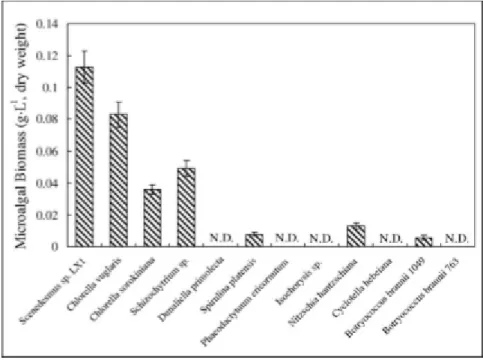
Figure 7 - Comparison of microalgal biomass biomass after 15 days of cultivation in secondary effluent.
21
Nutrients removal
Figure 8 - Scenedesmus sp growth curve, nutrinent removal and lipid accumulation in the secondary effluent of domestic
wastewater.
TN = 0.24 , elimination efficiency 98.5 % TP = 0.01 , elimination efficiency 98 %
Conclusions. Scenedemus sp is the best microalgae to growth in secondary effluent. It can remove inorganic nutrients efficiently from secondary effluent.
These findings suggest that the secondary effluents of municipal WWTPs can be used for mass-cultivation of microalgae for saving the unit cost of production by removing additional nutrients supply. However, a proper pre-treatment method to remove algae-feeding microorganisms and competing microorganisms for nutrient should be applied for effective algae biomass production.
2.2.3 Integration of microalgae in the secondary treatment
22
Microalgae enhance the removal of nutrients, heavy metals and pathogens and furnish O2 to heterotrophic aerobic bacteria to mineralize organic pollutants, using in turn the CO2 released from bacterial respiration. (Muñoz et al.2006).
Figure 9 - Principle of photosynthetic oxygenation in BOD removal processes
Photosynthetic aeration is therefore especially interesting to reduce operation costs and limit the risks for pollutant volatilization under mechanical aeration and recent studies have shown that microalgae can indeed support the aerobic degradation of various hazardous contaminants (Muñoz et al. 2014).
The idea is developed a single-step process based on mixotrophic metabolism for simultaneous removal of carbon and nutrients from UWWs.
A central design advantage of the mixotrophic system over traditional WWT systems stems from the fact that stoichiometric carbon-to-nitrogen (C:N) ratio in UWW is closer to that of algal biomass composition than to that of heterotrophic bacteria. Even more important is that CO2 capture via photosynthesis corrects the stoichiometric imbalance between C:N:P ratios in WW relative to either type of biomass to afford single-step biological treatment that can simultaneously achieve discharge standards for all three components. This offers a significant advantage over the traditional practice that necessitates a two-step process including energy-intensive aeration: aerobic oxidation for BOD removal followed by nitrification/denitrification for N removal with external carbon supply to bridge the C:N imbalance. (Henkanatte-Gedera et al. 2015).
23
This synergistic relationship can also be used for the economical treatment of hazardous contaminants, which is also safer as there is less risk of pollutant or aerosol release than during intensive mechanical aeration (Brandi et al., 2000; Hamoda, 2006).
An energetic comparison of the wastewater-to-biomass-to-methane conversion pathways has shown that the mixotrophic pathway can yield more than double the net electrical energy than the traditional pathway (Selvaratnam et al., 2014b). Sturm and Lamer (2011) have reported similar advantage of algal-based UWW treatment systems.
It is also demonstrated the sensitivity of nutrient removal rates to changes in BOD:N:P ratios. Optimizing these ratios is critical to minimizing hydraulic residence times and plant costs.
Since mixotrophic metabolism does not require energy for oxygenation, it can conserve the energy currently consumed for aerobic BOD removal. By converting most of the carbon in the wastewater to biomass, it enables higher energy recovery than by current practice. Mixotrophic approach has the potential for energy-positive wastewater treatment. (Henkanatte-Gedera et al. 2015).
Unfortunately, microalgae are usually quite sensitive towards the hazardous compounds (Aksmann and Tukaj, 2004; Borde et al., 2003) and special care must be taken to improve microbial activity.
Heavy metals are particularly strong inhibitors of microbial photosynthesis (Clijsters and Vanassche, 1985). However, the system was efficiently protected by pre-treating the effluent with the algal–bacterial biomass generated during salicylate degradation (Muñoz et al.2006 a)
Microalgae are also sensitive to organic pollutants as Chen and Lin (2006) showed that in an air-tight environment
Microalgae are also sensitive to the combined effect of high NH3 concentrations
and high pH values because NH3 uncouples the electron transport in photosystem
II and competes with H2O in the oxidation reactions leading to O2 generation
(Azov and Goldman, 1982).
The symbiotic microalgal–bacterial relationship is clear when microalgae provided the O2 necessary for aerobic bacteria to biodegrade organic pollutants,
consuming in turn the CO2 released from bacterial respiration (Fig. 1). However,
microalgae and bacteria do not limit their interactions to a simple CO2/O2
24
temperature of the cultivation broth, or by excreting inhibitory metabolites (Oswald, 2003; Schumacher et al., 2003)
Concluding, algal–bacterial systems are efficient for the treatment of hazardous pollutants but remains limited by the difficulty of harvesting the biomass formed, the high land requirement of open systems, or the high construction costs of enclosed photobioreactors.
Hence, suitable applications will be found when the effluents to be treated contain hazardous volatile pollutants, where combined removal capacities (organic pollutants/nutrients/heavy metals) are desired, or when the biomass produced can be commercialized. In such cases, the additional costs brought about by land use, reactor construction and biomass harvesting will be justified by the gains in safety and energy savings achieved.
Before algal–bacterial processes can widely be implemented for the treatment of industrial wastes, more research is still needed to: (1) select „„extreme‟‟ algal strains capable to grow under wider and more extreme conditions of light, pH, pollutant concentrations, etc.; (2) understand and control the mechanisms of autoflocculation and bioflocculation to improve harvesting and biomass control; (3) scale-up and model photobioreactors to provide better design guidelines; and (4) develop new treatment methods such as membrane photobioreactors or combined physical–biological processes to improve biomass control and protect algae against inhibitory effects.
2.3 Heavy metals in urban wastewater.
Bioremoval, the use of biological systems for the removal of metal ions from polluted waters, has the potential to achieve greater performance at lower cost than conventional wastewater treatment technologies for metal removal.
This technique is especially attractive in applications where extremely low levels of residual metal ions are desired. Now that the traditional technologies for the removal of heavy metals, such as ion exchange or lime precipitation, are often ineffective and/or very expensive when used for the reduction of heavy metal ions to very low concentrations (Wilde et al. 1993).
25
The principal advantages that microalgae present for removal heavy metals are:
Use of naturally abundant renewable biomaterials that can be cheaply produced
Ability to treat large volumes of wastewater due to rapid kinetics
High selectivity in terms of removal and recovery of specific heavy metals
Ability to handle multiple heavy metals and mixed waste
High affinity, reducing residual metals to below i ppb in many cases
Less need for additional expensive process reagents which typically cause disposal and space problems
Operation over a wide range of physicochemical conditions including temperature, pH, and presence of other ions (including Ca2+ and
Mg2+)
Greatly improved recovery of bound heavy metals from the biomass
Greatly reduced volume of hazardous waste produced.
On the other hand, one of the major problems in bioremoval research is the difficulty in developing generic technologies. A large number of variables are involved in selecting the biomass, processing methods, contacting environments, and waste compositions.
There are also, significant limitations to such an approach: The microbial biomass that is commercially available is not produced for bioremoval applications, and thus may not exhibit optimal performance. Furthermore, the use of dead, usually dried, biomass neglects the bioremoval capacities of living cultures, particularly when dealing with low concentrations of heavy metals. Perhaps most importantly, the currently available methods of immobilization have not proven to be satisfactory in large-scale applications. These issues are reviewed below as they relate to the bioremoval of toxic metal ions by microalgae.
26
It can be concluded that bioremoval is a technically efficient and economically feasible technology for removing and recovering metals from solutions. However these technologies are still being developed and much more work is required. Some practical applications have been achieved, and the fundamentals look promising: microalgae have the potential to remove metal ions to very low concentrations, to grow on light energy, and to accumulate large amounts of specific toxic elements. They appear to function well even in the presence of ions, in particular Ca and Mg, and organics.
2.4 Microalgae harvesting
The technology employed for the recovery of microalgae is considered to have the most influential effect on the economy of microalgae production. The harvesting techniques can generally be broken down into technologies that are used in a one or two stage process.
An ideal harvesting process should be effective for the majority of microalgal strains and should allow the achievement of high biomass concentrations, while requiring moderate costs of operation, energy and maintenance.
It is also desirable that the selected harvesting method allows the recycling of the culture medium. (Barros et al. 2014).
Microalgal harvesting currently involves mechanical, chemical, biological and, to a lesser extent, electrical based methods. It is very common to combine two or more of these methods to obtain a greater separation rate at lower costs.
Mechanical methods are the most reliable and there for the most commonly used to harvest microalgal biomass. However, these methods are often preceded by a chemical or biological coagulation/flocculation thickening stage to improve effectiveness and to reduce operation and maintenance costs.
Biological approaches are emerging techniques that can lead to further reduction of operational costs.
27
2.4.1 Thickening (concentration)
To increase solid concentration of microalgal suspension and to reduce the volume to be processed, thickening methods must be applied. Typically, thickening processes consist in
Coagulation/Flocculation (both chemical and biologically based)
Gravity sedimentation
Flotation
Electrical methods
2.4.1.1Coagulation /flocculation
Coagulation–flocculation is the process of aggregating single cells to larger flocs, thus overcoming the hurdle of repulsion with equicharged particles.
This harvesting step is used to concentrate the suspension 20–100 times. It increases the effective particle size, prior to dewatering, thus significantly reducing it energy demand.
For low cost harvesting of microalgae, coagulation/flocculation is generally followed by gravity sedimentation.
Ideally, chemical coagulation/flocculation should: (1) result in no biomass contamination; (2) lead to subsequent high efficiency biomass settling; (3) allow the reuse of the culture medium; (4) consider environmental impact; and (5) be cheap and non-toxic when applied in large scale.
Coagulation is a process which can increase the tendency of particles added to each other, to form larger particles and thus precipitate more rapidly.
Coagulation process can be induced by adding coagulating metal salts that ionize in the liquid and neutralize the surface charge of the algae. At a high pH, metal hydroxides are formed, which tend to precipitate on the flocs and cause physical linkages between algae, thus increasing the density of the biomass.
A wide variety of salts has been tested as coagulants. Multivalent metal salts, such as FeCl3, Al2(SO4)3 and Fe2(SO4)3, have been effectively tested (Gerardo et al.
2014). Dissociation of these salts in the culture medium lowers electrostatic repulsion between the negatively charged cell surfaces, enabling cell aggregates formation.
28
As to all harvesting methods, selection of the appropriate coagulant is determined by the target of the subsequent processes.
Despite being easily flocculated by metal coagulants, such as alum and iron chloride, large amounts of these salts are required, making it a very expensive option (Barros et al.2014).
Although coagulation/flocculation followed by gravity sedimentation is a cheap approach for microalgal harvesting, coagulant costs represent a significant portion of the overall process (4–7%) (Barros et al. 2014. Therefore, the use of naturally available coagulants such as phosphates, carbonates, calcium and magnesium ions, in wastewater frequently found in considered.
The relationship between coagulant dose and microalgal cell concentration is not clear, as it has been reported in the literature, as being linear, as well as proportional to the cell concentration logarithm. Nonetheless, high density cultures require almost 10-fold less coagulant addition than expected. This might be due to the presence of less charged material on the surface of cell walls or to the shorter distance between cells that leads to higher collision rates. (Barros et al. 2014).
Flocculation can be defined as the coalescence of finely divided particles in suspension on to larger aggregates followed by the agglomeration of these into larger flocs that settle to the bottom of the vessel, leaving a clear supernatant. The most important ways of flocculation are: (1) chemical flocculation, (2)
autofloculation, (3) biofloculation, (4) electrolytic flocculation, (5) polyelectolytic flocculants.
Chemical flocculation is carried out by the use of chemical substances from two different natures: inorganic or organic. The majority of inorganic chemical flocculants are based on multivalent cations such as aluminum sulfate, ferric chloride and ferric sulfate.
It can be induced by different ways:
A- Electrostatic patch (or patching), which occurs when a charged polymer (mostly thus polyacrylamides and polyamines) binds to an opposite charged particle, locally reversing that charge and creating a patch that will connect with opposite charged patches.
These polymers can be cationic or anionic
29
C- Sweep flocculation, which occurs when particles are entrapped in a massive mineral precipitation.
The main disadvantage related to the use of chemical flocculants is that efficacy can be significantly impacted by the pH, the micro-organisms characteristics, water salinity, dose applied, and biomass concentration. Many of these variables are not static and tend to fluctuate during the algal growth cycle, therefore it is advantageous to consider the stationary phase to harvest microalgal biomass. In this phase, microalgae have lower metabolic activity and cell mobility, presenting higher intercellular interactions, as the zeta potential is lower.
For these reasons the optimum flocculant dosage can be difficult to achieve. For example if dosage is too high bridging potential can be reduced due to electrostatic/static hindering.
Alternatively, autoflocculation is an attractive alternative, as it is low cost, low energy, non-toxic to microalgae and does not require the use of flocculants, enabling simple medium reuse. It can be achieved without the addition of supplementary chemicals.
Autoflocculation is induced at a high pH, typically above pH 9. An increase of pH causes super-saturation of calcium and phosphate ions, resulting in a positively charged calcium phosphate precipitate which will result in a neutralization of the negatively charged algae cells. An increase in pH can be induced by stopping the air or the CO2 supply, which could provide a cost-effective harvesting method.
Although often demonstrated on a lab scale, autoflocculation still needs to be demonstrated at a significant scale and a greater understanding of its mechanisms and how to control them is required.
Bioflocculation is another option which relates to microalgal flocculation caused by secreted biopolymers. Flocculants produced by bacteria can be an important economical step towards sustain able microalgal based biofuel production. Bioflocculation eliminates the need for chemical flocculants, which represent an expensive, non-feasible and toxic alternative. However, co-culture of microalgae with bacteria, fungi or flocculating microalgae results in microbiological contamination, interfering with food or feed applications of microalgal biomass. In the case of biofuel production, the added microorganisms may even contribute to the increase in lipid yields.
30
The disadvantages to this process include: cathode fouling and maintenance, temperature increase of the medium (b1.5 °C), influence of mixing (that is power induced), changes in pH, and the research gap relating to electrode design and arrangement.
There is very limited research regarding the application of this technology, however, Poelman et al. demonstrate one of the few applications of electrolytic flocculation, achieving up to 96% separation of cells while only consuming 0.3
in a 75 min time period.
Polyelectrolyte flocculants are natural or synthetic polymers of ionic or non-ionic species. The use of polymeric materials allows the reduction required dose by increasing their molecular weight. Nevertheless, the presence of some chemical substances and pH of the medium are crucial to effective flocculation. These flocculants can either be cationic, anionic or non-ionic. However, due to the negative netcharge of microalgal cells, anionic or non-ionic polymers have no effect on their flocculation.
Some cationic polymers, such as chitosan, cationic polyacrylamides, cellulose, surfactants and other man-made fibers proved to have successful flocculating activity towards microalgal cultures. Cationic polymers reduce microalgal cell surface electronegativity and bridge them to one another. Chitosan has been effectively used in the harvesting of both fresh and seawater microalgae and does not contaminate microalgal biomass; however it is too expensive for large scale applications.
2.4.1.2 Gravity sedimentation
Solid–liquid partitioning by sedimentation is one of the simplest ways to harvest microalgae. It entails the separation of the suspended algal cells that have a cell density greater than water by gravitational settling. This separation method works for various types of microalgae and is highly energy efficient.
The economical bulk removal of particles is critical. In water treatment the particles are left to settle according to Stokes Law (Sheleft et al.1984). Accordingly, the cells rapidly reach terminal falling velocity when the frictional force has become equal to the netgravitational force. The sinking velocity decreases by increasing the growth medium viscosity or by decreasing the algal cell diameter. (Barros et al. 2013).
31
most species of microalgae varies between 0.024 – 2.6 . This results a very slow sedimentation process that leads to the deterioration of most of the biomass during the settling time, limiting the application of this method for routine harvesting. Capital and operating costs are low, but land area requirement for settling ponds and tanks is relatively high. The local environment must also be taken into consideration, as it has been found that in high temperature environments much of the biomass produced will deteriorate during the harvesting process as a result of the lengthy harvesting process. Conventional sedimentation systems (e.g. clarification tank or lamella type sedimentation tanks) can achieve a final slurry concentration of between 1 and 3 % TSS, using less than 0.1 .This fact is attributable to microalgal autoflocculation.
Another Important disadvantage of this technique is that only relatively large microalgae (> 100 nm diameter) (Montes, 2009) can be settled and that it is a slow process (Pahl et al., 2013; Uduman et al., 2010b).
On the other hand compared to other harvesting systems, the absence of turbulent flows or high pressures guarantees the integrity of the microalgae structure. When higher solid concentrations are required, sedimentation can be adopted as a pre-concentration step combined with other technologies.
Chlorella sp. con with Moringa oleifera (MO) seed were used to floculation, then the 95 % of particles sedimented in 20 minutes. (Bolad et al. 2014).
Gutierrez et al. 2016 carried out two experiments in a Chlorella vulgaris culture. Microalgal biomass was obtained from two experimental wastewatertreatment high rate algal ponds (HRAPs) operated with 4 and 8 days of hydraulic retention time.
In the first set, most of the biomass of the 8 days-HRAP (63%) had settling velocities between 16.5 and 4 , while most of the biomass of the 4 days-HRAP (65%) had settling velocities between 16.5 and 1 ,.
In the second set when a flocculant was applied, most of the biomass from both HRAPs (60% from the 8 days-HRAP and 80% from the 4 days-HRAP) had settling velocities between 6.5 and 0.4 ,. In this second set, settling velocities of <0.4 , were reached by 20% and 40% of the biomass from 4 days-HRAP and 8 days-HRAP, respectively.
32
84% of biomass reached velocities of > 6.5 , compared to 10% and 14% of microalgal biomass without flocculant for the 8 days-operation 4 days-operation, respectively.
With flocculant, a very small amount of biomass (3% for the 4 days-operation and 8% for the 8 days-operation) had settling velocities of <0.4 .
According to these results, a settler designed with a critical settling velocity of 1 would reach biomass recoveries as high as 90-94% with flocculant compared to 77-88% without flocculant.
Other study, Escapa 2015, determined that Chlorella sorokiniana achieved the best flocculation results with AlCl3 (95.23 % with 200
1 min incubation time.
2.4.1.3 Flotation
Flotation is often defined as “inverted” sedimentation where gas bubbles fed to the broth provide the lifting force needed for particle transport and separation and is often preceded by coagulation/flocculation.
Flotation has been successfully applied in the separation of freshwater microalgae, such as Chlorella vulgaris, and it is a promising low cost large scale harvesting method.
Microalgal removal depends on recycling rate, air tank pressure, hydraulic retention time and particle floating rate, while the concentration of the produced slurry depends on skimmer velocity and relative positions towards the surface of the water.
Given microalgal low density and self-float characteristics, flotation is more effective and beneficial in microalgae removal than in sedimentation.
The major advantage of flotation is that it has been proved at large scale although it generally requires the use of flocculants. Further advantages of flotation are low space requirements, relatively short operation times and high flexibility with lower initial equipment costs.
Some microalgae naturally float due to the presence of gas vesicles. However, for the majority of algal species, air, supersaturated water, or ozone is used. Bubbles are introduced at the bottom of the liquid, where the algae are collected from the liquid suspension and carried to the surface where it can be removed.
33
occurred. In this way, it depends on the instability of the suspended particles, lower instability will result in higher air-particle contact, and on particle size, the smaller they are, the more likely they are to be levitated by the bubbles (Uduman et al.2010). However, the decrease in particle size also decreases the probability of the cells colliding with the bubble.
Particles in suspension must be hydrophobic, in order to attach to gas bubbles (Hanotu et al.2012), this can be achieved through the addition of surfactants (sometimes referred to as collectors) or coagulants.
The addition of surfactants improves particle separation by increasing the size of the algal aggregates, therefore increasing the likelihood of collision between the bubbles and cells. However, combining flocculation and flotation can be problematic. If the flocs produced become too large they are more likely to detach requiring multiple bubble attachments to reduce the increase in density caused by flocculation (Barros et al. 2014).
Presently, there are four main flotation techniques: (1) Dissolved air flotation (DAF – bubble diameter o100 mm); (2) Microflotation; (3) Dispersed air flotation (DiAF – bubble diameter 100–1000mm) and (4) Ozonation-dispersed flotation (ODF).
Dissolved air flotation (DAF) occurs in several stages (Fig. 10). The first stages occur in the saturator where a compressor is used to supersaturate the water with air (25–90 psi), for about 0.5–3.0 min in a pressure tank. This water is then released into a flotation tank at atmospheric pressure. The dissolved air precipitates out of the water forming small bubbles (10–100μm), which add here to the suspended matter carrying them to the surface, given the lower combined specific gravity than that of water. The biomass forms a layer at the top of the flotation tank which is continuously skimmed into a collection tank. The equation that governs the separation rate is also Stoke Law.
34
Energy requirement associated with DAF has been reported to be high at around 7.6 mostly because of the high pressures required to supersaturate flotation water with air.
Thus, other methodologies for creating micron-sized bubbles have been exploited such as dispersed air, vacuum gas, microflotation and froth flotation. The main differences between these methodologies center on the way in which the bubbles are created in the bulk liquid.
Microflotation uses fluidic oscillation at a specific frequency which facilitates bubble detachment from the exiting pores in the diffuser. The work by Hanotu et al. 2012 showed that frequencies of 70–200 kHz produced bubbles radius sizes of 34–100 μmat11.6 psi. However, no energy consumption or biomass concentration in the floated material was determined, yet up to 99 % separation efficiency was reported.
Dispersed air flotation uses a technique similar to DAF to harvest biomass; however it eliminates the need for an expensive energy intensive compressor by generating bubbles and foam with the addition of a surfactant and a low pressure sparger.
Dispersed air flotation was reported to operate at 15 psi and energy consumption was reported to be 3 . Coward et al. 2014 reported a flotation device which combines dispersed air flotation with foam fraction at ion to allow harvesting, concentration and physical separation of algal biomass.
A 10.2 L dispersed air flotation–foam fractionation was reported to achieve maximum biomass concentration of 14–24 g DCW/L with an energy consumption of 0.015 , using a limewood sparger. When combined with fluidic oscillation, the maximum biomass concentration increased to 28 g DCW/L, and the energy consumption was estimated to be 0.105 .
Velasquez-Orta et al. 2014 reported that the amount of lipid extracted from the biomass recovered by ozono-flotation doubled when compared to biomass harvested by centrifugation. In theory, flotation can be used to harvest and as a cell disruption method, for the improved extraction of lipids.
35
2.4.1.4 Electrical methods
Electrical approaches to microalgal harvesting are not largely disseminated. But they are environmentally friendly (they do not require the addition of chemicals) (Barros et al.2014).
As microalgal cells are negatively charged, when an electrical field is applied to the culture broth, the cells can be separated (Uduman et al. 2010). They can form precipitates on the electrodes (electrophoresis), as well as accumulate on the bottom of the vessel (electro-flocculation).
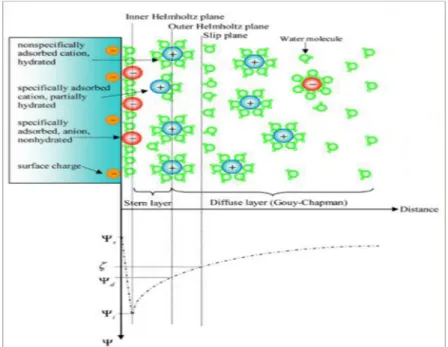
One of the most employed methods is Zeta Potential: Zeta (ζ) potential is the potential generated by the formation of an electrical double layer and it is responsible of the electrokinetic phenomena of colloid‟s stability. Electrical double layer is depicted in Figure 11
Figure 11- Structure of electrical double layer, with the corresponding potential distribution with distance from a charged wall.
As shown in the picture, the first layer is at the inner Helmholtz plane and bears the potential ψi, where co-ions and counter ions are not hydrated and are
specifically adsorbed to the surface. The second layer is defined by the outer Helmholtz plane with potential ψd, consisting of a layer of bound, hydrated, and
partially hydrated counter ions. The outermost and third layer is the diffuse layer, composed of mobile co-ions and counter ions, in which resides the slip plane bearing the zeta potential, ζ. In most cases, the outer Helmholtz plane and the slip plane are situated close to each other, allowing the approximation of ψd with the ζ
36
plane separating ions that are immobile at the surface from those that are mobile in solution.
According to the Helmholtz-Smoluchowski theory, the electro-osmotic velocity, needed to compute zeta potential, can be derived based on the balance of the electrical and frictional forces between water and the wall of the capillary.
It is described by the following equation:
Where:
[m/s]: electro-osmotic velocity [V]: zeta potential
ε [F/m]: dielectric permittivity of the liquid η [kg/ms]: viscosity of the liquid medium ΔV [V]: electric potential
ΔL [m]: length of the capillary between the electrodes
The magnitude of the zeta potential indicates the degree of electrostatic repulsion between adjacent, similarly charged particles in a dispersion: a high zeta potential will confer stability and resistance to aggregation, while when the potential is small, attractive forces may exceed the repulsion and the dispersion may break and flocculate.
2.4.2 Dewatering
2.4.2.1 Filtration
This method is based on a solid-liquid separation where a semi-permeable filter acts as a barrier. This barrier contains pores smaller than the cells being retained permitting a selective passage of water, salts and other soluble substances. It is normally applied following coagulation/flocculation to improve harvesting efficiency. Its application requires the maintenance of a pressure drop across the system to force fluid flow through a membrane (Gerardo et al. 2014).
Two simple main flow configurations of membrane filtration processes are possible: dead-end and tangential flow.
37
As the name suggests, in tangential filtration the flow is tangential to the membrane surface, retentate water is removed from the same side further downstream, whereas the permeate flow is tracked on the other side. Tangential flow filtration (TFF) was developed in order to improve filtration times by minimizing the buildup of the cake layer and consequent fouling. This is considered more appropriate for the harvesting of smaller suspended algae due to minor fouling problems.
Depending on the pore size of the membrane, the filtration is classified as microfiltration, ultrafiltration, nanofiltration and reverse/forward osmosis.
The performance of membrane filtration processes may be described by the Darcy's equation:
Where:
J is the membrane flux ( )
ΔP is the transmembrane pressure (Pa) Δπ is the osmotic pressure (Pa)
Rm is the intrinsic membrane resistance (m−1)
Rc is the cake resistance owing to fouling (m−1)
μ is the viscosity of the microalgae suspension (Pa·s).
Filtration is only sustainable for harvesting long length microalgae or those forming large colonies (Zhou W. et al. 2013). Despite microalgal cells of very low densities can be harvested by this method (a major advantage), membrane filtration is not commonly applied in large scale processes.
The use of membrane filtration for microalgae harvesting is most commonly reported across the ultrafiltration-microfiltration range (Gerardo et al. 2014). However, forward osmosis membranes have also been reported for the recovery of microalgae from dilute broths in an attempt to reduce power consumption (Zou et al. 2013). Throughout the literature, the influence of the membrane pore size on the harvesting efficiency is no clear. Indeed there is no conformity in terms of pore size for the general harvesting of microalgae.
38
Filtration major costs are related with membrane replacement and pumping; thus, it is cost-effective only for small volumes.
In fact, microfiltration can be more cost-effective than centrifugation when the volume to be processed is less than 2 For volumes greater than 20 , centrifugation may be more economic.
2.4.2.2 Centrifugation
The use of centrifuges for the recovery of microalgae biomass offers many advantages when compare to other methods. The recovered biomass is free from flocculants or chemicals, it can be applied to all strains of microalgae, and high recovery rate and concentrate are easily, predicatively and quickly achieved. Centrifugation is the fastest harvesting method, but also the most expensive due to its high energy consumption, which limits its application to high-valued products. To achieve high harvesting efficiencies, longer retention times in the bowl are needed to enable their sedimentation, due to the small size of these cells. (Xu et al. 2011).
The energy consumption estimates for harvesting microalgae by centrifugation is considered energy intensive at 8 of microalgae suspension at feed rate of 1
. However it has been demonstrated that flow rates of 18 can signifivantly
reduce cost 10-fold in exchange for lower harvesting efficiency (Dassey et al. 2013)
Centrifuges are able to harvest the great majority of microalgae (Rawat et al. 2014). Some are even efficient as one-step separation process, while others require a pre-concentrated algal slurry. However, there are evidences that the exposure of microalgal cells to high gravitational and shear forces results in cell structure damage (Griffiths et al. 2011).
39
Equipment Operation mode Steps number Energy compsuption Resulting TTS (%) Self-cleaning, disk-stack centrifuge, westalia
Continious One 1 12
Concentration factor = 120 Nozzle
discharge centrifuge Westalia
Continious 0.72 2-15 Cocentration
factor= 20 - 150
Table 2. Microalgal biomass recovery by centrifugation
2.4.2.3 New technologies
In recent years, a number of novel technologies have been investigated in an attempt to harvest microalgae at lower energy consumptions.
Limited to lab-scale process, Bosma et al. 2003 reported the use of ultrasound as an effective technology for microalgae harvesting by exploiting the dielectric properties of the microalgae cells. The ultrasounds force the cells to move towards the nodules of the standing waves, flocculate and sediment.
Separation efficiencies up to 92% have been reported although only at lab-scale. These authors reported a concentration factor up to 11 at flow rates of 4 to 6 . Such processing capacity is extremely low due to the limitations in scaling up and thus unavailable at larger scales (Bosma et al. 2003).
However, the benefits of this technology are that it is multi-purpose, as it can be used not only to harvest by creating standing waves, but also to lyse the cells at lower frequencies and higher pressure amplitudes to initiate cavitation, and consequently separate the components based on density.
Other more recent developments make use of the magnetophoretic properties of the microalgae cells. Driven by an external magnetic field, ferric(Fe2O3) magnetic
nanoparticles induce the attachment of the cells to the particles which can be easily removed from the broth. Harvesting efficiencies up to 95% have been reported using Fe3O4 nanoparticles with a maximum adsorption capacity of 5.83g
DCW/g particles for Chlorella ellipsoidea at pH 7 (Xu et al. 2011).