©Copyright 2017, Secretariat of the Ramsar Convention on Wetlands
Secretariat of the Ramsar Convention on Wetlands, 2017. Wetlands for the Future Fund - Celebrating 20 years of the Conservation and Wise Use of Wetlands in Latin America, the Caribbean and Mexico. Secretariat of the Ramsar Convention on Wetlands, Gland, Switzerland.
Authors: María Rivera and Sara Casallas
Reproduction of this publication for educational and other noncommercial purposes is authorized without prior permission from the Ramsar Secretariat, provided that the source is properly acknowledged.
Cover photos: WFF/07/AR/2 - WFF/12/GT/1 - WFF/06/GT/1 - WFF/09/AR/2 WFF/07/PE/2
The photos used in this publication refer to projects financed by the Wetlands for the Future Fund.
Map: Mayra Martinez Silva
Translation: Sara Casallas and Sofía Suarez
Acknowledgements
The Ramsar Secretariat is grateful to the Government of the United States through the U.S. Department of State and the U.S. Fish and Wildlife Service for the continued support provided to the Wetlands for the Future Fund. Their support has been instrumental for the consolidation and continuity of the Fund.
Foreword
Twenty years ago, in 1996, the government of the United States of America through the U.S. Department of State and the U.S. Fish and Wildlife Service envisioned an initiative to support the implementation of the Ramsar Convention on Wetlands in Latin America, the Caribbean and Mexico. The aim of Wetlands for the Future Fund was, and still is, the promotion of the implementation of Ramsar’s concept of wise use of wetlands in the region by strengthening the capacity of countries to manage their wetlands and to help them integrate wetland conservation and management into the development process.
Today, wetlands still face many challenges that affect their conservation and wise use. This is why initiatives that support the implementation of the Convention on the ground such as this one are powerful tools. We therefore take this opportunity to celebrate and share with the Ramsar family, in the region and worldwide, the achievements of the Wetlands for the Future Fund during its first 20 years.
The successful experiences implemented in the region that are highlighted in this publication may be replicable in other countries. These experiences are also examples of cooperation between Contracting Parties and a wide range of stakeholders. They show how, through the operation of the Fund, countries can strengthen their implementation of Ramsar Strategic Plans and also help contribute to achieving the Aichi Targets as well as the goals and targets of the Strategic Plan for Biodiversity 2010-2020 and the Strategic Plan for Migratory Species 2015-2023.
We encourage all Contracting and Non Contracting Parties in Latin America, the Caribbean and Mexico to continue making use of the Wetlands for the Future Fund in order to contribute to the implementation of the Convention in their territories. Joint work and international cooperation can help ensure that we will be able to accomplish our objectives as a Convention to achieve the conservation and wise use of wetlands and to contribute to sustainable development for all.
Table of Contents
Executive summary 9
Introduction 10
Activities supported by the Fund and focus areas 11 Effectiveness and impact of the Fund 14
The Fund’s relationship and contribution to the Ramsar Convention’s Strategic Plan 14 Previous Strategic Plans 14
Contribution of the Fund to Ramsar Convention’s 4th Strategic Plan 2016-2024 16 Contribution to leveraging national-level synergies with other processes and Conventions 17
Implementation of projects in Latin America, the Caribbean and Mexico 18
Projects in Ramsar sites 19
Under-represented wetlands and threatened species 22
Projects by focus area 24
Training and Capacity Building 25
Awareness-Raising Activities 35
Documentation 38
Wetland Management and Tools 42
Academic and Research 49
Networking 53
Protection and Conservation of Priority Species 56 Conclusions 60
Executive Summary
Since 1996, the Secretariat of the Convention on Wetlands (Ramsar, Iran, 1971), the U.S. Department of State, and the U.S. Fish and Wildlife Service have operated the Wetlands for the Future Fund (WFF) to benefit Latin American, Caribbean and Mexican institutions and individuals through capacity building and training in the conservation and wise use of wetlands. The Fund has also contributed to strengthening the capacity of Contracting Parties to manage their wetland resources highlighting the importance of the integration of the conservation and management of these vital ecosystems in the development process.
The achievements of the Fund have been reviewed and showcased through an assessment done ten years after the inception of the Fund in 2006 and a publication, in 2010, that highlighted the most successful projects and lessons learned in the first 14 years of the Fund.
To celebrate 20 years of the Fund’s contribution to the management and wise use of wetlands in Latin America, the Caribbean and Mexico the Secretariat of the Convention along with the U.S Department of State and the U.S. Fish and Wildlife Service aim to showcase the impact of the Fund and its contribution to the implementation of the Convention and its Strategic Plans in the region.
To date, 276 projects have been implemented in 23 countries. Some of these projects are highlighted as examples that could be replicated in the region and more broadly within the worldwide Ramsar Family. Furthermore, information on these projects may also contribute to increasing the knowledge and management of wetlands in the region, since in many cases projects or information on activities in wetlands are not widely disseminated.
Introduction
Since 1996, the Secretariat of the Convention on Wetlands (Ramsar, Iran, 1971), together with the U.S. Department of State and the U.S. Fish and Wildlife Service, have operated the Wetlands for the Future Fund (WFF) for the Western Hemisphere to benefit Latin American, Caribbean and Mexican institutions and individuals through capacity building and training in the conservation and wise use of wetlands. The Fund promotes the concept of wise use of wetlands through strengthening the capacity of countries to manage their wetland resources in perpetuity and to integrate wetland conservation and management in the development process.
As we celebrate the 20th anniversary of the Fund we note the significance and impact of the Fund in supporting implementation of the objectives of the Convention and its Strategic Plan in Latin America, the Caribbean and Mexico.
Some of the most successful projects funded in the last 20 years, their outputs and lessons learned are presented here as they could be replicated in the region and worldwide, increasing the knowledge and management of wetlands. We believe that the Wetlands for the Future Fund will contribute to catalyzing similar actions in other Ramsar regions as we move forward in a global agenda where the conservation and wise use of wetlands are key to achieving a more sustainable world.
The Wetlands for the Future Fund promotes the implementation of the concept of wise use of wetlands through the strengthening of the capacity of Contracting Parties to manage their wetland resources in perpetuity and by contributing to the integration of wetland conservation and management with the development process. It aims to catalyze wetland activities currently underway or planned within the region, or complement existing training and education initiatives. The Fund provides assistance for projects that fall under any of the following categories:
1. Long and Short-term Training
The purpose of this category is to strengthen the capacities of institutions, practitioners and local communities in the management and conservation of wetland ecosystems through:
a.
The preparation of teaching materials and im-plementation of university-level courses on ma-nagement and conservation of wetland ecosys-tems.c.
Graduate placement (for MSc and Ph.D. gra-duates who have specialized in wetlands and wish to start a wetland project upon returning to their own countries after graduation).2. Practical Application of Ramsar
Convention’s Wise Use Concept and
Guidelines
Through this category, the Fund aims to promote the application of the wise use concept by funding projects that provide:
a.
On-the-job training opportunities and internships for wetland managers, planners, academic, fi eld and technical staff.b.
Exchange opportunities for managers, plan-ners, practitioplan-ners, technical and fi eld staff from wise use sites to wetlands in other countries, particularly when such exchanges can contribu-te to training efforts under this initiative and/or the establishment of similar projects elsewhere.WFF/06/GT/1
Activities
supported
by
c.
Hands-on (practical) training experience in wise use activities for members of local and indigenous wetland-dependent communities.d.
Preparation of management plans and restora-tion strategies for wetlands, and conservarestora-tion of vulnerable aquatic species.3. Protected Area Personnel Training
Programs
This category applies to projects that aim to develop and conduct reserve personnel programs in the fields of wetland management and wardening within the region or that aim to review current training curricula and/or strengthen existing training programs to enhance the wetland management aspects of the curriculum.
4. Information Management and
Transfer
Projects funded through this category aim to promote information sharing and networking through documentation centers within the region.
5. Emergency Assistance
Contracting Parties may request emergency as-sistance for training in connection with wetland of regional importance or Ramsar sites which have suffered damage or are in imminent danger of da-mage as the result of technological developments, pollution, other human interference or natural phe-nomena such as hurricanes or drought. Such as-sistance may be made available to assess dama-ges and to take actions to safeguard the site.
6. Preparatory Assistance
Countries that are not yet Contracting Parties to the Ramsar Convention on Wetlands, but have clearly signalled their intention to accede, may apply for training and technical assistance grants from the WFF to support activities necessary for the identification, boundary delineation, and mapping of the first site to be included on the List of Wetlands of International Importance, as required for accession to the Ramsar Convention.
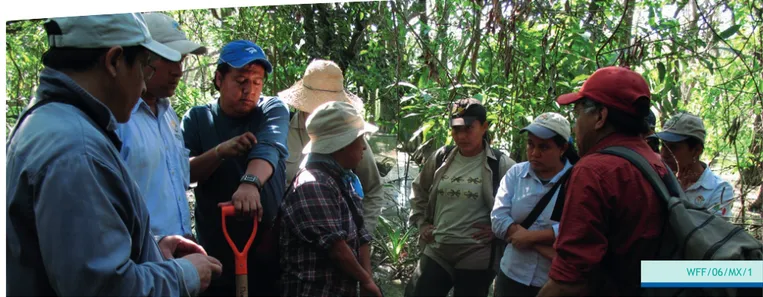
WFF/12/CL/2 While all projects must fall under at least one of the
above categories of assistance, they must also fall under at least one of the seven focus areas used to categorize projects according to the main activities for which the Fund provides assistance. These fo-cus areas are Training and Capacity Building, Awa-reness Raising Activities, Documentation, Wetland Management and Tools, Academic and Research, Networking and Protection and Conservation of Priority Species.
1. Training & Capacity Building
This focus area includes projects that aim to pro-vide technical training on wetlands mainly for te-chnical staff of government institutions but also for communities and other stakeholders where people are trained to perform a specific activity such as processing fish products, marketing wetland han-dicrafts or engaging in ecotourism among others.
2. Awareness Raising Activities
This area includes school visits, campaigns invol-ving the general public, and activities with indige-nous groups among others. Moreover, academic events, documentation and training also contribute to raising the awareness of participants.
3. Documentation
This area includes the production of all books, CDs, handbooks, leaflets, posters and other reference materials. Visitor and wetland centers also fall under this focus area.
4. Wetland Management & Tools
This focus area includes projects related to infras-tructure and equipment, baseline and monitoring data about the characteristics of a site, guidance documents (e.g., management plans, policies and consensus documents), maps, software and data-bases. This includes preparation of management plans and restoration strategies for Ramsar Sites and other wetlands.
5. Academic & Research
This area includes data collection and/or processing and analysis of data into useable information or information products that are then made readily available to the entity that provided the data and through specialized journals and theses.
6. Networking
This focus area relates to any initiative aimed at establishing or strengthening linkages between specialized or non-specialized groups. In addition to the usual multi-stakeholder meetings and con-gresses, tools such as e-newsletters, virtual fora and joint (regional) initiatives are also included.
7. Protection and Conservation of
Priority Species
WFF/12/MX/3
Effectiveness and impact of the Fund
The Fund’s relationship and contribution to the Ramsar
Convention’s Strategic Plan
Previous Strategic Plans
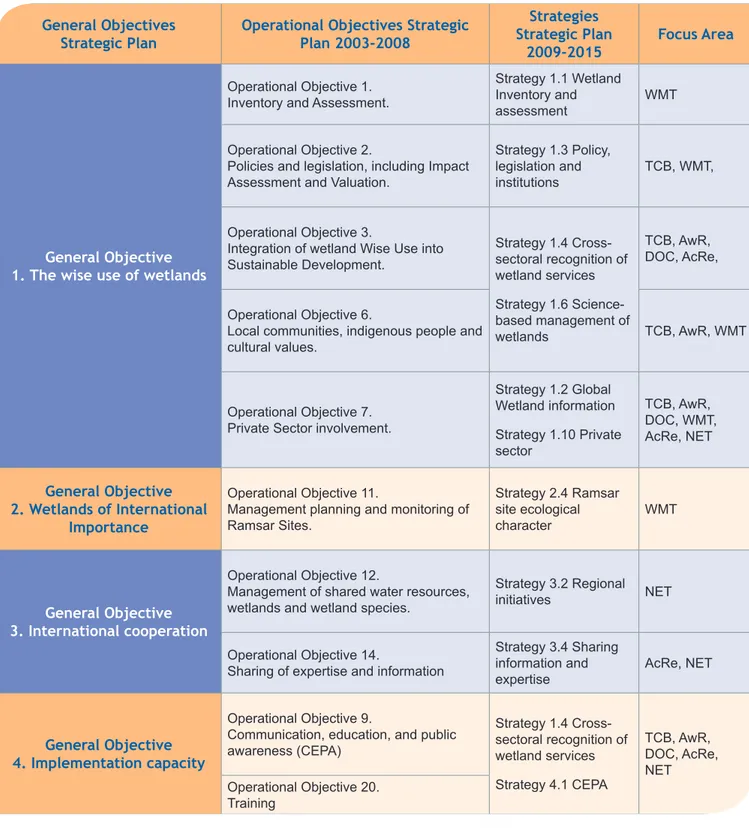
General Objectives
Strategic Plan Operational Objectives Strategic Plan 2003-2008
Strategies Strategic Plan
2009-2015 Focus Area
General Objective 1. The wise use of wetlands
Operational Objective 1. Inventory and Assessment.
Strategy 1.1 Wetland Inventory and
assessment WMT
Operational Objective 2.
Policies and legislation, including Impact Assessment and Valuation.
Strategy 1.3 Policy, legislation and
institutions TCB, WMT,
Operational Objective 3.
Integration of wetland Wise Use into Sustainable Development.
Strategy 1.4 Cross-sectoral recognition of wetland services Strategy 1.6 Science-based management of wetlands
TCB, AwR, DOC, AcRe,
Operational Objective 6.
Local communities, indigenous people and
cultural values. TCB, AwR, WMT
Operational Objective 7. Private Sector involvement.
Strategy 1.2 Global Wetland information Strategy 1.10 Private sector
TCB, AwR, DOC, WMT, AcRe, NET
General Objective 2. Wetlands of International
Importance
Operational Objective 11.
Management planning and monitoring of Ramsar Sites.
Strategy 2.4 Ramsar site ecological
character WMT
General Objective 3. International cooperation
Operational Objective 12.
Management of shared water resources, wetlands and wetland species.
Strategy 3.2 Regional initiatives NET
Operational Objective 14.
Sharing of expertise and information
Strategy 3.4 Sharing information and
expertise AcRe, NET
General Objective 4. Implementation capacity
Operational Objective 9.
Communication, education, and public awareness (CEPA)
Strategy 1.4 Cross-sectoral recognition of wetland services Strategy 4.1 CEPA
TCB, AwR, DOC, AcRe, NET Operational Objective 20.
Training
Key: TCB – Training & Capacity Building; AwR – Awareness Raising; DOC – Documentation; WMT – Wetland Management and Tools; AcRe – Academic & Research; NET – Networking.
Through Resolution XII.2 the Contracting Parties to the Ramsar Convention on Wetlands approved the 4th Strategic Plan 2016-2024 at the 12th Meeting of
the Conference of the Parties in Punta del Este, Uruguay. As the Convention moves forward, the Wetlands for the Future Fund will contribute to the implementation of the Strategic Plan 2016-2024, particularly through Operational Goal 4: Enhancing implementation, specifi cally through capacity buil-ding to strengthen the implementation of the
Ram-sar Convention on Wetlands in the Americas. It will also contribute to Goals 1: Addressing the drivers of wetland loss and degradation; 2: Effectively con-serving and managing the Ramsar site network; and 3: Wisely using all wetlands. The expected contribution of the thematic areas of the Wetlands for the Future Fund to key targets of Ramsar Con-vention on Wetlands 4th Strategic Plan is shown in
Figure 1.
Figure 1. Contribution of the Wetlands for the Future Fund thematic areas to key targets of Ramsar Convention on Wetlands 4th Strategic Plan.
Contribution of the Fund to Ramsar Convention’s
4th Strategic Plan 2016-2024
Goa l 1 Go al 2 Go al 3 Goal 4 Target 19. Capacity building for implementation of the Convention and the 4th Ramsar Strategic Plan 2016 - 2024 is enhanced.
Target 2.Water use respects wetland ecosystem needs for them to fulfil their functions and provide services at the appropriate scale inter alia at the basin level or along a coastal zone.
Target 16. Wetlands conservation and wise use are mainstreamed through communication, capacity development, education, participation and awareness.
Target 11.Wetland functions, services and benefits are widely demonstrated, documented and disseminated.
Target 7.Sites that are at risk of change of ecological character have threats addressed.
Ramsar Convention on Wetlands
4th Strategic Plan
2016 - 2024
Wetland Management & Tools Training & Capacity Bullding
Documentation Awareness Raising Activities Wetland Management & Tools
Wetland Management & Tools
Training & Capacity Bullding Awareness Raising Activities
Academic & Research
Academic & Research Training & Capacity Bullding
Training & Capacity Bullding Awareness Raising Activities
Awareness Raising Activities Networking
Networking
Documentation Wetland Management & Tools
Training & Capacity Bullding Protection and Conservation of Priority Species
Protection and Conservation of Priority Species
WFF/08/AR/08
Contribution to leveraging national-level synergies with other
processes and Conventions
Parties’ efforts to implement the Ramsar Convention on Wetlands can simultaneously contribute to achievement of the Sustainable Development Goals (SDGs), the Aichi Targets, as well as to leverage synergies at the national level for implementing other biodiversity related Conventions such as the World Heritage Convention, the Convention on International Trade in Endangered Species of Wild Fauna and Flora (CITES), the Convention on Biological Diversity (CBD) and the Convention on Migratory Species (CMS).
Community training for making handicrafts as an alternative to reduce predation
on sea turtles
Lepidochelys olivacea
This community focused project is an example of how the Fund provides support to Parties to implement Ramsar by conserving their wetlands and wetland species while also helping them to implement other biodiversity related Conventions. The project aimed to train people from two local communities in sea turtle themed alternative income options. The Institute of Natural History and Ecology worked with the communities of Las Lupes and Barra Zacapulco, where harvesting of sea turtle eggs (Lepidochelys olivacea) is commonly practiced. This species is included in appendix I of CITES which relates to species threatened with extinction and therefore their trade is only allowed in exceptional circumstances. It is also listed in appendix I of CMS relating to endangered migratory species. Furthermore, projects that promote the conservation of this species contribute to achieving Aichi Target 12. Through the project, communities actively participated in workshops and then women worked in groups to manufacture a range of handcrafts. Overall, 40 women of Barra Zacapulco and Las Lupes were trained in handcraft manufacturing with recycled materials; 32 youth and women received training in T-shirt painting with natural dyes; 20 women were trained in preparing fish and seafood-based dishes and 25 restaurant owners were trained in tourism services. The considerable decline in the harvesting of sea turtle eggs and the successful participation of residents in the project showed the positive attitude and increased awareness of the communities.
Throughout its 20 years of implementation, the Wetlands for the Future Fund has contributed to the implementation of the Convention in the region. During this period, projects have been funded in 23 of the 27 Contracting Parties eligible for funding in the Americas. Over 538 proposals were received and of these, 276 projects have been funded representing 51.3% of all proposals submitted. More than 15,000 people have participated in the projects and of those, approximately 8,300 have received training through the Fund.
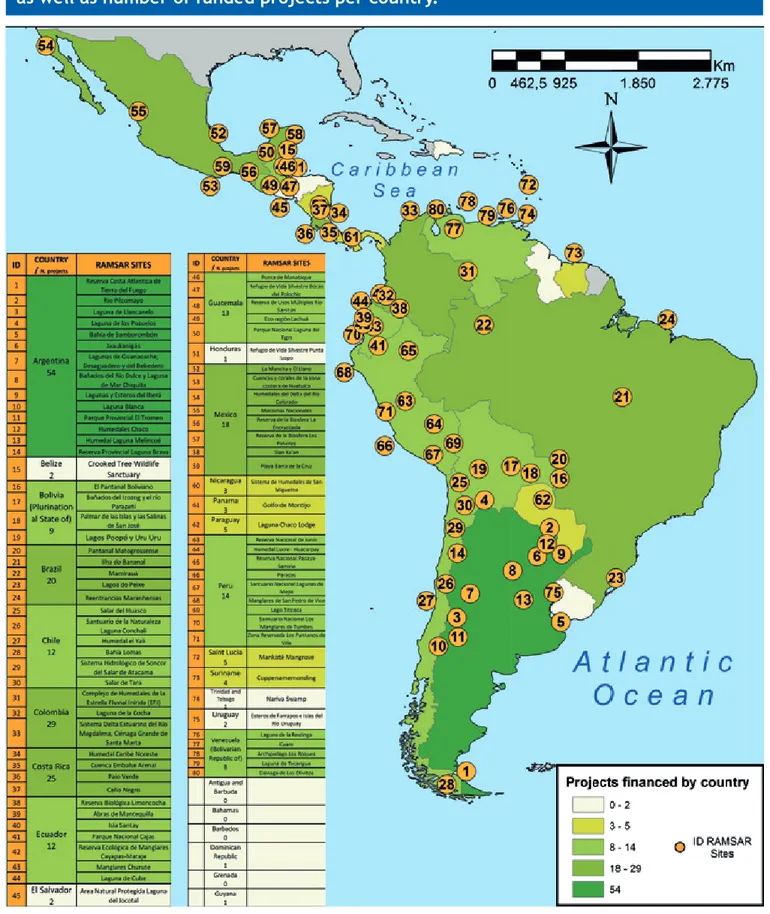
Figure 2 shows the number of projects that have been funded per country. In addition, 47 “regional and other” projects have been funded in the region which include short-term projects (e.g. support for publication and printing of books), multi-country projects, regional workshops and support to professionals to attend courses and workshops related to wetlands.
A number of countries have regulary submitted proposals to the Fund and have secured funding for a greater number of projects. These include Argentina (54), Colombia (29), Costa Rica (25), Brazil (20), Mexico (18), Peru (14), Guatemala (13), Ecuador (12) and Chile (12).
Contracting Parties like the Dominican Republic, Honduras, and Trinidad & Tobago are encouraged
to consider the opportunities provided by the Fund and to explore submitting more proposals to the Secretariat. Contracting Parties such as Antigua and Barbuda, Bahamas, Barbados and Grenada have not submitted any proposals and are encouraged as well to submit proposals to the Fund.
The Fund is meant to serve all eligible Contracting and Non-Contracting Parties in Latin America, the Caribbean and Mexico and countries that have not submitted many or that have never submitted a proposal are warmly welcomed to do so.
Regarding the distribution of projects within the different focus areas, of the 276 projects funded over the last 20 years, 141 have had a Training and Capacity Building component, 120 an Awareness Raising component and 147 also fall under the Documentation focus area. Furthermore, 118 fall under the Wetland Management and Tools area, 99 under the Academic and Research area, 69 have had a Networking component and 9 also fall under the Protection and Conservation of Species focus area. Most projects have comprehensive approaches and often fall under multiple focus areas. The fact that implementers do not limit projects to one specific area speaks of the need in the region for projects with integral approaches and of the Fund’s complementarity among the focus areas.
Implementation of projects in Latin America,
the Caribbean and Mexico
The Wetlands for the Future Fund seeks to promote the conservation and wise use of all wetlands in Latin America and the Caribbean as well as in Mexico. However, since 2002, priority has been given to projects taking place in wetlands that have been designated as Wetlands of International Importance by the Contracting Parties to the Convention. Projects have been carried out in 80 Ramsar Sites (20%) out of the 402 Ramsar sites in Latin America, the Caribbean and Mexico. In some cases, more than one project has been implemented per Ramsar site. Figure 2 shows the Ramsar sites where Wetlands for the Future projects have been implemented. Furthermore, projects have also been implemented in sites with multiple designations such as World Heritage Sites (Box 2) or Biosphere Reserves.
The Fund has contributed to awareness raising ac-tivities, site management training, Communication, Education Participation and Awareness (CEPA)
ac-tivities, and conservation programs in Ramsar sites where projects have been carried out. In addition, activities have included, inter alia, creation of da-tabases, wildlife inventories, installation of visitor centers, and restoration of sites that have undergo-ne changes in their ecological characteristics. Pro-jects have also been implemented in wetlands to provide support in the designation process and in compiling information to complete the Ramsar In-formation Sheets to include sites on the List of Wet-lands of International Importance. Such is the case in the sites of Lagunas de Guanacache, Lagunas de Vilama, and Humedales de Península Valdés (Box 2) in Argentina, Estrella Fluvial del Inírida in Colombia, Banco Chinchorro Biosphere Reserve, National Park Arrecife de Puerto Morelos, as well as watersheds and coral reefs in the coastal zone of Huatulco in Mexico, Wetlands System of San Miguelito in Nicaragua, and the Lucre-Huacarpay Wetland in Peru.
Projects in Ramsar sites
This project, developed by the Centro Nacional Patagó-nico (CENPAT) focused on Patagonian wetlands, particu-larly in the Península Valdés area, a World Heritage Site. The project was carried out in two phases related to aca-demic and knowledge transfer activities. The initial phase of the project highlighted the importance of Patagonian coastal wetlands for the survival of migratory shorebirds. Activities included workshops, courses, internships and a graduate thesis. Through these activities the project contributed to raising awareness of the importance of the conservation and wise use of these ecosystems among the general public, provincial and local government offi-cials, NGOs, students, teachers and technical and admi-nistrative staff involved in protected area management. A wide range of materials were also produced to fa-cilitate the dissemination and transfer of informa-tion. Considering the Valdés Peninsula receives on average 70,000 to 100,000 tourists, the distribution of high quality materials is key to raising awareness among the general public. The materials were produ-ced with inputs and themes developed in the courses and workshops and include an interactive multime-dia CD, a leaflet, a booklet and manuals. In addition, a website was developed to showcase the project (www.humedalesdelsur.com.ar).
The second phase continued building on the aims of the first phase of the project and additional objectives included the establishment of the technical bases to pro-pose the wetlands of the Valdes Peninsula as a Ram-sar site and strengthening the continuity of the project. During the second phase, the project moved to a more
regional scope extending the study areas and the reach of the dissemination components. Academic activities during this phase were aimed at training 10 university students as well as increasing laboratory resources and equipment while capacity building activities included 25 workshops and conferences for different interest groups. These activities took place in multiple cities across the provinces in Patagonia. Over 140 stakeholders involved in the decision making process and management of na-tural protected areas participated in the workshops and 650 people participated in the conferences. Through this work, relations have been strengthened with NGOs, pro-tected area agencies and the governments of the provin-ces of Chubut and Tierra del Fuego.
The materials produced during this phase include a book titled “Humedales costeros y aves playeras” [Coastal wetlands and shorebirds] which was widely distributed. All materials are also available online in the project’s website, which has also proven to be an important tool for the dissemination of information. Additionally, specific materials were developed for primary school children. The lessons learned from the project highlight the difficulty of collecting information and the need for workshops and training in remote and scarcely populated areas of Patagonia. Furthermore, in both the first and second phases, the need to continue the project was identified and remains one of their goals.
In 2012, some of the wetland areas of Península Valdés were designated as the Ramsar site “Humedales de Península Valdés”.
Box 2
Importance of Patagonian coastal wetlands as critical sites for the survival of
shorebirds. Towards strong awareness-raising action aimed at communities and
government agencies and intermediate organizations
Under-represented wetlands and threatened species
Under-represented types of wetlands in the Ramsar List of Wetlands of International Importance such as peatlands, grasslands, mangroves, coral reefs, karst systems and sea grass beds among others have gathered special attention under the Convention. Target 6 of the 2016-2024 Ramsar Strategic Plan relates to the designation of Ramsar sites, in particular under-represented wetlands. Previous Strategic Plans have also made reference to the need to include these types of wetlands in the Ramsar List. In line with the above, the Wetlands for the Future Fund has prioritized projects in these types of wetlands resulting in 46 projects funded in mangroves, coral reefs and coastal ecosystems. These projects include awareness raising activities on the importance of mangroves and coral reefs, monitoring activities in coral reefs, monitoring and awareness raising on the importance of conserving endangered species and training on alternative livelihoods options among others (Box 3). Furthermore, 17 projects have been funded in High Andean Wetlands, another type of under-represented wetlands.
Threatened species have also been prioritized by the Fund through the inclusion of a specifi c focus area for their protection and conservation. Promoting the conservation of these species is key to maintaining the ecological character of Ramsar sites and other wetlands that support them. This is especially related to targets 5 and 7 of the current Ramsar Strategic Plan which are related to the maintenance of the ecological character of Ramsar sites.
WFF/12/MX/3 This project was done in collaboration with various
institutions including the National Commission for Protected Areas (CONANP) through the Management of the Huatulco National Park, the Playas Limpias Committee of Santa Maria Huatulco and Costasalvaje. The aim of the project was to build capacity, raise awareness and develop visual and educational materials on issues related to the conservation and wise use of wetlands in order to stop and reduce the degradation of mangroves and coral reefs through participatory management actions in the catchment area of the Ramsar sites Cuencas y Corales de la Zona Costera de Huatulco and Barra de la Cruz. The project was aimed at stakeholders from various groups such as tourism service providers, local communities, government agencies and civil society organizations that benefi t from the Ramsar sites.
Over 300 people participated in 10 workshops that had theory and practical components. Throughout the workshops participants and implementers identifi ed environmental needs and solutions for each sector. This resulted in an agreement among all the sectors involved with proposals to move forward in the conservation and wise use of the Ramsar sites. The agreement was endorsed at a meeting of the State Council for Coastal Wetlands of Oaxaca.
Visual and educational materials produced included: -Two videos, one for each of the Ramsar sites, highligh-ting their importance.
-Two short videos, one on wetlands and the Convention and one on coral reefs.
-Two illustrated leafl ets on mangroves and coral reefs
-A training manual with the documents used for the workshops and the results.
All materials included a logo using two emblematic species: the purple sea snail (Plicopurpura pansa) and Leatherback turtle (Dermochelys coriacea) which is in Appendix I of CITES and CMS.
Furthermore, an existing trail in one of the Ramsar sites was restored and signage was produced with information provided by the tourism services providers that participated in the workshops. This new interpretative trail will raise the profi le of the site and will attract tourists, thus providing opportunities for more sustainable livelihood options.
This project was successful above expectations. For example, the number of people trained was double the number originally planned and the videos have also been seen more than a 1,000 times (on youtube and facebook). Additionally, the workshops were well received among the different sectors and it was clear that people recognize environmental issues even if they have limited knowledge of how the ecosystems work. The positive impact of the project was evident throughout all the activities, the results and the enthusiasm of participants.
Education and environmental awareness raising for the conservation of mangroves
and coral reefs in the Ramsar sites 1321 Cuencas y Corales de la Zona Costera de
Huatulco and 1821 Barra de la Cruz, Oaxaca, Mexico
Projects by
focus area
Training and
Capacity Building
Conservation of nesting and feeding sites for waterbirds
in the Ramsar site Natural Protected Area El Tromen
Implementing Organization: Asociación Civil
Conservación Patagónica
Argentina
WFF/09/AR/2
The Ramsar site where this project took place is home to more than 90 species of birds, 37 of which are waterbirds. The project aimed to contribute to the conservation of these birds through restoration and monitoring of critical habitats within the site as well as awareness raising activities and the promotion of birdwatching tourism.
To achieve the objectives of the project a number of activities were carried out. For the conservation and restoration of nesting sites, the activities included workshops with local farmers and fencing of important nesting and feeding areas and workshops to develop and implement a comprehensive monitoring program. Awareness raising activities included workshops and exchange experiences for teachers and park rangers on the education tool “Educación de la Ecología en el Patio de la Escuela” (Ecology education in the schoolyard) and on the importance of the Ramsar Site, workshops and field visits to the Ramsar Site for students and training workshops for local communities on tourism services related to birdwatching activities.
Materials were also produced throughout the project such as the monitoring manual, handbooks on the ecological and cultural importance of the site, radio spots and leaflets for awareness raising of the larger population and other materials used during the different workshops. Furthermore, an existing trail was
restored and turned into an self-guided interpretative
birdwatching trail with new and improved signage.
Key Outcomes
One of the most significant achievements of the project is the establishment of monitoring practices that have provided the basis for the development of monitoring programs in eight other protected areas in the Argentinian province of Neuquén. These programs provide essential information for the decision making and planning process for the activities that can take place within the Ramsar site.
The project was also successful in the restoration of nesting and feeding sites as well as in raising awareness and increasing the involvement of important stakeholders. These included teachers, students, park rangers, farmers and local communities in general that live in or around the Ramsar site. Overall, the project reached over 300 people that benefit from the Ramsar site.
Lessons Learned
Strengthening and consolidation of the National
Wetlands Committee
Implementing Organization: Mater Natura
Brazil
WFF/09/BR/2
The Brazilian National Wetlands Committee started its activities in 2005. Between 2005 and 2009, the Committee was only able to meet four times due the limited availability of staff to coordinate the meetings and processes. The aim of this project was to improve the functioning and consolidation of the committee by providing platforms for cross sectoral coordination, increasing governance on the conservation and wise use of wetlands, increasing awareness of the importance of wetlands, creating technical panels to advise on different issues and increasing the involvement at the scientifi c and technical level on wetland conservation and wise use issues.
Key Outcomes
As part of the activities, meetings of the National Wetlands Committee were organized as well as the fi rst Technical Meeting of Managers of Ramsar Si-tes. Furthermore, there was a training workshop and exchange opportunities for site managers. Other ac-tivities included the production of documents to help with the implementation of the Convention such as including wetlands aspects in the document “Mana-gement of Integrated Water Resources Coastal Ma-nagement, including wetlands”. Concept papers on
the Convention targeted at different levels of gover-nment were also produced.
Key technical panels were identifi ed as well as their composition, objectives and functioning. As of 2010 two panels were created on Criteria for Ramsar site designation and another one on Coral reefs. One of the most important outputs of the panels is the map of priority areas for conservation of wetlands and their ranking.
Lessons Learned
Strengthening institutional capacity related to
wetland monitoring within the National System for
Wild Protected Areas
Implementing Organization: Corporación Nacional Forestal (CONAF)
Chile
WFF/12/CL/2
The Corporación Nacional Forestal (CONAF) mana-ges the National System for Wild Protected Areas of Chile (SNASPE). Through this project, CONAF stren-gthened the institutional capacity of SNASPE with respect to wetland monitoring by establishing a mo-nitoring protocol, applying it in pilot areas and training CONAF personel on its application and finally printing and distributing it among stakeholders. The project, which also had the support from the faculty of Fores-try and Natural Sciences from the Universidad de Chi-le, was key to increasing the level of attention given to wetlands within the SNASPE and to the identification of specific areas that also need to be strengthened. A monitoring manual was developed based on a compilation and evaluation of current methodologies being used in the country followed by a workshop to design the manual taking into account that it needed to be practical, economical and with a diverse application to different kinds of protected areas. The last stage of the project focused on the dissemina-tion of the results of the project through meetings with neighboring communities of the national reserves whe-re the monitoring took place. At the national level the project was presented to the National Wetlands Com-mittee. The monitoring manual was also published and copies were given to regional offices of CONAF as well as to relevant local and national stakeholders.
Key Outcomes
One of the main results of the project is the development of the monitoring manual “Manual para el establecimiento de programas de monitoreo de humedales insertos en el Sistema Nacional de Áreas Silvestres Protegidas del Estado de Chile (SNASPE)” (Manual for establishing monitoring programs for wetlands within the System of National Wild Protected Areas of Chile (SNASPE)).
Furthermore, 27 wetland specialists from CONAF were trained and participated in the development and validation stages of the manual. To test the monitoring protocol, it was applied in pilot areas that included Laguna Matanzas, which is within the El Yali Ramsar site, Laguna Torca and Laguna Hermosa. In addition to the manual and its application, the project supported the purchase of multiparameter equipment need to measure water quality parameters during monitoring.
Lessons Learned
Training based on a review of legislation and
institutions related to wetlands management
in Ecuador
Implementing Organization: Centro Ecuatoriano de Derecho Ambiental (CEDA) and the Minisitry of Environment
Ecuador
WFF/06/EC/2
The project developed by the Centro Ecuatoriano de Derecho Ambiental (CEDA) and the Ministry of Environment focused on reviewing and evaluating laws and institutions based on the guidelines provided by Ramsar. The aim of the project was to advance the implementation of the wise use of wetlands after reviewing and evaluating relevant laws and institutions and train stakeholders to effectively apply existing policies and measures and change them when necessary. This was also done in coordination with policies regarding other relevant Conventions such as the Convention on Biological Diversity (CBD) and the Convention on International Trade in Endangered Species of Wild Fauna and Flora (CITES).
The project included eleven activities for the identi-fication and evaluation of the legal and institutional framework. The activities applied directly and indi-rectly to wetland management in Ecuador in order to make recommendations for legal and institutio-nal reforms. Experts met during three workshops in Quito, Guayaquil and Cuenca. Preliminary results
were evaluated at two other workshops. Following the review process, five workshops took place to train public and private actors which included go-vernment agencies, academia and civil society or-ganizations. Overall, 161 people participated in the workshops.
Key Outcomes
A knowledge base of relevant legal and institutional measures was established and strengthened with the feedback of wetland experts. A legal report, which includes a series of recommendations for supporting the conservation and wise use of wetlands was then produced.
WFF/06/EC/2
Lessons Learned
Through this project the implementers found that the Ramsar Convention on Wetlands is the legal foundation for national legislation and policies con-cerning wetlands in Ecuador. It is also a significant influence on national environmental policies espe-cially in the national constitutional system that ex-plicitly refers to the protection of wetlands as fragile ecosystems and to an integrated management of water resources from an ecosystem approach.
Environmental education for the sustainable
development of fishery resources in the Bocas del
Polochic Wildlife Refuge, El Estor, Izabal, Guatemala
Implementing Organization:Defensores de la Naturaleza
Guatemala
WFF/06/GT/1
Defensores de la Naturaleza has managed the Bocas del Polochic Wildlife Refuge since 1997. It has also worked for over 15 years in natural resources conservation and sustainable development. This project was developed as part of their strategy in environmental education, sustainable development and sustainable management. The aim was to promote sustainable fishing practices and raise awareness of the importance of this site and the region of Lake Izabal through environmental education of the local communities. The impact of this project was very significant as over 5,500 people benefit directly from the Ramsar site.
Key Outcomes
The project was done in three phases. The first phase focused on explaining fishing regulations for Lake Izabal to local communities in their native language, Q’eqchi, as a large number of people engaged in this activity within the refuge belong to this ethnic group. The second phase consisted of the preparation, publication and distribution of a catalog with information on commercial species found in this area. The third and final phase was the environmental education component of the
project. For this phase educational materials were developed and distributed. The topics included the importance of wetland ecosystems, sustainable production practices and environmental awareness. Furthermore, park rangers and teachers were trained to hold environmental education workshops at the local schools.
Dissemination, awareness-raising and training in specific
sectors of society on wetlands issues as a strategy for
consolidating the national wetlands committee
in Paraguay
Implementing Organization: Fundación Moisés Bertoni
Paraguay
WFF/01/PAR/2
Through this project, the Moisés Bertoni Foundation de-veloped a series of workshops and activities that have been important in raising awareness of the wetland con-servation issues in Paraguay. A large number of people from different areas have been trained, including tea-chers, students, politicians and decision-makers. The workshops took place in the capital Asunción as well as in other cities also providing the first opportunity for dia-logue with the communities in the area in or around the Lago Ypoa Ramsar site with respect to the conservation problems of the area.
Other activities included a forum on Communication, Education and Public Awareness-Raising that had 115 participants and activities within the framework of the World Wetlands Day celebration. In addition, support was provided for the International workshop “Aspectos de la problemática y manejo de los humedales de la Ecorregión de Ñeembucú” [Aspects of the problems and management of the Ñeembucú wetlands ecoregion]. This workshop focused on topics such as environmental ethics, wetland ecology, identification of wetland flora and fauna, the role of the National Wetlands Committee and the Ramsar Convention on Wetlands among others. Overall, over 300 people participated in the project, including university students, teachers, private owners and public officials of the Ministry of the Environment. The materials produced include a proposal document for a National Wetlands Policy and a book entitled
“Hume-dales del Paraguay” [Wetlands of Paraguay]. Also, docu-ments on the National Wetlands Committee and on the Ramsar Convention were distributed among teachers in several schools, university students, local politicians and decision-makers of the Ministry of the Environment.
Key Outcomes
The activities performed during the project helped to raise awareness of local actors and to strengthen the National Wetlands Committee of Paraguay. In addition, there has been a significant increase in proposals and projects related to wetlands as a result of increased awareness among some civil society organizations who have identified these ecosystems as an opportunity to meet their conservation goals.
Lessons Learned
Policies and institutions for wetlands management:
training for managers from the insular Caribbean
Implementing Organization: Caribbean Natural Resources Institute (CANARI)Trinidad &
Tobago
WFF/04/CAR/1This project arose from the concern of identified threats to Caribbean wetlands which in turn threaten livelihoods in the region. Through the project, CANARI aimed to analyze the actual and potential role of the Ramsar Convention on Wetlands in contributing to integrated management of wetlands in Jamaica, Saint Lucia and Trinidad and Tobago. The analysis and training com-ponents of the project were done through workshops with the participation of a number of key stakeholders from the region. They include wetland management practitioners from Dominica, the Dominican Republc, Jamaica, St. Kitts and Nevis, St. Lucia, and St. Vincent and the Grenadines and Trinidad and Tobago, inclu-ding government and civil society representatives as well as Ramsar Focal points. The project concluded with a regional workshop on Policies and Institutions for Participatory Wetlands Management: Lessons from the implementation of the Ramsar Convention in the insular Caribbean.
The results were disseminated online through CANA-RI’s website (www.canari.org) and physically through the distribution of copies of the Policy Brief. It was sent to policymakers, Ramsar focal points, wetland manage-ment agencies and key civil society actors for a broader distribution. Additionally, the report was circulated at the regional meeting of the Society for the Conservation and Study of Caribbean Birds (July 2007, Puerto Rico), the Training for Trainers workshop of CANARI/FAO (August 2007, Trinidad) and other workshops and regional and national conferences.
Key Outcomes
Attendees were trained on institutional and policy analysis for wetland management.
A policy brief was also produced for the project, which summarizes the main findings from workshops and na-tional consultations. It also gives an overview of wet-lands in the Caribbean, participatory management and the challenges for effective management.
This project involved countries such as Dominica and St. Kitts and Nevis which are not yet Parties to the Con-vention. In this regard, one of the main outcomes of the project was the heightened motivation to facilitate dialo-gue about the potential value of acceding to the Ramsar Convention on Wetlands and the possible application of Ramsar mechanisms.
Lessons Learned
Participatory assistance for Guyana’s
accession to the Ramsar Convention
Implementing Organization: Environmental Protecton Agency
Guyana
WFF/02/GUY/1
The development of this project reflects the efforts made by Guyana to accede to the Ramsar Convention on Wetlands and to recognize the importance of conserving and wisely using the wetlands within their territory. The aim of the project was to increase the capacity of government environmental agencies and NGO partners in the integrated management of Guyana’s wetlands and to provide technical assistance in the identification of Guyana’s first site in order to accede to the Convention. The activities under this project included training and planning workshops on wetland issues and on the implications of acceding to the Convention as well as on the integration of the concept of wise use into Guyana’s national integrated environmental management framework. The activities were divided into two workshops. The first one focused on wetlands management and included and introduction to the Ramsar Convention and modules on the values of wetlands, floodplain river fisheries management, adaptive management, collaborative management of wetland resources and wetland institutions, policies and laws in Guyana. The second workshop focused on wetlands strategic planning.
Key Outcomes
As a result of the workshops, six priority wetlands for designation were identified. In addition, an Interim Wetlands Strategic Plan for Guyana was prepared, which set out the plan to follow in order to accede to the Convention as well as a long term plan for subsequent action.
This focus area includes projects providing non-technical information to all groups within society. School visits, campaigns involving the general public, and activities with indigenous groups all fall into this category. Academic events, documentation and training also contribute to raising participant awareness.
Awareness-Raising
Estrella Fluvial Inírida: a new Ramsar site in Colombia
Implementing Organization: World Wildlife Fund (WWF) ColombiaColombia
WFF/09/CO/2
The Estrella Fluvial Inírida is an area located in the Ori-noco watershed. One of the most important watersheds on the planet, it is rich in biodiversity and hydrological values. The area was identified in 2004 as a priority wet-land for conservation and in 2007 national and regional authorities, with the support of WWF, started the process to declare it a Ramsar site. They completed the ecologi-cal and socio-economic characterization of the area and identified that it is located within the territory of 20 indige-nous communities of the Puinave and Curripaco groups. Through the project, the consultation process with the in-digenous groups was completed. It therefore supported the participation of local indigenous communities in the designation process and the management plan develo-pment process. It also strengthened the institutional ca-pacity of national environmental authorities such as the Ministry of Environment, regional authorities and National Parks, particularly in the development of the basis for the management plan of the new site.
The activities carried out during the project included se-veral meetings with indigenous leaders to initially inform them of the proposed designation and the consultation processes and then to train them to formally carry out the consultation. It is important to highlight that the socializa-tion of the Ramsar site proposal was done by indigenous leaders. The information materials such as posters were provided by the national and regional authorities as well as by WWF. The leaders then provided the information to their communities focusing on the objective of the area, the boundary of the area, the allowed uses of the area, the definition of a Ramsar site and agreements for its use and management. A final meeting took place where indi-genous leaders presented the results of the socialization process and the decisions made by the communities.
Key Outcomes
The main key outcome is the successful completion of the consultation process and approval by indigenous communities for the designation of the site. This also resulted in raised awareness among the communities regarding the implications of designating the site and created more ownership of the process. After the consultation process, the Ramsar Information Sheet for the Estrella Fluvial Inírida site was finalized with support from environmental authorities, WWF and indigenous leaders. They also worked on the basic guidelines for the management plan and on the establishment of a Coordinating Committee for the plan.
Lessons Learned
Conservation, ecotourism and sustainable development
in the Lauricocha Wetland
Implementing Organization: Instituto Ecoturísico y Desarrollo de Montañas (INECODEM)
Peru
WFF/12/PE/1
The Lauricocha wetland is located in the Huanuco pro-vince of Peru and is home to the Lauricocha rural com-munity. The project aimed to train and raise awareness among the community regarding the ecological and cul-tural values of the wetland, which could provide them with alternative and more sustainable livelihoods in or-der to improve their standard of living as most of them live in extreme poverty. The activities focused on aware-ness raising and training workshops on the conservation of the wetland, its importance, threats, and biodiversity, the Ramsar Convention on Wetlands and sustainable livelihoods, in particular ecotourism activities. Overall, four workshops with theory and practical components took place as well as a conference to present the results. Participants included local communities and authorities, and public and private sector representatives.
The project and its achievements were widely advertised through social media as well as through printed media such as banners and 1,000 posters that were distributed in key areas of the Huanuco region. In addition, two videos were made on the training workshops and one for promoting the Lauricocha wetlands as an ecotourism destination. Training materials were also produced for the workshops and the conference. The results of the project were also presented at a regional event in the framework of World Wetlands Day 2015 celebrations and at the International Conference on the Conservation of Wetlands in Latin America and the Caribbean in November 2014. The project was also presented to
Key Outcomes
More than 60 people attended each training workshop including members of the rural community, local autho-rities, teachers and youth groups. As part of the works-hops, participants carried out cleaning brigades of the wetland and also identifi ed potential trails in Lauricocha that could be promoted for tourism. One of the main out-comes of the conference was the establishment of the Lauricocha Wetlands Management Committee, which will include members from the local governments, com-munities and civil society.
Furthermore, the implementers identifi ed the Tamboco-cha wetlands as a similar area that could benefi t from the results of the project and presented them at a works-hop in the town of Gashampampa. Over 50 people parti-cipated in the workshop and there was a lot of interest in implementing the project in the Tambococha wetlands.
Lessons Learned
Under this focus area, the Fund provides support to producing books, CDs, handbooks, leaflets, posters and other reference materials. Visitor and wetland centers have also been included here. Videos and radio broadcasts fall as much under this category as under “awareness raising”, while websites are treated under “networking”.
The Inventory of Wetlands in Argentina: a tool for the
implementation of the Ramsar Convention
Implementing Organization: Fundación Humedales/ Wetlands International Argentina
Argentina
Fundación Humedales Argentina developed this project as they had identifi ed a gap in the knowledge related to wetlands in Argentina. There were a number of technical publications and research work groups but the lack of an inventory at the national scale remained. Furthermore, the need for a national wetlands inventory was identifi ed in Argentina’s 2008 National Report on the implementation of the Convention. The inventory was planned at three scale levels and this project covered the fi rst level: Regions and subregions of wetlands at a scale of 1:1,000,000 to 1:500,000. The implementation of the project also contributes to regional objectives in the framework of the Ramsar Regional Initiative for the Conservation and Wise Use of La Plata River Basin.
The activities covered by the project included desk research to defi ne regions and subregions as well workshops with a specialist working group to discuss fi ndings and develop the fi rst level of the inventory. Furthermore, a network of specia-lists from different regions of the country was es-tablished in order to carry out consultations and
integrate inputs into the inventory. The fi nal sec-tion of the project focused on the disseminasec-tion of the results of the project as well as the digital version of the inventory.
Key Outcomes
The achievements of the project include a new map of 10 wetland regions and 16 subregions in Argentina as well as the identifi cation of new experts that could help with the other future stages of the inventory.
Lessons Learned
Documentary “Corridor of Life”
Implementing Organization: ECOVIVIR Productora (Uruguay), NGO Alter Vida (Paraguay) and Fundación PROTEGER (Argentina)
Uruguay
WFF/03/UY/1
The documentary “Corridor of Life” is a visual tool created by Studio ECOVIVIR (Uruguay) and part-ner organizations, the NGO Alter Vida (Paraguay) and the Foundation PROTEGER (Argentina), to raise awareness of some of the major wetlands in South America, placing emphasis on a corridor shared by Paraguay, Argentina and Uruguay. The project also aimed to promote management in wet-land ecosystems through participatory policies and community integration. In addition, it promoted wet-land conservation through the involvement of com-munities and government officials from Argentina, Uruguay and Paraguay working in wetland conser-vation and management.
Key Outcomes
National Wetlands Inventory of Uruguay
Implementing Organization:Ministerio de Vivienda, Ordenamiento Territorial y Medio Ambiente - Dirección Nacional de Medio
Ambiente
Uruguay
Charlie Waite
Uruguay has a strong legal framework that recogni-zes wetlands as key ecosystems. The Government of Uruguay executed this project through the Minis-try of Housing, Land Use Planning and Environment, aiming to develop the National Wetlands Inventory. The purpose of the inventory is to identify priority wetlands for conservation as well as the value of the functions of each wetland and provide baseline in-formation to measure future changes. The inventory would also be an important instrument for planning and managing national natural resources. As this is a major undertaking, the project was divided in phases and the Wetlands for the Future funding was used for the first phase.
The activities covered under this phase include the identification of all wetlands at a scale of 1:20,000. They were then characterized using satellite images and the information was validated in the field. In addition, methodologies for an integrated multiscale monitoring system for wetlands based on internationally applied procedures were also identified. From this work, priority areas to be designated as Ramsar sites were chosen and the Ramsar Information Sheets were prepared. Furthermore, a communications strategy was develo-ped to raise awareness and disseminate information on the benefits of wetlands and their designation as Ram-sar sites. The strategy is supported by products such as
technical booklets and manuals as well as leaflets and posters for dissemination and awareness raising.
Key Outcomes
During this initial phase the team identified wetlands at the country scale and found that wetlands comprise 11.5% of the national territory. Other observations include the presence of 4 of the 12 coastal wetland types under the Ramsar classification system and 10 of the 20 continental wetland types.
Lessons Learned
The projects under this focus area involve infrastructure and equipment, baseline and monitoring data about the characteristics of a site, guidance documents (e.g., management plans, policies and consensus documents), maps, software and databases. This includes preparation of management plans and restoration strategies for Ramsar Sites and other wetlands.
Wetland
Recovery of the Palmar de las Islas wetland
Implementing Organization: Wildlife Conservation Society (WCS) Bolivia, Fundación Kaa-Iya, Parque Nacional Kaa-Iya del Gran Chaco, Capitanía de Alto y Bajo Isoso, Museo de Historia Natural Noel Kempff Mercado
Bolivia
WFF/05/BO/1
This project took place in one of the most important wetlands in Bolivia, the Palmar de las Islas Ramsar site which is under constant threat from livestock activities that have resulted in loss of biodiversity and pollution. The project involved a comprehensive technical study for the recovery of the site, which was made possible due to the collaboration from a number of institutions such as the Wildlife Conservation Society (WCS) Bolivia, the Kaa-Iya Foundation, the Kaa-Iya del Gran Chaco National Park, the Capitanía de Alto y Bajo Isoso and the Museum of Natural Histoy Noel Kempff Mercado. The project had both a research component and an awareness raising component.
Under the research component, baseline information was collected in order to be able to monitor the state of the site over time, thus allowing the observation of natural regeneration and possible recovery of the wetlands. Areas of research for the baseline informa-tion included biodiversity, ecology of species and the wetland as a whole. Further research was conducted on invertebrates and vertebrates present at the site including the diversity of dragonflies (Insecta, Odo-nata), dung beetles (Insecta, Scarabeidae, Scarabei-nae), butterflies (Insecta, Lepidoptera) and a diversity and abundance of medium and large mammals, birds, amphibians and reptiles, as well as the ecology of
im-portant species in the area, such as Jabiru mycteria (Aves, Ciconiidae), Dolichotis salinicola (Rodentia, Caviidae) and Geochelone carbonaria (Testudines, Testudinidae). As for the vegetation, an emphasis was placed on the regeneration of forest and palm trees. Three young scientists, seven students, nine local assistants and three park rangers of the Kaa-Iya protected area participated in this component of the project which provided them with professional expe-rience and training.
The awareness raising component involved the development of an illustrated guide for the general public based on the results of the research component.
Key Outcomes
Chile
Diagnostic and participatory monitoring
in the Yali wetand
Implementing Organization: Municipality of Santo Domingo
WFF/02/CHI/1
This project was carried out by the Municipality of Santo Domingo in collaboration with local communities for the benefit of the Yali Ramsar site. The project involved the identification of threats to the integrity of the site which together with interviews, surveys and workshops provided a baseline for the site. Historical data on the first inhabitants of the site as well as land use was also collected. Furthermore, with support from academic institutions, the water quality was measured and the climate and hydrology was characterized. Through this partnership, the impact of major economic activities on the wetlands was also evaluated.
Key Outcomes
An informative document entitled “Humedales: va-lores, funciones y amenazas” [Wetlands: values, functions and threats] was produced, as well as a video on wetlands, particularly the Yali Wetland.
Preparation of the Manual of Procedures for the
Management of Mangroves of Costa Rica
Implementing Organization: Sistema Nacional de Áreas de Conservación (SINAC)
Costa Rica
WFF/01/CR/1
Through this project, the Sistema Nacional de Áreas de Conservación (SINAC) aimed to prepare a handbook on the procedures for managing mangroves in the country and to train their technical and administrative staff on issues related to the conservation and management of these important ecosystems. The handbook “Manual de procedimientos para el manejo de los manglares de Costa Rica” [A Handbook of Procedures for the Mangrove Management of Costa Rica] includes technical aspects, a legal framework, and administrative matters related to mangrove management. The participatory process that led to the preparation of the handbook involved officials of the Ministry of Environment, researchers and technicians working with mangroves and involved in their management. Once the first version of the document had been completed, training workshops took place and the handbook was validated.
Key Outcomes
The handbook, which is a technical and adminis-trative tool, will allow officials from the Ministry of Environment and Energy of Costa Rica to make decisions based on criteria established by the au-thorities responsible for mangrove management, thus preventing subjectivity and decisions that are different for similar cases.
Costa Rica
Conservation of wetlands, participation and poverty
alleviation in Central America
Implementing Organization: Fundación para la Gestión Ambiental Participativa
WFF/08/CR/1
The Fundación para la Gestión Ambiental Participativa (FUNGAP) executed this project with the aim of provi-ding information based on local realities for communi-ties, decision makers and environmental authorities in order to strengthen the implementation of the Conven-tion and the Central America Wetlands Policy. The pro-ject emphasized the implementation of Resolution IX.14 on wetlands and poverty alleviation. Furthermore, this project is the product of regional collaboration and parti-cipation as it was done jointly with BirdLife and involved the participation of many regional stakeholders.
To achieve the overall project goal, a method for analyzing the relationship between conservation and human welfare was developed. The methodology was then applied to 17 case studies in Central America. Data was obtained and analyzed in order to identify the factors that determine the effectiveness of social participation in Central America and its interdependence with wetland conservation and poverty alleviation alternatives. Once the research and practical phases of the project were done, Ramsar Administrative Authorities, NGOs and local communities were trained on the design of projects on these issues. Over 20 people participated in the training workshop which also included experts from other regions.
The results of the project were published as implemen-ters saw the need to present the results to the wider pu-blic and to promote the methodology which may also be
applied in other regions depending on the local circum-stances.
Through the process of implementing the project, stren-gths, needs and priorities to improve the conservation and wise use of resources were identified. In addition, even though the call for case studies was widely done, most of the projects sent for consideration were in im-portant remaining areas of mangroves.
Key Outcomes
Besides the successful training of key stakeholders, one of the main results of the project was the identification of mangroves as priority ecosystems for conservation in Central America. They are key for biodiversity and are closely associated with the livelihoods of local communities. Another important observation was the extent of artisanal fishing being practiced in the region.