UNIVERSIDAD TÉCNICA PARTICULAR DE LOJA
La Universidad Católica de Loja
AREA SOCIOHUMANÍSTICA
TÍTULO DE LICENCIADO EN CIENCIAS DE LA EDUCACIÓN
MENCIÓN INGLÉS
The type of vocabulary learning strategies used by students to improve
speaking skills at a private high school in the city of Loja.
TRABAJO DE TITULACIÓN
AUTOR: Vélez Aguilar, Andrés Isrrael.
DIRECTOR:
Solano Jaramillo, Lida Mercedes, Mgtr.
CENTRO UNIVERSITARIO LOJA
Esta versión digital, ha sido acreditada bajo la licencia Creative Commons 4.0, CC BY-NY-SA: Reconocimiento-No comercial-Compartir igual; la cual permite copiar, distribuir y comunicar públicamente la obra, mientras se reconozca la autoría original, no se utilice con fines comerciales y se permiten obras derivadas, siempre que mantenga la misma licencia al ser divulgada. http://creativecommons.org/licenses/by-nc-sa/4.0/deed.es
ii
APROBACIÓN DEL DIRECTOR DEL TRABAJO DE TITULACIÓN
Magister
Lida Mercedes Solano Jaramillo
DOCENTE DE LA TITULACIÓN
De mi consideración:
El presente trabajo de titulación: The type of vocabulary learning strategies used by students to improve speaking skills at a private high school in the city of Loja, realizado por Vélez Aguilar Andrés Isrrael, ha sido orientado y revisado durante su ejecución, por cuanto se aprueba la presentación del mismo.
Loja, Marzo 2016
f)….……….
iii
DECLARACIÓN DE AUTORÍA Y CESIÓN DE DERECHOS
“Yo, Vélez Aguilar Andrés Isrrael declaro ser autor del presente trabajo de titulación:
The type of vocabulary learning strategies used by students to improve speaking skills at a private high school in the city of Loja, de la Titulación de Ciencias de la Educación mención Inglés, siendo la Mgs. Lida Mercedes Solano Jaramillo directora del presente trabajo; y eximo expresamente a la Universidad Técnica Particular de Loja y a sus representantes legales de posibles reclamos o acciones legales. Además certifico que las ideas, conceptos, procedimientos y resultados vertidos en el presente trabajo investigativo, son de mi exclusiva responsabilidad.
Adicionalmente, declaro conocer y aceptar la disposición del Art. 88 del Estatuto Orgánico vigente de la Universidad Técnica Particular de Loja que en su parte pertinente textualmente dice: “Forman parte del patrimonio de la Universidad la propiedad intelectual de
investigaciones, trabajos científicos o técnicos y tesis o trabajos de titulación que se realicen con el apoyo financiero, académico o constitucional (operativo) de la Universidad”.
f)………..
iv
DEDICATION
I dedicate the present work to my parents who have given me unconditional love and support in every single moment of my life, and for guiding me through the right path to success. I also dedicate my work to my best friends for being there during my schooling period, for all the amazing memories that we have lived together.
v
ACKNOWLEDGMENT
vi CONTENTS
Cover ... i
APROBACIÓN DEL DIRECTOR DEL TRABAJO DE TITULACIÓN ... ii
DECLARACIÓN DE AUTORÍA Y CESIÓN DE DERECHOS ... iii
DEDICATION ... iv
ACKNOWLEDGMENT ... v
CONTENTS ... vi
ABSTRACT ... 1
RESUMEN ... 2
Introduction ... 3
Discussion ... 6
Literature review ... 6
Method………..………..………..…..……….23 Description, analysis and interpretation of results……… ... ………25
Conclusions ... 38
Recommendations ... 39
References ... 40
1 ABSTRACT
The present study examined the type of vocabulary learning strategies used by students to improve speaking skills at a private high school in the city of Loja. The purpose of this study was to determine the most and least used strategies by students and to analyze the effectiveness of strategies in students’ speaking.
The sample selected for the study was 32 students from a private high school of Loja. Based on the aim of this research, qualitative and quantitative methods were used to
determine and understand the use of vocabulary learning strategies. Additionally, the instruments applied were observations, questionnaires, and individual interviews for both students and teachers.
The results showed that “to listen to English songs”,“to use English websites”; and “to watch English television programs/films” were the most used strategies by students. On the other hand, the least used strategies were “to keep a vocabulary notebook” and “to make a group of words for reviewing”. Finally, it was found that the most beneficial strategy for improving speaking skill is “interaction” because students can learn and practice English
features.
2 RESUMEN
En la presente investigación se examinó el tipo de estrategias de aprendizaje de vocabulario utilizadas por los estudiantes para mejorar las habilidades de habla en un colegio privado en la ciudad de Loja. El propósito del estudio fue determinar las estrategias más y menos utilizadas por los estudiantes y analizar la eficacia de las mismas en el habla de los estudiantes.
La muestra seleccionada para el estudio fueron 32 estudiantes de un colegio privado de Loja. En base al objetivo de esta investigación, se utilizaron métodos cualitativos y cuantitativos para determinar y comprender el uso de las estrategias para aprender vocabulario. Además, los instrumentos aplicados fueron observaciones, cuestionarios y entrevistas individuales para los estudiantes y profesores.
Los resultados mostraron que "escuchar canciones en inglés", "usar sitios web en inglés"; y "ver programas de televisión/películas en inglés" fueron las estrategias más utilizadas por los estudiantes. Por otro lado, las estrategias menos utilizadas fueron "mantener un cuaderno de vocabulario" y "hacer un grupo de palabras para revisión". Finalmente, se encontró que la estrategia más beneficiosa para mejorar la habilidad de hablar es "interacción" porque los estudiantes pueden aprender y practicar
características del inglés.
3 Introduction
English has become a widely used language in the world. Through many years,
linguists, psychologists, and researchers have been trying to explain how language is learned. For learners, it is important to understand how language works in order to use it. Most of the time, English proficiency is directly associated with a wide vocabulary. In any language, vocabulary is a very important component. Thus, learners need large and rich vocabulary knowledge in order to use language effectively.
Moreover, students’ reluctance to speak is a major challenge when teaching English. In fact, students should master speaking because it is an important skill that provides them the ability to inform, to persuade and to communicate. Therefore, the deficiency to communicate is one of the main problems related to English learning and it is caused by learners’ low vocabulary.
In this concern, it has been proposed a research topic, whose title is the type of vocabulary learning strategies used by students to improve speaking skills at a private high school in the city of Loja. The purpose of this research was to determine the most and least used vocabulary learning strategies by students of a private high school to improve speaking skill. The specific objectives were to determine the most common vocabulary learning
strategies used by students, to determine the least common vocabulary learning strategies used by students and to analyze the effectiveness of vocabulary learning strategies in students’ speaking.
Previous studies have been conducted in order to identify the vocabulary learning strategies used by students and the relationship between vocabulary knowledge and speaking.
4
reported vocabulary learning strategies? And (2) what are the most and least frequently reported vocabulary learning strategy categories? The population was 185 students from English Major at the University of Veracruz. Also, two instruments were used for data collection: open Vocabulary Learning Strategies (VLS) questionnaire and a 78-item VLS questionnaire. According to the results, further consolidation appeared as the most used vocabulary learning strategies category, followed by dictionary use and repetition strategies. On the other hand, the least used categories were skipping and association strategies.
Another important study was the one conducted in Thailand by Nirattisai and Chiramanee (2014), who explored the relationship between the students’ vocabulary learning strategies and their vocabulary size. The population was 257 University students. The methodology of the research included the use of 2 instruments: the
vocabulary learning strategy questionnaire, adapted from Schmitt (1997) and a bilingual English-Thai version of vocabulary size test. The results showed that out of 39
vocabulary learning strategies, 2 strategies were used at a high level, 18 at a moderate level, and 19 at a low level. Regarding the overall use of VLS, it was moderately correlated with vocabulary size.
5
dictionary, the use of English language media, and applying new English words in daily conversations.
Regarding our country, there has not been a lot of research on this theme. By studying the vocabulary learning strategies used by students, they can understand the roles of
vocabulary learning strategies for improving speaking skills. Additionally, students can get knowledge regarding vocabulary learning strategies that they can use in order to acquire autonomy and independence in their own learning. Also, teachers can introduce the most used strategies in their lessons in order to help students learn new English words, to reinforce the least used strategies through meaningful tasks, and to encourage them to participate actively during speaking assignments. In addition, the present research can serve as the basis for future investigations on vocabulary learning strategies in which the topic can be studied in a broader way.
6 Discussion
Literature review
The topics covered in this section present an overview of English learning and the use of strategies by students. Also, the importance of vocabulary and speaking skill is emphasized. It is important to have a clear idea about these topics because it served as the foundation for the present research. The topics were covered sequentially and were focused on English vocabulary learning strategies and its relationship with speaking skill.
Foreign and second language acquisition
According to Lightbown and Spada (2011), language acquisition is a captivating and spectacular aspect of human development. This aspect of human beings has attracted the attention of linguists and psychologists for many years. The first step that occurs in human beings is first or native language acquisition, which is described as an unconscious process where children start to produce words. Their homes or an early education are the scenarios for language acquisition. When this process has partly or entirely been achieved, a necessity for acquiring a second language emerges. Second language acquisition occurs in a similar way, but through different stages. There are some theories in second language acquisition that give more importance to learners’ capacity for language acquisition. Others focus on the role of the environment, interaction, and learners’ engagement with the social context.
7
concept of second language learning may incorporate the learning of a third, fourth, or subsequent languages (Gass & Selinker, 2008).
Second language and foreign language are terms that do not differ in a major way. That is the reason why not many writers differentiate these two terms. Richards and Schmidt (2002) define second language as any language learned after one’s native language. On the other hand, they define foreign language as a language that is not the native language of a large population in a country, it is not used for instruction in schools, and it is not used for communication in other social aspects such as politics or media. In addition, foreign
languages are taught in school as subjects in order to communicate with foreigners or to read materials printed in the language. Crystal (2003) explains that the distinction between second and foreign language is not universally accepted.
Finally, some authors emphasize the role of learning environment in teaching non-native languages. Thereby, there is a geographical and environmental distinction between second language and foreign language. In addition, it can be said that second language and foreign language are not two kinds of language but situations of learning (Fasold & Connor-Linton, 2006).
Language skills
8
According to Shelby (2013), listening and speaking are integral parts of oral communication. For learners, it is important to be exposed to different kinds of English input, such as films, TV and radio programs, internet podcasts, etc., in order to learn different accents and features of English language in real life settings. Listening to various authentic English materials helps learners to produce sentences in an easier way in terms of pronunciation, grammar, vocabulary, and style (formal and informal). In addition, reading is an essential skill for language learners because it helps to improve the other skills. There are some reasons why reading is a very essential skill. The continuous repetition of patterns and words while reading help students to acquire and remember vocabulary and grammar structures. Reading also allows students to improve on their own; it helps to learn and remember the correct spelling of words as well as to write.
Finally, writing is a very relevant skill because written communication has become widely used nowadays with the use of technology and social media. For professionals and academics, proper grammar has been considered very important; however, in the recent years, to have good writing skills has increased its importance. Through writing, people can communicate and convey meaning in a better way. As a result, for learners, writing skill improves language acquisition; it develops critical thinking and helps learners to express freely as in their mother tongue (Wright, 2011).
The speaking skill
9
feel more anxiety related to their oral production. The development of speaking skill results in the development of the other skills because they are interrelated.
Additionally, speaking a second or foreign language requires more than just the knowledge of grammar and semantic rules. In order to speak, learners must acquire the knowledge of the way that native speakers use the language. Foreign language learners have difficulties when speaking the target language because an ability to use the language
appropriately is required for effective oral communication in social interactions. Interaction involves not only verbal production but also paralinguistic elements of speech such as pitch, stress, and intonation. Also, non-linguistic elements such as gestures, facial expressions, and body language are required to convey meaning (Richards & Schmitt, 2002).
Aspects considered in speaking skills
Speaking, as the rest of the other language skills, has to be learned and practiced. So, English learners need explicit instruction in speaking. Within the speaking skill, there are some competences that learners must domain in order to develop speaking proficiency. Richards and Schmitt (2002) provide four competences for speaking proficiency.
First, the Grammatical Competence, which refers to the knowledge of learners
regarding the structure of English Language. Learners should master the grammar, including morphology and syntax, vocabulary, and mechanics of the language. Learners should have knowledge of words and sentences in order to convey meaning (Richards & Schmitt, 2002). The aim of grammatical competence is to acquire the knowledge and the ability to use forms of expression that are grammatically correct and accurate. Grammatical competence also contributes to learners’ fluency because it allows learners to use and understand the language
10
Second, the Discourse Competence refers to cohesion and coherence while speaking. Whether it is a formal or informal situation, these rules are applied in order to hold a conversation in a meaningful way. This also includes the ability to convey information appropriately and coherently to those who are listening. Effective speakers should learn structures and discourse markers in order to express ideas, show
relationships of time, and indicate cause, contrast, and emphasis. This helps learners to manage turn taking in conversations (Richards & Schmitt, 2002).
Third, the Sociolinguistic Competence, which according to Freeman and Freeman (2014), refers to the knowledge and understanding of how to speak in a particular context. Learners have to learn how to produce and understand language in different circumstances, taking into consideration different factors such as the audience, the purpose of interaction, and the norms or conventions of interaction.
Fourth, the Strategic Competence is related to the way in which learners manage the language in order to reach communicative goals. This is the main competence of speaking proficiency because it involves the ability of the learner to compensate its lack of previous competences. This competence allows learners to know when and how to handle a conversation, and also to know how to manage comprehension problems (Richards & Schmitt, 2002).
Apart of these four important competences, there are other factors that are considered for speaking proficiency. These factors are pronunciation and fluency. According to Schmitt (2002), pronunciation involves the way in which people use speech sounds for communication. It is a crucial factor that has to be taken into account when speaking in order to convey meaning because there are different ways of
11
pronunciation, other elements, such as intonation and stress, are arranged. All these elements constitute the way we sound to our interlocutors. In English teaching, a lesson that involves speaking instruction also involves pronunciation instruction.
Finally, fluency refers to the ability of people to speak easily, smoothly, and
expressively. In other words, people can speak, understand, and respond clearly and concisely while relating meaning and context. Generally, as learners progress from beginning to
advanced speakers, fluency increases (Chambers, 1997).
Vocabulary and its influence in speaking
Vocabulary is defined as the set of words in a language that a person knows or uses. Vocabulary grows with age and it is considered as an essential tool for communication and acquiring knowledge. An extensive vocabulary acquisition is one of the biggest challenges when learning a foreign language (Joseph, 2012).
12
words to communicate. This type of vocabulary is limited because people do not have a wide knowledge on specific subjects.
Vocabulary instruction has been extensively focused on writing rather than the other skills; however, it is evidently necessary for the rest of the language skills. In speaking, vocabulary errors tend to prevent comprehension more than grammatical errors. Lexical errors are more frequent. Native speakers tend to punctuate lexical errors as more serious than grammatical errors. The main issue when learners produce the target language is that they often use basic vocabulary while native speakers use more precise lower-frequency words. In order to solve this problem, learners have to improve their vocabulary size until it becomes effective. Learners can improve their vocabulary size through the use of vocabulary learning strategies (Schmitt, 2000).
Language Learning Strategies (LLS)
According to Lessard-Clouston (1997), learning strategies (LS) are described as the conducts and thoughts that learners dedicate in learning in order to influence learners' encoding process. A more specific definition by the same author is that learning strategies are behaviors of learners that influence the way in which they process information. Similarly, Griffiths (2001) defines learning strategies as the use of techniques which learners use in order to acquire knowledge.
13
other hand, there are strategies that learners need to be taught or brought to their attention (Chamot & Kupper, 1989).
Regarding language learning strategies (LLS), those have been defined by many researchers. According to Richards and Platt (1992), language learning strategies are deliberate behaviors and thoughts that learners use during the learning process in order for them to comprehend, learn or remember new information. Another definition by O'Malley and Chamot (1990) is that language learning strategies are the particular thoughts or behaviors that students use to help them to understand, acquire, or hold on to new information. In
addition, Oxford (1990) defines LLS as concrete actions, behaviors, stages or techniques that learners deliberately use to enhance their advancement in expanding second language skills. Through the use of LLS students are able to control their own learning independently (Lessard-Clouston, 1997).
Language learning strategies can be considered as the most important variables that influence second language performance. Teachers must be conscious of language learning strategies by means of proper teaching training in order to improve the use of learning strategies in students. In addition, teachers can help learners with the use of strategies by taking into consideration their needs and preferences (Oxford, 1989).
The importance of Vocabulary learning
The first step in learning a second or foreign language is to learn vocabulary. However, a learner never completes vocabulary acquisition. Vocabulary acquisition is a continuous process. There are many techniques or strategies that help people to acquire new vocabulary.
14
extensive vocabulary is needed for expression and communication. As learners expand their fluency and expression in English, it is important for them to gain more vocabulary knowledge and develop their own vocabulary learning strategies.
Additionally, Mehring (2010) claims that vocabulary learning is an essential feature of second language learning. It is not enough for learners to interact with the language; they need to be taught vocabulary in context in order for them to retain the new words and use them frequently. It is important for students to provide them with lots of material in appropriate situations for vocabulary learning. Teachers must allow students to use and practice the vocabulary during the lessons for helping them to retain the new words. In this way, students will build up their own repertoire.
Similarly, Williams (2013) suggests that teachers should develop a variety of techniques for vocabulary instruction in order for students to be engaged and reach several learning styles. In addition, using visual techniques is extensively effective for vocabulary learning, modern multimedia technologies provide teachers with lots of options for presentation of new vocabulary. Comprehension and retention process is enhanced by the use of multimedia. In order to promote vocabulary development, teachers should use activities that demand students’ use of context and background
knowledge. Consequently, teachers must initiate comprehension checks to ensure that learners retain and apply information in a proper way.
15
to discover meanings. However, this kind of learning would be possible only if learners have significant vocabulary to be able to learn new words from context. This might be a
disadvantage for learners whose vocabulary is low, but for learners who know more words, they can use these words to learn even more.
Vocabulary Learning Strategies and their classification (VLS)
Vocabulary learning strategies are considered a part of language learning strategies (Nation, 2001). VLS are the actions that learners use in order to comprehend and remember vocabulary (Cameron, 2001). Catalan (2003) defines vocabulary learning strategies as
mechanisms used with the purpose of learning vocabulary as well as steps or actions taken by learners to (a) discover the meaning of unknown words, (b) keep them in long-term memory, (c) remind them at will, and (d) use them in oral or written mode.
Vocabulary learning strategies classification has been proposed by different researchers. One of the well-known and well-accepted among these classifications is the one suggested by Schmitt (1997), who divides vocabulary learning strategies into two main groups of
strategies: discovery strategies, which are strategies that are used by learners to discover learning of words and consolidation strategies, which state that a word is consolidated once it has been encountered. Besides these two groups, Schmitt also categorized vocabulary learning strategies into five sub-categories determination, social, memory, cognitive, and
metacognitive strategies.
The first category is determination strategies. According to Schmitt (1997), these strategies are used when learners try to find the meaning of a new word without recurring to another person’s knowledge. Determination Strategies ease the gaining of knowledge of a
16
materials. First, students should be able to notice the new word's part of speech, which can help in the guessing process. They can also get hints about the meaning of words from its root or affixes; however, it is not always reliable because the analysis of word parts can lead to erroneous meanings. So, this strategy is better used as a confirmation of guesses from context.
Second, guessing the meaning of an unknown word from context has been extensively promoted as it has been seen to fit in more comfortably with the
communicative approach than other strategies. Context should be taken to mean more than just textual context; however, since contextual clues can come from a variety of sources, guessing from context most commonly refers to inferring a word's meaning from the surrounding words in a written text. Third, learners can acquire new vocabulary through reference materials, primarily dictionaries. In addition, pictures have been shown to be useful if learners focus on them. Finally, determination strategies demand a certain level of language proficiency in order to use them. Additionally, learners must have appropriate background knowledge of the subject and the strategic knowledge of how to effectively go through the inference process (Schmitt, 1997).
17
language, and that translations are not exact equivalents; consequently, some erroneous knowledge may be transferred.
In the same way, for the use of synonyms, students need to know collocational, stylistic, and syntactic differences in order to use them effectively. Paraphrasing as well involves similar kinds of complexities. Not just teachers but also classmates or friends can be asked for meaning in all of the ways mentioned before. In addition, learners can be introduced to new words and discover their meanings through group work in order to learn and practice vocabulary. Group work also promotes active processing of information and cross
modelling/imitation, the social context enhances motivation of the participants. The major advantage of these strategies is that learners have extra time to use and manipulate language in class (Schmitt, 1997). Krashen (1982) suggests that input is a key element in language acquisition; consequently, the interaction with native-speakers would be an excellent way to acquire vocabulary.
The third category involves Memory strategies, which are strategies where learners connect their learning of new words to mental processing by associating their existing or background knowledge with the new words, using some form of imagery, or grouping. Schmitt (1997) suggests that new vocabulary can be integrated into different kinds of existing knowledge (previous experiences or known words), or images can be custom-made for retrieval. Students can learn new words by studying those using pictures of their meaning instead of definitions. Additionally, learners can produce their own mental images of
18
Similarly, Aitchison (1987) states that new vocabulary can be linked to L2 words which the student already knows. Usually, this involves some type of sense of
relationship, such as coordination, synonymy, or antonymy. An important form to help remember words is through grouping. People seem to organize words into groups naturally without prompting. Usually, words that belong to each meaning category are recalled together. If words are organized in some way before memorization, recall is improved (Schmitt, 1997).
The fourth category regarding Cognitive strategies involves strategies that do not engage learners in mental processing but focus on manipulative mechanical process. These strategies include repetition and using mechanical means such as word lists, flash cards, and vocabulary notebooks to study words (Riankamol, 2008).
Written and verbal repetitions are common strategies that are used in many parts of the world. Many learners who have used these strategies have reached high levels of proficiency (O'Malley and Chamot, 1990). For an initial exposure to a word, word lists and flash cards can be used. Sometimes, most of the learners continue using them to review it subsequently. Using flash cards has the advantage that they can be taken anywhere and studied when one has a free moment. Another advantage is that flash cards can be arranged to create logical groupings of the target vocabulary (Cohen, 1990). Another kind of cognitive strategy is using vocabulary notebooks. This strategy has been recommended by a number of writers who suggest a type of notebook that incorporates the progressive learning of various types of word knowledge for each word (Schmitt, 1997).
The fifth category refers to metacognitive strategies, which are defined as
19
an overview of the learning process in general (Schmitt , 1997). These strategies are related to the processes involved in monitoring, decision-making, and evaluation of the best way to study. As a result, these strategies produce a more effective learning. To acquire a second language efficiently, it is important to increase the exposure to it. Regarding English, there are plenty of books, magazines, newspapers, and movies in most parts of the world that serve as an endless resource. Testing oneself provides input into the efficiency of learning strategies choice, which offers positive reinforcement if progress is being made or a signal to change strategies if it is not.
The effectiveness of practicing can be maximized if it is organized and scheduled rather than do it randomly. Taking this into account, the principle of expanding rehearsal proposed by Schmitt (2000) suggests that learners should review new material soon after the initial meeting, and then at progressively increasing ranges. Studies researching the number of
exposures necessary to learn a word have results ranging from 5 to 16 or more (Nation, 2001). Finally, the conscious decision to persevere may be one of the most important strategies of all (Schmitt, 1997).
Vocabulary Strategies in Speaking
20
Spoken and written words are used every day in order to communicate ideas, thoughts, and emotions to the people around us. Learners’ repertoire should be full of synonyms for them to be able to choose the best words for the tasks and to
communicate what they want. An important aspect to take into consideration is that vocabulary use will depend on the audience that the task is assigned for (Kurtus, 2012).
Previous studies related to vocabulary learning strategies have been conducted in different countries showing important results related to learners application. It is important to analyze these studies and its results because they serve as a guide for the present study. Additionally, differences between studies provide a better understanding of the factors that influence students’ vocabulary learning.
The first study is the one conducted in México by Marín (2006), which purpose was to find how university students learn English vocabulary both inside and outside the classroom. For this study two research questions were stated: (1) what are the most and least frequently reported vocabulary learning strategies? And (2) what are the most and least frequently reported vocabulary learning strategy categories? Regarding the
21
In Thailand, Nirattisai and Chiramanee (2014) investigated vocabulary learning strategies employed by university students and explored the relationship between the students’ vocabulary learning strategies and their vocabulary size. The participants of this
study were 257 Prince of Songkla University students in the 6 fields of study: medicine, dentistry, nursing, engineering, accounting, hospitality and tourism. The methodology of the research included the use of 2 instruments: the Vocabulary Learning Strategy Questionnaire, adapted from that of Schmitt (1997) in order to investigate students’ frequency of vocabulary
learning strategy use, and the bilingual English-Thai version of vocabulary size test used to measure students’ vocabulary size. The study revealed that the subjects slightly use
vocabulary learning strategies. The most frequently used strategies were determination strategies, followed by metacognitive strategies, memory strategies, cognitive strategies, and social strategies, respectively. Out of 39 vocabulary learning strategies, the subjects employed 2 strategies at a high level, 18 strategies at a moderate level, and 19 strategies at a low level.
Another study that has been conducted in Thailand is the one carried out by Riankamol (2008). He investigated English vocabulary learning strategies adopted by English students. The purpose of the study was to find most and least frequently used vocabulary learning strategies by students. In order to collect data, he used a survey which consisted in a 25-item questionnaire adapted from Schmitt’s taxonomy for vocabulary learning strategies. The
results indicated that the use of metacognitive strategies appears as the most frequently used by students who are considered high proficient students in English. And the least frequently used vocabulary strategy was “I learn words by listening to vocabulary CDs” which belongs
22
In Malaysia, Asgari and Mustapha (2010) examined the type of vocabulary learning strategies used by students. Based on the aim of this study, it was decided to adopt the qualitative research design as the best method for this investigation to better understand the use of VLSs by these particular students. Therefore, the method for collecting data was an open-ended interview that was conducted individually with ten students. The participants were selected at the Faculty of Education Studies in
University Putra of Malaysua in order to get a deep understanding of participants’ backgrounds in vocabulary learning and the strategies that they used to learn new words in English. The results showed that strategies related to memory, determination, and metacognitive categories are popular strategies and the learners are keen in using them.
Finally, Koizumi (2005) studied the relationships between productive vocabulary knowledge and speaking performance of learners. The aim of this study was to examine how size and depth of productive vocabulary knowledge are related to speaking
23 Method
Setting and participants
The present research was held in the city of Loja. The sample selected to carry out this research was students from English Advanced Level of a private high school.
A total of 32 students, between the ages of 15 to 17 years old, were interviewed and surveyed during the investigation. Also, 60% of students were male and 40% female. Most of the students have been learning English for more than 10 years.
Procedures
Prior to the field research, literature review was held. Different sources were reviewed in order to obtain useful information for the investigation. Printed and online materials were analyzed.
The gathering of information included data from students from the private high school, who were in English Advanced Level, regarding vocabulary learning strategies. The
approaches used in this study were Qualitative and Quantitative.
For a qualitative analysis, three observations were conducted during English lessons in order to analyze students’ use of vocabulary learning strategies and their speaking
performance. An observation sheet was used as instrument for this procedure. The observations were used to obtain important information related to students’ performance
during the lessons. In addition, an interview was applied to each student. This interview was conducted in order to gather information about the use of vocabulary learning strategies for improving speaking skills.
24
and from the teachers. In order to get quantitative information, Vocabulary Learning Strategy Questionnaire proposed by Schmitt (1997), was adapted and used as main instrument. The purpose of this questionnaire was to investigate students’ frequency of
vocabulary learning strategies use.
The technique used during the research was note taking. Note taking helped the researcher to take meaningful notes to record essential information related to the topic under study.
Finally, for the analysis, the information from questionnaires was tabulated and organized in an excel file. Then, the charts were developed. Additionally, the
25
Description, analysis and interpretation of results
In this section, the data collected from students’ questionnaire has been analyzed in
order to state results for the present research. Also, the information obtained from interviews to students and teachers, and class observations contributed to provide more specific
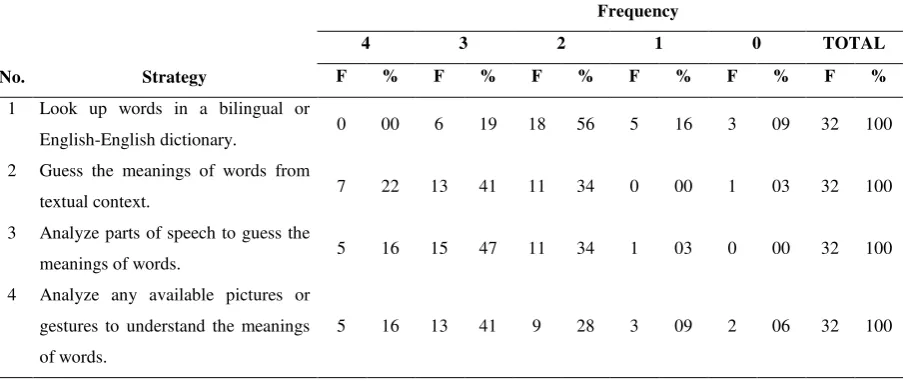
information about the use of vocabulary learning strategies. The strategies have been analyzed within each category. In order to determine the most and least used strategies, the percentages corresponding to the frequency of use have been added. So, frequencies 4 (always use it) and 3 (often use it) are taking into consideration for the most used strategies. On the other hand, frequencies 1 (seldom use it) and 0 (never use it) correspond to the least used strategies. Finally, frequency 2 (sometimes use it) shows a common use among students.
Quantitative and Qualitative Analysis
Use of Vocabulary Learning Strategies
[image:32.595.88.542.460.651.2]Determination strategies
Table 1. Frequency of use of Determination strategies
No. Strategy
Frequency
4 3 2 1 0 TOTAL F % F % F % F % F % F %
1 Look up words in a bilingual or
English-English dictionary. 0 00 6 19 18 56 5 16 3 09 32 100 2 Guess the meanings of words from
textual context. 7 22 13 41 11 34 0 00 1 03 32 100 3 Analyze parts of speech to guess the
meanings of words. 5 16 15 47 11 34 1 03 0 00 32 100 4 Analyze any available pictures or
gestures to understand the meanings of words.
5 16 13 41 9 28 3 09 2 06 32 100
Note: F=frequency, %=percentage Author: Andrés Vélez
26
The table above shows the results obtained from the determination strategies; it was found that the most used strategies by students to learn new vocabulary in this category are “to guess the meanings of words from textual context” and “to analyze parts of speech to
guess the meanings of words”; both with 63% of use among students. According to Schmitt
(1997), those are strategies that learners use without recurring to other people. From the observations performed, it is confirmed that students mostly guess the meaning from context. For instance, when students were developing reading activities and found new words, the teacher encouraged them to guess the meaning of the word instead of providing them with the Spanish translation.
In addition, teacher mentioned that strategies based on guessing the meanings in context or analyzing information allow students to get the idea or meaning of words and phrases easily. By analyzing the parts of speech to guess the meaning of words, students are aware of the type of words that they have encountered. This means that learners should have
knowledge of words and sentences in order to convey meaning (Richards & Schmitt, 2002). Through the use of this strategy, information is more accessible for students when they face speaking assignments; so they know the type of word they should use.
The use of determination strategies helps students to remember new words for a longer period of time and it is more meaningful due to the effort that students make. In class, it is very useful for students to guess meaning from context because they are exposed to the use of language. Students can discuss with classmates the meaning of new words and it creates a good environment for speaking performance. Later, students may use the new utterances for further speaking activities. Freeman and Freeman (2014) refer to the knowledge and
27
circumstances. Additionally, when speaking, learners should take into consideration the audience, the purpose of interaction, and the norms or conventions of interaction.
On the other hand, the least used strategy in this category is “to look up words in a
bilingual or English-English dictionary” with 19% of use among students. It was confirmed in the class observations that the use of dictionary was null; in fact, students did not carry a dictionary with them. This is due to the fact that students are not allowed to use dictionaries in class. According to Schmitt (2002), pronunciation is a crucial factor that has to be taken into account when speaking in order to convey meaning because there are different ways of pronouncing individual sounds for producing an utterance. This makes the use of a dictionary a helpful strategy for improving speaking. When students develop several activities such as speaking, listening, reading, and writing, they should use dictionaries for a quick inquiry; specially for speaking assignments in which learners can find several meanings and the correct pronunciation of words.
In addition, teacher mentioned that students should learn to find other means apart from dictionaries to understand the meaning of words; for instance, context is the most emphasized for this purpose. Students and teachers agreed in the interviews that context is the best way to understand new words. According to Schmitt (1997), guessing the meaning of new words from context is more convenient for the communicative approach than other strategies.
Finally, “analyzing any available pictures or gestures to understand the meanings of words” is a strategy which frequency of use is common among students. From lower to higher
levels of English, it is a very useful strategy because it provides instant meaning for words. Students can obtain the meaning by analyzing pictures and use that visual information while speaking. However, Schmitt (1997) suggests that learners must have the appropriate
28
was observed that students were not provided with a specific picture but with some visual clues in order to identify the meaning of a word.
[image:35.595.85.540.196.426.2]Social strategies
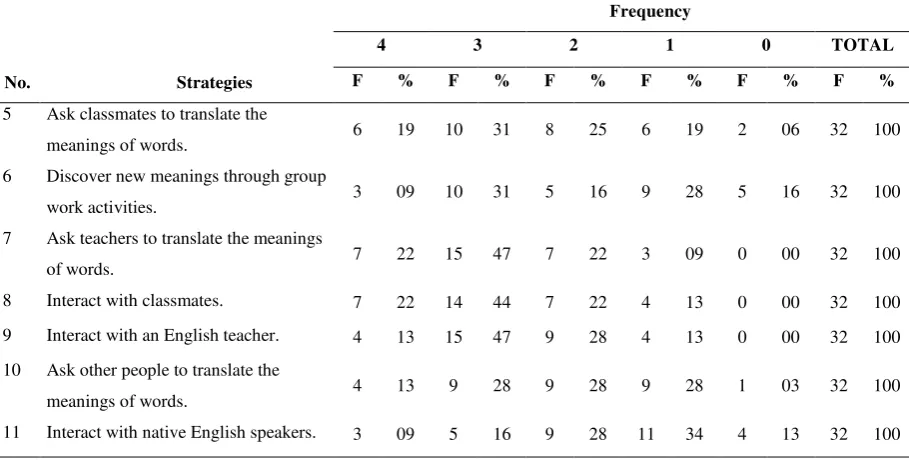
Table 2. Frequency of use of Social strategies
No. Strategies
Frequency
4 3 2 1 0 TOTAL F % F % F % F % F % F %
5 Ask classmates to translate the
meanings of words. 6 19 10 31 8 25 6 19 2 06 32 100 6 Discover new meanings through group
work activities. 3 09 10 31 5 16 9 28 5 16 32 100 7 Ask teachers to translate the meanings
of words. 7 22 15 47 7 22 3 09 0 00 32 100
8 Interact with classmates. 7 22 14 44 7 22 4 13 0 00 32 100
9 Interact with an English teacher. 4 13 15 47 9 28 4 13 0 00 32 100
10 Ask other people to translate the
meanings of words. 4 13 9 28 9 28 9 28 1 03 32 100 11 Interact with native English speakers. 3 09 5 16 9 28 11 34 4 13 32 100
Note: F=frequency, %=percentage Author: Andrés Vélez
Source: Vocabulary Learning Strategies Questionnaire
The table above shows the results obtained in the Social strategies category. It was found that the most used strategies in this category are “to ask teachers to translate the
meanings of words” (69%) and “to interact with classmates” (66%). The use of these
strategies was observed during class. Students usually asked the teacher for the meaning of words when a classmate could not help. Also, to “ask classmates to translate the meaning of words” (50%) is a common strategy among students, as well as to “ask other people to translate the meaning of words” (41%), which students mentioned they use them outside the
29
these strategies has the advantage that students have extra time to use and manipulate language in class (Schmitt, 1997). When students ask teachers or classmates to translate a word, it makes possible the transfer of knowledge of the L1 word onto the L2 equivalent. On the other hand, sometimes translations are not exact equivalents; so, teacher and students need to be careful on this fact. Thus, it can be said that the use of translation is a helpful way to help in students’ speaking, especially with fluency, due to the fact that it is a fast and comprehensible way of getting the meaning of a word.
Meanwhile, the least used strategies are “to discover new meanings through group work activities” with 42% and “to interact with native English speakers” with 47% of student that
do not use it. Group work activities have the advantage for students to improve speaking because it promotes processing of information, cross modelling/imitation and interaction, which motivates learners to be active participants in a social context (Schmitt, 1997). This strategy should be emphasized in class in order to provide students with other ways to discover the meaning of new words. It was observed that while developing a group work activity, which was a role play, students interacted in order to understand and use new words that they had learned before the assignment.
Krashen (1982) affirms that “interacting with native English speakers” would be an excellent way to acquire vocabulary because input is a key element in language acquisition. Trough interaction with native speakers, students can acquire elements of speech such as pitch, stress, intonation, and other non-linguistic elements required to convey meaning. Teacher also agrees with this fact since she indicated that by interacting with others, students are exposed to real situations and English. In this case, “interacting with classmates” and “interacting with an English teacher” are strategies that help students in class because it
30
useful for the learning process. In class, teacher and students’ first language is Spanish, so interaction with native speakers is not present. In students’ interviews, they mentioned that they have interaction with native speakers outside the classroom; however, just a few of them are able to use this strategy. According to Richards and Schmitt (2002), students must acquire the knowledge of the way that native speakers use the language in order to speak. Speaking a foreign language demands more than just the knowledge of grammar and semantics.
All of the strategies included in this category are beneficial for students because its main mean to discover meaning of words is interaction. Through interaction, students are able to enhance their speaking performance both inside and outside the classroom. Students receive a meaningful input through communication activities, so they are able to apply this knowledge for further assignments.
[image:37.595.84.543.437.662.2]Memory strategies
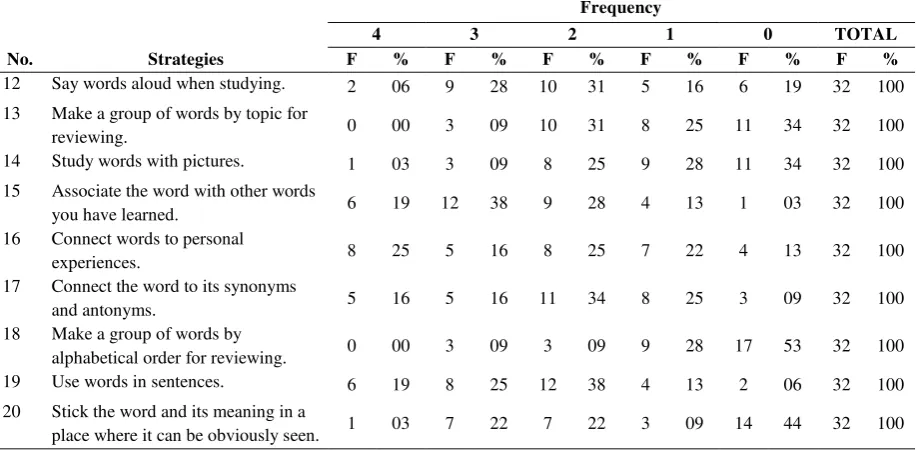
Table 3. Frequency of use of Memory strategies
No. Strategies
Frequency
4 3 2 1 0 TOTAL F % F % F % F % F % F %
12 Say words aloud when studying. 2 06 9 28 10 31 5 16 6 19 32 100 13 Make a group of words by topic for
reviewing. 0 00 3 09 10 31 8 25 11 34 32 100 14 Study words with pictures. 1 03 3 09 8 25 9 28 11 34 32 100 15 Associate the word with other words
you have learned. 6 19 12 38 9 28 4 13 1 03 32 100 16 Connect words to personal
experiences. 8 25 5 16 8 25 7 22 4 13 32 100 17 Connect the word to its synonyms
and antonyms. 5 16 5 16 11 34 8 25 3 09 32 100 18 Make a group of words by
alphabetical order for reviewing. 0 00 3 09 3 09 9 28 17 53 32 100 19 Use words in sentences. 6 19 8 25 12 38 4 13 2 06 32 100 20 Stick the word and its meaning in a
place where it can be obviously seen. 1 03 7 22 7 22 3 09 14 44 32 100 Note: F=frequency, %=percentage
Author: Andrés Vélez
31
In the table above, the frequency of strategies use in the Memory Strategies category is shown. As it is observed, the most used strategies are “to associate the word with other words you have learned” (57%) and “to use words in sentences” (44%). According to Aitchison (1987), these strategies show that new vocabulary can be linked to L2 words which students already know.
Additionally, students mentioned that using words in sentences after they encounter them is beneficial because in that way they can apply the new vocabulary and retain new information. This was observed during class; students analyzed and related new words with the ones they already knew. Teacher had a guide role by asking questions to students in order for them to get the meaning of words. This process fosters interaction between students. Furthermore, once they find the meaning of a word they are ready to apply and use it in several writing and speaking activities such as dialogues, conversations, and debates.
Regarding the least used strategies in this category, it was found that “to study words
with pictures” (12%) and “to make a group of words by alphabetical order for reviewing”
(9%) are the ones that have the lowest degree of frequency. In the interview, teacher
mentioned that due to the high level of students, those strategies are not used in the classroom. However, she suggested that using pictures is very effective with lower levels. Schmitt (1997) states that students can learn new words by studying those with pictures instead of definitions.
32
According to Schmitt (1997), if words are organized in some way before memorization, recall is improved. It is important that students organize words in ways that make it easier to understand and recall new vocabulary, which can be used in further activities that demand the use of words in several contexts.
The rest of strategies within this category have a common use among students. To “say words aloud when studying” (35%) helps students to practice the pronunciation of words
which is important for speaking activities. Based on the interviews, students consider this strategy a helpful way to memorize the pronunciation of words due to the fact that most of the time it is difficult to pronounce a new word which is not familiar to students.
To “connect words to personal experiences” (31%) and “connect the word to its
synonyms and antonyms” (32%) are strategies which use helps students to integrate new
vocabulary into existing knowledge, for example previous experiences or known words (Schmitt, 1997). In class, it was observed that students use these strategies for a better
understanding of a word, using synonyms helped them to relate the new words with previous knowledge. Consequently, these strategies produce a meaningful learning.
Finally, a strategy which percentage of students that do not use it is high is to “stick the word and its meaning in a place where it can be obviously seen” (53%); it would be effective for beginner learners because they can instantly get access to the meaning of a word when they have to develop written or speaking tasks.
In the interview, teacher mentioned that the use of the strategy about “sticking the word
33 Cognitive strategies
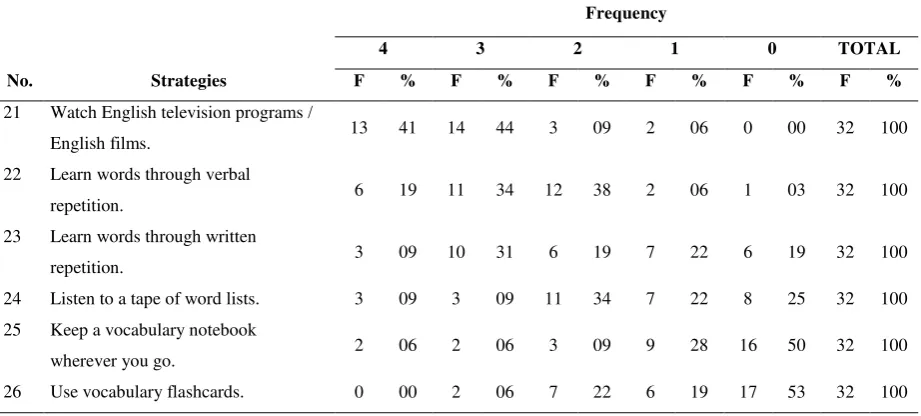
Table 4. Frequency of use of Cognitive strategies
No. Strategies
Frequency
4 3 2 1 0 TOTAL F % F % F % F % F % F %
21 Watch English television programs /
English films. 13 41 14 44 3 09 2 06 0 00 32 100 22 Learn words through verbal
repetition. 6 19 11 34 12 38 2 06 1 03 32 100 23 Learn words through written
repetition. 3 09 10 31 6 19 7 22 6 19 32 100 24 Listen to a tape of word lists. 3 09 3 09 11 34 7 22 8 25 32 100 25 Keep a vocabulary notebook
wherever you go. 2 06 2 06 3 09 9 28 16 50 32 100 26 Use vocabulary flashcards. 0 00 2 06 7 22 6 19 17 53 32 100 Note: F=frequency, %=percentage
Author: Andrés Vélez
Source: Vocabulary Learning Strategies Questionnaire
The results obtained from the Cognitive strategies are shown in the table above. It was found that strategies that are used the most within this category are “to watch English
television programs/English films” (85%) and “to learn words through verbal repetition” (53%).
To “watch English television programs/English films” is a strategy that students use the most because they can learn vocabulary in a better way. In the interview, teacher indicated that if students are interested in any film or TV series, they can learn new vocabulary in a dynamic way. Also, teacher mentioned that television, internet, and many other resources can be used in order to learn vocabulary and improve speaking skills. Based on the observations, these two strategies are not used in class; however, they are mostly used outside the class.
34
produce sentences in an easier way by listening to various authentic English materials (Shelby, 2013). Through the use of these strategies, students imitate and repeat English patterns that help them to improve speaking.
Another advantage of the use of these strategies is that students improve pronunciation by having a model to follow. In the interviews, some of the students mentioned that when they listen some phrases or words that are new for them, it is important to repeat and use the new vocabulary as soon as possible; in that way, they are able to retain the new information.
According to Riankamol (2008), strategies that include repetition in order to study words do not engage students in mental process, but focus in mechanical process. To “learn words through verbal repetition” (53%) and to “learn words by written repetition” (40%) are
common strategies among students. O’Malley and Chamot (1990) state that learners who use these strategies reach a high level of proficiency. In class, it was observed that these strategies are applied for speaking activities. In the first place, students analyzed the new vocabulary, and then, for speaking assignments they repeated the words.
Schmitt (1997) considers that to “keep a vocabulary notebook wherever you go” is a helpful strategy; but, in this case, it is one of the least used strategies with 12% along with the “use of vocabulary flashcards” with 6% and to “listen to a tape of word lists” with 10% of use
among students. In this regard, teachers indicated that these strategies are the least used by students because some of them consider that they do not match with their learning style. In addition, some students mentioned that these strategies are not helpful for them because they use more interactive and dynamic strategies. Information collected from observations showed that the use of these two strategies is not present during class. Students’ advanced level is the
35
might help to improve speaking of students from a low level. On the other hand, students from a higher level might need strategies that demand a complex use of the language.
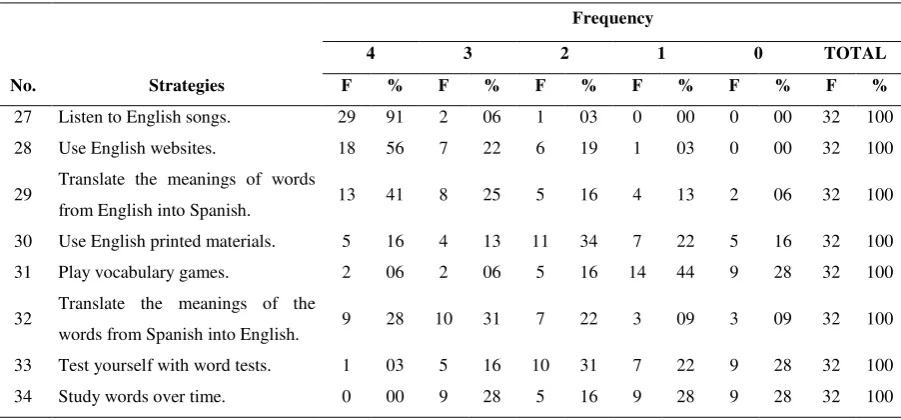
[image:42.595.87.538.195.405.2]Metacognitive strategies
Table 5. Frequency of use of Metacognitive strategies
No. Strategies
Frequency
4 3 2 1 0 TOTAL F % F % F % F % F % F %
27 Listen to English songs. 29 91 2 06 1 03 0 00 0 00 32 100 28 Use English websites. 18 56 7 22 6 19 1 03 0 00 32 100
29 Translate the meanings of words
from English into Spanish. 13 41 8 25 5 16 4 13 2 06 32 100 30 Use English printed materials. 5 16 4 13 11 34 7 22 5 16 32 100 31 Play vocabulary games. 2 06 2 06 5 16 14 44 9 28 32 100
32 Translate the meanings of the
words from Spanish into English. 9 28 10 31 7 22 3 09 3 09 32 100 33 Test yourself with word tests. 1 03 5 16 10 31 7 22 9 28 32 100 34 Study words over time. 0 00 9 28 5 16 9 28 9 28 32 100 Note: F=frequency, %=percentage
Author: Andrés Vélez
Source: Vocabulary Learning Strategies Questionnaire
The table above illustrates the Metacognitive Strategies category. In this category, it was found that the most used strategies by students are “to listen to English songs” (97%) and
“to use English websites” (78%). Metacognitive strategies produce an effective learning
36
was not present in none of the observations performed; but the “use of printed materials” (39%) was a common strategy in class, for example, English books and articles.
Regarding the least used strategies within this category; it was found that “playing vocabulary games” and “studying words over time” are the ones that appear with less
frequency of use, 12% and 28% respectively. Despite the fact that these strategies are helpful for improving speaking skills, they are not used in class. The use of vocabulary games brings students the opportunity to use and apply new language. In addition it fosters interaction, which is important for students because they are able to use the language in oral way.
To “translate word from English into Spanish” (66%) and “Translate words from
Spanish to English” (59%) are common strategies which are very effective for improving
vocabulary size because students get the meaning of a word in a fast way. Based on the observations performed, these two strategies are common when students do not understand the meaning of a word through the use of other strategies, such as guess meaning from context or the use of visual clues. As it was mentioned before, the use of translation is a helpful way to help in students’ speaking; especially with fluency because students are exposed to a quick
understanding of the word that they want to use in speaking. Some of the phrases used in class were “what’s the word in English for…?” or “how do you say … in English?” The use of
these strategies show the different ways in which students get instant access to the meaning of a word.
37
38 Conclusions
The most used strategies are to listen to English songs and to use English websites from metacognitive category; and to watch English television programs/English films from
cognitive category.
The least used vocabulary learning strategies by students are to keep a vocabulary notebook wherever you go from Cognitive category, and to make a group of words by alphabetical order for reviewing from Memory category.
The vocabulary learning strategies that show a high frequency of use among students are strategies whose use is more common outside the classroom because students have access to different resources such as Internet, technology, websites, songs, TV programs and films.
The use of vocabulary learning strategies related to the use of media helps students to improve speaking skills due to the fact that students are closely exposed to language features.
Students’ English level, and sometimes learning styles, are factors that influence the frequency of use of vocabulary learning strategies because students are aware of the kinds of strategies that best fit them.
39
Recommendations
The most used vocabulary learning strategies by students should be incorporated in English lessons in order to help learners to acquire a wide vocabulary repertoire.
Teachers should inform learners and encourage them to find the most helpful strategies that best fit their learning style in order to enhance students’ vocabulary development.
The use of media resources such as English songs, TV series and Web pages should be encouraged in order to provide students with English language features.
Students should try to use most of the vocabulary learning strategies in order to decide which ones are better for their vocabulary learning.
40 References
Aitchison, J. (1987). Words in the mind: An introduction to the mental Lexicon. Oxford: Wiley-Blackwell.
Asgari, A. & Mustapha, G. (2010). The Type of Vocabulary Learning Strategies Used by ESL Students in University Putra Malaysia. English Language Teaching, 4 (2), 84-90. Barnhart, C. (1997). The World Book Dictionary. Chicago: Thorndike-Barnhart
Bilash, O. (2009). Oral Production (Speaking) in the SL Classroom. Retrieved from
http://www.educ.ualberta.ca/staff/olenka.bilash/best%20of%20bilash/speaking.html Cameron, L. (2001). Teaching language to children. Cambridge: Cambridge University Press. Catalan, R. (2003). Sex differences in L2 vocabulary learning strategies. International
Journal of Applied Linguistics, 13 (1), 54-77.
Chambers, F. (1997). What do we mean by Fluency? System, 25 (4), 535-544.
Chamot, A. & Kupper, L. (1989). Learning strategies in foreign language instruction. Foreign Language Annals, 22 (1), 13-22.
Cohen, A. D. (1990). Language Learning: Insights for Learners, Teachers, and Researchers. New York: Newbury House.
Crystal, D. (2003). A Dictionary of Linguistics and Phonetics. London: Blackwell. Fasold, R. & Connor-Linton J. (2006). An Introduction to Language and Linguistics.
Cambridge: Cambridge University Press.
Freeman, D. & Freeman, Y. (2004). Essential linguistics: What you need to know to teach reading, ESL, spelling, phonics, and grammar. Portsmouth, NH: Heinemann. Gao, C. Z. (2001). Second language learning and the teaching of grammar. Education, 122
41
Gass, S. & Selinker, L. (2008). Second Language Acquisition: An Introductory Course. New York: Routledge.
Griffiths, C., & Judy, M. (2001). Language-learning strategies: Theory and perception. ELT Journal, 55 (3), 247-254.
Haycraft, J. (1996). An Introduction to English Language Teaching. England: Longman Group.
Joseph, H. (2012). The Anthropology of Language: An Introduction to Linguistic Anthropology. United States: Wadsworth Inc. Fulfillment.
Koizumi, R. (2005). Relationships between Productive Vocabulary Knowledge and Speaking Performance of Japanese Learners of English at the Novice Level. (Doctoral
dissertation, University of Tsukuba, 2005).
Krashen, S. (1982). Principles and Practice in Second Language Acquisition. Oxford: Pergamon.
Kurtus, R. (2012). Importance of a Good Vocabulary in Writing. Retrieved from
http://www.school-for-champions.com/writing/importance_of_good_vocabulary.htm#. VqVKVirhDIU
Laufer, B. (2013). The encyclopedia of Applied Linguistics. Iowa: Wiley – Blackwell.
Lessard-Clouston, M. (1997). Language learning strategies: An overview for L2 teachers. The Internet TESL Journal, 3 (12). Retrieved from
http://iteslj.org/Articles/Lessard-Clouston-Strategy.html
Lightbown, P. & Spada, N. (2011). How languages are learned. United Kingdom: Oxford University Press.
42
Mehring, J.G. (2005). Developing vocabulary in second language acquisition: From theories to classroom. Retrieved from
http://www.hpu.edu/CHSS/LangLing/TESOL/ProfessionalDevelopment/200680TWPf all06/03Mehring.pdf
Nation, P. (2001). Learning vocabulary in another language. Cambridge: Cambridge University Press.
Nation, P. (2002). The rediscovery of vocabulary. Second Language Research, 18 (4), 393-407.
Nirattisai, S. & Chiramanee, T. (2014) Vocabulary Learning Strategies of Thai University Students and its Relationship to Vocabulary Size. International Journal of English Language Education, 2 (1), 273 – 287.
O’Malley, J. & Chamot, A. (1990). Learning strategies in second language acquisition.
Cambridge: Cambridge University Press.
Oxford, R. (1989). The Role of Styles and Strategies in Second Language Learning. Retrieved from http://www.ericdigests.org/pre-9214/styles.htm
Oxford, R. (1990). Language learning strategies: What every teacher should know. New York: Newbury House.
Riankamol, N (2008). A survey study of vocabulary learning Strategies of gifted english students at Triam udomsuksa school in the first semester of Academic year 2008. (Research paper, Thammasat University, 2008).
Richards, J. & Platt, J. (1992). Longman Dictionary of Language Teaching and Applied Linguistics. London: Longman.
43
Schmitt, N. (1997). Vocabulary Learning Strategies. Vocabulary: Description, Acquisition and Pedagogy. Cambridge: Cambridge University Press.
Schmitt, N. (2000). Vocabulary in Language Teaching. Cambridge: Cambridge University Press.
Shelby, M. (2013). The importance of listening comprehension in English. Retrieved from:
http://www.streetsmartlanguagelearning.com/2013/08/the-importance-of-listening.html
Wilkins, D. (1972). Linguistics in Language Teaching. Cambridge, MA: MIT Press Williams, C. (2013). The Importance of Vocabulary in Second Language Acquisition.
Retrieved from https://my.vanderbilt.edu/chelseawilliams/2013/09/the-importance-of-vocabulary-in-second-language-acquisition/
Wright, S. (2011). Why Writing Skills Are More Important Than Ever. Retrieved from:
Annexes
DEPARTAMENTO DE LENGUAS MODERNAS Y LITERATURA
OBSERVATION SHEET
This observation sheet is designed in order to gather information related to vocabulary learning strategies used by students to improve speaking skills during English class.
Part I: General Information
1. Level: _______________________________
2. Number of students : _______________________________ 3. Length of Lesson: _______________________________ 4. Topic of the Lesson: _______________________________ 5. Number of Observation: _______________________________ 6. Observation Date: _______________________________
Part II: Checklist
No. Aspects to be observed (Strategies Use) Yes No
DETERMINATION 1 Students guess meanings from context.
2 Students use a dictionary to look for meaning of words
3 Students analyze pictures to understand the meanings of words. SOCIAL
4 Students ask to a partner or teacher for meaning of words 5 Students ask classmates to translate words.
6 Students discover meanings through group work. 7 Students ask the teacher to translate words.
MEMORY
8 Students associate the word with other words they have learned. 9 Students connect words to personal experiences.
10 Students connect words to synonyms and antonyms. 11 Students use new words in sentences.
15 Students use vocabulary flashcards.
METACOGNITIVE 16 Students listen to English songs.
17 Students use English printed materials. 18 Students play vocabulary games.
Part III: Additional Observations
DEPARTAMENTO DE LENGUAS MODERNAS Y LITERATURA
QUESTIONNAIRE OF VOCABULARY LEARNING STRATEGIES
Dear student, please answer the following questionnaire, which is focused on vocabulary
learning strategies. This is part of a research on the topic “The type of vocabulary learning strategies
used by students to improve speaking skills at a private high school in the city of Loja.”
Objective: to collect information about the vocabulary learning strategies used by students.
PART I: General Information
1. Gender: ( ) Female ( ) Male 2. Age: ( ) 15-16 years ( ) More than 16 years 3. How long have you been studying English?
( ) 3-5 years ( ) 5-10 years ( ) more than 10 years
PART II: Statements of Vocabulary Learning Strategies
Put (X) in the box (4, 3, 2, 1, or 0) that represents the frequency of use of the strategies you use to learn English vocabulary. Please mark the statement that most describes you.
4 = always use it 3 = often use it 2 = sometimes use it 1 = seldom use it 0 = never use it
No. Vocabulary Learning Strategies Degree of Frequency
4 3 2 1 0
DETERMINATION 1 Look up words in a bilingual or English-English dictionary. 2 Guess the meanings of words from textual context.
3 Analyze parts of speech to guess the meanings of words.
4 Analyze any available pictures or gestures to understand the meanings of words. SOCIAL