Gender inequalities in occupational health: A systematic
literature review and the influence of t he welfare state
regime and the occupational social class throughout the
Spanish and the European Working Conditions Surveys
Javier Campos-Serna
TESI DOCTORAL UPF / 2013
DIRECTORS DE LA TESI
Prof. MD. PhD. Fernando G. Benavides,
(Centre for Research in Occupational Health, Departament de Ciències Experimentals i de la Salut, Universitat Pompeu Fabra, Barcelona, Spain)MD. PhD. Elena Ronda-Pérez
(Centre for Research in Occupational Health, Preventive Medicine and Public Health Area, University of Alicante, Alicante, Spain)v
To my lovely wife Cocó and our daughters Mar and Estela, without the strength of their hands, the brightness of their smiles and the tenderness of their gazes, this thesis had not reached fruition
vii
Nanas de la cebolla
La cebolla es escarcha cerrada y pobre. Escarcha de tus días
y de mis noches. Hambre y cebolla, hielo negro y escarcha
grande y redonda. En la cuna del hambre
mi niño estaba. Con sangre de cebolla
se amamantaba. Pero es tu sangre, escarchada de azúcar
cebolla y hambre. Una mujer morena
resuelta en lunas se derrama hilo a hilo
sobre la cuna. Ríete niño que te traigo la luna
cuando es preciso. (…)
Vuela niño en la doble luna del pecho: él, triste de cebolla,
tú satisfecho. No te derrumbes. No sepas lo que pasa
ni lo que ocurre.
Miguel Hernández Poeta del pueblo
ix
ACKNOWLEDGEMENTS – AGRADECIMIENTOS
There are so many people whom I have to thank for their help, contributions and advice that I fear that some may be omitted, and to these I make my apologies.
Firstly, I must thank my two supervisors of the dissertation Fernando G Benavides and Elena Ronda, who gave me the invaluable opportunity to come to Barcelona to the Centre for Research in Occupational Health at the Universitat Pompeu Fabra with a contract with the CIBER Epidemiología y Salud Pública (CIBERESP) Spain. Thanks Fernando also for all the discussion maintained along each of the three papers that compose this dissertation and from which delivered many of the ideas compiled in this manuscript. Thanks Elena also for all your advices, recommendations and comments on each of the papers. You have been at any moment besides me helping and supporting me without any restriction.
I would like also to thank the scholars from the Spanish government that permitted me spend three months in the University of Bergen (Norway). I have chiefly to thank Elena Ronda for introduce me to professor Bente E Moen. I would like also to thank Pofessor Bente E Moen and other members of the Research Group for Occupational and Environmental Medicine, in the Department of Public Health and Primary Health Care at the University of Bergen (Norway) for their unconditional support and hospitality.
x
Me gustaría no olvidarme de los amigos y amigas del “Grup de Recerca de Desigualtats en Salut”, en especial a la Montse Vergara, por las conversaciones mantenidas a m i llegada al CISAL y por los sabios y oportunos consejos. Gracias Vanessa por el punto de vista a l as desigualdades desde la politología. Muchas gracias igualmente a J oan Benach por enseñarme a saber ver mirando la salud a través de las lentes de las desigualdades sociales.
Por supuesto quiero agradecer a mis hermanos Antonio y Sergio y a mi hermana la comprensión y el ánimo que me han enviado desde Alicante durante esta estancia de 4 años en Barcelona. Y cómo no, a mis amigos de la infancia, esos que siempre tienes a tu lado cuando crees que los necesitas y cuando crees que no: Antonio, Domingo, Ascen, Juanico, mi primo Benja.
En definitive gracias a todos y a todas los que me habéis aguantado a lo largo de este peregrinage que empieza de nuevo donde acaba este manuscrito, espero seguir contando con vuestro apoyo incondicional.
xi
RESUMEN
Antecedentes: Las desigualdades de género en salud en el trabajo han sido escasamente
estudiadas, a pesar de su gran interés para la salud pública.
Objetivos: Los tres objetivos principales de esta tesis fueron: a) identificar y resumir las
condiciones laborales y de empleo descritas como determinantes de las desigualdades de género en salud en el trabajo en los estudios relacionados con la salud laboral publicados entre el año 1999 y el 2010; b) analizar las desigualdades de género en las condiciones de empleo y de trabajo, en la conciliación de la vida laboral y familiar y en los problemas de salud relacionados con el trabajo en una muestra de la población ocupada en España en el año 2007, teniendo en cuenta la clase social y el sector económico de la empresa; y por último c) analizar si las desigualdades de género en la exposición a los riesgos psicosociales relacionados con el trabajo difieren en function del régimen de estado de bienestar a nivel Europeo en el año 2005, y, además, comprobar si los patrones de género son diferentes según la clase social ocupacional.
Métodos: Para el primer objetivo se realizó una revisión sistemática de la literatura de
los estudios observacionales disponibles en MEDLINE, EMBASE, Sociological Abstracts, LILACS, CINAHL y EconLit entre 1999 y 2010. Los estudios fueron seleccionados mediante la aplicación de un c onjunto de criterios de inclusión y exclusión aplicados al título, resumen y al texto completo. También se evaluó la calidad de los estudios. Los treinta estudios seleccionados fueron analizados cualitativamente, llevando a cabo una recopilación de todas las diferencias entre mujeres y hombres en la prevalencia de exposición a los riesgos derivdos de las condiciones de trabajo y de empleo, así como de los problemas de salud relacionados con el trabajo.
xii
vida laboral y la vida familiar, y los problemas de salud relacionados con el trabajo. Se utilizaron modelos de regresión logística multivariada para calcular las odds ratio (OR) de las mujeres comparadas con los hombres (grupo de referencia) en la exposición a estos 25 indicadores con los intervalos de confianza del 95% (IC95%). Se calcularon las odds ratio crudas (cOR) y las ajustadas por edad (aOR) y finalmente, estratificaron por clase social ocupacional (manual y no manual) y luego por la actividad económica de la empresa: agricultura, industria, construcción y servicios.
Para el tercer objetivo, se utilizó una muestra de trabajadores entrevistados en la cuarta Encuesta Europea de Condiciones de Trabajo, 2005. Esta muestra estaba compuesta por 27.465 trabajadores, de los cuales 12.402 e ran mujeres, procedentes de 28 pa íses europeos. Los riesgos psicosociales relacionados con el trabajo que se analizaron como variables dependientes fueron: alta tensión, iso-tensión y el desequilibrio esfuerzo-recompensa. La variable independiente analizada fue el sexo, siendo los hombres el grupo de referencia. Agrupamos los 28 pa íses Europeos en cinco regímenes de bienestar: Escandinava, Anglo-Saxon, Continental, Sur y los regimens del Este. Se calculó la prevalencia en hombres y mujeres, y la razón de prevalencia ajustada por edad (aRP) de las mujeres frente a los hombres en relación a la exposición a los riesgos psicosociales relacionados con el trabajo antes mencionados mediante modelos de regresión logística multivariante. Todos los cálculos se realizaron por separado para: Europa en su conjunto, cada régimen de estado de bienestar, y cada clase social ocupacional (directivos / profesionales, empleados / trabajadores de servicio / tienda y trabajadores manuales). Se utilizaron cuatro modelos diferentes de ajuste para tratar de explicar las desigualdades de género observadas: M1, estado civil; M2, el tiempo invertido en el cuidado de familiares y M3, la actividad económica de la empresa.
Resultados: En relación con el primer objetivo, la mayoría de los 30 estudios incluidos
xiii
Por el contrario, los hombres mostraron un mayor grado de trabajo con altas exigencias físicas, inferior apoyo social, los niveles más altos de desequilibrio esfuerzo -recompensa, un posición laboral superior, estaban más expuestos a ruido y trabajaban más horas que las mujeres.
Después de analizar la sexta Encuesta Nacional de Condiciones de Trabajo de 2007, encontramos que más mujeres que hombres trabajan sin contrato (ORa = 1,83 , IC 95% : 1,51 a 2,21) y en condiciones alto esfuerzo y baja recompensa (1.14:1.05 - 1,25). Las mujeres también experimentaron mayor acoso sexual (2.85:1.75-4.62), discriminación (1.60:1.26-2.03) y problemas musculoesquelético (1.38:1.19-1.59). Por otro lado, más hombres que mujeres realizan el trabajo por turnos (0.86:0.79-0.94), trabajan con altos niveles de ruido (0.34:0.30-0.40), y demandas físicas elevadas (0.58:0.54-0.63). Los hombres también sufren más lesiones por accidentes de trabajo (0.67:0.59-0.76). Por el contrario, las trabajadoras no manuales eran más propensas que sus homólogos hombres a tener un contrato temporal (1.34:1.09-1.63), estar expuestas a los riesgos psicosociales relacionados con el trabajo y la discriminación (2.47:1.49 - 4,09 ) y a tener una enfermedad profesionales (1.91:1.28-2.83). En general, las desigualdades de género analizadas eran mucho más altas en el sector de la industria.
Después de analizar la cuarta edición de la Encuesta Europea de Condiciones de Trabajo de 2005, se observó que más mujeres que hombres entre los directivos / profesionales, informó: alta tensión, iso-tensión y el desequilibrio esfuerzo-recompensa en Escandinavia (aPR = 2,26 , IC del 95 % : 1,87-2,75; 2.12:1.72-2.61; 1.41:1.15-1.74, respectivamente) y en el regímen Continental (1.43:1.23-1.54; 1.51:1.23-1.84; 1.40:1.17-1.67). Igualmente se observe que más mujeres que hombres mostraron una alta tensión y el iso-tensión en los regimens del bienestar Anglo-Saxon (1,92:1.40-2 .63; 1.85:1.30-2.64, respectivamente), Sur de Europa (1.43:1.14-1.79; 1.60:1.18-2.18 ) y los regímenes de bienestar del Este de Europa (1.56:1.35-1.81; 1.53:1.28-1.83).
Conclusiones: La revisión sistemática de la literature ha identificado un conjunto de
xiv
tratan de monitorizar y de reducir las desigualdades de género en salud en el trabajo, así como para los investigadores que deseen analizar estos determinantes con mayor profundidad.
En España, existen importantes desigualdades de género relacionadas con el trabajo en las condiciones de empleo y de trabajo, así como en los problemas de salud relacionados con el trabajo. Estas desigualdades de género se ven influídas por la clase social ocupacional y el sector económico de la empresa, y deben ser consideradas en el diseño de futuras políticas públicas en salud laboral en España.
Las relevantes desigualdades de género observadas en la desigual exposición entre hombres y mujeres con respecto a los riesgos psicosociales relacionados con el trabajo entre las clases sociales profesionales más favorecidas en todos los regímenes del bienestar en Europa, se deben tomar en cuenta, no sólo por los investigadores para desentrañar las vías causales de esta relación tan compleja, sino también por los responsables políticos de analizar los efectos que las políticas de equidad de género tienen sobre las desigualdades de género.
xv
SUMMARY
Background: Gender inequalities in occupational health have been scarcely study, in
spite of its great public health interest.
Objectives: The three main objectives of this thesis were: a) to identify andsummarize
the working and employment conditions described as determinants of gender inequalities in occupational health in studies related to occupational health published between 1999 and 2010; b) to analyze gender inequalities in employment and working conditions, in balancing job and family life, and work-related health problems in a sample of the employed population in Spain in 2007, taking into account social class and the economic sector of the company; and finally c) to examine whether gender inequalities in the exposure to work-related psychosocial hazards differ by the welfare state regime at the European level in 2005, a nd additionally to test whether gender patterns are different by occupational social class.
Methods: For the first objective, a systematic literature review was undertaken of
observational studies available in MEDLINE, EMBASE, Sociological Abstracts, LILACS, EconLit and CINAHL between 1999 and 2010. Studies were selected by applying a set of inclusion and exclusion criteria to the title, abstract, and complete text. The quality of the studies was also assessed. The thirty selected studies were qualitatively analysed, resulting in a compilation of all differencesbetween women and men in the prevalence of exposure to working and employment conditions and work-related health problems as outcomes at each study.
xvi
intervals of 95% (95% CIs). Crude odds ratio (c OR) were adjusted by age (a OR) and stratified by occupational social class (manual and non-manual) and then by the economic activity: agriculture, industry, construction and services.
For the third objective, we used a sample of workers interviewed at the fourth European Working Condition Survey, 2005. This sample consists of 27,465 workers, from which 12,402 were women, coming from 28 European countries. Work-related psychosocial hazards analysed as dependent variable were: high strain, iso-strain and effort-reward imbalance. The independent variable was sex, being men the reference group. We grouped these 28 E uropean countries into five welfare state regimes: Scandinavian, Anglo-Saxon, Continental, Southern and Eastern regimes. We calculated the prevalence in men and women and the prevalence ratio adjusted by age (aPR) of women compared to men of being exposure to the work-related psychosocial hazards mentioned above using multivariate logistic regression models. All calculations were made separately for: Europe as a whole, each welfare state regime and each occupational social class (managers/professionals, clerks/service/shop workers and manual workers). Four different models of adjusted variables were used attempting to explain gender inequalities observed: M1, marital status; M2, time invested in caring for relatives and M3, economic activity of the company.
Results: Related to the first objective, most of the 30 studies included were conducted
in Europe (n=19) and had a cross-sectional design (n=24). The most common topic analyzed was related to the exposure to work-related psychosocial hazards (n=8). Employed women had more job insecurity, lower control, worse contractual working conditions and poorer self-perceived physical and mental health than men did. Conversely, employed men had a higher degree of physically demanding work, lower support, higher levels of effort-reward imbalance, higher job status, were more exposed to noise and worked longer hours than women did.
xvii
more sexual harassment (2.85:1.75-4.62), discrimination (1.60:1.26-2.03) and musculoskeletal pain (1.38:1.19-1.59). On the other hand, more men than women carried out shift work (0.86:0.79-0.94), worked with high noise levels (0.34:0.30-0.40), and high physical demands (0.58:0.54-0.63). Men also suffered more injuries due to occupational accidents (0.67:0.59-0.76). By contrast, non-manual women workers were more likely than their men counterparts to have a temporary contract (1.34:1.09-1.63), be exposed to work-related psychosocial hazards and discrimination (2.47:1.49- 4.09) and had occupational diseases (1.91:1.28-2.83). In general, gender inequalities analysed were much higher in the industry sector.
After analysing the fourth European Working Conditions Survey, 2005 w e observed that more women than men among managers/professionals, reported: high strain, iso-strain and effort-reward imbalance in Scandinavian (aPR =2.26; 95% CI: 1.87-2.75;
2.12:1.72-2.61; 1.41:1.15-1.74; respectively) and Continental regimes (1.43:1.23-1.54; 1.51:1.23-1.84; 1.40:1.17-1.67); and high strain and iso-strain in Anglo-Saxon (1.92:1.40-2.63; 1.85:1.30-2.64; respectively), Southern (1.43:1.14-1.79; 1.60:1.18-2.18) and Eastern welfare regimes (1.56:1.35-1.81; 1.53:1.28-1.83).
Conclusions: From the occupational health literature, the systematic review has
identified a set of working and employment conditions as determinants of gender inequalities in occupational health. These results may be useful to policy makers seeking to surveillance and to reduce gender inequalities in occupational health, and to researchers wishing to analyze these determinants in greater depth.
There are substantial work-related gender inequalities in employment and working conditions and work-related health problems in Spain. These gender inequalities are influenced by occupational social class and the economic sector of the company, and should be considered in the design of future public policies in occupational health in Spain.
xviii
state regimes in Europe, should be taken into account not only by researchers to disentangle the causal pathways, but also by policy makers to analyse the effects that gender equity policies are having on gender inequalities.
Keywords: gender identity, occupational health, work, health surveys, socioeconomic
xix
PREFACIO
Esta tesis doctoral está basada en un proyecto original realizado por el propio autor de la misma en colaboración con sus dos directores de tesis. La idea original del proyecto nace en la Universidad de Alicante y tras unas modificaciones es aprobado por el Centro de Investigación en Salud Laboral de la Universitat Pompeu Fabra, donde el doctorando se desplaza desde la Alicante para la realización de su tesis doctoral. La idea original del proyecto surge en parte tras el análisis desde una perspectiva de género de los protocolos de prevención de riesgos laborales del Ministerio de Sanidad, un proyecto que inicialmente se realiza desde la Universidad de Alicante y que es financiado por el Instituto de la Mujer. El proyecto termina finalmente con un i nforme dirigido al Ministerio de Sanidad y la publicación de un artículo científico en Archivos de Prevención de Riesgos Laborales.
Para la realización de esta tesis se han analizado las bases de datos de los artículos publicados en Medline, EMBASE, Sociological Abstracts, LILACS, EncoLit y CINAHL. Igualmente, se han utilizado datos de la sexta Encuesta Nacional de Condiciones de Trabajo del año 2005, pr omovida por el Instituto de Seguridad e Higiene en el Trabajo del Ministerio del Trabajo y Seguridad Social, así como de la cuarta edición de la European Working Conditions Survey de 2007 d e la European Foundation for the Improvement of Living and Working Conditions.
xx
relacionados con el trabajo. Este primer artículo, ha recibido el galardón de “Highly Accessed” por parte de la misma revista en la que ha sido publicado, debido a la alta solicitud de descargas que han recibido en sus primeros 15 días de su publicación. El segundo de los artículos, se centra en el análisis las desigualdades de género en cuanto a la exposición a los riesgos laborales derivados de las condiciones de empleo y trabajo, la conciliación de la vida laboral y familiar y los problemas de salud relacionados con el trabajo en España, teniendo en cuenta la clase social ocupacional y el sector de actividad de la empresa. Finalmente, el tercer artículo se centra en analizar la desigual exposición entre hombres y mujeres a los riesgos psicosociales derivados del trabajo en la población laboral Europea y como esta se ve influenciada por el estado del bienestar y la clase social ocupacional. Este último artículo se realizó en colaboración con el “Research Group for Occupational and Environmental Medicine del Department of Public Health and Primary Health Care” de la Universidad de Bergen de Noruega. En este grupo de investigación, el doctorando realizó una estancia de 3 m eses como investigador visitante.
De forma complementaria, al final de este documento se anexan los resultados de otros artículos relacionados con la actual tesis doctoral de los que el doctorando es autor o coautor y que tratan sobre los aspectos metodológicos de las encuestas de condiciones de trabajo y la violencia de género del compañero íntimo.
xxi
xxiii
PREFACE
This thesis is based on an original project made by the main author in collaboration with his two thesis supervisors. The original idea of the project came from the University of Alicante and after a few modifications it was approved by the Center for Research in Occupational Health at the Universitat Pompeu Fabra, where the doctoral student moves from Alicante to carry out his doctoral thesis. The original idea for the project came out, in part after the analysis from a gender perspective of risk prevention protocols work of the Ministry of Health, which was a original project from the University of Alicante and was funded by the Spanish Institute for Women. The project eventually ended up with a report to the Ministry of Health and the publication of a scientific article in the journal “Archivos de Prevención de Riesgos Laborales”.
For the realization of this thesis we have analyzed the databases for observacional articles published in Medline, EMBASE, Sociological Abstracts, LILACS, CINAHL and EncoLit. Similarly, we have used data of the sixth Spanish National Survey on Working Conditions from 2005, promoted by the Institute of Safety and Health at Work of the Ministry of Labour and Social Security, as well as the fourth edition of the European Working Conditions Survey 2007 of the European Foundation for the Improvement of Living and Working Conditions.
xxiv
their first 15 da ys of its publication. The second article focuses on analyzing gender inequalities in terms of exposure to occupational hazards arising from the employment and working conditions, the balancing of work and family life and work-related health problems in the Spanish workforce, taking into account the occupational social class and sector of activity of the company. Finally, the third article focuses on analyzing the unequal gender exposure to work-related psychosocial hazards in the European workforce and how this gender inequality is influenced by the welfare state regime and the occupational social class. That article was performed in collaboration with the Research Group for Occupational and Environmental Medicine, Department of Public Health and Primary Health Care at the University of Bergen in Norway. In this research group, doctoral students conducted a 3-month stay as a visiting researcher.
In a complementary manner, at the end of this document are appended results from other articles related to current doctoral thesis from which the PhD is the author or co-author. These articles are dealing with methodological aspects of surveys of working conditions and gender violence with the intimate partner .
This thesis has been partially funded by the Center for Research in Occupational Health at the Universitat Pompeu Fabra and the “Centro de Investigación Biomédica en Red de Epidemiología y Salud Pública, (CIBERESP), Spain. He has also received a grant from the Ministry of Education, Culture and Sports to finance the stay of three months at the University of Bergen. This University belongs to the European Higher Education Area, in order to obtain European mention to his PhD degree. The doctoral student has also received a grant from the School of Public Health at the University of Texas (USA) to present some of the results of this thesis in its Research Seminar Series.
xxv
INDEX OF CONTENTS
Pages
Acknowledgements ix
Resumen xi
Summary xv
Prefacio xix
Preface xxiii
Index of figures xxvii
1. INTRODUCTION 1
1.1 Work-related gender inequalities in occupational health 5 1.1.1 The concepts: Gender and sex; inequalities and differences 5 1.2 Determinant factors of work-related gender inequalities 8 1.2.1 Sexual division of the labour market: horizontal and vertical segregation 8 1.2.2 Differences in expectancies between women and men in the labour market 15 1.3 Buffering factors of work-related gender inequalities 16
1.3.1 Welfare state regime 16
1.3.2 Occupational social class 20
2. JUSTIFICATION 23
3. HYPOTHESIS AND OBJECTIVES 29
4. METHODS 35
4.1 Paper 1 39
4.2 Paper 2 44
4.3 Paper 3 49
5. RESULTS 57
5.1 Paper 1
Campos-Serna J, Ronda-Pérez E, Artazcoz L, Moen BE, Benavides FG.Gender inequalities in occupational health related to the unequal distribution of working and employment conditions: a systematic review. Int J Equity Health. 2013 Aug 5;12(1):57. Open Access. Highly accessed article. Impact Factor: 1.84
61
5.2 Paper 2
Campos-Serna J, Ronda-Pérez E, Artazcoz L, Benavides FG. [Gender inequalities in occupational health in Spain]. Aug;26(4):343-51. Spanish. Impact Factor:1.33
81
5.3 Paper 3
Campos-Serna J, Ronda-Pérez E, Moen BE, Artazcoz L, Benavides FG. Welfare state regimes and gender inequalities in the exposure to work-related psychosocial hazards. Int J Occup Environ Health. 2013 Jul-Sep;19(3):179-95. Impact Factor:1.03
93
6. DISCUSSION 113
6.1 Main results 117
6.2Strengthens and limitations 126
6.3 Recommendations and further lines of research 129
7. CONCLUSIONS 133
8. References 139
9. Appendix 151
9.1 Appendix I Spanish National Working Condition Survey. INSHT, 2007:
xxvi
9.2 Appendix II Definition of the indicators proposed for analyzing gender inequalities in occupational health from the items of the sixth edition of the Spanish National Working Condition Survey. INSHT, 2007
191
9.3 Appendix III European Working Condition Survey Questionnaire, 2005:
Worker’s questionnaire and methodology of the fourth edition 193 9.4 Appendix IV Inclusion and exclusion criteria used in the selection process
of studies 227
9.5 Appendix V European welfare state regimes classification adapted from
Eikemo and Bambra 228
9.6 Appendix VI Definition of the work-related psychosocial hazards from the questionnaire of the fourth edition of the European Working Conditions Survey, 2005
229
9.7 Appendix VII Other papers published during the PhD program related to the
dissertation 230
9.8 Appendix VIII Scientific stays abroad during the PhD program 235 9.9 Appendix IX Scientific meeting and conference attendance during the PhD
program 236
9.10 Appendix X Other academic merits 240
xxvii
INDEX OF FIGURES
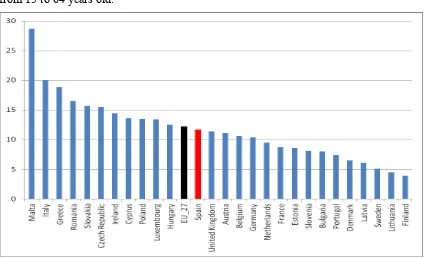
Figure1 Difference in women activity rate between 2005 a nd 2012 i n the 27
Members States of the European Union (EU-27) from 15 to 64 years old 9 Figure 2 Differences between women and men in the activity rate in 2012 in the
EU-27 from 15 to 64 years old 10
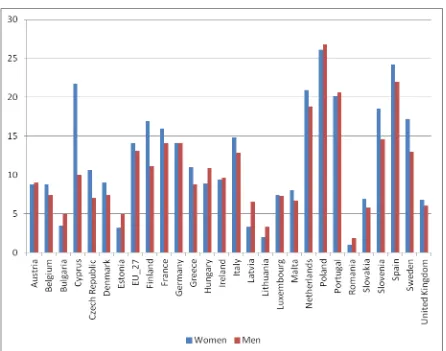
Figure 3 Differences between women and men who are temporary employed as a percentage of the total number of employed population by sex from 15 to 64 years old in the EU-27 in 2012
11
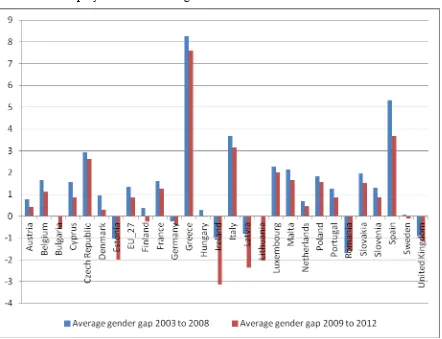
Figure 4 A verage in percentage of two periods of the differences between
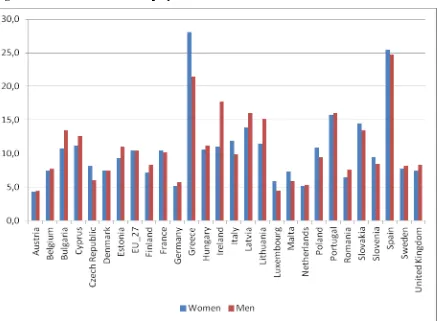
women and men in the unemployment rate for all ages in the EU-27 12 Figure 5 Women and men unemployment rate in 2012 in the EU-27 13 Figure 6 Macro-theoretical framework of employment relations and health
inequalities 17
Figure 7 Relationship between worker’s bargaining power, welfare state,
employment relations, and health 18
Figure 8 Micro - theoretical framework of Employment Conditions and Health
1
2
3
1. INTRODUCTION
“Social inequality among men and women is not a consequence of the natural inequality, otherwise, social and political inequalities are the responsible for the theories that postulate the inferiority of the feminine nature”
Poulain de la Barre, 1674
1. INTRODUCTION
1.1 Work-related gender inequalities in occupational health
1.1.1 The concepts: Gender and sex; inequalities and differences
1.2 Determinant factors of work-related gender inequalities
1.2.1 Sexual division of the labour market: horizontal and vertical segregation 1.2.2 Differences in expectancies between women and men in the labour market
1.3 Buffering factors of work-related gender inequalities
5
1. INTRODUCTION
In order to discuss work-related gender inequalities in occupational health and how are influenced by the welfare state regime and the occupational social class certain concepts related to this five spheres: gender, work, inequalities, welfare state regime and occupational social class and its internal pathways of interplay must be previously outlined.
1.1 Work-related gender inequalities in occupational health
1.1.1 The concepts: Gender and sex; inequalities and differences
Gender and sex are two terms that have been constantly constructed, deconstructed and reformulated depending on the historical and social contexts. Both terms represent a very old and well-known debate that has been held between sociologist and biologist trying to draw the line division between which is related to culture and to nature. However, this clear dichotomy has been questioned by new theories that postulate that the complex socio-political relation contexts are acting as determinants of health inequalities and illness processes[1]. In public health perspective, sex might be thought to determine genetically-based sensitivity to health determinants and gender to express some social-political forces that could influence exposure and responses to health determinants[2].
6
to social divisions premised on pow er and authority (e.g., occupational social class, race/ethnicity, nationality and religion)[3-5].
7
Undoubtedly, work plays an important part in determining women’s and men’s relative wealth, power, prestige and position in society. This fact generates gender inequalities in the distribution resources, benefits and responsibilities in the workplace and at home[2, 8]. Thus, the workplace can be a setting where gender inequalities are generated, manifested and sustained, with their consequent impact on health. In other words, working tasks are different distributed among women and men, because of the gender roles, even though among women and men who works under the same job title[9]. Therefore, women and men are exposed to different work-related hazards and subsequently their physical and mental health is affected in different ways[2, 9]. In general, the problems associated with men’s work are better known than women’s, since men do visibly heavy and dangerous work and tasks such as mining, cutting trees, fishing and building from which men suffer more injuries caused by occupational accidents[2, 8]. More women than men are exposed to low control[10, 11], while more men than women are exposed to high demands[11, 12] and low support[10, 12]. More men than women are exposed to effort-reward imbalance[11, 13]. Also more men than women are exposed to noise[14, 15] and high physical demanding works[16]. Otherwise, more women than men have musculoskeletal symptoms[17] or mental health disorders[18, 19]. Employment conditions also differed quite a lot among women and men, being women under more precarious employment conditions than men[8]. For example, more women than men are occupied in the informal sector, work part-time or with temporary contracts[8, 20]. In addition, more women than men work with lack of security, limited possibilities for training and career advancement and inadequate social security coverage in terms of old-age pensions[21].
8
Consequently, work-related gender equality asserts that people’s rights, responsibilities, social status and access to resources do not depend more on whether they are born female or male than in their personal interests, capabilities and abilities in the labour market and in their workplace positions. Work-related gender equality does not mean, however, that men and women are the same or must become the same, or that all labour market measures must arrive at the same results. Work-related gender equality implies that all women and men are free to develop their personal abilities and interests, and make jobs and life choices without the limitations set by stereotypes or prejudices about gender roles or the sexual characteristics of women and men. Work-related gender equality embraces equality of opportunity and treatment, equality of remuneration and access to safe and healthy working environments, equality in association and collective bargaining, equality in obtaining meaningful career development, maternity or paternity protection, and a balance between work and home life that is fair to both women and men. Work-related gender equality is understand worldwide as a matter of human rights, social justice and sustainable development[4, 5].
1.2 Determinant factors of work-related gender inequalities
1.2.1 Sexual division of the labour market, horizontal and vertical segregation
9
Figure1 Difference in women activity rate between 2005 and 2012 in the 27 Members
States of the European Union (EU-27) from 15 to 64 years old.
10
Figure 2 Differences between women and men in the activity rate in 2012 in the EU-27
from 15 to 64 years old.
Source: Eurostat, European Labour Force Survey, 2012[23]
11
Figure 3 Differences between women and men who are temporary employed as a
percentage of the total number of employed population by sex from 15 to 64 years old in the EU-27 in 2012.
Source: Eurostat, European Labour Force Survey, 2012[23]
12
Figure 4 Average in percentage of two periods of the differences between women and
men in the unemployment rate for all ages in the EU-27.
Source: Eurostat, European Labour Force Survey, from 2005 to 2012[23]
13
[image:41.595.91.530.243.564.2]largely responsible for shortening the gap between women and men in temporary employment and unemployment rates, which have passed of 3.7 and 3.0 points in 2008 to 2.2 and to 0.7 in 2012 respectively and have traditionally been high[23]. Furthermore, of the 550 m illion people considered poor workers in the world (workers who are unable to earn themselves and their families more than a 1 US dollar a day) 330 million (60%) are women.[22]
Figure 5 Women and men unemployment rate in 2012 in the EU-27.
Source: Eurostat, European Labour Force Survey, 2012[23]
14
unpaid work. Then, they remain trapped in the family sphere, partly because they are bound by emotional ties to those for whose care they are responsible (“sticky floor”), as well as by an unequal distribution of domestic and family duties between partners[25]. Women and men entering the labour market also encounter feminised and masculinised sectors of activity, due to the horizontal segregation, where women occupy the lowest positions on t he decision-making scale due to the vertical segregation of the labour market. In addition, professional promotion is unequally balanced between women and men because by the invisible barriers of masculine power (“glass ceiling”)[25, 26] and by language differences in speech styles between women and men (“wall of words”)[27]. All these conditions place women in a more precarious position than men in the labour market [20, 28]. For example, horizontal segregation produces a dense concentration of women in certain sectors of activity and in certain professions where the levels of remuneration are lower. Vertical segregation reinforces the effects of horizontal segregation, and also accounts for women’s lower wages and lower power in the workplace [9, 29]. In addition, women and men with the same job title usually perform different tasks, giving rise to an unequal distribution of working conditions and work-related hazards between the two sexes, with a differential impact on their health, being women in a more disadvantageous position [1, 2]. For example, the job title of butcher is applied to women who work behind a delicatessen counter and interact with the public, and also to men who work behind a meat counter cutting large pieces of meat[30].
15
addition, in the European Union, women’s jobs are characterized by a greater level of monotony, with lower participation in planning, higher demands, more psychological and sexual harassment, higher exposure to the public, lower salaries, less prospects for promotion, and more precariousness than those of men[37]. Furthermore, it has been suggested that these inequalities put women at a higher risk of physical[38] and mental disorders[39], sickness absence[40], disability[41], and mortality[42] from work-related psychosocial hazards.
The consideration of a gender-based division of labour in occupational health studies not only implies separate analyses based on sex, but must also take into account the potential different meanings of a given role for men and women in different socio-cultural contexts. Moreover, research on work-related gender inequalities should tend to explain the complex pathways in which the social relations of gender may affects on the unequal exposure to work-related hazards among employed women and men and hence the particular work-related health problems in employed women and men. Therefore, consideration of both sex differences and gender inequalities is required to incorporate appropriately the gender perspective into occupational health studies[43, 44]. That means, to explore thoroughly the unequal exposure to work-related hazards among women and men, which implies not only pay attention to biological, but also social mechanisms[2].
1.2.2 Differences in expectancies between women and men in the labour market
16
jobs and will try to manage with domestic task sharing equally the demands, because of that they will be benefit more in terms of physical and mental health for this multi-role model, combing work and family roles, than those families with more traditional gender-roles[45]. In addition, in those families with more traditional gender-roles women will enter mainly the labour market in case of a family financial stress in order to increase the household income, or as secondary activity with less relevance than men’s ones[45]. This fact, among others, will determine that those women assumed more part-time jobs than men in order to better balance work and family demands[46]. Part-time jobs are segregated into a narrower range of occupations than full-time jobs and are typically lower-paid, lower status, more monotonous, with fewer opportunities for advancement and are more related to job insecurity[47]. Moreover, part-timers usually earn less per hour than full-timers, even after controlling for education, experience and other relevant issues[48].
Employers have the opportunity to offer precarious working and employment conditions to those women and men who are entering the labour market from a more traditional gender-role ideology than to those who come from more liberal gender-role ideology. Then, employers could force women to be less paid for the same work done by men, have less employment social benefits, work with a temporary contracts or even though with no contracts and could also force men to more work long hours than those women and men who come from a more liberal gender-role ideology. This fact of the different expectancies that women and men have, when they are entering the labour market, becomes other sources of the current gender inequalities in the labour market[49, 50].
1.3 Buffering factors of work-related gender inequalities
17
[image:45.595.90.506.231.527.2]Work-related gender inequalities in occupational health needs to be put into its larger socio-political context, which is determine by power relations, labour market and social policies according to their level of social protection policies (Figure 6) [51].
Figure 6 Macro-theoretical framework of employment relations and health
inequalities[51]
18
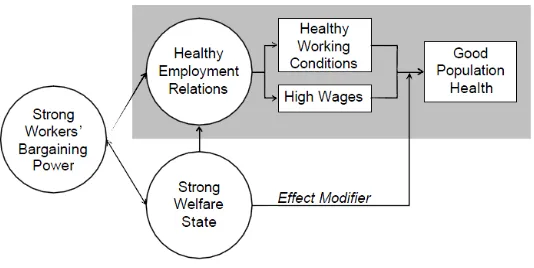
In 1990, Esping-Andersen proposed three theoretical welfare state regimes (Liberal, Conservative and Social Democratic) based upon three principles of the labour market: decommodification (the extent to which an individual’s welfare is reliant upon t he market, mainly by unemployment or sickness benefits and pensions), social stratification (the role of welfare states in maintaining or breaking down social stratification), and the private–public mix (the relative roles of the state, the family, the voluntary sector, and the market in welfare provision)[52]. In Liberal welfare states (i.e. United Kingdom) modest universal transfers or social protection policies exist. Conservative (i.e. Germany) was one regime where the welfare state provides welfare services, but at the same time maintains social status differences so that the resulting redistributive impact is minimal. The role of churches and families as social service providers are considerable. Social Democracy (i.e. Scandinavina countries) is the regime in which the universalism and de-commodification of social rights are extended to the whole citizens. This regime also takes over much of the social role of the family and offers full employment as part of its welfare state commitment[52]. Welfare state regime could act as a buffer to protect against the unequal gender distribution of work-related hazards mentioned above (Figure 7)[51, 53].
19
Figure 7 Relationship between worker’s bargaining power, welfare state, employment
relations, and health[51]
work-20
related psychosocial hazards[66, 67]. It has also been reported that welfare state regimes with the most comprehensive systems of social benefits redistribution not only improve the psychosocial work environment, but also mitigate the impact of work-related psychosocial hazards on health and health inequalities[68, 69] (e.g. by providing more resources to cope with stressful working events such as job insecurity and job loss)[70]. These arguments suggest a co rrelation between better social protection policies and benefits redistribution in welfare state regimes, such as occurs in the Scandinavian welfare state regime, which supposedly reduces women’s exposure to work-related psychosocial hazards. In addition, the combination of all these characteristics may lead to complex and welfare state regime-specific results in buffering the phenomenon of double exposure to work-related psychosocial hazards[65]. In other words, welfare state regimes may mitigate the difference between women’s and men’s exposure to work-related psychosocial hazards by social and labour market protection policies and social benefits redistribution[34, 71]. For example, countries with more protective social policies, more redistributive social benefits and more regulated labour markets (e.g. the Scandinavian regime) will have a lower gap between women and men in the exposure to work-related psychosocial hazards than those countries with more conservative and liberal welfare state regimes (e.g. the Southern regime) where the state has less tradition of implementing social protection policies and policies to redistribute social benefits, as well as less influence in regulating labour markets[68, 72].
1.3.2 Occupational social class
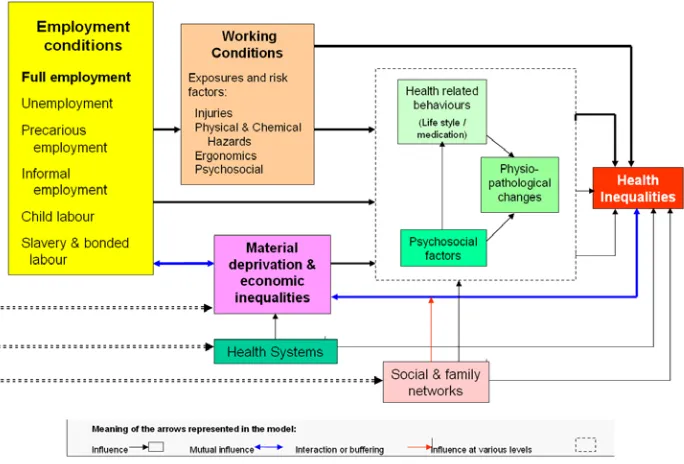
21
[image:49.595.90.432.220.452.2]are generating work-related health inequalities are the concepts of exploitation, domination and discrimination[51].
Figure 8 Micro - theoretical framework of Employment Conditions and Health
Inequalities[51]
22
23
2.
JUSTIFICATION
24
25
2. JUSTIFICATION
27
2. JUSTIFICATION
Several studies have shown that employed women experience worse employment and working conditions than men do, and that a higher health burden might result from these exposures [31, 33]. This different exposure to work-related hazards ends up producing a different impact on w omen and men’s health [1, 2, 20] . In the field of occupational health, researchers have incorporated the gender perspective only in the last decade [81]. That not only implies to separate all the statistical analyses by sex, but must also take into account the potential different meanings of a given role for men and women in different social contexts, for example in the social determinants of health inequalities, as: social class, age and ethnicity/race. Moreover, the incorporation of the gender perspective to occupational health studies implies that researchers should tend to explain the complex pathways by which the social relations of gender may have a different impact on employed women and men’s health[46, 82]. In spite of these facts, no study has been conducted to identify and collect all the work-related gender inequalities in occupational health[43, 44]. To figure out which is the general picture of the existing determinants of work-related gender inequalities in occupational health is of importance, not only for researchers and practitioners in occupational health, but also for policy makers, in order to optimise the efforts made by public administrations to reduce them.
28
edition of the National Working Conditions Survey, 2007 ( NWCS_2007), which incorporates important methodological advances over previous editions[91], is an opportunity of great interest. Furthermore, in case that this analysis would be repeated in future editions of the NWCS, work-related gender inequalities could be followed and monitored. It would be even possible to measure the impact that public policies, promoted for gender equity in occupational health, have on closing the gender gap in the Spanish working population[92].
29
30
31
3.
HYPOTHESIS AND OBJECTIVES
“There are marked differences by social class, ethnicity and age in the way gender inequalities are manifest. These persistence of gender and class inequalities pose a challenge for those who argue that the traditional social ties, relations and belief systems that used to shape people’s lives are losing their significance”
Jacqueline Scott, Gender inequalities in the 21st century, 2010
3. Hypothesis and objectives
3.1. Hypothesis
33
3. HYPOTHESIS AND OBJECTIVES
Below are the hypothesis and objectives for each of the three papers that constitute the core of this dissertation.
3.1. Hypothesis
3.1.1. Paper 1
• Important gender inequalities related to the unequal distribution of working and
employment conditions exist in occupational health.
3.1.2. Paper 2
• In Spain, women are exposed to worse working and employment conditions, balance
of job and family life and have poorer work-related health than men have. These gender inequalities would be worse in women than men would in the lowest occupational social class and in masculinised sectors of economic activity of the company as the construction and industrial sectors.
3.1.3. Paper 3
• There is a co rrelation between better social protection policies and benefits
34
3.2. Objectives
3.2.1. Paper 1
• The first objective was to identify and summarize the working and employment
conditions described as determinants of gender inequalities in occupational health in studies related to occupational health published between 1999 and 2010.
3.2.2. Paper 2
• The second objective was to analyze gender inequalities in working and employment
conditions, balancing job and family life as well as work-related health problems in a representative sample of the working Spanish population, taking into account the occupational social class and the sector of activity of the company.
3.2.3. Paper 3
• The third objective was to examine whether gender inequalities in the exposure to
35
36
37
4.
METHODS
“(...)Resolved lo que queráis, pero afrontando la responsabilidad de dar entrada a esa mitad de género humano en política, para que la política sea cosa de dos, porque solo hay una cosa que hace un sexo solo: alumbrar; las demás las hacemos todos en común, y no podéis venir aquí vosotros a legislar , a votar impuestos, a dictar deberes, a legislar sobre la raza humana, sobre la mujer y sobre el hijo, aislados, fuera de nosotras”
Clara de Campoamor, El voto femenino y yo: mi pecado mortal, 1935
4. Methods
4.1. Paper 1
4.2. Paper 2
39
4. METHODS
This section summarizes the epidemiological design, data sources, the variables analyzed and statistical analyzes used in each of the three articles of this dissertation.
4.1. Paper 1
This first paper was based on a systematic review of observational studies.
Search strategy
40
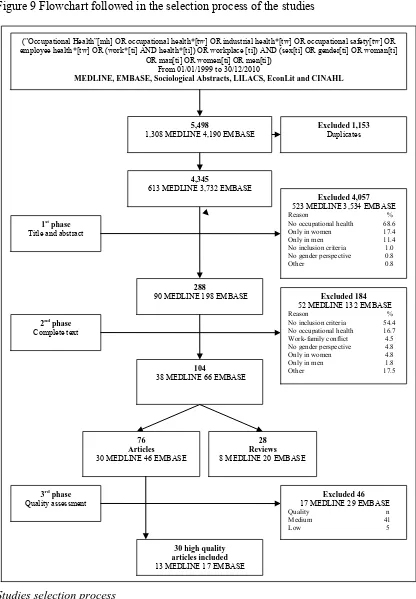
Figure 9 Flowchart followed in the selection process of the studies
Studies selection process
The common search strategy identified 5,498 references, 1,308 in MEDLINE, 4,190 in EMBASE and none in the remaining databases (Figure 9). Of these, 1,153 duplicated
("Occupational Health”[mh] OR occupational health*[tw] OR industrial health*[tw] OR occupational safety[tw] OR employee health*[tw] OR (work*[ti] AND health*[ti]) OR workplace [ti]) AND (sex[ti] OR gender[ti] OR woman[ti]
OR man[ti] OR women[ti] OR men[ti]) From 01/01/1999 to 30/12/2010
MEDLINE, EMBASE, Sociological Abstracts, LILACS, EconLit and CINAHL
Excluded 1,153 Duplicates
Excluded 4,057 523 MEDLINE 3,534 EMBASE
Reason %
No occupational health 68.6 Only in women 17.4 Only in men 11.4 No inclusion criteria 1.0 No gender perspective 0.8
Other 0.8
288
90 MEDLINE 198 EMBASE 1st phase
Title and abstract
30 high quality articles included 13 MEDLINE 17 EMBASE 3rd phase
Quality assessment 17 MEDLINE 29 EMBASE Excluded 46
Quality n
Medium 41
Low 5
4,345
613 MEDLINE 3,732 EMBASE
2nd phase
Complete text
Excluded 184 52 MEDLINE 132 EMBASE
Reason %
No inclusion criteria 54.4 No occupational health 16.7 Work-family conflict 4.5 No gender perspective 4.8 Only in women 4.8
Only in men 1.8
Other 17.5
104
38 MEDLINE 66 EMBASE
76 Articles
30 MEDLINE 46 EMBASE
28 Reviews 8 MEDLINE 20 EMBASE 5,498
41
articles were excluded. In the first phase, after applying the inclusion and exclusion criteria to the titles and abstracts (Table 1), the principal reviewer (JC) excluded 4,057 additional articles, for the most part because they did not focus on occupational health. In the second phase, after applying the selection criteria to the complete text of the remaining 288 articles, 104 were found to match the inclusion criteria. From these 104 articles, 28 were left out because they were reviews. Finally, a q uality check was conducted during the second phase of the selection process. After going through the title and abstracts, 5% of the 288 i ncluded references were randomly selected. The two principal reviewers (JC and ER) independently applied the criteria for inclusion and exclusion throughout the complete text of the articles. The Kappa statistic for agreement between them was quite acceptable (k=0.85). All disagreements between JC and ER were due to different interpretations of one of the exclusion criteria, which were resolved after a short discussion. When this process was finished, the selection criteria were clarified and rewritten. Thus, it was not necessary to ask any other reviewer’s opinion since JC and ER reached agreement on all studies for which there was initial disagreement.
Table 1 Inclusion and exclusion criteria used in the selection process
Inclusion criteria Exclusion criteria Studies focusing on the differences between women
and men in prevalence of exposure to occupational hazards related to working or employment conditions as determinants of health inequalities of working populations from a gender perspective
Studies not focusing on the differences between women and men in prevalence of exposure to occupational hazards related to working or employment conditions as determinants of health inequalities of working populations from a gender perspective
Studies in Spanish and English Studies focusing only on women or men, but not both at the same time
Studies including women and men, but without a gender perspective
Study reviews
Studies in occupational health focusing on specific biological differences between women and men such as pregnancy, birth, and breastfeeding
42
Quality appraisal
In the third phase, the remaining 76 articles were critically and independently appraised by two reviewers (JC and ER) using two different specific standardised evaluation guidelines appropriate to the type of the epidemiological design of the study[102, 103], both based on the STROBE statements[104].
The specific tool used to assess the quality of the 65 c ross-sectional studiesl[102] comprised 27 i tems distributed in 8 dom ains with 6 c ategories of answer (poor, fair, good, very good, no information available, and not applicable). The domains were: a)
research question, one item mainly evaluating whether the study is based on a clearly
defined research question; b) participants and internal validity, five items mainly
evaluating the sample adequacy and similarity to the base population and the control of selection bias; c) comparability between groups, four items mainly evaluating the study
groups’ comparability and the control of selection bias; d) study variables, four items
mainly evaluating the adequacy of the measurements of the main variables and the control of information bias; e) statistical analysis and control of confounders, four items
mainly evaluating the adequacy of the analysis in measuring the control of confounding variables; f) results, four items mainly evaluating to which extent the results are well
described, useful and precise; g) conclusions, four items mainly evaluating whether the
results can be generalized to the population and to the context in which it aims to apply; and h) conflict of interest, one item evaluating whether the conflict of interests do not
prejudice either the results or the conclusions of the study. The total quality score was determined as high-quality, if the majority (50% or over) of the 8 d omains were classified as very good or good, unless the internal validity (evaluated through domains b to e) was classified as fair or poor; medium-quality, if the internal validity was classified as fair, or if the majority of the domains were classified as fair; and low-quality, if the internal validity was classified as poor, or if the majority of the domains were classified as poor. The internal validity was classified as fair or poor, when at least two of the four domains from b to e were scored as fair or poor, respectively.
43
the domain was optimal or not (yes, no, partially and not applicable). The domains were: a) research question using three items; b) methods and internal validity,
evaluating the participants with three items, selecting case and controls with 11, the groups’ comparability with two, the exposure with four, and the statistical analysis with five; c) results using five items; d) conclusions, using one; e) conflict of interest, using
two; and f) external validity, using one.
The tool[103] to assess the quality of the six cohort studies used a checklist of 49 items distributed in 6 do mains with 4 c ategories of answers evaluating if the domain was optimal or not (yes, no, partially and not applicable). The domains were: a) research question, using four items; b) methods and internal validity, mainly evaluating the
participants with six items, the groups’ comparability with three, the exposure with nine, the effects with four, the groups’ monitoring with seven, and the statistical analysis with six; c) results, using six items; d) conclusions using one; e) conflict of interest using two; and f) external validity using one.
In both case–control and cohort studies, all six domains were taken equally into account to classify them as high, medium or low-quality studies. They were classified as high-quality, when five or more of any of the six domains were assessed as optimal; medium-quality, when three or four domains were assessed as optimal; and low-medium-quality, when only one or two domains were assessed as optimal.
After this assessment, 41 medium and 5 low-quality studies were rejected, because the review team decided to limit the focus to articles with the highest standards of quality. Twenty-nine high-quality studies were finally included in our review.
Identifying working and employment conditions as determinants of gender inequalities
44
between women and men in the prevalence of exposure to different working and employment conditions as determinants of gender inequalities in occupational health. In addition, we focused on the differences between women and men in the prevalence of work-related health problems as outcomes in each of the 30 s tudies. The statistical significance of each of the differences observed in the prevalence (p-value) was considered in the results and discussion section of this manuscript, but not in the selection process of the differences observed in the studies. Gender differences in the prevalence of exposure to the working and employment conditions were selected when the same gender difference appeared in two or more of the 30 studies included in the review, regardless of whether the difference in prevalence was statistically significant. We considered that a difference between women and men in the prevalence of exposure to the working and employment condition or in the work-related health problems was an inequality when it was avoidable, unfair, and systematically affected a higher proportion of women than men or vice-versa[6]. We grouped gender inequalities identified in the three dimensions analysed in this review: working conditions and employment conditions as determinants of gender inequalities in occupational health and inequalities related to work-related health problems as outcomes; including physical and mental health.
4.2. Paper 2
Participants and study sample
The study population consisted of 11,054 w orkers (4,583 women and 6,471 m en) interviewed in the 6th Spanish National Survey of Working Conditions (6th SNWCS)
conducted by the Spanish National Institute of Safety and Health at Work (SNISHW). The 6th SNWCS is a cross-sectional survey representative of the employed population in
45
and the different autonomous regions in Spain. The employed population, that was finally selected were interviewed between December 2006 and April 2007 at his home by trained interviewers[91]. For more details about the sample selection process and the characteristics of the sample finally selected could be tackle in Appendix I at the end of this document.
Independent variable
The main explicative variable along the whole study was sex.
Dependent variables
The research group identified 25 indicators to analyze gender inequalities (Appendix II) from the 76 questions that comprise the 6th SNWCS questionnaire[91] (Appendix I). In
46
(n = 28). Similarly, in the final phase of the selection process, we assessed the quality of studies considering its specific design: cross-sectional[102], cohort and case-control[103]. We excluded medium (n = 41) and low quality studies (n=5). Finally wee obtain 43 a rticles of the highest quality. From the analysis of these 43 studies we identified a set of exposures related to employment and working conditions and to balancing work and family life, which were constantly and differently distributed among women and men, affecting more women than men or vice-versa. In addition, we identified work-related health problems, which were also affecting differently and significantly a higher proportion of women than men or vice-versa. Based on the set of employment and working conditions, balancing job and family life and work-related health problems differently distributed among women and me; and on the 76 items of the 6th SNWCS, the research group proposed a set of 25 i ndicators of work-related
gender inequalities, after a discussion process that took several meetings. The 25 work-related gender inequality indicators proposed were grouped into four dimensions of analysis before being applied to the 6th SNWCS: a) employment conditions, b) working conditions, c) balancing work and family life and d) work-related health problems.
a) Employment conditions
Employment conditions were measured with three indicators: 1) Work without a contract, 2) Work with temporary contracts, including contracts for work and service, casual, temporary, training, interns and temporary through a temporary employment agency and 3) Shift work, including rotating equipment working morning and afternoon or morning, afternoon and evening.
b) Working conditions
47
the median, 6) High demand / low control[106] considered when the worker was exposed to high psychological job demands and low job control, 7) High demand / low control / low support social[107], which incorporates the concept of social support. In both cases (6 and 7), psychological job demands were measured by the sum of 11 questions with five response categories (Cronbach's alpha=0.76); the control over the job demands with the sum over nine questions with five response categories (Cronbach's alpha=0.84) and the social support, with the sum of four questions with five response categories (Cronbach's alpha=0.80). Then, taking as cut-off the corresponding median, psychological job demands, control over job demands and social support were dichotomized into high psychological job demands above its median, and low control and low social support, below its respectively median values; 8) High effort / low reward[108]. Effort was measured by the sum of the same 11 que stions with five response categories (Cronbach's alpha=0.76) as it was measured with the psychological job demands, since both are similar categories of analysis[107, 109, 110]. Reward was measure by the sum of five questions with five response categories (Cronbach's alpha=0.72). Both variables were dichotomized using as the cut-off the respectively median values, 9) Physical violence was measured from three questions with two response categories (Cronbach's alpha=0.58). We considered physical violence if workers answered yes to any of these three questions; 10) Bullying was measured by the sum of four questions with five response categories (Cronbach's alpha=0.83). Bulling was considered above the median value, 11) Sexual harassment was measured with a question with two response categories (yes or no) and 12) Discrimination was measured from seven questions with two response categories (Cronbach's alpha=0.64). Workers were considered to be discriminated if they answered yes to any of these seven questions.
c) Balancing work and family life
13) Conflict balancing work and family life and working with a full-time contract. Balancing work and family life was measured with the only available question in the 6th
48
control the potential confusion factor that the type of contract could introduce in this analysis.
d) Work-related health problems
Work-related health problems were collected with a battery of 29 he alth problems. Depending on the importance that the worker gave to the work-related health problems, they were ordered from the highest (first mentioned) to the lowest importance given by the worker (eighth mentioned). The analysis of the work-related health problems were focused on the first mentioned health problem. The 29 response categories were grouped into 20 response categories following a regional and biological organic system framework. Of these 20 response categories, only 12 were included: six as indicators of physical health 14) Musculoskeletal pain at upper limb, 15) Respiratory symptoms, 16) Hearing loss, 17) High blood pressure, 18) Skin problems, 19) Venous diseases (varicose veins, thrombosis, etc.) and other four as indicators of mental health 20) Stress, 21) Depression, 22) Insomnia and 23) Chronic fatigue. We also analyzed 24) Injuries related to work accidents, collected with a question about the fact that the worker declared to have suffered injuries due to his or her tasks at workplace that required medical assistance and 25) Occupational diseases as any person who has been diagnosed or in the process of recognition of a professional disease.
Covariates
The adjustment variable for all analysis performed was the age of the worker (16-29, 30-39, 40-49, 50-65 and over 65 years). The stratification variables were the occupational social class (manual and non-manual) and the sector of activity of the company (agriculture, industry, construction and services). The occupational social class was built from the occupation classification used by the 6th edition of the SNWCS
![Figure 6 Macro-theoretical framework of employment relations and health inequalities[51]](https://thumb-us.123doks.com/thumbv2/123dok_es/5317436.98605/45.595.90.506.231.527/figure-macro-theoretical-framework-employment-relations-health-inequalities.webp)