
Exploring english teachers’ knowledge construction in professional development: methodological dimension
115
0
0
Texto completo
(2) Exploring English Teachers’ Knowledge Construction in Professional Development: Methodological dimension. Jonathan Cuesta Morelos.. Thesis Director: Harold Castañeda Peña. A thesis submitted as a requirement to obtain the degree of M.A. in Applied Linguistics to the Teaching of English.. Universidad Distrital Francisco José de Caldas School of Science and Education Masters of Arts in Applied Linguistics to the Teaching of English Bogotá, D.C. Colombia 2017.
(3) Note of Acceptance. Thesis Director:. _________________________________. Name Jury:. ___________________________ Name. Jury:. ___________________________ Name.
(4) Acuerdo 19 de 1988 del Consejo Superior Universitario. Artículo 177: “La Universidad Distrital Francisco José de Caldas no será responsable por las ideas expuestas en esta tesis”..
(5) Acknowledgements I would like to express my sincere gratitude to my thesis advisor Dr. CastañedaPeña for his constant support, patience, and knowledge along the process. In addition, I would like to thank the University Professors who helped me grow professionally as a language teacher by providing me with insights that definitely had a great impact on my career. I also appreciate with great value the participants’ willingness and disposition to share their stories along the interviews and meetings. I would also like to thank my beautiful wife whose encouragement kept me going until the very last moment. She has been my help meet and my support; my light in times of obscurity and discouragement. And more importantly, I give thanks to God who gave me the strength, the intelligence and wisdom to attain this significant goal in my life. For his infinite mercy, and having given me this blessing of being a better person. “For the LORD grants wisdom; from his mouth come knowledge and understanding”..
(6) Dedicatory I dedicate this thesis to my new born baby Joshua who has brought happiness and union to my family..
(7) Abstract This thesis presents a narrative study that looks into three pre-service EFL public school teachers’ stories with the view to giving account of their knowledge construction in regards with their TPD methodological dimension. The study was conducted in Bogota, Colombia. The two concerns of the research were: 1) what these three EFL teachers’ narrative telling reveals concerning their methodological dimension in terms of their TDP knowledge construction when sharing their experiences. 2) what knowledge they have constructed as a way to make sense of their world, concerning their professional growth. Data was collected through in-depth interviews, which eventually underwent a process of filtering for their final analysis. The data analysis was carried out by considering narrative analysis frameworks that met the needs of this particular study. Results suggest three main categories for knowledge construction: outer sources, mediating sources, and inner sources. These teachers’ narratives also suggest that their TPD knowledge construction starts at a pre-service education level, influenced by their prior experiences and knowledge. The practical knowledge these three teachers have constructed are at the level of skills: classroom management, class planning, and teaching vocabulary; at the level of cognitive process: teaching methodologies; and at the level of reflective practices: reflective insights concerning their practices. Key words: Teacher professional development, narrative inquiry, teacher learning, knowledge construction..
(8) Table of Contents Chapter 1 Statement of the problem. 5. Introduction. 5. Controversial issues about TPD in the literature. 5. TPD in relation to the context I am involved in. 9. Research Questions. 13. Research Objectives. 14. Justification. 15. Chapter 2 Theoretical Framework. 16. Teacher Professional Development. 16. Teachers’ Narratives. 23. Knowledge construction – practical knowledge –. 27. Teacher Learning. 29. Chapter 3 Research Design. 32. Context. 33. Participants. 33. Type of Study. 35. Framework of analysis. 36. In-depth interviewing and transcribing. 38. Filtering the narratives. 38.
(9) Instrument. 40. Content of the instrument. 41. Validation Process. 43. The Teacher’s Role. 45. Accounting for transparency. 45. Chapter 4 Data analysis and findings. 46. Contextualizing the study. 46. Analysis. 48. Findings. 49. Categories. 50. Outer sources for knowledge construction. 50. Mediating sources for knowledge construction. 51. Resulting sources for knowledge construction. 52. Narrative 1: “Teachers are made in the classroom!”. 53. Narrative 2 “what has actually made me the teacher I am today is being in a classroom teaching”. 65. Narrative 3 “I’ve always been looking for scenarios and opportunities in which I can learn more”. 76. Chapter 5 Conclusions and considerations. 87. Limitations. 92. Further Research. 92. References Appendix. 93.
(10) Diagnostic questionnaire. 98. Consent letter. 99. Interview format. 100. Member check. 101.
(11) Chapter I Introduction In this globalized world in constant flux, new and different alternatives to address education should be considered. Hence, qualified standards in education, incorporating innovative pedagogical practices and establishing ways of facing new social challenges at schools have become a must. Teacher professional development (TPD henceforth), then, might become the key framework to meet these demanding and challenging changes in education within new perspectives (Cárdenas, González & Alvarez, 2010). Moreover, TPD expands teachers’ knowledge, providing them with new insights and skills that help them to engage in different ways, in order to cope with constant challenges and changes in education (Richards & Farrell, 2005). In the particular case of language teaching and learning, TPD gives language teachers the knowledge to make sense of their experiences and the implications of their practices in the teaching and learning process (James, 2001). TPD, then, must be at the core of teachers’ awareness of their pedagogies as active protagonists of their own professional growth. Considering teachers as active and direct partakers of their professional growth, then, TDP is a voluntary ongoing process in which teachers are engaged to learn and adjust their teaching to their students’ needs (Diaz-Maggioli, 2003). Likewise, it is important to highlight the role of research as the unit that finds the connection between practice and theory. In this regards, narratives could play an important role to the inquiry and understanding of insights involving teachers’ experiences that give account of knowledge construction concerning their TPD (Elliot, 2005). In other words, narratives.
(12) can provide meaningful and coherent discourses about people's experiences of the world; and likewise, a first hand and closer comprehension of what participants have learnt and how they have learnt it. For all the above, this thesis reports a narrative research work that intends to give an account of teacher’s knowledge construction through the analysis of three public school EFL teachers’ stories about their experiences in regards with their methodological dimension. This analysis is carried out following an underlying perspective of narratives as a method to interpret, construct, and describe insights into how this knowledge is built in the light of a bottom-up perspective of teacher professional development. Although this study does not intend to generalize but focuses on a specific context in Bogotá, Colombia; more specifically, EFL public school teachers; the scope of this research might embrace a wide radius because of its interpretative nature. That is to say, it might help us understand a whole through particularities. Likewise, this research addresses teacher professional development taking into account teachers’ experiences as the core of their professional growth. Finally, results could contribute to the insights into knowledge construction and these three EFL teachers’ experiences give an account of what and they have learnt in terms of methodology dimension. Statement of the problem Controversial issues about TPD in the literature Although the previous statements endow a significant role of teachers as the main actors engaging their own TPD; however, TPD has been conceived from a topdown perspective that does not comply with the definition above (Diaz-Maggioli, 2003). As claimed by some scholars such as González (2007) and Usma (2009), most of.
(13) the time teacher professional development is placed within a one-size fits-all framework, which looks at a mere transmission-oriented type of professional development. In this sense, TPD deals with preparing teachers to do their job in a certain way, and within certain patterns which ultimately will give them academic status. At this point, then, TPD might be considered at an institutional level, as professional training, with a start and an end. This training-only idea of TPD neglects the fact that TPD is a continuous process that also entails “teachers’ own individual effort” (Richards & Farrell, 2005, p. 3) Nevertheless, the attention given to TPD has evolved. Díaz-Maggioli (2003) for instance, provides an overview of approaches to TPD in which he claims adult learning as a core principle to TPD programs, taking into account different realms of teachers’ lives and not only the technical part of the matter; that means, TPD from a broader spectrum. It is worth mentioning that Díaz-Maggioli (2003) also claims the fact that adult learning is closely related to self-directed and autonomous learning; that is to say, TPD seen from a bottom-up perspective that gives teachers the chance to reflect upon their own teacher education in regards to their contextual, pedagogical knowledge or even personal needs. Thus, as Johnson (2009) argues, “teacher education must be oriented by a change of the epistemological paradigm, recognizing the sublimely social nature of the teaching and learning processes” (as cited in Cardenas, Gonzalez, & Alvarez, 2010, p. 55). That is to say, professional development perceived as a social-situated process of knowledge construction in the classroom, placing the teachers’ insights as reflexive ways to understanding, constructing and promoting professional growth. Similarly, poststructuralist approaches have also given a turn to the perspective.
(14) of teacher professional development towards a more socially-situated framework, giving importance to what teachers’ experience, know, and learn from those experiences; in other words, constructing knowledge through practice. But still, TPD seems to be driven by a dominant top-down approach as it has been previously stated. To illustrate the panorama a lot more, I will briefly go through some historical facts so as to look into the tendencies of TPD frameworks in our context. In the particular case of Colombia, there was not a clear system of educational policies for TPD in general. It was not until the enactment of the constitution of 1991 and the General Education Law of 1994, when a whole normative framework was unfolded. Subsequently, social and academic movements and programs emerged, in accordance with this Law. That is how, then, the Ten-year Educational Development Plan (1996-2005) was born. This Plan established two programs: “Expedición Pedagógica Nacional” and Educational Revolution (2002-2006). The first one, proposed by The Ministry of Education (MEN by its acronym in Spanish) and Universidad Pedagógica Nacional (UPN), became a pertinent proposal to TPD. This initiative was characterized by its experienced-production-knowledge nature and the creation of teachers’ sharing network. And the second one, which focused more on the quality assurance system with three main components: Standards of competences, Evaluation, and Improvement, inserting TPD as a strategy to enhance the last component: Improvement (MEN, 2012). In the field of foreign languages: English, we have on the one hand COFE– (Aparicio et al., 1995, as cited in Cardenas et al., 2010), the first initiative undertaken to establish a TPD framework for elementary and high school in-service teachers. This initiative was based on the blending of international and local models, taking into consideration national teachers’ experiences and practices. Such attempt was.
(15) unsuccessfully fulfilled, falling quickly into oblivion. On the other hand, we have the MEN with the help of the British Council, undertaking initiatives to promote English teachers’ professional development through the National Bilingual Program (PNB by its acronym in Spanish) 2004-2019 which is now called “Colombia Bilingüe” 2015-2025. MEN’s efforts to establish bilingual policies, that support this program, have offered some improvement projects such as “Proyecto de Fortalecimiento de Competencias en Lenguas Extranjeras 2010-2014” (PDFCLE by its acronym in Spanish), aiming at strengthening English teachers’ language proficiency and methodologies as a way to offer a continuous professional growth. That aim goes in accordance with the third of the three main elements (improvement) of the quality assurance system mentioned above, which constituted the Educational Revolution. Under this structure, the MEN has allied to Colombian universities that help to carry out the task of offering training courses on methodologies to teaching English and on the strengthening of their language proficiency, taking into account the basic standards of competence in foreign language: English. These courses are based on the Common European Framework of Reference for Languages (CEFR) and methodologies that draw on cognitive and linguistic learning perspectives. Such initiatives have established policies for a TPD framework in which inservice teacher professional development has fallen into a dominant and training-based model that presents a one-way view of teacher professional growth (Usma, 2009). Subsequently, this has generated deep questioning and debates among some scholars about the implications that such policies (if they can be called as such) could bring and have brought about in Colombia. That fact is illustrated in papers published by national scholars, referring to these.
(16) policies as imposed colonial and foreign models (González, 2007) that perpetuate and denigrate teachers’ local-constructed knowledge, and therefore, situate teachers in a less privileged position. In this respect, the concept of teachers has been delegated to a concept of the teacher as a receiver. Usma (2009) also argues that processes of exclusion and imposed discourses have been underlying the national educational policies through foreign reforms, which at the same time take the local as inferior and obsolete. The idea of being a teacher has been influenced by underlying educational policies proposed by the government, and these have placed the figure of the teacher as a mere public official and not as someone who makes a living option out of his work. (Gaitán, 2013, as cited in Dimaté et al., 2013). In this regards, teachers appear to be only recipients of a fixed system and not active protagonists of their professional growth. Consequently, the current situation of our educational system is that of foreign policy makers and stakeholders taking control of language learning and teaching policies in Colombia; yet, TPD. In other words, as Canagarajah (2005) states, globalized economic and political interest will ultimately engulf local language practices, discourses, and values. Thus, there are dominant discourses coming from higher hierarchies that impose what is convenient for them to offer, regarding of TPD. TPD in relation to the context I am involved in In our Colombian context, Gonzalez et al. (2001, 2002) have been conducting research in which an interest in the conditions and expectations of language teachers in Colombia, concerning professional development, have been exposed. Gonzalez (2001) points out the noticeable disparity between teachers’ needs and professional development programs offered by Colombian universities and institutes (which mainly focus on knowledge-transmitted approaches)..
(17) In this regards, teachers’ voices, at a certain point, have made their way to be heard. As a consequence, these voices proclaim not only a training based need, but also other teachers’ needs in different domains that are to be considered as well (teachers as learners, as workers, and as in-service teachers). Such domains should be taken into account so as to fulfill their expectations when engaging in TPD programs. On the other hand, there are programs that aim at training teachers as teachers only, disregarding other realms involved in their jobs (Gonzalez et al., 2002), and their lives (Diaz-Maggioli, 2003). In this sense, there still seems to be a gap between what teachers have as opportune resources of TPD to fulfill their needs, and what is actually presented and used in terms of teaching education growth. In this respect, tensions and disparities have emerged from those various perspectives when presenting TPD. Consequently, as claimed by Saldarriaga and Toro (2002), “school teachers and students are left in the middle of the debate with the intricate task of enacting the policy” (as cited in Usma, 2009, p. 132). This appears to be the particular case of a group of 5 EFL teachers who participated in “Estrategia de Fortalecimiento de una Segunda Lengua”, a program sponsored by Secretaría de Educación Bogotá (SED by its acronym in Spanish) and carried out in partnership with the Language Institute of Universidad Distrital (ILUD by its acronym in Spanish). After having conducted a brief questionnaire (see Appendix A) with the aim of describing and characterizing the participants, I found out that this group of EFL teachers, although having previously participated in these kinds of programs and holding Master Degrees, they are still searching for the best way to reach a certain level of language proficiency mastery and the command of the latest approach to teaching English. Consequently, they place these particular needs over their own current teaching.
(18) practices, that way neglecting their own construction of knowledge or even more, expecting someone else to train them when they might have the tools themselves to grow professionally. This can be evidenced in their own answers when asked about the dimension of their professional development that they would like to improve. It is apparent that these EFL teachers are still pursuing the interest of being trained: “Considero que es necesario estar actualizado con las nuevas metodologías para la enseñanza del inglés”.I think it is necessary to be up-to-date with new methodologies for English Language teaching. (Teacher 1 – Diagnostic Questionnaire, March 3rd, 2015) “Fortalecimiento del idioma inglés, destreza en uso de las habilidades comunicativas”. Strengthening of the English language and skills development in the use of communicative skills. (Teacher 2 – Diagnostic Questionnaire, March 3rd, 2015) According to this, even though they have participated in programs that should give account of an “ongoing” process of constant evaluation (Guskey, 2000); there is evidence of a short-term training-vision schema. This might lead to the idea of a deficiency approach which tries to overcome a “deficiency” through the accumulation of external knowledge, rather than looking at teachers’ own strategies and knowledge to overcome their needs through their own practices. Moreover, the TPD process these EFL teachers have undergone, might have been influenced or limited by the goals presented by SED. Initiatives undertaken by Secretaría de Educación point exactly at these two dimensions only, which might encourage teachers to focus on that. Consequently, this could overshadow teachers’ own participation and construction of knowledge, starting from their experience and the.
(19) capacity to create and transform knowledge. We can clearly evidence this fact when reading the preface of the “Colombia very well” socializing document: “El Proyecto de Fortalecimiento al Desarrollo de Competencias en Lenguas Extranjeras ha desarrollado, entre el 2010- 2014, iniciativas que le responden a […] la calidad educativa. Hemos capacitado más de 9.500 maestros de las 94 Secretarías de Educación certificadas del país en lengua y metodología” (MEN, 2014). “The strengthening project towards the development of foreign languages proficiency during the years 2010-2014 has taken initiatives that give account for the quality standards of education […]. We have certified more than 9.500 official teachers in language and methodology from the 94 official Secretariats of Education throughout the country” 1 It seems that the two aspects, in terms of TPD, of primary concern by both teachers, and programs are the linguistic and the methodological ones. These aspects are called dimensions by Richard and Farrell (2005). The authors define dimensions as the realms or areas which constitute TPD in relation with the personal, professional, and institutional aspects of teachers. However, this proposal intends to understand what teachers have built regarding the knowledge constructed through their experiences to overcome their needs regarding the methodological dimension in their professional development. In regards to the linguistic dimension, it will only be addressed to the extent that the data reveals it. This is due to the lack of artifacts I use in the study to actually have precise information about what teachers have learned and constructed in terms of the language as content knowledge. The study draws on experiences that are shared by the participants through their. 1. Translation made by the researcher..
(20) stories, as a way to reveal how they construct their knowledge in the dimension previously mentioned. These experiences are analyzed through narratives as the underlying inquiry method. Narratives have become a method and at the same time the object of inquiry in teacher education (Carter, 1993), giving birth to a new trend that constitutes a way of thinking, and ultimately a way of understanding. Furthermore, “narratives are ways of capturing the complexity, specificity, and internal and external connections of phenomena, overcoming the limitations of atomist and positivist approaches” (Da Ponte, 2001, p. 2). In other words, teachers’ stories provide us with a more real and particular understanding of teachers’ growth that offers a more sensible bilateral view of the process of teacher education. This is due to the fact that both teachers’ perspectives and what they get from teacher education programs might come to a better understanding of their TPD process. Consequently, as Cortazzi (1993) supports that, through stories, teachers create a more personal and professional constructed meaning about themselves (as cited in Da Ponte, 2001); what is more, personal narratives are not an imposed fixed-type of methodological training models; instead, they are authentic insights that account for first hand experiences, which is key to inquire and get a real comprehension of what teachers’ make relevant about their own professional development as active agents of it (See Chapter III for a detailed development of narrative studies). Taking into account all of the above, I intend to carry out this study by considering the following research questions and objectives: Research questions What does EFL in-service teachers’ narrative telling reveal concerning their methodological TPD experiences as a way to make sense of their practice?.
(21) What knowledge have EFL teachers constructed through their experiences concerning their methodological dimension in their professional development? Research objectives ●. To explore what teachers’ narrative telling reveals concerning their methodological knowledge constructed through their experiences.. ●. To understand the way in-service EFL teachers (re)construct their methodological knowledge considering their experiences as the means through which they make sense of their own practices..
(22) Justification The scope of this research will be of great enrichment to a more complete insight into TDP in our context. Hence, it will contribute to the construction of a more contextualized framework when understanding language teachers’ professional development. Moreover, teachers’ voices are present as a way to account for particular practices that are contextualized and of significant value in order to see TDP from a more bottom-up view. In this respect, this study gives account of teachers’ professional growth on the basis of participants´own knowledge constructed from their experiences. By doing so, this study intends to look at TPD from a perspective that takes into account both, teachers’ voices and aspects that give account of TPD. In other words, this study looks at TPD from an angle that might defuse the dichotomy (previously discussed) presented in the problem statement. Additionally, participants could share their experiences about how they have constructed their methodological knowledge. This as an exercise needed so as to construct and co-construct insights that help, not only the researcher, but also, themselves to be aware of their own learning process. Consequently, participants might be able to reflect on what they have learned, acquired, believed, and done along their careers by telling their stories. Regarding this, a narrative research is the best way to report how TPD is constructed from teachers’ experiences. Furthermore, narratives give account of teachers’ voices and the way they make sense of their practices as language teachers and consequently, of their knowledge construction. Furthermore, narratives are part of our lives as something we can use to comprehend the way we experience the world; therefore, narratives are an appropriate method to understand others (Clandinin, 2016)..
(23) As for the realms of Applied Linguistics in EFL, this research will contribute mainly to the field of teacher education, more precisely to the research line on Processes of Teacher Education and Development from Distrital University, providing deeper inquiry and discernments of teacher education conception in our context. To conclude, I should say that the exercise of inquiring and reflecting upon this topic will empower my own understanding of an issue of concern as an English teacher researcher, in order to contribute to the field of language teaching and learning in general; subsequently, this leads me to reflect upon my own practice as an agent of change..
(24) Chapter 2 Theoretical framework This particular narrative study aims at understanding the way in-service EFL teachers (re)construct their methodological knowledge through their narratives as the means through which they make sense of their own practices. With this aim in mind, this following chapter also introduces the theories and research studies that give account of the literature support underlying the constructs which will serve as theoretical framework for the study. The constructs that constitute this research are organized as follows: Teacher Professional Development, seen from a post-structural view that understands TPD as a continuous process that could be constructed through teachers’ own teaching and learning experiences. Teachers’ narratives is a second construct; this one is viewed as the framework through which teachers’ experiences are materialized in order to comprehend the way they construct knowledge. The next construct is Knowledge construction: practical knowledge, based on the concept of teacher cognition; what teachers think, believe and know. Finally, the last construct deals with teacher learning, concerning the process in which teachers become aware of their insights into their own practices. I will start with a contextualization of the main construct, teacher professional development in Colombia, to move gradually to some of the narrative studies that shed light on what has been studied in the TPD area. This will later lead us through some insights into practical knowledge to finally finish with teacher learning. Teacher professional development Putting forward a clear TPD definition is rather difficult, since it is quite a challenge to bring together different perspectives of TPD that constitute a single.
(25) definition that combines both, a global spectrum and a more specific framework that gives account of a set or fixed concept of what TPD implies in its whole. However, I will start with what our Colombian National Education Law (Ley (General de Educación, 1994, p. 23) proposes in its Title VI -Teacher Professional Development- Chapter 2, Articles 109-110: Teacher education programs general objectives are: a) to train educators with the highest scientific and ethic quality; b) to develop theory and pedagogical practices as a fundamental part of the educator knowledge c) to enhance research in the realms of education and specific knowledge; and d) to train pre-service and in-service teachers at all levels in different educational settings. Teaching will also be provided by people with the recognized moral, ethical, pedagogical, and professional capacity. The Colombian government will guarantee the suitable conditions to facilitate TPD, with the view to offering a high quality educational service. The responsibility for improving TPD will be on Educators themselves, the Nation, the District, and Educational institutions. These principles of TPD presented by the Colombian government give us an overview or a starting point to look into TPD; they also inform us about the type of framework to analyze the subject. But, they have also generated certain reactions and tensions among some scholars who claim for a more specific TPD framework in the field of language teaching. One of the most recent studies pertaining TPD in the field of language teaching is by Cárdenas et al. (2010). In this study the authors present a conceptual framework on TPD for in-service language teachers in Colombia. The authors state that the continued teacher education has been studied little; thus, this study presents key concepts to analyze the matter in question. The researchers also analyze the models of professional.
(26) development proposed by Richards & Farrell (2005) and James (2001), who claim that TPD should focus on how language teachers see knowledge to make sense of their experiences, and the way their practices construct their teaching and learning processes. Conclusions on this study show how TPD should understand knowledge construction based on individuals, and from a social perspective of learning and teaching instead of being a kind of teacher training course. Cárdenas et al. (2010) also suggest the use of a post-method approach pedagogy (Kumaravadivelu, 2006). This study presents a thorough conceptualization to be considered in the realms of TDP in Colombia. Although the conclusions in this study show a clear connection to what I have already presented in chapter one about seeing TDP from a more bottom-up perspective, Cárdenas et al.’s (2010) study seems to be focused on just informing, as it provides precise information through the literature, but does not provide insights from teachers’ experiences in which they express their voices. Consequently, the fact that teachers’ voices are not present in the study, brings about the discussion about the gap between the actual role of teachers’ experiences in their own TPD and what is said about TPD. In this respect, it is necessary to conduct studies that can inform us about TPD from the perspective of language teachers and the way they construct their knowledge, taking into account their experiences and stories. One study in which we can explicitly appreciate teachers’ voices was carried out in previous years, by Gonzalez et al. (2002); a qualitative study undertaken in Medellin (Colombia) in which they report ELF teachers’ needs in professional development. Four groups of teachers participated (two groups of teachers at a private school and two groups of teachers at a public school). The study concluded that teachers experience three main domains when talking.
(27) about teacher education: 1) teachers as workers: better working conditions, in terms of stability and salary, 2) teachers as instructors: conditions, such as the place and materials to impart knowledge, regarding their practice and amelioration of their work as teachers, and 3) teachers as learners: opportunities to improve their English proficiency. Gonzalez et al. (2002) conclude that teachers look for teacher development programs that give them the chance to improve in these three main domains mentioned. However, teacher development programs usually do not address the three holistically. What is more, teachers see themselves as recipients in their professional development and do not really take a position that shows their understanding in their own professional development. In these two studies from Cárdenas et al. (2010) and Gonzalez et al. (2002), the first one suggests a solution to a need that the second one tries to illustrate explicitly. This highlights the fact that teachers perceive TPD concerning their needs; however, tendencies in the literature of TPD seem to have divergent positions. On the one hand, we have Cárdenas et al. (2010) with a poststructuralist point of view which sees TPD as a long-term process that moves towards a knowledge orientation, rather than the acquisition of technical instruments based on a training vision of teacher learning. On the other hand, we can see how teachers themselves state the need of improving their language and methodological proficiency skills (González, 2001, as cited in McNulty & Quinchía, 2007). This dichotomy between two frameworks to TPD has been stated by DiazMaggioli (2004) and Hardy (2012) in saying that teacher professional development practices have been influenced and subsequently limited by traditional top-down approaches, which give account of the arrangements and decisions made by political.
(28) stances such as administrators, and the state and stakeholders, which at the same time are influenced by broader global processes. Consequently, this has led to an underestimated vision of TPD in which teachers’ growth has become something measurable, standardized and lineal, falling into a single imposed bureaucratic dynamic that meets the needs of a political model that does not see TPD as a reflexive social practice. Nevertheless, Hardy (2012, p. 1) also proposes a vision of TPD as a “multifaceted social practice involving the active decision-making by individuals and groups under specific social settings in which they live and work”; in other words, putting forward a model which takes a bottom-up stance. Díaz-Maggioli (2004), also claims an understanding of TPD as an interrelated negotiation among the direct actors involved in the TPD process, addressing teachers’ own particular needs; that is to say, a teacher-centered model. In this respect, these two authors – Hardy, 2012 and Díaz-Maggioli, 2004 – see TPD at the core of teachers’ needs and their context and as a deliberately engaged process. Here, we can diffuse the dichotomy by bringing together two points of views to a more complementary framework rather than opposed. We cannot deny that developing specific techniques or skills is also part of learning, and it is necessary in TPD. DiazMaggioli (2012) refers to this type of learning as teacher training. Similarly, Richards and Farrell (2005) define this type of learning as “training that involves understanding basic concepts and principles […] for applying them to teaching and the ability to demonstrate principles and practices in the classroom” (p. 3). Maggioli (2012) and Richards and Farrell (2005) explain this concept as part of TPD without condemning the reality that sometimes we live: every now and then teachers do need to be trained in certain areas. In some other occasions teachers have.
(29) the need to reinforce their competences in order to cope with the content knowledge they are going to teach, as we can see in Gonzalez’s et al.’s (2002) study. This is the case of an action research study in which McNulty & Quinchía (2007) proposed the implementation of a holistic professional development program with a group of elementary public school teachers in Medellin. The initiative was taken considering the elementary public school teachers low proficiency level, and their lack of pedagogical knowledge about language teaching and learning. This program intended to integrate strategies that aim at improving the teachers’ target language and reflective practice, based on principles of Theme-based instruction. The authors reported an improvement in participation and an increase of confidence; moreover, participants showed an improvement in the use of conventional English. They concluded that this holistic approach is a viable professional development framework for English teachers. Here we can see the example of a group of teachers who had to reinforce a punctual need: training in character. Nevertheless, TPD was treated not from a mere structural way, although the focus was to train teachers. In other words, although training within TPD has sometimes been seen as a transmitted-type of framework that permeates the view of teachers as passive agents in their TDP; training can also be seen as part of TDP in the sense that complements teachers’ education. As claimed by Richards and Farrell (2005) knowledge base of teaching is constantly changing; what is more, teachers do not learn everything at the in-service level; therefore, training becomes the response to this particular instrumental need. Another example is presented by Giraldo (2014) who similarly carried out an action research study with novice in-service EFL teachers at a language institute of a state university in Pereira (Colombia). In his study, he reports the impact that TPD has.
(30) in teachers’ classroom performance. Findings reported an improvement on teachers’ classroom performance in terms of teaching approach (more communicative), organization, and sensitiveness to students’ needs. In contrast with McNulty & Quinchía’s study (2007); Giraldo’s (2014) study participants were at a different context that might be thought as more “demanding” in terms of teachers’ linguistic and methodological competences; and more interestingly with a different time of expertise. However, the commonality shared by the participants in terms of the need of methodological skills is evidenced. Even though the researcher has a clear stance on TPD that goes with post-structuralist views; in other words, “professional development not as the idea of an accumulation of skills but as a highly critical process” (Giraldo, 2014 p.64); the objective of his study was to report the effects when applying a TPD program to provide participants with tools to improve their classroom performance (the need identified in a diagnostic phase previous to the study) which ultimately is teacher training. It is paramount to make clear that training-oriented approaches are sometimes needed; nevertheless, this does not necessarily mean that this type of learning is going to be the only framework to address TPD. We need to find the balance point that configures TPD processes that transcend challenges, needs, and even paradigms. We need a complementary vision of a socio-culturally situated model for TPD that really helps teachers have a significant way of making sense of their practices; bearing in mind teachers’ reality and insights. The following construct, pertaining to this study, has to do with narratives. Here I present some narrative studies that depict the vision of narrative study as the approach to understanding teachers’ experiences and the way to generate new knowledge and.
(31) insights about TPD. Teachers’ narratives Studies and theories on narratives tend to be more inclined to a postmodern perspective that draws on the understanding of TPD starting from teachers’ experiences. This contrasts with our most common vision of TPD (training vision). For this reason, narrative researches have been studied little in our context. Nevertheless, those who embark on narrative studies, have adopted some frameworks from foreign authors (such as Barkhiuzen, 2011; Connelly and Clandinin, 1990; Johnson and Golombeck, 2002; among others). These authors have shed light on what could be an option to have clear insights into narratives and how to address the topic. Owing to this, I have borrowed some of these author’s theories and concepts to build my own insights, as well. Therefore, I would like to clarify that I consider narratives as a way of understanding and making sense of the world. By the same token, the intention is not to present a framework for TPD, but rather a framework to understand how EFL teachers construct their knowledge when analyzing their narratives as critical points to comprehend the way they particularly experience their practices. I will start with Johnson and Golombek (2002) who propose narratives as a way of reflecting and constructing teachers’ professional development. Narratives give teachers the tools to understanding their own teaching experiences. The authors state that what teachers know about teaching should be highly constructed from their own experiences. Furthermore, the use of this knowledge they possess is interpretative and socially constructed within their practice in the classroom. In this order of ideas, the authors claim that from a more socially situated perspective, teachers not only possess.
(32) knowledge, but they can also construct knowledge. Similarly, Diaz-Maggioli (2012) states that teachers not only accumulate knowledge, but they also reinterpret and reconstruct knowledge through their active participation in teaching and learning activities. Here we clearly see what Johnson and Golombek (2002) propose as a framework for TPD. They take an ontological perspective that sees and understands teachers as narrative beings. That is to say, narratives as the process through which teachers construct, understand, and generate their professional development. One study that can evidence this tendency is undertaken by Chan (2012). In his study the author examines the experiences pre-service teachers have and how these give insights into the understanding of their own teacher education process through inquiring. Likewise, how reflection upon their past helps improve their future; moving, like this, from an examination-driven curriculum to a more knowledge-constructed approach. The study suggests that narrative inquiry, through autobiographies, transforms teachers into active learners, creates in-depth understanding of the self which can facilitate changes and learning; and therefore, a more conscious professional development at an early stage. Beattie (2000) demonstrates that narratives not only give account of the learning process in teacher education, but also of teachers’ identities, beliefs, and ideologies as part of TPD. This study is about narrative accounts written by prospective teachers who present how they have built their professional knowledge through inquiry. In the study, prospective teachers’ narratives give account of their own experiences and concerns through the questioning of their beliefs, personal hopes, world views, by giving insights into a unique and individual process of professional.
(33) development. Results show that the creation of a professional identity as teachers is an individual and unique process, and the presence of teachers’ voices is imperative when developing their own professional growth. Both studies (Chan, 2012; Beattie, 2000) emphasize on the fact that narratives in TPD are distinctive processes that highlight the self and the reflection of teachers as active agents in their TPD. Furthermore, they suggest that narratives integrate the knowledge of subject matter and knowledge of the world constructed through the participants’ experiences. In another area of knowledge (a narrative study in Mathematics), Da Ponte (2001) argues that narratives should be of interest for researchers in teachers’ professional knowledge. He gives a conceptual framework that supports the use of narratives as a powerful tool for teacher development and research methodology in the light of the discussion and reflection upon issues concerning teacher education. This study shows us that even in areas that are commonly thought to pertain to purely quantitative paradigms, narratives can also be used. Once again, this supports the fact that TPD is a process that involves not only knowledge of the subject matter, but also, knowledge about themselves as humans and the world that revolves around teaching. Da Ponte (2001) states that telling stories helps us establish order and coherence of our experiences; and therefore, make sense of our world around us. I will next present some other studies in which narratives are used as a framework to explore, and comprehend what and how teachers experience their TPD and how this gives account of our better understanding of TPD from a more situated perspective when analyzing teachers’ stories. Mendieta (2011) developed a study in the form of narrative inquiry during 2009. She conducted the study with three EFL teachers, teaching at different levels at their.
(34) workplace. The purpose of the study was to unveil and characterize the narrative knowledge those teachers hold about language teaching and learning processes as well as the role that knowledge plays in the constant construction and evaluation of curriculum. This research shows how the focus of understanding narratives changes to a perspective adopted by the researcher to comprehend what teachers know about their world; however, within the same principle underlying the insights into narratives as a situated model of TPD. She concludes by pointing that teachers construct their own knowledge regarding curriculum and language teaching based on their experiences, beliefs, views and practices. She also states the vital need to use narratives as a way of exploring teachers’ knowledge so as to better understand the complexity of the teaching context in which they work. In her study, Mendieta (2011) highlights the relevance to understand teachers as individuals with different beliefs, ideologies, and different experiences; what therefore, challenges us to create insights into what they particularly construct and understand about their TPD. Similarly, Zhao and Poulson (2006) conducted and interesting biographical narrative inquiry study with three Chinese EFL teachers from three different generations, in which they looked at teachers’ knowledge through teachers’ perspectives of their own knowledge based on their own experiences. This type of knowledge coming from the teachers’ experiences is what it is referred to as “practical knowledge” (Elbaz, 1983 as cited in Zhao & Poulson, 2006) which will eventually be explained more in details. This conception of practical knowledge is explored using teachers’ biographical narratives with the view to understanding the way these three teachers experience their world and therefore their.
(35) knowledge through a generational sequence. The narrative analysis focused on identifying and exploring events that gave account of what becoming or being teachers meant to them. In the same Asian context, Chou (2008) carried out a study with three elementary EFL teachers, as well, but in Taiwan. He reported how these teachers conceptualized their teaching practical knowledge developed from their practices. Chou used a qualitative case study approach; however, the underlying principle conceptualizing teachers’ practical knowledge laid on the same path as Zhao and Poulson’s study (2006): the participants’ understanding of themselves as teachers. Although both authors used different research approaches, they similarly give significant insights into the fact that teachers generated knowledge from their experiences. In doing so, the researchers could also show an understanding of teachers’ knowledge from a situated perspective that succeeds to explain those teachers’ particular practices and experiences giving account of their pedagogies; and this, at the same time drives teachers’ decisions towards their TPD. This consequently opens more possibilities for further studies that illustrate and explain TPD taking into account the particularities of teachers as individuals who possess identity, ideologies, needs, and experiences in a given context. To continue with the discussion about teachers’ knowledge construction I will emphasize on a concept previously mentioned: “teachers’ practical knowledge” (TPK). I will move on to the next construct in which we can see more clearly what this concept entails. Knowledge construction – practical knowledge – Shulman (1986) was one of the pioneer scholars who dealt with teachers’ knowledge and the types of knowledge for language teachers (Jiang, Li, Deng, & Wei ,.
(36) 2013). They proposed three main categories of content knowledge: i) subject knowledge, referring to the subject matter and the amount of knowledge in relation to the area of knowledge; ii) pedagogical content knowledge, dealing with the way or ability to teach the subject knowledge to OTHERS; in other words, strategies to make others understand and learn; and iii) curricular knowledge, encompassing the materials and programs that teachers use as tools in function to students’ learning process and success. Shulman’s proposal gives a great deal of insights into language teachers’ knowledge and what this knowledge entails in relation to their career. However, what teachers should know and how they construct it has become a matter of discussions that has been widely addressed by scholars. For instance, Fenstermacher (1994) claims that it is this idea of teachers’ knowledge what gives rise to policies that see teachers’ knowledge from a formal perspective; that is to say, from a top-down approach; and subsequently, neglecting the value of teachers’ practical knowledge. In this respect, the term “teacher practical knowledge” (TPK) has been embraced in the field of teacher education regarding language teachers’ knowledge (Jiang et al., 2013). Consequently, the term has been increasingly used in studies to comprehend teachers’ knowledge concerning what teachers learn and how they learn it based on their experiences. TPK originally stems from the concept of teacher cognition proposed by Borg (2003): “unobservable cognitive dimension of teaching –what teachers know, believe, and think (p. 81)”. In other words, the way teachers acquire knowledge and understand the world through their experiences. Fenstermacher (1994) also proposes two major kinds of teacher knowledge: formal knowledge, referring to knowledge produced by researchers; and practical.
(37) knowledge, the one produced by teachers themselves (Yu, 2011). Connelly and Clandinin (1990) understand that practical knowledge as something that is reconstructed with the past and negotiated with the future to face/meet the conditions of the present. TPK then serves as a source of information and as tool for teacher professional development (Meijer et al, 1999, as cited in Yu, 2011). TPK greatly informs us about teachers’ knowledge and what they can do with it (Yu, 2011). An example of this can be appreciated in a study conducted by Arıoğul (2007) where TPK is analyzed taken into account three background sources that influence teachers’ knowledge construction: teachers’ prior language learning experiences, prior teaching experience, and professional coursework in pre- and in-service education. In the study participants were three language teachers whose experiences were key insights to draw on the understanding of how their base knowledge was constructed as language teachers, which at the same time shed light on how their teacher education process was developed. Results explicitly show how experiences can make tangible the way teachers construct their knowledge and how TPK informs us about these particular teachers’ professional development taking into account teachers own perspectives. Dealing with how teachers’ knowledge is traced and constructed also implies how teachers learn. The next construct gives insights into teacher learning and how teachers become aware of their making sense of the world when constructing knowledge. I will start by stating my vision of learning, and present the theoretical support to shed light on what this construct entails. Learning is not a systematized kind of shortterm goal, but rather an analytical process involving a raise of awareness that highly depends on participants’ values. In this respect, the vision of learning is not focused on.
(38) specific institutional purposes, but as the means to building meanings and interacting with one’s own learning process. Then, learning is constant expression of one’s ideas conveying emotions, expectations and beliefs that are directly related to our motivation to discover and analyze things. Arnold (2011) expresses this view of learning with what he calls the role of affect which plays an important part in the finding out of participants’ understanding of their professional development through sharing their needs, interests, and values, taking into account what it is going on inside their perspectives and contexts. Although learning conjures the idea of mentioning the schools of thoughts theories proposed by Piaget, Vygotsky, etc.; for this construct, I do not intend to discuss any of that, since teachers possess unique learning characteristics (Díaz-Maggioli, 2012). I rather move from the traditional idea of learning: that of “an empty vessel that needs to be filled” to the concept of learning as an active personal social process of construction of meaning as claimed by Richards and Farrell (2005) who also see learning as a process of reorganization and reconstruction. Bearing the previous insight in mind learning then, is a basic human need and a fundamental lifelong necessity (Jarvis, 2003). Tight (2002) also argues that learning is a lifelong process involved in everyday experiences, but taking into considerations the variable of adulthood; understanding as an adult a stage in life cycle (Rogers, 1996, p. 34, as cited by Tight, 2002). Both authors are experts in the field of adult learning, and they present a vision of learning in the realm of education in regards to adult training. Furthermore, Richards and Farrell (2005) present teacher learning into four views: skill learning related the mastery of competences and skills (explicit knowledge); as a cognitive process which involves teachers’ beliefs and thinking and how these influence their practices; as a personal construction which was previously mentioned:.
(39) Knowledge is actively constructed by the learner and it is not a passive process; and as a reflective practice in which the process of learning is carried out within a critical examination of experiences (tacit knowledge). From the above, I can say that learning might take different forms, when trying to explain how teachers learn. The different beliefs and needs in an array of contexts teachers can experience learning can alter either temporally or permanently the view of learning. In this sense; I think, then, teacher learning should be also viewed as a personal set of values that represent, understand and even change the reality in which knowledge is constructed in relation with the learner experiences, needs, and emotions. In this order of idea, there should be a constant negotiation between teachers’ goals established by their beliefs and needs and the way learning needs are constructed to pursuit an effective appropriation of knowledge in accordance with their own professional growth. I can conclude by citing Guskey (2000) who claims that knowledge construction should be considered as something dynamic that is constantly changing regarding new teaching and learning processes and new types of expertise at different levels and contexts. After having concluded this chapter, I will move on to the next chapter: Research design, in which I will give a detailed outline of how the study will come about. This chapter also comprises a contextualization of the study and the instruments to be employed; likewise, how the instruments will be used and the intended means for data analysis..
(40) Chapter 3 Research design This chapter deals with the main aspects concerning the structure of the type of study and how this was conducted within a qualitative paradigm. Likewise, it intends to give a thorough explanation of the techniques and framework of data analysis. This chapter provides the description of participants’ profile, the criteria for their selection, and the ethical considerations taken into account. It also gives an explanation of the instrument used for collecting data along with the validation procedures that this underwent. Finally, I will state my role as researcher within the study. I will start by presenting a succinct description of what the research aims at: this study intends to explore and understand the way teachers construct their methodological knowledge through the analysis of their narrative telling within their professional development. The study draws on teachers’ narratives as a way to reveal how they construct their methodological knowledge. In order to accomplish the above, I have established the research questions and objectives. Firstly, my research concern is about what EFL in-service teachers’ narrative telling reveals in regards with their methodological TPD experiences as a way to make sense of their practice. Secondly, what knowledge these EFL teachers have constructed through their experiences concerning their methodological dimension in their professional development. As for the objectives, I set two: dealing with the exploration of what teachers’ narrative telling reveals when looking at their methodological dimension knowledge constructed through their experiences. And the second one has to do with the understanding of how the participants (re)construct their methodological knowledge.
(41) considering their experiences as the means through which they have significantly learnt how to teach; and consequently, this learning process is coherent to their own practices. Context This study took place in Bogota, the capital city of Colombia with three EFL teachers who are registered with the government as official teachers in Secretaria de Educación (SED). One of the teachers works in the locality of Usme at Brasilia School; the other one works in Fontibon, Costa Rica School; and the other in the Octava locality, Atahualpa IED School. SED is the government entity in charge of formulating, orienting, and coordinating plans and policies related to the education sector at the regional level. SED also develops strategies to boost public school services with the view to improving the education system. Thus, SED in pursuit of their accountabilities, allies with some other public institutions (Universities mainly) to offer teacher professional courses that aim at enhancing EFL school teachers’ methodological and language competences. One of these institutions is Instituto de Lenguas Universidad Distrital (ILUD) which has signed an agreement with SED with the objective to train Bilingual public schools teachers of all subjects (including EFL teachers) who are on the process of becoming bilingual teachers. In this context was where the three participants were selected. Participants Participants in this study are three public EFL school teachers who were part of a group of teachers (all of them from different subject areas) taking a professional development program offered by SED in partnership with Instituto de Lenguas Universidad Distrital (ILUD). I was assigned to work with them as an English teacher for 192 hours along three months and a half..
(42) These three teachers were part of the Programa de Fortalecimiento para una Segunda Lengua, carried out at ILUD in partnership with SED, in which they were trained by language teachers (English and French). At the end of the course they had to attain a B1 level certification by taking the FCE proficiency English test. The three participants were selected after having conducted a diagnostic questionnaire in which results established the profile which would become the criterion to choose these teachers. This profile included the participants’ age (30 - 40 years old); gender (female teachers); years of experience (more than 10 years); level of study (Master’s degree), and level of teaching (high school). It is important to mention that participants’ profile was also taken into account so it could be coherent with the objectives of the proposal concerning the type of information to be collected from this population. What is more, the nature of the study (narratives) requires a reduced number of participants, which also was a variable to consider when doing the sampling process. The participants’ profile was: state in-service EFL high school teachers with more than ten years of experience, who have taken continuing TPD courses; two of them hold master’s degrees in the field of language teaching and learning; the other one is currently enrolled in a master’s program as well. It is also worth mentioning that the participants have showed a special interest in participating in the study. Considering all the above this population is a non-probabilistic criterion sampling chosen through specific criteria based mainly on a diagnostic questionnaire (Merrian, 1998 & Patton, 1990, as cited in Roberson, 2005). As for the ethical considerations, participants were asked to sign up a consent form (see Appendix B). This document established the conditions pertaining to the participants’ privacy, duties and rights within the study. The participants’ names will remain anonymous as a way to ensure their confidence and privacy along the study..
(43) They will also be informed of the procedures and interpretations made by the researcher concerning their information provided through the interviews of any other source. Type of study In order to answer the research questions and fulfil the objectives accordingly, the nature of this study is qualitative interpretative narrative. According to Burns (1999, p. 22) “the aim of qualitative research is to offer description, interpretation, and clarifications of naturalistic social contexts”. In addition, qualitative research interprets human behaviors from participants’ perspectives. In this respect, this study fits into the qualitative research approach and the interpretative framework since it looks at the participants’ perspectives and how these perspectives are interpreted in a given context and conditions in order to give accounts of how teachers construct knowledge from their practices. As for the research design: Czarniawska (2004, as cited in Creswell, 2013) defines Narrative Study (NS), as “a specific qualitative design in which narrative is understood as a spoken or written text giving account of an event/action or series of events/actions chronologically connected” (p. 71). In addition, Barkhuizen (2014) claims that narrative is understood as a qualitative research method in language teaching and learning, that gives account of the stories teachers and learners tell about their experiences. Another term used in NS is Narrative Inquiry (NI), Clandinin (2016) describe NI as a research methodology which studies the individual experiences in the world through his/her telling and living of these experiences. In other words, “is a way of understanding and inquiring into experiences” (p. 13). Similarly, Murray (2009), refers to narratives as Narrative Inquiry (NI) which involves eliciting, collecting and documenting stories about life experiences..
(44) Johnson & Golombek (2002) also give insights into NI that leads us to a more in depth definition of narratives not only as a research framework but also as an approach. They introduce the term NI as professional development which enables teachers to ponder upon the complexity of their practices when describing, reflecting, and analyzing their experiences. In this sense, then, this inquiry into their stories enhances their ways of knowing. These ways of knowing is what Barkhuizen (2003) calls Narrative Knowledging. He claims that knowledge is constructed and reconstructed when telling stories and when doing so, narratives become a “sense-making activity” that involves a complex cognitive process in both the participants and researcher. Being then, the core of the study teachers’ stories about their experiences, this study draws on narrative inquiry in which narratives are both, the phenomenon and the framework; in other words, the stories told by the participants as the data to be analyzed, and the co-constructed interpretation of those stories by both researcher and informant (Connelly and Clandinin, 1990). Stories will be understood as ways for individuals to create meaning of their lives within a context (Clandinin, 2006); and experiences as real life events in a social context that develop in a past, have an effect in the present and are reflected in a future; and how these events relate with the environment in which the individual lives his/her experiences. (Dewey, 1997). Instrument The main instrument to collect data in this study was the Narrative Interview (NI). First and foremost, narrative is understood as a qualitative research method in language teaching and learning, that gives account of the stories teachers and learners tell about their experiences (Barkhuizen, 2014). Johnson and Golombek (2011) state.
(45) that narrative is a “mediational tool – narrative as externalization, verbalization, and systematic inquiry” (p, 1). We construct ourselves through narratives and make sense of our lives by telling stories of our lives. NI is a technique that consists of eliciting narration from the participant (informant; as it is referred to in NI) with a minimal participation of the interviewee in order to get a most valid rendering of the informants’ perspectives (Jovchelovitch & Bauer, 2000). In the NI the interviewer sets an anticipating context that stimulates the informant to tell a story about a particular and significant event experienced in their lives. Content of the instrument The content of the instrument was structured little by little with the help of my advisor and based on the research questions. The first thing I did was to write down as many questions as I could think of, taking into account the research questions. I ended up with many questions, so I decided to establish criteria to classify them to see if they were actually addressing the main construct “knowledge construction”. Some of the questions were too broad, some were too specific, some others did not have much to do with the research questions (see Appendix C). This process of selecting the questions was later refined with some literature concerning NI. After reading three articles (Barkhuizen, 2004; Jovchelovitch & Bauer, 2000; Johnson and Golombek, 2011) I realized that I had formulated too many questions, so I decided to reselect those which I considered were the most appropriate to trigger the narratives from the informants. I used the Sample Interview Protocol proposed by Kvale & Brinkmann (2009) which works as a format in which basic information about the research and the interview is included (see Appendix C): Time of the Interview, date, place, interviewer,.
(46) interviewee, a brief description of the Project, finally the questions. I also used a framework proposed by Bauer & Jovchelovitch, (2000) based on Schuetze (1997 as cited in Bauer & Jovchelovitch, (2000)) (see table 1) that establishes the phases of the interview. These two things helped me decide how to organize the interview. I finally came up with a group of questions which later were subjected to the validation process. Figure 1 Phases of the interview Bauer & Jovchelovitch, (2000) based on Schuetze (1997 as cited in Bauer & Jovchelovitch, (2000)) PHASES. RULES. 0- Preparation. Exploring the field. Formulating an inducive question.. 1- Initialization. Formulate initial topic question for narration.. 2- Main Narration. No interruptions, only non-verbal encouragement to continue.. 3- Question phase. Question based on what the person narrated. However, they should avoid attitudes, arguing, contradicting or explaining, etc.. 4- Small talk. Stop recording and closing.. The validation of the interviews went through three main phases: the first one was with the help of my advisor we had a session in which we looked at and evaluated the questions I had previously created. Doing so we changed some questions and discarded some others. In this first phase of the validation we organized and established the number of questions to be asked; likewise, we discussed the format and structure of the interview. We set two main groups of grounded questions addressing each dimension (linguistic and methodological) and another group of questions that were to be the ones to build rapport. The questions to build rapport were suggested as a way to encourage the informant to talk and as a way to break the ice between the interviewer and the.
(47) interviewee. The second phase of the validation was done with the help of one of the Professors of the research seminar we took at the master’s program. I sent an email with my research questions and objectives in which I asked the professor to give me a professional opinion about the questions proposed. In this phase one of the grounded questions regarding to the linguistic dimension was modified; this modification was, mainly, in reordering the question. The final phase was done with the application of the interview. This was applied to two participants -classmates from the master's’ program- who met a very similar profile of the participants in the study; and who, in my opinion, were suitable candidates to get both a fluent extensive story, and a more complicated and limited story. The reason why the piloting was conducted with two participants was because I needed to pilot the questions concerning methodological dimension. The interviews took place at the university premises; both were conducted in the evening around 7 pm and they took from 45 to 55 minutes total. The place was quiet and perfect to record without any interruptions which was very convenient to listen to the audio later on. After having done the piloting, I can affirm that, even though the questions triggered a long speech from the informant, this does not guarantee a fluent story with characteristics of a complete narrative. Furthermore, the informant answers can be so unpredictable that it is required more than a list of questions to cause the participant to actually create a worthy narrative. Paying attention to what the informant is saying and at the same time evaluating the kind of information he/she is giving so you decide on what you want to ask next, is very difficult..
(48) Note taking is key to be more precise at the time you prepare a more specific question about something that might trigger a good narrative. This part was particularly challenging to me, as well, since the informant spoke at a pace that I could hardly cope with. As for the results from the piloting I could identify relevant narratives obtained through the structure model previously mentioned. In general, the piloting was a quite informative tool to refine the way I make questions and possible steps to trigger significant stories. The researcher’s role My role as a researcher should be that of a mediator and negotiator in the process of interpreting the meaning of stories told by participants; such process must be constructed collaboratively with the informants (Clandinin, & Huber, 2010). The relationship between participants and researcher is built upon a rapport in which both parties learn, interchange, and change meaning (Creswell, 2013). Consequently, my role is not limited to a mere interviewer that conducts an indepth interview in order to elicit certain information to be eventually interpreted; but also, the one who creates that bond of trust and cooperativeness between the researcher and the researched. Furthermore, as a researcher I need to be respectful and careful with the information provided by the participants; therefore, confidentiality and politeness must be paramount. Accounting for transparency I contacted participants via email with specific questions regarding the analysis. The participant wrote me back with answers and then I compared. I presented the results as part of the process of co-construction of the interpretation given to the data. Nevertheless, I tried to avoid personal-attached interpretation of the data by trying.
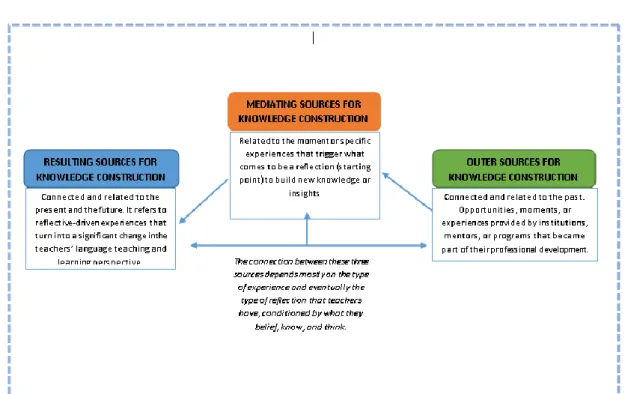
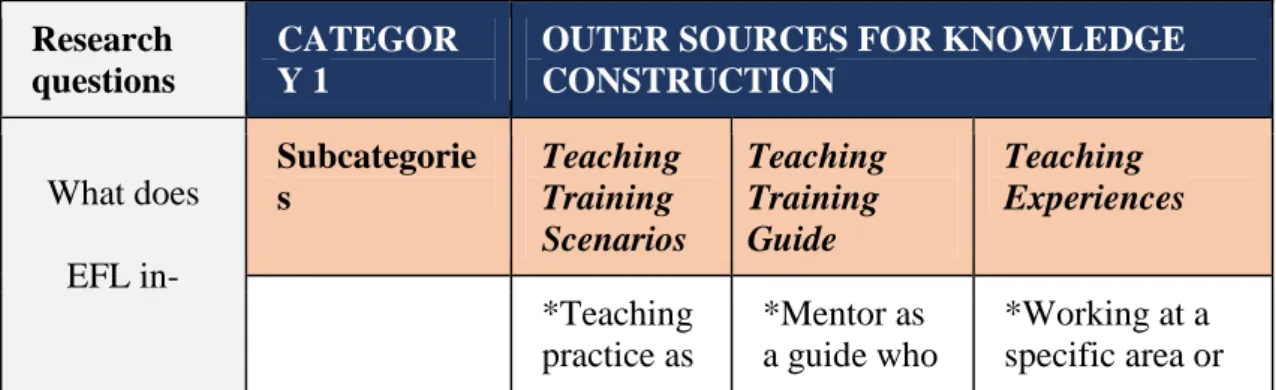
(49) to be aware of my personal opinion and biases towards my own study. Chapter 4 Data analysis and findings I will start by presenting a brief contextualization of the study in which I remind the focus and context of the research. Then, I move on to the framework analysis where I start elucidating in details the phases and techniques used to actually analyze data. Finally, I finish with the description of the categories and subcategories obtained from the analysis of the data by providing some examples from excerpts taken from the teachers’ narratives. Contextualizing the study This is a narrative study that explores three EFL in-service teachers’ experiences to give account of their knowledge construction concerning language and methodological dimensions as a way to build insights into their own TPD. In doing so, this research also looks at the methodological resources these teachers have used as EFL teachers to become the teachers they are now. The study draws on an epistemological narrative foundation that looks at participants’ stories and experiences as a way to make sense of the world (Clandinin, 2006). This study also looks at narrative as the method to collect data and the methodology to analyze the data. Participants are three EFL teachers who are registered with the government as official teachers in Secretaría de Educación (SED) Bogota, Colombia. These EFL teachers have also been part of TPD courses offered by SED and they hold Master’s degree in the field of language education, as well. For ethical and professional matters, I will not use the real names of the participants, but rather I will use pseudonyms to refer to them along this paper..
Figure
Documento similar
