UNIVERSIDAD DE VALLADOLID
ESCUELA DE INGENIERIAS INDUSTRIALES
Grado en Ingeniería en Organización Industrial
INFLUENCE OF DIGITALIZATION IN
BUSINESS AND INDUSTRY.
Analysis and implementation of Thingsee One device
Autor:
Martínez Azcona, Mario
Responsable de Intercambio en la Uva:
Mª Isabel Sánchez Báscones
Universidad de destino
Valladolid, Junio 2016.
TFG REALIZADO EN PROGRAMA DE INTERCAMBIO
TÍTULO:
Influence of Digitalization in Business and Industry.
Analysis and implementation of Thingsee One device
ALUMNO:
Mario Martinez Azcona
FECHA:
05/05/2016
CENTRO:
Valkeakoski Campus
Influence of Digitalization in Business and Industry
Analysis and Implementation of Thingsee One Device
Bachelor’s thesis
Degree Programme Industrial Management Engineering
Valkeakoski, Spring 2016
ABSTRACT
Research Unit for Smart Devices
Degree Programme Industrial Management Engineering
Authors
Miguel Martín Llorente & Mario Martinez Azcona
Year 2016
Subject of Bachelor’s thesis Influence of Digitalization in Business & Industry.
Analysis and Implementation of Thingsee One Device
ABSTRACT
Nowadays, companies are influenced by the rise of new technologies and
digitalization. They are also immerged in a world of constant changes and
high competitiveness. In this scenario, we examined in this thesis how
or-ganizations could enhance their performance by implementing
digitaliza-tion into their processes.
The thesis is divided in two main parts. The first one refers to the
theoreti-cal background, where on the one hand it is explained technologitheoreti-cal
con-cepts such as Data Science, Internet of Things, Industry 4.0 and Cloud
Computing, and on the other hand it is provided fundamental knowledge
in Supply Chain, Value Chain and Business Models. After the theoretical
explanation part, we go through the analytical part, in which we studied
whether digitalization should be implemented into business and industry.
In the analytical part we also survey the cases conducted by HAMK
Uni-versity of Applied about the Thingsee device, and the back-end
infrastruc-ture created for its use. Thanks to the Research Unit for Smart Devices we
were able to work with this device and infrastructure, enabling us to come
up with new ideas and applications.
We believe that introducing new technology and digital services to each
layer of an enterprise, in a well-coordinated way, as we propose in this
thesis, is an effective vehicle on creating value, achieving competitive
ad-vantages and positioning the company for the next revolution. From our
point of view, after having optimized
a company’s current processes
through digitalization, the next step should be to remove certain processes
through digital services, improving efficiency, time to market and
custom-er satisfaction.
Keywords
Digitalization, digital services, big data, supply chain, value chain.
CONTENTS
1 Introduction ... 1
1.1 Topic of Thesis... 1
1.2 How to Improve Business Process by Using New Technologies ... 2
Part one. Theoretical Background ... 4
2 Background Concepts to Understand Digitalization ... 5
2.1 Evolution Through Technology ... 5
2.1.1 1st Industrial revolution ... 5
2.1.2 2nd Industrial revolution ... 5
2.1.3 3rd Industrial revolution ... 6
2.2 Industry 4.0, Internet of Things and Industrial Internet ... 6
2.3 Cloud Services ... 9
2.4 Data Science Concepts ... 13
2.4.1 Data Management ... 13
2.4.2 Open Data ... 13
2.4.3 Big Data ... 14
2.4.4 Data Mining ... 15
3 Theory Business Models, Value Chain and Supply Chain ... 17
3.1 Introduction to Business Models ... 17
3.2 Theory of Value Chain Analysis ... 18
3.3 Theory of Supply Chain Management ... 20
3.3.1 What is a Supply Chain? ... 21
3.3.2 Structure of Supply Chain ... 22
3.3.3 Supply Chain Management Objectives ... 23
3.4 Differences between Value Chain and Supply Chain ... 24
Part two. Analysis and Applications ... 25
4 Digitalization of business and industry ... 26
4.1 Digitalization of Supply Chain ... 27
4.1.1 Traditional, Digital and Hybrid Supply Chain Models ... 27
4.1.2 Digitalizing Supply Chain ... 28
4.2 Digitalizing Value Chain ... 30
4.3 Influence of Digitalization in Business Models ... 33
5 Thingsee as an application in the digital service environment ... 35
5.1 What is Thingsee One Device? ... 35
5.2 Back-end Infrastructure ... 36
5.2.1 What is a back-end Infrastructure? ... 36
5.2.2 Back-end Infrastructure of HAMK ... 37
5.3 Potential Improvements ... 39
6 User Cases ... 41
6.1 Horticultural Lepaa case ... 41
6.1.1 Synopsis of Project ... 41
6.1.2 Test Arrangements ... 41
6.2 Other Cases ... 44
6.2.1 Mapping Thingsee ... 44
6.2.2 iBeacon ... 45
6.2.3 Suggested Cases ... 46
7 Conclusions ... 48
8 Summary ... 50
LIST OF FIGURES
Figure 1 Thesis Content Structure ... 2
Figure 2 Industrial Revolutions ... 7
Figure 3 Internet of Things Representation ... 8
Figure 4 Industrial Internet of Things Representation... 9
Figure 5 Public Cloud Representation ... 10
Figure 6 Private Cloud Representation ... 11
Figure 7 Hybrid Cloud Representation ... 11
Figure 8 Community Cloud Representation ... 12
Figure 9 Big Data Processes ... 15
Figure 10 Value Chain Scheme ... 19
Figure 11 Supply Chain Structure ... 21
Figure 12 Supply Chain 3V's Rule ... 24
Figure 13 Evolution of Digital Devices Used ... 26
Figure 14 Market Growth ... 26
Figure 15 Customer Service Channels ... 32
Figure 18 HAMK's Back-end Infrastructure ... 37
Figure 19 iBeacons ... 45
LIST OF TABLES
1
INTRODUCTION
1.1
Topic of Thesis
Thanks to technological advances, a wide offer of products and services
has arisen, which have a higher performance at lower costs than before.
This development has been due to the improvement and cost reduction of
production processes. Therefore, industry is facing a new scenario in
which digital devices are increasing in number and influence in the
pro-duction of a good or service.
As Industrial Management Engineering students, we have to get adjusted
to the new tendencies in the industry and understand the technological
changes. Consequently, this thesis is related to the optimization of
prod-ucts, services and its processes through the new means provided by the
en-gineering today.
Optimizing products, services and processes will be approached from the
digitalization of the organization’s Value and Supply Chain. Before
jump-ing into this issue, it is necessary to provide the reader a basic background
into the concepts that will appear in this thesis. Hence, there is an
explana-tion of the Internet of Things, Cloud Services, Data Science, Business
Models, Value Chain and Supply Chain.
In addition, our project was provided with a Finnish-based device in order
to understand the technology that was behind, from sensors, to data storage
and data visualization. Moreover, we studied real user cases to analyze
how a business process could be improved thanks to this kind of
technolo-gy. The device in question is called Thingsee, and it contains several
sen-sors that provide quite valuable information for countless situations.
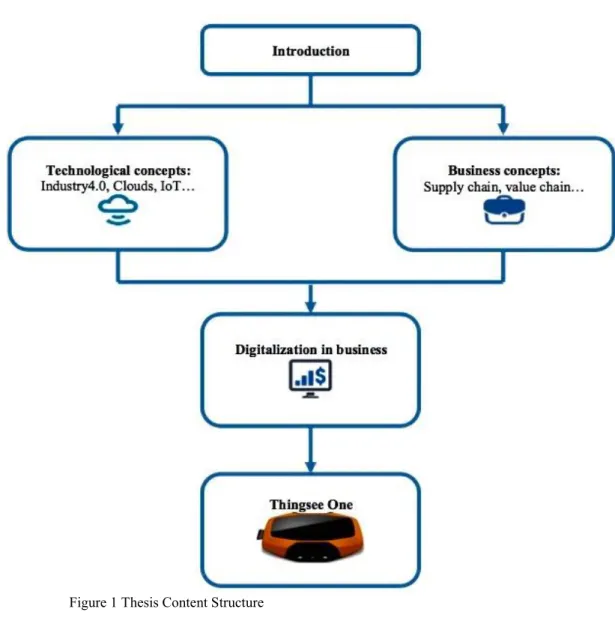
Figure 1 Thesis Content Structure
1.2
How to Improve Business Process by Using New Technologies
In order to succeed in business from a strategic point of view, it is
neces-sary to take into consideration different factors where innovation stands
out. Innovation of both products and processes, framed into what is called
“technological innovation”,
is a key competitive tool because it allows
de-veloping new businesses adapted to emerging technologies.
Currently it is said that we are in the 4th industrial revolution, which
corre-sponds to an implementation of business models more flexible and
effi-cient thanks to the advantages that the collection of large amounts of data,
the processing and subsequent analysis allow. That is, the 4th industrial
revolution corresponds to the implementation of the ITs or Information
Technologies.
The Information Technologies correspond to the integration of computers
and telecommunications equipment to support data gathering, transmission
and manipulation. The implementation of IT involves two major
im-provements:
Increase the efficiency of existing processes
Allows totally new processes that are able to transform the business
models.
The use of interconnected devices which store and transmit data represent
large advantages in terms of processes are concerned. Among others,
obvi-ates the need of an operator monitoring the process continuously, or
pres-ence thereof in tasks involving some physical risk. Furthermore the use of
those devices allow more precise, detailed and continuous process control.
As can be noted, the implementation of the ITs and the devices related to
them, involves handling large amounts of data, which is why the
imple-mentation of Big Data systems is required, these systems will be explained
in way more detailed in this thesis.
2
BACKGROUND
CONCEPTS
TO
UNDERSTAND
DIGITALIZATION
2.1
Evolution Through Technology
Due to the needs of markets, companies have had to adapt their production
and business models in order to supply the demand in the most efficient
possible way; this is achieved thanks to technological advances that have
emerged.
In order to understand how the new technologies get to meet the new
needs of the market, it is well worth to understand how the technology has
evolved over the time. It is said that we are currently in the 4th Industrial
revolution and it is necessary to understand the basis of previous industrial
revolutions before explaining what is called Industry 4.0.
2.1.1
1st Industrial revolution
The first industrial revolution began in the second half of the eighteenth
century in the United Kingdom, but it did not start until a few decades later
in Western Europe and North America, and it ended between 1820 and
1840.
The 1st industrial revolution was characterized by the mechanization of the
industry. Thanks to the invention of the steam engine developed by James
Watt (1782) companies were able to increase production. The steam
en-gine allowed the development of railways and the development of the
steamboat, thus contributing to the momentum of the transport sector.
2.1.2
2nd Industrial revolution
It could be said that the 2nd industrial revolution was basically an
im-provement of the technology developed in the 1st industrial revolution,
although major changes emerged.
street lighting was developed. Communication also experienced a big
ad-vance thanks to the development of the telegraph.
The production lines for manufacturing were developed, which contributed
to the efficiency of factories. While some workers were performing the
same task, others were doing another specific task in the product; thanks to
this the amount of goods was increased significantly.
2.1.3
3rd Industrial revolution
The third industrial revolution, also called scientific and technological
rev-olution, began at the end of the 2nd World War, and it could be said that
has just ended and the concept of the 4th industrial revolution has
ap-peared.
The highlights of the period could be the introduction of renewable
ener-gies, the use of nuclear energy, R&D and telecommunications. It
empha-sizes the creation of the Internet for data sharing, which is the basis of the
next industrial revolution. The optical fiber for transmission of the data
was also created. The factories are automated to avoid performing
repeti-tive tasks by operators and also in order to achieve greater precision.
Digitalization has reached today near all the dimension of businesses and
industries due to the dizzying growth of technology in the last decade.
Thanks to the look taken we can understand the evolution of technological
market where the main pattern has been that products have become
cheap-er, smaller and faster. This has led to a massive amount of data and
devic-es, which are changing the way we approach many aspects and processes;
that is the reason of the creation of the concept Industry 4.0.
2.2
Industry 4.0, Internet of Things and Industrial Internet
2.2.1
Industry 4.0
Figure 2 Industrial Revolutions (by Christoph Roser at AllAboutLean.com)
This concept is highly linked to the concept of Internet of Things.
Combin-ing the intelligence of the means, the availability of the raw materials and
the interconnection between them, as well as with the network, the system
is able to provide a flexible manufacturing model.
This manufacturing model, thanks to the interconnection with the means,
provides an improvement in the supply chain, allowing to secure delivery
dates or deadlines, managing a large-scale production with products
adapted to the market needs and reducing bulky stocks.
For all this, the concept of Industry 4.0 provides a greater control of
manu-facturing and a greater flexibility. To achieve the implementation of this
model is necessary to incorporate sensor and wireless connections, the
fac-tories must be able to gather enough data and to achieve the
interoperabil-ity between its processes. To this the factories must implement the use of
Big Data systems capable of outputting large amounts of data from the
manufacturing environment systems.
2.2.2
Internet of Things
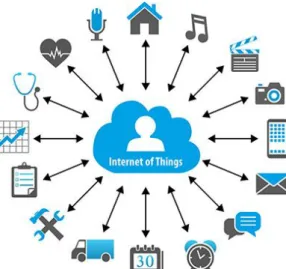
Figure 3 Internet of Things Representation (WireloTech, 2015)
The best way to understand this concept is through practical examples.
Im-agine a fridge that let you know which food is going to expire in a short
period of time, or smart lamps that were able to light the room when light
is needed in the ambiance, or an example which is already among us,
bracelets which send information to the network about your statistics of
health when you do sport. In this case with a simple chip, simpler than the
one which is in our smartphones, the bracelet is able to send information to
the network, process it, and send it to our smartphones to easily monitor
parameters such as heart rate, speed, etc. But these are just a few examples
of what the IoT is capable of, the implementation of this concept would
suppose a drastic change in the way we see the world (World Economic
Forum. “Internet of Things”, 2015).
2.2.3
Industrial Internet of Things
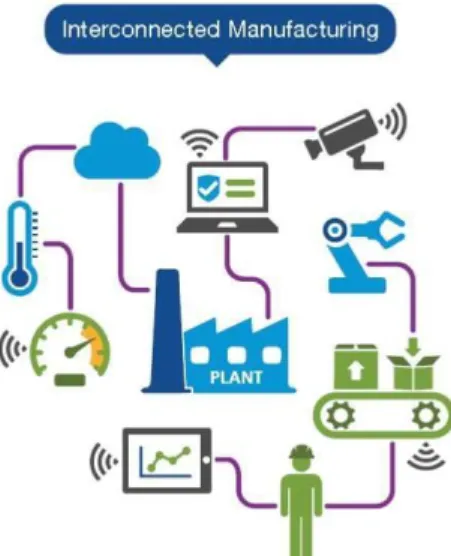
Figure 4 Industrial Internet of Things Representation (EMG, 2015)
The philosophy of IIoT is based on that the smart machines are better than
human in terms of detection, accuracy and data communication. These
smart machines and even the individual devices that comprise them, can
monitor, collect, exchange, analyze, and instantly act on information in
or-der to change their behavior or their environment, all without human
inter-vention. This saves time and money to the companies.
This concept is especially important talking about manufacturing, since it
means a greater control of quality, sustainability, traceability in the supply
chain as well as the efficiency of it (Accenture, 2015).
2.3
Cloud Services
The Cloud Service, also called Cloud Computing, is based on the
possibil-ity of offering computing services through a network, which is usually
In-ternet.
This new technology allows us to store our files and information on the
In-ternet without the need of having sufficient capacity to store such
infor-mation.
Some of the advantages of the use of Cloud services are:
Low cost because there is no need to invest in infrastructure
No need to have a large storage capacity
Real-time information
There are also certain factors that suppose a delay in the use of the Cloud
Services, among others underscore the difficulty in assessing the reliability
of cloud providers. There is also the called “internal threat”, because users
have access to much of the data that can be used inappropriately
The most known types of Cloud services are:
SaaS (System as a Service) We could say that is the most
im-portant form of Cloud Service. It is based on a software application
entirely offered by Internet, with full functionality and for all
cus-tomers who want it. The company that offers the service is the one
in charge of the maintenance of the application.
PaaS (Platform as a Service) Offers everything needed to support
the entire life cycle of the construction and commissioning of
appli-cations and web services fully available on the Internet.
IaaS (Infrastructure as a Service) Instead of purchasing the
serv-ers, space in a data center or network equipment, clients buy all
these resources to an external service provider.
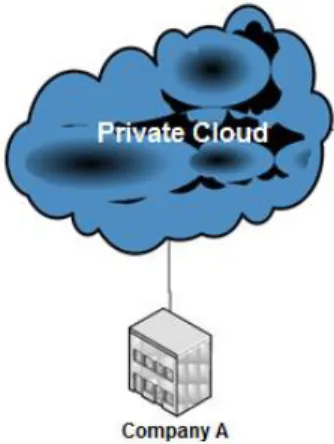
There are different types of clouds according to the people that are
manag-ing them:
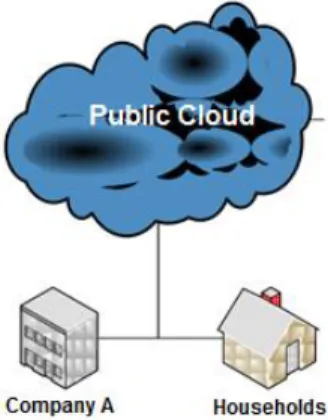
Public Cloud A generic public cloud is represented in Figure 5. It
is managed by third parties outside the organization. In the same
cloud there could be running several different business without the
users having evidence of it.
Figure 5 Public Cloud Representation. (Instituto Nacional de Tecnologías de la Comunicación, 2011)
Figure 6 Private Cloud Representation. (Instituto Nacional de Tecnologías de la Comunicación, 2011)
Hybrid Cloud A generic hybrid cloud is represented in Figure 7.
The user owns certain part of the cloud but shares another part of it.
Figure 7 Hybrid Cloud Representation. (Instituto Nacional de Tecnologías de la Comunicación, 2011)
Figure 8 Community Cloud Representation. (Instituto Nacional de Tecnologías de la Comunicación, 2011)
Currently there are plenty of reputed Cloud Services such as AWS
(Ama-zon Web Services), Sales force, the Cloud Service of Google... but for the
project developed at the University of HAMK It has been chosen the one
offered by Microsoft, known as Windows Azure, as it is one of the major
initiatives in which the Cloud Computing refers. Windows Azure is an
open platform for different programming languages like PHP or C/C++.
Some of the benefits of using this service are:
Create, evaluate, debug and distribute Web services in a fast and
accessible way.
Eliminates the need to manage hardware.
Reduce the generation and extent internal resources costs
Perform high-volume storage, batch processing, and intense or
high-volume computations
Running generic processes in the cloud
The architectural component, which is responsible of providing the base
services of Windows Azure in a transparent way respect the IT
infrastruc-ture, is called Windows Azure Fabric. This is responsible for ensuring that
the application receives runtime, bandwidth and resources in general for
the execution.
2.4
Data Science Concepts
2.4.1
Data Management
Data Management is constituted by multiple disciplines based on the
treatment and management of data as a valuable resource.
In order to make these data useful they must meet certain characteristics as
accuracy or reliability, but must also be timely in order to achieve
com-petitive advantage through its use. But to be able to use the set of data
ob-tained they first have to be processed to be transformed into useful data
which must be subsequently analyzed. Therefore the data held by a
com-pany are considered as assets, which is the reason why they must be
pro-tected and treated as such.
Thanks to the data the strategic objectives of the companies are more
easi-ly achieved. Anaeasi-lyzing the data gathered, the market needs can be
deter-mined and companies are able to develop products that can satisfy almost
unequivocally the customer needs. They also allow you detect trends,
be-havior patterns and even potential problems in the market. But as has been
said before, to take advantage of all this information, must be processed
and analyzed, in addition to meeting certain requirements.
All those data stored in the databases can be managed through the systems
known as Data Base Management Systems (DBMS), which allow storage,
modification and extraction of the information (Informatica, (2016).
The Data Management can bring benefits such as:
Greater security
Improved sales and marketing strategies
Greater knowledge about the needs of the market
Improved data management to reduce organizational risk
2.4.2
Open Data
The concept of Open Data is based on the use of certain data in an open
way, without restrictions for the public, patents or any type of control
mechanism that prevents its use publicly.
in-Some feature that must meet the data in order to be referred as Open Data
are:
Access and availability The information must be available in a
suitable and modifiable format, at a reasonable cost and preferably
it should be able to be downloaded via Internet.
Redistribution and reuse They should be able to be reused and
even integrated with other datasets.
Universal participation everyone should be able to use and
dis-tribute the information.
Without restrictions They cannot be only open for certain
purpos-es (as may be education) or be rpurpos-estricted to non-commercial uspurpos-es.
The data obtained by public bodies not only allow transparency in national affairs but it
can be useful for example for pharmaceutical companies in order to know statistical
data of patients with different types of illnesses. This is just one example of the benefits
that involve the sharing of useful data both for public as for companies (European
Comission, 2015)
2.4.3
Big Data
The concept of Big Data refers to the management and analysis of large
amounts of data, which cannot be treated in a conventional manner,
be-cause they exceed the capacity of the software tools talking about data
processing.
This concept refers to the services created in order to process the different
kinds of data in which Big Data is divided, which are:
Structured Data These are the type of data that have a defined
format and can be stored in tables. For example dates, numbers,
strings…
Semi structured Data The kind of data that don't have a particular
format but have markers that allow us divide the set of data in
dif-ferent formats. For example HTML, JSON...
Unstructured Data These data lack of format, therefore they
can-not be structured in tables or summarized. For example text
docu-ments, PDFs, emails...
An example where Big Data systems are used is when companies gather
information in order to understand the needs of the clients and to develop
products which obtain great success in the market.
The difference between this new system and the conventional systems of
management and analysis of data is determined by the concept "3 Vs":
Volume, Variety and Velocity. This concept means that Big Data systems
are able to manage a large amount of data that have a big variety at a high
velocity.
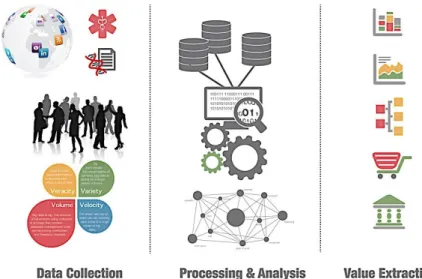
Once the data have been stored the data have to be analyzed, there are
sev-eral methods for this such as Data Mining, which is based on finding
pre-dictive behavior. This process is represented in Figure 9 (Blue Yonder.
(2015). Industrial Big Data Know the future – automate processes)..
Figure 9 Big Data Processes (Yonder B., 2015)
2.4.4
Data Mining
Data Mining, also called Knowledge Discovery in Databases (KDD), is a
process based on the detection of previously unknown patterns that can be
potentially useful. Thanks to the information stored in databases we are
able to identify trends and correlations that allow us to make predictions
that can pose competitive advantages.
The technics of Data Mining can be divided into two different groups:
Supervised
One variable is explained by the rest of variables.
Thanks to Data Mining we can perform different functions based on
ob-servations, for example:
Clusters Groups are constructed by individuals which are similar to
each other.
Associations Observations are used to detect associations between
variables.
Sequential Patterns In order to identify patterns, sequences or
trend
Data Mining is closely related to statistic techniques. Examples of these
techniques used in Data Mining include:
Decision Trees The trunk of the tree is the starting point of the
de-cision. The branches start with the probability of the first event. The
probabilities of every event produce two or more possible effects,
some of which lead to other events.
Genetic Algorithms In which solutions are randomly generated
and evolve in order to find increasingly optimal solutions.
Some of the areas in which Data Mining is applied are:
Financial and Business areas: In order to determine production
and cost rates, marketing, fraud detection, discover customer
pro-files.
Health: Managing and checking adequacy of treatments, diagnosis
from information already stored in hospitals.
Science: Genomics, biological data.
Computer Systems: Attack detection and control of the system.
3
THEORY BUSINESS MODELS, VALUE CHAIN AND SUPPLY
CHAIN
3.1
Introduction to Business Models
The business model concept gained relevance in the last decade of the 20
thcentury. According to influential authors and professionals in the Business
Models field, such as R. Amit, C. Zott, or C. K. Prahalad among many
others, this has been due to the prominent increase of Internet, the growth
of emerging markets and the incipient concern of enterprises about issues
regarding the lowest layers of the company. Since then, the business model
concept has constantly been gaining importance in the business world.
Even though many scholars and business practitioners have come up with
multiple ideas, thoughts and publications concerning this concept, it is not
possible to agree on a single definition. In fact, many publications about
business models study the concept without even explicitly defining it.
Therefore, in the following paragraph, it is exposed the definitions and
ex-planations provided by the most remarkable authors of this topic.
Peter Drucker He defines it as “assumptions about what a
compa-ny gets paid for”. A good business model should answer certain
key questions such as who is the customer?”, “what does the
cus-tomer value?”, “how do we make money in this business?” and
“what is the underlying economic logic that explains how we can
deliver value to customers at an appropriate cost?” (Ovans, A.,
2015)
Joan Magretta
According to Magretta, a business model is “A set
of stories that explains how enterprise work”. In the same train of
though as Drucker, Magretta focuses on assumptions over on
mon-ey. She sees a Business Model as a compound of two parts, “part
one includes all the activities associated with making something:
designing it, purchasing raw materials, manufacturing, and so on.
Part two includes all the activities associated with selling
some-thing: finding and reaching customers, transacting a sale,
distrib-uting the product, or delivering the service”. These ideas match
with the Michael Porter’s theory about Value Chain as it can be
seen later on this section. (Magretta, J., 2011)
Joan Casadesus & Joan Ricart These scholars believe that a
busi-ness model should collect the choices that the managing board has
to make when determining the processes that define their activity.
They classify the choices in three main categories:
re--
Governance choices
They reflect who has the rights to
make the decisions concerning the other two categories
(Ovans, A., 2015)
Raffi Amit & Christoph Zott They believe that a business model
should describe “the content, structure, and governance of
transac-tions designed in order to create value through the exploitation of
business opportunities” (Zott C. R. A., 2010).
Despite the diverse approaches presented, a generic Business Model
should focus on setting the guidelines to create value. When talking about
value we refer to the amount that customers are willing to pay for the
good. It is important to point out that a company will only be successful if
it manages to create sustainable value overtime. This means determining a
strategy and an operating mode that establish how the company is going to
obtain revenue, how it is going to manage human capital and how it is
go-ing to interact with its clients, investors and suppliers.
We believe that it is crucial that these ideas remain pervasive when a
com-pany elaborates a business model under digitalization.
3.2
Theory of Value Chain Analysis
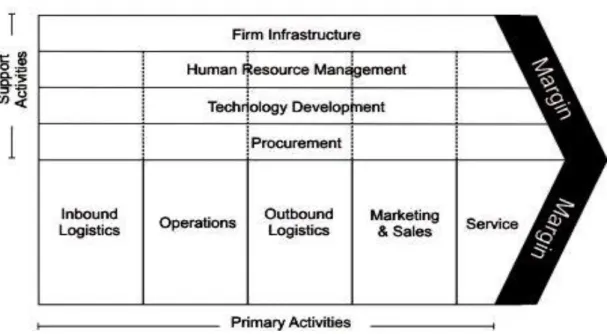
Figure 10 Value Chain Scheme (Mind Tools, 2013)
In the Figure 10, the activities of a firm are sorted into two main
catego-ries. On one hand, primary activities refer to those that influence directly
the creation of the product or service. These include:
Inbound Logistics Set of activities consisting on receiving, storing,
managing and distributing inputs, such as raw materials, parts and
other items dedicated to the production of the final good. In this
ac-tivity, good relationships with suppliers are crucial in other to create
value and obtain a competitive advantage.
Operations These activities encompass those that convert inputs
in-to the product that the final cusin-tomer will buy. Operations are the
core of the value chain and most of the value is created.
Outbound Logistics Once the product or service has been
devel-oped and produced in the operation activities, they need to reach the
final customer. Every activity indented to do so, mainly storage and
distribution, compose the outbound logistic. Firms typically obtain
competitive advantages when they manage to interact fast with
cus-tomers and retailers and deliver the final product in a short time at a
low cost.
Marketing Processes which goal is to sell the final product or
ser-vice to a chosen marketplace at a certain price. The firm’s job in
this process is to find the right combination of marketplace and
price in other to maximize firm’s profit and not revenue. In this
stage, it is very important to make clear which are the company’s
competitive advantages.
pur-chased. Noticing the customer needs is the key to create value and
obtain competitive advantages.
It is highly important to optimize primary activities in order to provide the
firm a competitive advantage and to create value greater than the cost of
the activity, and therefore generating more profit. This is the reason why
“Margin” is represented in the Figure 10.
On the other
hand, support activities’ job is to provide assistance to the
primary activities so they have a better performance. Michael Porter
iden-tified four main support activities:
Firm Infrastructure
Activities that support the enterprise-wide,
such as accounting, finance planning, legal issues, administrative
procedures… They are necessary so the organization can carry out
its main activity and be able to use their competitive advantages.
Human Resources
Activities related to the search, recruitment,
training and development of the staff. Employers and employees are
a highly important source of value in order to create value and
competitive advantages, and therefore, it is necessary to implement
good Human Resources practices.
Technology Development
Refer to those activities of the company
related to the research and development. The achievements
accom-plished in these activities have a crucial impact to create value and
competitive advantages in the primary activities.
Procurement
Purchasing processes so the company receives the
inputs necessaries to carry out its operation. This activity can
pro-vide value by finding the best supplier and negotiating the best
prices.
Managers often compare their company’s value chain with their
competi-tors’,
this way they can find out if the firm has high or low costs in
com-parison with its rivals. Moreover, value chain analysis also points out its
competitive advantages and can be a source of ideas that lead to
differenti-ate from competitors. (Machuca, J. A., 1998).
As it will be explained in chapter four, digitalization fits in this model by
helping to optimize these activities.
3.3
Theory of Supply Chain Management
3.3.1
What is a Supply Chain?
The term “Supply Chain” embraces every process that influence directly or
indirectly the action of satisfying the client needs. A trivial supply chain
scheme would be composed of suppliers, manufacturers, retailers and
cli-ents. Each link of the chain is connected to the neighbour links by flows.
Basically we can sort the flows in three different types, goods’ flow,
finan-cial flow and information flow. As it can be seen in the following figure,
these are two-directing flows.
Figure 11 Supply Chain Structure
3.3.2
Structure of Supply Chain
In order to get a deeper understanding of Supply Chain, it is essential to
categorize the different types according to the enterprise structure
Vertical Integration It consists on bringing the Supply Chain
in-side of one organization. A very clear example of Vertical
integra-tion was Ford Motor Company in its early days. Henry Ford had to
face two main problems to which finding a solution that would
sat-isfy both seemed impossible. On the one hand, the supply chain
network was too small to satisfy the high demand, but on the other
hand it was too expensive to stockpile a large amount of parts and
materials. In this scenario, Henry Ford decided to own the whole
supply chain having total control over it. Ford Motor Company
owned coal and iron mines, rubber plants, a rail network, and
glassworks among many other factories. A vertically integrated
supply chain grows by adding departments, merges or by
acquisi-tions of companies at different stages of production or distribution
within the same industry, in an attempt to create a self-sufficient
en-terprise.
The main characteristics of vertical integration are:
-
It allows developing specialised assets
-
Synchronization provides a better understanding in terms of
quality and helps to lower the cost of transactions between
entities.
-
It gives more control over the business
-
Components of the supply chain cannot compete separately
in the marketplace
-
Decreases flexibility because big company decisions affect
many components of the chain
-
It requires a very big investment to get the company
un-derway
Lateral Integration is the most common approach to manage the
multiple activities within the supply chain. It is about expanding a
business either within the same industry or a different one.
Differ-ent business that are laterally integrated usually have similar
distri-bution channels, they have some technology or operation in
com-mon or share some processes throughout their supply chain. A
company can achieve this growth through internal expansion. This
can occur when a retailer increases the variety of products it sells in
a specific category. An example of lateral integration would be a
telephone company that enters the Internet and/or Cable TV market.
The parts that compose the supply chain can be different companies
or departments of the same company.
The main characteristics of lateral integration are:
-
Good to achieve economies of scale and scope
3.3.3
Supply Chain Management Objectives
For an effective implementation of digitalization, is necessary to
under-stand and keep in mind the objectives that Supply Chain Management
pur-sues. Each firm has its own goals according to its mission, vision or its
current situation; however every supply chain is concerned with the
effi-cient integration of suppliers, factories, distributors and stores so that the
goods are produced and distributed in the right quantities, to the right
plac-es and at the right time. This enablplac-es us to list two objectivplac-es:
Efficiently Use of Resources
In order to achieve this goal, there
should be improvements in different areas, however every
modifi-cation should be helping the optimization of cost.
-
Replenishment of materials, parts and products when it is
necessary. This means working to reduce the time between
an order and reception, which implies a better coordination
between links of the chain. In summary, optimizing the
stock levels.
-
Reducing the cost of transportation.
-
Producing at the adequate quality, neither at higher quality
than required nor under the product specifications.
-
Having the adequate equipment and manpower
Improve Customer Service
Is the ability of the company to
ad-dress the needs, enquires and request of customers. This involves
having the product or service available when the customer demands
it and providing it with the quality desired. In addition, it should be
satisfied the customer requests after the purchase. If these three
as-pects are fulfilled, then the supply chain has achieved customer
sat-isfaction.
More over, a generic Supply Chain should also consider achieving the
following goals:
Strength partnerships
A partnership in supply chain is based on
trust, sharing risk and cooperation towards achieving competitive
advantages. Some typical competitive advantages yield from
part-nership are adding value to a product, shorter time to market and
improve its access, build financial strength by increasing income
and sharing costs, add technological strength by sharing expertise,
strength in operations by lowering costs and cycle times, enhancing
strategic growth to access new opportunities, Improve
organization-al skills by sharing knowledge.
emerging countries, products have shorter life cycles, there is a
con-stant innovation… each patterned aided by the increase of
infor-mation technologies and competitiveness. This can lead to an
unde-sired variability in the plans and results. In this scenario, the 3V's of
Supply Chain have increased their relevance. It a rule used by
sup-ply chain managers that aims to reduce the variability of the
pro-cesses by increasing visibility and velocity.
(PricewaterhouseCoop-ers. 2012).
-
Visibility
All agents must have access to the information
across the whole supply chain. It will be vary valuable to
trace their customer service policies.
-
Velocity Due to the constant innovation, high volatility and
competitiveness, a company will manage to obtain a great
competitive advantage if they are able to react fast to
changes. With this purpose, supply chain managers intent
to reduce execution times, minimize inven
tories… This
as-pect is crucial to win or loose clients.
-
Variability It has to transmit with high reliability the
de-mand received. This aspect is very important since the
sce-nario that many supply chains face is very volatile, so it is
necessary to develop a managing strategy that removes the
undesired variability.
Figure 12 Supply Chain 3V's Rule
It is important that these goals are achieved simultaneously without
trade-offs among them. “Efficiently Use of Resources”, “Improve Customer
Service”, “Leverage Partner Strengths”, and “The Three Vs” are objectives
that are broadly common to most firms. Nonetheless, Value Creation is
undoubtedly the main purpose of every organization and therefore the
ob-jectives cited have to intent to maximize the creation of value.
3.4
Differences between Value Chain and Supply Chain
Both concepts refer to models created to understand how businesses work,
but from different approaches. There is not a borderline that dictates
whether a certain business aspect, such as an operation, a department or
process, belongs to the Value Chain or the Supply Chain. As explained
be-fore, Value Chain is a model that describes the activities that a company
carries out to deliver a product, while Supply Chain refers to the network
composed by everything involved (organizations, activities, processes,
in-f
ormation, resources….) in the creation of a product, from the raw material
4
DIGITALIZATION OF BUSINESS AND INDUSTRY
As discussed in previous chapters, we are observing a new trend in
tech-nology, a significant amount of new products, systems and services are
orientated to connect devices and machines, generating a large amount of
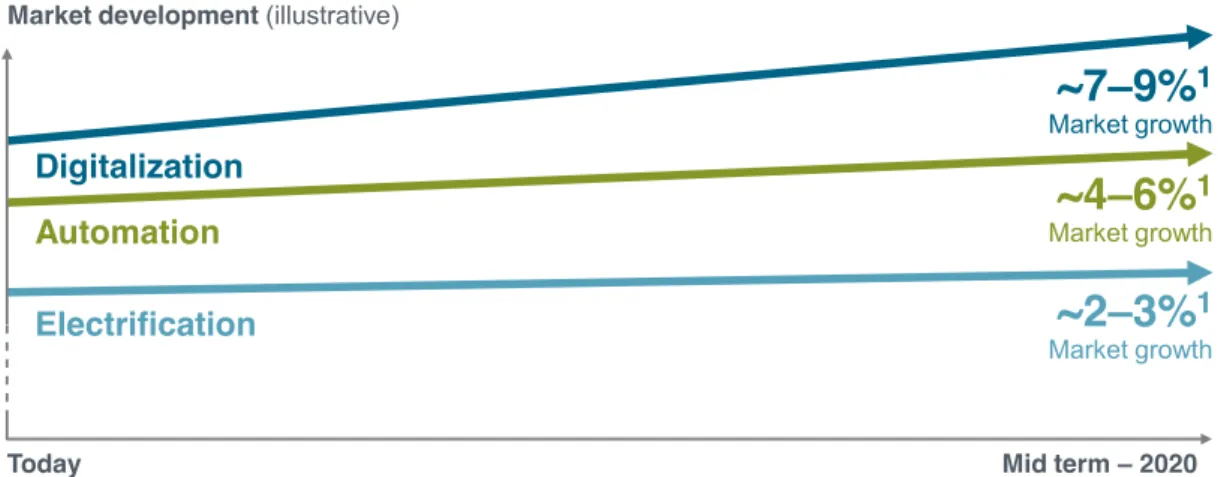
data. In the following images, we can see at a glance how digitalization is
growing by the amount of connected devices and the market development.
Figure 13 Evolution of Digital Devices Used (Gaus, D. H., 2016)
Figure 14 Market Growth (Gaus, D. H., 2016)
Humans intend to use the data generated to create value. We have
ob-served that individuals and enterprises, in most the cases, are not changing
what they are doing, but how they are doing it. Therefore, we approach
digitalization as a tool to improve the Value Chain and Supply chain,
which are models that existed before the digital era.
4.1
Digitalization of Supply Chain
4.1.1
Traditional, Digital and Hybrid Supply Chain Models
The purpose of this chapter is to make clear the three different types of
supply chains according to their level of digitalization that are being
exam-ined in this thesis.
Traditional Supply Chain This concept refers to processes
basi-cally carried out on paper. We would also like to add to this type
supply chains where even though computers are being used, there is
an absolute lack of synchronization and each process has to be done
manually. Nowadays, this sort of supply chain is very rare in
medi-um sized or major companies, but is still present in small
business-es.
Hybrid Supply Chain This is the most common type of supply
chain regardless the size. The original definition of a hybrid supply
chain is that one in which paper-based and IT processes coexist. As
with traditional supply chain, we understand that hybrid means that
not every process synchronized. This means that the supply chain
contains manual, partially synchronized and fully synchronized
processes.
4.1.2
Digitalizing Supply Chain
Why transferring to a digital supply chain
The vertiginous growth of technology, and consequently, of digitization is
having an important influence on the industry and businesses in all of its
aspects. In addition, the business world is everyday more and more
petitive. In this scenario, a company cannot give up on any potential
com-petitive advantage and they are almost obligated to embrace a digital
trans-formation to their business. An effective digitalization will allow
organiza-tions to boost their performance by enhancing their strong capabilities and
improving their weaknesses so that ultimate goal of a supply chain can be
achieved, as explained in the previous section, this is to create value.
Along with the influence of technology and high competition, another
pat-tern of today’s business world is the high volatility, and supply chains
cannot turn away from it. Through digitalization, the supply chain
manag-ers should turn this hazard into an opportunity; by intensively analyzing
the data provided by the digital services, a supply chain could anticipate to
the consequences of volatility and obtain a significant advantage over
competitors. Data analysis is also a key aspect when digitalizing a Value
Chain, however we considered more adequate to explain it under the
Sup-ply Chain because it can have a bigger impact. This is because a supSup-ply
chain, as explained before, is a system composed of different
organiza-tions, which means that the flow of information can be one of its
weak-nesses. Information might be transferred too slowly and distorted. The goal
here of digitalization is to transfer the information fast and clean between
links of the chain, and if advanced analytics is successfully used,
anticipa-tion to events would be a crucial competitive advantage, something
un-thinkable before the digital era. Improving communication has
undoubted-ly benefits on process by improving its flexibility, performance and
relia-bility. (Griffin-Cryan, M. R., 2011).
Business Process optimization
Due to our industrial engineering profile, we would like to analyze
busi-ness process optimization from a manufacturing approach in order to
con-tribute to this thesis with our work experience and area of expertise.
For instance, when managing the flow of goods, it is important to visualize
the checkpoints and milestones that want to be monitored. The key here is
to ensure through the data, that the physical process is running according
to the objectives planned. It can also be taken advantage of the data when
setting the goals, for example, by knowing the scenario, customers' and
suppliers' demands and other aspects yielded by the data analytics.
In the case of manufacturing, digital services can significantly help to
au-tomate processes. What we look when automating an operation is to
re-duce costs without giving up on quality or even improving it. However,
when automating a process, it typically looses the flexibility necessary to
deal with external factors such as supplier
s’ capacity and demand. Digital
services can synchronize process of the suppliers and the manufacturer,
and analyse patterns in market to achieve an accurate prediction of the
de-mand, so the supply chain can be optimized. (Siemens AG., 2015)
How to transfer to a digital supply Chain
In order to carry out an effective transformation to a digital supply chain,
the conversion has to be integral, which means adapting the supply chain
to digitalization from its basic pillars to its surface layers. The
manage-ment team should begin by developing a digital strategy and adapting its
business model to digitalization, which we consider the basic pillars.
Here-after, it should be analysed the operations of each component of the supply
chain in order to the implement digitalization to the business and industrial
operations. Implementing partially digitalization not only may not help to
create value, but also can create incompatibilities among processes.
Ac-cording to the management-consulting firm McKinsey & Company, they
have seen many companies that invested millions of dollars to integrate
theirs supply chain management systems and they have severely failed by
even destroying their value.
So that the process of digitalization is integral, we suggest that a supply
chain should follow the next steps:
1. Design a digital strategy
It is important for a Supply Chain to
know where they are and where they want to be, this is the reason
why objectives were explained in the section “Theory of Supply
Chain”. Hereafter, it sho
uld be studied how digital service can make
progress desired.
2. Educate Staff
Digitalization will introduce in the organization
new technologies and consequently changes in the working routine.
It is crucial that employers and employees understand and feel
con-fortable working with the new tools, so they can focus on their job,
which is what really add value to the enterprise.
3. Analyse processes
Once it has been determined where does the
change, processes and activities should be analysed in order to
im-plement the new technology and digital services.
4. Apply the new digital services and technology
Implement the
new technology, systems and services without disturbing
opera-tions.
5. Analyse data
The data provided by the digital services can help
the supply chain understand what is going on, find out the causes of
weaknesses and strengths, observe patterns, predict future trends,
yield ideas…
6. Embrace new opportunities provided by the digital service
Take advantage of the information and ideas provided by the data,
and materialize it into value creation and competitive advantages
7. Go back to step 1
Following the concept of Kaizen, a
manufac-turing philosophy that states that every process should be
continu-ously improved, and observing that technology is in permanent
de-velopment, we considered that the process of digitalization has to
be constantly updated.
Since several authors believe that the culture of a company should be
ad-justed to digitalization, we would like to point out that we do not believe
that culture transformation should be included in the process. We
under-stand that digitalization should be a tool to achieve more competitive
ad-vantages and more effectively, but it should not be the reason why an
or-ganization modifies its values, mission, vision or nature.
4.2
Digitalizing Value Chain
These technologies are changing how things are designed, made, and
ser-viced around the globe. In combination, they can create value by
connect-ing individuals and machines in a new “digital thread” across the value
chain
It has been proved by successful cases, that digitalization can bring to the
enterprises many significant advantages; for example, operating models
can become more flexible, dynamic and controlling, production process
can be optimized, new patterns can be detected and become new ideas that
potentially could make a difference in the market. The mean to all of these
potential improvements is the data analysis provided by digital services.
Operations improvement
ously this is also an important aspect when analysing the value chain of a
business.
The ideas about coordination between producers and suppliers exposed in
the section “Digitalization of the Supply Chain” can also be applied to the
Value Chain model when we intend to improve the primary activity of
In-bound Logistics through digitalization. Equivalently, to the primary
activi-ty outbound logistics we can apply the ideas of synchronization between
customers and producers in a digital supply chain.
Regarding to process optimization, there are many similarities between
digitalizing the value chain primary activity “Operations” and optimizing
process in a supply chain. Another case in which digitalization can also
help to improve a manufacturing process is when it comes to equipment
maintenance. In many factories, maintenance involve high costs, stopping
the production line, not satisfying the demand… Thanks to data analytics,
it can be predicted accurately when maintenance is going to be needed,
preventing emergency stops and idle time, causing negative financial
im-pact.
The difference between digitalizing value chain and supply chain, is that in
the first one intends only to improve a certain business entity, meanwhile
the second seeks to optimize globally a whole network of organizations
that compose the supply chain. Each enterprise should consider whether is
more convenient implementing digitalization considering one or the other
model. In large corporations, it can be more fruitful considering both of
them. (Siemens AG., 2015)
Customer service improvement
The last primary activity of the Value Chain, Service, can also be
signifi-cantly improve through digitalization. A digital customer service system
should provide clients a faster interaction and accessibility, so their doubts
and requests are solved effectively in the shortest time possible.
Now that we have a goal to pursue when implementing digitalization into
customer service, we can start discussing how the transition should be
done. Moreover, a company has to keep in mind that the final customer is
their source of income and therefore listening to their requests and
imple-menting them is crucial to success.
Transferring from a traditional to a digital customer service system is not
only adding new interaction channels to the existing ones such as call
cen-ters and technical services at retail stores, the organization should be
capa-ble of absorbing data, analyzing it and applying the outcome in order it to
improve any activity in the value chain. The transfer procedure should also
include an analysis of the current customer service, find out where are the
weakness so the implementation of new channels fix theses problems.
teraction between the company and customers, who has access to the
in-formation and who provides it. In addition, and following our statement
that digitalization should be integral and synchronize business process, the
organization management systems, that are explained in the next point,
should be ready to automatically received data from the customer service
in a well structured way. (Banfi F. B. G., 2013).
Figure 15 Customer Service Channels (Banfi F. B. G., 2013)