www.medigraphic.com
Rev
ista
Lat
inoamer
icana
de
MICROBIOLOGÍA
MICROBIOLOGÍA
Physical and genetic map of the
Gluconacetobacter
diazotrophicus
PAL5 chromosome
Marcio Martins Loureiro,* Marcelo Bertalan,* Aline da Silva Turque,* Leonardo Mega França,* Vânia Lúcia Muniz de Pádua,* José Ivo Baldani,** Orlando Bonifácio Martins,* Paulo Caval-canti Gomes Ferreira*
* Núcleo de Estudo de Genomas Johanna Döbereiner, Instituto de Bioquímica Médica, Centro de Ciências da Saúde, Universidade Federal do Rio de Janeiro, RJ, Brasil. ** Laboratório de Genética e Bioquímica, Embrapa-Agrobiologia, Seropédica, RJ, Brasil.
First version received: December 29, 2007; first version revised: April 02, 2008, May 19, 2008 and June 9, 2008; second version received in revised form: June 16, 2008; Accepted: June 30, 2008.
Vol. 50, Nos. 1 y 2 Enero - Marzo. 2008 Abril - Junio. 2008 pp. 19 - 28
ABSTRACT. A macrorestriction map of the Gluconacetobacter di-azotrophicus PAL5, an important nitrogen-fixing endophyte of several plants such as sugarcane, coffee, sweet potato and pineap-ple, was constructed using pulsed-field gel electrophoresis (PFGE) and DNA hybridization. For PFGE analysis, single and double di-gestions of the chromosome were carried out with I-CeuI, SwaI and PacI restriction enzymes. The resulting DNA fragments were posi-tioned into physical map, using combinatory analysis of hybridiza-tion results, restrichybridiza-tion enzymes sites posihybridiza-tion and DNA fragments length. G. diazotrophicus has 4 rrn operons into a circular chromo-some, with estimated length of 4,240 Kb ± 41.6 Kb. The hybridiza-tion results allowed the posihybridiza-tioning of 42 genetic markers on chro-mosome (39 single copy and 3 repeated elements), as well as the detection of 1 rrn operon with inverted orientation. The results contained in this paper were important to finish the genome assem-bly of the G. diazotrophicus PAL5, which was deposited and is available in the EMBL database.
Key words: Gluconacetobacter diazotrophicus, PFGE, physical map, genetic map, rrn operons.
RESUMEN. Un mapa de macrorrestricción de la bacteria Glucona-cetobacter diazotrophicus PAL5, una importante endófita fijadora de nitrógeno de diversos vegetales como la caña de azúcar, el café, la batata y la piña, fue construido utilizándose electroforesis en gel de campo pulsado (PFGE) e hibridación de ADN. Para el análisis por PFGE, el cromosoma fue digerido por digestiones simples y dobles, con endonucleasas de restricción I-CeuI, SwaI y PacI. Los fragmentos del ADN que resultaron fueron posicionados en el mapa físico, utilizándose un análisis combinatorio entre los resulta-dos de hibridación, la posición de los sitios de cortes de enzimas de restricción y el tamaño de los fragmentos. G. diazotrophicus tiene 4 operones rrn en un cromosoma circular, con tamaño estimado de 4,240 Kb ± 41.6 Kb. Los resultados de hibridación permitieron el posicionamiento de 42 marcadores genéticos en el cromosoma (39 copias simples y 3 elementos repetidos), así como la detección de 1 operón rrn con la orientación invertida. Los resultados contenidos en este manuscrito fueron importantes para finalizar el montaje del genoma de G. diazotrophicus PAL5, que fue depositado y está dis-ponible en la base de datos EMBL.
Palabras clave: Gluconacetobacter diazotrophicus, PFGE, mapa físico, mapa genético, operones rrn.
ORIGINAL ARTICLE
INTRODUCTION
Gluconacetobacter diazotrophicus is α nitrogen-fixing acetic acid a-proteobacterium, found in endophytic asso-ciation with several sugarcane cultivars, especially in agri-cultural areas wherenitroen fertilizer input is low (Gillis et al. 1989; Reis et al. 1994; Fuentes-Ramírez et al. 1999; Fischer and Newton 2005). Besides sugarcane, G. diaz-otrophicus has been detected into other plant species such as Cameroon grass (Pennisetum purpureum), sweet potato (Ipomoea batatas) (Döbereiner et al. 1988), coffee (Coffea arabica), the grass Eleusine coracana and pineapple
(Ananas comosus) (Estrada-de los Santos et al. 2001; Mu-nõz-Rojas et al. 2005). The ability to colonize a number of families such as Poaceae, Convolvulaceae, Rubiaceae and Bromeliaceae suggests that G. diazotrophicus possi-bly has the potential to benefit different plant hosts (Döbereiner et al. 1988; Reis et al. 1994; Estrada-de los Santos et al. 2001; Munõz-Rojas et al. 2005).
possi-www.medigraphic.com
bly because of its ability to ferment sugars and reduce me-dium at pH below 3.0 (Muthukumarasamy et al. 2000).
G. diazotrophicus is able to fix nitrogen and grow at high sucrose concentration (30%) and low pH (3.0). How-ever, the nitrogenase activity is partially inhibited by NH4+at high sucrose concentrations, though is not affect-ed by high concentration of NO3- (25mM) (Baldani et al. 1997; Reis and Döbereiner 1998; Fischer and Newton 2005). The persistence of nitrogen fixation in the presence of nitrate is an additional benefit, because G. diazotrophi-cus could be used as agro-stimulant even in cultivars pre-viously treated with nitrate fertilizers.
Physical maps are considered powerful tools for local-ization and isolation of genes, studying the organlocal-ization of genomes, and as a preliminary step for efficient se-quencing (Heber et al. 2000). Additionally, physical maps generated by pulsed field gel electrophoresis (PFGE) of large DNA fragments, followed by hybridization and fin-gerprinting methods, is an alternative to assess the genome organization in organisms for which the complete genome sequence is not available (Majunder et al. 1996; Marcone and Seemüller 2001). Macrorestriction mapping has been applied to the examination of bacterial genome structures and topology for many years (Weinel et al. 2001). Cur-rently, physical mapping strategies have been further de-veloped to verify and accelerate the assembly, in the gap closure phase of microbial genome shotgun-sequencing projects, acting as quality control of sequence and contig assemblies (Chan and Goodwin 1999; Shimizu et al. 2001; Weinel et al. 2001).
Here, we describe the PFGE-based analysis of the G. di-azotrophicus PAL5 chromosome, and subsequent con-struction of a physical and genetic map, reporting the ge-nome size, number and orientation of the rRNA (rrn) operons. Moreover, hybridization results of DNA probes against macrorestriction DNA fragments enabled the loca-tion of 42 genetic markers on this chromosome, represent-ing a first demonstration of the genomic organization of this important endophyte.
MATERIAL AND METHODS
Bacterial strains and growth conditions
G. diazotrophicus PAL5 strain (ATCC49037; BR11281) was cultured in Dygs broth (glucose 2.0 g, pep-tone 1.5 g, yeast extract 2.0 g, K2HPO4 0.5 g, MgSO4.7H2O 0.5 g, glutamic acid 1.5 g per liter) pH 6.0, in a gyratory shaker at 30 °C and 200 rpm during approximately 40 h, to obtain a culture with 1.3 optical density (OD600). Addi-tionally, we performed control cultures in Agar Dygs plates (Dygs broth supplemented with 1.5% bacteriologic
agar) at 30 °C during 48 h, from each culture used for DNA extraction, to confirm the culture purity. The stock strain is maintained frozen at –70 °C in Dygs broth supplement-ed with 20% glycerol.
Escherichia coli clones from shotgun library were grown in Luria-Bertani (LB) broth (yeast extract 5 g, tryp-tone 10 g, NaCl 10 g per liter) pH 7.0, supplemented with 100 µg/ml of ampicillin, in a gyratory shaker at 37 °C and 200 rpm during 24 h. The shotgun library are maintained frozen at –70 °C, in 96 well plates with 150 µl of LB broth supplemented with 100 µg/ml of ampicillin and 20% glyc-erol per well.
Preparation of high molecular weight genomic DNA
Genomic DNA was prepared from 1 ml of G. diaz-otrophicus PAL5 cultures, in logarithmic phase of growth (OD600 1.3). Briefly, cells were suspended in 25 µl of EDTA 50 mM (pH 8.0) buffer, and 10 µl of lysozyme (10 mg/ml), 190 µl of lysis solution (6 mM Tris-HCl – pH 7.5, 100 mM EDTA – pH 7.5, 1 M NaCl, 0.5% Brij58, 0.2% Deoxycholate, 0.5% Sarkosyl), and 225 µl of 2% low-melting-point agarose at 50 °C were added. This mix was gently homogenized and molten in blocks form. The blocks were suspended in 5 ml of lysis solution supple-mented with 20 µg/ml of Rnase A, and incubated at 37 °C for 16 h with gentle shaking. After the incubation period, the lysis solution was replaced by 5 ml of a solution con-taining 0.4 M EDTA (pH 9.3), 1% sarkosyl, and 1 mg/ml of proteinase K, and incubation continued for 24 h at 50 °C. The agarose blocks were treated with 1 mM phenylme-thylsulfonyl fluoride (PMSF), and washed four times for 30 min each in 5 ml of CHEF-TE (100 mM Tris-HCl pH 7.5; 100 mM EDTA pH 7.5). The blocks were stored in 5 ml of 70% ethanol at 4 °C for several months.
Restriction digestions
www.medigraphic.com
Pulsed field gel electrophoresis (PFGE) and Southern blotting
Electrophoresis was carried out in the Gene Navigator PFGE system (GE-Amersham Biosciences, Baie d’Urfe, Canada) with contour-clamped homogeneous field (CHEF). The electrophoresis parameters such as agarose concentration, buffers, pulse times, running voltage and buffer temperature varied, depending on the required ex-perimental conditions, for detection of the DNA fragments in different length ranges (see legends of the figure 1A-C). Yeast chromosome PFGE marker (225 to 1,900 Kb), Lambda ladder PFGE marker (50 to 1,000 Kb) and Lambda low range marker (0.13 to 194 Kb) from New England Bi-olabs, were used as size standards. The gels were stained with ethidium bromide and photographed. The DNA frag-ments length was estimated by the mean of length values, attributed to the fragments in 10 different gels, using the results generated by the Fragment Analysis Software (GE-Amershan Biosciences). For southern blot, the gels were depurined, denatured, neutralized and blotted to nylon membranes (Hybond+ from GE-Amershan Biosciences) (Sambrook and Russell 2001).
DNA library and sequencing
G. diazotrophicus PAL5 was cultivated as described above, and genomic DNA was isolated according to stan-dard protocol (Sambrook and Russell 2001). One DNA li-brary with average insert sizes of 1 Kb were generated from sonified genomic DNA. These DNA fragments were gel excised, concentrated, end-repaired, cloned into pUC18 vector at the SmaI site and electroporated into Es-cherichia coli DH10B (Invitrogen, California, USA). Out of this DNA library, a total of 3,456 clones were double-end sequenced twice in MegaBACE 4000 automated DNA sequencer (GE-Amershan Biosciences).
Selection of clones containing rRNA and single copy genes
The double-end sequencing reactions generated a total of 6,501 high quality reads which were aligned against non-redundant NCBI database, using the basic local align-ment search tool (BLAST) for selection of clones used for DNA probes construction. Clones with inserts containing potential single copy genes of G. diazotrophicus PAL5 were chosen for hybridization: 1) their sequences should be unique in the library; 2) their sequences should not show high identity with sequences from others proteins of the same family; 3) their sequences should show homolo-gy to published single copy genes. Clones with inserts
containing rRNA genes were selected. The sequences of the used clones for DNA probes construction are available under GenBank accession numbers EF508271 to EF508312.
DNA probe construction
Selected clones from the shotgun library were cultured in LB broth as described above, and plasmid DNA was pre-pared by the rapid alkaline lysis method (Sambrook and Russell 2001). These plasmids were submitted to PCR am-plification, in 50 µl reaction volume containing 50 to 100 ng of DNA, 10 mM Tris-HCl (pH 8.4), 50 mM KCl, 2 mM MgCl2, 50 pmol of each primer (universal M13 forward and reverse primers) and 2.5 U Taq polymerase (Promega, Madison, USA), using the following cycling conditions: an initial denaturation at 95 °C for 5 min, followed by 35 cycles with a profile of 1 min at 95 ºC (denaturation), 30 s at 50 ºC (annealing) and 2 min at 72 ºC (extension), fol-lowed by a final extension for 5 min at 72 ºC. The PCR products were purified by gel excision, and resequenced to confirm the identity. PCR products were labeled by ran-dom prime reactions with [α-32P]dCTP, except the 5S rRNA probe that was labeled with [γ-32P]dATP through ra-dioactive PCR (Sambrook and Russell 2001).
Southern hybridization
Hybridizations were carried out at 42 °C in the follow-ing solution: 50% formamide, 0.5% SDS, 6× SSC (0,9 M NaCl, 9 mM sodium citrate; pH 7,0), 5× Dendhardt’s solu-tion (1 mg/ml of BSA, 1 mg/ml of Ficoll 400, 1 mg/ml of Polyvinylpyrrolidone; pH 7.0) and 100 µg of DNA calf thymus during 24 h. The membranes were then washed un-der variable conditions, depending on the desired strin-gency, dried and exposed into a cassette with a storage phosphor screen during 48 h. After exposure, the screen was scanned with Storm Software (GE-Amershan Bio-sciences) for documentation of the hybridization results. Following, the processed images were compared with the pictures of the gels used in each experiment. All hybrid-ization experiments were realized at least twice to verify the reproducibility of the results.
RESULTS
www.medigraphic.com
the same nomenclature of the single digestion (Table 1). Under different electrophoresis conditions, the undigested genomic DNA of G. diazotrophicus PAL5 did not enter into the gels, suggesting that is a circular structure (data not shown).
Genomic DNA was digested by single and double di-gestions, which generated 6 different fingerprinting pro-files. The single digestions consisted of digestions with the restriction enzymes I-CeuI, PacI and SwaI, generating profiles identified as C, P and S, respectively. The double digestions consisted of digestions with the following re-striction enzymes combinations: I-CeuI plus PacI, I-CeuI plus SwaI and PacI plus SwaI, generating profiles identi-fied as CP, CS and PS, respectively (Table 1).
The PFGE profiles generated by single digestions re-vealed 4 to 6 different DNA fragments, with length rang-ing from 130 to 1,634 Kb, while those of the double diges-tions showed 9 to 11 DNA fragments, with length varying from 20 to 1,357 Kb. The G. diazotrophicus PAL5 chro-mosome size was estimated in 4,240 Kb ± 41.6 Kb, through the mean from the estimated genome sizes of all PFGE profiles, generated with single and double diges-tions, and these values ranged from 4,197 Kb to 4,300 Kb (Table 1).
For separation of all detectable DNA fragments, the PFGE gels were run at 3 different electrophoresis programs (Figs. 1A-C). However, the gels produced under
electro-phoresis condition of the Figure 1A, were considered the most representative, because the PFGE profiles exhibit all detectable DNA fragments. In the two other electrophore-sis conditions used (Figs. 1B and C), DNA fragments with length between 2 and 70 Kb were not detected. In addi-tion, under the PFGE conditions employed in Figure 1B, some bands classified in this work as doublets, i.e. bands P4 and P5, bands S5 and S6 were separated, confirming their existence. Electrophoresis procedures performed for detection of larger DNA fragments did not detect any addi-tional bands (data not shown).
45 DNA fragments generated from single and double digestions of the G. diazotrophicus PAL5 chromosome were related (Table 1). However, 2 fragments designated CP6 and PS6 were not detected in any experiment con-ducted in this study. By other hand, considering the num-ber of DNA fragments observed in single digestions, the expected number of DNA fragments in double digestions, the length sum of the detected DNA fragments in PFGE profiles CP and PS, and the estimated length of G. diaz-otrophicus PAL5 chromosome, our results suggested the existence of these DNA fragments and estimate that its present length smaller than 20 Kb.
The intron-encoded restriction endonuclease I-CeuI, which recognizes a highly conserved 26 bp sequence into the large 23S rRNA subunit, cleaved G. diazotrophicus chromosome in four fragments, suggesting the existence of
Table 1. Number and estimated length of the DNA fragments generated by single and double digestions of the Gluconacetobacter diazotrophicus PAL5 chromosome.
Single Digestions Double Digestions
I-CeuI PacI SwaI I-CeuI / PacI I-CeuI / SwaI PacI / SwaI
Fragment Size Fragment Size Fragment Size Fragment Size Fragment Size Fragment Size
(Kb) (Kb) (Kb) (Kb) (Kb) (Kb)
C1 1,400 P1 1,577 S1 1,634 CP1 1,357 CS1 1,052 PS1 1,094
C2 1,235 P2 ≈1,400 1 S2 1,152 C4 625 S3 680 PS2 1,066 1
C3 965 P3 927 S3 680 CP2 576 CS2 ≈680 1 S4 469
C4 625 P4 200 S4 467 CP3 508 C4 625 PS3 390
- - P5 ≈200 1 S5 142 CP4 393 S4 468 PS4 285
- - - - S6 130 CP5 352 CS3 260 PS5 ≈285 1
- - - P4 200 CS4 152 P4 200
- - - P5 ≈200 1 S6 130 P5 ≈200 1
- - - CP6 < 20 2 CS5 80 S5 142
- - - CS6 70 S6 130
- - - PS6 < 20 2
Total 3 4,225 ≈4,300 4,205 ≈4,231 ≈4197 ≈4281
1 These bands are doublets.
2 Predicted fragment by chromosome digestion and alignment of larger DNA fragments, but not observed in PFGE gels.
3 The mean of the sums of the restriction fragments generated from single and double digestions of the G. diazotrophicus PAL5 chromosome was 4,240 Kb
www.medigraphic.com
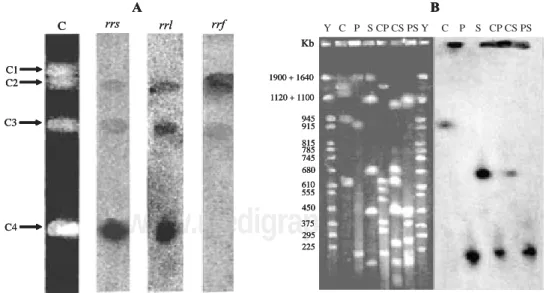
4 rrn operons (PFGE profile C in Fig. 1A; Table 1). To confirm this hypothesis, we made hybridizations with DNA probes of the 16S (rrs), 23S (rrl) and 5S (rrf) rRNA genes (Table 2), that generally are arranged in this sequen-tial orientation on bacterial genomes. Therefore, we ex-pected 4 DNA fragments hybridized in the PFGE profile C, for each radioactive probe used. However, our results showed that only 3 DNA fragments hybridized in this pro-file for these probes (Fig. 2A; Table 3).
The rrs and rrl probes hybridized with the fragments C2, C3 and C4, while the rrf probe hybridized with the fragments C1, C2 and C3 (Fig. 2A; Table 3), confirming that the G. diazotrophicus PAL5 chromosome was circular and had an inverted orientation of 1 rrn operon, located between the fragments C4 and C1, based on the strong sig-nal of the C4 fragment obtained in hybridization with rrs and rrl probes, and absence of signal for the C1 fragment, while with the rrf probe occurred the opposite.
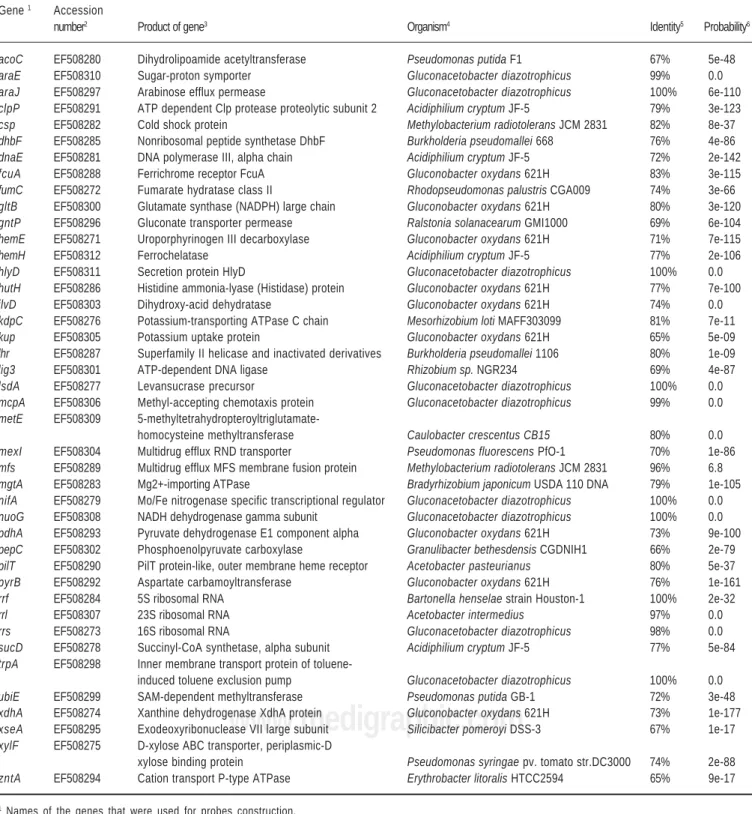
Based on the hybridization results (Table 3) generated with single copy gene probes (Table 2), we verified over-laps between individual DNA fragments from the six dif-ferent PFGE profiles of the chromosomal DNA, because these probes showed unequivocal hybridizations with one fragment into each profile. An example of this approach is
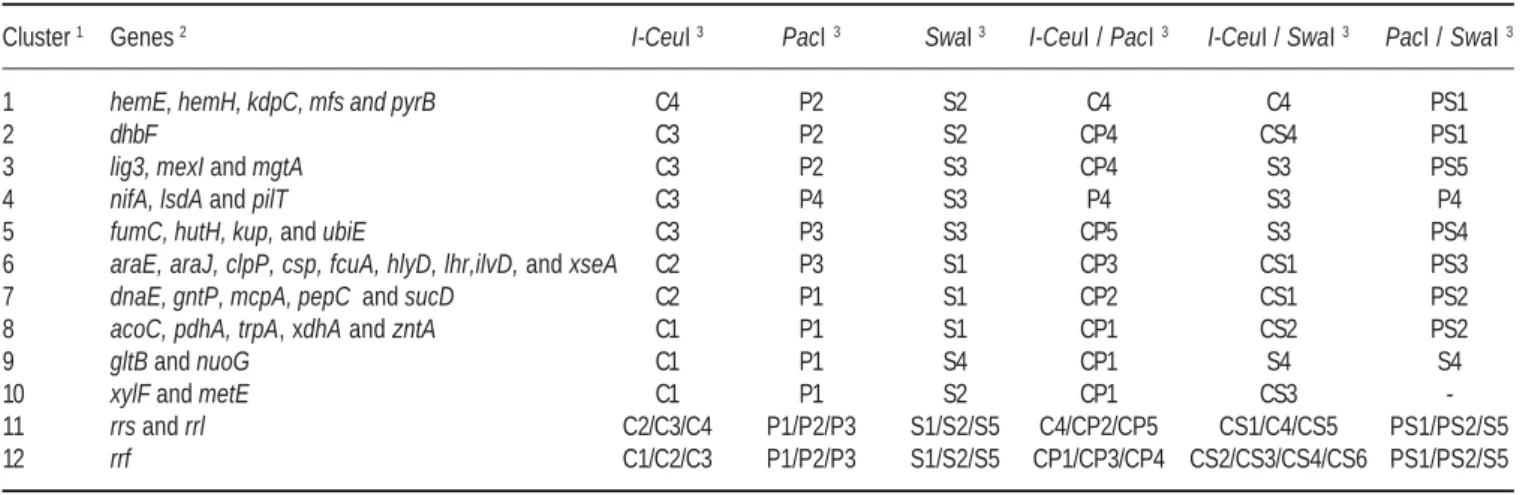
shown in Figure 2B, where the nifA probe was hybridized and showed overlap between the DNA fragments C3, P4 and S3 contained in these profiles (Table 3). Likewise, all hybridization results were analyzed and annotated, mak-ing possible the detection of 12 gene clusters that showed different hybridization profiles (Table 3), indicating prox-imity of genes located on the same cluster. Furthermore, these data were used to determine the molecular markers positioning on this bacterial chromosome.
All restriction fragments conferred hybridization sig-nals, with at least one of the 42 DNA probes, except frag-ments CP6, PS6, P5 and S6 because we could not selected from our DNA library probes that gave hybridization sig-nals with these fragments. However, these 4 DNA frag-ments that were not detected by hybridization were assem-bled into the physical map by combinatory analysis of DNA fragment length and restriction site position of the restriction enzyme which generated them.
The DNA fragments P1 and P2 (PFGE profile P from Fig. 1A; Table 1), CS2 and S3 (PFGE profile CS from Fig. 1A; Table 1), PS1 and PS2, PS4 and PS5 (PFGE profile PS from Fig. 1A; Table 1) were undistinguishable one from other on PFGE gels. However, the hybridization results with single copy genes probes showed that the bands P2,
Figure 1. PFGE profiles of Gluconacetobacter diazotrophicus PAL5 genomic DNA observed in 3 different electrophoresis conditions. PFGE profiles
genera-ted from single or double digestions: C (I-CeuI), P (PacI), S (SwaI), CP (I-CeuI plus PacI),CS (I-CeuI plus SwaI), PS (PacI plus SwaI); Y- yeast chromosome PFGE marker; λ - Lambda ladder PFGE marker (50–1000 Kb); λ- Lambda Low Range PFGE marker (2.03–194 Kb); A - Electrophoresis procedure carried out in 1% agarose gel and running buffer containing 0.5× TBE at 6V/cm at 13 °C in a sequence of three ramps (ramp A consisted of an initial switch time of 80 s, a final switch time of 100 s during 16 h; ramp B consisted of an initial switch time of 100 s, a final switch time of 120 s during 8 h; and ramp C consisted of an initial switch time of 120 s, a final switch time of 140 s during 16 h; B - Electrophoresis procedure carried out in 1% agarose gel and running buffer con-taining 0.5× TBE at 6v/cm at 13°C with initial switch time of 1s and final switch time of 50s during 23h. C - Electrophoresis procedure carried out in 1% aga-rose gel and running buffer containing 1× TAE at 4 V/cm at 13 °C with initial switch time of 0.1 s and final switch time of 10 s during 16 h.
785
555
375
Kb
945
680
450 1900 + 1640
1120 + 1100
295 225 610 915
815
745
Y C P S CP CS PS Y
A
γ C P S CP CS PS γ
2,03 2,32 4,36 6,55 9,42 23,1 48,5
Kb
C
? C P S CP CS PS ?
48,5 145,5 242,5 339,5 436,5 533,5 630,5
97,0 194,0 291,0 388,0 485,0 582,0
B
Kb
785
555
375
Kb
945
680
450 1900 + 1640
1120 + 1100
295 225 610 915
815
745
Y C P S CP CS PS Y
A
785
555
375
Kb
945
680
450 1900 + 1640
1120 + 1100
295 225 610 915
815
745
Y C P S CP CS PS Y
A
γ C P S CP CS PS γ
2,03 2,32 4,36 6,55 9,42 23,1 48,5
Kb
C
γ C P S CP CS PS γ
2,03 2,32 4,36 6,55 9,42 23,1 48,5
Kb
C
? C P S CP CS PS ?
48,5 145,5 242,5 339,5 436,5 533,5 630,5
97,0 194,0 291,0 388,0 485,0 582,0
B
Kb
? C P S CP CS PS ?
48,5 145,5 242,5 339,5 436,5 533,5 630,5
97,0 194,0 291,0 388,0 485,0 582,0
B
www.medigraphic.com
CS2, PS2 and PS5 were doublets, that exhibited overlaps with different individual fragments included in others PFGE profiles, and consequently gave hybridization sig-nals with genes probes located in different gene clusters (Table 3).
Considering the overlaps between the majority of DNA fragments from different PFGE profiles, rrn genes hybrid-ization results (Table 3), DNA fragments length, existence of doublets in PFGE profiles (Table 1) and location of re-striction enzymes sites, 45 DNA fragments from six differ-ent PFGE profiles, were ordered into physical map of the G. diazotrophicus PAL5 chromosome (Fig. 3), using a re-duced number of radioactive probes, and avoiding the use of partial digestions of the chromosome, two-dimensional PFGE and linking clones. In total, the hybridizations al-lowed 42 genetic markers to be allocated into the G. diaz-otrophicus PAL5 physical map (Fig. 3).
DISCUSSION
Because the G. diazotrophicus PAL5 genome has a high GC content (66.4%), the restriction enzymes PacI and SwaI were chosen to obtain the DNA fragments used to construct the physical map described here. The aim of this strategy was to generate a low number of DNA frag-ments, easily manageable by PFGE methodology. Addi-tionally, these rare-cutting restriction enzymes were relat-ed by other authors that mapprelat-ed GC rich chromosomes as
suitable enzymes to construct macrorestriction physical maps of bacterial chromosomes because they cleave these chromosomes into a small number of large DNA fragments (Ramos-Díaz and Ramos 1998; Widjaja et al. 1999; Lla-mas et al. 2002).
In addition, with the purpose of determinate the num-ber, position and orientation of rrn operons, following the strategy previously suggested for precise location of the rrl genes on chromosomes (Ramos-Díaz and Ramos 1998; Widjaja et al. 1999; Melkerson-Watson et al. 2000; Zé-Zé et al. 2000; Dudez et al. 2002; El-Osta et al. 2002), we used an intron-encoded restriction endonuclease I-CeuI, that recognizes a highly conserved 26 bp restriction site into rrl gene.
Among the 45 DNA fragments generated in single and double digestions, only the fragments named as CP6 and PS6 (Table 1) were not detected in any experiment, but the results suggest that these predicted DNA fragments proba-bly diffused of the blocks during preparations. This argu-ment is supported by related results from other studies that observed diffusion of smaller DNA fragments from agarose blocks during preparations, or low fluorescence signals in staining procedures (Römling et al. 1989; Chan and Goodwin 1999; Melkerson-Watson et al. 2000).
Physical methods provided direct measurements of ge-nome content for various microorganisms (Ramos-Díaz and Ramos 1998; Zé-Zé et al. 2000; Blank and Stemke 2000; Marcone and Seemüller 2001; Oana et al. 2002). In this
Figure 2. Hybridization with rrn probes against PFGE profile generated with I-CeuI digestion of Gluconacetobacter diazotrophicus PAL5 chromosome, and
an example of hybridization results generated with single copy genes against PFGE profiles. A - hybridization results with rrn probes; B- hybridization re-sults with nifA probe. The single and double digestions of the G. diazotrophicus PAL5 chromosome were C (I-CeuI), P (PacI), S (SwaI), CP (I-CeuI plus
PacI), CS (I-CeuI plus SwaI), PS (PacI plus SwaI). Y - yeast chromosome PFGE marker. rrs - 16S ribosomal RNA gene; rrl - 23S ribosomal RNA gene ; rrf -5S ribosomal RNA gene. C1, C2, C3 and C4 are the DNA fragments generated from chromosome digestion with I-CeuI restriction enzyme (see Table 1).
C
C1 C2 C3
C4
rrs rrl rrf
A
1120 + 1100 1900 + 1640
Kb
225 295 375 450 555 610 680 745 785 815 915 945
Y C P S CP CS PS Y C P S CP CS PS
B
C
C1 C2 C3
C4
rrs rrl rrf
A
C
C1 C2 C3
C4
rrs rrl rrf
A
1120 + 1100 1900 + 1640
Kb
225 295 375 450 555 610 680 745 785 815 915 945
Y C P S CP CS PS Y C P S CP CS PS
B
1120 + 1100 1900 + 1640
Kb
225 295 375 450 555 610 680 745 785 815 915 945
Y C P S CP CS PS Y C P S CP CS PS
www.medigraphic.com
Table 2. Description of the rrn and single copy gene probes used for construction of the Gluconacetobacter diazotrophicus PAL5 chromosome physical map.
Gene 1 Accession
number2 Product of gene3 Organism4 Identity5 Probability6
acoC EF508280 Dihydrolipoamide acetyltransferase Pseudomonas putida F1 67% 5e-48
araE EF508310 Sugar-proton symporter Gluconacetobacter diazotrophicus 99% 0.0
araJ EF508297 Arabinose efflux permease Gluconacetobacter diazotrophicus 100% 6e-110
clpP EF508291 ATP dependent Clp protease proteolytic subunit 2 Acidiphilium cryptum JF-5 79% 3e-123
csp EF508282 Cold shock protein Methylobacterium radiotolerans JCM 2831 82% 8e-37
dhbF EF508285 Nonribosomal peptide synthetase DhbF Burkholderia pseudomallei 668 76% 4e-86
dnaE EF508281 DNA polymerase III, alpha chain Acidiphilium cryptum JF-5 72% 2e-142
fcuA EF508288 Ferrichrome receptor FcuA Gluconobacter oxydans 621H 83% 3e-115
fumC EF508272 Fumarate hydratase class II Rhodopseudomonas palustris CGA009 74% 3e-66
gltB EF508300 Glutamate synthase (NADPH) large chain Gluconobacter oxydans 621H 80% 3e-120
gntP EF508296 Gluconate transporter permease Ralstonia solanacearum GMI1000 69% 6e-104
hemE EF508271 Uroporphyrinogen III decarboxylase Gluconobacter oxydans 621H 71% 7e-115
hemH EF508312 Ferrochelatase Acidiphilium cryptum JF-5 77% 2e-106
hlyD EF508311 Secretion protein HlyD Gluconacetobacter diazotrophicus 100% 0.0
hutH EF508286 Histidine ammonia-lyase (Histidase) protein Gluconobacter oxydans 621H 77% 7e-100
ilvD EF508303 Dihydroxy-acid dehydratase Gluconobacter oxydans 621H 74% 0.0
kdpC EF508276 Potassium-transporting ATPase C chain Mesorhizobium loti MAFF303099 81% 7e-11
kup EF508305 Potassium uptake protein Gluconobacter oxydans 621H 65% 5e-09
lhr EF508287 Superfamily II helicase and inactivated derivatives Burkholderia pseudomallei 1106 80% 1e-09
lig3 EF508301 ATP-dependent DNA ligase Rhizobium sp. NGR234 69% 4e-87
lsdA EF508277 Levansucrase precursor Gluconacetobacter diazotrophicus 100% 0.0
mcpA EF508306 Methyl-accepting chemotaxis protein Gluconacetobacter diazotrophicus 99% 0.0
metE EF508309
5-methyltetrahydropteroyltriglutamate-homocysteine methyltransferase Caulobacter crescentus CB15 80% 0.0
mexI EF508304 Multidrug efflux RND transporter Pseudomonas fluorescens PfO-1 70% 1e-86
mfs EF508289 Multidrug efflux MFS membrane fusion protein Methylobacterium radiotolerans JCM 2831 96% 6.8
mgtA EF508283 Mg2+-importing ATPase Bradyrhizobium japonicum USDA 110 DNA 79% 1e-105
nifA EF508279 Mo/Fe nitrogenase specific transcriptional regulator Gluconacetobacter diazotrophicus 100% 0.0
nuoG EF508308 NADH dehydrogenase gamma subunit Gluconacetobacter diazotrophicus 100% 0.0
pdhA EF508293 Pyruvate dehydrogenase E1 component alpha Gluconobacter oxydans 621H 73% 9e-100
pepC EF508302 Phosphoenolpyruvate carboxylase Granulibacter bethesdensis CGDNIH1 66% 2e-79
pilT EF508290 PilT protein-like, outer membrane heme receptor Acetobacter pasteurianus 80% 5e-37
pyrB EF508292 Aspartate carbamoyltransferase Gluconobacter oxydans 621H 76% 1e-161
rrf EF508284 5S ribosomal RNA Bartonella henselae strain Houston-1 100% 2e-32
rrl EF508307 23S ribosomal RNA Acetobacter intermedius 97% 0.0
rrs EF508273 16S ribosomal RNA Gluconacetobacter diazotrophicus 98% 0.0
sucD EF508278 Succinyl-CoA synthetase, alpha subunit Acidiphilium cryptum JF-5 77% 5e-84
trpA EF508298 Inner membrane transport protein of
toluene-induced toluene exclusion pump Gluconacetobacter diazotrophicus 100% 0.0
ubiE EF508299 SAM-dependent methyltransferase Pseudomonas putida GB-1 72% 3e-48
xdhA EF508274 Xanthine dehydrogenase XdhA protein Gluconobacter oxydans 621H 73% 1e-177
xseA EF508295 Exodeoxyribonuclease VII large subunit Silicibacter pomeroyi DSS-3 67% 1e-17
xylF EF508275 D-xylose ABC transporter, periplasmic-D
xylose binding protein Pseudomonas syringae pv. tomato str.DC3000 74% 2e-88
zntA EF508294 Cation transport P-type ATPase Erythrobacter litoralis HTCC2594 65% 9e-17
1 Names of the genes that were used for probes construction.
2 GenBank accession numbers of the nucleotide sequences from used clones for DNA probes construction. 3 Products of genes from used clones for DNA probes construction.
www.medigraphic.com
Table 3. Hybridization experiments results with rrn and single copy gene probes.
Cluster 1 Genes 2 I-CeuI 3 PacI 3 SwaI 3 I-CeuI / PacI 3 I-CeuI / SwaI 3 PacI / SwaI 3
1 hemE, hemH, kdpC, mfs and pyrB C4 P2 S2 C4 C4 PS1
2 dhbF C3 P2 S2 CP4 CS4 PS1
3 lig3, mexI and mgtA C3 P2 S3 CP4 S3 PS5
4 nifA, lsdA and pilT C3 P4 S3 P4 S3 P4
5 fumC, hutH, kup, and ubiE C3 P3 S3 CP5 S3 PS4
6 araE, araJ, clpP, csp, fcuA, hlyD, lhr,ilvD, and xseA C2 P3 S1 CP3 CS1 PS3
7 dnaE, gntP, mcpA, pepC and sucD C2 P1 S1 CP2 CS1 PS2
8 acoC, pdhA, trpA, xdhA and zntA C1 P1 S1 CP1 CS2 PS2
9 gltB and nuoG C1 P1 S4 CP1 S4 S4
10 xylF and metE C1 P1 S2 CP1 CS3
-11 rrs and rrl C2/C3/C4 P1/P2/P3 S1/S2/S5 C4/CP2/CP5 CS1/C4/CS5 PS1/PS2/S5
12 rrf C1/C2/C3 P1/P2/P3 S1/S2/S5 CP1/CP3/CP4 CS2/CS3/CS4/CS6 PS1/PS2/S5
1 Gene clusters that present the same hybridization profile. 2 Name of the genes used for probes construction(see Table 2).
3 Single and double digestions generated from G. diazotrophicus PAL5 chromosome (see Table 1).
Figure 3. Physical map of Gluconacetobacter diazotrophicus PAL5 chromosome using the I-CeuI, PacI and SwaI restriction enzymes. C, P and S –
restric-tion sites of the I-CeuI, PacI and SwaI restriction enzymes, respectively. Restriction fragments were named according to established criteria in materials and methods (see Table 1). The DNA fragments CP6 and PS6 were predicted from chromosome digestion results and aligned on this physical map, but were not observed in PFGE gels. The genetic markers are described in Table 2. The exact positioning of the molecular markers in DNA fragments, were not deter-mined in this physical map. The innermost circle represents the scale in megabases of the G. diazotrophicus chromosome. 1 This value represent the length mean of the G. diazotrophicus chromosome.
4,24 Mb
14,24 / 0 Mb
2,12Mb 1,06Mb 3,18Mb 0,53Mb 1,59Mb 2,65Mb 3,71Mb C C C P S C P S S P P S S S P C4 C 3 C2 C1 P2 P 4 P 4 P 4 P3 P5 P5 P5 P 1 S 2 S 3 S 3 S5 S 6 S 6 S 6 S1 S4 S4 S4 C4 C4 P 4 C P5 C P3 C P2 C P1 C P6 C S 3 C S 2 C S 1
C CS6
S5 C S5 S4 C S 1 P S6 P S 2 P S 3 P 4 PS S 5 P
rrlandrrs
rrlandrrs hemE, hemH, kdpC,
mfsandpyrB
rrf dhbF lig3, mexI andmgtA lsdA, nifA andpilT fumC, hutH, kupandubiE
rrlandrrs rrf
araE, araJ, clpP, csp fcuA, hlyD, ilvD, lhrandxseA dnaE, gntP, mcpA,
pepCandsucD rrlandrrs
rrf acoC, pdhA, trpA,
xdhAandzntA
gltBand
nuoG
metEandxylF
rrf
4,24 Mb
14,24 / 0 Mb
2,12Mb 1,06Mb 3,18Mb 0,53Mb 1,59Mb 2,65Mb 3,71Mb C C C P S C P S S P P S S S P C4 C 3 C2 C1 P2 P 4 P 4 P 4 P3 P5 P5 P5 P 1 S 2 S 3 S 3 S5 S 6 S 6 S 6 S1 S4 S4 S4 C4 C4 P 4 C P5 C P3 C P2 C P1 C P6 C S 3 C S 2 C S 1
C CS6
S5 C S5 S4 C S 1 P S6 P S 2 P S 3 P 4 PS S 5 P
rrlandrrs
rrlandrrs hemE, hemH, kdpC,
mfsandpyrB
rrf dhbF lig3, mexI andmgtA lsdA, nifA andpilT fumC, hutH, kupandubiE
rrlandrrs rrf
araE, araJ, clpP, csp fcuA, hlyD, ilvD, lhrandxseA dnaE, gntP, mcpA,
pepCandsucD rrlandrrs
rrf acoC, pdhA, trpA,
xdhAandzntA
gltBand
nuoG
metEandxylF
www.medigraphic.com
ESTE DOCUMENTO ES ELABORADO POR MEDIGRAPHIC study, the G. diazotrophicus PAL5 genome size was estimat-ed in 4,240 Kb ± 41.6 Kb. In addition, results basestimat-ed on hy-bridization using the rrn genes, demonstrated that G. diaz-otrophicus has four rrn operons in a circular chromosome, and one rrn operon is an inverted orientation in relation to others. These results are in agreement with several authors that used this strategy to confirm the number, location and inversions of rrn operons (Ramos-Díaz and Ramos 1998; Blank and Stemke 2000; Padovan et al. 2000; Zé-Zé et al. 2000; El-Osta et al. 2002; Oana et al. 2002).
The use of single copy gene probes (Table 2), permitted the detection of 12 gene clusters, that showed different hy-bridization profiles and revealed hyhy-bridization signals with the majority of DNA fragments (except fragments P5, S6, CP6 and PS6) (Table 3), and together with the rrn genes hybridization data, DNA fragments length and re-striction sites position, allowed the assembly of the G. dia-zotrophicus PAL5 chromosome physical map, as well as the positioning of molecular markers on its structure. Simi-lar strategy was used for construction of a physical and ge-netic map of the Cowdria ruminantium chromosome (Vil-liers et al. 2000).
Among 42 genetic markers allocated into the G. diaz-otrophicus PAL5 physical map (Fig. 3), some genes such as mcpA, nifA and lsdA, are present in several genomes as part of operons, suggesting the presence of related genes in their neighborhood. Additionally, the hemE and hemH genes, which are considered strategic markers, because in some bacterial genomes are described as flanking genes of the replication origin (oriC) (Capela et al. 2001; Kaneko et al. 2002), were mapped. Consequently, in the G. diazotrophi-cus PAL5 physical map (Fig. 3), the fragment C4 was allo-cated in position zero, because this is the smaller DNA frag-ment that hybridized with the hemE and hemH probes.
The hybridization results described here in this paper were used by the Riogene Genomic Sequencing Consor-tium (http://www.riogene.lncc.br), to help to obtain the complete genomic sequence of G. diazotrophicus PAL5, that is now completely sequenced and available in EMBL database under accession numbers AM889285, AM889286 and AM889287. This approach is in agree-ment with previous studies (Lai et al. 1999; Blank and Stemke 2000; Weinel et al. 2001), which considered PFGE-based physical maps as an efficient tool, for quality control of sequence assembly generated from shotgun se-quencing data, once this strategy allows the detection of possible misassembles within sequence contigs or contig scaffolds, and helps the re-ordering of an assembly, espe-cially in the flanking regions of rrn genes. However, in this study the chromosome size was estimated in 4,240 Kb, but the real size detected in sequencing results was 3,944 Kb, representing an acceptable discrepancy of 7% (296
Kb) between estimated and real size of G. diazotrophicus chromosome.
The main contribution of this work resides on the fact that little was known on genetic organization of G. diaz-otrophicus PAL5, an important endophytic nitrogen-fix-ing microorganism, isolated from crops of tropical and subtropical regions, in association with different plant hosts. Furthermore, the data presented here was a first step to understand its genomic organization and contributed for elucidation of the complete genome sequence of this microorganism.
ACKNOWLEDGEMENTS
We thank the Conselho Nacional de Apoio a Pesquisa Científica (CNPq) and Fundação de Amparo a Pesquisa Científica do Estado do Rio de Janeiro (Faperj), by finan-cial support to the project (Grants numbers 680040/01-3 and 171.474/2004, respectively).
REFERENCES
1. Baldani JI, Baldani VLD. 2005. History on the biological nitro-gen fixation research in graminaceous plants: special emphasis on the Brazilian experience. An. Acad. Bras. Ciênc. 77(3): 549-579.
2. Baldani JI, Caruso L, Baldani VLD, Goi SR, Döbereiner J. 1997. Recent advances in BNF with non-legume plants. Soil Biol. Biochem. 29: 911-922.
3. Blanco Y, Arroyo M, Legaz ME, Vicente C. 2005. Isolation from Gluconacetobacter diazotrophicus cell walls of specific receptors for sugarcane glycoproteins, which act as recognition factors. J. Chromatogr. 1093: 204-211.
4. Blank WA, Stemke GW. 2000. A physical and genetic map of the Mycoplasma hyopneumoniae strain J genome. Can. J. Mi-crobiol. 46: 832-840.
5. Capela D, Barloy-Hubler F, Gouzy J, Bothe G, Ampe F, Batut J, Boistard P, Becker A, Boutry M, Cadieu E, Dréano S, Gloux S, Godrie T, Goffeau A, Kahn D, Kiss E, Lelaure V, Masuy D, Pohl T, Portetelle D, Pühler A, Purnelle B, Ramsperger U, Re-nard C, Thébault P, Vandenbol M, Weidner S, Galibert F. 2001. Analysis of the chromosome sequence of the legume symbiont Sinorhizobium meliloti strain 1021. Proc. Natl. Acad. Sci. USA. 98: 9877-9882.
6. Chan JWYF, Goodwin PH. 1999. A physical map of the chro-mosome of Xanthomonas campestris pv. Phaseoli var. fuscans BXPF65. FEMS Microbiol. Lett. 180: 85-90.
7. Döbereiner J, Reis V, Lazarini AC. 1988. New N2 fixing bacte-ria in association with cereals and sugarcane, pp. 717–722. In H Bothe, FJ Briyn, WE Newton (Eds). Nitrogen Fixation. Gustav Fisher, Stuttgart, Cologne.
8. Dudez AM, Chaillou S, Hissler L, Stentz R, Champomier-Vergès MC, Alpert CA, Zagorec M. 2002. Physical and genetic map of the Lactobacillus sakei 23K chromosome. Microbiolo-gy. 148: 421-431.
www.medigraphic.com
10. Estrada-de los Santos P, Bustillos-Cristales R, Caballero-Mella-do J. 2001. Burkholderia, a genus rich in plant-associated ni-trogen fixers with wide environmental and geographic distribu-tion. Appl. Environ. Microbiol. 67: 2790-2798.
11. Fischer K, Newton WE. 2005. Nitrogenase proteins from Glu-conacetobacter diazotrophicus, a sugarcane-colonizing bacteri-um. Biochim. Biophys. ACTA. 1750: 154-165.
12. Fuentes-Ramírez LE, Caballero-Mellado J, Sepúlveda J, Mar-tínez-Romero E. 1999. Colonization of sugarcane by Aceto-bacter diazotrophicus is inhibited by high N-fertilization. FEMS Microbiol. Ecol. 29: 117-128.
13. Gillis M, Kersters K, Hoste B, Janssens D, Kropprenstedt RM, Stephan MP, Teixeira KRS, Döbereiner J, Deley J. 1989. Ace-tobacter diazotrophicus sp. Nov., a nitrogen-fixing acetic acid bacterium associated with sugarcane. Int. J. Syst. Bacteriol. 39: 361-364.
14, Heber S, Hoheisel J, Vingron M. 2000. Application of boot-strap techniques to physical mapping. Genomics. 69: 235-241. 15, Kaneko T, Nakamura Y, Sato S, Minamisawa K, Uchiumi T, Sasamoto S, Watanabe A, Idesawa K, Irigushi M, Kawashima K, Kohara M, Matsumoto M, Shimpo S, Tsuruoka H, Wada T, Yamada M, Tabata S. 2002. Complete genomic sequence of Nitrogen-fixing symbiotic bacterium Bradyrhizobium japoni-cum USDA110. DNA Res. 9: 189-197.
16. Lai Z, Jing J, Aston C, Clarke V, Apodaca J, Dimalanta ET, Carucci DJ, Gardner MJ, Mishra B, Anantharaman TS, Paxia S, Hoffman SL, Venter C, Huff EJ, Schwartz DC. 1999. A shot-gun optical map of the entire Plasmodium falciparum genome. Nature. 23(3): 309-13.
17. Lee S, Flores-Encarnación M, Contreras-Zentella M, Garcia-Flores L, Escamilla JE, Kennedy C. 2004. Indole-3-acetic acid biosynthesis is deficient in Gluconacetobacter diazotrophicus strains with mutations in cytochrome c biogenesis genes. J. Bacteriol. 186(16): 5384-5391.
1 8 . Llamas I, Sánchez MJ, Argandoña M, Béjar V, Quesada E, Moral AD. 2002. Analysis of the genome of the moderate halophile Halomonas eurihalina. Curr. Microbiol. 45: 2 3 3 - 2 3 9 .
19. Majumder R, Sengupta S, Khetawat G, Bhadra RK, Roy-choudhury S, Das J. 1996. Physical map of the genome of Vibrio cholerae 569B and localization of genetic markers. J. Bacteriol. 178: 1105-1112.
20. Marcone C, Seemüller E. 2001. A chromosome map of the Eu-ropean stone fruit yellows phytoplasma. Microbiology. 147: 1213-1221.
21. Melkerson-Watson LJ, Rode CK, Zhang L, Foxman B, Bloch CA. 2000. Integrated genomic map from Uropathogenic Es-cherichia coli J96. Infect. Immun. 68: 5933-5942.
22. Munõz-Rojas J, Caballero-Mellado J. 2003. Population dynam-ics of Gluconacetobacter diazotrophicus in sugarcane cultivars and its effect on plant growth. Microb. Ecol. 46: 454-464. 23. Munõz-Rojas J, Fuentes-Ramírez LE, Caballero-Mellado J.
2005. Antagonism among Gluconacetobacter diazotrophicus strains in culture media and in endophytic association. FEMS Microbiol. Ecol. 54: 57-66.
24. Muthukumarasamy R, Govindarajan M, Vadivelu M, Revathi G. 2006. N-fertilizer saving by the inoculation of Gluconaceto-bacter diazotrophicus and Herbaspirillum sp. in micropropa-gated sugarcane plants. Microbiol. Res. 161: 238-245. 25. Muthukumarasamy R, Rebatí G, Seshadri S,
Lakshminarasim-han C. 2002. Gluconacetobacter diazotrophicus (syn. Aceto-bacter diazotrophicus), a promising diazotrophic endophyte in tropics. Curr. Sci. 83(2): 137-145.
26. Muthukumarasamy R, Revathi G, Vadivelu M. 2000. Antago-nistic potential of N2-fixing Acetobacter diazotrophicus against
Colletotrichumfalcatum Went.: a causal organism of red-rot of sugarcane. Curr. Sci. 78: 1063-1065.
27. Oana K, Okimura Y, Kawakami Y, Hayashida N, Shimosaka M, Okazaki M, Hayashi T, Ohnishi M. 2002. Physical and ge-netic map of Enterococcus faecium ATCC19434 and demon-stration of intra and interspecific genomic diversity in entero-cocci. FEMS Microbiol. Lett. 207: 133-139.
28. Padovan AC, Firrao G, Schneider B, Gibb KS. 2000. Chromo-some mapping of the sweet potato little leaf phytoplasma re-veals genome heterogeneity within the phytoplasmas. Microbi-ology. 146: 893-902.
29. Piñon D, Casas M, Blanch M, Fontaniella B, Blanco Y, Vicente C, Solas MT, Legaz ME. 2002. Gluconacetobacter diaz-otrophicus, a sugar cane endosymbiont, produces a bacteriocin against Xanthomonas albilineans, a sugar cane pathogen. Mi-crobiol. Res. 53: 345-351.
30. Ramos-Díaz MA, Ramos JL. 1998. Combined Physical and ge-netic map of the Pseudomonas putida KT2440 chromosome. J. Bacteriol. 180: 6352-6363.
31. Reis VM, Döbereiner J. 1998. Effect of high sugar concentra-tion on nitrogenase activity of Acetobacter diazotrophicus. Arch. Microbiol. 171: 13-18.
32. Reis VM, Olivares FL, Döbereiner J. 1994. Improved method-ology for isolation and identification of Acetobacter diaz-otrophicus and confirmation of its endophytic habitat. World J. Microb. Biot. 10: 401-405.
33. Römling U, Grothues D, Bautsch W, Tümmler B. 1989. A physical genome map of Pseudomonas aeruginosa PAO. EMBO J. 8: 4081-4089.
34. Sambrook J, Russell DW. 2001. Molecular cloning: a laborato-ry manual. Cold Spring Harbor Laboratolaborato-ry Press, Cold Spring Harbor, N.Y.
35. Shimizu T, Ohshima S, Ohtani K, Shimizu T, Hayashi H. 2001. Genomic map of Clostridium perfringens Strain 13. Microbiol. Immunol. 45: 179-189.
36. Urquiaga S, Cruz HS, Boddey RM. 1992. Contribution of ni-trogen fixation to sugarcane: nini-trogen-15 and nini-trogen-balance estimates. Soil Sci. Soc. Am. J. 56: 105-114.
37. Villiers EP, Brayton KA, Zweygarth E, Allsopp BA. 2000. Ge-nome size and genetic map of Cowdria ruminantium. Microbi-ology. 146: 2627-2634.
38. Weinel C, Tümmler B, Hilbert H, Nelson KE, Kiewitz C. 2001. General method of rapid Smith/Birnstiel mapping adds for gap closure in shotgun microbial genome sequencing projects: ap-plication to Pseudomonas putida KT2440. Nucleic Acids Res. 29: e110.
39. Widjaja R, Suwanto A, Tjahjono B. 1999. Genome size and macrorestriction map of Xanthomonas campestris pv. Glycines YR32 chromosome. FEMS Microbiol. Lett. 175: 59-68. 40. Zé-Zé L, Tenreiro R, Paveia H. 2000. The Oenococcus oeni
genome: physical and genetic mapping of strain GM and com-parison with the genome of a divergent strain, PSU-1. Micro-biology. 146: 3195-3204.
Correspondence to: Marcio Martins Loureiro
Núcleo de Estudo de Genomas Johanna Döbereiner Instituto de Bioquímica Médica
Centro de Ciências da Saúde
Universidade Federal do Rio de Janeiro
Av. Brigadeiro Trompovsky, S/N, Bloco D, Sala 5 – Subsolo, CEP 21491-590, Rio de Janeiro, Brasil. Phone +55 21 2562-6751
Fax +55 21 2270-8647