The Role of the CLIF-C OF and the
2016 MELD in Prognosis of Cirrhosis
with and without Acute-on-Chronic Liver Failure
David N. Perdigoto,*,** Pedro Figueiredo,*,** Luís Tomé*,**
* Gastroenterology Department, Centro Hospitalar e Universitário de Coimbra, Coimbra, Portugal. ** Faculty of Medicine, University of Coimbra, Coimbra, Portugal.
January-February, Vol. 18 No. 1, 2019: 48-57
The Official Journal of the Mexican Association of Hepatology, the Latin-American Association for Study of the Liver and
the Canadian Association for the Study of the Liver
Manuscript received: Manuscript received: Manuscript received: Manuscript received:
Manuscript received: October 5, 2017. Manuscript accepted:Manuscript accepted:Manuscript accepted: November 16, 2017.Manuscript accepted:Manuscript accepted:
DOI:10.5604/01.3001.0012.7862
A B S T R A C T A B S T R A C T A B S T R A C T A B S T R A C T A B S T R A C T
Introduction and aim. Introduction and aim. Introduction and aim. Introduction and aim.
Introduction and aim. Acute-on-chronic liver failure (ACLF) is defined by the development of acute deterioration of liver function associated with failure of other organs and high short-term mortality in patients with chronic liver disease (CLD). There is no consen-sus on the diagnostic criteria, and its independence from ordinary decompensation of CLD has frequently been questioned. This study aimed to identify and characterize this condition and to test the CLIF-C OF score comparing it to the 2016-MELD (with sodi-um) and the Child-Pugh. Material and methods.Material and methods.Material and methods.Material and methods.Material and methods. 18-month prospective observational study with systematic inclusion of admitted patients with CLD decompensation. Results.Results.Results.Results.Results. 39 patients had ACLF (33.1%). These patients experienced higher 28-day and 90-day mortality, when compared to patients without ACLF (43.6% and 64.1% vs. 2.5% and 7.6% respectively, p < 0.0001). ACLF was linked with a higher acute infection rate (74.4%). For all patients (N = 118), the scores 2016-MELD, CLIF-C OF and Child-Pugh showed an area under the curve (AUC) for 28-day mortality of 0.908, 0.844, 0.753 and for 90-day of 0.902, 0.814, 0.724 respectively, p < 0.0001 for all scores. The 90-day mortality 2016-MELD AUC was greater than the CLIF-C OF AUC, p = 0.021. Within ACLF pa-tients, the 2016-MELD, CLIF-C ACLF and Child-Pugh scores showed an AUC of 0.774, 0.734, 0.584 (28-day) and 0.880, 0.771, 0.603 (90-day); for 2016-MELD p = 0.004 (28-day) and p < 0.0001 (90-day). Conclusion.Conclusion.Conclusion.Conclusion.Conclusion. ACLF is a frequent and relevant condi-tion, associated with high mortality. The CLIF-C OF score revealed good accuracy and diagnoses ACLF when it is present. Howev-er, the 2016-MELD performed better for 90-day mortality prediction.
Key words. Key words.Key words. Key words.
Key words. CLIF-C ACLF. CLIF-C AD. Child-Pugh. MELD-Na. Prognostic scores.
INTRODUCTION
Acute-on-chronic liver failure (ACLF) is a clinical en-tity related to cirrhosis decompensation that has been the focus of research over the last years. The concept is de-fined by the development of acute deterioration of liver function associated with other organ failure (OF), usually after an acute event, in a patient with chronic liver disease (CLD).1 It is distinct from an ordinary decompensation
of CLD and leads to elevated short-term mortality, gener-ally assumed to be at least ≥ 15% on the 28th day. Howev-er, there is no consensus on the definition since different societies have provided distinct criteria.2,3 In recent years,
the clinical relevance and even its existence as an autono-mous nosological entity has been questioned and
challenged.4 In 2013, a multi-center trial denominated
CANONIC conducted by a European group, the Chronic Liver Failure Consortium (CLIF-C), generated new sci-entific evidence to support the concept that ACLF is an independent condition.5 This landmark study led to the
development of a new score, the CLIF-SOFA. This score is based on the, already existing, sepsis-related organ fail-ure assessment (SOFA) score6 with the proper
The CLIF-C ACLF (CLIF-C acute-on-chronic liver fail-ure) score, that is used to determine prognosis when ACLF is present, and the CLIF-C AD (CLIF-C acute de-compensation) score, for acute decompensation (AD) without ACLF.7 In their study, the CLIF consortium
sug-gests that the CLIF-C OF is a better score for the assess-ment of prognosis compared to the model for end-stage liver disease (MELD). When used appropriately, both the CLIF-C ACLF and the CLIF-C AD also performed better than other scores such as the MELD and Child-Pugh.7,8
The MELD score was developed in the early 2000s. It was intended to anticipate the survival probability of patients un-dergoing the transjugular intrahepatic portosystemic shunt procedure.9 After validation, the score was extended to the
general prognosis in the field of chronic liver disease, and, more importantly, it was applied to organ allocation in liver transplantation programs all over the world.10
Initially, this score integrated the values of bilirubin, creatinine, international normalized ratio (evaluating pro-thrombin time) and the etiology of the liver disease that was posteriorly eliminated.9 Some years later, new
evi-dence showed the importance of hyponatremia as a mark-er of advanced decompensated cirrhosis, and, thmark-erefore, warranted its inclusion in the MELD score.11,12 This led
to the expansion of scores incorporating sodium value, with the model for end-stage liver disease-sodium (MELD-Na) being the most notable.13,14 In 2016, the
Or-gan Procurement and Transplantation Network changed the official MELD formula used for organ allocation in the USA, adding the sodium value to the original MELD.15 To
avoid confusion, we refer to this later iteration of the MELD score as the 2016 MELD throughout this study. While both 2016 MELD and MELD-Na incorporate sodi-um, these two scores are distinct as they have different cal-culation formulae.
OBJECTIVE
This study aimed to identify the incidence of ACLF (major outcome) and characterize this condition in a
Gas-troenterology department including its associated inten-sive care unit (ICU). Secondly, we wanted to evaluate the prognostic accuracy in determining short-term (28-day) and 90-day mortality of the scores CLIF-C OF, “new” 2016 MELD and Child-Pugh. Thirdly, we sought to test the scores CLIF-C ACLF and CLIF-C AD in their re-spective groups.
MATERIAL AND METHODS
Study design
We designed a prospective, single-center observational study with systematic inclusion of every patient admitted to the Gastroenterology ward or ICU diagnosed with de-compensation of CLD motivated by encephalopathy, re-fractory or new onset ascites, jaundice, gastrointestinal bleeding or acute infection.
CLD was defined as cirrhosis assessed before or at the admission by biopsy or by a combination of clinical signs, laboratory and imaging alterations.
Infection included spontaneous bacterial peritonitis (SBP) or acute bacterial assumed infection with other pri-mary location (urinary tract, respiratory tract, a different site or bacteremia with no apparent origin) identified by clinical, laboratory and imaging typical changes, justifying admission.
Exclusion criteria considered were: any stage of hepato-cellular carcinoma, acute or chronic extra-hepatic severe medical condition that might have contributed to the acute decompensation and organ failure, particularly, chronic kid-ney disease, chronic decompensated heart failure, human im-munodeficiency virus infection, any oncologic active condition, and trauma. Patients without at least three months of follow-up after study recruitment were also excluded.
ACLF definition and scores calculation
For ACLF diagnosis the criteria produced by the CLIF-C group in the CANONIC study5 were followed
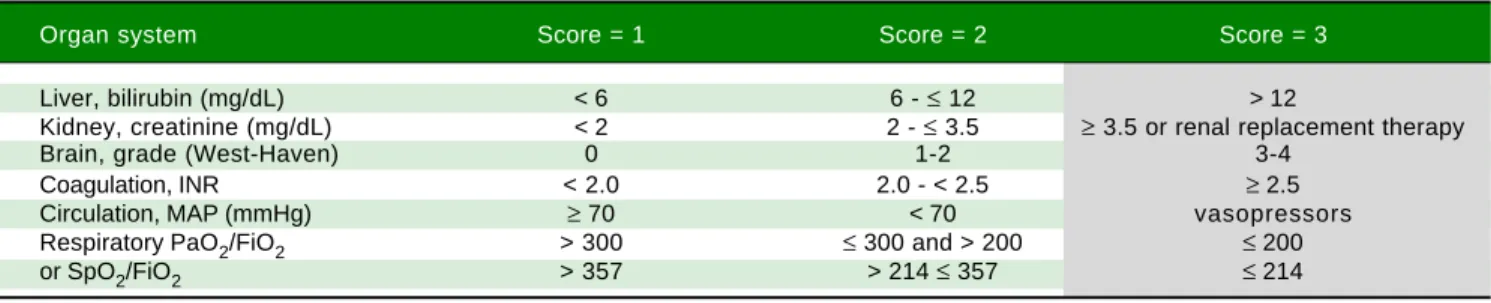
Table 1. Specific organ parameters allowing determination of organ failures (OF) and the calculation of the CLIF-C OF score.
Organ system Score = 1 Score = 2 Score = 3
Liver, bilirubin (mg/dL) < 6 6 - ≤ 12 > 12
Kidney, creatinine (mg/dL) < 2 2 - ≤ 3.5 ≥ 3.5 or renal replacement therapy
Brain, grade (West-Haven) 0 1-2 3-4
Coagulation, INR < 2.0 2.0 - < 2.5 ≥ 2.5
Circulation, MAP (mmHg) ≥ 70 < 70 vasopressors
Respiratory PaO2/FiO2 > 300 ≤ 300 and > 200 ≤ 200
or SpO2/FiO2 > 357 > 214 ≤ 357 ≤ 214
because it was considered to better represent the concept supporting this clinical condition. Consequently, ACLF was assumed whenever one of the three following cir-cumstances was present: renal failure alone defined by acute, de novo elevation of creatinine ≥ 2 mg/dL; renal function (creatinine 1.5-1.9 mg/dL) and/or cerebral dys-function (hepatic encephalopathy grade 1-2 by West Haven classification) together with any other OF; two to three any OFs. The criteria for organ failure are defined in table 1. ACLF grade 1 was assumed if there was only one OF, grade 2 for 2 OF and 3 OF defined grade 3.
Patients were included only once, at their first admis-sion during the study period, either having ACLF or CLD decompensation without ACLF. To ensure that the ACLF trigger was present before or just after admission, the study allowed only the diagnosis of ACLF from admission to the hospital to the 7th day of hospitalization. As a clini-cal trigger, we considered, as in the CANONIC study, the main factors that could originate the syndrome: infection, current alcohol drinking, acute reactivation of chronic vi-ral hepatitis or a recent medical procedure like paracente-sis or transjugular intrahepatic portosystemic shunt positioning. None of the causes of CLD decompensation were considered as potential triggers (gastrointestinal bleeding was considered in CANONIC) to select and termine the potential specific triggers. Infection was de-fined by the criteria expressed above. Active alcohol consumption was defined as drinking, at least, 14 drinks per week for women and 21 drinks per week in men with-in the last three months (based on CANONIC criteria). Data were collected prospectively and analyzed retrospec-tively. The scores were calculated at the first point of ad-mission (with or without ACLF) or calculated afterward in the cases when the patients developed ACLF in the ini-tial days of hospital admission. Then, they were correlated with the 28-day and 90-day mortality to determine prog-nostic accuracy.
The 2016 MELD score was announced after the last of the patients had been enrolled in the study. It was decided that the CLIF-C OF should be tested with an equivalent up-to-date quality score. Therefore, the “new” 2016 MELD version was assumed (referred in this article as 2016 MELD), while original score editing was made ac-cording to the laboratory data (including natremia) corre-sponding to the patient’s admission date, consequently
preserving the initial study design and solely updating the MELD values.
The 2016 MELD was calculated with the following for-mula (Figure 1A).
If the MELD(i) was higher than 11, additional MELD was calculated as follows (Figure 1B).
Statistical analysis
For categorical variables, the chi-squared test (χ2 test)
and the Fisher’s exact test, for groups with less than 20 cases, were used. Normality was assessed with the Kol-mogorov-Smirnov and Shapiro-Wilk tests. Continuous variables were expressed as the mean ± standard deviation (SD) or as the median and interquartile range (IQR) whether they were parametric or non-parametric and the Student’s t-test or Mann-Whitney U test were used, re-spectively. Multivariate analysis was executed with binary logistic regression. Receiver operating characteristic (ROC) curves were calculated, and the area under the curve (AUC) was evaluated do determine the score accu-racy (c-statistic). A p < 0.05 was considered for statistical significance. SPSS was used for all tests, ROC curves de-sign and AUC calculations (SPSS v. 20 for OS, Chicago, IL, USA). ROC curves AUC analysis between different scores, using DeLong test, was executed with Medcalc (Medcalc v. 17.9, MedCalc Software bvba, Ostend, Bel-gium).
Ethical considerations
This was an observational study with no interference in patient´s follow-up or medical decision making. It was validated by the local ethical committee. The patient’s an-onymity was kept, and all principles of Helsinki Declara-tion were respected.
RESULTS
ACLF incidence
During the study’s 18 months duration (July 2014 to December 2015) all the patients admitted to the depart-ment ward or specific ICU with decompensation of past or recently recognized CLD were systematically
consid-(A) MELD(i) = 0.957 ⋅ ln(Cr) + 0.378 ⋅ ln(bilirubin) + 1.120 ⋅ ln(INR) + 0.643.
(B) MELD = MELD(i) + 1.32 ⋅ (137-Na) – [0.033 ⋅ MELD(i) ⋅ (137-Na)].15
Figure 1. Figure 1. Figure 1. Figure 1.
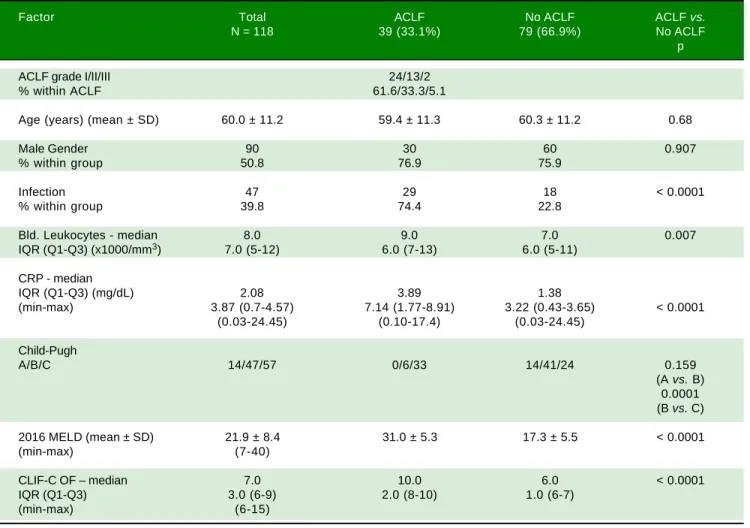
Table 2. Patients’ data summary for the global, acute-on-chronic liver failure (ACLF) and acute decompensation (AD) groups.
Factor Total ACLF No ACLF ACLF vs.
N = 118 39 (33.1%) 79 (66.9%) No ACLF
p
ACLF grade I/II/III 24/13/2
% within ACLF 61.6/33.3/5.1
Age (years) (mean ± SD) 60.0 ± 11.2 59.4 ± 11.3 60.3 ± 11.2 0.68
Male Gender 90 30 60 0.907
% within group 50.8 76.9 75.9
Infection 47 29 18 < 0.0001
% within group 39.8 74.4 22.8
Bld. Leukocytes - median 8.0 9.0 7.0 0.007
IQR (Q1-Q3) (x1000/mm3) 7.0 (5-12) 6.0 (7-13) 6.0 (5-11)
CRP - median
IQR (Q1-Q3) (mg/dL) 2.08 3.89 1.38
(min-max) 3.87 (0.7-4.57) 7.14 (1.77-8.91) 3.22 (0.43-3.65) < 0.0001
(0.03-24.45) (0.10-17.4) (0.03-24.45)
Child-Pugh
A/B/C 14/47/57 0/6/33 14/41/24 0.159
(A vs. B) 0.0001 (B vs. C)
2016 MELD (mean ± SD) 21.9 ± 8.4 31.0 ± 5.3 17.3 ± 5.5 < 0.0001
(min-max) (7-40)
CLIF-C OF – median 7.0 10.0 6.0 < 0.0001
IQR (Q1-Q3) 3.0 (6-9) 2.0 (8-10) 1.0 (6-7)
(min-max) (6-15)
SD: standard deviation. Bld: blood. IQR: interquartile range. CRP: C-reactive protein. MELD: model for end-stage liver disease. CLIF-C OF: chronic liver fail-ure consortium organ failfail-ure score.
ered for study incorporation. After strict use of the exclu-sion criteria, 118 patients were enrolled. The majority were men: 90 (76.3%), with a mean age of 60.0 ± 11.2 years, limits of 36 and 84. The leukocytes, C-reactive pro-tein (CRP) and CLIF-C OF showed a non-normal distri-bution: Kolmogorov-Smirnov and Shapiro-Wilk tests < 0.0001 for these variables. Therefore, medians (instead of means) were compared for these three variables (Table 2). The most common etiologies of CLD were alcohol con-sumption (81.4%), hepatitis C virus (HCV) infection and alcohol consumption (5.9%), hepatitis B virus infection (HBV) plus HCV and alcohol consumption (2.6%) and primary biliary cholangitis (2.6%). The specific CLD etiologies are expressed in table 3. As the major outcome, 39 patients admitted had ACLF (33.1%), the majority, 24 with grade 1 ACLF (61.6%), 13 with grade 2 (33.3%) and 2 with grade 3 (5.1%). The mortality was higher both at
28-day for ACLF grade 2 comparing to grade 1: 76.9% vs.
25%, p = 0.002, and at 90-day: 92.3% vs. 45.8%, p = 0.005. Because grade 3 was represented by only 2 cases, no corre-lations can be established with this grade.
Approximately one-third of the patients (33.9%) were admitted to the ICU. The incidence of ACLF was not sig-nificantly different in this group, when compared to those admitted to the ward: 37.5% (15/40) vs. 30.8% (24/78), p = 0.462. All the other clinical and laboratory main patients’ characteristics are summarized in table 2. The develop-ment of ACLF when comparing the patients with CLD caused only by active or previous alcohol consumption, with no viral hepatitis as a co-factor, with the patients with other etiologies, was not significantly different, 33.3% vs.
31.8%, p = 0.892.
val-ues of blood leukocytes, CRP and 2016 MELD valval-ues. The ACLF group was characterized by a significant higher short-term (28-day) and 90-day mortality compared to the no-ACLF group: 43.6% and 64.1% vs. 2.5% and 7.6% respectively, p < 0.0001.
Acute infection was the main trigger for ACLF, it was present in 74.4% cases. Active alcoholism also played a role, as it was present in 31.7% cases. In more than half of these (17.9%), active alcohol consumption was present si-multaneously with acute infection. In 11.8% cases, a clear trigger could not be identified.
Univariate and multivariate analysis
In the univariate analysis, we looked for the admission causes and other risk factors to test for a potential
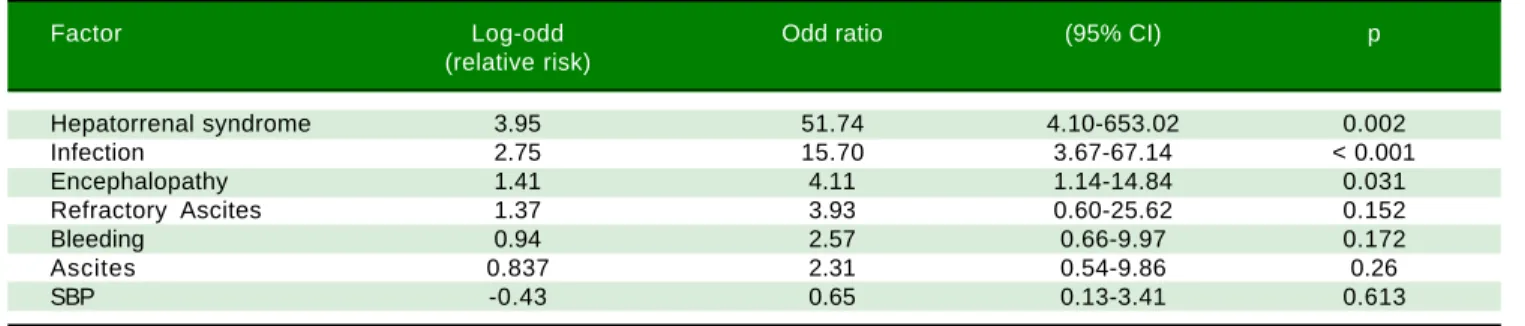
rela-tionship with ACLF development. Thus, hepatorenal syn-drome, infection by SBP or from another site, ascites, en-cephalopathy, refractory ascites and SBP all correlated with higher ACLF risk. On the other hand, acute upper digestive bleeding (variceal bleeding or not) had a nega-tive correlation for ACLF (odds ratio 0.55) p = 0.012 (Ta-ble 4). However, in the global multivariate analysis only the presence of hepatorenal syndrome, infection and en-cephalopathy showed a statistically significant correlation with ACLF diagnosis (Table 5).
Scores calculation and accuracy
The scores 2016 MELD and CLIF-C OF in the group with ACLF had much higher values, 31.0 ± 5.3 vs. 17.3 ± 5.5 and 10.0, IQR 2.0 vs. 6.0, IQR 1.0, respectively. In the Table 3. Etiologies of chronic liver disease in the patients enrolled.
Etiology Value (%)
Alcohol 96 (81.4)
HCV + Alcohol 7 (5.9%)
HBV + HCV + Alcohol 3 (2.6%)
Primary biliary cholangitis 3 (2.6%)
Autoimmune Hepatitis/NASH/HCV 2 (1.7%)/2 (1.7%)/2 (1.7%)
HBV/HBV + alcohol/Budd-Chiari syndrome 1 (0.8%)/1 (0.8%)/1 (0.8%)
HCV: hepatitis C virus. HBV: hepatitis B virus. NASH: Nonalcoholic steatohepatitis.
Table 4. Univariate analysis of risk factors for acute-on-chronic liver failure (ACLF) development.
Factor Odds ratio 95% CI p
Hepatorenal syndrome 4.66 3.11-6.97 0.0001
Infection 4.38 2.36-8.12 0.0001
Ascites 3.64 1.66-8.0 0.0001
Encephalopathy 2.97 1.74-5.06 0.0001
Refractory ascites 2.72 1.80-4.32 0.0001
SBP 2.53 1.63-3.87 0.002
Bleeding 0.55 0.32-0.91 0.012
SBP: spontaneous bacterial peritonitis. CI: confidence interval.
Table 5. Multivariate analysis of risk factors for acute-on-chronic liver failure (ACLF) development.
Factor Log-odd Odd ratio (95% CI) p
(relative risk)
Hepatorrenal syndrome 3.95 51.74 4.10-653.02 0.002
Infection 2.75 15.70 3.67-67.14 < 0.001
Encephalopathy 1.41 4.11 1.14-14.84 0.031
Refractory Ascites 1.37 3.93 0.60-25.62 0.152
Bleeding 0.94 2.57 0.66-9.97 0.172
Ascites 0.837 2.31 0.54-9.86 0.26
SBP -0.43 0.65 0.13-3.41 0.613
entire study group (N = 118) the AUC for the 28-day mortality determination with the scores 2016 MELD, CLIF-C OF, and Child-Pugh was respectively 0.908, 0.844, 0.753 (Figure 2) and for the 90-day mortality 0.902, 0.814, 0.724 (Figure 3), p < 0.0001 for AUC in all scores (Table 6). Comparing the AUCs with the DeLong test in the 28-day mortality period, only the 2016 MELD vs.
Child-Pugh difference was significant, p < 0.0001. Con-versely, in the 90-day period, the 2016 MELD vs. CLIF-C
OF, 2016 MELD vs. Child-Pugh and CLIF-C OF vs.
Child-Pugh differences were statistically significant, re-spectively, p = 0.021, p < 0.0001, and p = 0.035.
After subdivision depending on whether ACLF was present or not, within the group with this condition, the values for assessing 28-day mortality with the scores 2016 MELD, CLIF-C ACLF and Child-Pugh were respective-ly 0.774, 0.734, and 0.584; p = 0.004 and p = 0.013 for the 2016 MELD and CLIF-C ACLF AUC (Figure 4). For
Figure 2. Figure 2.Figure 2.
Figure 2.Figure 2. Receiver operating characteristic (ROC) curve for the scores 2016 MELD, CLIF-C OF and Child-Pugh as predictors of 28-day mortality in the global group.
Figure 3. Figure 3. Figure 3. Figure 3.
Figure 3. Receiver operating characteristics (ROC) curve for the scores 2016 MELD, CLIF-C OF and Child-Pugh as predictors of 90-day mortality in the global group.
Figure 4. Figure 4.Figure 4.
Figure 4.Figure 4. Receiver operating characteristics (ROC) curve for the scores 2016 MELD, CLIF-C OF and Child-Pugh as predictors of 28-day mortality in the ACLF group.
Figure 5. Figure 5.Figure 5. Figure 5.
Figure 5. Receiver operating characteristics (ROC) curve for the scores 2016 MELD, CLIF-C OF and Child-Pugh as predictors of 90-day mortality in the ACLF group.
1.0
0.8
0.6
0.4
0.2
0.0
0.0 0.2 0.4 0.6 0.8 1.0
1-Specificity
Sensitivity
ROC Curve
Source of the Curve MELD (2016) CLIF-C OF Child-Pugh Reference Line
1.0
0.8
0.6
0.4
0.2
0.0
0.0 0.2 0.4 0.6 0.8 1.0
1-Specificity
Sensitivity
ROC Curve
Source of the Curve MELD (2016) CLIF-C OF Child-Pugh Reference Line
1.0
0.8
0.6
0.4
0.2
0.0
0.0 0.2 0.4 0.6 0.8 1.0
1-Specificity
Sensitivity
ROC Curve
Source of the Curve MELD (2016) CLIF-C OF Child-Pugh Reference Line
1.0
0.8
0.6
0.4
0.2
0.0
0.0 0.2 0.4 0.6 0.8 1.0
1-Specificity
Sensitivity
ROC Curve
Source of the Curve
the 90-day mortality, the results were: 0.880, 0.771, and 0.603; p < 0.0001 and p = 0.005 for the 2016 MELD and CLIF-C ACLF AUC (Figure 5, Table 6).
Comparing the AUCs in the ACLF 28-day and 90-day periods, only the 2016 MELD versus Child-Pugh difference was significant, respectively, p = 0.020 and p = 0.0001.
In the group without ACLF, for anticipating the 28-day and 90-day mortality the values for the scores 2016 MELD, CLIF-C AD and CLIF-Child-Pugh were respectively 0.695, 0.675, 0.646 and 0.677, 0.622, 0.517; no statistical significance (Table 6).
During the period of patients’ follow-up, at least until three months after the last patient was enrolled, only five patients were submitted to liver transplantation, with no differences between groups: 2 within ACLF vs. 3 in the no-ACLF, p = 0.736.
DISCUSSION
ACLF and risk factors
ACLF is a condition based on a relatively recent con-cept that has became more clearly defined by new precise criteria supported by good quality medical scientific evi-dence.5 While the CLIF consortium considers this entity a
complete change in the cirrhosis paradigm,16 the real-life
clinical utility and relevance of this unique condition has been contested. Addressing this question was the first mo-tivation to conduct this study. Besides assessing its
unique behavior and independence, we wanted to test the new score CLIF-C OF and its associated scores that proved to be promising in recent data.16
First, this study confirms that ACLF is an individual entity characterized by high mortality (> 15%) with values reaching 43.6% and 64.1%, respectively for 28 and 90-day, with significant differences from the group without ACLF. This higher mortality, when compared with the CANONIC study (29.6% and 51.1%), can be justified by our very high rate of acute infection in the ACLF group (74.4%) that is known to be a crucial prognosis factor for poor outcome.17-20 Additionally, this study included a
con-siderable percentage of patients with alcohol consumption even when other CLD causes, like chronic HBV or HCV infection, were present. While maintenance of active alco-hol habits was identified objectively in only 31.7%, this percentage might be an underestimation. In fact, current alcohol consumption is a known ACLF development trig-ger and has also been linked to higher mortality, which is known to be connected to the common combination of acute alcoholic hepatitis and ACLF, both developing in as-sociation to an intense pro-inflammatory back-ground.5,17
The incidence of ACLF (33.1%) was similar to the one in the CANONIC study (30.9%), suggesting that this condition is quite frequent in the CLD clinical set-ting. Surprisingly, there was no considerable difference in the presence of ACLF in the ICU versus general ward (37.5% vs. 30.8%). One can say that this is justified be-cause ACLF can develop in a patient that apparently is Table 6. Area under curve (AUC) for the scores 2016 MELD, CLIF-C OF and Child-Pugh anticipating 28-day and 90-day mortality in the global group (N) and the specific scores for the acute-on-chronic liver failure (ACLF) and acute decompensation (AD) subgroups.
Score 28-day mortality 90-day mortality
N = 118 AUC 95% CI p AUC 95% CI p for each
score AUC
2016 MELD 0.908 0.833-0.983 < 0.0001 0.902 0.831-0.973 < 0.0001
CLIF-C OF 0.844 0.728-0.960 < 0.0001 0.814 0.715-0.914 < 0.0001
Child-Pugh 0.753 0.653-0.853 < 0.0001 0.724 0.624-0.823 < 0.0001
ACLF 28-day mortality 90-day mortality
2016 MELD 0.774 0.628-0.920 0.004 0.880 0.773-0.987 < 0.001
CLIF-C ACLF 0.734 0.571-0.897 0.013 0.771 0.619-0.924 0.005
Child-Pugh 0.584 0.405-0.764 0.372 0.603 0.409-0.797 0.292
AD 28-day mortality 90-day mortality
2016 MELD 0.695 0.284-1.0 0.349 0.677 0.454-0.900 0.152
CLIF-C AD 0.675 0.255-1.0 0.399 0.622 0.373-0.872 0.322
Child-Pugh 0.646 0.306-0.986 0.483 0.517 0.274-0.761 0.890
clinically stable, and, for that reason, is not admitted to the ICU. However, if the patient presents, for example, with acute kidney injury with creatinine rising to values ≥
2.0 mg/dL in the context of acute infection, ACLF is present even if the patient may seem to be apparently “well”. Conversely, a patient that receives a closer obser-vation in an ICU setting, because his admission was mo-tivated by variceal bleeding, has a lower risk for ACLF development as our analysis and other studies indicate.5,21
This fact strongly emphasizes the possibility that ACLF is not commonly associated with gastrointestinal bleed-ing in the context of CLD. The systematic use of antibi-otic prophylaxis following upper variceal bleeding, such as a 7-day ceftriaxone course used in our cohort, may play a crucial role in this issue. In this context, our study underscores the importance of awareness to slight chang-es in the cirrhotic patient, such as infection occurrence or acute kidney injury since they can lead to or consist of the first signs of ACLF.
In what concerns the risk factors, the multivariate anal-ysis confirmed the concept that infection is a relevant po-tential trigger of ACLF. Hepatorenal syndrome and portosystemic encephalopathy also showed high correla-tion with ACLF, but this must be interpreted with cau-tion because this fact probably reflects the organ dysfunction or failure consequent to the ACLF syndrome.
Scores and their prognostic accuracy
The new score CLIF-C OF performed very well as a prognostic tool to predict mortality at 28-day and 90-day, respectively with an AUC of 0.844 and 0.814 achieving good accuracy. However, the 2016 MELD score per-formed even better for both periods, although only signifi-cantly better for the 90-day mortality period. The values obtained were considerably higher than the ones found by a meta-analysis.22 In that study, the MELD AUC for
“in-hospital mortality” and 90-day mortality were respectively 0.744 and 0.794. However, it is not possible to establish a precise comparative analysis because we used the 2016 MELD (incorporating sodium) and those values are relat-ed to the MELD without sodium (before 2016).
Accordingly, the original MELD with sodium integra-tion (2016 MELD) still has a relevant role in the era of the CLIF-C OF.
As expected, the score Child-Pugh was not as accurate as the others, particularly, comparing to the 2016 MELD that performed significantly better for both time periods.
In the ACLF group, the score CLIF-C ACLF showed an accuracy for 28 and 90-day mortality of 0.734 and 0.771, respectively, that can be considered good and close (even
higher for 90-day) to the AUC published in the study that created this score (0.790 and 0.760).7 However, the 2016
MELD score showed a, not significantly different, higher value of 0.774 and 0.880.
Thus, the 2016 MELD performed, at least, with the same accuracy as the CLIF-C ACLF and this demon-strates its reliability as a score, even in the presence of ACLF.
When applied in the group without ACLF all the scores showed worse results and, particularly, the CLIF-C AD did not perform well at all. This group was more hetero-geneous (comparing to the ACLF) and included patients in different stages of decompensation, motivated by vari-ous causes of decompensation. Therefore, the scores might have reflected the dispersion of outcomes that re-sult from that creating some degree of unpredictability. These results also lead to theorizing that the more severe the patient’s condition is, the more accurate the score is likely to be.
Overall, we argue that the score CLIF-C OF is a good predictor of short-term and 90-day mortality allowing di-rect diagnosis of ACLF. The score 2016 MELD performed even better in the 90-day period defining an excellent curacy. We hypothesize that the 2016 MELD score ac-quired a better prognostic accuracy following its recent changes in the formula integrating the sodium value. This theory still needs to be tested in other larger scale cohorts. Management of ACLF is currently limited because there are no specific effective treatments. Liver transplan-tation is the only available option that can significantly im-prove long-term survival, and, consequently, must be systematically considered as a possibility.17 The patient
should be admitted to an intensive care unit, and general management should be focused on the treatment of poten-tial triggers such as infection and supporting organ fail-ures. Liver support devices, such as molecular adsorbent recirculating system (MARS) or Prometheus, can be offered if available, but the current evidence did not prove their role in increasing survival.23 New biologic agents, like
granulocyte-colony stimulating factor, are being tested and the first trials look promising.24
Although the treatment of ACLF is beyond the scope of this study, we noticed a very low number of patients that were submitted to liver transplantation. This fact can be due to several factors. First, a substantial percentage of pa-tients did not fulfill the transplantation criteria, namely because of acute alcoholic hepatitis. Additionally, the high rate of patients with a severe global condition and acute infection leading to the status of “too sick to transplant”, may have contributed.
certainty as in other large cohort multi-centric trials. This factor adversely impacted the subdivision of ACLF/no ACLF groups, in specific. While this is a prospective study, the accuracy of some data recording may be com-promised because of the subjective nature of some clinical variables. Nevertheless, the principal scores that were test-ed, CLIF-C OF and 2016 MELD, include mainly objec-tive data (except encephalopathy in CLIF-C OF). The study also incorporates Child-Pugh in the comparative analysis because it is a widely-accepted score that includes subjective variables (encephalopathy and ascites), allowing us to test those factors.
In conclusion, the present study provides evidence that ACLF is an independent syndrome associated with organ failure and to higher short-term mortality (> 15%). Acute infection acts as a strong potential trigger associated with this syndrome.
The score CLIF-C OF has a good prediction accuracy and the advantage of automatically defining ACLF when this condition is present. However, in our data, it did not suggest being better than the 2016 MELD, which showed excellent accuracy.
ABBREVIATIONS
• ACLF: acute-on-chronic liver failure. • OF: organ failure.
• CLD: chronic liver disease.
• CLIF-C: chronic Liver failure consortium. • SOFA: Sepsis-related organ failure assessment. • CLIF-C ACLF: CLIF-C acute-on-chronic liver
fail-ure.
• CLIF-C AD: CLIF-C acute decompensation. • AD: acute decompensation.
• MELD: model for end-stage liver disease.
• MELD-Na: model for end-stage liver disease-sodi-um.
• ICU: intensive care unit.
• SBP: spontaneous bacterial peritonitis. • SD: standard deviation.
• IQR: interquartile range.
• ROC: receiver operating characteristic. • AUC: area under curve.
• CRP: C-reactive protein. • HCV: hepatitis C virus. • HBV: hepatitis B virus.
• MARS: molecular adsorbent recirculating system.
CONFLICT OF INTEREST
The authors declares that there is no conflict of interest regarding the publication of this article.
REFERENCES
1. Jalan R, Gines P, Olson J, Mookerjee R, Moreau R, Garcia-Tsao G, Arroyo V, et al. Acute-on-chronic liver failure. J Hepatol 2012; 57: 1336-48.
2. Singh H, Pai C. Defining acute-on-chronic liver failure: East, West or Middle ground? World J Hepatol 2015; 7: 2571-7. 3. Wlodzimirow KA, Eslami S, Abu-Hanna A, Nieuwoudt M,
Chamuleau RA. A systematic review on prognostic indica-tors of acute on chronic liver failure and their predictive val-ue for mortality. Liver Int 2013; 33: 40-52.
4. Asrani S, Simonetto D, Kamath P. Acute-on-chronic liver fail-ure. Clinical Gastroenterol Hepatol 2015; 13: 2128-39. 5. Moreau R, Jalan R, Gines P, Pavesi M, Angeli P, Cordoba J,
Durand F, et al. Acute-on-Chronic Liver Failure is a distinct syndrome that develops in patients with acute decompensa-tion of cirrhosis. Gastroenterology 2013; 144: 1426-37. 6. Vincent JL, Moreno R, Takala J, Willatts S, De Mendonça A,
Bruining H, Reinhart CK, et al. The SOFA (Sepsis-related Or-gan Failure Assessment) score to describe orOr-gan dysfunc-tion/failure. Intensive Care Med 1996; 22: 707-10.
7. Jalan R, Saliba F, Pavesi M, Amoros M, Moreau R, Ginès P, Levesque E, et al. Development and validation of a prognos-tic score to predict mortality in patients with acute-on-chron-ic liver failure. J Hepatol 2014; 61: 1038-47.
8. Jalan R, Pavesi M, Saliba F, Amorós A, Fernandez J, Hol-land-Fischer P, Sawhney R, et al. The CLIF Consortium Acute Decompensation score (CLIF-C ADs) for prognosis of hospitalised cirrhotic patients without acute-on-chronic liver failure. J Hepatol 2015; 62: 831-40.
9. Kamath P, Wiesner R, Malinchoc M, Kremers W, Therneu T, Kosberg C, D’Amico G, et al. A model to predict survival in patients with end-stage liver disease. Hepatology 2001; 33: 464-70.
10. Wiesner R, Edwards E, Freeman R, Harper A, Kim R, Kamath P, Kremers W, et al. Model for End-Stage Liver Disease (MELD) and allocation of donor livers. Gastroenterology
2003; 124: 91-6.
11 Biggins S, Kim R, Terrault NA, Saab S, Balan V, Schiano T, Benson J, et al. Evidence-based incorporation of serum so-dium concentration into MELD. Gastroenterology 2006; 130: 1652-60.
12. Kim W, Biggins S, Kremers W, Wiesner R, Kamath P, Benson J, Edwards E, et al. Hyponatremia and mortality among pa-tients on the liver-transplant waiting list. N Engl J Med 2008; 359: 1018-26.
13. Xiol X, Gines P, Castells L, Twose J, Ribalta A, Fuentes-Ard-eriu X, Rodriguez S, et al. Clinically relevant differences in the model for stage liver disease and model for end-stage liver disease-sodium scores determined at three uni-versity-based laboratories of the same area. Liver Transpl
2009; 15: 300-5.
14. Barber K, Madden S, Allen J, Collett D, Neuberger J, Gimson A. Elective liver transplant list mortality: development of a United Kingdom End-stage Liver Disease score. Transplan-tation 2011; 92: 469-76.
15. h t t p s : / / o p t n . t r a n s p l a n t . h r s a . g o v / m e d i a / 1 5 7 5 / policynotice_20151101.pdf
16. Arroyo V, Moreau R, Jalan R, Ginès P. Acute-on-chronic liv-er failure: A new syndrome that will re-classify cirrhosis. J Hepatol 2015; 62: 131-43.
17. Hernaez R, Solà E, Moreau R, Ginès P. Acute-on-chronic liv-er failure: an update. Gut 2017; 66: 541-53.
liver failure: Pathogenesis, prognostic factors and manage-ment. World J Gastroenterol 2014; 21: 12125-40.
19. Jalan R, Fernandez J, Wiest R, Schnabl B, Moreau R, Angeli P, Stadlbauer V, et al. Bacterial infections in cirrhosis: A po-sition statement based on the EASL Special Conference 2013. J Hepatol 2014; 60: 1310-24.
20. Gupta T, Dhiman R, Rathi S, Agrawal S, Duseja A, Taneja S, Chawla Y. Impact of hepatic and extrahepatic insults on the outcome of Acute-on-Chronic Liver Failure. J Clin Exp Hepatol 2017; 7: 9-15.
21. Barosa R, Roque-Ramos L, Patita M, Nunes G, Fonseca J. CLIF-C ACLF score is a better mortality predictor than MELD, MELD-Na and CTP in patients with acute on chronic liver fail-ure admitted to the ward. Rev Esp Enferm Dig 2017; 109: 399-405.
22. Peng Y, Qi X, Guo X. Child-Pugh versus MELD score for the assessment of prognosis in liver cirrhosis: a systematic re-view and meta-analysis of observational studies. Medicine
2016; 95: e2877.
23. Bañares R, Nevens F, Larsen F, Jalan R, Albillos A, Doll-inger M, Saliba F, et al. Extracorporeal albumin dialysis with the molecular adsorbent recirculating system in acute-on-chronic liver failure: the RELIEF trial. Hepatology 2013; 57: 1153-62.
24. Garg V, Garg H, Khan A, Trehanpati N, Kumar A, Sharma BC, Sakhuja P, et al. Granulocyte colony-stimulating factor mobilizes CD34(+) cells and improves survival of patients with acute-on-chronic liver failure. Gastroenterology 2012; 142: 505-12.
Correspondence and reprint request: David Noiva-Perdigoto, M.D.
Serviço de Gastrenterologia, Centro Hospitalar e Universitário de Coimbra-Praceta Prof. Mota Pinto 3000-075 COIMBRA,