Artículo original
Spanish version of the Psychosis Attachment
Measure: adaptation process
and psychometric properties
Tamara Sheinbaum,
1Katherine Berry,
2Neus Barrantes-Vidal
1,3,4,5SUMMARY Introduction
Attachment theory has recently been postulated as a useful frame-work for enhancing our understanding of the role of psychosocial and environmental factors in relation to the vulnerability, expression, and course of psychosis. In this paper we present the Spanish adaptation and psychometric properties of the Psychosis Attachment Measure (PAM), a 16-item self-report scale specifically designed to measure adult attachment in people with psychosis.
Method
In study 1, the PAM was adapted into Spanish following the trans-lation/back-translation procedure and was administered to 24 early psychosis patients to evaluate its intelligibility. In study 2, the psycho-metric properties of the scale were assessed in a sample of 235 uni-versity students. The students completed the PAM and the Relationship Questionnaire (RQ) via an Internet website.
Results
Results from study 1 demonstrated that the Spanish version of the scale is semantically and conceptually equivalent to the original English ver-sion and that it is appropriate for use with people experiencing psychotic symptoms. Paralleling the findings from the English version of the instru-ment, results from study 2 indicated that two factors, conceptually repre-senting anxiety and avoidance, underlie the Spanish version of the PAM. The anxiety and avoidance subscales were found to have adequate levels of internal reliability and to be associated in a theoretically predicted fash-ion with the four prototypes of adult attachment measured with the RQ.
Discussion
The good psychometric properties exhibited by the instrument support its use for the assessment of adult attachment styles in the Spanish cultural context and allow for the comparability of findings across cul-tures. Having a Spanish instrument for assessing attachment in psycho-sis populations is a relevant contribution that opens up new avenues for research and clinical applications.
Key words: PAM, attachment, psychosis, Spanish adaptation, psy-chometric properties.
RESUMEN Introducción
Recientemente se ha postulado a la teoría del apego como un marco conceptual de gran utilidad para mejorar la comprensión del papel de los factores psicosociales y ambientales en relación con la vulne-rabilidad, expresión y curso evolutivo de la psicosis. En este artículo presentamos la adaptación española y las propiedades psicométricas de la Psychosis Attachment Measure (PAM), una escala de 16 reacti-vos diseñada para medir el apego adulto en población con psicosis.
Método
En el estudio 1, la PAM se adaptó al español siguiendo la metodolo-gía de traducción/retrotraducción y se administró a 24 pacientes con psicosis temprana para evaluar su comprensión del instrumento. En el estudio 2 se analizaron sus propiedades psicométricas en una muestra de 235 estudiantes universitarios. Los estudiantes completaron la PAM y el Cuestionario de Relación (RQ) a través de una página de Internet.
Resultados
Los resultados del estudio 1 demostraron que la adaptación del instrumen-to es conceptual y semánticamente equivalente a la versión original en in-glés y que es apropiada para usarse en personas que presentan síntomas psicóticos. Replicando los hallazgos obtenidos con la medida original, los resultados del estudio 2 indicaron que dos factores, que conceptualmente representan ansiedad y evitación, subyacen a la versión española de la PAM. Las subescalas de ansiedad y evitación mostraron tener una consis-tencia interna adecuada, así como estar asociadas de forma teóricamen-te coherenteóricamen-te con los cuatro prototipos de apego medidos con el RQ.
Discusión
La escala presenta unas propiedades psicométricas adecuadas, lo cual apoya su utilización para la evaluación de los estilos de apego adulto en el contexto cultural español y hace posible la comparación de resultados obtenidos en diferentes culturas. Disponer de un instru-mento en español para evaluar el apego en población con psicosis es una aportación relevante que abre nuevos panoramas en ámbitos clínicos y de investigación.
Palabras clave: PAM, apego, psicosis, adaptación española, pro-piedades psicométricas.
1 Departamento de Psicologia Clínica i de la Salut, Facultat de Psicologia, Universitat Autònoma de Barcelona, Spain. 2 School of Psychological Sciences, University of Manchester, UK.
3 Department of Psychology, University of North Carolina at Greensboro, USA. 4 Departamento de Salut Mental, Sant Pere Claver – Fundació Sanitària, Spain.
5 Instituto de Salud Carlos III, Centro de Investigación Biomédica en Red de Salud Mental (CIBERSAM), Spain.
Correspondence: Neus Barrantes-Vidal. Departament de Psicologia Clínica i de la Salut, Facultat de Psicologia, Universitat Autònoma de Barcelona. 08193 Bellaterra, Barcelona (Spain). Phone: (+34-93) 581 - 3864. E-mail: [email protected]
INTRODUCTION
There is mounting evidence supporting the central role of interpersonal relationships in understanding and treating a diverse array of psychiatric disorders.1 A recent line of work
has explored how Bowlby’s2-4 attachment theory can be used
in the field of psychosis to enhance our understanding of how psychosocial factors impact on the vulnerability, expression, and course of psychotic disorders.5-7 Specifically, it has been
suggested that attachment theory and research could be use-ful for elucidating: 1. the developmental pathway through which childhood adversity can lead to psychotic symptoms;8
2. the difficulties in interpersonal and social functioning that characterize people with psychosis;9,10 3. the way in which
attachment relationships contribute to the configuration of different coping styles that affect the course of, and recovery from, the disorder;11 and 4. the underlying factors that influ
-ence treatment adher-ence, such as the therapeutic alliance.9,12
Attachment theory postulates that based on early in-teractions with significant figures individuals build mental representations or “internal working models” of the self and others.3 These models are essential in shaping cognitive and
affective processes throughout the lifespan and provide the foundation of an individual’s attachment style.13
Attach-ment styles are distinctive patterns of relational expecta-tions, emoexpecta-tions, cogniexpecta-tions, and behaviors that are shaped by a person’s cumulative attachment experiences.13,14
Individual differences in attachment may be character-ized in terms of security versus insecurity. Interactions with available and sensitively responsive attachment figures promote a secure attachment style, characterized by com-fort with closeness, confidence in the availability and trust -worthiness of significant others, and the capacity to manage distress in constructive ways.13,15 In contrast, when
attach-ment figures are not responsive or emotionally available, the sense of security is not achieved, which can lead to the formation of insecure attachment styles.15
There is general consensus in the attachment literature about the existence of two independent dimensions regard-ing attachment insecurity. The two dimensions have been conceptualized from the “attachment behavioral systems”
perspective as “anxiety” and “avoidance”16 and from the
“internal working models” perspective as representing the negativity of a person’s “model of self” and “model of oth-ers”.17 The first dimension, model of self or anxiety, is associ
-ated with a negative self-image and reflects a strong desire for closeness as well as a fear of being rejected by significant figures. The second dimension, model of others or avoid -ance, is associated with a negative view of others and re-flects a high need for self-reliance coupled with discomfort with closeness and emotional intimacy with others.13,16
Empirical research on the association between attach-ment and psychosis has provided evidence of a high preva-lence of insecure styles in patients diagnosed with
schizo-phrenia-spectrum disorders.18,19 However, studies in this
field have been limited, in part, by various methodological problems related to the difficulty of measuring attachment in people with psychosis with the most widely used mea-sures.20 Specifically, the use of the Adult Attachment Inter
-view (AAI),21 which is coded in terms of the coherence of
a person’s narrative in describing early experiences with at-tachment figures, has been questioned because the presence of positive symptoms may result in an incoherent discourse, therefore affecting the results of the interview.22,23 On the
oth-er hand, the use of existing self-report instruments, which assess a person’s thoughts, feelings, and behaviors in the context of close relationships,13 has been questioned because
they tend to focus on romantic relationships and are thus less suitable for people with psychosis, who are commonly iso-lated and are less likely to have a romantic partner.24,25
Berry et al.20 developed the Psychosis Attachment
Mea-sure (PAM) out of the need to have an instrument of adult attachment designed specifically for use with people with psychosis. The PAM is composed of 16 items that assess the two dimensions of adult attachment, anxiety (eight items) and avoidance (eight items), and it also includes an open-ended question at the end asking respondents to indicate the relationships they were thinking about while answering the scale. The items were derived from existing self-report questionnaires,16,17 but its adequacy for use in psychosis
populations lies in the fact that, unlike most instruments, it is applicable to people who do not currently have, or have never had, a romantic relationship.9 A further advantage of
the PAM is that items are rated on a simple and anchored four-point Likert scale, which is more appropriate for peo-ple with psychosis who often experience cognitive difficul -ties that may complicate understanding wide-ranging scales with insufficient anchor points. The PAM was originally de -veloped and validated in a sample of university students20
and in subsequent years it has also been shown to have good psychometric properties in clinical samples.9 In addition, its
brevity of application and simplicity of scoring make it a practical tool for use in clinical and research settings.
In the present investigation two studies were carried out: The aim of study 1 was to perform a comprehensive process of cultural adaptation of the PAM into Spanish and to ad-minister it to a group of people with early psychosis. Study 2 aimed to examine the psychometric properties of the Spanish adaptation by assessing its factor structure, criterion validity, and the internal consistency reliability of its subscales.
STUDY 1
Overview
adapt-ing attachment instruments from one culture to another.26
In study 1 we report on the process followed to adapt the PAM into Spanish and describe how we arrived at the final version of the instrument after pre-testing it in a sample of early psychosis patients.
METHOD
Adaptation process
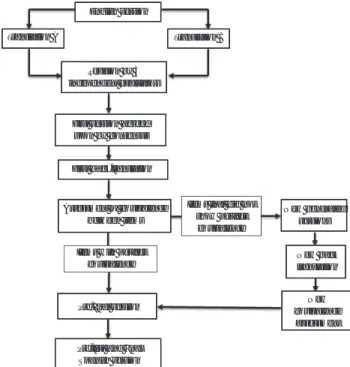
The linguistic and cultural adaptation of the PAM was car-ried out using the translation/back-translation method, which involves various steps that allow for corroboration of the semantic and conceptual equivalence between the origi -nal instrument and the generated version (figure 1). During the adaptation process the guidelines of the International Test Commission27 were followed, as well as the suggestions
provided by several authors.26,28,29
In the first step, two independent forward translations of the original instrument were made. Following the stipu-lations of Hambleton29 to ensure that the translations
pre-serve the nuances of the original items, the translations were carried out by Spanish-speaking persons who were not only familiar with both the target and source culture, but who were also knowledgeable of the constructs assessed by the measure. The two translations were reviewed indepen-dently by three additional evaluators, who compared all the items and pointed out those susceptible to improvements. Subsequently, meetings were held between the translators
and reviewers in which adjustments were made to the items with discrepancies and by consensus a first version of the scale was agreed upon.
The preliminary Spanish version was back-translated into English by a bilingual British clinical psychologist with residency in Barcelona, who was blind to the origi-nal version of the instrument. This first back-translation was then sent to the principal author of the English PAM (KB), who carried out a comparison between the original and the back-translated items. For this purpose she evalu-ated the conceptual equivalence (if the same theoretical construct is measured in both cultures) and the semantic equivalence (if the meaning is the same in both cultural contexts) of the items, using a four-category ranking with the following characteristics: The items that show full se-mantic and conceptual coincidence with the original ones are classified as “Type A”. When items show satisfactory conceptual equivalence, but differ in one or more words from the original version, they are labeled as “Type B”. Those items that preserve the original meaning but do not show a satisfactory conceptual equivalence are clas -sified as “Type C”. Finally, the “Type D” label is assigned to items with no coincidence between the back-translation and the original version.
The items that did not show “Type A” equivalence with respect to the originals were examined by the re-search team. Alternative formulations were proposed until a satisfactory version was accepted through consensus. The modified items were subjected to a new back-translation process and subsequently KB used the same classification system to assess whether the equivalence had improved for the problematic items.
Pre-testing
In order to evaluate the intelligibility of the measure and refine it prior to assessing its psychometric properties, the generated Spanish version was pre-tested among 24 early psychosis patients linked to the Sant Pere Claver Early Psychosis Program (SPC-EPP), currently being carried out at three specialized Community Mental Health centers in Barcelona.30 Patients ranged in age from 15 to 31 (M=23.46,
SD=4.8) and 58.3% were men. Of these, 8 (33.3%) met DSM-IV criteria for a first episode of a psychotic disorder (FEP)31
and 16 (66.7%) met criteria for one or more of the Ultra-High Risk for psychosis (UHR) groups based on the Comprehen -sive Assessment of At Risk Mental States (CAARMS).32
Pa-tients completed the questionnaire and were later asked about any difficulties in the comprehension of instructions, scale items, and response categories. Once this phase was completed, the research team incorporated the necessary changes and obtained the definitive Spanish version of the instrument.
Figure 1. Outline of the steps involved in the adaptation process. Translation A Translation B
English version
Revision by 3 independent evaluators
First version agreed upon by consensus
First back-translation
Assessment of equivalence between items
Items with perfect equivalence
Pre-test and final Spanish version
New generated versions
New back translation
New equivalence
assessment Items that did not
show perfect equivalence
RESULTS
Adaptation process
The classification of the back-translated items according to their conceptual and semantic equivalence with the original version revealed that of the 16 items, 13 were classified as having “Type A” equivalence (81.25%) and 3 as “Type B”
(18.75%). The open-ended question that composes the second part of the scale was rated as “Type A”. No items received a
“Type C” or “Type D” classification. With the purpose of im -proving the equivalence of the “Type B” items, the research team asked KB to nuance their meaning and discussed with her the use of certain terms. New Spanish alternatives were generated for these items for which a final version was agreed upon after an iterative process of new back-transla-tion and equivalence assessment. For example, for item 2, it was decided to keep the term “apoyarme en” (“lean on”) to reflect the English phrase “depend on” because the research team agreed that its linguistic equivalent (“depender de”) has a more negative connotation in the Spanish cultural context. For item 14, “I worry that if I displease other people, they won’t want to know me anymore”, the team concluded that the literal Spanish translation of the phrase “won’t want to know me anymore” (“ya no querrán conocerme”) would be un-clear to Spanish respondents and as such it was decided to use the wording “ya no querrán relacionarse conmigo” (“won’t want to have a relationship with me”).
Pre-testing
The 24 early psychosis patients considered the questionnaire to be understandable, well structured, and easy to complete. Taking into account their feedback, the wording of three items (7, 13, and 16) was modified to improve their intelligi -bility. Also, one patient mentioned being unsure about how to respond to the scale and thus the research team decided to add the phrase “This statement describes me” (“Esta frase me describe”) on top of the response categories in order to make it more straightforward for respondents.
DISCUSSION
The adaptation process followed in this study has allowed us to obtain a Spanish version of the PAM that preserves the semantic and conceptual equivalence of the original Eng -lish version. Furthermore, the results of the pre-test phase showed that the adapted instrument is appropriate for use with people experiencing psychotic symptoms in the Span-ish cultural context. Carrying out this type of adaptation avoids the complexity of developing a new instrument and allows for making reference to the values obtained in the process of validation of the original measure. In sum, the
present study demonstrated that the Spanish version of the PAM is a highly understandable instrument that shows good equivalence with the English version. This, in turn, guaran -tees to a considerable extent that the measure preserves the function and validity of the original questionnaire.
STUDY 2
Overview
The goal of the second study was to assess the psychometric characteristics of the Spanish version of the PAM. The spe-cific aims were to examine the instrument’s underlying fac -tor structure, determine the internal consistency reliability of the anxiety and avoidance subscales, and assess its criterion validity by correlating its subscales with the four attachment prototypes measured by the Relationship Questionnaire (RQ).17 It was hypothesized that a two-factor structure would
underlie the Spanish adaptation of the instrument and that the anxiety and avoidance subscales would exhibit good in-ternal consistency. Furthermore, it was predicted that the anxiety subscale would have a significant positive correla -tion with the RQ preoccupied prototype, whereas the avoid-ance subscale would have a significant positive correlation with the RQ dismissing prototype. The two subscales were also expected to show a positive, albeit smaller, association with the RQ fearful prototype (which is composed of high avoidance and high anxiety).
METHOD
Participants
Participants were 235 undergraduate and postgraduate students from public universities in Barcelona, who re-sponded to an e-mail (sent out to approximately 360 stu-dents) that invited them to go to a web page to take part in a study about the instruments used to assess interpersonal relationships. Students volunteered to participate in the study and were not pre-selected based upon any criteria. Of the participants, 72 (30.6%) were men and 163 (69.4%) were women, with ages ranging from 19 to 55 (M=27.13, SD=5.93). The majority of the sample was composed of psychology students (54.5%).
Measures
In addition to completing the Spanish version of the PAM, participants were asked to fill out the Relationship Ques -tionnaire (RQ)17 in its Spanish version.33 The RQ is based on
Bartholomew’s34 attachment model, which conceptualizes
intersec-tion of two underlying dimensions, model of self (or anxiety) and model of others (or avoidance). The RQ consists of four paragraphs, each describing a prototype of adult attach-ment: Secure (low avoidance, low anxiety), Dismissing (high avoidance, low anxiety), Preoccupied (low avoidance, high anxiety), and Fearful (high avoidance, high anxiety). Partici-pants were asked to provide a rating for each description on a 7-point scale ranging from “strongly disagree” to “strongly agree” and to select the statement that best describes the way they approach close relationships. The RQ has been shown to have acceptable reliability and validity.35,36 The continuous
ratings of each attachment prototype were used for analyses.
RESULTS
Factor structure
A principal components analysis (PCA) with varimax rotation was performed on the 16 items to determine the underlying factor structure of the Spanish adaptation of the scale. Visual inspection of the scree plot clearly indicated a two-factor solu-tion, consistent with the findings from the English version of the PAM. Therefore we proceeded to perform a second analy-sis with the extraction components fixed to two. The Kaiser-Meyer-Olkin measure confirmed the sampling adequacy for the analysis (KMO=.81), and Bartlett’s Test of Sphericity, χ2
(120)=1015.90, p<.001, suggested that the correlations among items were sufficiently large for PCA.37 The results revealed
two distinct factors with all items loading substantially onto the expected factor. After rotation, loadings ranged from .52 to .77 and none of the items cross-loaded above .26 onto the other component (Appendix 1). The two factors contributed to 43.13% of the total variance, with the first factor (anxiety) accounting for 22.39% of the variance and the second factor (avoidance) explaining 20.75% of the variance.
Internal consistency reliability
PAM scores for the anxiety and avoidance dimensions were calculated by averaging the scores for the items that loaded onto the anxiety and avoidance factors. Internal consistency reliability was assessed for the two subscales using Cron-bach’s Alpha. The coefficients were found to be .81 for the anxiety subscale and .78 for the avoidance subscale, which are comparable to the values reported for the English ver-sion of the scale.9,20,38 The two dimensions were not signifi
-cantly correlated (r=-.10, p=.14), suggesting that they are indeed distinct constructs.
Criterion validity
Table 1 displays the association between the PAM subscale scores and the four RQ attachment prototype ratings.
Con-sistent with theoretical predictions, the results revealed that the anxiety dimension was most strongly correlated with the RQ preoccupied prototype (r=.44, p<.001), whereas the avoidance dimension was most strongly correlated with the RQ dismissing prototype (r=.46, p<.001). Note also that both subscale scores were significantly positively correlated with the fearful prototype, which comprises both high avoidance and high anxiety.
DISCUSSION
Study 2 aimed to analyze the factor structure, internal consis-tency reliability, and criterion validity of the Spanish version of the PAM in a sample of university students. Results paral-leled the findings obtained with the English instrument and suggest that the Spanish version of the scale works well in the Spanish cultural context. Firstly, as in Berry et al.,9,20,38 the
analysis revealed a two-factor structure representing the con-structs of attachment anxiety and avoidance. Secondly, we found good levels of internal reliability for the instrument’s subscales, with values comparable to those reported for the English PAM. Finally, support for criterion validity was ob-tained given that both the anxiety and avoidance dimensions were associated in a theoretically predicted fashion with the four prototypes of adult attachment measured by the RQ. Taken together, the findings indicate that the Spanish adap -tation of the PAM displays good psychometric properties. Future work is warranted to investigate the psychometric characteristics of the scale with clinical samples as well as to determine its convergent and discriminant validity.
General discussion
In the current scientific panorama, the field of psychosis is experiencing a considerable growth in the number of mul-ticenter projects and multicultural investigations.39-41 At the
same time, practitioners and researchers addressing psychotic disorders have been increasingly encouraged to incorporate the evaluation of attachment styles in their assessments.8
This emerging body of work has brought about the need to adapt the relevant assessment instruments so that they can be properly used in populations other than those for which they were designed. In the present research two studies were carried out with the purpose of adapting the PAM for use
Table 1. Associations between the PAM subscales and the four RQ prototypes of adult attachment
PAM RQ prototypes
subscales Secure Preoccupied Dismissing Fearful
Anxiety .01 .44* -.25* .22*
Avoidance -.23* .09 .46* .33*
in the Spanish cultural context. The findings demonstrated that the Spanish version of the scale maintains semantic and conceptual equivalence as well as comparable psychometric properties with respect to the English version.
The process of translation and cultural adaptation fol-lowed in study 1 alfol-lowed to ensure the equivalence and quality of the Spanish version of the scale. It is important to note that a very valuable step in the adaptation process was the examination of its adequacy for use with individuals experiencing psychotic symptoms. We purposely targeted early psychosis patients to pre-test the measure because at-tachment might be particularly significant in the onset of a psychotic disorder9 and because in the prodromal and
first-episode phases the interpersonal characteristics that impact on treatment engagement and the therapeutic alliance might be more accessible and amenable to intervention.42
The analyses performed in study 2 showed that the Spanish PAM has the intended factor structure, indicating that it clearly distinguishes the two insecure dimensions of adult attachment. The measure was also shown to have in-ternally consistent subscales and appropriate concurrent va-lidity with another measure of adult attachment. Overall, the good psychometric properties exhibited by the instrument support its use for the assessment of adult attachment styles and allow for the comparability of findings across cultures.
The current research had some limitations that should be taken into consideration when interpreting the results. The PAM’s psychometric properties were tested in a sample of university students with predominantly female participants. Future studies should examine the scale in non-student sam-ples with wider variability in terms of socio-demographic characteristics. Moreover, although the psychometric charac-teristics of the English version of the scale have been replicat-ed in both clinical and university student samples, research is required with clinical populations in order to expand the validation of the Spanish instrument by relating it to clinical, treatment, and outcome measures. An additional limitation of the present investigation was the use of an Internet-based approach to recruit participants because this method re-stricts the sample to students who were self-selected. How-ever, from an ethical standpoint, web designs allow research participants to withdraw from the study at any time while keeping their anonymity, so participation can be considered to be less contaminated by motivational confounding.43
In closing, the Spanish version of the PAM appears to be a reliable and valid self-report measure of adult attach-ment. Considering that attachment theory has recently been postulated as a useful framework that may afford valuable insights into the affective, cognitive, and interpersonal com-ponents that contribute to the vulnerability, development, and course of psychosis,6,7 having an instrument for
assess-ing attachment styles in the Spanish population with psy-chosis is a relevant contribution that opens up new avenues for research and clinical applications.
ACKNOWLEDGEMENTS
Neus Barrantes-Vidal is grateful for the support given by the Ministry
of Science and Innovation, Plan Nacional de I+D+i (PSI2008-04178), the
Generalitat de Catalunya Suport als Grups de Recerca (2009SGR672), and the Fundació La Marató de TV3 (091110). Tamara Sheinbaum is thankful to the Consejo Nacional de Ciencia y Tecnología (CONA-CyT) for the concession of the doctoral fellowship (212581).
REFERENCES
1. Pilgrim D, Rogers A, Bentall R. The centrality of personal relations-hips in the creation and amelioration of mental health problems: the current interdisciplinary case. Health (London) 2009;13(2):235-254. 2. Bowlby J. Attachment and loss: Vol. 1. Attachment. New York: 2nd Ed;
Basic Books; 1982.
3. Bowlby J. Attachment and loss: Vol. 2. Separation. New York: Basic Books; 1973.
4. Bowlby J. Attachment and loss: Vol. 3. Loss. New York: Basic Books; 1980.
5. Bentall RP, Fernyhough C. Social predictors of psychotic
expe-riences: specificity and psychological mechanisms. Schizophr Bull
2008;34(6):1012-1020.
6. Berry K, Barrowclough C, Wearden A. A review of the role of adult attachment style in psychosis: unexplored issues and questions for further research. Clin Psychol Rev 2007;27(4):458-475.
7. MacBeth A, Gumley A, Schwannauer M, Fisher R. Attachment states
of mind, mentalisation and their correlates in first-episode psychosis.
Psychol Psychother 2011;84(1):42-57.
8. Read J, Gumley A. Can attachment theory help explain the relations-hip between childhood adversity and psychosis? Attachment 2008;2:1-35.
9. Berry K, Barrowclough C, Wearden A. Attachment theory: a fra-mework for understanding symptoms and interpersonal relationships in psychosis. Behav Res Ther 2008;46:1275-1282.
10. Couture S, Lecomte T, Leclerc C. Personality characteristics and
atta-chment in first episode psychosis: impact on social functioning. J Nerv
Ment Dis 2007;195(8):631-639.
11. Tait L, Birchwood M, Trower, P. Adapting to the challenge of psycho-sis: personal resilience and the use of sealing-over (avoidant) coping strategies. Br J Psychiatry 2004;185:410-415.
12. Kvrgic S, Beck EM, Cavelti M, Kossowsky J et al. Focusing on the
adult attachment style in schizophrenia in community mental health
centres: validation of the Psychosis Attachment Measure (PAM) in a German-speaking sample. Int J Soc Psychiatry 2012;58(4):362-373. 13. Mikulincer M, Shaver PR. Attachment in adulthood: structure,
dyna-mics, and change. New York: Guilford Press; 2007.
14. Fraley RC, Shaver PR. Adult romantic attachment: theoretical develo-pments, emerging controversies, and unanswered questions. Rev Gen Psychol 2000;4(2):132-154.
15. Shaver PR, Mikulincer M. Attachment theory: I. Motivational, indivi-dual-differences, and structural aspects. In: Corr PJ, Matthews G (eds). The Cambridge handbook of personality psychology. New York: Cambridge University Press; 2009; pp. 228-246.
16. Brennan KA, Clark CL, Shaver PR. Self-report measurement of adult romantic attachment: an integrative overview. In: Simpson JA, Rholes WS (eds). Attachment theory and close relationships. New York: Guil-ford Press; 1998; pp. 46-76.
17. Bartholomew K, Horowitz LM. Attachment styles among young adul -ts: a test of a four-category model. J Pers Soc Psychol 1991;61(2):226– 244.
18. Mickelson KD, Kessler RC, Shaver PR. Adult attachment in a
19. Ponizovsky AM, Nechamkin Y, Rosca P. Attachment patterns are as
-sociated with symptomatology and course of schizophrenia in male
inpatients. Am J Orthopsychiatry 2007;77(2):324-331.
20. Berry K, Wearden A, Barrowclough C, Liversidge T. Attachment styles, interpersonal relationships and psychotic phenomena in a non-clinical student sample. Pers Individ Dif 2006;41:707-718.
21. Main M, Goldwyn R. Predicting rejection of her infant from mother’s representation of her own experi¬ence: implications for the abused– abusing intergenerational cycle. Child Abuse Negl 1984;8(2):203-217.
22. Dozier M, Stovall KC, Albus KE. Attachment and psychopathology in
adulthood. In: Cassidy J, Shaver PR (eds). Handbook of attachment: theory, research, and clinical applications. New York: Guilford Press;
1999; pp. 497−519.
23. Turton P, McGauley G, Marin-Avellan L, Hughes P. The adult
attach-ment interview: rating and classification problems posed by non-nor -mative samples. Attach Hum Dev 2001;3(3):284-303.
24. Randolph ET. Social networks and schizophrenia. In: Mueser KT, Tarrier N (eds). Handbook of social func¬tioning in schizophrenia.
Needham Heights: Allyn Bacon; 1998; pp. 238-246.
25. Hooley JM. Social factors in schizophrenia. Curr Dir Psychol Sci
2010;19(4):238-242.
26. Shaver PR, Mikulincer M, Alonso-Arbiol I, Lavy S. Assessment of adult attachment across cultures: conceptual and methodological considera-tions. In: Erdman P, Ng K-M (eds). Attachment: expanding the cultural connections. New York: Routledge/Taylor & Francis; 2010; pp. 89-108. 27. International Test Commission. International Test Commission
gui-delines on adapting tests; 2010. Available at: http://www.intestcom. org/Guidelines/Adapting+Tests.php. Access date: February 12, 2012.
28. Beaton DE, Bombardier C, Guillemin F, Ferraz MB. Guidelines for
the process of cross-cultural adaptation of self-report measures. Spine 2000;25(24):3186-3191.
29. Hambleton RK. Issues, designs, and technical guidelines for adapting tests into multiple languages and cultures. In: Hambleton RK, Meren-da PF, Spielberger CD (eds). AMeren-dapting educational and psychological tests for cross-cultural assessment. Mahwah, New Jersey: Lawrence Erlbaum Associates; 2005; pp. 3-38.
30. Domínguez-Martínez T, Vainer E, Massanet MA, Torices I et al. The
need-adapted integrated treatment in Sant Pere Claver-Early Psychosis Program (SPC-EPP) in Barcelona, Spain. Salud Mental 2011;34(6):517-524.
31. American Psychiatric Association. Diagnostic and statistical manual of mental disorders. 4th edition, text revised. Washington, DC; 2000. 32. Yung AR, Yuen HP, McGorry PD, Phillips LJ et al. Mapping the onset
of psychosis: the Comprehensive Assessment of At-Risk Mental Sta-tes. Aust N Z J Psychiatry 2005;39(11-12):964-971.
33. Schmitt DP, Alcalay L, Allensworth M, Allik J et al. Patterns and uni-versals of adult romantic attachment across 62 cultural regions: Are models of self and of other pancultural constructs? J Cross Cult Psy-chol 2004;35(4):367-402.
34. Bartholomew K. Avoidance of intimacy: an attachment perspective. J Soc Pers Relat 1990;7:147-178.
35. Griffin DW, Bartholomew K. The metaphysics of measurement: the
case of adult attachment. In: Bartholomew K, Perlman D (eds). Advan-ces in personal relationships Vol. 5: Attachment proAdvan-cesses in adultho-od. London: Jessica Kingsley Publishers; 1994; pp. 17–52.
36. Ravitz P, Maunder R, Hunter J, Sthankiya B et al. Adult attachment
measures: a 25-year review. J Psychosom Res 2010;69:419-432. 37. Field A. Discovering statistics using SPSS. 3rd ed. London: Sage
Pu-blications; 2009.
38. Berry K, Band R, Corcoran R, Barrowclough C et al. Attachment styles,
earlier interpersonal relationships and schizotypy in a non-clinical
sample. Psychol Psychother 2007;80:563–576.
39. Addington J, Cadenhead KS, Cannon TD, Cornblatt B et al. North American Prodrome Longitudinal Study: a collaborative
multisi-te approach to prodromal schizophrenia research. Schizophr Bull
2007;33(3):665-672.
40. Klosterkötter J, Ruhrmann S, Schultze-Lutter F, Salokangas RK, Lins
-zen D, Birchwood M et al. The European Prediction of Psychosis Stu -dy (EPOS): integrating early recognition and intervention in Europe. World Psychiatry 2005;4(3):161-167.
41. Kwapil TR, Ros-Morente A, Silvia PJ, Barrantes-Vidal N. Factor
inva-riance of psychometric schizotypy in Spanish and American samples.
J Psychopathol Behav Assess 2012;34:145-152.
42. Domínguez-Martínez T, Blanqué JM, Codina J, Montoro M et al. Ra -tionale and state of the art in early detection and intervention in psy-chosis. Salud Mental 2011;34(4):341-350.
43. Reips U-D. Internet-based psychological experimenting: five dos and five don’ts. Soc Sci Comput Rev 2002;20(3):241-249.