www.medigraphic.org.mx
Total obstruction of percutaneous vascular accesses
in acute coronary syndrome. Case report
Obstrucción total de los accesos vasculares percutáneos en
el síndrome coronario agudo. Reporte de caso
Javier Orozco Contreras,* Marco Antonio Hernández-Mercado,
‡José León Victoria Campos,
§Norma Eloisa Morales-Bernal
||Keywords:
Peripheral arterial disease, multisite artery disease, acute coronary syndrome.
Palabras clave: Enfermedad arterial periférica, enfermedad arterial de múltiples sitios, síndrome isquémico coronario agudo
ABSTRACT
Multisite artery disease (MSAD) is common in patients with atherosclerosis involvement in one vascular bed, including the coronary arteries. The clinical presentation depends on the site and the severity of affected vascular territory as well as the time of disease developed. The
therapeutic approach includes addressing the specific
symptoms of any affected location and evaluates the risk
associated with a specific lesion, in addition to manages
the implementation in order to control cardiovascular (CV) risk factors. We present an unusual case of a patient with unstable angina and total obstruction of the vascular accesses (radial and femoral) that precluded the percutaneous coronary revascularization. Subsequently, through non-invasive CV imaging, the possibility of coronary artery bypass grafting (CABG) surgery was ruled out as there were no revascularizable coronary anatomy due to severe and diffuse atherosclerotic disease in coronary arteries.
RESUMEN
La enfermedad arterial de múltiples sitios es común en pacientes con afección ateroesclerótica en un lecho vascular, incluyendo las arterias coronarias. La presentación clínica depende del sitio y gravedad del territorio vascular afectado, así como del tiempo de desarrollo de la enfermedad. El abordaje terapéutico se
centra en considerar los síntomas específicos de cualquier
localización afectada y evaluar el riesgo asociado con
la lesión específica, así como implementar el manejo
para el control de los factores de riesgo cardiovascular (CV). Presentamos un caso poco habitual sobre un paciente con angina inestable y obstrucción total de los accesos vasculares (radial y femoral) que imposibilitó la revascularización coronaria percutánea. Posteriormente, a través de estudios de imagen cardiovascular no invasivos, se descartó la posibilidad de una cirugía de revascularización coronaria al no contar con anatomía coronaria revascularizable secundario a la enfermedad ateroesclerótica severa y difusa de las arterias coronarias. * Médico Residente de
Cardiología. Servicio de Cardiología del Centro Médico Toluca, ISSEMyM «Lic. Arturo Montiel Rojas». Estado de México, México. ‡ Jefe de Servicio de Cardiología y Cirugía Cardiovascular del Centro Médico Toluca, ISSEMYM «Lic. Arturo Montiel Rojas». Estado de México, México. § Servicio de Cardiología del Centro Médico Toluca, ISSEMYM «Lic. Arturo Montiel Rojas». Estado de México, México. || Investigador y Data Manager ConsulMed, México. Estado de México, México.
Received: 26/03/2019 Accepted: 30/07/2019
type 2 diabetes, conferring this last factor five times greater risk for limb amputation and three times greater for mortality.2 The increase risk of
CV morbimortality is well established in patients with peripheral artery disease (PAD). An ankle-brachial index (ABI) of ≤ 0.90 is commonly used in clinical practice to diagnose PAD3 and
is associated with approximately twice the 10-year total mortality, CV mortality, and major coronary event rate compared with the overall rate in each Framingham risk score category.4
Best medical therapy focuses on controlling CVS risk factors with pharmacological measures as antihypertensives, antiplatelets, and
lipid-INTRODUCTION
M
SAD is defined by the simultaneous presence of clinically relevant atherosclerotic lesions in at least two main vascular territories. This condition is common in patients with atherosclerosis involvement in one vascular bed with association ranging from 10 to 15% in patients with coronary artery disease (CAD) and up to 60 to 70% in patients with arterial disease of the lower extremities.1MSAD shares risk factors with other CV diseases. Smoking is the strongest risk factor, followed by previous history of smoking and
C
liniCal CaseVol. 30 No. 3 July-September 2019
C
ardiovascular andwww.medigraphic.org.mx
lowering drugs as well as non-pharmacological measures including tobacco suspension, healthy diet, weight reduction and exercise.5
CASE REPORT
A 67-year-old male with a history of chronic smoking , type 2 diabetes (T2D), and supracondylar amputation of the right pelvic limb (due to complications of diabetic foot in 2015). He was admitted to the emergency
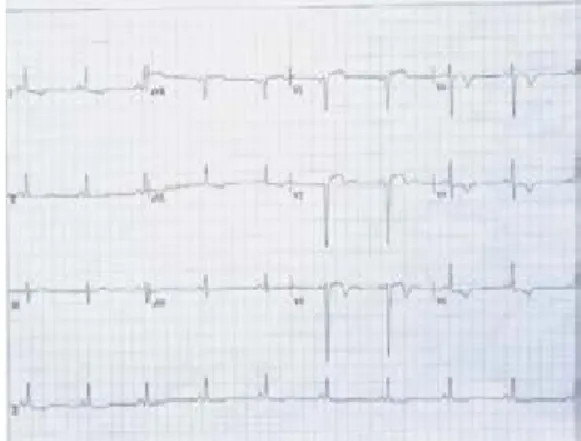
department due to a progressive pattern of angina pectoris that began three weeks before admission. The initial electrocardiogram (ECG) confirmed anterolateral subepicardial ischemia
(Figure 1). Furthermore, the transthoracic echocardiography showed anterior and anteroseptal hypokinesia, with left ventricular ejection fraction of 44%. The cardiac biomarkers were normal, categorizing it as unstable angina with GRACE 102 points. Continuous monitoring and anti ischemic drugs with dual antiplatelet therapy, anticoagulation and high dose statin were started based on the international guidelines of non-ST-elevation acute coronary syndrome (NSTE-ACS).6,7 However, the
angina symptoms were recurrent despite the pharmacological treatment. Therefore, he was transferred to the cardiac catheterization room. During the intervention, it was necessary to perform a puncture of both radial and femoral arteries, finding total obstruction at the level of both subclavian and proximal common femoral arteries by angiography (Figure 2), precluding percutaneous coronary revascularization. He was transferred to the coronary care unit to optimize anti-ischemic drugs and stabilize the angina events. Subsequently, non-invasive cardiovascular imaging were performed. The coronary computed tomography angiography
Figure 1: 12-lead electrocardiogram: sinus bradycardia with septal necrosis and antero-lateral subepicardial ischemia.
Figure 2:
Peripheral arteries angiography during PCI attempt: total occlusion of both subclavian arteries,
with anterograde filling
www.medigraphic.org.mx
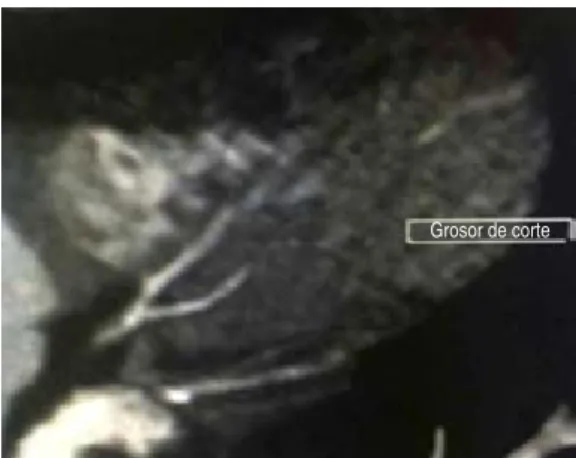
(CTA) identified diffuse coronary artery disease without distal targets and the anatomy not amenable for CABG (Figure 3). The CTA of the aorta and other large blood vessels anatomically identified the sites of total peripheral arterial obstruction (Figures 4 and 5). Finally, he was a candidate for medical treatment with dual antiplatelet therapy, beta-blocker, nitrate, angiotensin-converting enzyme inhibitor, and high dose statin in addition to cardiac rehabilitation for control of risk factors and changes in lifestyle. In the last cardiological consultation one year after the event, the patient continued smoking eight cigarettes a day and denied cardiological symptoms in his daily activities.
DISCUSSION AND LITERATURE REVIEW
In general, the risk of MSAD increases considerably with age, it is estimated a prevalence of 2% at the age group of 40 to 50 years and 32.5% at the age group of 91 to 100 years.8 Combining the CVS risk
factors exposure, being an active smoker increases the risk (odds ratio) of 2.72 times more, 1.88 for type 2 diabetes, 1.55 for systemic arterial hypertension, and 1.19 for hypercholesterolemia.9 These patients
with MSAD who suffer NSTE-ACS have an increased risk for CVS mortality during their
hospitalization, as well as medium and long term compared to those with isolated CAD. Similarly, the risk of CV mortality increases if more arterial territories are affected.10-12 The
therapeutic approach should be decided on a case-by-case basis with a multidisciplinary team and giving preference to the symptomatic vascular site. It has not been shown that routinely detection of the disease in additional asymptomatic vascular sites improves its prognosis or changes the therapeutic behavior.1
The only randomized clinical trial «AMERICA» designed to evaluate the impact on the prognosis of the systematic screening for MSAD in patients with high-risk CAD (three vessel
Figure 3: Coronary angiotomography: diffuse disease whit significant stenosis of left anterior descending
(LAD) artery and left circumflex artery. LAD artery with
maximum diameter of 1.3 mm in its mid segment with
poor distal filling.
Grosor de corte
Figure 4: Reconstruction 3D angiotomography: chronic thrombosis of both subclavian arteries.
Figure 5: Reconstruction 3D angiotomography: aortoiliac occlusive disease with chronic thrombosis of
both iliac arteries and anterograde filling by collateral
www.medigraphic.org.mx
CAD and/or with ACS at age greater than 75 years), does not show any significant benefit in primary composite endpoint including death, any ischemic event leading to rehospitalization or any evidence of organ failure.13 Within
the spectrum of NSTE-ACS, unstable angina is defined as myocardial ischemia at rest or minimal effort in the absence of myocardial necrosis6 and compared with myocardial
infarction, has a lower risk of mortality.14
NSTE-ACS international guidelines establish the time for conducting diagnostic percutaneous coronary angiography in patients with recurrent angina despite pharmacological treatment and recommends an immediate invasive strategy in less than two hours.6,7 The radial artery access
in percutaneous coronary intervention (PCI) is preferred over femoral artery in patients with PAD. The reason behind this is that femoral access in PAD patients is an independent risk factor for developing major vascular complications, in other words, complications requiring surgical vascular intervention for resolution.15 The current surgical practice is
based largely on an anatomical definition of complete revascularization and aims to derive all epicardial vessels with diameter equal to or greater than 1.5 mm with luminal reduction greater than 50% in at least one angiographic view. The complexity of coronary anatomy and clinical comorbidity was associated with incomplete revascularizations that had a significant increase in mortality.16 Data
on patients with ACS not susceptible to revascularization due to severe and diffuse CAD or without distal bedding are scarce. Available observational studies included mainly patients with stable CAD and refractory angina. Although the prognosis vary due to characteristics of the patient factors such as age, previous CABG or PCI, left ventricular dysfunction, and congestive heart failure, in the largest cohort in the literature consisting of patients with CAD referred specifically for refractory angina who were not amenable to coronary revascularization had significantly higher mortality rate (14.8% vs 6.6%, p = 0.004) compared to completely revascularized patients at the three-year follow-up.17
If coronary anatomy is not suitable for revascularization, the goal is to intensify
medical therapy for angina relief and improve quality of life.18 In addition, individuals who
change their behavior (quit smoking and modify diet and exercise) after ACS are at substantially lower risk of repeat cardiovascular events. Persistent smoking and non-adherence to diet and exercise had a 3.8-fold increased risk of myocardial infarction, stroke and death compared with never smokers who modified diet and exercise.19
CONCLUSIONS
MSAD has a high prevalence worldwide. This condition is strongly associated with morbidity and mortality due to coronary and cerebrovascular disease. Given the devastating consequences of these pathologies, it is of utmost importance to continue spreading information about cardiovascular diseases. The main goal is to educate the population with primary prevention tools, as well being able to recognize early manifestations of arterial diseases and thus reduce the number of patients diagnosed in advanced stages.
Conflict of interest: The authors declare to have no conflict of interest.
Protection of people and animals: The authors declare that no experiments have been carried out for this research in humans or animals.
Data confidentiality: The authors state that they have followed the protocols of their work center on the publication of patient data.
REFERENCES
1. Aboyans V, Ricco JB, Bartelink MLE, Björck M, Brodmann M, Cohnert T et al. 2017 ESC Guidelines on the Diagnosis and Treatment of Peripheral Arterial Diseases, in collaboration with the European Society for Vascular Surgery (ESVS). Eur Heart J. 2017; 39 (9): 763-816.
2. Jude EB, Oyibo SO, Chalmers N, Boulton AJ. Peripheral arterial disease in diabetic and nondiabetic patients: a comparison of severity and outcome. Diab Car. 2001; 24 (8): 1433-1437.
3. Criqui MH, Aboyans V. Epidemiology of peripheral artery disease. Circ Res. 2015; 116 (9): 1509-1526. 4. Ankle Brachial Index Collaboration. Ankle brachial
index combined with Framingham Risk Score to predict cardiovascular events and mortality: a meta-analysis. JAMA. 2008; 300 (2): 197-208.
www.medigraphic.org.mx
cardiovascular disease prevention in clinical practice.Eur Heart J. 2016; 37 (29): 2315-2381.
6. Roffi M, Patrono C, Collet JP, Mueller C, Valgimigli M, Andreotti F et al. 2015 ESC Guidelines for the management of acute coronary syndromes in patients presenting without persistent ST-segment elevation: Task Force for the Management of Acute Coronary Syndromes in Patients Presenting without Persistent ST-Segment Elevation of the European Society of Cardiology (ESC). Eur Heart J. 2016; 37 (3): 267-315. 7. Amsterdam EA, Wenger NK, Brindis RG, Casey
DE, Ganiats TG, Holmes DR et al. 2014 AHA/ACC guideline for the management of patients with non– ST-elevation acute coronary syndromes: a report of the American College of Cardiology/American Heart Association Task Force on Practice Guidelines. JACC. 2014; 64 (24): e139-e228.
8. Savji N, Rockman CB, Skolnick AH, Guo Y, Adelman MA, Riles T et al. Association between advanced age and vascular disease in different arterial territories: a population database of over 3.6 million subjects. JACC. 2013; 61 (16): 1736-1743.
9. Fowkes FGR, Rudan D, Rudan I, Aboyans V, Denenberg JO, McDermott MM et al. Comparison of global estimates of prevalence and risk factors for peripheral artery disease in 2000 and 2010: a systematic review and analysis. Lancet. 2013; 382 (9901): 1329-1340. 10. Jeremias A, Gruberg L, Patel J, Connors G, Brown
DL. Effect of peripheral arterial disease on in-hospital outcomes after primary percutaneous coronary intervention for acute myocardial infarction. JACC. 2010; 105 (9): 1268-1271.
11. Morillas P, Quiles J, Cordero A, Guindo J, Soria F, Mazón P et al. Prevalence of peripheral arterial disease in patients with acute coronary syndrome (PAMISCA) investigators. Impact of clinical and subclinical peripheral arterial disease in mid-term prognosis of patients with acute coronary syndrome. Am J Cardiol. 2009; 104 (11): 1494-1498.
12. Subherwal S, Bhatt DL, Li S, Wang TY, Thomas L, Alexander KP et al. Polyvascular disease and long-term cardiovascular outcomes in older patients with non–ST-segment–elevation myocardial infarction. Circ Cardiovasc Qual Out. 2012; 5 (4): 541-549. 13. Collet JP, Cayla G, Ennezat PV, Leclercq F, Cuisset T,
Elhadad S et al. Systematic detection of polyvascular
disease combined with aggressive secondary prevention in patients presenting with severe coronary artery disease: the randomized AMERICA Study. Inter J Car. 2018; 54: 36-42.
14. Antman EM, Tanasijevic MJ, Thompson B, Schactman M, McCabe CH, Cannon CP et al. Cardiac-specific troponin I levels to predict the risk of mortality in patients with acute coronary syndromes. New Eng J Med. 1996; 335 (18): 1342-1349.
15. Dencker D, Pedersen F, Engstrøm T, Køber L, Højberg S, Nielsen MB et al. Major femoral vascular access complications after coronary diagnostic and interventional procedures: a Danish register study. Inter J Car. 2016; 202: 604-608.
16. Farooq V, Serruys PW, Garcia-Garcia HM, Zhang Y, Bourantas CV, Holmes DR et al. The negative impact of incomplete angiographic revascularization on clinical outcomes and its association with total occlusions: the SYNTAX (Synergy Between Percutaneous Coronary Intervention with Taxus and Cardiac Surgery) trial. JACC. 2013; 61 (3): 282-294.
17. Williams B, Menon M, Satran D, Hayward D, Hodges JS, Burke MN et al. Patients with coronary artery disease not amenable to traditional revascularization: prevalence and 3-year mortality. Cath Cardiovasc Interv. 2010; 75 (6): 886-891.
18. Henry TD, Satran D, Hodges JS, Johnson RK, Poulose AK, Campbell AR et al. Long-term survival in patients with refractory angina. Eur Heart J. 2013; 34 (34): 2683-2688.
19. Chow CK, Jolly S, Rao-Melacini P, Fox KA, Anand SS, Yusuf S. Association of diet, exercise, and smoking modification with risk of early cardiovascular events after acute coronary syndromes. Circulation. 2010; 121 (6): 750-758.
Correspondence to:
Dr. Javier Orozco Contreras
Av. Antonio Albarrán Núm. 608, Colonia Azteca, 50180, Toluca Estado de México. Teléfono: 722 4203075