501
Meta-analysis of prophylactic entecavir or lamivudine against hepatitis B virus reactivation. , 2016; 15 (4): 501-511
Meta-analysis of prophylactic entecavir or
lamivudine against hepatitis B virus reactivation
Chun Yang,* Bo Qin,* Zhe Yuan,*,** Limin Chen,***,**** Hong-yu Zhou**
* Department of Infectious Diseases, The First Affiliated Hospital of Chongqing Medical University, Chongqing, China. ** Department of Hospital Infection Control, The First Affiliated Hospital of Chongqing Medical University, Chongqing, China. *** Toronto General Research Institute, University Health Network, University of Toronto, Toronto, Ontario, Canada. **** Institute of Blood Transfusion, Chinese Academy of Medical Sciences and Peking Union Medical College, Chengdu, Sichuan, China.
A B S T R A C T A B S T R A C T A B S T R A C T A B S T R A C T A B S T R A C T
Introduction and aim. Introduction and aim.Introduction and aim. Introduction and aim.
Introduction and aim. Studies suggest that entecavir and lamivudine are useful as prophylactics against hepatitis B virus (HBV) reactivation in patients undergoing chemotherapy or immunosuppressive therapy, but which drug is more effective is unclear. Here we meta-analyzed available evidence on relative efficacy of prophylactic entecavir or lamivudine therapy in patients with chronic or resolved hepatitis B infection who were undergoing chemotherapy or immunosuppressive therapy. Material and methods. Material and methods. Material and methods. Material and methods. Material and methods. Two reviewers searched PubMed, EMBASE and Google Scholar as well as reference lists in relevant articles to find studies published between January 2005 and May 2015 that met inclusion and exclusion criteria. Data on HBV reactivation, HBV-related hepatitis and all-cause mortality were extracted from the studies and meta-analyzed. Results. Results. Results. Results. A total of eight studies involving 593 patients Results. were included in the meta-analysis, which was performed using a fixed-effect model since no significant heterogeneity was found. Entecavir was associated with significantly lower risk of HBV reactivation than lamivudine (RR 0.29, 95% CI 0.17 to 0.52) as well as lower risk of HBV-related hepatitis (RR 0.11, 95% CI 0.03 to 0.40). The two drugs were associated with similar risk of all-cause mortality (RR 1.12, 95% CI 0.54 to 2.35). Egger’s test suggested no significant publication bias in the meta-analysis. Conclu- Conclu- Conclu- Conclu- Conclu-sions.
sions.sions. sions.
sions. The available evidence suggests that entecavir is more effective than lamivudine for preventing HBV reactivation and HBV-related hepatitis in patients with chronic or resolved HBV infection who are undergoing chemotherapy or immunosuppressive therapy.
Key words. Key words.Key words. Key words.
Key words. Efficacy. Nucleoside analogue. Hepatitis B virus. Reactivation. Prevention.
July-August, Vol. 15 No. 4, 2016: 501-511
ORIGINAL ARTICLE
INTRODUCTION
Over 350 million people worldwide suffer from chronic hepatitis B virus (HBV) infection.1 Such individ-uals can suffer HBV reactivation when they are exposed to immunosuppressive agents, such as during chemotherapy, steroid therapy, organ transplantation, hematopoietic stem cell transplantation or therapy involving cytotoxic drugs. During HBV reactivation, HBV DNA levels increase by ≥
10-fold over baseline levels (or show an absolute increase of >105 copies/mL), leading to hepatitis. Reactivation can then lead to severe hepatitis, fulminant liver failure and even death in 4-89% of cases.2-4 As many as 60% of cancer patients undergoing chemotherapy can suffer HBV reacti-vation,5-7 with lymphoma patients at the greatest risk.
Indeed, most lymphoma patients (68-71%) suffer delays, interruptions or early termination of chemotherapy be-cause of HBV reactivation.8 Reactivation even occurs in 2-25% of lymphoma patients who are negative for HBV surface antigen (HBsAg).9,10 Immunosuppressive treat-ment of autoimmune diseases such as rheumatoid arthritis and Crohn’s disease can also trigger HBV reactivation.11-12
European guidelines13 recommend that HBsAg-posi-tive candidates for chemotherapy and immunosuppressive therapy receive prophylactic antiviral therapy to prevent HBV reactivation. They also recommend careful monitor-ing of serum HBV DNA levels durmonitor-ing chemotherapy or immunosuppressive therapy of patients with resolved HBV infection, defined as those who are negative for HB-sAg but positive for HBV core antibody (anti-HBc).
The Official Journal of the Mexican Association of Hepatology, the Latin-American Association for Study of the Liver and
the Canadian Association for the Study of the Liver
Manuscript received: Manuscript received:Manuscript received:
Yang Ch, et al. , 2016; 15 (4): 501-511
502
Prophylactic lamivudine therapy is used most frequently to prevent HBV reactivation and is recommended in offi-cial guidelines.14-17 Lamivudine has been shown to be safe and effective at reducing the incidence of HBV reactiva-tion,14,18,19 but prolonged use is strongly associated with the emergence of HBV drug resistance.13 Prophylactic en-tecavir has shown promise for reducing HBV reactivation without triggering high rates of viral resistance,20-22 but relatively few studies have examined this drug. Some stud-ies have compared the two drugs head-to-head, but the results have been contradictory, with some studies sug-gesting that the drugs are comparable and others suggest-ing that entecavirismore effective.
In order to gain comprehensive insights into how the two drugs compare in safety and efficacy, we systematical-ly reviewed the literature on prophylactic lamivudine or entecavir therapy for patients with chronic HBV infection positive) or resolved HBV infection (HBsAg-negative, anti-HBc-positive) during or following chemo-therapy or immunosuppressive chemo-therapy. The aim of this systematic review and meta-analysis was to compare each drug’s ability to prevent HBV reactivation and reduce the risk of HBV-related hepatitis and all-cause mortality.
MATERIAL AND METHODS
Search strategy
Two authors (CY, HYZ) searched PubMed, EM-BASEand Google Scholar to identify relevant studies pub-lished between January 2005 and May 2015, using the following search terms: ‘hepatitis B OR hepatitis B virus’, ‘entecavir’, ‘lamivudine’, ‘nucleoside analogue’, ‘reactiva-tion OR recurrence’. Search results were not limited to any language or geographic region. Reference lists in se-lected articles and relevant review articles were searched manually to identify additional studies.
Inclusion and exclusion criteria
Studies were included if they involved:
• A case-control or cohort study, whether prospective or retrospective, or a randomized controlled trial (RCT). • Patients who were HBsAg-positive or with resolved
HBV infection (HBsAg-negative, anti-HBc-positive). • Patients who received chemotherapyor other
immu-nosuppressive therapies due to organ transplantation, hematological disease, cancer or other underlying im-mune disease.
• Patients who received prophylactic entecavir or lami-vudine therapy.
• HBV reactivation defined as an increase in HBV DNA
levels ≥ 10-fold over baseline levels or as an absolute increase of > 105 copies/mL in the absence of other systemic infection.23
Studies were excluded if they were case reports or re-view articles, or if they reported in sufficient data to assess outcomes.
Data extraction
Two authors (CY, HYZ) independently evaluated and extracted data from studies using a predefined, standard-ized protocol. Data were extracted on study authors, jour-nal of publication, country of study, study period, study design, underlying disease, therapy received, prophylactic use of entecavir or lamivudine, and follow-up. Data were collected on the primary outcome, which was the num-bers of individuals on either entecavir or lamivudine ther-apy who experienced or did not experience HBV reactivation. Data were also collected on the secondary outcomes of HBV-related hepatitis, hepatitis-related in-terruption of chemotherapy, all-cause mortality and ad-verse events. Disagreements about extracted data were resolved through discussion.
Quality assessment
The quality of included RCTs was assessed using the Cochrane Collaboration’s tool for assessing risk of bias,24 while the quality of case-control and cohort studies was assessed using the Newcastle-Ottawa Scale (NOS).25 We developed an NOS-based scale for scoring the studies. The scale ranged from 0 to 9 points; studies of low quality were given NOS scores of 1-3; studies of intermediate quality, 4-6; and studies of high quality, 7-9.
Statistical analysis
Data were meta-analyzed using RevMan 5.2.7 (Co-chrane Collaboration). Pooled relative risk (RR) and 95% confidence intervals (CIs) were calculated for all out-comes. Statistical heterogeneity between studies was as-sessed either using a chi-squared test in which P < 0.10 was taken as the threshold of significant heterogeneity, or using the I2 value, with I2 > 50% considered evidence of
503
Meta-analysis of prophylactic entecavir or lamivudine against hepatitis B virus reactivation. , 2016; 15 (4): 501-511
RESULTS
Study selection
Automated and manual searching identified 312 non-duplicate records, 280 of which were excluded based on title and abstract screening. The remaining 32 records were read in detail, and eight were finally included in the meta-analysis (Figure 1).27-34 Seven of these studies were published in full, while one was published only as an ab-stract.
Study characteristics
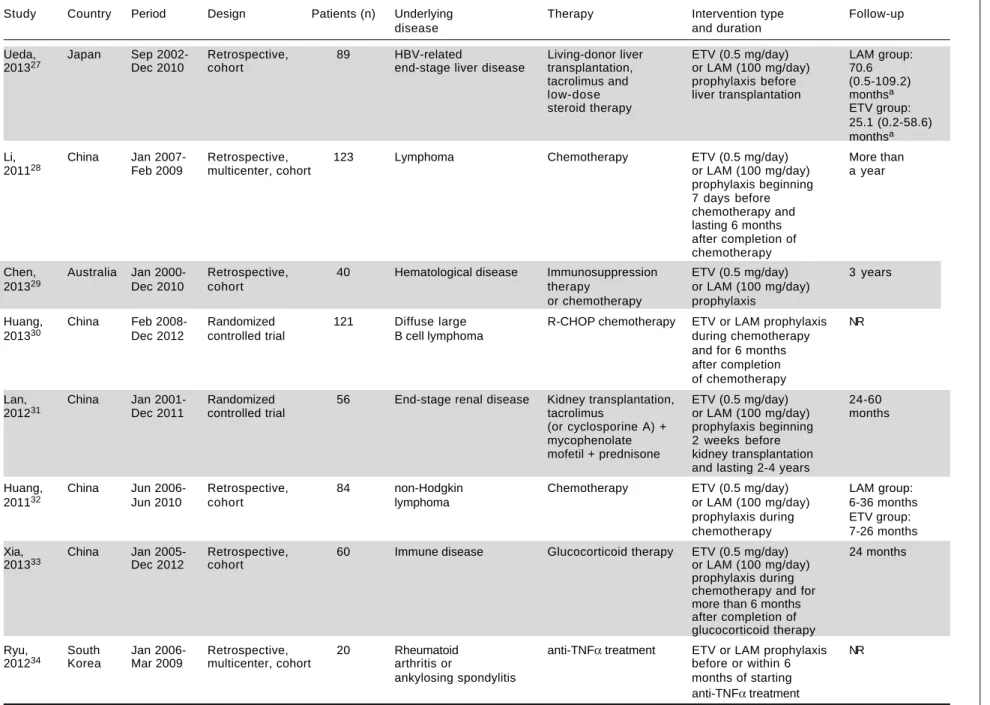
The eight studies in the systematic review included two RCTs and six retrospective cohort studies covering a total of 593 patients from China (five studies), Japan (one study), South Korea (one study) and Australia (one study) (Table 1). Four of the six cohort studies were performed at single centers. Patients in the studies had the following underlying diseases: hematological disease (lymphoma or others), im-mune disease, HBV-related stage liver disease, end-stage renal disease, rheumatoid arthritis or ankylosing spondylitis. All patients received chemotherapy, glucocor-ticoid therapy or other immunosuppressive therapies.
Quality assessment
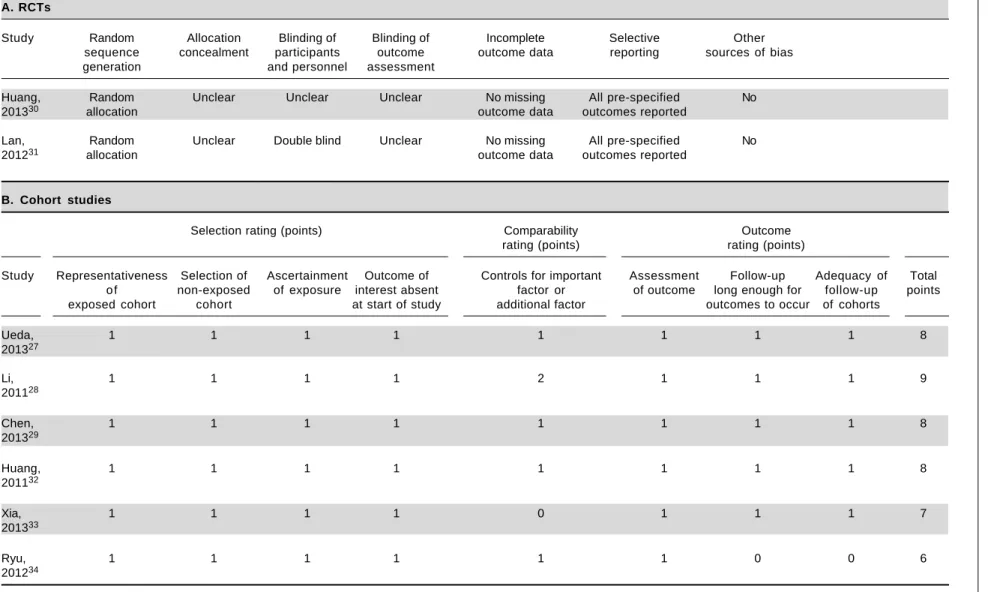
Qualitative assessment of the information reported in the two RCTs showed that neither had any missing
come data: both RCTsreported all pre-specified out-comes, and one of them was double-blind (Table 2). Quantitative NOS scoring of the six cohort studies showed an average score of 8 (range, 6-9), with five stud-ies considered of high quality and one of intermediate quality (Table 2). Only one cohort study33 failed to com-pare baseline characteristics in the entecavir and lamivu-dine groups. Another study27 showed that the two groups of patients did not differ significantly at baseline in terms of age, sex, primary disease or serological HBV markers, but that the entecavir group had significantly lower baseline serum HBV DNA levels than the lamivudine group. A third study29 showed that the proportion of patients with elevated ALT levels and detectable HBV DNA at baseline was higher in the lamivudine group. The remain-ing three studies28,32,34 reported that both patient groups were comparable in terms of measured clinicopathologi-cal variables.
HBV reactivation
We pooled data on HBV reactivation in 593 patients receiving either prophylactic entecavir or lamivudine therapy in all eight studies identified in the systematic re-view (Figure 2). Total incidence of HBV reactivation was 4.82% in the entecavir group and 18.08% in the lamivudine group. Based on the lack of significant heterogeneity in the pooled data (I2 = 0%, P = 0.74), fixed-effect
meta-anal-ysis was performed, which indicated significantly lower risk of HBV reactivation with entecavir than with lamivudine Figure 1.
Figure 1.Figure 1.
Figure 1.Figure 1. Flow diagram of study selection for meta-analysis.
Records identified in PubMed, Additional records identified through
EMBASE and Google Scholar (n= 304) manual searching (n = 14)
Records after duplicates removed (n = 312)
Records excluded after title and abstract screening (n = 280)
Records assessed for eligibility in detail (n = 32)
Records excluded (n =24): • Reported inadequate data (n = 5)
• Case report (n = 8) • Review article (n = 4)
• Reactivation not a specific outcome (n = 4) • Patient not given chemotherapy or immunosuppressive therapy (n = 2) • Inappropriate grouping method (n = 1)
Yang Ch, et al.
, 2016; 15 (4): 501-511
504
Table 1. Characteristics of included studies.
Study Country Period Design Patients (n) Underlying Therapy Intervention type Follow-up
disease and duration
Ueda, Japan Sep 2002- Retrospective, 89 HBV-related Living-donor liver ETV (0.5 mg/day) LAM group:
201327 Dec 2010 cohort end-stage liver disease transplantation, or LAM (100 mg/day) 70.6
tacrolimus and prophylaxis before (0.5-109.2) low-dose liver transplantation monthsa
steroid therapy ETV group:
25.1 (0.2-58.6) monthsa
Li, China Jan 2007- Retrospective, 123 Lymphoma Chemotherapy ETV (0.5 mg/day) More than
201128 Feb 2009 multicenter, cohort or LAM (100 mg/day) a year
prophylaxis beginning 7 days before chemotherapy and lasting 6 months after completion of chemotherapy
Chen, Australia Jan 2000- Retrospective, 40 Hematological disease Immunosuppression ETV (0.5 mg/day) 3 years
201329 Dec 2010 cohort therapy or LAM (100 mg/day)
or chemotherapy prophylaxis
Huang, China Feb 2008- Randomized 121 Diffuse large R-CHOP chemotherapy ETV or LAM prophylaxis NR
201330 Dec 2012 controlled trial B cell lymphoma during chemotherapy
and for 6 months after completion of chemotherapy
Lan, China Jan 2001- Randomized 56 End-stage renal disease Kidney transplantation, ETV (0.5 mg/day) 24-60
201231 Dec 2011 controlled trial tacrolimus or LAM (100 mg/day) months
(or cyclosporine A) + prophylaxis beginning mycophenolate 2 weeks before mofetil + prednisone kidney transplantation
and lasting 2-4 years
Huang, China Jun 2006- Retrospective, 84 non-Hodgkin Chemotherapy ETV (0.5 mg/day) LAM group:
201132 Jun 2010 cohort lymphoma or LAM (100 mg/day) 6-36 months
prophylaxis during ETV group: chemotherapy 7-26 months
Xia, China Jan 2005- Retrospective, 60 Immune disease Glucocorticoid therapy ETV (0.5 mg/day) 24 months
201333 Dec 2012 cohort or LAM (100 mg/day)
prophylaxis during chemotherapy and for more than 6 months after completion of glucocorticoid therapy
Ryu, South Jan 2006- Retrospective, 20 Rheumatoid anti-TNFα treatment ETV or LAM prophylaxis NR
201234 Korea Mar 2009 multicenter, cohort arthritis or before or within 6
ankylosing spondylitis months of starting anti-TNFα treatment
505
Meta-analysis of prophylactic entecavir or lamivudine against hepatitis B virus reactivation.
, 2016; 15 (4): 501-511
Table 2. Quality assessment of included studies.
A. RCTs
Study Random Allocation Blinding of Blinding of Incomplete Selective Other
sequence concealment participants outcome outcome data reporting sources of bias
generation and personnel assessment
Huang, Random Unclear Unclear Unclear No missing All pre-specified No
201330 allocation outcome data outcomes reported
Lan, Random Unclear Double blind Unclear No missing All pre-specified No
201231 allocation outcome data outcomes reported
B. Cohort studies
Selection rating (points) Comparability Outcome
rating (points) rating (points)
Study Representativeness Selection of Ascertainment Outcome of Controls for important Assessment Follow-up Adequacy of Total o f non-exposed of exposure interest absent factor or of outcome long enough for follow-up points exposed cohort cohort at start of study additional factor outcomes to occur of cohorts
Ueda, 1 1 1 1 1 1 1 1 8
201327
Li, 1 1 1 1 2 1 1 1 9
201128
Chen, 1 1 1 1 1 1 1 1 8
201329
Huang, 1 1 1 1 1 1 1 1 8
201132
Xia, 1 1 1 1 0 1 1 1 7
201333
Ryu, 1 1 1 1 1 1 0 0 6
Yang Ch, et al. , 2016; 15 (4): 501-511
506
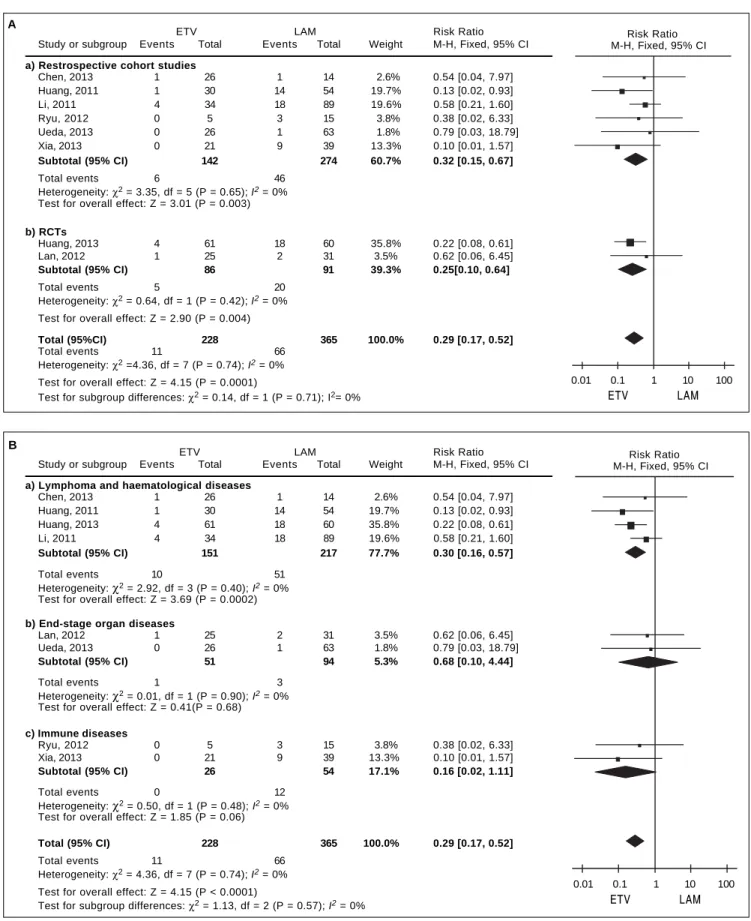
(RR 0.29, 95% CI 0.17 to 0.52, P < 0.001).This result was robust to the study design, since it remained unchanged when the meta-analysis was restricted only to retrospec-tive cohort studies (RR 0.32, 95% CI 0.15 to 0.67, P < 0.01) or only to RCTs (RR 0.25, 95% CI 0.10 to 0.64, P < 0.01) (Figure 3A).
However, this result differed depending on the pa-tients’ underlying disease (Figure 3B). When the meta-analysis was restricted to patients with lymphoma or other hematological disease (n = 368), entecavir again emerged as more effective at reducing risk of HBV reactivation (RR 0.30, 95% CI 0.16 to 0.57, P < 0.001). In contrast, the two drugs were associated with similar risk of reactivation among patients with end-stage organ disease treated byor-gan transplantation (n = 145; RR 0.68, 95% CI 0.10 to 4.44, P = 0.68), as well as among patients with immune disease (n = 80; RR 0.16, 95% CI 0.02 to 1.11, P = 0.06).
Secondary outcomes
We had planned to extract data on the following four secondary outcomes: HBV-related hepatitis, hepatitis-re-lated chemotherapy interruption, all-cause mortality and adverse events. However, only two studies reported on hepatitis-related interruption of chemotherapy, while only one reported data on adverse events.Therefore only data on HBV-related hepatitis and all-cause mortality could be meta-analyzed.
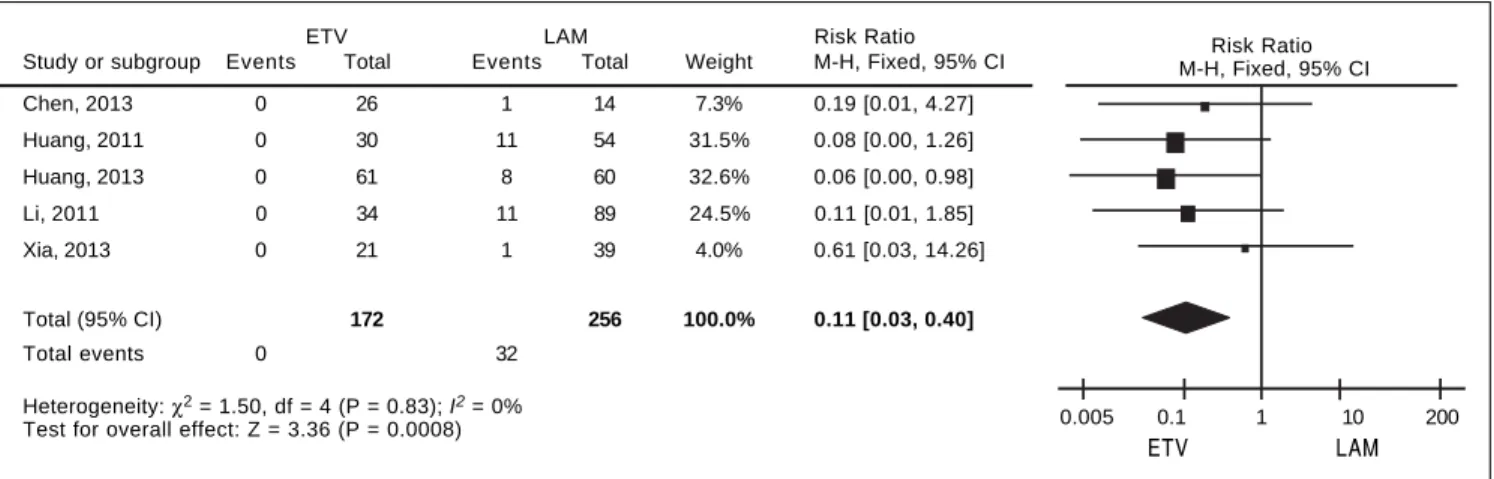
For HBV-related hepatitis, data on 428 patients in five studies were meta-analyzed using a fixed-effect model, since they showed no significant heterogeneity (I2 = 0%,
P = 0.83; Figure 4). Total incidence of HBV-related hepa-titis was 0% in the entecavir group and 12.50% in the lami-vudine group. The corresponding pooled RR for entecavir
relative to lamivudine was 0.11 (95% CI 0.03 to 0.40, P < 0.001).
For all-cause mortality, data on 252 patients from three studies were also meta-analyzed using a fixed-effect model, since they showed no significant heterogeneity
(I2 = 0%, P = 0.45; Figure 5). All-cause mortality rates
were 8.14% in the entecavir group and 8.43% in the lamivu-dine group.The corresponding pooled RR for entecavir rel-ative to lamivudinewas 1.12 (95% CI 0.54 to 2.35, P = 0.76).
Publication bias
Egger’s test was used to assess risk of publication bias in the meta-analyses of primary and secondary outcomes. The test showed no significant risk of bias in the case of HBV reactivation (t = 0.17, P > |t| = 0.873), HBV-relat-ed hepatitis (t = 2.17, P > |t| = 0.119) or all-cause mor-tality (t = -2.44, P > |t| = 0.247).
DISCUSSION
HBV reactivation continues to be a major concern for HBV carriers around the world who are receiving chemo-therapy or immuno suppressive chemo-therapy. Although lamivu-dine is widely used to reduce the risk of reactivation, lamivudine monotherapy frequently leads to viral resist-ance, worsening patient prognosis.35 Entecavir has emerged as a potent alternative to lamivudine that is not associated with strong resistance, but its safety and efficacy have not been extensively analyzed, particularly in direct comparison to lamivudine. Ourstudy meta-analyzed avail-able evidence comparing the two drugs and found ente-cavir to be more effective than lamivudine for preventing HBV reactivation and HBV-related hepatitis in patients Figure 2.
Figure 2. Figure 2. Figure 2.
Figure 2. Forest plots depicting relative risk (RR) of hepatitis B reactivation in patients using entecavir (ETV) relative to lamivudine (LAM).
ETV LAM Risk Ratio Study or subgroup Events Total Events Total Weight M-H, Fixed, 95% CI Chen, 2013 1 26 1 14 2.6% 0.54 [0.04, 7.97] Huang, 2011 1 30 14 54 19.7% 0.13 [0.02, 0.93] Huang, 2013 4 61 18 60 35.8% 0.22 [0.08, 0.61] Lan, 2012 1 25 2 31 3.5% 0.62 [0.06, 6.45] Li, 2011 4 34 18 89 19.6% 0.58 [0.21, 1.60] Ryu, 2012 0 5 3 15 3.8% 0.38 [0.02, 6.33] Ueda, 2013 0 26 1 63 1.8% 0.79 [0.03, 18.79] Xia, 2013 0 21 9 39 13.3% 0.10 [0.01, 1.57]
Total (95%) 228 365 100.0% 0.29 [0.17, 0.52]
Total events 11 66 Heterogeneity: χ2 = 4.36, df = 7 (P = 0.74); I2 = 0%
Test for overall effect: Z = 4.15 (P < 0.0001) 0.01 0.1 1 10 100
ETV LAM
507
Meta-analysis of prophylactic entecavir or lamivudine against hepatitis B virus reactivation. , 2016; 15 (4): 501-511
Figure 3. Figure 3.Figure 3.
Figure 3.Figure 3. Forest plots of subgroup meta-analyses depicting relative risk (RR) of hepatitis B reactivation in patients using entecavir (ETV) relative to lamivudi-ne (LAM). A. A. A. A. A. Subgroup meta-analysis based on study design. B. B. B. B. B. Subgroup meta-analysis based on patients’underlying disease.
A
B
ETV LAM Risk Ratio Study or subgroup Events Total Events Total Weight M-H, Fixed, 95% CI
a) Lymphoma and haematological diseases
Chen, 2013 1 26 1 14 2.6% 0.54 [0.04, 7.97] Huang, 2011 1 30 14 54 19.7% 0.13 [0.02, 0.93] Huang, 2013 4 61 18 60 35.8% 0.22 [0.08, 0.61] Li, 2011 4 34 18 89 19.6% 0.58 [0.21, 1.60]
Subtotal (95% CI) 151 217 77.7% 0.30 [0.16, 0.57]
Total events 10 51 Heterogeneity: χ2 = 2.92, df = 3 (P = 0.40); I2 = 0%
Test for overall effect: Z = 3.69 (P = 0.0002)
b) End-stage organ diseases
Lan, 2012 1 25 2 31 3.5% 0.62 [0.06, 6.45] Ueda, 2013 0 26 1 63 1.8% 0.79 [0.03, 18.79]
Subtotal (95% CI) 51 94 5.3% 0.68 [0.10, 4.44]
Total events 1 3 Heterogeneity: χ2 = 0.01, df = 1 (P = 0.90); I2 = 0%
Test for overall effect: Z = 0.41(P = 0.68)
c) Immune diseases
Ryu, 2012 0 5 3 15 3.8% 0.38 [0.02, 6.33] Xia, 2013 0 21 9 39 13.3% 0.10 [0.01, 1.57]
Subtotal (95% CI) 26 54 17.1% 0.16 [0.02, 1.11]
Total events 0 12 Heterogeneity: χ2 = 0.50, df = 1 (P = 0.48); I2 = 0%
Test for overall effect: Z = 1.85 (P = 0.06)
Total (95% CI) 228 365 100.0% 0.29 [0.17, 0.52]
Total events 11 66 Heterogeneity: χ2 = 4.36, df = 7 (P = 0.74); I2 = 0%
Test for overall effect: Z = 4.15 (P < 0.0001)
Test for subgroup differences: χ2 = 1.13, df = 2 (P = 0.57); I2 = 0%
ETV LAM Risk Ratio Study or subgroup Events Total Events Total Weight M-H, Fixed, 95% CI
a) Restrospective cohort studies
Chen, 2013 1 26 1 14 2.6% 0.54 [0.04, 7.97] Huang, 2011 1 30 14 54 19.7% 0.13 [0.02, 0.93] Li, 2011 4 34 18 89 19.6% 0.58 [0.21, 1.60] Ryu, 2012 0 5 3 15 3.8% 0.38 [0.02, 6.33] Ueda, 2013 0 26 1 63 1.8% 0.79 [0.03, 18.79] Xia, 2013 0 21 9 39 13.3% 0.10 [0.01, 1.57]
Subtotal (95% CI) 142 274 60.7% 0.32 [0.15, 0.67]
Total events 6 46 Heterogeneity: χ2 = 3.35, df = 5 (P = 0.65); I2 = 0%
Test for overall effect: Z = 3.01 (P = 0.003)
b) RCTs
Huang, 2013 4 61 18 60 35.8% 0.22 [0.08, 0.61] Lan, 2012 1 25 2 31 3.5% 0.62 [0.06, 6.45]
Subtotal (95% CI) 86 91 39.3% 0.25[0.10, 0.64]
Total events 5 20 Heterogeneity: χ2 = 0.64, df = 1 (P = 0.42); I2 = 0%
Test for overall effect: Z = 2.90 (P = 0.004)
Total (95%CI) 228 365 100.0% 0.29 [0.17, 0.52]
Total events 11 66 Heterogeneity: χ2 =4.36, df = 7 (P = 0.74); I2 = 0%
Test for overall effect: Z = 4.15 (P = 0.0001)
Test for subgroup differences: χ2 = 0.14, df = 1 (P = 0.71); I2= 0%
0.01 0.1 1 10 100
ETV LAM
Risk Ratio M-H, Fixed, 95% CI
0.01 0.1 1 10 100
ETV LAM
Yang Ch, et al. , 2016; 15 (4): 501-511
508
with chronic or resolved HBV infection who were under-going chemotherapy or immuno suppressive therapy.
Prophylactic lamivudine therapy rapidly suppresses HBV replication, reducing the incidence of HBV reactiva-tion and improving survival.36 Nevertheless, entecavir-shows several advantages over lamivudine: it appears to suppress HBV DNA replication more quickly and to a greater extent,37 and it is associated with much lower viral breakthrough due to resistance, even over longer treat-ment courses.38 Several case reports have found prophylac-tic entecavir therapy to be effective for preventing HBV reactivation in patients who undergocadaveric renal trans-plantation39 or treatment for lymphoma,35,40-42 hematologi-cal malignancies,22or progressive osteomyelo fibrosis.43 A recent RCT further showed that entecavir can significantly reduce the risk of HBV reactivation in patients with re-solved HBV infection who are undergoing rituximab-based chemotherapy.20 The present meta-analysis and recent RCTs support the notion that while both prophy-lactic lamivudine and entecavir are effective against HBV reactivation inpatients on chemotherapy or immunosup-pressive therapy,14,18,20 entecavir may be superior. In this
way, our meta-analysis does not agree with some individ-ual comparative studies showing entecavir and lamivudine to be similarly effectiveat reducing risk of HBV reactiva-tion.27-29,31,33,34 One possible explanation for this discrep-ancy is that lower statistical power in the individual studies failed to capture the efficacy difference.
We assessed whether our meta-analysis results were ro-bust to study design, since only some of the included stud-ies were RCTs. Our results suggest that entecavir is more effective than lamivudine at reducing risk of reactivation, regardless of the type of study. We also assessed the ro-bustness of our findings based on patients’ underlying dis-ease, given that patients with different diseases can present with quite different clinical histories, therapies and prog-noses, all of which can substantially increase heterogeneity in the meta-analysis. In addition, certain therapies are asso-ciated with greater risk of HBV reactivation than others. Anthracycline and steroids are recognized as risk factors for reactivation; steroids enhance HBV gene expression and increase risk of reactivation by binding to the gluco-corticoid response element in the viral genome.6 Rituxi-mab and alemtuzuRituxi-mab induce persistent B- and T-cell Figure 5.
Figure 5. Figure 5. Figure 5.
Figure 5. Forest plot depicting relative risk (RR) of all-cause mortality in patients using entecavir (ETV) relative to lamivudine (LAM).
ETV LAM Risk Ratio
Study or subgroup Events Total Events Total Weight M-H, Fixed, 95% CI Chen, 2013 0 26 1 14 19.7% 0.19 [0.01, 4.27] Li, 2011 0 34 1 89 8.6% 0.86 [0.04, 20.54] Ueda, 2013 7 26 12 63 71.7% 1.41 [0.63, 3.19]
Total (95% CI) 86 166 100.0% 1.12 [0.54, 2.35]
Total events 7 14 Heterogeneity: χ2 = 1.60, df = 2 (P = 0.45); I2 = 0%
Test for overall effect: Z = 0.31 (P < 0.76) 0.01 0.1 1 10 100
ETV LAM
Risk Ratio M-H, Fixed, 95% CI
Figure 4. Figure 4. Figure 4. Figure 4.
Figure 4. Forest plot depicting relative risk (RR) of HBV-related hepatitis in patients using entecavir (ETV) relative to lamivudine (LAM).
ETV LAM Risk Ratio Study or subgroup Events Total Events Total Weight M-H, Fixed, 95% CI Chen, 2013 0 26 1 14 7.3% 0.19 [0.01, 4.27] Huang, 2011 0 30 11 54 31.5% 0.08 [0.00, 1.26] Huang, 2013 0 61 8 60 32.6% 0.06 [0.00, 0.98] Li, 2011 0 34 11 89 24.5% 0.11 [0.01, 1.85] Xia, 2013 0 21 1 39 4.0% 0.61 [0.03, 14.26]
Total (95% CI) 172 256 100.0% 0.11 [0.03, 0.40]
Total events 0 32
Heterogeneity: χ2 = 1.50, df = 4 (P = 0.83); I2 = 0%
Test for overall effect: Z = 3.36 (P = 0.0008) 0.005 0.1 1 10 200
ETV LAM
509
Meta-analysis of prophylactic entecavir or lamivudine against hepatitis B virus reactivation. , 2016; 15 (4): 501-511
depletion, leading to immune dysfunction and HBV reac-tivation.44,45 Our meta-analysis of patient subgroups with different underlying disease showed that entecavir was as-sociated with significantly lower risk of HBV reactivation for patients with lymphoma or other hematological dis-ease. In contrast, the two drugs were associated with simi-lar risk of reactivation among patients with end-stage organ disease treated by organ transplantation, as well as among patients with immune disease.
The lack of clinical superiority of entecavir in the latter two groups of patients may reflect the much smaller size of these subgroups and correspondingly low statistical power. Alternatively, it may indicate that patients with lymphoma or other hematological disease have higher risk of HBV reactivation than those with end-stage organ dis-ease or immune disdis-ease, and that entecavir may be more effective than lamivudine at suppressing HBV DNA repli-cationin patients with lymphoma or other hematological disease. Indeed, our meta-finding that HBV reactivation occurred in 61 of 368 patients (16.58%) with lymphoma or other hematologic diseases, but in only 4 of 145 patients (2.76%) with end-stage organ diseases and 12 of 80 patients (15.00%) with immune diseaseis consistent with reports that HBV reactivation is most common among lymphoma patients undergoing chemotherapy and among patients who undergo hematopoietic stem cell transplan-tation after immunosuppressive therapy.44 The higher risk of HBV reactivation in lymphoma patients may reflect, in part, that many such patients receive rituximab or alemtu-zumab therapy, which by itself increases the risk of HBV reactivation. Whatever the cause of the higher risk in these patients, entecavir may protect them more effectively than lamivudine from HBV reactivation. Future studies should examine this possibility in greater detail.
In addition to HBV reactivation, our meta-analysis sug-gests that entecavir is superior to lamivudine at reducing risk of HBV-related hepatitis in patients with various un-derlying diseases. To what extent this reflects differences in drug resistance in each patient group is unclear, since the doses for each drug cannot be compared directly, treatment periods varied substantially and none of the studies report-ed testing for resistance. We suggest that a major cause of HBV-related hepatitis in the included studies was immune-mediated liver destruction in patients with high viral load.46 Previous findings that entecavir can reduce HBV DNA lev-els more quickly and to a greater extent than lamivudine suggest that it may be a more appropriate first-line therapy in patients at risk of HBV reactivation, since it effectively reduces risk of both reactivation and HBV-related hepatitis. In other words, the available evidence argues for expanding the primary indications of entecavir beyond its use as a res-cue therapy in patients showing viral break through under lamivudine monotherapy.
The results of our meta-analysisare likely to be reliable because they are based on the largest sample to date among comparisons of prophylactic entecavir and lamivudine, and because no significant heterogeneity among studies or significant risk of publication bias was detected for any of the outcomes examined. At the same time, our results are limited in several important ways. First, we were unable to perform meta-analyses for interruption of chemothera-py due to hepatitis and adverse events because most of the included studies did not report the relevant data. Second, again for lack of reported data, we were unable to meta-analyze outcomes based on HBV DNA levels. This is an important analysis because 2012 guidelines from the Euro-pean Association for the Study of the Liver call for lami-vudine prophylaxis in patients with low HBV DNA levels and for entecavir or tenofovir in patients with high levels (followed by lamivudine when DNA levels become unde-tectable).13 Future studies should examine whether these guidelines are supported by clinical experience. Third, we could not perform subgroup analysis separately for HBsAg-positive patients and patients with resolved HBV infection because most studies did not report characteristics or out-comes separately for the two groups. This question should be examined in the future since it may help determine when entecavir is justified over lamivudine.
CONCLUSION
Our meta-analysis suggests that entecaviris more effec-tive than lamivudine at preventing HBVreactivation and HBV-related hepatitis in patients with chronic or re-solved HBV infection who are on chemotherapy or im-munosuppressive therapy.The clinical superiority of entecavir is especially marked in patients suffering from lymphoma or other hematological diseases. Entecavir may be justified–despite its higher cost–as an alternative first-line therapy for preventing HBV reactivation during or following chemotherapy or immunosuppressive therapy.
ABBREVIATIONS
• anti-HBc: antibody against HBV core protein. • ETV: entecavir.
• HBsAg: hepatitis B virus surface antigen. • HBV: hepatitis B virus.
• LAM: lamivudine.
• NOS: Newcastle-Ottawa Scale. • NR: not reported.
• R-CHOP: combination therapy of rituximab with cy-clophosphamide, doxorubicin, vincristine, and pred-nisone.
Yang Ch, et al. , 2016; 15 (4): 501-511
510
FUNDING
This study was funded entirely by the Natural Science Foundation of Chongqing (grant CSTC2012jjA10052).
AUTHOR CONTRIBUTIONS
Chun Yang and Hong-yu Zhou designed the study and wrote the manuscript; Chun Yang and Hong-yu Zhou searched the literature and extracted data; Hong-yu Zhou analyzed the data; Bo Qin, Zhe Yuan and Limin Chen su-pervised the study and revised the manuscript. All authors approved the final version of the manuscript, including the authorship list.
REFERENCES
1. Ganem D, Prince AM. Hepatitis B virus infection—natural his-tory and clinical consequences. N Engl J Med 2004; 350: 1118-29.
2. Oketani M, Ido A, Uto H, Tsubouchi H. Prevention of hepatitis B virus reactivation in patients receiving immunosuppressive therapy or chemotherapy. Hepatol Res 2012; 42: 627-36. 3. Li X, Lin Q, Dong M, Wen JY, Wei L, Ma XK, Chen ZH, et al.
Prognostic analysis of acute exacerbations of hepatitis-B af-ter chemotherapy in combination with rituximab in 19 pa-tients with lymphoma. Leuk Lymphoma 2010; 51: 1678-85. 4. Villadolid J, Laplant KD, Markham MJ, Nelson DR, George TJ,
Jr. Hepatitis B reactivation and rituximab in the oncology practice. Oncologist 2010; 15: 1113-21.
5. Yeo W, Chan PK, Hui P, Ho WM, Lam KC, Kwan WH, Zhong S, et al. Hepatitis B virus reactivation in breast cancer pa-tients receiving cytotoxic chemotherapy: a prospective study. J Med Virol 2003; 70: 553-61.
6. Yeo W, Zee B, Zhong S, Chan PK, Wong WL, Ho WM, Lam KC, et al. Comprehensive analysis of risk factors associat-ing with Hepatitis B virus (HBV) reactivation in cancer pa-tients undergoing cytotoxic chemotherapy. Br J Cancer
2004; 90: 1306-11.
7. Yeo W, Johnson PJ. Diagnosis, prevention and management of hepatitis B virus reactivation during anticancer therapy.Hepatology 2006; 43: 209-20.
8. Yeo W, Hui EP, Chan AT, Ho WM, Lam KC, Chan PK, Mok TS, et al. Prevention of hepatitis B virus reactivation in patients with nasopharyngeal carcinoma with lamivudine. Am J ClinOncol 2005; 28: 379-84.
9. Ji D, Cao J, Hong X, Li J, Wang J, Chen F, Wang C, et al. Low incidence of hepatitis B virus reactivation during chemother-apy among diffuse large B-cell lymphoma patients who are HBsAg-negative/HBcAb-positive: a multicenter retrospective study. Eur J Haematol 2010; 85: 243-50.
10. Yeo W, Chan TC, Leung NW, Lam WY, Mo FK, Chu MT, Chan HL, et al. Hepatitis B virus reactivation in lymphoma patients with prior resolved hepatitis B undergoing anticancer thera-py with or without rituximab. J Clin Oncol 2009; 27: 605-11. 11. Esteve M, Saro C, Gonzalez-Huix F, Suarez F, Forne M, Viv-er JM. Chronic hepatitis B reactivation following infliximab therapy in Crohn’s disease patients: need for primary proph-ylaxis. Gut 2004; 53: 1363-5.
12. Ito S, Nakazono K, Murasawa A, Mita Y, Hata K, Saito N, Kikuchi M, et al. Development of fulminant hepatitis B (pre-core variant mutant type) after the discontinuation of
low-dose methotrexate therapy in a rheumatoid arthritis patient.
Arthritis Rheum 2001; 44: 339-42.
13. EASL clinical practice guidelines: Management of chronic hepatitis B virus infection. J Hepatol 2012; 57: 167-85. 14. Martyak LA, Taqavi E, Saab S. Lamivudine prophylaxis is
ef-fective in reducing hepatitis B reactivation and reactivation-related mortality in chemotherapy patients: a meta-analysis.
Liver Int 2008; 28: 28-38.
15. Ziakas PD, Karsaliakos P, Mylonakis E. Effect of prophylactic lamivudine for chemotherapy-associated hepatitis B reacti-vation in lymphoma: a meta-analysis of published clinical tri-als and a decision tree addressing prolonged prophylaxis and maintenance. Haematologica 2009; 94: 998-1005. 16. Lok AS, McMahon BJ. AASLD Practice Guidelines. Chronic
hepatitis B: update of therapeutic guidelines. Rom J Gastro-enterol 2004; 13: 150-4.
17. Bihl F, Alaei M, Negro F. The new EASL guidelines for the management of chronic hepatitis B infection adapted for Swiss physicians. Swiss Med Wkly 2010; 140: 154-9. 18. Katz LH, Fraser A, Gafter-Gvili A, Leibovici L, Tur-Kaspa R.
Lamivudine prevents reactivation of hepatitis B and reduces mortality in immunosuppressed patients: systematic review and meta-analysis. J Viral Hepat 2008; 15: 89-102.
19. Loomba R, Rowley A, Wesley R, Liang TJ, Hoofnagle JH, Pucino F, Csako G. Systematic review: the effect of preven-tive lamivudine on hepatitis B reactivation during chemothera-py. Ann Intern Med 2008; 148: 519-28.
20. Huang YH, Hsiao LT, Hong YC, Chiou TJ, Yu YB, Gau JP, Liu CY, et al. Randomized controlled trial of entecavir prophylax-is for rituximab-associated hepatitprophylax-is B virus reactivation in patients with lymphoma and resolved hepatitis B. J Clin On-col 2013; 31: 2765-72.
21. Watanabe M, Shibuya A, Takada J, Tanaka Y, Okuwaki Y, Minamino T, Hidaka H, et al. Entecavir is an optional agent to prevent hepatitis B virus (HBV) reactivation: a review of 16 patients. Eur J Intern Med 2010; 21: 333-7.
22. Brost S, Schnitzler P, Stremmel W, Eisenbach C. Entecavir as treatment for reactivation of hepatitis B in immunosup-pressed patients. World J Gastroenterol 2010; 16: 5447-51. 23. de Franchis R, Hadengue A, Lau G, Lavanchy D, Lok A, McIntyre N, Mele A, et al. EASL International Consensus Conference on Hepatitis B. 13-14 September, 2002 Geneva, Switzerland. Consensus statement (long version). J Hepatol
2003; 39(Suppl. 1): S3-S25.
24. Higgins J, Green S. Cochrane Handbook for Systematic Re-views of Interventions Version 5.1.0. The Cochrane Collabo-ration 2011.
25. Wells G, Shea B, O’Connell D, Peterson J, Welch V, Losos M, Tugwell P. The Newcastle-Ottawa Scale (NOS) for assess-ing the quality of nonrandomised studies in meta-analyses. 2011.
26. Egger M, Davey Smith G, Schneider M, Minder C. Bias in meta-analysis detected by a simple, graphical test. BMJ
1997; 315: 629-34.
27. Ueda Y, Marusawa H, Kaido T, Ogura Y, Ogawa K, Yoshizawa A, Hata K, et al. Efficacy and safety of prophy-laxis with entecavir and hepatitis B immunoglobulin in pre-venting hepatitis B recurrence after living-donor liver transplantation. Hepatol Res 2013; 43: 67-71.
28. Li HR, Huang JJ, Guo HQ, Zhang X, Xie Y, Zhu HL, Zhai LZ, et al. Comparison of entecavir and lamivudine in preventing hepatitis B reactivation in lymphoma patients during chemo-therapy. J Viral Hepat 2011; 18: 877-83.
511
Meta-analysis of prophylactic entecavir or lamivudine against hepatitis B virus reactivation. , 2016; 15 (4): 501-511
30. Huang H, Li XY, Li HR, Shrestha DPR, Guo C-c, Liang CY, Liu T, et al. Preventing hepatitis B reactivation in HBsAg-positive patients with untreated diffuse large B-cell lymphoma with R-CHOP chemotherapy: A prospective study to compare en-tecavir and lamivudine. J Clin Oncol 2013 ASCO Annual Meeting 2013; 31: 8503.
31. Tian-biao L, Xing-feng R, Yan C, Jun P, Cheng Y, Zi-wen S. Clinical observation of HBV reactivation and prevention in re-nal allograft recipients with inactive HBsAg carriers (Chinese).Chinese Journal of Organ Transplantation 2012; 33: 602-5.
32. Jing H, Xiao-ping C, Xue-fu C, Wen-li C. Clinical observation of preventing and treating HBV reactivation by Lamivudine and Entecavir in patients with non-Hodgkin lymphoma (Chi-nese). J Pract Med 2011; 27: 2225-7.
33. Xu-hui X, Xin C. Retrospective analysis of the effect of nucl-eoside analogues on HBV reactivation due to glucocorticoid therapy (Chinese). Infectious Disease Information 2013; 26: 358-61.
34. Ryu HH, Lee EY, Shin K, Choi IA, Lee YJ, Yoo B, Park MC, et al. Hepatitis B virus reactivation in rheumatoid arthritis and ankylosing spondylitis patients treated with anti-TNF-alpha agents: a retrospective analysis of 49 cases. Clin Rheuma-tol 2012; 31: 931-6.
35. Uchiyama M, Tamai Y, Ikeda T. Entecavir as prophylaxis against hepatitis B virus reactivation following chemothera-py for lymphoma. Int J Infect Dis 2010; 14: e265-e266. 36. Liu CJ, Chen PJ, Chen DS, Kao JH. Hepatitis B virus
reactiva-tion in patients receiving cancer chemotherapy: natural his-tory, pathogenesis, and management. Hepatol Int 2011. 37. Lai CL, Shouval D, Lok AS, Chang TT, Cheinquer H,
Good-man Z, DeHertogh D, et al. Entecavir versus lamivudine for patients with HBeAg-negative chronic hepatitis B. N Engl J Med 2006; 354: 1011-20.
38. Gish RG, Lok AS, Chang TT, de Man RA, Gadano A, Sollano J, Han KH, et al. Entecavir therapy for up to 96 weeks in pa-tients with HBeAg-positive chronic hepatitis B. Gastroenter-ology 2007; 133: 1437-44.
39. Raheem OA, Hickey DP. Treatment of hepatitis B virus reacti-vation in a cadaveric renal transplant recipient with entecav-ir. Arab J Nephrol Transplant 2013; 6: 41-4.
40. Colson P, Borentain P, Coso D, Chabannon C, Tamalet C, Gerolami R. Entecavir as a first-line treatment for HBV reac-tivation following polychemotherapy for lymphoma. Br J Haematol 2008; 143: 148-50.
41. Ferreira R, Carvalheiro J, Torres J, Fernandes A, Giestas S, Mendes S, Agostinho C, et al. Fatal hepatitis B reactivation treated with entecavir in an isolated anti-HBs positive lym-phoma patient: a case report and literature review. Saudi J Gastroenterol 2012; 18: 277-81.
42. Sanchez MJ, Buti M, Homs M, Palacios A, Rodriguez-Frias F, Esteban R. Successful use of entecavir for a severe case of reactivation of hepatitis B virus following polychemother-apy containing rituximab. J Hepatol 2009; 51: 1091-6. 43. Christopeit M, Weber T, Abendroth J, Dollinger M, Lubbert C,
Oehme A, Kekule AS, et al. HBs seroconversion in a patient with acute hepatitis B treated with entecavir during immuno-suppression against severe bronchiolitis obliterans in the course of chronic graft versus host disease. J Clin Virol
2010; 48: 218-9.
44. Keam B, Lee JH, Im SA, Yoon JH. Why, when, and how to prevent hepatitis B virus reactivation in cancer patients un-dergoing chemotherapy. J Natl Compr Canc Netw 2011; 9: 465-77.
45. Chang JJ, Lewin SR. Immunopathogenesis of hepatitis B vi-rus infection. Immunol Cell Biol 2007; 85: 16-23.
46. Hoofnagle JH. Reactivation of hepatitis B. Hepatology 2009; 49: S156-S165.
Correspondence and reprint request: Hong-yu Zhou, M.D.
Department of Hospital Infection Control, The First Affiliated Hospital of Chongqing Medical University, No. 1 You Yi Road,
Yuan Jia Gang, Yuzhong District, Chongqing 400016, China Tel.: +86 23 8901-2364. Fax: +86 23 89012106