Chapter 7
From the imprint of history to the history of a
brand: the case of the city of Puebla (Mexico)
elsa Patiño tovar
Universidad Autónoma de Puebla
UMMARy:
S I. INTRODUCTION. OUR HERITAGE. 1. Some remarks. 2. Following fashion. II. THE INTERVENTIONS. 1. The route of action. 2. The impact. III. ONE LAST IDEA. IV. REFERENCES.
I. INTRODUCTION. OUR HERITAGE
Disagreements in the city of Puebla’s life are endless. Misunderstanding has been present since the city was founded until today1. This situation has been getting progressively worse and a crisis is now unavoidable.
Without doubt, we are facing a crisis of communication and social harmony; the crisis of a concept and its implementation. The city is suffering from territorial segregation and social exclusion. Human interaction is fragmented by the polarisation resulting from the concentration of wealth and its correlation: poverty. The breakdown of the productive bases has generated very particular hotspots of physical degradation in the city: the historic centre and the irregular slums in the urban periphery. Poverty and mismatch is the principal image of this city in its historic settlement, as well as in the city that has been developed after.
The old city, today’s historic centre, was a misplaced idea, a recipient with the wrong contents. Its foundation and growth were not the result of an organic process defined from within. It was an a priori response, rather than a social result (cf.: Patiño, 2001: 32-73). For this same reason, the functionality of the city’s new activities is costly, inadequate and insufficient. The relationship of the old city with the new is arbitrary and not necessarily the best. Official plans were made to regulate the growth of the new city, but the old city is not included. In any case, this is not a serious problem, as it is only a political discourse. The necessary investments to reverse the accumulated lag over centuries of segregation are not being made. The new city does not compete with the historic centre, yet it is the pretext to ignore both new and old.
What is important to highlight, is the fact that the new city is not the result of the evolution of the old city. Quite simply, it is another city with a different concept, under different precepts, yet maintaining the dynamic of inequality. Thus, it can be understood that the old city centre has, consequently, become isolated and that, despite everything, has for a long time continued to be, of itself, a better city than the new one. The delimitation of a historic monuments zone2 and the later declaration as a World Heritage Site3 has not greatly modified the dynamic already described. On the contrary, it has been an instrument of reinforcement.
1. SOME REMARKS
The Decree on the Historic Monuments Zone (1977) states that there are 2,619 properties: 798 from the 16th to the 18th centuries and 1,821 from the 19th century. Nevertheless, the catalogue of the National Institute of Anthropology & History (INAH) speaks of properties with
elements from previous centuries.
Certainly, there are no properties from the 16th century; there only remain some elements attached to new constructions (an arch, a facade with a balcony, a column). The buildings from the 17th and 18th centuries do maintain a larger number of original elements, but there are no complete colonial buildings; they have all been considerably altered.
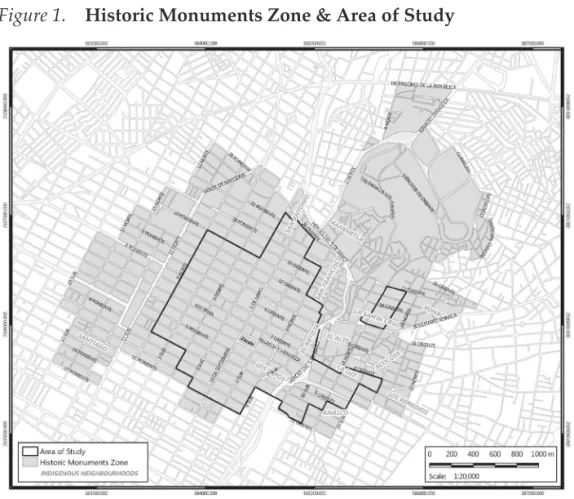
2. The “Historic Monuments Zone of the City of Puebla” was established by presidential decree on November 18th 1977, with a surface area of 6.99 km². It
includes the Spanish layout, the Indigenous neighbourhoods and the Forts of Loreto and Guadalupe.
3. Puebla was named World Heritage City on December 11th 1987. See: http://
Many buildings of the 19th century have been altered or internally destroyed, leaving only the facade; however, some complete buildings can still be found.
According to the Cultural Heritage Defence Committee of Puebla, since approximately 1965, the complete demolition of colonial houses to construct new buildings has been openly allowed. According to the Council for the Historic Centre, 65% of the colonial properties were either altered or demolished in the last sixty years of the 20th century (Patiño, 2001: 119, 187).
In the land use census that I created in collaboration with my team, in a sample of 129 blocks (containing 2,366 properties) of the 391 that make up the Monumental Zone, 30.4% of the properties were from the 17th and 18th centuries, 14.6% were from the 19th century and 55% corresponded to the 20th century (Patiño, 2001: 125-131).
Figure 1. Historic Monuments Zone & Area of Study
It is striking to see how the 20th century witnesses the development of a process whereby the old city gradually turned into the degraded centre of the «modern» city, if such can be called «modern»; and how it gradually becomes lost within it, with no apparent desire to change its direction towards irrelevance. Why, then, is Puebla included in the World Heritage List?
Melé (1998: 16-18) raises the point that the boundaries of the Mexican zones were drawn up before the writing of the international texts on the protection of historic cities. He also states that the UNESCO list is not really international recognition of the exceptional quality of certain heritage elements. It is, rather, recognition of State protection policies and legislation. I would say in addition that it is a recognition of the written discourse and not of concrete interventions. Undoubtedly, the government of Puebla delivered a good dossier. This does not mean that our city is not a beautiful city, or that our heritage should not be defended. It does mean, however, that its status and the relevance of the governmental policies should be seen in their real magnitude.
Puebla has been a city in permanent destruction due to the different forms taken on by social confrontation. Thus, the importance of the declaration of the monumental zone owes more to the political situation than to any interest in heritage.
In 1977, we had only just begun, two years before, a stage of social stability. It was a stage of uncertainty after 18 years in which there had been eight governors who had been unable to reach the end of their term of office of six years. This explains the disorganisation of the government’s administrative apparatus (there was no specification of either functions or responsibilities), a lack of any defined objectives and the incongruence between programmes and actions. «All this brought about a separation between the public administration and the promotion of economic development» (Meza, 1997: 57).
However, this lack of definition and congruence mainly reflects the inability of the various social sectors to reach agreements. Within such a framework, the declaration of the monumental zone began a lengthy process that modified the social composition, the land use and the function of the old city, to the detriment of the poorest population groups.
2. FOLLOWING FASHION
monuments to considering the urban area as a whole within the concept of the city as a business in which tourism is the driving force (González, 2015: 10). The worldwide wave of defence for heritage and its ideas fell on fertile ground at a moment when the tension between street vendors and established commerce was on the point of once more breaking up the social stability.
The Urban Reorganization & Commercial Deconcentration Plan (1984-1987) was more acceptable if it aimed to safeguard our heritage. One inconsistency of this policy was that it did not include the entire commercial circuit. However, under this banner, stallholders were expelled from the central market of «La Victoria» in order to «refurbish» it. The result, by the way, was awful.
The «urban reorganization» and «commercial deconcentration» were indeed basically focused on the violent eviction, from one day to the next, of the street vendors. They were resettled in unfinished markets on the outskirts, without roads, infrastructures or services. In some markets that were still in the project stage, it was necessary to jump gullies or demolish houses in order to get there. The government’s proposal, obviously made in an office without knowledge of the terrain, had not taken this into account. Evidently, there was no interest in finding the necessary social conciliation to break through the straightjacket that was throttling the old city (with the resulting effects on the new city). Certainly, from this point on, some regulations were brought in with a view to achieving some kind of congruence between programmes and actions. However, such a process is a long one, with many ups and downs due to the excessive politicisation of the public administration. The weight of the political clientelism has been sufficiently strong as to make successive administrations deviate from their good aims.
Thus, the lack of organisation, the duplication of functions, the preeminence of high level government officials in the decision making, the incongruence between proposals and their implementation, the complex and labyrinthine procedures, all persist, with but a few exceptions.
II. THE INTERVENTIONS
the responsibility of the municipal governments, though it has been the governors who have, save a few exceptions, defined the policies, programmes and interventions in the area.
In general, the interventions have gradually increased in number, including the perspective currently in fashion. However, it is the urban image that has once more predominated since the turn of the century. With this idea, facades are refurbished, monuments are illuminated, the urban furniture is modified and parks are rescued. Publicity is also regulated, while they start to maintain street lighting, roads and pavements. Later, they realise the importance of placing street signs and nomenclature in the Indigenous neighbourhoods and the Spanish layout. More recently, some led technology lights have been installed. In addition, bollards have been put in the main streets to protect pedestrians, as well as security cameras at the major crossroads and free internet in public places. Finally, bicycle lanes have been made and a cable car has been built. In a few cases (Paseo del Río San Francisco, Puebla te quiero bella, Corredor Turístico-Cultural Los Sapos-Teatro Principal & 10 Routes), attempts have been made to carry out interventions that give unity to a set of streets or blocks.
Although the number of interventions is increasing, none of them considers the monumental zone as a whole. In general, the interventions do not have any great relevance. In reality, they are actions that should be considered as routine for the maintenance of the quality of life in the city. What has really evolved in an impressive way is the apprenticeship in promoting the monumental zone, in other words, the marketing; in particular, by the government administration that ended in January 2017.
1. THE ROUTE OF ACTION
Within the idea of the city as a business, and taking the cultural and historic heritage as the pivotal factor, specific actions are promoted, some of which are set out below:
– 1983: creation of a Ministry of Culture in the state government. Its objective was to preserve and augment the cultural and artistic heritage (Guerrero, 2010: 100).
publicity should be distributed to advertise the city of Puebla (Bretón, 1987).
– 1991: creation of the Board of the Historic Centre of the City of Puebla. Its function was «the execution of the work needed to rescue, restore, preserve, maintain, promote and safeguard the monumental heritage» (Meza, 1997: 128).
– 1994: Declaration of the Historic Monuments Zone of the City of Puebla in Zaragoza as a Priority Area of Touristic Development.
– 1996: creation of the Commission for Built-up Heritage of the State of Puebla with the aim of carrying out research, protecting, rescuing, conserving, restoring, preserving and promoting the formation of a collective conscience concerning the values enshrined in the built-up heritage and its context (Decree, March 7th 1996).
– 2002: creation of the Institute for the Artistic, Anthropological, Historic & Architectural Heritage of the State of Puebla, with the aim of concentrating the efforts made by the Board of the Historic Centre and the Commission for Built-up Heritage. They search to include all the elements that contribute to the cultural identity, not only the properties (Decree, July 11th 2002).
– 2012: creation of the Municipal Tourism Advisory Board. Its aim is to advise and give technical support to the City Council. It also aims to promote citizen participation, integrating representatives from the public, social and private sectors (Actas de Cabildo, December 10th 2012: 98-102).
– 2014: creation of the Historic Centre and Cultural Heritage Management Office. Its aim is to know, preserve, protect, monitor, rescue and improve the Historic Centre and the Heritage Areas of the Municipality. It also aims, among other things, to advertise its values and promote the occupation of properties (City Council of Puebla, 2014a). In this same year, the Technical Committee of the Historic Centre is also set up, conceived to «set up high impact projects to revitalise the historic quarter of the city» (Ayuntamiento de Puebla, 2014b). – 2016: creation, for the first time, of the Municipal Tourism
three products of the city, which are the Historic Centre, the gastronomy of Puebla and the urban landscape» (Cañedo, 2016). Within the framework of the directives defined on a federal level, commercial promotion was initially limited to the inclusion of the city in some of the tourist circuits. Later, the media were used; first the national media and then the international. Airline publications were also included. More recently, excellent photographers were contracted to take beautiful images of the monuments and the old city. Documentaries were also made for, among others, the History Channel. The publicity became more professional with much greater quality. Using what had been learnt from other national and international experiences, a more eye-catching publicity was created with much greater scope. This new commercial practice includes the constant holding of events, attendance at fairs, congresses and international conventions, and increasing diffusion in the social networks (Secretariat for Tourism of the State of Puebla, 2015a).
All of the above is based on the creation of new tourist attractions. One example is the traditional Procession of Christ on Good Friday (now included in the religious tourism policy). This procession, which dates from colonial times (suspended in 1861 by the Reform Laws and begun again in 1992), started up once again with only a few hundred local participants. In 2016, some of the media spoke of more than 180,000 participants from out of town (Zambrano, 2016). Therefore, the City Council presented a free touristic offer that included a tour by bicycle from the Main Square to the most emblematic monuments. Together with the Historic Centre Management Office, free guided tours were also offered of the recently discovered subterranean tunnels («The Secrets of Puebla»), the chapels of the old via crucis (or Stations of the Cross) in the El Alto neighbourhood, the «Treasures of Vice Regal Puebla», the recently created «Walls of Puebla» (wall paintings), and the «Night of the Museums», which included the recently restored old factory «La Constancia» (City Council of Puebla, 2016).
Other cases include the visit to «La Estrella» (or «The Star», a big wheel, or Ferris wheel, reaching an altitude of approximately 80 metres, opened in 2013). This big wheel is part of a set made up of the «Linear Park», the «Art Garden», the «Metropolitan Ecopark», the «River Atoyac Promenade» and the «Baroque Museum». This recently created set is located on the outskirts of the city, to the South West.
it has been contextualised in order to give it a more encompassing projection is also important. In this sense, the promotion of the
associacionisme on both national and international levels has also been
encouraged (twinning, network of heritage cities, Baroque cities, creative cities, smart cities, Délice gastronomic network…). At the same time, and following the fashion, they also encourage city campaigns such as: participative, sustainable, educative, knowledge, child-friendly, e-government, gastronomic, bike-friendly, capital of design, and smart. All these approaches still have a task pending in Puebla: to take up once more the root of the original concepts, to make the concepts transcend and turn it into a daily reality for its citizens.
A. The City Brand
As marketing is in the centre of the government’s actions, the «city brand» could not be forgotten.
The brand «Puebla: World Heritage City. Always Fascinating!» (Palacios, 2009) was presented at the start of December 2009, in Mexico City. The core elements were the historic monuments and being named a world heritage city. The idea was to take better advantage of the touristic products in the municipality of Puebla which, at that time, had a 51% of use and harnessing and an average visitor stay of 1.48 days. The touristic promotion and publicity was qualified as awful (Plandetur 2015: 5, 12, 14).
The aim of «Puebla: World Heritage City. Always Fascinating!» was to boost the integration of the city’s products. There was a complementary offer that included nearby sites such as Cholula. It was a commercial offer that aimed to reach international markets in collaboration with the State to which Puebla belongs and with the country as a whole (Plandetur 2015: 28). The transversal development projects were the gastronomy of Puebla, quality and singular heritage accommodation, and the sale of crafts and Talavera pottery. It also included: a) the great number of churches that have led the city to be called «Puebla de los Ángeles» (or «Puebla of the Angels»); b) the university spirit due to the important number of universities in the city; c) the popular festivities and cultural activities, such as the «Festival Barroquísimo» (or «Baroque Festival») (Plandetur 2015: 33-48).
who participated in the creation of this product, so it now belongs to them» (La Jornada de Oriente Online, 2009). To this end, ten walking routes were designed within the perimeter of the area as a strategy to strengthen the sense of the inhabitants’ ownership of and identification with the tangible and intangible heritage (Municipal Government’s
Annual Report, 2011: 184-189). The routes were inaugurated near
the end of the administration’s period of office and some remained undefined.
Among the actions to strengthen tourism and sustainability were the removal of street vendors from the historic centre, maintenance of the drainage system, the rescuing of green areas, the installation of recycling centres and the modernisation of the refuse collection service (Municipal Government’s Annual Report, 2010: 87-94). This brand was expected to leave its imprint for at least the following 15 years, but it was not to be. The new administration (2011-2014) pushed the brand «Puebla: The city we want»; while that of the current administration is «Puebla: City of Progress». However, it seems to be more a government
slogan than a brand.
It would thus seem obvious that the brand «Puebla: World Heritage City. Always Fascinating!» was not shared by the State to which it belonged or by the country as a whole. Although the State Governor and the federal civil servants attended the public presentation, their participation went no further. Of course, the citizens did not see this brand as their own because only a very small number of people were invited to participate in its creation. Basically, it was only businessmen from the tourist and advertising sectors who participated, as well as Design School principals from the local universities (stakeholders), yet it seems that not even they took it to heart.
To the above must be added the fact that the work carried out on the routes generated an enormous discontent among shopkeepers. For the eight months that the works lasted, it was not possible to move through the historic centre, so sales dropped for the almost 5,000 shops established there. The president of the Board of Traders of the Historic Centre said that over 40 businesses had closed (Status, 2011). On the other hand, the routes were never clearly visible and, what is more, shortly after being inaugurated, the new paving stones began to come loose at several crossroads and in major streets.
of the previous government, despite the fact that studies were also paid for to propose concrete projects and management methods (Les Ateliers, 2012: 1).
The objectives of the brand were supposedly related to the needs of the population within an inclusion strategy. The projects were long-term and were aimed at improvements in public services, safety, new road projects, recreation and education. From that point on, another brand was created: «Markets of Puebla: Really ours» (Municipal Government’s Annual Report, 2012: 85). Another of the city brand projects was its consolidation as national design capital and its inclusion in the UNESCO Creative Cities network. This nomination, awarded nationally in 2011, was based on the city’s industrial history and its textile design; the great number of universities in the city was also taken into consideration (Les Ateliers, 2012: 64).
On the other hand, in the first year of this administration (2011), the certificate of Sustainable Integral Urban Development (DUIS) was achieved due to the Plan to Regenerate & Redensify the Historic Centre. The aim was to optimise the use of intra-urban land through a repopulation that would allow greater benefits from existing services, infrastructures and amenities (Municipal Government’s Annual Report, 2012: 23). To this effect, the Partial Programme for the Historic Centre was updated in order to increase the capacity of land use to an occupation coefficient of 75% and densities of up to 400 houses/ hectare (previously it was between 15 and 50 houses/hectare). Thus, the development of projects was not limited and interest in investing in the historic centre was boosted (Les Ateliers, 2012: 120).
Within this framework, the roads and the pavements are maintained, the facades in five streets in the area are renovated and the urban image of the neighbourhoods of «Analco», ‘El Carmen’, ‘Santiago’ and ‘Los Remedios’ were enhanced (Municipal Government’s
Annual Report, 2012: 24).
reorder the transport system, improve the image of the city, renovate parks and gardens, maintain and repair infrastructure networks and the artistic illumination of properties with a historic value (Municipal
Government’s Annual Report, 2013: 56-57). The repopulation of the
centre envisaged 108,075 new inhabitants over 20 years. The DUIS had a perimeter a little larger than the monumental zone, as it included 20 complete quarters and neighbourhoods, which did not happen with the limits of the monumental area. Each quarter and neighbourhood of the DUIS represented an urban area-based intervention (Les Ateliers, 2012: 119). In order to carry out all these actions, a collaborative agreement was signed with the state government, so as to be able to have access to the necessary resources.
As for tourism, the monumental zone continued to predominate. During the first administrative year, one of the routes created by the previous government was refurbished, which was the last time any of the routes had maintenance work done. During the last two years of «Puebla: The city we want», the brand «Puebla, Always Fascinating!» was again taken up as one of the lines of touristic promotion. The aim was to bring tourists and local citizens closer to the city’s history, heritage and culture in an integral experience. From there on, three sub-brands are developed that allow specific products to be created for each tourist season: «Puebla: City of Experiences», «Puebla: City of Museums» and «Puebla: City of Religious Heritage» (Municipal
Government’s Annual Report, 2013: 234). However, once more,
although the brand «Puebla: The city we want» was presented with the attendance of the governor and several state civil servants, the disagreements between the different levels of government ended by nullifying it. The brand was gradually obscured until it became no more than a simple slogan. Although there were achievements (such as the recuperation of parks, gardens and green areas), bad quality interventions had greater weight.
over many stretches, there are bollards and plant tubs in the way, the paving is loose or has pieces missing, there are stretches where the cycle lane is only painted and pedestrians continually invade them. The structure of the streets in the historic centre does not allow the necessary space for cyclists to circulate comfortably or safely. For the same reason, neither is it easy to separate pedestrians from cyclists and cars with fittings, prefabricated elements to mark the limits, pavement elevations, vegetation or adjacent parking areas (Villa, 2014).
Because of all this, the cycle lanes have remained practically unused until now. However, this is in reality a fashion, so perhaps it should not be lamented. There is no tradition here of cycling and it would be necessary to analyse whether its use would be pertinent, when the problem of the ozone layer must be taken into account on a world level. Here, the sun shines all year with sufficient intensity, while the air in Puebla is among the seven most contaminated in the country (National Report on Air Quality, 2015). To a greater or lesser extent, the ash thrown out by the volcano Popocatepetl falls on the city almost every day. Perhaps, investing in an efficient, quality public transport, which to date does not exist, continues to be the best option. Anyway, at the end of this administrative period, the lack of maintenance throughout the city was visible… it was not the «city we wanted».
2. THE IMPACT
A cultural tourism policy focused on the historic heritage also began to be developed. This could be very good if it included the monumental zone as an urban whole, but it is limited to ten or twelve streets around the Main Square, a few streets in some districts and a few points in the area of the «Forts». However, even with this minimum part of the monumental zone, a worldwide impact has been achieved through a publicity policy which is much more important than the cultural policy. As part of this publicity policy, the city brand does not seem to have been a milestone, but it has enriched the government’s discourse on the historic centre.
The government’s discourse generates an image, a mirage of protection for the heritage that contributes to its commercial management. Although heritage forms an important part of the discourse, in practice, it is embedded in low impact programmes and its destruction is not, therefore, avoided. Neither is importance given to coordinated action or integral intervention. In Puebla, the state and municipal administrations are always following fashions; and they have demonstrated that they can sell the city with or without a brand. It would seem that the fact that it is a world heritage city is enough.
The city brand simply turned out to be opportune for a government tradition that avoids the root problems. Thus, it could fit in with a strategy that was already underway and for which it was not indispensible, but to which it could give a further boost. Certainly, those who promote the concept of the city brand talk about a long-term city project. A project built from the bottom up, horizontally, and which attacks the basic problems, such as inequality. Puig (2015) said, for instance, that more tourism does not mean a greater or better city: «touristic cities end up being non-cities». He adds that the government should not be the best enterprise for tourism. The first thing «is to resolve the needs of the citizens, and tourism comes second (…) Tourism should be approached democratically and not only economically».
A. What about the inhabitants?
The old city has enjoyed the greatest number of interventions (all of them minor) over time; but none of them has been relevant for the people who live or lived there. They were not aimed at such an outcome. The official interventions, besides always being isolated and partial, never take into account the basic aspects that give meaning to the city as a social construct. It is precisely these aspects that can stop a touristic view becoming dominant to the detriment of the population.
The starting point should be the strengthening of the activities of those who live there. If, instead of hiding these activities, they were to be given solidity, they would have all the necessary attributes to attract the attention of visitors. It is not necessary to build a stage. Domínguez (2005: 606), for instance, states that the route from the «Bello Museum» to the old Convent of «Santa Mónica», «passes through interesting streets that concentrate typical trades of the City of Puebla, such as pottery, the production of Talavera and the tinsmiths who produce the ancestral portable charcoal ovens (“anafres”) to make traditional local food (“chalupas” and “molotes”), among other food specialities. It also passes by establishments that create “jarciería” (or everything to do with housework)».
She also points out that, on this route, there are some old bakeries that still make bread in the traditional manner.
However, there has been a gradual but constant expulsion of the inhabitants throughout these years. In 1978, it was calculated that there were around 350,000 inhabitants in the historic centre; in 1990 they spoke of 86,059 inhabitants and 81,706 in 1995. The population decreased further to 69,162 inhabitants in 2005 and 41,443 in 2010 (Partial Programme of Sustainable Urban Development of the Historic
Centre, 2015: 5). From the end of the 1980s, the subject of the
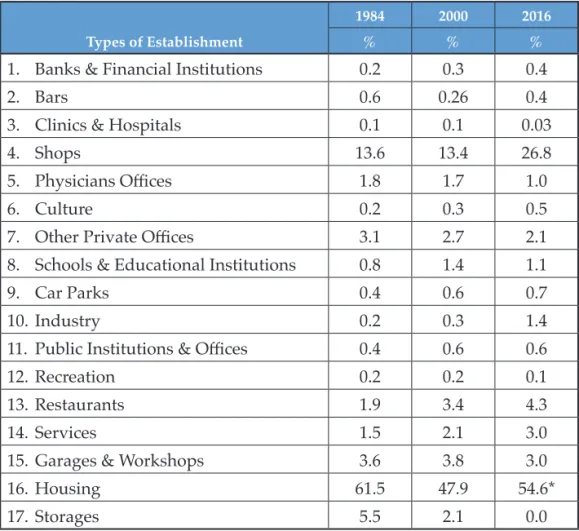
Table 1. Changes in Land Use in the Area under Study 1984-2016
Types of Establishment
1984 2000 2016
% % %
1. Banks & Financial Institutions 0.2 0.3 0.4
2. Bars 0.6 0.26 0.4
3. Clinics & Hospitals 0.1 0.1 0.03
4. Shops 13.6 13.4 26.8
5. Physicians Offices 1.8 1.7 1.0
6. Culture 0.2 0.3 0.5
7. Other Private Offices 3.1 2.7 2.1
8. Schools & Educational Institutions 0.8 1.4 1.1
9. Car Parks 0.4 0.6 0.7
10. Industry 0.2 0.3 1.4
11. Public Institutions & Offices 0.4 0.6 0.6
12. Recreation 0.2 0.2 0.1
13. Restaurants 1.9 3.4 4.3
14. Services 1.5 2.1 3.0
15. Garages & Workshops 3.6 3.8 3.0
16. Housing 61.5 47.9 54.6*
17. Storages 5.5 2.1 0.0
Source: Census of land use carried out by the author and her team for the years 1984 & 2000. For 2016, information was obtained by Nereo Zamitiz from the National Statistics Directory of Economic Units (geo-referenced data), INEGI, October 31st 2016. Own elaboration.
* Population & Housing Census, INEGI, 2010 (geo-referenced data).
In any case, the Partial Programme of Sustainable Urban Development of
the Historic Centre, approved at the end of 2015, is reinforcing this process.
upper classes in «Xanenetla», «El Alto», «Analco», «San Francisco» and «La Cruz». These neighbourhoods were chosen because they were almost abandoned (Hernández, 2016). The percentage of unoccupied, abandoned or ruined properties in the historic centre is currently 20% of the total. Most of these buildings are considered to have heritage status. The objective of the Historic Centre Management Office is to build 13,659 houses in twenty years (Partial Programme of Sustainable Urban
Development of the Historic Centre, 2015: 3, 48).
With these expectations, the owners of the empty plots and the old mansions began to raise prices by up to 100%, even though the houses had been unused for many years (Hernández, 2016). It is highly probable that the speculation generated by this redensification programme will finally expell the poor who still remain. This population has always been seen as a hindrance to the government’s plans. One paradigmatic example is that of the «Paseo del Río San Francisco». This project proposed intervening in 23 complete blocks and 4 partial blocks in the neighbourhoods of «Analco», «El Alto», «La Luz» and «San Francisco» (an old industrial and workers’ houses area). It was a river walk without a river because the River San Francisco had been tubed as part of the drainage system three decades before, for the sake of modernity. Those responsible for the project said that it was the driving force for investments and the guarantee of an ordered economic activity. It was also considered to be «the best strategy to avoid the abandonment and deterioration of our heritage», without explaining why or how (Angelopolis Regional
Development Programme, 1996-1999: p. 149). According to the data
provided by the city council in a document of July 20th 1993, 76% of the properties were used as housing, and of these, 87% were rented (most of them were vecindades)4. The newspaper Síntesis (1997: 1) reviewed the government’s intervention in the district of «La Luz» well: «A party that is dying because of the evictions; a neighbourhood losing inhabitants and buildings on a daily basis; a landscape of ruins and occupation by the police that reminds us more of a war than a project to rescue the historic neighbourhoods of the City of Puebla».
Besides, this project generated high expectations of unexpected profit and the speculative process began to double and triple property prices. Finally, the project was reduced to 6 blocks in the neighbourhood of «El Alto» (cf. González & Álvarez, 1999). The 21 remaining blocks from the initial project were sold to private individuals; while the 4,500 inhabitants, most of them with low incomes, were evicted without any other housing option (Les Ateliers, 2012: 116). The Convention Centre that was built on the unfinished «Paseo del Río» expresses very well the idea of modernisation for historic cities, an idea that induces the deterioration of the original fabric of the city with the construction of isolated works (Lessard & Germain, 1996: 150). The «Paseo del Río San Francisco» turned the area of public interest into a desert, even in the neighbourhoods that were no longer included in the expropriation, such as that of «Analco» (Milián, 2005: 54-55). In addition, still today, there are many empty commercial premises in the shopping centre that was built.
The usual result of this type of intervention by governments is to make the population feel powerless. The inhabitants do not feel as if they are citizens who have the right to enjoy the place in which they live.
III. ONE LAST IDEA
The usefulness of architectural heritage for «hiding» the social aspect has not avoided its sacrifice, despite all the declarations our governments have managed to achieve from international organisms. There are many examples, but the most recent is related with the construction of the cable car in 2012. The aim was to link the Forts of Loreto and Guadalupe with the historic centre. In order to build two transfer stations and three towers of approximately 80 metres in height to support the cables, the «Casa del Torno» (17th century), located in the neighbourhood of «El Artista», was demolished. The patio of this house had already been destroyed by the work in the «Paseo del Río San Francisco» to construct the pedestrian bridge going from the Convention Centre («El Alto» district) to the historic centre. This was used as a pretext to demolish the whole house.
point of «La Mantarraya» and the Concordia Lake, where the «Nights of Legend» show is presented. It goes without saying that the Forts of Loreto and Guadalupe, after having been restored, look more like a shopping mall than fortifications.
This revival of the area of the Forts included the adjacent district of «Xanenetla», home to the new tourist attraction «Walls of Puebla» (wall paintings). One of the towers for the cable car was also built in this neighbourhood, destroying the urban fabric, damaging heritage properties and some wall paintings. These wall paintings were done by a group of citizens («Colectivo Tomate») and the inhabitants of «Xanenetla» in 2010. The aim was to renovate the facades of 52 houses, most of which were from the 19th century. They wanted to rehabilitate public spaces through participative urban art, to recuperate the district for its inhabitants and to improve the quality of life.
The project was so successful that, in 2012, a third stage of the «Mural City» was begun with 22 new paintings by local, national and Latin American artists. The neighbourhood was visited by mayors from other Latin American countries, as well as ambassadors and representatives of world heritage cities. There was a proposal for the City Council of Puebla and the «Colectivo Tomate» to advise other cities and countries so they could reproduce this experience. From then on, the municipal government began to invest in the neighbourhood, but only to rehabilitate the streets close to the route of the wall paintings, where lighting was also installed with underground cables. Of course, the project encouraged further price rises in land with its subsequent speculative process. The rest of the neighbourhood was abandoned and the needs of the residents were not met. Rundown housing is not repaired, there is no support for buying a house or for sustaining the traditional craft trades (Kurjenoja & Ismael, 2015: 268-273). This example shows very well the government’s lack of interest in heritage. It only has importance as a differentiating element in the commercial management of the city.
are 1,200 mansions with structural damage (Espinoza, 2016). Some specialists have claimed that 300 properties are on the point of collapse; and of these, 60% are in a critical phase (Zambrano, 2013). However, the monumental zone in general is degraded and some streets (such as 12 Oriente-Poniente) look more like war zones due to the dramatic destruction of its built-up environment.
The policies do not focus on the renovation of degraded and empty buildings or abandoned plots of land. They only look to improve the image through painting facades or increasing the value of symbolic elements (Les Ateliers, 2012: 121). On the other hand, the appearance of new properties has gradually become the true built-up environment of the centre. The historic buildings now represent less than half the whole.
Puebla thus seems to embody the construction of an impossible project, the unthinkable reconciliation. The two cities (the old and the new, the old also containing two cities, the new being made up of new urban peripheries, or new cities?) are immersed in their confrontation, isolation, dispersion and lack of a project. What is the importance of integrating, modifying, consolidating, repairing, preserving, reintegrating, restoring, remodelling, recuperating, rehabilitating or revitalising if there is no contextualisation in order to resolve the needs of the population on a permanent basis? Our heritage is not an inanimate thing, it is not decaying buildings; we are our heritage, it is our history. A history whose course we can change in order to «rehabilitate ourselves» as a community and thus return its vitality and organic structure to this part of the city and to the city as a whole.
It is this, and nothing else, that underlies the safeguarding of our built-up heritage and the recuperation of the historic centre of our city.
IV. REFERENCES
Actas de Cabildo. Asunto General # 8 (AG8), Dictamen por el que se
crea el Consejo de Turismo Municipal del Municipio de Puebla, Ayuntamiento de Puebla, Sesión Ordinaria del 10 de Diciembre de 2012.
ayuntaMientode PueBla: Gerencia del Centro Histórico y Patrimonio
Cultural. Gobierno de Puebla 2016, In: http://pueblacapital.gob.mx/
– Instala Gali Comité Técnico del Centro Histórico, In: http://www.
pueblacapital.gob.mx/noticias/noticias-destacadas/item/4540-instala-gali-comite-tecnico-del-centro-historico, 2014b.
– Ayuntamiento de Puebla presenta oferta turística para Semana Santa,
In: http://www.pueblacapital.gob.mx/noticias/comunicados-de-prensa/
item/5407-el-ayuntamiento-de-puebla-presenta-oferta-turistica-para-semana-santa-2016.
Bretón Ávalos, J. J.: «Creó el Ayuntamiento el Departamento de
Promoción Turística de la Cd. de Puebla», El Sol de Puebla. 19 de Marzo de 1987.
cañedo, a.: Secretaría de Turismo Municipal mejorará promoción, In: https://www.elsoldepuebla.com.mx/uncategorized/nueva-secretaria-de-turismo-municipal-permitira-mejor-promocion-canedo, 26 de Septiembre
de 2016.
Declaratoria de Zona de Desarrollo Turístico Prioritario de la Zona de Monumentos Históricos de la ciudad de Puebla de Zaragoza. Secretaría
de Gobernación, Diario Oficial de la Federación, 28 de Febrero de 1994.
Decreto que crea la Comisión del Patrimonio Edificado del Estado de Puebla.
Congreso del Estado de Puebla, Comisión de Gobernación, Justicia y Puntos Constitucionales, 7 de Marzo de 1996.
Decreto que crea al Instituto del Patrimonio Artístico, Antropológico, Histórico y Arquitectónico del Estado de Puebla. Congreso del Estado de Puebla,
Comisión de Gobernación, Justicia y Puntos Constitucionales, 11 de Julio de 2002.
Decreto de Zona de Monumentos Históricos de la ciudad de Puebla de Zaragoza. Periódico Oficial, n.º 41, Suplemento n.º 1, Gobierno
Constitucional del Estado de Puebla, 18 de noviembre de 1977.
doMínguez silva, P.: «Vinculación de la ciudad histórico-turística
de Puebla a través de itinerarios culturales», Economía, Sociedad y
Territorio. El Colegio Mexiquense, n.º 19, 2005, pp. 595-615.
esPinoza, M.: Rehabilitan 101 casonas del Centro Histórico de Puebla, In: http://www.poblanerias.com/2016/06/rehabilitan-101-casonas-del-centro-historico-de-puebla, 20 de junio de 2016,
Informe Anual del Gobierno Municipal. Ayuntamiento de Puebla
2009-2011, Segundo Informe, 2010.
Informe Anual del Gobierno Municipal. Ayuntamiento de Puebla
Informe Anual del Gobierno Municipal. Ayuntamiento de Puebla
2011-2014, Primer Informe, 2012.
Informe Anual del Gobierno Municipal. Ayuntamiento de Puebla
2011-2014, Segundo Informe, 2013.
Informe Anual del Gobierno Municipal. Ayuntamiento de Puebla
2014-2018, Segundo Informe, 2016.
Informe Nacional de Calidad del Aire 2014. SEMARNAT/INECC, 2015.
gonzÁlez aragón, J. and Álvarez santiago, h.: Conservación urbana en el Paseo del Río San Francisco. Centro Histórico de Puebla, México. Universidad Autónoma de Puebla, 1999.
gonzÁlez Pérez, J. M. (ed.): Ciudades en transición. Procesos urbanos y políticas de rehabilitación en contextos diferenciados: Centro Histórico de La Habana y Ciudad Colonial de Santo Domingo. Universidad de Islas
Baleares, 2015.
guerrero BazÁn, J. M.: El turismo cultural como factor de difusión y preservación del patrimonio edificado e impulso a la competitividad de las ciudades: Centro Histórico de la Ciudad de Puebla. Universidad
Autónoma de Puebla, 2010.
hernÁndez, M.: Aspiran al retorno de 250,000 habitantes. Puebla redensi-ficará su Centro Histórico. Proyectan construir edificios de departamentos en el 2017, In: http://eleconomista.com.mx/estados/2016/10/13/puebla- redensificara-su-centro-historico, 13 de octubre de 2016.
Jones, g. and varley, a.: «La reconquista del Centro Histórico:
conservación urbana y gentrificación en la ciudad de Puebla»,
Anuario de Estudios Urbanos. 2001, pp. 139-159.
kurJenoJa, a. k. and isMael, M. e. «Ciudad como imagen: Xanenentla,
Puebla, México, la “Ciudad Mural”», Revista Internacional de
Humanidades. n.º 2, 2015, pp. 263-280.
les ateliers. Documento de Análisis. Puebla y su zona metropolitana. Metropolización y centro histórico. ¿qué desarrollo sustentable y operacional para la metrópoli bajo la implicación compartida de sus actores? Gobierno
Municipal/Sedesol/Embajada de Francia/Citelum, 2012.
lessard, M. and gerMain, a. «La integración del centro histórico
al desarrollo de la ciudad» In Pérez salvador, s. and Polèse,
M. (coMPs). Modelos de análisis y de planificación urbana. Estudios
sobre la evolución y tendencias de la ciudad de Puebla. Plaza y Valdés/
Meixueiro nÁJera, g. M. Impacto de la actividad turística en el desarrollo local. Centro de Estudios Sociales y de Opinión Pública (CESOP),
2008.
Melé, P. «Sacralizar el espacio urbano: el centro de las ciudades
mexicanas como patrimonio mundial no renovable», Alteridades. Departamento de Antropología, UAM-Iztapalapa, n.º 16, julio-diciembre de 1998, pp. 11-26.
Meza roJas, P. Antecedentes de la planeación en Puebla 1917-1992, Puebla,
UAP, 1997.
MiliÁn Ávila, g. «Inserción de la escala regional y transición del
barrio» In Blanc, B.; lessard, M. and negrón PoBlete, P. (eds). La rehabilitación de la vivienda popular y del patrimonio en los centros históricos de Puebla (México) y de Puerto Príncipe (Haití), UAP/
FLACSO-Costa Rica/GIM, 1996.
Palacios, M. «La marca turística de Puebla es un proyecto de ciudad:
Alcalá», El Sol de Puebla, 2 de Diciembre de 2009.
Patiño tovar, e. El pasado en el presente. Pobreza, centro histórico y ciudad.
Universidad Autónoma de Puebla/Red Nacional de Investigación Urbana, 2001.
Periódico Oficial, n.º 3, Segunda Sección, Tomo CDXCVIII, Acuerdo para la Creación de la Secretaría de Turismo del Honorable Ayuntamiento del Municipio de Puebla, Gobierno Constitucional del Estado de Puebla,
5 de octubre de 2016.
Plan de Reordenamiento Urbano y Desconcentración Comercial, 1984-1987.
Ayuntamiento de Puebla, 1984.
Plan Estratégico de Turismo de la Ciudad de Puebla 2015 (PLANDETUR).
Ayuntamiento de Puebla, 2010.
Programa de Desarrollo Regional Angelópolis. Avances y Retos 1996-1999.
Gobierno Constitucional del Estado de Puebla, 1996.
Programa Parcial de Desarrollo Urbano Sustentable del Centro Histórico del Municipio de Puebla. Gobierno Constitucional del Estado de Puebla,
Periódico Oficial, n.º 17, Quinta Sección, Tomo CDLXXXVI, 23 de octubre de 2015.
Puig, a. Las ciudades turísticas terminan en no-ciudades. Ideas y estrategias
para reinventarlas con los ciudadanos. Quito, 2015, In: www.tonipuig.com
rodríguez, t. «El proyecto para la recuperación del centro histórico de
puebla», Arrendamiento Tendencias. Arrendadores.mx, 11 de agosto de 2015,
secretaríade turisModel estado PueBla (2015a). Indicadores Básicos de la Actividad Turística en Puebla. Año 2015, In: http://turismo.puebla. gob.mx/images/estadisticas/IndicadoresTuristicosPuebla2015_1.pdf.
– (2015b). Perfil de Visitante, Destino: Puebla, Pue. Año 2015, In: http://
turismo.puebla.gob.mx/images/estadisticas/Perfil-de-visitante-2015-2. pdf.
sintesis. «Crónica del cerco policíaco y demolición en el callejón de los
Pescaditos», Sección Nuestra Colonia, 16 de mayo de 1997.
status. «La improvisación de Blanca Alcalá cobra facturas», In: http:// www.statuspuebla.com.mx/2011/08/15/la-improvisacion-de-blanca-alcala-cobra-facturas, 15 de agosto de 2011.
villa, J. Las ciclovías en Puebla: caras y mal hechas. In: http://ladobe.com.
mx/2014/09/las-ciclovias-en-puebla-caras-y-mal-hechas, septiembre 2014.
zaMBrano, J. «Puebla cumple 26 años como Patrimonio de la
Humanidad», In:
http://www.milenio.com/region/Puebla-cumple-anos-Patrimonio-Humanidad_0_205180030.html, 10 de Diciembre de 2013.
– «Puebla espera más de 180 mil fieles para el Viernes Santo», In: