
English language learning in CLIL and EFL classroom settings: a look at two primary education schools
271
0
0
Texto completo
(2) ENGLISH LANGUAGE LEARNING IN CLIL AND EFL CLASSROOM SETTINGS: A LOOK AT TWO PRIMARY EDUCATION SCHOOLS. Tesi doctoral presentada per. Anna Marsol Jornet. com a requeriment per a l’obtenció del títol de. Doctora en Filologia Anglesa. Programa de doctorat: Lingüística Aplicada (Bienni 2006-2008) Departament de Filologia Anglesa i Alemanya. Directora: Dra. Elsa Tragant Mestres. Universitat de Barcelona 2015.
(3)
(4) “Tell me and I forget, teach me and I may remember, involve me and I learn.” ― Benjamin Franklin.
(5)
(6) ACKNOWLEDGEMENTS. This dissertation would not have been possible without the help, advice and support I have received from a number of people, to whom I would like to express my most sincere gratitude. These few paragraphs are dedicated to all of them. First and foremost, I would like to thank my supervisor, Dr. Elsa Tragant, who first introduced me to the world of research and academic life when I was just an undergraduate student. She believed in me from the very beginning, transmitted me her enthusiasm and has definitely accompanied me during the whole process. She not only has guided my research with invaluable knowledge, but she has been supportive and patient all along the way. It has been a real privilege to work with her all these years. I am indebted to Dr. Tarja Nikula for her warm welcome to cold Finland back in 2009 when this dissertation was just beginning to take shape. I am particularly grateful for her dedication and extremely insightful comments during my research stay in the Centre for Applied Language Studies at the University of Jyväskylä (Finland). My heartfelt thanks to Dr. Carme Muñoz for giving me the opportunity to grow as a researcher and for being a source of motivation at all times. I would also like to thank all the members of the GRAL research team who have also contributed, in one way or another, to my development as a researcher all these years. I am especially grateful to Dr. M. Luz Celaya and Dr. Imma Miralpeix for their constant encouragement and readiness to help. Thanks to Dr. Roger Gilabert for sharing his knowledge about taskbased learning and for his willingness to help whenever necessary. I would also like to thank Dr. Teresa Navés for sharing her expertise in CLIL and for providing valuable feedback during the first stages. I am thankful to Dr. Raquel Serrano and Dr. Àngels Llanes for having shared their knowledge while working together on a number of projects all these years and for their friendly encouragement. Special thanks to Dr. Mia Victori for all I learnt about CLIL from her when I was just embarking on this journey. I would also like to thank Dr. Joan Carles Mora, Eva Cerviño, Dr. Mar Suárez, Dr. Sara Feijoo, Dr. Laura Sánchez and Dr. Natalia Fullana for their support. Many thanks to Mireia Ortega and Dr. Mayya Levkina for having shared their professional and personal life on countless cups of coffee. Also thanks to former research assistants and now colleagues Cristina Aliaga and Dr. Aleksandra Malicka.. i.
(7) Thanks to my colleagues and friends from the English Department, especially Dr. Joe Hilferty for his unceasing support and advice, Dr. Eli Comelles for our office chats about thesis updates and Dr. Natàlia Judith Laso for always making things easier when it comes to combining teaching and research. I will be eternally indebted to the schools, teachers and students who very willingly opened their classroom doors to let me in and to those people who gave me a hand during the process of data collection, data analysis and the editing of this dissertation. I gratefully acknowledge the financial help of the grant FI (Formació d’Investigadors) from Generalitat de Catalunya, which allowed me to work as a research assistant for four years and to spend three months abroad fully devoted to this work. This research has also been partly supported by the grants from the Ministry of Education and Science (HUM2004-05167/FILO; HUM2007-64302) and the Ministry of Science and Innovation (FFI2010-18006). Special thanks to my sweet “soul sister”, Dr. Júlia Barón, for always being there to take good care of me and for loving me so much. And a hundred thank-yous to all my friends for their never-ending encouragement and for raising my spirits with their love and laughs. They still keep asking me “What’s your PhD about?” and it’s still impossible for me not to giggle at their puzzlement when I introduce them to “Mr. CLIL”. Gràcies a tota la meva família pel seu suport i molt especialment al meu avi Albert que, tot i que se’n va anar just a l’inici d’aquest viatge, sempre m’ha acompanyat i sé que sempre estarà orgullós de mi. Mil gràcies als meus pares per la seva paciència i ajuda incansable i per estimar-me tant i tant. M’ho han donat tot en aquesta vida i, sense cap mena de dubte, no els hi podré agraïr mai prou. Nomes us puc dir: moltes gràcies. Finalment, gràcies al Guillem que m’ha donat l’alegria i l’empenta per récorrer els últims quilòmetres d’aquest llarg viatge. Ha estat al meu costat quan la llum al final del túnel s’esvaïa per moments, però sempre m’ha fet creure en la llum brillant que m’esperava al final del camí. I ara ens esperen mil-i-un projectes junts! No em cansaré mai de donar-te les gràcies per estimar-me i cuidar-me tant.. Als meus pares, Pili i Florenci. ii.
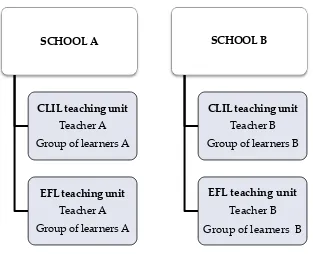
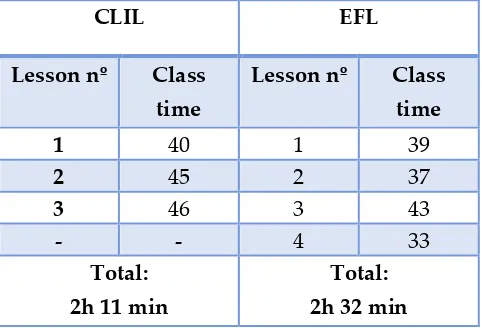
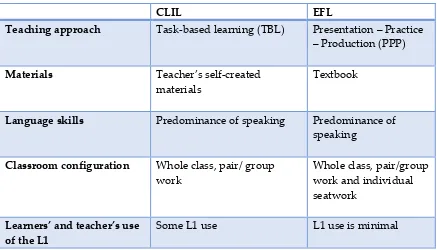
(8) ABSTRACT This dissertation examines the English language learning experience of primary school learners in Content and Language Integrated Learning (CLIL) and English as a Foreign Language (EFL) classroom settings. It focuses, on the one hand, on learners’ oral language production during whole class and pair/group work and, on the other hand, it also explores the amount and type of teacher corrective feedback to address language form in each instructional setting. One of the potential benefits of CLIL instruction is considered to be the increasing quality time offered to learners who are expected to use the second/foreign language in a wide range of communicative situations to suit higher cognitive and linguistic task demands than do learners in regular EFL instruction. Although previous research has pointed towards the positive boost of CLIL on some aspects of learners’ foreign language proficiency level, little classroom-based evidence is available to show how learners actually use the language in productive ways and how this compares to their language output in the EFL context. In addition, the quantity and quality of attention to language form in the CLIL context with its dual-focused approach has also been of growing concern in the CLIL research landscape. Previous research has generally indicated that attention to form is scarce in CLIL lessons due to the more content-led nature of CLIL tasks, whereas EFL lessons tend to concentrate on a number of target forms and structures which are systematically analysed and practised. Thus, the present study is based on two classes of 5th year primary education students who receive CLIL instruction in addition to regular EFL instruction with the same teacher teaching both subjects in each of the two participating schools. The data consist of audio and video recordings of a whole teaching unit in each context, that is, 3 CLIL lessons and 4 EFL lessons in one school and 4 CLIL lessons and 4 EFL lessons in the other school (12 hours and 52 minutes of class time). The main findings show there is not a big gap between the oral production of learners in the CLIL context and the EFL context in the two schools, but there is a subtle tendency for learners in the CLIL context to produce longer strings of language in both schools. Additionally, learner production is predominantly based on the predefined model sentences presented by the teacher in the two instructional contexts in both schools. Therefore, there is little room for spontaneous student-created L2 production in the two learning contexts. It has also been shown that L1 production is more numerous in the CLIL context than in the EFL context in the two schools but the role of the L1 is rather different. Furthermore, contrary to what most previous research on CLIL has shown, the present results indicate that there is space to focus on form not only in the EFL context but also in the CLIL context in the two schools under analysis. Different types of teacher corrective feedback have been identified throughout the implementation of the CLIL and the EFL teaching units. Recasts have been shown to outnumber prompts in the two contexts though the number of prompts is greater in the EFL context than in the CLIL context. Differences across instructional settings have been carefully looked at by bearing in mind contextual variables like teaching approach, context familiarity and teacher profile, among others. This investigation sheds some new light on what is actually going on in CLIL and EFL classes with evidence to be used in teacher training schemes to make the most. iii.
(9) of the two instructional contexts in order to provide a rich English language learning experience.. RESUM Aquesta tesi estudia l’experiència d’aprenentatge de l’anglès d’aprenents en l’etapa d’educació primària en contextos d’aprenentatge integrat de continguts curriculars i llengua estrangera (AICLE; en anglès Content and Language Integrated Learning, CLIL) i en contextos d’aprenentatge de l’anglès com a assignatura de llengua (en anglès English as a Foreign Langauge, EFL). La investigació se centra, per una banda, en la producció oral dels aprenents en els intercanvis mestre/a-alumne/a durant el treball com a grup-classe o per parelles/grups; d’altra banda, també explora la quantitat i la tipologia de la retroalimentació proporcionada per la mestra, és a dir, la informació sobre la correcció de la pròpia producció en cadascun dels contextos d’aprenentatge. Un dels beneficis potencials del contextos AICLE és la millora qualitativa del temps dedicat a la llengua estrangera donat que s’espera que els alumnes utilitzin la segona llengua o llengua estrangera en una àmplia varietat de situacions comunicatives que són més exigents des del punt de vista cognitiu i lingüístic en comparació als contextos d’aprenentatge formal de la llengua estrangera. Tot i que la recerca actual sobre AICLE apunta a un efecte positiu d’aquest tipus d’aprenentatge vers el nivell de domini de la llengua estrangera, molts pocs estudis s’han centrat en com els aprenents utilitzen la llengua de manera productiva i també com es diferencia de la producció oral en una classe on l’anglès és únicament objecte d’estudi. A més, la quantitat i la qualitat de l’atenció a la forma en els contextos AICLE –tenint en compte la doble atenció als continguts i a la llengua estrangera de forma integrada– també ha estat un dels temes tractats dins de la literatura existent. Estudis anteriors han indicat que l’atenció a la forma és molt limitada a les classes AICE donada la naturalesa de les tasques, que se centren majoritàriament en el contingut. D’altra banda, les classes amb un enfocament més tradicional centren l’atenció en una sèrie de formes i estructures lingüístiques que s’analitzen i practiquen de forma sistemàtica. Per tant, aquest estudi es basa en dos grups d’aprenents de 5è d’educació primària que aprenen l’anglès a través de l’aprenentatge integrat de continguts i llengua estrangera i també mitjançant l’aprenentatge de l’anglès com a llengua estrangera amb la mateixa professora en ambdós contextos a les dues escoles que han participat en la investigació. La base de dades de l’estudi inclou una sèrie d’enregistraments en format àudio i vídeo d’una unitat didàctica completa en cadascun dels contextos d’aprenentatge, és a dir, 3 sessions AICLE i 4 sessions d’anglès tradicional en una escola i 4 sessions AICLE més 4 sessions d’anglès tradicional a l’altra escola (12 hores i 52 minuts d’enregistraments). Els resultats indiquen que no hi ha una gran diferència entre la producció oral dels aprenents en el context AICLE vers el context d’aprenentatge tradicional en les dues escoles, però sí que s’observa certa tendència per part dels alumnes en el primer cas a generar produccions més llargues a les dues escoles. Tanmateix, la producció dels aprenents es basa majoritàriament en les frases model definides per la mestra en els dos contextos d’aprenentatge a les dues escoles. Per tant, hi ha molt poca cabuda per a iv.
(10) les produccions més espontànies creades pels propis aprenents en els dos contextos d’aprenentatge. Els resultats també indiquen que les produccions orals en la llengua materna són més nombroses en el context AICLE a les dues escoles però el rol és també força diferent. Altrament, a diferència del que han evidenciat la majoria dels estudis realitzats en contextos AICLE, els resultats d’aquest estudi indiquen que hi han oportunitats per parar atenció a la forma lingüística no només en el context d’aprenentatge tradicional sinó també en el context d’aprenentatge integrat en les dues escoles que han estat objecte d’estudi. S’han identificat diferents tipus de correccions retroactives de la mestra pel que fa a l’ús correcte de la llengua al llarg de l’anàlisi de les unitats didàctiques investigades en ambdós contextos. Pel que fa a l’ús de les reformulacions (recasts), aquestes són més nombroses que les indicacions (prompts) per part de la mestra per iniciar una negociació de la forma tot i que aquest últim tipus és més freqüent en el context tradicional d’aprenentatge a les dues escoles. Les diferències entre els dos contextos d’aprenentatge s’han examinat tenint en compte variables contextuals com la metodologia d’ensenyament, el grau de familiaritat amb el context d’aprenentatge i el perfil de la mestra, entre d’altres. Aquesta tesi aporta noves evidències a la recerca sobre el que realment passa a les classes que segueixen cadascun dels enfocaments. Aquesta informació pot ser útil en el disseny de programes de formació del professorat amb l’objectiu d’aprofitar al màxim el que ofereix cada context d’aprenentatge i poder així oferir una experiència d’aprenentatge de la llengua anglesa rica.. v.
(11) vi.
(12) CONTENTS. CHAPTER 1 INTRODUCTION. 1. CHAPTER 2 AN OVERVIEW OF CLASSROOM-BASED CLIL RESEARCH. 7. 2.1.. Introduction. 7. 2.2.. Second/foreign language learning: pedagogical practice and interactional features of CLIL classroom settings. 2.3.. 9. Discourse-pragmatic features of language use in CLIL classroom settings. 19. 2.4.. Knowledge construction in CLIL classroom settings. 29. 2.5.. Summary. 42. CHAPTER 3 RESEARCH QUESTIONS, METHOD AND CONTEXT. 45. 3.1.. Introduction. 45. 3.2.. Research questions. 46. 3.3.. Method. 50. 3.3.1. Participants. 50. 3.3.1.1. School A. 51. 3.3.1.1.1. The school and the implementation of CLIL and EFL. 51. 3.3.1.1.2. The implementation of CLIL and EFL in the 5th year of primary education. 52. 3.3.1.1.3. The teacher’s profile. 53. 3.3.1.1.4. The learners’ profile. 54. 3.3.1.2. School B. 55. 3.3.1.2.1. The school and the implementation of CLIL and EFL. 55. 3.3.1.2.2. The implementation of CLIL and EFL in the 5th year of primary education. 56. 3.3.1.2.3. The teacher’s profile. 57. 3.3.1.2.4. The learners’ profile. 58. 3.3.2. Design of the study. 59. 3.3.3. Data analysis. 60. vii.
(13) 3.4.. Context: snapshot of the CLIL and the EFL classroom settings. 69. 3.4.1 School A. 69. 3.4.1.1. School A: Snapshot of the CLIL and the EFL lessons. 69. 3.4.1.2. School A: Snapshot of the CLIL and the EFL teaching units 3.4.1.3. School A: Snapshot of learners’ opinion 3.4.2 School B. 71 75 77. 3.4.2.1. School B: Snapshot of the CLIL and the EFL lessons. 77. 3.4.2.2. School B: Snapshot of the CLIL and the EFL teaching units 3.4.2.3. School B: Snapshot of learners’ opinion 3.5. Summary. 79 82 85. CHAPTER 4 RESULTS: LEARNERS’ ORAL PRODUCTION. 87. 4.1.. Introduction. 87. 4.2.. School A. 88. 4.2.1. An overview. 88. 4.2.2. School A: Learners’ oral production in the CLIL context. 90. 4.2.3. School A: Learners’ oral production in the EFL context. 98. 4.3.. 4.4.. 4.2.4. School A: A comparison of the CLIL and the EFL context. 102. School B. 103. 4.3.1. An overview. 103. 4.3.2. School B: Learners’ oral production in the CLIL context. 105. 4.3.3. School B: Learners’ oral production in the EFL context. 113. 4.3.4. School B: A comparison of the CLIL and the EFL context. 118. A comparison of the CLIL and the EFL context in School A and School B: commonalities. CHAPTER 5 RESULTS: ATTENTION TO FORM THROUGH THE PROVISON OF TEACHER CORRECTIVE FEEDBACK 5.1. 5.2.. 119. 123. Introduction School A. 123 125. 5.2.1. An overview. 125. 5.2.2. School A: Teacher corrective feedback the CLIL context. 128. 5.2.3. School A: Teacher corrective feedback in the EFL context. 138. 5.2.4. School A: A comparison of the CLIL and the EFL context. 145. viii.
(14) 5.3. 5.4.. School B. 147. 5.3.1. An overview. 147. 5.3.2. School B: Teacher corrective feedback in the CLIL context. 150. 5.3.3. School B: Teacher corrective feedback in the EFL context. 157. 5.3.4. School B: A comparison of the CLIL and the EFL context. 163. A comparison of the CLIL and the EFL context in School A and School B: commonalities. CHAPTER 6 DISCUSSION. 164 167. 6.1.. Introduction. 167. 6.2.. Learners’ oral production in the CLIL context and the EFL context. 167. 6.3.. Attention to form through teacher corrective feedback in the CLIL. 175. context and the EFL context 6.4.. Summary. 183. CHAPTER 7 CONCLUSIONS. 185. REFERENCES. 193. APPENDICES. 207. Appendix A: Course topics. 208. Appendix B: Teaching programmes. 209. Appendix C: Overview of the teaching units. 222. Appendix D: Teaching materials. 237. Appendix E: Learner questionnaire. 251. Appendix F: Transcription conventions. 253. ix.
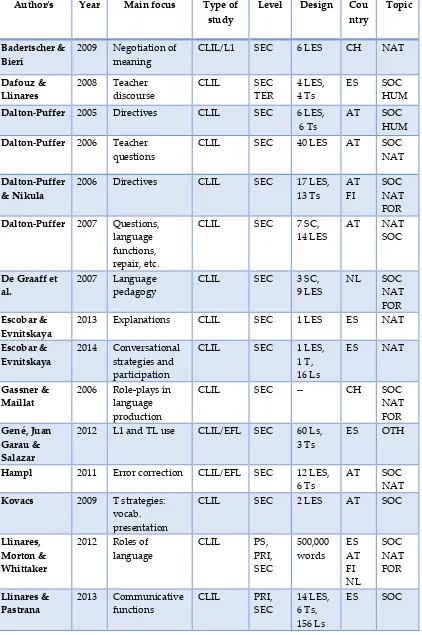
(15) INDEX OF TABLES. Table 1. Main research studies. 39. Table 2. School A: Distribution and class time of CLIL and EFL lessons. 62. Table 3. School B: Distribution and class time of CLIL and EFL lessons. 62. Table 4. School A: General snapshot of CLIL and EFL lessons. 71. Table 5. School A - CLIL - Task 1: Group work discussion. 72. Table 6. School A - CLIL - Task 2: Whole class creation of a poster. 73. Table 7. School A - CLIL - Task 3: Group work role play. 73. Table 8. School A - EFL: Activities in the EFL teaching unit. 74. Table 9. School B: General snapshot of CLIL and EFL lessons. 78. Table 10. School B - CLIL - Single Task: Experiment about the germination of seeds. 80. Table 11. School B - EFL: Activities in the EFL teaching unit. 82. Table 12. School A - CLIL/EFL: Learners’ oral production according to length. 89. Table 13. School A - CLIL/EFL: Learners’ oral production with at least one clause. 90. Table 14. School B - CLIL/EFL: Learners’ oral production according to length. 104. Table 15. School B - CLIL/EFL: Learners’ oral production with at least one clause. 105. Table 16. School A - CLIL/EFL: Percentage of teacher corrective feedback according to type following learners’ L2/L1 production. 127. Table 17. School B - CLIL/EFL: Percentage of teacher corrective feedback according to type following learners’ L2/L1 production. x. 148.
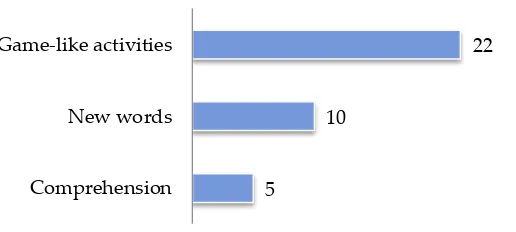
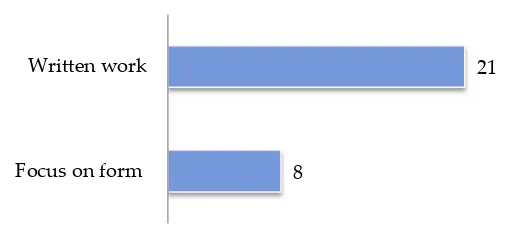
(16) INDEX OF FIGURES. Figure 1. Design of the study. 60. Figure 2. School A - CLIL: What learners like the most. 75. Figure 3. School A - CLIL: What learners like the least. 76. Figure 4. School A - EFL: What learners like the most. 76. Figure 5. School A - EFL: What learners like the least. 77. Figure 6. School B - CLIL: What learners like the most. 83. Figure 7. School B – CLIL: What learners like the least. 84. Figure 8. School B - EFL: What learners like the most. 85. Figure 9. School B – EFL: What learners like the least. 85. Figure 10. School A - CLIL/EFL: Percentage of teacher corrective feedback according to type following learners’ L2/L1 production. 127. Figure 11. School B - CLIL/EFL: Percentage of teacher corrective feedback according to type following learners’ L2/L1 production. xi. 148.
(17) xii.
(18) CHAPTER 1. Introduction. In the era of globalisation and internationalisation, it is undeniably true that the command of foreign languages –English being the lingua franca par excellence– is at the forefront of education agendas across the globe. Since the early 1990s, the European Union has shown a growing interest in the adoption of an educational model to enhance the value of European linguistic diversity as well as to ensure sustainable levels of foreign language proficiency. The White Paper “Teaching and Learning: Towards the Learning Society” (Commission of the European Communities, 1995) proposed the “2 + 1” formula, which advocated that European citizens should be able to use their own language as well as two other languages. With this objective in mind, the European Network of Administrators, Researchers and Practitioners working under the remit of the European Commission funding coined the term “Content and Language Integrated Learning”, well-known by the acronym CLIL. This was defined as “a dual-focused educational approach in which an additional language is used for the learning and teaching of both content and language” (Coyle, Hood & Marsh, 2010: 1). CLIL was then used as an umbrella term to subsume different types of emerging. 1.
(19) bilingual education, immersion experiences and content-based instruction across a range of European countries. These were basically inspired by the overall successful results obtained by Canadian immersion education, in which English-speaking students received subject-matter instruction via French, and bilingual language teaching programs in North America back in the 1960s.. In the case of Spain, CLIL programmes have been embraced by the educational authorities in many Spanish Autonomous Communities as a way to enhance the levels of English as a foreign language –or French in some cases– by offering added exposure to the foreign language through the integration of language and non-linguistic content. Even though children in Spain are in contact with English for at least 10 years before compulsory education finishes, results do not match such investment of time and effort. In fact, at the end of compulsory education when aged 15, Spanish teenagers have been reported to lag behind their European peers in their English language proficiency yet having received instruction for a greater number of years.1. The starting age for foreign language learning has been progressively moved forward –being at 6 years old by law– supported by the once alleged superiority of young starters at implicit language learning. However, it has been empirically proven that instructed language learners do not have access to the amount and type of input that learners have in a naturalistic language learning setting. Thus, it is older learners the ones who benefit the most from explicit language learning in an instructed language learning setting because of their greater cognitive maturity (Celaya, Torras. 1. Estudio Europeo de Competencia Lingüística (EECL). Sistema estatal de indicadores de la educación. (edición 2012). Ministerio de Educación, Cultura y Deporte (MEC).. 2.
(20) and Pérez-Vidal, 2001; Cenoz, 2002; García Mayo and García Lecumberri, 2003; Miralpeix, 2008; Muñoz 2006, Navés, 2006). All these research findings have led to argue that the earlier may be better but provided it is associated with enough significant exposure and, more specifically, such exposure needs to be intensively distributed (Serrano, 2007, 2011; Serrano and Muñoz, 2007) and learners should be given opportunities to participate in a variety of L2 social contexts. This is where CLIL comes in addition to regular EFL learning.. There are four components have been considered key in the acquisition of a second/foreign language: exposure to input, processing of meaning, processing of form and language production. According to Krashen’s (1985) Input Hypothesis, abundant and comprehensible input that is slightly beyond the learners’ current level (i+1) is a must. Apart from quantity and comprehensibility, such input also needs to be qualitatively powerful, that is, it needs to be presented in a range of communicative situations that are meaningful to the learners. In this respect, traditional EFL programmes have been reported as offering limited exposure to input only some hours per week during school time. Input is not always authentic and the language is basically treated as an object to be analysed from the viewpoint of grammar structures, vocabulary, etc. Besides, input is functionally restricted since it is limited to that provided by the textbook and it is not used communicatively to reach a particular objective. On the other hand, CLIL has been embraced as providing plenty of input which is real and meaningful at the same time because it relates to the content (History, Maths, P.E., Science, etc.) presented and the language is used for communicative purposes.. 3.
(21) Secondly, comprehensible input needs to be processed for meaning (Skehan, 1998), but only real and communicative will be perceived as necessary to process. Thus, if EFL input does not motivate learners because it is textbook-based and it has nothing to do with communicative language use, EFL learners are not really compelled to process it for meaning. On the contrary, if content is attractive in itself to get to know about a historical event or a scientific procedure, learners will feel motivated to process meaning.. Thirdly, learners need to be encouraged to process linguistic form as well in order to incorporate it to their linguistic system. In the EFL context, the processing of form is encouraged when the teacher explicitly draws the learners’ attention to certain formal aspects of the language. However, bearing in mind that language forms are often decontextualized and devoid of meaning, more often than not learners might not feel the need to remain alert and pay attention to such forms (Schmidt, 1990). In the CLIL context, if the learners are motivated by the communication itself, it is more likely that they engage in form-function analysis because they feel the urge to attend to form if they are to understand the content at hand. Nevertheless, a lesson in which content is taught through the medium of a second or foreign language does not always guarantee a focus on form.. Lastly, according to Swain’s Output Hypothesis, complex verbal production is necessary as evidence of correct language processing. Learners should have numerous and varied opportunities to speak and write in different contexts and with different aims (Swain, 1995), and this has not traditionally been the case in EFL instruction. Linguistic production is limited, it does not generally require deep processing and is. 4.
(22) not based on real communication, which leads to demotivation on the part of the learner. On the other hand, the challenge of working on the oral production of learners can be easily taken on in CLIL by including tasks that involve different forms of language production in order to achieve a real communicative goal. Like this, the learners will feel the urge to use the language productively in order to communicate. Furthermore, once articulated, the learners can be made aware of their errors and receive corrective feedback in the classroom setting (Lyster & Ranta, 1997; Lyster, 2004).. All things considered, EFL instruction presents a number of limitations or shortcomings which do not really contribute to enhance the learning of English as a foreign language. CLIL instruction has been embraced as an alternative in the current educational system that could overcome the deficiencies of a more traditional approach to language learning. Although a number of studies have already pointed to the benefits of engaging in CLIL instruction in terms of language gains, there is a need for more research on the actual learning conditions of CLIL lessons and the learning experience of CLIL students that would help establish what makes it different from traditional EFL instruction.. Chapter 2 presents the theoretical background that supports the present study and provides an overview of the research conducted in CLIL within the last two decades. The first section provides an overview of studies with a focus on pedagogical aspects of CLIL. The second section deals with SLA-based research studies touching upon a number of aspects which have been considered key in the acquisition of a foreign language as well as pragmatic studies which deal with the appropriate use of. 5.
(23) the language. The last section reviews more recent studies that seek to integrate content and language learning by drawing the model provided by Systemic Functional Linguistics (henceforth, SFL).. Chapter 3 presents the research questions that motivated the present study and provides a thorough description of methodology employed including a description of the participating schools, the teachers and the learners as well as the design of the study and procedures followed for data analysis. The chapter finishes with a snapshot of the CLIL and the EFL instructional contexts including a general overview of CLIL and EFL lessons and of the teaching units under analysis, in particular, with an account of learners’ perceptions of what they enjoyed the most and the least of each of the two instructional contexts.. Chapter 4 and Chapter 5 present the results obtained in relation to the research questions presented in the previous chapter. A quantitative overview of the findings precedes a qualitative account of the results by means of a range of classroom excerpts. Each section ends with a summary of commonalities between the CLIL context and the EFL context. At the end of the chapter, a list of the common points found in the two schools concerning CLIL and EFL classroom settings is also presented. The findings presented in these two chapters are discussed in Chapter 6 in the light of previous research.. Finally, Chapter 7 offers some final conclusions, in which the results from this dissertation are summarised. Then, limitations are pointed out and some ideas are suggested for further research. The references and the appendices are provided after this concluding chapter. 6.
(24) CHAPTER 2. An overview of classroom-based CLIL research. 2.1. Introduction The introduction of CLIL into the educational systems across Europe and its progressive development during the last decades have encouraged the production of research studies in different directions giving rise to a varied CLIL research landscape. Dalton-Puffer & Smit’s (2007) and Dalton-Puffer, Nikula & Smit (2010) have described the wide CLIL research space by drawing on the dimensions macro vs. micro and product vs. process. According to such classification, CLIL research involving both product-oriented and process-oriented macro studies take the form of reports on the implementation of CLIL programmes (Badertscher & Bieri, 2009; Ruiz de Zarobe & Jiménez Catalán, 2009, for instance) and descriptions of general guidelines (Breidbach, Bach & Wolff, 2002; Coyle, Hood & Marsh, 2010; Marsh, 2002; Marsh & Langé, 2000). At the micro-level, concern has been shown from the origins of CLIL research towards product-oriented studies which aimed at examining CLIL results in terms of language learning outcomes. In fact, three different large-scale studies conducted in The Netherlands, Spain and Germany, accordingly, have already dealt with overall language gains (Admiral, Westhoff & de Bot, 2006; Lasagabaster, 2008, Zydatiß, 2007). 7.
(25) and other studies have particularly addressed discrete linguistic aspects like vocabulary, pronunciation and morphosyntax (Sylvén, 2004; Ruiz de Zarobe & Jiménez Catalán, 2009). In fact, this has been the main source of CLIL research for a number of years up until quite recently when interest in the process in relation to the product has been increasing. Therefore, process-oriented micro studies aim at exploring CLIL lessons in terms of their pedagogical design and the local interactive experience that learners have in CLIL lessons as learning environments, often providing a comparative account of CLIL and L1 subject-matter or CLIL and regular EFL classes. The present study seeks to contribute to this last strand within the ample CLIL research scene.. Although. process-oriented. research. in. CLIL. classrooms. has. mostly. concentrated around secondary education research, studies conducted in primary education and tertiary education are also reviewed in this chapter. Furthermore, bearing in mind that there exists a long research tradition in discourse analysis that has drawn on a variety of theoretical models coming from different disciplines and used a variety of descriptive frameworks to approach classroom data, the studies presented in this chapter also reflect such varied landscape in line with Dalton-Puffer’s (2007: 42) claim that “the complexity which characterizes classroom discourse as an object of research interest makes it difficult to envisage a theoretical and/or descriptive framework which will do equal justice to all aspects of the event”. Thus, following Nikula, Dalton-Puffer and Llinares’ (2013) recent classification of CLIL classroom interaction, the following pages will be devoted to the review of CLIL studies from three different perspectives, based on whether they are primarily oriented to (a) CLIL classroom interaction as evidence of second/foreign language learning, (b) foreign. 8.
(26) language use and social-interactional aspects and (c) knowledge construction processes. What is more, methodological frameworks for data analysis also include a range of theoretical constructs from the field of SLA, from discourse analytic and pragmatic frameworks and, finally, from an SFL standpoint (Halliday, 1993) that considers language as a social semiotic system. It needs to be highlighted that the overlapping of perspectives and approaches across these three strands is evident at some points in this literature review, but far from being an obstacle, such combination is considered to make research findings more robust. The table at the end of these chapter (Table 1) contains a list of some of the main research studies reviewed in each of these strands together with information on the object of study, whether it is a comparative study of CLIL and EFL or L1 subject matter or not, the country where the study took place, the educational level, the number of classroom participants and the non-linguistic subjects covered. It must be noted that the terms “second language” (L2) and “foreign language” (FL) have been used interchangeably –unless when it is explicitly stated– throughout this dissertation and the same holds true for the distinction between “language acquisition” and “language learning”.. 2.2.. Second/foreign language learning: pedagogical practice and. interactional features of CLIL classroom settings Questions of second/foreign language learning in terms of CLIL pedagogical design and opportunities for classroom interaction have featured prominently in CLIL research. This section includes interaction-based studies that draw on constructs deriving from SLA research (Doughty & Williams, 1998; Lantolf, 2000; Long, 1996; Swain, 1995), including those studies grounded in a more sociocultural and/or social9.
(27) constructivist learning theory (Bruner, 1990; Vygotsky, 1978). In particular, aspects related the negotiation of meaning, the provision of corrective feedback and attention to form, output production and task-based learning will be looked at throughout the chapter.. Negotiation of meaning has been considered to play an essential role in interaction as a guarantee of mutual understanding among the interlocutors. Such is the importance of negotiation while interacting that speakers tend to make use of different strategies in order to overcome the communicative obstacles or difficulties they encounter and avoid communication breakdowns or misunderstandings (Mariotti 2006, 2007; Foster & Ohta, 2005). Paralleling negotiation of meaning studies in naturalistic L2 classroom contexts (Foster & Ohta, 2005; Musumeci, 1996), studies on the negotiation of meaning (henceforth, NoM) in CLIL have pursued two different lines of research. On the one hand, CLIL lessons have been compared to regular EFL classrooms in order to check whether the former afford more opportunities for negotiation due to their double focus on content and language and, therefore, provide a richer language learning environment than the traditional EFL classrooms where the language is the object of study. On the other hand, other CLIL studies have concentrated on the study of negotiation episodes to compare the construction of subject specific concepts in CLIL and L1 subject matter classrooms.. Studies like Badertscher & Bieri (2009) found the number of NoMs was twice as high in the CLIL lessons as in the L1 lessons, which was also supported by Lochtman (2007) when comparing CLIL and EFL classes. When examining the initiator of such sequences, Mariotti (2006) reported a high share of student clarification requests when. 10.
(28) examining CLIL classrooms, while Badertscher & Bieri (2009) did not provide evidence of such high rate of student-initiated negotiation sequences in both CLIL and L1 lessons. As pointed out by Mariotti (2006), results need to be examined with caution taking into account that the interactional space available for negotiation episodes might be influenced by the pedagogical design of the lessons. In fact, although studentinitiated NoMs were frequent in Mariotti’s study, the fact that there were two teachers in the classroom might have somehow discouraged an even greater incidence of learner-initiated negotiations. Furthermore, the learners’ degree of familiarity with CLIL and their negotiation behaviour over time might also have an impact on the number of learner-initiated negotiations, which is evidenced by Smit’s (2010a) longitudinal study of a tertiary level group of students who take an active student negotiation behaviour as they appear to be cognitively mature and gain familiarity with CLIL instruction.. What is more, the provision of corrective feedback in response to learner language errors has also been a core topic in SLA research (Basturkmen, Lowen & Ellis, 2004; Mackey, 2007). With regard to CLIL, the question remains as to if and how content and language are attended to given the dual-focused nature of CLIL as compared to regular EFL contexts. A number of comparative studies targeting CLIL and EFL contexts have provided evidence of the higher rate of error treatment in EFL than in CLIL (Hampl, 2011; Lochtman, 2007; Schuitemaker-King, 2012). Nevertheless, Hampl (2011) showed that, even though errors were more readily treated in EFL, students made more language errors in CLIL, which was attributed to the fact that CLIL learners talked more and monitored less due to their greater focus on the. 11.
(29) meaning than on the language form. As for the type of learner errors, Dalton-Puffer (2007) and Llinares, Morton & Whittaker (2012), this latter study extending the traditional focus-on-form approach in SLA to a focus on language functions in academic registers and genres, showed similar results indicating that corrective feedback in CLIL tends to focus on lexical errors as well as on pronunciation errors. In the case of morphosyntactic errors, they were less frequently corrected in both studies. Nevertheless, such order of preference does not match Lyster’s (2007) study on Canadian immersion, where pronunciation errors received the least amount of attention.. When CLIL and EFL are compared, Hampl (2011) contends that grammatical errors prevailed over other error types in both contexts, followed by pronunciation and lexical errors. Therefore, all these research results yield inconclusive results, which point towards the influential role of teacher style and preferences when it comes to error correction. In interviews conducted with Austrian CLIL teachers, Dalton-Puffer (2007) could identify differences related to the teachers’ profile. Subject teachers who had no EFL qualifications professed they were very much concerned about correcting errors that were repeated –like missing 3rd person –s in verb forms. Quite differently, EFL teachers who were teaching CLIL were less concerned about correcting language mistakes and, in fact, they transmitted this message to the learners. Nevertheless, such teacher reflections did not really map onto what happened during classroom interaction since EFL teachers tended to correct more language errors than their nonEFL counterparts. Along these lines, more research is needed in a wide variety of CLIL. 12.
(30) classrooms, especially comparative studies addressing CLIL and EFL, with a variety of teacher styles and preferences for error correction.. Turning to the way student errors are treated in classroom interaction, recasts have been observed to be by far the most frequently used feedback type, as has also been reported by studies conducted in immersion contexts (Lyster & Ranta, 1997; Mori, 2000; Lee, 2006) EFL/ESL contexts (Ellis et al. 2001; Panova & Lyster, 2002) and CLIL and immersion contexts (Llinares & Lyster, 2014). In the context of CLIL side by side EFL, Hampl (2011) demonstrated that more than 50% of errors were met with recasts in both settings. In regard to prompts, metalinguistic feedback was preferred by EFL teachers (16.5%), whereas only a small number of this feedback type was found in CLIL (3%). Clarification requests elicitations and repetitions under the category of prompts were hardly identified in both contexts. In a similar vein, Schuitemaker-King’s (2012) found extremely few examples of metalinguistic feedback in CLIL, whereas it was the most frequent feedback type in EFL. In Perez-Vidal’s preliminary study (2007), no instances of corrective feedback to address learners’ inaccurate language use in CLIL were identified. As Lotchman (2007) argued, corrective feedback that pushes learners to correct form would be a desirable addition to CLIL classrooms, very much in line with Lyster’s (2007) “counterbalanced” approach that aims at integrating both content-based and form-focused instructional options as complementary ways of intervening to develop learners’ interlanguage system. As pointed out by Llinares & Lyster (2014), the majority of learner repair moves in their CLIL classrooms followed recasts, whereas their variety of immersion classrooms showed learner repair following both recasts and prompts. However, different types of recasts –didactic and. 13.
(31) conversational recasts– were identified in related to a number of context-specific influences that might help explain such findings.. An aspect that has received growing attention in CLIL research is the quantity and quality of student output by focusing on teacher question as triggering students’ language production. Previous research both within the field of SLA and general education (Long & Sato, 1983; Mehan, 1979) have traditionally worked with a number of question types (display/referential, open/close, convergent/divergent) indicating an overall lack of question types –referential/open/divergent questions–which lead to longer and more complex learner answers (Musumeci, 1996). In the context of CLIL, some studies have provided evidence of the preponderance of display questions (Dalton-Puffer, 2006, 2007; Pascual, 2010) and lower order convergent questions (Menegale, 2011; Schuitemaker-King, 2012) and the limited number of referential question when directly talking about the topic of the activities at hand. Nevertheless, the share of referential questions was greater when questions related to classroom management and the well-being of the teacher and the students was included (DaltonPuffer, 2006; Pascual, 2010). In Dalton-Puffer’s (2007) seminal work on discourse in CLIL classrooms, another classification is provided to account for learner answers based on the type of information that teacher questions seek to elicit. Such classification was operationalized based on the observation that minimal learner answers appeared not to be dependent of the type of question formulated by the teacher. Thus, according to Dalton-Puffer (2007), factual questions look for objective facts and events, which are matched with brief answers of a low linguistic complexity on the part of the learners. On the other hand, non-factual questions aimed at eliciting explanations, reasons,. 14.
(32) opinions or metacognitive information are considered to encourage longer learner responses of a greater linguistic complexity.. Dalton-Puffer’s (2007) findings indicated a clear predominance of factual questions over non-factual questions, which indicated that the potential of the latter group of questions in enhancing the learners’ foreign language competence was not being fully exploited. In fact, the teachers’ profile and their foreign language proficiency level were pinpointed as contributing to the teachers’ reluctance to formulate non-factual questions which are more likely to lead to unplanned directions beyond. the. well-defined. Initiation/Response/Follow-up. interactional. pattern. (henceforth, IRF) (Sinclair & Coulthard, 1975). Along these lines, Pascual’s (2010) comparison of two CLIL teachers with different profiles indicated that, despite the fact that the content teacher with EFL training was aware of the importance of complex student output, she did not deploy a variety of question types to elicit such production. On the contrary, the content-only teacher was more inclined to use a wide variety of questions that elicited questions that needed to be verbalized in more complex ways. Apart from teacher questions eliciting learner output, questions formulated by the learners themselves have not received much attention except for one another study by Dalton-Puffer (2007) which showed that these are minimal and only uttered when asking about either the meaning of new target concepts or about classroom procedures and, additionally, there is strong tendency for such questions to be formulated in the L1 rather than in the foreign language. This goes hand in hand with observations made by other authors (Lim Falk, 2008; Mewald, 2004) about CLIL learners’ relatively little practice in taking an active speaking role in the target language. When CLIL and EFL. 15.
(33) contexts are compared, though, discourse practices in CLIL settings are reported to offer students more opportunities for active participation than those in EFL classrooms (Nikula 2005, 2007a), as will be further explored in the following section when addressing studies addressing discourse-pragmatic features of classroom language use.. What is more, apart from the study of teacher questions to encourage the provision of output, other studies have particularly examined the teacher’s provision of input. Schuitemaker-King (2012) found that 40% of the 38 CLIL teachers observed in the study never modified the input provided in order to make it more comprehensible and, those who did, employed such strategy very rarely. In the EFL classes investigated as part of the same study, input modification was neither a common features of teacher behaviour, but it was observed that language was so carefully preselected that online modifications were unnecessary. In fact, one of the scaffolding strategies used by these teachers was to switch to the L1 to anticipate lexical problems at the expense of foreign language modified input. Other studies (Kovacs, 2009; Schuitemaker-King, 2012) also support CLIL teachers’ wide range of scaffolding strategies, which also include the use of the L1 to address lexical gaps. Nevertheless, both studies pointed to differences in favour of the didactic repertoire of teachers with double qualifications –language and content experts– as compared to content experts only.. The pedagogical design of CLIL lessons in terms of classroom organization and activity types has also received growing attention over the years, especially in relation to Task-Based Learning (henceforth, TBL). Although the role of tasks in CLIL has been highlighted (Gilabert, 2009) in the sense that it allows for genuine meaning-focused. 16.
(34) interaction and attention to form, how CLIL lessons can integrate the insights gained from vast research on TBL (Nunan, 2004; Skehan, 1998b, 2003; Willis, 1996) is still an unexplored area of study. Research studies carried out in CLIL contexts so far have particularly addressed learners’ performance while having different interactional arrangements: whole class discussions, pair work and group work. Studies like Badertscher and Bieri (2009) and Dalton-Puffer (2007) have demonstrated that teacherled whole class discussions are dominant if compared to teacher presentations, group work or pair work in the CLIL lessons analysed. According to Dalton-Puffer (2007), such whole class discussions follow loops of IRF sequences predominantly dominated by the teacher, which in fact runs counter to general claims about CLIL per se leading to more student-centered learning (Mehisto, Marsh & Frigols, 2008). However, as reported by Badertscher and Bieri (2009), such interactional mode was as common in CLIL as in L1 content lessons, which calls for further research in this direction.. As for small group and pair work interaction in CLIL lessons while working around tasks, research conducted by Gassner & Maillat (2006), Horillo Godino (2011), Llinares, Morton & Whittaker (2012), Llinares & Morton (2010), Maillat (2010), Nikula (2012) Pastrana (2010) and Tapias Nadales (2011) all agree on the potential of small group interaction –performing role plays, for instance– to maximize learners’ involvement and language production mainly in the context of secondary education. As underscored by Nikula, Dalton-Puffer & Llinares (2013), contextual features like educational traditions across different countries and aspects like class size inevitably come into play when defining the pedagogical designs of lessons and the actual classroom practices as reflected in interaction.. 17.
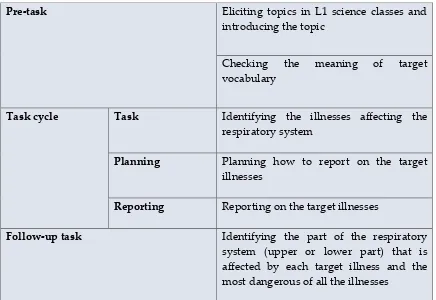
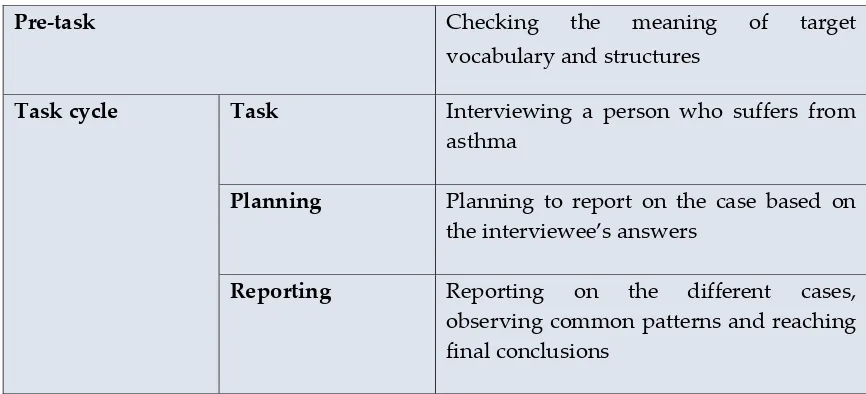
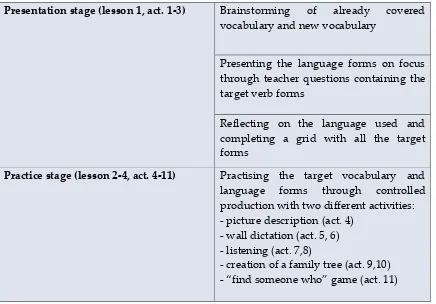
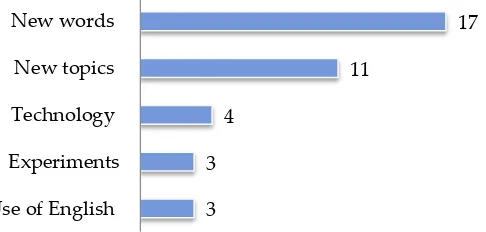
(35) All the research studies reviewed so far have drawn upon the pedagogical design of CLIL lesson –sometimes in comparison to EFL lessons and L1 subject matter lessons– and, more specifically, have addressed a number of questions which have been relevant in classroom-based SLA research. The review of all these studies has generally indicated that negotiation of meaning sequences occurred in the CLIL lessons analysed, though they appeared to be dependent on different aspects of the pedagogical design of CLIL lessons. Besides, the provision of corrective feedback has also been identified as a feature of some but not all CLIL lessons. The incidence of errors, their linguistic focus and the way they are dealt with in interaction varies across different studies. In addition, studies focusing on teacher questions and learner answers have shown that learners’ output tends to be limited in terms of quantity and quality and that there is a need to reconsider how teachers formulate questions to enhance learners’ language production. Finally, form the perspective of pedagogical design, the integration of content and language in the creation of CLIL materials as well as the effect of different classroom arrangements has also received some degree of attention in the study of CLIL instructional settings.. The following section now presents those CLIL studies which delve into the features of the CLIL classroom as a place for language use and social conduct leading to language development.. 18.
(36) 2.3. Discourse-pragmatic features of language use in CLIL classroom settings. Identifying the conditions in CLIL classroom discourse to engage participants’ in talk so as to boost foreign language development has been the major concern for another strand of research ascribing to sociocultural views towards the learning process (Lantolf, 2000). All the studies presented in this section are concerned with social-interpersonal dimensions of classroom discourse, which basically translates into how polite or pragmatically appropriate foreign language use is. As will be noted, social and contextual approaches to language learning based on SFL and Pragmatics are key for the understanding of language use and language learning in CLIL educational contexts; therefore, a combination of theoretical models will be recognized as well as different discourse analytical approaches like Discourse Analysis model by Sinclair & Coulthard (1975), Speech Act Analysis based on Searle’s (1969) Speech Act Theory or Conversation Analysis (henceforth, CA) (Mehan, 1979; Van Lier, 1988; Ohta, 1999; Markee, 2000).. To begin with, Sinclair & Coulthard’s (1975) IRF tripartite structure has been adopted by studies like Nikula (2007b) to compare CLIL and EFL lessons. The results obtained indicated that such pattern was common in both contexts, but even more so in the EFL setting. From a qualitative viewpoint, such IRF exchanges were considered to be more loosely structured in the CLIL setting in the sense that student-initiated IRFs were more common in CLIL and the CLIL teacher quite often used the follow-up move to elaborate on the learners’ answers by providing extra teacher input in the form of explanations, reasons or justifications (Marsol, 2008). In addition, such teacher. 19.
(37) feedback in CLIL was also considered to afford more space for student reactions, leading to IRFF exchange patterns including the students’ reactions to the teacher’s follow-up move.. As for the study of turn allocation, the role of repetition in interaction has also been one of the research interests of conversational analysts in the study of social patterns of interaction in conversations. Based on the distinction proposed by Tannen (1989) and Johnstone et al. (1994) between “self-repetitions” (i.e. repeating what one said) and allo-/other-repetition (i.e. repeating what is uttered by another speaker), the analysis of repetitions in. foreign language learning contexts has demonstrated that. they fulfil a dual function in enhancing comprehension while at the same time facilitating learners’ awareness of L2 features. In bilingual/low-immersion contexts, Llinares (2003) acknowledged the importance of self-repetitions as one of the three most common functions in the language of the teacher since messages need to be reinforced all the time to ensure learner comprehension. In the CLIL classroom, Dafouz & Llinares (2008) demonstrated that self-repetitions are widely used by secondary and university teachers when wishing to reinforce comprehension of subject content and make it accessible for all the students. In addition, teacher repetitions after the learners’ utterances or “allo-repetitions” are used to confirm or disconfirm the validity of the learners’ words from the point of view of content and/or language (pedagogic feedback) as well as to further enhance the learners’ production (interactional feedback). Differences in the function of these repetitions are shown to be dependent on. the. teachers’. profile. and. the. classroom. methodology. employed.. The. content/language expert teacher in secondary education favoured the use of pedagogic. 20.
(38) feedback more than the content expert teacher. These findings are in line with Nikula’s (2007b) claiming that the IRF structure is more rigid in the EFL classes than in the CLIL classes. Conversely, the content expert teacher displayed more instances of interactional feedback to encourage the learners’ active participation in the construction of knowledge through the foreign language. At the tertiary level, the content and EFL teacher favoured allo-repetitions in the form of pedagogic feedback over self-repetitions because the teacher presented the content in an inductive way and used prompts for the learners to participate. On the contrary, the content teacher in this context adopted a lecturing style and self-repetitions were used to frame the speech and so make it easier for the students to follow. Though with less frequency, when allo-repetitions were employed, their aim was to clarify problems of content comprehension by echoing the students’ difficulties and providing an answer. Finally, from a CA perspective as well, other research studies have drawn their attention to the kinds of embodied actions (gaze, pointing gestures, body orientation, etc.) and other semiotic resources teachers draw on when allocating turns to speakers and when projecting repair actions in activities structured according to the IRF instructional sequence of (Kääntä, 2010; Moore & Nussbaum, 2011).. What is more, pragmatically-based studies on CLIL classroom discourse have concentrated around the use of speech acts to examine the interpersonal meanings created during classroom interaction by particularly focusing on the use of directives whose objective is to cause the hearer to react and take a particular action. Besides, other indicators of pragmatic awareness such as hedges, pronouns, discourse markers and verb forms have also received some attention as well as repair sequences where. 21.
(39) communication breakdowns or misunderstandings need to be negotiated. In fact, all the studies have particularly focused on the teachers’ use rather than the students’ use of speech acts in order to characterize CLIL contexts as input-rich in developing learners’ pragmatic awareness.. As for the study of directives, Dalton-Puffer (2005, 2007) and Dalton-Puffer and Nikula (2006) both reported on the close relationship between the level of directness in the formal realization of teacher directives and the goal of the directive and the moment when it is uttered. On the one hand, a clear distinction was made between directives that aim at eliciting curricular contents, also referred to as “instructional register” (Christie, 2002), or those that require learners to perform an action mainly related to classroom management or discipline, often called “regulative register” (Christie, 2002). More specifically, the CLIL teachers analysed used directives in the instructional register, which took the form of requests for information mostly initiated by wh-questions (“Which organisms do have that type of cell?”). Otherwise, directives within the regulative register displayed a much wider range of realizations and were considered less direct since they were modified or mitigated by means of a number of strategies: modal verbs (“May I interrupt you?”), need-statements (“I need two volunteers”), like-statements and politeness markers (“So can you do it please?”) or inclusive “we” (“Can we get started now?). As reported by the authors, more direct realizations included the use of imperatives (“Sit down, you will continue next lesson”) and the form “let’s” (“Let’s look at the social structure”). One possible reason provided by the authors to account for these findings is that directives concerning curricular information hold central stage in educational contexts; therefore, they carry a low. 22.
(40) imposition value and so less interpersonal negotiation and mitigation is perceived to be necessary.. Apart from teacher directives, studies such as Nikula (2002) delved into other indicators of pragmatic awareness (hedging devices, pronouns, discourse markers of politeness and verbal tense/mood) in a comparative case study about one CLIL lesson and one EFL lesson in primary education taught by one content teacher and one language teacher, respectively. The results obtained revealed that, in the EFL context, there was almost no need to negotiate interpersonal meanings since there was little room to express personal views and opinions. Classroom discourse was rather materials-dependent and based on fictional characters that contributed to create a feeling of detachment rather than involvement in EFL learners. However, the teacher displayed more sensitivity to pragmatic aspects of the language when switching to the L1, mostly to deal with language-related talk, classroom management and discipline. In the CLIL lesson, the fact that teacher-fronted monologic discourse occupied most of the classroom time resulted in the complete lack of face-to-face teacher-learner(s) encounters and, consequently, there was little need to mitigate the messages encoded. Furthermore, contrary to the EFL lessons, English was the language used all through the lesson, so it became impossible to check whether the teacher’s pragmatic behaviour differed when code-switching, as in the case of the EFL context.. Considering that in the above reported case study (Nikula, 2002) the CLIL and EFL data were not totally comparable due to the predominance of monologic teacher talk in the former, Nikula (2005) examined pragmatic awareness both in teachers and learners’ behaviour by drawing on a larger corpus of EFL lessons and CLIL lessons in. 23.
(41) secondary education. As in the previous study, EFL classroom talk was identified as being very often materials-dependent and learner contributions mainly took the form of replies to teacher’s display questions about textbook materials or grammar points. Furthermore, EFL students were supposed to talk about fictitious matters that often remained quite detached from their personal concerns. As a consequence, the adoption of a “they-there-then” deictic perspective instead of a more “I/we-you-here-now” viewpoint reduced the need to mitigate the face-threatening impact of the messages. Unlike Nikula’s (2002) results pointing to the predominance of monologic teacher talk in CLIL, Nikula (2005) claimed a greater number of student-centred CLIL activities that called for the display of a wider range of pragmatic functions (e.g. express opinions, indicate agreement and disagreement and make suggestions). However, even if classroom discourse in these CLIL classrooms proved to be of a more dialogic nature as compared to the CLIL classrooms in Nikula (2002), directness still predominated not only in the teachers’ talk but also in the learners’ contributions. All in all, these findings help reinforce the notion that the interpersonal relationship forged in the classroom context is far removed from the face-to-face interaction that one might encounter in a naturalistic setting outside the classroom context. Along these lines, the alternation between the foreign language and the mother tongue –English and Finnish, in this case– reported by Nikula (2002, 2005) in the EFL context and the lack of such alternation in the CLIL contexts might well reflect the learners’ orientation towards classroom discourse as learners and/or users of English in the classroom context. Both Nikula (2002) and Wannagat (2007) highlighted the learners’ commitment to learn and use the foreign language in order to acquire the skills necessary to succeed in their future professional careers in the Finnish and the 24.
(42) German context, respectively. Nevertheless, these observations run counter with Nikula’s (2007b) study in which she acknowledged an emerging bilingualism in the Finnish CLIL classrooms analysed since the L1 was not exclusively associated with the learners’ limited command of the target language. Instead, resorting to the L1 was regarded as a powerful tool to accomplish various interactional goals like signalling different types of addressee –the teacher or the peers– or displaying a greater emotional force (Dooly & Moore, 2009).. Upon noticing that all these studies had yielded positive evidence about the relationship between the levels of pragmatic sensitivity and code switching in the EFL and CLIL classrooms, Nikula (2010) embarked on the comparison of CLIL classrooms and L1 subject-matter classrooms in order to prove whether differences in the command of the target language had an effect on the indicators of pragmatic awareness in each classroom context. The same teacher was observed in one CLIL classroom and one L1 content classroom. The results showed that the teacher adopted a dialogic style when instructing by means of English and a rather monologic style when instructing in the L1, which was explained by the added difficulty of producing sustained monologues in the foreign language. Therefore, teachers’ proficiency level in the foreign language is another factor that comes out as intervening in the teachers’ ability to use a wide range of expressions to convey interpersonal meanings appropriately.. Lastly, another indicator of pragmatic awareness addressed is that of how repair sequences are handled from the students’ perspective (Nikula, 2008; Moore, 2011) in secondary education CLIL classrooms. According to the former study, when. 25.
(43) dealing with subject content (i.e. writing up the results of an experiment or when organizing how to perform a task), the learners expressed direct disagreement by using the particle “no”, for example, without any need to mitigate the encoded message. Quite differently, when approaching the teacher and expressing disagreement in situations involving classroom management or decision making, these CLIL students sometimes modulated their different contributions with pragmatic markers such as “well” and “then”, hedges like “just like” or vagueness markers “and stuff”. Despite the fact that these CLIL learners’ overall pragmatic repertoire remained fairly limited, they were considered to be sensitive to the pragmatic impact of their messages when expressing disagreement. Even though the author argued that it is not possible to determine whether such pragmatic awareness is the result of regular participation in CLIL classes, she argued that the image of the students’ pragmatic skills is more positive than has been suggested by studies which have tested students’ pragmatic skills in traditional EFL classrooms (Kasper & Rose, 2002; Rose & Kasper, 2001). The author further held that it might well be the case that, generally speaking, CLIL students find it easier to establish links between CLIL tasks with a strong contentbased component and out-of-class communicative situations, which might lead them to perceive the need to use the target language appropriately as in real-life communication.. Along the same lines, a study by Moore (2011) also contributed to define the learners’ performance from a pragmatic viewpoint though the study was not conducted in the classroom, but random pairs of secondary education CLIL learners and EFL learners were interviewed in their second year of participation in bilingual. 26.
(44) sections set up in Andalusia. Collaborative turns such as “embedded turns” (i.e. one speaker contributes to another speaker’s main turn) and “cooperative turns” (i.e. two or more speakers jointly construct the message) were more frequent among CLIL secondary education students. As a matter of fact, they produced four times more cooperative turns than their mainstream counterparts and they were embedding nearly twice as often. What is more, only more gifted CLIL learners were able to use modulation to soften the other’s message and expansion in other to complement each other’s input. All in all, CLIL might give learners an advantage in terms of foreign language development, but also in becoming better communicators all-round. Possible reasons to account for these greater interactive skills might be attributed to the higher presence of group work and pair work in the CLIL classrooms, as indicated in the questionnaires administered to both teachers and students in this study.. As mentioned in the previous section about pedagogical CLIL practices, particular task types have also been considered to contribute to the display of certain pragmatic functions. Gassner & Maillat (2006) Nikula (2008) observed that the implementation of role-plays enhanced the students’ foreign language production, but the same did not happen in the L1 subject-based classroom (Gassner & Maillat, 2006). This is explained by the potential masking effect of the foreign language due to the fact that acting out one’s part in the foreign language might lower the affective filter and help to assume a representing position that one might feel a bit reluctant to share. This statement runs counter to Harder’s (1980) claim that speaking a foreign language may lead to what he calls “reduced personality”, that is, speakers’ inability to use the foreign language in its full potential to express all the nuances of personality. In fact,. 27.
(45) this last point is also made evident in Nikula & Marsh’s (1997) report about teachers and students demonstrating their uneasiness when expressing themselves as nonnative speakers of the foreign language.. All in all, these pragmatically-based studies have revealed an overall tendency towards directness in the teachers’ directives and the limited use of other pragmatic devices to negotiate interpersonal meanings in interaction. Both the institutional nature of the context and the resulting asymmetrical power relationship between the teachers and the students and the teachers’ status as non-native speakers of English have been mentioned as having an effect on their performance. Drawing on earlier research in the field of interlanguage pragmatics, it has been contented that while displaying pragmatic concerns through modifiers may take place almost automatically for native speakers of a language, making strategic use of modifiers is often much more difficult for foreign language speakers who easily appear overly direct (Bergman and Kasper, 1993). In addition, the fact that both the teachers and, especially the learners, performed differently within the instructional register and the regulative register perfectly matches Nikula’s (2007a) claims about the learners’ enacting different roles as learners and/or users of English as a foreign language. Besides, when a comparative account of these two instructional settings is targeted (CLIL vs. EFL), research findings have shown that CLIL and EFL lessons share their being educational events with asymmetrical distribution of knowledge, power and speaking rights. Despite the fact that CLIL classrooms are considered to provide more naturalistic conditions for foreign language learning, the present studies yield inconclusive evidence since many contextual factors need to be taken into account. Generally speaking, CLIL and EFL. 28.
Figure
+7
Documento similar
Critical period effects in second language learning: The influence of maturational state on the acquisition of English as a second language.. Encyclopedic dictionary of
Critical Period effects in second language learning: The influence of maturational state on the acquisition of English as a Second Language.. The high school achievement of
(1984), Foreign and Second Language Learning: Language Acquisition Research and Its Implication for the Classroom, Cambridge, Cambridge University Press.. (1996), La
The second group would include the abilities such as: the overcoming of the stereotypes related to certain ethnic groups; the effective communication in the mother tongue and in the
Students will also be expected to take responsibility for their own learning through careful guidance from both the language assistant and the teacher which will provide students
© Edita: Servicio de Publicaciones de la Universidad de Córdoba.. Campus de
The aim of this paper is to demonstrate that reading authentic literary material in the English as a Foreign Language (EFL) classroom can improve students’ language learning skills as
Subjects were classified into different learner groups according to the two main variables in the design of the study: onset age of foreign language learning and amount of
