
TítuloAdapting the Unique Minds Program: exploring the feasibility of a multiple family intervention for children with learning disabilities in the context of Spain
13
0
0
Texto completo
(2) The adaptation of therapeutic interventions for use with families in different countries and with diverse cultures is an important task for clinicians and researchers (McLeigh, Katz, DavidsonArad, & Ben-Arieh, 2015; Parra-Cardona et al., 2012). Cultural adaptation is the modification of an intervention to make it compatible with a client population's culture, meanings, and values (Bernal, Jiménez-Chafey, & Domenech-Rodríguez, 2009) and implies changes to the content of the intervention and to delivery of the service (Domenech-Rodríguez, Baumann, & Schwartz, 2011) with two main goals: achieving treatment efficacy and cultural relevance (Sigmarsdóttir & Guðmundsdóttir, 2013; Sigmarsdóttir, Thorlacius, Guðmundsdóttir, & Degarmo, 2014). This article describes the cultural adaptation of Unique Minds, a multiple family intervention developed in the United States by Stern (1999), and presents the findings of a feasibility study with three multiple family groups of Spanish children and their mothers. Description of Unique Minds Unique Minds addresses the socio-emotional difficulties of children with learning disabilities (LD) and their families’ needs. Children with LD have skill deficits in one or more areas that are not commensurate with their potential, even though there has been adequate opportunity to learn. For example they may not listen, speak, read, write, or develop mathematical skills that correspond to their intellectual abilities (Lyon et al., 2001). Although their IQ is typically in the normal range their problems with cognitive processes lead to difficulties that affect teaching and school-based learning. Socio-emotional capabilities including self-knowledge, emotional regulation, and social and problem-solving skills are frequently affected (Ohl, Fox, & Mitchell, 2013). The academic failures of children with LD are often carried over into their home lives. Research has found that parents feel stressed (Stern, 2002), overloaded by academic work, guilty, and blamed for their children's poor results (Christenson & Hirsch, 1998). If there are child behavior problems, the level of family conflict is higher and family cohesion is lower than in comparison groups (Montiel-Nava, Montiel-Barbero, & Peña, 2005). Consequently, there is a growing recognition that when a child has problems, the needs and stresses of the entire family should be addressed and not just the individual child's behavior (Kratochwill, McDonald, Levin, Young-Bear Tibbetts, & Demaray, 2004). The Unique Minds program addresses children's difficulties together with their families’. It is structured, active, focused, and explicit, as recommended by Payton et al. (2008) in their review of effective social and emotional intervention programs for children. In Unique Minds a climate of reciprocal support is created. The program emphasizes that it is important to relate to others and to participate in order to promote responsibility, security, and support (Zins, Bloodworth, Weissberg, & Walberg, 2004). Parents become advocates for their children because their support is an important ingredient for success (Rogers, Theule, Ryan, & Keating, 2009). At the same time, LD are contextualized so that they do not occupy the entirety of family life. Although Unique Minds is a psycho-educational program, its therapeutic foundations are solution-focused brief family therapy (SFBT; De Shazer et al., 1986), the strategic model (Rohrbaugh & Shoham, 2001), and narrative therapy (White & Epston, 1990). SFBT gives to Unique Minds a structural framework of brevity and the philosophy that people and their family systems have the capacity to change. SFBT's concern with language is present in the program, for instance, instead of “disabilities” the term “difficulties” is used. Also apparent is SFBT's search for exceptions to problem behavior. The strategic therapy perspective is evident when the program explains vicious cycles or ironic processes that maintain difficulties and affect relationships. Finally, narrative therapy contributes the technique of externalization and underpins tools such as written materials that introduce new perspectives and meanings to create a new story of capability to replace the “old” story of disability. Despite the popularity of the program, a search of the literature found few published evaluations of Unique Minds as used with children and parents. So (2000) reported an adaptation using a focus group method designed to change Chinese parents’ attitudes toward their children with LD and claimed positive results. Unique Minds was also evaluated in Chile with a sample of six children and their families, using a pre-post design (Capurro, Sotz, & Arratia-Silva, 2011)..
(3) There were statistically significant improvements in mean ratings of self-esteem, depressive symptoms, and family functioning. The parents had a better understanding of LD, had increased their coping skills, and family school collaboration had improved post-test. The program was translated into Chilean Spanish but little information on its adaptation was given. When the current study was planned in 2006, the present authors were unaware of other Spanish speaking groups adapting Unique Minds. Aims The aims of the current project were to adapt the Unique Minds program for use in Spain and to carry out a feasibility study with a group of families and children. The feasibility study aimed to evaluate the program's impact on the socio-emotional adjustment and behavior of children with LD, from their own perspectives and those of their parents and teachers, and to assess its effects on family climate and parental socio-emotional functioning. It also aimed to assess the acceptability of the program to the children and their mothers. It was anticipated that the findings could subsequently be used to fine tune the adapted program for use in a controlled experimental study of its effectiveness.. METHOD Participants The participants in the feasibility study included 15 children with LD (nine girls and six boys) and 15 mothers. All children had been diagnosed as having LD by the schools’ psychologists or an external professional. They had no other associated difficulties or pathologies. Children were between 9 to 12 years (M = 10.33, SD = 0.97) while mothers’ ages ranged from 30 to 49 (M = 40.64, SD = 5.15). Nine children were in fourth grade, four were in fifth grade, and two were in sixth grade. The highest level of mothers’ education was high school (n = 12). The three remaining mothers had attended primary school only. Eleven mothers were working outside as well as inside the home. Mothers and children were all members of the majority ethnic group in Spain. Children were recruited from two mainstream schools in a northwestern province of Spain, one urban and the other rural. Three consecutive multiple family groups were undertaken. The first group included six children and their mothers, the second, five children and five mothers, and the third had four children and four mothers. Children from fourth, fifth, and sixth grade were mixed together in each group. The children's teachers did not attend the sessions because Unique Minds is designed as a multiple family program and it is not intended for teachers. Nevertheless, the children's teachers agreed to complete the evaluation questionnaires. Materials Cultural adaptation of the Unique Minds program The first step in exploring the feasibility of the Unique Minds program to Spain was to begin a process of cultural adaptation. Bernal et al. (2009) advise that cultural adaptations be considered in relation to language, including the use of metaphors, to concepts, to the methods, content, and mode of delivery, and to the relationship between families and therapists (group facilitators in this case). Domenech-Rodríguez et al. (2011), who present a model of application of Bernal's model, describe the cultural adaptation of a program for a minority ethnic Latino population in the USA, and proposed eight areas: language, persons, metaphors, content, concept, goals, methods, and context. Our presentation focuses on language, metaphors and concepts, content, methods, mode of delivery, context, and the relationship between families and therapists. We called the Spanish adaptation “Mentes Únicas” (López-Larrosa & González-Seijas, 2007)..
(4) Language, metaphors, and concepts The language in which a program is presented to families must be clear, understandable, and culturally appropriate. The initial translation was undertaken by the first author, a qualified educational psychologist and native Spanish speaker with accredited proficiency in English and clinical and research experience in Spain and English-speaking countries. The translation was reviewed by the second author, also a qualified educational psychologist and native Spanish speaker. Because parents and children attend the program together, considerable effort was made to ensure that the language was appropriate and accessible for both, being neither too childish for parents nor too complicated for children. The initial translation process took over a year. It was further refined during the piloting phase using feedback from the families, who were encouraged to ask for clarification, and comments from observers (clinicians and graduate students), who looked for evidence of difficulties in understanding. During this process, the group facilitators employed several synonyms for key words as well as pictures to support comprehension. In the translation process, the names of the main characters were changed through discussion between the first and second authors. Thus, Can'tasaurus became Nopuedosaurio (literally, Dinosaur “No can do”), and Zapper became a wasp called Avispa Mecrispa (literally, Wasp “Gets on my nerves”). Nopuedosaurio and Mecrispa are both characters to be defeated. New characters to be followed were a shrew called Musaraña Muchacaña (“Crank it up”), an owl called Búho Sabio (“Wise Owl”), and a squirrel called Ardilla Rapidilla (“Quick Squirrel”), all with problemsolving skill development in mind. “Muchacaña” (the Shrew) was identified as a leading character. This derives from a common metaphor in Spanish and does not carry the negative English meaning of a “quarrelsome woman”. When someone is not paying attention, there is a Spanish saying (dicho): “you are thinking in musarañas” (“estás pensando en las musarañas”). Children with LD are often perceived this way by others. So, we included a musaraña to stimulate critical discussion of this stereotype. Muchacaña defends itself from negative stereotypes with facts. It invites parents and children to think differently about themselves and about the other children in the group. Muchacaña leads the activities, gives examples, challenges, and provides explanations. These additions were based on the second author's experience in developing programs for children. We were inspired by other programs for children that use leading characters (Pedro-Carroll & Alpert-Gillis, 2010). In the first session, parents are encouraged to identify a family and personal motto (“lema”). These mottos were written down and posted on the walls. An example was: “Nunca digas no puedo” (Never say “I can't”). As for the conceptual area, the term “learning disabilities” is replaced by “learning difficulties”, which promotes the idea that we all learn differently and our minds are unique. This crystallizes in the English and the Spanish title of the program: Unique Minds/Mentes Únicas. Content Most activities were adopted from the original Unique Minds program. The participants’ engagement and responses to them were continuously monitored by the observers as well as the facilitators and discussed in postsession reviews. Some new activities were developed for children, for example asking them to write down and draw what makes them unique. Likewise, new information was provided for parents, for instance about how to enhance their children's reading skills. It is important to use role models which are familiar to participants and congruent with their experiences. Unique Minds includes a video in which a famous American actor tells of overcoming his difficulties at school. In Mentes Únicas, instead of dubbing or subtitling the video, a new video was made. This presents three Spanish adults with LD but the essence of the original message remains: “I had problems, but I succeeded using different problem-solving skills and I have finally found what I want to do in life”..
(5) Methods and materials Adaptations were made to the methods used to present the materials for children and parents to work with. In Mentes Únicas, children and parents do many activities. So that they have all the necessary materials in one place, activity books were created. The aim was to increase the families’ sense of ownership of the program and to help them follow the sequence of activities. The activity books include information that needs to be remembered from the previous session or that will be worked on in the next, together with the follow-up tasks they were asked to do at home, alone or together. These materials were developed by the second author and discussed and agreed with the first author. These activity books were called “manuales” and tasks were described as “experiments” or “detective-work” rather than “homework”, which was likely to have a negative connotation for children with school problems. Mode of delivery Unique Minds is delivered in eight 90-minute weekly sessions, but out of consideration for the demands on the family's resources for travelling and attendance, Mentes Únicas was contracted to seven sessions, of the same length. Sessions 5–7 of Unique Minds concern problem-solving and we considered that their content and activities could be covered in two. In both versions, the first and second sessions center on learning difficulties and mental processes (perception, attention, memory) and the necessity that mental processes coordinate. The third session concerns multiple intelligences: Family members are encouraged to identify their many intelligences, reframing the scholastic approach to intelligence that is based solely on test scores, literacy, and math proficiency. The fourth session is about powerful thoughts, and it is here that the characters of Nopuedosaurio and Mecrispa are introduced. Children identify their strengths to fight Nopuedosaurio, and parents share their knowledge of how to defeat Mecrispa. The fifth and sixth sessions (sessions 5–7 in Unique Minds) are about problem-solving, featuring problem solving creatures such as the Wise Owl and the Quick Squirrel. The seventh and last session concerns family school collaboration (session 8 in Unique Minds). In this, parents and children identify what already works at school and what needs to be changed and how. For reasons of confidentiality, we do not discuss individual children's participation and response to the program with their teachers and the schools. However, as part of the cultural adaptation process we held meetings with the children's teachers after the completion of each group, asking for their feedback on the impact of the program. Also, the senior staff of each participating school received a confidential report of the overall results of the program. Context Participants in the program belonged to the majority population in Spain. The children all attended schools within the same education system and shared similar experiences in dealing with teachers, as became evident in the sessions. Unique Minds addresses family school relationship in one session and suggests contacting and informing schools mainly at the beginning. This approach was followed in Mentes Únicas. School principals and psychologists were contacted at the beginning and teachers were contacted at the end of the program. In addition, with the parents’ agreement, a confidential report was sent to the school principal. As discussed below, we subsequently became aware of the limitations in our approach and realized that we needed actively to engage teachers and schools from the start of the program. Relationship between families and therapists Bernal et al. (2009) mention as another aspect of cultural adaptation the relationship between families and therapists. At the end of the program certificates are given to parents and children, and each child receives a present, a book with a few words of encouragement and support from the two group leaders. Present-giving is culturally appropriate in Spain and is also congruent with the role we adopted as group facilitators rather than as family therapists. We carefully monitored the parents’ and children's responses to the group process and their relationships with the facilitators using a measure of therapeutic alliance, described below..
(6) In summary, the cultural adaptation of Unique Minds was much more than a simple translation of the original materials. It involved the translation of concepts like “learning difficulties” and “unique minds” as well as the adaptation of characters, language, metaphors, content, mode of delivery, and methods, while the core therapeutic basis and approaches to intervention remained. The challenge was to keep a balance between the original program and an enhanced and adapted Spanish version. Evaluation materials and instruments The materials used in the evaluation were chosen or developed for their cultural and linguistic relevance. Thus, we used validated instruments which have been standardized for Spanish children of the same age as our participants and also for the parents and the teachers, along with ad-hoc feedback measures described below. Children's measures Behavior Assessment System for Children The children's socio-emotional status was assessed by the Spanish version of the Behavior Assessment System for Children (BASC; González, Fernández, Pérez, & Santamaría, 2004). We used the children's self-report and the teachers’ report measures, both of which have been standardized for Spanish children. The former has 145 items evaluating: school maladjustment, clinical maladjustment, personal adaptation, and other problems (depression, feeling unable, and social stress). The BASC is a commercial product and the company undertakes an analysis of raw questionnaire scores, returning standardized reports to the user. Consequently, we are unable to report scale reliabilities for the current study and rely on the developers’ own reports (González et al., 2004). Standardized subscale reliabilities (Cronbach's α) for the participant children's age are given as .81 for negative attitude toward school, .71 for negative attitude toward teachers, .81 for anxiety, .79 for atypicality, .77 for locus of control, .56 for relations with parents, .83 for interpersonal relations, .75 for self-esteem, .62 for self-confidence, .83 for depression, .72 for feeling unable, and .72 for social stress. According to Graham, Naglieri, and Weiner (2003), Cronbach's α of .60 or higher can be acceptable. Considering also Groth-Marnat's (2009) observation that “… unstable aspects of the person like anxiety produce lower reliabilities than stable ones” (p. 15), reliabilities of .60 and above are judged satisfactory in this study. The 149-item teacher's report evaluates: externalization, internalization, school problems, other problems (atypicality and withdrawal), adaptation skills (adaptability, leadership, and social skills), and study skills. The developers report age-standardized reliabilities as .95 for externalization, .85 for internalization, .94 for school problems, .79 for atypicality, .71 for withdrawal, .68 for adaptability, .80 for leadership, .87 for social skills, and .89 for study skills (González et al., 2004). All are acceptable following Graham et al. (2003). “Cuestionario final de los niños” (CFN) We developed the children's post-test questionnaire to assess the perceived usefulness of the program, asking “How do you see yourself as compared to when we started Mentes Únicas?” Options were: “worse”, “the same”, or “better”. “Cuestionario final de los profesores” (CFP) The teachers’ post-test questionnaire requested a rating of improvements in a child using a 5point Likert-type scale ranging from “nothing” to “a lot”. They also had to choose between: “Do you see improvements now”, “They will be seen at the end of the academic year”, “Next year”, or “They won't be seen”..
(7) Family measures Family Environment Scale The Family Environment Scale (FES) evaluates the social climate in a family. It has 90 truefalse items. According to the authors who standardized the instrument in the Spanish population (Fernández-Ballesteros & Sierra, 2000), the Kuder-Richardson reliability index is .78 for cohesion, .69 for expressiveness, .75 for conflict, .61 for independence, .64 for achievement orientation, .67 for active recreational orientation, .76 for organization, .67 for control, and .78 for moral-religious orientation and for intellectual-cultural orientation (Fernández-Ballesteros & Sierra, 2000). These are all acceptable. “Cuestionario inicial de la familia” (CIF) We developed this family pretest questionnaire to collect socio-demographic information and to evaluate the parents’ social supports and emotional responses to their children's situation. Social support is explored by asking: “Who can you count on when it comes to your child's school problems: his/her teacher, support teachers, other school staff, other professionals outside the school, your family or others?” Emotions are explored by asking mothers to rate how worried and how blamed they feel for their child's situation using Likert-type scales with anchors 0 (nothing) to 4 (a lot). Family conflict The following items of the O'Leary-Porter Scale (Porter & O'Leary, 1980) are included in CIF: frequency of conflict about discipline, quarreling in loud voice, fighting in front of the child, and frequency of displays of affection. Questions about the frequency of agreements and children's school problems are added. “Constructive conflict and affection” was calculated by summing affection displays and agreements divided by two. Destructive conflict was calculated by summing conflict about school, about discipline, quarreling, and fighting divided by four (Cummings & Davies, 2010). Cronbach's alpha pre- and post-test for the constructive conflict measure was .79 and .76, respectively, and .80 for destructive conflict pre and post-test. Questions about the frequency of fights concerning school homework, money, one of their children, family relationships, holidays, work, the school, relationship with teachers, and sibling relationships or other issues are all included in CIF. Mothers ranked these conflict topics from 10 (very often) to 1 (less often). Family conflict topics were collected at pretest only because family social climate was already evaluated with FES pre- and post-test. “Cuestionario final de la familia” (CFF) The parents’ post-test questionnaire (CFF) replicated the CIF adding a question about the usefulness of the program for their children, using the same formulation as the CFN. Acceptability To assess family members’ experience of the program, an instrument based on the therapeutic alliance construct was employed (Friedlander, Escudero, & Heatherington, 2006). At the end of each session, mothers and children completed a brief, four-item questionnaire (“Instrumento de evaluación del proceso”, IEP) in which they rated their participation in the session, security, common understanding, and how helped they felt, for example: “I have felt safe to express my feelings and thoughts”. The IEP uses a Likert-type scale ranging from “not at all” (1) to “a lot” (5). Cronbach's alpha for children and mothers, respectively, was .80 and .82 for participation, .76 and .90 for security, .70 and .86 for common understanding, and .63 and .95 for feeling helped. All are acceptable. CFN and CFF also asked participants to rate the fulfillment of their expectations of the program using a Likert-type scale: anchors “nothing” (0) to “a lot” (4). Finally, mothers were asked whether the program should “last less time”, “more time”, or if it was “OK like this”..
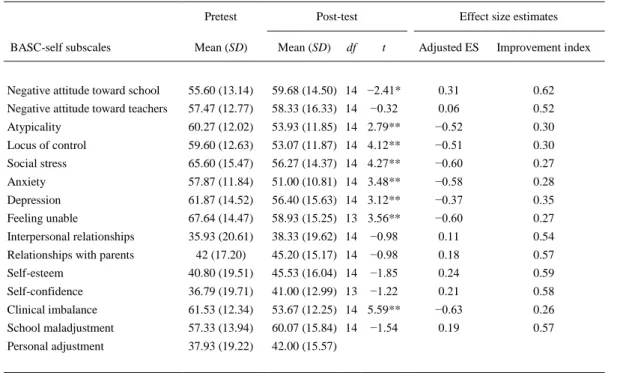
(8) Procedure The feasibility of the program was evaluated over 3 years with three different groups of children and their parents. Two schools were contacted and the head teachers agreed that families be approached in the first instance by the school's psychology service which identified children eligible to participate according to the following inclusion criteria. Eligible children had a LD diagnosed by either the school staff or other professionals and were in grades 4–6. Those grades were chosen because most children at these ages have been diagnosed and have had experience dealing with their difficulties. Also, according to Stern (1999), it is at these ages that children most need to build their sense of self-worth. No indication about family structure was included as a requirement for recruitment. The children did not have any associated difficulty. Once parents had accepted the invitation, all participants (families and children together) were briefed by the researchers on the aims of the program and its requirements. The Institutional Review Board of the researchers’ university faculty approved the procedures. The first meeting with each group occurred at the children's schools. The program was explained, questions were answered, and a welcome letter given. Parents signed informed consent forms and the children assented. All participants and the two group leaders signed confidentiality agreements. Only one of the families that had expressed an interest failed to attend the first meeting and did not come to the sessions. Pretest evaluations of parents (FES and CIF) and children (BASC) were carried out during the first meeting. After this meeting, teachers were given their instruments (BASC) and a thank-you note with a contact address. The teachers did not attend either the first meeting with parents and children or the following sessions. All subsequent sessions with children and their families took place at a university facility with one-way mirror. Observers (who also signed confidentially agreements) took summary notes for discussion with the group leaders. All sessions were led jointly by the first and second authors. The session format was as follows: a brief summary of the previous meeting; discussion of any concerns and comments; the topic of the week; tasks for the next session; a summary and completion of the process evaluation (IEP). In the last session, parents and children answered the post-test questionnaires (FES and CFF for parents and BASC and CFN for children). Teacher questionnaires were sent following the final session (CFP and BASC). A discussion between the teachers and the group leaders was organized at the children's schools to share their opinions about the students’ response to the program.. RESULTS This study only has data on very few subjects and no control group and thus any conclusions must be preliminary. Data were analyzed using SPSS 22.0 (IBM Corp., Armonk, NY, USA). Preand post-test means of the standardized scores in each of BASC and FES subscales were compared using paired sample t-tests. Alpha was set at .05. Effect size was estimated following Durlak's (2009) recommendations for a one group pre-post design, as used here, the pregroup mean being subtracted from the post mean and divided by the SD at pretest to derive an adjusted ES. We also calculated Cohen's U3 improvement index to estimate clinical significance. This method converts an effect into a percentile gain. For example, an improvement index of .62 means that the average participant is 12 (62–50) percentiles higher in the post-test compared to the pretest while an improvement index of .27 means that the average participant is 23 percentiles (50–27) lower in the post-test..
(9) To measure the acceptability of the program (IEP), the mean rating in each scale item was calculated based on the number of sessions attended. Six children and their mothers attended all the sessions. Five missed one session and two children and mothers missed two and three sessions respectively. In other words, nearly three-quarters of the mothers and children attended all the sessions or missed just one. Socio-emotional Development of the Children The impact evaluation for the feasibility study analyzed the children's socio-emotional development pre and post their participation in the program. We report the children's scores first, followed by the mothers’ and the teachers’ scores. The children's lowest means of standardized values were for interpersonal relationships, selfconfidence, personal adjustment, and self-esteem. The highest scores were for a sense of “being unable” and social stress (Table 1). There were statistically significant pre-post decreases in the expected direction with lower scores for atypicality, social stress, anxiety, depression, sense of being unable, and locus of control (which became more internal). Examination of the effect sizes indicate that these all represent a “moderate” improvement, confirmed by the improvement index. There was an unexpected statistically significant increase in children's negative attitudes toward school, although the effect size and improvement index suggested that this was “small”. Similarly, small effect sizes and small improvement index estimates were seen for the dimensions of personal adjustment and school maladjustment, although they were moderate for clinical imbalance.. Table 1. Differences in Children's Pre-post BASC-self Subscale Scores Pretest BASC-self subscales. Mean (SD). Post-test Mean (SD). df. Effect size estimates t. Adjusted ES. Improvement index. Negative attitude toward school. 55.60 (13.14). 59.68 (14.50) 14 −2.41*. 0.31. 0.62. Negative attitude toward teachers. 57.47 (12.77). 58.33 (16.33) 14. −0.32. 0.06. 0.52. Atypicality. 60.27 (12.02). 53.93 (11.85) 14 2.79**. −0.52. 0.30. Locus of control. 59.60 (12.63). 53.07 (11.87) 14 4.12**. −0.51. 0.30. Social stress. 65.60 (15.47). 56.27 (14.37) 14 4.27**. −0.60. 0.27. Anxiety. 57.87 (11.84). 51.00 (10.81) 14 3.48**. −0.58. 0.28. Depression. 61.87 (14.52). 56.40 (15.63) 14 3.12**. −0.37. 0.35. Feeling unable. 67.64 (14.47). 58.93 (15.25) 13 3.56**. −0.60. 0.27. Interpersonal relationships. 35.93 (20.61). 38.33 (19.62) 14. −0.98. 0.11. 0.54. Relationships with parents. 42 (17.20). 45.20 (15.17) 14. −0.98. 0.18. 0.57. Self-esteem. 40.80 (19.51). 45.53 (16.04) 14. −1.85. 0.24. 0.59. Self-confidence. 36.79 (19.71). 41.00 (12.99) 13. −1.22. 0.21. 0.58. Clinical imbalance. 61.53 (12.34). 53.67 (12.25) 14 5.59**. −0.63. 0.26. School maladjustment. 57.33 (13.94). 60.07 (15.84) 14. −1.54. 0.19. 0.57. Personal adjustment. 37.93 (19.22). 42.00 (15.57). Note. In “Locus of control” the lower the value, the more internal the locus of control. *p < .05, **p < .01..
(10) Children's own perceptions (CFN) revealed that at the end of the program almost all (13) children saw themselves in a more positive manner. The other two children remained the same. The mothers generally concurred, rating 12 of the 15 children as improved on the CFF. Teachers’ pre-test mean values of the standardized scores (BASC) indicated that the children's highest ratings were for school problems, learning problems, and attention problems (the main eligibility criteria for the program) with the lowest in adaptability. The values in the other subscales were average in relation to scale norms. There were no statistically significant pre-post differences in teachers’ ratings on any of the BASC subscales. At the end of the program, children were still rated high in learning problems, school problems, and attention problems and their adaptability remained low. Analyses of the CFP revealed that the teachers believed seven of the 15 children had improved, six would “never improve”, and two would need another year for any changes to be seen. During the follow-up meeting with the group leaders, the teachers mentioned that participating children were more confident and assertive than before. Family Climate and Mother's Socio-emotional State Pretest evaluations of the family climate using the FES’ subscales indicated that mothers’ mean standardized values were in the average range (between 41 and 59). There were no statistically significant pre-posttest differences in the standardized scores in each of the FES subscales, constructive and destructive family conflict, and ratings in CIF and CFF regarding feeling worried or blamed or in the mothers’ sources of social support. Acceptability of the Program IEP ratings of the acceptability of the program indicated that both mothers and children thought that the program was “helpful”, and they felt understood in a safe environment in all of the sessions. There were no statistically significant differences between mothers and children in these items. On the five point scale, the children's mean total score for the seven sessions was 4.48 for “feeling secure” (SD = 0.3), 4.63 for “feeling understood” (SD = 0.44), and 4.66 for “feeling helped” (SD = 0.58). Mothers’ corresponding scores were 4.55 (SD = 0.44), 4.46 (SD = 0.47), and 4.14 (SD = 1.24) respectively. However, the children gave themselves significantly higher ratings for their participation compared to their mothers’ ratings (children's M = 4.13, SD = 0.79 vs. mothers’ M = 3.17, SD = 0.68, t(27) = 3.46, p = .002). The mean rating of the mothers’ fulfillment of expectations was 3.3 (SD = 0.48) and for the children 3.4 (SD = 1.12), four being the highest value. The difference was not statistically significant. Seven of the mothers thought that the program should last longer while eight thought that there were sufficient sessions.. DISCUSSION This exploratory feasibility study is a first step in adapting Unique Minds with families and children living in Spain. Mentes Únicas seemed to address children's socio-emotional needs relevant to motivation and endurance and mothers and children alike had their expectations of the multifamily group fulfilled, feeling able to participate, secure, understood, and helped along the sessions. The impact assessment showed promising results from the children's own perspectives. Social stress and anxiety decreased significantly, which was encouraging because these unpleasant emotional states affect children's behavioral engagement at school (Linnenbrick, 2007). Additionally, the statistically significant decreases in atypical behaviors and the clinical imbalance subscales suggest an improvement in overall emotional well-being. The improvements in locus of control and reduced feeling of being “unable” also indicated that the program successfully targeted variables that often affect children with LD (Núñez, González-Pumariega, & González-Pienda, 1995)..
(11) Considering the feedback questionnaires, most of the children thought that they had improved and most of the mothers agreed. However, the teachers did not see the change the children and mothers experienced and predicted that six of the children would never improve. This is concerning because of the important role that teachers’ expectations play in children's development (Eccles, 2004). It could be that the teachers’ perspective was associated with these children's more negative attitudes to school. This should be understood systemically: The children's negative attitudes may be both a result and a cause of the teachers’ attitudes. This pilot study begins to indicate the program impacts on children's and mothers’ experience and report but it did not impact on teacher's viewpoint. On reflection, we consider that we gave insufficient attention to the dimension of context in Bernal's model. In particular, the disappointing findings concerning the teachers’ attitudes convinced us that working with the teachers is an essential part of improving the program. In order to improve the intervention and address this deficiency, the new version of the program has increased contact with teachers through letters, meetings, and an invitation to participate in session four and in the additional eighth session to enhance schoolfamily collaboration. Also, in order to pay more attention to school context, a new program for teachers for use in class with students both with and without LD has been developed. This may be used simultaneously with Mentes Únicas. The sequence of the sessions and the core content of the teachers’ program and the new multiple family program are the same. The teachers’ version has already been applied by 22 teachers, and the process was highly valued (López-Larrosa & González-Seijas, 2011). The new multiple family Mentes Únicas is ready to be tested with more families and children. Children with school difficulties may be exposed to higher levels of family conflict (MontielNava et al., 2005). We did not compare participating families with families of children without LD. The standardized measures of family conflict were within the normal range, although conflicts did happen and had to do with children's problems and school activities. As constructive conflict occurred more frequently than negative conflict, it could be that even when problems with the child or the school occur, the families in this program approached them in a positive manner. From the FES results, it appears that these were relatively well-adjusted families with an interest in cultural activities, average organization, and appropriate control, in other words, good conditions to support children directly and indirectly (Rogers et al., 2009). Similarly, the children's scores in relationships with parents (BASC-self report) were also average, reinforcing the view of the participating families as “adjusted”. Perhaps the generally satisfactory climate in these families is a reason why these parents decided to participate in the program while other families decided against it. According to Wong, Roubinov, Gonzales, Dumka, and Mill (2013), a lower interparental conflict was one of the predictive variables of fathers’ participation in family intervention programs. In summary, although the program was conceived from a family systems’ theoretical perspective, its effect was on the children rather than the mothers’ socio-emotional state or the family environment. Furthermore, it had little impact on the teachers, suggesting that they were insufficiently involved in the program. These findings are promising at this stage, but more research is needed before any claims can be made about the impact of the program. Limitations This feasibility study had several limitations. The sample size was small and it may have been insufficient to identify clinically or statistically significant effects. The uncontrolled pre-post design means that observed changes cannot be attributed unequivocally to the intervention. Clinical Implications The account presented here of the adaptation of Unique Minds may be of help to clinicians wishing to use materials and programs in a different country or culture. Cultural adaptation models provide a useful guide emphasizing that the cross-cultural application of therapy models involves more than literal translation..
(12) It is also worth noting that the children were very positive about the program, even more so than their parents. Some family therapists appear reluctant to use structured exercises and work books in their practice, yet these methods, because they are used in school, are more familiar to children than just talking about problems, as adults expect to do. The feasibility study suggests that this adapted multifamily group program may be considered a promising “work in progress” and a potentially cost-effective intervention worthy of further clinical implementation and development as well as a follow-up study. In particular, clinicians may wish to note the implication that programs such as this should engage the school system (teachers) as well as parents in helping children with LD. Finally, even though Unique Minds has been adapted to Spanish spoken in Spain it could be tested in other Spanish speaking countries or Latino communities.. REFERENCES Bernal, G., Jiménez-Chafey, M. I., & Domenech-Rodríguez, M. M. (2009). Cultural adaptation of evidence-based treatments for ethno-cultural youth. Professional Psychology: Research and Practice, 40, 361–368. Capurro, G., Sotz, V. C., & Arratia-Silva, A. (2011). Aplicación piloto del programa Mentes Únicas (Stern, 1999) en Centro de Atención Psicológica (CAPs) de la Universidad de Santo Tomás a niños con dificultades de aprendizaje y sus familias. Summa Psicologica UST, 8, 63–70. Christenson, S. L., & Hirsch, J. A. (1998). Facilitating partnerships and conflict resolution between families and schools. In K. C. Stoiber & T. R. Kratochwill (Eds.), Group intervention for children and families (pp. 307–344). Needham Heights, MA: Allyn & Bacon. Cummings, E. M., & Davies, P. T. (2010). Marital conflict and children. An emotional security perspective. New York: The Guilford Press. De Shazer, S., Berg, I. K., Lipchik, E., Nunnally, E., Molnar, A., Gingerich, W. et al. (1986). Brief therapy: Focused solution development. Family Process, 25(2), 207–221. Domenech-Rodríguez, M. M., Baumann, A. A., & Schwartz, A. L. (2011). Cultural adaptation of an evidence based intervention: From theory to practice in a Latino/a community context. American Journal of Community Psychology, 47, 170–186. Durlak, J. A. (2009). How to select, calculate and interpret effect sizes. Journal of Pediatric Psychology, 34(9), 917–928. Eccles, J. S. (2004). Schools, academic motivation and stage-environment fit. In R. M. Lerner & L. Steinberg (Eds.), Handbook of adolescent psychology (2nd ed., pp. 125–153). Hoboken, NJ: Wiley. Fernández-Ballesteros, R., & Sierra, B. (2000). Escalas de Clima Social. Madrid: TEA. Friedlander, M. L., Escudero, V., & Heatherington, L. (2006). Therapeutic alliances in couple and family therapy: An empirically informed guide to practice. Washington, DC: American Psychological Association. González, J., Fernández, S., Pérez, E., & Santamaría, P. (2004). BASC. Sistema de evaluación de la conducta de niños y adolescentes. Madrid: TEA. Graham, J. R., Naglieri, J. A., & Weiner, I. B. (2003). Handbook of psychology. Vol. 10. Assessment psychology. Hoboken, NJ: John Wiley & Sons. Groth-Marnat, G. (2009). Handbook of psychological assessment (5th ed.). Hoboken, NJ: John Wiley & Sons. Kratochwill, T. R., McDonald, L., Levin, J. R., Young-Bear Tibbetts, H., & Demaray, M. K. (2004). Families and schools together: An experimental analysis of a parent-mediated multi-family group program for American-Indian children. Journal of School Psychology, 42, 359–385. Linnenbrick, E. A. (2007). The role of affect in student learning: A multi-dimensional approach to considering the interaction of affect, motivation and engagement. In P. A. Schutz & P. Reinhard (Eds.), Emotion in education: Educational psychology series (pp. 107–124). San Diego, CA: Elsevier Academic Press. López-Larrosa, S., & González-Seijas, R. M. (2007, unpublished manuscript). Mentes Únicas: Un programa para familias y niños con dificultades en el aprendizaje. A Coruña: Universidade da Coruña. López-Larrosa, S., & González-Seijas, R. M. (2011). Mentes Únicas profesores: Un programa psicoeducativo para docentes de primaria. In A. Barca, M. Peralbo, A. Porto, J. C. Brenlla, B. Duarte da Silva, & L. S. Almeida (Eds.), XII Congreso Galego Portugués de Psicopedagoxía (pp. 3799–3807). A Coruña: Universidade da Coruña..
(13) Lyon, G. R., Fletcher, J. M., Shaywitz, S. E., Shaywitz, B. A., Torgesen, J. K., Wood, F. B. et al. (2001). Rethinking learning disabilities. In C. E. Finn Jr, R. A. J. Rotherham, & C. R. Hokanson Jr (Eds.) Rethinking special education for a new century (pp. 259–287). Washington, DC: Thomas B. Fordham Foundation and Progressive Policy Institute. McLeigh, J. D., Katz, C., Davidson-Arad, B., & Ben-Arieh, A. (2015). The cultural adaptation of a community-based child maltreatment prevention initiative. Family Process. Advance online publication. doi:10.1111/famp.12193 Montiel-Nava, C., Montiel-Barbero, I., & Peña, J. (2005). Clima familiar en el trastorno por déficit de atención-hiperactividad. Psicología Conductual, 13(2), 297–310. Núñez, J. C., González-Pumariega, S., & González-Pienda, J. A. (1995). Autoconcepto en niños con y sin dificultades en el aprendizaje. Psicothema, 7(3), 587–604. Ohl, M., Fox, P., & Mitchell, K. (2013). Strengthening socio-emotional competencies in a school setting: Data from the Pyramid project. British Journal of Educational Psychology, 83, 452–466. Parra-Cardona, J. R., Doménech-Rodríguez, M. M., Forgatch, M., Sullivan, C., Bybee, D., Holtrop, K. et al. (2012). Culturally adapting an evidence-based parenting intervention for Latino immigrants: The need to integrate fidelity and cultural relevance. Family Process, 51, 56–72. Payton, J., Weisberg, R. P., Durlak, J. A., Dumnicki, A. B., Taylor, R. D., Schellinger, K. B. et al. (2008). The positive impact of social and emotional learning for kindergarten to eight-grade students: Findings from three scientific reviews. Chicago, IL: Collaboration for Academic, Social and Emotional Learning. Pedro-Carroll, J., & Alpert-Gillis, L. (2010). Children of divorce intervention program (4th ed.). New York: Children's Institute Inc. Porter, B., & O'Leary, K. D. (1980). Marital discord and childhood behaviour problems. Journal of Abnormal Child Psychology, 8, 287–295. Rogers, M. A., Theule, J., Ryan, B. A., & Keating, L. (2009). Parental involvement and children's school achievement: Evidence for mediating processes. Canadian Journal of School Psychology, 24, 34–57. Rohrbaugh, M. J., & Shoham, V. (2001). Brief therapy based on interrupting ironic processes: The Palo Alto model. Clinical Psychology, 8, 66–81. Sigmarsdóttir, M., & Guðmundsdóttir, E. V. (2013). Implementation of Parent Management Training-Oregon Model (PMTOTM) in Iceland: Building sustained fidelity. Family Process, 52, 216–227. Sigmarsdóttir, M., Thorlacius, O., Guðmundsdóttir, E. V., Degarmo & D. S. (2014). Treatment effectiveness of PMTO for children's behavior problems in Iceland: Child outcomes in a nationwide randomized controlled trial. Family Process, 54, 498–517. So, P. (2000). The effect of multiple family group discussion on Chinese parents’ attitudes towards their learning-disabled child. Doctoral dissertation. New York University School of Social Work, New York. Stern, M. (1999). Unique Minds program. New York: Unique Minds Foundation Inc. Stern, M. (2002). Child-friendly therapy: Biopsychosocial innovations for children and families. New York: W.W. Norton. White, M., & Epston, D. (1990). Narrative means to therapeutic ends. New York: W.W. Norton and Co. Wong, J. J., Roubinov, D. E., Gonzales, N. A., Dumka, L. E., & Mill, R. E. (2013). Father enrollment and participation in a parenting intervention: Personal and contextual predictors. Family Process, 52, 440–454. Zins, J. E., Bloodworth, M. R., Weissberg, R. P., & Walberg, H. J. (2004). The scientific base linking social and emotional learning to school success. In J. E. Zins, R. P. Weissberg, M. C Wang, & H. J. Walberg (Eds.), Building academic success on social and emotional learning. What does the research say? (pp. 3–22). New York: Teachers College Press..
(14)
Figure
Documento similar