The Health Effects of
Waste Incinerators
4
th
Report of the British Society for
Ecological Medicine
Second Edition
June 2008
Moderators: Dr Jeremy Thompson and Dr Honor Anthony
Preface to Second Edition
Since the publication of this report, important new data has
been published strengthening the evidence that fine particulate
pollution plays an important role in both cardiovascular and
cerebrovascular mortality (see section 3.1) and demonstrating that
the danger is greater than previously realised. More data has also
been released on the dangers to health of ultrafine particulates
and about the risks of other pollutants released from incinerators
(see section 3.4). With each publication the hazards of incineration
are becoming more obvious and more difficult to ignore.
incineration (section 9), the problems of ash (9.4), radioactivity
(section 9.5), and the sections on monitoring (section 11), and risk
assessment (section 12).
Foreword
to the 1
stEdition
from
Professor C. V. Howard. MB. ChB. PhD. FRCPath.
The authors are to be congratulated on producing this report. The reader will soon understand that to come to a comprehensive understanding of the health problems associated with incineration it is essential to become acquainted with a large number of different disciplines ranging from aerosol physics to endocrine disruption to long range transport of pollutants. In most medical schools, to this day, virtually nothing is routinely taught to equip the medical graduate to approach these problems. This has to change. We need the medical profession to be educated to health consequences associated with current environmental degredation.
There are no certainties in pinning specific health effects on incineration: the report makes that clear. However this is largely because of the complexity of exposure of the human race to many influences. The fact that 'proof' of cause and effect are hard to come by is the main defence used by those who prefer the status quo. However the weight of evidence, collected within this report, is sufficient in the authors' opinion to call for the phasing out of incineration as a way of dealing with our waste. I agree with that.
There is also the question of sustainability. Waste destroyed in an incinerator will be replaced. That involves new raw materials, manufacture, transport, packaging etc etc. In contrast, reduction, reuse and recycling represent a win-win strategy. It has been shown in a number of different cities that high levels of diversion of waste (>60%) can be achieved relatively quickly. When that happens, there is not very much left to burn, but a number of the products left will be problematic, for example PVC. Incineration, an end of pipe approach, sends the message 'No problem, we have a solution for disposal of your product, carry on business as usual’. What should happen is a 'front end solution'. Society should be able to say 'Your product is unsustainable and a health hazard ─ stop making it”.
Incineration destroys accountability and this encourages industries to go on making products that lead to problematic toxic wastes. Once the waste has been reduced to ash who can say who made what? The past 150 years has seen a progressive 'toxification' of the waste stream with heavy metals, radionuclides and synthetic halogenated organic molecules. It is time to start reversing that trend. We won't achieve that while we continue to incinerate waste.
Vyvyan Howard December 2005
Professor of Bioimaging, Centre for Molecular Biosciences,
Contents
Executive Summary
1. Introduction
2. Emissions from Incinerators and other Combustion Sources
2.1 Particulates 2.2 Heavy metals 2.3 Nitrogen oxides 2.4 Organic pollutants
3. Health Effects of Pollutants
3.1 Particulates 3.2 Heavy metals
3.3 Nitrogen oxides and Ozone 3.4 Organic toxicants
3.5 Effects on genetic material 3.6 Effects on the immune system 3.7 Synergistic effects
4. Increased Morbidity and Mortality near Incinerators
4.1 Cancer
4.2 Birth defects
4.3 Ischemic heart disease 4.4 Comment
5. Disease Incidence and Pollution
5.1 Cancer
5.2 Neurological disease 5.3 Mental diseases 5.4 Violence and crime
6. High Risk Groups
6.1 The foetus
6.2 The breast-fed infant 6.3 Children
6.4 The chemically sensitive
7. Past Mistakes and the Precautionary Principle
7.1 The Precautionary Principle
7.2 Learning from past mistakes
8. Alternative Waste Technologies
8.1 Re-cycling, Re-use and Composting 8.2 Producing Less Waste
8.3 Zero Waste
8.4 The Problem of Plastics
8.5 Anaerobic Digestion of Organic Matter 8.6 Mechanical Biological Treatment (MBT)
8.7 Advanced Thermal Technologies (ATT) and Plasma Gasification 8.8 Greenhouse Gases
9. The Costs of Incineration
9.1 The Costs of Incineration 9.2 Health Costs of Incineration
9.4 Other Studies of the Health Costs of Pollution
10. Other Considerations of Importance
10.1 The Problem of Ash
10.2 Incinerators and Radioactivity 10.3 Spread of Pollutants
10.4 Cement Kilns
11. Monitoring
12. Risk Assessment
13. Public Rights and International Treaties
14. Conclusions
Executive Summary
• Large studies have shown higher rates of adult and childhood cancer and also birth defects around municipal waste incinerators: the results are consistent with the associations being causal. A number of smaller epidemiological studies support this interpretation and suggest that the range of illnesses produced by incinerators may be much wider.
• Incinerator emissions are a major source of fine particulates, of toxic metals and of more than 200 organic chemicals, including known carcinogens, mutagens, and hormone disrupters. Emissions also contain other unidentified compounds whose potential for harm is as yet unknown, as was once the case with dioxins. Since the nature of waste is continually changing, so is the chemical nature of the incinerator emissions and therefore the potential for adverse health effects.
• Present safety measures are designed to avoid acute toxic effects in the immediate neighbourhood, but ignore the fact that many of the pollutants bioaccumulate, enter the food chain and can cause chronic illnesses over time and over a much wider geographical area. No official attempts have been made to assess the effects of emissions on long-term health.
• Incinerators produce bottom and fly ash which amount to 30-50% by volume of the original waste (if compacted), and require transportation to landfill sites. Abatement equipment in modern incinerators merely transfers the toxic load, notably that of dioxins and heavy metals, from airborne emissions to the fly ash. This fly ash is light, readily windborne and mostly of low particle size. It represents a considerable and poorly understood health hazard.
• Two large cohort studies in America have shown that fine (PM2.5) particulate
air pollution causes increases in all-cause mortality, cardiovascular mortality and mortality from lung cancer, after adjustment for other factors. A more recent, well-designed study of morbidity and mortality in postmenopausal women has confirmed this, showing a 76% increase in cardiovascular and 83% increase in cerebrovascular mortality in women exposed to higher levels of fine particulates. These fine particulates are primarily produced by combustion processes and are emitted in large quantities by incinerators.
• Higher levels of fine particulates have been associated with an increased prevalence of asthma and COPD.
• Fine particulates formed in incinerators in the presence of toxic metals and organic toxins (including those known to be carcinogens), adsorb these pollutants and carry them into the blood stream and into the cells of the body.
• Toxic metals accumulate in the body and have been implicated in a range of emotional and behavioural problems in children including autism, dyslexia, attention deficit and hyperactivity disorder (ADHD), learning difficulties, and delinquency, and in problems in adults including violence, dementia, depression and Parkinson’s disease. Increased rates of autism and learning disabilities have been noted to occur around sites that release mercury into the environment. Toxic metals are universally present in incinerator emissions and present in high concentrations in the fly ash.
exposure can lead to sensitisation of some individuals, leaving them with life-long low dose chemical sensitivity.
• Few chemical combinations have been tested for toxicity, even though synergistic effects have been demonstrated in the majority of cases when this testing has been done. This synergy could greatly increase the toxicity of the pollutants emitted, but this danger has not been assessed.
• Both cancer and asthma have increased relentlessly along with industrialisation, and cancer rates have been shown to correlate geographically with both toxic waste treatment facilities and the presence of chemical industries, pointing to an urgent need to reduce our exposure.
• In the UK, some incinerators burn radioactive material producing radioactive particulates. Inhalation allows entry into the body of this radioactive material which can subsequently emit alpha or beta radiation. These types of radiation have low danger outside the body but are highly destructive within. No studies have been done to assess the danger to health of these radioactive emissions.
• Some chemical pollutants such as polyaromatic hydrocarbons (PAHs) and heavy metals are known to cause genetic changes. This represents not only a risk to present generations but to future generations.
• Monitoring of incinerators has been unsatisfactory in the lack of rigor, the infrequency of monitoring, the small number of compounds measured, the levels deemed acceptable, and the absence of biological monitoring. Approval of new installations has depended on modelling data, supposed to be scientific measures of safety, even though the method used has no more than a 30% accuracy of predicting pollutants levels correctly and ignores the important problems of secondary particulates and chemical interactions.
• It has been claimed that modern abatement procedures render the emissions from incinerators safe, but this is impossible to establish and would apply only to emissions generated under standard operating conditions. Of much more concern are non-standard operating conditions including start-up and shut-down when large volumes of pollutants are released within a short period of time. Two of the most hazardous emissions – fine particulates and heavy metals – are relatively resistant to removal.
• The safety of new incinerator installations cannot be established in advance and, although rigorous independent health monitoring might give rise to suspicions of adverse effects on the foetus and infant within a few years, this type of monitoring has not been put in place, and in the short term would not reach statistical significance for individual installations. Other effects, such as adult cancers, could be delayed for at least ten to twenty years. It would therefore be appropriate to apply the precautionary principle here.
• There are now alternative methods of dealing with waste which would avoid the main health hazards of incineration, would produce more energy and would be far cheaper in real terms, if the health costs were taken into account.
society. Nor is the present policy of locating incinerators in deprived areas where their health effects will be maximal: this needs urgent review.
• Reviewing the literature for the second edition has confirmed our earlier conclusions. Recent research, including that relating to fine and ultrafine particulates, the costs of incineration, together with research investigating non-standard emissions from incinerators, has demonstrated that the hazards of incineration are greater than previously realised. The accumulated evidence on the health risks of incinerators is simply too strong to ignore and their use cannot be justified now that better, cheaper and far less hazardous methods of waste disposal have become available. We therefore conclude that no more incinerators should be approved.
1. Introduction
Both the amount of waste and its potential toxicity are increasing. Available landfill sites are being used up and incineration is being seen increasingly as a solution to the waste problem. This report examines the literature concerning the health effects of incinerators.
Incinerators produce pollution in two ways. Firstly, they discharge hundreds of pollutants into the atmosphere. Although some attention has been paid to the
concentrations of the major chemicals emitted in an effort to avoid acute local toxic effects, this is only part of the problem. Many of these chemicals are both toxic and bio-accumulative, building up over time in the body in an insidious fashion with the risk of chronic effects at much lower exposures. Little is known about the risks of many of these pollutants, particularly when combined. In addition, incinerators convert some of the waste into ash and some of this ash will contain high concentrations of toxic substances such as dioxins and heavy metals, creating a major pollution problem for future generations. Pollutants from landfill have already been shown to seep down and pollute water sources. It is also important to note that incineration does not solve the landfill problem because of the large volumes of the ash that are produced.
There have been relatively few studies of populations exposed to incinerator emissions or of occupational exposure to incinerators (see section 4), but most show higher-than-expected levels of cancer and birth defects in the local population and increased ischaemic heart disease has been reported in incinerator workers. These findings are disturbing but, taken alone, they might only serve to alert the scientific community to possible dangers but for two facts. The first is the acknowledged difficulty of establishing beyond question the chronic effects associated with any sort of environmental exposure. The second is the volume of evidence linking health effects with exposure to the individual combustion products known to be discharged by incinerators and other combustion processes.
incinerators in the UK would prove to be a major source of contamination of the food supply with dioxins. In assessing the evidence we shall also look at data from a number of other areas which we believe to be relevant, including research on the increased vulnerability of the foetus to toxic exposures, and the risk of synergistic effects between chemicals, the higher risks to people more sensitive to chemical pollution, the difficulties of hazard assessment, the problems of monitoring and the health costs of incineration.
2. Emissions from Incinerators and other Combustion
Sources
The exact composition of emissions from incinerators will vary with what waste is being burnt at any given time, the efficiency of the installation and the pollution control measures in place. A municipal waste incinerator will take in a great variety of waste contaminated by heavy metals and by man-made organic chemicals. During incineration more toxic forms of some of these substances can be created. The three most important constituents of the emissions, in terms of health effects, are particulates, heavy metals and combustion products of man-made chemicals; the latter two can be adsorbed onto the smaller particulates making them especially hazardous. The wide range of chemicals known to be products of combustion include sulphur dioxide, oxides of nitrogen, over a hundred volatile organic compounds (VOCs), dioxins, polyaromatic hydrocarbons (PAHs), polychlorinated biphenyls (PCBs) and furans.
2.1 Particulates
Particulates are tiny particles in the air that are classified by size. PM10s have a
diameter of less than 10 microns whereas fine particulates (PM2.5s) are less than 2.5
microns and ultrafine particulates (PM0.1s) are less than 0.1 micron. Incinerators
produce huge quantities of fine and ultrafine particulates. Incinerators are permitted to emit particulates at a rate of 10mg per cubic metre of gaseous discharge. The commonly-used baghouse filters act like a sieve, effectively allowing the smallest particulates to get through and blocking the less dangerous, larger particulates. Only 5-30% of the PM2..5s will be removed by these filters and virtually none of the PM0.1s.
In fact the majority of particles emitted by incinerators are the most dangerous ultrafine particulates1. The baghouse filters are least effective at removing the smallest
particles, especially those of 0.2 to 0.3 microns, and these will have a considerable health impact. Health effects are determined by the number and size of particles and not the weight. Measurements of the particle size distribution by weight will give a false impression of safety due to the higher weight of the larger particulates.Pollution abatement equipment, installed to reduce emissions of nitrogen oxides, may actually increase emissions of the PM2.5 particulates2. The ammonia used in this process reacts
with sulphurous acid formed when steam and sulphur dioxide combine as they travel up the stack, leading to the production of secondary particulates. These secondary particulates are formed beyond the filters and emitted unabated: they can easily double the total volume of particulates emitted3. Present modelling methods do not
take secondary particulates into account (see section 12).
Studies have shown that toxic metals accumulate on the smallest particulates3
particulates (PM3 and below) 5-7. PAHs are toxic and carcinogenic, and it has been
estimated that these increase the lung cancer risk by 7.8 times8.
2.2 Heavy Metals
Incinerators are allowed to emit 10mg per cubic metre of particulates and 1mg per cubic metre of metals. The limits mean little as, even within these limits, the total amount of particulates and metals emitted will vary with the volume per second of emissions generated by the incinerator and this can vary hugely. A further concern is that there are no statutory ambient air quality standards for heavy metals apart from lead, which means the levels of heavy metalsin the surrounding air do not need to be monitored.
The proportion of metals to particulates allowed to be emitted by incinerators is very high and much higher than found in emissions from cars. At the high temperatures found in incinerators metals are released from metallic waste, plastics and many other substances. Many of the heavy metals emitted, such as cadmium, are toxic at very low concentrations. The selective attachment of heavy metals to the smallest particulates emitted from incinerators4 increases the toxicity of these
particulates. This fact is likely to make the particulates from incinerators more dangerous than particulates from other sources such as from cars.
2.3 Nitrogen Oxides
Removal of nitric oxide by incinerators is only about 60% effective and the nitric oxide is then converted to nitrogen dioxide to form smog and acid rain. Sunlight acts on nitrous oxides and volatile organic compounds (VOCs) to produce another pollutant, ozone.
2.4 Organic Pollutants
A wide range of organic pollutants are emitted from incinerators. These include PAHs (polycyclic aromatic hydrocarbons), PCBs (polychlorinated biphenyls), dioxins, furans, phthalates, ketones, aldehydes, organic acids and alkenes.
The waste being burnt now differs considerably from that burnt in the past with a higher load of heavy metals and plastics producing far greater potential for health and environmental problems. An example of this is PVC which is more than 90% organic chlorine. It has been used extensively for doors and windows and with an expected life of 40 years it is likely to appear in increasing quantities in the waste stream. This could easily raise the organic chlorine in the waste stream to over 1%, which according to the European Waste Directive would mean the waste would be regarded as hazardous.
Many of the compounds are known to be not only toxic but bio-accumulative and persistent. They include compounds that have been reported to affect the immune system9, attach to chromosomes10, disrupt hormone regulation11, trigger cancer12, alter
behaviour13, and lower intelligence14. The very limited toxicity data on many of these
substances is a matter of concern15. The changing nature of waste means new
3. Health Effects of Pollutants
3.1 Particulates
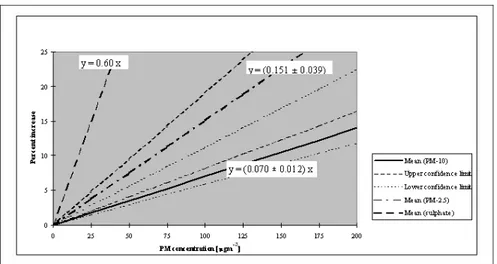
A large and growing body of literature has highlighted the dangers of particulates to health. Various studies have confirmed that the smaller the size of the particles the more dangerous the health effects18-21. The data from the World Health
Organisation shown in the graph below clearly illustrates that PM2.5 particles have a
greater effect on daily mortality than the larger PM10s18.
Figure 1. Increase in daily mortality as a function of PM concentration. (reproduced from ref 18, Figure 3.6)
The smaller particles are not filtered out by the nose and bronchioles and their miniscule size allows them to be breathed deeply into the lungs and to be absorbed directly into the blood stream where they can persist for hours22. They can then travel
through the cell walls and into the cell nucleus affecting the cell’s DNA. The WHO state that there is no safe level of PM2.518and health effects have been observed at
surprisingly low concentrations with no threshold23,24. The smallest particulates,
particularly the ultrafine particulates (PM0.1) are highly chemically reactive, a property
of their small size and large surface area25. A further danger of the smallest
particulates is that there are thousands more of them per unit weight. In incinerators heavy metals, dioxins and other chemicals can adhere to their surface26 increasing
their toxicity. The body does not have efficient mechanisms for clearing the deeper part of the lung as only a tiny fraction of natural particles will be as small as this.
As incinerators are effectively particulate generators and produce predominately the smaller particulates that have the biggest effect on mortality it is clear that incinerators have considerable lethal potential.
a) Epidemiological Studies of Particulate Pollutants
Two large cohort studies in the USA showed increasing mortality with increasing levels of PM2.5 pollution. In the Six City Study published in 199319 , 8,111
individuals were followed for 14-16 years (1974-1991), involving a total of 111,076 person years, to examine the effect of air pollution, allowing for smoking and other individual factors. As expected, the greatest risk factor was smoking (adjusted mortality-rate ratio 1.59) but, after allowing for individual factors, mortality rates showed highly significant associations (p<0.005) with the levels of fine particles and sulphate particles in the cities, with the most polluted city giving an adjusted all-cause mortality rate of 1.26 compared to the least. This related to a PM2.5 difference of
18.6µg per cubic metre: cardiopulmonary mortality was increased by 37% and lung cancer mortality was also 37% higher.
In the American Cancer Society study20, 552,138 adults (drawn from the
Cancer Prevention II study) were followed from 1982 to 1989 and deaths analysed against mean concentrations of sulphate air pollution in 1980 and the median fine particulate concentration from 1979-1983, both obtained for each participant’s area of residence from Environmental Protection Agency (EPA) data. Again, the strongest correlation was between lung cancer and smoking (adjusted mortality risk ratio 9.73), but both pollution measures showed highly significant association with all-cause mortality and with cardiopulmonary mortality: sulphates were also associated with lung cancer. After adjusting for smoking and other variables, higher fine particulate pollution was associated with a 17% increase in all-cause mortality and a 31% increase in cardiopulmonary mortality for a 24.5 µg per cubic metre difference in PM2.5s. These results are highly significant and led the EPA to place regulatory limits
on PM2.5s, establishing the National Ambient Air Quality Standards in 1997. These
regulations were challenged by industry but ultimately upheld by the US Supreme Court29 after the data from all the studies had been subjected to intense scrutiny
including an extensive independent audit and a re-analysis of the original data30.
The health benefits of bringing in these new regulations have been estimated as $32 billion annually31 based on mortality and chronic and acute health effects, and
a White House report from the Office of Management and Budget in September 2003 calculated the benefits in terms of reductions in hospitalizations, premature deaths and lost working days as between $120 and $193 billion over the last 10 years (see section 9.1). As this study looked at only three health indicators it is likely to underestimate the true benefits.
It follows from this data that incinerators and all other major sources of PM2.5
particulates will generate substantial health costs as well as increasing mortality. b) Further Studies
An analysis published in 2002 of the Cancer Prevention II study participants linked the individual factors, pollution exposures and mortality data for approximately 500,000 adults as reported in the ACS study above, bringing the follow-up to 1998 28.
The report doubled the follow-up period and reported triple the number of deaths, a wider range of individual factors and more pollution data, concentrating on fine particles. Smoking remained the strongest factor associated with mortality, but fine particulate pollution remained significantly associated with all-cause, and cardiopulmonary mortality with average adjusted RRs of 1.06 and 1.09. In addition, after the longer follow-up period, fine particulates were significantly associated with lung cancer mortality with an adjusted RR of 1.14. The authors reported that exposure to a 10µg per cubic metre higher level of PM2.5s was associated with a 14%
c) Cardiovascular Disease
Researchers were surprised to find that the increased cardiopulmonary mortality associated with particulate pollution was primarily due to cardiovascular disease. This was found in both the Six City and ACS studies when they were re-analysed30. When the causes of death in the Cancer Prevention II Study were looked at
in more detail32 to look for clues to possible pathophysiological mechanisms, the link
was strongest with ischaemic heart disease: a 10µg per cubic metre increase in PM2.5s
was associated with an 18% increase in deaths from ischaemic heart disease (22% in never smokers). A more recent prospective study, the Women’s Health Initiative (WHI), followed 65,893 postmenopausal women (initially free of cardiovascular disease) over 6 years, to examine the effects of the fine particulate pollution in the neighbourhood of each participant on the first cardiovascular or cerebrovascular incident and on mortality. The results for mortality and morbidity were consistent. Each increase of 10µg per cubic metre in fine particulate pollution was associated with a 76% increase in deaths from cardiovascular disease and an 83% increase in deaths from cerebrovascular disease33. The effect was independent of other variables
but obese women and those who spent more time outdoors were more vulnerable to the effect. The WHI involved a more homogeneous study population and had a number of other methodological advantages over the earlier studies, resulting in greater sensitivity, and more reliable estimates. However, part of the greater effect in this study may be due to gender: there has been some evidence in other studies that women are more susceptible to the cardiovascular effects of fine particulates than men.
These results imply that the increase in fine particulate pollution associated with larger incinerators can be expected to increase mortality. It is probably safe to extrapolate from the WHI assuming that the effect on mortality in the WHI was genuine for women, and that the risk to men would be half as great. In that case, if the incinerator increased PM2.5 particulates by as little as 1µg per cubic metre,
cardiovascular mortality would be increased by 5-10%, with similarly increased cerebrovascular mortality.
Acute myocardial infarctions have been found to rise during episodes of high particulate pollution, doubling when levels of PM2.5s were 20-25µg per cubic metre
higher34. Particulates also increased mortality from stroke35,36. One study concluded
that 11% of strokes could be attributed to outdoor air pollution37. Episodes of
increased particulate pollution also increased admissions with heart disease38. A
recent study found that each 10µg per cubic metre rise in PM10 particulates was
associated with a 70% increase in DVT risk.39 Mortality from diabetes27 and
admissions for diabetic heart disease are also increased40 and these were double the
non-diabetic CHD admissions, suggesting that diabetics were particularly vulnerable to the effect of particulate pollution40. Higher levels of particulates have been
associated with life-threatening arrhythmias41 exercise-induced ischaemia42, excess
mortality from heart failure36,43 and thrombotic disease36.
d) Effect on Children and the Foetus
more vulnerable to damage by these substances44. She also found that PM 2.5
particulates have an adverse effect on the developing foetus with significant reductions in weight, length and head circumference and reiterated the importance of reducing ambient fine particulate concentrations45. In addition further studies have
shown an adverse effect on foetal development at levels currently found in cities today, such as New York46. Air pollution has been found to cause irreversible genetic
mutations in mice. Researchers found, in contrast, that if mice breathed air which had been freed of particulates by filtration they developed only background levels of genetic mutations, confirming that particulates were causative47. At the fourth
Ministerial Conference of Environment and Health in June 2004, the WHO announced that between 1.8 and 6.4% of deaths in the age group from 0 to 4 could be attributed to air pollution48.
e) Acute Respiratory Incidents
Elevated particulate air pollution has been associated with increased hospital admissions with asthma24 and with COPD49, increases in respiratory symptoms50,51,
higher incidence of asthma52, reduced immunity53,54, higher rates of ear, nose and
throat infection52, loss of time from school in children through respiratory disease55,56,
and declines of respiratory function57-59. A sad aside to the above is that children who
did more outdoor sport had greater declines in respiratory function59. We are doing a
great disservice to our children if they cannot pursue healthy activities without damaging their health.
f) Mortality from Particulate Pollution
Episodes of increased particulate pollution have been associated with increased cardiovascular mortality19,20,27,28,36,43,60 and increased respiratory mortality43,44.
About 150 time-series studies around the world have shown transient increases in mortality with increases in particulates. Cohort studies have shown a long-term effect on mortality19,20,28 (see section 3.1a).
Can we quantify this mortality? It has been estimated that the increased mortality works out as about a 0.5-1% increase in mortality for each 10µg per cubic metre rise in PM10s61 for acute exposures and a 3.5% rise for chronic exposures31. For
PM2.5s the increase in mortality is much greater, especially for cardiopulmonary
mortality (see Table).
Table 1 Cardiopulmonary Mortality and Fine Particulate Pollution Study Reference
& Year
No of Participants
Follow up Adjusted
excess c/p mortality
Difference in PM2..5sin µg/m3
Adjusted excess c/p mortality for rise of 10µg/ m3
Six Cities 19
1993
8,111 1974-1991 37% 18.6 19.8%
ACS Cancer Prevention II
20
1995
552,138 1982-1989 31% 24.5 12.7%
Cancer Prevention II
28
2002
Women’ Health Initiative
33
2007 65,893 1994-2002 76% 10 76%
When the data from the Six Cities Study and the ACS study were subject to audit and re-analysis (see section 3.1a) the cardiopulmonary deaths were separated into pulmonary and cardiovascular30. Unexpectedly most of the excess deaths due to
particulates had been from cardiovascular causes. This was apparent in each of the analyses performed giving figures for the increase in cardiovascular mortality in the Six Cities study of between 35% and 44% for an 18.6 µg per cubic metre difference in PM2.5s and in the ACS study between 33% and 47% for a 24.5µg per cubic metre.
This was much higher in each case than the increase in respiratory deaths of 7%. In the ACS data it was later found that the excess cardiovascular deaths were primarily due to an 18% increase in deaths from ischaemic heart disease for each 10µg per cubic metre rise in PM2.5s32. The Women’s Health Initiative study has demonstrated
an even stronger statistical relationship between raised levels of fine particulates and cardiovascular deaths with a 76% increase in cardiovascular mortality for each 10µg per cubic metre increase in PM2.5 particulates, and this depended not just on which
city a woman lived in but in which part of that city33. This study, more than any other,
demonstrates the great dangers posed by fine particulates and the highlights the urgent need to remove major sources of these pollutants.
As incinerators selectively emit smaller particulates and cause a greater effect on levels of PM2.5s than PM10s, they would therefore be expected to have a significant
impact on cardiopulmonary mortality, especially cardiovascular mortality. This has not so far been studied directly.
g) Studies Involving Ultrafine Particles
Ultrafine particles (0.1µg per cubic metre and below) are produced in great numbers by incinerators1. They have been less studied than PM
2.5 and PM10
particulates but there has been enough data available for the WHO to conclude that they produce health effects immediately, after a time lag and in association with cumulative exposure. They have been found to have a more marked effect on cardiovascular mortality than fine particulates, with a time lag of 4-5 days62. Stroke
mortality has been positively associated with current and previous day levels of ultrafine particulates and this has occurred in an area of low pollution suggesting there may be no threshold for this effect63. Ultrafine particulates have also been reported to
be more potent than other particulates on a per mass basis in inducing oxidative stress in cells64 and they have the ability to cross the blood-brain barrier and lodge in brain
tissue65. They represent another largely unknown and unexplored danger of
incineration.
h) Assessment by the WHO and Other Authorities
Based on the World Health Organisation Air Quality Guidelines66 we have
estimated that a 1µg per cubic metre increase in PM2..5 particulates (a very
the public health implications are large and the effect on a typical population of 250,000 surrounding an incinerator would be a loss of 27,500 years of life over a 15 year time period. This figure gives an indication of the likely loss of life from any major source of PM2.5 particulates. In addition, incinerators normally operate for much
longer periods than the 15 years quoted here. Note that the estimated loss of life here is likely to be an underestimate as it is from particulates alone and not from other toxic substances.
The European Respiratory Society67 has published its concern about the
mismatch between European Union policy and the best scientific evidence. They state that a reduction in the yearly average PM2.5 particulates to 15µg per cubic metre *
would result in life expectancy gains, at age 30, of between 1 month and 2 years. They point out that the benefits of implementing stringent air pollution legislation would outweigh the costs. These recommendations are sensible and based on sound science. A programme of building incinerators would unfortunately achieve the opposite: they would increase particulate pollution, reduce life expectancy and would be at odds with the best science.
Statements by leading researchers include the following: “the magnitude of the association between fine particles and mortality suggests that controlling fine particles would result in saving thousands of early deaths each year” (Schwartz)61
and “there is consistent evidence that fine particulates are associated with increased all cause, cardiac and respiratory mortality. These findings strengthen the case for controlling the levels of respiratory particulates in outdoor air” 60.
* The National Ambient Air Quality Standard for PM 2.5 particulates was introduced into the
USA in 1997 with a meanannual limit of 15µg per cubic metre. This had measurable health benefits. An annual mean limit for PM 2.5 particulates is to be introduced into Scotland in 2010 and this will be 12µg per cubic metre. An annual mean target for PM 2.5 particulates is to be
introduced into the UK in 2020 and this will be will be 25µg per cubic metre. Many will wonder why the difference is so vast when the science is the same.
i) Summary
In summary there is now robust scientific evidence on the dangers to health of fine particulates and of the substantial health costs involved. Recent studies have shown the risk to be considerably greater than previously thought. For these reasons it is impossible to justify increasing levels of these particulates still further by building incinerators or any other major source of PM2.5 particulates. The data makes it quite
clear that attempts should be made to the reduce levels of these particulates whenever possible. However particulates are not the only reasons to be concerned about incinerators. There are other
dangers:-3.2 Heavy Metals
Pope reported that hospital admissions of children with respiratory disease fell dramatically in the Utah valley when a steel mill was closed for a year due to a strike. Air pollution analysis showed that the metal content of particulates was lower that year and that the type of inflammation found in the lungs while the steel mill was working could be reproduced in both rat and human lung tissue by using air pollutants of the type emitted by the steel mill68,69. This is a very clear illustration of the dangers
of pollution of the air with heavy metals. Exposure to inhaled metals, similar to the type produced by incinerators, have been shown to mediate cardiopulmonary injury in rats70 and small amounts of metal (<1%) in particulates are known to cause pulmonary
formation causing rapid rates of dioxin formation72 increasing the dangers from
burning metals.
Incinerator emissions to air and ash contain over 35 metals73. Several are
known or suspected carcinogens. Toxic metals accumulate in the bodywith increasing age74. Breathing in air containing toxic metals leads to bioaccumulation in the human
body. They can remain in the body for years: cadmium has a 30 year half-life. Incineration adds to the burden of toxic metals and can lead to further damage to health.
Mercury is a gas at incineration temperatures and cannot be removed by the filters. Incinerators have been a major source of mercury release into the environment. In theory mercury can be removed using activated carbon but in practice it is difficult to control and, even when effective, the mercury ends up in the fly ash to be landfilled. Mercury is one of the most dangerous heavy metals. It is neurotoxic and has been implicated in Alzheimer’s disease75-77, learning disabilities and
hyperactivity78,79. Recent studies have found a significant increase in both autism and
in rates of special education studentsaround sites where mercury is released into the environment80,81.
Inhalation of heavy metals such as nickel, beryllium, chromium, cadmium and arsenic increases the risk of lung cancer12. Cumulative exposure to cadmium has
been correlated with lung cancer82. Supportive evidence comes from Blot and
Fraumeni who found an excess of lung cancer in US counties where there was smelting and refining of non-ferrous metals83. Inhaled cadmium also correlates with
ischaemic heart disease84.
So what are the dangers caused by toxic metals accumulating in the body? They have been implicated in a range of emotional and behavioural problems in children including autism85, dyslexia86, impulsive behaviour87 attention deficit and
hyperactivity disorder (ADHD)88,89 as well as learning difficulties14,78,90-93, lowered
intelligence89 and delinquency94,89, although not every study reached standard
significance levels. Many of these problems were noted in the study of the population round the Sint Niklaas incinerator95. Exposed adults have also been shown to be
affected, showing higher levels of violence13,96, dementia97-103 and depression than
non-exposed individuals. Heavy metal toxicity has also been implicated in Parkinson’s disease104.
Heavy metals emitted from incinerators are usually monitored at 3 to 12 monthly intervals in the stack: this is clearly inadequate for substances with this degree of toxicity.
3.3 Nitrogen Oxides and Ozone
Nitrogen dioxide is another pollutant produced by incinerators. It has caused a variety of effects, primarily on the lung but also on the spleen, liver and blood in animal studies. Both reversible and irreversible effects on the lung have been noted. Children between the ages of 5 and 12 years have been estimated to have a 20% increase in respiratory symptoms for each 28 µg per cubic metre increase in nitrogen dioxide. Studies in Japan showed a higher incidence of asthma with increasing NO2
levels and that it synergistically increases lung cancer mortality rates41. It has also
been reported to aid the spread of tumours105,106. Increases in NO
2 have been
associated with rises in admissions with COPD107, asthma in children and in heart
disease in those over 6518. Other studies have shown increases in asthma admissions108
Rising ozone levels have led to increasing hospital admissions, asthma and respiratory inflammation and have been reported to lower immunity110. Higher levels
have been significantly associated with increased mortality111 and with cardiovascular
disease. Both ozone and nitrogen dioxide are associated with increasing admissions with COPD107.
When it comes to incinerator emissions the health effects of nitrous oxides are likely to compound the negative health effects of particulates
3.4 Organic Toxicants
Hundreds of chemical compounds are released from incinerators. They include a host of chemicals produced from the burning of plastic and similar substances and include polycyclic aromatic hydrocarbons (PAHs), brominated flame retardants, polychlorinated biphenols (PCBs), dioxins, polychlorinated dibenzofurans (furans). These substances are lipophilic and accumulate in fatty tissue and remain active in the living organisms and the environment for many years. They have been linked with early puberty112, endometriosis113, breast cancer114,115, reduced sperm counts116 and
other disorders of male reproductive tissues117, testicular cancer118 and thyroid
disruption11. It has been claimed that about 10% of man-made chemicals are
carcinogenic (see section 5.1), and many are now recognised as endocrine disrupters. Most of these health effects were not anticipated and are only now being recognised. No safety data exist on many of the compounds released by incinerators.
PAHs are an example of organic toxicants. Although emission levels are small these substances are toxic at parts per billion or even parts per trillion73 as opposed to
parts per million for many other pollutants. They can cause cancer, immune changes, lung and liver damage, retarded cognitive and motor development, lowered birth weight and lowered growth rate73.
a) Organochlorines
The most detailed analysis to date on incinerator emissions has identified several hundred products of incomplete combustion (PICs) including 38 organochlorines – but 58% of the total mass of PICs remained unidentified119.
Organochlorines, which include dioxins, furans and PCBs, deserve special attention, because of their known toxicity, because they bioaccumulate, and because of the likelihood that they will increase in the waste stream. Their major precursor, PVC, presently makes up 80% of organically bound chlorine and the amount of PVC in waste is likely to increase significantly in the future120. Clearly organochlorines will
be an important component of incinerator emissions.
Organochlorines as a group are associated with six distinct types of health impact and these often occur at low concentrations. They are associated with 1) reproductive impairment in males and females 2) developmental damage 3) impaired cognitive ability and behaviour 4) neurological damage 5) suppressed immunity and 6) hormonal disruption and hormonal cancers. Each of these six effects has been demonstrated in three separate fields: in humans, in laboratory animals and in wildlife121. The American Pubic Health Association (APHA) concluded “virtually all
organochlorines that have been studied exhibit at least one of a range of serious toxic effects, such as endocrine disruption, developmental impairment, birth defects, reproductive dysfunction and infertility, immunosuppression and cancer, often at extremely low doses”122. Other organohalogens such as bromides and fluorides have
A common misconception is that these pollutants have little effect if dispersed into the environment. This is wrong for several reasons. Firstly they are persistent as there is no mechanism in the environment to break them down and so they accumulate. Secondly as they are fat soluble they concentrate in living matter, often dramatically, at progressively higher concentrations (bioaccumulation). For example dioxin has been found in fish at levels 159,000 times that found in the water123; PCBs
have been found in North Pacific Dolphins at 13 million times the concentration in the water124 and trichloroacetic acid is found in North European conifers at 3-10,000
times that in the ambient air125. Thirdly they are concentrated by the foetus so a typical
polar bear cub has a body burden double that of its mother126 and at a level known to
cause reproductive failure, altered brain development and immune suppression127.
Fourthly they are nearly all toxic. In short the ability of ecosystems to assimilate organochlorines and other persistent bioaccumulative compounds is close to zero and they should simply never be released into the environment.
b) Dioxins
Dioxins are the organochlorines compounds most associated with incinerators and inventories have consistently shown that incinerators are the major source of emissions of dioxins into the air128-30 though these are decreasing*. Dioxin releases
over the last few decades have caused widespread contamination of food, significant toxic body burdens in nearly all human beings and severe pollution of the Arctic. None of this was foreseen. The damage already done by incinerators has been incalculable.
Eighteen separate assessments of dioxin’s carcinogenicity have involved five different routes of exposure, five different species, low and high doses and long or short exposure times. In every case dioxins have caused cancer, involving nine different types of cancer, including lymphomas, cancers of the lung, liver, skin, soft tissue and of the oral and nasal cavities131. The National Institute of Environmental
Health have looked for, but been unable to find, any threshold for the toxicity of dioxin. At the lowest detectable concentrations it can induce target genes and activate a cascade of intracellular molecular effects and can promote pre-malignant liver tumours and disrupt hormones132. Even doses as low as 2.5 parts per quadrillion can
stop cultured cells from showing changes characteristic of immune responses133.
The US Environmental Protection Agency’s current estimate of dioxin’s carcinogenicity, derived from animal studies, is that the average person’s exposure to dioxin, which is 3-6 picogram per kilogram per day** gives a lifetime cancer risk of between 500 and 1000 per million134. (An acceptable cancer risk is considered to be
between 1 in a million and 1 in 100,000). In comparison, a German study135, derived
from human dioxin exposure, found that each additional unit dose of dioxin (one picogram per kilogram of body weight per day) is associated with an increase in lifetime cancer risk of between 1000 and 10,000 per million.
The average infant receives doses of dioxins of 60-80 picograms (TEQ) per kilogram per day136,137 which is 10- 20 times higher than those of the
average adult and exceeds by a factor of 6 – 10,000 every government in the world’s acceptable daily intake.*** This dioxin intake in the first year has been calculated to pose a cancer risk to the average infant of 187 per million (187 times the acceptable level)138.
Rats given dioxin to produce a body burden of dioxin at about half the average in the human population had male offspring whose sperm count was reduced by 25%139
and rhesus monkeys given dioxin equivalent to twice the average human body burden had increased foetal death in their offspring and cognitive impairment which was transgenerational (passed on to their offspring) and abnormally aggressive behaviour140,141. This data indicates that releasing even a small amount of dioxin into
an already overloaded environment can simply not be justified.
*An assessment of dioxins by the European Dioxin Inventory in 2005 found that in the UK, the biggest single source of dioxins in 2000 and in 2005 (projected figure) was the incineration of municipal waste, producing 20 times as much dioxin as road transport142.
** a picogram is 1,000,000,000,000 gram, ie. a billionth of a gram in the UK, but more typically described in US literature as a trillionth of a gram.
*** Tolerable daily intake (TDI) is set at 0.006 picograms/kg per day in the US and 2 picograms/kg per day in the UK.
3.5 Effects on Genetic Material
Both heavy metals and many chemicals form covalent bonds with DNA called DNA adducts. This can increase the risk of cancer by activating oncogenes and blocking anti-tumour genes. This raises a very serious concern. This concern is that by releasing chemicals into the environment we may not only be poisoning this generation but the next. Carcinogenesis from chemicals being passed on through several generations is not just a horrifying scenario but has been demonstrated to occur in animals143,144. Incinerator emissions would greatly increase this risk.
DNA adducts to PAHs increase with exposure to pollution and patients with lung cancer have higher levels of adducts (see below). This is one demonstration of how pollutants alter genes and predispose to cancer. Other chemicals, such as vinyl chloride interfere with DNA repair and yet others such as organochlorines are tumour promoters.
3.6 Effects on the Immune System
Starting in the late 1980s a series of dramatic marine epidemics killed off thousands of dolphins, seals and porpoises. Many were found to have been affected by a distemper-like virus. Autopsies of the dead animals showed weakened immune systems and high levels of pollutants including PCBs and synthetic chemicals. A virologist, Albert Osterhaus and his co-workers, demonstrated that when seals were fed contaminated fish containing organochlorines (which were, however, considered fit for human consumption) they developed immune suppression and were unable to fight viruses145-7. Their natural killer cells were 20-50% below normal and their T cell
response dropped by 25-60%. The immune suppression was due to dioxin-like chemicals, PCBs and synthetic chemicals. An immunologist Garet Lahvis found immunity in dolphins in the USA dropped as PCBs and DDT increased in their blood148. The immune system appeared most vulnerable during prenatal development.
This demonstrates that the immune system may be damaged by exposure to synthetic chemicals and that we have seriously underestimated the dangers of these chemicals.
Animal experiments have shown immunotoxicity with heavy metals, organochlorine pesticides and halogenated aromatics149 and accidental exposure data
on humans has shown immunotoxicity with PBBs, dioxins and aldicarb. In fact whole volumes have been written on immunotoxicity150. Note these are the type of pollutants
released by incinerators. Environmental toxins have been shown to decrease T-lymphocyte helper-suppressor ratios in four different exposed populations151. Nitrogen
particulates themselves can cause mutagenic and cytotoxic effects and the smallest particulates cause the greatest effects152.
In utero exposure to dioxins results in thymus atrophy and weakened immune defences153. When female rhesus monkeys were exposed to PCBs at very low levels
producing a body burden typical of general human population, their offspring’s ability to mount a defence against foreign proteins was permanently compromised154.
In summary there is abundant evidence that a large number of the pollutants emitted by incinerators can cause damage to the immune system155. As is
demonstrated in the next section the combination of these is likely to have an even more potent and damaging effect on immunity than any one pollutant in isolation.
3.7 Synergistic Effects
Various studies have shown that a combination of substances can cause toxicity even when the individual chemicals are at a level normally considered safe. The report “Man’s Impact on the Global Environment” by the Massachusetts Institute of Technology stated “synergistic effects among chemical pollutants are more often present than not”156. Testing has been minimal and most of the synergistic effects are
likely to remain unknown. Toxicologist Prof Vyvyan Howard has calculated that to test just the commonest 1,000 toxic chemicals in unique combinations of three would require 166 million different experiments and even this would disregard varying doses157.
Synergy has been demonstrated when organic chemicals are combined with heavy metals,158,159 and with combinations of pesticides160,161 and food additives162. The
last study is of particular concern. Rats fed with one additive were unharmed. Those fed two developed a variety of symptoms whereas those fed all three all died within two weeks. In this case the chemicals appeared to amplify each other’s toxicity in logarithmic fashion. In a recent experiment scientists dosed animals with a mixture of 16 organochlorine pesticides, lead and cadmium at “safe levels” and found they developed impaired immune responses, altered thyroid function and altered brain development163. Another study in 1996, published in Science, reported on the dangers
of combinations of pesticides and their ability to mimic oestrogen. They found that combinations could increase the toxicity by 500 to 1000 times164. Mice exposed to 25
common groundwater pollutants, all at levels well below those that produce any effects in isolation, developed severe immunosuppression165. The level of concern
about the multiplicity of pollutants released into the air by incinerators is enhanced by the fact that even when the probable effects of the single pollutants involved are known,no one has any idea what damage the combinations can cause.
The population living round an incinerator is being exposed to multiple chemical carcinogens, and to fine particulates, to carcinogenic heavy metals (in particular cadmium) and in some cases to radioactive particles, all known to increase lung cancer. Nitrogen dioxide has also been shown to synergistically increase lung cancer. When all these are combined, the effects are likely to be more potent, and, in fact, an increase in the incidence of lung cancer has been reported around incinerators (see section 4.1).
The potential for multiple pollutants to cause other serious health effects is illustrated by the results of a key study on rats exposed to the dust, soil and air from a landfill site. These animals developed abnormal changes in the liver, thyroid and reproductive organs within only two days of exposure166. Although effects in animals
calculating health risks underestimate the biological effects. This has obvious relevance to the dangers of exposing people to multiple pollutants from incinerators.
4.
Increased Morbidity and Mortality near Incinerators
4.1 Cancer
There have been a number of studies of the effect of incinerators on the health of the surrounding population, mainly concentrating on cancer incidence. In most studies, the incinerators were situated near other sources of pollution and often in areas of deprivation, both likely to confound the findings since both are associated with higher cancer incidence. The study of an incinerator burning 55,000 tonnes of waste a year and built in 1977 in the middle of a residential area of a town of 140,000 with no heavy industry (Sint Niklaas) is scientifically unsatisfactory because funds were not made available for the study of controls95. However, the investigators
mapped a convincing cluster of 38 cancer deaths immediately surrounding and to leeward of the incinerator, and this area also showed high concentrations of dioxin in soil samples when tested in 1992. They noted that the cancer SMR for this town for 1994-1996 (national statistics) was high (112.08 for males and 105.32 for females), supporting the genuine nature of their findings.
In 1996, Elliott et al. published a major study167 in which they compared the
numbers of registered cancer cases within 3 km and within 7.5 km of the 72 municipal waste incinerator sites in the UK with the number of cases expected. It involved data on over 14 million people for up to 13 years. Expected numbers were calculated from national registrations, adjusted for unemployment, overcrowding and social class. No account was taken of prevailing winds, or of differences between incinerators. They first studied a sample of 20 of the incinerator sites, replicating the analysis later with the other 52. If the results of two sets like this concur, it strengthens the data. In each set there was an excess of all cancers near the incinerators, and excesses separately of stomach, colorectal, liver and lung cancers, but not leukaemias. The first set gave adjusted mortality ratios for all cancers of 1.08 for within 3km and 1.05 within 7.5 km; for the second these were 1.04 and 1.02. These risks, representing an additional risk of 8% and 5% for the first set and 4% and 2% for the second, seem small but represented a total of over 11,000 extra cancer deaths near incinerators and were highly significant (p <0.001 for each).
For each of the main cancer sites the excesses were higher for those living within 3 km than for all within 7.5 km167,168, suggesting that the incinerators had
caused the excess. The authors doubted this and attributed the findings to additional confounding in spite of the fact that they had already adjusted (possibly over-adjusted) for unemployment, overcrowding and social class, which give a partial correction for pollution. Moreover, the effect on people living to leeward of the incinerator would be substantially higher than shown by this study as the true number of people affected was diluted by those living at the same distance but away from the wind plume coming from the incinerator.
birth and death addresses from the nearest source of pollution and found a consistent asymmetry: more had moved away from the nearest hazard than towards it169. They
deduced that the excess of migrations away from the hazard (after allowing for social factors) was evidence that the children had been affected by the cancer-causing pollution before or shortly after birth.
Later they applied the method to the set of incinerators studied by Elliott et al. and again showed the same asymmetry in the children’s birth and death addresses, indicating that the incinerators had posed a cancer risk to children170. Of the 9,224
children for whom they had found accurate birth and death addresses, 4,385 children had moved at least 0.1 km. Significantly, more children had migrated away from incinerators than towards. For all those who had at least one address within 3 km of an incinerator, the ratio was 1.27. When they limited the analysis to children with one address inside a 5 km radius from the nearest incinerator and the other address outside this radius the ratio was 2.01; this indicated a doubling of cancer risk. Both these findings were highly significant (p <0.001 for each). The excess had only occurred during the operational period of each incinerator and was also noted round hospital incinerators but not landfill sites. This is strong evidence that the incinerators’ emissions contributed to the children’s cancer deaths.
Biggeri et al. in 1996 compared 755 lung cancer deaths in Trieste with controls in relation to smoking, probable occupational exposure to carcinogens and air pollution (measured nearest to their homes) and the distance of their home from each of four pollution sites. The city centre carried a risk of lung cancer but the strongest correlation was with the incinerator where they found a 6.7 excess of lung cancer after allowing for individual risk factors171.
Using a spatial scan statistic, Viel et al 2000 looked at the incidence of soft tissue sarcoma and non-Hodgkin’s lymphoma from French Cancer Registry data, in two areas close to an incinerator with high emission of dioxin172. They found highly
significant clusters of soft tissue sarcoma (RR 1.44) and of non-Hodgkins lymphoma (RR 1.27) but no clusters of Hodgkins disease (used as negative control). This study was interesting in that it was designed to look both in a focussed way at the area round the incinerator, and to check the association by looking for space time relationships which should be present if the relationship was causal. In addition they looked in an unfocussed way for other clusters in the wider area which contained other areas of deprivation. Both the first two analyses were positive close to the incinerator - demonstrating that a causal relationship was likely - and since no other clusters were found they concluded that deprivation could be virtually excluded as a factor.
According to Ohta et al, Japan built 73% of all the municipal waste incinerators in the world and by 1997 had become very concerned about their health effects: in the village of Shintone, 42% of all deaths between 1985-95 in the area up to 1.2 km to leeward of an incinerator (built in 1971) were due to cancer, compared to 20% further away and 25% overall in the local prefecture173. Their data on soil
contamination reinforced the importance of considering wind directions in evaluating the health effects of incinerators.
Comba found an increased incidence of soft tissue sarcoma in an Italian population living within 2 km of an incinerator174. Zambon et al looked at cases of
In 1989 Gustavsson reported a twofold increase in lung cancer in incinerator workers in Sweden compared to the expected local rate176. In 1993 he reported a 1.5
fold increase in oesophageal cancer in combustion workers, including those working in incinerators177.
4.2 Birth Defects
There have been five reports of increases in congenital abnormalities around incinerators. The investigators at Sint Niklaas noted multiple birth defects to leeward of the incinerator95. Orofacial defects and other midline defects were found to be more
than doubled near an incinerator in Zeeburg, Amsterdam178. Most of these deformed
babies were born in an area corresponding to wind-flow from the incinerator and other defects included hypospadius and spina bifida. In the Neerland area, Belgium, there was a 26% increase in congenital anomalies in an area situated between two incinerators179. A study of incinerators in France has shown chromosomal defects and
other major anomalies (facial clefts, megacolon, renal dysplasias)180. A recent British
study looked at births in Cumbria between 1956 and 1993 and reported significantly increased lethal birth defects around incinerators after adjusting for year of birth, social class, birth order, and multiple births. The odds ratio for spina bifida was 1.17 and that for heart defects 1.12. There was also an increased risk of stillbirth and anencephalus around crematoriums181. The study pointed out that the figures for birth
defects are likely to be substantial underestimates since they do not include spontaneous or therapeutic abortions, both increased by foetal anomalies.
In addition, several studies have noted an increase in birth defects near waste sites, particularly hazardous waste sites. The pattern of abnormalities was similar to the pattern found with incinerators, with neural tube defects often being the most frequent abnormality found, with cardiac defects second182-85. Harmful chemicals are
normally stored in fatty tissue: in the foetus there is little or no fatty tissue except for that in the brain and nervous system, which may explain the pattern of damage. A review of this subject stated “the weight of evidence points to an association between residential proximity to hazardous waste site and adverse reproductive outcomes.”186
4.3 Ischaemic Heart Disease
Gustavsson found an excess of ischaemic heart disease176 in incinerator
workers who had been exposed for longer. We have not found any epidemiological studies of cardiovascular disease in the neighbourhood of incinerators, but in view of the research on particulates (see section 3.1) this should be investigated.