
#Visitspain Breaking down affective and cognitive attributes in the social media construction of the tourist destination image
11
0
0
Texto completo
(2) Tourism Management Perspectives 32 (2019) 100560. L. Garay. ‘general infrastructure’, ‘tourism infrastructure’, ‘tourism leisure and recreation’, ‘culture, history and art’, ‘political and economic factors’, ‘natural environment’, ‘social environment’ and ‘atmosphere of the place’. Pan and Li (2011) analysed the affective images attached to a destination, reporting the predominance of labels such as ‘exciting’, ‘happy’ and ‘busy’. Finally, Michael, James, and Michael (2018) described nine cognitive and eight affective dimensions, referred to as tangible and intangible concepts, respectively. Undoubtedly, the arrival of the Internet and online platforms has added complexity to destination image formation processes (Ghazali & Cai, 2014), with destination images nowadays mainly projected and received in virtual social media communities. While destination management organizations (DMOs) still play a relevant role in the formation process, this role is now shared with others, including the tourists themselves, with the result that destination images are co-created. Thus, whereas information on the destination previously mainly flowed in one direction from the DMO to the customers, in social media, messages are now multi-directional, interactive, dynamic and fluid (Zeng & Gerritsen, 2014). Indeed, despite strategic promotion and positioning efforts, since almost anyone has input to image formation and since tourists acquire images from multiple sources, the process has become increasingly difficult to control. Put another way, organic (noncommercial) image formation seems to be gaining ground over induced (commercial) image formation. Ghazali and Cai (2014) suggest that the overall destination image is formed by provision intersecting with individual assessments of cognitive and affective information, resulting in the conative or behavioural attributes described by Gartner (1994). In the age of social media influence, affective and cognitive attributes have received considerable attention in the tourism and hospitality literature, most especially in relation to how customers engage with brands and the corresponding impact on loyalty (van Asperen, de Rooij, & Dijkmans, 2018). DMOs therefore need to consider potential links between the composition of attributes and the structure of the virtual brand community (VBC) associated with their destination. The fact that a VBC can be composed of one or other type of stakeholder can make the narrative around the destination in this community give greater weight to affective or cognitive attributes, or lead to a greater commitment to or identification with this destination or, on the contrary, to a more critical discourse. DMOs also need to consider the relationship between attributes and other key brands associated with the destination image, e.g., tourism ‘products’ like the weather (sun, snow), culture, nature, etc. This is a fundamental relationship for the DMO to determine which of the tourism products receive more attention (positively or negatively) by the stakeholders and if this assessment has a more cognitive or affective profile. Based on this knowledge, DMOs will be able to develop specific strategies to project the image of the destination from certain products or a combination thereof, or allocate fewer resources to the marketing of popular products that are already being commented on in the VBC by the stakeholders themselves. Furthermore, in a glocalization context, they need to understand the potential impact of geographic place subbrands in explaining broader images/brands. Undoubtedly, in this context, local brands have acquired and will acquire an even more important role in forming the image of national destinations. The era of stereotyped brands associated with a whole country is over and DMOs now need to increase their work in relation to what resources and narratives they can offer on a local scale.. planning (Leung, Law, Van Hoof, & Buhalis, 2013), but also in the sharing of experiences (Zeng & Gerritsen, 2014). Social media are important for tourists to acquire information but also to generate content that they communicate to others. This kind of user-generated content (UGC) has become central to academic discussion, as it acts as a contemporary form of word-of-mouth (WOM), referred to as eWOM by some authors (Fotis, Buhalis, & Rossides, 2012). UGC can potentially influence tourist decision-making if perceived to be credible, which, in turn, depends on previous knowledge of the user, the tourist's own travelling experience and the transmission platform. However, more focus is needed on the potential of UGC to inform strategic management perspectives in tourism (Zeng & Gerritsen, 2014). As for supplier-centric studies, these tend to focus on promotion, management and research, with few studies discussing specific tourism products. Social media offer new marketing, networking and knowledge management opportunities to DMOs. For instance, UGC regarding tourist experiences transmitted through social media have an impact on destination images (Ghazali & Cai, 2014). Social media also allow information to be customized and enable cooperative promotional initiatives (Tham, Croy, & Mair, 2013). However, potential challenges posed by social media for DMOs include the conflict between corporate and social media cultures, poor levels of formalization and the lack of an adequate knowledge base (Munar, 2012). At the macro level, national tourism organizations – at the apex of the complex chain of DMOs (Dwivedi, Yadav, & Venkatesh, 2011) – transmit destination images in a variety of ways, but also use a wide variety of social media platforms. The main objective of projecting a destination image through an online platform is to share information with potential networks. While Facebook and, more recently, YouTube and Instagram, are popular platforms, Twitter is a particularly useful online application in which to project a destination image and build a brand's reputation (Yayli, Bayram, & Bayram, 2011), even though full advantage is not always taken of its potential for interpersonal communication and networking (Sevin, 2013). Nowadays a brand is not only created by marketers but also develops from the perceptions of a myriad of stakeholders, whose number and characteristics depend on multiple factors, such as the country where they are based, their technological development and their networking culture. As Hays, Page, and Buhalis (2013) have indicated, knowledge of and a relationship with followers is crucial in developing an optimal media strategy. An intimately related concept is that of the ‘ideological’ construction (Lange-Faria and Elliot (2012) of virtual communities, where users engage, collaborate and share with others in real time, with no constraints of time or geography. These communities reflect collective power and intelligence and so need to be taken into consideration by suppliers. In the currently prevalent consumer-centric paradigm, consumers greatly rely on and trust favourite networks, including networks they associate with the prestige or solvency of a well-known and fashionable brand. Social media are therefore not only important sources of information but are also crucial for socializing (Lange-Faria & Elliot, 2012). Indeed, the sense of belonging to a community coexists with the potential for reducing uncertainty and increasing exchange utility (Wang, Yu, & Fesenmaier, 2002). Socialization is vital to understanding the social media strategies of many destinations, as users increasingly demand more motivational and interactive communications (Kiráľová & Pavlíčeka, 2015). Lam and Hsu (2006) underlined the importance of reference groups within these communities, highlighting the fact that some social media users, in regularly communicating with their existing network, become opinion leaders. As an organic information source, these users potentially have a major impact on image formation for particular destinations (Ghazali & Cai, 2014), in that ‘travel opinion leaders’ or ‘central travellers’ play a key role in transmitting information to other travellers (Yoo, Gretzel, & Zach, 2011). Habibi, Laroche, and Richard (2014), who characterized social media-based brand community members who share experiences. 2. Destination image formation in social media communities and narratives Social media have transformed the way tourist destinations and DMOs manage and market their resources and services and how tourists find, use and produce information. Consumer-centric studies of social media assess the influence of these platforms on consumption, highlighting their usefulness, not only in the research phase of travel 2.
(3) Tourism Management Perspectives 32 (2019) 100560. L. Garay. online as ‘gurus’, admirers or marketers, identified five dimensions of such communities, namely, ‘social context’, ‘structure’, ‘scale’, ‘content’ and ‘storytelling’, while also highlighting the proliferation of sub-brand communities. Oliveira and Panyik (2015) draw particular attention to the non-professional users, professional travel bloggers and travel journalists who post, comment and share information in these spaces. Going beyond the composition of communities, the characterization of UGC and user narratives is a much-analysed topic in relation to social media impact on destination images and brands. Content analysis of social media communications regarding destinations (Beerli & Martin, 2004) identifies cultural and natural resources, leisure and recreation infrastructures, history, atmosphere, accommodation and climate as predominant topics. Marine-Roig and Clavé (2015) propose attraction factors and emotional values – which broadly align with cognitive attributes and affective attributes (Gartner, 1994) – as two dimensions that are frequently used to assess and communicate destination image, observing, furthermore, that destinations communicate more content on attraction factors than on emotional values. In relation to social media, Ghazali and Cai (2014) suggest that provision intersecting with assessment of both cognitive and affective information by suppliers, consumers and others results in an overall conative image of a destination. In the same context, Költringer and Dickinger (2015) proposed that reconceptualization of the cognitive and affective components of the destination image would facilitate content mining. Meanwhile, Sanz, Museros, and González-Abril (2016) suggested a number of affective and cognitive dimensions, adding that it would be useful to identify communities in the network of connections involved in decision-making. Finally, for the case of TripAdvisor, Dickinger and Lalicic (2016) found that attributes are relevant to characterizing a brand's personality, which could be identified with dimensions such as excitement or sophistication. Another closely related research avenue refers to user engagement in VBCs, a widely discussed topic in the tourism and hospitality literature, particularly in terms of conceptualization and measurement of antecedents and consequences. On the basis of previous findings, So, King, and Sparks (2014) devised a scale that explores the impact of tourist engagement on several key behaviour outcomes, proposing five antecedent constructs for tourist brands, namely ‘identification‘, ‘enthusiasm’, ‘attention’, ‘absorption’ and ‘interaction’, all identifiable as affective or cognitive attributes. Ahn and Back (2018) broke down tourist engagement into three dimensions reflecting cognitive, affective and behavioural image attributes, proposing four antecedent constructs, namely, ‘sensory’, ‘affective’, ‘behavioural’ and ‘intellectual’ experiences. The above exploration of the literature highlights a number of important knowledge gaps, as follows:. 3. Methodology 3.1. Destination, social media platform and case study selection The chosen destination was Spain, an international tourism powerhouse. According to UNWTO (2017), it is the third-ranked country (after France and the USA) in terms of tourist visits (75.6 million) and the second-ranked country in terms of tourist revenues (USD 60.3 billion). The chosen social media platform was Twitter. With over 500 million users posting 65 million tweets a day, it is one of the most widely used networks in the world and is probably the most prominent platform in terms of the development of VBCs because of its interpersonal communication and networking capabilities (Sevin, 2013). Finally, the topic of the case study was Turespaña, Spain's government institute responsible for promoting the country as a tourist destination abroad. Its Twitter handle is @spain and it uses the hashtag #visitspain to promote the Spain brand/destination.. 3.2. Data collection, population and sample It was decided to collect information for the #visitspain hashtag and not for the @spain handle (as is usually the case in this kind of analysis) in order to obtain more detailed data that could yield information on the roles played by stakeholders. Analysing the community created around the @spain user would result in a biased narrative, as only Turespaña tweets, retweets and replies to tweeters would be considered. To monitor all conversations regarding the Spain destinationbrand, irrespective of the source, the study monitors the #visitspain hashtag, recognized and used by a wide variety of individuals and organizations and so considered to reflect the most representative VBC for the destination on Twitter. It should be noted, in passing, that digital platforms for destination brands feature the opinions of non-tourists (residents, for instance) and tourists in all travel phases (potential tourists and tourists who tweet before, during and after a visit to a destination) and, furthermore, that tweeters do not necessarily identify themselves specifically as tourists (indeed they may be trolls, activists, social critics, information seekers or socialites, as shown by Mkono and Tribe (2017)). This decision in favour of a hashtag brought an added difficulty: although the Twitter application programming interface (API; the software that allows tweets to be captured and that provides structured data output) allows fairly extensive data to be collected on users (even going back several months); for hashtags, data can only be collected for the previous few days or for a few hundred tweets at most. To solve this problem, using Ncapture® (software that captures and structures tweet data), tweets with the #visitspain hashtag were collected twice a week for the full year running from 24 February 2016 to 24 February 2017. The goal was to ensure a large and varied population in which to observe an entire year's conversation and so include different tourist seasons. The inclusion of seasons allowed possible changes in stakeholders, dimensions and narratives to be observed. DMOs and professionals, for instance, are more likely to be active in pre-season campaign periods, whereas tourists are likely to make more contributions during or after visits. The capture contained a total of 178,159 tweets and retweets with the #visitspain hashtag. To avoid possible repetitions and so ensure greater coherence, retweets were excluded so that only the 29,141 tweets were included in the analysis. These tweets were categorized by the four seasons, with cut-offs on the first and last days of each season (e.g., 21 December to 20 March for winter), yielding 8470 tweets for winter, 6974 for spring, 4058 for summer and 9639 for autumn. A random sample was extracted for each season that met the requirements of a 5% margin of error and a 95% confidence interval, resulting in 368 tweets for winter, 365 for spring, 352 for summer and 370 for autumn (total 1455 tweets).. (1) The different VBCs coexisting in social media are not clearly differentiated in terms of the identity of the stakeholders playing prominent roles in particular VBCs and how they define their community culture in co-creating UGC. (2) While several studies have explored the nature and composition of the affective and cognitive attributes associated with the destination image, these attributes need to be better characterized qualitatively and assessed for possible links between them. (3) Because attributes are isolated from tourists' own conceptualizations of a destination-brand, links with tourism products (e.g., culture, gastronomy, etc.) and with destination sub-brands (i.e., regions as well as the country overall) are overlooked. (4) Existing analyses lack a temporal component that reflects possible variations throughout the year (not all stakeholders are active at the same level in each season and narratives may vary depending on the season). Those knowledge gaps reflect the four main research questions addressed in this study. 3.
(4) Description. Example. The match of a product or service with specified or expected characteristics. Quality/professionalism. #DidYouKnow…? #ACoruña is usually referred to as ‘The Glass City’. #visitspain #tourism #architecture @Turgalicia A #beach to lie down and have a nice time with friends. #visitspain #Majorca #Mallorca #landscape #BalearicIslands Ensaimada is a typical spiral shaped pastry from the Balearic Islands #visitspain #yummy #Turismo #España #Spain #visitspain #Goierri, European Destination of Excellence #BasqueHighlands #BasqueCountry. 4. Description. Example. (continued on next page). Hard cognitive elements: destinations (Andéhn et al., 2014; Giovanardi, 2012; Kotler & Gertner, 2002; Lucarelli & Brorström, 2013; Taha, 2013) Spain The country as a whole Where can you go this #summer? #Spain is your destination #VisitSpain #WhattodoinSpain Mediterranean Sea All regions bordering this sea (Catalonia, Community of Valencia, Murcia, Andalusia and the @sd35wgss @WGSS_GNN Don't miss your chance to visit this beautiful Mediterranean city! via @spain #VisitSpain Balearic Islands) https://t.co/IG9GVwYVxW. Hard cognitive elements: variables (Andéhn et al., 2014; Giovanardi, 2012; Kotler & Gertner, 2002; Lucarelli & Brorström, 2013; Taha, 2013) Resources Elements that produce the attraction of the destination The Roman Bridge in #Mérida and #SamuelJohnson inspire us. #Extremadura #visitspain #quotes @Extremadura Supply A set of activities at the service of tourists (accommodation, catering, intermediaries, guides, For great Holiday Accommodation in Spain, check out https://t.co/xxHYlzgYQo #Fuengirola #CostadelSol #visitspain other) Climate Atmospheric conditions that characterize a region Where am I? Even cold days are chilly sunny #seville #visitspain Landscape Part of a territory that can be observed from a given place Cabo de Gata: amazing #landscapes and fabulous #beaches in #Almería. #visitspain @almeria_turismo. Dimension Code. B. Hard cognitive attributes and destinations. Soft cognitive elements: products (Benur & Bramwell, 2015; Gartner, 1989; Kotler & Gertner, 2002; McKercher, 2016; Middleton & Clarke, 2012; Moreno, 2011) Sun-sea-sand Tourism in coastal areas where the climate is sunny and What a perfect day to go to the beach! #Ibiza #Eivissa #BalearicIslands #visitspain warm Urban Tourism based on visits to cities for their heritage, natural Gran Vía: the most popular thoroughfare in #Madrid. Ready for end to end? #visitspain and landscape attractions Visita_Madrid Rural Tourism in rural areas, normally small towns #Rural Destinations in #Spain. Towns & Villages for rural getaways. https://t.co/ 0Z1PNyaIBd #visitspain Snow Tourism in the snow Would you like to go on a #ski break? #Baqueira is waiting for you! #Pyrenees #WinterInSpain #visitspain Cultural Tourism that highlights cultural aspects of the tourist The main rose window of the Palma de Mallorca Cathedral is known as ‘The Gothic Eye’ destination #visitspain Nature/sport Tourism to discover and enjoy the natural environment, Urbasa-Andía Nature Park boasts an amazing beech #forest. #visitspain #Navarra often associated with physical activity #nature @TurismoNavarra Gastronomy Tourism where the interest lies in gastronomy and culinary #Turismo #España #Spain #visitspain Would you like a slice of chorizo? #yummy culture #delicious #GastroSpain #foodies. Notion, information or basic news of something. Knowledge/information. Soft cognitive elements: variables (Andéhn et al., 2014; Giovanardi, 2012; Lucarelli & Brorström, 2013; Taha, 2013) Identity Set of features specific to someone or something that is differentiating Lifestyle Expression of the way of life of a person or group. Affective attributes (Baloglu & Brinberg, 1997; Baloglu & McCleary, 1999; Beerli & Martin, 2004; Gartner, 1994; Ghazali & Cai, 2014; Savolainen, 2015) Gratitude Feeling of gratefulness and/or appreciation toward @JustaPack Thanks - good tips here:) #visitspain @spain someone or something Admiration Esteem or exceptional regard for someone or something According to #BBC #travel, #Barcelona is one of the world's most magical destinations! https://t.co/EYtbotVjwJ #bbctravel #spain #visitspain Enjoyment Taking pleasure from the products and uses of something Saturday is #beach day until the #sun goes down! #SpringInSpain #visitspain #CanaryIslands Interest A mood inclined toward someone or something #Turismo #España #Spain #visitspain If you're an #architecture enthusiast, don't miss the Church of San Nicolás. Dimension Code. A. Affective, soft cognitive attributes and tourism products. Table 1 Codebook. Source: Authors.. L. Garay. Tourism Management Perspectives 32 (2019) 100560.
(5) Tourism Management Perspectives 32 (2019) 100560. All regions bordering this sea (Galicia, Asturias, Cantabria, Basque Country) All inland regions (Castile and León, Castile-La Mancha, Extremadura, Navarre, La Rioja, Aragon) All islands in the Canary archipelago Cantabrian Sea Inland destinations. Beach hopping in #Fuerteventura is this easy #CanaryIslands @CanaryIslandsEN #visitspain. Following Creswell and Clark (2017), the design was exploratory and sequential and consisted of an initial qualitative data collection and analysis phase. The stakeholders were identified and classified on the basis of their Twitter user profiles and their tweets were assigned to them. Following Huertas and Marine-Roig (2016), UGC analysis was then performed manually rather than automatically, given the need for a deeply qualitative interpretation of each tweet. Coding was guided by findings in the literature, allowing for the possibility of adding new codes as necessary. Tweets were reviewed against each of the main cognitive and affective attributes proposed in the literature and were encoded as 1 if the attribute was present and 0 otherwise. Since the tourism and hospitality literature provided limited information on coding affective and cognitive attributes, other kinds of literature were reviewed. In relation to the affective dimension, it was found that, although no consensus exists regarding the nature of emotions, information theory studies have identified emotion dimensions, e.g., the six basic emotions (anger, disgust, fear, happiness, sadness and surprise) described by Lopatovska and Arapakis (2011) and the 11 pairs of positive and negative emotions, including gratitude, hope and sympathy as well as anger, disgust and fear, identified by Robinson (2008). As for cognitive attributes, while destinations are viewed as an amalgam of meanings related to physical and narrative elements, specific characteristics have not been explored in any depth in the literature. In the context of place branding, Giovanardi (2012) has called for a functionalist, practical and representational cognitive conception of destinations, related to their value expression, considering it necessary to recover the concept of the hard and soft factors described by Kotler, Asplund, Rein, and Heider (1999). Hard factors are identifiable, tangible elements in a destination (such as infrastructure), whereas soft factors are intangible constructs, such as quality of life, culture, flexibility and dynamism associated with a destination. In recent years, and as exemplified by the rise of creativity, soft factors have become increasingly important in how destinations represent themselves to the world (Kotler et al. (1999). Cleave (2014) considers hard and soft attributes (and visual expressions) to be especially interesting because they reflect the aims, communications, values and culture of places. These attributes, furthermore, are constructed from differing identities that are in a state of constant transformation (Andéhn, Kazeminia, Lucarelli, and Sevin (2014); Kavaratzis and Hatch (2013). Identities are becoming increasingly diverse because stakeholders are increasingly differentiated in a growing variety of virtual social media communities. A ‘natural’ behavioural environment can thus be observed that is free of the bias implied by the researcher's proximity. The fact that co-creation dialogue results in a relatively fragmented image over which DMOs have no control (in the traditional sense) makes it necessary to build a feeling of belonging to a community. Place branding thus becomes a point of reference for creating content, but especially for building a community. Indeed, according to Mengi, Durmaz Drinkwater, Öner, and Velibeyoğlu (2017), since soft attributes are associated with a ‘sense of place’, they are highly relevant to fostering social interaction and community building, while hard attributes are crucial in terms of essential information on the attractiveness of a place. Therefore, considering the above framework and newer theoretical perspectives, an original codebook that included not only affective and cognitive attributes, but also product and place dimensions was created. This codebook was piloted in a trial content analysis in order to consider whether the dimensions and codes needed to be modified. By way of example, certain affective dimensions (e.g., sarcasm, provocation and invective) were more prominent in other communication spheres, whereas certain emotions were absent, including negative emotions and positive emotions like hope and relief. Likewise, certain cognitive attributes were more present in other communication spheres, e.g., hard factors linked to economic stability and productivity.. Canary Islands. Description. #Liencres, in #Cantabria, has a wonderful rocky #beach. #visitspain #WaterinSpain @cant_infinita Let's have some #tapas and enjoy the #views. #Burgos is amazing! #CastillayLeón #GastroSpain #visitspain #tapasday. 3.3. Research approach, design and strategy. Dimension Code. B. Hard cognitive attributes and destinations. Table 1 (continued). Example. L. Garay. 5.
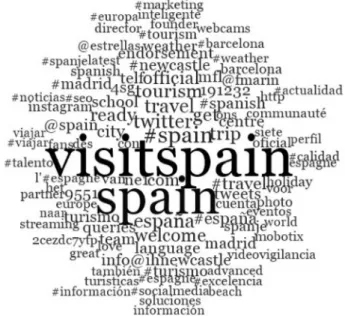
(6) Tourism Management Perspectives 32 (2019) 100560. L. Garay. To ensure content analysis validity – also referred to as credibility in a qualitative research context, e.g., by (Guba & Lincoln, 1985) – a peer check was conducted in accordance with proposals in the literature (Creswell, 2012; Mayring, 2014). This check was performed by qualitative content analysis experts who have previously worked with the author on content analysis and coding for destination images (reference omitted for review purposes). These researchers analysed and provided feedback on the codes so that it would be possible to further refine the content analysis and re-evaluate and modify the original codes. The final version of the codebook, shown in Table 1, was used to definitively review all the tweets in the sample for encoding according to their content (early 2018). The codebook includes the two new dimensions of tourism product and place. Tourism products were included on observing that most tweets referred implicitly or explicitly to an identifiable tourism product, as classified in the taxonomies of a number of authors (McKercher, 2016; Moreno, 2011). Indeed, as can be seen from the results of the content analysis, tourism products need to be considered as yet another soft cognitive element, as they are directly related to the ‘representational’ construction of the destination brand image, as proposed by authors such as Giovanardi (2012). As for place, this was included in relation to more functional or hard cognitive elements, with the effect that Spanish geographic regions were added to the broader Spain destination-brand.. brand with the influencers and the DMOs. Next in the ranking are a number of private sector entities, but of especial interest is an initially unexpected actor: marketing professionals, often working for local destinations (sub-brands). More predictable is the listing of Spanish embassies and consulates abroad, whose functions obviously include promoting Spain as a destination, and of local and regional DMOs, which use the Spain brand to promote their area and whose image reciprocally helps build the country brand. Regarding seasonal variations, while communicators, bloggers and photographers were more active in winter and spring, Turespaña was more active in summer and autumn (high season). Broadly speaking, generic users were equally active throughout the year, although with a slight pick-up in summer. From these results, it is clear that analysing the #visitspain hashtag rather than the @spain handle provided more useful insights into the VBC structure and the conversation regarding the Spain destinationbrand. In view of the emerging role of tourists in the creation of UGC, the need to analyse the profile of stakeholders present in virtual communities has been repeatedly pointed out in the literature (from Gartner (1994) to Kavaratzis and Hatch (2013)). Results point to the need to go further, however. First, roles reflecting the marketing and communication world, with a clear goal of digital diffusion and influence, need to be included, along with the media influencers and travel opinion leaders highlighted in the literature (Yoo et al., 2011). Second, analysis of the user profiles in the VBC would suggest the advisability of referring to a ‘generic user’ profile, composed of potential, present or past tourists, but also of other users (including residents) who create UGC regarding the destination-brand.. 4. Findings and analysis 4.1. Community structure. 4.2. Main conversation concepts. Among the stakeholders participating in the conversation around the hashtag #visitspain, one would expect Turespaña (the @spain handle) to dominate and to disseminate most information on the destination. However, as shown in Fig. 1, although Turespaña (ranked second) did transmit a significant volume of information, the real ‘influencers’ in this VBC (ranked first) were independent communicators, bloggers and photographers using the Spain brand for their work. An analysis of their profiles would indicate this category to be composed of individuals specializing in specialist travel journalism (e.g., gastronomy). Ranked in third place were generic users, who purportedly use the hashtag without any commercial or promotional goal but who contributed to co-creating the destination-brand with the influencers and Turespaña. An analysis of this profile revealed the category to include potential tourists, tourists on or after returning from a visit and other users (including residents) offering recommendations or information on the destination and its attractions. Their importance is significant in all time-periods and they are leading the co-creation of the destination-. Fig. 2 shows the main concepts, destinations and other topics featuring most prominently in the #visitspain conversation, of which the most noteworthy are those referring to the country, followed by those referring to ‘tourism’ and ‘travel’ as activities. Interestingly present is the word ‘photo’, a clear indication of the significantly visual nature of this conversation. Also of note is the appearance of Spain's two main cities, Madrid and Barcelona, and also ‘weather’, frequently used to promote tourism in Spain. Europe is also featured, as well as more emotive words reflecting admiration and gratitude. Overall, the conversation is mostly based on positive words and words referring to. Restaurant / Catering professionals Regional and local DMOs Embassies / Consulates Accommodation managers Marketing / ICT professionals Intermediation professionals / Agencies Schools / Training centres Generic users Turespaña. Tourist information office Communicator / Blogger / Photographer 0. Spring. Summer. 50 100 150 200 250 300 350 400 450 500. Autumn. Winter. Fig. 1. Stakeholders (number of tweets) participating in the #visitspain conversation 2016–2017. Source: Authors, based on data from Twitter.. Fig. 2. Main words appearing in the #visitspain conversation 2016–2017 (word size reflects the number of mentions). Source: Authors, based on data from Twitter. 6.
(7) Tourism Management Perspectives 32 (2019) 100560. L. Garay. 135. 124 100. 140. 102 97. 117 94. 72. 89 78 77. 13. 14. 19. 19. Spring. Summer. Autumn. Winter. 65. 102 92. 91 81. 66. 63. 3 Spring. 4. 95 92 82. 68. 58. Summer. 2 Autumn. 11 Winter. Admiration (435). Interest (402). Lifestyle (390). Identity (338). Enjoyment (312). Gratitude (65). Knowledge / Information (303). Quality / Professionalism (20). Fig. 3. Tweets by the #visitspain community featuring affective attributes by number and dimension 2016–2017. Source: Authors, based on data from Twitter.. Fig. 4. Tweets by the #visitspain community featuring soft cognitive attributes affective by number and dimension 2016–2017. Source: Authors, based on data from Twitter.. regional and local destinations. 158. 153. 4.3. Coding results for affective attributes. 131. 118. Fig. 3 shows trend over the year for the affective attributes, reflecting their greater importance in winter than in summer. Admiration had a slightly greater weight than the other dimensions (30% of tweets), followed by interest, enjoyment and gratitude, in that order. Associations with the seasonal variable throughout the year were significant for admiration (X2 = 28.9, p = .00), enjoyment (X2 = 21.1, p = .00) and interest (X2 = 34.4, p = .00). Nearly three quarters (72.6%) of the tweets contained at least one explicitly affective expression, which would clearly indicate that the conversation was emotive. Moreover, positive emotions predominated absolutely, i.e., no critical elements featured in this stakeholder community. This simply reflects the nature of the conversation in terms of its purpose, the space where it was conducted and the stakeholders who participated. The findings in this regard are in line with other studies (Hays et al., 2013; Lange-Faria & Elliot, 2012) that report the predominance of positive emotions in virtual communities where DMOs are explicitly present. In contrast, negative emotions have more weight in communities like TripAdvisor, which are populated by past tourists (Ayeh, Au, & Law, 2013; Kladou & Mavragani, 2015). The literature analysing the nature of affective elements in online contexts (Dervin & Reinhard, 2007) proved particularly useful in establishing that positive emotions, and particularly that of admiration in the VBC, create a context in which the proliferation of positive assessments produces feedback, which, in turn, corroborates reflections by Savolainen (2015).. 74 61 42 25 04 Spring. 57 42 33 21 9 0 Summer. 72 52. 64 59. 25 21 0 Autumn. 33 24 12 3 Winter. Cultural (560). Nature / Sport (252). Urban (186). Sun-sea-sand (176). Gastronomy (95). Rural (46). Snow (3). Fig. 5. Tweets by the #visitspain community featuring tourism products by number and dimension 2016–2017. Source: Authors, based on data from Twitter.. 4.5. Coding results for tourism products Around 73% of tweets in the sample made some reference to a tourism product (Fig. 5). Cultural tourism was the most frequently mentioned product by a wide margin, while traditional sun-sea-sand tourism was mentioned in around 12% of tweets, with a similar rate for the urban and nature tourism products. Surprisingly, while gastronomy was less mentioned, it was still relevant, whereas rural tourism had very little weight in the conversation. Snow tourism was also mentioned little, suggesting that there is a considerable margin for DMOs to boost it in Twitter conversations. These findings confirm the value of including tourism products in the characterization of destination image formation, as tourism product conceptualization links directly with many of the soft cognitive categories proposed in the literature, e.g., Beerli and Martin (2004). For instance, ‘culture, history and art’ and ‘natural resources’ are (soft) attraction factors that can be associated with cultural tourism and nature tourism, respectively. The temporal analysis was also useful in identifying certain products (and their associated narratives) that have more weight in particular seasons.. 4.4. Coding results for soft cognitive attributes Just over two thirds (66.6%) of the tweets featured a soft cognitive attribute, indicating this concept to be important in the #visitspain conversation, although slightly less so than that affective attributes. As can be seen in Fig. 4, the three most important dimensions largely form a cluster, with the lifestyle dimension predominating slightly (27% of tweets). As for the trend over the year, the knowledge/information dimension features notably less in summer. These results are in consonance with previous classifications of cognitive attributes (e.g., Beerli and Martin (2004)) and also corroborate Giovanardi (2012) in the distinction between soft and hard cognition. The lifestyle attribute can be directly related with the atmosphere of the place, reported on by other authors (Marine-Roig & Clavé, 2015) and also aligns with the literature, which highlights user reports regarding intangible narratives and the sense of place for a destination-brand (Mengi et al., 2017).. 4.6. Coding results for hard cognitive attributes Fig. 6 shows just how significant the hard cognitive attributes were, as they were mentioned in 81.6% of the tweets, most especially certain tourism resources (in almost half the tweets) and the landscapes of the destination and sub-destinations. The weights for the tourism offer and climate were less, although still notable (around 7% of tweets). The trend over the year shows that mentions of resources and climate were 7.
(8) Tourism Management Perspectives 32 (2019) 100560. L. Garay. with products, e.g., the Canary Islands with sea-sun-sand tourism). 159. 177. 165 138 134. 134. 4.8. Associations between stakeholders and the other variables 121. A significant association was identified between specific stakeholder profiles and the different affective attributes. Turespaña, accommodation managers and educational organizations were prominent in the case of admiration (X2 = 40.28, p = .00) and enjoyment (X2 = 36.63, p = .00), whereas local and regional DMOs, and embassies and consulates were prominent in the case of interest (X2 = 35.63, p = .00). Regarding the soft variables, identity was significant for travel agencies (X2 = 48.76, p = .00), while lifestyle was relevant for governmental and educational organizations (X2 = 32.91, p = .00). Knowledge/information was significant (X2 = 54.32, p = .00) for marketing and ICT professionals. As for the hard variables, resources were particularly relevant for local DMOs and restaurants/caterers (X2 = 63.41, p = .00), while the tourist offer mattered most to accommodation managers and agencies (X2 = 197.56, p = .00). Climate was important for generic users and marketing professionals (X2 = 231.297, p = .00) and landscape was particularly important for Turespaña, and embassies and consulates (X2 = 48.40, p = .00). Regarding the relationship between stakeholders and tourism products, important associations were found between accommodation professionals and sun-sea-sand tourism (X2 = 46.69, p = .00), and between accommodation professionals and communicators/bloggers/ photographers and urban tourism (X2 = 33.33, p = .00). To a lesser degree, Turespaña and marketing and ICT professionals were associated with rural tourism (X2 = 36.27, p = .00). Given its importance in the sample, it is worth stressing that cultural tourism was significantly associated with generic users and travel agencies (X2 = 52.41, p = .00). Nature tourism was prominent among national and local DMOs (X2 = 22.55, p = .02), while gastronomy was associated with restaurants/caterers (X2 = 44.27, p = .00). Finally, with regard to the associations between stakeholders and destinations, the Spain destinationbrand was associated with embassies and consulates (X2 = 48.15, p = .00), the Mediterranean was particularly prominent in tweets by accommodation managers (X2 = 48.02, p = .00) and inland destinations were typically associated with local and regional DMOs (X2 = 26.62, p = .00).. 95. 27 20. 26 18. Spring. Summer. 37 30. 32 20. Autumn. Winter. Resources (639). Landscape (484). Supply (107). Climate (103). Fig. 6. Tweets by the #visitspain community featuring hard cognitive attributes by number and dimension 2016–2017. Source: Authors, based on data from Twitter.. particularly high in summer, while the tourism offer and landscape were mentioned more frequently in winter and spring, respectively. These results confirm the importance of hard cognitive attributes, linked to tangibility, as reported in previous studies. Interestingly, while affective attributes are fundamental to building a destination image (Baloglu & McCleary, 1999), in the Twitter conversation they have more weight than the soft cognitive attributes, but less weight than the hard cognitive attributes. In other words, infrastructure-related attributes, long considered to be especially important attraction factors in destination image construction (Chon, 1990) continue to be prioritized by tourists in the VBC and UGC era.. 4.7. Coding results for destinations Fig. 7 shows that while explicit mentions of the Spain destinationbrand featured significantly in the conversation (almost 30% of tweets), mentions of the Mediterranean featured most frequently of all (over 35% of tweets), with inland destinations (almost 25% of tweets) in third place. In terms of annual trend, references to the Mediterranean rose slightly in summer, while references to inland destinations rose in winter. Regarding these findings, the place branding literature proved particularly useful for this study, as place was explicitly included in the vast majority of interventions in the conversation. Nonetheless, results would suggest the advisability of including regions (sub-brands) as part of or along with the overall destination image (Zhang et al., 2014). The mentions of these regional destinations varied considerably throughout the year and, as will be seen below, reflect different relationships with stakeholders and with the other variables (identification of sub-brands. 137. 136. 101. 105. 76 33 19 Spring. 84 41 15 Summer. 128 120 95. 80 39 17. Autumn. Winter. Spain (414). Inland destinations (361). Cantabrian Sea (141). In relation to the affective attributes (gratitude, admiration, enjoyment and interest), admiration was significantly associated with identity (r = 0.313, p = .00) and with tourism products such as cultural tourism (r = 0.165, p = .00), nature tourism (r = 0.094, p = .00) and urban tourism (r = 0.083, p = .00). Also significant was the relationship between admiration and landscape (r = 0.221, p = .00) and most sub-destinations (although not the Spain destination). There was also an association between enjoyment and lifestyle (r = 0.561, p = .00) and between enjoyment and particular tourism products, such as gastronomy (r = 0.255, p = .00), sun-sea-sand tourism (r = 0.227, p = .00) and nature tourism (r = 0.084, p = .00). Resources (r = 0.105, p = .00) and landscape (r = 0.100, p = .00) were the main hard elements associated with enjoyment, while there was no significant relationship with any particular destination. Finally, interest was associated with knowledge/information (r = 0.175, p = .00) and with certain tourism products, such as urban tourism (r = 0.086, p = .00) and cultural tourism (r = 0.080, p = .00), as well as with the Spain destination (r = 0.060, p = .02). Finally, gratitude was associated with knowledge/information (r = 0.176, p = .00), with quality/ professionalism (r = 0.146, p = .00) and with the tourist offer (r = 0.156, p = .00).. 118 106. 28 14. Mediterranean Sea (511). 4.9. Associations between affective attributes and the other variables. Canary Islands (65). Fig. 7. Tweets by the #visitspain community featuring destinations by number and dimension 2016–2017. Source: Authors, based on data from Twitter. 8.
(9) Tourism Management Perspectives 32 (2019) 100560. L. Garay. or sub-destination, but was associated with the Spain brand (r = 0.067, p = .01). Climate was significantly associated only with the Spain brand (r = 0.052, p = .01). Finally, landscape was one of the most relevant variables in terms of both volume and associations, as it was significantly associated with numerous elements: admiration, enjoyment, identity, lifestyle, sun-sea-sand tourism, urban tourism, rural tourism, cultural tourism and nature/sport tourism, as well as with all the regions of Spain (but not the Spain brand itself). Finally, regarding destinations, direct references to Spain were related to the gratitude and interest affective attributes and to cognitive elements such as knowledge/information and quality/professionalism. As for tourism products, Spain was significantly associated only with gastronomy, the tourism offer and climate, and was not associated with any sub-destinations. The Mediterranean destination was mentioned in terms of admiration, identity, sun-sea-sand and urban tourism and landscape. The Cantabrian and inland destinations were also associated with admiration and identity, as well as with landscape and rural tourism, but while Cantabria was associated with nature tourism, inland destinations were associated with urban and cultural tourism (as would be expected, given the importance of Madrid and other cities with significant heritage resources). Finally, the Canary Islands were associated with sun-sea-sand tourism, as would be expected, but were also associated with nature tourism and with landscape. Identifying and coding each dimension (stakeholders, affective and cognitive attributes, tourism products and places) has enabled the author to map out how all the variables related to each other. The practical implications are that DMOs can better engage users with the VBC and the brand by more effectively deploying affective and cognitive attributes that are usually combined in UGC. Affective and cognitive dimensions could also be related to different sub-brands and tourism products as well as to the overall destination-brand. While findings show that the VBC emphasizes both the soft and hard attributes that facilitate destination image formation (in line with Mengi et al. (2017)), the fact that hard attributes had a greater presence in the Twitter conversation would suggest that the quality of a destination's infrastructure is a priority for stakeholders. In temporal terms, analysis over a whole year corroborates finding by Kavaratzis and Hatch (2013) in relation to the need to analyse place image and brand as they evolve in an ongoing transformation brought about by co-creation by stakeholders. The affective perception of destinations is not only generated after a visit, but also before or even without visiting the destination (Kneesel et al., 2010; Russell & Pratt, 1980). This issue is fundamental to the projection of destination images in VBC. Since the visit is no longer the central element in the discourse, the image does not necessarily have to be connected to the fact of travelling; one can tweet, retweet or reply regarding a destination without ever having visited it or intending to visit it.. 4.10. Associations between soft cognitive attributes and the other variables Analysis of the relationship between the soft cognitive attributes (identity, lifestyle, knowledge/information and quality/professionalism) and the other variables revealed a strong relationship between identity and admiration (r = 0.313, p = .00), and to a lesser extent with urban tourism (r = 0.082, p = .02), and, significantly, with cultural tourism (r = 0.418, p = .00) and resources (r = 0.248, p = .00). There was also a relationship (although somewhat weaker) between identity and inland destinations (r = 0.080, p = .02). Lifestyle was related to enjoyment (r = 0.581, p = .00), sun-sea-sand tourism (r = 0.228, p = .00), gastronomy (r = 0.223, p = .00) and, interestingly, also to landscape (r = 0.123, p = .00). For its part, knowledge/information was positively associated with gratitude (r = 0.176, p = .00), interest (r = 0.175, p = .00), quality (r = 0.128, p = .00) and the Spain destination (r = 0.299, p = .00), while quality/professionalism was associated with knowledge/information and with gratitude, but also with the tourism offer (r = 0.102, p = .00) and once again with the Spain destination (r = 0.056, p = .03). With regard to the tourism products (sun-sea-sand, urban, rural, snow, cultural, nature/sport and gastronomy), sun-sea-sand tourism was associated with the affective attribute enjoyment (r = 0.227, p = .00), the cognitive attribute lifestyle (r = 0.228, p = .00) and the Mediterranean (r = 0.270, p = .00) and Canary Islands (r = 0.185, p = .00) destinations. Interestingly, sun-sea-sand tourism was associated with other tourism products, especially nature/sport tourism (r = 0.137, p = .00). Whereas sun-sea-sand tourism was previously more closely associated with the tourism offer, it was now associated particularly with resources (r = 0.109, p = .00), especially sun-seasand and, interestingly, landscape (r = 0.096, p = .00). Mention has already been made of the association between urban tourism and the admiration and interest affective attributes and the identity and lifestyle cognitive attributes, to which can be added a significant relationship with cultural tourism (r = 0.179, p = .00) and with landscape (in this case urban) (r = 0.236, p = .00). Particularly interesting was the association of urban tourism with inland destinations, where Madrid was prominent (r = 0.099, p = .00), but especially with Mediterranean destinations (r = 0.115, p = .00), where Barcelona, Valencia and the Andalusian cities were prominent. Nothing new of note was identified for rural tourism, as its significant relationships were with landscape (r = 0.148, p = .00) and with inland (r = 0.096, p = .00) and Cantabrian (r = 0.060, p = .00) destinations, while snow tourism only correlated significantly with lifestyle (r = 0.075, p = .00). In turn, cultural tourism was clearly strong in inland destinations (r = 0.216, p = .00) and was associated with admiration (r = 0.165, p = .00), interest (r = 0.080, p = .00) and especially with identity (r = 0.418, p = .00). Heritage resources were also associated with cultural tourism mentions (r = 0.333, p = .00). Nature tourism was mentioned in association with admiration and with enjoyment and, rather curiously, frequently with sun-sea-sand (as commented above), while landscape (r = 0.263, p = .00) was also obviously highly relevant. Nature tourism was also, as would be expected, relevant to the Cantabrian (r = 0.132, p = .00) and Canary Islands (r = 0.149, p = .00) destinations, but surprisingly, was little associated with rural tourism. Finally, as mentioned above, gastronomy was linked to enjoyment and resources and, somewhat curiously, was the only product related directly to the Spain brand (r = 0.074, p = .00).. 5. Conclusions, research contributions and limitations This study contributes several proposals regarding the qualitative interpretation of the nature and composition of key attributes associated with the destination image, their relationship with tourism products and places, and the composition and culture of the community involved in the destination image formation process. From a theoretical point of view, it suggests evaluating the VBC structure and characterizing affective and cognitive attributes (including their seasonal evolution), including their relationships with each other. Therefore, the study proposes a more focused investigation of the nature of affective narratives that contemplates the existence of soft and hard cognitive attributes and also tourism products and place brands. Including a temporal analysis, moreover, allows the narrative to be monitored over time as it is created. Regarding methodology, qualitative content analysis was especially useful in capturing the inner culture of the VBC, understanding the kind of stakeholders that were leading the narrative and how affective and cognitive attributes are projected around the. 4.11. Associations between hard cognitive attributes and the other variables The most notable relationships between the hard attributes (resources, tourist offer, climate and landscape) and the other variables have been described above. Resources were associated with enjoyment, identity and sun-sea-sand, cultural and inland tourism. The tourist offer was associated with gratitude and information, and was not significantly associated with any tourism product, hard cognitive element 9.
(10) Tourism Management Perspectives 32 (2019) 100560. L. Garay. destination-brand and throughout the year. A quantitative translation into codes enabled the author to introduce a quantitative analysis that allowed the author to map potential relationships among variables. Regarding implications for practitioners, the study highlights the usefulness of profiling stakeholders, breaking down affective and cognitive attributes and including tourism products and place as variables. A first recommendation is related to the need to understand the structure of the VBC for particular destination-brands. Findings point to the need to consider the voice of bloggers, journalists, marketers – in short, all kinds of influencers – and also of generic users, composed of both tourists and other individuals and entities, such as residents or simply Twitter users interested in a brand. A second recommendation has to do with the need to better characterize UGC and the derived narrative in the VBC for particular destination-brands. Doing this requires an understanding of what affective and cognitive attributes are being projected and how certain messages can be reinforced or recast depending on the attribute, tourist product or place. One example from the analysis of this study's VBC was a detected lack of explicit references to soft cognitive variables like responsible tourism or sustainability, which are becoming increasingly important in the projection of destination images. Another example was the marginal weight of the knowledge/information variable, which pointed to plenty of potential for reinforcement of its association with the destination. In contrast, there was good connectivity for the traditional sun-sea-sand product with other tourism products, e.g., nature tourism, and with landscape. A final recommendation refers to the need to conduct qualitative and temporal studies of UGC and derived narratives in the VBC in order to better understand who projects the destination image, how and when. Finally, while content analysis allows more direct observation of the narrative itself, observation over time is useful to detect changes in the composition of VBC stakeholders, in the narrative regarding changes and in the seasonal context itself (high season, special events, etc.). One obvious limitation of this study is that the analysis was limited to a particular platform (Twitter) and a particular online community (for the Spain tourism brand). Other social media networks, such as Facebook (or those that stress other forms of communication, such as Instagram for visual content) would also need to be analysed to see whether the structure of attributes, products and places is the same as that observed here. Such an analysis could also examine whether the stakeholder profile is significantly different, as this would suggest a different discourse from that described here for Twitter. Another limitation refers to the inability to observe the behaviour of similar stakeholders and variables in other national destinations, nor the ability to investigate whether online communities created around a destinationbrand for smaller-scale destinations (regional and local) behave in the same way as country destination-brands. These limitations should give rise to future studies that build on this study's findings.. effects of social media engagement on customer loyalty in the travel industry. International Journal of Hospitality & Tourism Administration, 19(1), 78–94. Ayeh, J. K., Au, N., & Law, R. (2013). “Do we believe in TripAdvisor?” Examining credibility perceptions and online travelers’ attitude toward using user-generated content. Journal of Travel Research, 52(4), 437–452. Baloglu, S., & Brinberg, D. (1997). Affective images of tourism destinations. Journal of Travel Research, 35(4), 11–15. Baloglu, S., & McCleary, K. W. (1999). A model of destination image formation. Annals of Tourism Research, 26(4), 868–897. Beerli, A., & Martin, J. D. (2004). Factors influencing destination image. Annals of Tourism Research, 31(3), 657–681. Benur, A. M., & Bramwell, B. (2015). Tourism product development and product diversification in destinations. Tourism Management, 50, 213–224. Chon, K.-S. (1990). The role of destination image in tourism: A review and discussion. The Tourist Review, 45(2), 2–9. Cleave, E. P. (2014). Economic development in the contemporary global environment: The role of place branding as a tool of local economic development in Ontario, Canada. Ontario, Canadá: The University of Western Ontario (Degree in Master of Arts). Creswell, J. W. (2012). Educational research: Planning, conducting, and evaluating quantitative (4th ed.). Upper Saddle River: Pearson Education. Creswell, J. W., & Clark, V. L. P. (2017). Designing and conducting mixed methods research (2nd ed.). Newbury Park: Sage publications. Dervin, B., & Reinhard, C. D. (2007). Predicting library, internet and other source use: A comparison of the predictive power of two user-defined categorizations of information seeking situations–nature of situations versus situation “emotions” assessments. Proceedings of the American Society for Information Science and Technology, 44(1), 1–5. Dickinger, A., & Lalicic, L. (2016). An analysis of destination brand personality and emotions: A comparison study. Information Technology & Tourism, 15(4), 317–340. Dwivedi, M., Yadav, A., & Venkatesh, U. (2011). Use of social media by national tourism organizations: A preliminary analysis. Information Technology & Tourism, 13(2), 93–103. Fotis, J., Buhalis, D., & Rossides, N. (2012). Social media use and impact during the holiday travel planning process. Paper presented at the information and communication technologies in tourism 2012, Helsinborg. Gartner, W. C. (1989). Tourism image: Attribute measurement of state tourism products using multidimensional scaling techniques. Journal of Travel Research, 28(2), 16–20. Gartner, W. C. (1994). Image formation process. Journal of Travel & Tourism Marketing, 2(2–3), 191–216. Ghazali, R. M., & Cai, L. (2014). Social media sites in destination image formation. In A. M. Munar, S. Gyimothy, & C. Liping (Eds.). Tourism social media: Transformations in identity, community and culture (pp. 73–86). Bingley: Emerald Group Publishing Limited. Giovanardi, M. (2012). Haft and sord factors in place branding: Between functionalism and representationalism. Place Branding and Public Diplomacy, 8(1), 30–45. Guba, E. G., & Lincoln, Y. S. (1985). Naturalistic inquiry. Newbury Park: Sage. Gunn, C. (1972). Designing tourist regions. Austin: Taylor and Francis. Habibi, M. R., Laroche, M., & Richard, M.-O. (2014). Brand communities based in social media: How unique are they? Evidence from two exemplary brand communities. International Journal of Information Management, 34(2), 123–132. Hays, S., Page, S. J., & Buhalis, D. (2013). Social media as a destination marketing tool: Its use by national tourism organisations. Current Issues in Tourism, 16(3), 211–239. Huertas, A., & Marine-Roig, E. (2016). Differential destination content communication strategies through multiple social media. Paper presented at the information and communication technologies in tourism 2016, Bilbao. Kavaratzis, M., & Hatch, M. J. (2013). The dynamics of place brands: An identity-based approach to place branding theory. Marketing Theory, 13(1), 69–86. Kiráľová, A., & Pavlíčeka, A. (2015). Development of social media strategies in tourism destination. Procedia-Social and Behavioral Sciences, 175, 358–366. Kladou, S., & Mavragani, E. (2015). Assessing destination image: An online marketing approach and the case of TripAdvisor. Journal of Destination Marketing & Management, 4(3), 187–193. Kneesel, E., Baloglu, S., & Millar, M. (2010). Gaming destination images: Implications for branding. Journal of Travel Research, 49(1), 68–78. Költringer, C., & Dickinger, A. (2015). Analyzing destination branding and image from online sources: A web content mining approach. Journal of Business Research, 68(9), 1836–1843. Kotler, P., Asplund, C., Rein, I., & Heider, D. (1999). Marketing places Europe: Attracting investments, industries, residents and visitors to European cities, communities, regions and nations. London: Pearson Education. Kotler, P., & Gertner, D. (2002). Country as brand, product, and beyond: A place marketing and brand management perspective. Journal of Brand Management, 9(4), 249–261. Lam, T., & Hsu, C. H. (2006). Predicting behavioral intention of choosing a travel destination. Tourism Management, 27(4), 589–599. Lange-Faria, W., & Elliot, S. (2012). Understanding the role of social media in destination marketing. Tourismos, 7(1), 193–211. Leung, D., Law, R., Van Hoof, H., & Buhalis, D. (2013). Social media in tourism and hospitality: A literature review. Journal of Travel & Tourism Marketing, 30(1–2), 3–22. Li, M., Cai, L. A., Lehto, X. Y., & Huang, J. (2010). A missing link in understanding revisit intention—The role of motivation and image. Journal of Travel & Tourism Marketing, 27(4), 335–348. Lopatovska, I., & Arapakis, I. (2011). Theories, methods and current research on emotions in library and information science, information retrieval and human–computer interaction. Information Processing & Management, 47(4), 575–592. Lucarelli, A., & Brorström, S. (2013). Problematising place branding research: A metatheoretical analysis of the literature. The Marketing Review, 13(1), 65–81.. Acknowledgments I want to thank Dr. Gemma Canoves (Universitat Autònoma de Barcelona) and Dr. Soledad Morales (Universitat Oberta de Catalunya) by their recommendations, so useful in the coding processes of this research project. References Agapito, D., Oom do Valle, P., & da Costa Mendes, J. (2013). The cognitive-affectiveconative model of destination image: A confirmatory analysis. Journal of Travel & Tourism Marketing, 30(5), 471–481. Ahn, J., & Back, K.-J. (2018). Antecedents and consequences of customer brand engagement in integrated resorts. International Journal of Hospitality Management, 75, 144–152. Andéhn, M., Kazeminia, A., Lucarelli, A., & Sevin, E. (2014). User-generated place brand equity on twitter: The dynamics of brand associations in social media. Place Branding and Public Diplomacy, 10(2), 132–144. van Asperen, M., de Rooij, P., & Dijkmans, C. (2018). Engagement-based loyalty: The. 10.
(11) Tourism Management Perspectives 32 (2019) 100560. L. Garay. place branding. Journal of Place Management and Development, 6(3), 227–239. So, K. K. F., King, C., & Sparks, B. (2014). Customer engagement with tourism brands: Scale development and validation. Journal of Hospitality & Tourism Research, 38(3), 304–329. Stern, E., & Krakover, S. (1993). The formation of a composite urban image. Geographical Analysis, 25(2), 130–146. Taha, D. A. (2013). Place identity of egyptian cities: Learning from the past, branding for the future. ACE: Architecture, City and Environment, 7(21), 97–116. Tasci, A. D., & Gartner, W. C. (2007). Destination image and its functional relationships. Journal of Travel Research, 45(4), 413–425. Tham, A., Croy, G., & Mair, J. (2013). Social media in destination choice: Distinctive electronic word-of-mouth dimensions. Journal of Travel & Tourism Marketing, 30(1–2), 144–155. UNWTO (2017). UNWTO tourism highlights (2017 ed.). Madrid: UNWTO. Wang, Y., Yu, Q., & Fesenmaier, D. R. (2002). Defining the virtual tourist community: Implications for tourism marketing. Tourism Management, 23(4), 407–417. Yayli, A., Bayram, M., & Bayram, Ü. (2011). How social media works in destination marketing? A content analysis on Twitter. Paper presented at the 10th international congress marketing trends, Paris. Yoo, K. H., Gretzel, U., & Zach, F. (2011). Travel opinion leaders and seekers. Paper presented at the information and communication Technologies in Tourism 2011, Innsbruk. Zeng, B., & Gerritsen, R. (2014). What do we know about social media in tourism? A review. Tourism Management Perspectives, 10, 27–36. Zhang, H., Fu, X., Cai, L. A., & Lu, L. (2014). Destination image and tourist loyalty: A meta-analysis. Tourism Management, 40, 213–223.. Marine-Roig, E., & Clavé, S. A. (2015). Tourism analytics with massive user-generated content: A case study of Barcelona. Journal of Destination Marketing & Management, 4(3), 162–172. Mayring, P. (2014). Qualitative content analysis: Theoretical foundation, basic procedures and software solution. Klagenfurt: SSOAR Open Access Repository. Retrieved from https:// www.ssoar.info/ssoar/handle/document/39517. McKercher, B. (2016). Towards a taxonomy of tourism products. Tourism Management, 54, 196–208. Mengi, O., Durmaz Drinkwater, S. B., Öner, A. C., & Velibeyoğlu, K. (2017). Place management of a creative city: The case of Izmir. International Journal of Knowledge-Based Development, 8(3), 271–291. Michael, N., James, R., & Michael, I. (2018). Australia’s cognitive, affective and conative destination image: An Emirati tourist perspective. Journal of Islamic Marketing, 9(1), 36–59. Middleton, V. T., & Clarke, J. R. (2012). Product formulation in tourism. In V. T. Middleton, & J. R. Clarke (Eds.). Marketing in travel and tourism (pp. 138–154). London: Routledge. Mkono, M., & Tribe, J. (2017). Beyond reviewing: Uncovering the multiple roles of tourism social media users. Journal of Travel Research, 56(3), 287–298. Moreno, M. C. M. (2011). Turismo y producto turístico. Evolución, conceptos, componentes y clasificación. Visión gerencial, 1, 135–158. Munar, A. M. (2012). Social media strategies and destination management. Scandinavian Journal of Hospitality and Tourism, 12(2), 101–120. Oliveira, E., & Panyik, E. (2015). Content, context and co-creation: Digital challenges in destination branding with references to Portugal as a tourist destination. Journal of Vacation Marketing, 21(1), 53–74. Pan, B., & Li, X. R. (2011). The long tail of destination image and online marketing. Annals of Tourism Research, 38(1), 132–152. Papadimitriou, D., Apostolopoulou, A., & Kaplanidou, K. (2015). Destination personality, affective image, and behavioral intentions in domestic urban tourism. Journal of Travel Research, 54(3), 302–315. Robinson, D. L. (2008). Brain function, emotional experience and personality. Netherlands Journal of Psychology, 64(4), 152–168. Russell, J. A., & Pratt, G. (1980). A description of the affective quality attributed to environments. Journal of Personality and Social Psychology, 38(2), 311. Sanz, I., Museros, L., & González-Abril, L. (2016). Exploring the cognitive-affectiveconative image of a rural tourism destination using social data. Paper presented at the JARCA workshop on qualitative systems and applications in diagnosis, robotics and ambient intelligence, Almeria. Savolainen, R. (2015). Expressing emotions in information sharing: A study of online discussion about immigration. Information Research, 20(1), Paper 662. Retrieved from http://InformationR.net/ir/20-1/paper662.html. Sevin, E. (2013). Places going viral: Twitter usage patterns in destination marketing and. Lluís Garay is Associate Professor at Universitat Oberta de Catalunya (UOC), Barcelona, Spain. His main areas of research interest concern diverse forces transforming the tourism activity, highlighting the collaborative, co-creative, sustainable and responsible processes causing disruptive impacts on urban and rural socio-economic environments and organizations. Lluís is the coordinator of the NOUTUR research group (UOC) which aims to analyse the impacts that tourism and leisure activities are causing within the contexts of destinations (territories), organizations (both business and non-business) and consumption patterns (both tourists and residents).. 11.
(12)
Figure


Documento similar
On the other hand at Alalakh Level VII and at Mari, which are the sites in the Semitic world with the closest affinities to Minoan Crete, the language used was Old Babylonian,
For our purpose of exploring the role of Moroccan emigrants in the construction of the Morocco brand as a tourist destination, firstly we conducted a literature review on
Keywords: Metal mining conflicts, political ecology, politics of scale, environmental justice movement, social multi-criteria evaluation, consultations, Latin
teriza por dos factores, que vienen a determinar la especial responsabilidad que incumbe al Tribunal de Justicia en esta materia: de un lado, la inexistencia, en el
The purpose of the research project presented below is to analyze the financial management of a small municipality in the province of Teruel. The data under study has
Although some public journalism schools aim for greater social diversity in their student selection, as in the case of the Institute of Journalism of Bordeaux, it should be
Analysis of the construction of the hegemonic discourses about truth, social communication and the activity of the media in the printed press and in the
In the “big picture” perspective of the recent years that we have described in Brazil, Spain, Portugal and Puerto Rico there are some similarities and important differences,
