Does pre-liver transplant HBV DNA level
affect HBV recurrence or survival in liver transplant
recipients receiving HBIg and nucleos(t)ide analogues?
Isabel Campos-Varela,*,§,|| Lluís Castells,*,§,|| María Buti,*,§,|| Víctor Vargas,*,§,|| Itxarone Bilbao,†,§,¶ Francisco Rodríguez-Frías,‡,§ Rosendo Jardí,‡,§ Ramón Charco,† Jaime Guardia,*,§,|| Rafael Esteban*,§,||* Liver Unit, Department of Internal Medicine, Hospital Universitario Vall d’ Hebron, Barcelona, Spain.
† Liver Transplant Unit, Department of HPB-Surgery and Transplant, Hospital Universitario, Vall d’ Hebron, Barcelona, Spain. ‡ Biochemistry Laboratory, Hospital Universitario Vall d’ Hebron, Barcelona, Spain.,
§ Centro de Investigación Biomedica en Red de Enfermedades Hepáticas y Digestivas, Barcelona, Spain. || Universidad Autónoma de Barcelona, Departamento de Medicina, Barcelona, Spain.
¶ Universidad Autónoma de Barcelona, Departamento de Cirugía, Barcelona, Spain.
ABSTRACT
Background and Aims. The risk of recurrent hepatitis B virus (HBV) infection and prognosis of liver trans-plantation in patients with HBV has dramatically changed with the use of prophylaxis including hepatitis B immune globulin (HBIg) and antiviral agents. Methods. This study analyzes the prognostic value of HBV DNA level before orthotopic liver transplantation (OLT) and the effect of HBV prophylaxis on rates of HBV recu-rrence and survival. Between 1988 and 2008, 859 patients underwent OLT in our center; 60 patients had HBV-related liver disease and in 49, HBV DNA was determined by real time-PCR before OLT. Survival and HBV recurrence were analyzed according to preoperative viral load (HBV DNA <103 IU/mL vs. HBV DNA ≥103)
and prophylaxis regimens (HBIg vs HBIg and antivirals). Results. On multivariate analysis, prophylaxis with HBIg alone, but not HBV-DNA levels was independently associated with poor survival, with a relative risk (RR) of death of 6.5 (95% CI 2.1-19.8, P = 0.001). The risk of HBV recurrence, in this small series, was also as-sociated with monoprophylaxis with HBIg (RR 27, 95% CI 5.2-147.2, P < 0.0001), but not with HBV-DNA levels.
Conclusions.When prophylaxis with HBIg and antiviral agents was administered, survival and HBV recurren-ce were not influenrecurren-ced by HBV-DNA levels determined by real time-PCR prior to OLT.
Key words. Liver transplantation. Prophylaxis regimen. HBV real time-PCR. HBV recurrence.
Correspondence and reprint request: Isabel Campos-Varela, MD. CIBERehd. Liver Unit, Department of Internal Medicine
Hospital Universitario Vall d’ Hebron
Passeig Vall d´Hebrón 119-129. 08035 Barcelona, Spain Tel.: 34.93.274.61.40; Fax: 34.93.274.60.68; E-mail: [email protected]
Manuscript received: January 10, 2011. Manuscript accepted: February 14, 2011. INTRODUCTION
Chronic hepatitis B virus (HBV) infection is a common cause of advanced liver disease worldwide and is the indication for approximately 8% of or-thotopic liver transplantations (OLTs) performed in Europe and the United States. The long-term outco-me and survival following OLT depends on preven-tion of recurrent HBV infecpreven-tion in the allograft,
which is almost universal without HBV
pro-phylaxis.1,2
The use of long-term hepatitis B immune globulin
(HBIg) prophylaxis plus lamivudine3-11 (LAM) has
significantly reduced HBV recurrence after OLT and improved the outcome of transplantation. Current-ly, the combination of these two agents is the stan-dard prophylaxis used worldwide. However, the dose
and duration of HBIg12 are not standardized and
vary widely from one transplant center to
ano-ther.5,13,14
Several factors are associated with a higher risk of recurrent HBV, such as the presence of high HBV
DNA levels at the time of transplantation15,16 and
drug-resistant HBV.17,23 Other factors, including
co-infection with hepatitis delta virus (HDV)24,25 and a
The assays for measuring HBV DNA levels have improved over the last years. Current polymerase chain reaction (PCR) amplification techniques can detect very low levels of viremia (lower detection li-mit, 12 IU/mL), whereas the conventional assays used in the majority of studies published to date have a lower limit of 1,000 to 100,000 copies/mL (equivalent to 170-17,000 IU/mL, respectively). In addition, new potent antivirals such as entecavir (ETV) and tenofovir disoproxil fumatare (TDF) have been added to the therapeutic arsenal for patients
with chronic hepatitis B.26,27 These factors –better
drugs and more sensitive tests to determine HBV DNA– have changed the prophylactic strategies used
to prevent HBV recurrence after OLT.28,29
This study analyzes a cohort of patients who un-derwent OLT for HBV-related hepatitis over a 20-year period in a single center with the aim of evaluating the prognostic role of HBV DNA load at the time of transplantation on the risk of HBV recu-rrence and the effects of different strategies used for HBV prophylaxis.
PATIENTS AND METHODS
Patients
All adult patients who underwent OLT in Hospi-tal Universitario Vall d’Hebron (Barcelona, Spain) from December 1988 to December 2008 were analy-zed. Patients were included in the study if they had end-stage liver disease or hepatocellular carcinoma (HCC) associated with HBV infection, defined by the presence of hepatitis B surface antigen (HB-sAg). Following the hospital protocol, patients were submitted to OLT if they had a negative HBV DNA determination by the laboratory assay used at that time. HBV DNA load at the time of OLT was retrospectively analyzed in all available stored serum samples by a quantitative HBV DNA PCR assay.
Medical records were reviewed and data regarding demographics, liver disease, HBV status before and after transplantation, clinical outcome, and survival were collected. Type of HBV prophylaxis and immu-nosuppression were also analyzed. Patients with concomitant HCC or coinfection with hepatitis C vi-rus (HCV), hepatitis D vivi-rus (HDV), or human im-munodeficiency virus (HIV) were also included.
Before liver transplantation, all patients were tes-ted for HBV serological markers and HBV DNA. Four preoperative HBV DNA cut-off values were
es-tablished (<12 IU/mL,< 103 IU/mL,< 104 IU/mL,
< 105 IU/mL) to analyze the effect of differing
baseli-ne HBV DNA loads on survival.
Following transplantation, routine hematology and biochemistry testing, and HBsAg and antibodies against hepatitis B surface (anti-HBs) were perfor-med every 3 months. When HBsAg was detected in serum, HBV DNA was determined by PCR. HBV re-currence was defined by reappearance of HBsAg in serum in at least 2 separate determinations.
Serological markers
HBsAg, IgM anti-HBc antibodies, hepatitis B e antigen (HBeAg), hepatitis B e antibody (anti-HBe), and antibodies against hepatitis C virus (HCV), he-patitis D virus (HDV), and human immunodeficien-cy virus (HIV) were tested with commercial assays.
HBV DNA determination was not performed routinely in our center until 1991. From that time to 1993, HBV DNA was determined by an in-house hybridization technique (lower detection li-mit, 750,000 copies/mL). Between 1993 and 2000, HBV DNA was tested using a qualitative in-house
PCR, with a lower detection limit of 103 copies/
mL. Between 2000 and 2007 quantitative HBV DNA testing was done by real-time PCR (Light-Cycler PCR, Roche Diagnostics) with a lower
de-tection limit of 5x10² copies/mL.30 Starting in
2007, HBV DNA has been tested by real-time PCR (COBAS Ampliprep/COBAS TaqMan HBV test as-say, Roche Molecular Diagnostics, Basel, Switzer-land) with a lower detection limit of 12 IU/mL. Retrospective analysis of HBV DNA in available serum samples frozen (-80 ºC) at the time of OLT using this last technique was performed to unify the HBV DNA results.
HBV prophylactic strategies
From 1988 to 1996, the standard protocol for pre-vention of post-OLT HBV reinfection consisted of 10,000 IU of hepatitis B immune globulin (HBIg) in-travenously (iv) (Hepatect CP, Biotest Pharma GmbH, Dreieich) during the anhepatic phase and the first day, 5000 IU HBIg iv daily for 5 days, follo-wed by 5000 IU HBIg iv monthly.
From 1997 to 2008, patients received the same HBIg prophylaxis up to day 7, 4000 IU of HBIg in-tramuscularly (im) weekly (Gamma Anti-Hepatitis B Grifols 1,000 IU, Parets del Vallés, Spain) for 3 addi-tional weeks, and then 2000 IU im monthly
indefini-tely.31-33 In this second period, all patients were
ana-logue (NUC), initiated before or after OLT and con-tinued indefinitely.
Immunosuppression protocol
The immunosuppression therapy differed accor-ding to the year of transplantation. From 1988 to 1996, the immunosuppressive regimen was mainly based on cyclosporine (CyA). Tacrolimus (Fk) was introduced and combined with CyA between 1997 and 1998, and since 1999, Fk has been used exclusi-vely. Steroids were given until 2004, and from that time on, mycophenolate mofetil (MMF) has been used. Steroids were gradually reduced and disconti-nued within 3 to 6 months following OLT.
Statistical analysis
Data are presented as the mean ± standard de-viation or median (interquartile ratio), according to the distribution of the variables. Normality was determined by the Shapiro-Wilk test. Associa-tions between categorical variables were examined with the chi-square or Fisher exact test.
Parame-tric or non-parameParame-tric tests (Mann-Whitney U
test) were used to determine the associations bet-ween quantitative variables. A Cox proportional hazards regression model was applied to identify variables associated with recurrence or survival during the follow-up period. Forward stepwise Cox regression was used to identify variables inde-pendently associated with recurrence or survival according to the likelihood ratio (inclusion crite-ria for the model = 0.05, tolerance = 0.1). Data were analyzed with SPSS software (15.0, SPSS Inc., Chicago IL, USA).
RESULTS
Over the 20-year study period, 859 patients un-derwent OLT, and 60 cases (7%) were related to HBV infection. The indications for OLT were end-stage liver disease in 29 (59%) and HCC in 20 (41%) patients. There were no cases of fulminant hepatitis B infection. Eleven patients were excluded from the study. One patient died during surgery, and in 10 patients, HBV DNA determination by a sensitive PCR assay was not performed before OLT. Hence, 49 patients followed up for a median of 45 months post-OLT (2-152 months) were included in the analysis. Baseline characteristics of the patients are shown in Table 1. Preoperative HBV DNA levels are shown in Table 2.
HBV prophylaxis and immunosuppressive therapy
The 49 patients received 2 different pro-phylaxis regimens: 7 (14%) received HBIg alone, all in the period of 1988 to 1996, and 42 (82%) re-ceived the combination of HBIg and an oral anti-viral, all in the period of 1997 to 2008. The antiviral drug administered was LAM in 38 pa-tients, ETV in 2, TDF and emtricitabine (FTC) in 1, and the combination of LAM and adefovir (ADF) in 1 patient.
Post-OLT immunosuppression was based on CyA and steroids in 10 patients (20%), and Fk either with steroids or MMF in 39 patients (80%). Acute cellular rejection occurred in 13 patients (26%) and was treated with 500 mg methylprednisolone for 3 days.
Table 1. Pretransplantation patient characteristics.
No. patients 49
Sex, males 43(88%)
Mean age ± SD, y 52 ± 9.8
Mean ALT ± SD, IU/mL 76 ± 51
HBeAg-positive 9(18%)
HBV DNA undetectable, < 12 IU/mL (18%)
HBV DNA ≤ 103 IU/mL 39(80%)
Median HBV DNA (range), log IU/mL 102(0.108)
HCV RNA-positive 5(10%)
HDV RNA-positive 5(10%)
Anti-HIV-positive 1(2%)
Hepatocellular carcinoma 20(41%)
Child-Pugh A 11(22%)
Child-Pugh B 19(39%)
Child-Pugh C 19(39%)
Pre-OLT oral antivirals 29(59%)
Median duration of preoperarative
oral antiviral therapy (range), days 362(24-1292)
Table 2. Pre-liver transplant HBV-DNA levels and HBV recu-rrence.
Recurrence P
HBV-DNA < 12 IU/mL 1/18(6%) 0.22
HBV-DNA ≥ 12 IU/mL 7/31(23%)
HBV-DNA < 103 IU/mL 3/39(8%) 0.005
HBV-DNA ≥ 103 IU/mL 5/10(50%)
HBV-DNA < 104 IU/mL 54/42(12%) 0.07
HBV-DNA ≥ 104 IU/mL 3/7(43%)
HBV-DNA < 103 IU/mL 7/46(15%) 0.42
Figure 1. Flow chart showing distribution of patients according to type of prophylaxis, and HBV recurrence and survival. 859 pATIENTS
60 HBV OLT(7%)
49 HBV-DNA
HBlg HBlg + NUCs
No = 7 (14%) No = 42 (86%)
5 HBV-recurrence 2 no HBV- 3 HBV- 39 no
HBV-(71%) recurrence (29%) recurrence (7%) recurrence (93%)
4 died 1 alive 2 died 0 alive 2 died 1 alive 5 died 34 alive
Median 37 months 54 months
Follow-up
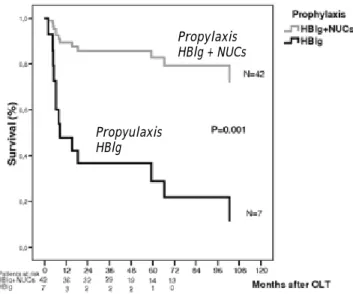
Figure 2. Multivariate Cox regression analysis comparing survival between patients receiving prophylaxis with HBIg or HBIg plus oral antivirals: RR 6.5 (95% CI 2.1-19.8), (P = 0.001).
Propylaxis HBlg + NUCs
Propyulaxis HBlg
Survival results
Thirteen patients (26%) died after OLT. In 4 patients (30%), all of whom were receiving HIBg alone, death was related to HBV recurrence. In the remaining 9 patients, the cause of death was HCC recurrence (N = 3), primary non-func-tion (N = 1), gastric adenocarcinoma (N = 1),
graft versus host disease (N = 1), and biliary sep-sis (N = 3) (Figure 1).
The variables associated with poor survival in the
univariate analysis were HBV DNA levels ≥103 IU/
mL prior to OLT (P = 0.01), HBIg monoprophylaxis
(P = 0.001), and HBV recurrence post-OLT (P =
0.006). Coinfection with HCV, HDV, or HIV was not associated with survival. In the multivariate analysis, the only variable related with a poor out-come was HBIg monoprophylaxis, which was as-sociated with an RR of death of 6.5 (95% CI 2.1-19.8,
P = 0.001).
Overall 3-year and 5-year survival rates for the group receiving HBIg were 36% and 20%, respective-ly. Survival rates in the group receiving HBIg plus oral antiviral prophylaxis were 87 and 82%,
respec-tively (P = 0.001) (Figure 2).
HBV recurrence
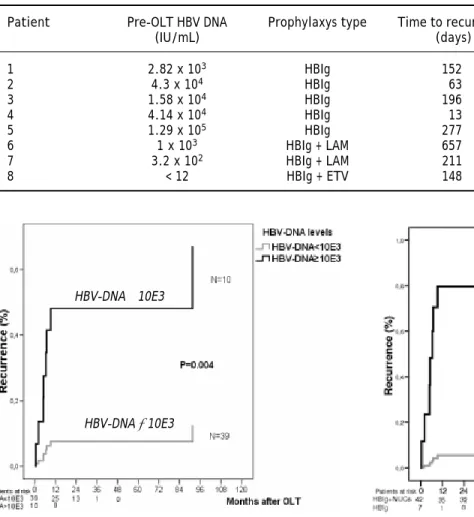
Eight of the 49 patients studied (16%) had recu-rrent HBV infection, including 5 (71%) receiving HBIg and 3 (7%) receiving HBIg and antiviral pro-phylaxis (Table 3).
Patients with HBV DNA ≥104 IU/mL had a
hig-her risk of HBV recurrence, without reaching
sta-tistical significance (P = 0.07).
Variables associated with recurrence in the uni-variate analysis were preoperative HBV DNA levels
≥ 103 IU/mL (P = 0.004), HBIg monoprophylaxis
(P < 0.0001), and immunosuppression with CyA
(P = 0.03). The risk of HBV recurrence according
to preoperative HBV DNA levels is shown in Figure 3. There were no differences in HBV recurrence ac-cording to preoperative HBV DNA levels in patients
receiving HBIg plus oral antiviral agents (P = 0.32).
In the multivariate analysis, the only variable sig-nificantly associated with a higher risk of HBV re-currence was the type of prophylaxis. HBIg monoprophylaxis was associated with an RR of
recu-rrent HBV of 27 (95% CI 5.2-147.2, P < 0.0001).
The median time to recurrence was 47.01 (IR 87.7-29.2) months in the group receiving HBIg and oral antivirals and 4.9 (IR 9.1-2) months in the
group receiving HBIg alone (P < 0.0001).
HBV recurrence at 3 and 5 years was 5% for pa-tients receiving HBIg and oral antivirals. In the group receiving HBIg there was a high rate of recu-rrent HBV and death; hence patients were at risk for 15 months. At that time, recurrence was 83%
(P < 0.0001) (Figure 4). Of note, in both groups all
events except one (in the patient with poor adheren-ce to treatment) occurred during the first year post-transplantation.
The single long-term survivor in the group recei-ving prophylaxis with HBIg experienced HBV recu-rrence 277 days after OLT. Treatment with LAM was initiated and ADF was later added because of Table 3. Descriptive data and outcome of patients with HBV recurrence. *Patient with poor treatment adherence.
Patient Pre-OLT HBV DNA Prophylaxys type Time to recurrence Outcome
(IU/mL) (days)
1 2.82 x 10³ HBIg 152 Died-Cholestatic hepatitis
2 4.3 x 10⁴ HBIg 63 Died-Cholestatic hepatitis
3 1.58 x 10⁴ HBIg 196 Died-Cholestatic hepatitis
4 4.14 x 10⁴ HBIg 13 Died-Diffuse HCC
5 1.29 x 10⁵ HBIg 277 Alive-LAM + ADF treatment
6 1 x 10³ HBIg + LAM 657 Alive-LAM + ADF treatment
7 3.2 x 10² HBIg + LAM 211 Died-HCC recurrence
8 < 12 HBIg + ETV 148 Died-HCC recurrence
Figure 4. Multivariate Cox regression analysis comparing HBV recurrence between patients receiving prophylaxis with HBIg or HBIg plus oral antivirals: RR 27 (95% CI 5.2-147.2), (P < 0.0001).
Figure 3. Cox regression analysis comparing recurrence between patients with HBV-DNA levels <103 and HBV-DNA
le-vels ≥103: RR 8 (95% CI 1.9-35), (P = 0.004).
HBV-DNA < 10E3 HBV-DNA ≥ 10E3
the emergence of HBV resistant strains to LAM. The patient’s liver function improved and HBsAg tested negative 7 years after recurrence.
In the group that received prophylaxis with HBIg and oral antivirals, 3 patients had HBV recurrence;
preoperative HBV-DNA load was <103 IU/mL in 2
cases, and < 12 IU/mL in 1 case. HBV recurrence
was associated with poor adherence to LAM treat-ment in 1 patient who had an episode of acute hepa-titis B infection 657 days after OLT that was treated with LAM and ADF. HBV-DNA became undetecta-ble and persisted negative after 5 years of follow up. The second patient, also receiving HBIg and LAM, experienced asymptomatic HBV recurrence 211 days after OLT. At that time ALT levels were normal and HBV-DNA was undetectable. The patient was trea-ted with LAM, but he presentrea-ted HCC recurrence and died 261 days following OLT. The third patient was under treatment with HBIg and ETV. HBV recurred 138 days after transplantation, with normal ALT le-vels and undetectable HBV-DNA. He continued with ETV, but presented HCC recurrence and died 261 days after OLT.
Three patients had high HBV-DNA levels at the
time of transplantation (≥ 105 IU/mL); 2 received
HBIg prophylaxis and 1 had HBV recurrence. One patient receiving HBIg and LAM prophylaxis did not present recurrence.
DISCUSSION
This study analyzes the risk of HBV recurrence following OLT in 49 patients who underwent trans-plantation in a single Spanish center. The rate of re-current HBV in the group of patients who received HBIg and an oral antiviral drug was 7%, a value clearly lower than the overall risk of 16%, indicating that this combination prevents HBV recurrence in most cases, even in patients with detectable viremia at the time of transplantation. In our study, the risk of HBV recurrence was strongly influence by the type of prophylaxis administered and the year in which liver transplantation was performed. These variables are strongly interrelated. During the first years of the transplant program, HBIg was adminis-tered in a less strictly way than in the following years. Moreover, HBV DNA determination was ini-tially performed by hybridization tests followed by in-house PCR techniques, which were less sensitive that the currently used real-time PCR techniques. These factors may explain the high recurrence rate (71%) observed between 1988 and 1996. Implementa-tion of combined HBV prophylaxis has completely
changed the scenario, reducing the HBV recurrence rate to less than 10%.
For years there has been controversy around the issue of whether patients with HBV DNA levels hig-her than 100,000 copies/mL should be candidates for liver transplantation, particularly in the era of HBIg monotherapy, when the risk of HBV recurren-ce was clearly related to the viral load. In 2005,
Marzano, et al.15 reported a linear correlation
bet-ween HBV recurrence and viral load at the time of surgery. The authors analyzed viral load by a single amplification assay with a DNA detection limit of 200 copies/mL and found that the risk of HBV recu-rrence was 50% in transplant patients with HBV DNA higher than 100,000 copies/mL, 7.5% in those with 200 to 99,999 copies/mL, and 0% in patients with undetec-table HBV DNA. These results suggested that a pre-transplantation viral load higher the 100,000 copies/ mL was significantly associated with hepatitis B re-currence.
Our study has the advantage that HBV DNA le-vels were measured with a very sensitive commercial PCR technique with a wide linearity range which enables detection of low and high viral levels, yiel-ding results that are similar to those observed in cu-rrent clinical practice, and shows that HBV DNA levels does not influence survival and HBV recu-rrence when prophylaxis with HBIg and NUCs was administered.
However, the study has several limitations. It is a retrospective analysis with data spanning a leng-thy period, HBV prophylaxis has changed, the sam-ple of patients included was heterogeneous, and few patients received potent antivirals, such as ETV and TDF. However, it has the advantage of being perfor-med in a single center, the same technique was used for HBV DNA determination, and the clinical practi-ce and follow-up were similar.
Overall, the HBV recurrence rate was high (16.3%), but if the results are broken down by time periods, there was a dramatic decrease in HBV recu-rrence rate from the first period (1988-1996; 71%), to the second period (1997-2008; 7%). A factor that strongly influenced HBV recurrence was the type of prophylaxis administered in each period. Twenty years ago, the introduction of HBIg began a new era that dramatically changed the evolution of HBV
pa-tients after liver transplantation.1,2 Another
advan-ce was achieved with the introduction of oral
antiviral prophylaxis,3,11 which yielded even better
main drawback of this drug is the fact that if a pro-longed pretransplantation regimen is needed, there is a risk of emergence of drug-resistant HBV strains that can compromise liver transplantation and
faci-litate HBV recurrence.17,23,29 Currently, more potent
drugs with a high genetic barrier such as ETV and TDF are expected to change the management of the-se patients.
In the present study, OLT outcome in patients with preoperative viral replication receiving HBIg and LAM did not significantly differ from that of pa-tients with undetectable HBV DNA. Although the preoperative HBV DNA level was statistically signi-ficant in the univariate analysis, we believe that it lost strength when the potent prophylaxis strategy was applied.
The univariate analysis showed and association
between HBV DNA levels ≥103 IU/mL and a higher
risk of HBV recurrence (P = 0.004), and only a trend
in patients with HBV DNA ≥ 104 IU/mL (P = 0.07).
This could be related to a type 2 error due to the rela-tively small number of patients in our study.
The only patient in our cohort with an HBV-DNA
level ≥ 105 IU/mL who received HBIg and LAM did
not experience HBV recurrence. This contrasts with
results from earlier reports1,34,35 but is similar those
described in recent studies.24,28,29,36 Hence, the
pre-sence of viral replication should not be considered an absolute contraindication for liver transplanta-tion if an adequate postoperative prophylaxis is
used.28,29 In effect, by testing stored samples with
current, more sensitive assays, we now know that they had detectable viral replication.
One interesting observation was the higher risk of developing recurrent HCC in patients with recurrent
HBV, as has been reported previously.37,38 Two
pa-tients with HBV recurrence in our series died due to HCC recurrence. Both were only HBsAg-positive, HBV-DNA was undetectable, and they were receiving HBIg and oral antiviral agents. The outcome in these pa-tients suggests that HBIg and oral antivirals are only partially effective in preventing HBV reinfection
in patients with recurrent HCC.38 A recent study39
has shown that covalently closed circular DNA was the main type of HBV-DNA isolated from tissues of patients with HCC, and its presence in HCC cells and in nontumor cells, suggesting that replication can oc-cur in tumor cells. Identification of HBV-DNA in ex-trahepatic sites in the absence of HBV DNA in liver and serum indicates that viral replication may occur in occult sites, thereby enabling HBV recurrence.
In conclusion, in patients with chronic hepatitis B infection, OLT has an excellent 5-year survival
rate (82%) and low 5-year risk (5%) of HBV recu-rrence when combination prophylaxis with HBIg and an antiviral agent is administered, regardless of pretransplantation HBV DNA levels.
ACKNOWLEDGMENTS
We thank Celine Cavallo for English language re-vision and Esther Delgado for her secretarial work.
The authors declare that they have received no fun-ding for this study and have no conflicts of interest.
ABBREVIATIONS
• HBV: Hepatitis B virus.
• HCV: Hepatitis C virus.
• HDV: Hepatitis D virus.
• HBIg: Hepatitis B immune globulin.
• OLT: Orthotopic liver transplantation.
• HBsAg: Hepatitis B surface antigen.
• HBeAg: Hepatitis B e antigen.
• anti-HBe: Hepatitis B e antibody.
• HIV: Human immunodeficiency virus.
• HCC: Hepatocellular carcinoma.
• LAM: Lamivudine.
• ADF: Adefovir dipivoxil.
• ETV: Entecavir.
• TDF: Tenofovir disoproxil fumatare.
• FTC: Emtricitabine.
• PCR: Polymerase chain reaction.
• CyA: Cyclosporine.
• Fk: Tacrolimus.
• MMF: Mycophenolate mofetil.
• NUCs: Nucleos(t)ide analogues.
REFERENCES
1. Samuel D, Muller R, Alexander G, et al. Liver transplanta-tion in European patients with the hepatitis B surface an-tigen. New Engl J Med 1993; 329: 1842-7.
2. Devlin J, Smith HM, O’Grady JG, et al. Impact of immuno-prophylaxis and patient selection on outcome of trans-plantation for HBsAg-positive liver recipients. J Hepatol 1994; 21: 204-10.
3. Roche B, Samuel D. Liver transplantation for hepatitis B virus-related liver disease: Indications, prevention of re-currence and results. J Hepatol 2003; S181-S189.
4. Marzano A. The prevention of viral recurrence in the long term. Dig Liver Dis 2009; 41(Suppl.)2: S195-S197.
5. Saab S, Yam MY, Stone MA, et al. Decision analisis model for hepatitis B prophylaxis one year after liver transplan-tation. Liver Transpl 2009; 15: 413-20.
7. Markowitz JS, Martin P, Conrad AJ, et al. Prophylaxis against hepatitis B recurrence following liver transplanta-tion using combinatransplanta-tion lamivudine and hepatitis B immune globulin. Hepatology 1998; 28: 585-9.
8. Grellier L, Multimer D, Ahmed M, et al. Lamivudine pro-phylaxis against reinfection in liver transplantation for hepatitis B cirrhosis. Lancet 1996; 348: 1212-1215. 9. Grellier L, Dusheiko GM. Hepatitis B virus and liver
trans-plantation: concepts in antiviral prophylaxis. J Viral He-pat 1997; 4(Suppl. 1): 111-6.
10. Shouval D, Samuel D. Hepatitis B immune globulin to pre-vent hepatitis B virus graft reinfection following liver transplantation: a concise review. Hepatology 2000; 32: 1189-95.
11. Buti M, Castells L, Campos I, et al. Prevention of HBV re-currence after liver transplant: The role of combination therapy. Dig Liver Dis 2009; 4 (Suppl. 3): S98-S103. 12. Roche B, Feray C, Gigou M et al. HBV DNA persistence 10
years after liver transplantation despite successful anti-HBS passive immunoprophylaxis. Hepatology 2003; 38: 86-95. 13. Buti M, Mas A, Prieto M, et al. A randomized study
compa-ring lamivudine monotherapy after a short course of hepa-titis B immune globulin (HBIg) and lamivudine with long-term lamivudine plus HBIg in the prevention of hepati-tis B virus recurrence after liver transplantation. J Hepa-tol 2003; 38: 811-17.
14. Buti M, Mas A, Prieto M, et al. Adherence to Lamivudine after an early withdrawal of hepatitis B immune globulin plays an important role in the long-term prevention of he-patitis B virus recurrence. Transplantation 2007; 84: 650-4.
15. Marzano A, Gaia S, Ghisetti V, et al. Viral Load at the Time of Liver Transplantation and Risk of Hepatitis B Virus Re-currence. Liver Transpl 2005; 11: 402-9.
16. Beckebaum S, Sotiropoulos GC, Klein CG, et al. Predictive Factors of Outcome in Patients Transplanted for Hepatitis B. Transplantation 2009; 87: 872-81.
17. Marzano A, Ciancio A, Salizzoni M, et al. Hepatitis B virus subtypes and lamivudine resistance. Lancet 2001; 358: 153-4.
18. Marzano A, Lampertico P, Mazzaferro V, et al. Prophylaxis of hepatitis B virus recurrence after liver transplantation in carriers of lamivudine-resistant mutants. Liver Transpl 2005; 11: 532-8.
19. Schiff ER, Lai CL, Hadziyannis S, et al. Adefovir dipivoxil therapy for lamivudine-resistant hepatitis B in pre- and post-liver transplantation patients. Hepatology 2003; 38: 1419-27.
20. Peters MG, Singer G, Howard T, et al. Fulminant hepatic failure resulting from lamivudine-resistant hepatitis B vi-rus in a renal transplant recipient: durable response after orthotopic liver transplantation on adefovir dipivoxil and hepatitis B immune globulin. Transplantation 1999; 68: 1912-14.
21. Seehofer D, Rayes N, Steinmuller T, et al. Liver transplan-tation in hepatitis B patients with preoperative resistan-ce formation during lamivudine treatment. Transplant Proc 2002; 34: 2274-5.
22. Bartholomew MM, Jansen RW, Jeffers LJ, et al. Hepatitis-B-virus resistance to lamivudine given for recurrent infec-tion after orthotopic liver transplantainfec-tion. Lancet 1997; 349: 20-2.
23. de-Man RA, Bartholomeusz AI, Niesters HG, et al. The se-quential occurrence of viral mutations in a liver trans-plant recipient re-infected with hepatitis B: hepatitis B immune globulin escape, famciclovir non-response,
follo-wed by lamivudine resistance resulting in graft loss. J He-patol 1998; 29: 669-75.
24. Lerut JP, Donataccio M, Ciccarelli O, et al. Liver trans-plantation and HBsAg positive postnecrotic cirrhosis: ade-quate immunoprophylaxis and delta virus co-infection as the signi?cant determinants of long-term prognosis. J He-patol 1999; 30: 706-14.
25. Samuel D, Zignego AL, Reynes M, et al. Long-term clinical and virological outcome after liver transplantation for ci-rrhosis caused by chronic delta hepatitis. Hepatology 1995; 21: 333-9.
26. Papatheodoridis GV, Cholongitas E, Archimandritis AJ, et al. Current management of hepatitis B virus infection be-fore and after liver transplantation. Liver Int 2009; 29(9): 1294-305.
27. Angus PW, Patterson SJ. Liver transplantation for hepati-tis B: what is the best hepatihepati-tis B immune globulin/antivi-ral regimen? Liver Transplant 2008; 14: S15-S22.
28. Steinmüller T, Seehofer D, Rayes N, et al. Increasing Applica-bility of Liver Transplantation for Patients With Hepatitis B– Related Liver Disease. Hepatology 2002; 35: 1528-35. 29. Shi-Bin Xie, Jian-Yun Zhu, Zhang Ying, et al. Prevention
and risk factors of the HBV recurrence after orthotopic liver transplantation: 160 Cases Follow-Up Study. Trans-plantation 2010; 90: 786-90.
30. Jardi R, Rodríguez F, Buti M, et al. Quantitative detection of hepatitis B virus DNA in serum by a rapid real- time fluo-rescence PCR assay. J Viral Hepat 2001; 8: 465-71. 31. Faust D, Rabenau HF, Allwinn R, et al. Cost-effective and
safe ambulatory long-term immunoprophylaxis with intra-muscular instead of intravenous hepatitis B immunoglobu-lin to prevent reinfection after orthotopic liver transplantation. Clin Transplant 2003; 17(3): 254-8. 32. Han SH, Martin P, Edelstein M, et al. Conversion from
in-travenous to intramuscular hepatitis B immune globulin in combination with lamivudine is safe and cost-effective in patients receiving long-term prophylaxis to prevent hepa-titis B recurrence after liver transplantation. Liver Transpl 2003; 9(2): 182-7.
33. Castells L, Campos-Varela I, Buti M, et al. Pharmacokinetics of intramuscular and intravenous HBIg: Which implications for practice? Dig Liver Dis 2009; 4(Suppl. 3): S119-S123. 34. Todo S, Demetris AJ, Van Thiel D, et al. Orthotopic liver
transplantation for patients with hepatitis B virus-related liver disease. Hepatology 1991; 13: 619-26.
35. Neff GW, O’Brien CB, Nery J, et al. Outcomes in liver transplant recipients with hepatitis B virus: resistance and recurrence patterns from a large transplant center over the last decade. Liver Transpl 2004; 10: 1372-8. 36. McCaughan GW, Spencer J, Koorey D, et al. Lamivudine
the-rapy in patients undergoing liver transplantation for hepati-tis B virus precore mutant-associated infection: high resistance rates in treatment of recurrence but universal prevention if used as prophylaxis with very low dose hepati-tis B immune globulin. Liver Transplant Surg 1999; 5: 512-19. 37. Faria LC, Gigou M, Roque-Afonso AM, et al. Hepatocellular
carcinoma is associated with an increased risk of hepati-tis B recurrence after liver transplantation. Gastroente-rology 2008; 134: 1890-1899.
38. Saab S, Yeganen M, Nguyen K, et al. Recuurence of hepa-tocellular carcinoma and hepatitis B reinfection in hepati-tis B surface antigen-positive patients after liver transplantation. Liver Transpl 2009; 15: 1525-34. 39. Wong DK, Yuen MF, Poon RT, et al. Quantification of