Dorian Liliana Hurtado Rodríguez
Lizeth Johanna Rojas Fuentes
Yury Sanín González
Universidad Distrital Francisco José de Caldas School of Sciences and Education
Teacher Education Program in Basic Education Majoring in English Bogotá D.C.
An Exploration of Students’ Stereotypes about the North American Culture
Dorian Liliana Hurtado Rodríguez
Lizeth Johanna Rojas Fuentes
Yury Sanín González
Degree Work Advisor: Álvaro Quintero Polo
A degree work submitted as a requirement to obtain the degree of Bachelor in Basic Education, majoring in English
Universidad Distrital Francisco José de Caldas School of Sciences and Education
Teacher Education Program in Basic Education Majoring in English Bogotá D.C.
NOTE OF ACCEPTANCE:
__________________________________ __________________________________ __________________________________ __________________________________ __________________________________
Degree Work Advisor:
________________________________ Álvaro Quintero Polo
Jurors:
_______________________________
Universidad Distrital Francisco José de Caldas. Acuerdo 19 de 1988 del Consejo Superior Universitario.
Artículo 177. “La Universidad Distrital Francisco José de Caldas no será responsable por las
Acknowledgements
During the development of our research project, we had the opportunity to meet people who have contributed to our personal and intellectual growth, to whom we would like to express our
deepest appreciation.
First of all, we would like to thank God for giving us the skills to achieve the goals that we set at the beginning of our studies. We express our heartfelt thanks to our families for encouraging us to continue with every step that we took and with each challenge that we faced. Words cannot express how grateful we are to our parents for all the sacrifices that they have made to help us get where we are.
Furthermore, we would like to say that carrying out this research would not have been possible without the help and support of our advisor Dr. Alvaro Quintero who is an excellent mentor and person. The helpful advice and guidance of Professors Yolanda Samacá and Fabio Bonilla in the pedagogical and research fields has been invaluable, for which we are truly grateful.
We are also thankful for the invaluably constructive criticism and friendly advice we have
received from our colleagues who showed us different views on a number of issues related to our project.
TABLE OF CONTENTS
INSTRUCTIONAL OBJECTIVES ... 37
CURRICULAR PLATFORM ... 38
LANGUAGE THEORY:LANGUAGE AS A SOCIAL PRACTICE ... 38
LEARNING THEORY:CONSTRUCTIVISM ... 39
METHODOLOGY.USING THEME BASED LANGUAGE INSTRUCTION (TBI) TO PROMOTE CULTURAL LEARNING IN THE CLASSROOM ... 43
The Role of the Teacher ... 47
The Role of the Materials ... 48
EXPLORING MY OWN CULTURAL BACKGROUND TO LOOK AT THE NORTH AMERICAN CULTURE ... 69
KIDS DEMYSTIFYING STEREOTYPES OF THE NORTH AMERICAN CULTURE ... 77
CHAPTER SIX ... 92
CONCLUSIONS... 92
PEDAGOGICAL IMPLICATIONS... 95
RESEARCH IMPLICATIONS ... 96
REFERENCES ... 98
LIST OF APPENDICES
APPENDIX A.SURVEY #1 ... 104
APPENDIX B.CONSENT FORM ... 106
APPENDIX C.SCOPE AND SEQUENCE PROPOSED BY THE SCHOOL ... 107
APPENDIX D.STUDENTS’FAVORITE CHARACTER’S DAILY ROUTINE ... 108
APPENDIX E.STUDENTS’FAVORITE COLOMBIAN CELEBRATIONS ... 109
APPENDIX F.WORKSHOP ABOUT COLOMBIAN CELEBRATIONS ... 110
APPENDIX G.POSTERS USED BY THE TEACHERS DURING WEEK 2OF THE PEDAGOGICAL INTERVENTION ... 111
LIST OF TABLES AND FIGURES
FIGURE 1 ORGANIZATION OF CONSTRUCTS……… 22
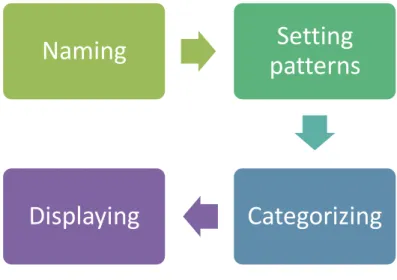
FIGURE 2 DATA ANALYSIS PROCESS……… ... 67
CHART 1 - INTEGRATION OF LANGUAGE AND THEMES ... 44
CHART 2 - LESSON OBJECTIVES. LESSON PLAN # 5 EXCERPT ... 45
CHART 3 - LESSON OBJECTIVES. LESSON PLAN # 6 EXCERPT ... 46
Abstract
This study aims at describing the way students challenge their stereotypes regarding North American culture. Even though stereotypes are usually conceived as something negative, we view them as tools for people to take a closer look at unknown features. Accordingly, we came up with the following research question: How do seventh graders challenge their own stereotypes about North American culture in the EFL classroom? This question has guided every step of this research process. It has also led us to realize some changes regarding the initial stereotypes the participants had had during the diagnostic stage of our study. We found out that students had stereotypes whose foundations were derived from mass media and that this led them to have a superficial / general perception regarding North American culture. Three constructs constitute the theoretical framework: the first deals with the different contributions used to define Culture; the second construct focuses on the implementation of a cultural component into the Foreign Language Class by utilizing some ideas derived from intercultural competence; and, the third explores how stereotypes have been studied in different fields. We have concluded that, when presented with pedagogical intervention, participants recognized deeper aspects of North American culture andchallenged their stereotypes by contrasting both their own culture and the foreign one based on their own experiences and beliefs; also, they demystified the initial
stereotypes they had about the target culture since their way of seeing the North American culture was initially a static view that little by little turned into a more dynamic one.
Resumen
Esta investigación busca describir la forma en la cual los estudiantes retan sus estereotipos acerca de la cultura Norteamericana. A pesar de que los estereotipos son
generalmente concebidos como algo negativo, consideramos que estos son una herramienta que las personas utilizan para mirar más de cerca aspectos desconocidos. De ahí que hayamos
decidido plantear la siguiente pregunta de investigación: ¿Cómo retan los estudiantes de séptimo grado sus propios estereotipos acerca de la cultura norteamericana? La cual guio cada etapa de nuestro estudio. Esta pregunta nos llevó a darnos cuenta de algunos cambios en los estereotipos iniciales que tenían los participantes ya que durante la etapa diagnostica de nuestra investigación encontramos que los estudiantes tenían estereotipos cuyas bases estaban fundamentadas en los medios de comunicación y por tanto, los llevaban a tener una percepción muy general acerca de la cultura americana. Tres constructos constituyen el marco teórico; el primero tiene que ver con las diferentes contribuciones que se han dado para definir cultura, el segundo constructo se enfoca en la inclusión de un componente cultural dentro de la clase de inglés tomando algunas ideas de la competencia intercultural, y finalmente, el tercero explora la forma en la que los estereotipos han sido estudiados desde diferentes campos. Al final del proceso llegamos a la conclusión que durante la intervención pedagógica los participantes reconocieron aspectos más profundos de la cultura y retaron los estereotipos que tenían acerca de la cultura extranjera, ya que su forma de ver la cultura Norteamericana era inicialmente una forma estática de verla que poco a poco se convirtió en una más dinámica.
Chapter One
Introduction
This study is focused on the interrelation of language-culture in the field of Foreign Language Education. From this relationship, we have taken stereotypes as a unit of study. We did this because we were interested in exploring perceptions about North American culture with the consideration that stereotypes are the first image that students have of a foreign culture (Macrae & al. 1994). We believe it is pertinent to focus our work on these and to analyze how students challenge these stereotypes when they have access to additional information regarding a foreign culture.
Most of the stereotypes that people have about a foreign culture have as their source mass media because this is the most accessible way to have contact with another culture: movies, TV shows, and the internet give us our first sight of that culture. Unfortunately, this is a superficial view that could lead to generalizations while avoiding actually knowing the culture itself. This narrow view has encouraged us to carry out a pedagogical intervention that deals with cultural aspects from the United States in order to provide an alternative to knowing not only superficial aspects of a foreign culture but also deep aspects that include practices and customs that people have in a determined group.
Further, this qualitative descriptive study is based on the contributions of different authors such as Ember & Ember (2004) who define culture from an anthropological view in which culture is perceived as a closed system of relational structures shared by homogeneous social groups. This perception is based on the first definitions given to culture by
Anthropologists like Levi-Strauss. Liddicoat (2002) who asserts two approaches to
understanding culture, the static one and the dynamic one. Also, authors who have worked in the cultural field by taking into consideration the relationship of language-culture, such as Moran (2001) and Kramsch (1999). The latter is one of our main authors since she reveals the
interrelation language-culture, and the importance it has in the foreign language learning process; she claims that Language is the principal means through which we conduct our social lives, people express facts, ideas or events through it, but in contexts of communication, it is bound up with culture in multiple and complex ways since we refer to a stock of knowledge about the world that other people share. In other words, we give meaning to language through our experience and perception. Having in mind that we work on the field of foreign language education in which one of the purposes is communication, we consider pertinent to explore this interrelation in a theoretical and practical way. In the same way, we have considered aspects from the intercultural theory revealed by Byram (1997) who establishes a group of factors that influence the intercultural communication competence. Finally, authors such as Macrae & al. (1994) who argue that stereotyping is never a conscious process.
negative. Also, taking into account the interrelation of language-culture that is implicit in the foreign language learning process Kramsch (1999), it is necessary to analyze and understand these cultural perceptions from a socio-cultural perspective. However, this analysis implies the need to provide access to cultural information that allows students to increase their cultural knowledge. We, as novice teacher-researchers, wanted to provide that cultural information in order to promote cultural discussion in English classes so that we could analyze how students challenge those stereotypes. To accomplish our objectives, we designed different activities based on North American celebrations, and with the implementation of our research design, which utilizes the following instruments: audio recordings, interviews and surveys. Our analysis is based on the data gathered and the theoretical framework we used to identify the strategies that students use in order to challenge the stereotypes.
the school, and will show our pedagogical vision supported by theory along with the
Justification
In the context of the Teacher Education Program in Basic Education Majoring in English at Universidad Distrital, this study contributes to the research line of reflective practice and foreign language because our study does not focus on students' proficiency but on how they challenge the stereotypes they have in regards to North American culture.
The importance of this study lies on the interrelation of culture-language that is implicit in the language learning process since learning a foreign language involves learning the culture behind that language (Hinkel, 1999) and the way it is presented has an effect on the students perceptions. Furthermore, Barletta (as cited in Alvarez, 2014 p. 7) states that in Colombia little attention has been paid to the cultural part of language. This consequently leads to erroneous conceptions of what developing intercultural competence implies.
On the other hand, Caicedo (as cited in Alvarez, 2014 p. 5) claims that cultural variables such as stereotypes play an important part in the communicative competence. That means they have a bearing on the development of language abilities. In addition to that, we consider that conducting this research is important given that a more humanistic teaching is needed at present. It is essential that students learn both the set of rules of a language and that they acquire social skills to help them understand and deal with the differences that are present across cultures.
observe what happens to stereotypes, and this helps us to understand the students' view of the target culture.
This study also contributes to the students and the school community where the study took place. The students had the opportunity to gain understanding of both their own culture and the target one while they were learning English. According to Murillo-Murgueítio (as cited in Alvarez, 2014 p. 6) bringing up students’ social sensibility in regards to cultural stereotypes fosters another source of learning opportunities. Students are involved in lessons in which they express their interests and these become part of the content, making them active participants and engaging them in their own learning process. All of this develops both their linguistic skills and their social skills since it provides them with more learning sources to keep building their concepts.
It contributes to the community by providing an alternative that shows that the teaching of grammatical structures ( as has been done thus far in the school where we carried out this study ) is not the only way to address English lessons. On the contrary, English lessons can connect linguistic aspects and cultural content to work together in the construction of the students' integral knowledge.
During our pedagogical intervention we aimed at incorporating cultural aspects into the English classes using theme-based language instruction. This approach goes beyond the
students with a space where they could have a closer look at one of the countries where English is spoken, the United States. This also allows reflection upon some of the practices that take place there. Consequently, students received greater motivation during the lessons because it served two purposes, learning English and learning about topics that were interestingto them.
Problem Statement
The present study deals with the stereotypes that the students had regarding North American culture. Although the word stereotype usually connotes something negative, this is mainly because when stereotypes do not have a well-grounded basis they might be loaded with negative emotions which harm the interaction with others (Lehtonen, 2005). Taking that into account, we believe that when stereotypes remain static they do not support the aims of intercultural competence.
However, given that the stereotypes are a tool for human beings to approach unknown aspects we consider that the word stereotype does not necessarily connote something negative, taking into account that it is a natural process all human beings need to go through in order to understand the surrounding reality and to approach other social groups (Macrae & al. 1994). We believe we should not ignore those first conceptions about the North American, but instead have them as a starting point in order to engage students in the understanding of the target culture.
In order to know more about the perceptions regarding North American culture and its relation to mass media that we noticed during the first stage, we decided to apply an interview, in which students were asked about their personal opinions regarding North American culture and the main source of those opinions. Through the application of this initial interview students gave an account of some of the initial perceptions they had of North American culture as well as some of the main sources that had contributed to their creation.
Through the answers given by the students , it was possible to evidence that the initial perceptions that students had about North American culture were generated by mass media, mainly T.V, movies and newspapers, which revealed what ( Pollick, 1999) calls embedded stereotypes: :
Teacher: What do you know about The United States? Student: It is a very big city, it has fifty states and it is a city known world-wide” (See appendix A) Following this question, we asked him what he knew about North Americans and he answered: (“They are fat because they only eat junk food”). Finally in order to inquire about the source of these perceptions, we asked the students about where those ideas came from and the response obtained from this answer was directly related to the mass media, as it is possible to evidence in his answer: “I learned it from watching TV, movies, newspapers, and hearing gossip.”
Thus, students only saw the most remarkable aspects, but they did not look beyond that what led them to stereotype.
Taking into account what we revealed before about the relations between perceptions and mass media, and how this leads to stereotypes, we decided to investigate stereotypes because we did not want to ignore the previous knowledge that students had built up about North American culture. Instead, we used this as a starting point in order to enrich their ideas with new sources of cultural input. This point centered our interest on the study of these initial perceptions and made us wonder what the implications of those initial perceptions would be, if the students were provided with different sources of cultural input. Taking this into consideration, we posed the following research question: How do seventh graders challenge their own stereotypes about North American culture in the EFL classroom?
Objectives
General Objective
To describe the way the students challenge their stereotypes about the North American culture in an EFL environment.
Specific Objectives
To observe the effects the students’ stereotypes have on their own vision of the North American culture.
Chapter Two
Literature Review
The purpose of this literature review is to state the conceptualization of the main constructs that ground this study. They are Culture, Intercultural Competence and Stereotypes. Although the concepts we present here are wide and complex when studied from different perspectives, we primarily focus on their application to language teaching.
Culture
Culture is a concept that is used widely among people in the academic world since it is a very broad word that touches such different areas as anthropology, sociology, psychology, and others. That is one of the reasons for its complexity. Nonetheless, when we hear the word culture, it is sometimes related to attending classical music concerts, plays or museums, reading and the like (Ember & Ember, 2004). Such associations come from the first definitions given to culture in the 17th century and earlier, which consisted of refinement and improvement of individuals utilizing education to develop a “taste in the fine arts and humanities”. This type of definition is referred to as culture with a capital C, or as high culture, but those components are just a part of what culture really is. For us and for this study, culture is the total way of life of any society, this total way of life includes values, beliefs, norms and practices that govern our everyday actions. We believe that culture is complex deep and comprises all that this implies. When we talk about culture, we refer to it as the way we behave when we attend a concert; the way we talk; the way we wait in line; and, in regards to such simple activities as cooking a meal: how we prepare the ingredients; whether we add spices or not or if we just buy a ready-to-eat product.
Conversely, the other way of seeing culture, the dynamic one, states that culture is a highly variable and constantly changing phenomenon (Liddicoat, 2002). We consider that this view allows observers to see other people in a more sensitive way, taking into account the complexity of human beings. From our point of view, affirming that culture is static is to deny the fact that we, as humans, change. The way human beings do various activities, is not the same it was in the past century, as human beings have evolved, culture has done so as well. Seen from Liddicoat’s dynamic view of culture, the latter is more related to the practices and how
individuals interact in order to create and re-create their reality every day in order to understand what happens around them. This way of seeing culture agrees as well with Moran (2001) , he highlights that it is not static “…culture is a dynamic, living phenomenon practiced daily by real people, together or alone, as they go about their shared way of life, living and creating their history or civilization.” (p.7).
Along with the static and dynamic views of culture, we can see it as an iceberg. What is above the surface is the most evident aspect of a culture (sports, music, dress, language, etc.) and sometimes we believe that that is all that can or should be taught when guiding our students to the learning of a foreign language / culture. In that sense, the tip of the iceberg would correlate with the static view of culture, since it reduces the whole complexity of a group of human beings to their facts and artifacts. What we believe the goal should be when teaching culture, is to focus on that part of the iceberg that lies below the surface, the aspects that are implicit when
Ember (2004) . Culture does not come in our genes, and we acquire it by trial-error and imitation with the aid of language to communicate. Moran (2001) states“…the language is not simply a set of techniques to use to say this and that. It’s really a way for people to get a sense of the
humanity of other people who use that language.” (p. 7) Agreeing with this, we consider that language plays a very important role when we are inside our own culture, taking into account that it is thanks to communication that we learn culture. In foreign language learning, language plays an important role as well, given that when we learn a foreign language we also learn about the culture that such language represents.
Nevertheless it is important to keep in mind this relation between language and culture in language teaching and not taking for granted that when teaching English, our students are
acquiring understanding and positive attitudes towards English speaking cultures. In some cases, and more specifically in the context where this study took place, the students were learning English but they were also building stereotypes that focused on what they could see through mass media (physical features of people and places). The creation or reinforcement of negative stereotypes happens because when Colombians teach English, we tend to focus mainly on the grammatical component of the language, giving little or no importance to the cultural
express this or that; the gestures and movements they use when they talk; and, the reactions they have among the many aspects that lie beneath the use of a language.
In the light of what we previously exposed, a call for consciously learning a foreign culture is necessary, which can also be supported by Kramsch’s statement (1999)
Educators fear that the mere acquisition of a linguistic system is no guarantee of international peace and understanding. After years of communicative euphoria, some
language teachers are becoming dissatisfied with purely functional uses of language. Some are pleading to supplement the traditional acquisition of “communication skills” with some intellectually, legitimate, humanistically oriented, cultural “content” (p. 84)
If we learn English, we are eventually going to use it in a real context, and by that we mean in an English speaking country, but if we only know grammar structures and nothing about the way the people behave in that country it is likely that when communication takes places it will be hindered by our lack of knowledge about the culture. On the other hand if English
learners are aware of the way other people live and behave, communication will be a satisfactory experience.
In order to provide support to what was said about Bonilla & Alvarez’s vision of
language, we bring up a similar idea by Purba (2011). He claims that traditional approaches such as, Suggestopedia, the Natural approach, The Silent Way, among others, hinder the teaching of culture since they focus solely on linguistic aspects. He also states that language and culture are intertwined but that the mastery of the linguistic system does not guarantee effective
communication. In his research, this statement is supported by Politzer (as cited in Brooks, 1960) who says that teaching language without teaching culture is teaching meaningless symbols to which students attribute wrong meanings.
We could say that the communicative approach is a way to get closer to the teaching of culture, yet according to Purba, it shows language as a functional device to communicate when there is need to, without an interest to know the values and behaviors of the context where English is needed. This point of view agrees well with Kramsch, who says that it is necessary to get out from the traditional communicative approach and seek a more humanistic content.
The importance of teaching culture has been reaffirmed along the years, with important contributions by Kramsch and Byram. The latter responds to the need of seeing the language-culture relation in a more sensitive way with the development of the intercultural competence which we will discuss below.
Intercultural competence
language allows the learner to develop social and cultural skills along with the linguistic ones. From our point of view, a language learner is not only a recipient of grammar structures, we maintain that learning a foreign language goes beyond language itself, it involves the experience of knowing another culture through language. Language, in this study, is the means that we find to lead students to the target culture. In order to better understand this relationship, we have found different authors who have also explored language-culture by focusing on the social and cultural impact that it has for language learners.
Kramsch is one of these authors. In Context and Culture in Language Teaching(1993) she states that is not justified measuring success in a foreign language with native-speaker competence (p. 181) Language learners do not “copy and paste” the culture and language of the target culture, their own knowledge of their own native culture has an influence in the way how they perceive the target culture.
Learning a foreign language is the opportunity to have contact with the target culture through language, but it does not mean that students acquire what is presented in the way teachers present it. Each student has a different cultural background, different experiences, and different perceptions about the target culture that lead his process of culture and language learning.
interstices between the cultures the learners grew up with and the new cultures he or she is being introduced to” (p. 236). This supports what we revealed before about the importance of original cultural knowledge during the process of learning about a foreign language and culture.
Kramsch (1993) insists that knowledge and skills learners acquired from their native languages and cultures have an effect on how they learn about the target language and culture. She also claims that students do not take on a new identity when they learn a new language, they organize their knowledge about their native culture and the target culture to develop a third culture where students constitute their own identity based on what they know about the target and native cultures. Students do not forget their native culture; they link their native with the target culture, in this way a new perspective emerges.
Kramsch (1999) calls this person the intercultural speaker, a speaker who is able “to select those forms of accuracy and those forms of appropriateness that are called for in a given social context of use” (p.27). With the third space proposed by Kramsch, we have an initial view of the intercultural competence from the student’s perspective, with this concept we were able to notice the process that students go through when they incorporate a new culture. They combine their previous knowledge with their new knowledge, what also allows us to investigate our central topic, “stereotypes.”
such a way, we have analyzed two different models, the one proposed by Bennett (1993) and the intercultural competence proposed by Byram (1997).
Bennett (1993) develops a model which is called “The Developmental Model of Intercultural Sensitivity.” It has as its purpose to explain how individuals respond to cultural differences and how their attitudes evolve over time. This model consists of six stages grouped into three ethnocentric stages (the individual’s culture is the central worldview) and three ethnorelative stages (the individual’s culture is one of many equally valid worldviews). On the other hand, Byram (1997) proposes a model called intercultural communicative competence which is mostly adopted by scholars in the field of intercultural communication, and suggests a group of factors that influence the intercultural communication.
Bennett's model (1993) shows a process carried out in different stages, the ethnocentric (Norris, 2007) which are:
• In the first ethnocentric stage, denial, the individual denies the difference or existence of other cultures by erecting psychological or physical barriers in the forms of isolation and separation from other cultures.
• Finally, in the third ethnocentric stage, minimization, the individual acknowledges cultural differences on the surface but considers all cultures as fundamentally similar.
On the other side, the three ethnorelative stages of development lead to the acquisition of a more complex worldview, in which cultures are understood relative to each other, and actions are understood as culturally situated.
• During the acceptance phase, the individual accepts and respects cultural differences with regard to behavior and values.
• In the second ethnorelative stage, adaptation, the individual develops the ability to shift his frame of reference to other culturally diverse worldviews through empathy and pluralism.
• In the last stage, integration, the individual expands and incorporates other worldviews into his own worldview. Together, these six stages comprise a continuum from least culturally competent to most culturally competent, and they illustrate a dynamic way of
modeling the development of intercultural competence.
The second model that we take into consideration is the intercultural communicative competence by Byram (1997). In this one, there is a group of factors that influence the intercultural communication competence. Furthermore, Atay, Kurt, Camlibel, Ersin, and Kaslioglu (2009) explain that:
acquire new knowledge of a culture and cultural practices. Finally, critical cultural awareness is defined as the ability to evaluate critically the perspectives and practices. (p. 124)
Although both models present important contributions to understand the intercultural communication, we support Byram’s model since we consider intercultural communication to be more than a process followed by steps. We maintain that each student is influenced by some factors developed in different ways according to each person, we claim this because as we have revealed before, the cultural background influences the way a person approaches the target culture. Another related and important aspect that deals with how someone sees and gets to know another culture is stereotypes; for that reason, we consider relevant to discuss that concept in the following paragraph.
Stereotypes
Since in the current study stereotypes are one of the most important concepts to define, given that the
ideas or perceptions students have about the North American culture are the ones we attempt to follow, in
order to analyze how students challenge them, we consider relevant to conceptualize them with different
authors and theories that help us to define into the proper field.
We framed the concept of stereotypes into the cultural field, because of the direct relation between
culture and language previously mentioned in the conceptualization of the intercultural competence and
supported by the contributions of several authors, who helped us to perceive the concept of stereotypes
from an intercultural perspective and as an active and natural process that takes part in all kind of
intercultural dynamics, helping people to make sense of their own reality and to create ideas about their
To support this concept, we draw on the conceptualization given by Macrae & al. (1994) who argue that
stereotyping is not a conscious process made on purpose, for them, it is a necessity individuals have in
order to recreate their reality and explain what surrounds them, people do not make representations about
reality because of a lack of information, they do it, because reality is too complex for any person to
represent it accurately, so they need to support their opinions with other peoples' beliefs and experiences
about different social groups, taking ideas and comments from mass media or random people in order to
construct their own images about unknown situations. This is not just with the purpose of making their
own conclusions about other cultures, but also to foster themselves into the search for new details about
the target culture. According to Macrae & al., and differing from what first authors like Lippmann (1922)
initially set, stereotypical thinking is a result of evolution in the human inferential system and stereotypes
could help students to simplify social information and preserve valuable processing resources. Thus,
stereotypes go beyond social barriers and are an inevitable process humans need to go through before
setting a position towards a cultural group.
In order to add a psychological and cognitive explanation to this natural phenomenon, every person
goes through, Johnston and Macrae (1994), argue that stereotypes are cognitive structures which
facilitate making sense of the complex stimuli in the social environment and that these are part of a
person’s world view. These structures are the ones that help people to create ideas about their surrounding
reality. Supported by the bias and information provided by their environment, these allow people to be
guided by beliefs and perceptions about the other culture.
Even though cultural stereotypes cannot be eliminated from the cognitive schemata since they are part of
a cognitive process, they are subject to change and have an effect that varies depending on the bias and
information the person receives. This rests on the condition that this information must have come from
the regular informative external sources that normally convey the information and are mentioned by
stereotypes which have emerged from these kind of sources are called embedded cultural stereotypes and
these are possible to modify or completely change, due to the fact that they are conveyed by the mass
media and they are therefore not directly linked to emotions or experiences, which could completely
change the perception people have towards the cultural group. Hence, embedded cultural stereotypes can
be modified at any point during the intercultural process. It is only necessary to implement reliable and
accurate sources of information that fulfill and clarify the misleading perceptions people have towards
other cultural groups
Lehtonen gives us a classification of cultural stereotypes, into four different groups and divides them
according to their origin, projection and perception of the target cultural group: Hetero-stereotypes,
Projected stereotype, Auto-stereotype, Negative stereotyping and Exaggerations
• For Lehtonen in the hetero-stereotypes the person applies both his evidence and his existing
previous beliefs about the members of a specific cultural group. These beliefs are cultural stereotypes that can equally concern one’s own group or another, without limiting stereotyping to the other cultural
groups.
• A projected stereotype may hold common conceptions about the other party’s stereotypical
assumptions about themselves or about the other respective party. In this case the individual is projecting
his own prejudices onto the group of others, expressing his perceptions as a mirror reflection.
• Auto-stereotype takes place when the individual idolizes his own culture and belittles the other
culture, making his own culture the most powerful and the best.
• Exaggerations of actual differences between cultures account for these amplifications that
• Negative stereotyping means that all members of the target culture are assumed to share the
same kind of personality and attitude structures. In this case members of a given nationality assume that
all members of the target culture have the negative aspects and defects
We conclude that; in terms of the present study, stereotypes cannot be judged as either bad or good
perceptions regarding the target culture due to the cognitive and unconscious origin these have. However,
they can highly influence intercultural interactions in different ways, becoming the initial bridge that connects people’s ideas during their initial approach to the foreign cultural group. This occurs by making
these early interactions and intercultural contacts a source of expectations about the other party and as a reference for judging the other party’s behavior in order to determine one's own success or failure in this
new social world. This clarification is based on Greenberg and Baron (1997), who claim that the initial
interactions with other cultures and the way we perceive them motivate and encourage us in how we
adapt our own behavior to these perceptions in order to make sense of our reality.
In the next chapter, we will present a general account of the pedagogical intervention oriented towards
exploring students´ stereotypes about North American culture as well as the ethical issues that were
Chapter Three
Instructional Design
This chapter presents a general account of the pedagogical intervention oriented towards exploring students’ stereotypes of North American culture which was carried out during six months in a public school in Bogotá. The main purpose of this intervention was to incorporate a cultural component into English classes. We examined the use of Content Based Instruction (CBI) and more specifically the Theme based Language Instruction as a means to incorporate cultural aspects into the English classes. To support this proposal, we planned and organized an instructional design. What follows is a description of the curricular platform which is based on the approach we selected, following a social view of language and a constructivist learning theory. The chapter ends with a description of the activities carried out during the class sessions and a portrayal of the theory and objectives of our pedagogical proposal.
Project as Innovation
North American culture. Moreover, one of the most remarkable advances in this project is the one referring to the input they receive and how they engage with it through the various activities carried out in class. All this in order to explore the way that their stereotypes foster intercultural competence.
Taking into account what we exposed before, we posed the following question which leads our pedagogical intervention:
Instructional Question
How does TBI contribute to students' learning about culture and English?
Instructional Objectives
General Objective.
To promote cultural understanding through the development of TBI activities.
Specific Objectives.
To identify different aspects between the target and the own culture through cultural topics.
To use language as means to learn about the target culture fostering discussions around specific themes
Curricular Platform
Language Theory: Language as a social practice
Given that this study lies in the cultural field and its main objective is to go beyond the mere grammatical aspects, it is essential to have a vision of language which reflects the cultural way in which this study understands the use and significance of language itself. For this purpose, we have decided to frame our vision of language into the vision of language as a social practice, inasmuch as in this vision of language and according to (Kramsch, 1994) language is not simply seen as a body of knowledge to be learnt but is considered a social activity within which to participate and to take an active role.
The vision of language as a social practice focuses on the interpretation and creation of new cultural meanings, in which language is learned through the personal engagement with cultural aspects, and requires the learners to be engaged with a diversity of cultural and social components. This perspective also provides learners with the opportunity to go beyond what they already know, in order to explore and discover the target culture by themselves rather than being only passive recipients of knowledge. This allows the learners to go into a further analysis and comparative process both about the target culture and their own. This provides them with total autonomy to act as users and analyzers of language. Consequently, this allows the students to have another source of information to nurture their stereotypes, moving from having mass media as having been almost the only source to learning about North American culture through
In our case, we consider this vision of language to be the most suitable to develop our pedagogical intervention, since it contributes firstly to all the cultural and dynamic aspects of language that are normally omitted when teaching a language and that need to be addressed in this study, and secondly provides students with tools to go beyond language learning in order to be active and authentic participants in their learning process. In this way, this vision provides the main aspects required to address language in the integral way demanded in the current study.
Learning Theory: Constructivism
Given the characteristics of constructivism and taking into account the constructivist view that "learners construct their own reality or at least interpret it based upon their perceptions of experiences, so an individual's knowledge is a function of one's prior experiences, mental structures, and beliefs that are used to interpret objects and events." we decided to adopt this theory since we want to explore students’ stereotypes and it is very difficult to predict the results that this study will produce. Furthermore, we want to motivate students through the learning of both the English language and cultural features, we mention our intended purposes with this research.
Our main focus is not to give grammar structures in a very explicit way, our intervention requires that the students grasp the knowledge through context and activities they will be
involved in. This agrees with the constructivism theory due to the fact that students will construct the knowledge of the language while they are immersed in a cultural environment, learning through experience.
Jonassen (1994), mentions some implications of constructivism for instructional design, below we list them and describe how we worked them into our classes:
"...purposeful knowledge construction may be facilitated by learning environments which": • Provide multiple representations of reality - avoid oversimplification of instruction by representing the natural complexity of the world. In our classes, we employed representations of situations and facts that occur both in the United States and in Colombia. We did that by means of pictures and presentations.
• Present authentic tasks – contextualize. All the activities will be carried out by contextualizing the students in both cultures (American and Colombian) letting them know when we are talking about one or the other culture.
• Provide real-world, case-based learning environments, rather than pre- determined instructional sequences. We did this through “indirect cultural experience” (Moran, 2001) where students being in the classroom could feel an encounter with the foreign culture.
opportunity to hear their partners’ conceptions and to relate foreign situations to their own culture.
• Enable context- and content-dependent knowledge construction. As we have mentioned, the students were involved in a cultural context in which they had the opportunity to learn not only the isolated language but also about other areas of life and knowledge.
• Support collaborative construction of knowledge through social negotiation, not competition among learners for recognition. We promoted learning the language at the same time that we promoted the sharing of perceptions about cultural features. We focused more on this latter aspect, allowing the students to make contributions of their views, by means of drawings, discussions, workshops, group work etc. which provided socialization for the whole class.
Teaching theory: Theme Based Language Instruction (TBI).
We have decided to take as our theory of teaching Theme Based Instruction, but before
explaining how we addressed this approach in this intervention, we consider it pertinent to refer to Content Based instruction (CBI) since Theme Based Instruction is an approach based on the principles of CBI. In this way, Richards & Rogers (2001) refer to CBI as an approach to second language teaching in which teaching is organized around the content or information that students will acquire, rather than around a linguistic or other type of syllabus.
is important to clarify that since our main objective was to incorporate a cultural component that centers on North American culture; our content was based on that culture.
However, we do not take CBI as our main approach because of the way we planned and carried out our intervention. This was proposed around different topics relating to North
American culture which is mainly related to Theme Based Instruction. TBI refers to a language course in which the syllabus is organized around topics or themes, (Richards and Rogers, 2001). This approach proposes the development of different activities such as reading, discussion, presentations, but all of them based on the topic of the class ( Brinton et al, 1989)
We decided to implement a Theme based approach both for the methodology that we used and for the way this approach deals with language and learning, Language is seen from a communicative perspective without omitting the fact that this is an approach for learning a foreign language, and in this learning process the interests of the learners are really important (Mumford, 2000).
Methodology. Using Theme Based Language Instruction (TBI) to promote cultural
learning in the classroom
The use of TBI provides several advantages as it promotes the learning of a theme while
language evolves out of the development of such. Since the use of TBI requires a dual focus, for the case of our intervention it consisted of cultural aspects (themes) and linguistic topics
(language) that were to be developed according to the curriculum of the school (See appendix C). While the topics proposed in the curriculum could not be changed, the content of the classes was agreed to with the students, thus allowing them to take an active part in the decision of what they were going to learn during the term. The following chart shows the themes that were worked into the course and how they related to linguistic aspects.
Contents (Themes)
The contents listed here correspond to those that matched the themes proposed by the school and the students
interests. to tackle the specific contents.
Themes/ Language articulation
This column displays the activities planned and carried out in the research context in order to articulate both the
themes and the language aspects
My favorite famous character. -To identify the usage of the verb to be in 3rd person the most and why. (See appendix E)
important dates. vocabulary related to dates. - To employ simple present using the verb “like”.
-To practice the use of simple present and frequency adverbs
Chart 1 - Integration of language and themes
Even though we all came up with different proposals for themes, the students showed great interest and participation, especially in the classes that were about national and
international celebrations and important dates. When we proposed this theme of celebrations, they did not hesitate in giving their approval; it seemed to be quite appealing to them. For that reason, what follows is a detailed sample of how we dealt with that content.
Students were interested in learning about Colombian culture, some students more than others, but we decided it was a good idea to use Colombian celebrations as the starting point so that students constructed knowledge not only about a foreign culture but also about their own. The celebrations we chose were from different places in Colombia and we decided not to use the most popular ones.
In order to work on cultural aspects without omitting the linguistic ones, we planned our lessons to include a communication focus along with a linguistic and a cultural objective.
PREPARATION
TOPIC: National celebrations and important dates
Chart 2 - Lesson objectives. Lesson plan # 5 excerpt
The development of this theme took two classes. During these lessons, students participated in a whole group activity. They started by taking out from a bag a picture of a celebration and then sticking it below the corresponding name on the board. After that, they listened to the teacher reading descriptions of activities carried out during the various events and they had to guess which celebration that description belonged to (Content). Then, the students wrote the date for each one.
After that, they carried out individual work by elaborating in a poster in order to show the celebration they considered most important. In that poster, they included the name of the
celebration, the date and a drawing related to it. When they were done with that activity, some of them showed their posters to the whole group explaining the reasons why they considered those the most important celebrations ( Communication ). This last activity allowed them to reflect upon what makes a celebration important, for many of them those celebrations that gathered families together were the most important as they allowed them to share and show how much they love each other ( Cognition and Culture ).
COMMUNICATIVE FOCUS: Talking about the celebration you consider most important in Colombia
OBJECTIVES:
-Toidentify and practice vocabulary related to dates.
CULTURAL OBJECTIVES:
-To explore students ideas regarding the importance that they give to national celebrations through their mini posters and discussions ( identity )
-To practice saying dates related to national celebrations
LANGUAGE FOCUS: -Simple present
-Ordinal numbers, dates, months, days of the week -Hours
-Time expressions
Chart 3 - Lesson objectives. Lesson plan # 6 excerpt
This activity took two classes as well and they are described as follows.
To start, the students had to unscramble sentences that contained the name of twelve North American celebrations (One per month), we chose some that were well known among North Americans and some that were not so popular. After the names of the celebrations were unscrambled, the teacher stuck related images below the name of each celebration ( Content )
PREPARATION
TOPIC: International celebrations and important dates
GOAL: Students will be able to talk about some important dates and celebrations in the United States.
COMMUNICATIVE FOCUS: Talking about
the celebration you find more interesting in the United States
OBJECTIVES:
-Toidentify and practice vocabulary related to dates.
-To express likes and dislikes
-To practice saying dates related to American celebrations
CULTURAL OBJECTIVES:
-To identify what the most appealing American celebrations for the students are and the reasons of this
-To observe how students identify commonalities and differences between national and international celebrations.
LANGUAGE FOCUS:
-Simple present (-We celebrate Love and Friendship’s day on … The United States celebrate St. Valentine’s day… I like/ I don’t like St. Patrick’s celebration because…On Thanksgiving day, families usually eat turkey…) -Ordinal numbers, dates, months, days of the week
-Hours
-Prepositions of time[IN for long periods of time and some periods of the day ( months, years, centuries, morning, afternoon) ON for days and specific dates ( Monday, Saturday, July 20th) AT for hours and specific times of the day ( noon, midnight, 12:00, night, dusk)
and intentionally wrote the dates with spelling mistakes so that students had the opportunity to pass in front of the class and correct them.
For this theme students also elaborated in a poster to show the celebration they liked the most including a drawing, the name of the celebration and the date. With these posters we did the same as in the class of National celebrations, some students shared with the class the celebration they had chosen and the reasons why they did so ( Communication ). Apart from that, we had a class discussion in which they explained which American celebrations they would like to have in Colombia and which Colombian celebrations they would like North Americans to have there ( Cognition and Culture ) . In this way, students compared and contrasted features of both cultures.
It is important to mention that despite students were given an input during the classes, they had the opportunity to do their own search around the themes and they came to the classes with additional information which provided them with more tools to build up their stereotypes and share them.
The Role of the Teachers. Taking into account our curricular platform, we believe that our
roles were addressed to guide the students through their process and create an environment that allowed that each of them to participated in constructing their knowledge around the English language. Therefore, our roles included:
• Propose and adapt themes that relate the linguistic aspects proposed by the school with the content of the classes ( cultural aspects ).
• Promote reflection and discussion around the themes of the class.
The Role of the Students.TBI is not about the transfer of knowledge from an expert to a
novice. TBI is about allowing individuals to construct their own understandings and to be challenged – whatever their age or ability. Students were not just recipients of knowledge, they were the center of our classes; they were sources of content for the classes and joint participants in the selection of themes. They constructed their knowledge, taking the input that was given as an aid to do so. Their roles included:
• Participate actively in the selection and discussion of themes concerning the classes.
• Seek interpretations of the given input.
• Reflect critically and constructively on linguistic and cultural differences and similarities.
• Make connections between cultures, and between existing knowledge of culture and language, along with new learning.
The Role of the Materials. From our point of view, materials help to enrich the learning
process as they provide graphic language which widens the input given and allows to make concrete relations between what is said and what it represents. In our classroom the role of the materials was to:
• Promote the students toward the creation of their own material to express their ideas.
• Awaken students’ curiosity so that they felt engaged and motivated in their classes.
Assessment Criteria. In order to be consistent with our methodology, we deemed it
suitable to assess the students by focusing on assignments that were related to the content of the class rather than grammar exercises. Since such assignments were designed for students to work around content, they were involved in the creation of posters or papers that showed their position in regards the theme of the class using the English language. One of the activities that we used to assess the students was a questionnaire with questions about Colombian celebrations (See
appendix F). The answers were revised in terms of form and content, we checked the accuracy of the answers about when and where the celebrations were carried out as well as writing mistakes since as language teachers we could not ignore these. The assessment process was summative, every contribution, workshop, questionnaire, presentation and homework counted.
Procedures. We planned 9 lessons to implement our pedagogical intervention oriented
and on the other, some students considered it unnecessary since they thought they should learn about their own culture.
After carrying out the needs analysis, we started with our intervention. This first stage of our implementation sought to situate the students in a context in which the main purpose was not to learn the language itself, but to learn content through language. Thus, the first topics studied in class were “famous U.S characters” and “my daily routine and my favorite artists.” Through these, we addressed the linguistic topics which were the verb to be and the simple present, topics established by the curriculum of the institution. The way to develop these topics involved
intervention by the teachers who introduced the topic, and the students who developed it by expressing their opinion and by displaying the main aspects that brought their attention to it.
Although the main purpose of our intervention was to explore each student´s stereotypes about North American culture, we also wanted them to explore their own perceptions about their own culture, which implies the recognition of common stereotypes about Colombians' behavior. For that reason, we planned our classes based on activities that promoted the foreign cultural learning along with the native cultural learning. In this first stage what we did, was to present the topic of a famous U.S. character, and then we looked for a way to relate this topic to the
students’ context. This was done through comparing and contrasting their own routine with their famous character’s.
the case of celebrations, they are cultural representations that reflect general aspects of culture through the behavior, activities, and customs that people usually perform when it comes to a specific celebration. Also, we wanted to see how the opportunity to get into those cultural aspects affected the stereotypes that students had.
We started with national celebrations because we think it is important to first know our own culture. We approached this topic through an activity in which we presented different Colombian celebrations. Next, in order to observe students' opinions and interests regarding these, students carried out different activities. These consisted of elaborating via a poster about which celebration they considered most important followed by the presentation of that poster in which they highlighted the reasons they considered it as the most important. This activity allowed them to reflect on their own culture, and share their opinions with their classmates. At the same time, this gave us a wider and deeper view about how they perceive Colombian customs and behaviors.
regarding North American culture, which we deem to have been enriching for them since they could learn about other views.
To conclude with the topics of national and international celebrations, we had a class discussion about which American celebrations they would like to have in Colombia and which Colombian celebrations they would like North Americans to have. This discussion sought to relate both cultures in a way in which they could contrast and compare cultural aspects. This was the last activity based on a topic that we carried out. It provided us with relevant information because it showed how students perceived both cultures after the pedagogical intervention.
What follows is a general chart of the pedagogical implementation
Date 2013
Theme Activities Instructional Objectives
Chart 4 - Pedagogical implementation organization
Chapter Four
Research Design
This chapter describes the specific methodology that was taken into account in order to understand how students shaped their perceptions regarding North American culture. In this chapter we present the context in which this study took place; the participants and the type of sampling employed in their selection; the research questions and objectives; the type of study; our role as researchers; the data collection instruments and techniques we used; the ethical considerations; and, the validity and reliability of the study.
Approach and Type of Study
It is the nature of the research question that determines the approach of the study (Mertens, 1998) In our case, it is a qualitative descriptive study because, as stated by Denzin (1989 ), it analyzes the human condition and different lived experiences, events, or situations people go through in their daily interactions. Additionally, its main objective is to uncover emerging themes, patterns, concepts, insights, and understandings ( Patton, 2002 ) which fits in the current study that aims to explore the participants’ construction of a vision about the North American culture, by identifying their conceptions and the emerging ideas they come up with during the study.
Setting
boys who belong to the middle socio-economic stratum ( between 2 and 4 on the government scale). Even though it is a mixed school, most of the secondary groups are separated by gender; some grades consist only of girls and the others of boys.
In terms of English, the teachers take as their reference the Common European Framework to identify students' proficiency level to design the scope and sequence of the English classes. The group with which we developed our study was in an A1 (Breakthrough) level. Therefore, the topics which were selected for the course development were very basic, focusing on simple grammar structure and vocabulary. It was grade 701, a male group of 41 students, aged 13 to 15. Their classroom was small and was arranged with ten tables and four chairs around each so they sat in groups, the classroom had windows on the sides which provided good illumination, but it did not have any media devices.
Regarding the cultural component of this public school, it is possible to observe the presence of a cultural component by observing the curriculum, in which it was proposed that a cultural component be included in all the subjects. Of course, the English classes are within these parameters and the suggestion is to include a cultural component that involves knowledge
regarding North American culture and facts that help students to develop a sense of general culture about it. In other words, the school curriculum requires a cultural component, which is an advantage for our study because one of the interests of our pedagogical intervention is having culture as the main ingredient of the English classes. However, we want to address this
Participants
The participants of this study were five boys in grade 701, aged 13 and 14, who had been
selected by considering their attendance, responsibility, participation and feedback regarding the classes. What we realized while observing the classes was that their knowledge of
North-American culture had as its main source, mass media, since their opinions were based on what they listened to and observed on TV shows, in movies, and on social networks. This also showed their intense engagement with technology which was also identified through their behavior during the classes. They liked playing games on their cellphones; listening to music and chatting with their friends while working on the activities. Some of them listened to English language music and during classes expressed their knowledge about which international artists they liked. Their conversations were mainly about some of the most popular current T.V series, such as The Simpson or The Big Bang theory. This showed the degree of interest they had in North
students had about the North American culture and we also confirmed that such conceptions had their basis on mass media and were generalizations about North Americans.
Selection criteria
Five students were the participants of our study; they were selected taking into account the following parameters:
• Attendance.
• Responsibility for assignments. • Active participation in English classes
• The extent to which the feedback they gave to us was helpful to attain research objectives.
Consequently, we selected students who participated actively in classes; giving their opinions about the topics worked on in class; fulfilling the assignments; and developing the activities planned for each class. All of these aspects were relevant for this study since they allowed us to gather relevant data to understand what was happening to the initial stereotypes that they had had, if they were going through changes or if they remained exactly as they had been at first.
Research Question
How do seventh graders challenge their own stereotypes about North American culture in the EFL classroom?
Research Objectives
General Objective.
• To describe the way students challenge their stereotypes about North American culture in an EFL environment.
Specific Objectives.
• To observe the effects the students’ stereotypes have on their own vision of North American culture.
• To identify traces of intercultural competence that may arise in the EFL environment.
• To identify the strategies that students use to retain or demystify their stereotypes about the North American culture.
Researcher’s Role
Qualitative studies require that the researcher develop an initial set of questions for collecting data, but once the researcher starts collecting the data, he plays an interpretive role, making observations, exercising subjective judgment, analyzing and synthesizing (Harling, 2002). Additionally, he/she plays a descriptive role in which he describes all the data gathered, highlighting the relevant aspects to the study (Kvale 1996). Since we are working on a
qualitative approach, it is relevant to say that we, as researchers, were immersed in the situation that we were studying, having contact with our participants and acting within their context.
As we have mentioned before, in a qualitative approach the main instrument for data collection; data organization; interpretation and analysis is the researcher. From this view we understand the responsibility that we, as researchers, have in the research process. Strauss and Corbin (1990) refer to this aspect in what they call the "theoretical sensitivity" of the researcher. This is a useful concept to evaluate a researcher's skill and readiness to attempt a qualitative inquiry. Theoretical sensitivity refers to the attribute of having insight to give meaning to data, the capacity to understand, and the capability to separate the pertinent from what is not. The credibility of the study relies on this ability, the researcher's ability to be sensitive to the data and to make appropriate decisions in the field. As Strauss and Corbin (1990) claim this theoretical sensitivity comes from a number of sources, including professional literature, professional experiences, and personal experiences.
Techniques and Instruments for Data Collection
Given the type of research carried out, it was necessary that the collected data were rich in content. For that reason we selected 3 instruments which were applied at different times and were permitted to gather, understand and describe what happened to stereotypes.
The first instrument applied was the surveys, inasmuch as according to Mertler
(2006), surveys involve the administration of questions or statements in written form and allow gathering general information around a topic using predetermined and fixed questions in a written way. We decided to use them as the first instrument to be applied because it could provide us with the opportunity to have a general overview of the students’ knowledge about the English language, the culture, their interests towards the English class, and obviously their initial views and opinions about American culture. All this in order to know which initial status
students stereotypes had at the beginning of the study.