Graduation Final Work to qualify for the
Bachelor's degree in Computer Engineering
DEVELOPMENT OF A SOFTWARE APPLICATION FOR THE EXECUTION OF
THE QUANTITATIVE ASSOCIATION RULES MINING ALGORITHM (QUARG)Intelligent Data Analysis Research Lab
Czech Technical University in Prague
Written by Adalberto Cubillo Rojas
School of Computer Engineering
Costa Rica Institute of Technology
Faculty adviser: Santiago Nuñez Corrales
Executive Summary
Nowadays, the use of the information and communication technologies has resulted in storage of large amounts of data every day. That data can be used later as a source of knowledge to enterprises and organizations through the use of data mining techniques.
One of the most frequently applied data-mining techniques is association rules. This is due of their ability to identify interesting relationships among huge amounts of data. But for certain types of data it often results in a computationally expensive algorithm.
According to F. Karel [3], the association rules are understood as an implication X → Y in a transactional database, each of which contains a subset of items or attributes, where the item sets X and Y are disjoint. The left side of this implication is called the antecedent, and the right side is referred to as consequent. An example of this is: having the statement “if a customer buys a toothbrush, then she also probably buys toothpaste” then the association rule can be written as: {toothbrush}→{toothpaste}. In 2009, Filip Karel proposed and verified in his doctoral thesis an efficient way to obtain this knowledge using ordinal association rules. He developed an alternative approach to the quantitative association rule mining (QUARG).
This document intends to present the QUARGsoft application, which main objective is to develop an efficient implementation of the quantitative association rules mining algorithm (QUARG) into a web application. The document starts introducing the description of the problem with the details of how works the QUARG genetic algorithm and the role of the Intelligent Data Analysis Research Laboratory within this project.
Then, the document introduces the generalities of the project and shows how the problem was solved using open source tools during the development of it, within the important elements are the taken design, the developed pseudo-code, and the source code of the application. All of this let the reader to have an comprehensive view of the application's functionalities.
Finally, some runtime comparison results, between the experimental scripts in Matlab and the developed application in Java, are shown. Which denote the accomplishment of the project's main objective and concludes that the QUARGsoft application improves the Filip Karel's experimental scripts reducing the runtime of the algorithm more than 50%.
Contents
1.2.4. Areas of Interest Decomposition ...11
1.2.5. Verification of Candidate Rules...11
2.1. Description of the Project Solution...14
2.4.1.2. math.java Class...60
2.4.1.3. matrices.java Class...61
2.4.2. quargFunctions Package...65
2.4.2.1. quargSoftware.java Class...65
2.4.2.2. dataPreprocessing.java Class...68
2.4.2.3. rulesCreation.java Class...73
2.4.2.4. areaIdentification.java Class...78
2.4.2.5. areaDecomposition.java Class...94
2.4.2.6. ruleSelection.java Class...100
2.4.3. quargObjects Package...106
2.4.3.1. dataInput.java Class...106
2.4.3.2. associationRules.java Class...111
2.4.3.3. interestArea.java Class...115
2.4.3.4. decomposedArea.java...116
2.4.3.5. analyzedRule.java Class...118
3. Experimental Data and Test Results...121
4. Conclusions...124
5. Future Work...124
List of Tables
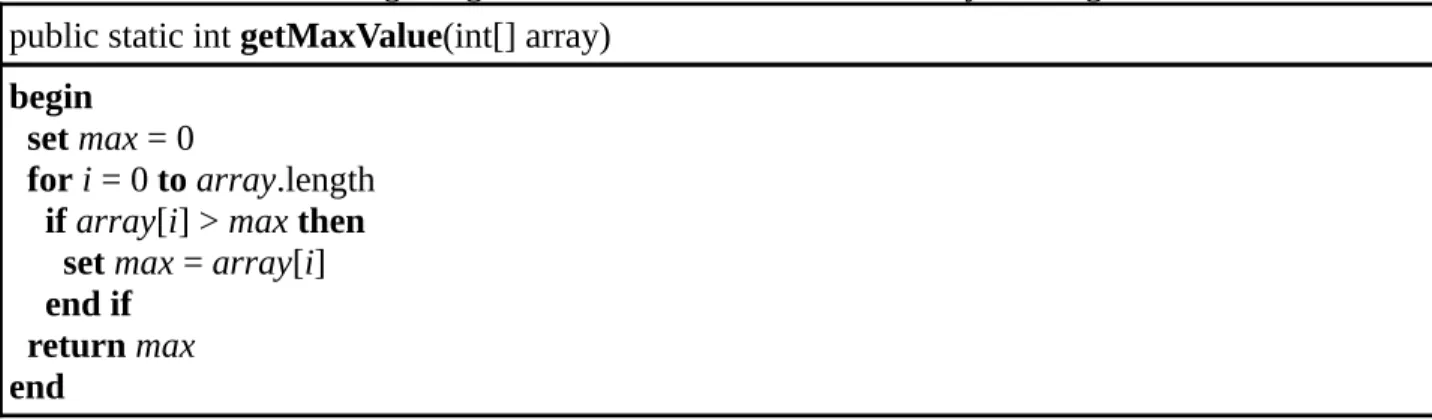
Table 1. Pseudo-code for getting the maximum value from an array of integer...21
Table 2. Pseudo-code for getting the maximum value from an array of float...21
Table 3. Pseudo-code for getting the minimum value from an array of float...21
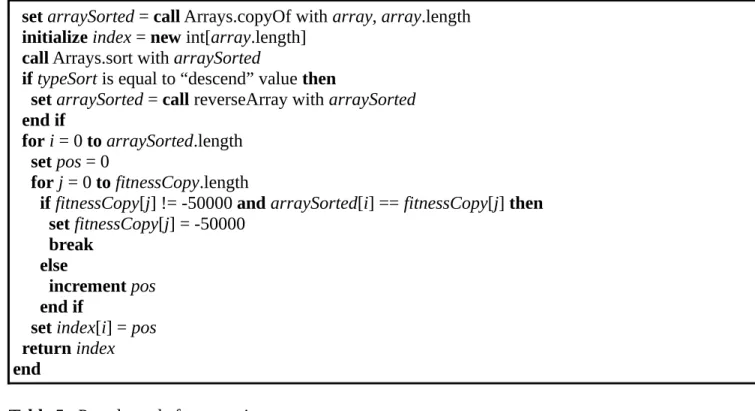
Table 4. Pseudo-code for sorting the index of the array...21
Table 5. Pseudo-code for reversing an array...22
Table 6. Pseudo-code for summing the integer array elements...22
Table 7. Pseudo-code for summing the float array elements...22
Table 8. Pseudo-code for getting the value of the power...23
Table 9. Pseudo-code for getting a specific matrix integer column...23
Table 10. Pseudo-code for getting a specific matrix float column...23
Table 11. Pseudo-code for summing the row elements of a matrix...23
Table 12. Pseudo-code for summing the column elements of a matrix...24
Table 13. Pseudo-code for summing the elements of two matrices...24
Table 14. Pseudo-code for converting a CSV string to a float matrix...24
Table 15. Pseudo-code for converting a CSV string to a integer matrix...24
Table 16. Pseudo-code for converting a integer matrix into a CSV string format...25
Table 17. Pseudo-code for the rules mining algorithm main function...25
Table 18. Pseudo-code for the preprocessing algorithm main function...26
Table 19. Pseudo-code for discretize the input data using the Equi-Width Algorithm...26
Table 20. Pseudo-code for discretize the input data using the Equi-Depth Algorithm...27
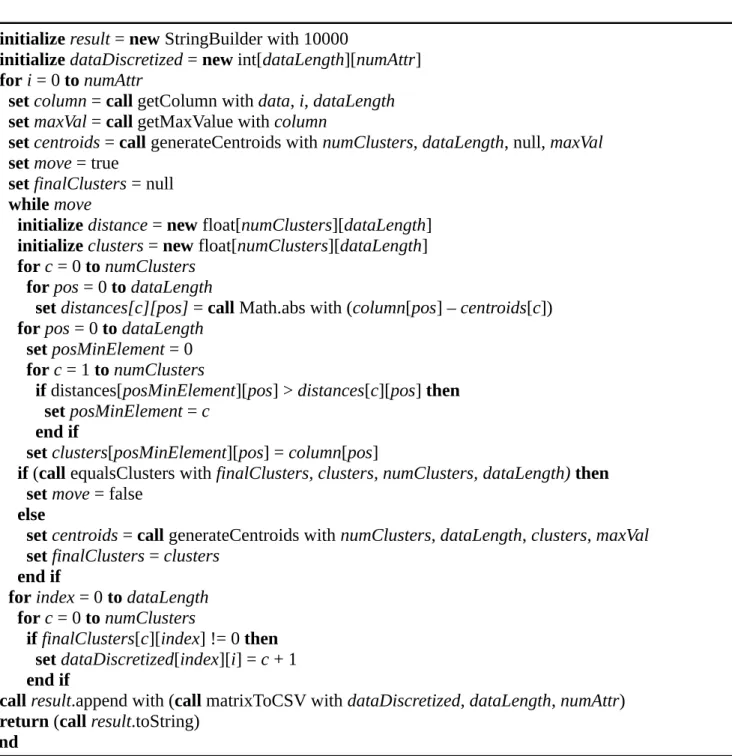
Table 21. Pseudo-code for discretize the input data using the K-Means Algorithm...27
Table 22. Pseudo-code for generate the centroids for the K-Means algorithm...28
Table 23. Pseudo-code for comparing the clusters in the K-Means algorithm...29
Table 24. Pseudo-code for generating the list of the rules to evaluate...29
Table 25. Pseudo-code for generate the attribute combination for the rule...30
Table 26. Pseudo-code for validating if the attributes are in use...31
Table 27. Pseudo-code for validating if the attributes are valid...31
Table 28. Pseudo-code for validating the attributes combination...32
Table 29. Pseudo-code for generate the records elements combination...32
Table 30. Pseudo-code for creating the differential matrix in the genetic algorithm. ...33
Table 31. Pseudo-code for filling the actual count matrix...33
Table 32. Pseudo-code for filling the expectation count matrix...34
Table 33. Pseudo-code for filling the differential count matrix...34
Table 34. Pseudo-code for identifying the interest areas for the genetic algorithm...34
Table 35. Pseudo-code for setting the population matrix...35
Table 36. Pseudo-code for setting the fitness...36
Table 37. Pseudo-code for the genetic mutation of the population...36
Table 38. Pseudo-code for for creating the differential matrix in the full search algorithm...37
Table 39. Pseudo-code for generate an array of indexes for the records...37
Table 40. Pseudo-code for filling the actual count matrix for the full search method...38
Table 41. Pseudo-code for identifying the interest areas for the full search algorithm...38
Table 42. Pseudo-code for getting the value of the sum if elements in the differential count matrix...39
Table 43. Pseudo-code for finding overlap of the elements in the interest areas...39
Table 44. Pseudo-code for determine how many elements conforms the overlap area...40
Table 46. Pseudo-code for changing the indexed positions for the real ones...41
Table 47. Pseudo-code for creating the general rule compound result...41
Table 48. Pseudo-code for decomposing the selected interest areas...41
Table 49. Pseudo-code for starting the recursive method for the antecedent decomposition...43
Table 50. Pseudo-code for stopping the recursive method for the antecedent decomposition...43
Table 51. Pseudo-code for starting the recursive method for the succedent decomposition...44
Table 52. Pseudo-code for stopping the recursive method for the succedent decomposition...44
Table 53. Pseudo-code for modifying the decomposition result matrix...45
Table 54. Pseudo-code for selecting rules as result...45
Table 55. Pseudo-code for testing the attributes values...47
Table 56. Pseudo-code for creating the result output...47
Table 57. Pseudo-code for calculating the current rule support value...47
Table 58. Pseudo-code for calculating the current rule confidence value...48
Table 59. Pseudo-code for calculating the current rule lift value...48
Table 60. Pseudo-code for shortening the float values of support, confidence and lift...48
Table 61. Pseudo-code for the data input object constructor...49
Table 62. Pseudo-code for the attributes item selection...49
Table 63. Pseudo-code for the records matrix selection...49
Table 64. Pseudo-code for the antecedent minimum combination value selection...50
Table 65. Pseudo-code for the antecedent maximum combination value selection...50
Table 66. Pseudo-code for the succedent minimum combination value selection...50
Table 67. Pseudo-code for the succedent maximum combination value selection...50
Table 68. Pseudo-code for the antecedent attributes selection...50
Table 69. Pseudo-code for the succedent attributes selection...50
Table 70. Pseudo-code for the confidence value selection...51
Table 71. Pseudo-code for the lift value selection...51
Table 72. Pseudo-code for the support value selection...51
Table 73. Pseudo-code for the total attributes number selection...51
Table 74. Pseudo-code for the total records number selection. ...51
Table 75. Pseudo-code for the records specific column selection...51
Table 76. Pseudo-code for the association rule object constructor...52
Table 77. Pseudo-code for the maximum antecedent value selection...52
Table 78. Pseudo-code for the maximum succedent value selection...52
Table 79. Pseudo-code for the antecedent element selection...52
Table 80. Pseudo-code for the succedent element selection...52
Table 81. Pseudo-code for the next rule selection...52
Table 82. Pseudo-code for obtaining the antecedent attributes length...53
Table 83. Pseudo-code for obtaining the succedent attributes length...53
Table 84. Pseudo-code for getting the array of antecedents indexes...53
Table 85. Pseudo-code for getting the array of succedents indexes...53
Table 86. Pseudo-code for the next rule list element set up...53
Table 87. Pseudo-code for the interest area object constructor...53
Table 88. Pseudo-code for getting the squares number value...54
Table 89. Pseudo-code for getting the specific coordinate value...54
Table 90. Pseudo-code for the decomposed area object constructor...54
Table 93. Pseudo-code for the decomposed antecedent number selection...54
Table 94. Pseudo-code for the decomposed succedent number selection...55
Table 95. Pseudo-code for incrementing the antecedent number...55
Table 96. Pseudo-code for incrementing the succedent number...55
Table 97. Pseudo-code for setting up the decomposed antecedent matrix...55
Table 98. Pseudo-code for setting up the decomposed succedent matrix...55
Table 99. Pseudo-code for the analyzed rule object constructor...55
Table 100. Pseudo-code for getting the rule result value...56
Table 101. Pseudo-code for selecting the rules result number. ...56
Table 102. Pseudo-code for selecting the rules verifications number...56
Table 103. Pseudo-code for incrementing the rules result number...56
Table 104. Pseudo-code for incrementing the rules verifications number...56
Table 105. Pseudo-code for adding a rule to the result...56
Table 106. Results with one attribute combinations, comparison between scripts and application....121
Table 107. Results with two attribute combinations, comparison between scripts and application...121
Table 108. Results with three attribute combinations, comparison between scripts and application.. .122
Table 109. Results with one attribute combinations, comparison between the rules mining types...122
Table 110. Results with two attribute combinations, comparison between the rules mining types...123
Table 111. Results with three attribute combinations, comparison between the rules mining types....123
List of Figures
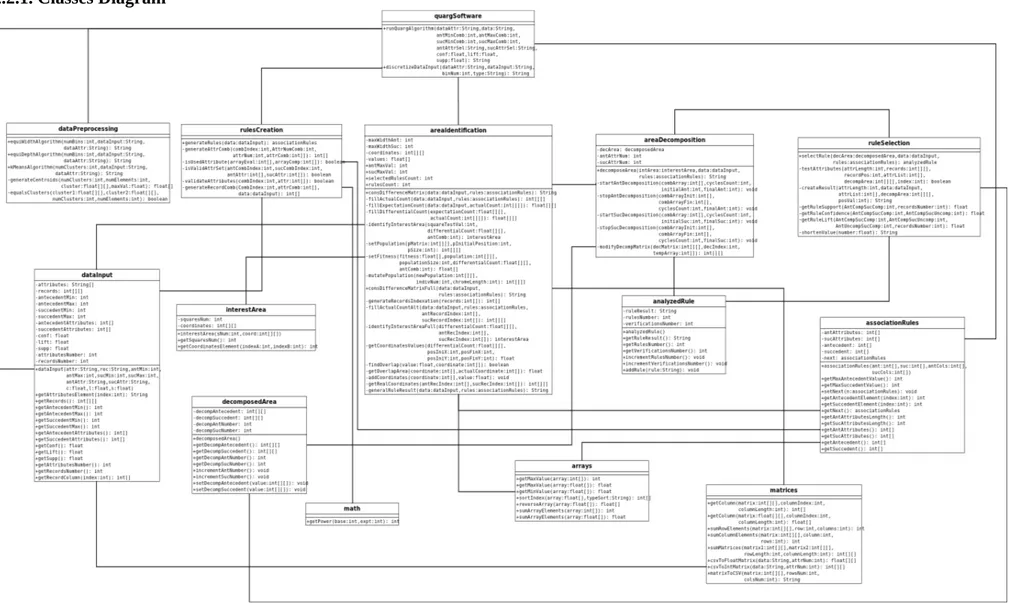
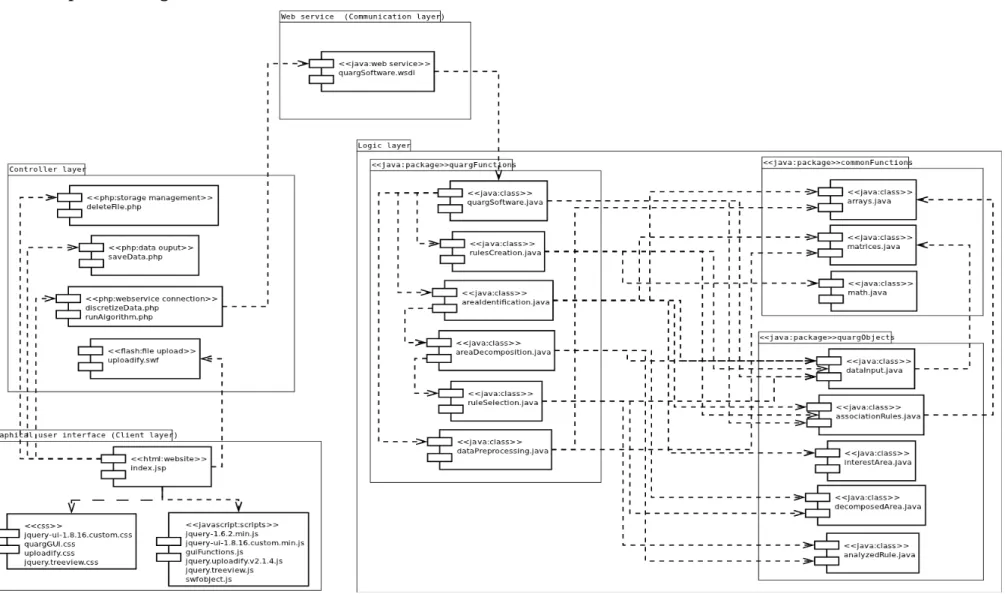
Figure 1. Project's classes definition diagram...15Figure 2. Interaction diagram of project components...16
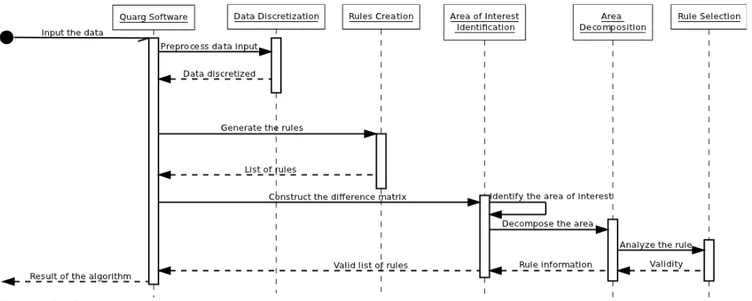
Figure 3. Diagram for the processes sequence in the project...17
Figure 4. Overall activity diagram...17
Figure 5. Data input preprocessing (discretization) activity diagram...18
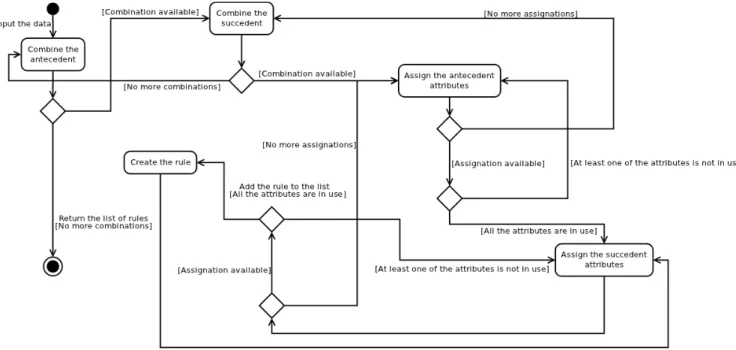
Figure 6. Rules creation activity diagram...18
Figure 7. Areas of interest identification (genetic algorithm) activity diagram...19
Figure 8. Areas of interest identification (full search algorithm) activity diagram...19
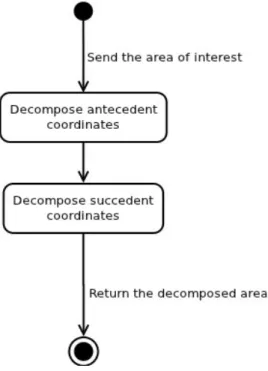
Figure 9. Areas of interest decomposition activity diagram...20
Figure 10. Rule verification activity diagram...20
Figure 11. Graphical display of the results with one attribute combinations, for the comparison between scripts and application...121
Figure 12. Graphical display of the results with two attribute combinations, for the comparison between scripts and application...121
Figure 13. Graphical display of the results with three attribute combinations, for the comparison between scripts and application...122
Figure 14. Graphical display of the results with one attribute combinations, for the comparison between the rules mining algorithms...122
Figure 15. Graphical display of the results with two attribute combinations, for the comparison between the rules mining algorithms...123
1. Description of the Problem
1.1. Enterprise Description
The Czech Technical University in Prague was funded in 1707 by the emperor Joseph 1, being nowadays one of the biggest and oldest technical universities in Central Europe [1].
The university counts with eight faculties: civil engineering, mechanical engineering, electrical engineering, nuclear sciences and physical engineering, architecture, transportation sciences, biomedical engineering and information technology.
This university has graduated a large quantity of world-renowned scientists and winners of important awards by their contributions to the sciences and developments impacting the contemporary world. One of the main laboratories from the cybernetics department of the electrical engineering faculty is the Intelligent Data Analysis Research Lab. Its principal function is to accomplish that computers can discover knowledge in data automatically [4].
The work in this laboratory is focused on development of algorithms for data-mining and machine learning. The purpose of this is to detect irregularities and patterns that lead to novel information, build predictive models and identify the results from the analyzed data. Among the principal areas of algorithm implementation are bioinformatics and intelligent optimization.
1.2. QUARG Algorithm Detailed Description
1.2.1 Data Preprocessing
Preprocessing the data input in the QUARG algorithm is important because its main objective is to reduce a potentially infinite number of values of quantitative attributes. This process consist first to discretize the input values and secondly mapping them.
Some of the advantages of using discrete values rather than continuous ones are: • Discrete features are closer to an knowledge-level representation.
• This kind of values are easier to understand.
• Discretization makes learning more accurate and faster.
For the QUARG algorithm the selected discretization method was K-means algorithm, it is an automatic unsupervised method which adapts to data's character and combine advantages of Equi-Depth (equally as many records is assigned to each discretization bin) and Equi-Distance (each discretization bin has the same range of values) algorithms.
1.2.2. Construction of the Rules
An association rule is understood as an implication X → Y where the left side of this implication is called antecedent and the right side is called succedent. Both of these, antecedent and succedent, consist in a combination of one or more preprocessed atomic attributes (represented them by one vector), and there is no limitation in the number of attributes for each part, only limited by the user according specific needs in the analysis.
Also, these rules are generated avoiding analyze redundant rules. The QUARG algorithm searches and selected the follow rules patterns:
• Antecedent and succedent cannot have repeated atomic attributes, for example is valid a rule X→Y but is not valid a rule like Y→Y or X ^ Y→Y.
• The rules X→Y and Y→X are considered different and both are verified by the QUARG algorithm.
• In the case of having the rules X ^ Y→Z and Y ^ X→Z the algorithm choose only one of them.
1.2.3. Areas of Interest Identification
The areas of interest are areas of strong association between antecedent and succedent. Instead of searching in the whole space of relationship, the QUARG algorithm focuses only on the selected areas of interest causing a reduction in the searching space and consequently in a reduction on the time consumption.
Therefore is essential to identify the best areas of interest to obtain the best candidate rules. F. Karel [3] proposes the combination of the chi-square tests approach (test of independence) and genetic algorithms.
For the test of independence each compound attribute has a discrete distribution (described as a vector) and a joint distribution of two compound attributes (described as a matrix) that indicates the amount of records being analyzed for a certain rule. And the algorithm uses two types of joint distribution [3]:
1. Real joint distribution : Pxy(t,s), where the value vts in the point [t,s] of the matrix is the real
value corresponding to the number of records in the data input.
2. Joint distribution under assumption of independence : Px(t)Py(s), where the value ets int the
point [t,s] is theoretically estimated using particular real distributions Px(t) and Py(s) and
assuming their independence, this value is given by: ets=vt∗vs
M
where vt is the value of the real distribution Px(t) in the point [t], vs is the value of the real distribution Py(s) in the point [s] and M is the total number of records in the data input.
The strongest associations between antecedent and succedent are located in areas with high positive values, therefore, in areas where the difference between real and theoretical distribution of the compound is highest.
Finally, the genetic algorithm takes place. This algorithm is based on the principles of evolution via natural selection, employing a population of individuals and applying to it operators such as mutation, recombination and fitness.
For the task of areas of interest identification every individual in the population is represented by four integers: i(p)=[tmin, smin, tmax, smax] and these values represent an specific area of interest. The genetic
algorithm works as follow [3]:
1. Generate randomly the population of individuals. 2. Compute fitness function for each individual. 3. Apply selection.
4. Apply crossover. 5. Mutate population.
6. Complete population by randomly generated individuals. 7. Repeat from step 2 until the number of generations is reached. 8. Select the final areas of interest.
1.2.4. Areas of Interest Decomposition
Each area of interest is determined by the following parameters: tmin, smin, tmax, smax the concrete values of
particular attributes have to be extracted from that coordinates. During the decomposition those values represent a K-D space, where D dimensions are necessary for K atomic attributes present in a compound attribute for the antecedent and succedent conditions [3].
To generate these conditions the algorithm generates all the squares and rectangles from the area, which bounders the solution. And by decomposing the antecedent part of the area of interest the solution is the list of antecedent conditions, same for the succedent.
1.2.5. Verification of Candidate Rules
Once the algorithm have the list of candidate rules it have to verified the validity of them, only those with that meets the interestingness thresholds are selected for the result output.
The interestingness thresholds applied in the algorithm are: confidence, support and lift. To explain each of them is necessary denote the following parameters:
• ant – the number of records in the data input that satisfy the antecedent condition of the rule that is being evaluated.
• suc – the number of records in the data input that satisfy the succedent condition of the rule that is being evaluated.
• ant_suc – the number of records in the data input which satisfy both (antecedent and succedent) conditions of the candidate rule.
Confidence is a measure of rule's reliability, tells how much the rule can be trusted, and the value of it lies in the interval of <0,1>. Confidence is given by
conf = ant_suc / ant
Support tells how frequent the rule is, and the value of it lies in the interval of <0,1>. Support is given by
supp = ant_suc / M
Lift measures the performance of the algorithm at predicting the resulting rule, the value of it lies in the interval of <0, ∞ >. Lift is given by
lift = ant_suc * M / ant * suc
Finally, the algorithm select the result rules validating all the three measures and comparing those with the input values of the minimum confidence, support and lift and that way remove the weak rules.
1.3. Objectives of the Project
1.3.1. Main Objective
To develop an efficient and general application of the QUARG algorithm, proposed and experimentally tested by Filip Karel, to obtain association rules from ordinal data.
1.3.2. Specific Objectives
• To standardize the input and output data format for the application.
• To test the performance of the application and compare it against the experimental scripts developed on MATLAB.
• To elaborate a user guide for the application and documentation of the source code for future references or extensions of the functionality of the program.
1.4. Expected Products
• An optimized, general implementation of the experimental scripts developed by Filip Karel.
• Test results and their comparison against those from the experimental scripts.
• An user guide, description of program functionality and source code documentation.
1.5. Scopes and Limitations
1.5.1. Scopes
2. The definition of new functionality seeks to accomplish a standardization and optimization of the code.
3. A web service and a website will be developed in order to provide access to the application for the community of potential users.
4. Tests of the new functionality will benchmark against metrics between computer resource usage of the new code and the current experimental scripts.
5. Write an user guide and a detailed documentation of the new code implemented.
1.5.2. Limitations
1. The project will not include any security aspects related to data transmission through the Internet.
1.6. Technologies and Methodology
The methodology of development on the project is the incremental approach, which subdivide the project in small segments defined by the important parts of the theoretical basis: rules creation, areas of interest identification, areas of interest decomposition, and rule verification.
This subdivision will allow to generate specific optimization test results, reduce the project risk and better bug fixing. Also simplifies the process of adding new components to the application, and making changes according to the researcher needs.
The technologies selected for the application development are:
Java, the application functionalities lie on a web service based on this object-oriented language, allowing a better functionality structure and a the application modularization.
2. Implemented Solution
2.1. Description of the Project Solution
The project consisted on the development of an web application that implemented the QUARG algorithm. And was developed using HTML, CSS, Flash and JQuery in a way that the graphical interface became user-friendly.
Between the client layer (user interface) and the logic layer was implemented PHP as a controller layer allowing the application to connect with a Java Web Service as the logical layer of the application, where all the methods and functionality were implemented.
The application receives a file with the data input values in the coma separated format (CSV), where the first row is the attributes list (e.g. sugar;milk;bread) and the rest of the rows are the records (e.g. 5;23;4), one record per row.
Then the user set the options for executing the preprocessing algorithm (if necessary to discretize the input data). After that, the application shows the settings for applying the rules mining algorithms, and the option the execute it.
Finally, the system returns a list with all the valid rules generated by the QUARG algorithm. The user has the option of saving the results in a text file, and the option of saving the preprocessed data in another CSV file.
All the functions and methods are going to be standardized and divided into modules, so that more functionality can be added in a simpler form to the application without having to make large changes into the code.
The implementation must have better performance than the experimental scripts developed by Filip Karel, allowing it to solve quantitative associations with a higher complexity (several attributes combinations in antecedent and/or succedent) or size (large amount of data records). This is going to be analyzed through testing the difference on the runtime between the experimental scripts and the program.
Also, a terminal version of the application was develop with the purpose of allowing the researcher to run the program locally.
2.2. Design
2.2.1. Classes Diagram
2.2.2. Components Diagram
2.2.3. Sequence Diagram
Figure 3. Diagram for the processes sequence in the project.
2.2.4. Activities Diagrams
Figure 5. Data input preprocessing (discretization) activity diagram.
Figure 7. Areas of interest identification (genetic algorithm) activity diagram.
2.3. Algorithms Pseudo-code
2.3.1. commonFunctions Package
2.3.1.1. arrays.java Class
Table 1. Pseudo-code for getting the maximum value from an array of integer. public static int getMaxValue(int[] array)
begin
set max = 0
for i = 0 to array.length if array[i] > max then
set max = array[i] endif
return max
end
Table 2. Pseudo-code for getting the maximum value from an array of float. public static float getMaxValue(float[] array)
begin
set max = 0
for i = 0 to array.length if array[i] > max then
set max = array[i] endif
return max
end
Table 3. Pseudo-code for getting the minimum value from an array of float. public static float getMixValue(float[] array)
begin
set min = 0
for i = 0 to array.length if array[i] < min then
set min = array[i] endif
return min
end
Table 4. Pseudo-code for sorting the index of the array. public static int[] sortIndex(float[] array, String typeSort)
begin
set arraySorted = call Arrays.copyOf with array, array.length initialize index = new int[array.length]
call Arrays.sort with arraySorted
if typeSort is equal to “descend” value then
set arraySorted = call reverseArray with arraySorted endif
for i = 0 to arraySorted.length set pos = 0
for j = 0 to fitnessCopy.length
if fitnessCopy[j] != -50000 and arraySorted[i] == fitnessCopy[j] then
set fitnessCopy[j] = -50000 break
else
increment pos endif
set index[i] = pos return index
end
Table 5. Pseudo-code for reversing an array. public static float[] reverseArray(float[] array)
begin
initialize reversed = new float[array.length] for i = 0 to array.length
set reversed[i] = array[array.length - i - 1] return reversed
end
Table 6. Pseudo-code for summing the integer array elements. public static int sumArrayElements(int[] array)
begin
set result = 0
for index = 0 to array.length set result = result + array[index] return result
end
Table 7. Pseudo-code for summing the float array elements. public static int sumArrayElements(float[] array)
begin
set result = 0
return result
end
2.3.1.2. math.java Class
Table 8. Pseudo-code for getting the value of the power. public static int getPower(int base, int expt)
begin
set result = 1
for index = 0 to expt set result = result * base return result
end
2.3.1.3. matrices.java Class
Table 9. Pseudo-code for getting a specific matrix integer column.
public static int[] getColumn(int[][] matrix, int columnIndex, int columnLength)
begin
initialize column = new int[columnLength] for i = 0 to columnLength
set column[i] = matrix[i][columnIndex] return column
end
Table 10. Pseudo-code for getting a specific matrix float column.
public static float[] getColumn(float[][] matrix, int columnIndex, int columnLength)
begin
initialize column = new float[columnLength] for i = 0 to columnLength
set column[i] = matrix[i][columnIndex] return column
end
Table 11. Pseudo-code for summing the row elements of a matrix. public static int sumRowElements(int[][] matrix, int row, int columns)
begin
for i = 0 to columns
set result += matrix[row][i] return result
Table 12. Pseudo-code for summing the column elements of a matrix. public static int sumColumnElements(int[][] matrix, int column, int rows)
begin
for i = 0 to rows
set result += matrix[i][column] return result
end
Table 13. Pseudo-code for summing the elements of two matrices.
public static int[][] sumMatrices(int[][] matrix1, int[][] matrix2, int rowLength, int columnLength)
begin
initialize result = new int[rowLength][columnLength] for x = 0 to rowLength
for y = 0 to columnLength
set result[x][y] = matrix1[x][y] + matrix2[x][y] return result
end
Table 14. Pseudo-code for converting a CSV string to a float matrix. public static float[][] csvToFloatMatrix(String data, int attrNum)
begin
set dataRows = call data.split with “,” set dataRowsLength = dataRows.length
initialize records = new float[dataRowsLength][attrNum] for y = 0 to dataRowsLength
set rowData = call dataRows[y].split with “;” for x = 0 to attrNum
set records[y][x] = call Float.valueOf with rowData[x] return records
end
Table 15. Pseudo-code for converting a CSV string to a integer matrix. public static int[][] csvToIntMatrix(String data, int attrNum)
begin
set dataRows = call data.split with “,” set dataRowsLength = dataRows.length
initialize records = new int[dataRowsLength][attrNum] for y = 0 to dataRowsLength
set rowData = call dataRows[y].split with “;” for x = 0 to attrNum
Table 16. Pseudo-code for converting a integer matrix into a CSV string format. public static String matrixToCSV(int[][] matrix, int rowsNum, int colsNum)
begin
initialize csv = new StringBuilder with 10000 for r = 0 to rowsNum
for c = 0 to colsNum
call csv.append with matrix[r][c] if c != (colsNum – 1) then
call csv.append with ';' end if
call csv.append with “\n” return (call csv.toString)
end
2.3.2. quargFunctions Package
2.3.2.1. quargSoftware.java Class
Table 17. Pseudo-code for the rules mining algorithm main function.
public String runQuargAlgorithm(String dataAttr, String data, int antMinComb, int antMaxComb, int sucMinComb, int sucMaxComb, String antAttrSel, String sucAttrSel, float conf, float lift,
float supp, String algorithm)
begin
try
initialize evaluationData = newcall dataInput constructor with dataAttr, data, antMinComb, antMaxComb, sucMinComb, sucMaxComb, antAttrSel, sucAttrSel, conf, lift, supp
catch on exception
return "There is a problem with the input data, please check it." try
set generatedRules = call generateRules with evaluationData if algorithm equals to “genetic” then
set result = call consDifferenceMatrixQUARG with evaluationData, generatedRules else if algorithm equals to “full” then
set result = call consDifferenceMatrixFull with evaluationData, generatedRules
else
return "You have selected an algorithm not implemented yet."
end if
return result catch on exception
return "Something wrong happened, check the code." + exception
Table 18. Pseudo-code for the preprocessing algorithm main function.
public String discretizeDataInput(String dataAttr, String dataInput, int binNum, String type)
begin
if type equals to “width” then
try
return (call equiWidthAlgorithm with binNum, dataInput, dataAttr) catch on exception
return "Something wrong happened, check the code!!" + exception elseif type equals to “depth” then
try
return (call equiDepthAlgorithm with binNum, dataInput, dataAttr) catch on exception
return "Something wrong happened, check the code!!" + exception elseif type equals to “kmeans” then
try
return (call kMeansAlgorithm with binNum, dataInput, dataAttr) catch on exception
return "Something wrong happened, check the code!!" + exception else
return "You have selected an algorithm not implemented yet." end if
end
2.3.2.2. dataPreprocessing,java Class
Table 19. Pseudo-code for discretize the input data using the Equi-Width Algorithm. public static String equiWidthAlgorithm(int numBins, String dataInput, String dataAttr)
begin
set numAttr = (call dataAttr.split with “;”).length
set data = call csvToFloatMatrix with dataInput, numAttr set dataLength = data.length
initialize bins = new float[numBins]
initialize result = new StringBuilder with 10000
initialize dataDiscretized = new int[dataLength][numAttr] for i = 0 to numAttr
set column = call getColumn with data, i, dataLength set minVal = call getMinValue with column
set maxVal = call getMaxValue with column set size = (maxVal – minVal) / numBins for b = 1 to numBins
set value = minVal + (size * b) set bins[b – 1] = value
if column[index] < bins[b] then
set dataDiscretized[index][i] = b + 1 break
end if
call result.append with (call matrixToCSV with dataDiscretized, dataLength, numAttr) return (call result.toString)
end
Table 20. Pseudo-code for discretize the input data using the Equi-Depth Algorithm. public static String equiDepthAlgorithm(int numBins, String dataInput, String dataAttr)
begin
set numAttr = (call dataAttr.split with “;”).length
set data = call csvToFloatMatrix with dataInput, numAttr set dataLength = data.length
initialize sortedColumn = new float[dataLength] initialize bins = new float[numBins]
initialize binsPositions = new int[numBins] initialize result = new StringBuilder with 10000
initialize dataDiscretized = new int[dataLength][numAttr] for b = 1 to numBins
set value = (dataLength * b) / numBins
set binsPositions[b – 1] = call Math.round with value for i = 0 to numAttr
set column = call getColumn with data, i, dataLength
call System.arraycopy with column, 0, sortedColumn, 0, dataLength call Arrays.sort with sortedColumn
for b = 0 to numBins
set bins[b] = sortedColumn[binsPositions[b] – 1] for index = 0 to dataLength
for b = 0 to numBins
if column[index] <= bins[b] then
set dataDiscretized[index][i] = b + 1 break
end if
call result.append with (call matrixToCSV with dataDiscretized, dataLength, numAttr) return (call result.toString)
end
Table 21. Pseudo-code for discretize the input data using the K-Means Algorithm.
public static String kMeansAlgorithm(int numClusters, String dataInput, String dataAttr)
begin
set numAttr = (call dataAttr.split with “;”).length
initialize result = new StringBuilder with 10000
initialize dataDiscretized = new int[dataLength][numAttr] for i = 0 to numAttr
set column = call getColumn with data, i, dataLength set maxVal = call getMaxValue with column
set centroids = call generateCentroids with numClusters, dataLength, null, maxVal set move = true
set finalClusters = null while move
initialize distance = new float[numClusters][dataLength] initialize clusters = new float[numClusters][dataLength] for c = 0 to numClusters
for pos = 0 to dataLength
set distances[c][pos] = call Math.abs with (column[pos] – centroids[c]) for pos = 0 to dataLength
set posMinElement = 0 for c = 1 to numClusters
if distances[posMinElement][pos] > distances[c][pos] then
set posMinElement = c end if
set clusters[posMinElement][pos] = column[pos]
if (call equalsClusters with finalClusters, clusters, numClusters, dataLength) then
set move = false else
set centroids = call generateCentroids with numClusters, dataLength, clusters, maxVal set finalClusters = clusters
end if
for index = 0 to dataLength for c = 0 to numClusters
if finalClusters[c][index] != 0 then
set dataDiscretized[index][i] = c + 1 end if
call result.append with (call matrixToCSV with dataDiscretized, dataLength, numAttr) return (call result.toString)
end
Table 22. Pseudo-code for generate the centroids for the K-Means algorithm.
private static float[] generateCentroids(int numClusters, int numElements, float[][] cluster, float maxVal)
begin
initialize centroids = new float[numClusters] if clusters == null then
for i = 0 to numClusters
for c = 0 to numClusters set cantElements = 0 set sumElements = 0 for i = 0 to numElements set element = cluster[c][i] if element != 0 then
increment cantElements
set sumElements = sumElements + element end if
set centroids[c] = sumElements / cantElements end if
return centroids
end
Table 23. Pseudo-code for comparing the clusters in the K-Means algorithm.
private static boolean equalsClusters(float[][] clusters1, float[][] clusters2, int numClusters, int numElements)
begin
if clusters1 != null then
for c = 0 to numClusters for pos = 0 to numElements
if clusters1[c][pos] != clusters2[c][pos] then
return false end if
return true else
return false end if
end
2.3.2.3. rulesCreation.java Class
Table 24. Pseudo-code for generating the list of the rules to evaluate. public static associationRules generateRules(dataInput data)
begin
set antAttr = null set sucAttr = null set result = null
// Number of antecedent elements combinations.
for antCombIndex = (call data.getAntecedentMin) to (call data.getAntecedentMax)
for sucCombIndex = (call data.getSuccedentMin) to (call data.getSuccedentMax) set sucAttrCombNum = call Math.pow with (call data.getAttributesNumber),
sucCombIndex // Antecedent attribute number assignations.
for antAttrComb = 1 to antAttrCombNum
set antAttr = call generateAttrComb with antCombIndex, antAttrComb,
(call data.getAttributesNumber), antAttr if (call isUsedAttribute with antAttr, (call data.getAntecedentAttributes)) == true then
// Succedent attribute number assignations. for sucAttrComb = 1 to sucAttrCombNum
set sucAttr = call generateAttrComb with sucCombIndex, sucAttrComb, (call data.getAttributesNumber), sucAttr
if (call isUsedAttribute with sucAttr, (call data.getAntecedentAttributes)) == true then
if (call isValidAttrSet with antCombIndex, sucCombIndex, antAttr, sucAttr) == true then
set antecedent = call generateRecordComb with antCombIndex, antAttr, data set succedent = call generateRecordComb with sucCombIndex, sucAttr, data
initialize element = newcall associationRules constructor with antecedent, succedent, antAttr, sucAttr if result == null then
set result = element else
call element.setNext with result set result = element
endif
endif
endif
endif
return result
end
Table 25. Pseudo-code for generate the attribute combination for the rule.
private static int[] generateAttrComb(int combIndex, int AttrNumComb, int attrNum, int[] attrComb)
begin
if AttrNumComb == 1 then
initialize attrComb = new int[combIndex] for i = 0 to combIndex
set attrComb[i] = 0 else
increment attrComb[0] endif
set attrComb[i] = 0
increment attrComb[i + 1] endif
return attrComb
end
Table 26. Pseudo-code for validating if the attributes are in use.
private static boolean isUsedAttribute(int[] arrayEval, int[] arrayComp)
begin
for i = 0 to arrayEval.length set member = false
for index = 0 to arrayComp.length
if arrayEval[i] == arrayComp[index] then
set member = true break
endif
if member != true then
return false endif
return true
end
Table 27. Pseudo-code for validating if the attributes are valid.
private static boolean isValidAttrSet(int antCombIndex, int sucCombIndex, int[] antAttr, int[] sucAttr)
begin
// Antecedent attributes validation
if (call validateAttributes with antCombIndex, antAttr) == true then
// Succedent attributes validation
if (call validateAttributes with sucCombIndex, sucAttr) == true then
set valid = true
initialize attrValidation = new int[antAttr.length + sucAttr.length]
set attrValidation = call System.arraycopy with antAttr, 0, attrValidation, 0, antAttr.length set attrValidation = call System.arraycopy with sucAttr, 0, attrValidation, antAttr.length,
sucAttr.length call Arrays.sort with attrValidation
// Validate that none of the attributes values are the same for i = 0 to (attrValidation.length – 1)
if attrValidation[i] == attrValidation[i + 1] then
end if
return valid else
return false end if
else
return false end if
end
Table 28. Pseudo-code for validating the attributes combination. private static boolean validateAttributes(int combIndex, int[] attr)
begin
set valid = true
for i = 0 to combIndex for i2 = i to combIndex if attr[i] < attr[i2] then
set valid = false break
endif
if !valid then
break
endif return valid
end
Table 29. Pseudo-code for generate the records elements combination.
private static int[] generateRecordComb(int CombIndex, int[] attrComb, dataInput data)
begin
initialize combination = new int[call data.getRecordsNumber] for i = 0 to CombIndex
set values = call data.getRecordColumn with attrComb[i]
// Add the records.
for r = 0 to (call data.getRecordsNumber) set combination[r] = combination[r] + values[r] return combination
2.3.2.4. areaIdentification.java Class
Table 30. Pseudo-code for creating the differential matrix in the genetic algorithm.
public static String consDifferenceMatrixQUARG(dataInput data, associationRules rules)
begin
set result = “”
set selectedRulesCont = 0 set rulesCont = 0
// Cicle for each of the rules in the list. while rules != null
set antMaxVal = call rules.getMaxAntecedentValue set sucMaxVal = call rules.getMaxSuccedentValue set actualCount = call fillActualCount with data, rules
set expectationCount = call fillExpectationCount with data, actualCount
set differentialCount = call fillDifferentialCount with expectationCount, actualCount set antAttrLength = call rules.getAntAttributesLength
set sucAttrLength = call rules.getSucAttributesLength set squareTestVal = (antAttrLength + sucAttrLength) * 2
set maxWidthAnt = call Math.max with (call Math.round with (antAttrLength * antMaxVal) / 5), 2 set maxWidthSuc = call Math.max with (call Math.round with (sucAttrLength * sucMaxVal) / 5), 2
// Genetic algorithm call
set intArea = call identifyInterestArea with squareTestVal, differentialCount, antAttrLength
// Area decomposition call
set rule = call decomposeArea with intArea, set result += rule
set rules = call rules.getNext endwhile
set result += "Analized rules: " + rulesCont + ", selected rules: " + selectedRulesCont + ".\n" return result
end
Table 31. Pseudo-code for filling the actual count matrix.
private static int[][] fillActualCount(dataInput data, associationRules rules)
begin
initialize matrixCount = new int[antMaxVal][sucMaxVal] for i = 0 to (call data.getRecordsNumber)
set posX = (call rules.getAntecedentElement with i) - 1 set posY = (call rules.getSuccedentElement with i) - 1 increment matrixCount[posX][posY]
return matrixCount
Table 32. Pseudo-code for filling the expectation count matrix.
private static float[][] fillExpectationCount(dataInput data, int[][] actualCount)
begin
initialize expectationMatrix = new int[antMaxVal][sucMaxVal] for x = 0 to antMaxVal
for y = 0 to sucMaxVal
set columnSum = call sumColumnElements with actualCount, y, antMaxVal set rowSum = call sumRowElements with actualCount, x, sucMaxVal set recNum = call data.getRecordsNumber
set expectationMatrix[x][y] = (columnSum * rowSum) / recNum return expectationMatrix
end
Table 33. Pseudo-code for filling the differential count matrix.
private static float[][] fillDifferentialCount(float[][] expectationCount, int[][] actualCount)
begin
initialize differentialMatrix = new int[antMaxVal][sucMaxVal] for x = 0 to antMaxVal
for y = 0 to sucMaxVal
set differentialMatrix[x][y] = ((float) actualCount[x][y] – expectationCount[x][y] return differentialMatrix
end
Table 34. Pseudo-code for identifying the interest areas for the genetic algorithm. private static interestArea identifyInterestAreaQUARG(int squareTestVal,
float[][] differentialCount, int antComb)
begin
set genNum = 21 set chromeLength = 4
set populationSize = (antMaxVal + sucMaxVal) * 2
initialize population = new int[populationSize][chromeLength] initialize newPopulation = new int[populationSize][chromeLength] initialize finalArea = new int[antMaxVal][sucMaxVal]
initialize population = new int[squareTestVal][chromeLength] initialize fitness = new float[populationSize]
initialize indexFitness = new int[populationSize] set squaresNum = 0
set population = call setPopulation with population, 0, populationSize for gen = 0 to genNum
set indivNum = 0
set fitness = call setFitness with fitness, population, populationSize, differentialCount, antComb set fitnessMaxVal = call getMaxValue with fitness
set newPopulation[indivNum] = population[chrom] increment indivNum
end if
set newPopulation = call mutatePopulation with newPopulation, indivNum, chromeLength set population = call setPopulation with newPopulation, indivNum, populationSize
set indexFitness = call sortIndex with fitness, “descend” for squares = 0 to squaresTestVal
set overlapping = 0 set squareSizeUpdate = 0
initialize suppFinalArea = new int[antMaxVal][sucMaxVal]
for x = population[indexFitness[squares]][0] to population[indexFitness[squares]][1] for y = population[indexFitness[squares]][2] to population[indexFitness[squares]][3] increment suppFinalArea[x - 1][y - 1]
set popAntDif = population[indexFitness[squares]][1] - population[indexFitness[squares]][0] set popAntDif = population[indexFitness[squares]][2] - population[indexFitness[squares]][3] set squareSizeUpdate = (call Math.abs with popAntDif) – (call Math.abs with popSucDif) if (squares == 0) or ((squares > 0) and (squareSizeUpdate > (0.5 * overlapping))) then
set finalCoordinates[squaresNum][0] = population[indexFitness[squares]][0] set finalCoordinates[squaresNum][1] = population[indexFitness[squares]][1] set finalCoordinates[squaresNum][2] = population[indexFitness[squares]][2] set finalCoordinates[squaresNum][3] = population[indexFitness[squares]][3]
set finalArea = call sumMatrices with finalArea, suppFinalArea, antMaxVal, sucMaxVal increment squaresNum
end if
returnnewcall interestArea constructor with squaresNum, finalCoordinates
end
Table 35. Pseudo-code for setting the population matrix.
private static int[][] setPopulation(int[][] pMatrix, int pInitialPosition, int pSize)
end if
return pMatrix
end
Table 36. Pseudo-code for setting the fitness.
private static float[] setFitness(float[] fitness, int[][] population, int populationSize, float[][] differentialCount, int antComb)
begin
for chrom = 0 to populationSize
set antMinCoor = population[chrom][0] set antMaxCoor = population[chrom][1] set sucMinCoor = population[chrom][2] set sucMaxCoor = population[chrom][3] set sum = 0
for y = antMinCoord to antMaxCoord for x = sucMinCoord to sucMaxCoord
set sum = sum + differentialCount[y - 1][x - 1] if (antMaxCoord - antMinCoord) < antComb then
set fitness[chrom] = -10000 else
set fitness[chrom] = sum end if
return fitness
end
Table 37. Pseudo-code for the genetic mutation of the population.
private static int[][] mutatePopulation(int[][] newPopulation, int indivNum, int chromeLength)
begin
set mutation = call Math.ceil with ((call Math.random) * indivNum)
set mutationNum = call Math.ceil with ((call Math.random) * chromeLength) if (mutation >= indivNum) and (indivNum != 0) then
set mutation = indivNum - 1 end if
if mutationNum == chromeLength then
set mutationNum = chromeLength - 1 end if
if mutationNum == 0 then
set newPopulation[mutation][mutationNum] = call Math.ceil with ((call Math.random) * antMaxVal) if newPopulation[mutation][mutationNum] > newPopulation[mutation][1] then
set newPopulation[mutation][mutationNum] = newPopulation[mutation][1] end if
antMaxVal) if newPopulation[mutation][mutationNum] < newPopulation[mutation][0] then
set newPopulation[mutation][mutationNum] = newPopulation[mutation][0] end if
else if mutationNum == 2 then
set newPopulation[mutation][mutationNum] = call Math.ceil with ((call Math.random) * sucMaxVal) if newPopulation[mutation][mutationNum] > newPopulation[mutation][3] then
set newPopulation[mutation][mutationNum] = newPopulation[mutation][3] end if
else if mutationNum == 3 then
set newPopulation[mutation][mutationNum] = call Math.ceil with ((call Math.random) * sucMaxVal) if newPopulation[mutation][mutationNum] < newPopulation[mutation][2] then
set newPopulation[mutation][mutationNum] = newPopulation[mutation][2] end if
end if
return newPopulation
end
Table 38. Pseudo-code for for creating the differential matrix in the full search algorithm. public static String consDifferenceMatrixFull(dataInput data, associationRules rules)
begin
set resultBuffer = new StringBuffer with 10000 while rules != null
set antRecIndex = call generateRecordsIndexation with (call getAntecedent) set sucRecIndex = call generateRecordsIndexation with (call getSuccedent) set antMaxVal = antRecIndex.length
set sucMaxVal = sucRecIndex.length
set actualCount = call fillActualCountAlt with data, rules, antRecIndex, sucRecIndex set expectationCount = call fillExpectationCount with data, actualCount
set differentialCount = call fillDifferentialCount with expectationCount, actualCount
set intArea = call identifyInterestAreaFull with differentialCount, antRecIndex, sucRecIndex set rule = call decomposeArea with intArea, data, rules
call resultBuffer.append with rule set rules = call rules.getNext return (call resultBuffer.toString)
end
Table 39. Pseudo-code for generate an array of indexes for the records. private static int[] generateRecordsIndexation(int[] records)
begin
initialize indexation = new int[1]
call Arrays.sort with recordsCopy set indexation[0] = recordsCopy[0] for i = 1 to records.length
if recordsCopy[i] != indexation[index.length – 1] then
initialize tempIndexation = new int[index.length + 1]
call System.arraycopy with indexation, 0, tempIndexation, 0, index.length set tempIndexation[index.length] = recordsCopy[i]
set indexation = tempIndexation end if
return indexation
end
Table 40. Pseudo-code for filling the actual count matrix for the full search method.
private static int[][] fillActualCountAlt(dataInput data, associationRules rules, int[] antRecordIndex, int[] sucRecordIndex)
begin
set dataRecNum = call data.getRecordsNumber
initialize matrixCount = new int[antMaxVal][sucMaxVal] for i = 0 to dataRecNum
set posX = call Arrays.binarySearch with antRecordIndex, (call rules.getAntecedentElement with i) set posX = call Arrays.binarySearch with sucRecordIndex, (call rules.getSuccedentElement with i) increment matrixCount[posX][posY]
return matrixCount
end
Table 41. Pseudo-code for identifying the interest areas for the full search algorithm.
private static interestArea identifyInterestAreaFull(float[][] differentialCount, int[] antRecIndex, int[] sucRecIndex)
begin
set coordinates = null set values = null
for posIniX = 0 to antMaxVal for posIniY = 0 to sucMaxVal
for posFinX = posIniX to antMaxVal for posFinY = posIniY to sucMaxVal
set value = call getCoordinatesValue with differentialCount, posIniX, posFinX, posIniY, posFinY
set coordinate = {posIniX, posFinX, posIniY, posFinY} if value > 0 then
if coordinates == null then
else
set overlapping = call findOverlap with value, coordinate if !overlapping then
call addCoordinates with coordinate, value end if
end if
if coordinates != null then
set finalCoordinates = call getRealCoordinates with antRecIndex, sucRecIndex return (call interestArea constructor with finalCoordinates.length, finalCoordinates) else
return (call interestArea constructor with 0, null) end if
end
Table 42. Pseudo-code for getting the value of the sum if elements in the differential count matrix. private static float getCoordinatesValue(float[][] differentialCount, int posIniX, int posFinX, int posIniY, int posFinY)
begin
set value = 0
for index = posIniX to posFinX
set row = call Arrays.copyOfRange with differentialCount[index], posIniY, (posFinY + 1) set value = value + (call sumArrayElements with row)
return value
end
Table 43. Pseudo-code for finding overlap of the elements in the interest areas. private static boolean findOverlap(float value, int[] coordinate)
begin
set overlap = false set valid = true
for i = 0 to coordinates.length
set actualCoordinate = coordinates[i] set actualValue = values[i]
if ((coordinate[0] >= actualCoordinate[0] and coordinate[0] <= actualCoordinate[1]) or
(coordinate[1] >= actualCoordinate[0] and coordinate[1] <= actualCoordinate[1])) and
((coordinate[2] >= actualCoordinate[2] and coordinate[2] <= actualCoordinate[3]) or
(coordinate[3] >= actualCoordinate[2] and coordinate[3] <= actualCoordinate[3])) then
set overlap = true
set overlapArea = call getOverlapArea with coordinate, actualCoordinate set area = ((call Math.abs with (coordinate[0] – coordinate[1])) + 1) * ((call Math.abs with (coordinate[2] – coordinate[3])) + 1) set areaDiff = overlapArea / area
set valid = false break
end if
end if
if overlap and valid then
call addCoordinates with coordinate, value end if
return overlap
end
Table 44. Pseudo-code for determine how many elements conforms the overlap area. private static float getOverlapArea(int[] coordinate, int[] actualCoordinate)
begin
set minValX = call Math.min with coordinate[0], actualCoordinate[0] set maxValX = call Math.max with coordinate[1], actualCoordinate[1] set minValY = call Math.min with coordinate[2], actualCoordinate[2] set maxValY = call Math.max with coordinate[3], actualCoordinate[3] set valX = 0
set valY = 0
for x = minValX to maxValX
if (x >= actualCoordinate[0] and x <= actualCoordinate[1]) and
(x >= coordinate[0] and x <= coordinate[1]) then
increment valX end if
for y = minValY to maxValY
if (y >= actualCoordinate[2] and y <= actualCoordinate[3]) and
(y >= coordinate[2] and y <= coordinate[3]) then
increment valY end if
return (valX * valY)
end
Table 45. Pseudo-code for adding a coordinate to the list of accepted ones. private static void addCoordinates(int[] coordinate, float value)
begin
initialize tempCoordinates = new int[coordinates.length + 1][4]
call System.arraycopy with coordinates, 0, tempCoordinates, 0, coordinates.length set tempCoordinates[coordinates.length] = coordinate
set coordinates = tempCoordinates
initialize tempValues = new float[values.length + 1]
call System.arraycopy with values, 0, tempValues, 0, values.length set tempValues[values.length] = value
Table 46. Pseudo-code for changing the indexed positions for the real ones. private static int[][] getRealCoordinates(int[] antRecIndex, int[] sucRecIndex)
begin
initialize finalCoordinates = new int[coordinates.length][4] for x = 0 to coordinates.length
set coordinate = {antRecIndex[coordinates[x][0], antRecIndex[coordinates[x][1], sucRecIndex[coordinates[x][2], sucRecIndex[coordinates[x][3]} set finalCoordinates[x] = coordinate
return finalCoordinates
end
Table 47. Pseudo-code for creating the general rule compound result.
private static String generalRuleResult(dataInput data, associationRules rules)
begin
set rulesAntAttr = call rules.getAntAttributes
set antAttrLength = call rules.getAntAttributesLength set rulesSucAttr = call rules.getSucAttributes
set sucAttrLength = call rules.getSucAttributesLength set ruleData = new StringBuilder with 50
for index = 0 to antAttrLength
set attrName = call data.getAttributesElement with rulesAntAttr[index] call ruleData.append with attrName
for index = 0 to sucAttrLength
set attrName = call data.getAttributesElement with rulesSucAttr[index] call ruleData.append with attrName
return (call ruleData.toString)
end
2.3.2.5. areaDecomposition.java Class
Table 48. Pseudo-code for decomposing the selected interest areas.
public static String decomposeArea(interestArea intArea, dataInput data, associationRules rules)
begin
set result = “”
set antAttrNum = call rules.getAntAttributesLength set sucAttrNum = call rules.getSucAttributesLength for cont = 0 to (call intArea.getSquaresNum)
initialize decArea = newcall decomposedArea constructor // Antecedent decomposition.
if (call rules.getAntAttributesLength) == 1 then