
TítuloPreoperative INTERMACS profiles determine postoperative outcomes in critically ill patients undergoing emergency heart transplantation: analysis of the Spanish National Heart Transplant Registry
12
0
0
Texto completo
(2) and selection of target populations for advanced therapies.6 Until now, 4 small single-center studies have investigated the association between INTERMACS profiles and outcomes in the field of advanced HF: 3 focused on patients undergoing VAD implantation7–9 and 1 focused on patients undergoing emergency HT.10 All studies showed worse postoperative outcomes in patients with a more critical preoperative clinical condition, as is the case of individuals with INTERMACS profiles 1 and 2. The purpose of our investigation was to analyze postoperative outcomes in the Spanish national cohort of emergency HT patients, and to correlate them with preoperative INTERMACS profiles. Methods Setting, Design, Patients, and Data Collection In Spain, the procurement and distribution of organ donors is coordinated by the Organización Nacional de Trasplantes (ONT), a public healthcare network that integrates all hospitals with capability for organ extraction or implantation around the country. In the past decade, an HT candidate could be listed in the ONT system with 2 different levels of priorities: emergent (the so-called ONT status 0) or elective. ONT status 0 implied priority over all elective HT candidates for receiving the first suitable donor heart available in the system. In that era, ONT status 0 was reserved for critically ill HF patients who met ≥1 of the following criteria: . Dependence on an intra-aortic balloon pump (IABP), a short-term VAD, or an extracorporeal membrane oxygenator (ECMO). Dependence on both intravenous inotropes and invasive mechanical ventilation with orotracheal intubation. Recurrent life-threatening ventricular arrhythmias despite optimal pharmacological and device therapy. Nonreversible primary graft dysfunction during the early postoperative period after a first HT.. We performed an observational study based on the historical cohort of patients aged >18 years who underwent emergency HT (ONT status 0) in Spain between 2000 and 2009. Patients were identified by means of the prospective database of the Spanish National Heart Transplant Registry (SNHTR),3 in which extensive clinical information on recipients, donors, and outcomes is recorded about all HT procedures performed in our country since the first was carried out in May 8, 1984. This database is updated on a yearly basis with data reported voluntarily by all Spanish HT teams. A formal research proposal was presented to the head of every 1 of the 16 Spanish teams that had performed any adult HT procedure in the past decade. All teams except 1 approved the protocol. Therefore, we extracted from the SNHTR database a data set of 175 clinical variables related to ONT status 0 HT procedures performed between January 1, 2000, and December 31, 2009, at the 15 centers participating in the study, which are listed in the Acknowledgments section. A data set of other 37 additional clinical variables was collected directly from patient hospital clinical records, which were individually reviewed for the study. Two cardiologists blinded to post-transplant outcomes retrospectively judged the clinical status of every patient just at the time of HT surgery and assigned them a preoperative INTERMACS profile as previously defined6 (Table 1). Reliable information about the vital status of all patients was available as of October 31, 2010. Other major post-transplant outcomes were defined as follows: . . Primary graft failure: left ventricular or biventricular systolic dysfunction of the graft, as assessed by visual inspection in the operating room or defined by the finding of a left ventricular ejection fraction <45% by transthoracic or transesophageal echocardiography during the first 48 hours after surgery, in the absence of rejection or other obvious causes of graft dysfunction, causing severe hemodynamic instability (systolic blood pressure <90 mm Hg and cardiac index <2.2 mL/min per m2), and requiring high-dose intravenous inotropes (dopamine or dobutamine >10 μg/kg per min), intravenous vasopressors (norepinephrine or epinephrine >0.1 μg/kg per min) or mechanical circulatory support (MCS) with IABP, short-term VADs or ECMO. Isolated right ventricular failure: isolated right ventricular systolic dysfunction of the graft, as assessed by visual inspection in the operating room or defined by transthoracic or transesophageal echocardiography performed during the first 48 hours after surgery as the presence of a lateral tricuspid annulus plane systolic excursion <15 mm or a right ventricular ejection fraction <45% together with normal or near-normal left ventricular systolic performance, in the absence of other obvious causes of graft dysfunction, causing severe.
(3) . . hemodynamic instability (systolic blood pressure <90 mm Hg and cardiac index <2.2 mL/min per m2), and requiring high-dose intravenous inotropes (dopamine or dobutamine >10 μg/kg per min), intravenous vasopressors (norepinephrine or epinephrine >0.1 μg/kg per min) or MCS with IABP, short-term VADs or ECMO. Major bleeding: surgical bleeding requiring transfusion of >4 red cell units at the operation room or within the first 48 hours after surgery, requiring intravenous vasopressor agents (norepinephrine or epinephrine >0.1 μg/kg per min) because of persistent hypotension (systolic blood pressure <90 mm Hg), or leading to cardiac reoperation with repeated sternotomy during the postoperative hospitalization after HT. Cardiac reoperation: any cardiac surgical procedure requiring a new sternotomy during the postoperative hospitalization after HT. Dialysis: need for dialysis or hemofiltration during the postoperative hospitalization after HT. Infection: any episode of culture-proven infection or empirical treatment for suspected infection during the postoperative hospitalization after HT. Asymptomatic cytomegalovirus infection was not considered an infectious event.. Table 1. INTERMACS Profiles of Advanced Heart Failure6 Profiles. INTERMACS 1 INTERMACS 2 INTERMACS 3. Definition Critical cardiogenic shock (Crash and burn) Progressive decline (Sliding fast on inotropes) Stable but inotrope dependent (Dependent stability). INTERMACS 4. Resting symptoms on oral therapy at home. INTERMACS 5. Exertion intolerant. INTERMACS 6. Exertion limited (Walking wounded). INTERMACS 7. Advanced NYHA class III (Placeholder). Description. Patient with life-threatening hypotension despite rapidly escalating inotropic support, critical organ hypoperfusion, often confirmed by worsening acidosis and lactate levels. Patient with declining function despite intravenous inotropic support, that may be manifest by worsening renal function, nutritional depletion, or inability to restore volume balance. Also describes declining status in patients unable to tolerate inotropic therapy. Patient with stable blood pressure, organ function, nutrition, and symptoms on continuous intravenous inotropic support (or a temporary circulatory support device or both), but demonstrating repeated failure to wean from support because of recurrent symptomatic hypotension or renal dysfunction. Patient can be stabilized close to normal volume status but experiences daily symptoms of congestion at rest or during activities of daily living. Doses of diuretics generally fluctuate at very high levels. More intensive management and surveillance strategies should be considered, which may in some cases reveal poor compliance that would compromise outcomes with any therapy. Some patients may shuttle between 4 and 5. Comfortable at rest and with activities of daily living but unable to engage in any other activity, living predominantly within the house. Patients are comfortable at rest without congestive symptoms, but may have underlying refractory elevated volume status, often with renal dysfunction. If underlying nutritional status and organ function are marginal, patient may be more at risk than INTERMACS 4, and require definitive intervention. Patient without evidence of fluid overload is comfortable at rest, and with activities of daily living and minor activities outside the home but has fatigue after the first few minutes of any meaningful activity. Attribution to cardiac limitation requires careful measurement of peak oxygen consumption, in some cases with hemodynamic monitoring to confirm severity of cardiac impairment. A placeholder for more precise specification in future. This level includes patients who are without current or recent episodes of unstable fluid balance, living comfortably with meaningful activity limited to mild physical exertion.. INTERMACS indicates Interagency Registry for Mechanically Assisted Circulatory Support; and NYHA, New York Heart Association.. Statistical Analysis Continuous variables are presented as mean±SD, and categorical variables are presented as proportions. χ2 Tests and ANOVA were used for statistical comparisons among groups, and Scheffé test was used for post hoc pairwise comparisons. A multivariable logistic regression model was built to estimate the adjusted odds ratio for in-hospital postoperative mortality after HT across INTERMACS profiles. Variables included in the analysis were those considered as potential confounders on the basis of previous publications, clinical experience, or a marked asymmetrical distribution among INTERMACS groups (age, sex, donor age, donor sex, ischemic.
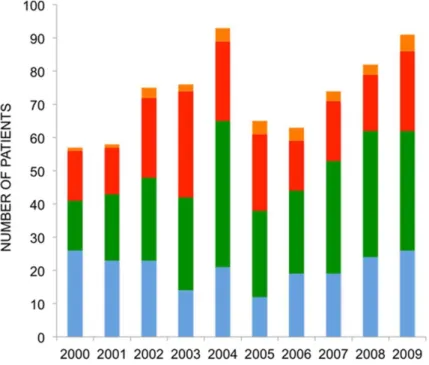
(4) heart disease, diabetes mellitus, preoperative infection, dialysis, mechanical ventilation, VAD, cold ischemia time, previous cardiac surgery, second HT, donor on inotropes, and year of transplantation). Post-transplant long-term survival curves of patients with preoperative INTERMACS profiles 1, 2, and 3 to 4 were estimated by means of the Kaplan–Meier method and compared by means of the log-rank test, both in the entire cohort and in the subcohort of patients who survived the in-hospital postoperative period and were discharged alive. Adjusted hazard ratios for all-cause death and all-cause death conditioned to hospital discharge were obtained by means of multivariable Cox proportional hazards models. Statistical significance was set as a P value <0.05. All analyses were performed with SPSS Statistics version 20. Results Recipients, Donors, and Heart Transplant Procedures According to the SNHTR database, 2956 patients aged >18 years underwent HT in our country between 2000 and 2009. Seven hundred and twenty-four patients underwent emergency (ONT status 0) HT; 711 of them at the 15 hospitals participating in the study. Seven patients were excluded because hospital clinical records lacked enough clinical information to make a reliable judgment about their preoperative INTERMACS profile. Therefore, the final study sample included 704 patients. At the time of HT, 207 patients (29.4%) had an INTERMACS profile 1, 291 (41.3%) an INTERMACS profile 2, 176 (25%) an INTERMACS profile 3, and 30 patients (4.3%) had an INTERMACS profile 4. No patient presented with INTERMACS profiles 5 to 7. Figure 1 shows the distribution of patients during the study period. For subsequent analyses, patients with INTERMACS profiles 3 and 4 were included in a single category.. Figure 1. Distribution of patients during the study period. INTERMACS indicates Interagency Registry for Mechanically Assisted Circulatory Support.. As shown in Table 2, the mean age was 48.6 years in the INTERMACS 1 group, 51.6 years in the INTERMACS 2 group, and 50.4 years in the INTERMACS 3 to 4 group (P=0.020). The proportion of women was ≈20% in the 3 groups. While awaiting HT, INTERMACS 3 to 4 group patients were supported with lower doses of inotropes, as measured by means of the inotropic index,11 and less frequently needed mechanical ventilation, intra-aortic balloon pumping, or temporary MCS as a bridge to HT in comparison with patients with INTERMACS profiles 1 and 2..
(5) Table 2. Clinical Variables Related to Recipients, Donors, and Heart Transplant Procedures Variables. Demographics Age, y; mean, SD Women, % Waiting list time, d Clinical history Ischemic heart disease, % Diabetes mellitus, % Hypertension, % Previous cardiac surgery, % Defibrillator, % Resynchronization, % Cardiac arrest, % Preoperative infection, % Supportive therapies Inotropes, % Inotropic index Intra-aortic balloon, % Temporary mechanical circulatory support, % Dialysis, % Mechanical ventilation, % Laboratory Creatinine, mg/dL Creatinine clearance, mL/min per m2 Hemoglobin, g/dL Bilirubin, mg/dL Aspartate aminotransferase, IU/L Alanine aminotransferase, IU/L Hemodynamics Ejection fraction, % Cardiac index, mL/min per m2 Central venous pressure, mm Hg Capillary wedge pressure, mm Hg Mean pulmonary pressure, mm Hg Heart transplant surgery Second heart transplantation, % Cold ischemia time, min Bypass time, min Donor characteristics Female donor, % Donor on inotropes, % Donor with cardiac arrest, % Donor age, y Immunosuppressive therapy Induction therapy, % Cyclosporine, % Tacrolimus, % Mycophenolate mofetil, % Azathioprine, % Mammalian target of rapamycin inhibitors, %. INTERMACS 1 (n=207). INTERMACS 2 (n=291). INTERMACS 3–4 (n=206). P Value*. 48.6±12.4 20.3 4.6±6.3. 51.6±11.6 19.6 5.4±7.4. 50.1±12.5 20.4 5.6±6.8. 0.025† 0.97 0.33. 43.5 14.0 22.7 23.5 16.1 7.0 23.9 32.4. 48.5 13.1 27.8 27.7 18.8 6.0 17.6 27.8. 46.1 14.6 28.2 23.3 27.7 7.5 17.6 22.8. 0.55 0.88 0.35 0.44 0.009 0.80 0.19 0.030‡. 95.1 43.9±72.8 79.2. 97.9 32.2±55.6 72.5. 85.4 8.4±13.2 44.2. <0.001‡§ <0.001†§ <0.001‡§. 18.8. 18.9. 6.3. <0.001‡§. 13.5 63.8. 5.9 46.9. 5.5 25.9. 0.003†‡ <0.001†‡§. 1.6±0.9 70.9±33 11.4±2.1 2.1±1.3 331±1005 351±1055. 1.3±0.6 78.1±35.4 11.1±2.2 1.9±1.5 208±622 252±725. 1.2±0.5 85.8±42.1 11.5±2.1 1.9±1.6 118±328 159±367. <0.001†‡ <0.001†‡ 0.34 0.62 0.020 0.019. 20.2±10.7 2.0±0.7 12.7±6.7 23.5±8.7 32.3±10.5. 21.1±9.6 2.2±0.7 13.6±6.2 24.2±8.7 33.0±10.9. 21.8±10.8 2.2±0.7 12.2±7.2 25.6±8.8 35.0±11.0. 0.28 0.019 0.33 0.11 0.07. 2.9 216.1±62.5 146.8±70.3. 5.8 214.4±55.8 130.6±44.5. 3.9 208.8±58.8 133.6±52.0. 0.26 0.41 0.005†. 30.7 69.3 6.5 36.1±12.9. 25.5 80.8 9.1 36.8±12.9. 30.0 79.5 5.8 34.7±12.1. 0.39 0.014†‡ 0.41 0.20. 70.3 66.3 23.4 75.3 21.8. 86.7 54.3 38.0 80.1 12.6. 83.2 62.4 32.1 85.8 11.6. <0.001 0.03 0.005 0.034 0.007. 7.5. 3.6. 4.1. 0.14. INTERMACS indicates Interagency Registry for Mechanically Assisted Circulatory Support. ↵* Statistical pairwise comparisons: ↵† P<0.05 for INTERMACS 1 vs INTERMACS 2. ↵‡ P<0.05 for INTERMACS 1 vs INTERMACS 3–4. ↵§ P<0.05 for INTERMACS 2 vs INTERMACS 3–4. Inotropic index is calculated as dopamine dose (μg/kg per min)+dobutamine dose (μg/kg per min)+15×milrinone dose (μg/kg per min)+100×epinephrine dose (μg/kg per min)+100×norepinephrine dose (μg/kg per min).11.
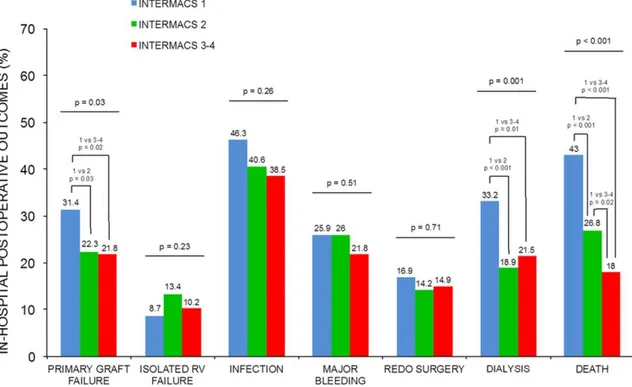
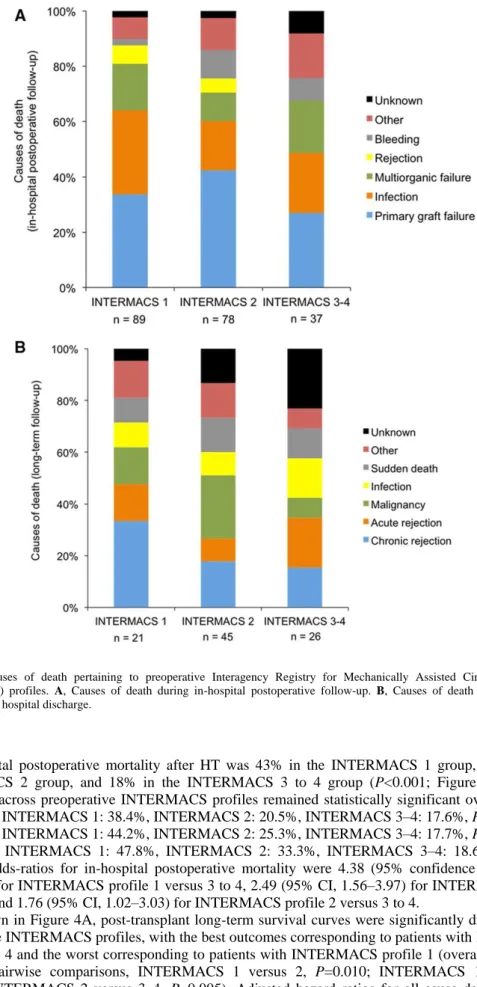
(6) Patients with INTERMACS profile 1 had the lowest mean cardiac index and the highest mean serum levels of creatinine, alanine aminotransferase, and aspartate aminotransferase among the 3 studied groups. Preoperative need for dialysis and preoperative infection were also more frequent in INTERMACS 1 patients. No significant difference among preoperative INTERMACS profiles was noticed pertaining to donor age, donor sex, or cold ischemia times, but a higher proportion of inotrope-supported donors were used in the INTERMACS 1 group. Patients with INTERMACS profile 1 also presented the longest mean bypass time during HT surgery. Early Postoperative Outcomes The rates of major postoperative outcomes during in-hospital follow-up after HT are shown in Figure 2. The incidence of primary graft failure was 31.3% among patients with INTERMACS profile 1, significantly higher than among patients with INTERMACS profile 2 (22.3%; P=0.03) and patients with INTERMACS profiles 3 to 4 (21.8%; P=0.02). The postoperative need for dialysis was also more frequent in the INTERMACS 1 group (33.2%) than in the INTERMACS 2 group (18.9%; P<0.001) and in the INTERMACS 3 to 4 (21.5%; P=0.001) group. The incidence of isolated right ventricular failure, major surgical bleeding, cardiac reoperation, and postoperative infection was not significantly different across preoperative INTERMACS profiles.. Figure 2. In-hospital postoperative outcomes after emergency heart transplantation. Statistically significant post hoc pairwise comparisons (P value <0.05) are shown in the figure. INTERMACS indicates Interagency Registry for Mechanically Assisted Circulatory Support; Redo, cardiac reoperation; and RV, right ventricle.. Survival After HT Mean follow-up after HT was 1174±42 days. Two hundred and ninety-six patients (42%) died: 204 patients (29%) during in-hospital follow-up and 92 patients (13%) after hospital discharge. Primary graft failure, multiorgan failure, and infection were the most frequent causes of death during the early postoperative period, although rejection (acute and chronic), malignancy, and infection accounted for the majority of deaths during postdischarge long-term follow-up. Causes of deaths pertaining to preoperative INTERMACS profiles are detailed in Figure 3..
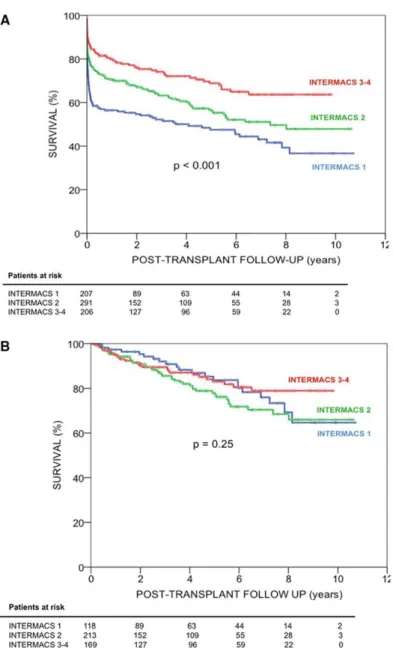
(7) Figure 3. Causes of death pertaining to preoperative Interagency Registry for Mechanically Assisted Circulatory Support (INTERMACS) profiles. A, Causes of death during in-hospital postoperative follow-up. B, Causes of death during long-term follow-up after hospital discharge.. In-hospital postoperative mortality after HT was 43% in the INTERMACS 1 group, 26.8% in the INTERMACS 2 group, and 18% in the INTERMACS 3 to 4 group (P<0.001; Figure 2). Mortality differences across preoperative INTERMACS profiles remained statistically significant over eras (years 2000–2003, INTERMACS 1: 38.4%, INTERMACS 2: 20.5%, INTERMACS 3–4: 17.6%, P=0.002; years 2004–2006, INTERMACS 1: 44.2%, INTERMACS 2: 25.3%, INTERMACS 3–4: 17.7%, P=0.002; years 2007–2009, INTERMACS 1: 47.8%, INTERMACS 2: 33.3%, INTERMACS 3–4: 18.6%, P=0.001). Adjusted odds-ratios for in-hospital postoperative mortality were 4.38 (95% confidence interval [CI], 2.51–7.66) for INTERMACS profile 1 versus 3 to 4, 2.49 (95% CI, 1.56–3.97) for INTERMACS profile 1 versus 2 and 1.76 (95% CI, 1.02–3.03) for INTERMACS profile 2 versus 3 to 4. As shown in Figure 4A, post-transplant long-term survival curves were significantly different across preoperative INTERMACS profiles, with the best outcomes corresponding to patients with INTERMACS profiles 3 to 4 and the worst corresponding to patients with INTERMACS profile 1 (overall comparison, P<0.001; pairwise comparisons, INTERMACS 1 versus 2, P=0.010; INTERMACS 1 versus 3–4, P<0.001; INTERMACS 2 versus 3–4, P=0.005). Adjusted hazard ratios for all-cause death were 2.14 (95% CI, 1.46–3.12) for INTERMACS profile 1 versus 3 to 4, 1.43 (95% CI, 1.04–1.94) for INTERMACS profile 1 versus 2, and 1.50 (95% CI, 1.01–2.15) for INTERMACS profile 2 versus 3 to 4..
(8) Figure 4. Long-term survival after heart transplantation. A, Entire cohort. B, Patients discharged alive from hospital after heart transplantation. INTERMACS indicates Interagency Registry for Mechanically Assisted Circulatory Support.. Post-transplant long-term survival curves of patients who survived the early postoperative period and were discharged from the hospital did not vary significantly across INTERMACS groups (P<0.25; Figure 4B). Adjusted hazard ratios for all-cause death conditioned to hospital discharge were 0.91 (95% CI, 0.48–1.71) for INTERMACS profile 1 versus 3 to 4, 0.64 (95% CI, 0.36–1.13) for INTERMACS profile 1 versus 2, and 1.43 (95% CI, 0.86–2.40) for INTERMACS profile 2 versus 3 to 4. Discussion The main finding of our study is the strong correlation observed between preoperative INTERMACS profiles and postoperative outcomes in the Spanish national cohort of patients treated with emergency HT between 2000 and 2009. Moreover, the poor outcomes observed in emergency HT recipients presenting with INTERMACS profiles 1 and 2 call for a reformulation of policies related to the management of these critically ill HF patients. Adjudication of INTERMACS profiles was fairly accurate in our study. The INTERMACS profile 1 represented a very sick HF population presenting with impaired hemodynamics and end-organ dysfunction, frequently requiring high-dose intravenous inotropes and invasive supporting therapies, and affected by device-related complications such as infection. On the other hand, patients with.
(9) INTERMACS profiles 3 and 4 were usually bridged to HT with a more stable hemodynamic condition under low-dose or even no inotropic therapy, and with relatively preserved hepatic and kidney function. INTERMACS profile 2 represented an intermediate situation. No patient was assigned to INTERMACS profiles 5 to 7, consistently with the definition of a less severe clinical scenario in which emergency HT is rarely justified. Rates of postoperative adverse events after HT as primary graft failure and renal failure were significantly different across INTERMACS profiles, with the best outcomes corresponding to patients with profiles 3 and 4, and the worst corresponding to patients with profile 1. Adjusted risk of in-hospital postoperative death for this population was increased by 2.5-fold relating to INTERMACS 2 patients and increased by 4.4-fold relating to INTERMACS 3 to 4 patients. Adjusted risk of in-hospital postoperative death of INTERMACS 2 patients was also increased by 1.7-fold in comparison with INTERMACS 3 to 4 patients. However, the long-term survival of patients discharged alive after the early postoperative period was not affected by preoperative INTERMACS profiles, and was comparable with that reported for stable patients undergoing elective HT.3,12 Our results are concordant with an earlier Spanish single-center registry of 111 patients treated with emergency HT,10 except that no significant survival differences between patients with INTERMACS profiles 2 and 3 to 4 were observed in this previous study. Outcome differences across INTERMACS profiles were not attributable to variability in the quality of donors or in the length of cold ischemia times, supporting the impression that the preoperative clinical condition of the recipient is a strong determinant of post-transplant outcomes. The donor heart is exposed to a series of graded insults from brain death to cold ischemic time and subsequent ischemic-reperfusion injury.13 It is, therefore, necessary to assure that the milieu into which this vulnerable organ is reset is as physiologically stable to accept it as possible.13 Recipients with hemodynamic impairment, such as those with high central venous pressure or requiring inotropic support, or with comorbidities, such as advanced age or diabetes mellitus, are exposed to a higher risk of primary graft failure.14 This complication is associated with a poor prognosis15 and accounts for a significant proportion of deaths during the early postoperative period after HT. The overall in-hospital postoperative mortality in our study (29%) represents >2-fold increase in comparison with the Spanish historical cohort of elective HT procedures.3 These results are not satisfactory; although specific selection criteria may vary among teams, HT should not generally be considered unless post-transplant 1-year survival can be reasonably predicted to exceed 85%.16 These data may reflect a liberal and, even in some cases, inappropriate selection of candidates for emergency HT. It is possible, indeed, that some patients have been transplanted despite a poor clinical condition, nonreversible end-organ failure, and a low expectation to survive the operation. This reality must be regarded in the context of the short waiting list times, an average of 5 days in our study, which have historically characterized the Spanish ONT. This peculiarity of our organ donor allocation system is the result of a vast and well-organized network of centers provided with specifically dedicated healthcare professionals and organ extraction facilities nationwide, also favored by a legally regulated presumed donor consent of all Spanish citizens. Paradoxically, it seems that the broad and quick availability of donors might have made Spanish clinicians willing to accept biological replacement by means of a donor heart as the choice rescue therapy for the majority of patients with critical HF, even for those with rapidly deteriorating clinical status and a high risk of early postoperative complications after HT. Apart from economic conditioning, it also seems that this reality might have prevented Spanish healthcare authorities from feeling the necessity to develop other therapeutic options for these patients, such as MCS. In view of a high early postoperative mortality, listing for emergency HT should not be recommended for patients presenting with INTERMACS profile 1, and probably not for many patients presenting with INTERMACS profile 2, at least until clinical stabilization has been achieved. Although no randomized clinical trials have been performed to determine the optimal management of these critically ill patients, current practice in many centers includes early implantation of a temporary MCS device, for example, extracorporeal VADs or ECMO, as a first step for the further evaluation of permanent therapies, such as HT or durable VADs. Mechanical devices usually result in hemodynamic improvement and favor the recovery of end-organ function. In patients who meet the candidacy criteria for HT, the goal of MCS is not only to keep them alive while awaiting for an organ donor, but also to improve their clinical condition so as to undergo the procedure with a reasonable probability of survival. HT, indeed, should be contraindicated because of futility in patients who experience progressive clinical deterioration and develop irreversible multiorgan failure while supported on a functioning device.2 The expected benefits of MCS should always be balanced with the potential risk of device-related complications,17 such as infection, thrombosis, bleeding, or immunologic sensitization.18 Several studies have addressed the question of whether preoperative MCS may adversely impact post-transplant outcomes, with controversial results.12,19,20 Notwithstanding this, outcomes of patients with profiles 1 and 2 who underwent emergency HT in our cohort were inferior to those of patients undergoing VAD.
(10) implantation as a bridge to HT in the INTERMACS registry.17 Moreover, in a recent single-center study, patients with profiles 1 and 2 who underwent VAD implantation as a bridge to HT had a significantly higher survival than those primarily listed for emergency HT.21 In Spain, the use of MCS as a bridge to HT has been historically very infrequent, and almost restricted to temporary devices. Currently, this reality is changing, both in view of the unsatisfactory results of the previous strategy and also conditioned by a new scenario of increasing scarcity of donors and waiting list times.3 As of 2010, after the end of the present study, a new policy for donor heart allocation has been approved in our country. Since then, the highest waiting list priority level (ONT status 0) is reserved only for HT candidates supported on a temporary MCS device or for those experiencing severe complications of a long-term implantable VAD, such as infection, embolism, or mechanical dysfunction. In recent years, Spanish multicenter registries have shown a steady increase in the number of temporary MCS devices implanted3 and HT performed in temporarily supported candidates nationwide,22 although the implantation of long-term durable VADs remains as almost anecdotic. Therefore, the extension of the use of long-term durable VADs emerges as a major challenge for Spanish healthcare authorities in the future years. Our study has several limitations. Because of its observational, retrospective, nonrandomized design, information, selection and confusion biases may not be ruled out completely. Also, given the peculiarities of our organ procurement and allocation system, results may not be reproducible in other countries, therefore, external validity is not warranted. Finally, the study was not able to address several important questions raised about the management of critically ill HT candidates. Further investigation is warranted to determine which stable inotrope-dependent patients may undergo HT directly and which should undergo semielective implantation of a durable VAD as a bridge to HT. The complexity of the clinical decision-making process is even greater in patients recovering from cardiogenic shock with temporary MCS devices. No evidence-based recommendations may be stated about how long it is reasonable to wait under temporary support before listing the patient for high-emergency HT or before implanting a longterm VAD, or how to proceed if the patient develops progressive right ventricular failure. In these cases, the decision between HT and long-term VAD implantation may be extremely difficult, because biventricular devices are associated with less favorable outcomes.17 In conclusion, our national cohort study shows a strong correlation between preoperative INTERMACS profiles and postoperative outcomes after emergency HT. Even in a setting of short waiting list times, the post-transplant outcomes of patients with INTERMACS profiles 1 and 2 were not satisfactory. Further investigation is warranted to determine the role of temporary and long-term MCS as a way to optimize HT candidate selection and organ donor distribution. Acknowledgments The authors are grateful to Raquel Marzoa-Rivas, MD, and Maria J. Paniagua-Martín, MD (Hospital Universitario A Coruña, A Coruña); Manuel Gomez-Bueno, MD, and Luis Alonso-Pulpon, MD, PhD (Hospital Puerta de Hierro, Madrid); Luis Martinez-Doltz, MD, and Ignacio Sanchez-Lazaro, MD (Hospital Universitario Politecnico La Fe, Valencia); Jose A. Vazquez-Prada, MD, PhD, and Miguel Llano-Cardenal, MD, PhD (Hospital Marques de Valdecilla, Santander); Iago Sousa-Casasnovas, MD, and Iria Gonzalez, MD (Hospital Gregorio Marañon, Madrid); Miguel A. Gomez-Sanchez, MD, PhD, and Marta Paradina (Hospital Doce de Octubre, Madrid); Jose M. Sobrino-Marquez, MD, PhD, and Alejandro Adsuar-Gomez, MD (Hospital Virgen del Rocio, Sevilla); Montserrat Cardona, MD, and Marta Ferrero, MD (Hospital Clinic i Provincial, Barcelona); Beatriz Diaz-Molina, MD (Hospital Universitario Central de Asturias, Oviedo); Jose Gonzalez-Costelo, MD, and Josep Roca-Elias, MD, PhD (Hospital de Bellvitge, Hospitalet de Llobregat); Carmen S. Saint-Gerons, RN, and Juan C. Castillo-Dominguez, MD, PhD (Hospital Reina Sofia, Cordoba); Eulalia Roig-Minguell, MD, PhD, and Sonia Mirabet-Perez, MD, PhD (Hospital Santa Creu i Sant Pau, Barcelona); Iris P. Garrido-Bravo, MD, and Francisco Pastor-Perez, MD (Hospital Virgen de la Arrixaca, Murcia); Javier Lopez-Diaz, MD, PhD, and Amanda Recio-Platero, MD (Hospital Clinico Universitario, Valladolid); and Teresa Blasco-Peiro, MD, and Ana PortolesOcampo, MD (Hospital Miguel Servet, Zaragoza) for their collaboration in the study. The authors are also grateful to Sergio Chavez-Leal, MD, for linguistic advice and to Luisa Lopez-Dominguez for technical support. The authors would like to express their public recognition to donors, relatives, and healthcare professionals involved in the Organización Nacional de Trasplantes, the Spanish national organ donor procurement and allocation system..
(11) Sources of Funding Funding for this study was supplied by the Carlos III Health Institute of the Spanish Ministry of Economy and Competitiveness through the Spanish Network for Cardiovascular Research (RECAVA) and the Spanish Network for Research in Heart Failure (REDINSCOR). None of the authors has any other financial relationship that could be considered as a potential conflict of interest related to the publication of this article. Disclosures None. References 1. McMurray JJ, Adamopoulos S, Anker SD, Auricchio A, Böhm M, Dickstein K, Falk V, Filippatos G, Fonseca C, Gomez-Sanchez MA, Jaarsma T, Køber L, Lip GY, Maggioni AP, Parkhomenko A, Pieske BM, Popescu BA, Rønnevik PK, Rutten FH, Schwitter J, Seferovic P, Stepinska J, Trindade PT, Voors AA, Zannad F, Zeiher A; ESC Committee for Practice Guidelines. ESC Guidelines for the diagnosis and treatment of acute and chronic heart failure 2012: The Task Force for the Diagnosis and Treatment of Acute and Chronic Heart Failure 2012 of the European Society of Cardiology. Developed in collaboration with the Heart Failure Association (HFA) of the ESC. Eur Heart J. 2012;33:1787–1847. 2. Mancini D, Lietz K. Selection of cardiac transplantation candidates in 2010. Circulation. 2010;122:173–183. 3. Almenar L, Segovia J, Crespo-Leiro MG, Palomo J, Arizón JM, González-Vílchez F, Delgado J. Spanish Registry on Heart Transplantation. 23rd Official Report of the Spanish Society of Cardiology Working Group on Heart Failure and Heart Transplantation (1984–2011). Rev Esp Cardiol. 2012;65:1030–1038. 4. Abraham WT, Fonarow GC, Albert NM, Stough WG, Gheorghiade M, Greenberg BH, O’Connor CM, Sun JL, Yancy CW, Young JB; OPTIMIZE-HF Investigators and Coordinators. Predictors of in-hospital mortality in patients hospitalized for heart failure: insights from the Organized Program to Initiate Lifesaving Treatment in Hospitalized Patients with Heart Failure (OPTIMIZE-HF). J Am Coll Cardiol. 2008;52:347–356. 5. Lee DS, Austin PC, Rouleau JL, Liu PP, Naimark D, Tu JV. Predicting mortality among patients hospitalized for heart failure: derivation and validation of a clinical model. JAMA. 2003;290:2581–2587. 6. Stevenson LW, Pagani FD, Young JB, Jessup M, Miller L, Kormos RL, Naftel DC, Ulisney K, Desvigne-Nickens P, Kirklin JK. INTERMACS profiles of advanced heart failure: the current picture. J Heart Lung Transplant. 2009;28:535–541. 7. Alba AC, Rao V, Ivanov J, Ross HJ, Delgado DH. Usefulness of the INTERMACS scale to predict outcomes after mechanical assist device implantation. J Heart Lung Transplant. 2009;28:827–833. 8. Boyle AJ, Ascheim DD, Russo MJ, Kormos RL, John R, Naka Y, Gelijns AC, Hong KN, Teuteberg JJ. Clinical outcomes for continuous-flow left ventricular assist device patients stratified by pre-operative INTERMACS classification. J Heart Lung Transplant. 2011;30:402–407. 9. Yoshioka D, Sakaguchi T, Saito S, Miyagawa S, Nishi H, Yoshikawa Y, Fukushima S, Saito T, Daimon T, Ueno T, Kuratani T, Sawa Y. Predictor of early mortality for severe heart failure patients with left ventricular assist device implantation: significance of INTERMACS level and renal function. Circ J. 2012;76:1631–1638. 10. Barge-Caballero E, Paniagua-Martín MJ, Marzoa-Rivas R, Campo-Pérez R, Rodríguez-Fernández JÁ, PérezPérez A, García-Bueno L, Blanco-Canosa P, Cancela ZG, Solla-Buceta M, Juffé-Stein A, Herrera-Noreña JM, Cuenca-Castillo JJ, Muñiz J, Castro-Beiras A, Crespo-Leiro MG. Usefulness of the INTERMACS Scale for predicting outcomes after urgent heart transplantation. Rev Esp Cardiol. 2011;64:193–200. 11. Wernovsky G, Wypij D, Jonas RA, Mayer JE Jr., Hanley FL, Hickey PR, Walsh AZ, Chang AC, Castañeda AR, Newburger JW. Postoperative course and hemodynamic profile after the arterial switch operation in neonates and infants. A comparison of low-flow cardiopulmonary bypass and circulatory arrest. Circulation. 1995;92:2226– 2235. 12. Stehlik J, Edwards LB, Kucheryavaya AY, Benden C, Christie JD, Dobbels F, Kirk R, Rahmel AO, Hertz MI. The Registry of the International Society for Heart and Lung Transplantation: Twenty-eighth Adult Heart Transplant Report–2011. J Heart Lung Transplant. 2011;30:1078–1094. 13. Ramani GV, Mehra MR. Risk assessment in critically ill patients awaiting transplantation: a step forward. Rev Esp Cardiol. 2011;64:175–176. 14. Segovia J, Cosío MD, Barceló JM, Bueno MG, Pavía PG, Burgos R, Serrano-Fiz S, García-Montero C, Castedo E, Ugarte J, Alonso-Pulpón L. RADIAL: a novel primary graft failure risk score in heart transplantation. J Heart Lung Transplant. 2011;30:644–651. 15. Russo MJ, Iribarne A, Hong KN, Ramlawi B, Chen JM, Takayama H, Mancini DM, Naka Y. Factors associated with primary graft failure after heart transplantation. Transplantation. 2010;90:444–450. 16. Costanzo MR, Dipchand A, Starling R, Anderson A, Chan M, Desai S, Fedson S, Fisher P, Gonzales-Stawinski G, Martinelli L, McGiffin D, Smith J, Taylor D, Meiser B, Webber S, Baran D, Carboni M, Dengler T, Feldman D, Frigerio M, Kfoury A, Kim D, Kobashigawa J, Shullo M, Stehlik J, Teuteberg J, Uber P, Zuckermann A, Hunt S, Burch M, Bhat G, Canter C, Chinnock R, Crespo-Leiro M, Delgado R, Dobbels F, Grady K, Kao W, Lamour J, Parry G, Patel J, Pini D, Towbin J, Wolfel G, Delgado D, Eisen H, Goldberg L, Hosenpud J, Johnson M, Keogh A, Lewis C, O’Connell J, Rogers J, Ross H, Russell S, Vanhaecke J; International Society of Heart and.
(12) 17. 18. 19.. 20. 21.. 22.. Lung Transplantation Guidelines. The International Society of Heart and Lung Transplantation Guidelines for the care of heart transplant recipients. J Heart Lung Transplant. 2010;29:914–956. Kirklin JK, Naftel DC, Kormos RL, Stevenson LW, Pagani FD, Miller MA, Baldwin JT, Young JB. The Fourth INTERMACS Annual Report: 4,000 implants and counting. J Heart Lung Transplant. 2012;31:117–126. Arnaoutakis GJ, George TJ, Kilic A, Weiss ES, Russell SD, Conte JV, Shah AS. HLA sensitization in ventricular assist device recipients: does type of device make a difference? J Thor Card Surg. 2004;127:1800–1807. Patlolla V, Patten RD, Denofrio D, Konstam MA, Krishnamani R. The effect of ventricular assist devices on post-transplant mortality an analysis of the United network for organ sharing thoracic registry. J Am Coll Cardiol. 2009;53:264–271. Shuhaiber JH, Hur K, Gibbons R. The influence of preoperative use of ventricular assist devices on survival after heart transplantation: propensity score matched analysis. BMJ. 2010;340:c392. Attisani M, Centofanti P, La Torre M, Boffini M, Ricci D, Ribezzo M, Baronetto A, Rinaldi M. Advanced heart failure in critical patients (INTERMACS 1 and 2 levels): ventricular assist devices or emergency transplantation? Interact Cardiovasc Thorac Surg. 2012;15:678–684. Perez de la Sota E. Registry of Circulatory and Respiratory Support: 1st report (2007–2010) of the Working Group on Mechanical Circulatory Assistance of the Spanish Society for Thoracic-Cardiovascular Surgery. Cir Cardiov. 2011;18:33–40..
(13)
Figure
Documento similar
Robertson, "Heart rate spectral analysis as an indicator of autonomie function in patients with autonomie failure", Annual International Conference of the IEEE Engineering
Serum ferritin as risk factor for sinusoidal obstruction syndrome of the liver in patients undergoing hematopoietic stem cell transplantation. Plasminogen activator inhibitor-1
We thus can suggest that NRG1-ERBB2,4 signalling during compaction regulates myocardial patterning and metabolism, compact myocardium thickness, and coronary
En otro estudio importante, la suplementación dos veces al día por vía enteral de ácidos grasos ω3, ácido ƴ-linolénico y antioxidantes en pacientes con daño pulmonar
In response to the need to assess the pre- and postoperative functional outcomes of patients undergoing hip surgery, the authors devised this scale that took into consideration
The incidence and prevalence of these diseases are increasingly globally, and although more research is needed to elucidate its role in pathologies such as atrial
Using a large, validated, global data set, this study aimed to compare reported use of the WHO Surgical Safety Checklist in patients undergoing emergency laparotomy and
In conclusion, although the results come from a post-hoc analysis of our previous study, we found that in non-critically ill patients with T2DM who received TPN with lipid
