
Applying a metacognitive model of strategic learning for listening comprehension, by means of online based activities, in a college course
131
0
0
Texto completo
(2) RUNNING HEAD: METACOGNITIVE STRATEGIES FOR LISTENING COMPREHENSION. Applying a Metacognitive Model of Strategic Learning for Listening Comprehension, by Means of Online-Based Activities, in a College Course. Sandra Patricia Barbosa Hernández. Submitted in fulfillment of the requirements for the degree of Master in English Language Teaching –Autonomous Learning Environments. Directed by: Claudia Patricia Álvarez Ayure. Master in English Language Teaching –Autonomous Learning Environments Department of Foreign Languages and Cultures Universidad de La Sabana Chía, 2012.
(3) RUNNING HEAD: METACOGNITIVE STRATEGIES FOR LISTENING COMPREHENSION. This research report is the result of my own work and includes nothing that was done in collaboration with others. Name: Sandra Patricia Barbosa Hernández Signature:.
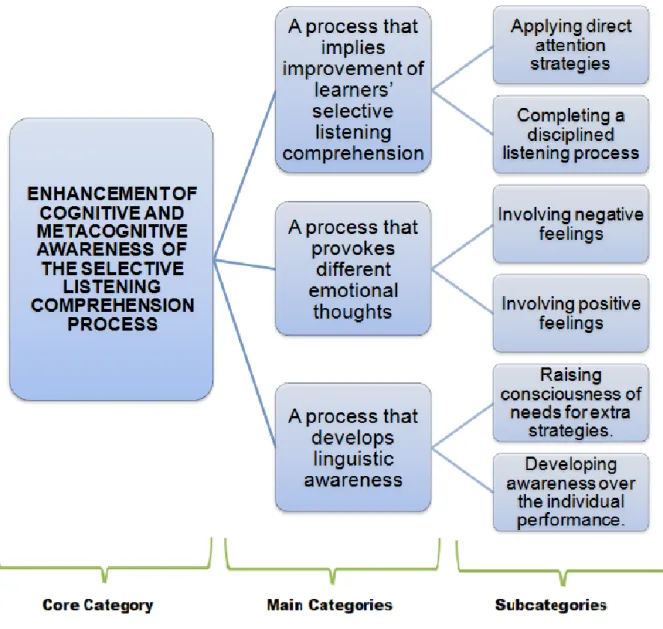
(4) RUNNING HEAD: METACOGNITIVE STRATEGIES FOR LISTENING COMPREHENSION. ABSTRACT. This qualitative report, based on an Action Research study, presents the results of a project derived from the researcher’s inquiry according to observations and needs analyses. It was carried out at the Languages Institute of a Colombian University, with a Fifth-level Economics English group. Initial analyses indicated that learners needed to reinforce their strategies to develop listening comprehension. Therefore, the Metacognitive Model of Strategic Learning, proposed by Chamot, Barnhardt, El-Dinary and Robbins (1999), was implemented by means of e-tivities1. The findings suggest that participants improved their selective listening comprehension by applying direct attention strategies and by completing a disciplined listening process. Moreover, it was found this process provoked different feelings, towards the development of the e-tivities, and learners engaged in strategic behaviors to develop linguistic awareness. In conclusion, learners showed enhancement of cognitive and metacognitive awareness of the selective listening comprehension processes. For this reason, pedagogical implications are focused on including this kind of activities as part of the syllabus. This might bring positive outcomes in the autonomous learning, through the use of ICT, that is being promoted at the Languages Institute. In addition, EFL teachers would better understand the use metacognitive strategies for online listening as an aid for learners to enhance their listening competence.. Key words: listening comprehension in EFL, metacognition and metacognitive strategies listening skills, online-based activities, selective listening. 1. E-tivity is the name to give to the online-based activities in this document. This term (e-tivity) is used here based on the concept given by Salmon (2002) which frames it for “active and interactive online learning”. The specific characteristics for this concept are given by Salmon as motivating, engaging and purposeful; based on interaction; designed and guided by an e-moderator; asynchronous; and cheap and easy to run (p. 1)..
(5) RUNNING HEAD: METACOGNITIVE STRATEGIES FOR LISTENING COMPREHENSION. RESUMEN Este reporte cualitativo, basado en un estudio de Investigación Acción, presenta los resultados de un proyecto derivado de las preguntas del investigador de acuerdo a observaciones y análisis de necesidades. Éste fue llevado a cabo en el Instituto de Lenguas de una universidad colombiana con un grupo de quinto nivel de inglés para economía. Análisis iniciales indicaron que los estudiantes necesitaban reforzar sus estrategias para desarrollar la comprensión de escucha. Por tanto, el Modelo Metacognitivo para el Aprendizaje Estratégico, propuesto por Chamot, Barnhardt, El-Dinary y Robbins (1999), fue implementado por medio de actividades en línea. Los resultados de la investigación reportaron que los participantes mejoraron su comprensión de escucha selectiva gracias a la aplicación de estrategias para enfocar la atención y al hecho de completar un proceso de escucha disciplinado. Además, se encontró que este proceso provocó diferentes sentimientos hacia el desarrollo de las actividades. Finalmente, los estudiantes se involucraron en comportamientos estratégicos los cuales les hicieron desarrollar conciencia lingüística. En conclusión, los estudiantes mostraron una mejora de conciencia cognitiva y metacognitiva del proceso de la comprensión de escucha selectiva. Por esta razón, las implicaciones pedagógicas se enfocan en incluir este tipo de actividades como parte del Plan de Estudios. Esto podría arrojar resultados positivos en el aprendizaje autónomo que está siendo promovido en el Instituto de Lenguas. Adicionalmente, docentes de inglés como lengua extranjera tendrían un mejor entendimiento acerca del uso de estrategias metacognitivas para la práctica de escucha en línea como una ayuda para que los estudiantes mejoren su competencia de escucha. Palabras Clave: comprensión de escucha, metacognición y estrategias metacognitivas para habilidades de escucha, actividades en línea, escucha selectiva..
(6) RUNNING HEAD: METACOGNITIVE STRATEGIES FOR LISTENING COMPREHENSION. TABLE OF CONTENTS 1. Chapter 1. Introduction………………………………………………………………. Pg. 10 1.1. Statement of the Problem ……………………………………………………….. Pg. 11 1.2. Research Questions ……………………………………………………………. Pg. 12 1.2.1. Main Question……………………………………………………………. Pg. 12 1.2.2. Sub-question……………………………………………………………… Pg. 13 1.3. Objectives………………………………………………………………………... Pg. 13 1.4. Rationale ………………………………………………………………………… Pg. 13 2. Chapter 2. Literature Review …………………..………………………………….. Pg. 16 2.1. State of the Art ………………………………………………………………….. Pg. 16 2.2. Theoretical Framework …………….…….………………………………..….. Pg. 19. 2.2.1. Listening Comprehension in EFL ……………………………………… Pg. 19 2.2.2. Metacognition and Metacognitive Strategies for listening skills………… Pg. 24 2.2.3. Online Based Activities…………………………………………………... Pg. 29 3. Chapter 3. Research Design …………………………………………………………. Pg. 31 3.1. Type of study……………………………………………………………………. Pg. 32 3.2. Researcher´s role ………………………………………………………………... Pg. 33 3.3. Context and participants ………………………………………………………… Pg. 34 3.4. Data collection instruments ……………………………………………………... Pg. 35 3.5. Data collection procedures ……………………………………………………… Pg. 38 3.6. Validity and Triangulation ……………………………………………………… Pg. 40 3.7. Ethical concerns…………………………………………………………………. Pg. 41 3.8. The teacher-researcher´s model based on the literature review…………………. Pg. 42.
(7) RUNNING HEAD: METACOGNITIVE STRATEGIES FOR LISTENING COMPREHENSION. 4. Chapter 4. Pedagogical Intervention and Implementation…………………………… Pg. 44 4.1. First Cycle……………………………………………………………………….. Pg. 44 4.1.1. Steps and procedures……………………………………………………… Pg. 44 4.2. Second Cycle……………………………………………………………………. Pg. 48 4.2.1. Steps and procedures …………………………………………………….. Pg. 48 4.2.2. Materials and Resources………………………………………………….. Pg. 51 5. Chapter 5. Data analysis and findings……………………………………………….. Pg. 53 5.1. Instrument Design and Validation…………………………………………….... Pg. 53. 5.2. Procedures for Data Analysis……………………………………………………. Pg. 55 5.3. Data Management……………………………………………………………….. Pg. 58 5.4. Data Reduction………………………………………………………………….. Pg. 60 5.4.1. Open Coding……………………………………………………………… Pg. 61 5.4.2. Axial Coding……………………………………………………………... Pg. 61 5.4.3. Selective Coding…………………………………………………………. Pg. 61 5.5. Data Display and Verification…………………………………………………... Pg. 62 5.5.1. Categories………………………………………………………………….Pg. 63 6. Chapter 6. Conclusions and Pedagogical Implications……………………………… Pg. 79 7. Chapter 7. Limitations and Further Research………………………………………... Pg. 83. TABLES AND FIGURES Table 1 Listening Strategies of Successful L2 Listeners ………………………………… Pg. 24 Table 2 Learning Strategies (Chamot et al, 1999). Adapted by Barbosa (2011)………… Pg. 28 Table 3 General View of the Project ………………………………………….................. Pg. 31.
(8) RUNNING HEAD: METACOGNITIVE STRATEGIES FOR LISTENING COMPREHENSION. Table 4 Steps of the Action Research Cycle by Bailey and Nunan (2009)...................... Pg. 34. Table 5 Instruments Process Cycle One ………………………………............................ Pg. 39 Table 6 Instruments Process Cycle Two ………………………………………………… Pg. 40 Table 7 Content of teaching Cycle One ………………………………………………… Pg. 47 Table 8 E-tivities Plan………………………………………………..………………….. Pg. 49 Table 9 Content of teaching Cycle Two…..……………………………………………. . Pg. 50 Table 10 Data Collection and Analysis Stages……………………………………………Pg. 57 Table 11 Data Storage Process………………………………………………………….. Pg. 59 Table 12 Category Main Question………………………………………………………. Pg. 64 Table 13 Category Sub-Question………………………………………………………… Pg. 70. Figure 1 The Metacognitive Model of Strategic Learning with Scaffolding Process for Listening Comprehension by Barbosa (2011) based on Chamot et al. (1999)….……..…………… Pg. 43 Figure 2 Categories ……………………………………………………………………….Pg. 62 Figure 3 Listening Comprehension tests Cycle 1………………………………………… Pg. 69 Figure 4 Listening Comprehension tests Cycle 2………………………………………… Pg. 69. REFERENCES …..….………………………………………………………………….. Pg. 86 APPENDICES ……..…………………………………………………………………… Pg. 90 Appendix A Needs Analysis Questionnaire…………………………………………….. Pg. 90 Appendix B Pre, while and post questionnaires …..……………………………………. Pg. 93 Appendix C Teacher´s Journal Sample …………………………………………………. Pg. 105 Appendix D Learners´ Journal …………………………………………………………... Pg. 108 Appendix E Artifact sample ………………………..…………………………………… Pg. 111.
(9) RUNNING HEAD: METACOGNITIVE STRATEGIES FOR LISTENING COMPREHENSION. Appendix F Pre-Test ……………………………………………………………………. Pg. 114 Appendix G Post Test……………………………………………………………………. Pg. 116 Appendix H The Moodle Platform………………………………………………………. Pg. 118 Appendix I Director Consent Letter Form………………………………………………. Pg. 119 Appendix J Participants Consent Letter Form Cycle 1 and 2…………………………… Pg. 121 Appendix K Interview Cycle 2…………………………………………………………… Pg. 124 Appendix L Time Line and Action Plan First Cycle……..………………………………. Pg. 126 Appendix M Time Line and Action Plan Second Cycle ….…………………………….. Pg. 128 Appendix N List of Strategies and Explanation Given to the Learners………………….. Pg. 130.
(10) 10. Chapter 1. INTRODUCTION. Listening to a foreign language is a process in which selective comprehension plays an important role for understanding global ideas. Listening can be a complex process that might become easier when the learner applies strategies. According to O´Malley and Chamot (1990), learning a language is effective when metacognition is involved. In this way, learners who reflect about their learning process are successful in planning their tasks, monitoring their comprehension, and in self-evaluating their progress. Assertions similar to that provided previously, as well as needs analysis, motivated the researcher to carry out this action research study aimed at observing whether the application of a Metacognitive Model of Strategic Learning influences learners’ selective listening comprehension. Additionally, another issue to analyze was learners’ perceptions towards the training process in metacognitive strategies while developing online-based activities.. This paper is organized into six different chapters. Chapter one accounts for the motivations of the researcher to develop a study on the light of a problematic situation of low performance in students’ listening comprehension. Chapter two frames the relevant theory as related to the constructs of the project and describes projects carried out in similar topics. Chapter three presents the research design, the cycles implemented, the researcher and participants’ characteristics, and the aspects concerning data collection and triangulation procedures. Chapter four explains the pedagogical intervention consisting in the steps and processes followed to carry out the project. Chapter five describes the analysis of data and findings. Finally, chapter six presents the conclusions of the study, the pedagogical implications, and further research..
(11) 11. 1.1. Statement of the Problem This project was conducted with a Fifth-level Economics English A22 group, according to the Common European Framework of Reference for Languages (CEFRL). The students belonged to the Administration, Accounting, and Economics undergraduate programs. The problem originated due to the fact that these learners were characterized by low proficiency levels in their listening skills in English. This assertion was based on the results of the first and second term tests3 and on their own assumptions and perceptions that were evident in the needs analysis procedure (see Appendix A). This needs analysis and the first and second term tests, showed a low performance in listening comprehension. The analysis also demonstrated that learners were not able to obtain small details from a set of recordings. This affected their global comprehension. The needs analysis results reinforced the findings obtained from the tests and allowed the researcher to discover that learners were interested in reinforcing their listening skills. For these learners, understanding English was highly motivating in terms of their professional development since most of them thought being proficient in English would make them more competitive.. The facts stated above were the reasons this study was focused on training learners in the use of metacognitive strategies to foster their skills in listening. The data that made the researcher decide on the use of metacognitive strategies with these learners was the evidence, 2. According to the Language Syllabus of the Languages Institute, students were taking an A2 level course. Nonetheless, their level of proficiency in listening comprehension was not in agreement with the Common European Framework of Reference for Languages. It was evident due to the fact that learners found it difficult to understand information related to their areas of relevance which is one of the requirements for Basic Users in level A2. 3. This refers to the tests students have to take according to the syllabus of the Languages Institute Fray Bernardo de Lugo O.P..
(12) 12. derived from needs analyses, on the lack of strategies to develop listening activities. Therefore, the researcher decided to help learners understand their own process through the implementation of metacognitive strategies. In terms of the latter abilities, Chamot et.al. (1999), highlight the role of metacognition in the success of learning. In their view, learners who are aware of their own learning process are also able to take control over it. Based on this assumption, the goal of this project was to apply fifteen out of the twenty-seven strategies proposed by Chamot, et al. (op.cit., 2009, p. 15-17) in their Metacognitive Model of Strategic Learning (MMSL). The selection of these strategies was implemented by means of online-based activities. These activities allowed learners to work at home in their free time according to their own pace and did not interfere with their face-to-face lessons. Moreover, these complemented the topics studied in face-to-face sessions.. To achieve the goals of this project, learners put the MMSL into practice through twentyfive hours of online activities for each cycle. It is important to clarify that for the second cycle only one student, out of the six named, participated in the study. The reasons for this situation are explained in detail in the Research Design Chapter.. 1.2. Research Questions 1.2.1. Main Question What can the application of a Metacognitive Model of Strategic Learning, by means of online-based activities, inform us on A2 level students’ selective listening comprehension?.
(13) 13. 1.2.2. Sub-question How do learners perceive this Metacognitive Model of Strategic Learning while developing online-based selective listening activities? 1.3. Objectives To understand this Metacognitive Model of Strategic Learning on A2 level students’ selective listening comprehension. To understand the learners’ perspective on the use of this Metacognitive Model of Strategic Learning by means of online-based selective listening activities. 1.4. Rationale. According to Vandergrift (2002), Rost (2002) and Wilson (2008), listening comprehension has been seen as a complex process in the development of foreign language competence. Wilson (2008) views listening as “difficult” (2008, p. 12) since the understanding process accounts for different categories. Linguistic difficulties, in terms of the characteristics of the message, include unknown words, lexical density, complex grammatical structures, and nonlinguistic characteristics such as familiarity of the topic, text type, and cultural accessibility. Additionally, understanding a piece of listening is influenced by some characteristics of the delivery, including organization, duration, number of speakers, accent, and type of interaction. Moreover, characteristics of the listener and the environment are aspects that might affect the comprehension of listening texts.. The aspects that listening comprehension involve, the complexity of the characteristics of a listening text, and the needs analysis carried out with the group of participants, increased the.
(14) 14. researchers’ interest to carry out a study in a country where the need to educate competent professionals in a foreign language, has hugely increased. The main reason to explain this fact is globalization, which demands citizens develop their skills in a foreign language. Recent new national policies have been implemented to achieve this goal. One of them is the Bilingual Education Program of Colombia 2004 – 2019 (MEN, 2001); this program is aimed at improving communicative competence in the English language throughout the education system of the country. In the same way, another relevant policy that has to be taken into account in this project is the National Plan TIC 2008- 2019 (MEN, 2008). This plan is aimed at getting all Colombian people to communicate using technology in an effective and productive way in order to improve social inclusion and increase competitiveness. This plan to increase technology use is directly related to this project since learners made use of online-based activities delivered though the use of the Moodle platform due to the lack of time to apply the project during face-to-face sessions.. At the institutional level, this project is relevant because of the enhancement that bilingualism policies are having. Since the university has received the High Quality Recognition by the National Ministry of Education, the goal is to keep such recognition. High English as a Foreign Language proficiency is one of the aspects that needs to continue increasing. For this reason, research in English language teaching and learning is supported by both the Languages Institute as well as by the Research Department of the University. Additionally, this project might bring institutional benefits framed on the possibilities of including virtual spaces to develop online activities aimed to reinforce learning skills. Likewise, the implementation of metacognitive strategies might result in positive outcomes to help learners in their process of becoming more aware of their learning..
(15) 15. In sum, and bringing together all the aspects mentioned in this section, the relevance of training learners in metacognitive strategies for the improvement of listening by means of onlinebased activities can be seen as important from different perspectives. First, globally: in the world of ELT, listening has been found to be a difficult skill to develop. Second, in Colombia there are policies that support citizens becoming competent in a foreign language and in the use of ICT. Third, the university in which the project was carried out, is currently strengthening bilingualism policies and supporting research studies. Fourth, the idea of implementing the MMSL to help learners with their listening comprehension came from the group of participants showing difficulties during listening activities. Therefore, this study is related to global, local, and institutional issues, and is based on a rigorous needs analysis of the learners..
(16) 16. Chapter 2. Literature Review This chapter accounts for a review of literature related to the constructs that correspond to the main foci of this study. First, related research studies that have applied the topic of metacognitive strategies for the improvement of listening comprehension are described in detail. Then, the theoretical framework is presented starting from a general review of listening comprehension in EFL. After that, metacognition and metacognitive strategies for listening skills are conceptualized and described, along with aspects of online-based activities. 2.1. State of the Art Several studies have been carried out in terms of training of metacognitive strategies in English Language Teaching settings. For instance, a study conducted in 2004 by Holden shows ways in which listeners can use cognitive and metacognitive strategies to facilitate their listening process. In this study, metacognitive awareness was the basis for a cyclical approach to listening in which pre-listening, on-task listening, and post-listening strategies were adopted. After applying this study, learners engaged more deeply in the tasks. This led to the conclusion that the incorporation of awareness-raising activities at the metacognitive level helps learners achieve greater success even in other areas of language learning. For example, learners might become more skilled in the manipulation of linguistic input as well as benefitting from self-regulation strategies that allow them to become independent learners of the language. Another study conducted by Yang (2009) describes the implications of a study entitled: Metacognitive Strategies Employed by English Listeners in an EFL Setting. The resulting findings demonstrated that college students used direct attention most frequently and monitoring least frequently. Moreover, after the study the researcher concluded that successful and.
(17) 17. unsuccessful listeners use different metacognitive strategies. For instance, successful listeners frequently used direct attention, functional planning, self-management, selective attention, and evaluation. In contrast, unsuccessful listeners regularly applied selective attention and direct attention. Therefore, the scholars involved concluded that unsuccessful listeners lack metacognitive knowledge since they are not able to use planning, monitoring, evaluation, functional planning, and self-management. The study concludes by recommending the promotion of metacognitive awareness and strategy instruction in the teaching of listening. Similarly, a study related to Metacognitive Strategy Training which was carried out by Vandergrift and Tafaghodtari (2010) in Canada, reports on the effects of a metacognitive processbased approach to teaching listening as a second language over a semester. This research was made to an experimental and a control group: in the experimental group, students listened to texts using a methodology that included metacognitive processes such planning, monitoring, evaluating, and problem solving; in the control group, learners were taught the same texts by the same teacher but without any guided attention process. To know the effects, a questionnaire named the Metacognitive Awareness Listening Questionnaire was applied. The results and analysis made of observations and instruments showed that learners in the group receiving the metacognitive instruction outperformed those in the control group. In addition, learners trained in Metacognition evidenced a growth of metacognitive knowledge that was estimated to have positive effects on their performance. Their comprehension of metacognitive processes also allowed them to have a greater ability to concentrate on their tasks, which can be seen as selfregulation. Another study reported in 2010 and carried out by Coskun at a preparatory school of a Turkish state university, states the importance of metacognitive awareness in language learning..
(18) 18. This was conducted with an experimental and a control group whose participants were beginnerlevel students. The aim was to observe the effects of metacognitive listening strategy training on the listening performance of learners. The experimental group received metacognitive strategy training while the other did not. After the implementation, learners took a test that revealed that the experimental group did better statistically. Therefore, the conclusion is that strategy training should be incorporated into regular listening teaching programs to help learners become more effective listeners. Locally, in the Colombian context, studies in regards to Metacognition have been done in the field of ELT but focused on skills different to listening. Despite the plethora of studies published to date around the topic of learning strategies, the field of metacognition and listening is still quite limited. Nonetheless, to show the effect of metacognitive strategies some projects are presented below. An ethnographic study, carried out by Camelo (2010), reports on the effects that metacognition had on students’ writing tasks. The research, Using Metacognitive Processes to Improve Students’ Writing Quality, used a pedagogical approach focused on students’ interests and aimed at promoting interaction and teamwork. After participants acquired the use and management of cognitive and metacognitive skills, it was evidenced that the quality of writing increased significantly. Finally, it was evidenced that due to a continuous reflective process and guidance of the teacher, learners improved in the observed skill. Similarly, Atehortúa (2010) developed a descriptive-qualitative research study at a Colombian University aimed at describing the cognitive styles of students that enabled them to recognize and use metacognitive strategies. Additionally, the conscious level of autonomy and.
(19) 19. responsibility was studied. In regards to the use of metacognitive strategies it was proved that to solve complex tasks, learners go beyond their linguistic abilities and engage in strategic competences that are reflected in three main features: setting goals and objectives, selfassessment on formative learning, and planning tasks, resources, and schedules. These aspects were found to positively affect their performance with the language. In conclusion, and by observing international and local contexts, metacognition has a positive impact in learners’ language performance. Appropriate guidance and a continuous reflective process by students are key aspects to success in the field of language learning. 2.2. Theoretical Framework 2.2.1. Listening Comprehension in EFL EFL implies a continuous exposition to different types of listening that are understood, in this study, as authentic or scripted. According to Wilson (2008), the main difference between authentic and scripted listening is that the first implies listening in real situations while the second refers to scripted versions of listening that are commonly used for situational dialogues in course books. Therefore, when teaching learners of English as a foreign language, it is important to choose the appropriate type of listening according to the purpose of the listening tasks. The authentic type of listening is chosen for this study with the purpose of helping learners apply strategies to comprehend videos from the Internet. For that reason, those videos are not designed with specific topics, on a curricular frame, for teaching English. Instead, they are used as real material with relevant topics for learners according to their needs analysis results. Consequently, learners in this project were exposed to listening activities that imply the use of.
(20) 20. authentic situations taken from material available on YouTube™ 4. Nonetheless, it is important to remark that since the videos chosen for this study were not created with a pedagogical purpose, strategies needed to be applied to put them into a pedagogical framework. Therefore, the implementation of metacognitive strategies was aimed at enabling learners to understand authentic texts like interviews, presentations, and explanations of concepts, among others, taken from the Internet. For this study, listening comprehension is understood from the perspective explained by Rost (2002) who considers comprehension as the “first-order goal of listening”. The term comprehension refers to the process of relating language to the existing information in the memory and to references a person has of the real world. In this way, the author states that “complete comprehension” is associated with concepts a person has for every referent used by the speaker. Therefore, listening comprehension involves the “mapping” and “updating” of referents the speaker uses. Accordingly, the listener is involved in a comprehension practice when he or she is able to interplay the “given” information with the “new”. Understanding is achieved by the “given” information that is “already active in the listeners’ mind”. In sum, listening comprehension is understood, in this research project, as the integration of background information with new information presented in the listening task (2002, p. 59-60). Morley (1991) describes the selective listening type as a prerequisite to improve aural comprehension. This selective listening type is a relevant construct for this project since the online-based activities included were designed with strategies to help learners improve comprehension of small details. Morley claims that the global understanding of complex 4. The YouTube platform is a website founded in February 2005 for users to be able to find, watch, and share videos created in an original way..
(21) 21. listening is mediated first by being able to improve the selective listening comprehension. This takes place when we listen in a planned and graded way to get facts first and global ideas second. Similarly, Doff (1991) points out that ‘focused listening’ takes place when there is a clear purpose in mind. This implies concentration on certain aspects of what we hear; therefore, concentration on some essential points of the information is decided beforehand (1991, p. 17-18). In sum, both authors, Morley (1991) and Doff (1991) describe the type of listening that accounts for the concentration on the details of what we hear. According to Morley (1991) the improvement of aural comprehension involves three key aspects: concentration, disciplined listening, and immediate writing or note taking. This type of listening is taken into account for this project because three key aspects mentioned above are directly related to the metacognitive process and the strategies chosen for the implementation. For instance, concentration, disciplined listening, and immediate writing are strategies applied from the metacognitive perspective and are related to participants’ awareness about their own learning process. According to Vandergrift (2002), listening comprehension is an essential aspect of language competence. For him, it is an “interactive” and “interpretive process” that implies both top-down and bottom-up processes. First, the top-down processes are identified when the learner uses prior knowledge to understand the listening task; for example, when the listener, before the task, thinks about the topic, sets the context of the listening, reflects on the cultural aspects of the task, or when he or she uses “other information stored in long-term memory as schemata” (para. 3). These two processes were taken into account for the design of the e-tivities that are going to be explained later in the Pedagogical Implementation Chapter..
(22) 22. Rost (2002) states that learning to listen in English starts by “the simplest types of tasks” and moves towards “more complex activities”. This issue is also relevant in this study because the scaffolding process of learning is one of the characteristics of the implementation of this project due to the fact that the online-based activities designed gradually advanced in complexity. According to the previous scholars’ points of view, and on the own experience as a professor and learner, the researcher of this study views listening as a complex comprehension process which needs pre, while, and post tasks to achieve good understanding of what is heard. In agreement with Rost (2002), the researcher shares the opinion that states the importance of previous schemata and existing information in the memory, in what he names as “complete comprehension” (p. 59-60). For this reason, listening tasks that include planning activities, by activating previous information, before going into monitoring and problem solving are relevant to develop good listening comprehension. Additionally, the researcher of this study gives relevance to selective listening comprehension which requires concentration on specific aspects of the listening task that ends in a better understanding. For this reason, listeners need to get involved in a process of high concentration on key aspects to improve the listening competence. The instructional design of this research takes into account the Multimedia principle proposed by Rost (2002). The principle is an attempt to involve learners in creating mental representations more than just understanding the meaning of words. This principle is also based on a scaffolding process that seeks that learners go beyond the understanding of vocabulary and deepen the creation of mental representations by the imagery use strategy. This strategy explained by Chamot, et al. (1999) is important in this project since the creation of images helps represent information. Therefore, the use of videos for listening purposes permits “vivid visual images” useful to remember (Chamot, et al., 1999, p. 23)..
(23) 23. The use of videos as multimedia requires mental representations. Also, videos for listening practice are materials that, according to Rost (2002), must follow principles of listening instruction like previewing, viewing, and follow-up activities. For this project, these principles are relevant since they allow students to access the videos by following pre, during, and after watching and listening activities. In this way, learners followed specific steps for each e-tivity. In addition, Rost (2002) states that the viewing tasks have to include “selective viewing” as a principle that reinforces the “selective listening” (p. 151). In this way, the information received is processed by allowing learners to obtain facts that lead to a better comprehension of global ideas. In sum, such listening instruction helps learners manage multimedia resources appropriately. Likewise, strategies must be included in instruction to develop listening comprehension tasks; therefore, Rost’s (2002, p. 155) chart about “listening strategies of successful L2 listeners” is presented in Table 1. The strategies presented in Table 1 are relevant for this study since they are associated to the four processes implied in the MMSL by Chamot, et al. (1999). Such processes and the metacognitive actions that help learners with listening comprehension are further described below..
(24) 24. Table 1 Listening Strategies of successful L2 listeners (Chamot et al, 1999) Teaching concept: Listening strategies of successful L2 listeners These strategies are often practiced by successful L2 listeners. By incorporating them into listening activities, the teacher gives all students and opportunity to practice them.. 1.. Predicting: Predicting information or ideas prior to listening.. 2.. Inferencing: Drawing inferences about complete information based on incomplete or inadequate information.. 3.. Monitoring: Monitoring one´s own performance while listening, including assessing areas of uncertainty.. 4.. Clarifying: Formulating clarification questions about what information is needed to make a fuller interpretation.. 5.. Responding: Providing a personal, relevant response to the information or ideas presented.. 6.. Evaluating: checking how well one has understood, and whether and initial problem posed has been solved.. 2.2.2. Metacognition and Metacognitive Strategies for Listening Skills Before talking about metacognition, it is indispensable to refer to the concept of learning strategies. Chamot (2009:51) refers to them as “techniques students can use to facilitate understanding, remembering, and using both language and content” . These three key aspects, understanding, remembering, and using, are essential to aid language learning. In this way, it can be said that making students aware of those techniques is a good way to facilitate their approach to a foreign language. Some authors have classified the learning strategies as follows. On the one hand, Chamot (2009) classifies the strategies on three categories: cognitive, metacognitive, and socio-affective. The first strategies are related directly to the task. For example, for listening comprehension, the cognitive strategies could be taking notes or listening.
(25) 25. for vocabulary. The metacognitive strategies, which are the focus of this study, basically cover four stages: planning, monitoring, problem solving, and evaluating. Some examples of socioaffective strategies are questioning and self-encouragement. On the other hand, Oxford (1990) classifies leaning strategies into two main groups: Direct Strategies and Indirect Strategies. The direct strategies are Memory Strategies, Cognitive Strategies, and Comprehension Strategies. The indirect strategies are Metacognitive Strategies, Affective Strategies, and Social Strategies. From this classification, the metacognitive strategies are those that allow the learner to control their own cognition. From the classifications given, this study takes metacognitive strategies as the framework for the implementation of the project. This construct is relevant for this study since previous needs analyses let the researcher know learners’ weaknesses in regards to strategic learning. They lacked knowledge about when and how to use particular strategies aimed at improving listening comprehension in the foreign language. For this reason, it is important to clarify that the concept of metacognition refers to the knowledge people have of their own learning. Chamot (2009) explains how the explicit teaching of learning strategies to students “develops greater metacognition or understanding of their own learning process” (Chamot, 2009, p. 54). This metacognitive awareness helps learners reflect on the effectiveness of the strategies they use. Therefore, when learners are immersed in the use of metacognitive processes, they are better able to reflect on their own learning which, after some training, can foster learners’ autonomy towards taking actions that benefit their knowledge. The reason for this is due to the fact that consciousness of one’s cognition and learning behaviors makes one able to keep the positive things and to evaluate the non-positives for improvement. Nonetheless, this reflective process is.
(26) 26. hard when done alone; therefore, training by an expert in the use of metacognitive strategies might help learners become more autonomous in their choice of strategies. According to Chamot (2009), metacognition implies declarative and procedural knowledge. The first, declarative knowledge is a component that includes self-knowledge, world knowledge, task knowledge, and strategy knowledge. Self-knowledge covers understanding of one’s own learning in terms of preferences, styles, and approaches. World knowledge deals with prior knowledge, including school learning and lifelong learning. Strategy knowledge gives learners the opportunity to select the most productive strategies for specific tasks. Procedural knowledge implies metacognitive behaviors in the sense that learners are able to regulate their own thinking during the learning progression. In this way, learners who use metacognitive learning strategies and make decisions about whether to use different strategies to develop a task and improve their performance might engage in procedural knowledge. Therefore, this kind of knowledge implies that learners plan, monitor, solve problems, and evaluate their tasks and performance. Considering the aspects above, this study considers (the) a Metacognitive Model of Strategic Learning proposed by Chamot, et al. (1999) as the frame for the design and implementation of the online-based activities. The MMSL is based on wide research on learning strategies and has four metacognitive processes: Planning, Monitoring, Problem Solving, and Evaluating. Firstly, the planning strategies involve identifying the nature and the specific requirements of the task that help learners to use forethought; consequently, thinking and reflecting about the task before addressing leads to better comprehension. Secondly, the monitoring strategies entail a conscious development of the task that permits learners to reflect on their effectiveness while working on the task. Thirdly, problem-solving strategies are used by.
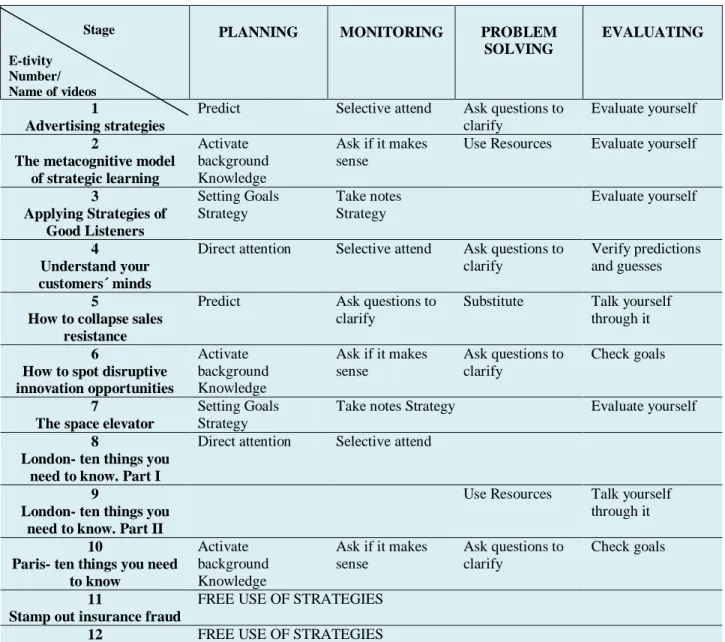
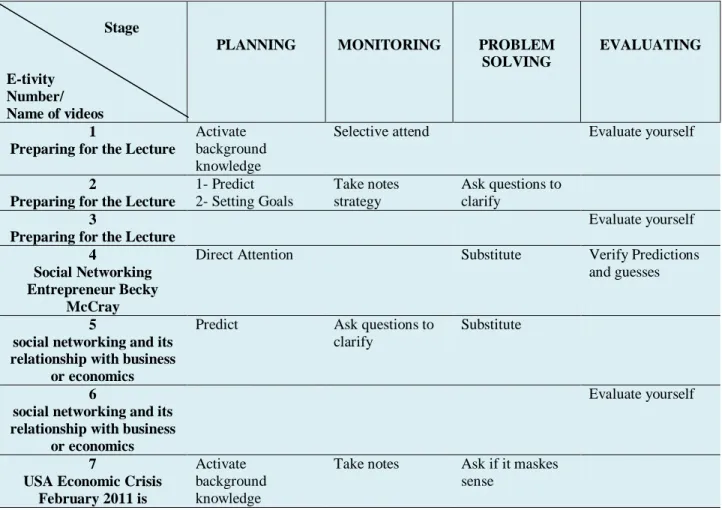
(27) 27. efficient language learners to solve problems that are presented during the development of the task. Finally, evaluating strategies allow learners to reflect on the way the language task was developed. For the purposes of this project, the complete MMSL is taken into account from the perspective of what listening comprehension implies. Table 2, based on Chamot´s Learning Strategies Chart, contains the strategies selected to train participants in the use of metacognitive strategies (Chamot, et al., 1999, p. 15-17). The selection of the strategies for the implementation of the project was done by taking into account those that were more appropriate for listening and viewing the videos selected. Moreover, this selection was based on the researcher’s own learning process and professional experience. The strategies shown in Table 2 were selected from a list of twenty-seven. The reason to select four strategies for each process is based on the importance of strategy variation to provide learners with different options that allow them to choose the strategies that work better for them. In this case, participants had the opportunity to take advantage of the strategies they preferred according to their learning styles. In this way, learners could follow the metacognitive processes of the MMSL by practicing the strategies during different listening tasks with the use of videos by means of online-based activities..
(28) 28. Table 2 Learning Strategies (Chamot et al, 1999). Adapted by Barbosa, S. (2011). Evaluating. Problem solving. Monitoring. Planning. Process. Strategy. Definition. Other possible terms. Predict. Anticipate information to prepare and give direction for the task.. Anticipate, guess outcome.. Activate background knowledge. Think about and use what you already know to help you do the task.. Use what you know. Elaborate on prior knowledge.. Setting goals strategy. Develop personal objectives; identify the purpose of the task.. Determine AIM, establish purpose, plan objectives.. Direct attention. Decide in advance to focus on particular tasks and ignore distractions.. Pay attention.. Selective attend. Focus on key words, phrases, and ideas.. Scan, find specific information.. Ask if it makes sense. Check understanding and production to keep track of progress and identify problems.. Monitor comprehension and production, self monitor.. Take notes. Write down important words and concepts.. T list, semantic Webs, idea maps, flow charts, outlines.. Ask questions to clarify. Ask for explanation, verification, and examples; pose questions to self.. Questioning. Ask questions to clarify. Ask for explanation, verification, and examples; pose questions to self.. Questioning. Take notes. Write down important words and concepts.. T list, semantic Webs, idea maps, flow charts, outlines.. Substitute. Use a synonym or descriptive phrase for unknown words.. Paraphrase, circumlocute. Evaluate yourself. Judge how well you learned the material/did the material.. Self –evaluate, self assess, check yourself.. Cooperate. Work with others to complete tasks, build confidence, and give and receive feedback.. Work together, peer coaching.. Verify predictions and guesses. Check whether your predictions/guesses are correct.. Verification. Talk yourself through it (self-talk). Reduce anxiety by reminding self of progress, resources available, and goals.. Positive thinking, Build confidence..
(29) 29. 2.2.3 Online-based activities In the field of online learning, an important aspect is learning activities since they are part of the learning process. This section of the literature review accounts for conceptualizations around the topic of learning activities. Herrington, Oliver, and Reeves (2002) propose a conceptualization of authentic activities. They discussed the way in which the affordances of Internet technologies foster easy management of authentic activities for online educational environments. This concept is relevant in this research study due to the fact that the MMSL is implemented by means of activities that require the use of the Internet and of authentic material. The easy management previously mentioned is another characteristic evident in this project, since learners had the possibility of accessing the activities anywhere, at any time, and with all the aids they considered necessary according to their personal needs and styles. Herrington, et al. (2002) view authentic activities from the influence of constructivist philosophy. In this way, they explain how activities have changed from being instructive, which revolves around teacher-centered approaches, to being part of a constructivist philosophy. This point of view is in agreement with this study since learners are the center of the learning process and their activities are scaffolded in a constructive way, starting simply and becoming more complex. Additionally, (the) constructivist philosophy is seen in the gradual and continuous training given to learners. This allows them to become able to make their own decisions in when choosing the topics and the metacognitive strategies that benefit them. According to Herrington, et al. (2002), activities are no longer perceived as a vehicle for practice but giving purpose and meaning to learning with the guidance and support of the teacher.
(30) 30. and peers in the case of collaborative environments. In addition, activities need to be seen from the perspective that they are the course and are not supplements to the course. This can be better understood by understanding activities as are an essential part to develop any course. For these authors, authentic online activities should be characterized by offering learners the possibility of interacting while dealing with tasks that guide their learning in realistic and authentic contexts. The same is true of this study as activities designed online are based on authentic contexts thanks to the use of videos taken from Youtube™. Such online activities can be adapted to give sense to the learners’ endeavors while providing motivation to accomplish the task. Finally, the authors comment on the way in which the Internet can be used to encourage reflection through the use of reflective online diaries or journals. It is important to include reflective spaces as part of authentic online activities. This is a core aspect of this study since the use of metacognitive strategies allowed learners to have continuous reflections through the design of activities by including forums as the reflective space for learners..
(31) 31. Chapter 3. Research Design This chapter provides explanation of the elements that contributed and influenced the shape of this study as presented in Table 3. The first section explains the type of research that underlies the principles of this project. The second section describes the researcher’s role and its implications in action research. The third section accounts for the participants and their context. The fourth section provides a description of the data collection instruments used. The chapter concludes with the fifth section where the data collection procedures are outlined. Table 3- General View of the Project Title Research questions. Applying a Metacognitive Model of Strategic Learning for Listening Comprehension, by Means of Online-Based Activities, in a College Course Main question What can the application of a Metacognitive Model of Strategic Learning, by means of online-based activities, inform us on A2 level students’ selective listening comprehension? Sub-question How do learners perceive this Metacognitive Model of Strategic Learning while developing online-based selective listening activities?. Research Objective. Objectives - To understand this Metacognitive Model of Strategic Learning on A2 level students’ selective listening comprehension. - To understand the learners’ perspective on the use of this Metacognitive Model of Strategic Learning by means of online-based selective listening activities.. Context Participants. A Languages Institute belonging to a Colombian university. Cycle 1 A group of six English students between 20 and 27 years old of the Administration and Economics undergraduate programs. They were taking a sixty-hour course that was divided into two weekly sessions of two hours. Cycle 2 Out of the six participants of the first cycle, one participated of the second cycle. Action Research Cycle 1 Needs analysis questionnaire Learning styles questionnaire Questionnaires: pre, while, and post Teacher’s journal Students´ journal Students´ artifacts First and final term exams Cycle 2 Teacher’s journal Student’s journal Student’s artifacts Interview Pre and post test Grounded theory Cycle 1 October 4th to November 30th 2010 Cycle 2 March 21st to May 20th 2011. Type of study Data Collection Instruments. Data Analysis Approach Time allotted.
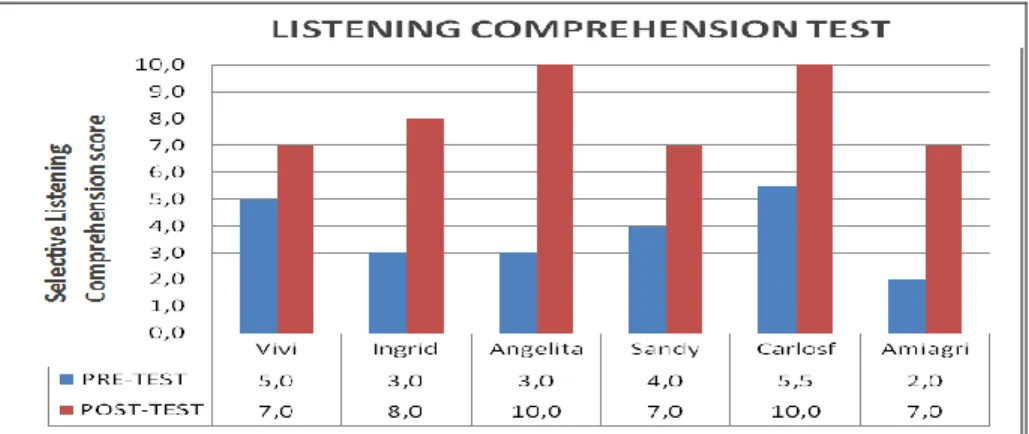
(32) 32. 3.1. Type of study This action research project followed the principles of the qualitative approach, which according to Burns (2003) describes, interprets, and clarifies the social context. Creswell (1994) defined action research as a process of inquiry that examines human issues in natural settings with the purpose of understanding. Nonetheless, it is important to explain the use of some quantitative data to support the findings. Although pre and post tests (Appendices F and G) were applied, it does not constitute a mixed or quantitative approach because there are neither descriptive nor inferential statistics. Any kind of statistics were used to support the study but some graphics were displayed to show the level of competency of the learners in regards to listening comprehension. Such tests were used to account for the listening comprehension level with respect to an optimum valor. In this way, for the first cycle, such optimum valor was based on the standards according to the level of proficiency learners should have had according to their language level. Similarly, for the second cycle, the optimum valor was determined by the teacher researcher according to the listening proficiency that the learner should have had in agreement with the application of the e-tivities of both cycles. According to this, learners were evaluated and given a score as shown in Figures 3 and 4. This project is also based on Grounded Theory principles that help find consistency between patterns in order to come up with the final categories that allow the researcher to answer the questions of the study. According to Corbin and Strauss (2008) this is “a methodology... for the purpose of building theory from data” (p. 1) whose main methodological tools are observation, gathering, and description of data. These procedures were carried out during two cycles of the study..
(33) 33. Action research was appropriate for this study because the researcher had an impact on learners through the involvement of the teacher in the process of teaching and learning. Nunan and Bailey (2009) consider classroom action research a way in which classroom practitioners investigates aspects of their own practice. In this way, this study addressed the identified problems as an attempt to help learners with their language learning process. This study implied a systematic procedure rigorously carried out in align with the steps of the Action Research Cycle identified by Bailey and Nunan (2009) (Table 4). It is called a cycle since a series of repeated steps are incorporated into a new action. According to these authors, an action research project needs to be applied in at least two cycles and then information obtained can be analyzed for conclusions. Action research was the process followed in this study since two action research cycles were applied for analyzing data and drawing conclusions. Table 4 Steps of the Action Research Cycle by Bailey and Nunan (2009) A. Identifying an issue, problem, or puzzle to investigate in the own context; B. Preliminary investigation; C. Thinking and planning an appropriate action to address that concern; D. Carrying out the action; E.. Observing the apparent outcomes of the action;. F.. Reflecting on the outcomes and on other possibilities; and. G. Repeating these steps again.. 3.2. Researcher’s role The main role of the researcher in this study was that of a teacher-researcher in charge of assuming the responsibility for the development of the participants’ learning process. In this case, the researcher had an active role as a facilitator since the main action was to guide the.
(34) 34. application of a set of e-tivities carried out by the students. Merriam (1998) describes the qualitative researcher by highlighting his/her role as a “primary instrument for gathering and analyzing data”; this characteristic maximizes the chance to gather and generate meaningful information (p. 20). Furthermore, the teacher´s active role was supported by continuous assessment provided by continuous reflection of the teaching practice. Such reflections allowed the investigator to continue working and improving problematic issues with foreign language learners. The researcher was also a participant in charge of carrying out the implementation and examining in detail data collected to make an action plan for the second cycle as well as to draw conclusions at the end of the process. 3.3. Context and participants This study was carried out at the Languages Institute of a Colombian university. The implementation of the first cycle was carried out with a group of six English language students between 20 and 27 years old. They belonged to the administration and economics undergraduate programs and during the first cycle were taking a sixty-hour course divided into two weekly sessions of two hours each, two days a week. For the second cycle one student out of the six took part in the project. The reasons for the other five learners withdrawing were lack of time for the development of the e-tivities. At the beginning of the second cycle all the students were interested in participating but as the weeks passed they were behind in the delivery of e-tivities; therefore, they decided not to continue. Students manifested their enthusiasm to work in the proposed project since they felt they needed to strengthen their listening kills. Additionally, a needs analysis questionnaire was applied with the purpose of collecting relevant information about the students (Appendix A)..
(35) 35. The research questions, objectives, design of the e-tivities, and the mode of implementation5 were based on the needs analysis and the learning styles of participants. Likewise, the idea of using online-based activities came from the fact that constraints of time did not allow the implementation during the face-to-face sessions. Therefore, the Moodle platform, offered and administered by the University, was used. 3.4. Data Collection Instruments Cycle 1 The instruments used to collect data to answer the research questions were questionnaires (Appendix B), the teacher’s journal (Appendix C), learners’ journals (Appendix D), and artifacts (Appendix E). First, a needs analysis questionnaire was designed and applied in order to become acquainted with the specific problems learners had and more specifically when addressing a listening task. Moreover, three questionnaires were designed and applied prior, during, and after the implementation. The questionnaires were chosen in order to gather data based on the characteristics given by Burns (2003). Questionnaires have the advantage of being easy and not time consuming; therefore, the participants could answer them in a short time. For this study, they were designed with open-ended items for learners to have ample opportunities to express different ideas. As Burns (2003) demonstrates, “the aim of these types of items is to explore the informants’ own perceptions, beliefs or opinions and to provide opportunities for unforeseen responses or for those. 5. The mode of implementation refers to the use of the Moodle Platform as the virtual space to place the videos, etivities, and forums for these learners to work on..
(36) 36. which are richer and more detailed than responses obtainable through close questioning” (p. 131). Consequently, the questionnaires helped the researcher answer the research questions. A teacher’s journal and learners’ journals were also used. Richards and Lockhart (2004) understand journals as the reply in written form to teaching procedures or actions. Journals serve two purposes: later reflection and a discovery process to find insights about teaching. The teacher’s journals were open templates for the teacher to direct the reflection of the facts emerging from each topic. Nunan and Bailey (2009) mention an important characteristic of journals: the requirement of discipline to make entries consistently enough to get patterns needed for analysis. Therefore, keeping the track of the right type of data often helped patterns emerge for final results. Those patterns were color-coded and facilitated the triangulation of information. For this project, the teacher’s journal was focused on learner participation, learners’ comments, and feedback provided by the teacher-researcher, among other aspects aimed to answer the questions of this study. The evaluating sections of each e-tivity were taken and organized as the learner’s journal. This choice of procedure provided the evaluative section as the reflective space for learners to express their thoughts on aspects that went well and not so well during the e-tivities, aspects to improve, and strengths and weaknesses, among other comments. Finally, all learners’ artifacts were used as a source of data to triangulate the information. Thus, Burns (2003) defines as documents all the data accumulated in the course of the study that can give information on various aspects of practice. Among the documents that Burns (op.cit.) distinguishes are: students’ portfolios or written work, lesson plans, materials, letters, class memos, newsletters, and previous tests or examination papers. These documents can provide.
(37) 37. insights about theoretical and practical issues. Therefore, for this research, the learners’ products from each e-tivity were used to obtain information to answer the research questions. Additionally, the first and final term tests taken by the students were used to analyze their performance on the listening skills. These tests were provided by the Languages Institute at the university and helped to reinforce information obtained from the other instruments. Cycle 2 For the second cycle of this study the teacher’s journal, the learner’s journal, and the learner’s artifacts were taken again as data collection instruments, as during the first cycle. This decision was made since in the first cycle it was proved that these instruments provided appropriate and valid data to answer the research questions and using them was suitable to the kinds of activities and characteristics of the project. Since the implementation was fully online, these instruments were practical and easy to manage through e-mails and the Moodle™ platform. In addition to the instruments mentioned in the previous paragraph, there were some changes in two of the instruments: the questionnaires and the tests. First, although the questionnaires provided important and valid information to answer the research questions, they were replaced by an interview (Appendix k). This decision was made based on some issues that emerged during the implementation of the first cycle. For instance, some questions were not fully answered and most students delayed their delivery. Therefore, an interview was implemented at the end of the second cycle in order to avoid the issues stated above. Some additional reasons for the use of the interview are based on characteristics given by Cohen, Manion, and Morrison (2007). According to these authors, interviews have the advantage of being a flexible tool allowing verbal and non-verbal communication. In addition, the interviewer.
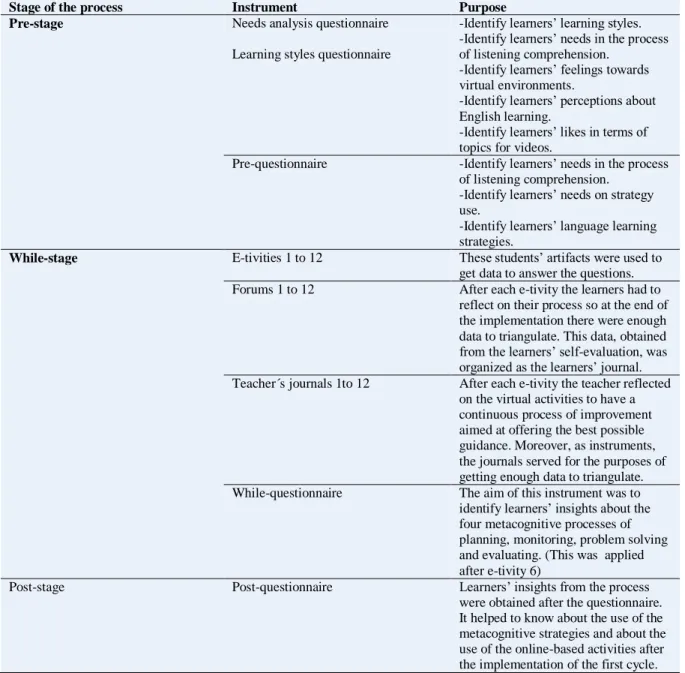
(38) 38. has the opportunity to control the dialogue, in an effort to procure in depth answers or to change the order when necessary. These reasons led the researcher to conduct an interview with the participant of the second cycle. The other change refers to the design of a pre-test and a post-test (Appendices F and G). These were designed differently for the second cycle since the participant was not taking any English courses and it was not possible to get the first and final term tests results as it was done the first cycle. It is relevant to note that the tests gave more support during the analysis of the data. 3.5. Data Collection Procedures Cycle 1 The implementation of the first cycle was carried out in twelve sessions of two hours and 30 minutes each. The sessions were delivered through the Moodle™ platform in which learners found a video to listen to and corresponding e-tivities designed to work with the MMSL. Each session was provided with a forum as a space for learners to reflect on their own process and to share ideas with classmates (Appendix H). Previous to the implementation stage, a learning styles test and a needs analysis questionnaire were applied to have a better understanding of the participants’ actions, thoughts, and perceptions towards EFL. The pre, while, and post-test were applied to allow the researcher to gather data to answer the research questions. Table 4 shows the process followed during data collection..
(39) 39. Table 5 Instruments Process Cycle One Stage of the process Pre-stage. Instrument Needs analysis questionnaire Learning styles questionnaire. Pre-questionnaire. While-stage. E-tivities 1 to 12 Forums 1 to 12. Teacher´s journals 1to 12. While-questionnaire. Post-stage. Post-questionnaire. Purpose -Identify learners’ learning styles. -Identify learners’ needs in the process of listening comprehension. -Identify learners’ feelings towards virtual environments. -Identify learners’ perceptions about English learning. -Identify learners’ likes in terms of topics for videos. -Identify learners’ needs in the process of listening comprehension. -Identify learners’ needs on strategy use. -Identify learners’ language learning strategies. These students’ artifacts were used to get data to answer the questions. After each e-tivity the learners had to reflect on their process so at the end of the implementation there were enough data to triangulate. This data, obtained from the learners’ self-evaluation, was organized as the learners’ journal. After each e-tivity the teacher reflected on the virtual activities to have a continuous process of improvement aimed at offering the best possible guidance. Moreover, as instruments, the journals served for the purposes of getting enough data to triangulate. The aim of this instrument was to identify learners’ insights about the four metacognitive processes of planning, monitoring, problem solving and evaluating. (This was applied after e-tivity 6) Learners’ insights from the process were obtained after the questionnaire. It helped to know about the use of the metacognitive strategies and about the use of the online-based activities after the implementation of the first cycle.. Cycle 2. The second cycle was implemented in twelve sessions of two hours each. As in the first cycle, these sessions were implemented through the Moodle™ platform and data was gathered for the development of the teacher’s and learner’s journals.. Moreover, the artifacts were.
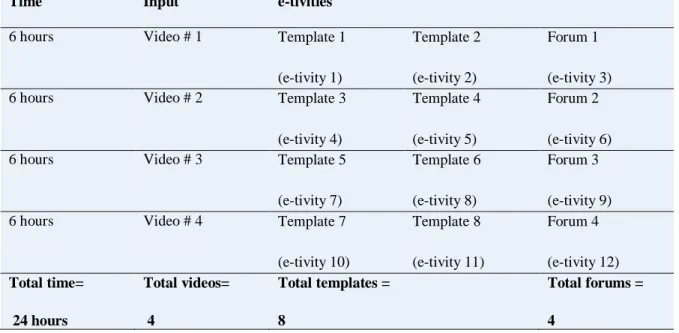
(40) 40. analyzed and kept in folios. In addition, pre- and post-tests were applied and their interpretation was recorded in the teacher’s journal. Table 6 shows the process followed during the second cycle.. Table 6 Instruments Process Cycle Two Stage of the process Pre-stage. Instrument Pre-test. While-stage. E-tivities 1 to 12 (including the forums). Teacher´s journals 1to 12. Post-stage. Purpose To have an initial record of the student’s selective listening comprehension. These artifacts were coded while the implementation to identify data to answer the research questions. For each video three e-tivities were provided from which two of them were templates to work with the MMSL and the last one was the forum as the learner’s reflective space. This data, obtained from the learners´ self-evaluation, was organized in the learner´s journal as done in the first cycle. After each e-tivity the teacher reflected on the activities to have enough data to triangulate by the end of the implementation.. Post-test. To have a final record of the student’s selective listening comprehension and to compare it with the pre-test.. Interview. Learners’ insights from the process were obtained with the interview. Data was gathered to answer both research questions.. 3.6. Validity and Triangulation. For the purposes of validity and triangulation, the analyses of data were carried out following the principles of Grounded Theory as developed by Strauss (Corbin & Strauss, 2008). Therefore, there were various stages used during the process of analyzing the information. All.
Figure


+5
Documento similar
STUDY OF THE EVOLUTION OF IRRADIATION INDUCED DEFECTS IN Fe-Cr MODEL ALLOYS FOR FUSION APPLICATIONS BY MEANS OF IN-SITU
In our approach, restoration is performed using linear filters in the spatial domain. Filter coefficients are determined by means of a learning process based on examples, to obtain
(ii) Classify by means of a local machine those patterns rejected by the global learning
When the decay in weak links is maximal (i.e. there is no ‡ow) we have Jackson and Wolinsky’s connections model, where only strong links work, whereas when ‡ow in weak links is as
In the context of relationship marketing and based on the online reality, the objective of this research, as mentioned, is to analyse the capacity of the main
These are two of the main research questions in the main lines of work of the Research and Learning of Media and Communications Management group of
III Particular Model Activities Selection: The particular model is established by specifying the characteristic activities for the type of project, in this case Screening from WHO
In PERSEUS, course construction is achieved by defining a content model, by means of an intuitive user interface that allows the course designer to build general objects and
