
Enhancing the Speaking Performance and Interaction of A1 learners through Cooperative Learning
161
0
0
Texto completo
(2) ENHANCING SPEAKING SKILLS THROUGH COOPERATIVE LEARNING. 2. Acknowledgments We give thanks to God because without him we could not have achieved this academic goal. We also would like to express gratitude to our families who supported us during this process. Finally, to our research counselors Ana María Ternent and Claudia Acero, who provided us with insightful words that motivated us to successfully finish this stage of our lives..
(3) ENHANCING SPEAKING SKILLS THROUGH COOPERATIVE LEARNING. 3. Abstract This action research study examines the effects of the Cooperative Learning strategy Think– Group-Share on speaking skills and interaction of two large groups of A1 seventh graders. The strategy chosen allowed students to speak and interact within small groups. Fifty-six learners participated in this process through varied tasks that enhanced their oral skills based on vocabulary development. Participants carried out eight sessions for two and a half months. During the intervention, two data analysis procedures were used: a quantitative approach aimed at providing statistical measures of the outcomes of this study, and a qualitative method within the frame of the Grounded theory which was valuable to identify categories. Data analysis showed that learners’ language skills increased throughout the intervention. The strategy provided students with more opportunities to interact and to use the language with their partners and teachers. Moreover, this situation enabled students to improve their self-confidence and, consequently, their ability to speak in English. They were also able to be more self-directed by improving their personal competences and identifying personal strengths and weaknesses. The significance of the results relies on the fact that the CL learning becomes an instructional method that could be implemented in different contexts with large groups and mixability students. Key words and expressions: Cooperative Learning; Think-Group-Share strategy; Speaking Performance; Speaking Interaction; Self-Directed Learning..
(4) ENHANCING SPEAKING SKILLS THROUGH COOPERATIVE LEARNING. 4. Resumen Este estudio de investigación acción examina los efectos de la estrategia de Pensar-AgruparseCompartir del Aprendizaje Cooperativo en las habilidades orales y de interacción de dos grupos grandes de estudiantes de grado séptimo nivel A1. La estrategia elegida permitió a los estudiantes hablar e interactuar en grupos pequeños. Cincuenta y seis estudiantes de nivel A1 participaron en este proceso a través de tareas variadas que mejoraron sus habilidades orales con base en el desarrollo de vocabulario. Los participantes llevaron a cabo ocho sesiones en un período de dos meses y medio. Durante la intervención, se utilizaron dos procedimientos de análisis de datos: un enfoque cuantitativo destinado a proporcionar medidas estadísticas con base en los objetivos de este estudio, y un método cualitativo enmarcado en la teoría Fundamentada que fue valioso para identificar categorías. El análisis de datos mostró que la progresión del lenguaje de los estudiantes aumentó a lo largo de la intervención. Esto proporcionó a los estudiantes más oportunidades para interactuar y usar el idioma con sus compañeros y profesores. Además, esta condición permitió a los estudiantes mejorar su autoconfianza y, en consecuencia, su capacidad para hablar en inglés. También fueron capaces de ser más autodirigidos al mejorar sus competencias personales e identificar fortalezas y debilidades. La importancia de los resultados se basa en el hecho de que el aprendizaje CL se convierte en un método de instrucción que podría implementarse en diferentes contextos con grupos grandes y estudiantes de habilidades mixtas. Palabras clave y expresiones: Aprendizaje Cooperativo, Estrategia Pensar-AgruparseCompartir; Desempeño Oral; Interacción Oral; Aprendizaje Autodirigido..
(5) ENHANCING SPEAKING SKILLS THROUGH COOPERATIVE LEARNING. 5. Table of Contents Chapter 1: Introduction …………………………………………..…………………………….. 10 1.1 Introduction to the Study …………………..……………….………………………….. 10 1.2 Rationale …………………………..……………….……………………..……………. 11 1.3 Statement of the Problem …………………….……………………..………………….. 12 1.4 Research Question …………………..…………………………...…………………….. 15 1.5 Objectives ………………………………..…………………………..………………… 15 1.5.1 Main objective …………………….………………………..………..……………. 15 1.5.2 Specific objectives ……………………………………….…………….………….. 15 Chapter 2: Theoretical Framework ……………………………………………….……………. 17 2.1 Developing Speaking Skills in the Foreign Language Classroom …….….….…….…… 17 2.1.1 Defining Speaking ……………………..........................…..………….…….…….. 18 2.1.1.1 Speaking Performance……………………..……………………..…………….. 19 2.1.1.1.1 Vocabulary Knowledge: a feature of the Speaking Performance …….….… 21 2.1.1.1.2 Productive vocabulary ……………...…...…………...………….………….. 22 2.1.1.2 Speaking Interaction ………………………………………………………..….. 22 2.2 Cooperative Learning: A Successful Teaching and Learning Approach ….……..……... 23 2.2.1 Cooperative Learning principles …………..……………………..………...…..….. 24 2.2.2 Cooperative Learning-Teaching strategies ………………….…..….…………..….. 27 2.2.3 The teacher’s and students’ role in Cooperative Learning ...……..….……..……… 29 2.2.4 Self-Directed Learning in Cooperative Learning…………………..………...…….. 30.
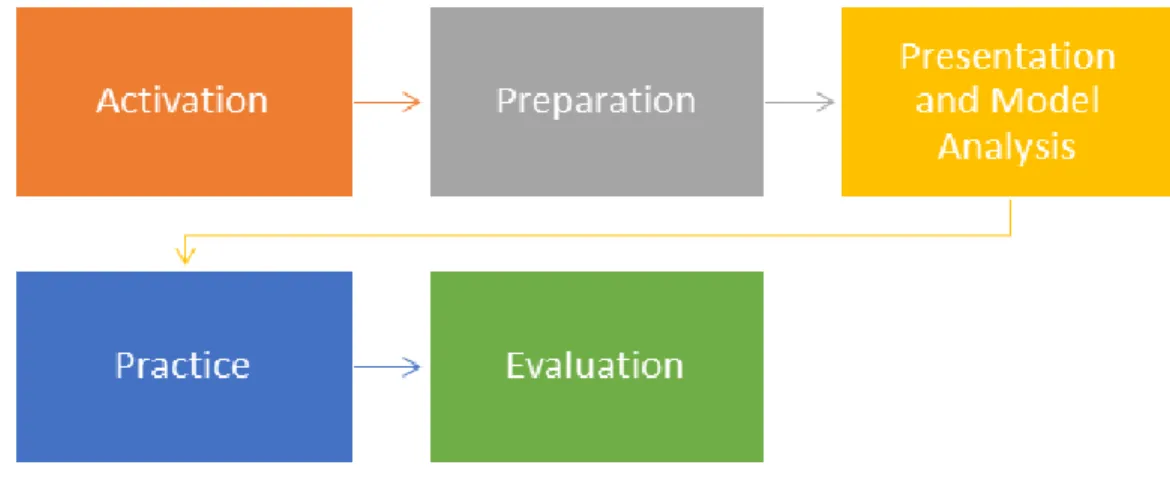
(6) ENHANCING SPEAKING SKILLS THROUGH COOPERATIVE LEARNING. 6. 2.3 The Challenge: Large Groups …………..……………...……..………………..……….. 31 2.4 State of the Art ……………………………………………………………………..…… 32 Chapter 3: Research Design ………………..………………..………………….…………..….. 36 3.1 Type of Study …………………………..………………..……………….....………….. 36 3.2 Context …………………………………………………………….…….……………... 37 3.3 Participants …………………………………………………….……….……………..... 38 3.4 The Teacher’s Role ………………………..…………………….……..………………. 39 3.5 Ethical Considerations ……………………..……………………..….………………… 39 3.6 Data Collection Instruments ……………………………………..…………………...... 40 3.6.1 Description …………………………..………………..…………………………… 42 3.6.1.1 Questionnaire to assess Cooperative Learning to improve speaking …...…… 42 3.6.1.2 Speaking Pre- and Post-tests …………...……………......…………………… 43 3.6.1.3 Teachers’ and students’ journals ………………………………..………….… 44 3.6.1.4 Audio recordings ……………………..……………………….……….……... 45 3.6.1.5 Speaking Performance Vocabulary Frequency Grid……………….…..….......45 3.6.1.6 Vocabulary Range Rating Chart………………………………..…………….. 45 3.6.2 Validation and piloting ……………………………………………………..……… 46 Chapter 4: Pedagogical Intervention and Implementation ………………………….…..……… 48 4.1 Implementation………... ……………………………………………………………...... 48 4.2 Lesson Planning …………………………….…………………………...……………… 49 4.2.1 Activation …………………………………………..…………………………….... 50.
(7) ENHANCING SPEAKING SKILLS THROUGH COOPERATIVE LEARNING. 7. 4.2.2 Preparation ………………………….………..…………………..………………… 50 4.2.3 Presentation and Model Analysis ………………………….………………….…… 50 4.2.4 Practice ……………………………………………..……………………………… 50 4.2.5 Evaluation ………………………..………………………………………………… 51 Chapter 5: Data Analysis ……………………………………………………………………..... 52 5.1 Introduction ……………………………..………………………………………….…… 52 5.2 Data Management Procedures …..……………………………………………………… 52 5.2.1 Validation …………………………………………………..……………………… 53 5.2.2 Data analysis methodology …………...…………………………………...….…… 54 5.2.2.1 Quantitative analysis …………………...……………………………………… 54 Effect of task on Speaking Performance………………………………………....58 5.2.2.2 Qualitative analysis …………...……………………………………..………… 65 5.3 Categories ………………………………………………………………..……………… 65 5.3.1 Introduction ………………………………...…………..…………..……………… 65 5.3.1.1 Category mapping ………………………………………….……………………65 5.3.2 Analysis of categories ……………….......………………………..……………… 66 5.3.2.1 Description of categories ……………………………………..….……..……… 66 5.3.2.1.1 Category 1: Cooperative Learning to promote interaction ……..…………… 67 5.3.2.1.1.1 Subcategory 1: Adopting roles ………………………………...…….… 67 5.3.2.1.1.2 Subcategory 2: Consolidating the group for better practice …..……… 69 5.3.2.1.2 Category 2: Increasing competence in language use ………….…………….. 71.
(8) ENHANCING SPEAKING SKILLS THROUGH COOPERATIVE LEARNING. 8. 5.3.2.1.2.1 Subcategory 1: Learning more repertoire of words………...………..... 72 5.3.2.1.2.2 Subcategory 2: Using survival expressions ……………………..…….. 74 5.3.2.1.2.3 Subcategory 3: Using the language rather than just learning it ……… 76 5.3.2.4 Category 3: Moving towards Self-Directed Learning…………..…...……….. 78 5.3.2.4.1 Subcategory 1: Improving personal competences ………………….... 78 5.3.2.4.2 Subcategory 2: Identifying personal strengths and weaknesses …...… 80 Chapter 6: Conclusions and Pedagogical Implications ……………………………………….... 84 6.1 Comparison of Results with Previous Studies’ Results …………………...……………. 84 6.2 Pedagogical implications …………………………………………………..…………… 87 6.3 Limitations of the present study …………………………………...…….……………… 89 6.4 Further research ……………………………………………………….………………… 90 6.5 Conclusions ……………………………………...………….……….………..………… 90 References …………………………………………………………..……………….…….…… 91 Appendices …………………………….…………………………………….…………...……104 List of Figures Figure 1. Cooperative Learning principles………………………..……………..…..…………. 25 Figure 2. Complementary Teacher Roles in Cooperative Learning Situations...……….......….. 29 Figure 3. Students’ Roles for the Cooperative Work ……………..………………...………….. 30 Figure 4. Action Research Stages ………………..………………..……………………...……. 37 Figure 5. Sections of the Lesson Plan ………………………..………………..……………….. 49.
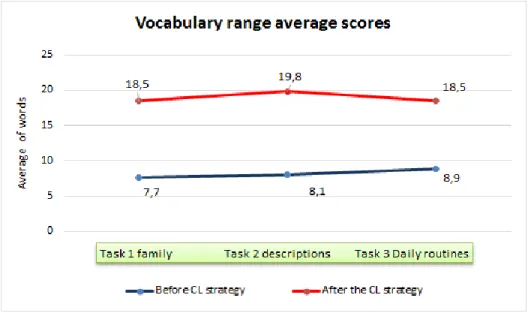
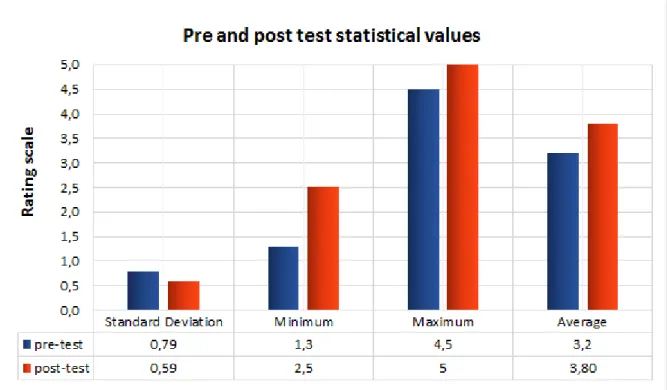
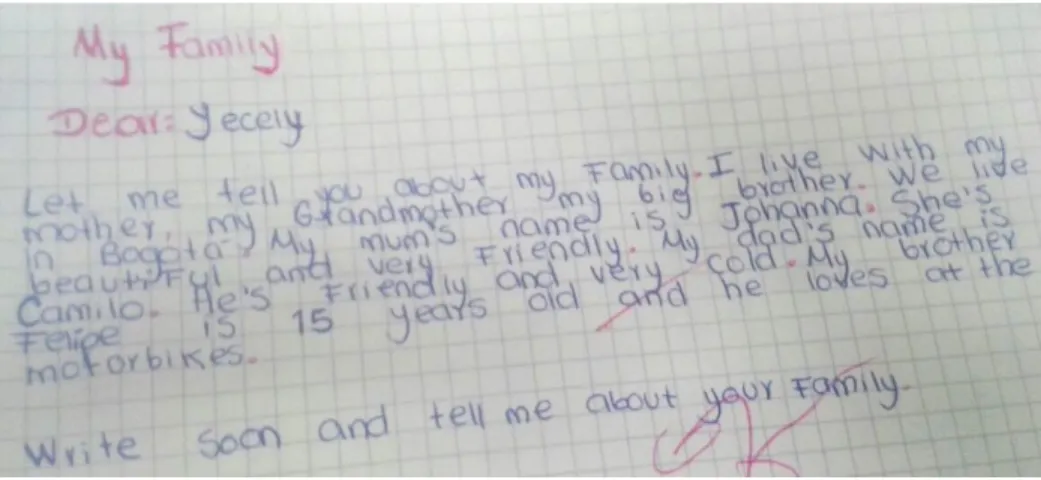
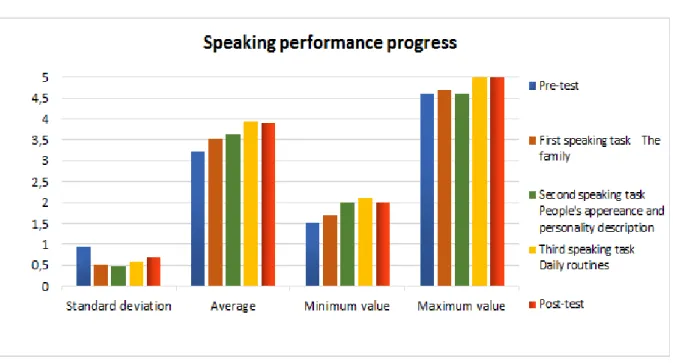
(9) ENHANCING SPEAKING SKILLS THROUGH COOPERATIVE LEARNING. 9. Figure 6. Vocabulary Range Average Scores …………….……………………….…..……….. 55 Figure 7. Pre- and Post-test Vocabulary Range Average Score …...……….…..……………… 56 Figure 8. Pre- and Post-tests Statistical Values …………….………..…………..….…………. 57 Figure 9. Draft Speaking Task Family ……………………………………………….………….59 Figure 10. Draft Speaking Task Description ……………………………...………..………….. 59 Figure 11. Speaking Performance Progress ……………………………………….…………… 60 Figure 12. Scores on Group Questionnaire to Assess the Cooperative Learning Strategy TGS...61 Figure 13. Group Questionnaire Analysis of the Average Score per Question ………...……… 63 Figure 14. Speaking Interaction Average Score ……………………………………...…………64 Table of Tables Table 1. Data Collection Instruments ………………………………………….………….…… 40 Table 2. Instruments to Collect Data …………………...…………………...…………………. 41 Table 3. Categories and Subcategories ………..………………..………………..…………..… 66.
(10) ENHANCING SPEAKING SKILLS THROUGH COOPERATIVE LEARNING. 10. Chapter one: Introduction 1.1 Introduction to the Study The Colombian General Education Law, Ley 115 (Ministry of National Education [MEN], 1994) fostered a variety of changes in the educational system in the country. Part of this process is the adoption of the National Bilingual Program to implement English as a foreign language in the education system in the entire country by implementing the Common European Framework of Reference for Languages1 (Council of Europe, 2001), which introduces proficiency levels based on international standards to measure the individuals’ performance level in the Colombian context. Accordingly, the program “Colombia Very well!”2 (MEN, 2014a) was established in the country and its primary objective was the development of bilingualism in educational institutions. However, to accomplish the government’s goal, educators have had to deal with a variety of constraints that affect students’ language development, such as low academic levels, scarcity of resources in schools, and the number of students per class, among others. In this regard, one of the aspects that called the teacher-researchers’ attention was large group size, which is one of the obstacles for developing the speaking skills in public schools in Colombia. This phenomenon. 1. CEFR stands for the Common European Framework of Reference for Languages, designed in 2001 as a way to provide common criteria in Europe about what learners are expected to learn and the skills they would need to communicate in a second language. 2. The Colombia Very Well! 2015 – 2025 National English Program, seeks for students in the entire educational system to communicate in English better, in order to have better access to work and professional opportunities. Official website: http://www.colombiaaprende.edu.co/html/micrositios/1752/articles-343287_recurso_1.pdf.
(11) ENHANCING SPEAKING SKILLS THROUGH COOPERATIVE LEARNING. 11. makes it difficult for students to interact and speak with others and for language teachers to provide learners with opportunities to enhance their oral skills. Accordingly, this issue stands in the way of teaching and learning, and they increase when the aim of those processes is for students to be proficient in English. For instance, difficulties are evident when tasks involving speaking are carried out. Many students feel they are not playing an active role since they do not always take part in student-student or teacher-student interactions. In consequence, some pupils believe that they are not important, and others just switch off and get distracted, making any speaking task a secondary priority. To tackle this situation, the teacher- researchers that carried out the study aimed their research at implementing the CL strategy Think-Group-Share that is a centered-student one encourages learners to help each other and involves them in their own learning process. 1.2 Rationale Large classes are a common issue at schools in Bogotá. That may have some implications for the students’ learning process. Some of those could be the lack of opportunities to interact and to speak in class, which are disadvantageous for students in developing speaking skills. This situation makes students reluctant to speak, so they may prefer to be silent instead of participating. In English Foreign Language (EFL) classrooms, it has also been evidenced that students are reluctant to use the English language they learned; this is an obstacle for teachers to improve learners’ Speaking Performance. Nunan (1999) suggests that this reluctance may be due to prior learning experiences, lack of motivation (effort plus desire), task difficulty, and psychological and affective factors. It has been observed that learners participate easily in tasks.
(12) ENHANCING SPEAKING SKILLS THROUGH COOPERATIVE LEARNING. 12. that involve other skills such as writing, reading, or listening, but they show their unwillingness when the activities have to do with speaking. A needs analysis (Appendix A) conducted in 2016 allowed the teacher-researchers to determine the factors that affected students’ speaking skill in the foreign language and the role vocabulary learning played in that process, which revealed students’ Speaking Interaction and Speaking Performance troubles in the foreign language, because of many students per class. Bearing this in mind, this situation led teacher- researchers to find in Cooperative Learning (CL) the option to deal with large English classes. The central idea CL develops is that a class is divided into smaller groups where each student helps the others achieve a core goal on which each one will be evaluated individually (Johnson & Johnson, 1991). This is thus a consistent strategy to deal with large size classes and to encourage speaking because it provides learners with more opportunities to use language with a small number of students. As a result, CL offers a variety of tools to improve speaking through this interaction. CL is an instructional method that is useful in enhancing the acquisition of English speaking skills and improving students’ attitudes in large classes. 1.3 Statement of the Problem The aims of the national English language policy include mandatory English in schools, and by 2025, 50% of graduates from secondary education should reach a B1 level, according to the document “Formar en lenguas extranjeras: ¡el reto!” (Basic Standards for Competences in Foreign Languages: English. Teach in Foreign Languages: the Challenge!) (MEN, 2002). This represents a significant responsibility for English teachers because the effectiveness of English teaching in Colombia in public education is affected by several conditions: large class sizes, few.
(13) ENHANCING SPEAKING SKILLS THROUGH COOPERATIVE LEARNING. 13. English lessons, lack of resources and the lack of testing and practice outside the classroom (British Council, 2015). Being aware of the current circumstances, the teacher-researchers considered relevant to analyze a study conducted by Sanchez (as cited in British Council, 2015), since it reported that just seven percent of Colombians graduate from High School with a basic or higher level of English. Likewise, a survey done in Colombia by the British Council (2014) to assess the productive skills (speaking and writing) revealed that forty-three percent of the respondents attributed their poor speaking level to lack of practice. Nineteen percent of the participants said they had not been learning English long enough, while thirteen percent felt that speaking was harder than writing or reading English, and twelve percent attributed this to the fact that curriculum was not focused on speaking. Considering not only the national context needs but also the teacher-researchers’ experiences as public-school teachers, the needs analysis allowed them to confirm that seventy-eight percent of their students considered that learning English as a foreign language is a valuable experience their educational, personal and professional purposes. However, they were concerned about the few opportunities they had to speak English with their peers and English teachers. Also, fiftyseven percent of the students found that large groups made it difficult to interact with their peers, sixty percent affirmed that they had difficulties hearing their peers because of the noise in the classroom and seventy percent felt they did not have the opportunity to participate in class. The responses to the questionnaire also revealed that sixty percent of the students did not speak in the target language because of their lack of knowledge of grammar structures and vocabulary which.
(14) ENHANCING SPEAKING SKILLS THROUGH COOPERATIVE LEARNING. 14. was considered an obstacle to take an active part of their English classes. Finally, seventy-two percent of students commented that they felt insecure when speaking in front of their classmates because they were afraid of making mistakes. Considering the previous findings and the demands of the local language policies, the teacher-researchers looked for a strategy that would facilitate students’ speaking skills in two public schools in Bogotá. In the search, CL emerged as the strategy that might support this process since sixty-nine percent of the students indicated that working with others allowed them to use the language more freely, to learn from those who were more proficient and to provide feedback to each other. Consequently, this research wanted to examine the effects of the CL strategy Think-GroupShare, which is an adaptation of the Think-Pair-Share strategy (Kagan, 1994), on seventh graders’ whose constraints regarding their Speaking Performance and interaction were evident, for reasons such as large classes, which limited their opportunities to interact, poor vocabulary and grammar to participate in class, and poor self-confidence. Based on the previous information, the project brought together four areas of research: Cooperative Learning, Speaking Performance, Speaking Interaction and Large Groups to answer the leading question that guided the research, which is described in the next section.. 1.4 Research Question.
(15) ENHANCING SPEAKING SKILLS THROUGH COOPERATIVE LEARNING. 15. How might the implementation of the Cooperative Learning strategy Think-Group-Share affect the Speaking Performance and interaction of a large group of A1 seventh graders in two public schools? 1.5 Objectives 1.5.1 Main objective. To analyze how the implementation of the Cooperative Learning strategy Think-Group-Share influences seventh graders’ Speaking Performance in terms of vocabulary range and interaction in two large groups at two public schools. 1.5.2 Specific objectives. 1) To examine the influence of the Cooperative Learning strategy Think-Group-Share on students’ Speaking Interaction and Speaking Performance. 2) To determine how the Cooperative Learning strategy, Think-Group-Share affects the students’ speaking opportunities in a large group. 3) To explain how students become aware of their learning role in the improvement of their Speaking Performance to become more self-directed learners. This chapter evidenced the necessity of providing students with opportunities to help them participate in a large group, interact with others and use the language in the classroom. Moreover, English as a foreign language is an important experience not only for the school purposes but also for students’ personal lives and professional future. Therefore, enhancing oral skills in these groups of learners through CL could help them to use the language they know, increase their self-confidence and improve their interactions to reach the language goals through the cooperative group work..
(16) ENHANCING SPEAKING SKILLS THROUGH COOPERATIVE LEARNING. 16. Chapter 2: Theoretical Framework This section will examine the main constructs which frame this study: Cooperative Learning (CL), Speaking Performance (SP), Speaking Interaction (SI) and Large Groups (LG). These concepts represent the basis of this study, which addresses students’ SP and SI in two large high school groups of students. Some theoretical underpinnings are illustrated as well as earlier studies related to this research topic. 2.1 Developing Speaking Skills in the Foreign Language Classroom This study focuses on productive skills, interaction, and the need to improve vocabulary in students with a low English level. According to Celce-Murcia (2001) and Nunan (2003), speaking in the EFL classroom is the most difficult skill to be developed. One of the facts that support this idea is that students are more concerned about speaking than the other skills (reading, writing and listening), so they feel more anxiety when activities are related to their performance in this skill (Bilash, 2009). From this perspective, Nunan (1999, p. 231) states that the “reluctance to speak on the part of students was seen as one of the teachers’ biggest challenges.” In order to face this challenge, teachers should continually address speaking in the EFL classroom. Regarding the importance of developing speaking skills, Harmer (2007) argues that this skill is important for three main reasons: first, activities focused on speaking provide learners with rehearsal opportunities to practice real-life speaking in the safety of the classroom. Second, speaking tasks that put into practice the language students know, provide feedback not only for the students but also for the teacher, because both have the chance to evaluate how successful the.
(17) ENHANCING SPEAKING SKILLS THROUGH COOPERATIVE LEARNING. 17. learning and teaching processes are. Third, it is necessary to provide learners with as many opportunities as possible to interact in the classroom, so that they will be able to make use of what they learn. Accordingly, “learners should be given the maximum number of opportunities possible to practice the target language in meaningful contexts and situations” (Nunan, 1999, p. 241). 2.1.1 Defining Speaking. To talk about how to develop speaking skills, there is a need to define the term from several perspectives. Brown (1994) and Burns, Gollin and Joyce (1997) have defined speaking as a productive skill in which the speaker makes choices of lexicon and topics according to his level and needs. Similarly, Thornbury (2005) considers that speaking involves the knowledge of vocabulary and highlights the speaker’s knowledge of grammar and pronunciation. In fact, Richards and Renandya (2002) emphasize that the nature of speaking involves producing appropriate language that needs to be understood. Finally, Cameron (as cited in Sari, 2014) affirms that speaking implies the active use of the language to express meaning so that other people can understand it, which becomes a process of transferring information between the speakers and listeners. In the same manner, the CEFR states that speaking is an ability that involves multiple competencies as well as knowledge and a processing factor. In this regard, Levelt (as cited in Galaczi and Khalifa, 2009, p. 23) remarks that “the knowledge factor relates to a wide repertoire of lexis and grammar which allows flexible, appropriate, precise construction of utterances in real time.” Similarly, the processing factor involves a set of procedures for pronunciation, lexis, grammar and established phrasal ‘chunks’ of language which enable the speaker to conceive,.
(18) ENHANCING SPEAKING SKILLS THROUGH COOPERATIVE LEARNING. 18. formulate and articulate relevant, appropriate responses. These definitions summarize in part the scope speaking may reach, since speaking not only involves the factors mentioned above, but it is also framed in a contextualization of language use for English Speakers of Other Languages (ESOL) (Galaczi and Khalifa, 2009). These authors also explain that “spoken language production is seen as a situated social practice which incorporates reciprocal interaction with others, as being purposeful within a specific context” (p, 23). 2.1.1.1 Speaking Performance. Considering that SP was chosen as the focus of this study, the teacher-researchers begin by defining this term from different perspectives, and then, describing its relationship with vocabulary. Based on the theory related to SP, different terminology is used to refer to this concept. The CEFR treats spoken performance and oral production equally since both refer to the speaker’s language production or contribution. From Koizumi’s point of view (2005) the terms SP and oral production are synonyms considering that they comprise production areas dealing with language use. In addition, Bygate (1987) states that SP refers to the active use of language knowledge. Similarly, McNamara (as cited in Koiuzumi, 2005) defines it as the actual instances of language use in real time as well as something that could be observed. From this perspective, McNamara (1996) emphasizes that SP is affected by language users and the language task. It is either prepared or spontaneous and comprises “production (forming messages), conceptualization (putting messages in forms) and articulation (pronouncing and expressing them)” (p.14). In this regard, Brown (2004) argues that these features constitute self-initiated or pair work practice. This research project deals with both since the phenomenon under study is closely associated.
(19) ENHANCING SPEAKING SKILLS THROUGH COOPERATIVE LEARNING. 19. with the production of utterances and the size aspect which is related to the amount of vocabulary and the use of that vocabulary to interact. Taking into consideration that SP is closely related to language use at different levels, the CEFR has listed and specified a set of language descriptors to assess performance on the basis of what learners can do with the language. For this study, A1 level deals with the students’ ability to use a repertoire of isolated words and basic sentences or phrases about familiar situations (Council of Europe, 2001). To allow A1 level students to improve and succeed in their SP in the language classroom, Brown and Yule (1983) suggest two types of tasks teachers can use to encourage learners to produce language: monologs and short dialogs. The language standards of the Colombian Ministry of Education (2006) and the CEFR refer to monologs and conversation as categories to assess speaking. According to Cambridge (2015), monologs are extended turns of speech without interruption, as used in presentations and descriptions. The Council of Europe (2006) also defines monologs in low levels as non-interactive speech, generally a prepared text that describes an experience; family, people, living conditions, routines and interests. Moreover, a dialog (transactional language) “is a conversation that is carried out for the purpose of conveying or exchanging specific information; it is an extended form of responsive language” (Brown, 2007, p. 329, as cited in Sari, 2014, p. 15), which involves two interlocutors or more and can be both unprepared and planned. In low levels, a dialogue entails the learner’s ability to make an introduction, to ask how people are, and to handle very short social exchanges..
(20) ENHANCING SPEAKING SKILLS THROUGH COOPERATIVE LEARNING. 20. 2.1.1.1.1 Vocabulary Knowledge: a feature of the Speaking Performance. Vocabulary knowledge plays a significant role not only in the EFL classroom but also in developing language skills. Many authors have researched this issue. For instance, Pittelman and Heimlich (1991) state that vocabulary knowledge is important in understanding both spoken and written language. Also, Nunan and Bailey (2009) underline the importance of vocabulary as a fundamental aspect of language development and a crucial component in speaking. According to Levelt (as cited in Koizumi, 2005, p. 58), “vocabulary has a central position in forming an utterance with appropriate meanings and with syntactic, morphological, and phonological structures.” He also emphasizes that no speech can be produced without vocabulary since it is indispensable to SP. According to Alqahtani (2015), “vocabulary knowledge is often viewed as a critical tool for foreign language learners because a limited vocabulary in a second language impedes successful communication.” (p. 22). Similarly, the CEFR (2001) describes vocabulary as “the lexical competence, knowledge of, and ability to use, the vocabulary of a language, it involves lexical and grammatical elements” (p. 110). Even though several definitions of vocabulary have been proposed as shown above, for this study, vocabulary is considered as: 1. The words of English used by students in a speaking task, including single items and phrases or chunks of several words which convey a meaning, the way individual words do (Nation, 2011)..
(21) ENHANCING SPEAKING SKILLS THROUGH COOPERATIVE LEARNING. 21. 2. A fundamental issue in language learning because it plays a vital role in speaking when learning a foreign language at low levels since the lack of that knowledge is a significant obstacle for L2 learners to overcome (Huckin as cited in Alqahtani, 2015). 3. In students with a basic level of English, it is seen as the use of a repertoire of isolated words and phrases related to and concrete situations (CEFR). 2.1.1.1.2 Productive vocabulary. In this study, vocabulary will be focused on production since it refers to the words that the learners understand and use correctly in speaking. It involves the words that learners recognize and understand and the ability to speak at the appropriate time. Therefore, this kind of vocabulary can be defined as productive vocabulary since it entails an active process because the learners can produce the words to express their thoughts to others (Webb as cited in Alqahtani, 2015). According to Nation (2011), there is a receptive vs. productive, and size vs. depth classification of vocabulary. This study mainly analyzes vocabulary knowledge from two viewpoints: production and size. The former is closely related to SP, and it is “the knowledge to produce a word when one speaks and writes” (Nation, 2005, p 585). In the current study, productive vocabulary knowledge is defined as “knowledge to produce vocabulary forms” (Koizumi, 2014, p. 21). The latter type is also called breadth, which is a quantitative dimension of vocabulary knowledge. Regarding this, Nakanishi & Shimamoto (as cited in Koizumi, 2015) state that vocabulary size refers to the number of words a person knows. 2.1.1.2 Speaking Interaction. Keeping in mind that spoken language production is a practice which involves reciprocal interaction with others (Galaczi and Khalifa, 2009), it is necessary to.
(22) ENHANCING SPEAKING SKILLS THROUGH COOPERATIVE LEARNING. 22. define SI for the EFL context. According to River (as cited in Aggouni, 2015), SI “includes not only the expression of one’s thoughts, but it also involves a reciprocal turn-taking between the listener and the speaker” (p.10). Similarly, Louma (2004) considers that a conventional SI involves two or more people talking about a common interest in a situation to pass the time, share opinions or get something done. In this kind of interaction, both speakers perform several tasks at the same time, they also play both roles, as a speaker and as a listener. Thus, they construct the event together and share the right to influence the outcomes which can be both shared and individual (p. 20). Based on the definitions listed above and the scope of this study, SI is bi-directional and jointly constructed by the participants; the contributions produced are supported by means CL activities (CEFR, 2006). With respect to interaction at low levels, the CEFR understands SI as the students’ ability to maintain simple exchanges of information on familiar topics in a straightforward way where communication is totally dependent on repetition at a slower rate of speech, rephrasing, and repair. 2.2 Cooperative Learning: A Successful Teaching and Learning Approach Based on the teacher-researchers’ experience as English educators, and facing situations such as teaching in crowded classrooms, the students’ lack of opportunities to participate, and their need to improve speaking, the CL approach has been identified as the means to improve the mentioned skill in learners and to deal with constraints such as LG. Throughout the available literature related to CL, theorists have defined it considering several features that prove it is an effective teaching strategy in different instructional settings..
(23) ENHANCING SPEAKING SKILLS THROUGH COOPERATIVE LEARNING. 23. Definitions seem to agree that CL is not only a teaching strategy but a student-centered instructional model (Sharan, 1994). In this respect, Felder and Brent (2007) affirm that it consists of students working in groups on an assignment or project, under conditions in which criteria are fulfilled. In addition, Emmer and Gerwels’ (2002) state that CL facilitates group achievement of common learning goals. Similarly, Johnson and Johnson (2013) agree with the same idea, but they emphasize that each member of the group will be evaluated individually. Likewise, Kagan & Olsen (1985) state that in CL, learning depends on the social exchange of information among learners in the group. Having presented the previous definitions, for the current research, CL is conceived as a student-centered approach that involves learners grouped in mixed-ability teams that help and depend on each other to meet a common goal. According to Johnson and Johnson (2013), in the ideal classroom, all students would learn how to work cooperatively with others, compete for fun and enjoyment, and work autonomously. Therefore, it could be a successful teaching strategy in which small groups allow students to work together to maximize their own and each other’s learning in cooperative situations. To fully understand how CL works and the way it should be implemented, it is mandatory to describe its principles, teaching strategies, teacher and students’ roles, the way to form teams, its need in large classes, and its importance for speaking. Therefore, the following sections of the chapter describe the mentioned aspects in detail. 2.2.1 Cooperative Learning principles. The teacher-researchers consider that placing students in groups and expecting them to be able to work together will not necessarily promote.
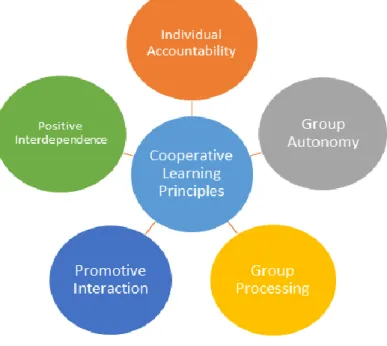
(24) ENHANCING SPEAKING SKILLS THROUGH COOPERATIVE LEARNING. 24. cooperation; it is necessary to count on the interrelated factors to guide the teamwork. Several researchers have called such factors CL principles, which are the basis for outstanding group work. For instance, Gillies (2014), refers that when students work with others might struggle when identifying what to do to accomplish the task, and getting involved in their learning process; which supports the need of specific elements to regulate and succeed in their group work. In this respect, Johnson and Johnson (2008) formulated a Learning Together model which comprises five necessary conditions under which CL is productive. For this study, the following principles are considered due to the novelty of its implementation in the context where this research project was carried out (Figure 1). Figure 1. Cooperative Learning principles.
(25) ENHANCING SPEAKING SKILLS THROUGH COOPERATIVE LEARNING. 25. Other authors such as Kagan (1994) and Slavin (2014) share similar principles with Johnson and Johnson’s model since they agree with individual accountability and positive interdependence as important aspects to ensure group cooperation and learning. Initially, positive interdependence is seen as a primary element of cooperative classrooms. It occurs when individuals encourage and facilitate each other’s efforts not only to complete their part of the work but to ensure that other group members contribute to accomplishing the group’s goals (Gillies, 2014). Therefore, it promotes reciprocal interaction among individuals, which stimulates each group member’s productivity and achievement. Johnson & Johnson found that in CL groups, students are required to interact verbally with one another on learning tasks (as cited in Gillies, 2014). Team members must support each other to achieve the goal. Secondly, individual accountability, as defined by Gillies (2014) emerges when students accept responsibility for their part of the task and the achievement of the group goal. Responsibility means that students ask for assistance either from their teacher or their peers, do their best work, share their ideas, learn as much as possible, take their tasks seriously, help the group operate well, and take care of one another (Johnson & Johnson, 2009). Likewise, all students in a group are held accountable for doing their share of the work and for mastering all the material to be learned. The third principle considered in this study is group processing. It refers to the assessment of CL which focuses on students’ feedback of the learning process. It requires group members to assess their roles and contribution to the success of all tasks. It centers its attention on positive behaviors and actions rather than on negative ones and requires students to think about the way.
(26) ENHANCING SPEAKING SKILLS THROUGH COOPERATIVE LEARNING. 26. they learn. Thus, members: a) reflect on which members’ actions were helpful and unhelpful, and b) make decisions on which actions to continue or change. The teacher can then monitor the distinct groups during the learning activities and provide feedback on what has been observed. “The purpose of group processing is to clarify and improve the effectiveness members have when carrying out the needed process to achieve the group goals.” (Johnson & Johnson, 2009). Another principle is promotive interaction, which, according to Johnson & Johnson (1990), involves group members encouraging and facilitating each other’s efforts as they work together. According to this, students required to listen to each other, exchange ideas and offer explanations to assist understanding. In relation to the principle of Group Autonomy, Sharan, (1994) and Slavin, (1995) emphasize that it can diminish teacher talking, and Cohen (1994), considers that group autonomy encourages problem-solving, so learners have the choice to take responsibility for their learning process. According to Thomson (1998), CL is a useful strategy because students can work together; they interact developing autonomy and cooperation, as a result, students learn how to negotiate, to solve problems, and to develop another kind of abilities. 2.2.2 Cooperative Learning-Teaching strategies. Although the current study emphasizes on the CL strategy Think-Group-Share, researchers and practitioners identify several CL teaching strategies to facilitate its implementation. According to Kagan (1994, p.4:11), each structure “performs at least one function better than any other structure, knowledge of each structure is essential if a teacher is to be as efficient as possible in reaching the range of learning objectives”..
(27) ENHANCING SPEAKING SKILLS THROUGH COOPERATIVE LEARNING. 27. Accordingly, educators are required to provide their students with structures that encourage further learning. Additionally, as Felder, & Brent (2007) state, CL can be implemented in a variety of tasks that can be provided to learners, such as, laboratories, projects, and lecture lessons, amongst others. For this research, it was chosen a CL thinking skill strategy, which is a type of strategy according to Kagan’s classification (1994). The objective of this kind of strategy is “to have students be able to create and exchange novel, unique, set-breaking ideas to low consensus questions” (Kagan, 1994, p.11:1). For this study, researchers have selected the Think-Pair-Share strategy that promotes a generative and reflective thinking skill (Kagan, 1994, p.11:2). According to Darsini, (2013) the Think-Pair-Share strategy is useful to encourage students’ time on task and listening to each other. In this strategy, students are paired, then a problem or a specific situation is presented to the students; they have some time to think on their own about possible answers for a limited amount of time; they discuss their answers with another pair, and finally the teacher calls on students to share with the class the answer they have developed with their partners. However, the teacher-researchers have designed a variation of the Think-Pair-Share strategy to benefit the research. Therefore, the strategy that is the focus of this study was called ThinkGroup-Share (TGS). The variation is evidenced in the teams’ organization since in the TGS strategy students are not paired, they think on their own, and when they discuss their answers, they do it with a whole group of four..
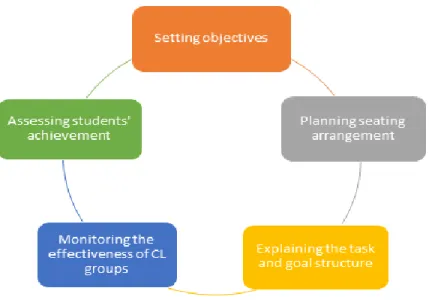
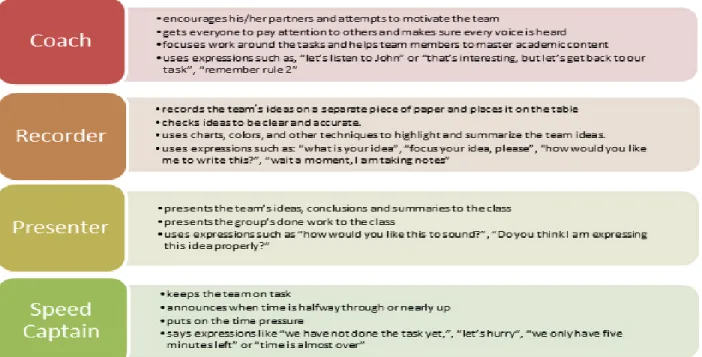
(28) ENHANCING SPEAKING SKILLS THROUGH COOPERATIVE LEARNING. 28. 2.2.3 The teachers’ and students’ role in Cooperative Learning. Researchers consider that in the CL classroom, teachers should adopt the role of facilitators, encouragers, and models. In this respect, Johnson, Johnson, and Holubec (1991) declare that apart from the usual roles a teacher performs in CL situations, some complementary ones are presented (Figure 2). Figure 2. Complementary Teacher Roles in Cooperative Learning Situations.. On the other hand, in Kagan’s (1994) point of view, students in cooperative teams are more active, self-directed, and expressive; factors that might be associated with achievement gains. For this study, four roles with specific functions were determined to cope with students’ needs and to consider their academic and behavioral characteristics. Figure 3 illustrates the group member roles in the formal cooperative grouping..
(29) ENHANCING SPEAKING SKILLS THROUGH COOPERATIVE LEARNING. 29. Figure 3. Students’ Roles for the Cooperative Work. 2.2.4 Self-Directed Learning in Cooperative Learning. Recently, Self-Directed Learning (SDL) has become a significant premise for language comprehension as it draws attention to students’ learning process (Du, 2013). In this regard, Knowles (1975), states that SDL involves: A process in which individuals take the initiative, with or without the help of others, in diagnosing their learning needs, formulating learning goals, identifying human and material resources for learning, choosing and implementing appropriate learning strategies, and evaluating learning outcomes. (p.18). Based on the previous information and considering that CL implies the help of others, it is possible to affirm that this instructional method fosters SDL. “CL provides the basis to develop face-to-face promotive interaction as well as interpersonal and small group skills while obtaining subject matter knowledge at the same time” (Felder and Brent, 2007, p.11)..
(30) ENHANCING SPEAKING SKILLS THROUGH COOPERATIVE LEARNING. 30. For Hiemstra (1994) the importance of SDL lies in the fact that learners are given the power to take more responsibility for different decisions connected with their learning endeavors. In this respect, Kagan (1994, p.3:2) states that “students in CL classrooms become more internal in their sense of control in contrast to students in traditional classrooms who feel more externally controlled,” which evidences common aspects between CL and SDL. In addition, Dickinson (1987) includes autonomy as a fundamental concept in self-direction since learners become the center of their own learning processes, reducing the involvement of a teacher or an institution. About this, Bick-Har (2013) says that “cooperative learning is a studentcentered, instructor-facilitated instructional strategy in which a small group of students is responsible for its own learning and the learning of all group members”, which, again, shows the interrelation between SDL and CL. For this study, SDL is understood to foster individual students’ abilities to enhance their vocabulary range and SP as well as to serve as a support to other students in becoming independent learners through group work. 2.3 The Challenge: Large Groups With the significant development of the national government policies in education, the rates of public enrollment have gone up during the last years in Colombian state schools. This situation has led to an increase in the number of students in secondary education, which becomes a key concern for English teachers who deal with classrooms containing many students (Medina and Briñez, 2002). According to Santamaría and Salas (2011), one of the most common constraints a large class involves is related to discipline issues, which represent a challenge.
(31) ENHANCING SPEAKING SKILLS THROUGH COOPERATIVE LEARNING. 31. because of the diversity in the classroom: a wide range of abilities, ages, and learning styles (Forero, 2005). This situation tends to concern teachers who cannot easily give students the individual attention they need (Nan, 2014). It has also been proved that effective language interaction is another challenge to cope with since large classes do not favor communication in the classroom (Jin & Cortazzi, 2013). To deal with this situation, Nan (2014) suggests CL as a creative and efficient teaching model that not only focuses attention on group work but also encourages learners to participate actively in learning tasks. CL is the kind of student-centered approach that develops students’ abilities to learn independently to meet their need for learning in the form of group work (Nan, 2014). The current needs analysis revealed that many students affected learners’ interaction and SP. In this regard, CL provides students with more opportunities to speak, participate and assist each other, particularly when they are assigned a specific role and responsibilities within a group. 2.4 State of the Art Local and international studies have been carried out to explore how CL enhance learners’ SP and interaction in LG. All of them have demonstrated that learners who have the opportunity to work cooperatively, feel more confident when speaking in a foreign language and feel engaged when doing it. Additionally, they develop their social skills, reach higher levels of achievement, work actively, strengthen their self-confidence and enjoy the English learning process. In 2007, Prieto conducted a study to examine how learners improve their oral production skills in English through CL strategies. Basically, the findings demonstrated that implementing.
(32) ENHANCING SPEAKING SKILLS THROUGH COOPERATIVE LEARNING. 32. CL strategies improved students’ attitude towards group work and the skill of speaking. Furthermore, working and learning with others allowed them to improve their oral production and to change their concept of group work through the implementation of roles. Additionally, an action research study on encouraging interaction by applying CL carried out by González (2001), revealed important findings for this study. It was found that cooperative work and activities that allowed students to interact strengthened students’ oral skills since they could express better and felt more comfortable when using English to communicate with their teachers and classmates. Moreover, in a qualitative study carried out by Fatma (2012) to explore the effectiveness of implementing CL in the classroom to develop license master and doctorate students’ oral skill, learners reported improvement in their speaking skills by learning cooperatively in small groups, which confirmed the study’s hypothesis since the implementation of this learning technique allowed learners to interact within a cooperative atmosphere. However, this research also revealed that working in CL groups might also generate noise in the classroom and promote groups’ conflicts. In 2012, Ramdana conducted a research project to find out whether teaching speaking through CL can improve students’ speaking ability. Findings showed that students improved their pronunciation and vocabulary. In addition, they were able to practice the English language in contexts different to the classroom..
(33) ENHANCING SPEAKING SKILLS THROUGH COOPERATIVE LEARNING. 33. Fauzia (2012) examined the effectiveness of using CL strategy to improve students’ speaking ability. The result of the project revealed that students achieved better scores on the speaking English test. Moreover, CL motivated learners to use English in their speech. It was concluded this strategy could improve students’ language skills to learn a foreign language, including pronunciation, vocabulary, grammar, fluency, and comprehension. The previous study is useful to our interest since it matches the present research project and the pertaining constructs. Rhenals and Molina (2014) developed an action research study about how the implementation of oral communication strategies through cooperative work activities fosters communicative skills of a group of A1 university learners. The implementation of communication compensatory strategies such as circumlocution, approximation, use of allpurpose words and non-linguistic signals using spoken activities in the EFL classroom encouraged students to improve their oral competence and performance. The strategies applied caused a positive impact on the performance, development, and attitude of the students under study. Regarding group work and cooperation, it was found that the learners felt motivated while sharing and supporting ideas each other. This means that using communication compensatory strategies and working in groups reflected a great benefit for the students. Equally important, Koizumi (2005) examines how size and depth of productive vocabulary knowledge had an impact on SP (i.e., fluency, accuracy, syntactic complexity, and lexical complexity). The participants in this study were Japanese learners of English at a basic level. To determine the focus of this project, two studies were conducted. The first one a pilot.
(34) ENHANCING SPEAKING SKILLS THROUGH COOPERATIVE LEARNING. 34. study examined relationships between productive vocabulary knowledge and SP focused on “size” of productive vocabulary knowledge. The second study explored the relationships between “size and depth” of productive vocabulary knowledge and SP. These studies demonstrated the following two points. First, in some tasks, learners who had larger and deeper productive vocabulary knowledge were able to have a better SP in relation to vocabulary when producing monologs and comparisons. Second, size of productive vocabulary had to do more with accuracy in a task. With regards to LG, Peterson and Miller (2004) conducted a research study related to the quality of students’ experiences during CL and large-group instruction. Lectures and cooperative work tasks were implemented through the intervention. As a result, it was determined CL had a positive impact on students’ learning experience and large group instruction was crucial to provide learners with core principles, information and the support needed to reach the group and the task goals. The results of this study also indicated the importance of using group work and students’ roles to facilitate the students’ opportunities to participate in the various stages of the class..
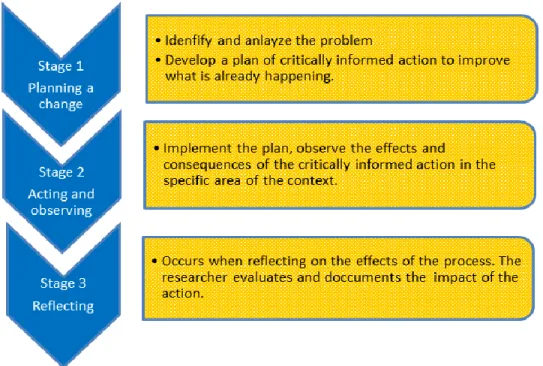
(35) ENHANCING SPEAKING SKILLS THROUGH COOPERATIVE LEARNING. 35. Chapter 3: Research Design This chapter presents a description of the procedures involved in this research project: the type of study, the current context, the participants, the teacher-researchers’ role, a brief description of the data collection instruments administered, and the ethical considerations involved. Additionally, information about the validation and piloting of the instruments is included. 3.1 Type of Study This study was designed under parameters of qualitative/ quantitative/ mixed methods action research approach. “This type of inquiry requires teachers to identify a concrete problem, think and plan appropriate actions to address the concern, and reflect on data gathered through the intervention” (Nunan and Bailey, 2009, p. 229). According to Burns (2009), “action research is the combination and interaction of two modes of activity – action and research” (p. 258). The action refers to an ongoing social process in a social context that implies an intervention, which is aimed at improving and changing a specific situation. The type of research entails systematic observation and analysis of the improvements, findings, and outcomes to make further changes. In accordance with the procedures established in AR, this study contemplates the implementation of this approach by following a cyclical and spiraling process proposed by Kemmis and McTaggart (as cited in Burns, 2011). Based on that, the authors stated the project stages (see Figure 4)..
(36) ENHANCING SPEAKING SKILLS THROUGH COOPERATIVE LEARNING. 36. Figure 4. Action Research Stages. Given the fact that data collected in this study come from both quantitative and qualitative approaches, “the researcher bases the inquiry on the assumption that collecting diverse types of data best provides an understanding of a research problem” (Creswell, 2003). Qualitative data were gathered through teacher-researchers’ and students’ journals and audio-recordings which collected detailed views from participants. Quantitative data were obtained through questionnaires, rating charts, and tests. 3.2 Context This research study took place at two state schools in Colombia, Bogotá. These educational institutions offer pre-school, primary and secondary education to students with low and middle socioeconomic backgrounds. These institutions face some common difficulties such as lack of.
(37) ENHANCING SPEAKING SKILLS THROUGH COOPERATIVE LEARNING. 37. appropriate didactical resources to work with in class, small classrooms, LG (28 to 40 per classroom), and students’ lack of motivation towards English language learning, among other issues. Regarding the learners’ English schedule, school A is currently in the process of becoming bilingual, based on the guidelines stated in the local program “Bogotá Bilingüe” (Bilingual Bogota). For this reason, students take five hours of English instruction per week. The school has an immersion room where students have classes with native teachers. In school B, the amount of time students come in contact with English classes is insufficient, since students only take three hours of instruction per week and there is no other program that supports foreign language learning. The instruction provided in English language lessons involved the four communicative skills, the target language is used when presenting a topic, reviewing vocabulary or practicing an exercise, and the Spanish language is used for clarification and code-switching. 3.3 Participants Initially, the participants of this study were seventy students from seventh grade; however, due to their health conditions, discipline problems, and constant traveling, fourteen students were not included in this sample. As a result, fifty-six students participated in this project: twentyeight students from each school. They were teenagers aged between 12 and 16. All the participants were ranked A1 in English level of proficiency according to the CEFR. Most of them mentioned that speaking was the hardest skill to achieve, and that was reflected in their low level of English proficiency in the classroom activities, tests and on the National Examinations. Despite these issues, many students wanted to improve their speaking skills as they consider.
(38) ENHANCING SPEAKING SKILLS THROUGH COOPERATIVE LEARNING. 38. them very useful to achieve better academic results and to grow professionally as well. The teacher-researchers attempted to work on promoting this skill through the CL strategy TGS. 3.4 The Teacher’s Role Throughout the study, the teacher-researchers played the role of participant-observers. It implied designing, monitoring, observing and recording situations or events that took place in the classroom. Bearing in mind that the teachers conducted an action research study, this kind of role requires teachers to be active, critical and committed participants in the research process (Burns, 2010). 3.5 Ethical Considerations To protect the participants’ identity, some ethical considerations were addressed as part of the research process. From the beginning of this study, it was required to inform the principals, students and their families about the objectives of this project. Firstly, a request form sent to the principals of both schools to obtain the permissions. Secondly, a consent letter was sent to the students’ parents or responsible adults to obtain their approval. Thirdly, the teacher-researchers emphasized the right of the participants had to take part or to decline when asking them to participate in the study. Finally, the participants were guaranteed that the information obtained through the project was going to be confidential..
(39) ENHANCING SPEAKING SKILLS THROUGH COOPERATIVE LEARNING. 39. 3.6 Data Collection Instruments To answer the research questions, this section provides a brief description of the instruments used in the pedagogical intervention. Due to the characteristics of the study, these instruments were quantitative and qualitative in nature (Table 1). Table 1 Data Collection Instruments. The instruments presented above were applied in different moments of the project and for various purposes considering the research questions and objectives as shown in Table 1. At the.
(40) ENHANCING SPEAKING SKILLS THROUGH COOPERATIVE LEARNING. 40. same time, researchers attempted to identify at least three instruments that could give an answer to each objective to validate data (see Table 2). Table 2 Instruments to Collect Data.
(41) ENHANCING SPEAKING SKILLS THROUGH COOPERATIVE LEARNING. 41. 3.6.1 Description. 3.6.1.1 Questionnaire to assess Cooperative Learning to improve speaking. This instrument was implemented to collect information at the beginning and at the end of the intervention. It allowed researchers to gather the students’ experiences, feelings, and perceptions on CL as a classroom strategy. According to Nunan and Bailey (2009) “questionnaires are defined as a series of questions or statements to which the respondents are to react; either by writing out their answers or selecting from among existing answers” (p.130)..
(42) ENHANCING SPEAKING SKILLS THROUGH COOPERATIVE LEARNING. 42. For this study, a 10 closed-item questionnaire was designed. The range of questions was determined by the researchers and rated on a five-point Likert scale that measured how students perceived each statement (Nunan and Bailey, 2009). The questions were grouped into 4 categories in accordance with the CL strategy TGS, as follows; 1. Individual contributions (Think), 2. Achieving learning goals (Group), 3. Group members’ productivity (Share), 4. Group assessment. This questionnaire was administered to the participants of the study before and after the implementation of the strategy to analyze the quantitative values of the data gathered during those moments. Since there were two researchers in two different contexts, they designed a protocol to administer it and support its validity at the same time; it also facilitated the application and led teachers at both schools to run the same stages in the moment of application (see Appendix B). 3.6.1.2 Speaking Pre- and Post-tests. They were implemented at the beginning and at the end of the intervention. The Pre-test was used to diagnose the students’ SP in terms of vocabulary range and oral interaction and the Post-test was applied to contrast the results obtained before and after the pedagogical intervention. For this study, the tests were adapted from the Key English Test for schools and based on the students’ grade curriculum and the MEN standards. According to Bailey (1998), this type of test provides an observable and measurable output since these involve the learners’ response in the target language to communicate or express their.
(43) ENHANCING SPEAKING SKILLS THROUGH COOPERATIVE LEARNING. 43. ideas. A protocol was designed to apply the pre- and post-tests, the tests were identical on both occasions and they were administered under equal conditions. For the design of both tests two sections were considered: the first section, “Interaction in a conversation”, included ten questions related to familiar topics such as family, friends, free time activities and routines. The teacher-researchers asked each student, on average, four questions, and the responses were recorded as well as the teachers’ impressions of the test- takers. The second section, “monolog”, included five cards with common topics: my daily routine, my family, my favorite character, my best friend, and my house. In this section, students were given a card, and they had one minute to think and one minute to speak about it. A five-point Likert scale was used to measure the students’ SP. During the pre- and post-stages, the teacherresearchers repeated the same procedures according to the protocol designed for this purpose (see Appendix C). The quality of SP was analyzed based on the following criteria: vocabulary range, SP, and SI. The teacher-researchers described elements of these criteria and produced an overall grade for each students’ performance. 3.6.1.3 Teachers’ and students’ journals. To document learners’ and teachers’ experiences, journals are a useful tool since they can provide information on the language learning experience. According to Wallace (1998), journals “provide an effective means of identifying variables that are important to individual teachers and learners, they enhance awareness about the way a teacher teaches, and a student learns, they enable the researcher to relate classroom events and examine trends emerging for them” (p. 63). For this project, the teachers’ and students’.
Figure
+7

Documento similar
In the “big picture” perspective of the recent years that we have described in Brazil, Spain, Portugal and Puerto Rico there are some similarities and important differences,
MD simulations in this and previous work has allowed us to propose a relation between the nature of the interactions at the interface and the observed properties of nanofluids:
Government policy varies between nations and this guidance sets out the need for balanced decision-making about ways of working, and the ongoing safety considerations
The expansionary monetary policy measures have had a negative impact on net interest margins both via the reduction in interest rates and –less powerfully- the flattening of the
In the case of speaking, researcher shows that a rich variety of activities might be done to promote this particular language skill in the language
In the previous sections we have shown how astronomical alignments and solar hierophanies – with a common interest in the solstices − were substantiated in the
Given the much higher efficiencies for solar H 2 -generation from water achieved at tandem PEC/PV devices ( > 10% solar-to-H 2 energy efficiency under simulated sunlight) compared
Even though the 1920s offered new employment opportunities in industries previously closed to women, often the women who took these jobs found themselves exploited.. No matter
