
Students’ and teachers’ perspectives on moodle activities design for autonomous learning at LAEL I BUAP
197
0
0
Texto completo
(2)
(3) AGRADECIMIENTOS. “Esta investigación fue realizada gracias al apoyo del Consejo de Ciencia y Tecnología del Estado de Puebla”.. i.
(4) AKNOWLEDGEMENTS I want to thank CONACYT for its financial support during this program, which permitted me to continue my professional education, without its support this work would not have been possible. In the same way, I gratefully acknowledge the MEI committee to give me the opportunity to continue my professional development in their program, it was an awesome experience. Also, my sincere thanks to the Benemérita Universidad Autónoma de Puebla and the Facultad de Lenguas for the facilities it offered me to attend International Conferences as part of my professional development in this program. I am particularly grateful to Dr. Benjamín Gutiérrez Gutiérrez for his valuable guidance and assistance during all the stages of this study. Besides, I would like to thank the rest of my thesis committee: Dr. Josué Cinto Morales, Dr. María Amelia Xique Suárez and Verónica Sánchez Hernández for their encouragement and insightful comments, which enriched this work.. ii.
(5) DEDICATIONS To God because without his grace anything good would be possible.. To my family for their immense patience and support.. To my love Jonathan for his continuous motivation and unconditional friendship.. To the Siervos de Jesús, especially P. Enrique, P. Hipolito and P. Erick for their encouragement, friendship and spiritual assistance during all this process.. To my friends for their invaluable cheers.. iii.
(6) ABSTRACT With the development of ICT (Information and Communications Technology), academicians have incorporated the use of different e-resources to assist them to facilitate the process of autonomous Learning development of students in their teaching methodologies. Then, despite the fact that the impact of these e-tools has scarcely been researched, there are programs that have introduced them as part of their educative models, that is the case of the "Open-Bachelor's Degree in English Teaching" (LAEL-I) at BUAP, that incorporated the Moodle platform in order to help students to develop autonomous learning skills. This study aimed to explore the perspectives of Ss and Ts about autonomous learning through the use of Moodle activities as a formative mechanism to determine how it impacts the development of Autonomous Learning in students of the LAEL-I. Thus, the hypothesis held by this study was that the use of Moodle Platform activities has an impact on the autonomous learning development of students. In order to prove the hypothesis, it was used a Quantitativequalitative sequential mixed method in which quantitative and qualitative data collection techniques were employed to obtain generalizable and explanatory results that permit to embrace as much as possible the reality of the phenomena. Thereafter, it was used an embedded strategy for analyzing data of both approaches, through which it was given more weight to the quantitative results of a survey responded by students. Thus, the results they provided were analyzed statistically taking into consideration the mean and frequency of their responses. On the other hand, qualitative data was used to deepen into the reality of the phenomena, this time from teachers' perspectives via interviews, whose responses were analyzed with a content analysis technique. After that, there was a triangulation step where perspectives of students and teachers were compared. Results showed agreement about different aspects regarding particular dimensions of Ss’ autonomy, weaknesses and strengths about the conditions through which Moodle Activities were required and performed. Despite the fact that there were some disagreements between Ts' and Ss' perspectives about the autonomous learning development of Ss with Moodle activities, the hypothesis was confirmed by maintaining more than 80% of the indicators above the mean of responses with a positive tendency to the usefulness of the platform.. iv.
(7) Table of Content CHAPTER 1 ...................................................................................................................................... 6 1.1 Introduction ............................................................................................................................. 6 1.2 Rationale .................................................................................................................................. 9 1.3 State of the Art ........................................................................................................................ 9 1.4 Significance of the Study....................................................................................................... 12 1.5 Purpose of the Study ............................................................................................................. 13 1.6 General Objective.................................................................................................................. 14 1.6.1 Specific Objectives.............................................................................................................. 14 1.7 Research Questions ............................................................................................................... 14 1.8 Thesis Organization .............................................................................................................. 14 1.9 Definition of Key Terms ....................................................................................................... 15 CHAPTER 2: LITERATURE REVIEW ...................................................................................... 17 2.1 Autonomy ............................................................................................................................... 17 2.1.1 Autonomy and Community ........................................................................................... 18 2.1.2 Autonomy in Education ................................................................................................. 22 2.1.3 Components and Dimensions of Autonomy ................................................................. 25 2.1.4 Qualities of an Autonomous Learner ........................................................................... 35 2.2. Learning Modalities ............................................................................................................. 38 2.2.2 Online Learning.............................................................................................................. 40 2.2.3 Blended Learning Concept ............................................................................................ 42 2.2.4 Autonomy, Education and Technology ........................................................................ 47 2.3 Psychological Theories of Learning ..................................................................................... 47 2.3.1 Behaviourism .................................................................................................................. 48 2.3.2 Cognitivism ..................................................................................................................... 49 2.3.3 Constructivism ................................................................................................................ 51 2.3.4 Humanism ....................................................................................................................... 54 2.3.5 A Review of the Paradigms for Current Education ........................................................ 56 2.4 Pedagogy of Autonomy ......................................................................................................... 56 2.4.1 Skinner´s Methodology of Autonomy in Instructional Design ................................... 57 1.
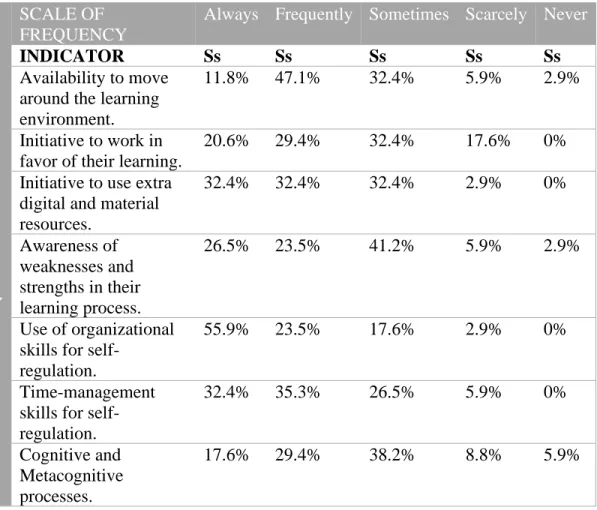
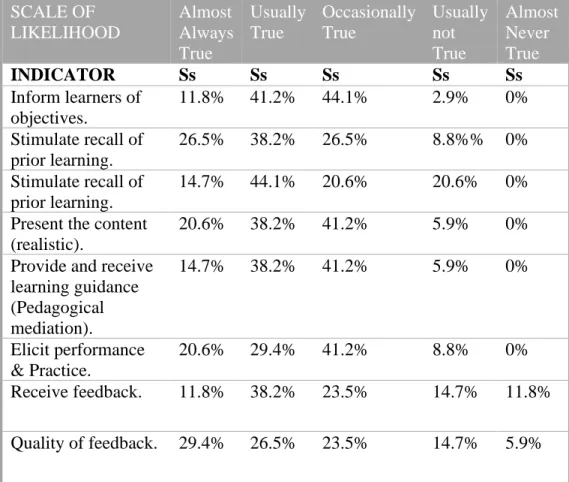
(8) 2.4.2 Freire and his Pedagogy for Autonomy ....................................................................... 58 2.4.3 Autonomous Learning and Constructivism ................................................................. 60 2.4.4 Andragogy ....................................................................................................................... 63 2.4.5 Role of the Teacher ........................................................................................................ 65 2.4.6 Materials ......................................................................................................................... 66 2.4.7 Autonomous Learning and Activities in a LMS .......................................................... 73 2.4.8 Evaluation in BL for Autonomous Learning ............................................................... 74 CHAPTER 3: METHODOLOGY ................................................................................................. 77 3.1 Context ................................................................................................................................... 77 3.1.1 Participants ..................................................................................................................... 78 3.1.2 Subjects ............................................................................................................................... 80 3.2 Approach................................................................................................................................ 80 3.2.1 Quantitative Approach .................................................................................................. 81 3.2.2 Qualitative Approach ..................................................................................................... 82 3.3 Research Design .................................................................................................................... 82 3.3.1 Method ............................................................................................................................ 82 3.3.2 Research Strategy ........................................................................................................... 83 3.3.3 Data Collection Technique ............................................................................................ 84 3.4 Instrument ............................................................................................................................. 85 3.4.1 The Survey ...................................................................................................................... 85 3.4.2 The Interview .................................................................................................................. 92 3.5 Instrument Validation........................................................................................................... 94 3.6 Research Development Procedure ....................................................................................... 95 3.7 Data Analysis Method ........................................................................................................... 95 3.8 Ethical Considerations .......................................................................................................... 97 3.9 Implications ........................................................................................................................... 97 CHAPTER IV: FINDINGS ............................................................................................................ 99 4.1. Quantitative Findings ..................................................................................................... 99. 4.1.1 Learner Autonomy ......................................................................................................... 99 4.1.2 Instructional Design of Activities in the Platform ..................................................... 111 4.1.3 Moodle Platform and Autonomous Learning Development .................................... 116 4.2 Qualitative Results .............................................................................................................. 131 2.
(9) 4.2.1 Learner Autonomy ....................................................................................................... 131 4.2.2 Instructional Design of Activities in the Platform ..................................................... 140 4.2.3 Learner Autonomy and the Use of Moodle Activities in the Platform .................... 148 4.3 Triangulation ....................................................................................................................... 153 4.3.1 Strengths ....................................................................................................................... 153 4.3.2 Weaknesses ................................................................................................................... 154 4.3.3 Discrepancies ................................................................................................................ 156 CHAPTER 5: CONCLUSIONS................................................................................................... 158 5.1 Context ................................................................................................................................. 158 5.2 Conclusions .......................................................................................................................... 159 5.3 Research Questions ............................................................................................................. 160 5.4 Scopes ................................................................................................................................... 162 5.6 Further Research................................................................................................................. 166 REFERENCES .......................................................................................................................... 167 APPENDIX I ................................................................................................................................... 175 APPENDIX II ................................................................................................................................. 180 APPENDIX III ................................................................................................................................ 185 APPENDIX IV ................................................................................................................................ 186 APPENDIX V ................................................................................................................................. 187. 3.
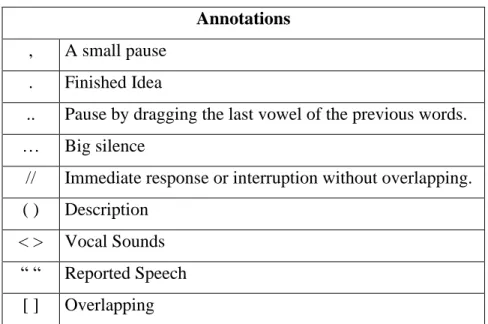
(10) Index of Figures and Tables Figure 2.1 Dimensions and Components of Autonomy ........................................................... 34 Figure 2.2 Moodle Activities and Bloom’s Taxonomy ............................................................ 50 Figure 2.3 Summary of pedagogical principles concerning teacher’s role for promoting autonomous learning activities and Students’ expected response. ......................................... 63 Figure 3.1. Participant´s Characteristics ..................................................................................... 79 Figure 3.2. Variables and Indicators ........................................................................................... 87 Figure 3.3 Interview Annotations ................................................................................................ 96 Figure 4. 1 Most Used Activities in the Platform ................................................................... 117 Figure 4.2 Most Difficult Activities for Students .................................................................... 118 Figure 4.3 Activities Students Never Perform in the Platform ...................................... 120 Figure 4.4 Impact of the Use of Moodle Activities ...................................................... 121 Figure 4.5 Usefulness of the Platform for Students...................................................... 121 Figure. 4.6 Positive Aspects in Favor of Ss Learning .................................................. 123 Figure 4.7 Positive Aspects about the Platform ........................................................... 125 Figure 4.8 Negative Aspects that do not Favor Ss’ Autonomy ..................................... 126 Figure 4.9 Negative Aspects about the Platform .......................................................... 128 Figure 4.10 Improvements of Methodology ................................................................ 129 Figure 4.11 Improvement of the Platform ................................................................... 130 Table 4.1 Results of freedom ..................................................................................... 102 Table 4.2 Results of Ability ....................................................................................................... 106 Table 4.3 Results of Desire ........................................................................................................ 110 Table 4.4 Results of Instructional Design of Moodle Activities ........................................... 115 Table 4.5 In a few words, how would you sum up your views on what learner autonomy is? 132. Table 4.6 What for you are the key characteristics of an autonomous learner? ................. 133 Table 4.7 How do you see the relationship between learner autonomy and language learning through the Moodle platform when using specific activities? ............................... 134 Table 4.8 Would you say that the students you teach in LAEL-I have a fair degree of learner autonomy? ....................................................................................................................... 135. 4.
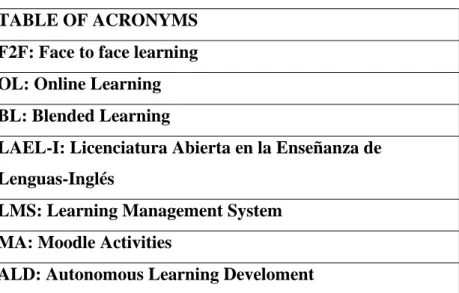
(11) Table 4.9 What is it that learners do to make you feel that they have a fair degree of autonomy? .................................................................................................................................... 137 Table 4.10 Do you think that autonomy is important for using the Moodle platform? ....................................................................................................................................................... 140. Table 4.11 What role, if any, do you feel the teacher has in promoting learner autonomy when presenting a Moodle activity in the platform? .................................................... 142 Table 4.12 Can you say something about what you do to encourage autonomy in your learners? ................................................................................................................... 143 Table 4.13 Can you say something about the procedure you follow to present a Moodle activity?.................................................................................................................... 146 Table 4.14 What changes in the way you present your Moodle activities in the platform, do you think would allow you to promote learner autonomy better? ................................. 148 Table 4.15 How do you think that the use of technology in general impacts the development of autonomous learning in the students of the LAEL-I? ............................................... 150. TABLE OF ACRONYMS F2F: Face to face learning OL: Online Learning BL: Blended Learning LAEL-I: Licenciatura Abierta en la Enseñanza de Lenguas-Inglés LMS: Learning Management System MA: Moodle Activities ALD: Autonomous Learning Develoment. 5.
(12) CHAPTER 1 1.1 Introduction Autonomous learning is the “capacity to take control over one’s learning “(Benson, 2001, p.2), and it involves the capacity to mediate one’s learning by taking the appropriate decisions for achieving our specific learning objectives. At present, students who develop autonomous learning skills are more capable of succeeding in the actual world since the competencies required for today careers demand the student to be able to become a lifelong learner who can take responsible charge of his/her own professional development. For that reason, some teachers and institutions have looked for ways of fostering autonomy in their courses. According to Benson (2001), the term “autonomy” first came into the field of language teaching, internationally speaking, with the source of a new project by the Council of Europe’s modern languages (1971) at the University of Nancy, France. The project was called CRAPEL, that means, “Centre de Recherches et d’Applications en Langues”, its purpose was to “provide adults with opportunities for lifelong learning” (Benson, 2001, p.9). Then with the leadership of Yves Chalon, its founder, it rapidly spread out in the field of language education. Later, when he died in 1972, the leadership of CRAPEL was passed to Henri Holec (Benson, 2001). In the beginning, the project was more related to the implementation of self-directed learning, which differentiates from autonomous learning in that in self-directed learning “the learners themselves determine the objectives, progress and evaluation of learning” (Benson, 2001, p.8) without a social constructivist view of interaction among them because it is more about “control over the learning environment”(Loyens et al., 2008; as cited in Murray, 2014, p. 322). Then, with the aperture of the first self-access language learning Centre at Crappel, its main objective was to provide students with access to a “rich collection of second language materials “(Benson, 2001, p.9) so that they could start to learn by themselves. It was then where constraints regarding the lack of training by instructors, learners and social changes through the years contributed to the development of the autonomous learning concept that we have today. Consequently, it was not until the last years that this concept would arrive to Mexico with a similar entrance, which was the emergence of the “Programa Sectorial de Educación 2007”, which sustains a vision of Mexico for the year 2030 and provides a set of objectives, strategies and actions that will define the path of improvement of different sectors. Regarding 6.
(13) educational reforms, this program established, as an objective, to increase the access to education, specially for the vulnerable and marginalized population through the access to services aimed at them. In addition, they “Promote in the classroom the use of virtual spaces to bring teachers and students to the latest technology as well as to develop competencies for their use to support the insertion of students in the knowledge society and expand their capabilities for life, including distance education and training, and the development of a computer culture” (SEP, 2007, p. 40).. Since then, in response to these policies, as Llaven Nucamendi, (2013, par.6) states “One way to acknowledge and meet these challenges has been the promotion of autonomy in language learning both within institutions and at a policy level.” In this way, “some institutions have initiated programmes to make students more independent and autonomous in their learning.” (Llaven Nucamendi, (2013, par.4).. According to Benson, (2001, p.109), ways of promoting autonomy in the classroom include “any practice that encourages and enables learners to take greater control of any aspect of their learning”. Currently, these types of practices include the use of different facilitating e-tools derived from the evolution of Computer Assisted Language Learning (CALL), which has taken the place of educational facilitator by increasing the accessibility to education in a variety of manners. Then, speaking about CALL, there are different e-tools that can be used to promote autonomous learning, one of the examples can be E-learning platforms or educative web platforms, which have emerged as facilitating e-tools during the teaching-learning process. They can assist teachers in establishing new learning programs by creating, approving, administrating, storing, distributing and managing virtual formation activities (Clarenc, Castro, López de Lenz, Moreno & Tosco, 2013). Leading institutions such as the Benemérita Universidad Autónoma de Puebla (BUAP) are taking advantage of all the facilities that this e-tool can provide by integrating an e-learning platform (Moodle) in the b-learning education program “Licenciatura Abierta 7.
(14) en la Enseñanza del Inglés (LAEL-I)”. With this action, they recognize the importance of integrating ICT into their curriculum as a way of facilitating communication and promoting autonomous learning in students. So, in the Degree Profile of the bachelor’s degree mentioned above they state:. Actualmente, las tecnologías de la información y comunicación juegan un papel de gran relevancia en la formación de las nuevas generaciones, es por eso que, a través de este espacio virtual, se busca favorecer en los estudiantes de la LAEL-I un proceso de aprendizaje autónomo e independiente. (LAEL-I, 2018 par.9). As can be seen, it is suggested that one of the main reasons why this program implements a b-learning platform in its curriculum is to favor students to develop their independence and autonomous learning. In other words, this action is intended to provide learners with opportunities to develop their autonomous learning, which is a significant feature to consider in education these days, as it was stated before. However, up until now, little has been researched about the efficiency of technology implementation in the classroom and even less about its impact in the development of autonomous learning skills on the learner. This lack of research on the subject is because the inclusion of ICT in the curriculum is relatively new. Also, it is due to how quick technology advances. Consequently, “although research studies in online learning has risen significantly in the last years, much is still unknown regarding factors influencing learner achievement in these online learning environments utilizing LMSs “(Cigdem & Ozturk, 2016, p.99), specifically about the way they use it for teaching and learning. Thus, despite the availability of different programs and resources, their effectiveness is still a matter of discussion and a subject to be researched. In this way, this study will aim to provide data about this field on the inclusion of technology into the curriculum to foster autonomous learning by exploring to what extent the development of autonomous learning skills has been favored through the employment of Moodle platform activities among LAELI students at BUAP.. 8.
(15) 1.2 Rationale When researching autonomous learning, it is to be considered that, “it is exhibited in various modes of learning characterized by particular procedures and relationships between learners and teachers.” (Benson, 2001, p.110). The combination of different modes of learning with different practices will determine the effectiveness of teachers’ or institutions’ efforts to foster autonomy (Benson, 2001). Then, in order to evaluate to what extent, the expected results have been reached, different approaches for the research of its effectiveness concerning different practices have been developed during the years. These approaches are in relation to the practices associated with the development of autonomy, and each one emphasizes and evaluates specific objects of study during the research, so these approaches can be: Resource-based, technology-based, learner-based, classroom-based, curriculumbased, and teacher based. From these, the first two observe the independent interaction of the learner with the learning material, which in the first approach involves a general type of material while the second focuses on the use of educational technology. On the other hand, the remaining approaches involve the evaluation of learner control over the planning, curriculum as well as the role of the teacher and learner, their attitudes, improvements, education and behaviors. Also, according to Benson (2001, p.183), there are three critical areas of research in the field of autonomy that need more research. The first one is concerned with the “nature of autonomy and its parts”. The second one concerns “the possibility of fostering autonomy among learners” and the third one with its effectiveness regarding language learning or proficiency. This research will focus on the second area related to the appropriate conditions provided by the employment of Moodle platform activities among LAEL-I students at BUAP for learners to become autonomous.. 1.3 State of the Art In response to the processes initiated to foster autonomy in different modalities of learning by teachers or/ and institutions, recent Studies of the nature and effectiveness of efforts to foster autonomy are, e.g. Lamb, (2008); Orakci & Gelisli, (2007); Haiyan Liu & Wenqian Qi (2017); Nguyen, & Walkinshaw, (2018) and Yuan, & Kim, (2018). In these studies, researchers’ main purpose was to try to determine the learner autonomy towards a scale where students productions and proficiency were observed. The second set of studies 9.
(16) reported the perceptions of teacher and students towards autonomous learning regarding teacher-learner based approaches (e.g. Orawiwatnakul, & Wichadee, (2017); British Council: Borg, & Al-Busaidi, (2012); Henri, Morrell, & Scott (2017); Bekleyen, & Selimoğlu, (2016); Doğan, & Mirici, (2017); Suraratdecha, & Tayjasanant, (2018); Wichayathian, & Reinders, (2018) and Henri, Morrell, & Scott, (2018). These various approaches have been used to examine the effects of the implementation of specific practices for fostering autonomy, highlighting the importance of the teacher’s role. The evidence is almost uniformly consistent in indicating that students raise their autonomous learning awareness and ability when they have appropriate teacher’s orientation; in the same way, they outstand the importance of teachers’ autonomy first and foremost. One remarkable study regarding teachers’ autonomy was Kaymakamoglu, (2017, p.1) in which, instead of focusing on foreign language learners, he focused on exploring learner autonomy in teacher candidates in an EFL teacher training program. In this study, the findings showed that the “challenges the participant teachers faced in promoting learner autonomy were changes in teacher role, culture-related issues (see Chirkov, Ryan, Kim, & Kaplan, (2003) and teacher autonomy”. In relation to the present research, the participants of this study were also students that are being trained to be EFL teachers. Therefore, perspectives of their teachers will be considered for a better understanding of the researched phenomena. On a different note, only a relative handful of studies have tried to examine the process using different perspectives and variables for research. In the same way, there are few studies regarding the role of educational technology and autonomous learning (e.g Fotiadou, & Angelaki, (2017); Cabrales, & Díaz, (2017); and Esteban, & Castro, (2018). On its part, Esteban and Castro’s study consisted of an action research focused on young people in adult education, who were at risk of exclusion in their learning environments. They studied the effectiveness of “Scratch” educational tool for the promotion of autonomous learning development. They focused on pedagogical strategies and activities for their analysis by adopting a critical approach that allowed them to discover to some extent the potential of the application of this ICT. On the other hand, Fotiadou, & Angelaki’s, (2017) study consisted of exploring the relation of autonomy in student-student and tutor-student interaction in a distance learning modality, they used questionnaires for their aimed research objective. They found that in all 10.
(17) the subscales of autonomy there was a positive correlation with one to the other: sensibility, ability and management, with St-St interaction as well as between self-awareness and Stteacher interaction. Another study by Cabrales, & Díaz, (2017), in which they present the results of different survey researches, with the main aim of providing elements for the development of teachers of diverse subjects from a specific institution to optimize learning in the digital native students. For this study, they used a mixed approach in which the object of the survey was to investigate the technological literacy of students and how their teachers dealt with it. Instead of regarding with autonomy though, it dealt with the literacy of using technology; nevertheless, it addresses self-directness skills, that is why it is being considered in this section. Another previous study investigating the relationship between technology and autonomous learning is In‚ra Boj‚re and AstrÓda Skrinda’s (2016) in which a holistic fractal model (HFM) of autonomous learning for English acquisition in a blended environment of e-studies in adult non-formal education was created. They based their analysis on philosophy, psychology and education of English acquisition theories. Their primary aim was to find out how autonomous learning influences adult students’ system of values and integration in the learning classroom and virtual environment. The findings of the study showed that “traditionally technological and pedagogical facilitation in English acquisition programmes of adult non-formal education is directed to facilitation of the development of language skills” (In‚ra Boj‚re and AstrÓda Skrinda’s, 2016, p.1). Besides this study, only some others have considered the evaluation of the implementation of technological resources, but not directly related to the development of autonomous learning skills. For instance, Montes and Ochoa (2006) in their study “Apropiación de las Tecnologías de la Información y Comunicación en Cursos Universitarios” about the things that are to be considered when evaluating the impact of educational technology. The most relevant findings of this research were about the use of the ICT for educational purposes in BA courses, highlighting the differences between learning with and from the technology. In relation to the present study, the aforementioned studies framework the theoretical view that is behind the integration of technology to foster autonomous learning in new educational modalities (b-learning). They provide essential aspects that are to be considered 11.
(18) when evaluating its impact on educational programs that hold specific purposes, which in this case is the fostering of autonomous learning in students.. 1.4 Significance of the Study Despite an increased interest in technological materials from the perspective of resourcebased materials and technology-based approaches, nowadays it is surprising that so little empirical research has been conducted on the topic, especially from the perspectives of autonomous learning. Few studies have focused on the phenomena behind the relation between autonomous learning, and blended learning of future English Language Teachers and any has been conducted in a Mexican Context. In this way, a study which involves the role of autonomous learning to describe to what extent the development of autonomous learning has been favored through the use of educational technology in a blended learning modality in Mexico is essential for several reasons. Firstly, understanding the phenomena behind the use of these technological resources in the classroom can help to evaluate the efficiency of current policies of education, which involve the inclusion of technology into the classroom from different perspectives, (students’ and teachers’), who are the principal performers in this modality of education. In the same way, it can also provide feedback to the institution, so that the participants can also be aware of the implication of the use of this educational technology and autonomous learning.. The promotion of autonomy in learning needs to be understood by all participants in the education process (students, teachers and institution) and if the students are the central performers in this process their understanding of autonomy in learning and their views on this issue may bring us a better understanding for supporting an educational service that promotes learning autonomy (Llaven Nucamendi, 2013, par.4). Second, it will contribute to the field of ICT and CALL implementation in education as it is to be noted that the self-access centers are directly linked to educational technologies, and, eventually, as Benson (2001, p.10) says, “ self-access learning has also tended to become 12.
(19) synonymous with technology-based learning”, so it can help to understand the impact of technology integration as only limited space in the extensive literature available has regarded this topic. Third, this study will contribute to previous work because regarding to autonomous learning and its role among the different practices or “ ways of organizing the process of teaching and learning” (Benson, 2001, p.110), in order to foster autonomy in the classroom, the present study contributes to the technology-based approach, which emphasizes Ss’ “independent interaction with educational technologies” (Benson, 2001, p.111). In the same way, it merits to be researched because this phenomenon has not been investigated before in this specific context. Therefore, it cannot be taken for granted that the practices that are implemented in the research always imply the development of autonomous learning to the extent that is expected because of others’ contexts results. In fact, researchers on autonomy highlight that “learners who engage in technology-based learning do not necessarily become more autonomous as a result of their efforts. [because] A great deal depends on the nature of the technology, and the use that is made of it” (Benson, 2001, p.10), which changes from one context to another. So, the necessity of assessment in the matter is essential. Then, this study will contribute to the knowledge of autonomy in a blended-learning modality, as well as to the understanding of possible advantages and disadvantages in this b-learning modality.. 1.5 Purpose of the Study The purpose of this study is to describe to what extent the conditions provided by the employment of Moodle platform activities among students of the "Open-Bachelor's Degree in English Teaching" (LAEL-I) at BUAP has helped them to become autonomous. With this research we also try to identify the possible issues, challenges and advantages students face while working with this e-tool. There has been little research on this topic and never with this sample or group under study. That is why the primary purpose of this study is to explore the construct by employing a two-phase sequential mixed investigation (Creswell & Creswell, 2008) using a case study method in which the participants’ and teachers’ subjective views are sought for in-depth understanding of the phenomena under investigation. 13.
(20) 1.6 General Objective The general objective of this study is to determine the perspectives of Ss and Ts about autonomous learning through the use of Moodle activities as a formative mechanism to explain how the use of technology impacts the development of Autonomous Learning in students of the LAEL-I.. 1.6.1 Specific Objectives 1. To analyze the perspectives of Ss and Ts about autonomous learning through the use of Moodle activities as a training mechanism. 2. To Explain how the use of the e-platform impacts on the development of Autonomous Learning in the students of LAEL-I. 3. To Compare Teachers’ and Students’ perspectives to determine the points of agreement and discrepancies of their views about autonomous learning in the LAELI through the use of the e-platform.. 1.7 Research Questions For this, the following research questions were considered: 1. What are Ss’ and Ts’ perspectives of Ss’ autonomous language learning based on the employment of the e-platform? 2. How does the introduction of an e-learning platform help LAEL-I students to improve their autonomous learning according to teachers and students’ perspectives? 3. To what extent do Ss and Ts consider autonomous learning can be developed using an e-platform?. 1.8 Thesis Organization The thesis is organized into five chapters. The current chapter provided a general overview of the role of autonomous learning in the education field and a discussion of the problem that this work addresses. It also explained the significance of the present study as well as the research aims to be conducted. In the next chapter, it will be presented a critical review of 14.
(21) the literature that is relevant to this study. Then, in chapter III, the methodology of this research will be described. Later, in chapter IV, the results of the study are presented and discussed. Finally, in chapter V, a discussion of the implications and recommendations for further research are presented.. 1.9 Definition of Key Terms Autonomy: a human quality which is observed as the capacity for responsible decisionmaking to self-government (Merriam-Webster. com, 2019). Autonomous Learning: the capacity “To take charge of one’s learning […] (which implies) the responsibility for all the decisions concerning all aspects of this learning […]” (Holec 1981; as cited in Little, & Dam, 1998, p.1) including "setting goals, selecting materials, deciding on activities and strategies, monitoring progress and assessing outcomes" (Murray, 2014, p.321).. Self-regulation: the ability to plan and execute learning activities independently without needing someone else to tell you what to do and when to do it (Means, Bakia and Murphy, 2014, pp.13-14). Blended Learning: the mixture of “traditional on-site instruction with innovative learning technologies” (Thorne, 2003; as cited in Crawford, & Jenkins, (2018, p.129). Learning Management System (LMS): “an eLearning software that is installed on a server and allows to manage and organize the teaching-learning process” (Meza, 2012, p.41). Moodle: a free open source platform (LMS) that “allows sharing course content to support conventional instruction” (Cigdem & Ozturk, 2016, p.99) as well as using the tools it offers to assist learning. Moodle Activity: the way through which students can actually “produce” something that evidence their learning. Overall, Moodle offers 14 different types of activities in the standard Moodle version, the list of them according to Moodle.org, (2018b, par. 5) are; assignments, 15.
(22) chat, choice, database, feedback, forum, glossary, lesson, external tool, quiz, SCORM, survey, wiki and workshop.. Instructional Design: instructional events that must be followed in every teaching-learning process to be successful (Kruse, 2009). Perspective: a particular attitude towards or way of regarding something, it’s a point of view (Johnmaxwellteam.com, 2019). It is “a particular way of viewing things that depends on one´s experience and personality” (Dictionary.cambridge.org, 2019).. 16.
(23) CHAPTER 2: LITERATURE REVIEW In this chapter, the different theories that sustain this investigation will be discussed. The present chapter is organized into three main sections. The first one is the autonomy section, which addresses the scholarly literature about the independent variables considered in this research; the philosophy of autonomy, its components and theory of development. Blended learning modality of education is the second topic discussed; it describes its advantages and disadvantages according to the reviewed literature to better understand the context of research and the way it influences in the development of autonomous learning. In the third section, the scholarly literature that relates to the theory of learning and the role of the platform as a technological resource for the learning process will be explained.. 2.1 Autonomy Autonomy is a human quality which is observed as the capacity for responsible decisionmaking. It dignifies human beings by allowing them to choose among different options the one that best suits their own needs. In words of Stammers, (2015), it is "the ground of the dignity of human nature and every rational creature" (p. 158). Thus, autonomy, more than an accessory aspect during the integral development of a human, it has been considered as a basic human need (Little, & Dam, 1998) through which it is possible to arrive at a well-being (Chirkov, Ryan, Kim, & Kaplan, 2003) of members in a society. However, even though autonomy is seen as an individual quality, it is not developed in isolation. It implies a great challenge since making decisions involves values which are developed by means of interacting with others because life, relationships and society are constructed through the exercise of this quality. Thus, it is important to know to what extent decisions are being made by ourselves or by the influence of others. Heteronomy is a term referred to the system in which a person is governed through external and imposed rules without the involvement of his or her own opinion, values or interests (Chirkov et al. 2003). For this reason, this term is considered to be the antonym of “autonomy “, which has its etymological origin from the words autos (self) and nomos (rule or law) that means “to rule oneself”. In that sense, autonomy can be defined as "that property of the will which is a law unto itself" since this is the way that one’s own reason obedience to guide one’s own actions is manifested (Scruton, 2001; as cited in Stammers, 2015, p.158). 17.
(24) Thus, the term of autonomy from its first application in the Politics of the Greek city-state, where an autonomous city was that in which citizens “made their own laws, as opposed to being under the control of some conquering power” (Dworkin, 1988, pp. 12-13), to today’s application as a moral, political, and social ideal (Dworkin, 1988) for every human being in a particular context, has finally been defined as "an extension of political self-governance by the individual, personal self-rule of the self while remaining free from both controlling interferences by others and personal limitations, such as inadequate understanding, that prevent meaningful choice” (Beauchamp and Childress, 1989; as cited in Stammers, 2015, p. 157) . As can be seen in the previous definition, the elements of freedom, choice and ability are present; these will be key elements for the study of this quality among humans. In the next section, the relation between autonomy and community will be discussed.. 2.1.1 Autonomy and Community So far, we know that autonomy is a need of every human being. However, according to the Self-Determination Theory (SDT), the specific means of expressing and satisfying basic needs, including autonomy can vary considerably by context and culture, (Deci & Ryan, 2000; cited in Chirkov et al., 2003). That is why researchers concerned with this hypothesis have tried to study to what extent these needs differ from country to country (e.g. Chirkov et al., (2003). However, it has been found that despite the possible cultural differences in satisfying basic needs "the issue of autonomy can be similarly understood across diverse cultures,"(Chirkov et al. (2003, p.108) for which the possible differences might be only superficial and not remarkably different. (Deci & Ryan, 2000; cited in Chirkov et al. 2003). On the other hand, despite the different definitions of autonomy, according to the SDT formulation:. A person is autonomous when his or her behavior is experienced as willingly enacted and when he or she fully endorses the actions in which he or she is engaged and/or the values expressed by them. People are therefore more autonomous when they act in accord with their authentic interests or integrated values and desires. (Deci & Ryan, 1985, 2000; Ryan, 1995; as cited in Chirkov et al. 2003, p.98).. 18.
(25) In the same way, an autonomous person is responsible for his or her behavior and the implications that this has for a determined community. In regard to this, Murray (2014, p.334) points out that "Learning is about identity: past, present, future". Then, if we carefully take this into consideration, autonomy concerns the fact of taking decisions for a living. Learners would have to think also in who they want to be in order to take appropriate decisions since “autonomy is essentially a matter of taking responsibility for one’s authentic concerns” (Benson, 2013; as cited in Murray, 2014, p.335). For this, self-regulation is necessary, and will eventually have an impact on the construction of society, where the communitarian sense of autonomy is located. Today's trend of autonomy is inclusive to society by considering that “what is required is a more thoroughgoing recognition of the constitution of minds and selves within social interactivity with others” (Martin and McLellan, 2008; as cited in Murray, 2014, p. 335). As stated before, although the view of autonomy with respect to its recognition as a basic need is not very different in different parts of the world, a difference exists in the way that it is exercised and, consequently, the way that it “looks like” in different parts of the world, and field of practice. The reason for this could be the socio-constructivist way in which cultures are built in values and habits. Twomey, (2015, p.263) states "the ability to exercise autonomy is dependent to some extent on the relationships people have with those around them", which might become relative from culture to culture. Then, despite the fact that overall autonomy might imply the same for every culture, the specification of determining habits will depend on the particular practices of a culture. In this regard, there is an approach called "cultural relativism" that holds the view that "different cultures engender different goals, motives, and values, and these, in turn, are assumed to be differentially associated with how one pursues and attains well-being and social integration" (Markus, Kitayama, & Heiman, 1996; Triandis & Gelfand, 1998; as cited in Chirkov et al. 2003, p.97). This view has been adopted by different theorists of social sciences and psychology to understand the way communities are built, their habits and beliefs in relation to specific topics under study. In this research, it is necessary to consider this theory because it will allow a better analysis of the particular context of the study, which will have determined characteristics to be considered at the moment of describing the way. 19.
(26) autonomy is being exercised. In the next section, some discussion about autonomy and its moral implications in a context will be addressed.. 2.1.1.1 Inclusive Autonomy and Moral Implications It took time to recognize the social feature of autonomy and balance it among its other dimensions. It was not until negative results from the fostering of autonomy in different areas started to appear that the reflection on its social and moral implications increased. An example of this is the fostering of autonomy in healthcare, where autonomy has been reduced to “the exercise of personal choice” (Stammers, 2015 p.157) instead of responsible practice. According to Stammers (2015), when patients’ free choices make doctors pass over the Hippocratic oath, they do not care about the moral implications and consequences that go beyond their own selves and that usually breed social problems. One example of this is the topic of “life” because while a doctor has the duty to save it, a patient might have the opposite desire. Consequently, there might have been a type of confrontation between two wills, where the patient’s “autonomy” might be privileged, but where no ethical considerations might be considered. In this way, Doctors cannot respond in accordance with the Hippocratic precept because they have to respect the autonomous decision of a person, this draws new limits and builds new ones for the construction of society because it has an impact on the way the order is built in a community from which everyone depends on and is included. So, there is a need for regulation of people's actions, for which, he proposes a more “inclusive communitarian approach" for the exercise of autonomy. So, autonomy cannot be reduced to an individual dimension but extended to a social one. There is a strong relationship between the field of healthcare and education in that the decisions a person makes will have a strong collective impact on a community. Especially, when speaking about teachers, there is a lot of responsibility in their hands when preparing new teachers who will help other students or teachers shape their professional profile. Furthermore, the autonomous quality regarding “freedom of choice” which implies a condition of “choice among a morally acceptable range of options” (Raz, 1988; cited in Stammers, 2015, p.157), opens the discussion of what is “moral” and the conditions for recognizing its validity within different options and circumstances for taking responsible decisions. With this in mind, the complexity of decision-making increases because, now, 20.
(27) evaluating moral choices provides the opportunity to exercise critical thinking, which simultaneously implies reflection, conviction and the development of an identity. In relation to this, Chirkov et al. (2003, p.98) state "People often experience a lack of autonomy when pressured to do something they do not believe in or to follow social norms with which they do not identify". So, it is important to say that autonomy will also reflect an identity which will have a basis on beliefs, which are built within a community and that need to be carefully identified for the appropriate execution of it. Relational autonomy is a trend which recognizes the contribution of others to a person’s capacity to exercise autonomy, as well as the importance of the social contexts within which relationships occur. It holds that there is no way to be autonomous if excluded from society because “we can only be fully autonomous when we engage on social interaction with others” (Friedman, 2003) all the time, and that we are also subordinated in many moments to an authority which somehow helps us to regulate our actions in a determined context. In that sense, how autonomous a person might be or become will also depend on the amount of power that he or she has experienced in a determined context (Banks 2005; cited in Twomey, 2015). In fact, the acts of people are usually regulated by a set of beliefs shared by a particular community. These beliefs include moral, religious and cultural aspects that are to be considered in the development of autonomous decisions of a person. That is why, for some scholars such as Rabin (2008; cited in Twomey, 2015, p.255), the reduction of "Individual autonomy" will impact on how "restrictive" a society we want to create will be, so he also associates this particularity to the different "self-destructive behaviors" that the use of freedom in an individualistic approach of autonomy can imply. In other words, how restrictive a society is, depends on the level of power that the state gives to their constituents to exercise their autonomy (Banks 2005; cited in Twomey, 2015). The limitations in this way, work to avoid self-destructive behaviors that can prejudice the community. So, from a communitarian perspective, it is necessary to consider that the decisions that a person makes will have a substantial positive or negative collective impact in society. For this, McLeod and Sherwin (2000; cited in Twomey, 2015) state ‘relational autonomy seeks politically aware solutions that endeavor to change social conditions and not just expand the options offered to agents’ (p.265). 21.
(28) In education, which is considered to be “the cradle of society”, it is essential to develop a communitarian sense. In this way, in order to promote an adequate exercise of autonomy, this new and trendy position regarding the exercise of autonomy will be considered because transporting the aforementioned principles to education is essential to consider how “restrictive” a classroom environment is needed to be for the specific learning purposes.. 2.1.2 Autonomy in Education Since the concept of autonomy appeared, it started to have different applications in diverse fields, but it was not until the 80s that started its application in the classroom (Benson, 2011). Similarly to the aforementioned definitions, in the educational field, being autonomous implies the capacity “To take charge of one’s learning […] (which implies) the responsibility for all the decisions concerning all aspects of this learning […]” (Holec 1981; as cited in Little, & Dam, 1998, p.1) including "setting goals, selecting materials, deciding on activities and strategies, monitoring progress and assessing outcomes" (Murray, 2014, p.321). Nowadays, Benson, (2011) concludes autonomy in language teaching and learning is a “work in progress, to which more and more practitioners are contributing year by year” (p.17). He also states that as a philosophical concept, autonomy in language teaching and learning necessarily would have to be "deconstructed" since new findings in research have revealed weaknesses, gaps and even mistakes about how autonomy has been considered, fostered and applied over the years. In this study, the definition of autonomy will be based on Holec’s and Murray’s previous definitions. Today, discoveries in different sciences such as psychology, pedagogy and technology have contributed to change the way autonomy is assimilated in society, by helping us to move from an "individualistic" approach of autonomy to a more “inclusive” approach in education. So, at present it is recognized that apart from its "personal sense", autonomy can be considered as "multidimensional" because it "takes many different forms according to the person, the setting, and multiple contextual and micro-contextual factors" (Benson, 201, p.16). Consequently, most of the research in this area nowadays "describe autonomous learning in various settings and assess how educational interventions foster autonomy and improve language learning" (Benson, 2011, p.16). Also, during the evolution 22.
(29) of this concept within the field of education, it has had different trends that have contributed to both, defining better and/or misleading the concept. In the next sections, a deeper explanation of what is and what is not autonomy, the implications behind its omission in education as well as its components will be presented.. 2.1.2.1 Limitations for the Execution and Development of Autonomy in Learning Basically, according to specialists, what is needed for the execution of autonomy are appropriate mental capacities and independence or freedom from the subject to perform an act (Stammers, 2015) and an adequate morally acceptable range of options from which to choose (Raz, 1988; cited in Stammers, 2015) or, in other words ”an informed consent and a narrow set of choices.” (Twomey, 2015, p.255). In relation to this, Dworkin, (1988, p.18) adds “Liberty, power, control over important aspects of one’s life is not the same as autonomy but are necessary conditions for individuals to develop their aims and interests and to make their values effective in the living of their lives” that is, to exercise their autonomy. On the other hand, different factors intervene for autonomy to be exercised, this is because the response that a person might have towards the development of his or her autonomy can be different depending on the context and education. Twomey, (2015, p.262) states that "some people are expected to be more enthusiastic about, or more comfortable with exercising their autonomy (by making their own decisions) than others". He suggests that this can be as a result from lack of self-assurance; "failures of a sense of assurance in one’s own capacity to form preferences and make decisions undermine autonomy’ (Natalie Stoljar, 2011; as cited in Twomey, 2015, p.263). In this way, behaving this way can be due to a kind of resistance to change behavior which in a way is entirely normal in human beings, but that would become a problem if it does not disappear with the time. Another situation to be considered about autonomy's limitations is that, since autonomy is a philosophical non-measurable quality, there will always be a difference between actual and ideal autonomy. That is, the decisions we take for its execution and the actual execution of them might be different in real life. This is due to the fact that different internal and external factors might intervene in this process causing that the way its intrinsic motivators and how they are translated into observable behaviors do not show the expected results (Stammers, 2015). 23.
(30) 2.1.2.2 Advantages and Implications of the Lack of Autonomy in Learning From a psychological perspective, autonomy- in words of (Deci 1995, cited in Little, & Dam, 1998, p. 2) -is a "basic human need", that implies "feeling free and volitional in one’s actions” for which its omission results in intrinsic demotivation of the person. In education, it has been discovered that this demotivation is reflected in the student’s attitude since it detonates several implications for learning. As a result, it is believed that efficiency and effectiveness of learning will depend on students’ motivation (Little, & Dam, 1998, p.2) as well since it has been discovered that autonomous learners use to be motivated and reflective, which benefit their learning. That is why it is assumed that in a way, all learning is likely to succeed to the extent that the learner is autonomous" (Little, & Dam, 1998, p.2). To continue, the stated advantages and implications of the lack of autonomy will be explained.. 1. Advantages One advantage of efficient and effective autonomous learning, according to scholars, is that "autonomous learners can freely apply their knowledge and skills outside the immediate context of learning” (Moeller, 2001, p.1). According to Holec's definition in Little, & Dam, (1998), this provides a solution for some frequent difficulties of novice professionals, who face several challenges in trying to apply their knowledge in their new work because of lack of experience. According to Little, & Dam, (1998, p.2) because autonomous learning entails "reflective involvement in planning, implementing, monitoring and evaluating learning" it also benefits the development of “self-management skills in learning" which effectiveness can be seen in the accomplishment of the objectives of each learner. In this way, it is believed that It helps to fulfil the possible weaknesses of a program by allowing students to develop the competences they need for the real world autonomously.. 2. Implications of the lack of autonomy According to thinkers, one of the factors that works against autonomy is the socio-political structure of society, which is upheld by a capitalist system. In regard to this reality, Domingo, (1997) explains what he thinks has been the consequences of that type of system 24.
(31) on citizens’ autonomy. He claims that autonomy in citizens has been kidnapped little by little through the imposition of “ideologies”. He says there has been a mean of establishing certain ideological control over professionals through, what he calls, the “proletarianization of work”. In relation to this, Derber cited in Domingo, (1997, p.26) makes the distinction of two ideological proletarianization processes through which proletarians can hardly go against and that prejudice their autonomy. The first one is the “ideological desensitization”, which consists on resting importance to the valorative content of work and social purposes of it by replacing it with the belief that the rational use of it via “scientific method” is more important than results. The second response is called “ideological co-opting” in which the valorative content of work is not downgraded, but the enterprise assimilates the worker by modifying his own beliefs or moral background to little by little make them suitable with the enterprises for which the person works. In this way, people start to lose the real sense and moral social value of work, and with it, autonomy. As a result , according to Domingo, (1997) and other thinkers, this lack of autonomy results in lack of control over one's work which eventually leads to ideological disorientation and loss of an ethical sense that lead professionals to become mechanical, to lose the sense of their efforts, to work without consciousness about what they are working for or why, and to only care for getting the necessary abilities and skills to accomplish the requirements to upgrade themselves to get more benefits, but without passion for what they are doing. In this manner, workers with few autonomy keep moving in a system in which they are subject to others’ decisions. In the educational context, what the proletarianization of work means is the loss of an ethical sense implicit in the teaching work (Domingo, 1997). This results in the same aforementioned attitudes among teachers and students, whose lack of autonomy cause unhappiness and low quality in their performance that eventually become on big issue during the learning process.. 2.1.3 Components and Dimensions of Autonomy In order to exercise autonomy appropriately, it is necessary to understand the different parts from which it is constituted. Some “nuances” attributed to this concept are "liberty (positive 25.
(32) or negative), dignity, integrity, individuality, independence, responsibility and selfknowledge, self-assertion, critical reflection, freedom from obligation, absence of external causation, and knowledge of one's own interests' (Gerald Dworkin cited in Stammers, 2015, p.157). In the same way, the term autonomy has been compared and confused with concepts such as self-directedness, self-regulation, independence, individualism, and separateness (Ryan, 1993 cited in Chirkov et al. (2003). This is due to the fact that autonomy is such a complex concept that to some extent, contains all the previous conceptual qualities. From all the previous concepts, the one to which autonomy has been confused the most is “selfdirected learning” (SDL). However, according to scholars, this more than a “nuance” of autonomy, is the result of it because SDL "entails more student control over the learning environment and provides a crucial role for the learner in initiating a learning task (Loyens et al., 2008 cited in Murray, 2014, p.322). In addition, SDL can be viewed as” a manifestation of learner autonomy in which learners accept responsibility for all the decisions related to their learning, such as those pertaining to setting goals, selecting materials, determining strategies and activities, monitoring and assessing their learning."(Dickinson,1987 cited in Murray, 2014, p.322). For which according to this same author, a self-directed learner, first is supposed to be an autonomous learner. Moreover, it is important to clarify what are the components of autonomy in order to better understand what autonomy consists on because the misunderstanding of autonomy can lead to wrong positions which can affect its development. For instance, a popular fake concept of an autonomous person is that of a "self- sufficient, independent person, relying on his own resources and intellect" (Dworkin, 1988 cited in Friedman 2003; as cited in Twomey, 2015, p. 256). So, in order to clarify it more, Little, 1991, (as cited in Benson 2011, p.4) specifies what autonomy in learning is, and he provides a definition which go beyond the one mentioned above, he says:. Essentially autonomy is a capacity for detachment, critical reflection, decisionmaking, and independent action. It presupposes, but also entails, that the learner will develop a particular kind of psychological relation to the process and content of his. 26.
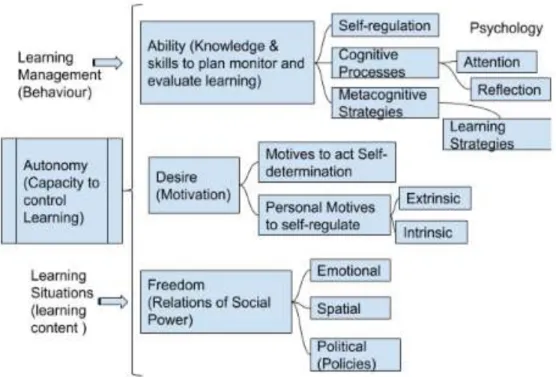
(33) learning. The capacity for autonomy will be displayed both in the way the learner learns and in the way he or she transfer what has been learned to wider contexts.. In the previous definition there can be appreciated different dimensions of autonomy that Benson (2011) classifies as “learning management” and “cognitive processes”. In this way, according to Benson, (2011) , who has dedicated himself to the study and research about autonomous learning in Language Learning, there are different ways in which learning can be controlled by the learner, and based on Little’s definition, he claims that there is the need for one more dimension in order to execute an effective learning management., which he calls “learning content”. So, he described this last dimension as “situational” and related to a certain level of “freedom” by teacher and students. Furthermore, he suggests three categories for describing in a broader way what aspects can be involved in the exercising of learning control during the development of autonomy. He takes into consideration that there are some actions that might be intrinsic and naturally performed by the student without special training, and so they cannot be observed, and teacher intervention is not possible. The categories he proposed are control over learning management, cognitive processing and learning content. Benson (2011) considers there are specific objects of control in each of his proposed dimensions. For the “cognitive processes”, he considers the psychology of learning held during the acquisition and development of the mental capacities that permit the exercise and development of autonomy in language learning. According to Benson, (2011), the two main cognitive processes that compound this dimension are “Directing attention” and “Reflection” because they are the basis for the development of all the autonomous learning skills. Then, in the “Learning management” dimension, he recognizes the “learning behavior”, that is to some extent, the observable behavior of learners that demonstrate they are exercising their autonomy. For Benson, (2011) “control over learning management” also imply behaviors involved in the planning, organization and evaluation of learning. For him, the cognitive and attitudinal factors that underlie this dimension can be better appreciated in the theory of “self-directed learning” as explained earlier. Finally, regarding to the “Learning content” dimension, Benson considers the control over “learning situations”, which will demand specific characteristics such as specified 27.
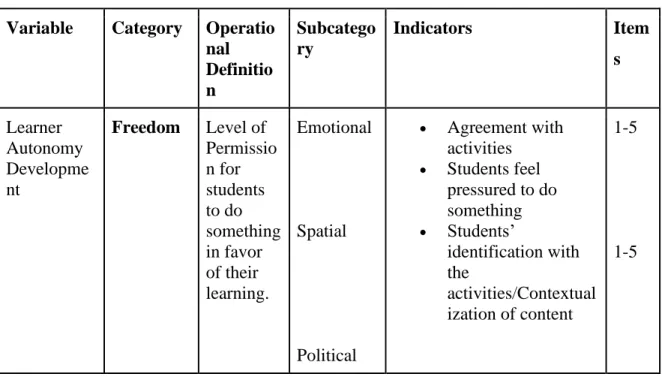
(34) content, place and roles during the learning events. It is important to say that he also highlights the fact that some of the components of these categories are interconnected, but for its study and understanding, in their explanation, they are being separated. In this way, he claims that from these categories, different characteristics or components of the autonomous learner can be gathered in order to draw a kind of “autonomous learner profile” that can serve as a guide for identifying autonomous learners and/or promoting different actions for autonomous development. Apart from this classification, other authors have reflected upon autonomous learning components and dimensions arriving to similar classifications and enriching some of them. For instance, Huang & Benson, (2013); as cited in Murray, (2014, p.324) proceed to “break down the two key elements of the definition [of autonomy]: capacity and control” in order to get its dimensions. They agree that the dimensions of autonomy would be three: ability (what students can do in favor of their learning), desire (motivation to do it) and freedom (level of permission for students to do it). Then, Murray, (2014) comments that the corresponding actions concerning to “self-regulation” would be placed in the dimension of “ability” proposed by Huang & Benson, (2013), and add one more dimension, which would be the “social dimension”. He deeps into the social dimensions of autonomous learning making a special emphasis on the role of the participants in their environment. He suggests that the three dimensions of the social dimension of autonomy would be compounded by other three dimensions which are: emotional dimension, spatial dimension and political dimension. To continue, a deep description of Huang & Benson’s, (2013) and Murray’s, (2014) classification of the three dimensions of autonomy in learning (Freedom, ability and desire) will be provided.. 2.1.3.1 First Dimension- Freedom This dimension regards to people interaction concerning social relations of power. As stated before, teachers have the responsibility to help students to shape their professional profile, which in many cases consists on training future professional teachers who will continue with that same duty, as is the case of the context of this research. Also, as reviewed before, some of the myths of autonomy resulted from a lack of awareness of its social dimension because it was assumed that it consisted on anarchism, (a political philosophy against authority) as 28.
(35) well as an extreme “self-centered individualism” (Stammers, 2015), which usually implied isolation and a wrong idea of independence ("the circumstance of not relying on others for support, help or supplies" (Chirkov et al. 2003, p.98). The result of those positions can lead to different social problems, and so the social aspect of autonomy cannot be ignored. In relation to this, Twomey’s, (2015, p. 264) argues that "a view of autonomy that emphasizes independent decision- making and detachment is insufficient, and risks ignoring the importance of relationships.", which currently is being tried to be avoided. Consequently, Murray, (2014, p.328) suggests a "multifaceted" social dimension of the learner autonomy that comprises three other dimensions that picture a better understanding of the human being in an individual and communitarian or contextual way, these are: 1) an emotional dimension (which involves self-motivation, self-reflection and self-reaction), 2)spatial dimension (place and space), and 3) political dimension. In the next section, a description of the importance of the social dimension is going to be explained.. 2.1.3.3.1 Emotional According to researchers, autonomy, far of meaning isolation it implies a sane level of dependence on others advice, which allow us to compare our thinking with others without feeling strongly influenced or forced by them to change or take our own decisions, because in the end it implies "feeling free and volitional in one’s actions” (Deci 1995, cited in Little, & Dam, 1998, p. 2). Then, Murray, (2014, p.329) affirms "One of the things that we discovered in our social learning space study is that learners need emotional support and continually seek it from others". So, it is not possible to educate without having human interaction since this interaction takes part of the process. On the other hand, the other emotional component that is included in this sub dimension refers to the satisfaction of human psychological needs, that as stated at the beginning of the chapter, there is natural need for being autonomous, which is biological and is to be satisfied.. 29.
Figure

+7


Documento similar
In this experience the High School Students would offer to Compulsory Secondary Education students some physical activities for connecting and doing them together?. These
With the aim to check the impact and usefulness of these mobile learning environments in education (focusing on helping students with time management by recommending them
classON 3 (in-Class Live Analytics for aSSessment and orchestratiON) is a system aimed at supporting teachers in face-to-face activities in the computer lab. Based on learning
A didactic unit that takes them into account will show variative and creative exercises for students and they will be able to approach the learning of a foreign
a) Train mentors (who can be male or female teachers or students from last semesters) through short videos on mechanisms and strategies to develop skills that enable them to develop
Each year, we partner with 20 to 30 teachers from these districts to help them develop personalized interventions for their dels, using the principles and process of design
Our goal was not to create a web service layer to access every single Moodle activity feature, but to design an extension of the Moodle Web Services Architecture that provides access
In the education sector, Design Thinking offers a flexible learning framework with students being responsible for their own learning and fostering entrepreneurial skills such
