
TítuloBeing a Woman and a Poet in the 19th Century: A comparative analysis of Emily Dickinson and Rosalía de Castro
51
0
0
Texto completo
(2) Table of contents: Abstract. .. .. .. .. .. .. .. .. .. .. 2. 1. Introduction. .. .. .. .. .. .. .. .. .. 3. 2. Feminine identity .. .. .. .. .. .. .. .. .. 5. 2.1. The role of Daughter .. .. .. .. .. .. .. .. 6. 2.1.1. Form .. .. .. .. .. .. .. .. .. 6. 2.1.2. Themes. .. .. .. .. .. .. .. .. 13. 2.2. The role of Wife. .. .. .. .. .. .. .. .. 14. 2.2.1. Love and sexuality. .. .. .. .. .. .. .. 14. 2.2.2. Marriage. .. .. .. .. .. .. .. .. 24. 3. The role of the Poet. .. .. .. .. .. .. .. .. 33. .. .. .. .. .. .. .. .. .. 33. 3.2. Publication .. .. .. .. .. .. .. .. .. 40. 3.1. Creation. 4. Conclusions. .. .. .. .. .. .. .. .. .. 46. 5. Works cited. .. .. .. .. .. .. .. .. .. 48. 1.
(3) Abstract This paper revolves around the comparative analysis of the writings of Emily Dickinson and Rosalía de Castro, regarding their thoughts on the role of women within society and their view on the process of literary creation. First, we will introduce our methodology and justification for the undertaking of this work, in order to, then, study the way in which both authors, as daughters of the society in which they came to live, adapted and adopted the existing metre and the literary themes into their compositions. Subsequently, we will focus on the role of women as wives, which brings us to study the views of Dickinson and Castro on love, marriage and female sexuality. After this, we will pay attention to how they conceived the process of literary creation and what their stance was on the publication of their writings. Lastly, we will present the ideas and afterthoughts to which we have arrived.. Key words Emily Dickinson, Rosalía de Castro, comparative literature, poetry, literary creation, feminism, patriarchy.. 2.
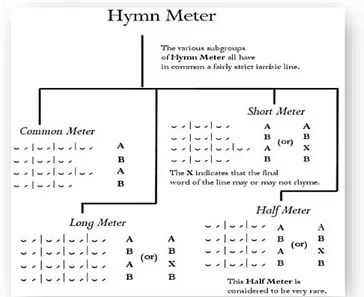
(4) 1. Introduction If we focus our attention on the western literary canon of the 19th century, specifically on the literature of the United States and Galicia, two feminine figures of vital importance stand out: Emily Dickinson (1830-1886) and Rosalía de Castro (1837-1885), respectively. They are two women living contemporaneously – born and deceased just a few years apart – with apparently antithetical literary careers. Dickinson, coming from a prestigious family in Amherst (Massachusetts), dropped out of college, spent most of her life in her family’s home and came to compose nearly 1800 poems, of which she published barely a dozen during her lifetime. Her work has reached our days thanks to her sister, who decided not to follow the last will of the poet and, instead of burning the poems, came to publish them posthumously. In turn, Castro, the illegitimate daughter of a disgraced noblewoman and a priest, took part in the most important cultural activities at the time in Santiago de Compostela. She had to traverse Spain – namely, the lands of Castille – several times due to her husband’s job, moving house on a regular basis. Thanks to her books of poems Cantares gallegos (1863) and Follas novas (1880), she became a fundamental figure of the Rexurdimento, a Galician cultural, political, literary and social movement that was fuelled by the arrival of Romanticism in the Iberian Peninsula. Thus, it is to be expected that two women authors so distant geographically, with such different lives and unaware of each other’s existence, should have very different conceptions and perceptions of the world in which they lived, be it in social, literary, religious or philosophical matters. For these reasons, it seems certainly interesting to compare these two authors, coincidental in time – yet far apart in space –, living in markedly patriarchal societies, which denigrated a woman’s worth for anything other than for breeding. The two authors had the courage to depart from previously established rules and show themselves as fruitful creators in an artistic field traditionally dominated by men: literature, and more precisely, poetry.. 3.
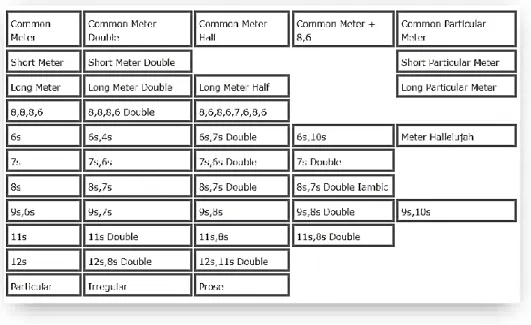
(5) With this in mind, it is necessary to emphasise that the main objective of this work will be to study Dickinsonian and Rosalian textual productions and compare them following two main axes: in the first place, their own perception of themselves as women and the way in which they conceived their relationship with those societies in which they had to live. Secondly, their vision of the whole process of literary creation and their self-conception as creators. In order to achieve this, the main methodological tools for the texts’ study will be the perspective of comparative literature and the point of view of feminist and women's studies. In this way, we will tackle different texts by both authors – mainly poems, prologues and correspondence – to analyse how they reflected the aspects already mentioned in their production, comparing, one step at a time, their similarities and divergences, not only within their work, but also in relation to their creative and personal ideals. Therefore, the essay will be divided into two parts, following the aforementioned points. The first section will deal with the feminine identity of the authors; thus, we will focus on their roles as daughters in a given society, paying attention to their cultural inheritance and how it has affected their poetic productions. Secondly, we will deal with the role of the wife, for which we will focus on the poets’ conceptions of love and sexuality. Finally, attention will be paid to them as poets and literary creators, paying special attention to the act of creation itself, to the possibility of publication of the works and their future reception. Bearing in mind the limits and objectives of this paper, we would like to clarify, on the one hand, that we will focus on a selected corpus of Castro’s and Dickinson’s works to analyse the aforementioned aspects. More specifically, we will pay attention to a selection of poems and letters in the case of the latter and, concerning Castro, we will study the prologues of Cantares Gallegos, Follas Novas and La hija del mar, as well as a variety of compositions and the texts Lieders and Las literatas: carta a Eduarda.. 4.
(6) 2. Feminine identity “Yo soy yo y mi circunstancia, y si no la salvo a ella no me salvo yo” affirmed Ortega y Gasset (1914: 12) in Meditaciones del Quijote. Starting from this belief and avoiding the extreme limits of the prevailing Determinism during the second half of the 19th century,1 it is undeniable that every human being is to be defined, to a large degree, by a series of factors that will determine their way of thinking, acting and, in short, living. The first of them, and one of those that matter most for this study, is the sex with which one is born and what this entails. Concerning this, we must highlight the differentiation between sex and gender, carried out by the studies of gender and LGBT in the 20th century, which has been adopted afterwards by the social sciences. We understand sex as something that refers to the biological, anatomical, physiological and chromosomal characteristics of human beings, which define us as men or women. However, when focusing on gender, we are referring to the set of ideas, modes of behaviour and attributions that a particular society considers to be specific to each sex. It is necessary to bear in mind that these two notions do not always go together. As asserted by Butler (1990), “gender is neither the causal result of sex nor as seemingly fixed as sex”. The strong pressure of patriarchy in the societies of Galicia and the United States during the 19th century, which do not dissociate between the sex and the gender of its members, makes us pay attention to gender in Dickinson and Castro, that is to say, how they were expected to behave and think versus how they actually did so. If the influence of these conditions is easily tangible in the way of living of any human being, in the case of artists, it will be reflected almost inevitably in their works, unless the artists themselves avoid it voluntarily, such as the avant-garde poets of the 20th century. In Dickinson. 1. Determinism, in philosophy, is a theory that all events, including moral choices, are completely determined by previously existing causes. Determinism is usually understood to preclude free will because it entails that humans cannot act otherwise than they do. (Encyclopædia Britannica: 2016). 5.
(7) and Castro, prior to this modern search for the dehumanisation of art, we shall observe to what extent their works reflect the apparently opposed life circumstances that they had to live through. Regarding this, we will pay attention to how their families and education affected their productions and what was their perspective on marriage, love and sexuality.. 2.1. The Role of the Daughter As explained in the introduction, Dickinson and Castro have very different origins: while the first one was born in a well-respected Puritan family of great importance within the community, the second one was born of a single mother and a priest and was educated during the first years of her life by her godmother. Evidently, these origins and their early formation directly influenced the course of their lives and, consequently, certain formal and thematic aspects of their work.. 2.1.1. Form Regarding the form of Emily Dickinson’s poetry, we can observe how she adopts the rhythm of church music to her poetry by using the Common Hymn Metre in many of her works. Firstly, it is necessary to clarify which are the most common Puritan Hymn Metres. The following diagram represents its four basic forms:. Fig. 1: Hymn Metre, by Patrick Gillespie (2009). 6.
(8) As a variant of the Common Metre, we should take also into account the Ballad Metre, which is defined by the Encyclopædia Britannica (1999) as a stanza less strict metrically than the previous one, since it may include non-iambic feet and the rhyme scheme allows for blank verses. Since the integration of the Folk Song and Ballad Metre to church music by Isaac Watts in the 17th century, these have been present in the singing of hymns in the midst of a strong controversy: they were adopted by some churches and rejected by others. One of the churches that embraced Watts’ hymns was The First Church of Amherst, Massachusetts; therefore, according to Morgan (2010: 90), during her childhood and adolescence, Dickinson was exposed to Watt’s didactic poetry for children, his moral philosophy and his popular hymns. If we pay attention to the following table, we will observe the multiple variations on the previous four basic forms of the Hymn and Ballad Metre.. Fig. 2: Variations of the Hymn and Ballad Metre, by Sacred Harp Musical Heritage Association (2018)2. 2. The Sacred Harp Musical Heritage Association presents this interactive table as an index of the main Hymn and Ballad Metres. By following the link https://fasola.org/indexes/1991/?v=meter#mLPM and clicking on the names of the metres, explanations and examples of each one are shown.. 7.
(9) From the aforementioned, we will find that the so called Common Meter (8, 6, 8, 6) is by far the most productive metrical scheme in Dickinson’s poetry. We can notice examples in some of her best-known poems, such as I died for Beauty – but was scarce (449),3 My life had stood – a Loaded Gun (754) and Because I could not stop for Death (712). We should not overlook the fact that she respects the iambic feet of the Common Metre but does not maintain the rhyme scheme. Considering this, we can conclude that Dickinson preferred the variant mentioned above, the Ballad Metre, less strict and with a greater creative freedom. Following this combination of Iambic Trimeter and Iambic Tetrameter, Dickinson also uses the Common Particular Meter (8, 8, 6, 8, 8, 6) and the Short Particular Meter (6, 6, 8, 6, 6, 8) in her work, as we can notice in poems 313 and 328, respectively:. 313. 328. I should have been too glad, I see –. 8A. A Bird came down the Walk—. 6-. Too lifted – for the scant degree. 8A. He did not know I saw—. 6A. Of Life’s penurious Round –. 6B. He bit an Angleworm in halves. 8-. My little Circuit would have shamed. 8C. And ate the fellow, raw,. 6A. This new Circumference – have blamed –. 8C. The homelier time behind.. 6B. And then he drank a Dew. 6-. From a convenient Grass—. 6B. And then hopped sidewise to the Wall. 8-. To let a Beetle pass—. 6B. (…). (…). It may be surprising that, although Dickinson uses iambic verses (Trimeter and Tetrameter, and their combinations), she does not choose Iambic Pentameter to create her poetry. It is necessary to remember that the Iambic Pentameter has been widely used from the Elizabethan Period until today. Moreover, poets such as John Keats and William Wordsworth, admired by her, used the Iambic Pentameter in their productions. Based on that, this absence of Pentameter. 3. We follow the numbering established by Johnson T. H. (1975): The Complete Poems of Emily Dickinson, London: Faber and Faber.. 8.
(10) in Dickinson’s poetry reinforces the belief that the Hymn tradition was the main influence on her poetry, at least concerning the form of her works, since the Pentameter does not have presence in the Hymn Metre either, as we could see in Fig. 1 and 2. Special mention should be devoted to her use of the dash, a controversial topic when discussing Dickinson’s poetry: most readers have found it disturbing, and it has been interpreted as the result of intense stress and great emotion, as the sign of mental breakdown and as an idiosyncratic, female-like habit (Denman, 1993: 33). Since it is not one of the objectives of this essay, we will not delve into such controversy. However, we are particularly interested in the considerations of Denman, who states that: Dickinson uses the dash to fragment language and to cause unrelated words to rush together; she qualifies conventional language with her own different strains; and she confounds editorial attempts to reduce her "dashed off" jottings to a "final" version. Not only does she draw lines through her own drafts but also through the linguistic conventions of her society, and her challenges to God are euphemistic imprecations against conventional religion (1993: 33).. In addition, Denman insists on the use of the dash in relation with the strong musicality of Dickinson’s poems: as music does in songs, dashes in Dickinson’s compositions can affect emphasis, underline or undercut words and dislocate them from their context. As we have seen, Emily Dickinson adopts for her poetics an established poetical form, embraced by church music (the Common Metre), but chooses that variety which allows her a greater formal freedom, in order to be able to modify the rhyme, the combination of verses and the different kinds of metrical feet. Besides, her unique style of punctuation endows her verses with a formal originality and individuality that would not be seen until the arrival of the avantgarde poets, in the early 20th century. Concerning form in the case of Rosalía de Castro, we must emphasise the presence of popular metres in her poetry. Again, we will begin by defining the traditional meters in Iberian. 9.
(11) poetry, both Galician and Spanish, because of their continuous contact. Within Galician literature, we must emphasise Galician-Portuguese lyrical poetry, where Cantigas stand out. Within the major genres, we find Cantigas de Amor, Cantigas de Escárnio e Maldizer, both of Provençal origin, and Cantigas de Amigo, indigenous and unique in the world, to which we must add their hybrids and the minor genera –Tenzón, Cantiga de Seguir and Pranto. These medieval Cantigas were composed in a very reduced typology of verses: mainly decasyllables, octosyllables and heptasyllables, which usually included remarkable repetitions and parallelism. However, Castro did not assimilate all the conventions of medieval lyricism: she mainly uses octosyllabic verses and parallel constructions, as well as repetitions, often in the form of a refrain. In most cases, these octosyllabic verses will be structured in poems with an undetermined number of verses, rhyming the even ones, that is, forming a romance. Romance is, within the popular Iberian lyric, one of the most productive poetic forms since its formation from medieval epic poems, according to the neo-traditionalist theory by Menéndez Pidal. The romance form, later adopted by cult authors such as Francisco de Quevedo, Eduardo Pondal, Eduardo Blanco Amor or Federico García Lorca, has been, at the same time, the metre of popular and oral poetry. We must not forget that in Cantares Gallegos, her first poetry book in Galician, Castro started from popular songs, glossing them and creating new poems inscribed thematically and formally within that sung lyric with a folkloric style. Within this work, 15 of the 36 poems composed by the author are linked to the romance tradition. We can observe examples in such well-known compositions as Nasín cando as prantas nasen (2), Airiños, airiños aires (17) or Castellanos de Castilla (28), the latter structured in stanzas of four verses. However, this influence of the octosyllabic verse is not limited to romance metre, since 8 out of the remaining 21 compositions are based on varied combinations of octosyllable, forming quatrains, four-line stanzas, seven-line stanzas, ten-line stanzas, etc.. 10.
(12) Concerning Follas Novas, her second and last collection of poems in Galician, as explained by Mayoral and Roig in our edition’s prologue (Castro: 2014, 53-54), Castro creates combinations of octosyllables with other verses, such as the decasyllabic, the hendecasyllabic or the alexandrine. We find examples of these metrical schemes in the following poems: X. Vanidade. Unha vez tiven un cravo. 8a. Algúns ricos entérranse ó probe,. 10 A. Cravado no corazón,. 8b. E algúns probes ó grande se enterran,. 10 B. I eu non me acordo xa se era aquel cravo. 11 A. Todos para distinguirse,. 8-. De ouro, de ferro ou de amor.. 8b. E hastra ó morrer ter fachenda.. 8b. Soio sei que me fixo un mal tan fondo,. 11 -. ¡Vanidá!, ¡cánto vals antre os homes,. 10 A. Que tanto me atormentóu,. 8b. Que hastra as portas da morte penetras!. 10 B. Que eu día e noite sin cesar choraba. 11 -. Mas desque can no burato,. 8-. Cal chorou Madalena na pasión.. 11 B. Todos iguales se quedan;. 8b. I o polbo, ó polbo se torna. 8-. E onda os vivos a soberbia.. 8b. (…). The dissonance and contrast produced by these combinations, unusual in 19th century poetry, were interpreted by some critics as a Rosalian defect, while others supported this characteristic as an innovation introduced voluntarily by the author. Following Mayoral and Roig (Castro, 2014: 55), we believe that she was fully aware of the peculiarity of her metric combinations and that she used them to find a rhythm that accommodated the feelings she intended to express. As we have already mentioned, the marked repetitions and parallelisms that Castro reflects in her poetics are certainly outstanding. We can see examples of repetitions in the form of the refrain in numerous compositions from Cantares Gallegos, such as in Cantar 8 (“-Con esta miña gaitiña / ás nenas hei de engañar”), in Cantar 21 (“Non che digo nada ... / ¡Pero vaia!”) or in Cantar 31 (“I a nosa Señora detrás do tonel”). These “reviravoltas”, as the author herself baptized them, have their origin, as we said, in the Galician-Portuguese cantigas; we see, in her. 11.
(13) poetic development from Cantares Gallegos to Follas Novas, a transformation that evolves from rhythmic reiterations to semantic repetitions, most noticeable towards the end of her work. This remarkable presence of repetitions fits within the special musicality of Rosalian verses, of which she was, again, fully aware. We can see it in poem IV (FN), in which the author herself states the following: Diredes destos versos, i é verdad, Que ten estrana insólita armonía. Here, we recover the previously stated idea that. (…). Castro makes these combinations, conceived as. Eu direivos tan só que os meus cantares Así sán en confuso da alma miña. dissonant by the readers of the moment, deliberately, and. (…). she embellishes them with reiterative figures of speech. to produce a poetic form capable of harbouring the background that she wants to transmit. She starts from a popular folk poetic metre, which she exploits, uses and combines with mastery, coming to create in her poetic production an almost symbiotic balance between originality in form and subject-matter. This interest in the form of Castro’s popular poetry is intimately related to her childhood in the village of Ortoño (Amaía region) and Padrón. In this rural world, Castro acquired a firsthand knowledge and internalisation of the traditional Galician culture that would permeate her later poetic work (Blanco, 2000: 182). This will not only influence her use of form, but it will also affect the subject which she deals with. In summary, we have observed in this section of the paper how the cultures that surrounded Dickinson and Castro influenced their productions, especially concerning poetical form. The tradition of hymns – the combination of octosyllable and the iambic verses – impacted Dickinson’s poetry as much as folk poetry – octosyllabic verses, again, and parallelism – impacted Castro’s texts. In addition, as we could experience by analysing the previously presented texts, both of them have been able to take advantage of their inheritance in an original. 12.
(14) way: Castro combined verses of different lengths in a very specific way and took advantage of medieval parallelism, while Dickinson adapted the Ballad Metre to her poems and punctuated her verses uniquely. Therefore, they did not limit themselves to adopt the metres already established, but both of them adapted the metrical patterns to the expressive need of their poems, generating genuine and innovative forms.. 2.1.2. Themes In Castro’s poetical works in Galician, we find rich and diverse topics, in which, connecting with the Rexurdimento and the influence of Romanticism, intimate compositions, love-themed poems, costumbrista texts and socio-patriotic poetry stand out. In her production, Castro would also mix the subjective with the objective, especially in the central part of Follas Novas. On her part, Dickinson presents a variety of topics in her poetry, although not as many as the Galician author. Within Dickinsonian poetry, we can find texts that deal with religion and death, poems about nature and, above all, about inner life. Since we do not recognise any allusion to the historical reality in which Dickinson lived – the American Civil War (18611865), for example –, we could think that the subject matter of social issues may be not relevant for her. However, if we look carefully, we will see that, closely linked to intimacy, Dickinson deals with social themes when including friendship, marriage or several criticisms of social conventions and behaviour in her creations. Her conception of her own poetical production could also be included within this intimate-social line, since, as we shall see later, it reflects the feminine role in a markedly patriarchal society. As we have seen, Dickinson and Castro, as daughters of the societies in which they had to live, were deeply influenced by their surrounding cultures, particularly concerning the form of their poetry. Concerning the subject-matter, we have observed that both poetesses have a wide variety of topics within their poetry. However, we consider it necessary to delimit the analysis. 13.
(15) of the poems of Castro and Dickinson from a thematic viewpoint, since it is not the objective of our work to cover their production in all its variety. Therefore, in the next sections of this paper, we will focus exclusively on the analysis of those texts in which both authors have expressed their self-conception as women in patriarchal societies (concerning love, marriage, motherhood and social position) and their aforementioned function as poets, covering the process of literary creation, within metaliterary texts.. 2.2.The role of Wife In the 19th century, in both the United States and Galicia, the rite of passage for a woman par excellence was marriage. It meant ceasing to be the property of her father to become the property of her husband. Those girls left behind their childhood on their wedding day and, if they did not marry, they were considered little more than social waste. In addition, arranged marriages were the order of the day, so that the possibility of experiencing sexual love was only conceived within marriage, following the social conventions of the moment. In this section, we will study what were the attitudes of Dickinson and Castro towards love and sexuality and the institution of marriage, as well as how they expressed it in their writings. Directly connected to this, we note here some interesting data about the biographies of both authors: while Dickinson did not get married, Castro did engage in a fruitful marriage with Manuel Murguía.. 2.2.1. Love and sexuality As explained at the beginning of the section, if a woman in the 19th century did not want to be repudiated by society, she should limit the experience of sexual love to the area of marriage. If she had premarital or extramarital affairs, her reputation would be stained until her dying day. This is how Gustave Flaubert, Leo Tolstoy and Leopoldo Alas “Clarín” represented it in their. 14.
(16) Realistic novels: Madame Bovary, Anna Karenina and La Regenta. Understanding sexual love as a basic human need, represented in Maslow’s pyramid (1954) in sex and intimacy sections, we will look at the Dickinsonian and Rosalian productions to know what it meant to them. Following Pardo Amado (2011), we observe that the topic of love is a constant in Rosalía de Castro, always from a very pessimistic point of view. Although his analysis extends to all the Rosalian production, we will focus exclusively on the previously proposed corpus. Pardo Amado highlights that in her first collection of poems, La Flor, composed in her twenties, Castro presents compositions that include a painful vision of love, as in the case of “Un desengaño” or “La rosa del campo santo”. Although some authors have considered this book the fruit of romantic influence, there is also the possibility that they had their origin in some vital experience of the author herself, since this first collection of poems highlights a denial of happiness that will determine the vision of love in the rest of her work. Love is considered an experience that is almost impossible to define by means of the artistic word, as we can see in poem LX (OS), since the poetic genius is not capable of “repetirlo con sus ecos”: Despite this, Castro would try to describe love and reflect LX (…) Pero aquel sordo latido del corazón que está enfermo de muerte, y que de amor muere y que resuena en el pecho como un bordón que se rompe dentro de un sepulcro hueco, es tan triste y melancólico, tan terrible y tan supremo, que jamás el genio pudo repetirlo con sus ecos.. it in her poems throughout her life. We see then how the habitual tone in her poetics would be the conception of love as a source of pain and remorse. This pain will be given, in some cases, by the lack of correspondence between lover and beloved and, in others, by the psychic inability to experience the feeling itself. The infatuation, at first, will cause joy and. positive feelings to the lover. However, when one of the two reasons mentioned above occurs, love will become deceit and sorrow, as we can see in “Pasade” (FN):. 15.
(17) The two last verses of each of the stanzas stand out. (…) Xemí, serenas ondas, Co romor dos pinares, Músicas, ¡ai!, e cantos i harmonías, Para un xordo, ¿qué valen?. in this composition, since the author identifies in them the music and the feeling of love, in an almost parallel. ¡Pasá…!, pasade, hermosas, Feitizo dos que esperan e dos que aman; Amores e praceres son mentira Pra quen tén seca a ialma.. way. She then introduces, through a rhetorical interrogation and a strong affirmation, the idea that. both the deaf and the incapable of loving are two crippled subjects in the presence of music and love, respectively, both incapable of experiencing them, either positively or negatively. The contradictory nature of love, enigmatic and unpredictable, even causes confusion between love and hate (“-Te amo… ¿por qué me odias? / -Te odio… ¿por qué me amas?”, OS). However, in the production of Castro, the most repeated case would be the lack of loving reciprocity. We will meet numerous female poetic speakers who will give themselves completely to the male beloved, at times transgressing the prevailing social norms of the moment, as we observed in the composition “–Espantada, o abismo vexo” (FN): (…) -Hoxe, á noite, des que durman, Sairei polo ventanil; Daránme as sombras alento… E, ¡adiós, casa onde nacín! Honra que tanto estimei, Santidade do meu lar… ¡Polo meu amor vos deixo Para toda a eternidá! ¡Señor…!, daresme castigo; Que o merezo ben o sei; Mais… condename Señor, A sufrilo cabo del.. Here we see how the poetic voice explains that during the night out for the encounter with her lover, in addition to leaving her home, she will leave behind the protection it offered her, that is, her honour and the status of a well-respected woman. However, she prefers to sacrifice this in order to be with the loved one. In the last verses, we see an apostrophe addressed. to God, in which she recognises that her behaviour does not conform to the expected according to the Catholic faith and assumes that it deserves punishment. However, in spite of her sinful condition, she begs God that, when he punishes her, he allow her to suffer that torment with her beloved.. 16.
(18) In some other cases, the speaker will encounter an indifference and an attitude of little compassion from the beloved, which again will cause pain and discomfort, as we see in the aforementioned “Nasín cando as prantas nasen” (CG):. (…) Des que te quixen, ingrato, todo acabou para min, que eras ti para min todo, miña groria e meu vivir. ¿De qué pois te queixas, Mauro? ¿De qué pois te queixas, di, cando sabes que morrera por te contemprar felís? Duro cravo me encravaches con ese teu maldesir, con ese teu pedir tolo que non sei qué quer de min, pois dinche canto dar pude, avariciosa de ti. (…). We observe, then, how the feminine speaker (“avariciosa”) accuses Mauro of being ungrateful and asks him what else he wants, since he already has her absolute devotion. It is striking how the author already introduces here the image of the nail symbolising the suffering of love, since the speaker baptises her falling in love as a “maldesir” by not receiving the expected attitude from Mauro. This image will be taken up again in the well-known poem “Unha vez tiven un cravo”. (FN), which we already mentioned in the treatment of Castro’s form and which is inserted in a long literary tradition (Castro, 2014: 126). It is also necessary to highlight the feeling of love frustrated because of the separation of lovers. The absence of the beloved because of emigration, a subject matter that connects with the social-patriotic topic mentioned in the previous sections, stands out in the poetry of Castro. This separation may intensify the feeling and reinforce the love experience, as in Cantar 19 (CG), in which the feminine speaker cries for the loss of her beloved next to the river and asks it to take her tears to the other side of the ocean, where he is. This separation is accompanied by the passage of time, which will raise the doubt about the truth of love and its durability, confirming the deception and abandonment, as we observe in the poem “¿Qué lle digo?” (FN). Here, in a dialogue between two emigrated men, the remaining one asks the returning one to lie to Antona, the wife he left in Galicia, about his current situation: he has found another woman in America (“Se é que Antona está alá, teño aquí a Rosa.”) and will not come back until he is old.. 17.
(19) This eminently negative view of love will determine Castro’s position on the matrimonial institution and spinsterhood. This we will see in the following section, dedicated specifically to the idea of marriage. We must not forget Castro’s references to female sexual desire, which, although they are not so numerous, have a curious presence in her poetry. Cantar 9 (CG) is striking, since the feminine poetic voice positively expresses her erotic desire, even if it involves religious transgression (García Candeira, 2013). Díxome nantronte o Cura que é pecado… Mais aquel de tal fondura cómo o facer desbotado. (…) Canto máis digo: “¡Arrenegado! ¡Demo fora!” Máis o demo endemoncrado me atenta dempois i agora. Máis ansias teño, máis sinto, ¡rematada! que non me queira nin Jacinto, nin solteira, nin casada. (…) ¡Que é pecado… miña almiña! Mais que sea; ¿cál non vai, si é rapaciña, buscando o que ben desea? (…). The poem begins with a religious warning about the nature of sexual desire. However, this sinful condition only intensifies the desire to fall into temptation, although this would entail social repudiation, as in the already analysed poem “–Espantada, o abismo vexo”. Finally, the poetic selfsuccumbs to temptation, seen as something that is not only pleasant, but also natural. It is also necessary to mention Cantar 13 (CG), in which,. starting with a prayer to San Antonio, the poetic voice pleads for a man (“dádeme un home / anque me mate, / anque me esfole”). However, far from asking for a husband simply to abandon spinsterhood, this speaker intends to satisfy her sexual desire (“Mais tendo un homiño / ¡Virxe do Carme! / non hai mundo que chegue / para un folgarse”), independently of the nature of the man (“Que zambo ou trenco / sempre é bo ter un home / para un remedio.”). It also highlights, in her references to female sexual desire, the use of typical resources of the Medieval Cantigas de Amigo, such as the reference to water (go to the spring, to the river…) to represent the meeting of the lovers. This can be clearly seen in “N’hai peor meiga que unha gran pena” (FN) and “Lévame a aquela fonte cristaíña” (FN). In the first one, a girl confesses. 18.
(20) to her mother her grief of love for the count, with whom she has had sexual encounters in the river: “A iauga se tornou roxa / cando me fun lavar nela; (…) Que os ourizos dos castaños / nos meus cabelos se me eredan; (…) Folguei co conde, señora, / prometido da condesa”. On the other hand, in the second composition quoted we find a poetic voice that asks her beloved to return to the love encounters: “Lévame a aquela fonte cristaíña / Onde xuntos bebemos / As purísimas auguas que apagaban / Sede de amor e llama de deseios”. This connects with the popular heritage received and taken advantage of by Castro, already mentioned in section 2.1. Daughter. Concerning love and sexuality in the case of Emily Dickinson, we must point out that love is also a constant in her poetry, as is the case of Castro. In a similar way, we would like to start with two brief compositions: the first one, which highlights the eternal character of love, and the second one, which points out the complexity of one’s loving feeling: 917. 1765. Love – is anterior to Life – Posterior – to Death – Initial of Creation, and The Exponent of Breath –. That Love is all there is, Is all we know of Love; It is enough, the freight should be Proportioned to the groove.. In the first of them, we observe how love is defined as something before life and after death, that is, an eternal feeling, not determined by ephemeral human life. The terms “Creation” and “Breath” are a clear reference to the creation of the universe and of the human being by the hand of God, who, after forming man from dust, breathed into his nose the breath of life, according to the Bible. Love is described both as what caused creation and as the exponent of the action of giving, conceiving it as a delivery of something precious (in this case, the breath of life). However, we know little about love, as explained in the second poem. Here, we observe how a poetic voice begins by announcing that the only thing we know about this feeling is its existence, so defining it is not within our reach. In the last two verses, going back to the idea of. 19.
(21) love as delivery, she also infers that, depending on how this delivery of love were done, it would leave in us a greater or lesser mark. We see then how love is already presented with a negative tinge when identifying it with a heavy load (“freight”) that inevitably leaves behind a trace (“groove”). A pessimistic vision of love is already established here; we will see in the following poems what the similarities and differences are with respect to the Rosalian conception. Dickinson presents in her poetry that love is directly related to loss and the impossibility of the lovers staying together, fitting in with the aforementioned negative vision of the feeling of love. We can see it in poems like the following: 640 They’d judge Us – How – For You – served Heaven – You know, Or sought to – I could not –. I cannot live with You – It would be Life – And Life is over there – Behind the Shelf. Because You saturated Sight – And I had no more Eyes For sordid excellence As Paradise. (…) I could not die – with You – For One must wait To shut the Other’s Gaze down – You – could not –. And were You lost, I would be – Though My Name Rang loudest On the Heavenly fame –. And I – could I stand by And see You – freeze – Without my Right of Frost – Death’s privilege?. And were You – saved – And I – condemned to be Where You were not – That self – were Hell to Me –. Nor could I rise – with You – Because Your Face Would put out Jesus’ – That New Grace. So We must meet apart – You there – I – here – With just the Door ajar That Oceans are – and Prayer – And that White Sustenance – Despair –. Glow plain – and foreign On my homesick Eye – Except that You than He Shone closer by –. The first stanza begins with a poetic voice announcing what she seems to consider an absolute truth: the possibility of being together with the beloved in this life is not possible. In the following stanzas, the poetic voice studies what death and the lovers’ afterlife would be like and affirms that neither could die before the other. However, there is no possibility for them to die together either, since the beloved one would eclipse Jesus himself. We see here how the beloved is elevated to the divine category, in a comparison that borders on the sacrilegious.. 20.
(22) In line with that, she also announces that while he has led a virtuous life, she has not been able to, since, by loving him, she has dedicated her veneration to his person instead of God. If he died and he went to hell, the poetic voice would go with him even if her place was heaven. However, if he went to heaven and she could not, it would not matter where she ended, since any place without his presence would be her personal inferno. Because of all this, the poetic self concludes that they must remain separate during this earthly life, but close enough so that the despair of separation is the sustenance of their love. It is necessary to highlight that Dickinson’s poems about love it is often hard to identify the sex of the beloved, so she might be addressing another woman. As we have already said, Dickinson conceives love as something that goes beyond the death of lovers, as seen in the previous poem. In the following composition, she reflects it in a more direct way: 549 That I did always love, I bring thee Proof That till I loved I did not love – Enough –. In this case, the poetic self gives us two strong arguments: the first one, that the proof of her love for her beloved is that until she loved him, she did not live fully. We return here to. That I shall love alway – I offer thee That love is life – And life hath Immortality –. the idea of love as a vital power contemplated in the first. This – dost thou doubt – Sweet – Then have I Nothing to show But Calvary –. proof that her love will be eternal is that, just as love is life and. poems commented on in this section. She then reasons that the. life has continuation in the hereafter, so love will have it.. For all these reasons, she maintains that her beloved should not doubt the previously contended, since, if he does, love will become terribly unhappy for her. The comparison of love’s misery with “Calvary” brings us back to the strong relationship between love and religion in Dickinson’s poetry, which we have observed in all the analysed poems, either to use religion as an analogy or to transgress it.. 21.
(23) This supremacy of love beyond death to love in earthly life comes to reflect the desire for the arrival of death if that entails the encounter with the beloved. We can see this reflected in poem 511, “If you were coming in the Fall”, in which the poetic voice reconsiders the time it will take the loved one to arrive (a season, a year, centuries…) and what she would do in each case. In this progression in crescendo, the climax is the encounter in the hereafter and, where appropriate, the poetic voice announces that it would precipitate her life to death for the encounter with the beloved. However, the uncertainty of when they can be together is what most torments the poetic self, represented by the metaphor of a ghost bee that she hears flying around her, but whose sting will never reach her. The constant impossibility of being together is personified once again in the following composition: 398 I had not minded – Walls – Were Universe – one Rock – And far I heard his silver Call The other side the Block – I’d tunnel – till my Groove Pushed sudden thro’ to his – Then my face take her Recompense – The looking in his Eyes –. In this case the poetic voice begins by stating that she would have preferred a physical and tangible distance (“Walls”, “Rock”) between her and her beloved, since upon receiving the call of love, she would have crossed it. But ‘tis a single Hair – A filament – a law – A Cobweb – wove in Adamant – A Battlement – of Straw –. to reach him. Here, the mention of “Groove” is also. A limit like the Veil Unto the Lady’s face – But every Mesh – a Citadel – And Dragons – in the Crease –. involves the identification of the love-burden when. remarkable; as we saw in the second poem analysed, it. referring to the trace that remains in the lover.. Nevertheless, the line of separation between these two lovers is not physical, but of another type, probably social (“law”). The concatenation of oppositions of the third stanza is striking, since in each verse one term is opposed to another with a completely opposite characterisation. We see how it starts with the mention of a “Hair” (thin, almost invisible, but resistant), and then identifies this separation with a “filament” (thin and weak), which at the same time is a “law” (powerful and unbreakable). The same happens with the spider web (thin and subtle) that has. 22.
(24) been woven firmly and with the “Battlement” (strong and stable) made of “Straw” (volatile and fragile). Already in the last stanza these contradictions are summarised by equating the separation of the lovers with the veil of a woman, which, despite being thin and allowing the vision of her face, has “citadels” in the “meshes” and “dragons” in the “creases”, that is, it is totally unbreakable. In spite of the numerous examples in which love entails separation and loss that we have seen, Dickinson also offers a vision in which the loving encounter is possible. We can see this in poems like the one we present below: 249 Wild Nights – Wild Nights! Were I with thee Wild Nights should be Our luxury!. In it, the poetic voice would define her nights as a great pleasure if she spent them with her beloved. We notice here the conditional introduced in the second verse, according to which we. Futile – the Winds – To a Heart in port – Done with the Compass – Done with the Chart!. infer that the meeting has not taken place, but that it is a strong. Rowing in Eden – Ah, the Sea! Might I by moor – Tonight – In Thee!. the poetic voice denied the possibility of a loving encounter in this. wish. In spite of this, it collides with the previous poems in which. life. At this point, it is necessary to take into account that this. poem has been deemed by some critics to constitute evidence of Dickinson’s homosexual relationship with her sister-in-law, Susan Huntington Gilbert Dickinson. Were we to take these theories for actual truths, we could assume that the author, again constrained by the rules and demands of society, uses a hypothetical wish in order to express her real desires. In the second stanza, identifying the poetic-lover’s voice as a ship in the sea-beloved, she announces that the usual navigation elements (“Winds”, “Compass”, “Chart”) are not necessary for the lover, since her love already guides her towards Eden. Finally, in the last three verses, the poetic voice regains the yearning tone and announces that she would like the meeting to take place.. 23.
(25) What stands out in these last poems is how Dickinson expresses the strong desire of the poetic voice for the erotic encounter, in some cases transgressing the principles of the Christian religion, for example, to desire the arrival of death so that the union could take place. Sexuality is not expressed as directly as in Rosalian poetry, but its presence is remarkable, as we have seen. In conclusion, in this section we have seen how both poetesses start from the impossibility of defining with words the feeling of love, because it is superior to human understanding. So much so, that for Dickinson it is a constant in the universe, to the point of going beyond death. However, both writers have reflected the different perspectives of love in a large part of their poetic production, always from a negative and pessimistic point of view: Castro, for the lack of correspondence and the separation of the lovers; Dickinson, for the impossibility of these being together in earthly life. Still, in Dickinson’s poems the hope of love’s success in the hereafter remains, an aspect that Castro does not include in her compositions. The love encounter and sexual desire will be present in both productions, in Castro in a more palpable and physical way, using medieval metaphors, and in Dickinson in a more symbolic way, expressing both, in certain cases, the transgression of religious or social laws in favour of consummation.. 2.2.2. Marriage As we previously mentioned, marriage was an essential feature for women in the 19th century, if they were to maintain a respectable status within society. Although we have already seen both Dickinson and Castro reflect the presence of love and sexual encounters without a reference to the civil status of their lovers (even showing premarital encounters), this section will showcase how the two authors regarded this institution, and how they reflected those opinions in their texts.. 24.
(26) Emily Dickinson grew up in a time in which women were raised to be wives, tied to housework and patriarchal social conventions, which divided both genders in different social spheres (Rivera, 2016). Thus, it does not seem odd for her to include marriage as a topic in her poetry, in order to reflect her vision on such an institution. Then, we will work with four of her poems on this issue. In the first place, we will consider two compositions that showcase the passing from child to woman/wife, and how this is regarded by the author. In this first poem, we observe how an external poetic 732 She rose to His Requirement – dropt The Playthings of Her Life To take the honorable Work Of Woman, and of Wife –. voice narrates the aforementioned change of status of a woman when engaging in marriage and becoming a wife.. If ought She missed in Her new Day, Of Amplitude, or Awe – Or first Prospective – Or the Gold In using, wear away,. The first stanza shows how a woman needs to sacrifice her. It lay unmentioned – as the Sea Develop Pearl, and Weed, But only to Himself – be known The Fathoms they abide –. “Woman” and “Wife”. This inclusion of both words in the. infancy (“Playthings”) in order to access the status of. same verse enables us to infer an identification of both realities, the one unable to exist without the other. This. summarises the submissive demeanour that a woman must adopt, by sacrificing a part of her life (“dropt”) to fit into what is expected of her. The following stanzas reflect how a wife’s feelings, be they longing, fear or joy, must remain within marriage itself, the husband remaining the only one to notice them. We will now consider the next poem, directly related to what the previous composition showcases. In this second one, the poetic voice is a feminine first person that has become a wife, and now accounts for what marriage has brought about.. 25.
(27) Then, she starts the second stanza by announcing that she. 199 I’m “wife” – I’ve finished that – That other state – I’m Czar – I’m “Woman” now – It’s safer so – How odd the Girl’s life looks Behind this soft Eclipse – I think that Earth feels so The folks in Heaven – nowThis being comfort – then That other kind – was pain – But why compare? I’m “Wife”! Stop there!. has already left “that other state” behind, in order to become a wife, a tsar, a woman. Again, we see that woman-wife identification, which we mentioned in the previous poem. The stanza concludes by announcing that this status is safer than the previous one, alluding to the economic and social protection that marriage means for a woman.. She then reflects on the consequences of becoming a wife, that is, the submission towards her husband. She hints at that by use of the word “Eclipse”, which is ironically reported as “soft” by the poetic voice. Such irony is also to be found in the following verses, where she compares her submissive situation to the orbiting relationship between the Earth and the Sun. Following the ironic tone, the poetic voice announces that, if this new status is comfortable, then the previous one must be seen as painful and uncomfortable (as society sees it). However, she answers that rhetorical question by claiming that there is no need to compare them, since she is a wife now, and nothing else matters. Thus, we are shown the ambiguous nature of marriage for a woman. On the one hand, it means an absolute surrender to the husband, with no need of reciprocity; on the other, it provides protection and economic and social safety, since an absence of marriage places women in the spinster category, deeply pejorative in the 19th century. This vision of marriage as economically beneficial is also reflected in the next composition to be analysed, as we will see next:. 26.
(28) 580 I gave myself to Him – And took Himself, for Pay, The solemn contract of a Life Was ratified, this way – The Wealth might disappoint – Myself a poorer prove That this great Purchaser suspect, The Daily Own – of Love Depreciate the Vision – But till the Merchant buy – Still Fable – in the Isles of Spice – The subtle Cargoes – lie – At least – ‘tis Mutual – Risk – Some – found it – Mutual Gain – Sweet Debt of Life – Each Night to owe – Insolvent – every Noon –. Here, a poetic voice is, again, using the first person to identify marriage as a contract between two people, as in the first stanza. With her surrender to him, the matrimonial transaction is completed. The husband, who has not quite surrendered himself to her in the same way, endows the marriage with the aforementioned economic stability; however, the poetic voice doubts the value of such an asset and enables us to see, by the usage of the terms “Purchaser” and. “Merchant”, how the husband is a mere buyer in this transaction, setting her aside as a good to be consumed. Again, in a hesitating tone, as in the previous composition, the poetic voice expresses the ambiguous nature of marriage, which opposes economic welfare to the woman’s absolute surrender. This surrender, as shown by the final verses, does not stop at the loss of feminine identity in favour of the husband, but also includes the absolute dispositions to satisfy his sexual desire. At no point is the sexual desire of the feminine poetic voice recorded in these marriagerelated poems, as opposed to what happened in the poems analysed in section 2.2.1. Love and Sexuality. This adds to the idea that marriage was thought of by Dickinson as a mere contract, which did not bring love or eroticism for the woman. The last poem to be analysed in this section presents marriage from a sharper, more critical and direct viewpoint:. 27.
(29) 1072 Title divine – is mine! The Wife – without the Sign! Acute Degree – conferred on me – Empress of Calvary! Royal – all but the Crown! Betrothed – without the swoon God send us Women – When you – hold – Garnet to Garnet – Gold – to Gold – Born – Bridalled – Shrouded In a Day – Tri Victory “My Husband” – women say – Stroking the Melody – Is this – the way?. We see how a feminine poetic voice announces that she has finally reached the status of “Wife”, presenting it as a divine feature. It is, however, during the second verse that we are told that this marriage will not involve any sign, that is, it will not be represented by the everso-common rings. This brings us to the idea that the marriage presented by the poetic voice is not a normal one; her choice is the direct opposite: to marry herself. in order to avoid marrying a man. Conscious of the consequences of her choice, she is established as the self-proclaimed “Empress of Calvary”, in a direct reference to the suffering of Jesus Christ during the Via Crucis. The poetic voice knows that her refusal to marry anyone other than herself will bring her pain, torture and crucifixion in the social sphere of her existence. Next, she establishes a reflection on what marriage means for a woman, which on her wedding day implies a threefold victory for the husband: the woman is reborn in marriage by adopting the husband’s surname (“Born”); at the same time, she will be treated like a simple horse whose bridles are placed in her husband’s hand (especial attention is to be given to the wordplay between “Bridalled” and bride); and lastly, surrendering herself to her husband will mean the death of her, in figurative terms. This last aspect is represented by the mention of a “Shroud”, of a making and colour similar to the veil that covers the bride’s face on the wedding day. With all these features, the poetic voice indicated that the very wedding day means a death and a rebirth for the woman, since she wins and loses at the same time. With the last verse, the poetic voice presents a rhetorical question that has already been denied during the poem: she refuses to go through the conventional marriage in her society,. 28.
(30) given everything entailed by it, despite knowing that this refusal will imply more problems than advantages for her. Regarding Rosalía de Castro, we already mentioned in the previous section that her pessimistic vision of love conditioned how she conceived the matrimonial institution. Again, following Pardo Amado (2011), we will see the numerous occasions on which the author mentions and criticises marriage as it existed in the 19th century. Castro lived in a moment in which texts that argued that the role of the women in society were limited to the domestic sphere within marriage were very numerous. In addition, the Law of Civil Marriage was published in the last third of the century, so the controversy on feminine identity and its role in society was at its peak. The author would compose poems with the intention of expressing opinions and intervening in said controversy. One of the most representative compositions is “Decides que o matrimonio” (FN): Decides que o matrimonio É santo e bueno. Seraio; Mais non casou San Antonio, Por mais que o mesmo demonio Tentouno á facé-lo ensaio. Celicios, cantos poder; Penitencias, a Dios dar, Mais santo n'houbo, a meu ver, Que dos casados quixer Ca pesada cruz cargar. Nin os santos padres todos, De quen tés tantos escritos E alabas de varios modos, Quixeron naqueses lodos Meter os seus pés benditos. Do direito, do rivés, Matrimonio, un dogal es, Eres tentazón do inferno, Mais casarei…, pois no inverno ¡Non ter que lle aun quente os pés!. We observe in this poem how the poetic voice begins by criticising the lack of coherence of religious marriage, from the moment in which saints and priests defend it, but none of them got married. She insists on the idea that marriage is nothing more than punishment (“celicios”, “penitencia”, “cruz”, “lodos”), despite what is defended by the curates. In the last stanza, with marriage itself as the addressee, she continues to affirm that it is nothing more than a form of suicide, a torment. However, as a woman, the poetic voice affirms that she will finally surrender to it and that she will. get married out of sheer necessity, clearly reflecting here Castro’s pragmatic vision of marriage.. 29.
(31) Women’s need to get married in the 19th century society goes beyond economic benefits, since it was precisely during these years when the word solterona was coined, its oldest example to be found in Spanish in the text Vida trágica del Job del siglo XVIII y XIX (1809).4 Marriage is conceived as a necessity for them, especially for those belonging to the lower classes, since spinsterhood is not an option: while upper-class single women can survive with their inheritance, the humblest do not have this economic advantage. However, getting married does not always secure an economic and social well-being for women, and that is how the author represented it in the next composition (FN): -“Tanto e tanto nos odiamos, Tanto e tan mal nos quixemos, Que por non verme, morriche, E desque morriche alento. Mas ora tócame a min Tamén marchar, e di o crego Que che perdone, pois logo A xuntarnos volveremos. ¡O crego volveuse tolo! ¡Xuntarnos…! Nunca máis, penso; Que si ti estás onda a Dios, Eu penso de ir xunto ó demo”. (…) Mais eu xurei, e Dios manda Que un cumpla seus xuramentos. ¡Á terceira vez…! ¿Abrides? -Nin ás tres nin ós trescentos; A muller vaia onda o home: ¡Al infierno, anda al infierno Con el, por sempre en xamás!. We observe here a feminine poetic voice at the end of her life that addresses her words to her dead husband and affirms that she does not want to see him again in the hereafter, even expressing her preference to go to hell before having to be with him again. When she also dies, she meets her husband in hell (and not in heaven, as she thought), so, escaping from him, she decides to go to heaven and ask Saint Peter for refuge. However, Saint Peter denies her entry to heaven, despite. the justified insistence of the old woman, since during her life she swore that not even dead would she return to her husband. After the many refusals of the saint, the old woman remains determined not to go back to hell, where her husband waits. Therefore, she stays in the middle, in an indeterminate place and, almost like a legend, a second poetic voice tells how she remains walking “nas alas do vento” and warns marriageable women to be careful, because where the old woman walks “nin un home / Toparés para un remedio”.. 4. Consulted in Corpus Diacrónico del Español (CORDE).. 30.
(32) Castro is fully aware that, according to the legal system of the 19th century, the woman is considered merely a piece of property, first of the father and then of the husband, as we have already pointed out. This feeling of eternal servitude is already reflected in her article Lieders, where she states that she has only sung to freedom and independence, “aunque alrededor hubiese sentido, desde la cuna ya, el ruido de las cadenas que debían aprisionarme para siempre, porque el patrimonio de la mujer son los grillos de la esclavitud” (Castro, 1996: 491). In line with this eternal slavery of women, designed by the nineteenth-century social system, the author composes the poem “Xan” (FN): Xan vai coller leña ó monte, Xan vai a componer cestos, Xan vai a poda-las viñas, Xan vai a apaña-lo esterco, E leva o fol ó muíño, E vai á fonte a por augua, E vai á misa cos nenos, E fai o leito e o caldo… (…) Pepa, a fertunada Pepa, Muller do Xan que sabemos, Mentras seu home traballa, Ela lava os pés no rego, Cátalle as pulgas ó gato, Peitea os longos cabelos, Bótalles millo ás galillas, Marmura co irmán do crego, (…) N’hai máis que un atormentado Antre mil que dan tormentos.. A parallelism is established between the tasks of the two members of the marriage: Xan and Pepa. These do not respond to the canons of the moment, since while he works hard at home and takes care of the children (tasks traditionally assigned to women), she wanders and pretends to be working (usually, a male occupation). At the end of the day, when they both go to bed, Pepa asks Xan not to make noise, since the busy day has left her exhausted. Xan, extremely understanding, puts the children to bed and complains about their situation. However, as. indicated by the poetic voice which narrates the story, this is one case among a thousand, of which the other 999 are the reverse: the woman works tirelessly, while the man lounges. Here we see a clear criticism, through an acid irony, of the distribution of roles in marriage, fatal for all women, with the exception of Pepa, created for the occasion. We conclude then that Castro clearly defends that the role of women in the world should not only be that of the mother and wife in the bosom of marriage, but that it goes much further.. 31.
(33) As a conclusion, this section has shown how both Dickinson and Castro, life choices apart, regarded marriage as something eminently negative for their gender. Dickinson highlighted its ritual power to turn children into women –and subsequently, wives; on her part, Castro remarked the lack of coherence in religious marriage, since it was promoted by those people who were forbidden to marry anyone. Both regard marriage as a mere contract whose only advantage for women is economic stability. Every other aspect attached to it is negative for them: submission, loss of autonomy, sexual surrender, slavery, torture… We have put forth one poem per author, since they can be seen as declarations of intentions regarding their own lives. In the case of Castro, we saw “Decides que o matrimonio”, where after long and harsh criticism on marriage, the poetic voice accepted that, sooner or later, she too will succumb in order to attain that economic stability. On the other hand, Dickinson’s “Title divine – is mine!” (1072) presents a poetic voice which totally neglects the possibility of marrying anyone but herself, that is, she rejects marriage and opts to bear the suffering that it will entail. Lastly, we would like to clarify that, although the role of women as mothers is tightly linked to their role as wives in our century of choice, we have not found textual references on that matter in these authors’ case. For this reason, in order not to turn to their biographies in an excessive manner, we have decided to exclude the treatment of this aspect, since it does not comply with our main purpose: to analyse those aspects of our interest directly in texts produced by the authors.. 32.
(34) 3. The role of the Poet As we have seen in previous sections, both Emily Dickinson and Rosalía de Castro exhibited an idea of women that did not conform to the ideal of femininity at the time; while 19th century society saw women as the angel in the house, submissive and dedicated to housework and raising children, both authors used their works to show that their roles in society spread far beyond. The sheer action of dedicating a great part of their lives to literary creation already constitutes a declaration of intentions by the authors, concerning what the place of women in society should really be. It must not be forgotten, when turning our focus to literature in Galicia and the United States, that Dickinson and Castro were trail-blazing women within their field, since we can find just four relevant examples of female writers prior to them: Anne Bradstreet and Mary Rowlandson in US literature, and Isabel Castro de Andrade and Mª Francisca de Isla y Losada in Galician literature. It is because of these reasons that this section will be devoted to both authors’ visions of the whole literary process as female writers, from creation to reception. For this purpose, as we have done throughout this paper, we will undertake an analysis of their texts in order to find, within the texts themselves, a reflection of their views on such an important sphere of their realities.. 3.1. Creation When examining the production of both authors, the first thing that comes to mind is the fact that they were very prolific authors; however, while Dickinson focused entirely on poetry, Castro was a narrator and a poet, all at once. Consequently, we are facing two vast literary productions which, as we have already discussed, deal with very diverse topics. Out of all of them, and tightly related to the issue of feminine identity dealt with in section 2, we are 33.
(35) especially interested in every meta-literary aspect having to do with the production of the works themselves. The aspect of publication will be discussed in the next section. Within Dickinson’s literary production, we can see several meta-literary compositions in which the author dealt with the different perspectives of the creative process. We also find allusion to poetry in her letters, among which the following attempt to define it is especially relevant: “If I read a book [and] it makes my whole body so cold no fire ever can warm me I know that is poetry. If I feel physically as if the top of my head were taken off, I know that is poetry. These are the only way I know it. Is there any other way” (Johnson, 1986: 473-474). As we can see, the definition is not entirely clear; instead, Dickinson offers the reader a way to identify poetry as such for what it is. In order to find a definition as such within her poetic compositions, we must refer to the following:. 1472 To see the Summer in the Sky Is Poetry, though never in a Book it lie – True Poems flee –. As pointed out by Lynch (1966: 5), this poem describes poetry as the vision of a fading, escaping entity, which can’t be gathered by writing. We can see,. then, how Dickinson feels that the creative centre of the creative process is originally located in the observation with a given intensity and precision, which cannot be totally showcased by conventional language. We understand that the poet carries out the role of the messenger of something seen by her (or him), be it in nature, in the surrounding world, or within the poet herself; the poet is not a creator of something out of nothing. This creation may comply with what is expected by critics, or it may not. In the case of Dickinson, we see how she is conscious of the degree of originality and peculiarity in her compositions.. 34.
(36) Here, the poetic “I” starts with an allegory of poetic. 326 I cannot dance upon my Toes – No Man instructed me – But oftentimes, among my mind, A Glee possesseth me,. creation and ballet. Thus, she ironically announces that. That had I Ballet knowledge – Would put itself abroad In Pirouette to blanch a Troupe – Or lay a Prima, mad,. what is expected of her. However, the call of poetry,. And thought I had no Gown of Gauze – No Ringlet, to my Hair, Nor hopped to Audiences – like Birds, One Claw upon the Air,. reach poetic creation.. her lack of instruction makes her technique be unlike. Nor tossed my shape in Eider Balls, Nor rolled on wheels of snow Till I was out of sight, in sound, The House encore me so – Nor any know I know the Art I mention – easy – Here – Nor any Placard boast me – It’s full as Opera –. above and beyond any technique, makes her able to. This entails that, in spite of her lack of technical knowledge (see the second and third stanzas), she feels the need to keep composing poetry. Not even the fact that her compositions are unknown (“Nor any know I know the Art”, “Nor any Placard boast me –”), serves to. limit her proficient creative flow or the quality of her compositions. This need to set out on poetic creations is clearly reflected in the identification of the poet with a spider, as we see in the following poem:. 1138 A Spider sewed at Night Without a Light Upon an Arc of White If Ruff it was of Dame Or Shroud of Gnome Himself himself inform Of Immortality His Strategy Was Physiognomy. Here, the poetic “I” admired the creation of a cobweb by the animal, which, as we already mentioned, does so in a natural manner. This creative act is undertaken during the night, when the spider does not bother or isn’t bothered at all. The nature of its creation is known only by the creator itself (“Ruff of Dame” or “Shroud of Gnome); in any case, the creation of a cobweb is the attempt by the spider to. transcend its own death, much in the same way that the poet creates her poetry and aims to become immortal through it. This relationship between poetry and immortality can be observed in many other compositions by Dickinson, and so, her wish to have a lasting impact by means of her poetry. 35.
(37) can be proved to exist. We see it, for example, in the poems “This is my letter to the World” (441) and “I died for Beauty – but was scarce” (449). In the first one, we see how the poetic “I” extends a plea in order not to be judged too harshly. The poem follows an inductive structure by 441 This is my letter to the World That never wrote to Me – The simple News that Nature told – With tender Majesty Her Message is committed To Hands I cannot see – For love of Her – Sweet – countrymen – Judge tenderly – of Me. which it starts with an exposition of the reasons for this plea for benevolence to exist. Within it, the lyricalpoetic “I” again appeals to its function as a messenger, by which it has been a mere transmitter of a message formulated by nature.. Therefore, exempting herself from responsibility for what the message may contain, she asks future recipients ("Hands I cannot see -", "Sweet - countrymen") to judge her verses with affection when she is no longer there. The next poem goes further, reflecting the poet's concern for poetry once she is no longer in the world of the living:. 449 I died for Beauty – but was scarce Adjusted to the Tomb, When One who died for Truth, was lain In ad adjoining Room – He questioned softly “Why I failed”? “For beauty,” I replied – “And I – for Truth – Themself are One – We Brethren, are”, He said – And so, as Kinsmen, met a Night – We talked between the Rooms – Until the Moss had reached our lips – And covered up – our names –. Here, the poetic “I” claims to have died "for Beauty", which implies a sacrifice: her dedication to poetry has meant self-immolation during her life. However, she has not been the only one, since, shortly after her death, a dead person who claims to have died "for Truth" is buried near her. Far from letting the reader think that they are talking about different ideas,. both concepts are fully identified in verses 7 and 8. We relate this identification "Beauty" "Truth" with the poet's messenger function, inferring that, for Dickinson, observation and. 36.
Figure
Documento similar
If the concept of the first digital divide was particularly linked to access to Internet, and the second digital divide to the operational capacity of the ICT‟s, the
In the “big picture” perspective of the recent years that we have described in Brazil, Spain, Portugal and Puerto Rico there are some similarities and important differences,
No obstante, como esta enfermedad afecta a cada persona de manera diferente, no todas las opciones de cuidado y tratamiento pueden ser apropiadas para cada individuo.. La forma
Silvina Ocampo’s translation of Emily Dickinson is a case in point: the lexical mismatches are so serious that they alter the context of the poem or simply make the
1. S., III, 52, 1-3: Examinadas estas cosas por nosotros, sería apropiado a los lugares antes citados tratar lo contado en la historia sobre las Amazonas que había antiguamente
In the previous sections we have shown how astronomical alignments and solar hierophanies – with a common interest in the solstices − were substantiated in the
While Russian nostalgia for the late-socialism of the Brezhnev era began only after the clear-cut rupture of 1991, nostalgia for the 1970s seems to have emerged in Algeria
Even though the 1920s offered new employment opportunities in industries previously closed to women, often the women who took these jobs found themselves exploited.. No matter
