
Can venous to arterial carbon dioxide differences reflect microcirculatory alterations in patients with septic shock?
11
0
0
Texto completo
(2) 212. Introduction. test the hypothesis that Pv-aCO2 can reflect the adequacy of microvascular blood flow during the early stages of Septic shock remains associated with high mortality and resuscitation in patients with septic shock. early recognition of signs of tissue hypoperfusion is crucial in its management [1, 2]. The usefulness of oxygenderived parameters as resuscitation targets has been strongly questioned [3] and recent data have failed to Materials and methods demonstrate clinical benefits [4–6]. Indeed, venous oxygen saturation (SvO2) is often normal or near normal at This prospective observational study was conducted in a admission to ICU [7]. Hence, other resuscitation goals 60-bed mixed ICU at a university hospital (Fundación such as venous-to-arterial carbon dioxide difference (Pv- Valle del Lili, Cali, Colombia) during 15 consecutive aCO2) have been proposed owing to their simplicity and months (April 2012 to July 2013). We received approval ability to predict adverse clinical outcomes in patients from the Fundación Valle del Lili’s ethical and biomedachieving normal oxygen-derived parameters during the ical research committee (protocol number 563, approval early phases of resuscitation of septic shock [8–10]. number 091-2012). The original version of the protocol is Nevertheless, the mechanisms implicated in the elevation attached as Electronic Supplementary Material 2 (ESM 2). of Pv-aCO2 during inflammatory states are not completely Written informed consent was waived as no new or invaunderstood and interpretation of Pv-aCO2 values during sive procedures were conducted for the study purposes. resuscitation of septic shock could sometimes be difficult. However, in all cases the patients and/or their relatives In cardiac arrest Pv-aCO2 increases as a result of were informed about the study and were given the opporvascular stagnation [11, 12]. Similarly, Pv-aCO2 and tunity to refuse the use of their data. Infection was defined cardiac output are inversely related in experimental according to the Centers for Diseases Control and models of hemorrhagic, hypovolemic, and obstructive Prevention criteria [26], whereas septic shock followed the shock, highlighting the importance of blood flow in criteria of the American College of Chest Physicians/Soincreasing venous CO2 [13–16]. Conversely, agreement ciety of Critical Care Medicine Consensus Conference between cardiac output variations and Pv-aCO2 during [27]. All consecutive patients fulfilling diagnostic criteria septic shock is weak [17, 18], suggesting that macrohe- of septic shock and elected by the attending physician to modynamic alterations cannot explain such Pv-aCO2 use a pulmonary artery catheter (PAC) within the 6 h from variations [8, 9]. Alternatively, Pv-aCO2 could be related the first hypotensive episode were included in the study. to tissue oxygenation derangements or oxygen consump- The decision to use a PAC was exclusively taken by the tion capabilities [13, 14], but this concept was questioned attending physician according to the local protocols for when others demonstrated that ischemic but not hypoxic hemodynamic monitoring. We did not include patients or anemic hypoxia leads to Pv-aCO2 increments [19, 20]. with a preceding episode of septic shock within the last Hence, physiological variables different to macrohemo- 3 months, patients younger than 18 years old, pregnant dynamics and tissue dysoxia should be associated with women, patients with limitation of therapeutic effort orders, or severe chronic obstructive pulmonary disease. variations of Pv-aCO2 gradients during septic shock. Microcirculatory derangements such as decreases in Patients using cardiac output monitoring systems other functional capillary density (FCD) and increased hetero- than PAC were not included. For assessment of microcirgeneity of blood flow are common findings in patients culation, we did not include patients who were under with severe sepsis and septic shock [21, 22], even when noninvasive mechanical ventilation or breathing with a global oxygen parameters seem adequate. Importantly, face mask with high FiO2, or patients who were agitated or these abnormalities might be associated with the devel- not collaborative when we first attempted to visualize opment of multiple organ dysfunction and death [23]. sublingual microcirculation. A STROBE statement checklist for observational Nevertheless, despite improvements in techniques evaluating microcirculation at the bedside, immediate and studies is provided in ESM Table E4. reliable quantification of microcirculatory derangements is still limited. Thus, surrogates reflecting adequacy of General management microvascular blood flow might be highly valuable. Tissue CO2 accumulation has been related to microcirculatory alterations [24, 25]. However, the relationship Patients were managed according to an early resuscitation between Pv-aCO2 and microcirculatory derangements protocol modified from the Surviving Sepsis Campaign during human septic shock has not been widely studied. [28], with the aim of achieving (1) mean arterial pressure Since Pv-aCO2 has been related to blood flow variations, C65 mmHg; (2) urine output C0.5 ml/kg/min; (3) SvO2 but cardiac output seems insufficient to explain venous C65 %; (4) normalization of lactate levels. Repeated fluid CO2 accumulation during septic shock [8, 9], we aimed to loads with crystalloids and/or albumin 4 % guided by.
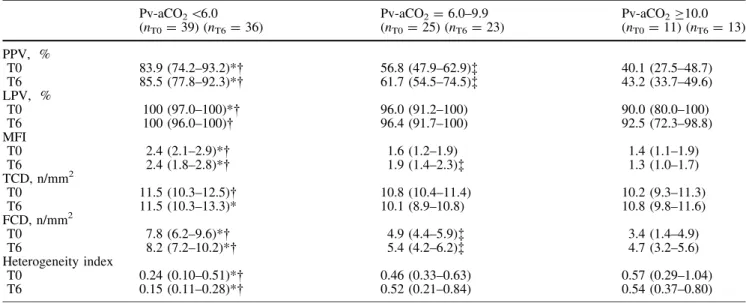
(3) 213. dynamic predictors of fluid responsiveness were performed in order to optimize cardiac preload. Dynamic predictors of fluid response were preferred over static parameters (i.e., pulmonary artery occlusion pressure or central venous pressure). However, when the use of dynamic predictors was not appropriate, cardiac filling pressures and clinical judgment were used to guide fluid administration. We did not use hydroxyethyl starches (HES). Norepinephrine was titrated to maintain mean. arterial pressure (MAP) [65 mmHg. Low doses of vasopressin titrated up to maximum of 0.03 IU/min were allowed to increase MAP or to decrease norepinephrine requirements but never as a single vasopressor. Dobutamine was titrated up to 20 lg/kg/min when SvO2 goals were not achieved after fluid load optimization and normalization of MAP. Mechanical ventilation support was provided when needed under a targeted sedation and analgesia protocol with midazolam and fentanyl. Table 1 General characteristics All patients (n = 75). Pv-aCO2 \6.0 (n = 39). Pv-aCO2 = 6.0–9.9 (n = 25). Pv-aCO2 C10.0 (n = 11). Age (years) 67 (58–77) 66 (60–74) 73 (65–81) 54 (43–71)* Male (%) 45 (60) 23 (59) 15 (60) 7 (64) APACHE II 25 (20–32) 24 (20–28) 28 (20–34) 25 (20–34) SOFA, day 1 11 (8–15) 10 (6–15) 11 (9–15) 11 (10–14) Time from first hypotension episode to 3 (3–4) 3 (3–4) 4 (2–4) 3 (2–4) catheter insertion (h) Fluids before catheter insertion (ml) 1650 (1200–2400) 1600 (1200–2400) 1600 (1025–2300) 2000 (1500–2700) Temperature (°C) 37.5 (37.4–38.4) 37.4 (37.2–38.2) 37.8 (37.6–38.4) 37.6 (37.5–38.6) Source of infection, n (%) Pneumonia 30 (40.0) 18 (46.2) 10 (40.0) 2 (18.2) Abdominal 17 (22.7) 8 (20.5) 7 (28.0) 2 (18.2) Urinary 10 (13.3) 4 (10.3) 3 (12.0) 3 (27.3) Soft tissue 2 (2.7) 2 (5.1) 0 (0.0) 0 (0.0) No specific site 7 (9.3) 1 (2.6) 3 (12.0) 3 (27.3) Other 9 (12.0) 6 (15.4) 2 (8.0) 1 (9.1) Medical, n (%)/surgical, n (%) 48 (64.0)/27 (36.0) 25 (64.1)/14 (35.9) 15 (60.0)/10 (40.0) 8 (72.7)/3 (27.3) Mechanical ventilation, n (%) 57 (76.0) 34 (87.2) 24 (96.0) 9 (81.8) Renal replacement therapy, n (%) 12 (16.0) 7 (17.9) 3 (12.0) 2 (18.2). p 0.02 0.96 0.55 0.22 0.69 0.66 0.54 0.25. 0.76 0.37 0.80. Values represent median (25–75th range) or absolute number (%) when indicated * p \ 0.05 for Pv-aCO2 C10.0 vs. Pv-aCO2 = 6.0–9.9 Table 2 Microcirculatory blood flow variables for the predefined Pv-aCO2 groups. PPV, % T0 T6 LPV, % T0 T6 MFI T0 T6 TCD, n/mm2 T0 T6 FCD, n/mm2 T0 T6 Heterogeneity index T0 T6. Pv-aCO2 \6.0 (nT0 = 39) (nT6 = 36). Pv-aCO2 = 6.0–9.9 (nT0 = 25) (nT6 = 23). Pv-aCO2 C10.0 (nT0 = 11) (nT6 = 13). 83.9 (74.2–93.2)* 85.5 (77.8–92.3)*. 56.8 (47.9–62.9)à 61.7 (54.5–74.5)à. 40.1 (27.5–48.7) 43.2 (33.7–49.6). 100 (97.0–100)* 100 (96.0–100). 96.0 (91.2–100) 96.4 (91.7–100). 90.0 (80.0–100) 92.5 (72.3–98.8). 2.4 (2.1–2.9)* 2.4 (1.8–2.8)*. 1.6 (1.2–1.9) 1.9 (1.4–2.3)à. 1.4 (1.1–1.9) 1.3 (1.0–1.7). 11.5 (10.3–12.5) 11.5 (10.3–13.3)*. 10.8 (10.4–11.4) 10.1 (8.9–10.8). 10.2 (9.3–11.3) 10.8 (9.8–11.6). 7.8 (6.2–9.6)* 8.2 (7.2–10.2)*. 4.9 (4.4–5.9)à 5.4 (4.2–6.2)à. 3.4 (1.4–4.9) 4.7 (3.2–5.6). 0.24 (0.10–0.51)* 0.15 (0.11–0.28)*. 0.46 (0.33–0.63) 0.52 (0.21–0.84). 0.57 (0.29–1.04) 0.54 (0.37–0.80). PPV percentage of small perfused vessels, LPV percentage of large p \ 0.05 Pv-aCO2 \6.0 vs. Pv-aCO2 C10.0 perfused vessels, MFI microvascular flow index, TCD total capil- à p \ 0.05 Pv-aCO = 6.0–9.9 vs. Pv-aCO C10.0 2 2 lary density, FCD functional capillary density * p \ 0.05 Pv-aCO2 \6.0 vs. Pv-aCO2 = 6.0–9.9.
(4) 214.
(5) 215. b Fig. 1 Percentage of small vessels perfused (PPV), functional. capillary density (FCD), and heterogeneity index (HI) for the predefined Pv-aCO2 groups. Box plots depicting differences in PPV, FCD, and HI for predefined Pv-aCO2 groups (group 1, \6.0 mmHg; group 2, 6.0–9.9 mmHg; group 3, C10 mmHg) at both T0 (a) and T6 (b). Kruskal–Wallis test, p \ 0.001. *Post hoc Mann–Whitney analysis adjusted for multiple comparisons; p \ 0.05 for group 1 vs. 2 and 1 vs. 3, **post hoc Mann–Whitney analysis adjusted for multiple comparisons; p \ 0.05 for group 2 vs. 3. Boxes denote interquartile range, horizontal line in the boxes represents the median values, and whiskers extend 1.5 times the interquartile range above and below the 25th and 75th percentiles. PPV percentage of small vessels perfused, Pv-aCO2 venous-toarterial carbon dioxide difference, FCD functional capillary density, HI heterogeneity index. according to the local procedures. Use of low dose hydrocortisone (up to 200 mg/day) was indicated in the case of persistence of vasopressor requirement despite ensuring an adequate intravascular volume. Glycemic control, venous thrombosis prophylaxis, and gastric ulcer stress prevention were provided according to Surviving Sepsis Guidelines [28]. Study protocol All potentially eligible patients from the emergency room or clinical/surgical wards were screened by our ‘‘rapid response team’’ (which was available 24/7) and promptly transferred to the ICU where attending physicians decided on the type of hemodynamic monitoring needed. Those equipped with PAC monitoring were consecutively selected for inclusion. Time 0 (T0) was set when the PAC was inserted. Arterial and mixed venous blood samples were drawn for gases analysis (ABL300, Radiometer; Copenhagen, Denmark) at T0 and 6 h after (T6). We defined Pv-aCO2 as the difference between mixed-venous and arterial CO2 partial pressures. Complete hemodynamic and respiratory parameters, inotropic/vasopressor doses, and volume of resuscitation fluids were also registered at these points. Simultaneously, sublingual microcirculation images were also recorded and stored under a random number for ulterior analysis [29]. Microcirculatory measurements We used a sidestream dark-field (SDF) imaging device (MicroScan; MicroVision Medical, Amsterdam, the Netherlands) to explore microcirculation at T0 and T6. The SDF device was softly applied to the lateral side of the tongue covering an area of approximately 2.5–4 cm from the tip of tongue after gentle removal of secretions with gauze. At each measurement time, we recorded five sequences of video of 20 s each from different adjacent mucosa areas using a video card (Micro Video; Pinnacle system, Mountain Views, CA, USA). These sequences of video were stored under a random number and later. analyzed by two investigators blinded to the origin of sequences (J.D.V. and G.O.T.). Vessels were classified as large or small using a cutoff value of 20 lm. Microvessels with continuous flow were considered as normal, whereas sluggish, intermittent, and stopped flows were considered as abnormal. In accordance with the consensus for the evaluation of microcirculation [29], we calculated the proportion of small perfused vessels (\20 lm diameter), the microvascular flow index (MFI), the heterogeneity index (HI), the total vascular density (all vessels), and the FCD (vessels \20 lm diameter). The intra- and interobserver variability were determined by using five sequences analyzed five times at 8-week intervals by two observers (J.D.V. and G.O.T.). We calculated the intra- and interobserver coefficient of variability for both the total number of vessels and the proportion of perfused vessels. An expanded description of image acquisition and analysis is provided in the ESM. Outcome measures The primary outcome was the agreement between PvaCO2 and PPV at T0 and T6. Secondary outcomes included the relationships between Pv-aCO2 and hemodynamic systemic variables, and the relationships between changes in Pv-aCO2 and changes in cardiac output and PPV observed between T0 and T6. Statistics As the primary hypothesis has not been tested before, it was difficult to compute a sample size. On the basis of previous data from our department [8], we estimated that 75 patients would provide a good range of dispersion of Pv-aCO2 and PPV for looking at relationship between variables. Distribution of data was tested using the Kolmogorov– Smirnoff test. We explored the relationship between microcirculatory and systemic hemodynamic variables using the Spearman rho test and calculating the coefficient of determination (R2) to establish the strength of such associations. The distribution of microcirculatory variables, systemic hemodynamics, blood gases, and oxygen/tissue perfusion parameters at T0 and T6 was also evaluated for three predefined groups classified according to the Pv-aCO2 range values in agreement with previous observations [8]: (1) \6.0 mmHg (2) 6.0–9.9 mmHg, and (3) C10 mmHg. Differences among groups were assessed using the Kruskal–Wallis test with post hoc Mann– Whitney analysis with adjustment for multiple comparisons. We calculated the delta of variation of Pv-aCO2, PPV, and cardiac outputs between T0 and T6. Spearman rho test and R2 were used to evaluate the agreement and.
(6) 216. presented in Table 1. Mortality at day 28 in this cohort was 34.7 % and the ICU length of stay was 6.0 (2.0–10.0) days. Time elapsed from first hypotension episode until PAC insertion and blood sampling (i.e., T0) was 3.0 (3.0–4.0) h and amount of fluids received at that point was 1650 (1200–2400) ml. A total of 39, 25, and 11 patients were assigned to the three predefined Pv-aCO2 groups at T0, and 36, 23, and 13 at T6, respectively. Of these, 49/75 patients (65.3 %) had SvO2 [65 % at T0 and 58/72 (82.9 %) attained a SvO2 [65 % at T6. Hemodynamic and respiratory variables, arterial and mixed-venous blood gases, and oxygen-derived parameters for the predefined Pv-aCO2 groups at both T0 and T6 are shown in ESM Table E1. Microcirculatory blood flow parameters are shown in Table 2. We observed a progressively lower PPV with a subsequent decrease in FCD and increased HI at progressively higher Pv-aCO2 values at both T0 and T6 (Fig. 1). Microcirculatory blood flow index (MFI) was also lower at higher Pv-aCO2 values while total capillary density was normal only in patients with normal Pv-aCO2 (ESM Fig. E2). We observed a significant agreement between the Pv-aCO2 and PPV (T0: R2 = 0.61, p \ 0.001; T6: R2 = 0.55, p \ 0.001; ESM Fig. E3). Conversely, we found lack of agreement between the cardiac index (representing the macro blood flow) and the PPV (ESM Fig. E4). Other resuscitation and hemodynamic goals such as SvO2 and MAP were also poorly correlated to the microcirculatory blood flow (ESM Figs. E5, E6). Results Changes in Pv-aCO2 values between T0 and T6 were A total of 75 patients fulfilling the inclusion criteria were significantly related to changes in PPV, whereas changes included in the study (ESM Fig. E1). General character- in cardiac output were not related to changes in Pv-aCO2 istics according to predefined Pv-aCO2 groups are or PPV (Fig. 2, ESM Fig. E7).. strength between Pv-aCO2 vs. PPV, Pv-aCO2 vs. cardiac output, and PPV vs. cardiac output variations. A multiple linear regression model was used to determinate the association between the Pv-aCO2, cardiac index, SvO2, and mean arterial pressure with the percentage of small perfused vessels (PPV). Subsequent multiple linear regression models were constructed to test the relation between Pv-aCO2 and the other systemic resuscitation goals with PPV in patients with SvO2 \65 % or C65 %. The goodness of fit of each model was evaluated using the coefficient of determination. Through the Spearman rho test and calculating R2, we also evaluated the agreement between PPV and Pv-aCO2, venous-to-arterial carbon dioxide content (Cv-aCO2), and venous-to-arterial carbon dioxide content to arterial-to-venous oxygen content ratio (Cv-aCO2/Da-vO2). Receiver operating characteristics (ROC) curves were constructed to compare the accuracy of Pv-aCO2, lactate, SvO2, and cardiac output in predicting altered PPV at different abnormal cutoff points (PPV50, PPV60, and PPV70 %). Areas under the ROC curves (AUCs) and their respective 95 % confidence intervals (CIs) were calculated and compared using non-parametric statistics. Data are presented as median [percentiles 25–75]. A p value of 0.05 or less (2-tailed) was considered significant.. Fig. 2 Scatter plots showing the correlation of variations observed (R2 = 0.42, p \ 0.001) and b changes in cardiac output (D cardiac between changes in venous-to-arterial CO2 partial pressure differ- output) between measurements performed at T0 and T6 ences (D Pv-aCO2) and a changes in percentage of small vessels (R2 = 0.01, p = 0.45) perfused (D PPV) between measurements performed at T0 and T6.
(7) 217. Table 3 Multiple linear regression models for variables related to the percentage of small perfused vessels (PPV) T0. All patients Pv-aCO2 SvO2, % CI, L/min MAP R2 for the model SvO2 C65 % Pv-aCO2 CI, L/min MAP R2 for the model SvO2 \65 % Pv-aCO2 CI, L/min MAP R2 for the model. T6. Coefficient. 95 % CI. p value. Coefficient. 95 % CI. -5.35 0.12 -0.83 0.23 –. -6.41 -0.16 -3.47 -0.04 –. -5.11 -0.31 0.32 – -5.91 -2.18 -0.07 –. p value. -4.29 0.41 1.81 0.51 –. \0.001 0.39 0.53 0.93 0.66. -3.49 0.05 -0.11 0.30 –. -4.43 -0.25 -4.29 -0.04 –. -2.55 0.35 4.06 0.64 –. \0.001 0.75 0.96 0.08 0.58. -6.46 -3.53 -0.03 –. -3.76 2.91 0.63 –. \0.001 0.85 0.06 0.63. -3.92 2.27 0.19 –. -5.02 -2.48 -0.21 –. -2.82 7.02 0.59 –. \0.001 0.34 0.34 0.61. -7.63 -7.37 -0.65 –. -4.19 3.01 0.52 –. \0.001 0.39 0.82 0.71. -3.22 -3.68 0.39 –. -5.39 -13.43 -0.35 –. -1.05 6.07 1.13 –. 0.007 0.43 0.28 0.57. Pv-aCO2 venous to arterial carbon dioxide difference, SvO2 mixed venous oxygen saturation, CI cardiac index, MAP mean arterial pressure, R2 coefficient of determination. A multiple linear regression model including all patients revealed that Pv-aCO2 was independently related to PPV at T0 and T6, whereas other systemic hemodynamic parameters such as cardiac output, SvO2, or MAP were not significantly related to microcirculatory blood flow (Table 3). Likewise, when linear regression models were performed separately in patients with SvO2 \65 % or SvO2 C65 %, Pv-aCO2 was again the only variable related to PPV at both T0 and T6 (Table 3). Even though Pv-aCO2 was apparently not correlated with cardiac index in this septic shock group (ESM Fig. E8), we observed lower cardiac indexes in predefined groups with abnormal Pv-aCO2 values at T6 (ESM Fig. E9). Similarly, lower MAP was observed in groups with higher Pv-aCO2 values at T6 (ESM Fig. E10). We also observed a trend towards lower SvO2 at higher PvaCO2 values, without achieving significant differences (ESM Fig. E11). Pv-aCO2 exhibited the highest area under the ROC curve (AUC) for predicting abnormal PPV at different cutoffs at both T0 and T6. Other macrohemodynamic or tissue perfusion parameters were not related to PPV (ESM Fig. E12, Table E2). Venous-to-arterial carbon dioxide differences calculated in terms of partial pressures (Pv-aCO2) were significantly related to those calculated by blood contents (Cv-aCO2) (T0: R2 = 0.52, p \ 0.001; T6: R2 = 0.42, p \ 0.001) (ESM Fig. E13). In addition to the significant relation between PPV and Pv-aCO2, we also observed a linear relationship between PPV and Cv-aCO2 (T0: R2 = 0.42, p \ 0.001, T6: R2 = 0.32, p \ 0.001) and between PPV and the Cv-aCO2/Da-vO2 ratio (T0: R2 = 0.18, p \ 0.001) (Fig. 3, ESM Fig. E14).. When data were analyzed considering the Pv-aCO2 as a dependent variable, PPV was independently related to Pv-aCO2 (ESM Table E3). Remarkably, cardiac index was also related to Pv-aCO2 but only in patients with SvO2 \65 % at T6 (ESM Table E3).. Discussion Our observations reveal that Pv-aCO2 is closely related to microcirculatory blood flow parameters during the early phases of resuscitation of septic shock. Indeed, Pv-aCO2 was the best predictor of the microvascular blood flow maldistribution as indicated by the alterations in the percentage of small vessels perfused, the heterogeneity blood flow index, and consequently FCD. In addition, changes in Pv-aCO2 were significantly related to changes in PPV. Meanwhile, Pv-aCO2 was poorly related to systemic hemodynamic variables. Microcirculatory dysfunction in septic shock is a generalized phenomenon characterized by decreasing FCD associated with increasing heterogeneity of blood flow consisting in zones with well-perfused vessels adjacent to non-perfused capillaries [21, 22]. Those derangements seem to trigger the development of organ dysfunctions because capillary blood flow alterations precede cellular stress [30, 31] and hypoxia-inducible gene expression [32]. In fact, microcirculatory alterations are stronger determinants of outcomes than global hemodynamic parameters, with progressive increase in the risk of death in quartiles representing more severe microcirculatory disturbances [33]. Nevertheless, some.
(8) 218. Fig. 3 Scatter plots depicting the relationships between the percentage of small vessels perfused (PPV) at T0 and a the venous-to-arterial CO2 partial pressure difference (Pv-aCO2), b the venous-to-arterial CO2 content difference (Pv-aCO2), and c the venous-to-arterial CO2 to arterial-venous O2 content difference ratio (Cv-aCO2/Da-vO2). Coefficient of determination (R2) was calculated to assess the strength of correlations. authors argue against microcirculatory dysfunction as the primary event leading to organ failure because microcirculatory derangements might be coupled with cellular and mitochondrial dysfunction and merely reflect an adaptive response [34]. Despite controversies about the causal relationship between microcirculatory alterations and organ dysfunction, the quest for appropriate monitoring of microcirculation could potentially improve resuscitation results in septic shock. However, despite advances in the techniques to evaluate microcirculation at the bedside, an immediate and reliable method to quantify microcirculatory alterations is not yet available [35]. In our study, PvaCO2 was independently related to PPV (and consequently to FCD and MFI) at both T0 and T6, and this relationship was also maintained when we evaluated separately patients with SvO2 \65 % or C65 %. Furthermore, Pv-aCO2 was better at predicting abnormal PPV values at different cutoffs, and it was superior to macrohemodynamic or oxygen metabolism goals. Similarly, Pv-aCO2 [6.0 was related to an increased HI and therefore a decreased FCD. In normal conditions, the heterogeneity of microvascular blood flow is negligible [36], and matching of perfusion to metabolism usually improves during hypoxic or low flow states [37]. However, increases in the heterogeneity of the microcirculatory blood flow with the subsequent reduction in the FCD could be responsible for altered oxygen extraction capabilities in sepsis [38]. In fact, the heterogeneous flow cessation of individual capillaries could be an important factor determining the oxygen supply dependence phenomenon during the most severe cases of septic shock [38, 39] and this heterogeneity of microvascular blood flow could be tracked by Pv-aCO2 variations during the early stages of resuscitation. In fact, changes observed in Pv-aCO2 between T0 and T6 were significantly related to those exhibited by PPV during the same time interval. It has been suggested that microcirculatory derangements can occur in the absence of macrohemodynamic derangements even when global oxygen delivery seems adequate [21, 40]. However, other small-sized studies have insinuated that microcirculatory impairment is related to decreasing mean arterial pressure or increasing dose of vasopressors [41]. Our data also suggest some independence between microcirculatory variables and macrohemodynamics, which is in line with previous observations [32, 39]. Indeed, changes exhibited by PvaCO2 between T0 and T6 were not related to variations in cardiac output. Nevertheless, patients with a Pv-aCO2 C6.0 exhibited a trend toward lower cadiac index and MAP values than those with Pv-aCO2 \6.0. Furthermore, cadiac index was significant but weakly related to PvaCO2 in patients with SvO2 \65 % but not in those with normal SvO2. Pv-aCO2 can also be influenced by the CO2 dissociation curve. In this regard, we observed a good agreement.
(9) 219. between Pv-aCO2 and the venous-to-arterial CO2 content difference (Cv-aCO2), especially at normal ranges of PvaCO2 (i.e., Pv-aCO2 \6.0 mmHg). Interestingly, CvaCO2 was mostly dispersed at higher Pv-aCO2 values, suggesting a deeper impact of the Haldane effect at abnormal Pv-aCO2 values. Similarly, difference between slopes described by the linear regression of PPV vs. PvaCO2 and PPV vs. Cv-aCO2 relationships should also be influenced by the Haldane effect. Nevertheless, the also significant relationship between PPV vs. Cv-aCO2 suggests that CO2 accumulation is, at least in part, related to the abnormal microcirculatory blood flow occurring during inflammatory conditions. It has been recently suggested that combination of venous-to-arterial CO2 content to arterial-venous O2 difference ratio (Cv-aCO2/Da-vO2) can add prognostic value to lactate measurements during early stages of septic shock [42] because it could be used as a surrogate for the VCO2/VO2 ratio (i.e., the respiratory quotient), to potentially detect non-aerobic CO2 generation [43]. We explored the association between the Cv-aCO2/Da-vO2 ratio and microcirculatory alterations; although, we found a significant correlation, the strength of such a relationship was notoriously weaker than that observed between Pv-aCO2 (or even Cv-aCO2) and PPV. We acknowledge that the Cv-aCO2/Da-vO2 ratio could be subjected to more error in calculations than Pv-aCO2, but differences in the slope of the Cv-aCO2/Da-vO2 ratio vs. PPV compared with the Pv-aCO2 vs. PPV relationship suggest the involvement of other physiological variables different to microcirculatory blood flow. Indeed, the Cv-aCO2/DavO2 ratio was abnormally increased in a number of patients through a wide range of PPV values. Therefore, it is not surprising that the Cv-aCO2/Da-vO2 ratio is superior to the Pv-aCO2/Da-vO2 ratio in the clinical setting [41] because under hypoxic conditions, disparity between Pv-aCO2 and Cv-aCO2 increases, and when coupling PvaCO2 to different DO2/VO2 values, pH, temperature, and hemoglobin levels, the Pv-aCO2/Da-vO2 may acquire different cutoff normality values (a situation obviated when the numerator is corrected with the determinants of the Haldane effect). We recognize limitations to our study. First, we used mixed venous blood to assess Pv-aCO2 gradients, thus our results may not apply to central venous blood Pv-aCO2 gradients. Indeed, even though a reasonable agreement is often reported in trials comparing both sampling sites. [44], significant discrepancy can sometimes be observed and should not be neglected. Of note, this concordance between sampling sites has mostly be evaluated for SvO2 more than for PCO2 gradients. Second, variations of PvaCO2, macrohemodynamics, and microcirculatory variables between T0 and T6 were not the result of targeted interventions but simply changed during resuscitation. Nevertheless, relationships exhibited between Pv-aCO2 and PPV allow us hypothesize that some specific therapeutic interventions modifying microcirculation might reliably be tracked by Pv-aCO2. Third, the relationship observed between microcirculatory variables and PvaCO2 does not establish a causal association even though the physiological reasoning leading to our conclusions seems logical. Finally, there was no pre-experimental statistical plan published in a prespecified registry or a journal. However, observational research is, by nature, exploratory and requires considerable flexibility to explore novel findings and unexpected signals in the data [45, 46]. In conclusion, increased Pv-aCO2 values are associated with microcirculatory dysfunction in septic shock, even when SvO2 is within normal values. Whether changes in Pv-aCO2 can be used to track changes in microvascular perfusion remains to be determined. Acknowledgments The authors thank Dr. Jairo Osorno and Dr. Fernando Rosso (CIC, Fundación Valle del Lili-Universidad ICESI, Cali, Colombia) for their contribution to enhancing the quality of the manuscript. The authors also thank Dr. Yuri Takeuchi and Dr. Marcela Granados (Fundación Valle del Lili-Universidad ICESI) for their unconditional support to this project.. Compliance with ethical standards Funding Tecnoquı́micas S.A. (Colombia)-Centro Investigaciones Clı́nicas, Fundación Valle del Lili (CO) (CIC 001). Universidad ICESI (CO) (IP-FO-01) Conflicts of interest. Authors declare no conflicts of interest.. Open Access This article is distributed under the terms of the Creative Commons Attribution-NonCommercial 4.0 International License (http://creativecommons.org/licenses/by-nc/4.0/), which permits any noncommercial use, distribution, and reproduction in any medium, provided you give appropriate credit to the original author(s) and the source, provide a link to the Creative Commons license, and indicate if changes were made.. References 1. Vincent JL, De Backer D (2013) Circulatory shock. N Engl J Med 369:1726–1734. 2. Cecconi M, De Backer D, Antonelli M, Beale R, Bakker J, Hofer C, Jaeschke R, Mebazaa A, Pinsky MR, Teboul JL, Vincent JL, Rhodes A (2014) Consensus on circulatory shock and hemodynamic monitoring. Task force. of the European Society of Intensive Care Medicine. Intensive Care Med 40:1795–1815.
(10) 220. 3. Bellomo R, Reade MC, Warrillow SJ (2008) The pursuit of a high central venous oxygen saturation in sepsis: growing concerns. Crit Care 12:130 4. Yealy DM, Kellum JA, Huang DT, Barnato AE, Weissfeld LA, Pike F, Terndrup T, Wang HE, Hou PC, LoVecchio F, Filbin MR, Shapiro NI, Angus DC, Investigators P (2014) A randomized trial of protocol-based care for early septic shock. N Engl J Med 370:1683–1693 5. Peake SL, Bailey M, Bellomo R, Cameron PA, Cross A, Delaney A, Finfer S, Higgins A, Jones DA, Myburgh JA, Syres GA, Webb SA, Williams P, ARISE Investigators, for the Australian and New Zealand Intensive Care Society Clinical Trials Group (2009) Australasian resuscitation of sepsis evaluation (ARISE): a multicentre, prospective, inception cohort study. Resuscitation 80:811–818 6. Mouncey PR, Osborn TM, Power GS, Harrison DA, Sadique MZ, Grieve RD, Jahan R, Harvey SE, Bell D, Bion JF, Coats TJ, Singer M, Young JD, Rowan KM, Investigators PT (2015) Trial of early, goal-directed resuscitation for septic shock. N Engl J Med 372:1301–1311 7. van Beest PA, Hofstra JJ, Schultz MJ, Boerma EC, Spronk PE, Kuiper MA (2008) The incidence of low venous oxygen saturation on admission to the intensive care unit: a multi-center observational study in the Netherlands. Crit Care 12:R33 8. Ospina-Tascón GA, Bautista-Rincón DF, Umaña M, Tafur JD, Gutiérrez A, Garcı́a AF, Bermúdez W, Granados M, Arango-Dávila C, Hernández G (2013) Persistently high venous-to-arterial carbon dioxide differences during early resuscitation are associated with poor outcomes in septic shock. Crit Care 17:R294 9. van Beest PA, Lont MC, Holman ND, Loef B, Kuiper MA, Boerma EC (2013) Central venous-arterial pCO2 difference as a tool in resuscitation of septic patients. Intensive Care Med 39:1034–1039 10. Vallée F, Vallet B, Mathe O, Parraguette J, Mari A, Silva S, Samii K, Fourcade O, Genestal M (2008) Central venous-to-arterial carbon dioxide difference: an additional target for goaldirected therapy in septic shock? Intensive Care Med 34:2218–2225 11. Grundler W, Weil MH, Rackow EC (1986) Arteriovenous carbon dioxide and pH gradients during cardiac arrest. Circulation 74:1071–1074. 12. Weil MH, Rackow EC, Trevino R, Grundler W, Falk JL, Griffel MI (1986) Difference in acid-base state between venous and arterial blood during cardiopulmonary resuscitation. N Engl J Med 315:153–156 13. Zhang H, Vincent JL (1993) Arteriovenous differences in PCO2 and pH are good indicators of critical hypoperfusion. Am Rev Respir Dis 148:867–871 14. Van der Linden P, Rausin I, Deltell A, Bekrar Y, Gilbart E, Bakker J, Vincent JL (1995) Detection of tissue hypoxia by arteriovenous gradient for PCO2 and pH in anesthetized dogs during progressive hemorrhage. Anesth Analg 80:269–275 15. Groeneveld AB, Vermeij CG, Thijs LG (1991) Arterial and mixed venous blood acid-base balance during hypoperfusion with incremental positive endexpiratory pressure in the pig. Anesth Analg 73:576–582 16. Teboul JL, Mercat A, Lenique F, Berton C, Richard C (1998) Value of the venous-arterial PCO2 gradient to reflect the oxygen supply to demand in humans: effects of dobutamine. Crit Care Med 26:1007–1010 17. Bakker J, Vincent JL, Gris P, Leon M, Coffernils M, Kahn RJ (1992) Venoarterial carbon dioxide gradient in human septic shock. Chest 101:509–515 18. Mecher CE, Rackow EC, Astiz ME, Weil MH (1990) Venous hypercarbia associated with severe sepsis and systemic hypoperfusion. Crit Care Med 18:585–589 19. Vallet B, Teboul JL, Cain S, Curtis S (2000) Venoarterial CO(2) difference during regional ischemic or hypoxic hypoxia. J Appl Physiol 89:1317–1321 20. Dubin A, Estenssoro E, Murias G, Pozo MO, Sottile JP, Barán M, Piacentini E, Canales HS, Etcheverry G (2004) Intramucosal-arterial PCO2 gradient does not reflect intestinal dysoxia in anemic hypoxia. J Trauma 57:1211–1217 21. De Backer D, Creteur J, Preiser JC, Dubois MJ, Vincent JL (2002) Microvascular blood flow is altered in patients with sepsis. Am J Respir Crit Care Med 166:98–104 22. De Backer D, Ospina-Tascon G, Salgado D, Favory R, Creteur J, Vincent JL (2010) Monitoring the microcirculation in the critically ill patient: current methods and future approaches. Intensive Care Med 36:1813–1825. 23. Sakr Y, Dubois MJ, De Backer D, Creteur J, Vincent JL (2004) Persistent microcirculatory alterations are associated with organ failure and death in patients with septic shock. Crit Care Med 32:1825–1831 24. Creteur J, De Backer D, Sakr Y, Koch M, Vincent JL (2006) Sublingual capnometry tracks microcirculatory changes in septic patients. Intensive Care Med 32:516–523 25. Dubin A, Edul VS, Pozo MO, Murias G, Canullan CM, Martins EF, Ferrara G, Canales HS, Laporte M, Estenssoro E, Ince C (2008) Persistent villi hypoperfusion explains intramucosal acidosis in sheep endotoxemia. Crit Care Med 36:535–542 26. Horan TC, Andrus M, Dudeck MA (2008) CDC/NHSN surveillance definition of health care-associated infection and criteria for specific types of infections in the acute care setting. Am J Infect Control 36:309–332 27. Levy MM, Fink MP, Marshall JC, Abraham E, Angus D, Cook D, Cohen J, Opal SM, Vincent JL, Ramsay G, SCCM/ESICM/ACCP/ATS/SIS (2003) 2001 SCCM/ESICM/ACCP/ATS/SIS International Sepsis Definitions Conference. Crit Care Med 31:1250–1256 28. Dellinger RP, Levy MM, Rhodes A, Annane D, Gerlach H, Opal SM, Sevransky JE, Sprung CL, Douglas IS, Jaeschke R, Osborn TM, Nunnally ME, Townsend SR, Reinhart K, Kleinpell RM, Angus DC, Deutschman CS, Machado FR, Rubenfeld GD, Webb SA, Beale RJ, Vincent JL, Moreno R, Surviving Sepsis Campaign Guidelines Committee including The Pediatric Subgroup (2013) Surviving Sepsis Campaign: international guidelines for management of severe sepsis and septic shock, 2012. Crit Care Med 41:580–637 29. De Backer D, Hollenberg S, Boerma C, Goedhart P, Büchele G, Ospina-Tascon G, Dobbe I, Ince C (2007) How to evaluate the microcirculation: report of a round table conference. Crit Care 11:R101 30. Wu L, Tiwari MM, Messer KJ, Holthoff JH, Gokden N, Brock RW, Mayeux PR (2007) Peritubular capillary dysfunction and renal tubular epithelial cell stress following lipopolysaccharide administration in mice. Am J Physiol Renal Physiol 292:F261–F268 31. Fink T, Heymann P, Taha-Melitz S, Taha A, Wolf B, Rensing H, Volk T, Mathes AM (2013) Dobutamine pretreatment improves survival, liver function, and hepatic microcirculation after polymicrobial sepsis in rat. Shock 40:129–135.
(11) 221. 32. Bateman RM, Tokunaga C, Kareco T, Dorscheid DR, Walley KR (2007) Myocardial hypoxia-inducible HIF1alpha, VEGF, and GLUT1 gene expression is associated with microvascular and ICAM-1 heterogeneity during endotoxemia. Am J Physiol Heart Circ Physiol 293:H448– H456 33. De Backer D, Donadello K, Sakr Y, Ospina-Tascon G, Salgado D, Scolletta S, Vincent JL (2013) Microcirculatory alterations in patients with severe sepsis: impact of time of assessment and relationship with outcome. Crit Care Med 41:791–799 34. Moore JP, Dyson A, Singer M, Fraser J (2015) Microcirculatory dysfunction and resuscitation: why, when, and how. Br J Anaesth 115:366–375 35. Ince C (2014) The rationale for microcirculatory guided fluid therapy. Curr Opin Crit Care 20:301–308 36. Zuurbier CJ, van Iterson M, Ince C (1999) Functional heterogeneity of oxygen supply-consumption ratio in the heart. Cardiovasc Res 44:488–497 37. Stein JC, Ellis CG, Ellsworth ML (1993) Relationship between capillary and systemic venous PO2 during nonhypoxic and hypoxic ventilation. Am J Physiol 265:H537–H542 38. Goldman D, Bateman RM, Ellis CG (2006) Effect of decreased O2 supply on skeletal muscle oxygenation and O2 consumption during sepsis: role of heterogeneous capillary spacing and blood flow. Am J Physiol Heart Circ Physiol 290:H2277–H2285. 45. Vandenbroucke JP (2008) 39. Walley KR (1996) Heterogeneity of Observational research, randomised oxygen delivery impairs oxygen trials, and two views of medical extraction by peripheral tissues: theory. science. PLoS Med 5:e67 J Appl Physiol 81:885–894 46. Pearce N (2011) Registration of 40. De Backer D, Creteur J, Dubois MJ, protocols for observational research is Sakr Y, Koch M, Verdant C, Vincent JL unnecessary and would do more harm (2006) The effects of dobutamine on than good. Occup Environ Med microcirculatory alterations in patients 68:86–88 with septic shock are independent of its systemic effects. Crit Care Med 34:403–408 41. Edul VS, Enrico C, Laviolle B, Vazquez AR, Ince C, Dubin A (2012) Quantitative assessment of the microcirculation in healthy volunteers and in patients with septic shock. Crit Care Med 40:1443–1448 42. Ospina-Tascon GA, Umana M, Bermudez W, Bautista-Rincon DF, Hernandez G, Bruhn A, Granados M, Salazar B, Arango-Davila C, De Backer D (2015) Combination of arterial lactate levels and venous-arterial CO2 to arterial-venous O2 content difference ratio as markers of resuscitation in patients with septic shock. Intensive Care Med 41:796–805 43. Jakob SM, Groeneveld AB, Teboul JL (2015) Venous-arterial CO2 to arterialvenous O2 difference ratio as a resuscitation target in shock states? Intensive Care Med 41:936–938 44. Cuschieri J, Rivers EP, Donnino MW, Katilius M, Jacobsen G, Nguyen HB, Pamukov N, Horst HM (2005) Central venous-arterial carbon dioxide difference as an indicator of cardiac index. Intensive Care Med 31:818–822.
(12)
Figure

Documento similar
In the same way, on-line fractionation of the extract in a depressurization system (comprised of two separators) to produce a selective separation of the antioxidant
If you are taking in-home wound care to a person who is having a venous ulcer, you need to monitor them closely and consult with pressure ulcer treatment Los Angeles to help
M., Reticular Electronic Tuning of Porphyrin Active Sites in Covalent Organic Frameworks for Electrocatalytic Carbon Dioxide Reduction.. J., Covalent organic
We present a case of a distal digital segment amputation that was replanted under local anesthesia and without venous anastomosis, which was replaced by a controlled ongoing
Our aim was to identify the presence—or absence of arterial or venous anastomosis between iliac and obturator vessels in the retropubic region.. After dissection, we verified if
Venous thrombotic events in patients treated with immune checkpoint inhibitors for non-small cell lung cancer: a retrospective multicentric cohort study. Sussman TA, Li H, Hobbs
Results of (a) Electrical Conductivity (EC), (b) Redox potential (Eh), (c) Oxygen concentration, (d) Carbon dioxide concentration measurements with no soil in experiment containers
Peripherally inserted central catheters are associated with lower risk of bloodstream infection compa- red with central venous catheters in paediatric intensive care patients:
