
Sustainable development on a local scale: the investigation of the economic component within sustainable communities
95
0
0
Texto completo
(2) Universidad de Sonora Repositorio Institucional UNISON. Excepto si se señala otra cosa, la licencia del ítem se describe como openAccess.
(3) R E S U M E N ESPAÑOL. Esta tesina nos brinda un análisis y una evaluación de la detenninación del grado de la. sustentabilidad económica dentro de una comunidad a escala local.. Los métodos de análisis incluyen. análisis. de. desarrollo. condiciones. la creación de. sustentable,. específicas. y. el. estilo. con. de. una. respecto. vida. en. la. herramienta metodológica y un. a. identidades,. actualidad. sin. características,. el. estudio. de. la. comunidad. Todos los datos y la preparación de estos datos pueden ser encontrados. en el apéndice.. Las comprobaciones de los datos analizados muestran que el Desarrollo Sustentable y. las. medidas. comunidad. relacionadas. son. difíciles. de. poner. en. práctica.. En. particular,. la. ha declarado que recursos energéticos renovables y tecnologías así como. una red de asistencia es necesaria para la creación de una comunidad sustentable.. Esta tesina encuentra que el grado de sustentabilidad económica es suficiente, lo cual. es fabuloso porque es el comienzo de un proyecto. La motivación de los residentes es. una base significativa; sin embargo la creación de un mejor ambiente y por lo tanto de. un. desarrollo. para. sustentable. desarrollar. una. empieza. comunidad. con. la. hacia. persona. una. misma.. Sustentable. Se. necesita. con. un. más tiempo. alto. grado. de. sustentabilidad.. Las recomendaciones dadas incluyen:. •. La. educación. para. la. mejora. y el. incremento. del. conocimiento. acerca. de. la. materia y sobre sus indicadores;. •. La guía externa y asistencia para mejorar e incrementar la motivación así como. del desarrollo del proyecto;. •. La comunicación externa y contribuciones para la asistencia para proveer estas. medidas sustentables.. ·. I. 3.
(4) E N G L I S H ABSTRACT. This tesina. provides an analysis and evaluation of the determination of the econornic. sustainability degree within a cornrnunity on a local scale.. Methods. of analysis. Sustainable. include. Developrnent,. in. the. creation. respect to. of a. rnethodological. identities,. tool. characteristics,. and. analyses. of. specific conditions. and the actual lifestyles within the studied cornrnunity. AII data and data preparations can be found in the appendices.. Findings. of. analyzed. rneasurernents. is. hard. data. to. put. show. into. that. practice.. Sustainable. In. Developrnent. particular,. the. and. cornrnunity. related. state. that. renewable energy resources & technologies and assistance is needed for the creation of a Sustainable Cornrnunity.. The tesina finds the econornical sustainability degree sufficient, which is great as it is. the start of the project. The rnotivation of the residents is a significan! basis;. however. the creation of a better environrnent and thus Sustainable Developrnent begins with the. person. itself.. More time. is. needed to. develop the. cornrnunity into a Sustainable one. with a higher sustainability degree.. Recornrnendations discussed include:. '. •. Education. for. irnproving. and. increasing. knowledge. about the. subject. rnatters. and rneasurernents;. Externa! guidance and assistance for irnproving and increasing rnotivation and project rnanagernent;. Externa!. cornrnunication. and. contributions. for. assistance. of. providing. sustainable rneasurernel'lts.. I. 4.
(5) T E S I N A PREFACE. This tesina was prepared to investigate the degree of economic sustainability within a. community on. a local. Developmentinterdisciplinary. 'Desarollo University. in. scale - in. order to contribute to the. compliance. group-project. Sustentable'; of Sonora. in. with. was. which. in. Hermosillo. part. this. an. principies. interdisciplinary. of. the. currículum. respect. (Mexico),. and. became the. of Sustainable. group-project.. of. the. specialization. cooperation. Delft. This. between. of. the. University of Technology. (Netherlands).. The. aim. of. the. considering. explicated. research. data. is. collection,. in Chapter. 1.. described research. in. the. introduction,. process. Readers who are. and. interested. while. preparing. the data. methodology, analysis. are. in the theoretical framework of. the research (Sustainable Community Building) are referred to Chapter 2. The results of the. data. collection. and. research. process are discussed. in. Chapter 3.. Before the. conclusions and recommendations, an analysis is given in Chapter 4.. I. would. like. to. thank. Dr.. Luis. Velazquez. Contreras. supervising at the spot and at distance. Furthermore, Dr.ir Gijsbert Korevaar for their assistance,. 1. for. guidance. 'and. feedback,. wish to thank Dr. Leo Baas and. support and ongoing feedback throughout. the research, abroad in Mexico , and in the Netherlands. Their feedback was useful and. constructive in the final fashioning and finishing of this tesina.. to show our gratitude towardsMyreya Rodríguez Amavizca, the. commission. of the. Casa. Grande. community,. for. Finally,. 1. also would like. residen! and member of. providing. valuable. inforrnation. during meetings.. Leiden, January 2010,. Laura Teunissen. •. I.
(6) TABLE OF CONTENTS. RESUMEN ESPAÑOL.. 3. ENGLISH ABSTRACT. 4. TESINA PREFACE. 5. TABLE OF CONTENTS. 6. INDEX OF FIGURES. 9. INDEX OF TABLES. 1O. INTRODUCTION. 11. STRATEGIC STUDY-<:iOAL. 12. SPECIFIC STUDY-<:iOAL . . . . . . . . . . . . . . . . . . . . . . . . . . . . . . . . . . . . . . . . . . . . . . . . . . . . . . . . . . . . . . . . . . . . . . . . . . . . . . . . . . . . . . . . . . . . . . . . . . . . . • . . . . . . . . . . . . . . . . . . . . . . 12. RESEARCH SCOPE . . . . . . . . . . . . . . . . . . . . . . . . . . . . . . . . . . . • . . . . . . . . . . . . . . . . . . . . . . . . . . . . . . . . . . . . . . . . . . . . . . . • . . . . . . . . . . . . . . . . . . • . . . . . . . . . . . . . . . . . . . . . . . • . . . . 12. CONTENT DESCRJPTION . . . . . . . . . . . . . . . . . . . . . . . . . . . . . . . . . . . . . . . . . . . . . . . . . . . . . . . . . . . . . . . . . . . . . . . . . . . . . . . . . . . . . . . . . . . . . . . . . . . . . . . . . • . . . . . . . . . . . . . . . . 13. CHAPTER 1 :. METHODOLOGY. 14. 1.1. METHODOLOGICALAPPROACH . . . . . . . . . . . . . . . . . . . . . . . . . • . . . . . . . . . . . . . . . . . . . . . . . . . . . . . . • . . . . . . . . . . . . . . . . . . . . . . . . . . . . . . . . . . . . . . . 14. 1.2. REsEARCH QUESTIONS . . . . . . . . . . . . . . . . . . . . . . . . . . . . . . . . . . . . . . . . . . . . • . . . . . . . . . . . . . . . . . . . . . . . . . . . . . . . . . . . . . . . :. 1.3. DATACOLLECTION . . . . . . . . . . . . . • . . . . . . . . . . . . . . . . . . . • . . . . . . . . . . . . . . . . . . . . . . . . . . . . . . . . . . . . . . . . . . . . . . . . . • . . . . . . . . . . . . . . . . . . . . . . . . . . . . . . . 16. 1.4. REsEARCH PREPARATION . . . . . . . . . . . . . . . . . . . . . . . . . . . . • . . • • . . . . . . . . . . . . . . . . . . . . . . . . . . . . . . . . . . . • . . . . . . . . . . . . . . . . . . . . . . . . . . • . . . . . . . . . 16. 15. 1.4.1. Segment identification. 17. 1.4.2. Segment selection. 17. 1.4.3. lndicator ldentification. 18. 1.5. ECONOMY SEGMENT RESEARCH METHODS . . . . . . • . . . . . . . . . . . . . . . . . . . . . . . . . . . . . . . . . . . . . . . . . . . . . . . . . . . . . . . . . . . . . . . . . . . . . . . . 1 8. 1.5.1. Selecting the Economy Segment... 1.5.2. Selecting Economy lndicators. 1.6. :. 18. 19. QUESTIONNAIRE . . . . . . . . . . . . . . . . . . . . . . . . . . . . . . . . . . . . . . . . . . . . . . . . . . . . . . . . . . . . . . . . . . . . . . . . . . . . . . . . . . . . . . • . . . . . . . . . . . . . . . . . . . . . . . . . . . . . . . . 20. 1.6.1. Questionnaire preparation. 20. 1.6.2. Questionnaire utilization. 20. f. 1.7. '. SAMPL!NG. 6. 21.
(7) 1.8. IMPLEMENTATION. 1.9. DATAANALYSIS. CHAPTER 2:. 2.1. OF RESEARCH TOOLS. 22. 22. THEORETICAL FRAMEWORK. 23. SUSTAINABLE DEVELOPMENT. 23. 2.1.1. Defining and visions of Sustainable Development. 24. 2.1.2. Approaches for Sustainable Development... 25. 2.2. SUSTAINABLE COMMUNITIES. 28. 2.2.1. From Global to Local Sustainable Development. 28. 2.2.2. Defining 'Community'. 29. 2.3. 'SUSTAJNABLE COMMUNITY'. 2.4. SUSTAINABLE COMMUNITY. DEFINITION. 30. ECONOMY SEGMENT. 33. 2.4.1. Economy definition. 33. 2.4.2. Sustainable Economy indicators. 34. 2.4.3. Economy within a human settlement model. 34. 2.4.4. Economy in relation to a Sustainable community. 35. 2.5. CHAPTER OVERVIEW. CHAPTER 3:. 36. RESEARCH RESUL TS. 37. 3.1. SUSTAINABLE COMMUNITY. 3.2. QUESTIONNAIRE. 3.3. QUESTIONNAIRE APPLIANCE. 3.4. EMPLOYMENT. 3.5. FAMIL Y AMOUNT. 39. 3.6. INCOME. 40. 3. 7. PROFESSIONS CONTRIBUTING. 3.8. HOUSEKEEPING-JOBS. 3.9. SUSTAINABLE. 3.10. CONSUMER. RESULTS. BUILDING: CASA. GRANDE. FUNCTIONING. 37. 38. 38. : . . . . . . . . . . . . . . . . . . . . . . . . . . . . . . . . . . . . • . . . . . . . . . . . . . . . . . . . . . . . . . . . . . . . . . . . . . . . . . . . . . . . . . . . . . . . . . . • . . . . . . 39. &. TO SUSTAINABILITY. HOUSEHOLD MAINTENANCE. DEVELOPMENT ANO THE COMMUNITY. 42. 42. 43. I PATTERNS. 44. 7.
(8) 3.11. REDUCTION OF CONSUMER PA ITERNS. CHAPTER 4:. 46. RESEARCH ANAL YSIS. 49. 4.1. QUESTIONNAIRE ANAL YSIS FUNCTIONING ................................................•...........................••.. 49. 4.2. REsULTS OF QUESTIONNAIRE APPLIANCE. 4.3. EMPLOYMENT . . . . . . . . . . . . . . . . . . . . . . . . . . . . . . . . . . . . . . . . . . . . . . . . . . . . . . . . . . . . . . . . . . . . . . . . • . . . . . . . . . . . . . . . . . . . . . . . . . . . . . . . . . . . . . . . . . . . . . . . . . 50. 4.4. FAMILY AMOUNT .............................................................................................................•........ 50. 4.5. lNCOME. 51. 4.6. PROFESSIONS CONTRJBUTING TO SUST AINABILITY. 51. 4.7. HOUSEKEEPING-JOBS & HOUSEHOLD MAINTENANCE. 52. 4.8. SUSTAINABLE DEVELOPMENT AND THE COMMUNITY. 52. 4.9. CONSUMER PA TTERNS. 53. 4.10. REDUCTION OF CONSUMER PA ITERNS. 54. 49. CONCLUSIONS. 56. RECOMMENDATIONS. 63. REFERENCES. 65. .. APPENDIX 1: INDICATOR MATRIX. 67. APPENDIX 11: ECONOMY INDICATORS. 69. APPENDIX 111: QUESTIONNAIRE ENGLISH. 74. APPENDIX IV: CUESTIONARIO ESPAÑOL. 81. 87. APPENDIX V: SPSS ANAL YSIS. I. 8.
(9) INDEX. OF. FIGURES. Fig. 1 : 'Sustainable Communities Plan' English Government 2003. Pag. 1 7. Fig. 2: Segments Sustainable Community Building 'Casa Grande' case-study. Pag. 1 8. Fig. 3: UN's Sustainable Development. Pag. 27. Fig. 4: Extended metabolism model of human settlements. Pag. 34. Fig. 5: Ecological Footprint example. Pag. 36. Fig. 6: Family education. Pag. 39. Fig. 7: Females within family . . . . . . . . . . . . . . . . . . . . . . . . . . . . . . . . . . . . . . . . . . . . . . . . . • • . . . . . . . . . • . . . . . . . . . . . . . . . . . . Pag. 39. Fig. 8: Males within family . . . . . . . . . . . . . . . . . . . . . . . . . . . . . . . . . . . . . . . . . . . . . . . . . . . . . . . . . . . . . . . . . . . . . . . . . . • . . . . . . . . Pag. 39. Fig. 9: Profession. Pag. 42. Fig. 1 O: Sustainable Products. Pag. 45. Fig. 1 1 : Reason no RE use. Pag. 45. I. 9.
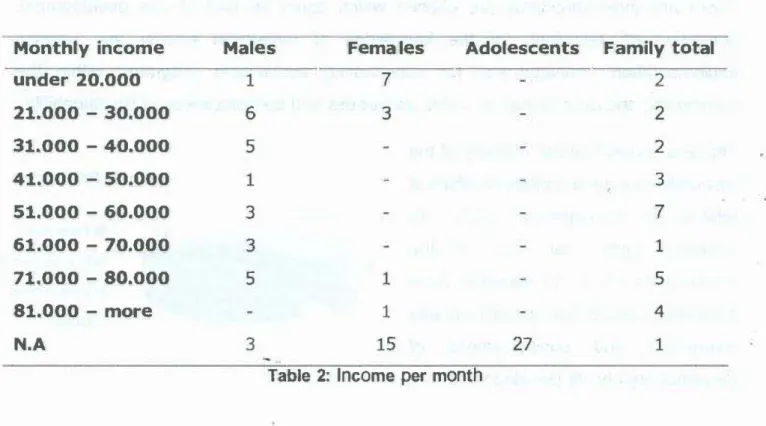
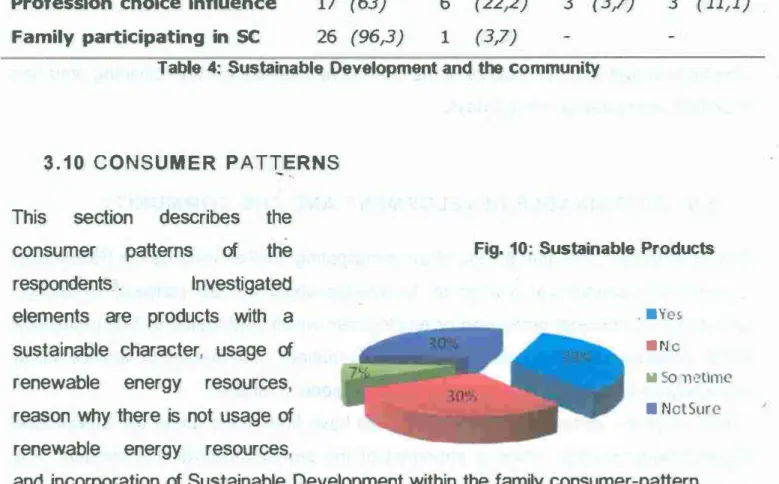
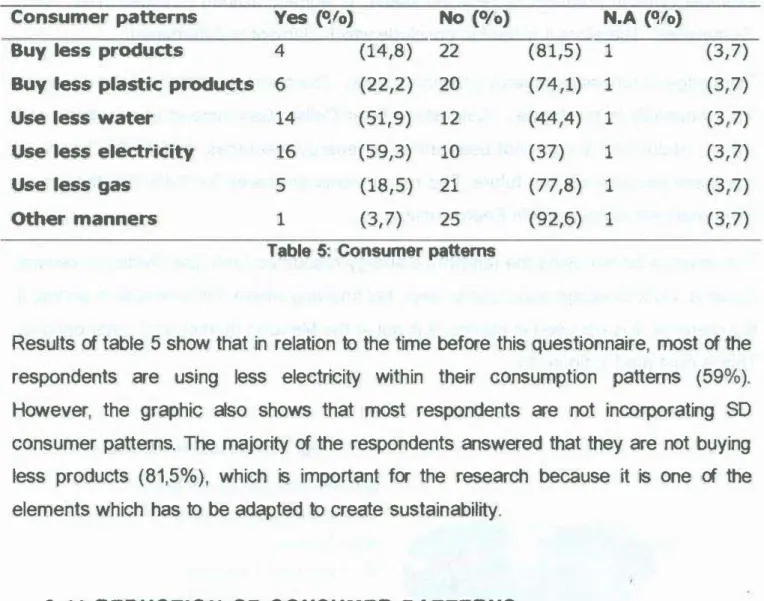
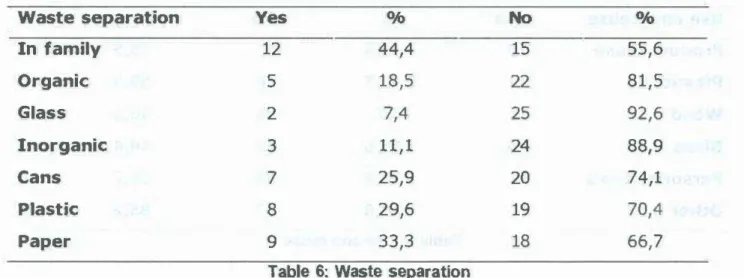
(10) INDEX. OF. TABLES. Table 1 : Age offamily member. Pag. 40. Table 2: lncome per month . . . . . . . . . . . . . . . . . . . . . . . . . . . . . . . . . . . . • . . . . . . . . . . . . . . . . . . . . . . . . . . . . . . . . . . . . . . . . Pag. 41. Table 3: Household. maintenance and --jobs. Pag. 43. Table 4: Sustainable Development and the community. Pag. 44. Table 5: Consumer pattems. Pag. 46. Table 6: Waste separation . . . . . . . . . . . . . . . . . . . . . . . . . . . . . . . . . . . . . . • . . . . . . . . . . . . . . . . . . . . . . . . . . . . . . . . . . . . . . . Pag. 47. Table 7: Water and electricity . . . . . . . • . . . . . . . . . . . . . . . . . . . . . . . . . . . . . . . . . . . . . . . . . . . . . . . . . . . . . . . . . . . . . . . . . Pag. 47. Table 8: Use and reuse . . . . . . . . . . . . . . . . . . . . . . . . . . . . . . . . . . . . . . . . . . . . . . . . . . . . . . . . . . . • • . . . . . . . . . . . . . . . . . . . . . Pag. 48. Table 9: Decreasing and reducing products. Pag. 48. i. 10.
(11) INTRODUCTION. The curren! patterns of economic growth and resource consumption were not could not. be. maintained. by. the. earth's. carrying. capacity.. In. the. 1980's. the. concept. of. Sustainable Oevelopment emerged as a popular solution to the problems which carne. along. with. the. introduction,. increasing. Sustainable. resource. depletion. Oevelopment. urges. to. create awareness of their curren! lifestyles and. and. be. economic. brought. growth.. closer to. the. After. its. people. to. life patterns. To bring the concept as. close as to create such awareness, the community level is as closest for the people to. work at Sustainability together.. So far there have been few investigations about !he subject. Not only the investigated. analyses. are. few,. countries. facing. furthermore. significan!. economic growth. and. !he. analyses. impacts. globalization.. of. are. problems. Although. usualiy. as. focused. climate. the world. as. on. change. modernized. urbanization,. a whole faces the. problems, the investigated areas are not comparable to the area of Mexico,. same. let alone. Hermosillo which is situated in a desert like area.. In this tesina. scale,. the possibilities of Sustainable. Oevelopment. is. investigated on. a local. al a community level. Tois is of importance because Sustainable Oevelopment. begins where people have identified and adopted the thoughts and statements of the. creation of a greener existence, and is therefore easier to imply al a local scale. For the. implementation. of. SO. goals. at. a. local. scale. like. a. neighborhood,. the. concept. of. Sustainable Community Building is created which can contribute to the improvement of. environment in various importan! ways:. •. Education through local knowledge and communication channels;. •. Awareness of the existing local problems;. •. Participation within SO through cooperation within environments;. •. Creation of new communication channels;. •. Social control of consumption patterns and lifestyles;. •. Etc.. Sustainable Community Building is a concept where a balance is generated between. the. on. three components of Sustainable. a. micro. scale. to. create. a. better. Oevelopment (Social,. and. greener. Ecological,. environment. for. ali. Economical),. living. beings.. Through education of ali different approaches and methods, awareness can be created. on. a. local. level. where. the. changes. and. intensely and immediately seen and felt.. 11. intervention. contributing. to. SO. are. most. 1.
(12) STRATEGIC STUDY-GOAL. The strategic study-goal is: Determining the degree of economic sustainability within a. community. on. a. local. scale. through. the. principies. of. Sustainable. Development,. respecting identities, characteristics, specific conditions and the actual lifestyles within the community.. S P E C I F I C STUDY-GOAL. The specific study-goal is: Verifying the sustainability level of the community of 'Casa Grande', through various steps:. Analyzing. (1). related. literature, for the creation of basic knowledge of the. to pie; (2). Adapting a Sustainable Community definition to create one which suites. the situation of 'La Casa Grande· residential;. (3). Designing. a. methodological. questionnaire. associated. indicators connected. to. to the. tool. for. analysis,. the. case-study,. strategic goal,. through. defining. and. creation. 'of. conducting. of. a. sustainable. the. survey. related to the found indicators.. (4). Analyzing ali data outcomes of the conducted survey and results, for the formation of an overview to state research conclusions.. RESEARCH. SCOPE. The research took place in the city of Hermosillo, Sonora, Mexico, a city located in the 1).. municipality of the same name (INEGI, residential. first. half. is located. of. 2009,. 2003. The community of 'La Casa Grande'. in the south of Hermosillo.. specifically. in. Casa. The survey is conducted during the. Grande. residential. development,. located. southwest of the city.. I. 1 INEGI. (2006). Instituto. Nacional. de. Estadistica. y Geografia. 12. Informática:. Anuario. Estadístico. Sonora..
(13) CONTENT. The. tesina. DESCRIPTION. starts with. the. methodology chapter.. Here the. methodological. approach,. research questions, data collection, research preparation, economy segment research methods, questionnaire, sampling, implementation of research tools and data analysis are described.. The theoretical framework of chapter two is elaborated through definitions and visions of Sustainable. Develoment,. definitions of communities and. Sustainable communities,. explication of the economy segment in relation to Sustainable communities, and finally a chapter overview is given.. The research results can Grande,. the. be found in chapter three, through the background of Casa. functioning. of. the. questionnaire,. Furthermore,. it illustrates results of employment,. contributing. to. Sustainable. sustainability,. and. family amount,. &. housekeeping-jobs. Development and the Community,. questionnaire. appliance.. income,. household. consumer patterns,. professions. maintenance,. and. reduction. of. consumer patterns.. The. research. analysis. can. be. found. in. chapter. four,. through. the. sections. of. the. functioning of the questionnaire, questionnaire appliance, employment, 'family amount, income,. professions. maintenance,. contributing. to. sustainability,. housekeeping-jobs. Sustainable Development and the Community,. &. household. consumer patterns, and. reduction of consumer patterns.. Conclusions results. and. are. stated through. analyses,. an. elaboration. answers -of sub-research. of the tesina questions. content,. and. the. conclusions of. conclusion. of the. main research question.. Recommendations are. provide?. about education,. externa!. guidance and. assistance,. externa! communication and contribution.. Ali. these. elements. form. part. of. the. building. of. a. sustainable. community. through '. investigating analyzing. the. the. opportunities. segment. of. of. Sustainable. economy,. and. to. Development see. how. on. people. a. local. can. leve!,. contribute. Sustainable Development within their own lifestyles and within their own community.. by to. 1.
(14) CHAPTER 1 :. In. this. chapter. research. consists. o f. o f. giving. out. research. methods. all. for. these. describe. the. the. study. segment,. the. o f. o f the. that. prevented,. o f. like. Report2,. is. no. (2008),. Hart's. which. as. is. definition. states. of. and. of. and. o f. the. which. second. approach;. preparation;. the. segment. o f. the. the. data. preparation. study.. first. part. the. and. and. the. o f. the. part. complies. scope. and. the. research. indicator. selection;. The. analysis;. all. questionnaire;. these. sections. investigation.. APPROACH. residential. on. account,. the. in. the. the. sustainable. systerñs. productive,. present and future. limits. tools;. community is one. environmental. are. a. research. the. parts,. methodological. aspects. explicated. two. is. consists. object. o f. taking. are. o f. an. study. exploratory. it. tentative. relevan!. and. research-project. theoretical. is. required. which. was. provided. to. conclusions. are. framed. framework.. community. study.. The. by. explore. must. be. irrelevant.. through. research. The. Due. the. used. Sustainable. that:. A sustainable. healthy,. into. which. investigation,. Therefore,. which. as. boundaries. research. territory.. about. seen. The. system. Grande'. prior. uncharted. choices. and. case-study. 'Casa. be. consisting. research. measurements. Smith. Maureen. there. into. these. of the. elaborated,. collection;. METHODOLOGICAL. venture. vision. data. illustrate. operation. the. is. can. preparations.. implementation. fact. Taking. study. economy. investigation. the. and. the. appliance. chapter. to. questions;. 1.1. to. The. direction. sections. sampling;. The. case-study. investigation.. carrying. the. the. METHODOLOGY. to. the. that. in. which. make. meaningful. up. /ife. the. the. for. economic,. community. ali. community. social and. a. provide. residents,. Sustainable communities acknowledge that there. naf(Jral,. social. and. built. systems. upon. which. we. depend (Hart, 1999).. This. definition. sustainable. approach. includes. community. allows. residential. o f. t o. factors. of. building. examine. Hermosillo.. environment,. effort.. the. The. economic. Considering. practices. within. investigation. is. and. this. the. done. social. definition,. community. in. order. development. the. o f. to. use. Casa. of. in. a. this. Grande. measure. '. the. f. 2. Sustainable community research definttion, [Accessed:. The Sustainable Report, Al(ailable: http://www sustreport org/. 12 December 2009].. 14.
(15) sustainability. of. this. area,. and. consequently. identify. opportunities. in. the. context. its. of modernity. of. sustainability.. As the. community of 'Casa. good quality,. matters.. Grande'. has to. maintain. reputation. and. inhabitants thus !he community wanted to be involved with sustainability. lnspired with these concepts she turned to the university to set-up a project. study, which could investigate how and where the community can be sustainable.. For. maintenance. community. group. could. of. be. the. good. involved. of Universidad. de. Adriana Rodríguez Cábo,. reputation. in. of. Sustainability. Sonora. in. Hermosillo. the. 'Casa. matters.. In. (UNISON),. Grande'. community,. cooperation. consisting. with. a. the. study. of 5 members;. Nelly Rojo, Rocio Perez Elizondo, Berenice Ochoa Nogales. and myself, Laura Teunissen, the project-study has been set up to investigate how and. where !he community can be sustainable.. 1.2. The. RESEARCH. research. directly. will. defined. as. focus. the. on. QUESTIONS. the. system. community. boundary.. 'La. The. Casa. Grande'. community. is. residential,. located. in. !he. which. is. South. of. Hermosillo and will be investigated through the main research question;. What is the degree of economic sustainability within a community on a. local. sea/e. through. the. principies. of. Sustainable. Development, '. respecting identities, characteristics, specific conditions and the actual. lifestyles within the community?. To answer the research question the curren! state and !he development of Sustainable. Community. Building. will. be. examined.. Furthermore,. the. current. state. and. circumstances of !he community will be examined by investigating the lifestyles of the. community inhabitants.. With all found information the following research questions will be answered:. •. Why do people want to be 1nvolved in a sustainable community?. •. What are the main problems within the community?. •. What is the identity of the participants?. •. What are significan! elements of the lifestyles of the participants?. •. Which parts of these lifestyles need to be adapted?. •. How to adapt these lifestyles?. •. Where to start adapting lifestyles?. • i. 15.
(16) •. What can be other necessary tools for the creation of a sustainable community?. •. What future technical developments in Sustainable communities are projected?. The study-project of La Casa Grande residential will be investigated through these sub research questions, to find an answer to the main research question.. 1.3. DATA. COLLECTION. Far the creation of adequate fundamental knowledge about the concept, careful literary research. is. conducted.. Wlth. this. knowledge. in. mind. the. questionnaires. could. be. designed as research tools.. To. ensure. the. quality. of material. selected. preferred. was:. infonmation. from. refereed. journals, books and secondary-refereed journals. Other obtained knowledge took place. through discussions between (Mexican) authors, conferences. documents and reports from were. nongovernmental provided. organizations. through. the. and. databases. agencies.. of. the. Internet. lnstitutional. sources Library. and. accesses. System. at. the. University of Sonora and the (article) databases. catalogues, E-books, E-journals of the University of Technology in Delft, the Netherlands.. '. The results have been collected through conducted. the. community. community. questions. itself. were. (Community in. arder. created. to. Casa. Grande).. conduct. through. the. indicators. interviews with the inhabitants of. These. interviews. interviews. related. under. through. were. usual. held. at. conditions.. literature. in. the The. respect. to. sustainability and sustainable development.. 1.4. RESEARCH. PREPARATION. After intensive literature analysis about the Sustainable Community concept, important. segments of study were identified (see 'References'). These segments were selected after being considered applicable to the subject matter. identified. in the same way and. lndicators per segment were. serve as a basis far the. research. investigation.. This. procedure is described in the paragraphs below.. ;.
(17) 1.4.1. After. SEGMENT. reviewing. literature. needs. the. the. Sustainable. applicable. found. concept. Community. to. be. for. IDENTIFICATION. of. Building. suitable. the. and. case-study.. In. the literature a concept was found. to. be. applicable. example. segments. and. to. serve. consisted. illustrated. in. Sustainable. of. an. the. figure. The figure serves as an of. as. 1.. example. segments. for. community building.. 1.4. 2. Fig. 1 : 'Sustainable Communities Plan' English Govemment 2003 (Smith 2008, pp. 10).. SEGMENT. SELECTION. Subsequent to consideration of all elements of the concept of Sustainable Community,. the. case. segments. of. 'La. Casa. provided. Grande'. residential. by the example case.. will. be. investigated. through. 5. of. the. These segments need to be converted. an applicable form for the case of 'La Casa Grande'.. 8. into. Therefore the segments need to. be adapted by the characteristics, identify and curren! conditions within the community. '. The adjustments are made through the following procedures:. (a). Govemment segment Elimination: The reason for this is that within the country and in the. State of Sonora there. is. no governmental support for the. creation. of sustainable. communities. This is in contras! with the Federal Government planning and execution. More developed countries allocate resources for these communities. (b). Unite. Equity and. Social: The. reason for categorize. the. segment of Equity. under the. segment of Social is because all involved participants within the research lile under the same. circumstances. and. are. equal. to. each. other,. therefore. all. involved. participants. have the same opportunities. (e). Division of Service segment: The Service segment is subdivided within the segments of Environment and. A. H. ousing as it is considered inherent to. new concept suitable and. applicable to. he case of. t. arts.. p. La Casa Grande'. '. reated with the selected 5 segments illustrated in figure. c. ese. th. 2. residential. is. below.. /. 17.
(18) Sustainable Community Building. • Environment. •Social lilEcononmy. •Housine •Transport. Fig. 2: Segments Sustainable Community Building 'Casa Grande' case-etudy. 1.4. 3. Within. INDICATOR. the. theoretical. IDENTIFICATION. framework. indicators. were. found. to. develop. and. evaluate. sustainable communities. The research is made from databases provided by countries. which. create and. maintain. such. communities.. lndicators chosen. suit the Casa Grande case-study and the geographical. are the ones which. situation of Hermosillo (Sonora,. Mexico). The indicator research is followed by an evaluation by a frequency matrix.. 1.5. After a. ECONOMY. literature. applicable. to. the. SEGMENT. analysis. study. about. were. RESEARCH. the. Sustainable. identified. and. METHODS. Community. examined.. The. concept,. the. segments. of. segments. selections. applied to the community consider five of the eight example segments, as is shown in. the. previous. chapter.. This. selection. was. made to. be suitable to the. characteristics,. identity and curren! conditions within the community. The proposed used segments for. the. investigation. of. sustainable. community. building. of. the. Casa. Grande. residential. consist of: transportation, econemy, environment, social and housing. In this tesina the. aspects of the Economy segment are investigated through related segment indicators.. 1.5.1. SELECTING. THE. ECONOMY. 5EGMENT. The economy segment has been chosen and selected through the importance of this. aspect. within. Building.. Economy. This. is. Sustainable. is. illustrated. explicated. by. Development. in. the. the. and. Theoretical. UN. as. an. therefore. Sustainable. Framework. of. illustration. for. chapter. defining. 2,. Community. where. the. Sustainable. Development. I. 18.
(19) .. · · -. --···--··-··. --. · · · -. - - - - · - · · · J. - - .::, · · · - · · -. ·-. - - - -. - · · ,- · - · · · - -. -···. - - .::, · ·. -. .:, - - ·. - - - - - · · · - · · - ·. The goal of the economy segment is "To have a fair overview about the sustainable. development. activities. related. to. production. aspects.. and. a. fair. and. balanced. 3.. distribution of goods and. research. and. the. services in the Casa Grande community". community. is:. "Determining. the. degree. The goal for the. of economic. sustainability. within a community on a local scale through the principies of Sustainable Development.. respecting identities. characteristics. specific conditions and the actual lifestyles within. the community".. styles. and. The reason to choose this goal as basis for the. consumption. patterns. will. illustrate. where. research. opportunities. of. is that life. sustainable. development could be realized.. 1.5.2. Economy. SELECTING. lndicators. evaluating. governments. ECONOMY. were. sustainable. INDICATORS. identified. through. communities.. of countries where. such. the. Through. literary. analysis. database. for. developing. research. communities are created. and. and. provided. by. maintained,. the. economy indicators were identified and evaluated through a frequency matrix.. lndicators arose from the production of a matrix, where the indicators were counted by. occurrence. within. the. consulted. literature. (see. Appendix. 1).. lndicators. were. investigated per segment among 20 authors. The indicators with the most occurrences '. were to be selected to be part of the research.. In this tesina the segment Economy is. studied. Used indicators for Economy among the investigated literature consisted of:. l.. 11.. Re-use. recycle, re-purpose vs. consume and discard (zero waste). Percentage of people that have adopted sustainable development goals. 111.. Strengthening local economies. IV.. Percentage of companies 'developinq new products or services. V.. VI.. VI l .. (16).. (13).. (12).. Total percentage of Professional, technical & managerial occupations. Occupational distribution of women and minorities. 1 ncome per household. (15).. (12).. ( 1 1 ).. (1 1 ) .. 3 lnvesting ""lnt'H"\1. Glossary,. lnvestorWords.com,. Available:. http://www.investorwords.com. [accessed. 7. December.
(20) 1.6. The. QUESTIONNAIRE. investigation. of. La. Casa. Grande. mainly. consists. of. obtained. data. through. research questionnaires, of which the economy segment consisted of 38 questions in. the. final. and. utilized. questionnaire.. questionnaires is elaborated, followed. In. this. section. the. preparation. of. by how these questionnaires are used. these. among. the residents to obtain the data for the investigation.. 1.6.1. QUESTIONNAIRE. PREPARATION. With the selected indicators appropriate questions can be elaborated. These questions. facilitate the collection. questions. are. of information through the created. analyzed. and. corrected. for appropriate. questionnaire-sample.. and. suitable formed. The. research. instruments. Finally the questionnaire for families of the community participating within. the study was designed.. 1.6. 2. QUESTIONNAIRE. UTILIZATION. For the creation of a proper questionnaire, After. this. literature. review,. the. literature was searched and investigated,. investigation. continued. through. the. construction. of. research tools. The starting point was a survey designed through relevant indicators for. the study: environmental, economic, social, housing and transportation. As was stated. in previous sections,. indicators arose from a matrix of which indicators with the most. occurrences were used as a 91,1Lde for the preparation of the questionnaire (Appendix 1 1 : Economy indicators).. The strategy was to conduct twó pilot tests, of which the first test sample was taken by. 1 O families by interviewing through. one. member of each family. The second pilot test was taken. a sample of 5 families. by usage of the previous method.. The .aim. of these. pilots was to make the interviews more understandable, appropriate, and workable to the context of the research. and to the participating families of the community within. Hermosillo.. After the 2 pilot tryouts, ali surveys were applied and answered by the residents and. participating families of the community.. investigation. potential. that the. residents. interviewed. whose. homes. lt is important to note that for purposes of this. families. are. consist of people. under. construction'.. living. people. in the community,. of. the. American. Consulate who live there temporarily in place, and not land owners, were interviewed.. I.
(21) SAMPLING. 1.7. The reason for the investigation of opportunities for the creation of 'La Casa Grande'. towards. a. Sustainable. community. is. because. of the. interest. and. motivation. of the. Committee of !he colony. Their purpose was purely to have their community to become. a Sustainable Community,. their. community. respondents. random. to. itself,. measured. answer. sampling. and therefore to measure their level of sustainability within. among. the. through. questionnaires.. questionnaire. family. residents.. has. been. Selection. perfonmed. These families were. of. participating. through. selected. a. simple. through. the. following formula:. Formula equations where:. n : Sample size 2. Z pq N n =. -�-�-. NE'+. Z. 2. pq. Z :. Confidence level. p :. Positive variation. q :. Negative variation. N :. During. !he. questionnaires !he. investigates. the. data,. and. person. states. who. the. Population size. interviewed. results. names !he. afterwards.. By. type. means. of sampling,. of the. study. ali. ,. people. living. in the community were selected.. into account consist of people who own. land,. Therefore,. people who were. no! taken. have houses under construction or live. there temporarily, and sorne members of the American consulate, which was already. mentioned above. The inhabitants of !he community were interviewed by appointment,. in their homes, in a single session of 30 minutes.. The interviews were done by !he previous equation of sampling. The exact number of. interviewed families was 27, of .!he 34 families residing in the community. These people. were located d u e t o a lis! provlded by the neighborhood committee of the community.. Our sample has a 90% confidence level a n d a sampling error of 1 0 % .. In this manner,. the fonmula became:. Fonnula equatlons:. n=. 2'(0.95)(0.051(34) 34(0.04) \ i(D.95) (0.05). n. :. 27. (Sample size). Z. :. 0.9. (Confidence level). 0.25. (Positive and negative variation combined). pq:. ,. i. n=27. N. :. 34. 21. (Population size).
(22) Field surveys were taken in the period May-June 2009, while respecting the proposed. research. protocol,. identification. to. based. perfonn. on. the. relevant. research. guidelines.. as. After. a student. at. a. the. short. introduction. University. of. and. Sonora,. the. interview proceeded through an explanation to the cornrnittee of cornrnunity residents. about the purpose of the study. After obtaining verbal approval through the cornrnittee. the research got pennission to proceed with the application of questionnaires.. Ali farnilies were visited twice at least. The first visit had the purpose to rnake contact. with. the. farnily. and. the. farnily. rnernbers. to. explain. and. discuss. the. project. and. to. request an appointrnent for the application of the questionnaire. The second visit was. to perfonn the questionnaire, with the purpose to confinn and verify the quality of the. collected. infonnation,. personal. and. arnong. face-to-face. other issues covered. interaction. was. by the surveys. Toe technique of. recornrnended,. because. this. research. includes situations where there is prior inforrnation about our object of study and is not. extensive.. 1.8. IMPLEMENTATION. OF. RESEARCH. TOOLS. The survey is used as instrurnent to collect data in the research field described below. '. The questionnaire is created for the farnilies of the cornrnunity, and was adrninistered. to the father or rnother of the farnily of each household. Toe questionnaire consists of. 109. questions. and. is. divided. into. transport and social (Appendices. The. purpose. of the. 111. fíve. categories:. econorny,. environrnent,. housing,. and IV).. research.was to observe the cornrnunity as close as possible;. therefore work for the research was done at location. During the visits, we could verify. the collected. infonnation with the above instrurnents. Through observation and. conversation. each. of. the. fall!ilies. who. live. in. this. cornrnunity. were. close. specified. and. characterized. Specific perceptions, such as knowledge of the subject, style and quality. of life and the sarne disposition towards the project, could be identified.. 1.9. DATA A N A L Y S I S. The participants were interviewed through. surveys based on the questionnaire. These. surveys were reviewed in the field in order to verify their accuracy and they were well. cornplernented.. Toe data. were. processed. 2007 and analyzed through SPSS.. in. the. database. in. Microsoft Office. Excel.
(23) CHAPTER 2 :. The. 'Sustainable. uncommon and. THEORETICAL FRAMEWORK. Community'. new concept.. and. the. This can. 'Sustainable. be seen. Community. Building'. is. an. in the small amount of literature and. the fact that the authors ali have their own definitions and do not refer to other literature. or authors (Roseland,. 2000;. Smith,. 2008;. Graedel & Allenby,. 1995,. Bridger & Luloff,. 1999). Therefore the article of Bridger & Luloff seems to give the most comprehensive. overview,. because. he. summarizes. articles and. visions. of other authors. in. ali. in. one. article. His article will therefore be used as a basis for this part of the tesina.. To. describe. subject. in. its. definitions. separate. parts.. and. The. its. characteristics,. concept. it. is. of 'Sustainable. of. importance. Community. to. explain. Building'. can. the. be. elaborated within three stages. Bridger & Luloff describe these stages within his article,. which has been used as an example and guideline for the order of explanation within. this. part of the tesina.. The first stage is to describe the term 'sustainable'.. Therefore. definitions of 'sustainable development' are introduced. The second stage is to expand. the. first. definition. 'sustainable. with. the. communities'.. second. The. part.. final. The. combination. is. elaborate. stage. to. offers. the. knowledge. deñnítien. about. 'sustainable. community building' as a whole. Through these stages the concept is explained step by. step.. This. tesina. Therefore,. investigates. a. definition. the. of. economy. economy,. segment. economy. of. Sustainable. indicators,. Community. economy. within. Building.. a. human. settlement model and econorny 'in relation to a Sustainable community, are part of this. Theoretical. Framework. which. serves. as. a. basis. for. the. further. investigation. and. analysis of the study.. 2.1. Thirty. SUSTAINABLE DEVELOPMENT. years. ago. environmental. problems were. growth and social progress (Roseland,. Further. applications. of. growth. and. considered. by-products of economic. 2000;. Smith,. 2008;. Graedel & Allenby,. progress. would. solve. these. problems,. 1995).. because. increasing wealth creates the resources and improved technology the means to solve. them.. Nowadays. it. is. acknowledged. and. accepted. that. protecting. the. environment. requires fundamental change in the direction of economic p'rogress and the institutions. of government policy. The answers and solutions are not simply solved by technology .. •. 23. I.
(24) The concept of sustainable development has been the result of environmental debates. about the conflict between environmental protection and economic growth of the 1970s. and early 1980s (Roseland, 2000, pp. 76).. In. 1987 the report 'Our Common Future' of. the World Commission on Environment and Development (WCED, also known as the. Brundtland. world.. Commission). brought. the. concept. of. "sustainable. development". into. the. Roseland notes that "The term sustainable development dates back at least as. far as the World Conservation. linking. environment. international. and. attention. at. Strategy (IUCN,. development. least. since. 1980),. (e.g.. the. and its conceptual forerunners. eco-development). United. Nations. have. Conference. on. received. the. Human. Environment in 1972" (2000, pp. 76).. 2.1.1. 0EFINING. Definitions. authors.. ANO. of Sustainable. Ali. definitions. VISIONS. OF. 5USTAINABLE. DEVELOPMENT. Development consist of many. refer. basicaliy to. the. "economic. sub-definitions. development. and. that. creative. meets. the. needs of ali without leaving future generations with fewer natural resources than those 4. we enjoy today" .. As. with. this. previous. explanation,. a. definition. of. 'sustainability'. and. or. 'sustainable. development', it is the case that much of the literature consulted refers fo the definition. provided. in. 1987. by. the. Brundtland. Commission. (the. World. Commission. on. Environment and Development}, who define sustainability as:. • Meeting the needs of the present without compromising the ability of. future. generations. 1995;. Allenby,. to. meet. tneir. 1999; Bridger. &. own. Luloff,. needs'.. 1999;. (Graedel. Roseland,. &. Allenby,. 2000;. Leal. Filho, 2002).. However, the definition of sustainable can be subdivided in two views. The first vision. of. sustainable. approach.. development. Bridger. &. Luloff. can. be. considered. describe. that. as. a. constrained. constrained. growth. economic. involves. two. growth. separate. stages: ( 1 ) contractual arrangements based on ecological criteria must be established;. (2). the. standard. (Bridger & Luloff,. 1999,. pp.. 378).. growth. is still the primary objective.. Sustainable. of. maximizing. economic. returns. is. pursued. Standard approaches of economic development are. to. Definition. definition.. objective. similar. 4. this. utilitarian. However,. although. ecological. considerations. are. added,. Critics of the constrained growth approach argue. Development,. People. www.peopleandplanet neUsection php [Accessed: 3 March 2009].. 24. and. planet,. Available:. I.
(25) that. equating. misleading,. sustainable. because. development with. 'sustaining. the. sustainable. growth. in. material. growth. is. contradictory. consumption'. and. contradicts the. now general recognition that 'ultimate limits' exist and a short-term and localized notion goes against the long-term global perspective of SO (Bridger & Luloff, 1999, pp. 378).. The. second. vision. of. sustainable. development. can. considered. be. as. a. resource. maintenance approach. In this vision "efforts are focused on minimizing our impact on. the. environment through. limiting. our. use. of. natural. resources while. meeting the material needs of people" (Bridger & Luloff, 1 9 9 9 , pp.. Bridger. and. Luloff. fundamental. state. rethinking. and standards of living. (1992,. terms. 762). of. achieve. from. that. the. resource. maintenance. of our relationship to the (1999,. pp.. 379).. Here,. sustainability:. eco-sustainability. production,. settlements. and. typically. and. maintenance. seek. stall. to. such. be. ecosystems. through. towards. shifts. of the. consumption. understood. (e.g.. system in. syste'm. itself. early. consist of:. these. approaches. and. Levine. rainforests) flows,. of. away. human. ecological. but where the stabilizing elements of. organic matter and biomass fail to accumulate" (Bridger & Luloff, 1999, pp.. summarizes. patterns,. By contrast, stages. a. explicitly in. tropical. of energy. ecosystems. succession, where the yield of products is high,. Naess. requires. Bridger refers to Yanarella and. "Complex. balance. 379).. approach. environment,. because they argue that development should. ecological. simultaneously. states. that. the. most. 379).. importan!. changes. ( 1 ) an appreciation of the intrinsic value of the natural environment and ali. life forms; (2) satisfaction of vital needs rather than desires; (3) anti-consumerism and. minimization technology. rooted. in. of. personal. whenever. the. property;. possible. criticisms. of. the. and. (Naess,. (4). the. 1995).. constrained. use. The. growth. of. simple. resource. definition. and. appropriate. maintenance. and. vision. emphasizes. is. the. maintenance of existing and future resources rather than continued growth.. 2.1.2. APPROACHES. FOR. SUSTAINABLE. DEVELOPMENT. I. The visions about constrained economic growth and resource maintenance have many approaches which are opposite of one another. However, accordinq to Batie the both. visions. have. development.. besides their opposite. opinions,. also common. subjects. on. sustainable. These themes consist of the following characteristics (Batie,. 1989,. pp.. 1085).. •. A perception that the biosphere imposes limits on economic growth;. •. An. expressed. lack of faith. in. science or technology as the. which human betterment can be achieved,. 25. primary. means. by.
(26) •. Extreme aversion to environmental risks,. •. Support for redistributive justice and egalitarian ethics and policies,. •. Concern. over. population. growth. and. faith. in. the. wisdom. of. human. capital. development, and; •. Survival of species and protection of the environment and minority cultures are goals that are at least as importan! as economic growth.. This. view. resembles. the. constrained. growth. approach.. However,. this. view. about. sustainable development is such comprehensive and therefore large enough to include. ali versions of the various definitions of sustainable development.. Leal. Filho has a different vision about sustainable development (Leal Filho,. 2002,. pp.. 1 5 - 1 6 ) . According to him, the sustainable development is a very long progress and that. it is still a long way towards achieving the goals set in Agenda 21. (UN 1992). There are. several. several. causes. to. this. slow. progress.. Leal. Filho. describes. example: the broadness of the challenges of sustainability;. reasons,. for. the posed tasks are wide in. scope, complex in their spectrum and expensive in terms of implementation;. require a. great deal of skills and knowledge; demand inter-sectoral co-operation between actors. as. government. agencies,. industry,. NGO's. and. academia.. According. to. Velazquez,. Munguia, and Sanchez, there is a special task for students within Sustainability and the. role and cooperation of the University for a better performance and functioning of the. society (2005). Of course there are more reasons to be added here.. For example, the. time people need to adapt their customs and habits to a more sustainable way of living;. the. and. more. the. knowledge. world. is. people obtain,. continuous,. the more. therefore. problems are acknowledged;. there. damages. of. and, time. economic. growth,. urbanization, globalization and climate change are still present and inevitable. With all. these causes and. problems,. Leal. Filho states that there is a therefore a need to see. -and deal with sustainability as (Leal Filho, 2002, pp. 1 5- 1 6 ) :. a). A. goal. which. indivíduals. (sustainable. living). and. nations. (sustainable. development) should pursue in which both life-styles (for individuals) and policies (for governmellts) play a key role;. b). A process. which. involves. not. only. environmental,. but. also. economic,. social and political aspects, which combined may lead to improved living standards;. e). A way of thinking which relates to considerations on aspects of equality, ethics and gender,. not to mention the issue of development and aid and. how they relate to better living conditions;. d). A tool for environmental protection and for the improvement of life quality;.
(27) An. example. of an. technological. answer to. transformation. deal. with. aspee!. these tour propositions can. of. sustainability,. which. was. be found. described. in. the. by. the. Economic Commission for Europe in 1992 as a five stage process (Graedel & Allenby, 1995, pp.65).. Stage 1). lgnorance: The environmental problems are unknown.. Stage 2). Lack. of. interest. The. environmental. problems. are. known,. but. people do not care about them.. Stage 3). Reliance on technology People hope that new technology will solve ali environmental problems.. Stage 4). Toward. Sustainability. converting. present-day. society. into. the. direction of more environmentally adapted to developments.. Stage 5). Abso/ute. sustainabi/ity. The. ecological. cycle. has. been. brought full circle.. Graedel and Allenby state that no society or community has reached the final stage,. and possibly it will never be reached.. progressing. through. these. stages:. However, they also state that many groups are. "Especially. as. those. efforts. governmental actions, their progress will continue" (Graedel,. are. encouraged. by. 1999: 65). The achieving. of Sustainable Development requires a balance between three dimensions:. •. Economical. (Towards. sustainable. patterns. of. Social production and consumption). •. Environmental. (Towards. maintenance. and. the. Envíronmenr , 'iabte. restoration of healthy ecosystems). •. Economlc. Social. (Towards. poverty. eradication. and. sustainable livelihoods). Fig. 3: UN's Sustainable Development. 5. Figure. 3. gives a description of the UN's hopes concerning sustainable development.. In this research the economic dimension. is referred to as technological,. because the. ,. economical aspects within this research are part of the social dimension.. I. 5. UN. Sustainability. Graph,. Suppfy. Chain. Management,. December 2009).. 27. Available:. http //at-scm com. [Accessed:. 12.
(28) 2.2. The. SUSTAINABLE. concept. of. COMMUNITIES. Sustainable. Development. on. a. more. local. scale. can. be. found. in. sustainable communities. The shift from SD to Sustainable Communities needs sorne. attention, because it is of importance to understand the influence of such a local scale.. However,. this. interpreted. in. local. a. scale. great. needs. variety. to. of. be. defined. manners. and. as. well.. requires. The. an. 'community'. explanation.. can. With. be. this. knowledge in mind, the definitions of a 'Sustainable Community' can be illustrated.. 2.2.1. The. FROM. GLOBAL. attempts to achieve. TO. LOCAL. Sustainable. SUSTAINABLE. Development on. DEVELOPMENT. a global. scale are associated. with many difficulties within politics and culture, which is one of the main arguments to. create sustainable communities.. The scale of the required change is so immense at. such macro levels, that problems of coordination and cooperation across political units. are of enormous size as well. This in turn could raise "the need for global ecological. planners. in. international. multinational. corporate. agencies. leaders to. who. must. work. with. national. manage these environmental. political. críses". elites. and. (Yanarella. &. Levin 1992, pp. 766).. Such. a solution will. cause. problems,. because. relations of directing,. commandment,. order and leadership are left in place. Bridger & Luloff describes that the ones who are. in. control. of the. resources,. and. who are. responsible for many of the. decisions and. actions that have caused insidious environmental damage, are generally charged with. cleaning. problems. up their mess (Bridger & Logoff 1999,. is. a. technological. sustainable. crisis. within. solutions. to. development. tlle. state. solve. at. of. much. global. scale. pp.. mind. and. larger. could. 380). Toe consequence of these. thus. mentality,. structural. strengthen. which. problems.. the. In. economic. relies. this. and. on. way. social. conditions which support unsustainable practices.. Sustainable. many. Development on. reasons. to. shift. a local. Sustainable. scale creates opportunities;. Development. to. a. local. therefore there. scale. like. are. Sustainable. Communities. First of all it is hard to understand concepts as 'sustaínable society' o r a. 'sustainable world, because such broad concepts cannot be felt in daily lite. On a local. scale,. changes are felt more immediate,. are noticeable and that there tends to be a. greater confidence in government action. Bridger & Luloff states that, "The locality, by /. contrast,. is the level of social organization where the consequences of environmental. 28.
(29) degradation are most keenly felt and where successful intervention is most noticeable" (Bridger & Luloff, 1999, pp.. The. combination. accomplishment. of of. 380).. these the. factors. political. creates. process. opportunities. and. progress. which. to. the. contribute actual. to. the. Sustainable. Development. With the concrete examples of the local Jevel, Sustainable Development becomes a touchable aspect of daily Jife and will acquire a widespread Jegitimacy and. acceptance. another,. Due. to. the. sustainable. fact that. place-. development. at. based. finds. communities. the. advantage. are of. differing. flexibility.. from The. one term. 'community', however, is coupled with difficulties of perception. The explanation of the use of this term is described in the following paragraph.. 2.2.2. A. DEFINING. community. can. be. 'COMMUNITY'. referred. to. as. a. social. term. with. a. personal. interpretation.. According to Smith this term can be associated with a particular place or the term can. be applied. to a network or group of people with a shared interest (Smith, 2008, pp. 4).. Smith also states that it is commonly concerned with a particular place, which actually. to. a. particular. area.. He. suggests. approaching. a community. in. refers. terms. of a. neighborhood, a residential or mixed used area around which people can conveniently walk. lts scale is geared to pedestrian access .. .' (Barton, 2000, pp. 5).. Roseland, one form. however, thinks that a community does not just refer to one describe just of neighborhood,. town,. city or region.. "Activities that the. environment. can. '. sustain. and. which. the. citizens. want. and. can. afford. and. goes. deeper. in. the. subject.. He. states,. be. quite. different. from. Bridger & Luloff agrees with this. community to community" (Roseland, 2000, pp. 99). point. may. together with. other. authors,. that. "Communities differ in terms of environmental problems, natural and human resource endowments, levels of economic and social development, and physical (i.e. geological and. topographical),. and. clirnánc. conditions". (Bridger. &. Luloff,. 1999,. pp.. 380).. A .•. description. of a community. is given. by. Smith. and. captured. in four aspects (Smith,. 2008, pp. 4-5): .. Towns. and. cities. neighborhoods. mingle. due. to. many. years. of. development. and. change;. Planners often view neighborhoods as a setting for a particular function {base for home. lite, employment, retail activities);. People will often. associate. particular experiences,. hopes and values to. an. area.. This. '. sense of localness and distinctiveness provides us with a sense of place.. 29. I.
(30) A neighborhood might well provide hook for feelings of community and the setting for. the sorts of relationships and networks that we call community.. Because of such a great variety and heterogeneity, the focus on only global or national. Sustainable. Development would. size-fits'. approach. all. community-level. is. not. approach. be problematic and uncontrollable; therefore a 'one. logical. allows. or. for. reasonable.. the. design. According. of. policies. to. Bridger. and. & Luloff "A. practices. that. are. sensitive to the opportunities and constraints inherent to particular places" (Bridger &. Luloff, 1999, pp.. The. definition. 380).. of. a. · community'. appears. to. be. hard. to. capture. in. one. definition,. therefore there has to be made a distinction in the definitions described above and the definition. used within this. research. Wrthin this investigation the tenm. · community'. is. referred to a place where people feel connected with a shared interest with respect to. social and cultural related characteristics.. With the knowledge of the definition of a 'community', the description of a 'Sustainable. Community' can be elaborated.. 2.3. The. 'SUSTAINABLE. sustainable. There. is. different. not. a. community. lot. COMMUNITY'. is an. uncommon. of scientifically. literature. perspectives about the concept.. DEFINITION. and. about. Therefore. new. the. it. concept,. concept. as. and. is stated. there. is of importance to. subject matter and to give an understandable definition.. above.. are. many. identify the. In this section sorne of many. definitions are used as an example for the creation of an own perspective, which can. -be suitable for the community investigated within this project. The selected definitions are those who approach, to my opinion, the concept of sustainable community in the. best manner.. The first example comes from the article of Bridger & Luloff (1999). According to him in. defining. a Sustainable. Community,. environmental concerns and. local social. residents,. relationships.. enhance. and. it is. of importance to. "Strike. a balance. between. development objectives while simultaneously enhancing. Sustainable communities meet the economic needs of their ,. protect. societies" (Bridger & Luloff,. the. 1999, pp.. embraces all three factors of Social,. environment,. and. promete. more. humane. local. 182). This definition is of importance because it. Environmental, and Technological concerns, and. looks at the prospects of these concerns.. 30. I.
(31) A second definition comes from the article of Roseland (2009), who goes a step further than. Bridger & Luloff and takes a broader perspective to define SC.. Roseland starts. with de same description as Bridger & Luloff, namely "Rather than being a fixed thing, a. sustainable. needs. of. its. community residents. is. continually. while. adjusting. preserving. the. to. meet. the. social. environment's. and. ability. to. economic support. it". (Roseland 2009, pp. 99). Then, Roseland takes a deeper look and uses the definition of. Minnesota. citizens. (Minnesota. SEDEPTF,. 1995),. in. his. article. of. Sustainable. Communities:. "A sustainable community is a community that uses its. meet. curren!. available. better. tor. needs. future. quality. ot. while. ensuring. generations.. lite. for. ali. its. A. that. adequate. sustainable. residents. while. resources to. resources. are. community. seeks. a. maintaining. nature's. ability to function over time by minimizing waste, preventing pollution,. promoting. efficiency and. local. economy.. from. a. rich. members.. Decision-making. civic. A. developing. lite. and. sustainable. in. local. a. shared. resources to. sustainable. information. community. revitalize the. community. among. resembles. a. living. stems. community. system. in. which human, natural and economic elements are interdependent and. draw strength from each other"(Roseland, 2000, pp. 99).. In. short Roseland states tour aspects:. better quality of life for residents and. ( 1 ) Thoughtful resource usage,. environment,. (3),. (2) seeking a. equity among all community. members, (4) resembling a living system with interdependent elements.. A third definition is stated by Girardet (1999). Although he defines a 'sustainable city', the. same. definition. 'Sustainable. elements. Communities'.. can. used. be. According. to. for. Girardet:. the. creation. of. "A 'sustainable. a. perspective. city'. is. of. a city that. works so that all its citizens are able to meet their own needs without endangering the. well-being of the natural future". (Girardet,. importance. of. 1999,. people. world or the living pp.. and. 4 f9).. their. Smith. long. conditions of other people,. (2008). term. now or in the. uses the definilion and takes out the. needs.. He. describes. the. importance. of. (Smith, 2008, pp. 4-5):. •. Good quality ot air and water, health tood and good housing;. •. Good quality ot education, a vibran! culture, good health care, satisfying ernployrnent or. occupations and a sharing ot wealth; •. Good quality ot satety, in public places, equal opportunities, treedom ot expression. and. catering tor the needs ot the young, the old and the disabled.. •. I.
(32) These elements of Smith have sorne overlap with the aspects of Bridger & Luloff and. Roseland. The first element refers to the quality of environment, the second to equity,. the third to governance.. To conclude which of the three examples is the most suitable definition for our case of. study,. the. 'La. Bridger. &. second. place.. Casa. Luloff. Grande'. emphasizes. Roseland. social and economical. social. needs. it. environmental. is. useful. to. elements;. summarize. social. the. elements. examples.. are. given. a. stresses the need to preserve the environment by adjusting. needs.. through. environmental. community,. Girardet on. sufficient. elements. are. use. strongly. the other hand,. of. highlights achievement of. economical. presented. by. elements.. Therefore. & Luloff and. Bridger. the. Roseland.. Social elements are of second importance because it is present in ali three definitions,. although with. less attention.. step. Sustainable. by. step.. contains the definition:. ability. of. future. To create a suitable definition,. community. "Meeting. generations. to. the. comes. from. needs of the. meet. their. own. it. is of importance to go. 'Sustainable. Development'. which. present without compromising. needs",. as. was. stated. earlier.. the. Toe. definition of 'Community' is described as " . . . a place where peo ple feel connected with a. shared interest with respect to social and cultural related characteristics". Therefore a. 'Sustainable Community' consists of two parts and can be defined as:. A community which uses its resources to meet current needs without. compromising the ability of resource usages of future generations to. meet. their. improve. limiting. own. their. needs.. Such. environment. waste,. preventing. a. and. community. to. create. pollution,. a. has. shared. better. maximizing. interest. quality. of. to. live' by. conservation. and. promoting efficiency, developing local resources to enhance the local. economy, and therefore sustaining. human and environmental. health. care.. This. definition. adapted. is. version. created. of the. by a- mixture. Sustainable. of. the. given. Development. definition.. definition,. the. The. first. second. part. is. an. is. with. This definition. of a. part. 6.. assistance of the definition. of the government of South. Florida. Sustainable Community will be the guideline for the rest of this tesina.. 6. Sustainable. Community. definition,. Govemment. http://dlis.dos.state.fl.us/fgilslagencies/sust/tocs.html. [Accessed. South. 12. Florida,. December. 2009),. Available: Governor's. Commission for a Sustainable South Florida, initial report. /.
(33) 2.4. In. this. SUSTAINABLE. tesina. illustrate. the. sorne. definition,. indicators. Economy. Economy. background. how. COMMUNITY. economy. contribute. segment,. to. segment. information.. can. be. examined,. Therefore,. implemented. investigating. which. is. ECONOMY. compiles. this. in. SEGMENT. therefore. this. section. Sustainable. segment.. it. This. is. in. is. of. importance. describes. an. communities. relation. to. the. to. Economy. and. which. goal. of. the. of:. To have a fair overview about the sustainable development activities. and a fair and balanced distribution of. related to production aspects,. goods and services in the Casa Grande community.. The. following. towards. economy. economy. which. more. which. section,. and. describe. several. into. they. a. a. definition,. Spangenberg. Newman. human. transforms. because. first. sustainability.. traditionally,. contains. system. this. sections. sees. activities,. knowledge. involve. followed. &. importan!. as. Carrillo. system.. AII. by. Bonniot. economy. and. 7. a. sustainability. perspectives. describe. sustainable. sustainable. metabolism. sees. three. three. economy. are. of. elements. as. a. capital. importance. for. the. within. Economy. segment.. 2.4.1. For. the. defined. labor;. ECONOMY. defining. as. in. a. Furthermore,. the. it. region,. and. household. or. The. lifestyles. materials. is. thrifty. in. to. can. be. community;. community. finance. energy. the. Free. Dictionary. management. learned. economy. economy.. their. 'Economy',. careful,. which. country,. of. DEFINITION. practice. defined. in. of. of. and. been. resources,. such. economy. as. which. Casa. the. Grande. labor. in. in. making. system. effects. mañagement,. use,. has. o f. changes. they. as. out. range. residential. how. related. or. used",. money,. the. of. manag e. management;. household. felt. be. be. every. in. level. a. of. through. 'resource'. being. or. budget.. activity. examined. their. all. at. can. materials,. economic. were. can. E�onomy. part. of. thus. the. budget.. 7 lnvesting. Glossary,. lnvestorWords.com,. Available:. http. //www. 1nvestorwords.com. [accessed. 7. December. 2009].. 8 Definition. [accessed. of. 7. Economy,. December. The. free. dictionary,. Available. 2009).. 33. :. http://wwwthefreed1ct1onary.com/economy. ¡.
(34) 2.4.2. In. SUSTAINABLE. market. persist. 1998,. economies,. durably. pp.. on. 18).. economic. the. The. ECONOMY. economic. market. core. sustainability. is. sustainability. under. group. INDICATORS. o f. is. competition. indicators. constituted. usually. defined. constraints. far. as. firms'. &. (Spangenberg. assessing. this. narrow. ability. Bonniot,. definition. Liquidity/ solvency rations (working capital. leve! of indebtedness, etc.). •. Profitability ratios (Rol, capital and labor productivity, Price Eaming Ratio, etc), and. •. Growth ratíos (relative market share, retums, profits, etc.).. firms. this. have. efficiency. developed. (defined. emphasis. is. perceptions. should. be. situation. perception. 2.4.3. Newman. not. narrow. always. t o. the. ECONOMY. created. to. with. terms). blindness",. is. one-sided:. an. emphasis. and. because. non-Western. geographical. area,. Western. on. economies. industrial. performance.. Result. 'Western-economy'. economies.. social. and. of. this. ideas. Therefore. construction,. growth,. or. indicators. economical. project.. WITHIN. the. paths. monetary. applicable. investigated. sustainability. particular. "economic. adapted. o f the. economic. along. in. an. are. o f. of. of:. •. However. to. model. A. HUMAN. the. SETTLEMENT. "Extended. MODEL. Metabolism. Model. o f. the. City',. where. '. metabolism. inputs. and. settlements. be. can. defined. waste. (Newman,. as. a. biological. outputs. 1999,. pp.. systems. way. of. looking. at. the. resource. of. 220).. LIVAB!LITY This. approach. development. can. far. be. city. used. in. policy. planning.. Hn1/ji. Employment. Incomt &l11C11Ho11 Fig.. 4. (Newman,. 1999,. pp.. 220). llouflng L,,111,t. illustrates. how. this. Urb11111. "'"'. W11r,. concept. has. been. extended. to. include. . the. dynamics. of. settlements. and. •rt,v,tits. Arctsibil,ty. metabolism. Food. Tr11n5Port11tion. d111gn ,,u,lity. Comm 1.1n1ly. prioriflts. Cnt,¡y. üonom ic pnoritits. 8111/d111g m11ttn11l. Úlltu,id pr,orititl. Olllrrrtwurets. livability. in. these. Salid WiUlt. settlements.. L1q111d Wlliltt. Torics �wa� According. to. Newman. can. the. A1rp0Uurants. Gutnhows.- pst'S Was�ht11I extended. applied. al. metabolism. a. range. of. model. levels. and. be. to. Noist". a. Fig. 4: Extended metabolism model of human range. o f. (Newman,. different. human. 1999,. 222):. pp.. activities. settlements (Newman, 1999, pp. 220)..
(35) Industrial. areas. measuring. their. can. usual. examine. their. economic. inputs. of. parameters. resources. and. other. and. outputs. matters. like. of. waste. worker. while. health. and. safety.. Households. livability. and. approaches. •. Urban. together make. usually. make. labeled. projects. do. an. better with. · urban. can. be. assessment. ecology'. of their. both,. of which. &. (Newman. assessed. for. metabolic flows. their. examples. Kenworthy,. sustainability. and. of these. 1999).. using. the. model.. businesses. sustainability. can. attempts to. are being. metabolism. Individual. can. apply. the. extended. metabolism. model. and. create. a. livability. in. plan.. comparisons.. different cities,. to. neighborhoods. demonstration. extended. City. or. it. contribute to. is. By. comparing. possible to. indicators. locate those. policy debates on. for. cities. resource. use,. wastes. (or parts or cities). and. that have. something. sustainability.. Newman states that cities can operate this model on many such levels,. but most of all. they need to be able to measure how they are doing overall as a city in reducing their. metabolic flows whilst improving their human livability.. Furthermore, most cities will be. able to point to a few innovations they are making in sustainability. However, until they. can bring a full assessment of these matters together they will not be concentrating on. the fundamentals of urban sustainability.. The. statements. of. Newman. are. of importance for the. residential, due to the comparable. city.. investigation. of Casa. Grande. process of development within a community as in a. The community therefore can. make an assessment of their metabolic flows and. livability and together make attempts to do better with both, as is stated.by Newman in. the above examples.. 2.4.4. ECONOMY. IN. RELATION. TO. A SUSTAINABLE. COMMUNITY. Carrillo claims the importance-of cities as capital systems, where the understanding of. human. organizations. -whether. a. tribe,. a. country,. or. a. contemporary. company. primarily as productive entities is fundamental to Knowledge-based Development, KBD. (Carrillo, 2004, pp. 24).. Production. here. represents. the. generation. of any form. of collective. value: a function in which there is a positiva difference between total input. value. and. total. output. value.. Value. represents. ali. objects. of. preference -either tangible or intangible- for a given community, such as. material,. artistic or relational.. Hence,. production. as. the. basis. of. I.
(36) social. organization. refers. to. activities. which. increase. social. value. (Carrillo, 2004, pp. 24).. According to Carrillo there is a transition within the social organization from a Material. production era towards a Knowledge-production Era, which can be found in the article. of. Newman. human. as. well,. livability. where. which. is. it. can. usually. be. understood. pared. to. that. people. communication. need. among. to. improve their. several. levels. of. human activities.. 2.5. CHAPTER. OVERVIEW. This chapter illustrated the theoretical framework of SD,. the Casa Grande and the. Economy segment itself.. relating to the case-study of. Sustainable. Development can. be. defined as: "Meeting the needs of the present without compromising the ability of future. generations to meet their own needs".. Sustainable communities can be explicated as. Sustainability from Global to Local Sustainable. can. Development, of which a 'Community'. be defined as a place where people feel connected with a shared interest with. respect to social and cultural related characteristics.. Furthermore,. this. tesina. investigates. the. economy. segment of Sustainable Community Building.. The goal. of. overview. the. Economy. segment. is. to. have. a. fair. about the sustainable development activities related to. production aspects, and a fair and balanced distribution. of goods and services in the G,a_sa Grande community.. Therefore. the. community. investigated. by. provided. Spangenberg. by. of. Casa. Sustainable .. Grande. Economy. &. can. be. indicators,. Bonniot;. a. biological Fig. 5: Ecological Footprint. systems. waste. way. outputs. of. looking. of. at. the. settlements,. resource. provided. inputs. by. and. Newman;. example.. and. as. a. knowledge-based. Development, explicated by Carrillo. The economy part of the questionnaire is mostly. created. within. through. the. an. elaboration. questionnaire. are. of. these. related. to. three. visions.. lessons. The. leamed. sustainability. from. ecological. elements. footprint. 9.. accounting. I. 9. Ecological. footprint,. [accesssed:. Redefining. 12 January 2009].. Progress,. available:. '. http.//www.mvfootpnnt.org/en/visitor. mformation/.
Figure


+7


Documento similar