
Genomic analysis of the potential for aromatic compounds biodegradation in Burkholderiales
27
0
0
Texto completo
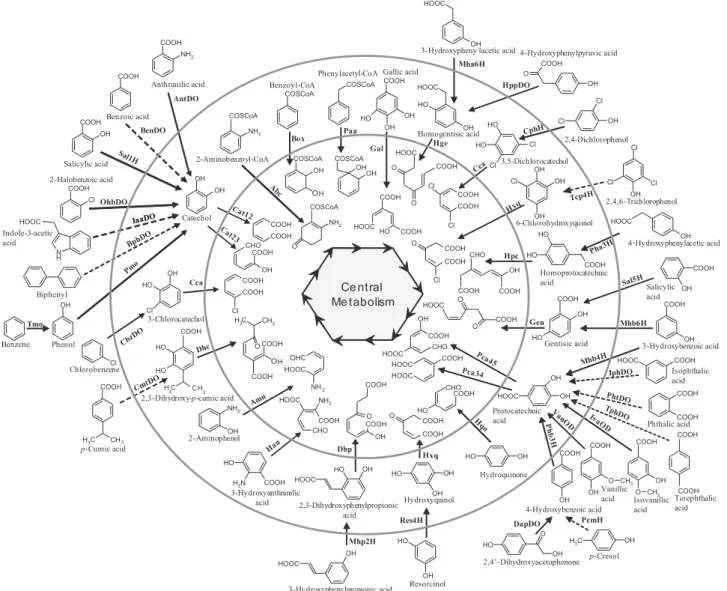
(2) 1092 D. Pérez-Pantoja et al. HOOC. COOH. OH. 3-Hydroxypheny lacetic acid 4-Hydroxyphenylpyruvic acid COOH Mha6H. NH2. Phenylacetyl-CoA Gallic acid. COOH. Anthranilic acid. BenDO Sal. Salicylic acid. Gal. Ab c. OH. Cl OhbDO. Ca. Ia aDO. Indole-3-acetic acid. B. ph. Catechol Ca. DO. t2. Cl. HOOC. HO. COOH CHO COOH. O. COOH. H. COOH. OH. Cl. 3-Chlorocatechol. Tmo. zD Cb. Phenol. Cl H3C. HO. COOH. CH3. HOOC. CHO COOH. COOH. OH. OH. HO. H2N. COOH. Hxq. HOOC. HO. COOH COOH. OH. HO. acid. Hydroquinone. OH O CH3 OH Vanillic O CH3. acid OH 4-Hydroxybenzoic acid PcmH DapDO. Res4H. COOH. COOH. COOH. OH. 3-Hydroxyanthranilic OH Hydroxyquinol acid 2,3-Dihydroxyphenylpropionic. COOH. Phthalic acid. H. Dhp HO. Isophthalic acid. Phb3. p -Cumic acid. Protocatechuic acid. HO COOH. O O COOH. COOH CHO. COOH. OH. HOOC. NH2. 2-Aminophenol. 3-Hydroxybenzoic acid HOOC. OH. COOH. NH 2. OH. Gentisic acid. HOOC. COOH. OH CH 3. HO. Mhb6H. COOH. HOOC. HOOC. HO. COOH. OH. O. HOOC. COOH. Salicylic OH acid. Gen. CHO. O H OHC. t DO H3C CH Cm 3 2,3-Dihydroxy-p-cumic acid. COOH. Homoprotocatechuic acid COOH. COOH. COOH. O COOH. Dhc. OH. COOH. OH. NH2. H3C. COOH O. HOOC. COOH. O. Cl. Chlorobenzene. Cl. Ce ntral Me tabolism. HOOC. Hpc HO OH. COOH. Biphenyl. OH. 4 - Hydroxyphenylacetic acid CHO. COOH. HO. Cl OH. 2,4,6-Trichlorophenol. HO. O. COOH. Cca. Cl. Tcp4 H. xq. 6-Chlorohydroxyquinol. Cl. COOH. O. OH. Cl COOH. OH. OH. Cl. a Cl 3,5-Dichlorocatechol OH Cc. COOH. O. COOH. NH2. 2,4-Dichlorophenol. HOOC. COSCoA. t1 2. 3. HO. OH. OH. Cl. Homogentisic acid Hge HO. Cl. OH. COOH. N H. Benzene. COSCoA OH OH. COSCoA OH. OH. COOH. HOOC. OH. Paa. Box. 2-Aminobenzoyl-CoA. 2-Halobenzoic acid. Cl. OH. HO. NH2. 1H. OH. HO COSCoA. Benzoic acid. OH. O. HppDO. HOOC. COSCoA. AntDO COOH. COOH. COSCoA. Benzoyl-CoA. COOH. Isovanillic Terephthalic acid acid. O HO. Mhp2H. OH. 2,4’-Dihydroxyacetophenone. HOOC. OH. H3C. HO. OH. p-Cresol. OH. 3-Hydroxyphenylpropionic acid. Resorcinol. Fig. 1. Overview of peripheral and ring-cleavage pathways for bacterial catabolism of aromatic compounds. The inner circle includes the structures of dearomatized and ring-cleavage products. The outer circle includes the structures of aryl-CoA and dihydroxylated ring-cleavage intermediates. Dotted lines indicate multiple steps. Gene markers listed in Table 1 are bolded.. by either intradiol or extradiol dioxygenases. While all intradiol dioxygenases described thus far belong to the same superfamily, members of at least three different families are reported to be involved in the extradiol ringcleavage of hydroxylated aromatics. Altogether, the inventory of oxygenases involved in activation and cleavage of the aromatic ring is extensive and phylogenetically diverse, including several different families that have been recently compiled for phylogenomic studies (PérezPantoja et al., 2010b). Analysis of the distribution of these aromatic oxygenases-encoding genes among available bacterial genome sequences has shown that members of the Burkholderiales order of the b-proteobacteria harbour the most impressive potential for aromatic compounds catabolism. These biodegradative abilities become outstanding in highly specialized degraders belonging to this. bacterial lineage whose genomic sequences have been completed (Chain et al., 2006; Gross et al., 2008; Mattes et al., 2008; Pérez-Pantoja et al., 2008). Based on the available literature in the biodegradation field, the exceptional catabolic potential of Burkholderiales revealed by genomic analysis is not surprising because of the large number of strains belonging to this order that have been isolated by its biodegradative abilities (a non-comprehensive list restricted to genus Burkholderia is found in Denef, 2007). The relevance of Burkholderiales for environmental biotechnology has been largely proposed based on these culture-dependent methods (O’Sullivan and Mahenthiralingam, 2005; Chiarini et al., 2006; Denef, 2007). However, the unequivocal confirmation of Burkholderiales preponderance in bioremediation processes occurring in multiple environmental systems. © 2011 Society for Applied Microbiology and Blackwell Publishing Ltd, Environmental Microbiology, 14, 1091–1117.
(3) Degradation of aromatic compounds in Burkholderiales has been raised with the emergence of stable isotope probing techniques that links functional activity to specific members of microbial communities (Madsen, 2006). Using this in situ approach, a key biodegradative role for Burkholderiales has been reported in bioremediation of multiple aromatic compounds including: polychlorobyphenyls (Tillmann et al., 2005; Uhlik et al., 2009), toluene (Sun et al., 2010), benzene (Liou et al., 2008; Xie et al., 2011), benzoate (Pumphrey and Madsen, 2008), salicylate (Singleton et al., 2005), phenol (Manefield et al., 2005), pentachlorophenol (Mahmood et al., 2005), 2,4dichlorophenoxyacetate (Cupples and Sims, 2007), naphthalene (Jeon et al., 2003; Singleton et al., 2005) and phenanthrene (Singleton et al., 2005). Such multiple evidences consolidate Burkholderiales as the main player in microbial ecology of bioremediation treatments for aromatic decontamination. The order Burkholderiales belongs to the b subclass of proteobacteria and comprises the families Burkholderiaceae, Oxalobacteraceae, Alcaligenaceae and Comamonadaceae including strictly aerobic and facultative anaerobic chemoorganotrophs, obligate and facultative chemolithotrophs, nitrogen-fixing organisms, as well as plant, animal and human pathogens (Garrity et al., 2005); therefore constituting a phenotypic, metabolic and ecologically diverse bacterial lineage. The molecular basis for this multi level, remarkable versatility has started to be unveiled by the large quantity of sequenced genomes now publicly available, allowing comparative genomic analyses of metabolic traits. This prompted us to carry out a detailed genomic analysis on the presence, organization and phylogenetic relationships among oxygenaseencoding genes involved in aromatic catabolism in the Burkholderiales order. This study improves our understanding of the biodegradative potential of this bacterial group, revealing the importance of aromatic catabolism for the habitat adaptability of bacteria. Distribution of catabolic functions in Burkholderiales Genomes belonging to proteobacterial strains (nearly 1200) make up the more abundant (almost half) bacterial phylum in the database of genomic sequences. The sequenced proteobacterial genomes comprise 167 genomes of b-proteobacteria that in turn contain 110 genomes belonging to strains of the Burkholderiales order. Thus, Burkholderiales is the second most represented proteobacterial order in the genome database following Enterobacteriales. The 80 Burkholderiales genomes analysed (Fig. 2, Table S1) comprise representatives of all four Burkholderiales families and include at least 48 species from 23 genera. However, the distribution of members belonging to the different Burkholderiales. 1093. families in these 80 sequenced genomes is not homogeneous since 48 strains belong to the Burkholderiaceae family. The other strains are distributed among the Comamonadaceae (16), Alcaligenaceae (8) and Oxalobacteraceae (5) families (Fig. 2). Three unclassified Burkholderiales species, Thiomonas intermedia K12, Methylibium petroleiphilum PM1 and Leptothrix cholodnii SP-6 were also analysed. The genome database for Burkholderiales includes bacteria that can be classified, somewhat artificially, based on their source of isolation: (i) human host, mainly opportunistic pathogens (18 strains, designated H in Table S1), (ii) animal host, mainly pathogenic (4 strains, Z), (iii) plant pathogens (6 strains, P), (iv) rhizosphere and root nodules (12 strains, R), (v) soil (11 strains, S), (vi) wastewater and sludge (12 strains, W), (vii) sediment (7 strains, D), (viii) endosymbionts (3 strains, E) and (ix) miscellaneous sources (7 strains, U). It should be kept in mind that the isolation source does not necessarily reflect the actual habitat/ecological function of a strain in nature. For instance, different strains of a given species have been isolated from different environments (e.g. Burkholderia thailandensis) and may thus be considered to thrive in different environmental niches. Then, correlations between the habitat and the presence/absence of catabolic properties (see the end of this section), as well as with other phenotypic traits, should be taken with caution. To address the distribution of aromatic degradation capabilities throughout the genomes of sequenced members of the Burkholderiales order, 48 oxygenaseencoding gene markers covering aromatic ring activating reactions and central ring-cleavage pathways were surveyed (Table 1). Well-characterized key oxygenase sequences were used as initial seeds to search for orthologous sequences. The distribution of aromatic catabolic functions among the Burkholderiales members is highly variable (Fig. 2). The number of detected catabolic sequence markers ranges from zero in seven strains (Herminimonas arsenicoxydans, Janthinobacterium sp. Marseille, Oxalobacter formigenes HOxBLS, O. formigenes OxCC13, Taylorella equigenitalis MCE9, Polynucleobacter sp. QLW-P1DMWA-1 and Polynucleobacter necessarius ssp. necessarius STIR 1) to 25 in Burkholderia lata 383, 30 in Burkholderia xenovorans LB400 and 33 in Cupriavidus pinatubonensis JMP134, formerly Ralstonia eutropha and Cupriavidus necator (Sato et al., 2006). The number of genomes scoring positive for the presence of a particular marker is also highly variable. While gene markers tracking the phenylacetylCoA oxygenase/reductase (Paa), homogentisate 1,2dioxygenase (Hge), 4-hydroxyphenylpyruvate dioxygenase (HppDO), homoprotocatechuate 2,3-dioxygenase (Hpc), benzoate 1,2-dioxygenase (BenDO), catechol 1,2dioxygenase (Cat12), 4-hydroxybenzoate 3-hydroxylase. © 2011 Society for Applied Microbiology and Blackwell Publishing Ltd, Environmental Microbiology, 14, 1091–1117.
(4) 1094 D. Pérez-Pantoja et al.. Burkholderiaceae. Burkholderia multivorans CGD1. D. Burkholderia multivorans CGD2. D. D. Burkholderia multivorans ATCC 17616. 2. Burkholderia ubonensis Bu. D. D. Burkholderia vietnamiensis G4. 2. 2. 2. Burkholderia glumae BGR1. 2. 2. 2. Burkholderia dolosa AUO158. D. D. D. 2. D. D. D,D D. D. D. D. D. D. D. D. D. D. D. D. D. D. D. D,D. D. D. D. D. D. D. D. D. D. D. D. D. 2. 2. 2,2. 2. 2. 2. 2. 3. 2. 3. 3. 2. 2. 1. D. D. D. 2,3 P. 3. 2. 2. 2. D. D. 2 2. 2. 2. D. D P. 2. 2. 2. 2 2. 2. D. 20 19. 1. 1. 20. D. D. D. 9. 1. 1. 1. 16. 2. 1. 1. 13. D. D. D. 10. 2. 2. 1. 1. 1. 17. 2. 2. 1. 1. 1. 14. 2. 2. 1. 1. 1. 16. 1. 1. 1. 19. 2. 1. 1. 1. 17. D. D. D. D. D. 19. 1. 1. 1. 1. 25. D. D. D. 10. D. D. D. 10. D. D. D. D. 10. 2. 1. 1. 1. 9. 2. 1. 1. 1. 9. 1. 1. 1,1. 9. 2. 1. 1. 1. 9. 2. 2. 1. 1. 1. 9. 2. 2. 1. 1. 1. 9 10. Burkholderia cenocepacia MC0-3. 2. 2. 2. 2. 2,3. 3. 2. Burkholderia cenocepacia AU1054. 2. 2. 2. 2. 1,2. 1. 2. Burkholderia cenocepacia HI2424. 2. 2. 2. 2. 3. 2. 2. 2. 2. Burkholderia ambifaria AMMD. 2. 2. 2. 2. 2. 2,3. 2. 3. 2. 2. 2,2. 2. 2. Burkholderia ambifaria MC40-6. 2. 2. 2. 2. 2. 2,3. 2. 3. 2. 2. 2. 2. Burkholderia ambifaria IOP40-10. D. D. D. D. D. D,D. D. D. D. D. D. D. Burkholderia lata 383. 2. 2. 2. 2. 2. 2,3 2,2 2. 3. 2. 2. 1. Burkholderia oklahomensis C6786. D. D. D. D. D. D. D. Burkholderia oklahomensis E0147. D. D. D. D. D. D. D. Burkholderia thailandensis TXDOH. D. D. D. D. D. D. Burkholderia mallei ATCC 23344. 2. 2. 2. 2. 2. Burkholderia mallei NCTC 10247. 2. 2. 2. 2. 2. Burkholderia mallei SAVP1. 2. 2. 2. 2. 2. Burkholderia pseudomallei 1106a. 2. 2. 2. 2. 2. Burkholderia pseudomallei K96243. 2. 2. 2. 2. Burkholderia pseudomallei 668. 2. 2. 2. 2. 2,3. D D. D. Burkholderia thailandensis E264. 2. 2. 2. 2. 2. Burkholderia thailandensis MSMB43. D. D. D. D. D. 2,2 3. 2. 3. 2. 1. 2. D. D. D. 2. 1. 2. 2. 2. 2. D. 2. 2. 2. 3. 2. 2. 1. 2. 1. 1. 1. D. D. D. D. 1. 1. 1. Burkholderia rhizoxinica HKI 0454 Burkholderia phymatum STM815. 2. Burkholderia sp. CCGE1002. 2. Burkholderia sp. H160. D. Burkholderia sp. CCGE1001. D. 2. D. 1. 3. 2. D. D. D. D. D. Burkholderia sp. CCGE1003. D. D. Burkholderia graminis C4D1M. D. D. Burkholderia phytofirmans PsJN. 2. 1. Burkholderia xenovorans LB400. 2. 1. Burkholderia sp. Ch1-1. D. D. 2 2. 3. D. D. D,D. D. D 1,1. D. 2. 1. D. D. 1 3. 3. 2. 2. 2. 3. 2. D. D. D. D. D. 2. 1,2 1,3 2 D. D D. D. D. D. D. D. D. D. D. 1. 2. 2. 1. 1. 2. 2. 1,1 3,3. D. 1 D. D. D. D. 2. 2. D. D. 1. 1. D. D. D. 1. D. D. D. 1. D. D. D. D. D. Limnobacter sp. MED105. 3. D 2 2,3 D. 2. D. D. D. 2. D. D D. 2. 3 P. 3. 1 1,1. D. 2 1. 2. 19. 1,3 1. 2. 24. D. D. D. 22. D. D. D. 18. D. D. D. 11. D. D. 14. 1. 1. 2. 15. 1 1,2. 1 1,3 2. 30. D. D. 20. 1. D. D. 2. D. D. Ralstonia pickettii 12D. 1. 1. 1, P. 1. 2. 1. 2. 2. 1. 2. 1. Ralstonia pickettii 12J. 1. 1. 1. 2. 1. 2. 2. 1. 2. 1. Ralstonia solanacearum PSI07. D. 1. 1. 2. 1. 2. 2. 1. Ralstonia solanacearum CFBP2957. 1. 1. 2. 1. Ralstonia solanacearum GMI1000. 1. 1. 2. 1. Cupriavidus metallidurans CH34. 2. 2,2. 1,2 1. 2. Cupriavidus pinatubonensis JMP134. 2. 2,2. 1,2 2. 2. 2. 2. D. D. 1. 2. 1. 1 2 1 1,1. 2. 2. 2 1,2. 1. P,P P,P 1,2 1. 1. 1. 2. 2. D. 9. 2. 2. 14. 2. 2. 12. 2. 12. 2. 1. 2. 2. 9. 1. 2. 1,2. 12. 2. 2. 1. 1. 18. 2,2 2 2,2 2. 2. 2 1,2 1. 1 2. D. 2. 1,1 1. 2. P. Cupriavidus taiwanensis LMG19424 1. D. D. D. Cupriavidus necator H16. 4. D. D. Ralstonia sp. 5_7_47FAA. 9. 1 1. 2. 1. 2. 2 2. 1. 1. 33. 2. 2. 2. 1,2 1,2 1. 10. 2. 2. 2. 1,2 1,2 1. 18. Polynucleobacter necessarius STIR1. 0. Polynucleobacter sp. QLW-P1DMWA-1. 0. Oxalobacter formigenes OxCC13. 0. Oxalobacter formigenes HOxBLS. 0. Herbaspirillum seropedicae SmR1. Oxalobacteraceae. 1. 1. 1,1. 1. 1. 1. 1. 1. 1. 1. 11. Janthinobacterium sp. Marseille. 0. Herminiimonas arsenicoxydans ULPAs1. 0. Taylorella equigenitalis MCE9 Bordetella petrii DSM 12804. 0 1. 1. 1. 1. 1 1,1 1. 1,1 1 1,1 1. 1. 1. 1. 1. 1. 1. 1. 1. 1. 1. 1. 1. 1. 1. 1. 1. 1. 8. D. D. D. D. 1 1,1 1. 1. 1. 1. 1. 1. Bordetella parapertussis 12822 Bordetella pertussis Tohama I Bordetella bronchiseptica RB50. 1. Bordetella avium 197N Achromobacter piechaudii ATCC 43553. Alcaligenaceae. 1 D. D. D. Achromobacter xylosoxidans A8. 1. D. 1. P. P. 1. D. 1. 1. 1. 1. D. Thiomonas intermedia K12 1,1. Leptothrix cholodnii SP-6. 1,1. Rhodoferax ferrireducens T118. 1. Variovorax paradoxus S110. 1. Variovorax paradoxus EPS. 1. 1. 1,1. 1. 1,1. 1. 1. 1. 2. 1. Polaromonas naphthalenivorans CJ2. 1 1. 1. P. Comamonas testosteroni S44. D. D. D. D. D. D. D. D. D. 1. 1. 1. 1. 1. 2. 1. 2. 1 1 1,1 1. D. 1. 1 2,2. 1. D. 1,1 1. 1. 1 1,1. 1,1 1. 1. 1. 1,1,1 1. 1. 1. 1. 19. 1. 4 3. D. 1 D. 1. 1. D. D. 1,1 D. D. D. 1. D. D. 14. 1. 1. 1. 18. 1. 2. 1 1. 8 1. 16. D. 1. 16. 1. 1. 15. 1. 1. 1. 18. D. D. D. D. D. 15. D. D. D. D. 17. 1. 1. 1. 1. 1. 1. 13. 1. 1. 1. 1. 1. 12. 1. 1. 1. 1. 17. 1. D. 1. 15. 1. 1,1 1,1 1. D. 1. 1. 1. 1. D. 1. 5. 1. 1. 1 1. P. 1. 1 1. 1. 1. 1 D. 2. 1. 1. 1. D. Acidovorax avenae subsp. citrulli AAC00-1 Acidovorax avenae subsp. avenae ATCC 19860. D. Alicycliphilus denitrificans BC Acidovorax sp. JS42. 1 1 1 1,1. Acidovorax ebreus TPSY. 1 48 14 11 60 6 27 9 14 3. 4. (Phb3H) and protocatechuate 3,4-dioxygenase (Pca34) key catabolic activities are highly represented in Burkholderiales genomes (the number of genomes possessing such markers ranged between 39 and 72), four oxygenase-encoding genes are found only once and five. D. 1 1. 3 66 19 13 2 40 31 7 17 21 2. 1. 6. 4 30 1. 3 39 2. 8 11 17 2. 5. D. 1. 1,1 1. 1,1. 1. 1 P. 1,1. Delftia acidovorans SPH-1. 1. Acidovorax delafieldii 2AN. Comamonadaceae. D. 1. 1. Comamonas testosteroni KF-1. 1 1,1. 1. Comamonas testosteroni CNB-2. Verminephrobacter eiseniae EF01-2. 1. 1. Methylibium petroleiphilum PM1. Polaromonas sp. JS666. 1. 3 14 1. 2. 1. 1. 1. 1. 1. 4. D. D. D. D. 6. 1 1. 4. 1. 2. 5. 1 37 15 21 61 72 26 9 65 31 37. only twice in these genomes (Fig. 2). The overall distribution of catabolic genes in the Burkholderiales order is more heterogeneous than in other bacterial orders (Pérez-Pantoja et al., 2010b), which might reflect the ecological diversity of this group.. © 2011 Society for Applied Microbiology and Blackwell Publishing Ltd, Environmental Microbiology, 14, 1091–1117.
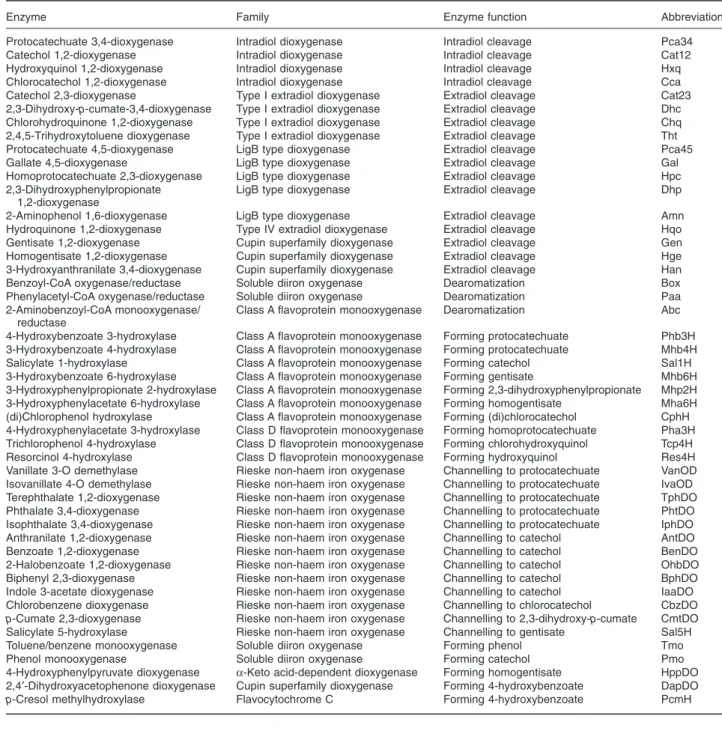
(5) Degradation of aromatic compounds in Burkholderiales. 1095. Fig. 2. Distribution of catabolic gene markers through genomes of Burkholderiales strains taxonomically ordered on a 16S rRNA phylogenetic tree. Maximum likelihood phylogenetic tree (left), for 16S rRNA sequences extracted from the 80 Burkholderiales genomes constructed using MEGA 5 software (Tamura et al., 2011). The tree constructed based on the general time-reversible model of nucleotide substitution including a gamma function with five categories as proposed by Akaike information criterion for selection of appropriate evolutionary model using jModeltest software (Posada and Buckley, 2004). Peripheral and central pathways markers (right), linked by ring-cleavage intermediates, are grouped in shaded or non-shaded interleaved squares. Numbers denote presence of the gene marker sequence in the chromosome (1) or chromids (2, 3) when genomic structure is available. P: plasmid location; D: draft genome sequence, avoiding the precise location of gene markers. The total count of gene markers for each strain is indicated at the external right column. The total count per gene marker in all strains is indicated on the bottom row. Protein similarity searches performed with BLASTP program from the NCBI website using the default parameters (Altschul et al., 1997).. Table 1. Catabolic enzyme markers. Enzyme. Family. Enzyme function. Abbreviation. Protocatechuate 3,4-dioxygenase Catechol 1,2-dioxygenase Hydroxyquinol 1,2-dioxygenase Chlorocatechol 1,2-dioxygenase Catechol 2,3-dioxygenase 2,3-Dihydroxy-p-cumate-3,4-dioxygenase Chlorohydroquinone 1,2-dioxygenase 2,4,5-Trihydroxytoluene dioxygenase Protocatechuate 4,5-dioxygenase Gallate 4,5-dioxygenase Homoprotocatechuate 2,3-dioxygenase 2,3-Dihydroxyphenylpropionate 1,2-dioxygenase 2-Aminophenol 1,6-dioxygenase Hydroquinone 1,2-dioxygenase Gentisate 1,2-dioxygenase Homogentisate 1,2-dioxygenase 3-Hydroxyanthranilate 3,4-dioxygenase Benzoyl-CoA oxygenase/reductase Phenylacetyl-CoA oxygenase/reductase 2-Aminobenzoyl-CoA monooxygenase/ reductase 4-Hydroxybenzoate 3-hydroxylase 3-Hydroxybenzoate 4-hydroxylase Salicylate 1-hydroxylase 3-Hydroxybenzoate 6-hydroxylase 3-Hydroxyphenylpropionate 2-hydroxylase 3-Hydroxyphenylacetate 6-hydroxylase (di)Chlorophenol hydroxylase 4-Hydroxyphenylacetate 3-hydroxylase Trichlorophenol 4-hydroxylase Resorcinol 4-hydroxylase Vanillate 3-O demethylase Isovanillate 4-O demethylase Terephthalate 1,2-dioxygenase Phthalate 3,4-dioxygenase Isophthalate 3,4-dioxygenase Anthranilate 1,2-dioxygenase Benzoate 1,2-dioxygenase 2-Halobenzoate 1,2-dioxygenase Biphenyl 2,3-dioxygenase Indole 3-acetate dioxygenase Chlorobenzene dioxygenase p-Cumate 2,3-dioxygenase Salicylate 5-hydroxylase Toluene/benzene monooxygenase Phenol monooxygenase 4-Hydroxyphenylpyruvate dioxygenase 2,4′-Dihydroxyacetophenone dioxygenase p-Cresol methylhydroxylase. Intradiol dioxygenase Intradiol dioxygenase Intradiol dioxygenase Intradiol dioxygenase Type I extradiol dioxygenase Type I extradiol dioxygenase Type I extradiol dioxygenase Type I extradiol dioxygenase LigB type dioxygenase LigB type dioxygenase LigB type dioxygenase LigB type dioxygenase. Intradiol cleavage Intradiol cleavage Intradiol cleavage Intradiol cleavage Extradiol cleavage Extradiol cleavage Extradiol cleavage Extradiol cleavage Extradiol cleavage Extradiol cleavage Extradiol cleavage Extradiol cleavage. Pca34 Cat12 Hxq Cca Cat23 Dhc Chq Tht Pca45 Gal Hpc Dhp. LigB type dioxygenase Type IV extradiol dioxygenase Cupin superfamily dioxygenase Cupin superfamily dioxygenase Cupin superfamily dioxygenase Soluble diiron oxygenase Soluble diiron oxygenase Class A flavoprotein monooxygenase. Extradiol cleavage Extradiol cleavage Extradiol cleavage Extradiol cleavage Extradiol cleavage Dearomatization Dearomatization Dearomatization. Amn Hqo Gen Hge Han Box Paa Abc. Class A flavoprotein monooxygenase Class A flavoprotein monooxygenase Class A flavoprotein monooxygenase Class A flavoprotein monooxygenase Class A flavoprotein monooxygenase Class A flavoprotein monooxygenase Class A flavoprotein monooxygenase Class D flavoprotein monooxygenase Class D flavoprotein monooxygenase Class D flavoprotein monooxygenase Rieske non-haem iron oxygenase Rieske non-haem iron oxygenase Rieske non-haem iron oxygenase Rieske non-haem iron oxygenase Rieske non-haem iron oxygenase Rieske non-haem iron oxygenase Rieske non-haem iron oxygenase Rieske non-haem iron oxygenase Rieske non-haem iron oxygenase Rieske non-haem iron oxygenase Rieske non-haem iron oxygenase Rieske non-haem iron oxygenase Rieske non-haem iron oxygenase Soluble diiron oxygenase Soluble diiron oxygenase a-Keto acid-dependent dioxygenase Cupin superfamily dioxygenase Flavocytochrome C. Forming protocatechuate Forming protocatechuate Forming catechol Forming gentisate Forming 2,3-dihydroxyphenylpropionate Forming homogentisate Forming (di)chlorocatechol Forming homoprotocatechuate Forming chlorohydroxyquinol Forming hydroxyquinol Channelling to protocatechuate Channelling to protocatechuate Channelling to protocatechuate Channelling to protocatechuate Channelling to protocatechuate Channelling to catechol Channelling to catechol Channelling to catechol Channelling to catechol Channelling to catechol Channelling to chlorocatechol Channelling to 2,3-dihydroxy-p-cumate Channelling to gentisate Forming phenol Forming catechol Forming homogentisate Forming 4-hydroxybenzoate Forming 4-hydroxybenzoate. Phb3H Mhb4H Sal1H Mhb6H Mhp2H Mha6H CphH Pha3H Tcp4H Res4H VanOD IvaOD TphDO PhtDO IphDO AntDO BenDO OhbDO BphDO IaaDO CbzDO CmtDO Sal5H Tmo Pmo HppDO DapDO PcmH. © 2011 Society for Applied Microbiology and Blackwell Publishing Ltd, Environmental Microbiology, 14, 1091–1117.
(6) 1096 D. Pérez-Pantoja et al. Significantly different presence/absence patterns are observed within members of Burkholderiales. Genomes of members of the three main genera of the Burkholderiaceae family (Burkholderia, Cupriavidus and Ralstonia) encode a significant number of catabolic functions (usually more than nine). An average of 14 catabolic oxygenases are encoded in the 35 Burkholderia strains analysed. As an exception, in the genome of Burkholderia rhizoxinica HKI 0454 only four of these proteins are detected. This may reflect the fact that this strain is a fungal endosymbiont whose genome is significantly smaller than that of the other Burkholderia species (Table S1), and consequently shows a reduced metabolic versatility (Lackner et al., 2011). The Pca34, Phb3H, Cat12, Hge, HppDO and Paa encoding genes are present in all Burkholderia species, with the exception of strain HKI 0454 that only has the paa genes. Members of the phylogenetic lineage formed by Burkholderia phymatum, B. graminis, B. phytofirmans, B. xenovorans, Burkholderia sp. CCGE1001, CCGE1002, CCGE1003, H160 and Ch1-1 (Fig. 2), have catabolic properties different from those of the so-called ‘Burkholderia cepacia complex’ and the so-called ‘Pseudomallei group’, and are the only Burkholderia species that harbour genes encoding the Abc and Box proteins (Fig. 2), both comprising CoAdependent oxidative pathways. The overall metabolic potential of these nine Burkholderia strains is, in general, more similar to that of strains of the Cupriavidus and Ralstonia genera than to strains of the ‘B. cepacia complex’. The aromatic metabolic potential of Burkholderiales strains not belonging to the genera Burkholderia, Cupriavidus and Ralstonia is highly heterogeneous. For instance, the Pca34, BenDO and Hpc markers, frequently found in Burkholderia, Cupriavidus and Ralstonia, are encoded only in three to five genomes of other Burkholderiales strains; and AntDO and IaaDO proteins, commonly encoded in Burkholderia genomes, are absent in all of the rest, except in Herbaspirillum seropedicae SmR1. In contrast, several representatives with unique metabolic properties were observed in this heterogeneous group. The p-cresol methylhydroxylase (PcmH)-encoding genes are exclusively observed in two of the Comamonas testosteroni genomes and in Polaromonas naphthalenivorans CJ2; and C. testosteroni KF-1 is the only strain whose genome encodes a 2,4,5-trihydroxytoluene dioxygenase (Tht). Multiple replicons (multipartite) genomes are found in all Burkholderia, Cupriavidus and Ralstonia strains, including the small genome of B. rhizoxinica, and in nine other Burkholderiales strains. About 70% of completed genomes contain more than one replicon (Table S1). The term ‘chromid’ has been recently proposed for secondary chromosomes to distinguish them from both chromosomes and plasmids, according to the fact that these. replicons have a distinct and consistent set of properties (Harrison et al., 2010). By its utility we adopted this nomenclature to analyse several interesting facts concerning the distribution of catabolic gene markers among multipartite genomes (numbered as ‘2’ and ‘3’ in Fig. 2). The distribution of the relative content of catabolic genes in the main Burkholderiales genera harbouring multipartite genomic structure, i.e. the number of these oxygenases-encoding genes relative to the total number of genes in each replicon type, show a strong bias towards chromids against the chromosome (Fig. 3A). Statistical analysis (t-test) shows that these differences in catabolic content among replicon types are all significant at a confidence level of 95%. Examples are Pca34 and Hpc proteins, which are encoded on chromids in all Burkholderia and Cupriavidus strains (except B. rhizoxinica). Chromids also predominantly encode Cat12 proteins. Noteworthy, only two of the ring-cleavage oxygenases analysed are preferentially encoded in the chromosome: homogentisate 1,2-dioxygenase (Hge) and phenylacetyl-CoA oxygenase/reductase (Paa). Hge is typically encoded in the chromosome, except in Burkholderia glumae BGR1 and members of Cupriavidus and Ralstonia genera. In strains containing multiple gene copies of Hge (e.g. B. xenovorans LB400 and Burkholderia sp. CCGE1002), at least one gene is located on the chromosome. The Paa protein is also commonly encoded in the chromosome, except in Ralstonia genomes. Again, additional copies are localized elsewhere in some genomes such as those of C. necator H16, C. pinatubonensis JMP134, C. taiwanensis LMG19424 and Burkholderia sp. CCGE1002. Coincident with its preferential chromosomal location, Hge and Paa are the ring-cleavage oxygenases that show the broadest distribution in Burkholderiales genomes. Both features suggest that these catabolic routes are ‘core’ pathways in Burkholderiales, which is additionally supported by their involvement in metabolization of aromatic amino acids. On the other hand, the only central catabolic markers encoded in plasmids are Cat23 in Burkholderia vietnamiensis G4, Han in Polaromonas sp. JS666 and Cca in Achromobacter xylosooxidans A8 and C. pinatubonensis JMP134 (designated as ‘P’ in Fig. 2), in accordance with the fact that these pathways have often been localized on catabolic megaplasmids (Vedler, 2009). A few trends can also be observed when the distribution of peripheral reactions markers among multipartite genomes is analysed (Fig. 2). The Phb3H, VanOD, IvaOD, AntDO, IaaDO, DapDO, Sal1H, Mhp2H and Mha6H catabolic markers are predominantly encoded in chromids. The HppDO marker encoding 4-hydroxyphenylpyruvate dioxygenase that forms homogentisate, the most widely distributed marker found in this survey, is always located in the chromosome, except in the four Cupriavidus strains where both this. © 2011 Society for Applied Microbiology and Blackwell Publishing Ltd, Environmental Microbiology, 14, 1091–1117.
(7) Degradation of aromatic compounds in Burkholderiales. Fig. 3. Relative content of catabolic gene markers in Burkholderiales strains according to replicon composition and genome size. A. Per cent of aromatic oxygenase-encoding genes per total genes encoded in different replicon types of Burkholderiales genera harbouring multipartite genomes. B. Relation between genome size and percentage of aromatic oxygenase-encoding genes and total enzyme-encoding genes in Burkholderiales strains harbouring at least one catabolic gene marker. The numbers of enzyme-encoding genes obtained from Integrated Microbial Genomes (IMG) system.. 0,8 0.8. % Aromatic Oxygenase-encoding genes. A. 1097. Chromosome Chromids. 0,6 0.6. 0,4 0.4. 0.2 0,2. 0,0 Burkholderia. Cupriavidus. 40 Aromatic oxygenase-encoding genes Enzyme-encoding genes DSMZ 12804 SP-6. 30. Ralstonia 0,5 0.5. JMP134. 0.4 0,4 CNB-2 CJ2. 0,3 0.3 20. 0.2 0,2. % Aromatic oxygenase-encoding genes. % Enzyme-encoding genes. B. 10. 0.1 0,1. 0,0. 0 3. 4. 5. 6 7 Genome size (Mb). 8. peripheral marker and the corresponding Hge central marker are encoded in chromids. Interestingly, the configuration of these catabolically linked oxygenases being encoded in different replicons is only observed in the Ralstonia strains and in B. glumae BGR1. This genetic arrangement would correspond to an intermediate stage in the ‘migration’ of this pathway from chromosome to chromid that has occurred in the Cupriavidus genus (Fig. 2). The relation between genome size and content of catabolic oxygenases was compared in Burkholderiales (Fig. 3B). Interestingly, the percentage of aromatic oxygenases-encoding genes increases with genome size, but the relative content of enzymes remains fixed, suggesting that the catabolism of aromatic compounds has increased relevance in Burkholderiales metabolisms, as their genomes get larger. Additionally, it should be noted that some strains as L. cholodnii SP-6, Bordetella petrii DSMZ 12804, C. testosteroni CNB-2 and P. naphthalen-. 9. 10. ivorans CJ2, show a disproportionately high content of aromatic oxygenases; and especially remarkable is the catabolic specialization of C. pinatubonensis JMP134 (Lykidis et al., 2010). Can some conclusions about the presence of these aromatic catabolism properties on the ecological or ‘lifestyle’ groups defined above be drawn? This would be, of course, one of the relevant outcomes of these analyses. In general, within the Burkholderiaceae family, human (Table S1, H) and/or zoonotic pathogens (Table S1, Z) have more aromatic catabolism potential than expected for animal host-associated species. This may be explained by the fact that these strains are predominantly opportunistic pathogens, and, therefore thrive as freeliving organisms. Alternatively, a role for aromatic catabolism in pathogenesis has been proposed in Burkholderia (Law et al., 2008) as expanded upon in the last section. Interestingly, the lineage comprising strains B. phymatum, B. graminis, B. xenovorans, B. phytofirmans, Burkhold-. © 2011 Society for Applied Microbiology and Blackwell Publishing Ltd, Environmental Microbiology, 14, 1091–1117.
(8) 1098. D. Pérez-Pantoja et al.. eria sp. CCGE1001, CCGE1002, CCGE1003, Ch1-1 and H160, which seems to be composed of bacteria that have in common the ability to interact beneficially with plants (Table S1) (Balandreau and Mavingui, 2006), possesses a different and greater catabolic potential towards aromatic compounds (Fig. 2). The Cupriavidus and Ralstonia genera, also belonging to the Burkholderiaceae family, have catabolic properties closely related to that divergent Burkholderia group, and are also able to establish beneficial interactions with plants, except for Ralstonia solanacearum strains (Amadou et al., 2008; Kataoka and Futai, 2009). The broader catabolic abilities of rhizobacterial strains compared with pathogenic members of Burkholderiaceae family is reliably due to the nutrient-rich niche generated as the result of exudation of a large diversity of compounds, a lot of these having aromatic structures (Bais et al., 2006). Although a high heterogeneity is observed among members of other Burkholderiales families, some gross trends can also be detected (Fig. 2). In contrast to members of the Burkholderiaceae family that seem to be relatively similar in their metabolic properties, Comamonas, Variovorax, Deftia and Polaromonas strains, members of the Comamonadaceae family, have a quite distinguishable catabolic pattern, whereas the other genera of this family, such as Acidovorax, Alicycliphilus or Methylibium have a restricted aromatic catabolic potential. The Alcaligenaceae family harbours two Achromobacter species with interesting catabolic properties, whereas among Bordetella species, mainly human and animal pathogens, only the sediment isolate B. petrii has remarkable catabolic abilities, which however are typically encoded on genomic islands (Gross et al., 2008). Members of the Oxalobacteraceae family encode very few aromatic catabolism markers (Fig. 2), with the sole exception of H. seropedicae, which is the only representative associated with plants (Table S1). The relative content of aromatic oxygenases-encoding genes belonging to peripheral and central catabolic pathways was compared in Burkholderiales genomes classified by isolation source in three gross groups: H/Z (animal hosts), R/S (bulk and rhizospheric soils) or W/D (wastewater or sludge and sediment); or by its phylogenetic affiliation considering the three main families showing catabolic potential: Burkholderiaceae, Comamonadaceae and Alcaligenaceae (Fig. 4). It can be observed that the mean of the relative content of catabolic oxygenases is nearly similar among the three families but a bias towards non-host-associated strains is found. The patterns of catabolic gene content among groups are similar for peripheral or central pathways. Statistical analysis (t-test) confirms that these differences in biodegradative potential regarding host or non-host association are all significant at a confidence level of 95%. The fact that oxygenase. content shows disparity when grouped by isolation source and not when clustered by taxonomical family, suggests that shaping of the catabolic potential is more influenced by habitat than by phylogenetic origin. The overall genomic distribution of catabolic oxygenases-encoding genes of four main ring-cleavage pathways (catechol, protocatechuate, gentisate and homogentisate) and their peripheral reactions was more thoroughly analysed in six selected Burkholderiales strains (Fig. S1). The strains B. lata 383, B. xenovorans LB400, C. pinatubonensis JMP134, Ralstonia pickettii 12J, Delftia acidovorans SPH-1 and B. petrii DSM 12804 were selected based on their superior catabolic properties, representing six relevant taxonomic groups within Burkholderiales. In general, a supraoperonic clustering of catabolic genes that encode enzymes channelling different aromatic compounds into a common central pathway (catabolic islands), as has been reported in the g-proteobacterium Acinetobacter baylyi ADP1, a wellknown catabolic strain belonging to Pseudomonadales (Elsemore and Ornston, 1994), is not observed on the genomes of the six strains (Fig. S1). On the other hand, the genomes of B. petrii DSM 12804 and B. xenovorans LB400 possess several catabolic genes included in genomic islands, suggesting that horizontal gene transfer played a significant role in establishing the catabolic abilities of these strains (Chain et al., 2006; Gross et al., 2008). In order to roughly evaluate the role of horizontal gene transfer in the establishment of the catabolic markers in these six selected Burkholderiales strains, the G+C content of the biodegradative genes and their genomes were compared. The G+C content of the catabolic gene markers shows values not significantly different from the mean G+C content of all genes in the respective replicons, suggesting that most catabolic genes were ‘trapped’ within their genomes over a long period of evolution or, alternatively, being acquired from genomes having a similar G+C content (Fig. S1). Additional sequence analyses, using IslandViewer (Langille and Brinkman, 2009), clarify a putative allochthonous origin for these catabolic markers. Except in a few cases, these analyses confirm that most of catabolic genes considered are not included in genomic islands putatively acquired by horizontal transfer (Fig. S1). It should be noted that the catabolic pathways considered in the preceding analyses are the most widely distributed and consequently does not constitute an ‘exotic’ feature, as the routes previously reported to be acquired by horizontal gene transfer in some of these bacteria (Chain et al., 2006; Gross et al., 2008). Finally, regarding the overall genomic distribution of catabolic markers, no evident similarities or patterns in gene distribution through the selected genomes are observed among these six strains. Noteworthy, even the catabolic gene scattering in the. © 2011 Society for Applied Microbiology and Blackwell Publishing Ltd, Environmental Microbiology, 14, 1091–1117.
(9) Degradation of aromatic compounds in Burkholderiales. Aromatic oxygenase-encoding genes per total genes. A. 1099. Fig. 4. Relative content of peripheral and central catabolic markers per total genes encoded in genomes of Burkholderiales strains grouped by (A) isolation sources including human and animal hosts (H/Z), soil and rhizosphere (S/R) and wastewater or sludge and sediment (W/D); and (B) taxonomic families harbouring sizeable biodegradative properties.. 0,0020 0.0020 Peripheral oxygenases Central oxygenases 0,0015 0.0015. 0,0010 0.0010. 0,0005 0.0005. 0,0000. Aromatic oxygenase-encoding genes per total genes. B. H/Z. S/R. W/D. 0,002 0.0020 Peripheral oxygenases Central oxygenases 0,002 0.0015. 0,001 0.0010. 0,001 0.0005. 0,000. Burkholderiaceae. Alcaligenaceae. Comamonadaceae. Burkholderia strains considered (both possessing similar tripartite genomic structure) differs drastically (Fig. S1). Due to its widespread distribution and essential role in catabolism of a wide array of compounds, an in-depth analysis on the phylogenetic relationship and gene clustering of the central pathways channelling four key ringcleavage intermediates, i.e. protocatechuate, catechol, homogentisate and gentisate, was performed. The results of this analysis are presented in the following sections. Protocatechuate ring-cleavage pathways and peripheral routes Protocatechuate (Pca) is a key intermediate in the degradation of the plant biopolymer lignin and several other aromatic compounds (Fig. 1). In Burkholderiales, it has. been reported that Pca is the ring-cleavage substrate in the degradation of 3-hydroxybenzoate (Chang and Zylstra, 2008), 4-hydroxybenzoate (Zylstra et al., 1989), isovanillate, vanillate, veratrate, phthalate, isophthalate (Chang and Zylstra, 1998; Providenti et al., 2001; 2006a), terephthalate (Sasoh et al., 2006), 3-chlorobenzoate (Nakatsu and Wyndham, 1993) and 3-nitrobenzoate (Providenti et al., 2006b), among others. The ringcleavage of Pca can be performed by two distinct mechanisms, either through intradiol cleavage by Pca34DO, a member of the intradiol dioxygenase superfamily, or through extradiol cleavage by Pca45DO, a member of the LigB superfamily. Pca34DO is an enzyme composed of two different subunits which, however, share substantial amino acid identity (Yoshida et al., 1976). Typically adjacently located pcaGH genes, broadly distributed in. © 2011 Society for Applied Microbiology and Blackwell Publishing Ltd, Environmental Microbiology, 14, 1091–1117.
(10) 1100 D. Pérez-Pantoja et al.. Fig. 5. Maximum likelihood phylogenetic tree for a-subunit of protocatechuate 3,4-dioxygenase (Pca34) and gene clusters in which the respective dioxygenase-encoding genes are found. After initial identification of homologous sequences considering similarity by the chance expectation values and scores of BLAST probing, the whole sets of homologous proteins were subject to phylogenetic analysis including proteins with well-known function to refine genuine orthologous identification. The deduced protein sequences were aligned with MUSCLE using default values (Edgar, 2004), and alignments were manually checked and further edited to remove misaligned regions. The alignments of each data set of homologous proteins were used to evaluate models of sequence evolution using Prottest v.2.4 (Abascal et al., 2005). The Akaike information criterion was used to select the most appropriate evolutionary model for each data set. Maximum likelihood phylogenetic trees were constructed based on the selected models using PhyML 3.0 (Guindon et al., 2010) and MEGA 5 (Tamura et al., 2011) software. Confidence in phylogenetic inference was assessed using non-parametric bootstrap resampling. Branches tagged with dots indicate sequences with confirmed functionality not belonging to Burkholderiales strains that have been incorporated for additional phylogenetic comparisons. The genes encoding both subunits of Pca34 are aligned to one another. The functions of the different types of genes included in the clusters are indicated on the right. Dotted arrows indicate the presence of additional genes related to peripheral pathways channelling to protocatechuate. The sizes of genes and intergenic regions are to scale.. Cupriavidus, Ralstonia and Burkholderia strains, encode these subunits (Fig. 5). Analysis of the phylogenetic relationship among the a-subunits of Pca34DO (pcaG gene) indicates that the Pca34DO gene products from Ralstonia strains are more closely related to those of an a- and g-proteobacteria than to the Pca34DO gene products from Burkholderia spp. (Fig. 5).. In Burkholderia and Ralstonia strains, pcaGH genes are not clustered with any other genes encoding enzymes performing peripheral reactions generating Pca, or with genes encoding enzymes performing subsequent reactions of the Pca ortho cleavage pathway (Fig. 5). In contrast, in all three Cupriavidus strains, which harbour a protocatechuate intradiol cleavage pathway, pcaGH. © 2011 Society for Applied Microbiology and Blackwell Publishing Ltd, Environmental Microbiology, 14, 1091–1117.
(11) Degradation of aromatic compounds in Burkholderiales genes are clustered with genes coding for Phb3H (pobA) transforming 4-hydroxybenzoate to protocatechuate, as well as with genes encoding 3-carboxy-cis,cismuconate cycloisomerase (pcaB), a fusion enzyme composed of 4-carboxymuconolactone decarboxylase and 3-oxoadipate enol-lactone hydrolase domains (pcaL) and a putative transporter for Pca (Fig. 5). It should be noted that the clustering of Pca34DO-encoding genes with subsequent Pca ortho cleavage pathway genes and/or genes encoding enzymes of peripheral pathways channelling to Pca is commonly observed in a- and g-proteobacterial strains, although a different organization is found in Cupriavidus strains (Fig. 5). It is remarkable that only two Burkholderiaceae strains C. taiwanensis LMG19424 and B. rhizoxinica HKI 0454 lack Pca34DO. Since even pathogenic strains maintain such genes in their genomes, this pathway can be assumed to be highly relevant for the environmental fitness of free-living strains. Cupriavidus taiwanensis LMG19424 is a nitrogen-fixing symbiont of legumes and B. rhizoxinica HKI 0454 is an intracellular symbiont of the phytopathogenic fungus Rhizopus microsporus (Table S1). Both strains are noticeably less metabolically versatile than other Cupriavidus or Burkholderia strains (Fig. 2) (Amadou et al., 2008; Lackner et al., 2011), indicating that during the evolution of their genomes to the symbiotic lifestyle, many catabolic traits were lost. Only five Burkholderiales strains outside of the Burkholderiaceae family contain Pca34DO-encoding genes (Fig. 2): strains Polaromonas sp. JS666, Variovorax paradoxus S110 and V. paradoxus EPS of the Comamonadaceae family (these strains are exceptional since members of this family usually perform a meta cleavage of Pca, as described below), Alcaligenes piechaudii ATCC43553 and B. petrii DSM 12804. In the latter strain, Pca34DO genes are clustered with genes encoding subsequent Pca ortho cleavage pathway steps (Fig. 5), and are located in the proximity of genes encoding phthalate 3,4-dioxygenase (PhtDO). The acquisition of the Pca ortho cleavage pathway through horizontal transfer in B. petrii DSM 12804 is suggested by the location of the respective gene cluster on a genomic island (Gross et al., 2008). With the sole exception of B. petrii DSM 12804 (Fig. 2), all Burkholderiales strains harbouring Pca34DO-encoding genes also have a Phb3H-encoding gene, indicating that 4-hydroxybenzoate is probably the major substrate degraded through the Pca ortho cleavage pathway. This is supported by the fact that downstream enzymes of the Pca ortho cleavage pathway (3-carboxymuconate cis,cis cycloisomerase, 4-carboxymuconolactone decarboxylase and enol-lactone hydrolase) are encoded in the same gene cluster as Phb3H in all strains of the ‘B. cepacia complex’. 1101. as well as in B. glumae BGR1 and B. phymatum STM815. The gene order is conserved with genes encoding Phb3H being followed by genes encoding the a- and b-subunits of succinyl-CoA:3-oxoadipate CoA transferase, 3carboxy-cis,cis-muconate cycloisomerase, 3-oxoadipate enol-lactone hydrolase and 4-carboxymuconolactone decarboxylase and preceded by a gene encoding a LysR type transcriptional regulator. A gene encoding a Major Facilitator Superfamily protein is additionally encoded in all such gene clusters of ‘B. cepacia complex’ strains. This contrasts the situation in Ralstonia strains, where the Phb3H-encoding gene is located separately from Pca ortho cleavage pathway-encoding genes. Here, the genes encoding enzymes for catabolizing the Pca ortho cleavage product are organized in a cluster that also contains 3-oxoadipyl-CoA thiolase and thus encode enzymes for the transformation of 3-carboxy-cis,cis-muconate to succinyl-CoA and acetyl-CoA, in the order: a- and b-subunits of succinyl-CoA:3-oxoadipate CoA transferase, 3-oxoadipyl-CoA thiolase, 3-carboxy-cis,cis-muconate cycloisomerase, 3-oxoadipate enol-lactone hydrolase and 4-carboxymuconolactone decarboxylase. Two different oxygenases channelling substrates to 4-hydroxybenzoate (Fig. 1) are observed in Burkholderiales: DapDO found in 10 Burkholderia strains and in C. testosteroni KF-1, and PcmH found in P. naphthalenivorans CJ2 and C. testosteroni strains CNB-2 and S44 (Fig. 2). Other peripheral enzymes channelling substrates directly to Pca (Fig. 1), where encoding genes are observed in 3, 4, 8, 13 and 27 Burkholderiales strains are IphDO, ThpDO, IvaOD, PhtDO and VanOD, respectively, predominantly in Burkholderia and Comamonadaceae (Fig. 2). The broad diversity of peripheral oxygenases channelling lignin-derived compounds to protocatechuate in Burkholderia strains, which only comprise a Pca ortho cleavage pathway, strongly suggests a key role of Burkholderia for the recycling of plant-derived carbon of aromatic compounds. The Pca meta cleavage pathway has been mainly described in strains of the Comamonadaceae family (Providenti et al., 2001; Mampel et al., 2005). This cleavage reaction is catalysed by a heteromultimeric Pca45DO composed by two unrelated subunits with the encoding genes typically located adjacent to each other (Fig. 6). Genome surveys show such genes to be predominantly localized in genomes of members of the Comamonadaceae family with seven out of 16 strains where the complete genome sequence is available harbouring such genes (Fig. 2). In contrast to the typical organization as a heterodimer, a fusion protein is encoded in the genome of Verminephrobacter eiseniae EF01-2 (Fig. 6). Only two Burkholderiales strains outside the Comamonadaceae family are found to harbour a Pca45DO gene, i.e. L. cholodnii SP-6, and B. phymatum STM815. The last. © 2011 Society for Applied Microbiology and Blackwell Publishing Ltd, Environmental Microbiology, 14, 1091–1117.
(12) Fig. 6. Maximum likelihood phylogenetic tree for gallate dioxygenase (Gal) and protocatechuate 4,5-dioxygenase (Pca45) and gene clusters in which the respective dioxygenase-encoding genes are found. Branches tagged with dots indicate sequences with confirmed functionality not belonging to Burkholderiales, or belonging to Burkholderiales strains not included in this study, that have been incorporated for additional phylogenetic comparisons. The genes encoding Gal and Pca45 are aligned to one another. The functions of the different types of genes included in the clusters are indicated at the bottom. Other details as indicated in legend of Fig. 5.. 1102 D. Pérez-Pantoja et al.. © 2011 Society for Applied Microbiology and Blackwell Publishing Ltd, Environmental Microbiology, 14, 1091–1117.
(13) Degradation of aromatic compounds in Burkholderiales case is remarkable since B. phymatum STM815 also possesses a Pca ortho cleavage pathway (Fig. 2, previous section, Fig. 5). Analysis of the phylogenetic relationship among Pca45DO gene products shows that enzymes encoded within Burkholderiales genomes are closely related to each other and different from those of the aproteobacterial Sphingomonadaceae family (represented by the enzyme from Sphingomonas paucimobilis SYK-6, Fig. 6), the other proteobacterial family where Pca meta cleavage has been well described (Noda et al., 1990). Exceptional are the enzymes of B. phymatum STM815 and one of Pca45DO proteins encoded in the genomes of C. testosteroni strains CNB-2 and S44, which are only distantly related to both Pca45DO of other Burkholderiales and those of Sphingomonadaceae and thus can be assumed to be of a different origin (Fig. 6). Some strains harbour multiple Pca meta cleavage gene clusters. The full set of genes encoding enzymes for the transformation of the Pca 4,5-dioxygenolytic ring-cleavage product, 4-carboxy-2-hydroxymuconate6-semialdehyde to pyruvate and oxaloacetate (4carboxy-2-hydroxymuconate semialdehyde dehydrogenase, 2-pyrone-4,6-dicarboxylate hydrolase, 4oxalomesaconate hydratase and 4-carboxy-4-hydroxy-2oxoadipate aldolase) are typically clustered with the Pca45DO-encoding gene in one gene cluster (Fig. 6), except in V. eiseniae EF01-2, where the cluster lacks an aldolase-encoding gene. Typically, the organization of these gene clusters in Burkholderiales strains follows a hydratase-aldolase-hydrolase-Pca45DO-dehydrogenase gene order, with the insertion of genes of unknown function in a few cases. This gene organization clearly differs from the organization of Pca meta cleavage gene clusters in Sphingomonas strains (Fig. 6). Recently, a putative 4-oxalomesaconate tautomerase required for Pca degradation in Comamonas sp. strain E6 has been reported (Kamimura et al., 2010). Respective genes are also observed in most Pca45 meta cleavage gene clusters (Fig. 6). Several oxygenases have been described to transform lignin-derived compounds to Pca followed by Pca meta cleavage (Fig. 1), especially in Comamonadaceae strains (Fig. 2). All Burkholderiales strains harbouring a Pca meta cleavage pathway also own a gene encoding the 4-hydroxybenzoate hydroxylase (Phb3H) (Fig. 2), although Phb3H-encoding genes are not included in Pca meta cleavage gene clusters. An exception to this are the gene clusters of Rhodoferax ferrireducens T118 and one of the gene clusters of the C. testosteroni strains CNB-2 and S44 (Fig. 6), where one cluster comprises genes encoding for Phb3H and Pca45DO, and a second cluster comprising genes for the full downstream catabolic pathway. In contrast to Phb3H-encoding genes, 3-hydroxybenzoate. 1103. hydrolase (Mhb4H)-encoding genes are seldom found in Burkholderiales and among strains harbouring a Pca meta cleavage, are found only in the three sequenced C. testosteroni strains, two Burkholderia spp. strains and B. phymatum STM815 (Fig. 2). Vanillate 3-O-demethylase (VanOD) and phthalate 3,4-dioxygenase (PhtDO) are observed in eight and five of the Burkholderiales strains owning a Pca meta cleavage pathway respectively. It is noteworthy that the full set of five Rieske-type oxygenases acting on the three phthalate isomers, vanillate and isovanillate are found in C. testosteroni KF-1 (Fig. 2) and four or two of these in C. testosteroni CNB-2 and SA44, respectively, in agreement with previous reports on other Comamonas strains (Providenti et al., 2006a; Sasoh et al., 2006; Fukuhara et al., 2010). Gallate dioxygenases, like Pca45DO belonging to the LigB superfamily of extradiol dioxygenases, have so far been described in S. paucimobilis SYK-6 (Kasai et al., 2005) and Pseudomonas putida KT2440 (Nogales et al., 2005), and are specific for this substrate and do not transform Pca. Both gallate dioxygenases have sizes significantly larger than those of the b-subunits of Pca45DO and were suggested to have evolved from the fusion of large and small subunits. Respective proteins are encoded in 13 Burkholderiales genomes and based on their similarities could be grouped into two types (GI and GII in Fig. 6). The ring-cleavage of gallate gives 4-oxalomesaconate, and thus, the transformation of gallate to pyruvate and oxaloacetate requires only a 4-oxalomesaconate hydratase and a 4-carboxy-4-hydroxy-2-oxoadipate aldolase as downstream enzymes. Accordingly, all gene clusters encoding a gallate dioxygenase of type II are devoid of genes encoding 4-carboxy-2-hydroxymuconic semialdehyde dehydrogenase and 2-pyrone-4,6-dicarboxylate hydrolase (Fig. 6), enzymes necessary only for Pca degradation. This supports the notion that these gene clusters have evolved for gallate degradation (Nogales et al., 2011). Gene clusters encoding a type I gallate dioxygenase encode only the ring-cleavage activity. In this case, a second gene cluster comprising genes encoding, among functional genes, a 4-oxalomesaconate hydratase and a 4-carboxy-4-hydroxy-2-oxoadipate aldolase, are located elsewhere in the chromosome. It should be noted that genes encoding putative 4-oxalomesaconate tautomerases are also usually comprised in gallate catabolic gene clusters; however, their function remains to be elucidated. Catechol ring-cleavage pathways and peripheral routes Major work on elucidation of catechol degradation has so far been performed in Pseudomonas strains (Harwood and Parales, 1996; Jiménez et al., 2002). These organ-. © 2011 Society for Applied Microbiology and Blackwell Publishing Ltd, Environmental Microbiology, 14, 1091–1117.
(14) 1104 D. Pérez-Pantoja et al. isms typically harbour a catRBCA gene cluster, encoding a LysR type regulator (catR), a catechol 1,2-dioxygenase (Cat12DO) forming muconate (catA), a muconate cycloisomerase forming muconolactone (catB) and a muconolactone isomerase forming enol-lactone (catC), which is recognized as a common intermediate in the degradation of catechol and protocatechuate, and then hydrolysed by an enol-lactone hydrolase typically not encoded in the cat gene cluster. The catBCA cluster (cat operon) thus comprises all genes exclusively responsible for catechol degradation forming the catechol branch of the 3-oxoadipate pathway (Fig. 1). A complete catechol branch is frequent only in Burkholderiaceae, as nearly all Burkholderia, Cupriavidus and Ralstonia genomes analysed so far possess such genes (Fig. 2). All strains of the ‘B. cepacia complex’ harbour a catRBAC gene cluster, contrasting the typical catRBCA order observed in Pseudomonads (Fig. 7). These closely related gene clusters (type Ia) are preceded by genes encoding an AntDO anthranilate dioxygenase (Fig. 7), indicating the major role of the catechol branch to channel anthranilate formed during the degradation of tryptophan into the 3-oxoadipate pathway. Even though the same gene order is conserved in cat operons of B. phymatum, B. phytofirmans, B. xenovorans and Burkholderia sp. Ch1-1, the respective genes are not located in a cluster with AntDO (Fig. 7, type Ib). However, both Burkholderia sp. Ch1-1 and B. xenovorans harbour an AntDO localized elsewhere (Fig. 2). Despite the absence of AntDO-encoding genes in some strains outside the B. cepacia complex, they are also capable of degrading anthranilate, due to the presence of a gene cluster allowing degradation via aminobenzoyl-CoA (Abc). This pathway is typically absent from Burkholderia strains of the ‘B. cepacia complex’ (Fig. 2). Like Burkholderia strains outside of the B. cepacia complex, all Cupriavidus, Ralstonia, four out of five Bordetella spp., as well as the majority of members of the Comamonadaceae family harbour the anthranilate degradative pathway via aminobenzoyl-CoA, whereas AntDO is restricted to members of the Burkholderia genus. The only exception to this is H. seropedicae SmR1, where an AntDOencoding gene precedes the muconate cyloisomeraseencoding gene (Fig. 7). Interestingly, in B. phytofirmans, B. xenovorans and Burkholderia sp. Ch1-1 the catBAC gene cluster is framed by genes encoding a Rieske nonhaem iron oxygenase, where the deduced sequences of the a-subunits share > 60% of identity with that of IacC gene supposed to be involved in indole 3-acetate degradation by P. putida 1290 (Leveau and Gerards, 2008). Besides the above mentioned type Ia gene cluster, a subset of strains of the ‘B. cepacia complex’ (Fig. 2) comprises a second cat gene cluster (type IV, Fig. 7), which is typically connected with genes coding for a benzoate dioxygenase (BenDO). As an example, in Burkholderia. multivorans and B. ambifaria, a complete catBCA cluster is connected to genes encoding for subunits of BenDO. This organization resembles that previously observed in the g-proteobacterium Klebsiella pneumoniae 342 (Fouts et al., 2008), and the cat gene organization is also similar to that typically observed in Pseudomonads (Jiménez et al., 2002). Accordingly, the catA gene products of these type IV clusters are more closely related to g-proteobacterial catA gene products than to type I catA gene products (Fig. 7), indicating a common origin. All ‘B. cepacia complex’ strains encoding type IV cat gene cluster also harbour a complete type I cat gene cluster. For this reason, it can be argued that a second complete gene cluster may be an environmental burden. Accordingly, different variants of the type IV cluster harbouring catBA or even only catA genes are observed (Fig. 7). This indicates the presence of a second gene copy of catA to be of a selective advantage. A reason for this could be the necessity to avoid the accumulation of highly toxic catechol intermediates (Schweigert et al., 2001). Incorporation of catA in a benzoate gene cluster would avoid such accumulation, but directly produce the non-toxic cis,cis-muconate, which is reported as an inducer of the type I cat gene cluster of Burkholderia sp. TH2 (Suzuki et al., 2002) and of Pseudomonas cat gene clusters (Parsek et al., 1992). Besides strains of the ‘B. cepacia complex’, B. graminis, B. glumae, B. lata, B. phytofirmans, as well as various Burkholderia strains (uncharacterized to the species level) and R. pickettii strains harbour gene clusters comprising a catA gene phylogenetically related to those of the type IV cluster. Such genes are absent from B. xenovorans and B. phymatum (Fig. 7). The localization of cat genes in a cluster with ben genes is also observed in three of the four sequenced Cupriavidus strains and in two of the three R. solanacearum strains (Fig. 7, type III). They are absent from the genomes of C. taiwanensis, which is devoid of most pathways involving dihydroxylated intermediates, and also of R. solanacearum GMI1000. Even though the structure of these gene clusters is similar to type IV gene clusters defined above, it should be noted that these catA gene products are phylogenetically more closely related to type I catA gene products (Fig. 7), indicating the association of cat genes into ben gene clusters to have occurred at least twice in evolution. Both C. pinatubonensis JMP134 and C. metallidurans CH34 carry a second catA gene copy (Fig. 7, type II). In both strains, genes encoding a multicomponent phenol monooxygenase (PMO) precede the second copy. Noteworthy, in strains so far described as capable of degrading phenols via PMO, degradation of the catechol intermediate occurs by extradiol cleavage through catechol 2,3-dioxygenases (Cat23DO) (Nordlund and Shingler,. © 2011 Society for Applied Microbiology and Blackwell Publishing Ltd, Environmental Microbiology, 14, 1091–1117.
(15) Degradation of aromatic compounds in Burkholderiales. 1105. Fig. 7. Maximum likelihood phylogenetic tree for catechol 1,2-dioxygenase (Cat12) and gene clusters in which the respective dioxygenase-encoding genes are found. Branches tagged with dots indicate sequences with confirmed functionality not belonging to Burkholderiales, or belonging to Burkholderiales strains not included in this study, that have been incorporated for additional phylogenetic comparisons. The genes encoding Cat12 are aligned to one another. Dotted arrows indicate the presence of additional genes related to peripheral pathways channelling to catechol. A bidirectional arrow indicates truncated sequences. Other details as indicated in legend of Fig. 5.. 1990; Nordlund et al., 1993; Merimaa et al., 2006). In fact, both strains harbour two copies of PMO-encoding genes, with the second copy of the genes localized in a gene cluster with a Cat23DO. Multicomponent PMO are typi-. cally of broad substrate specificity and transform methylphenols with high activity (Powlowski and Shingler, 1994; Watanabe et al., 1998). Such activity would channel methylphenols in the ortho cleavage pathway, which is. © 2011 Society for Applied Microbiology and Blackwell Publishing Ltd, Environmental Microbiology, 14, 1091–1117.
(16) 1106 D. Pérez-Pantoja et al. usually not suited to mineralize them (Catelani et al., 1971; Knackmuss et al., 1976). However, early studies on C. pinatubonensis JMP134 have indicated a high Cat12DO activity only after growth with phenol and not with methylphenols (Pieper et al., 1989), indicating a specific regulation that restricts the flux of methylaromatics into the ortho cleavage pathway. In addition, strain JMP134 is one of the few strains reported thus far which can mineralize methylaromatics via a catechol intradiol cleavage pathway due to the presence of a catabolic gene module encoding enzymes for 4-methylmuconolactone transformation (Erb et al., 1998), which is otherwise a dead-end product for various strains (Catelani et al., 1971; Knackmuss et al., 1976). Interestingly, such genes, which could have been recruited in strain JMP134 for 4-methylphenol metabolism via the ortho cleavage pathway, are absent from the genome of C. metallidurans CH34, but observed on the pHG1 megaplasmid of C. necator H16 that harbours only a single phenol hydroxylase gene cluster containing a Cat23DO gene. Out of the 16 Comamonadaceae strains sequenced, only D. acidovorans SPH-1, Acidovorax sp. JS42, Acidovorax ebreus TPSY, Alicyclophilus denitrificans BC and P. naphthalenivorans CJ2 harbour a cat gene cluster (Figs 2 and 7), indicating such activity is not a common trait in this family. Similarly, in the Alcaligenaceae, only both sequenced Achromobacter species and B. petrii harbour a catechol ortho cleavage pathway. The genome sequence of B. petrii, however, indicates this gene cluster to be located on a genomic island and thus to have been recruited from foreign DNA (Gross et al., 2008). The extradiol ring-cleavage of catechol and methylsubstituted catechols is typically catalysed by family I.2 type I extradiol dioxygenases (Eltis and Bolin, 1996). Contrasting genes encoding Cat12DO, which are observed in nearly all Burkholderiaceae, Cat23DO genes are found only in eight Burkholderiaceae, among them three of the four sequenced Cupriavidus strains (Figs 2 and 8). Outside the Burkholderiaceae, Cat23DO genes are observed in five Comamonadaceae, including A. denitrificans BC proposed to grow on benzene via extradiol cleavage of catechol using oxygen generated during chlorate respiration (Weelink et al., 2008), as well as in Limnobacter sp. MED105, L. cholodnii SP-6 and M. petroleiphilum PM1. Interestingly, out of the 19 Cat23DO-encoding genes, which are observed in 18 Burkholderiales gene clusters (the gene cluster of Acidovorax sp. JS42 comprises only two distantly related genes encoding Cat23DO), all but one are observed in gene clusters encoding a multicomponent PMO (Fig. 8). Such a high abundance of respective gene clusters in Burkholderiales is astonishing, especially taking into account that these microorganisms are not typically isolated based on their capability to. degrade phenol. Noteworthy, such a gene cluster is the only aromatic catabolic trait observed in Limnobacter sp. MED105 (Fig. 2). Cat23DO of Burkholderiales can be phylogenetically grouped into three distinct clusters (Fig. 8), with the majority of them being related to Cat23DO CbzE of P. putida GJ31 (Kaschabek et al., 1998) or TbuE of R. pickettii PK01 (Kukor and Olsen, 1996) involved in chlorobenzene or toluene degradation (subfamily I.2.C according to the classification by Eltis and Bolin, 1996). However, the proteins of Limnobacter sp. MED105, and C. necator H16 as well as one of the proteins of M. petroleiphilum PM1 belong to a distinct protein cluster more similar to subfamily I.2.A proteins, such as XylE of P. putida mt-2 (Fig. 8), indicating that Cat23DO phylogeny does not follow strain phylogeny. Three further Cat23DO proteins (Fig. 8) are related to LapB involved in alkylphenol degradation by Pseudomonas sp. strain KL28 (Jeong et al., 2003). Interestingly, gene clusters comprising subfamily I.2.C Cat23DO highly similar to the ones found in Burkholderiales genomes, have also been reported in previous studies to be frequently clustered with genes encoding aniline dioxygenase. One such case is Delftia sp. AN3 (Liu et al., 2002). However, such an organization is not observed in any of the sequenced genomes. The clustering of highly similar meta cleavage pathways with distinct peripheral reactions may indicate that these pathways have been formed recently by the combination of appropriate pathway gene modules. Four of the gene clusters also contain genes encoding for a benzene/toluene monooxygenase (Leahy et al., 2003), which should allow the hosts, in concert with phenol monooxygenase, to grow on benzene/toluene via two successive monooxygenations. However, some phenol monooxygenases, among them toluene 2monooxygenase of strain G4, sequentially oxidize toluene to 2-methylphenol and further to 3-methylcatechol (Newman and Wackett, 1995), even though, as evident for phenol monooxygenase of Pseudomonas stutzeri OX1, phenol seems to be the highly preferred substrate (Cafaro et al., 2004). Thus, the fact that A. denitrificans BC is capable of growth on benzene in the absence of a benzene/toluene monooxygenase (and a Rieske nonhaem iron oxygenase capable to dioxygenate benzene) may be due to the broad substrate specificity of the respective phenol monooxygenase. The degradation of catechol and 4-methylcatechol (and thus of phenol and 4-methylphenol) requires the presence of the dehydrogenase branch of the metacleavage pathway suited for metabolism and specifically a 2-hydroxymuconic semialdehyde dehydrogenase for rapid dehydrogenation of the ring-cleavage products 2hydroxymuconic or 2-hydroxy-4-methylmuconic semialdehyde (Harayama et al., 1987), followed by isomerization. © 2011 Society for Applied Microbiology and Blackwell Publishing Ltd, Environmental Microbiology, 14, 1091–1117.
(17) Fig. 8. Maximum likelihood phylogenetic tree for catechol 2,3-dioxygenase (Cat23) and gene clusters in which the respective dioxygenase-encoding genes are found. Branches tagged with dots indicate sequences with confirmed functionality not belonging to Burkholderiales, or belonging to Burkholderiales strains not included in this study, that have been incorporated for additional phylogenetic comparisons. The genes encoding Cat23 are aligned to one another. The functions of the different types of genes included in the clusters are indicated at the bottom. A bidirectional arrow indicates truncated sequences. Other details as indicated in legend of Fig. 5.. Degradation of aromatic compounds in Burkholderiales. © 2011 Society for Applied Microbiology and Blackwell Publishing Ltd, Environmental Microbiology, 14, 1091–1117. 1107.
Figure


+2

Documento similar