
Cooperative Role plays to Support Self confidence when “Public Speaking Anxiety” is experienced
109
0
0
Texto completo
(2) CORPORACIÓN UNIVERSITARIA MINUTO DE DIOS- UNIMINUTO FACULTAD DE EDUCACIÓN. LICENCIATURA EN IDIOMA EXTRANJERO-INGLÉS. MONOGRAPH Title Cooperative Role-plays to Support Self-confidence when “Public Speaking Anxiety” is experienced. Research Group Cibeles Research Line: Didácticas en Saberes y Disciplina. Authors: Paula Alexandra Bermúdez Quevedo Laura Valentina Jiménez Martínez María Fernanda Cárdenas Báez. Advisor (s): Ángela María Gamboa González Bogotá, May 17th 2019.
(3) Jury acceptance sheet.
(4) Acknowledgment. The development of this research project was possible for the support and company of several people who were in each phase that this project had. First, we would like to thank God for providing us patience and understanding to achieve our goals. Thanks to our families who were the motor to work in this, for giving us their support throughout the research process, to motivate us to continue and not to give up even in the most difficult times. We appreciate the support and permission given by Rochereau Language Center to develop the research at the university and the participation of the students of the English 1 class throughout the process, who were the fundamental basis of this project. We would like to thank the professor Andrea Bernal from the Bachelor in English as a Foreign Language Teaching at Corporación Universitaria Minuto de Dios - UNIMINUTO for being part of this process at the beginning since this guaranteed that we could achieve a great job. Special thanks to our tutor Ángela Maria Gamboa González for guiding us through this process until the last day in the way she did, for the patience that she had, for encouraging us day after day to make this project a success, her support was vital to achieve this project. Finally, we highlight the final product that we obtained after an arduous work developed thanks to a great teamwork with the objective of achieving our personal and professional goals. Thank you!.
(5) Dedication. To God for giving us the wisdom for creating this project. To our beloved parents for motivating us during this valuable adventure of knowledge. To our teachers from Minuto de Dios University. To our advisor tutor for leading and monitoring our process. To the principals of Rochereau Language Center and the students for contributing to this study. To us, that as a team we were always supporting and helping each other in the difficult moments. This research is dedicated to you..
(6) Analytical Academic Summary. This qualitative research was conducted to support self-confidence of A1 students when they experienced public speaking anxiety, through the use of cooperative role-plays. This study explored not only the factors directly related to the teaching of a language, but also the emotional factors or feelings that students showed and expressed when they had to assume a role, work cooperatively and act in front of their peers. Furthermore, by solving this problem the students of English 1 class could be benefited, for example, in the social factor since it would help the students to communicate in a correct way with others as in a daily conversation on different topics, likewise for specific purposes such as getting a job or traveling to other countries. The participants that were chosen for this project were 30 students, 9 men and 21 women, from different majors. The instruments used to carry out this study consisted of a semi-structured interview for the teacher of the course, a pre-test and a post-test which includes questions about the feelings, perceptions and relationships of the participants with themselves and with others in order to know about the students’ self-confidence, field notes to collect information about the behaviors of the students during the process when applying the cooperative role-plays, and finally, a focus group to know the students’ points of view about the process. At the end of the implementation, it is demonstrated from the data analysis that the cooperative role-plays had an effect on self-confidence when the participants had to speak English in public..
(7) Content Index Introduction………………………………………………………………………………………..1 1. Chapter 1………………………………………………………………………………………...3 Contextualization.……………………………………………………………….............................3 1.1. Macro context…………………………………………………………………………3 1.2. Micro context………………………………………………………………………….3 2. Chapter 2………………………………………………………………………………………...5 Problems…………………………………………………………………………………...............5 2.1. Description of the Problem……………………………………………........................5 2.2 Formulation of the Problem………..………………......................................................6 2.3. Justification…………………………………………………………………………..10 2.4. Research Objectives....……………………………………........................................12 2.4.1. General Objective……………………………………….............................12 2.4.2. Specific Objectives……………………………...........................................12 3. Chapter 3……………………………………………………………………………………….13 Referential Framework…………………………………………………………….......................13 3.1. Background Framework……………………………………………………………..13 3.2. Theoretical Framework………………………………………………………………19 3.2.1. Cooperative Role-Plays……………………………………………………20 3.2.2. Self Confidence……………………………………………………………22 3.2.3. Public Speaking Anxiety…………………………………………………..24 3.3. Legal Framework…………………………………………………………………….25 4. Chapter 4……………………………………………………………………………………….28 Methodological Design….………………………………………………………..........................28 4.1. Type of Investigation………………………………………………………...............28 4.2. Method of Investigation………………….………………………..............................28 4.2.1. Action Research……………………………………………………………28 4.3. Stages of Investigation……………………………………………………………….29 4.4. Population and Sample………………………………………………………………30 4.5. Data Collection Instruments…………………………................................................31.
(8) 5. Chapter 5……………………………………………………………………………………….35 Results……………………………………………………………………………………………35 5.1. Analysis of Results and Methods……………………………………………………35 5.2. Categories……………………………………………………………………………37 5.3. Interpretation of Results……………………………………………………………..50 6. Chapter 6………………………………………………………………………………………54 Conclusions………………………………………………………………………………………54 7. Chapter 7………………………………………………………………………………………56 Prospective……………………………………………………………………………………….56 8. Chapter 8………………………………………………………………………………………57 Bibliographic References………………………………………………………………………...57 9. Chapter 9………………………………………………………………………………………64 Annexes…………………………………………………………………………………………..64 Annex #1: Teacher interview script………………………………………………………64 Annex #2: Focus group script…………………………………………………………….65 Annex #3: Field note …………………………………………………………………….69 10. Chapter 10…………………………………………………………………………………….71 Project's Timetable..……………………………………………………………………………...71 11. Chapter 11…………………………………………………………………………………….72 Intervention Proposal……………………………………………………………………………..72 Vision of Language……………………………………………………………................72 Vision of Learning………………………………………………………………………..73 Vision of Classroom……………………………………………………………………...74 Pedagogical Intervention…………………………………………………………………………75 Lesson Plan #1……………………………………………………………………………76 Lesson Plan #2……………………………………………………………………………79 Lesson Plan #3…………………………………………………………………................81 Lesson Plan #4……………………………………………………………………………84 Lesson Plan #5……………………………………………………………………………86 Lesson Plan #6……………………………………………………………………………89.
(9) 12. Chapter 12……………………………………………………………………………………91 Designed Instruments…………………………………………………………………………….91 Instrument #1: Test……………………………………………………………………….91 Instrument #2: Teacher Interview………………………………………………………..93 Instrument #3: Field notes format…...………………………………...............................93 Instrument #4: Focus group………………………………………………………………94 13. Chapter 13…………………………………………………………………………………….95 Informed Consent and Approval…………………………………………………………………95 Consent 1: Consent letter for principals…..……………………………………………...96 Consent 2: Consent letter for teacher…………………………………………………….98 Consent 3: Consent letter for student………………………………………………….....99.
(10) Figures Index Figure 1…………………………………………………………………………………………….8 Figure 2…………………………………………………………………………………………….9 Figure 3…………………………………………………………………………………………...29 Figure 4…………………………………………………………………………………………...37 Figure 5…………………………………………………………………………………………...46 Figure 6…………………………………………………………………………………………...48 Figure 7…………………………………………………………………………………………...48.
(11) 1. Introduction Foreign language teachers must face different situations in their classrooms, and one of the most common situations is the public speaking anxiety that learners experience when they try to speak English in front of other people. This issue is strongly connected with emotional factors, especially when people do not have self-confidence because they just focus on their mistakes, they think that everything they do is wrong, and they can easily be affected by the opinion of others. Thus, it is necessary and a challenge for teachers to look for a pedagogical strategy that supports learners with this negative issue, and a useful way might be implementing cooperative role-plays in the teaching-learning process. Because of the previous reasons, the main goal of this research was to support selfconfidence of A1 students, when they experienced public speaking anxiety, through the use of cooperative role-plays. Therefore, in the first chapter of this research, readers can find the contextualization, macro context and micro context. The second chapter includes the description of the problem, formulation of the problem, justification, and the research objectives. The third chapter explains the referential framework, background framework, theories and studies that show evidence and explain the main constructs of this research: Cooperative role-plays, selfconfidence, and public speaking anxiety. Furthermore, this chapter includes the legal framework of the research. The fourth chapter explains the methodological design of the research; type of investigation; method of investigation; stages of investigation; population and sample; and the data collection instruments. The fifth chapter shows the results of this research. The sixth chapter provides to the readers the conclusions of this research. The seventh chapter talks about the ideas for possible further research. The eighth chapter shows all the bibliographic references used in this research. The chapter ninth includes the annexes. The chapter tenth presents the project’s timetable which shows the process of this research from the beginning. The eleventh chapter.
(12) 2. explains the intervention proposal and the pedagogical intervention of this research with all the lesson plans. The twelfth chapter talks about the designed instruments. And the last chapter shows the informed consents and approval to carry out this research..
(13) 3. Chapter 1 Contextualization Macro Context This project was carried out at Corporación Universitaria Minuto de Dios, it is a private university located in the locality of Engativá, at Minuto de Dios neighborhood, in the city of Bogotá. The project was developed specifically at Rochereau Language Center, the institute in charge of teaching English to the students of the programs the university offers. In 1986, the idea of creating an academy in which people of a community could receive classes in astronomy, mathematic and languages was stated by Father Rafael Garcia Herreros, subsequently, the university established the Rochereau Language Center that comes into the Education Faculty as a response to the need for enhancing educational processes, particularly in English and French. (Centro de Idiomas Rochereau, n.d.) According to the vision of this center (Corporación Universitaria Minuto de Dios, 2015), “Rochereau Language Center at Corporación Universitaria Minuto de Dios is the unit responsible for foreign language education”. (p. 8). Additionally, it mentions that the center will maintain international alliances and agreements with the objective of promoting the culture of foreign languages. In the same way, the mission of the center states that “it is dedicated to promote a culture of foreign languages and directing its learning through the development of programs and projects of the highest quality”. (p. 8) Micro Context The participants that were chosen for this project were thirty students, nine men and twenty-one women, from different majors such as public accounting (six students); psychology.
(14) 4. (four students); bachelor's degree in early childhood education (four students); business administration (six students); industrial engineer (two students); technology in graphic communication (one student); social work (four students); visual communication (two students); and social communication and journalism (one student), who had an A1 level and were in an age range between approximately twenty and twenty-five years old. The majority of participants were from Bogotá and a few from the coast of Colombia, and they belonged to social strata 2 and 3. These students were part of the English 1 class offered by Rochereau Language Center at Corporación Universitaria Minuto de Dios..
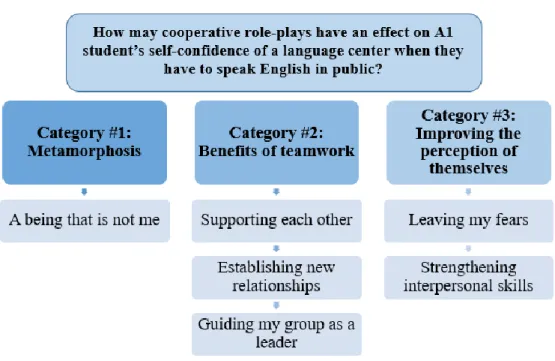
(15) 5. Chapter 2 Problems Description of the Problem One of the skills that students should be able to handle in the process of learning a foreign language is the speaking skill. However, it is common that certain weaknesses arise. According to Wallace, Stariba, & Walberg (2004), “Children, adolescents and adults sometimes fear the challenge of sustained formal speaking before large groups” (p.12). The research that we carried out was based on some specific aspects such as speaking skill, self-confidence and public speaking anxiety. An aspect that particularly stands out is the speaking skill, which as Boonkit (2010) says, is one of the four macro skills that is important to communicate, and even more when we are not speaking our own language. In addition to this, thanks to the internet, it has become necessary to speak well to allow a correct communication either with native people or internationally. In this sense, it is necessary that learners use this skill since it brings benefits to the speakers when they communicate with others. Additionally, in Tanveer’s words (2007), “Feelings of anxiety, apprehension and nervousness are commonly expressed by second/foreign language learners in learning to speak a second/foreign language and considered to exert a potentially negative and detrimental effect on communication in the target language”(p.3). As stated above, this ability can be affected, not only by factors directly related to the teaching of the language, but it is also affected by low selfconfidence and public speaking anxiety of the students that are the ones that were considered in this study. Taking into account the problems described above, the following research question arose:.
(16) 6. . How may cooperative role-plays have an effect on A1 student’s self-confidence of a language center when they have to speak English in public?. Formulation of the Problem Taking into consideration the problems previously stated, this research topic was chosen because it is believed that the problematic given in the communicative competence due to some negative feelings such as apprehension and nervousness can affect students in different ways. In order to identify this issue in a specific context, three different kinds of evidence were collected. First, it was made an observation1 of the English 2 class, which was offered at Rochereau Language Center to forty students from different programs at Corporación Universitaria Minuto de Dios. During the class, it could be observed that since students entered to the classroom, they showed expressions of disgust and fear, and when the teacher started the class, some students were very attentive and others decided to check their social networks. Then, when the teacher asked students to prepare a conversation about their favorite person in order to present the dialogue in front of the class, they felt very nervous, and at the moment of the presentation most of the students spoke with a low voice and they were blushed. Due to what was observed, the question that arose was why the students seem not to like to speak English, thus it was necessary to ask them about that at the end of the class. They said that since they were in the school, some English teachers only taught the grammar by using a traditional and boring methodology, therefore they have thought that learning English is a difficult process. On the other hand, they mentioned that they do not like to speak English because their classmates could laugh at their pronunciation and mistakes, which affects their English performance because when they have to speak English in front of their classmates, they. 1. Observation made to the English 2 class at Rochereau Language Center, 2018-1.
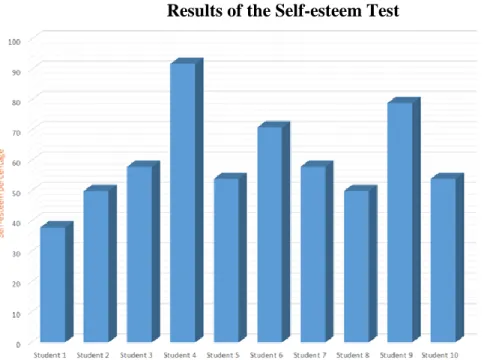
(17) 7. are worried and afraid of making mistakes. Other students said that they felt anxiety every time they had to talk in front of other people. Second, a self-esteem test created by Dr. Fernandez (2017) was taken from an online health and well-being magazine called “Web Consultas” (see chapter 12). She is a psychologist specialized in emotions, her main area of work has been the field of the psychopathology of emotions like anxiety, stress, depression, obsessions, and low self-esteem.; researcher in the psychiatry service; cognitive-behavioral psychotherapist; and professor of the Department of Basic Psychology I in the Faculty of Psychology of the Complutense University of Madrid. Then, the test was made to a 'pilot group' of ten students of English 2 class in order to identify the levels of self-confidence that students had and could affect the development of the speaking skill in a foreign language . The ten students were chosen because in the three previous classes, they were observed and asked how they felt when speaking English in front of their classmates and they expressed and there was noticed that they were nervous and anxious when presenting something facing their classmates. In the test there were twelve questions about the concept they had towards themselves, the perception they had about how others saw them, and their relationships with others. Additionally, one question was included about how they felt when they tried to speak English. Considering the results of the test, it is showed that most of the students did not feel self-confident; they did not accept themselves as they were, they rejected themselves because for example in one question of the test they chose the option that said: “When I look in the mirror I have some flaws that embarrass me”; they were very easily affected or hurt by others; and with respect to speaking English, they were afraid of making mistakes and that their classmates made fun of them..
(18) 8. In this way, it can be evidenced that having difficulties when speaking can affect students emotionally, since when they do not know how to speak or express themselves they are inhibited, do not participate in the class or in a conversation with their classmates, and this can be a cause of bullying on the part of other classmates who handle this skill better than others. Therefore, the test gave clear results and evidence that students of English 2 class had low self-esteem which affected their performance in the class and their development of English speaking skill, because according to Paredes (2004), a high self-esteem, linked to a positive selfconcept, will enhance the ability of people to develop their skills and increase the level of personal security, while a low level of self-esteem will focus people on defeat and failure. In the following figure, the results obtained from the test can be seen.. Results of the Self-esteem Test. Figure 1. Results of the self-esteem test applied to ten students of an A2 level English course. In this graphic the scale goes from 0 to 100 percent, which represents the students’ level of self-esteem. From 0 to 40 the level of selfesteem is very low; from 41 to 60 the level of self-esteem is low; from 61 to 80 the level of self-esteem is medium; and from 81 to 100 the level of self-esteem is high..
(19) 9. Question # 12 of the Test How do you feel when you try to speak English?. Figure 2. Results of how students feel when they try to speak in English. The graph represents the 100 percent which corresponds to the 10 students.. In that order, it is worth to mention that having deficient communicative competence can be a problem for the personal development of the students. In a like manner, the Manager of the Smart Language Academy, Sergio Bello (as cited in Zuluaga, 2017) states that: Actualmente el inglés ya no es un plus, es un requerimiento indispensable, no solo para la mejora de posibilidades en el mercado laboral e ingresos, también para facilitar estudios en el exterior, acceder a mayor información, conectarse con el mundo, viajar con libertad, hacerle frente a limitaciones y desarrollar nuevas habilidades. (para. 4) In other words, if they wanted to travel outside the country where the first language is English, they would not be able to achieve good communication. In the same way, poor speaking skills can affect job opportunities since, currently, many companies require personnel that speaks at least a second language perfectly..
(20) 10. Third, the professor of the English 2 class of the Rochereau language center was interviewed2. She was asked about the factors that caused students to feel afraid when they tried to speak English, and what would be a possible solution to this issue. The professor said that in the English classes there were students who had more knowledge about English and showed a selfish and offensive attitude towards the classmates who do not know much about it. Therefore, this creates a learning environment where is almost a danger that the learners are wrong because that might generate mockery. This interview was useful to support the relevance of this research problem because it gave an idea of the possible factors that cause anxiety in students especially when they have to speak English in front of their classmates.. Justification Nowadays, it is very important for people to be able to communicate in an optimal way with other people regardless of the person's objective. However, when wanting to communicate in a language that is not native, people are often affected by feelings that do not allow them to achieve this communication, a clear example of this, are students who learn new languages. More precisely, Tanveer (2007) points out “In many cases, students’ feeling of stress, anxiety or nervousness may impede their language learning and performance abilities.” (p. 8). In the same way, Tanveer (2007) mentions the importance to build students’ confidence and self-esteem in their second/foreign language ability with encouragement, reassurance, positive reinforcement, and empathy by the teachers (p. 57). Taking into consideration this, we decided to use the cooperative role-plays as the principal strategy to support the students’ self-confidence when they had to perform in front of an audience.. 2. Interview made to the professor of the English 2 class at Rochereau Language Center, 2018-1.
(21) 11. On the one hand, as previously mentioned in the formulation of the problem, there was noted that when students had higher level of English, they made lower level students felt unable to achieve the objective of the class. This justify that students could be disadvantaged, if they did not employ their strategies of collaborative work. Then, that information was important to realize that it is a problem that occurs in many professional contexts. Hence, with this research the students will have benefits for their professional development because as Fonvielle (2014) mentions people will be able to achieve their goals with high self-confidence, which means that they might have more probability to be successful in their careers. (para. 20). The reason of this is because when people are sure about what they can do, and that they are valuable, they will perform better in their professional environments. Therefore, the cooperative role plays are an opportunity for students to meaningfully relate the outside world within the inside situation. Alabsi (2016) stated that ''role plays engaged learners in activities that bring realism to their learning and help them to apply it in real situations''.(p. 229) This implies that working together would help the ability of the students since they would feel that the situations presented in the classroom are closed to real world circumstances. On the other hand, solving this problem could benefit the students of English 1 class because they as all human beings have the necessity of establish their goals and to achieve them is important that people believe in their abilities in order to face challenges which will appear during life in work, professional and social environments. Thus, the objective of this research was to support students’ self-confidence and of this way, based on Fonvielle (2014) the students will have high self-confidence which help them learn to accept and manage bad comments of other people, and they won’t be afraid or anxious of putting themselves in situations where they.
(22) 12. could be exposed to being in public and being mocked by others therefore, the students will have better social relationships. (para. 25) Otherwise, with this study we wanted to show that the learning process requires some changes in the strategies and a solution could be the cooperative role-plays as these helped students to engage to the language in an interactive way. For this reason, we considered that this research helped in the Uniminuto context in the following way. First, to the teachers and practitioners of the university, who will have a great opportunity to expand their knowledge and understanding of emotional difficulties and problems that affect learners in speaking a foreign language, to get alternative routes to teach in their classroom. At the same time, teachers at Rochereau language center by being the first to know this possible solution, which might strengthen the students’ self-confidence through the use of cooperative role-plays.. Research Objectives General objective. To analyze the effect that cooperative role-plays have on self-confidence when A1 students of a language center experience public speaking anxiety. Specific objectives. ●. To identify the reasons why A1 students experience public speaking anxiety at a language center.. ●. To describe the pedagogical process during the implementation of the cooperative roleplays at a language center.. ●. To explain the way cooperative role-plays support the students’ self-confidence when they have to speak English in public..
(23) 13. Chapter 3 Referential Framework Background Framework Forthcoming, the Background Framework is going to be presented. It is composed by studies and previous researches carried out in regards to the problem and topic of the present research. There are seven studies, which are ordered by topics, first three studies related to roleplays, then two studies of self-esteem, and finally two studies of anxiety. Likewise, for each topic, it is found, first an international study and then a national study. A large number of studies have been carried out in response to the anxiety experienced by students when they try to communicate in a foreign language. In addition, through both national and international researches, it is reflected that the lack of self-confidence is the reason why students do not succeed in speaking and that one of the most used strategies to overcome these problems is the role-plays. Below we will explain these studies in detail. Firstly, in an international research about role-plays made by Yanchaliquin (2015), one specific question was addressed for guiding the study: “how do communicative activities (dialogues, role plays, simulations and games) as a teaching strategy develop the speaking skill in the students?” (p. 3). The focus of this research was based on developing students’ language skills in English, especially their speaking skill. It is assumed that the use of communicative activities will develop students’ fluency, accuracy and pronunciation in speaking. The sample consisted of thirty-nine students of second grade of high-school, “F” class at Unidad Educativa Pedro Vicente Maldonado. The author collected data by preparing some observation guides to obtain information in three aspects of speaking: fluency, accuracy and pronunciation. After that, he elaborated an evaluative test to acquire information about the reasons why students had weaknesses in speaking a foreign language..
(24) 14. The results in this study supported that students had increased their ability of speaking through the use of communicative activities. The results also indicated that by applying communicative activities the students improved their language production. That research supports the research paradigm of this new study because it was a qualitative research in which the author collected data by taking into account the participants’ understandings about important aspects in speaking a foreign language. Furthermore, that project provides excellent understanding regarding those students whose deficiency when speaking English is noticed. Second, in an international research about role-plays carried out by Alabsi (2016), it was investigated the effect of using role-play strategy on enhancing vocabulary among female secondary school EFL students. Especially, the author showed to what extent role-play strategy allowed students to improve their vocabulary competence. The author collected data using a quasi- experiment method, "pre-test and post- test" design in which a special population with certain characteristics was chosen to develop or carry out the research. The author used this method in two classes in her research (the experimental class and the control class), in order to know if the execution of role-plays was effective or not in teaching. The results indicated that the experimental group class did a better job than the control class. This means that those who used the role-play technique had positive effects on developing their vocabulary competence rather than those who used the traditional way. Moreover, she found that using role-play strategies in EFL classes are worthwhile, and more effective than the usual teaching. This article provided useful information about role-play as a teaching strategy that encourages students to use naturally the target language. Besides that, it helped our research in.
(25) 15. understanding how to develop the role-play strategy in order to enhance students' language production. However, this study is different from ours because in this they used role-plays as a strategy that helps in speaking skill, while we will use the cooperative role-plays strategy in personal factors such as students’ self-confidence. Third, a national study made by Caicedo (2015), examined the activities that teachers develop and ninth-graders' participation in responses to those activities. The three questions that were addressed in this study were: First, what activities does the teacher develop in order to promote the foundational and subsidiary language skills in the classroom? Second, how do the students participate in and respond to the activities? And third, what is the relationship between the activities developed and the L1/L2 use inside the classroom? The data collection consisted of daily field notes and a diary. The results pointed out that the teacher developed 12 types of activities, among them oral instruction/explanation in L2, unscramble writing and dialogues/role-plays. He also found that students decided in which language to respond, for example, oral repetition in L2 and oral production in L1. The previous article was of help for us since it gave us an idea to familiarize ourselves with the procedure that must be carried out based on the role-plays to achieve the objectives. In addition, the article provided new knowledge about the use of different teaching activities in the classroom and the possible answers that can be obtained by the students, possibly we obtain these same answers when doing the implementation of the role-plays. Likewise, it was useful to know the instruments since we can use field notes which is the one used in the study and it is a good way to collect information. The fourth study was an international journal article called “Self-confidence and its importance in learning languages”, which was carried out by Nazarova & Umurova (2016). This.
(26) 16. journal article talked about the big problem that most language teachers have to face because foreign language learners show a shy attitude and they do not participate in class, and this is the reason why English teachers need to look for different strategies that enhance the students’ confidence. Thus, the authors of this article discussed the problems of self-confidence and how it affects language learning, and they collected evidences of the problem from different investigations, studies and from their own experience as English teachers. The authors of this journal article showed a description of the problem based on different studies and then, they mentioned the reasons why students avoid to speak in the English classes. The main reasons were: Being laughed from other people; low proficiency in the target language; previous negative experiences with speaking in class; cultural beliefs about appropriate behavior in classroom contexts; habits; and language anxiety. Therefore, the authors suggested some activities and strategies that teachers can implement to develop students’ self-confidence such as dialogues, narratives texts with transcripts, role-plays, questions with helpful content on everyday topics to have discussions and practice speaking, thematic texts to improve vocabulary, readymade materials with English phrases, and conversation books. This study is related to our research because it provides evidences and theories that support our research problem. Besides, they gave us very important reasons why the students do not speak with tranquility which we should take into account when carrying out our analysis. It also gave us an idea of some strategies and activities, which we could adapt according to the level or needs of the students and so, we could use them to improve the self-confidence and the ability to speak English of A1 students in a language center. Fifth, it is important to mention a national study about self-confidence carried out by Sánchez & Sánchez (2017). In this article the authors mention that most of foreign language learners have high levels of anxiety and low levels of self-confidence on their oral performance.
(27) 17. which make learners not to develop speaking skill or have success in their learning process. And related to this issue, teachers need to be aware of their role in causing language anxiety in their students and use different strategies that help students to overcome this problematic. For this reason, the authors focused their research on the following question: How can a psychologybased strategy be brought into the L2 classroom to mitigate Foreign Language Anxiety and help learners perform orally in the L2? Therefore, this research was developed in the context of two undergraduate foreign language programs at a public university in Colombia with thirteen students who had to attend some workshops to talk about anxiety and self-confidence and to learn some useful tips to manage those issues. The authors used two kinds of data collection. First, a quantitative form through the application of FLCAS (Foreign Language Classroom Anxiety Scale) in order to identify a baseline anxiety level. Second, a qualitative form by analyzing the comments and essays provided by the participants. These students showed significantly lower anxiety levels in the FLCAS after the workshop sessions. Also, the analysis of the comments and essays provided by the participants, indicated that they perceived the strategies as useful for their academic and personal lives and for dealing with speech anxiety. That study was very useful for this research because it provides a way to see the level of anxiety that students might have in order to identify if our pedagogical strategy, cooperative roleplays, supports self-confidence and thus, the English performance of A1 students at a language center. Sixth, an international research about anxiety made by Ansari (2015) - an English teacher in India - called “Speaking Anxiety in ESL/EFL Classrooms: A Holistic Approach and Practical Study”. The author said that the second/foreign language speaking anxiety is a big problem in teaching and learning English since it affects the oral performance of speakers, like the students.
(28) 18. in the classroom, but teachers usually do not identify anxious students and consider that their lack of participation is due to demotivation or low performance. For this reason, the author raised three fundamental research questions in his study, 1. What are the characteristics of students who suffer from second/foreign language speaking anxiety? 2. What are the sources of second/foreign language speaking anxiety? 3. Can the incorporation of case study findings and supportive classroom atmosphere help target students overcome their anxiety? In that order, the researcher chose a population which consisted of thirty students in the higher secondary level (12th class) at M.L.S.M. College, who were between seventeen and nineteen years old. Ansari used the following techniques of qualitative data collection: a) semistructured interviews, b) group discussion, c) question-answer sessions d) interactions on situation-based spoken English, and e) direct observation. As a result, Ansari found that about ten of the thirty students who participated in the study were experiencing English language speaking anxiety, this was due to the fear of negative evaluation from their classmates and the perception of low ability in relation to the ability of their classmates. To conclude, this research provided evidence which showed that students’ unwillingness to participate in speaking activities did not have relation to laziness or lack of interest in learning, instead, it was caused by their beliefs that they were not good at speaking and the fear that their classmates would evaluate them negatively. With regard to the present study, it is considered that the tools used in Ansari’s study for data collection were good to collect the information, and as his study had aspects very similar to this one, the results were very helpful as it gave an idea about the possible findings at the end of this study. Finally, Gaona (2017), who is a student from Universidad de la Sabana, conducted a national research called “Impact of PBL on Self-Confidence and Anxiety in a L2 Class”, in which the author states that, for students the most difficult skill to develop is the Speaking, since it.
(29) 19. exposes them in front of an audience and produces anxiety and lack of self-confidence. For this reason, Gaona posed this research question for her thesis: “To what extent does the implementation of PBL in the classroom help ninth graders from “Institución Educativa Santa Teresa” in Huila improve their self-confidence and reduce the levels of anxiety when speaking English?” The author chose a population of twenty-nine students of ninth grade between fifteen and seventeen years old. From the total number of participants, six students filled in the six surveys implemented to observe the process and they were considered as a subgroup to be compared to the whole group. The author clarified that although the research was considered qualitative, some elements of quantitative design such as structured online questionnaires and statistical information were included. From this study, it can be concluded that PBL (Project Based Learning) had a positive impact on students with improvement in situational, communication and potential self-confidence subcategories. In the same way, the impact of PBL regarding anxiety was noticeable with a reduction in all its subcategories of communication, criticism and evaluation in the communicative skill of speaking. In this sense, the study was useful for this research because it showed the importance of taking into account anxiety and self-confidence, and also it provided tools for data collection that could help to collect information about students' anxiety and self-confidence.. Theoretical Framework To carry out this research, some main concepts were used as a basis and support of the work. The constructs are: Cooperative Role-Plays, Self-Confidence and Public Speaking Anxiety..
(30) 20. Cooperative Role-plays. Role-plays are considered as one of the most relevant communicative speaking activities used to teach and learn a foreign language. In this respect, Abdullah (2016) defines communicative speaking activities as a way to train the students to be able to express meaningful and contextual communications as in real life (p. 390). In this sense, what the author means is that communicative speaking activities provide students with greater opportunities to rehearse their speech in order to express a meaningful message within a specific social context. Significantly, Kusnierek (2015) gives a considerable aspect when using role-plays in the classroom and it is that students learn to put themselves in someone else’s position, assuming a role which involves the classroom interaction and encourage cooperation among them (p. 84). Besides, this writer explains that learners are given a chance to pretend to be someone else and it may help timid students to overcome their shyness of speaking. This was meaningful for the project because as it was expressed in Chapter 2, the role-plays are the most used pedagogical strategy to solve the negative problem related to the timidity and nervousness that learners experience when they have to stand in front of their classmates to speak in a foreign language. Bearing in mind Kuśnierek’s view, it can be said that role-play is a strategy through which an attempt has been made to arrive at an effective solution to the constant problem related to the lack of interaction between two or more people in a foreign language. In addition, learners will have the necessary tools to control their emotions and become secure when performing in English, because they will assume a ‘role’ that they will play in a specific situation. To complement, Bang (2003) claims that role-plays are designed to integrate the four skills, as one activity flows naturally to the next. “To participate in the activities, the students have to verbally express their ideas, listen to others’ opinions, read related texts, and work on projects as the role-play progresses” (as cited in Lin (2009), p. 50). Taking into account what this.
(31) 21. author says, role-plays rely on an attempt to see in detail how learners make personal use of language and how learners complete a task by employing social interaction and individual change to accomplish a given task. In accordance with what we have already discussed throughout the previous chapters, it can be noticed that in order to address role-plays in the classroom it is mandatory to guide and stimulate students to work in pairs, teams or short groups to build trust among learners and in this way lead them to generate findings that are useful within a specific context. Considering role-plays as a strategy to help learners build self-confidence and fluency when speaking English, Bell (2014), distinguishes four main categories of role-plays. The first is the conflict role-play. It deals with students trying to find solutions to a problem under pressure. The second is cooperative role-play and it intends to support shy students’ performance within a group. The third is information gap role-play in which its purpose is to prepare students to ask and answer questions in order to complete specific information. The last type is task-based role play that aims to help students practice a realistic survival English skill. The intention of the author in dividing the role-plays into different categories or types is to demonstrate that practicing speaking in conversational situations lead students to evidence learning into action since they have to use certain strategies to fulfil the aim of each kind of role. Understanding the suggested types of role-plays, throughout this research the ‘Cooperative role-plays’ are the focus, because the purpose of our project was to offer students the necessary tools to reinforce their self-confidence through the use of cooperative work that help them to feel assured, especially when they have to speak English in public. Moreover, a cooperative role-play is a strategic activity that allows insecure students to practice speaking through a conversation in which they take part in an imaginary situation to present someone’s outlook. In addition, it involves students in promoting self-confidence and overcome the public.
(32) 22. speaking anxiety since they must work on an activity in groups or pairs and they need to assess and evaluate each other performance. Having presented the main points related to the pedagogical strategy and proposal selected for this research, it will be practical to go forward the next construct which will give us a better understanding of what self-confidence is about.. Self Confidence. Self-confidence is an essential part for the personal and professional development of human beings, since it plays an important role in achieving the objectives or goals proposed. Thus, it is necessary to provide clear definitions of this construct. Firstly, according to the University of Queensland (2018), self-confidence is the belief that each person has about himself or herself and his/her abilities which demonstrates the internal state created by what each person feels and thinks, and this states changes according to the different situations that happen in the social environment like past events and the way how we remember them. This previous definition makes us reflect on the fact that teachers should strengthen self-confidence in students during class development to create positive experiences and thoughts about their abilities and at the same time about their learning process. Similarly, Fonvielle (2014), says that “Self-confidence is a good feeling about yourself and your capabilities to achieve things that you want to achieve” (para. 4). Therefore, it is important to have in mind that people can do anything and achieve the goals they set themselves if they believe in their abilities, since the human mind plays a fundamental role in each action and decision of people. Consequently, the main focus of our research was the importance of learners having high level of self-confidence because in that way they could give the best of themselves and be willing to take risks in order to achieve their goals by overcoming any weaknesses,.
(33) 23. people’s negative critics, and challenges that could be presented during the learning process of a foreign language. For this reason, Miller (2003), refers that learners should understand that selfconfidence is like an inner game in which they play with themselves without other players, and other can criticize or put them down, but it is up to them what they believe about themselves and their ability. Thus, this definition was a great argument that supported this research because it makes an emphasis on the necessity of helping learners support their self-confidence through the use of cooperative role-plays in order to improve the English speaking skills. The key to be successful when people are learning a foreign language is to establish goals and overcome any difficulty that might appear during the process. Thus, the factor that allows this to be possible or not, is self-confidence because if people believe in their abilities, they will always strive to achieve their goal regardless of the challenges. Correspondingly, Heyde (as cited in Park & Lee, (2005)), states that "Self-confidence involves judgments and evaluations about one's own value and worth. Self-confidence can be negatively influenced when the language learner thinks of oneself as deficient and limited in the target language" (p. 197). According to this definition it is important to understand and reflect that self-confidence can affect positively or negatively the foreign language learning. And this is the reason why the goal of our research was to create, develop and implement a pedagogical strategy, which is the cooperative role-plays, in order to enhance self-confidence and thus students could decrease their speaking anxiety and improve their English communicative speaking skill. Taking into account that low levels of self-confidence cause that learners feel anxiety when they must speak, it is necessary to explore the concept of public speaking anxiety. Public Speaking Anxiety. Before defining public speaking anxiety, it is important to first define public speaking to have a general knowledge of this. In general terms, public speaking is defined by Alberts, Martin,.
(34) 24. & Nakayama (2011) (as cited in Nash, Crimmins, & Oprescu, (2016) ), as “The process of speaking with a purpose to a group of people in a relatively formal setting” (p. 587). In that order, it is necessary to make a relationship between public speaking and the academic environment as this study was carried out in a university, for this, it is important to mention the definition made by Nash, et al. (2016) in which he states that “Public speaking and oral assessments are a common assessment type in university, and serve to measure a student’s capacity to create and deliver an engaging, informed and persuasive argument” (p. 586). This is worth for the project since, as the author mentioned, it is a very common form of assessment in the universities and is related to what is mentioned in chapter 1 because having problems in public speaking can affect the academic environment of students, both personally and academically. An important factor that particularly stands out when it goes with public speaking is the anxiety. Seiler & Beall (2011), establish that it is “Fear of speaking before an audience or group” (p. 251), in this case presenting in a university classroom. Taking into consideration this, the study will focus on a specific construct that is Public Speaking Anxiety. Daly, McCroskey, Ayres, Hopf, & Ayres (1997) (as cited in Bodie, (2010)), define “Public speaking anxiety (PSA) as a specific subtype of communication-based anxiety whereby individuals experience physiological arousal (e.g., increased heart rate), negative self-focused cognitions (e.g., ‘‘I’m concerned I’ll appear incompetent.’’), and/or behavioral concomitants (e.g., trembling) in response to an expected or actual presentation” (p. 70-71), and in Leary & Kowalski (1995) words (as cited in Kumar, Kalakbandi, Prashar, Neelu, & Parashar, (2017)), “Public speaking anxiety (PSA) is one of the most common social fears” (p. 287). These factors mentioned by the authors are important because they helped us recognize characteristics of anxiety in a physical way, likewise, it is also related to self-confidence because, as the authors.
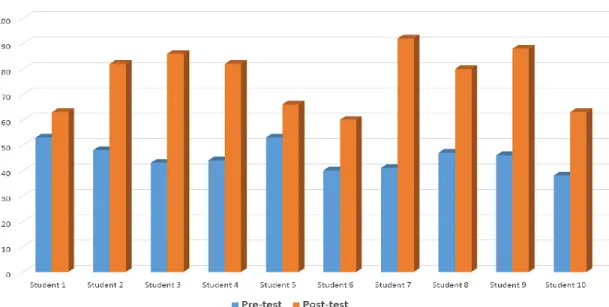
(35) 25. mention, many of the students' responses to the self-esteem test agree that they have bad thoughts about themselves. As Glassman, et al. (2016) state, “Individuals with PSA often experience deficits in speech performance that can affect their career, education, or personal success” (p. 768), in the same way, Glassman et al. point out that “There is evidence that individuals with public speaking anxiety (PSA) experience impaired speech performance, which affects their social, occupational, and educational functioning” (p. 749). This goes in accordance with what we have already argued since, from our point of view, these are consequences that students might face in the classroom with participation and grades, in their future when they get a job or simply to understand another person. We also agree with Pearson, Child, DeGreeff, & Semlak (2007), when they affirm that “Individuals with a low sense of self-esteem will experience more anxiety within the communication setting whether it is in an educational, interpersonal, or professional setting” (p. 7). In this study, it refers to what we have mentioned about the close relationship that low selfesteem has as a cause of anxiety when speaking in any context. Even by taking the answers of the students who were asked to complete the pre-test and post-test in the chapter 1 , it was demonstrated that poor self-confidence in students might lead to elevate their levels of anxiety as well as affecting their performance, especially when they have to speak English in front of their classmates. In addition, we have already mentioned how this anxiety is evidenced when speaking in public product of low self-esteem in the previous studies that were shown earlier in chapter 2. Legal Framework Nearby, it is relevant to describe what educational policies exist with reference to our project, and in this sense, the pertinence of this research can be understood from a legal framework. Firstly, in an international context exists the Common European Framework created.
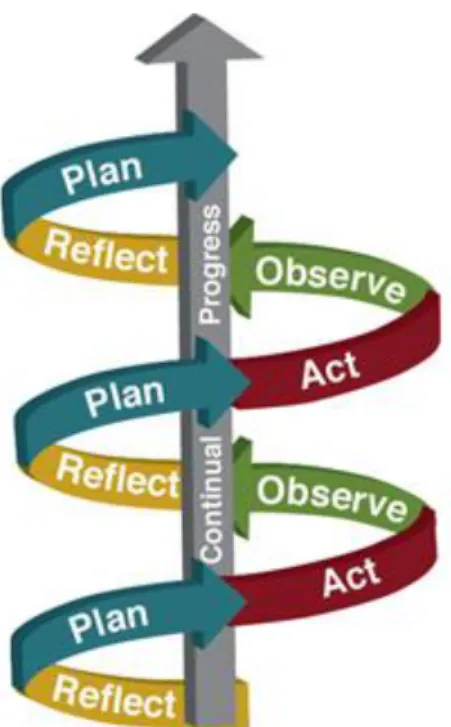
(36) 26. by Council of Europe (2001), which “Describes in a comprehensive way what language learners have to learn to do in order to use a language for communication and what knowledge and skills learners have to develop so as to be able to act effectively” (p. 1). This goes in relation to the objectives of the project since our ideal was to implement strategies such as cooperative roleplays and help the participants improve their self-confidence so that they could act, communicate and interact with other people in an effective way. In addition, it is important because this Common European Framework (2001), provides some Common Reference Levels to know the proficiency of the person in English; these are the Basic user with A1, A2, and an Independent user with B1, B2, and the Proficient user with C1, C2 (p. 23). Particularly, in Colombia, the Ministry of National Education (2004), established educational policies in the National Bilingualism Program 2004-2019; this program seeks for students to master the language as this provides an advantage and competitiveness in their field since in general terms Colombia points to bilingualism in the education sector. Likewise, they establish specifically in higher education the English as a foreign language, defining that the level of English for future teachers must be High Intermediate (B2 +, C1) and for students of different careers an intermediate level (B2). In this respect, Rochereau Language Center offers the English courses with the purpose of helping students form the different careers achieve the level required. On the other hand, the Common European Framework (2001), mentions the importance of including strategies at the moment of teaching a foreign language, this Framework states “Strategies are a means the language user exploits to mobilize and balance his or her resources, to activate skills and procedures, in order to fulfill the demands of communication in context and successfully complete the task” (p. 57). It has to do with the implementation of the project since the cooperative role-plays were chosen as a strategy which finally helped learners use their skills.
(37) 27. to complete different tasks proposed in the sessions developed for the implementation, and in this sense made a contribution regarding the desired level the students in this kind of programs need to accomplish in light of national and international policies..
(38) 28. Chapter 4 Methodological Design The third chapter explains the methodological design that was chosen with its characteristics, such as: The type of investigation, the method, the stages, the instruments used to collect data. Likewise, in this chapter there is a description of the participants and population of the study, the sampling method that was chosen and the instruments used to collect the data. Type of Investigation Cobb & Forbes (2002), define qualitative research as “an approach to the study of human behavior that relies on the analysis of narrative data to create an interpretation of the meaning of these behaviors from the perspective of the participants themselves, within their own social context” (para. 3). These authors considered that in a qualitative research the researchers were not only interested in facts itself but in the ways people acted and gave meanings to their social experiences. Apart from that, this type of investigation provided the chance to explain in depth and meticulously what was found in the data. Considering that, we chose as our research paradigm the qualitative research because we wanted to develop deep understanding about how self-confidence is a key factor when people are learning a foreign language and have to speak in front of many other people. Furthermore, we wanted to explain how cooperative role-plays were a useful strategy to support self-confidence, and our main focus was to analyze the process of the implementation of the strategy by only using qualitative interpretation without making statistics because during this research every behavior or ideas that the learners expressed were analyzed as a process of improvement. Method of investigation Action research. Hopkins (2014), asserts that “action research combines a substantive act with a research procedure; it is action disciplined by enquiry, a personal attempt at understanding.
(39) 29. while engaged in a process of improvement and reform” (p.58). It means that an action must have firm basis on reality, in order to be described appropriately avoiding misunderstandings. Furthermore, the research must give reliability and validity by generating new knowledge for both theory and practice. As shown in Figure 3, there are four continual steps in action research which compose a spiral of plan, act, observe and reflect. Kemmis and McTaggart (2000) maintain that “action research involves a spiral of self-reflective spirals of planning a change, acting and observing the process, reflecting on these processes and then replanning, acting and observing, reflecting, and so on….” (As cited in Koshy, (2005), p. 5).. Figure 3. Action Research Spiral. Star Tree action research. (2016, September). Retrieved from http://reforestingscotland.org/wordpress1/wordpress1/wp-content/uploads/2016/09/Action-Research-spiral.jpg. Stages of investigation Regarding to the above mentioned, this project was conducted in four moments by planning an action, acting and observing the process, and finally reflecting. First of all, the.
(40) 30. researchers looked for a specific cooperative role-play that would fit with the educational necessities of learners, then two researchers filled their field notes format, in which were stated the kind of information that would be collected in the session, while the other researcher was the one that presented the strategy. Finally, the researchers arranged all the information and analyzed the data collected. This process was repeated per each session, there were six sessions. As this type of research aims at knowing how things are or how they behave within a specific social context, this project was based on participants' responses towards the strategy which was cooperative role-plays, by understanding achievements through the analysis of collected information. Population As we already mentioned in the micro context, the participants of this project were thirty students that were part of the English 1 class offered by Rochereau Language Center at Corporación Universitaria Minuto de Dios. The reason why these students were chosen was because during the English classes they looked nervous and when they had to speak English they felt uncomfortable, their cheeks turned red, and they spoke with a very low tone of voice. Additionally, the students expressed that learning English was a difficult process and they did not like to speak English in public because their classmates could laugh at their pronunciation and mistakes. A clear evidence of this was the results of the test because these showed that most of the students did not feel self-confident; they did not accept themselves as they were, they rejected themselves; they were very easily affected or hurt by others; and with respect to speaking English, they were afraid of making mistakes and that their classmates made fun of them. Sample Etikan, Musa, & Alkassim (2016), state that “The purposive sampling technique, also called judgment sampling, is the deliberate choice of a participant due to the qualities the.
Figure

+3

Documento similar
Government policy varies between nations and this guidance sets out the need for balanced decision-making about ways of working, and the ongoing safety considerations
Public archives are well-established through the work of the national archive services, local authority-run record offices, local studies libraries, universities and further
occurrence likelihood; the decreasing impact of the competitive anxiety previous to the injury; the probabilistic independence of the players’ risk behaviors, and the relevance of
Hence, the focus of this thesis are the cooperative initiatives between firms and secondary stakeholders (e.g. NGOs, universities, and public research institutions)
This study is part of a bigger and ambitious research project with the general aim to achieve a standardized and unique self-reported scale in Spanish-speaking population to
The aim of the current study is to analyse the relationship established between the level of intensity and directionality of anxiety and perceived self-confidence and
This study was aimed to investigate changes in the psychological readiness to return to sport among injured athletes and to assess how athletes’ confidence is perceived by
The Competitive State Anxiety Inventory 2 (CSAI-2) is a 27 item questionnaire consisting of 3 dimensions: Cognitive Anxiety, Self-confidence and Somatic Anxiety.. A total of 231
