
Are Changes in the Wnt/β Catenin Pathway Involved in Cocaine and Stress Induced Long Term Neuroadaptations?
8
0
0
Texto completo
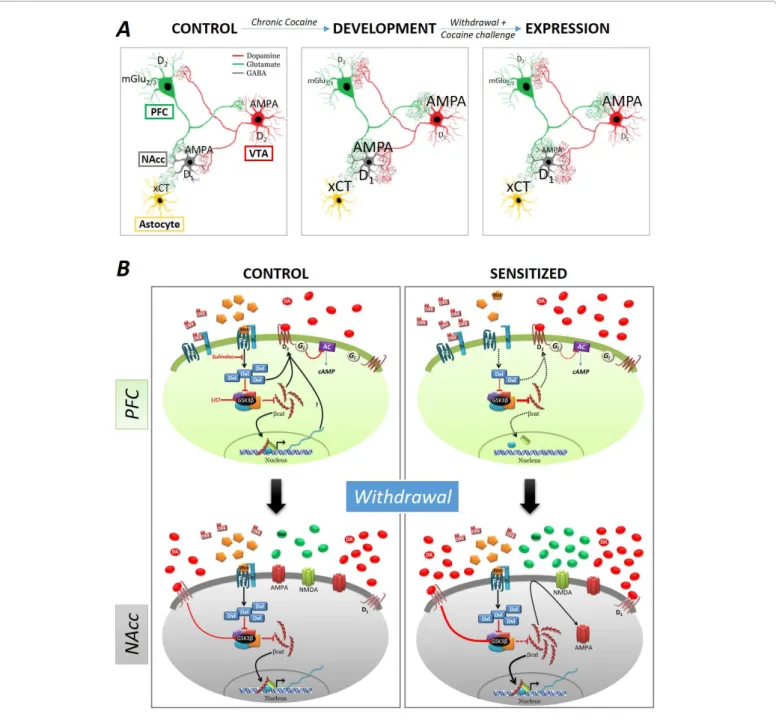
(2) J Add Pre Med. ISSN: 2474-5049. the activity of small GTPase as well as the expression of different genes and their targets (e.g. ΔFosB, NFkB, Cdk5-MEF2, etc) [23]. Altogether, these evidences indicate that cocaine-induced sensitization is the result of an interaction between dopaminergic and glutamatergic neurotransmission (Figure 1A). Similarly, it has been demonstrated that, in laboratory animals, stressful situations during adulthood potentiate the effects of cocaine and other psychostimulants [26,27].. Vol. 2. Issue. 2. 2000112. Role of the Canonical Pathway in Cocaine-Induced Long-Term Neuroadaptations General Aspects of the Wnt Canonical Pathway For the past years, in our laboratory we have been using the behavioral sensitization paradigm to model addiction-like behavioral responses to investigate the role of the Wnt (Winglessrelated integration site) factors pathways. Wnt factors signals are. Figure 1: A) Summary of cocaine-induced neuroadaptations in the different receptors of the mesocorticolimbic circuitry that underlies behavioral sensitization. (xCT: Cystine/Glutamate exchanger; mGlu2/3: metabotropic glutamate receptors; D2: Dopamine D2-like receptor; D1: Dopamine D1like receptor; AMPA: α-amino-3-hydroxy-5-methyl-4-isoxazolepropionic acid receptor). B) Schematic representation of the neuroadaptations on Wnt canonical pathway in the PFC and in the NAcc of control and sensitized rats before and after withdrawal of chronic cocaine administration. Under control conditions, in the absence of Wnt, GSK3β phosphorylates β-catenin marking it for degradation by the proteasome. Upon activation of the Wnt canonical pathway, GSK3β is inhibited and leads to the stabilization of β-catenin and its subsequent translocation to the nucleus where it regulates the expression of Wnt target genes such as Axin2. (Dkk: Dickkopf-1; Dvl: Dishevelled; Fz: Frizzled receptor; D2: Dopamine D2-like receptor; D1: Dopamine D1-like receptor; Gi: Inhibitory G protein; AC: Adenylyl Cyclase; βcat: β-catenin; GSK3β: Glycogen synthase kinase 3β; DA: Dopamine; Glu: Glutamate; NMDA: N-methyl-D-aspartate receptor; AMPA: α-amino-3-hydroxy-5-methyl-4-isoxazolepropionic acid receptor). Black arrows: activation (filled: normal activity, dotted: reduced activity); red blunted arrows: inhibition (filled: normal activity, thickened: increased activity, dotted: reduced activity). Citation: Cuesta S, Pacchioni AM (2017) Are Changes in the Wnt/β-Catenin Pathway Involved in Cocaine and Stress-Induced Long-Term Neuroadaptations?. J Add Pre Med 2(2): 112.. Page 2 of 8.
(3) J Add Pre Med. ISSN: 2474-5049. critical during the development of both the central and peripheral nervous systems. These factors are involved in a series of different processes including axon pathfinding, dendritic development, and synapse assembly. Wnt proteins also modulate basal synaptic transmission as well as the structural and functional plasticity of synapses in the central nervous system [28]. The Wnt growth factors are secreted proteins that can signal through different receptors such as Frizzled (Fz) [29], Ror2 and Ryk [30,31]. The interaction between Wnt and Fz leads to the phosphorylation of Dishevelled (Dvl), the first intracellular effector of the pathway. Once Dvl is phosphorylated, the Wnt pathways branch off in: the canonical or Wnt/β-catenin, the planar cell polarity and the Wnt/calcium pathways [32]. The activation of the Wnt/β-catenin pathway results in the phosphorylation of GSK3β Glycogen synthase kinase 3β leading to β-catenin stabilization. Once stabilized, β-catenin enters the nucleus, promoting the expression of different target genes of the pathway [29,33]. In the absence of Wnt, GSK3β phosphorylates β-catenin marking it for degradation by the proteasome [34]. At the extracellular level, a physiological antagonist, called Dickkopf-1 (Dkk-1), has been characterized for the Wnt canonical pathway. Dkk-1 is a secreted protein that, by binding the LRP6 co-receptor, specifically blocks the activation of the canonical Wnt pathway [35].. Wnt Canonical Pathway and Neuropsychiatric Disorders. Over the years, a great deal of evidence has shown an association between Wnt signaling dysfunctions and neurological disorders such as Alzheimer’s disease, bipolar disorder and schizophrenia [36,37]. For instance, it has been shown that amphetamine (D2R indirect agonist) increases GSK3β activity and decreases β-catenin levels in the PFC and in the striatum, while the opposite effects were found with D2R antagonists [38]. Notwithstanding the relevance of dopamine and its receptors to the effects of cocaine, little was known about the role of Wnt signaling pathways in drug addiction. Furthermore, it has been proposed that the regulation of GSK3β activity might be associated with cocaine-induced neuroadaptations. Chronic cocaine treatment induced changes in GSK3β activity in the striatum, while SB216763 and lithium chloride (LiCl), selective and non-selective GSK3β inhibitors respectively, prevent cocaine-induced sensitization [39–41]. Nevertheless, a direct link between the activity of the Wnt/β-catenin pathway and the changes found in GSK3β had not been proposed. Therefore, our main goal was to evaluate whether the Wnt/β-catenin pathway was involved in cocaine-induced neuroadaptations related with both the induction and the expression of behavioral sensitization. We combined molecular and behavioral studies with pharmacological strategies to evaluate the relevance of the Wnt canonical pathway for cocaine-induced behavioral sensitization [42,43].. Wnt Canonical Pathway and the Initiation of Cocaine-Induced Behavioral Sensitization. Experimentally, we worked with a well-characterized sensitization scheme developed by the Kalivas’ Laboratory in the 90’s [7]. This schema consists of an induction phase, involving seven injections of cocaine (2 × 15 mg/kg and 5 × 30 mg/kg, ip.) administered one per day followed by an expression phase evaluated after a cocaine injection (15 mg/kg, ip.) administered after three weeks of abstinence, on day 28. After the injections on days 1,7 and 28 of the treatment the locomotor activity was recorded for two hours. The remaining injections (30 mg/kg i.p.), between days two to six, were administered in the home cage. We considered that an animal was sensitized when it showed at least a 20% increase in the cocaine-induced locomotor response when comparing the first and last day of treatment (7 for development, 28 for expression) [7]. Different groups of researchers have demonstrated that not all the animals show an increase in their. Vol. 2. Issue. 2. 2000112. locomotor activity after the sensitization protocol is applied; only sixty percent does [7,8,18]. Likewise, we found that about 60% of the chronically-treated animals did show the increase in locomotor activity. Based on this criterion we divided the chronic-cocainetreated animals into sensitized and non-sensitized according to their locomotor response. Then we investigated whether molecular changes in β-catenin, the final effector of the canonical Wnt pathway, were linked to cocaine-induced induction and expression of behavioral sensitization. In fact, we used β-catenin levels as a readout for the canonical Wnt signaling [33] in brain areas relevant to addiction such as the PFC, the NAcc, the Caudate Putamen (CPu) and the Amygdala (Amyg) in animals sacrificed 24 hs after the last injection on day 7 or 28.. Regarding the induction of sensitization, our main findings revealed that the animals that received chronic cocaine and developed the behavioral sensitization showed lower β-catenin levels in the PFC, CPu and Amyg when compared to saline-treated animals, while no changes were found in the NAcc. In line with β-catenin observations, we found that GSK3β activity levels were increased in the PFC, CPu and Amyg of sensitized animals. Furthermore, we found that in the PFC the nuclear levels of β-catenin the mRNA expression of Axin2 (a target gen of the pathway) and the expression of the mRNA of Wnt7b were decreased in sensitized animals. Taken together, these results reveal an inhibition of the Wnt/β-catenin pathway as an important neuroadaptation for the induction of behavioral sensitization, proposing a new role for this pathway. In order to evaluate the importance of the changes in the activity of the Wnt pathway in the PFC for the development of sensitization we used two pharmacological approaches. The first one involved a systemic treatment with a well-characterized pathway activator as is LiCl [44]; while the second one consisted of intracerebral infusions of a pathway inhibitor called Sulindac [45]. Each treatment was administered before each cocaine injection. As expected, we found that LiCl, by preventing β-catenin reduction in the PFC as well as in the CPu and the Amyg, blocked cocaine-induced sensitization. In contrast, by facilitating the inhibition of the pathway in the PFC with Sulindac, the behavioral sensitization was exacerbated. Importantly, there was no impact on the behavioral response when infusing Sulindac in the CPu. These findings highlight the relevance of the inhibition of the Wnt canonical pathway in the PFC for the initiation of cocaine-induced sensitization.. Wnt Canonical Pathway and the Expression of Cocaine-Induced Behavioral Sensitization. When we focused on the expression of behavioral sensitization, we found that chronic cocaine induced an increase on β-catenin levels in the NAcc (both in total homogenates and in the nuclear fraction), a decrease in the CPu, and no changes in the PFC, when compared to saline treated animals. Once again, all these changes were only present in sensitized animals and entailed a cocaine-induced increase in the activity of the Wnt/β-catenin pathway in the NAcc.. On the Link Between Cocaine-Induced Behavioral Sensitization and the Wnt Canonical Pathway: Proposed Mechanisms Based on Previous Evidence. Taken together, our results proposed for the first time that changes in the Wnt/β-catenin pathway effectors are involved in the short and long-term neuroadaptations required for cocaineinduced behavioral sensitization. As previously mentioned, dopamine neurotransmission has been linked to intracellular effectors of the Wnt/β-catenin pathway [38,46–48]. Considering that cocaine-induced neuroadaptations include changes in dopamine and glutamate neurotransmission [1,23,49,50], it is possible that cocaine-induced changes in Wnt/β-catenin pathway. Citation: Cuesta S, Pacchioni AM (2017) Are Changes in the Wnt/β-Catenin Pathway Involved in Cocaine and Stress-Induced Long-Term Neuroadaptations?. J Add Pre Med 2(2): 112.. Page 3 of 8.
(4) J Add Pre Med. ISSN: 2474-5049. activity are linked to them. For instance, the cocaine-induced functional decrease of D2R in the PFC [11–14] could be related to the inhibition in the Wnt/β-catenin pathway. In fact Galli et al. [51] have recently demonstrated that inducible expression of the physiological inhibitor of the Wnt/β-catenin pathway Dkk-1 [35], in adult mice striatum decreases D1R and D2R clusters, leading to deficits in dopaminergic transmission. Hence, it is possible that the inhibition of the pathway induced by chronic cocaine is mediating the functional decrease of D2R observed in the PFC of the sensitized animals. Regarding the origin of this inhibition, a decrease in Wnt synthesis or an increase in Dkk-1 levels could be involved. However, the fact that we found significantly lower levels of Wnt7b mRNA in the PFC, after cocaine treatment, points out to a decrease in Wnt synthesis. Interestingly, Wnt7-Dvl signaling has been associated to presynaptic assembly and neurotransmitter release [52]. Furthermore, we showed that Sulindac, an inhibitor of the Wnt canonical pathway administered directly in the PFC facilitates the initiation of cocaine-induced sensitization. Because Sulindac acts at the level of Dvl, we hypothesized that the inhibition in the Wnt/β-catenin pathway observed in the PFC of sensitized animals may be associated with a functional decrease of Dvl leading to a disconnection of D2R. Regarding the levels of β-catenin in the PFC after a cocaine challenge on day 28, we found no changes when compared to controls regardless of the behavioral measurement. Interestingly, when we measured β-catenin in the PFC after a period of abstinence in sensitized animals, we found an increase when compared to the control group. In other words, our results propose that after a period of abstinence, β-catenin levels increase, but this increase is lowered back to control levels after a cocaine challenge, regardless of the behavioral outcome (sensitized or non-sensitized) induced by the drug challenge. It is possible that D2R are involved in this mechanism as well as during initiation, but more experiments will be needed to clarify the relevance of these changes in cocaineinduced enduring neuroadaptations. As regards to the long-term changes induced by cocaine in the Wnt/β-catenin pathway in the NAcc, two main modifications in the neurotransmission could be related with them: on the one side, the dopaminergic changes on receptor sensitivity and dopamine release in the NAcc [53–56], and on the other, the glutamatergic changes happening in this same area. In the case of the dopaminergic transmission, it is likely that the increased activation of the D1R in the NAcc induced by cocaine causes the accumulation of β-catenin through inhibition of GSK3β [57]. This change could, in turn, further influence the glutamate transmission. It has previously been reported that three weeks of withdrawal from repeated cocaine increased the expression of AMPAR in the cell membrane of the NAcc and that this increase is reversed after a cocaine challenge only in behaviorally sensitized animals [8,18,58]. On the other hand, it has been shown that in hippocampal cell culture, the over-expression of β-catenin induces a rise in the total dendritic length and decrease the density of surface synaptic AMPAR clusters; mimicking the effects of an increase neuronal activity [48]. Therefore, it is possible that the cocaine-induced increase in β-catenin levels mediated by dopamine in the NAcc activates the pathway as well as facilitates the removal of AMPAR from the surface after the cocaine challenge, giving rise to the expression of behavioral sensitization. On a side note, we emphasized on the long-term effect in this area because our results did not show any immediate influence on the pathway in NAcc. However, it is possible that the fact that we did not sample the NAcc in core and shell could hide small changes. Interestingly in the CPu, we found that both development and expression of sensitization are associated with lower levels of β-catenin only in animals that showed behavioral sensitization after a challenge, while it was significantly increased after three. Vol. 2. Issue. 2. 2000112. weeks of abstinence, similar to what happened in the PFC. Taken together, these results suggest that behavioral sensitization requires a reduction in β-catenin, below basal levels, in order to manifest. However, in the case of development of sensitization in the CPu, we also found that nuclear levels of β-catenin were similar to the control ones, and forcing the decrease (by infusing an inhibitor) was not enough to induce the behavioral sensitization. In other words, it seems that this decrease is necessary but not sufficient for the development of sensitization. In the case of the expression of sensitization, changes in β-catenin, and probably in the activity of the Wnt canonical pathway, might be more important and could be mediated by the dopaminergic transmission through D2R. It has been shown that repeated drug exposure leads to a reduction in striatal D2R levels [59]. Therefore, and considering that the antagonism of D2R is linked to β-catenin accumulation [46], while the activation is associated with β-catenin degradation [60], it is possible that chronic cocaine facilitates the accumulation of β-catenin found in the CPu of abstinent animals. Although the fact that β-catenin levels in the CPu increase during withdrawal and decrease after a challenge only in the sensitized animals suggests that activity of the Wnt/β-catenin pathway may be a characteristic of long-term neuroadaptations, further experiments must be done to clarify the relevance of these findings. In our studies, we also demonstrated that the activation of the canonical Wnt pathway induced by LiCl administration before each cocaine injection not only prevented the development of sensitization by restoring β-catenin levels in the PFC, CPu and Amyg, but also prevented the expression of behavioral sensitization by keeping the levels of β-catenin increased in the NAcc. Previously, we proposed that the increase in β-catenin levels in the NAcc, together with its decrease in the CPu, are correlated to the behavioral changes. Initially these results obtained by using LiCl seemed contradictory. However, if we consider that it is β-catenin fold-change that dictates Wnt pathway activity and not just the absolute level [61], then the LiCl results strengthen the idea that it is the change in β-catenin and the consequent activation of the canonical pathway that matters for the expression of sensitization. To our knowledge, this is the first time data reported that LiCl has enduring effects on cocaine-induced neuroadaptations. To understand the mechanism underlying the long-term effect of LiCl on cocaine-induced behavioral neuroplasticity it might be necessary to look into further effects along the motivational circuitry. As mentioned before, we have shown that by preventing the inhibition of the canonical Wnt pathway (i.e. keeping β-catenin levels similar to control) in the PFC and CPu it is possible to block the initiation of behavioral sensitization [43]. These restorations could interfere with the subsequent enduring effects of cocaine. Moreover, we showed that when LiCl is administered with cocaine, it induces an increase in the β-catenin levels of the NAcc, visible up to 3 weeks after the end of the treatment [42]. It is possible that this enduring increase in β-catenin levels may have an impact on the surface expression of AMPAR in the NAcc, reducing them [48], as well as in the cocaine-induced behavioral response during the expression of sensitization. Furthermore, it has been recently showed that LiCl decreased DA release in the NAcc [62] which can also affect the cocaine response. Altogether, our results indicate a new role for the Wnt/β-catenin pathway in cocaine-induced neuroadaptations strengthening the importance of the PFC-NAcc connections as biological substrates of cocaine-induced behavioral sensitization (Figure 1B). By using different strategies, we demonstrated the relevance of the inhibition of the Wnt/β-catenin pathway in the PFC both for short and long-term neuroadaptations induced by cocaine. Specifically, we showed that if we activate the pathway by administering LiCl,. Citation: Cuesta S, Pacchioni AM (2017) Are Changes in the Wnt/β-Catenin Pathway Involved in Cocaine and Stress-Induced Long-Term Neuroadaptations?. J Add Pre Med 2(2): 112.. Page 4 of 8.
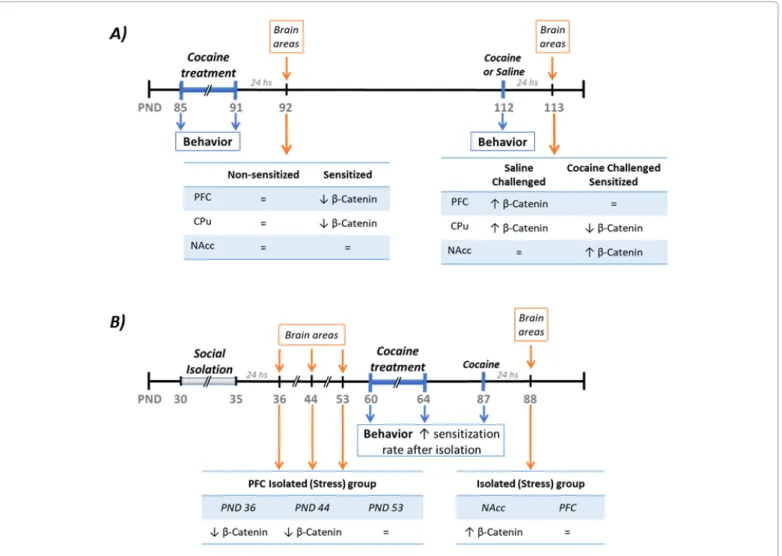
(5) J Add Pre Med. ISSN: 2474-5049. then cocaine is not able to induce development or expression of sensitization. Furthermore, only the inhibition of the pathway in the PFC (by Sulindac infusion) exacerbates the development of sensitization, while no effect was found with Sulindac infusions in the CPu. Keeping all these results in mind, we postulate that the initial inhibition of the canonical Wnt pathway induced by chronic cocaine in the PFC results in dramatic changes in the expression of different target proteins of the pathway, altering the communication between the PFC and the NAcc. This modification in the circuitry would be related, after a withdrawal period, with the changes in the pathway´s activity in the NAcc and also with the behavioral response induced by a cocaine challenge.. Long-Term Impact of Adolescent Social Isolation on Cocaine-Induced Motor Activity: Possible Role of the Wnt Canonical Pathway. It has been shown that previous exposure to stressful situations during adulthood induced sensitization to the psychostimulant effects of amphetamine and cocaine, an effect mediated by an interaction between dopaminergic and glutamatergic neurotransmission in the NAcc [26,50,63,64]. However, the longterm consequences of adolescence stress exposure are less known. Recently our lab showed that five days of social isolation during adolescence (PND 30–35) increase the impact of cocaineinduced sensitization during adulthood when compared to non-. Vol. 2. Issue. 2. 2000112. isolated animals [65,66]. Specifically, we found that in the group isolated during adolescence the exposure to a cocaine treatment -characterized by a lower total dose of cocaine compared with the one used before in [42,43]- induced a higher rate of behavioral sensitization during adulthood. Moreover, we found that this increase in the rate of sensitization is related to an upregulation in the activity of the Wnt/β-catenin pathway in the NAcc measured the day after the last cocaine injection, but with no changes in the PFC. Interestingly, we also found that adolescent social isolation by itself alters the expression of Wnt canonical pathway effectors in the PFC. Specifically, β-catenin level is decreased while GSK3β activity is increased in the PFC for at least 10 days after the isolation, suggesting that social isolation induces a long-lasting decrease in Wnt canonical pathway activity [66].. Adolescent Social Isolation and Cocaine Share a LongTerm Impact on Wnt Canonical Pathway. The stress-induced changes on the canonical pathway mentioned above resemble the ones induced by a cocaine treatment the day after the last cocaine injection in sensitized animals [43]. Furthermore, in the case of cocaine-induced sensitization, we suggested that decreased activity in the PFC has a long-term impact on the motivational circuit that allows the expression of cocaine sensitization (Figure 2A). In line with these hypotheses, we proposed that the exacerbation of cocaine sensitization in previously isolated adults compared to non-stressed animals might be linked to the. Figure 2: Schematic summary of the experimental procedures as well as the results. A) Summary of cocaine-induced sensitization and the changes in β-catenin levels found at the different time points. B) Summary of isolation experimental procedure as well as the cocaine sensitization paradigm use after isolation. The changes in levels β-catenin levels found at the different time points are also described. Citation: Cuesta S, Pacchioni AM (2017) Are Changes in the Wnt/β-Catenin Pathway Involved in Cocaine and Stress-Induced Long-Term Neuroadaptations?. J Add Pre Med 2(2): 112.. Page 5 of 8.
(6) J Add Pre Med. ISSN: 2474-5049. reduction in the Wnt/β-catenin pathway activity in the PFC found 24hs after five days of isolation (Figure 2B). While this is the first demonstration that previous stress exposure has a long-lasting effect on the activity of the pathway, which may exacerbate the impact of cocaine later in life, it is not the first evidence that shows the Wnt pathway in the NAcc is associated to stress responses [67]. Therefore, we postulate that the Wnt/β-catenin pathway is another molecular mechanism that can be incorporated into the mounting evidence that supports the interchangeability between stress and drug effects. Importantly, we suggest that the canonical Wnt pathway should be considered as a mechanism involved in the individual vulnerability to drug effects.. Conclusions. Since locomotor sensitization in rodents seems to share plastic mechanisms with drug addiction in humans, and corresponds to aspects of drug abuse such as initiation and compulsive drugseeking behavior (for review see [1]), our findings suggest that the Wnt canonical pathway may be involved in the early stages as well as in relapse of substance abuse. Furthermore, we find that this pathway may represent a common target for the long-term effects of adolescent stress and the increase in the vulnerability to drug abuse later in life. Although one must always be wary of extrapolating clinical relevance from animal data, the considerations discussed above suggest that the Wnt pathway constitutes a promising target for the development of a treatment for addiction. Consequently, our findings may open a door to new therapeutic strategies for the treatment of cocaine addiction.. Acknowledgements. The authors thank Florencia Cerchiara for her English technical assistance.. Conflict of Interest. The authors declared there is no conflict of interest.. References. 1. Steketee JD, Kalivas PW. Drug wanting: behavioral sensitization and. relapse to drug-seeking behavior. Pharmacol Rev. 2011;63(2):348–65. doi: 10.1124/pr.109.001933.. 2. Stewart J, Badiani A. Tolerance and sensitization to the behavioral effects of drugs. Behav Pharmacol. 1993;4(4):289–312.. 3. Vanderschuren LJ, Kalivas PW. Alterations in dopaminergic and glutamatergic transmission in the induction and expression of behavioral sensitization: a critical review of preclinical studies. Psychopharmacology (Berl). 2000;151(2-3):99–120.. 4. Thomas MJ, Kalivas PW, Shaham Y. Neuroplasticity in the mesolimbic dopamine system and cocaine addiction. Br J Pharmacol. 2008;154(2):327–42. doi: 10.1038/bjp.2008.77.. 5. Schenk S, Snow S. Sensitization to cocaine’s motor activating properties produced by electrical kindling of the medial prefrontal cortex but not of the hippocampus. Brain Res. 1994;659(1-2):17–22.. Vol. 2. Issue. 2. 2000112. excitatory amino acid transmission in the nucleus accumbens only in rats having developed behavioral sensitization. J Neurosci. 1996;16(4):1550–60.. 10. Boudreau AC, Wolf ME, Behavioral sensitization to cocaine is associated with increased AMPA receptor surface expression in the nucleus accumbens. J Neurosci. 2005;25(40):9144–51.. 11. Williams JM, Steketee JD. Time-dependent effects of repeated cocaine administration on dopamine transmission in the medial prefrontal cortex. Neuropharmacology. 2005;48(1):51–61.. 12. Liu K, Steketee JD. Repeated exposure to cocaine alters medial prefrontal cortex dopamine D-like receptor modulation of glutamate and dopamine neurotransmission within the mesocorticolimbic system. J Neurochem. 2011;119(2):332–41. doi: 10.1111/j.1471-4159.2011.07362.x.. 13. Nogueira L, Kalivas PW, Lavin A. Long-term neuroadaptations produced by withdrawal from repeated cocaine treatment: role of dopaminergic receptors in modulating cortical excitability. J Neurosci. 2006;26(47):12308–13. doi: 10.1523/JNEUROSCI.3206-06.2006. 14. Kroener S, Lavin A. Altered dopamine modulation of inhibition in the prefrontal cortex of cocaine-sensitized rats. Neuropsychopharmacology. 2010;35(11):2292-304. doi: 10.1038/npp.2010.107. 15. Baker DA, McFarland K, Lake RW, Shen H, Toda S, Kalivas PW. N-acetyl cysteine-induced blockade of cocaine-induced reinstatement. Ann N Y Acad Sci. 2003;1003:349–51.. 16. Cornish JL, Kalivas PW. Glutamate Transmission in the Nucleus Accumbens Mediates Relapse in Cocaine Addiction. J Neurosci. 2000;20(15):RC89. 17. Wolf ME, Ferrario CR. AMPA receptor plasticity in the nucleus accumbens after repeated exposure to cocaine. Neurosci Biobehav Rev. 2010;35(2):185–211. doi: 10.1016/j.neubiorev.2010.01.013.. 18. Boudreau AC, Reimers JM, Milovanovic M, Wolf ME. Cell surface AMPA receptors in the rat nucleus accumbens increase during cocaine withdrawal but internalize after cocaine challenge in association with altered activation of mitogen-activated protein kinases. J Neurosci. 2007;27(39):10621–35. doi: 10.1523/JNEUROSCI.2163-07.2007. 19. Kourrich S, Rothwell PE, Klug JR, Thomas MJ. Cocaine experience controls bidirectional synaptic plasticity in the nucleus accumbens. J Neurosci. 2007;27(30):7921–8. doi: 10.1523/JNEUROSCI.1859-07.2007.. 20. Robinson TE, Kolb B. Structural plasticity associated with exposure to drugs of abuse. Neuropharmacology. 2004;47 Suppl 1:33–46. doi: 10.1016/j.neuropharm.2004.06.025.. 21. Shen HW, Gipson CD, Huits M, Kalivas PW. Prelimbic cortex and ventral tegmental area modulate synaptic plasticity differentially in nucleus accumbens during cocaine-reinstated drug seeking. Neuropsychopharmacology. 2014;39(5):1169–77. doi: 10.1038/ npp.2013.318. 22. Shen HW, Toda S, Moussawi K, Bouknight A, Zahm DS, Kalivas PW. Altered dendritic spine plasticity in cocaine-withdrawn rats. J Neurosci. 2009;29(9):2876–84. doi: 10.1523/JNEUROSCI.5638-08.2009. 23. Russo SJ, Dietz DM, Dumitriu D, Morrison JH, Malenka RC, Nestler EJ. The addicted synapse: mechanisms of synaptic and structural plasticity in nucleus accumbens. Trends Neurosci. 2010;33(6):267–76. doi: 10.1016/j.tins.2010.02.002.. 6. Tzschentke TM, Schmidt WJ. The development of cocaine-induced behavioral sensitization is affected by discrete quinolinic acid lesions of the prelimbic medial prefrontal cortex. Brain Res. 1998;795(1-2):71–6.. 24. Toda S, Shen H, Kalivas PW. Inhibition of actin polymerization prevents cocaine-induced changes in spine morphology in the nucleus accumbens. Neurotox Res. 2010;18(3-4):410–5. doi: 10.1007/s12640-010-9193-z.. 8. Li Y, Hu XT, Berney TG, Vartanian AJ, Stine CD, Wolf ME, et al. Both glutamate receptor antagonists and prefrontal cortex lesions prevent induction of cocaine sensitization and associated neuroadaptations. Synapse. 1999;34(3):169–80.. 26. Díaz-Otañez CS, Capriles NR, Cancela LM. D1 and D2 dopamine and opiate receptors are involved in the restraint stress-induced sensitization to the psychostimulant effects of amphetamine. Pharmacol Biochem Behav. 1997;58(1):9–14.. 7. Beyer CE, Steketee JD. Dopamine depletion in the medial prefrontal cortex induces sensitized- like behavioral and neurochemical responses to cocaine. Brain Res. 1999;833(2):133–41.. 9. Pierce RC, Bell K, Duffy P, Kalivas PW. Repeated cocaine augments. 25. Toda S, Shen HW, Peters J, Cagle S, Kalivas PW. Cocaine increases actin cycling: effects in the reinstatement model of drug seeking. J Neurosci. 2006;26(5):1579–87. doi: 10.1523/JNEUROSCI.4132-05.2006.. 27. Miczek KA, Yap JJ, Covington HE 3rd. Social stress, therapeutics and drug. Citation: Cuesta S, Pacchioni AM (2017) Are Changes in the Wnt/β-Catenin Pathway Involved in Cocaine and Stress-Induced Long-Term Neuroadaptations?. J Add Pre Med 2(2): 112.. Page 6 of 8.
(7) J Add Pre Med. ISSN: 2474-5049. abuse: preclinical models of escalated and depressed intake. Pharmacol Ther. 2008;120(2):102–28. doi: 10.1016/j.pharmthera.2008.07.006.. 28. Salinas PC. Wnt signaling in the vertebrate central nervous system: from axon guidance to synaptic function. Cold Spring Harb Perspect Biol. 2012;4(2). pii: a008003. doi: 10.1101/cshperspect.a008003.. 29. Logan CY, Nusse R.The Wnt signaling pathway in development and disease. Annu Rev Cell Dev Biol. 2004;20:781–810. doi: 10.1146/ annurev.cellbio.20.010403.113126. 30. Lu W, Yamamoto V, Ortega B, Baltimore D. Mammalian Ryk is a Wnt coreceptor required for stimulation of neurite outgrowth. Cell. 2004;119(1):97–108. doi: 10.1016/j.cell.2004.09.019.. 31. Hayashi Y, Hirotsu T, Iwata R, Kage-Nakadai E, Kunitomo H, Ishihara T, et al. A trophic role for Wnt-Ror kinase signaling during developmental pruning in Caenorhabditis elegans. Nat Neurosci. 2009;12(8):981–7. doi: 10.1038/nn.2347. 32. Ciani L, Salinas PC. WNTs in the vertebrate nervous system: from patterning to neuronal connectivity. Nat Rev Neurosci. 2005;6(5):351– 62.. 33. Metcalfe C, Bienz M. Inhibition of GSK3 by Wnt signalling--two contrasting models. J Cell Sci. 2011;124(Pt 21):3537–44. doi: 10.1242/ jcs.091991.. 34. Maguschak KA, Ressler KJ. The dynamic role of beta-catenin in synaptic plasticity. Neuropharmacology. 2012;62(1):78–88. doi: 10.1016/j. neuropharm.2011.08.032.. 35. Bafico A, Liu G, Yaniv A, Gazit A, Aaronson SA. Novel mechanism of Wnt signalling inhibition mediated by Dickkopf-1 interaction with LRP6/ Arrow. Nat Cell Biol. 2001;3(7):683–6. doi: 10.1038/35083081. 36. De Ferrari GV, Inestrosa NC. Inestrosa, Wnt signaling function in Alzheimer’s disease. Brain Res Brain Res Rev. 2000;33(1):1–12.. 37. Kozlovsky N, Belmaker RH, Agam G. GSK-3 and the neurodevelopmental hypothesis of schizophrenia. Eur Eur Neuropsychopharmacol. 2002;12(1):13–25.. 38. Alimohamad H, Rajakumar N, Seah YH, Rushlow W. Antipsychotics alter the protein expression levels of beta-catenin and GSK-3 in the rat medial prefrontal cortex and striatum. Biol Psychiatry. 2005;57(5):533–42.. 39. Perrine SA, Miller JS, Unterwald EM. Cocaine regulates protein kinase B and glycogen synthase kinase-3 activity in selective regions of rat brain. J Neurochem. 2008;107(2):570–7. doi: 10.1111/j.14714159.2008.05632.x. 40. Miller JS, Barr JL, Harper LJ, Poole RL, Gould TJ, Unterwald EM. The GSK3 signaling pathway is activated by cocaine and is critical for cocaine conditioned reward in mice. PLoS One. 2014;9(2):e88026. doi: 10.1371/ journal.pone.0088026. 41. Miller JS, Tallarida RJ, Unterwald EM. Unterwald, Cocaineinduced hyperactivity and sensitization are dependent on GSK3. Neuropharmacology. 2009;56(8):1116–23. doi: 10.1016/j. neuropharm.2009.03.006.. 42. Cuesta S, Batuecas J, Severin MJ, Funes A, Rosso SB, Pacchioni AM. Role of Wnt/beta-catenin pathway in the nucleus accumbens in long-term cocaine-induced neuroplasticity: a possible novel target for addiction treatment. J Neurochem. 2017;140(1):114–125. doi: 10.1111/jnc.13863. 43. Cuesta S, Severin MJ, Batuecas J, Rosso SB, Pacchioni AM. Wnt/betacatenin pathway in the prefrontal cortex is required for cocaine-induced neuroadaptations. Addict Biol. 2017;22(4):933–945. doi: 10.1111/ adb.12377. 44. Stambolic V, Ruel L, Woodgett JR. Lithium inhibits glycogen synthase kinase-3 activity and mimics wingless signalling in intact cells. Curr Biol. 1996;6(12):1664–8.. 45. Lee HJ, Wang NX, Shi DL, Zheng JJ. Sulindac inhibits canonical Wnt signaling by blocking the PDZ domain of the protein Dishevelled. Angew Chem Int Ed Engl. 2009;48(35):6448–52. doi: 10.1002/anie.200902981.. 46. Alimohamad H, Sutton L, Mouyal J, Rajakumar N, Rushlow WJ. The. Vol. 2. Issue. 2. 2000112. effects of antipsychotics on beta-catenin, glycogen synthase kinase-3 and dishevelled in the ventral midbrain of rats. J Neurochem. 2005;95(2):513–25. doi: 10.1111/j.1471-4159.2005.03388.x.. 47. Sutton LP, Honardoust D, Mouyal J, Rajakumar N, Rushlow WJ. Activation of the canonical Wnt pathway by the antipsychotics haloperidol and clozapine involves dishevelled-3. J Neurochem. 2007;102(1):153–69. doi: 10.1111/j.1471-4159.2007.04527.x. 48. Peng YR, He S, Marie H, Zeng SY, Ma J, Tan ZJ, et al. Coordinated changes in dendritic arborization and synaptic strength during neural circuit development. Neuron. 2009;61(1):71–84. doi: 10.1016/j. neuron.2008.11.015. 49. Kalivas PW, Volkow ND. New medications for drug addiction hiding in glutamatergic neuroplasticity. Mol Psychiatry. 2011;16(10):974–86. doi: 10.1038/mp.2011.46.. 50. Pacchioni AM, Cador M, Bregonzio C, Cancela LM. A glutamate-dopamine interaction in the persistent enhanced response to amphetamine in nucleus accumbens core but not shell following a single restraint stress. Neuropsychopharmacology. 2007;32(3):682–92.. 51. Galli S, Lopes DM, Ammari R, Kopra J, Millar SE, Gibb A, et al. Deficient Wnt signalling triggers striatal synaptic degeneration and impaired motor behaviour in adult mice. Nat Commun. 2014;5:4992. doi: 10.1038/ncomms5992. 52. Ahmad-Annuar A, Ciani L, Simeonidis I, Herreros J, Fredj NB, Rosso SB, et al. Signaling across the synapse: a role for Wnt and Dishevelled in presynaptic assembly and neurotransmitter release. J Cell Biol. 2006;174(1):127–39. doi: 10.1083/jcb.200511054.. 53. Henry DJ, White FJ. Repeated cocaine administration causes persistent enhancement of D1 dopamine receptor sensitivity within the rat nucleus accumbens. J Pharmacol Exp Ther. 1991;258(3):882–90.. 54. White FJ. Neurophysiological alterations in the mesocorticolimbic dopamine system during repeated cocaine administration. In Hammer R, Editor. The Neurobiology of Cocaine Addiction. Boca Raton: CRC Press; 1995. p.99–120. 55. Kalivas PW, Duffy P. Time course of extracellular dopamine and behavioral sensitization to cocaine. I. Dopamine axon terminals. J Neurosci. 1993;13(1):266–75.. 56. Williams JE, Wieczorek W, Willner P, Kruk ZL. Parametric analysis of the effects of cocaine pretreatment on dopamine release in nucleus accumbens measured by fast cyclic voltammetry. Brain Res. 1995;678(12):225–32.. 57. Yu Y, Wang JR, Sun PH, Guo Y, Zhang ZJ, Jin GZ, et al. Neuroprotective effects of atypical D1 receptor agonist SKF83959 are mediated via D1 receptordependent inhibition of glycogen synthase kinase-3 beta and a receptorindependent anti-oxidative action. J Neurochem. 2008;104(4):946–56. doi: 10.1111/j.1471-4159.2007.05062.x. 58. Thomas MJ, Beurrier C, Bonci A, Malenka RC. Long-term depression in the nucleus accumbens: a neural correlate of behavioral sensitization to cocaine. Nat Neurosci. 2001;4(12):1217–23.. 59. Nader MA, Morgan D, Gage HD, Nader SH, Calhoun TL, Buchheimer N, et al. PET imaging of dopamine D2 receptors during chronic cocaine self-administration in monkeys. Nat Neurosci. 2006;9(8):1050–6. doi: 10.1038/nn1737.. 60. Min C, Cho DI, Kwon KJ, Kim KS, Shin CY, Kim KM. Novel regulatory mechanism of canonical Wnt signaling by dopamine D2 receptor through direct interaction with beta-catenin. Mol Pharmacol. 2011;80(1):68–78. doi: 10.1124/mol.111.071340.. 61. Goentoro L, Kirschner MW. Evidence that fold-change, and not absolute level, of beta-catenin dictates Wnt signaling. Mol Cell. 2009;36(5):872– 84. doi: 10.1016/j.molcel.2009.11.017. 62. Can A, Frost DO, Cachope R, Cheer JF, Gould TD. Chronic Lithium Treatment Rectifies Maladaptive Dopamine Release in the Nucleus Accumbens. J Neurochem. 2016;139(4):576–585. doi: 10.1111/ jnc.13769.. Citation: Cuesta S, Pacchioni AM (2017) Are Changes in the Wnt/β-Catenin Pathway Involved in Cocaine and Stress-Induced Long-Term Neuroadaptations?. J Add Pre Med 2(2): 112.. Page 7 of 8.
(8) J Add Pre Med. ISSN: 2474-5049. 63. Garcia-Keller C, Martinez SA, Esparza MA, Bollati F, Kalivas PW, Cancela LM. Cross-sensitization between cocaine and acute restraint stress is associated with sensitized dopamine but not glutamate release in the nucleus accumbens. Eur J Neurosci. 2013;37(6):982–95. doi: 10.1111/ejn.12121. 64. Capriles N, Cancela LM. Effect of acute and chronic stress restraint on amphetamine-associated place preference: involvement of dopamine D(1) and D(2) receptors. Eur J Pharmacol. 1999;386(2-3):127–34. 65. Biolatto S, Cuesta S, Pacchioni AM. Social Isolation during adolescence enhanced cocaine stimulant effects in youth rats. in XXVI Reunión Anual de la Soc. Arg. de Inv. en Neurociencia (SAN). 2011. Huerta Grande, Córdoba.. Vol. 2. Issue. 2. 2000112. 66. Cuesta S, et al. Adolescent social isolation enhanced the rewarding effects of cocaine in adulthood while environmental enrichment reversed them: involvement of the Wnt/β-catenin pathway, in To be submitted to Psychopharmacology July 2017. 67. Wilkinson MB, Dias C, Magida J, Mazei-Robison M, Lobo M, Kennedy P, et al. A novel role of the WNT-dishevelled-GSK3beta signaling cascade in the mouse nucleus accumbens in a social defeat model of depression. J Neurosci. 2011;31(25):9084–92. doi: 10.1523/ JNEUROSCI.0039-11.2011.. Corresponding authors: Alejandra M. Pacchioni, Area Toxicologia, Departamento de Ciencias de los Alimentos y del Medioambiente, Facultad de Ciencias Bioquímicas y Farmacéuticas, Universidad Nacional de Rosario. Suipacha 531, (2000) Rosario, Santa Fe, Argentina, E-mail: [email protected] Received Date: July 26, 2016, Accepted Date: September 18, 2017, Published Date: October 03, 2017.. Copyright: © 2017 Cuesta S, et al. This is an open access article distributed under the Creative Commons Attribution License, which permits unrestricted use, distribution, and reproduction in any medium, provided the original work is properly cited.. Citation: Cuesta S, Pacchioni AM (2017) Are Changes in the Wnt/β-Catenin Pathway Involved in Cocaine and Stress-Induced Long-Term Neuroadaptations?. J Add Pre Med 2(2): 112.. Citation: Cuesta S, Pacchioni AM (2017) Are Changes in the Wnt/β-Catenin Pathway Involved in Cocaine and Stress-Induced Long-Term Neuroadaptations?. J Add Pre Med 2(2): 112.. Page 8 of 8.
(9)
Figure
Documento similar