
TítuloMorbidity and medication consumption among users of home telecare services
16
0
0
Texto completo
(2) be provided by the family circle through ‘informal caregivers’. In Spain, 32% of the population over 65 have some type of disability, and among them, 55.8% are dependent on others to perform daily activities (Spanish Statistical Office [Instituto Nacional de Estadística] 2008). This increase in terms of the number, health status and life expectancy of older people, coupled with the decrease in the number of families with the financial capacity to pay for care, has resulted in and will continue to result in significant consequences for socioeconomic and health factors. Therefore, both the public and private sectors have sought to develop formulas that, as far as possible, help to alleviate the current needs and to plan for the near future given that ‘prevention is better than cure’; such prevention is the aim of telecare (Brown 2003). In this sense, in the early 1990s, and as a result of the evolution of the new technologies applied (Valero et al. 2007), telecare and telehealth services arose. These services have evolved considerably from the first generation to the third generation (Kubitschke et al. 2010, Parker & Hawley 2013). Sixsmith et al. (2007) define the telecare classifications as follows: A ‘first generation’ of telecare refers to community alarms that are widely used by elderly and vulnerable individuals to raise an alert when assistance is required. The ‘second generation’ includes smart sensors that incorporate a degree of intelligence to monitor and interpret a person's movements and automatically raise an alarm even if the person is incapacitated and unable to do it himself. The ‘third generation’ involves intelligence within non-PC products and devices so that everyday appliances and electronic environments can communicate with each other and transform digital technology into an integral and intuitive part of daily life. As a consequence of this evolution, telecare service has become a home support system (Barlow et al. 2007, Botsis et al. 2008, Daniel et al. 2009, Milligan et al. 2011, Parker & Hawley 2013, Sintonen & Immonen 2013). Based on the portfolio of services offered, call receivers try to meet the current need by themselves or by mobilising other human or material resources (Galimany-Masclans et al. 2011), providing obvious benefits to the user (i.e. quality of life), informal caregiver (i.e. providing reassurance), professional caregiver (i.e. additional options for care), statutory services (i.e. avoidance of hospital admission), industry (i.e. new market opportunities) and government (i.e. save money associated with care; Audit Commission, 2004; Davies et al. 2013). Furthermore, such services provide benefits to healthcare systems in the sense of decreasing service demand and hospital institutionalisations (Department of Health, 2011). More financial support will be necessary to enhance the introduction of new telecare services for the care of elderly people while bearing in mind the fact that future success will depend on new technologies’ ability to support family caregivers, as opposed to replacing them (Callan & O'Shea 2015). The user has to make a ‘cost–benefit’ analysis by considering that there could be a loss of privacy but gains in mobility, safety, self-determination and empowerment (Melander-Wikman et al. 2008). At the European level, Spain (791,180 users; IMSERSO 2014) is among the countries with an estimated moderate take-up level (first generation), including France and Italy, among others (1– 3% of older people). Coverage is high in Denmark and Finland (6–10%) and very high (14–16%) in the United Kingdom and Ireland; by contrast, it is low (<1%) in Portugal and Belgium, among others. The forecasts are that the potential market for telecare and telehealth services will experience substantial growth in Europe in the coming years (Kubitschke et al. 2010). New technologies can be viewed as simply another resource to be employed alongside family and friends, community organisations and local media. Furthermore, such technologies have the ability to rapidly create local, national and global networks around specific issues that may provoke a radical shift in the way health systems function (Lucas 2008). In this sense, a number of previous reviews have examined the beneficial aspects of telecare and telehealth from the economic point of view, but few have focused specifically on the users’ characteristics to describe who actually uses telecare services analysing a large sample size. This is in line with research by Finch et al. (2007), suggesting that if telehealth care is to become patientcentred, knowledge of users’ priorities and preferences is needed. Besides, in the present study, we will quantify the magnitude of differences (effect size) found between the groups to establish the power to support our hypothesis. Therefore, the objective of this work was to define the health.
(3) profile and to examine the gender and age differences of the users of a first-generation telecare public service to deepen our knowledge of their health status, which will enable telecare developers to acquire a detailed understanding of the users’ needs.. Methods Study design and participants A retrospective, cross-sectional, descriptive study was conducted between March and September 2012 with a sample of older people aged 65 years and over who used a first-generation telecare service provided by the A Coruña City Council as a concerted entity. To be eligible, from the 850 telecare users, potential participants had to fulfil the inclusion criteria defined in Figure 1. A Coruña is the second largest city in Galicia (in north-western Spain). Participants were all users registered in the service database before the end of the data collection period (1 September 2012).. Figure 1. Flow chart, study protocol. EphMRA, European Pharmaceutical Marketing Research Association..
(4) Ethics approval for the study was obtained by the Ethics Committee of the participating university, and the study conforms to the Declaration of Helsinki, which requires all users to sign informed consent forms, being completed during the telecare registration process. Service description The service, first-generation telecare operating 24 hours per day and 365 days per year, consists of a telephone signal transmitter/receiver unit and a button (pendant or bracelet) that the user carries at all times. If help is needed, the user presses the button and a telephone call is established with a control centre that identifies the user and visualises the registered data to diagnose the current situation and its urgency and mobilise the required resources. On a regular basis, the service calls the user to monitor the user's state. Data collection and instruments The data for this study were collected from the telecare registration programme (Figure 1). Users’ information was entered by a social worker (personal and sociodemographic data) and by their general practitioner (health data). Personal and sociodemographic data included age, sex and family arrangements (the person lives alone, lives with relatives or does not live with relatives, missing data: 11/742 cases, 1.5%). Health data were also gathered, such as clinical diagnosis [missing data: between 10.4% (77/742 cases) and 11.7% (87/742 cases)], medication consumption (missing data: 21/742 cases, 2.8%), fall history (missing data: 40/742 cases, 5.4%) and presence of disability (missing data: 333/742 cases, 44.9%) and/or dependence (missing data: 289/742 cases, 38.9%). Missing data were due to incomplete or poor information in the telecare registration programme. Clinical diagnoses were coded according to the Charlson comorbid diseases (Charlson et al. 1987), a method of classifying prognostic comorbidity in a geriatric population. We used a proxy (Gutiérrez-Misis et al. 2012) of the Charlson comorbidity index (CCI) to include myocardial infarct and congestive heart failure into one category: coronary heart disease. In addition, other prevalent diagnoses were included: hypertension, rheumatic disorders (osteoporosis and arthrosis), anxiety-depressive symptoms, dizziness/vertigo and digestive problems. The medications that participants consumed were classified according to the Anatomical Classification of Pharmaceutical Products developed by the EphMRA (2014). This classification includes 16 main divisions: Alimentary tract and metabolism; Blood and blood-forming organs; Cardiovascular system; Dermatologicals; Genito-urinary system and sex hormones; Systemic hormonal preparations (excluding sex hormones); General anti-infectives systemic; Hospital solutions; Antineoplastic and immunomodulating agents; Musculo-skeletal system; Nervous system; Parasitology; Respiratory system; Sensory organs; Diagnostic agents; and Various. Polypharmacy or polymedication was defined as the concomitant use of five or more different prescription medications (Gnjidic et al. 2012). To determine the risk of falls, the Downton Index (Downton 1993) was completed for every user based on data obtained from the register. This scale incorporates aspects referring to five situations: existence of a past history of falls, medication consumption, sensory deficits, mental status and ability to walk. Scores range from 0 to 11, with a score of 3 or more indicating a high risk of falls..
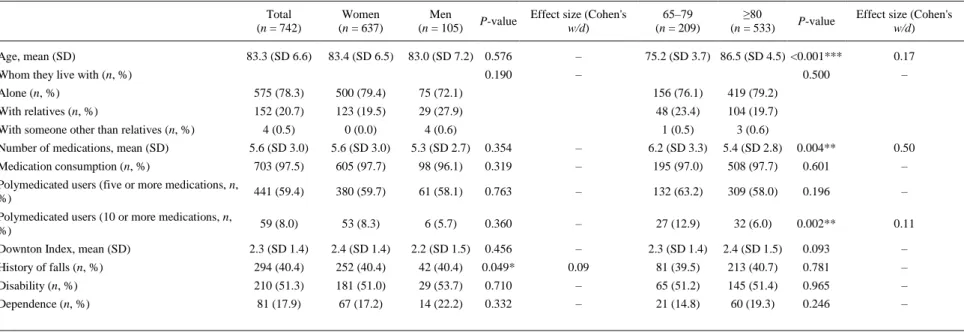
(5) Data analysis The software package IBM SPSS Statistics v.21.0 was used for data analysis. Quantitative variables were expressed as the mean and standard deviation (SD). Qualitative variables were expressed through frequency tables in absolute values and percentages. Between-group comparisons were made using a chi-square test for categorical variables and a Student's t-test for continuous variables. For proportions, Cohen's w values were reported as indicators of effect size (ES) and calculated as the square root of the ratio of the square of Pearson's contingency coefficient divided by one minus that square. We interpreted the importance of the ES using the benchmarks for ‘small ES’ (w = 0.1), ‘medium ES’ (w = 0.3) and ‘large ES’ (w = 0.5) for measuring the distance between unpaired proportions. Effect sizes for continuous variables are reported in terms of Cohen's d using the benchmarks for ‘small ES’ (d = 0.2), ‘medium ES’ (d = 0.5) and ‘large ES’ (d = 0.8). Both ES were proposed by Cohen (1988). For the independent variable age, two intervals (65–79 years vs. extremely elderly individual aged ≥80 years) were established based on population projections indicating that the number of extremely elderly octogenarians or older is rising quickly and the capacity at age 65 is very different from that at 80 (WHO 2015). For the independent variable, sex, masculine and feminine were used as references based on the expected results. A multiple forward stepwise logistic regression analysis (Wald method) was performed to identify which independent variables [19 reported diseases – 14 from the CCI: coronary heart disease (including both myocardial infarct and congestive heart failure), peripheral vascular disease, cerebrovascular disease, dementia, chronic pulmonary disease, connective tissue disease, ulcer disease, mild liver disease, diabetes, hemiplegia, moderate or severe renal disease, diabetes with end-organ damage, any tumour, and moderate or severe liver disease; and 5 prevalent diagnoses – hypertension, rheumatic disorders, anxiety-depressive symptoms, dizziness/vertigo and digestive problems] modified the presence of polymedication. Three models were developed in the analysis: the first model included all the samples; the second model included only women; and the third model included only men. Odds ratios (OR) and 95% confidence intervals (CI) were calculated for each covariate included in the model. The level of significance was set to P < 0.05.. Results A total of 742 telecare users (85.3% of all users) were included in the study. The participants had a mean length of use of 4 years, 11 months and 16 days from the activation of the service. Table 1 shows the sociodemographic characteristics, medication consumption, Downton index and presence of disability and/or dependence of the participants. The mean age was 83.3 (SD 6.6) years, and 85.8% of the participants were women. Of all subjects, 78.3% lived alone; 97.5% consumed at least one medication per day, with an average of 5.6 (SD 3.0) medications per day. Furthermore, of the subjects, 59.4% consumed five or more different medications per day and 8.0% consumed 10 or more. A significant association (P = 0.004) was found between the number of medications consumed per day and age group..
(6) Table 1. Sociodemographic characteristics, medication consumption, Downton Index and presence of disability and/or dependence according to sex and age categorised into two groups (65–79 years and ≥80 years). Age, mean (SD). Total (n = 742). Women (n = 637). 83.3 (SD 6.6). 83.4 (SD 6.5). Men (n = 105). P-value. Effect size (Cohen's w/d). 83.0 (SD 7.2) 0.576. –. 0.190. –. Whom they live with (n, %). 65–79 (n = 209). ≥80 (n = 533). P-value. 75.2 (SD 3.7) 86.5 (SD 4.5) <0.001***. Effect size (Cohen's w/d) 0.17. 0.500. –. Alone (n, %). 575 (78.3). 500 (79.4). 75 (72.1). 156 (76.1). 419 (79.2). With relatives (n, %). 152 (20.7). 123 (19.5). 29 (27.9). 48 (23.4). 104 (19.7). 4 (0.5). 0 (0.0). 4 (0.6). 1 (0.5). 3 (0.6). 5.6 (SD 3.0). 5.6 (SD 3.0). 5.3 (SD 2.7). 0.354. –. 6.2 (SD 3.3). 5.4 (SD 2.8). 0.004**. 0.50. Medication consumption (n, %). 703 (97.5). 605 (97.7). 98 (96.1). 0.319. –. 195 (97.0). 508 (97.7). 0.601. –. Polymedicated users (five or more medications, n, %). 441 (59.4). 380 (59.7). 61 (58.1). 0.763. –. 132 (63.2). 309 (58.0). 0.196. –. Polymedicated users (10 or more medications, n, %). 59 (8.0). 53 (8.3). 6 (5.7). 0.360. –. 27 (12.9). 32 (6.0). 0.002**. 0.11. With someone other than relatives (n, %) Number of medications, mean (SD). 2.3 (SD 1.4). 2.4 (SD 1.4). 2.2 (SD 1.5). 0.456. –. 2.3 (SD 1.4). 2.4 (SD 1.5). 0.093. –. History of falls (n, %). 294 (40.4). 252 (40.4). 42 (40.4). 0.049*. 0.09. 81 (39.5). 213 (40.7). 0.781. –. Disability (n, %). 210 (51.3). 181 (51.0). 29 (53.7). 0.710. –. 65 (51.2). 145 (51.4). 0.965. –. Dependence (n, %). 81 (17.9). 67 (17.2). 14 (22.2). 0.332. –. 21 (14.8). 60 (19.3). 0.246. –. Downton Index, mean (SD). *P < 0.05; **P < 0.01; ***P < 0.001 (t-test for means and χ2 for percentages)..
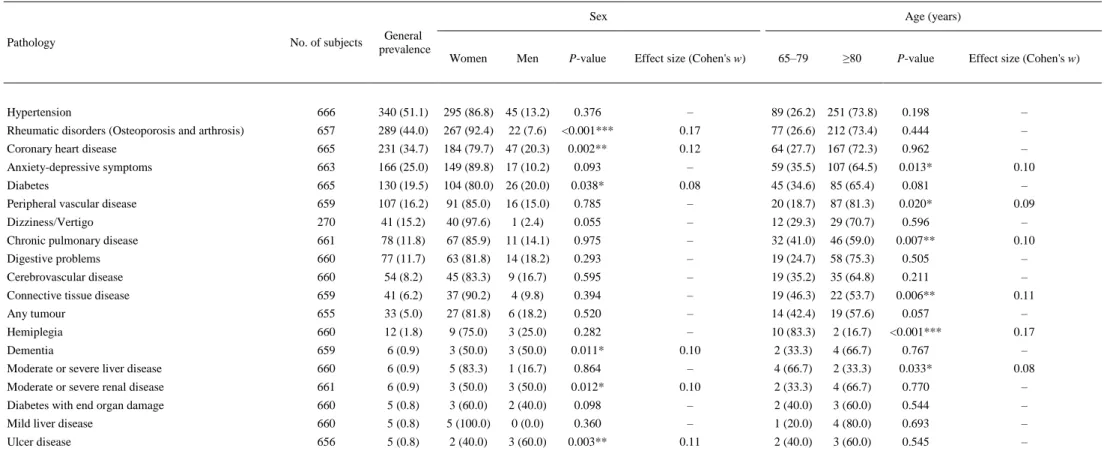
(7) The mean score of the Downton index was 2.3 (SD 1.4). Users with a risk of falls or who had already fallen represented 40.4% of the total. Among these users, both genders reported a similar number of previous falls (40.4%) and this relationship between sex and history/risk of falls was significant (P = 0.049). Based on the calculation of the risk of falls with the Downton Fall Risk Index, subjects at severe risk of falling represented 41.7% of the sample, and disabled people presented a 2.4 times (95% CI, 1.61–3.64) higher risk of falling (P < 0.001). Of the participants, 51.3% had some type of disability, with physical disability being the most common type. Moreover, 17.9% of the sample depended on others to carry out at least one basic activity of daily living. There were no significant differences in the variables between the genders. With regard to medical diagnosis, the mean CCI score was 1.1 (SD 1.1). Of the sample, 68.2% did not have a comorbid condition (CCI = 0), 21.1% had a low level of comorbidity (CCI = 2) and 10.6% had a high level of comorbidity (CCI ≥ 3). Table 2 shows the most frequent diagnosis according to sex and age group (65–79 vs. ≥80) and their possible association. The most frequently reported pathology was hypertension (HTN) (51.1%), followed by rheumatic disorders (44%) and coronary heart disease (34.7%). An association was found between masculine gender and coronary heart disease (P = 0.002), dementia (P = 0.011), ulcer disease (P = 0.003), diabetes (P = 0.038) and moderate or severe renal disease (P = 0.012) and between feminine gender and rheumatic disorders (P < 0.001). A significant association was found between the age groups and the medical diagnosis. Peripheral vascular disease (P = 0.020) increased with age, while anxiety-depressive symptoms (P = 0.013), chronic pulmonary disease (P = 0.007), connective tissue disease (P = 0.006), hemiplegia (P < 0.001) and moderate or severe liver disease (P = 0.033) showed a decreasing trend. However, the clinical significance of these results was low or very low, with small to very small effect sizes (Cohen's w values)..
(8) Table 2. Diagnosis (n, %, ordered by their prevalence in the studied sample) according to sex and age categorised into two groups (65–79 years and ≥80 years) and their possible association Sex Pathology. No. of subjects. General prevalence. Women. Men. P-value. Age (years). Effect size (Cohen's w). 65–79. ≥80. P-value. Effect size (Cohen's w). Hypertension. 666. 340 (51.1). 295 (86.8). 45 (13.2). 0.376. –. 89 (26.2) 251 (73.8). 0.198. –. Rheumatic disorders (Osteoporosis and arthrosis). 657. 289 (44.0). 267 (92.4). 22 (7.6). <0.001***. 0.17. 77 (26.6) 212 (73.4). 0.444. –. Coronary heart disease. 665. 231 (34.7). 184 (79.7). 47 (20.3). 0.002**. 0.12. 64 (27.7) 167 (72.3). 0.962. –. Anxiety-depressive symptoms. 663. 166 (25.0). 149 (89.8). 17 (10.2). 0.093. –. 59 (35.5) 107 (64.5). 0.013*. 0.10. Diabetes. 665. 130 (19.5). 104 (80.0). 26 (20.0). 0.038*. 0.08. 45 (34.6). 85 (65.4). 0.081. –. Peripheral vascular disease. 659. 107 (16.2). 91 (85.0). 16 (15.0). 0.785. –. 20 (18.7). 87 (81.3). 0.020*. 0.09. Dizziness/Vertigo. 270. 41 (15.2). 40 (97.6). 1 (2.4). 0.055. –. 12 (29.3). 29 (70.7). 0.596. –. Chronic pulmonary disease. 661. 78 (11.8). 67 (85.9). 11 (14.1). 0.975. –. 32 (41.0). 46 (59.0). 0.007**. 0.10. Digestive problems. 660. 77 (11.7). 63 (81.8). 14 (18.2). 0.293. –. 19 (24.7). 58 (75.3). 0.505. –. Cerebrovascular disease. 660. 54 (8.2). 45 (83.3). 9 (16.7). 0.595. –. 19 (35.2). 35 (64.8). 0.211. –. Connective tissue disease. 659. 41 (6.2). 37 (90.2). 4 (9.8). 0.394. –. 19 (46.3). 22 (53.7). 0.006**. 0.11. Any tumour. 655. 33 (5.0). 27 (81.8). 6 (18.2). 0.520. –. 14 (42.4). 19 (57.6). 0.057. –. Hemiplegia. 660. 12 (1.8). 9 (75.0). 3 (25.0). 0.282. –. 10 (83.3). 2 (16.7). <0.001***. 0.17. Dementia. 659. 6 (0.9). 3 (50.0). 3 (50.0). 0.011*. 0.10. 2 (33.3). 4 (66.7). 0.767. –. Moderate or severe liver disease. 660. 6 (0.9). 5 (83.3). 1 (16.7). 0.864. –. 4 (66.7). 2 (33.3). 0.033*. 0.08. Moderate or severe renal disease. 661. 6 (0.9). 3 (50.0). 3 (50.0). 0.012*. 0.10. 2 (33.3). 4 (66.7). 0.770. –. Diabetes with end organ damage. 660. 5 (0.8). 3 (60.0). 2 (40.0). 0.098. –. 2 (40.0). 3 (60.0). 0.544. –. Mild liver disease. 660. 5 (0.8). 5 (100.0). 0 (0.0). 0.360. –. 1 (20.0). 4 (80.0). 0.693. –. Ulcer disease. 656. 5 (0.8). 2 (40.0). 3 (60.0). 0.003**. 0.11. 2 (40.0). 3 (60.0). 0.545. –. *P < 0.05; **P < 0.01; ***P < 0.001 (χ2 for percentages)..
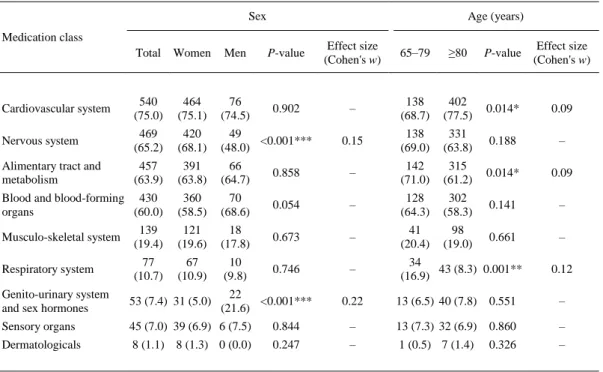
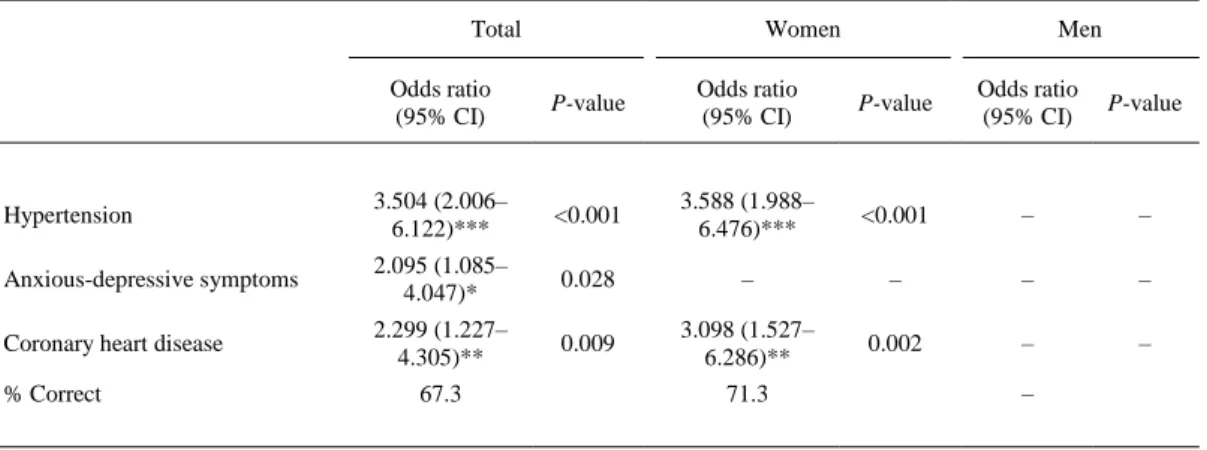
(9) Table 3 shows the medications distributed by classes according to the EphMRA classification as well as their possible association with sex and age group. The groups of medications that were not consumed by any user are not represented. Of the subjects, 75% consumed medications included in the cardiovascular system group; 65.2% included in the central nervous system group and 63.9% included in the alimentary tract and metabolism group. A significant association (P < 0.001) was found between feminine gender and the consumption of medications included in the central nervous system group and between masculine sex and the consumption of medications targeting the genito-urinary system (P < 0.001). With regard to age, an association was found between younger age and the consumption of different medications, such as those acting on the alimentary tract and metabolism (P = 0.014) and respiratory system (P = 0.001). Furthermore, medications acting on the cardiovascular system (P = 0.014) were more often consumed by older subjects. However, the clinical significance of these results was low or very low, with small to very small effect sizes (Cohen's w values).. Table 3. Medications consumed (n, %, ordered by frequency of consumption in the total sample) and their possible relationships with the variables sex and age categorised into two groups, 65–79 years and ≥80 years Sex. Age (years). Medication class Total. Women. Men. P-value. Effect size (Cohen's w). 65–79. ≥80. P-value. Effect size (Cohen's w). Cardiovascular system. 540 (75.0). 464 (75.1). 76 (74.5). 0.902. –. 138 (68.7). 402 (77.5). 0.014*. 0.09. Nervous system. 469 (65.2). 420 (68.1). 49 <0.001*** (48.0). 0.15. 138 (69.0). 331 (63.8). 0.188. –. Alimentary tract and metabolism. 457 (63.9). 391 (63.8). 66 (64.7). 0.858. –. 142 (71.0). 315 (61.2). 0.014*. 0.09. Blood and blood-forming 430 organs (60.0). 360 (58.5). 70 (68.6). 0.054. –. 128 (64.3). 302 (58.3). 0.141. –. Musculo-skeletal system. 139 (19.4). 121 (19.6). 18 (17.8). 0.673. –. 41 (20.4). 98 (19.0). 0.661. –. Respiratory system. 77 (10.7). 67 (10.9). 10 (9.8). 0.746. –. 34 43 (8.3) 0.001** (16.9). Genito-urinary system and sex hormones. 53 (7.4) 31 (5.0). Sensory organs. 45 (7.0) 39 (6.9) 6 (7.5). Dermatologicals. 8 (1.1) 8 (1.3) 0 (0.0). *P. 22 <0.001*** (21.6). 0.12. 0.22. 13 (6.5) 40 (7.8). 0.551. –. 0.844. –. 13 (7.3) 32 (6.9). 0.860. –. 0.247. –. 1 (0.5) 7 (1.4). 0.326. –. < 0.05; **P < 0.01; ***P < 0.001 (χ2 for percentages).. Finally, a multiple logistic regression analysis (Table 4) selected the best determinants of polymedication (five or more prescribed medications). For the total sample, the three main determinants were hypertension (P < 0.001), anxiety-depressive symptoms (P = 0.028) and coronary heart disease (P = 0.009). The OR were 3.50 for hypertension, 2.10 for anxietydepressive symptoms and 2.30 for coronary heart disease. This model accurately predicted 67.3% of the cases at risk of consuming five or more medications. The best determinants for women were also hypertension (P < 0.001) and coronary heart disease (P = 0.002), with 71.3% of cases of polymedication (≥5) correctly predicted. The OR were 3.59 for hypertension and 3.10 for coronary heart disease. For men, no determinants were identified..
(10) Table 4. Logistic regression of major predictor diseases and presence of polymedication (≥5 prescription medications) Total. Women. Men. Odds ratio (95% CI). P-value. Odds ratio (95% CI). P-value. Odds ratio (95% CI). P-value. Hypertension. 3.504 (2.006– 6.122)***. <0.001. 3.588 (1.988– 6.476)***. <0.001. –. –. Anxious-depressive symptoms. 2.095 (1.085– 4.047)*. 0.028. –. –. –. –. Coronary heart disease. 2.299 (1.227– 4.305)**. 0.009. 3.098 (1.527– 6.286)**. 0.002. –. –. % Correct. 67.3. 71.3. –. % Correct: Percentage correctly classified. *P < 0.05; **P < 0.01; ***P < 0.001.. Discussion The information and communication technologies, such as the first-generation telecare discussed in this work, can help people to remain at home longer (Botsis et al. 2008, Kubitschke et al. 2010, Galimany-Masclans et al. 2011), improving the user's and caregiver's quality of life and avoiding institutionalisation in many cases. Moreover, telecare services provide both an adequate substitution for traditional services and additional benefits, such as minimising the need to travel and providing the added reassurance of regular external surveillance (Rogers et al. 2011). However, for telecare to fulfil its function, it is necessary to know the profile of the ‘potential beneficiary’ in advance to determine the characteristics of the future service and thus, improve its efficiency. In this sense, our work, with a prospective vision, attempts to define the user's profile while taking into account health aspects, which are often ignored and, according to our findings, highly important for accurately evaluating the effects of the service. The different profile and needs of elderly people will vary the benefits and cost-effectiveness of telecare (Henderson et al. 2014). Impact will be also observed in the health and social care system (Odeh et al. 2015) due to the amelioration in the decline of some psychological aspects and quality of life (Hirani et al. 2014). With respect to the sample's sociodemographic profile, our findings are consistent with other studies, showing that users are of advanced age, generally over 80 years, and mainly women (Onor et al. 2008, Peeters et al. 2012, IMSERSO, 2014). A high percentage of these older adults live alone (78.3%), as found in other studies (Onor et al. 2008, Peeters et al. 2012) of telecare users. However, predictably, according to the service prioritisation conditions, the percentage is substantially higher than that for the general population, which in the case of the Spanish population, represents 37.9% (IMSERSO 2014). The rate of disability (51.3%) is in line with the rate from the Survey on Disability, Personal Autonomy and Dependence Situations (EDAD; Spanish Statistical Office [Instituto Nacional de Estadística] 2008), which establishes that 30.3% of people over 65 have a disability. However, the rate is ostensibly higher than those included in Gispert Magarolas et al.'s (2009) work, which were obtained from the general population. In regard to dependence, 17.9% of subjects are dependent; this percentage is in line with the EDAD Survey (Spanish Statistical Office [Instituto Nacional de Estadística] 2008), which reports that 19% of the Spanish population are dependent, and is similar to those reported by studies in the USA (Kim et al. 2013) and Ireland (McDaid et al. 2013). However, this percentage is lower than that found by Millán-Calenti et al. (2010) for the Galician.
(11) population, as they found that 34.6% of their participants were dependent on others for at least one basic activity of daily living and that these participants were more frequently women. These results can be explained by the different origins of the samples, i.e. telecare users versus the general population. As expected, as the level of disability, dependence and comorbidity increases, the number of multigenerational households increases (Abellán-García & Ayala-García 2011). The figures found by different studies vary in relation to various factors, such as the sample's origin, the data collecting system, and sex and age, among others. However, if we focus on health aspects, our work shows the high prevalence of chronic and incapacitating illnesses, reaching a mean comorbidity of 2.8 (SD 1.7) per subject, which matches other consulted studies (Peeters et al. 2012). This highlights the non-compliance of the first-generation systems, which mainly aimed to alleviate the social situation, and the need to implement more advanced systems that allow for the assessment and monitoring of some diagnosed chronic diseases, such as heart failure, diabetes and chronic obstructive pulmonary disease, among other chronic diseases (Greenhalgh et al. 2013). Regarding type of diagnosed pathology, the results from the National Health Survey (Spanish Statistical Office [Instituto Nacional de Estadística] 2013b) indicate the prevalence of perceived chronic illnesses or health problems in Spain. Specifically, the survey reports that 73.4% of subjects aged 65 and over have at least one problem. The survey reports a lower prevalence than the current study for acute myocardial infarction and coronary diseases (16.9 vs. 34.7%) and the COPD (10.1 vs. 11.8%) and a higher prevalence for HTN (47.1 vs. 51.1%) and peripheral vascular disease (23.8 vs. 16.2%). Telehealth has demonstrated to improve the self-management of hypertension and control of blood pressure in elderly patients (Czaja et al. 2014, Jung & Lee 2017). Diabetes shows similar figures (19.3 vs. 19.5%). There are also differences in regard to sex, with coronary heart disease more often found in men than in women and found in higher proportion in the current study compared to other studies (Salminen et al. 2012). A multi-centre randomised controlled trial with patients with coronary artery disease or chronic heart failure has demonstrated that cardiac telerehabilitation adds positive effects and efficiency to the conventional centre-based cardiac rehabilitation programme, reducing the number of hospitalisation days and increasing the days alive and out of the hospital (Frederix et al. 2016). Concerning diabetes, some studies (Steinman et al. 2006, Bertera et al. 2007) indicate higher total rates and higher rates among men, but others, such as Griffith et al. (2010) and McDaid et al. (2013), submit lower figures. As previously stated, these figures can be explained based on the studied sample, which in our case, included ‘healthy’ subjects with sociosanitary problems, causing the figure to differ from those obtained from surveys of healthy populations or collected in a health setting, such as the National Health Survey carried out in Spain for the years 2011–2012 (Spanish Statistical Office [Instituto Nacional de Estadística] 2013a). Regarding anxiety-depressive symptoms, the results found in the literature vary, mainly according to the origin of the sample and the instruments used in the assessment (Onor et al. 2008, Spanish Statistical Office [Instituto Nacional de Estadística] 2013a), but in general, the results typically show a higher prevalence among women than among men (Herrera Molina et al. 2011). Lastly, telecare has also demonstrated its utility in the provision of rheumatology services with an impact in the care costs (Jang & Kraishi 2004), being the main contribution the improved access to doctors for patients and their referring physicians living in remote areas (Davis 2003). A multidisciplinary osteoporosis telehealth programme has demonstrated its adequacy for ensuring an optimal osteoporosis care (Dickson et al. 2008). Concerning medication consumption, the Spanish National Health Survey (Spanish Statistical Office [Instituto Nacional de Estadística] 2013b) finds that more than 83.3% of people over 65 years consume medications, with women showing high levels of consumption. In our series, 97.5% of the subjects consumed at least one medication, with a mean daily consumption of 5.6 (SD 3.0) medications and a great proportion of polymedicated subjects (≥5 medications/day) (59.4%). Similar figures are reported by other studies (IMSERSO 2014), with the resulting risk of therapeutic non-compliance, risk of falls and increase in morbidity and mortality (Márquez Contreras et al. 2012). Because 35% of telecare users are expected to have poor pharmacological.
(12) adherence (WHO 2004), it would be advisable to start or encourage strategies that improve therapeutic compliance, such as, in the case of telecare, the regularly scheduled telephone call. Our results regarding the type of medication consumed by main groups (EphMRA, 2014) are similar to those from other authors (Jyrkkä et al. 2009, Lapi et al. 2009) that establish that the most frequently prescribed categories of medication have effects on the cardiovascular, metabolic and central nervous systems. Furthermore, hypertension, anxiety-depressive symptoms and coronary disease were the best determinants of polymedication for the total sample, and hypertension and coronary heart disease were the best determinants among women. These results are consistent with other studies linking polypharmacy to comorbidity (Galato et al. 2010, Sergi et al. 2011, Gnjidic et al. 2012), but our study establishes a new approach because we examine the predictive pathology of polymedication rather than simply the existence of associations. Concomitantly, the identification of medication consumed and the comorbidity level could be an effective way to identify frailty (Coelho et al. 2015) because telecare could be particularly useful to frail elderly people (Barlow et al. 2007). Falls, with a high prevalence among elderly people, imply high levels of morbidity and mortality (Salvà et al. 2004) and are an under-diagnosed problem (Pujiula Blanch et al. 2003, Varas-Fabra et al. 2006). The most effective fall prevention strategy is multidimensional assessment, including the consumption of psychotropic medications (Moreno-Martínez et al. 2005). In our study, a high percentage of subjects presented a high risk of falls; therefore, the implementation of more advanced telecare models, such as those implemented in the United Kingdom (Yeandle 2009), could reduce incidence, severity and associated costs of falls. Strengths and limitations Our study is the first to attempt to define the social and health characteristics of the users of a first-generation telecare service in Spain, and the data provided can serve as a reference for other studies, which is the study's main strength. The review by Botsis and Hartvigsen (2008) found that many studies focused on telecare for elderly people had a small sample. Therefore, another strength of the current study is the large sample size used. The study's main limitation is the lack of similar international studies, as such studies would allow us to contrast our results rather than comparing them with results from general populations or populations assisted by the health systems but not specifically telecare users. Overall, we understand that this study lays the foundation to better equip telecare systems to adequately meet the needs of their potential users, who are normally old aged, female, living alone, suffering from several chronic diseases and consuming various medications. Moreover, some findings should be interpreted with caution because there were very small or small effect sizes. Finally, the determinants proposed have been identified using stepwise method in an exploratory analysis and this procedure has limitations, i.e. the increased risk of unimportant determinants or inconsistencies among model selection algorithms (Whittingham et al. 2006) that do not report the real response in the population and may result in overfitting (Babyak 2004). Conclusions and implications for practice In conclusion, independent of the social elements contributing to the implementation of telecare services, the important health characteristics of the users are evident, including morbidity and polypharmacy. Moreover, the characteristics of the studied population of users of a telecare system may be useful in regard to designing systems to meet the users’ needs. We understand that telecare services should be adapted both in regard to the specialisation of the service professionals, who should be both health promoters and advisors, and the portfolio of services offered, which should allow the inclusion of third-generation devices to control and monitor patients with chronic.
(13) illnesses. Therefore, this resource, if widely disseminated, may help to clear the sociosanitary system, improve the quality of life of the older person and decrease the burden on the family caregiver.. Acknowledgements We thank A Coruña City Council for giving us authorisation to utilise the data of the telecare service users and to the Spanish Red Cross Society, the service provider, for giving us access to its databases in accordance with ethics requirements.. Conflict of interest No conflicts of interest have been declared.. Source of funding This research has not received financial support.. Authorship JM, LL and AM contributed to the conception and design of the work, analysis and interpretation. SM contributed to the data acquisition. JM drafted the article. JM, SM, LL and AM participated in critically revising the article's content and have approved the final version submitted for publication. This study was part of a doctoral thesis submitted by SM at the University of A Coruña and directed by JM and AM, on September 2013.. References Abellán-García A. & Ayala-García A. (2011) Un perfil de las personas mayores en España, 2011. Indicadores estadísticos básicos [A Profile of Elderly People in Spain, 2011. Basic Statistical Indicators]. Laboratorio Portal Mayores, Madrid. Audit Commission (2004) Implementing Telecare. Strategic Analysis and Guidelines for Policy Makers, Commissioners and Providers. Audit Commission, London. Babyak M.A. (2004) What you see may not be what you get: a brief, nontechnical introduction to overfitting in regression-type models. Psychosomatic Medicine 66, 411–421. Barlow J., Singh D., Bayer S. & Curry R. (2007) A systematic review of the benefits of home telecare for frail elderly people and those with long-term conditions. Journal of Telemedicine and Telecare 13, 172– 179. Bertera E.M., Tran B.Q., Wuertz E.M. & Bonner A. (2007) A study of the receptivity to telecare technology in a community-based elderly minority population. Journal of Telemedicine and Telecare 13, 327–332. Bloom D., Chaterrji S., Kowal P. et al. (2014) Macroeconomic implications of population ageing and selected policy responses. The Lancet 14, 61464–61471. Botsis T. & Hartvigsen G. (2008) Current status and future perspectives in telecare for elderly people suffering from chronic diseases. Journal of Telemedicine and Telecare 14, 195–203. Botsis T., Demiris G., Pedersen S. & Hartvigsen G. (2008) Home telecare technologies for the elderly. Journal of Telemedicine and Telecare 14, 333–337. Brown S.J. (2003) Guest editorial: next generation telecare and its role in primary and community care. Health and Social Care in the Community 11, 459–462. Callan A. & O'Shea E. (2015) Willingness to pay for telecare programmes to support independent living: results from a contingent valuation study. Social Science & Medicine 124, 94–102..
(14) Charlson M., Pompei P., Ales K. & MacKenzie C.R. (1987) A new method of classifying prognostic comorbidity in longitudinal studies: development and validation. Journal of Chronic Diseases 40, 373– 383. Coelho T., Paúl C., Gobbens R.J.J. & Fernandes L. (2015) Determinants of frailty: the added value of assessing medication. Frontiers in Aging Neuroscience 7, 56. Cohen J. (1988) Statistical Power Analysis for the Behavioural Sciences, 2nd edn. Erlbaum, Hillsdale, NJ. Czaja S.J., Lee C.C., Arana N., Nair S.N. & Sharit J. (2014) Use of a telehealth system by older adults with hypertension. Journal of Telemedicine and Telecare 20, 184–191. Daniel K., Cason C. & Ferrell S. (2009) Emerging technologies to enhance the safety of older people in their homes. Geriatric Nursing 30, 384–389. Davies A., Rixon L. & Newman S. (2013) Systematic review of the effects of telecare provided for a person with social care needs on outcomes for their informal carers. Health and Social Care in the Community 21, 582–597. Davis P. (2003) The application of telehealth to rheumatology. Clinical Rheumatology 22, 168–172. Department of Health (2011) Whole System Demonstrator Programme. Headline Findings: December 2011. Department of Health, London. Dickson L., Cameron C., Hawker G., Ratansi A., Radziunas I., Bansod V. & Jaglal S. (2008) Development of a multidisciplinary osteoporosis telehealth program. Telemedicine and e-Health 14, 473–478. Downton J.H. (1993) Falls in the Elderly. Edward Arnold, London, UK. EphMRA (2014) Anatomical Classification Guidelines 2014, 2nd edn. European Pharmaceutical Marketing Research Association, Basel, Switzerland. Eurostat (2015) Population, structure and ageing. Available at: http://ec.europa.eu/eurostat/statisticsexplained/index.php/Population_structure_and_ageing (accessed on 15/1/2015). Finch T.L., Mort M., Mair F.S. & May C.R. (2007) Future patients? Telehealthcare, roles and responsabilities. Health and Social Care in the Community 16, 86–95. Frederix I., Hansen D., Coninx K. et al. (2016) Effect of comprehensive cardiac telerehabilitation on one-year cardiovascular rehospitalization rate, medical costs and quality of life: a cost-effectiveness analysis. European Journal of Preventive Cardiology 23, 674–682. Galato D., da Silva E. & Tiburcio L. (2010) Estudo de utilização de medicamentos em idosos residentes em uma cidade do sul de Santa Catarina (Brasil): um olhar sobre a polimedicação [Study of the use of medicine in elderly living in a city in the South of Santa Catarina (Brazil): a look at the polymedication]. Ciência & Saúde Coletiva 15, 2899–2905. Galimany-Masclans J., Garrido-Aguilar E., Girbau-García M.R., Lluch-Canut T. & Fabrellas-Padrés N. (2011) New technologies and nursing: use and perception of primary healthcare nurses about electronic health record in Catalonia, Spain. Telemedicine and e-Health 17, 635–639. Gispert Magarolas R., Clot-Razquin G., March Llanes J., Freitas Ramírez A., Busquets Bou E., Ruíz-Ramos M. & Fernández A.R. (2009) Prevalencia de la discapacidad en España por comunidades autónomas: el papel de los factores individuales y del entorno geográfico en su variabilidad [Prevalence of the disability in Spain for autonomous communities: the paper of the individual factors and the geographical environment in the variability]. Revista Española de Salud Pública 83, 821–834. Gnjidic D., Hilmer S., Blyth F. et al. (2012) Polypharmacy cutoff and outcomes: five or more medicines were used to identify community-dwelling older men at risk of different adverse outcomes. Journal of Clinical Epidemiology 65, 989–995. Greenhalgh T., Wherton J., Sugarhood P., Hinder S., Procter R. & Stones R. (2013) What matters to older people with assisted living needs? A phenomenological analysis of the use and non-use of telehealth and telecare. Social Science & Medicine 93, 86–94. Griffith L., Raina P., Wu H., Zhu B. & Stathokostas L. (2010) Population attributable risk for functional disability associated with chronic conditions in Canadian older adults. Age and Ageing 39, 738–745. Gutiérrez-Misis A., Sánchez-Santos M. & Otero A. (2012) Utilización de un proxy al índice de Charlson para estudiar la asociación entre comorbilidad y mortalidad a corto y largo plazo en mayores [Use of a proxy to the Charlson Index to study the short and long-term comorbidity and mortality in the elderly]. Atención Primaria 44, 153–161. Henderson C., Knapp M., Fernández J.L. et al. (2014) Cost-effectiveness of telecare for people with social care needs: the Whole Systems Demonstrator cluster randomised trial. Age and Ageing 43, 794–800. Herrera Molina E., Muñoz Mayorga I., Martin Galán V. & Cid Gala M. (2011) Experiencias españolas en la promoción de la autonomía personal en las personas mayores [Spanish experiences to promote personal autonomy in the elderly]. Gaceta Sanitaria 25 (Suppl 2), 147–157. Hirani S.P., Beynon M., Cartwright M. et al. (2014) The effect of telecare on the quality of life and psychological well-being of elderly recipients of social care over a 12-month period: the Whole Systems Demonstrator cluster randomised trial. Age and Ageing 43, 334–341..
(15) IMSERSO (2014) Recursos Sociales dirigidos a las Personas Mayores [Social Resources for the Elderly], 1st edn. Institute for Older Persons and Social Services [Instituto de Mayores y Servicios SocialesIMSERSO], Madrid. Jang M. & Kraishi M. (2004) A comparative study on the utility of telehealth in the provision of rheumatology services to rural and northern communities. International Journal of Circumpolar Health 63, 415–421. Jung H. & Lee J.E. (2017) The impact of community-based eHealth self-management intervention among elderly living alone with hypertension. Journal of Telemedicine and Telecare 23 (1), 167–173. Jyrkkä J., Enlund H., Korhonen M.J., Sulkava R. & Hartikainen S. (2009) Patterns of drug use and factors associated with polypharmacy and excessive polypharmacy in elderly persons: results of the Kuopio 75+ study: a cross-sectional analysis. Drugs and Aging 26, 493–503. Kim D.H., Newman A.B. & Lipsitz L.A. (2013) Prediction of severe, persistent activity-of-daily-living disability in older adults. American Journal of Epidemiology 178, 1085–1093. Kubitschke L., Müller S., Gareis K., Frenzel-Erkert U. & Lull F. (2010) ICT & aging. European study on users, markets and technologies. Final Report. Available at: http://www.ict-ageing.eu/ict-ageingwebsite/wp-content/uploads/2010/D18_final_report.pdf (accessed on 14/1/2015). Lapi F., Pozzi C., Mazzaglia G. et al. (2009) Epidemiology of suboptimal prescribing in older, communitydwellers: a two wave, population-based survey in Dicomano, Italy. Drugs and Aging 26, 1029–1038. Lucas H. (2008) Information and communications technology for future health systems in developing countries. Social Science & Medicine 66, 2122–2132. Márquez Contreras E., Martín de Pablos J.L., Espinosa García J., Casado Martínez J.J., Sánchez López E., Escribano J., de Trabajo G. & Grupo de Trabajo sobre Cumplimiento de la Asociación de la Sociedad española de Hipertensión Arterial y Liga Española para la Lucha contra la Hipertensión Arterial (SEHLELHA) (2012) Eficacia de un programa de automedida domiciliaria de la presión arterial como estrategia para disminuir la inercia terapéutica [Prevention of therapeutic inertia in the treatment of arterial hypertension by using a program of home blood pressure monitoring]. Atención Primaria 44, 89– 96. McDaid O., Hanly M., Richardson K., Kee F., Kenny R.A. & Savva G.M. (2013) The effect of multiple chronic conditions on self-rated health, disability and quality of life among the older populations of Northern Ireland and the Republic of Ireland: a comparison of two nationally representative crosssectional surveys. BMJ Open 3, e002571. Melander-Wikman A., Fältholm Y. & Gard G. (2008) Safety vs. privacy: elderly persons’ experiences of a mobile safety alarm. Health and Social Care in the Community 16, 337–346. Millán-Calenti J.C. & Maseda A. (2011) “Envejecimiento” [Ageing]. In: J.C. Millán-Calenti (Ed.) Gerontología y Geriatría. Valoración e Intervención [Gerontology and Geriatrics. Assessment and Intervention], pp. 1–19. Médica Panamericana, Madrid. Millán-Calenti J., Tubío J., Pita Fernández S., González-Abraldes I., Lorenzo T., Fernández-Arruty T. & Maseda A. (2010) Prevalence of functional disability in activities of daily living (ADL), instrumental activities of daily living (IADL) and associated factors, as predictors of morbidity and mortality. Archives of Gerontology and Geriatrics 50, 306–310. Milligan C., Roberts C. & Mort M. (2011) Telecare and older people: who cares where? Social Science & Medicine 72, 347–354. Moreno-Martínez N., Ruiz-Hidalgo D., Burdoy-Joaquim E. & Vázquez-Mata G. (2005) Incidencia y factores explicativos de las caídas en ancianos que viven en la comunidad [Rate of falls and their risk factors in elderly individuals living in the community]. Revista Española de Geriatría y Gerontología 40 (Suppl 2), 11–17. Odeh B., Kayyali R., Nabhani-Gebara S., Philip N., Robinson P. & Russell Wallace C. (2015) Evaluation of a Telehealth Service for COPD and HF patients: clinical outcome and patients’ perceptions. Journal of Telemedicine and Telecare 21, 292–297. Onor M., Trevisiol M., Urciuoli O. et al. (2008) Effectiveness of telecare in elderly populations – a comparison of three settings. Telemedicine and e-Health 14, 164–169. Parker S. & Hawley M. (2013) Telecare for an ageing population? Age and Ageing 42, 424–425. Peeters J.M., de Veer A.J., van der Hoek L. & Francke A.L. (2012) Factors influencing the adoption of home telecare by elderly or chronically ill people: a national survey. Journal of Clinical Nursing 21 (21–22), 3183–3193. Pujiula Blanch M., Quesada Sabaté M. & Grupo APOC ABS Salt (2003) Prevalencia de caídas en ancianos que viven en la comunidad [Prevalence of falls in the elderly living in the community]. Atención Primaria 32, 86–91. Rogers A., Kirk S., Gately C., May C.R. & Finch T. (2011) Established users and the making of telecare work in long term condition management: implications for health policy. Social Science & Medicine 72, 1077–1084..
(16) Salminen M., Räihä I., Heinonen J. & Kivelä S.L. (2012) Morbidity in aged Finns: a systematic review. Archives of Gerontology and Geriatrics 54, 278–292. Salvà A., Bolíbar I., Pera G. & Arias C. (2004) Incidencia y consecuencias de las caídas en las personas mayores que viven en la comunidad [Incidence and consequences of falls among elderly people in the community]. Medicina Clínica 122, 172–176. Sergi G., De Rui M., Sarti S. & Manzato E. (2011) Polypharmacy in the elderly: can comprehensive geriatric assessment reduce inappropriate medication use? Drugs and Aging 28, 509–518. Sintonen S. & Immonen M. (2013) Telecare services for aging people: assessment of critical factors influencing the adoption intention. Computers in Human Behavior 29, 1307–1317. Sixsmith A., Hine N., Neild I., Clarke N., Brown S. & Garner P. (2007) Monitoring the well-being of older people. Topics in Geriatric Rehabilitation 23 (1), 9–23. Spanish Statistical Office [Instituto Nacional de Estadística] (2008) Encuesta sobre Discapacidades, Autonomía personal y situaciones de Dependencia 2008 [The survey of disability, personal autonomy and dependent situations, 2008]. Available at: http://www.ine.es/jaxi/menu.do?type=pcaxis&path=%2Ft15%2Fp418&file=inebase (accessed on 14/1/2015). Spanish Statistical Office [Instituto Nacional de Estadística] (2013a) Encuesta Nacional de Salud 2011-2012. Principales resultados [National Health Survey 2011-2012. Main results]. Available at: http://www.ine.es/en/prensa/np770_en.pdf (accessed on 14/1/2015). Spanish Statistical Office [Instituto Nacional de Estadística] (2013b) Problemas o enfermedades crónicas o de larga evolución diagnosticadas por un médico por sexo y grupo de edad. Población de 15 y más años. Estado de Salud. Cifras Relativas. Encuesta Nacional de Salud 2011-2012 [Health problems or chronic or long-term illness and diagnosed by a doctor by sex and age group. Population aged 15 years old and over. State of health. Relative figures. National Health Survey 2011-2012]. Available at: http://www.ine.es/jaxi/tabla.do?path=/t15/p419/a2011/p04/l1/&file=04027.px&type=pcaxis&L=1 (accessed on 14/1/2015). Spanish Statistical Office [Instituto Nacional de Estadística] (2014) Cifras de Población. Series desde 2002. Población residente por fecha, sexo y edad. Resultados Nacionales y por Comunidades Autónomas a 1 de Julio de 2014 (Provisional). [Population figures. 2002 Series. Population by date, sex and gender. National and Autonomous population as of 1st July 2014 (Provisional)]. Available at: http://www.ine.es/jaxi/tabla.do?path=/t20/p321/serie/2001/l0/&file=01001.px&type=pcaxis&L=0 (accessed on 14/1/2015). Steinman M.A., Landefeld C.S., Rosenthal G.E., Berthenthal D., Sen S. & Kaboli P.J. (2006) Polypharmacy and prescribing quality in older people. Journal of the American Geriatrics Society 54, 1516–1523. Valero M., Sánchez J.A. & Bermejo A.B. (2007) “Marco conceptual de la teleasistencia y telecuidado” [Conceptual framework of teleassistance and telecare]. In: M. Valero, J. Sánchez & A. Bermejo (Eds) Servicios y tecnologías de teleasistencia: Tendencias y retos en el hogar digital. Informe de vigilancia tecnológica [Teleassistance Services and Technologies. Trends and Challenges in Digital Home. Technology Watch Report], pp. 17–46. Círculo de Innovación en TIC, Madrid. Varas-Fabra F., Castro Martín E., Pérula de Torres L.A., Fernández Fernández M.J., Ruiz Moral R. & Enciso Berge I. (2006) Caídas en ancianos de la comunidad: prevalencia, consecuencias y factores asociados [Falls in the elderly in the community: prevalence, consequences, and associated factors]. Atención Primaria 38, 450–455. Whittingham M.J., Stephens P.A., Bradbury R.B. & Freckleton R.P. (2006) Why do we still use stepwise modelling in ecology and behaviour? Journal of Animal Ecology 75, 1182–1189. WHO (2004) “Adhesión (cumplimiento) al tratamiento farmacológico” [Compliance with the pharmacological treatment]. In Lista Modelo de Medicamentos Esenciales de la OMS 2004 [WHO Model List of Essential Medicines 2004]. World Health Organization. Available at: http://apps.who.int/medicinedocs/es/d/Js5422s/4.3.html#Js5422s.4.3 (accessed on 24/2/2015). WHO (2015) World report on ageing and health. World Health Organization. Available at: http://apps.who.int/iris/bitstream/10665/186463/1/9789240694811_eng.pdf?ua=1 (accessed on 30/5/2016). Yeandle S. (2009) Telecare: A Crucial Opportunity to Help Save Our Health and Social Care System, 1st edn. University of Leeds, Leeds, UK..
(17)
Figure

+2
Documento similar